Global automotive experts gathered at the World Car of the Year Awards to discuss the U.S. automotive strategy and its competitiveness against China. Insights from industry leaders reveal a consensus that the U.S. is struggling to keep pace with China's rapid advancements, particularly in electric vehicles and technology. Guests from various countries shared their perspectives on the challenges faced by American manufacturers, including inconsistent policies and the need for innovation. The conversation highlighted the potential for collaboration between U.S. and Chinese brands, as well as the evolving landscape of global automotive markets.
In this episode, we’re at the World Car of the Year annual test-drive program in Pasadena, speaking with jurors from across the globe. We ask how international experts perceive current U.S. government policies shaping the automotive industry, and whether the U.S. can realistically close the gap with China in the race for electric and emerging mobility technologies.
Hosted by Simplecast, an AdsWizz company. See pcm.adswizz.com for information about our collection and use of personal data for advertising.
"...the ultra version, the Super Sport one, 1500 horsepower, it's very difficult to catch up..."
Horsepower is a way to measure how powerful a car's engine is. More horsepower usually means the car can go faster and perform better.
Horsepower is a unit of measurement for power, commonly used to indicate the power output of engines. A higher horsepower means a vehicle can accelerate faster and achieve higher speeds.
"I was in a Beijing auto show, having a like a deep looking at the console car from Gilly, a huge car brand over there."
Geely is a big car company from China that owns other car brands like Volvo and Polestar.
Geely is a Chinese automotive company that owns several well-known brands, including Volvo and Polestar, and has significant stakes in other manufacturers.
"the owner of 17% of Aston Martin and 9% of Daimler. Crazy, crazy."
Aston Martin is a luxury car brand from the UK that makes stylish and fast cars, often seen in movies like James Bond.
Aston Martin is a British luxury sports car manufacturer known for its elegant designs and high-performance vehicles, often associated with James Bond films.
"...we have an Audi and we have a BYD. I mean, different cars. This is an A6."
The Audi A6 is a luxury car that is comfortable and has many high-tech features. It's made by Audi, a well-known car brand, and is popular among people who want a nice car to drive.
The Audi A6 is a premium midsize sedan known for its luxury features, performance, and advanced technology. It competes with other luxury sedans in its class, offering a blend of comfort and sportiness.
"...the muscle cars, the pickup trucks and all that. Yes, yes."
Pickup trucks are vehicles that have a big open space in the back for carrying things. They are often used for work or outdoor activities and are known for being tough and powerful.
Pickup trucks are vehicles with an open cargo area at the back, designed for transporting goods and materials. They are popular in the United States for both work and recreational use, often featuring powerful engines and off-road capabilities.
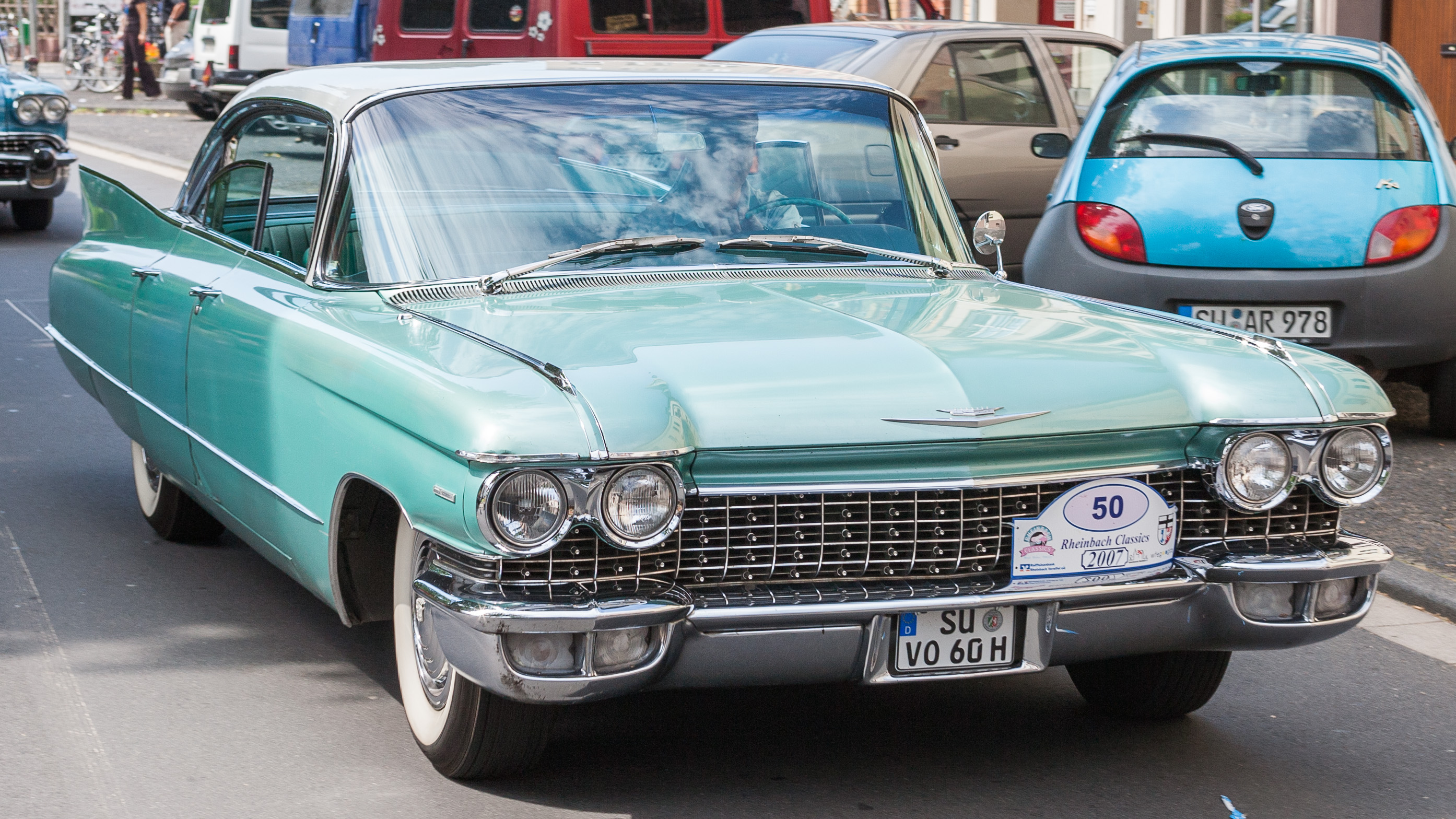
"...the muscle cars, the pickup trucks and all that. Yes, yes."
Muscle cars are fast cars from America that are designed for speed and power. They usually have big engines and a sporty look, and they became really popular in the 1960s and 1970s.
Muscle cars are high-performance vehicles, typically American-made, known for their powerful engines and aggressive styling. They gained popularity in the 1960s and 1970s, often featuring V8 engines and a focus on straight-line speed.
"Oh, really? Yeah, with Corvette, with Cadillac models and stuff. But also there i..."
The Chevrolet Corvette is a fast and stylish car that many people love. It's known for being really powerful and is often seen as a dream car for those who enjoy driving.
The Chevrolet Corvette is a high-performance sports car known for its sleek design and powerful engine options. It has been a symbol of American automotive engineering since its introduction in 1953, often discussed for its performance capabilities and status as an iconic American sports car.
"Yeah. Corvettes, of course, and Camaro. Yes, it's a market."
The Chevrolet Camaro is a sporty car that looks cool and goes really fast. It's a favorite among people who like powerful cars and is often compared to other similar cars like the Ford Mustang.
The Chevrolet Camaro is a classic American muscle car that has been in production since 1966. It is celebrated for its aggressive styling and performance, often compared to the Ford Mustang, making it a popular choice among car enthusiasts.
"...I don't understand why the Philippines doesn't have doesn't value the reliability and value of a Volkswagen. And my answer was they do."
Volkswagen is a car company from Germany that makes many popular cars. They are known for making reliable vehicles that people trust.
Volkswagen is a German automotive manufacturer known for producing a wide range of vehicles, including the iconic Beetle and the Golf. The brand is recognized for its engineering quality and reliability.
Toyota is a car company from Japan that makes many different types of cars. They are famous for making cars that last a long time and are very dependable.
Toyota is a Japanese automotive manufacturer that is one of the largest car manufacturers in the world. They are known for their reliable vehicles and innovations in hybrid technology, such as the Prius.

"So we're sitting here in the BYD Ato 8 that came from Mexico. It has another name, say no, different markets."
The BYD Ato 8 is a type of SUV made by a Chinese company called BYD. It's a plug-in hybrid, which means it can run on both electricity and gasoline.
The BYD Ato 8 is a plug-in hybrid SUV produced by the Chinese automaker BYD. It represents a growing trend in the automotive market towards electrification and hybrid technology.
"I mean, it's not an electric car. It's a plug-in hybrid. Yeah."
A plug-in hybrid is a car that can use both electricity and gasoline. You can charge it by plugging it in, and it can drive a certain distance on just electricity before it needs to use gas.
A plug-in hybrid is a vehicle that combines a conventional internal combustion engine with an electric motor and a rechargeable battery. This allows the vehicle to operate on electric power alone for a certain distance before switching to gasoline.
"...that's a Porsche Macan, I think. No, but like just look at like this is a 50 kilowatt charger..."
The Porsche Macan is a small luxury SUV that offers a fun driving experience and a comfortable interior. It's a good option for those who want a stylish vehicle with good performance.
The Porsche Macan is a compact luxury SUV that combines sporty performance with everyday practicality. It is known for its agile handling and high-quality interior, making it a popular choice in the luxury SUV market.
"...just look at like this is a 50 kilowatt charger that's out for my smartphone. I don't know. I don't know any car here that has a 50 kilowatt..."
A 50 kilowatt charger is a device that charges electric cars quickly. It can provide a lot of power, allowing the car's battery to fill up faster than regular chargers.
A 50 kilowatt charger refers to a type of electric vehicle charging station that can deliver up to 50 kilowatts of power to charge an electric vehicle's battery. This allows for faster charging compared to standard home chargers.
"...of course. Yeah, yeah, yeah. No, right. Like, I mean, we're America can like their V8s all they want. I love a sounding V8..."
A V8 is a type of car engine that has eight cylinders arranged in a V shape. It's known for being powerful and is often found in sports and muscle cars.
A V8 engine is an eight-cylinder engine configuration where the cylinders are arranged in a 'V' shape. This design is known for providing high power and torque, making it popular in performance and muscle cars.
Car
Volkswagen ID.8
"and keep enjoying this beautiful new ID at 8 from Mexico."
The Volkswagen ID.8 is a new electric car from Volkswagen. It's designed to be eco-friendly and has a lot of modern features.
The Volkswagen ID.8 is an electric SUV that is part of Volkswagen's ID family, which focuses on electric mobility. It features modern design and technology aimed at providing a sustainable driving experience.
"Where you get behind the wheel like an IONIQ 5. Put aside the Porsche Taycan."
The IONIQ 5 is a new electric car from Hyundai that looks modern and has a lot of cool technology. It's designed to be comfortable and can go a long distance on a single charge.
The Hyundai IONIQ 5 is an all-electric compact crossover SUV known for its futuristic design and advanced technology features. It offers a spacious interior and impressive range, making it a strong competitor in the electric vehicle market.
The Taycan is an electric car from Porsche that is known for being very fast and sporty. It has a luxury feel and is designed for performance, just like other Porsche cars.
The Porsche Taycan is a high-performance electric sedan that combines Porsche's sports car heritage with cutting-edge electric technology. It features rapid acceleration, advanced handling, and luxurious interior options.
"China, they have a vested interest in pushing electric cars because that is basically in the interest of their national security."
Electric cars run on electricity instead of gasoline. They are better for the environment and can save money on fuel costs.
Electric cars are vehicles that are powered entirely or partially by electricity, using electric motors instead of traditional internal combustion engines. They are known for being more environmentally friendly and often have lower running costs.
"GM is the number one importer of Chinese-made cars..."
An importer is a company that buys cars made in one country, like China, and sells them in another country, like Mexico.
An importer of Chinese-made cars refers to a company that brings vehicles manufactured in China into another country for sale. This is significant in discussions about global trade and manufacturing practices.
"In Mexico, the whole portfolio of GM is 85% made in China."
The GM portfolio is all the different cars and brands that General Motors sells in a specific area, like Mexico.
The GM portfolio refers to the range of vehicles and brands that General Motors offers in a particular market. This can include various models and types of vehicles tailored to different consumer needs.
Select text to request an explanation
Love the night? Reach for ZIN After Dark, a limited cocktail-inspired series for those who
get up when the sun goes down. Try ZIN's Mojito, Spiced Cider, and Espresso Martini nicotine
pouches. Find them at Select Retailers, available while supplies last. ZIN After Dark. Bring
on the night.
Warning, this product contains nicotine. Nicotine is an addictive chemical.
Listen to it, it's like a relief I didn't know I needed. AT&T knows these parties are
perfect to share your voice. If you have time without calling someone, it's time. Because
more than a conversation, it's your chance to say something they will always remember.
In these parties, share love with a call. Happy TDCA AT&T Fiestas. Connect, change everything.
Well, once again, we're here in Pasadena for World Car of the Year Awards with Carlos Andoval,
who is one of the main members of the board. And this year, I want to do something different.
I want to hear your opinion of what outside the US the automotive industry thinks about
what the US is doing right now, which is very controversial. And you've been in
China very recently. I want to hear your opinion about, can the US catch up China anymore?
Thanks, Javier, for the time. Well, it is complicated. I think what they're trying
to do is protect the local economy, the local industry itself. You can see these interviews
with famous CEOs, American CEOs, talking about the Chinese cars after driving them.
Yes, mainly Jim Farley. And I assure that you actually, it is, I just drove that car two
weeks ago, the Xiaomi, as you said, the one that he really likes, the ultra version, the
Super Sport one, 1500 horsepower, it's very difficult to catch up. Not impossible, but
actually you can also see that same car coming out of the Ferrari factory because they're
doing the same. Now it's been reversed, right? That change is used to copy and now we're looking
into that. What are they doing? The whole industry. I just can show you this information
with you. Two years ago, one and a half year ago, I was in a Beijing auto show, having
a like a deep looking at the console car from Gilly, a huge car brand over there. And
suddenly Gilly, which owns Volvo by the way, the owner of Volvo, the owner of Polestar,
the owner of 17% of Aston Martin and 9% of Daimler. Crazy, crazy. So I was looking at this
console car and the vice president of design for Nissan, you know, Mr. Alvaisa? Alvaisa
from Miami. Yeah, I just moved my head and he was just by my side looking at the
same car. And then we see each other, we know each other with, Hey, how are you? We
spent talking and discussing. And I asked, like, just as a friend, like, Hey, Alfonso,
what do you think about the Chinese industry? Yeah. And he, I was expecting like, Oh, no,
they're like, not good, whatever. You know, he looks at me at me seriously. And he says,
like, I think technically, they're like, maybe three generations ahead of us. Wow. That's
25 years. 20 to 25 years. New generation may be shorter, but yeah. 15, let's say
that. And, but he says then, but technologically and design wise, I think they are like maybe
10 generations ahead, especially designs. They are free. And that is revolving. I think
what I see, I haven't been to China yet, but what I see in general is the advantage
that the Chinese have. Yes. So they have one direction. The government basically
tells us we're going to do this and everybody does it. Yes. Here in the US, four years
to the right, three to the right, three to the middle, two years back. And then so that's
why we cannot catch up, right? That's it. So also, I mean, catching up is complicated,
but I think that most of it, the ones who will be following and integrating Chinese on
some way. Yeah, it's impossible not to. It is impossible. I think that in a few years,
we will see Chinese cars in the States working together with the local brands to reinforce
the strategy to launch new products, affordable products. Some of those made in North America.
I think that's the final goal. I don't know how long will it take, but I think it's going
to take. Well, maybe it will take that long because in Mexico, where you work and the
Nissan and Mercedes are getting rid of the Wascalientes plan and the Cuernabaca plan.
And who's looking into them? A bunch of friends. Chinese mostly. A bunch of friends are
looking for that, especially Wascalientes because of the infrastructure. They have
right in the middle of the country. In the middle, they can go to Bozey. So that could
work for North America. Very, very good. Exactly. Well, thank you, girl. Let's go on
right now. Thank you for your time. So now we're here with Mohammed Saro from Jordan,
one of the members of the World Car Awards. So Jordan, I mean, Mohammed, I'm from Jordan.
No problem. So what do you think about this thing? Can the U.S. catch up China
and what are they doing is right or wrong? I think the war is over in the car industry.
Oh, really? Absolutely. After being twice this year in China and seeing what these guys
are doing and what they're preparing and what they accomplished, especially when we talk
about battery electric vehicles and the domination that they have on the supply of
batteries, the supply of software that comes with electric cars and even other very
significant components of the car, like the electric motor and everything it has to do
with electric cars and hybrid cars to be to be more exact. I think it's too late, too
little too late now. Tariffs are a good policy for the short term period only. Yeah.
But in the long term, the war is over. And some of the policies might have been
good if they have started maybe in 1978 or something like that, but not today.
Actually, what the Chinese did, they lured the international or the global legacy players
into their market using the size and the lucrative business that they had.
Yeah, the size of the market and all that. Yeah, in the 90s and in the thousands.
And the legacy of Kermit is just voluntarily gave all their crown jewels or their secrets
to the Chinese. I don't know what they thought when they did that.
They thought it was easy. It's a game, maybe.
And they made billions of dollars, obviously.
Yeah, it's a game in terms of like that, like making short good money in short time.
Exactly. But now the Chinese are getting their payback.
They learned, obviously, to do.
I think the only the only thing that is still there for the global currency
outside of China is the brand value.
But even that, like here, we have an Audi and we have a BYD.
I mean, different cars. This is an A6.
This is an SUV. Yeah. But in terms of pricing and all that,
if you compare the same kind of model, the Chinese will win because of the price.
Yeah, let me give you one prediction from my side.
The Chinese will go shopping for brands because they know that people
from a marketing perspective want these brands, so they'll buy them out and make.
Well, they already did with Volvo, with Aston Martin.
They have 9% of Daimler.
I think that's the last chapter of this saga.
Wow, amazing. So let's go. Keep driving.
Thank you, Mohamed.
Did you know you can opt out of winter?
With Verbo, save up to $1,500 for booking a month-long stay.
With thousands of sunny homes, why subject yourself to the cold?
Just filter your search by monthly stays and save up to $1,500.
Book now at verbo.com.
You know, AT&T thinks that listening to a loved one's voice
can change everything.
And you, who loves podcasts, know that it's like that.
Listening to someone we love is unique.
That's why we keep our messages.
They mean a lot, right?
For me, if I need to cheer up in the parties, I know who to call.
Marisol.
Listening to her voice feels like being at home.
And if I need to tell someone, I call Eric.
He's my best friend.
Listening to him is like a relief I didn't know I needed.
AT&T knows that these parties are perfect to share your voice.
If you have time without calling someone, it's the right time.
Because more than a conversation, it's your chance
to say something they'll always remember.
In these parties, share love with a call.
Happy parties, I wish you AT&T.
Connect, it changes everything.
So now we go to Poland with Machi Bertinski.
Bertinski, you said it better than me.
Yes, I did.
So what do you think?
Is the US doing enough or too late or too little too late
to catch up with what's happening in the automotive industry?
Well, that's a very, very good question.
I would love to hear another one because this one is too difficult to answer.
The point is we in Poland have always loved American cars.
I mean, the big, real American cars.
The muscle cars, the pickup trucks and all that.
Yes, yes.
But the rest of the production, I mean compact cars or smaller cars
that America tried to produce for Europe have never been good enough.
Yeah.
They have never been better than the European ones.
Or the Japanese and Koreans.
And Koreans, of course.
So no, we are not missing them.
We what we are missing is some American leadership in the field
of building most modern machines, cleanest machines.
Of course they can and they should be powerful to the American.
Yeah, exactly.
But make them cleaner and more economical.
So what's happening right now is not helping that?
No, it's not helping that.
But who am I to interfere with the deeds of someone who is a billionaire?
I know, exactly.
Yeah, so that's the problem.
So who is in bigger trouble, the Americans or the Germans?
Now this question I will not answer, not because I don't want to,
but because there is no proper answer to that.
As the European automakers, not only Germans,
are in deep, deep trouble because the Chinese are entering Europe.
Yeah, in every way they can.
In every way they can and they bring not just cheap products,
they bring in good products in good prices.
And a lot of money to invest like new plants and all that kind of thing.
Probably, probably, yes.
Probably you're right.
So let's say we are still doing this World Carrier Award things
in five more years, two thousand and thirty.
What do you think we will be in these terms?
Who will be ahead?
China, Germany, the US?
I think that both European and Korean or Japanese or American companies
are going to react much, much quicker than we think.
OK, that would be good to be, to see.
So let's see you in two thousand and thirty then.
Thank you.
So now we're with Sbormik, juristic, did I say it right?
You say it.
Sbormik, juristic from Croatia.
So how is Croatia seeing in general the US policy regarding automotive?
Complicated.
A bit complicated.
We are, of course, we are covering also in this market,
very interesting about and it's all global car industry.
And they should be maybe in problems like European.
Yeah, the European industry right now.
And in a way that Chinese car manufacturers are better and better.
And really fast, right?
Yeah, they're growing fast.
But sometimes what you build, build into the gates
and something you built in the short term could be good,
but the future will show.
Yeah.
Good, good leadership for the European and American car industry.
I think can survive everything.
Yeah.
Is there any desire for American cars in Croatia?
Of course, I am great fun.
Me personally, I'm great fun of American muscle cars.
I grew up with this.
Oh, really?
Yeah, with Corvette, with Cadillac models and stuff.
But also there is a US cars public in Croatia,
also in Europe for pickup trucks and remodels.
Yeah.
Corvettes, of course, and Camaro.
Yes, it's a market.
Yeah, it's a market.
Yeah, yeah, there is no on the market directly,
but private import or something.
Yeah, yeah, yeah.
So and do you think the US or the Germans in any in this case
can catch up with China or Chinese way to way ahead?
It's a little bigger than catch up somebody,
to somebody catch somebody.
But I cover and I look at this growth of the Chinese car market.
But I said, we have to wait till the end, till the end.
When is the end for you?
For me, it's the end when is European and American car
industry restructuring with some new leadership,
technology and new plan.
Yes, well, we'll see how it is.
It's always somebody's in advance.
Yeah, first Americans, then, you know, it depends.
It's premium brands or what what will be.
We will see about four cars, what car will be in the future.
This is a question.
OK, so the consumers will decide.
Yeah, after all, consumers will decide.
Well, thank you very much.
And let's go and drive this Corvette Erie.
I love you really like, right?
Yeah, yeah, right.
Yes, this is this is this is my cup of tea.
I couldn't. OK, thank you very much.
I enjoyed the weather in California.
The rain is first time I have rain here.
I came here 15 years in a row and it's nothing.
Yeah, but nothing like this.
But OK, thank you.
We are driving. Thank you.
Well, now we go to Philippines with a cow here.
The US doing the right thing in terms of like what they're
doing with tariffs now and how they're trying to develop.
Yeah, I mean, what they try to do to protect
the industry, the American industry, I guess.
OK, I think that in some ways, they're kind of
being short term protectionist and not developing.
I don't know if they have a clear understanding in general
of how strong other players are in this market,
which is kind of surprising, you know, for a country
like America with all that experience
and then they were leaders of the world at some point.
They were. But at the same time, sometimes that leadership means
they haven't got it all nailed down.
For example, they I speak with so many people who are running
car shows and they have no idea the level at which the Chinese
are doing car shows. Yeah, the strengths of the traditional
car makers, whether they're in Europe or the US, is that they
haven't understood a long term understanding of what cars
are and how we interact with them.
And it's not about technology.
It's about feeling.
It's about an overall holistic thing.
And I think the traditional car makers,
including the Americans to a point, understand that better.
And that is their strength.
But sometimes they they end up chasing numbers and not
chasing and actually short term results. Yeah.
They have. I mean, right now, look at the innovation
we've got, we had the slate downstairs, right?
You know, that's an amazing vehicle.
Yeah, no. So there's some of these things that will do very well.
But, you know, the world's not.
Simple anymore, not that center focus, right?
They have to be beyond that.
Yeah, yeah.
So and I think there are ways to do that.
But OK, I what I see is
I see this you see in the British car industry
and in the American car industry.
And some of the German is not a German,
but some of the European countries,
they live on their own little world, right?
And so they don't understand how things have to change
and they don't understand how other people use their vehicles
or how they perceive their vehicles.
I once spoke with a Volkswagen,
who's come in and out of the Philippines more than once
and has never really nailed it down.
And the their answer was when we were talking with them,
we were talking with them and
they were talking to them with the benthic people.
And they were saying,
I don't understand why the Philippines doesn't have
doesn't value the reliability and value of a Volkswagen.
And my answer was they do.
It's just in a Toyota.
Yeah, exactly. Right.
And some brands are more stronger in different regions.
I mean, Toyota is no more one in the whole world,
but in the southern Asia, I mean, they're really, really strong, right?
Yeah, yeah.
And it's, you know, economics are local.
Yeah. It was like our discussion with living in an interesting time for sure.
But it is fun. It's interesting.
Mitya Bokert, the designer for Lamborghini,
said this is the most this is the renaissance of the automobile.
And it's true because there's so many things you can add on to it.
I know. Innovation, software, design and new players, basically.
New players and new ideas and new visions of what a car should be.
Yeah. So interesting. Very interesting.
Thank you. Thank you very much.
Right. Yes.
Well, now we go to the second largest market in the world, India,
in terms of numbers, at least.
We'd see it third, really.
So China, US, India.
Oh, OK.
But in terms of people.
Oh, yeah. Oh, no.
Then we're number one.
Yeah, exactly. You're number one.
So see who is, by the way,
thank you for organizing this event because it gives us a great opportunity
for journalists like me that haven't been able to go to China,
for example, or see the car.
This is our only chance.
So why does the public or the politicians or the leaders in India
think about what the US is doing now with the automotive industry?
Their strategy?
There's a lot of confusion.
I think there's a lot of questions based on that confusion
because you can't really sort of, you know, it's one thing to have
a particular position, whether you like it or you don't,
but then you can at least plan for it or you can at least react to it.
The problem with the US situation as far as we see it back home
is the flip-flop.
You know, one day it's like, all things are going to go bad.
The next day it's like, oh, no, it's fine.
It's going to be okay again.
Are they going to be tariffs?
Are they not going to be tariffs?
What does it mean when it comes to decisions
that would affect the industry?
And then they would maybe shift manufacturing based on that.
And all of that keeps things just kind of hanging.
And that's the part that creates, I think, a lot of it.
And especially in an industry that plans like five, seven years ahead.
I mean, if you're doing something next week,
that would be impossible.
And that's a big problem.
So out there, because of that and many other factors,
maybe they're losing a lot of rounds with, especially with China.
And that's the thing.
Look, in situations like this, you always find in any such situation
that there's going to be someone smarter who's going to take advantage of it.
With us, we've had, like for India in particular,
given the size of the market and the potential of the market,
China has added a lot.
And there is a lot of potential for Chinese brands to come in in a big way.
But some of that's been curtailed politically.
And now there's like a little bit of warming of that
or a thaw in that relationship, because suddenly it looks like
the U.S. may cut us out. Exactly.
And so the other thing is that where so much of the investment,
especially in the West, was going towards the manufacture of electric vehicles.
India also had the opportunity to become like a sort of a big export hub
for ice cars. A lot of that investments in place.
A lot of these big plants and capacities are there.
So it looked like a great idea to sort of exercise that.
Now there's again a doubt about are all those investments happening in just TV?
So the opportunity that was being seen as a big one for India,
even above China in some ways, now that could disappear as well.
And I think it's questions like that that create a lot of uncertainty.
A lot of uncertainty. Well, but we'll see what happens.
I mean, nobody, as you said, nobody, you know, even the people
I think who are making the policies don't even have a clear idea.
I think they're betting on short term gains.
More political that may be in the benefit of the whole industry.
But we'll see.
I mean, like the year 2030 was marked as one of the of the timeline
deadlines for a lot of things to happen.
But I don't know. We'll see what happened.
That deadline might move.
And I think what's happening with markets like ours or even brands,
global brands investing in markets like ours.
And I'm sure it's happening in other parts of the world is where
they're just sort of rethinking the opportunities and looking for
different market opportunities very actively and aggressively so that
you can continue with investment, continue with growth and not relying
so much on China or the US.
I mean, we work at least know that in April, in New York,
we're going to crown the winners.
Actually, it's March, right? This year, this year, it's going to be ahead.
So that we know for that.
Absolutely. And the fact that this event is great.
Excellent. Thank you, sir. Thank you.
Well, now we heard from Mexico, the Philippines, Poland, Croatia,
pretty much around the world.
And now we're here with Joel Feather, one of the newer
members of the jury. How are you, Joel?
It's been a long two days, man.
I know. A lot of different cars, a lot of cars.
So we're sitting here in the BYD Ato 8 that came from Mexico.
It has another name, say no, different markets.
So what do you think?
I mean, the Chinese have a how far ahead are there
to the US competition or in general?
I mean, it's not an electric car.
It's a plug in hybrid. Yeah.
So it's not fully representative of maybe some of the craziest
stuff you can get in China.
So I think that's difficult to be fully judging on that alone.
I'd really like to drive some of their crazier EVs, but in general,
I mean, this is a full leap ahead of any of the plug in hybrids
we're getting here, right?
And I mean, you go on.
I was just playing just now a second ago with sport mode,
normal mode is pretty quick.
It's refined.
It's reasonably quiet in daily driving and normal mode is really quiet.
In sport mode, that's like the first time you really hear the engine.
I mean, it was interesting when I got in here and paid my phone
and said, you want to start car play?
I'm like, man, GM doesn't have car play.
And now I got to play in a Chinese car. Exactly.
Like so, you know, but this is not I'm not sure I feel some of the integration
of like the other cameras.
Well, some of some of where they've chosen to do things.
But again, that might be market specific.
So it's tough to tell really like some of the material choices.
Yeah, this one came from Mexico and over there, it has a price tag
of around 65,000 equivalent to $65,000.
So in the US, there's nothing like this at that price tag.
If you see at Audi or a Porsche, I mean, that's a Porsche Macan, I think.
No, but like just look at like this is a 50 kilowatt charger
that's out for my smartphone.
I don't know. I don't know any car here that has a 50 kilowatt.
I don't know if my smartphone can take 50 kilowatts or not killing for a wireless charger.
But I mean, I think that the rest of the world has moved on.
Yeah, I loved how cats I was Mr.
How cat and the rest of the world has moved on, you know,
with plug in hybrids and hybrids and electrification
and trying to clean up the air and the emissions.
And in America, what's headed down that path absolutely became political.
Absolutely was the government pushing it.
A lot of America of America pushed back.
And now we're retrenching back into how many of the eights
and and carbon emissions and while the rest of the world is going the other direction.
But I guess at the end, the consumers are going to decide, right?
That's the last one is a thing, though.
The consumers didn't decide about seatbelts, about stability, control systems, ABS.
No, but they decide about design, performance and pricing.
I agree with all those things.
But there are a lot of Americans that, you know, when the gas car came out
and Henry Ford did the malty, the people were like,
where are you going to fill that thing up?
But my horse can my horse can get water and and and shoe it's grass anywhere.
And the reality is, is that I don't think it's going to take nearly
as long to build the infrastructure for electric cars
than what the gas infrastructure did. Right.
And so I think I think that America is very comfortable with what they know.
Change is hard and change is scary.
But the reality situation is, you know, a lot of kids that grow up today,
they may never drive an electric gas car or they're going to drive at all
or drive it or drive it all.
That one seems a little more distant.
Of course. Yeah, yeah, yeah. No, right.
Like, I mean, we're America can like their V8s all they want.
And I love a sounding V8.
Like the zealot, of course, there's a little market for that.
Yeah. But they are going to become special decars.
Yeah, it will happen.
I don't care what anyone says and I do not care what America thinks.
It's going to happen eventually.
It's it's happening.
It's happening as we can see it here in the in the cars that are eligible
for the prices for the award. I mean, the new leaf is great.
I know it is a new leaf. I like it.
Fifteen years later.
But I mean, they need to really screw that up
because they could have done it.
I don't know what they were doing. Exactly.
Well, Joe, thank you very much for your time
and keep enjoying this beautiful
new ID at 8 from Mexico.
Thank you.
Sorry, now for the end of this series of opinions
and interviews with George from Royal Carriere,
George Nataras, who was just in China, just got back.
Exactly. So while that image is fresh
and all that information is fresh in your head, what do you think?
I mean, is the U.S. going to catch up with China?
Are they doing enough?
Are they doing good or bad?
What's your two minutes?
I don't think it's very difficult, but I think
my answer is going to polarize a lot of people.
I don't think it's a matter of the U.S.
needing to catch up to China.
Yeah.
The U.S. and Europe.
I put them in the same box.
Yeah, the Germans obviously.
The U.S. and Europe are the ones that innovate.
And what China has done very well is they're very good
at copying intellectual property.
But what they do is they get it out faster.
So I think it's not better.
No? Oh, OK.
If you look at the product, I drove a lot of their product
over there.
And I've driven a lot of their product.
They shipped over here, and we've got some stuff here.
The product is good.
It's getting better.
It's not to that level yet.
Like, you still have issues with build quality,
like fit and finish, panel gaps, tactile feel.
But also, the driving dynamics
leaves a lot to be desired.
Where you get behind the wheel like an IONIQ 5.
Put aside the Porsche Taycan.
IONIQ 5.
It drives like a Lexus, where you really
can't say that about a lot of the Chinese cars at this point.
Then we have to talk about the elephant in the room.
China, they have a vested interest in pushing electric cars
because that is basically in the interest
of their national security.
Where the US, they understand that it was a bad business
decision to push so hard.
And now the US and hopefully Western Europe
will roll back and let the market grow on its own.
I think the bigger issue is, and this is the question
most people should ask, what's Europe
going to do at this point?
Because Europe has kind of let the genie out of the bottle
with these very expensive cars that, again,
I'm going to polarize people.
China is dumping cars in markets.
Yeah, they're not making money.
They're either not making money or they're
taking advantage of a very, very low labor cost.
And even in markets like in Europe,
they manufacture in Hungary and South America,
they manufacture in Brazil.
They send a lot of the integrated manufacturing parts
over to those plants for manufacturing.
And so they still have some advantage.
And if Europe were smart, they would probably
follow what the Trump administration is doing,
but it's a political football.
Exactly.
And it may be too late, too little too late,
or something like that because, I mean,
the advantage that they have, some other people
have been saying they're like 15, 20 years ahead
of the whole process.
The Chinese?
Yeah.
No, they're not.
In some parts of it?
In making the inexpensive vehicle for the person that
just wants an appliance, yeah, because they're giving you
the $10,000 EV or the $20,000 EV.
But the question is, is that sustainable as they try to grow?
Like, I had the very good fortune
of being in China last week.
And I got to talk to you with BYD.
And I got to talk to their VP of marketing.
She's fantastic.
Like, she really gets it.
Stella?
Stella.
And I asked her point blank, how do you maintain
the advantage you have without saying you're dumping
products in the market?
How do you want to be a bad guess?
Yeah, but they know.
They understand.
And she had a really good answer.
She's like, you know what?
What we do is we allow enough time
to hire the right people in the market
and get them acclimated to the way we do business.
And that gives us an advantage once we do get up and running.
And I think that's the thing people have to worry about.
The other thing people have to worry about,
put aside electric cars, internal combustion engine cars,
or put aside cars in general.
One of the things that I've been to Hong Kong a lot,
I've been all over Asia, I've lived in other countries.
The thing I was so fascinated and the biggest takeaway
from that trip, the work ethic of everyone,
the guy that cleans the streets, the guy, yeah.
Everybody has a work ethic that puts to shame the world.
Anywhere from 20 to, say, 45-year-old person
in Western Europe and the US, that's the thing
people have to worry about.
That's the real advantage.
And also thinking in generations.
Oh, yeah.
So now I'm going to go out and drive a GM product made in China
sold in Mexico because that's the other point of this whole issue.
That's the back door.
GM is the number one importer of Chinese-made cars
into Mexico and the rest of Latin America.
In Mexico, the whole portfolio of GM
is 85% made in China.
So that's the other aspect of Vietnam
that gets more complicated.
That's what we get into a bigger issue.
You saw already that GM did this write-down of $1.6 billion
just in supplier-related costs.
Now that you see that the US has taken a hard stance
against China in terms of trade,
I see Europe doing the same thing.
And you're going to see General Motors, probably
Volkswagen Group, that are going to announce
charges like that in relation to us.
So it's not going to be easy.
No, it's not going to be easy at all.
Well done, Joe.
Nice to see you.
This was a good conversation.
Exactly.
Thank you very much.
Hopefully I'll get a bullet in the back of my head
after this conversation.
Maybe I will, but I love you.
It's always been chilling here, really.
This is a vacation with Chase Sapphire Reserve,
the butler who knows your name.
This is the robe, the view, the steam
from your morning coffee.
This is the complimentary breakfast on the balcony,
the beach with no one else on it.
This is the edit.
A collection of hand-picked luxury hotels
you can access with Chase Sapphire Reserve
and a $500 edit credit that gets you closer to all of it.
Chase Sapphire Reserve, now even more rewarding.
Learn more at Chase.com slash Sapphire Reserve.
Cards issued by JPMorgan Chase Bank and a member FDIC,
subject to credit approval.
Sabes, AT&T cree que escuchar la voz de una persona querida
puede cambiarlo todo.
Y tú que amas los podcasts, sabes que es así.
Escuchar la voz de alguien que amamos es único.
Por eso guardamos sus mensajes.
Significan mucho, verdad?
Para mí, si necesito ánimos en las fiestas,
sé a quién llamar, Marisol.
Escuchar su voz se siente como estar en casa.
Y si necesito contarle algo a alguien, llamo Eric.
Es mi mejor amigo.
Escucharlo es como un alivio que no sabía que necesitaba.
AT&T sabe que estas fiestas son perfectas
para compartir tu voz.
Si llevas tiempo sin llamar a alguien, es el momento.
Porque más que una conversación,
es tu oportunidad para decir algo que recordarán para siempre.
En estas fiestas, comparte amor con una llamada.
Felices fiestas, te desea, AT&T.
Conectar lo cambia todo.
Request an explanation for:
6 cars
6 cars featured
Request an Explanation
Heard something you'd like explained? We'll add it to this episode.
Sign in to request explanations for terms you heard.
Want to learn more?
Browse our glossary for plain-English explanations of automotive terms, jargon, and concepts.
See something that's not quite right? Our annotations are AI-generated and can sometimes miss the mark.
Click the flag icon on any annotation to suggest a correction.