Formula E is a racing series where all the cars are electric. It's different from other racing series because it focuses on using clean energy and racing in city streets.
Formula One is a popular racing series where teams race very fast cars on tracks around the world. It's known for its exciting races and skilled drivers.
McLaren is a famous car company from the UK that makes fast sports cars and is well-known for racing in Formula 1. They have created some of the most legendary cars in automotive history.
Formula 1 is a top-level car racing competition where teams race specially designed cars on tracks around the world. It's known for its speed, technology, and exciting races.
Homologation means getting official approval for a car to be sold or raced. It ensures that the vehicle meets all necessary rules and safety standards.
A generation of a car is a version that is made for a certain number of years. Each new generation usually has improvements or changes compared to the last one.
All wheel drive means that all four wheels of a car get power from the engine, which helps the car grip the road better, especially in bad weather or off-road.
Nissan is a car company from Japan that makes many types of vehicles, including electric cars. They are known for their technology and have a big role in the car industry.
Attack mode is a special boost that drivers can use during a race to go faster for a short time. They have to choose the right moment to use it to get ahead of their competitors.
The powertrain is what makes a car move. It includes the engine or motor and all the parts that help get the power to the wheels. In electric cars, it mainly involves electric motors and batteries.
Downforce is a force that pushes a car down onto the road, helping it stay stable and grip better when going fast. It's especially important in racing to help cars turn without losing control.
Car
Porsche
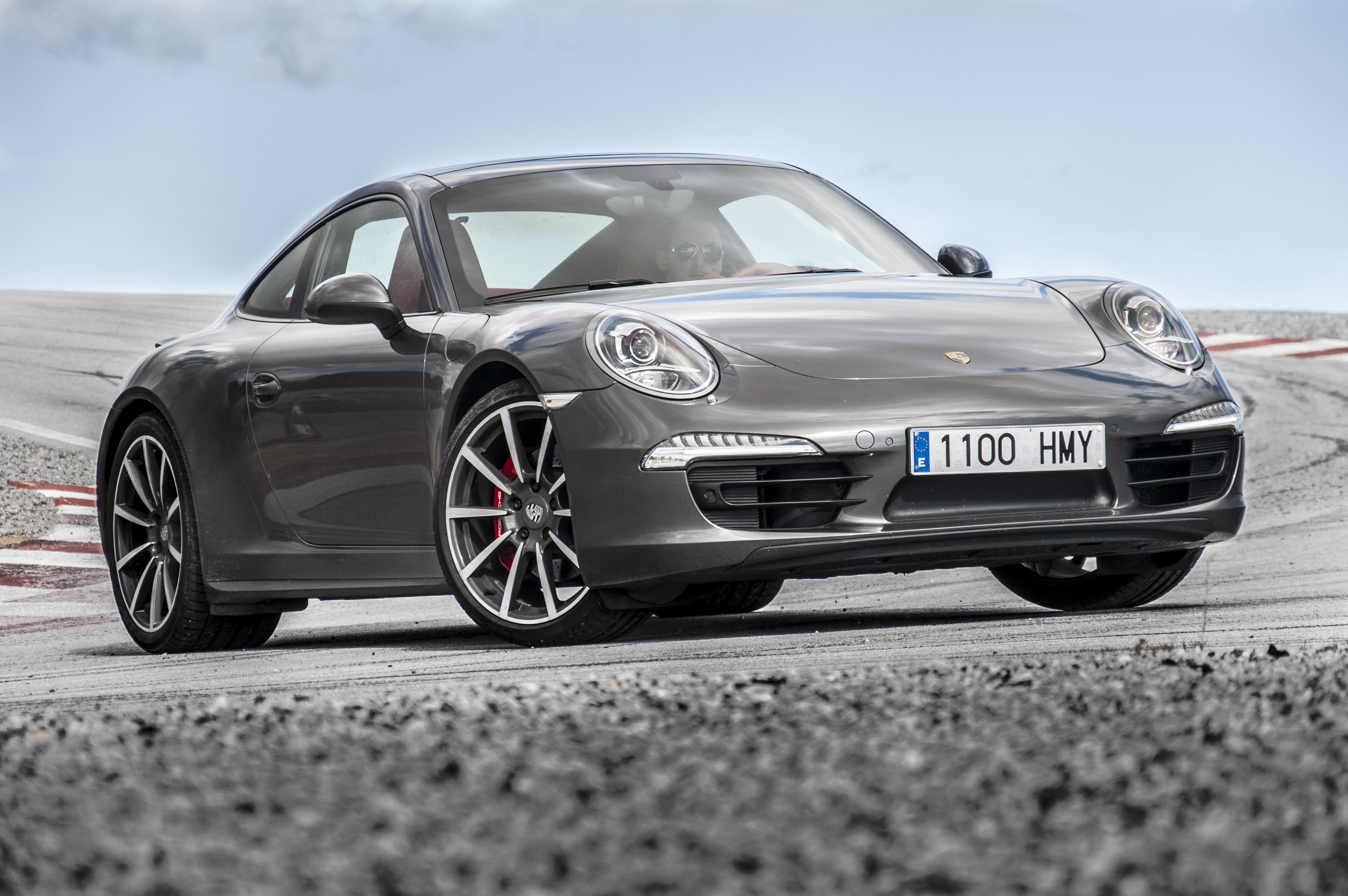
Porsche is a famous car brand that makes fast and stylish sports cars. Many people dream of owning one because they are known for their performance and design.
Aerodynamics is how air flows around cars. In racing, making a car more aerodynamic helps it go faster and handle better by cutting down on air resistance.
Energy management is about how drivers use fuel or battery power during a race. It helps them go faster while making sure they don't run out of energy before the race ends.
Energy deployment is about how drivers use the energy stored in their cars. They have to decide the best times to use that energy to go faster without running out too soon.
Vehicle efficiency is about how well a car uses its energy. In racing, it's important to use energy wisely so the car can go faster without wasting power.
A combustion engine is a type of engine that makes power by burning fuel like gasoline. It works by creating small explosions inside the engine that move parts to make the car go.
An electric motor is a part that uses electricity to create movement. It's different from a combustion engine because it can start providing power right away and is often used in electric cars.
E-Power is a type of hybrid system where the car uses both a gasoline engine and an electric motor. The gas engine helps charge the battery, which then powers the electric motor that drives the car, making it feel more like an electric vehicle.
LIVE
Welcome to the AI Auto podcast with Javier Moda, your front row seat to wear artificial intelligence.
I think we are from the Italian.
Have you met Javier before?
Yeah, we just remember, yeah.
He was in Infinity.
Yes.
He's our team principal and managing director as well.
He's from the LA team and he's also vice president of the LA team.
So that means that all the big decisions, all the big mistakes, all the big mistakes are my fault.
Yes, but not really because you won the championship last year, so you didn't make too many mistakes.
But of course the top management says why you didn't win the team championship as well.
Oh, okay.
The manufacturer.
What is the difference?
Oh, yeah.
The advantage back here, the bonus.
Oh, the money.
The prize money to the team comes from the team.
We have three rankings.
We have the drivers' championship, which media-wise is the most important one.
Because the fan base tend to look at the drivers more than the specific team.
And they associate the team with the driver in fact.
Then there is the team championship, which is the ranking is given by the points of the two drivers of each team.
And then in Formula E, differently from Formula One, for instance, we have the Manufaktor championship, which is a third ranking.
And the way it is accounted is that basically we have only five manufacturers in the sport that produce the car.
And then you have five independent teams that buy the car from the other manufacturers.
And so the points are scored by both teams that use the same car.
Oh, got it.
But we always take the first two cars of any of the teams using the same car.
You built your car in Istanbul?
Yes, we built our own car.
Last year we had the customer team that was scoring points for us as well, which was McLaren.
So McLaren, until last year, was racing with an instant car.
Unfortunately, at the end of the season, they left the sport.
They are not racing anymore.
You don't see the McLaren team anymore.
So we only have our team.
So we compete with the Manufaktor championship with only two cars.
Oh, that's why you're doing it this year.
Any other teams approaching you to get your cars again or not?
Yes, but unfortunately we could not make it happen for this season because it was too late.
And it was difficult to swap one year to another because it's a quite complex process.
But of course we are in discussion for the customers.
And the new car is coming, right?
The new car is coming.
The new car is coming next year is the new cycle of homologation called Generation 4.
Because every four years we call, let's say, these homologation cycles as generations.
And next year we start with Generation 4 and we are in discussion for the customer team.
Could you explain a little bit about how it works, the generations?
They give you a paper and say, OK, you're going to develop this vehicle for the next two years or whatever.
How it works?
Yeah, in a way, basically the generations is a technical specs regulation in fact.
So Generation 1 was the first four seasons, then we're Generation 2 and then Generation 3.
And this is the last season of Generation 3.
What it means is that the car that we have been using in these four seasons in Generation 3,
they all have more or less the same technical specs.
We only could change little things, especially from the first two seasons to the second two seasons.
But overall, the power, the acceleration, the main specs, mainly the power of the powertrain, they stay the same.
And so it's like in other motorsports, it's basically the set of rules, of technical rules you need to respect.
Next year we start with Generation 4, but of course the process is quite long.
So we started as manufacturers, we started discussing with FIA and FIO, the owner of the sport, about Generation 4 three years ago.
And to be honest, it was quite an open and constructive conversation because as manufacturers,
our interest is to keep the sport very relevant for the core business, for automotive,
because what I think and what is quite unanimously agreed,
Formula E is probably the most relevant motorsport for mobile because of the electrification and the IP we generate and the R&D that we can transfer to the core business.
And because of that, though, we want to keep the technical specs relevant for us.
So for instance, one point that for Nissan was very important for Gen 4 was the introduction of all wheel drive cars.
Because Nissan is very strong on pickups and cars where all wheel drive technology is very important.
And we wanted to prove our abilities in the sport on the all wheel drive technology.
So we were, as Nissan, pushing for the introduction of all wheel drive, which was also supported by other manufacturers, at the end it was approved.
So it was quite an open and constructive conversation with FIE that ultimately decides the regulations.
Excuse me my ignorance, but have been in the past any open wheel formula all wheel drive?
No, well we have all wheel drive now, but it's only during the attack mode, only for eight minutes in the race.
Next year will be full all wheel drive all the time. I don't think we have any other example in any categories open wheel or all wheel drive.
It is a challenge.
It's a huge challenge.
The engineering and the driving as well, because the front all of a sudden becomes very heavy.
That's why we'll have some assistance to the steering wheel.
But for us as Nissan, we have already put in place a connection between R&D of the core business to the Formula E development in Gen 3.
And we have actually implemented a lot of solutions in the power train development coming from the core business.
And Gen 4 gives us the opportunity to do it also on the all wheel drive technology and the control system in general.
Which is a big, big opportunity for us to showcase our expertise on these areas.
Do you want a driver at any point or you're not a driver?
Are you a driver?
No, personally, no.
Never been a driver.
Okay, back it up.
To go to the office.
I'm asking to be appointed team leader.
I thought you have to have experienced drivers.
Make me call experienced.
Usually people in my position come from two main backgrounds.
Either are previous drivers that, like Christian Horner, for instance, was a driver.
And then step by step changed career and became a team principal.
Or usually they are engineers.
And then start as engineer, race engineer, blah blah blah, and they do their careers and become team principal.
I've never been none of them.
I'm a little bit an exception, but they are some team principal.
I'll make more and more than Christian or not.
I will transfer this to my boss.
Now there are few team principals, especially nowadays, that motorsport is becoming more a structure industry.
You start to have profiles which are more like business, like myself.
In a completely different scale, Total Wolf is a business person.
Of course we are talking about a completely different scale.
Let's come back to the all wheel drive and the configuration of the motors.
You're going to have now two motors.
How many motors do you have?
So we have already two motors.
You have two motors.
One in front for only for the attack mode.
And one back.
And one back.
For the next generation it's going to be two motors.
Always on.
Always on.
That's why you will have all wheel drive.
And which again was a condition that Nissan was pushing hard to have in the regulations of Jam 4
to make sure that we were increasing the areas where our engineers in Japan could give us.
But they call it going to be crazy fast.
It's going to be crazy fast.
We have done already some testing and drivers are really impressed.
Our cars now on the straight line, on the pure acceleration are faster than Formula 1 cars.
And Jam 4 cars will be even faster than the Formula 1 cars.
Corner speed is much more impressive.
Yes.
Of course on the lap time we missed the downforce that is in other categories.
So for sure our corner speed will be much stronger than what we have now.
But I don't think we will arrive at the level of categories like Formula 1 where the downforce
keeps the car attached to the ground.
But it will be a huge step forward.
So there's a lot of people who still don't look at Formula 1 like interesting or entertaining
kind of motorsports because there's no noise and all these other things that Formula 1, they're used with Formula 1.
In general for the car, for the racing, how you convince people to come and watch or follow the race.
And then for the core business like the consumer cars, why is electric you think is a better solution.
I don't know if you think that but I think you do.
I have a similar opinion on both areas.
First of all on motorsports, sometimes honestly I do not understand why people consider Formula
E an antagonist to other categories.
The same way if you like sport cars you would love to have a Porsche, a Lotus, a Ferrari,
you would love to have one of each.
I think also when you follow motorsports, I love Formula 1.
When I was in infinity I was working in Formula 1.
And I love Formula E and I think they are just different and they work in a different way.
And the thing though with Formula E, we have a different fandom.
With all the researchers that we run as Nissan but the sport runs as well and quite online,
only half of people following Formula E are traditional motorsport fans.
Which we hope they will grow and they are growing year after year.
But what is interesting is also that we attract people who are not necessarily fans of motorsport
and they like more this way of racing which is more strategic, more about energy management.
Your driver compared to cycling a little bit in the strategy sometimes.
Yeah, what is really interesting and probably we still have to do this job altogether, manufacturers
and the sport to let people understand how the race works.
Because the moment you get it, I think it's very exciting.
So in short, in other categories, there is a lot of work in setting up the car for the race, obviously.
Probably even more than us in some aspect.
When you have to touch aerodynamics and things, of course you open up a world of possibilities.
But then when you race, drivers have to manage tires and then other than that, they need to go as fast as possible.
In our case, a driver has a chess game in front of him.
So he has to manage tires, this is a given for any category.
But then he has the energy management which is a level of complexity that no other motorsport has.
So in short, we all have the same amount of energy and we all have the same amount of power in the car.
So the game is in being the most efficient in using this power, this energy and the regeneration to be the fastest at the end of the race.
Which doesn't mean being the fastest in every single lap, because in some laps our drivers just try to regenerate more than others.
So to be more efficient in the way they drive, not losing too many positions.
And they need to choose when to push, when pushing really makes a difference.
It is not a waste of energy.
So it is a moving target between the optimal relationship between regenerating and deploying energy, which is a level of complexity that no other motorsport has.
And this is done of course a lot with the engineers supporting the driver, but a lot of the drivers themselves in understanding how efficient they can be in the driving.
So this makes I think the race super exciting because I hope when you will watch tomorrow there is a lot of overtaking, there is a lot of strategies.
Some drivers give up positions because they know that this is the best thing to do in that lap.
And then you have the attack mode on top of it, which is this famous eight minutes that you share in two stages where you can activate more power and all wheel drive technology.
So your performance is all of a sudden much faster than any other car around without it.
So also the decision when to use it is very strategic and dictated by the vehicle efficiency.
And all cars finish the race with zero bashing.
Because if you finish with zero five, you have wasted zero five percent of your energy.
So it's such a complex game that the moment is, and this is the challenge, the moment is communicated well to public.
I think it makes this sport super exciting.
Qualifying is also I believe more exciting because it's not just all cars together in a group trying to set the best time like in other categories.
We do this only at the beginning into groups, but then you have like in tennis or football, you have duals.
So you have quarter final, semi-final and final.
So two drivers only are on track at the same time and they have one shot to set the best time compared to the other one.
So there is a lot about the format which makes this motorsport I think very exciting.
And this is short as well.
This is the other thing that I think is the elephant in the room.
MotoGP attracts a lot of younger public.
Why? Because it's 20, 30 minutes.
And even a lot of fans of Formula One watch the highlights.
They don't really watch the race.
The beginning at the end of the race.
Our races are 45, 50 minutes max.
And it's packed with actions, overtakes, strategy, etc.
So that's why to me the barrier, we are growing.
It's not that we are not growing.
I think we are still at a global level around the fourth motorsport in the world in terms of fandom.
But what is still a barrier for many fans is just understanding it.
Just watching it.
Because I think the moment you get into it and how you work, it's super exciting.
It doesn't mean that you don't watch the others.
I personally follow Formula One as well.
It's an exciting motorsport.
You go home between races how many times?
Yeah, we go home between each race.
Of course, it's just that we tried with the sport.
We tried to make the calendar reasonable.
So we did Sao Paulo, Mexico, and now we do Miami.
So our cars, we go back home, but our cars and everything.
They kind of follow a logistic which is more manageable from the sustainability standpoint.
Which is very important for the city.
Motorites are always fun.
Tell us about how it works, the transfer of technology.
Because one of the reasons we are here, we are product guys.
We don't cover motorsport, but this guy convinced us that they put all the technology in the vehicles that we drive.
How it works?
So, first of all, if you look at how many car brands have in Formula E,
very few motorsports can claim the same.
And there is a real technical reason.
I believe Formula E is the most relevant motorsport for mobility.
And there is a reason.
The IP you can transfer on the development of the electric power train is huge.
And also on the control system of the car.
When you develop a combustion engine, we were discussing about it before,
when you develop a combustion engine, the window of the power delivery is very narrow.
So even within automotive, a combustion engine you develop for a sport car,
you will never use it for a city car.
Because the power delivery, you can modulate a little bit, but isn't that window right?
So, whilst an electric motor, you could use the same electric motor for a sport car or for a city car.
The only limitation could be business limitation.
Like, okay, it's too expensive to use it in my city car because the price never means too low.
But from the technological standpoint, you could, because the power delivery of an electric motor is dictated by the software.
So you can modulate it in a complete flexible way.
So, this difference in the technology projected in the two extremes of a formulaic car
or a normal electric vehicle makes the possibility to transfer solutions, ideas and IP very possible.
And it doesn't mean that you use the same parts because our motors are developed to last 20,000 kilometers
and hopefully our cars will be a little bit longer.
But it's a matter of reliability.
But the solutions you use, yes.
And this is on the motor development, on the power train development.
But then there are all the control systems, so the energy management, the all wheel drive system, etc.
that affect more than the energy efficiency, the vehicle efficiency.
And this is also another area which when you develop an electric vehicle on the platform is a priority.
So the two key performance differentiator of our cars, energy efficiency of the power train
and vehicle efficiency of the old vehicle with the control system,
are the two most important priorities for Nissan as automaker when you develop the platform.
Then you have the bodywork, design, interiors, ok, but on the platform at least.
When we started this project as Nissan, we put together a plan which is up to 2030 for the moment.
Which has a very precise schedule in terms of transfer of IP, first from the core business to Formula E,
which is the phase we are in.
And we did it already with the car we are racing now.
The hardware has been designed, utilizing some design that were developed by the advanced engineer department in Asugin, Japan.
And the car that we are using next season keeps on using these solutions,
but because of the all wheel drive technology, we are trying to transfer the algorithm of our all wheel drive technology in the car as well.
It's not confirmed yet, but this is another area where we want to transfer our solutions to the Formula E car
and prove that this can make a difference when you race in Formula E.
So this is the first phase.
Then by the end of 2030, we want to do the reverse.
So all the things we have learned in Formula E, pushing the technology to the limit of performance,
will start to be transferred to the core business.
And this doesn't mean only electric vehicles, also E-Power, our hybrid technology,
because it's all about the electric part of the power train and the all wheel drive management.
So it's not transferable only for pure electric vehicles, but also for our E-Power technology.
Pretty interesting.
Thank you very much for your time and good luck with the rest of the season.
You won the last race, so maybe more like that for the rest of the season.
Thank you. We could win Mexico, we finished third, we made a small mistake.
Paulino, you won the last championship, I'm sorry, not the last race.
The last championship, yes.
You won in Mexico?
No, no, third place.
Sao Paulo, second, Mexico third, two podiums in a row.
But it's frustrating Mexico because we made a small mistake which cost us the win.
That's what it is, that's crazy.
Thank you, you say in boca y lupo.
In boca y lupo.
In boca y lupo.
That's it for today's AI Auto podcast with Javier Moda.
Hope you enjoyed the ride as much as we did.
Tune in next time for more on how AI steering the wheel of tomorrow's autos
Drive safe, stay curious, and catch you later.
About this episode
Tommaso Volpe, Managing Director of the Nissan Formula E Team, shares insights on the upcoming Generation 4 cars and the unique aspects of Formula E racing. He discusses the significance of all-wheel drive technology, the strategic energy management required during races, and the importance of transferring technology from motorsport to consumer vehicles. Volpe also highlights the differences between Formula E and other motorsports, emphasizing the excitement of strategy and efficiency over sheer speed. The conversation touches on Nissan's ambitions and the evolving landscape of electric racing.
In this episode we go trackside at the Formula E Miami e-Prix 2026 for an in-depth conversation with Tommaso Volpe, Managing Director of the Nissan Formula-e Team, who breaks down the technological and competitive evolution of Formula-e, the strategic pillars behind Nissan’s success, and the innovations shaping electric motorsport. He also reflects on Nissan’s championship-winning momentum following the 2024–2025 season, and what it means for the future of high-performance electric racing.
Hosted by Simplecast, an AdsWizz company. See pcm.adswizz.com for information about our collection and use of personal data for advertising.