Instead of making the track perfectly flat, designers used the existing hills and terrain. That helps the corners feel like they flow into each other as you drive.
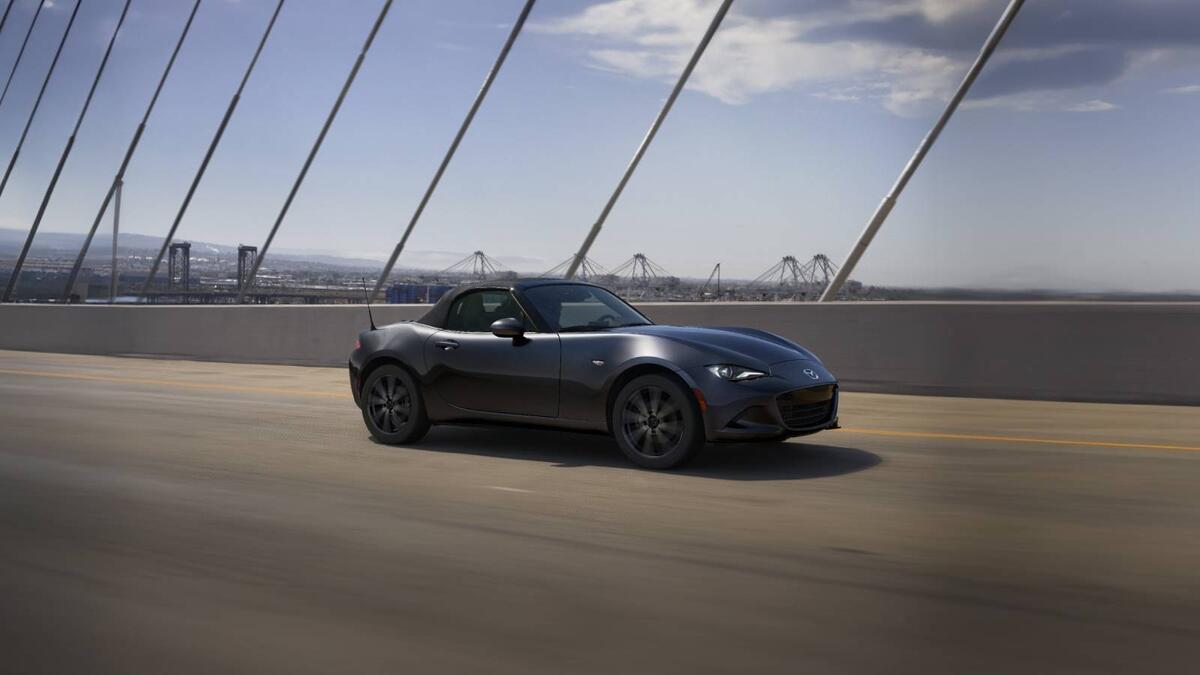
The Miata is a small two-seat car made for driving enjoyment. It’s not mainly about top speed—it’s about feeling connected to the road. That’s why people bring it up when talking about fun cars.
The Ferrari 488 is a very powerful, high-end sports car. In this story, the host says the Miata felt more fun than the Ferrari during back-to-back track driving.
The quote means you’ll usually enjoy track driving more when you can push a car hard. A super-fast car can feel boring if you’re not able to use its power safely or comfortably.
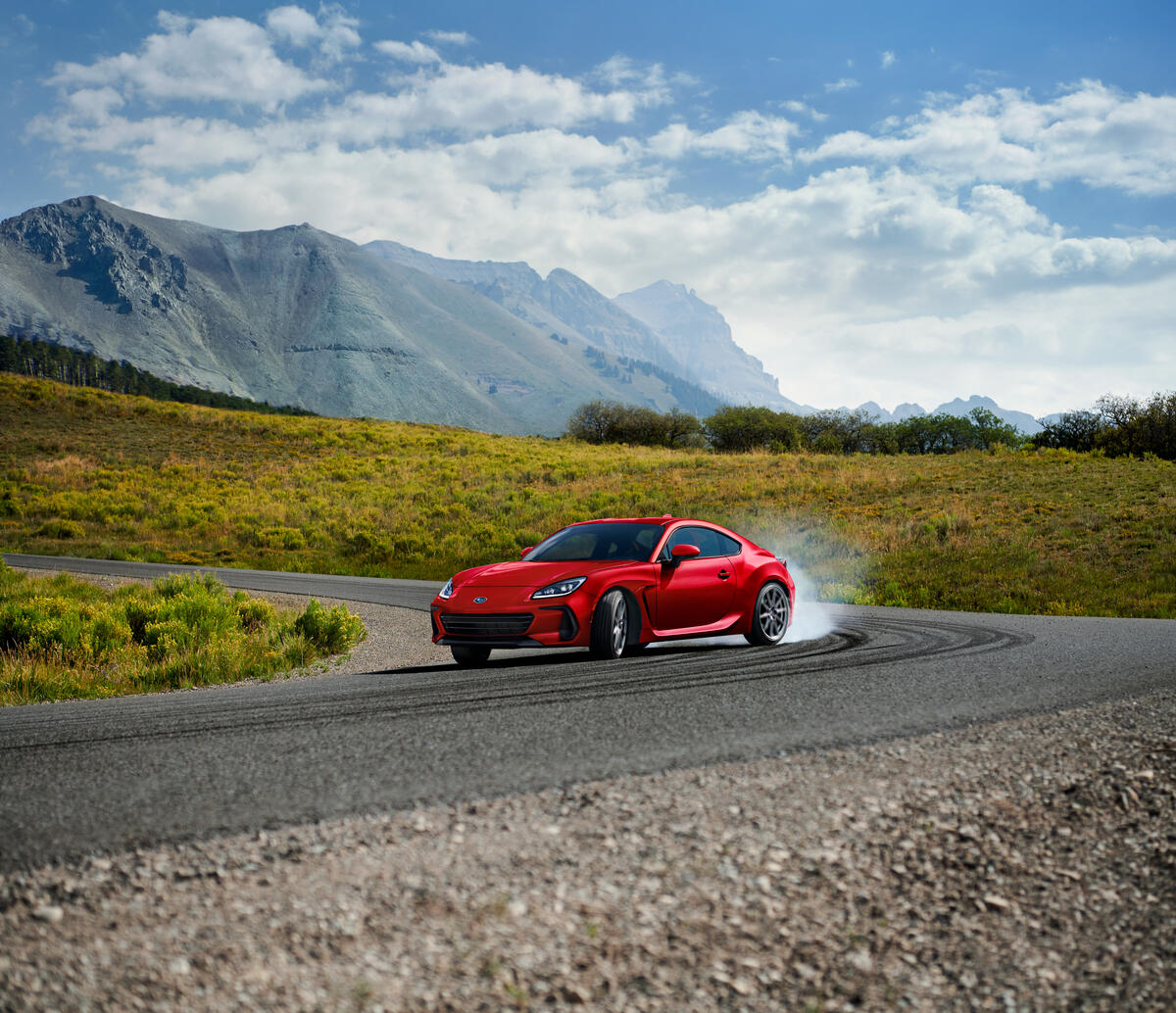
The BRZ is a small sports car made to feel fun when you drive it. It’s not mainly about being the fastest—it’s about handling and control. That’s why it’s grouped with other similar sports cars in the discussion.
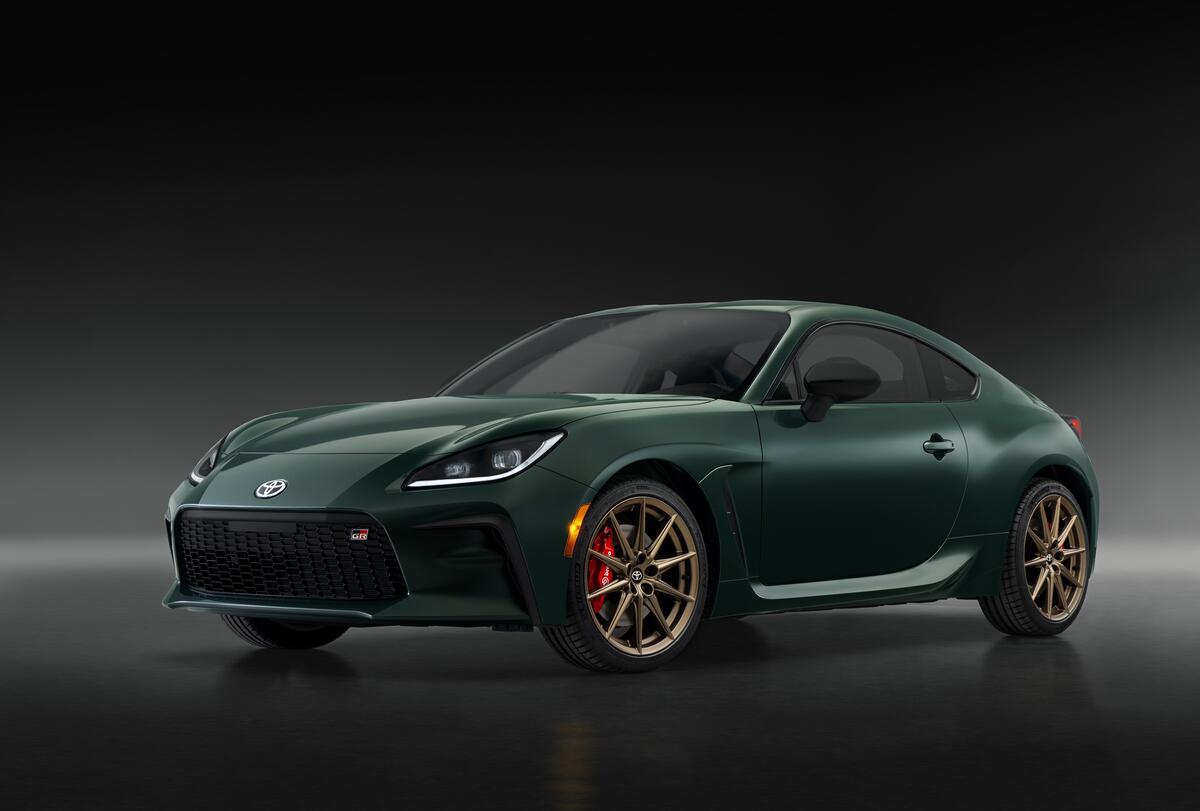
The GR 86 is a small sports car meant to be fun to drive. It’s designed to handle well and feel responsive, not just to be fast in a straight line. That’s why it’s mentioned with other similar sports cars.
The FR-S is a small sports car designed to be fun to drive. It’s meant to feel responsive and easy to enjoy, not just to be fast in a straight line. That’s why it’s mentioned with other similar sports cars.
Car
Toyota BRZ
The Toyota BRZ is a small sports car that’s built to handle well. The host is saying cars like this are more fun on track because they’re light and easier to drive quickly.
Car
Subaru FRS
The Subaru FRS is a small sports car meant to be fun to drive. The point in the episode is that lighter cars are easier to drive quickly on a track.
Concept
CGI events
“CGI events” here means a particular kind of organized track day. The point they’re making is that the way the event is run—clear rules and good safety setup—helps keep people safer.
The Dodge Durango is a big SUV. Here, they’re talking about one being driven at a track event, which matters because it’s heavy and powerful, so safety rules have to be taken seriously.
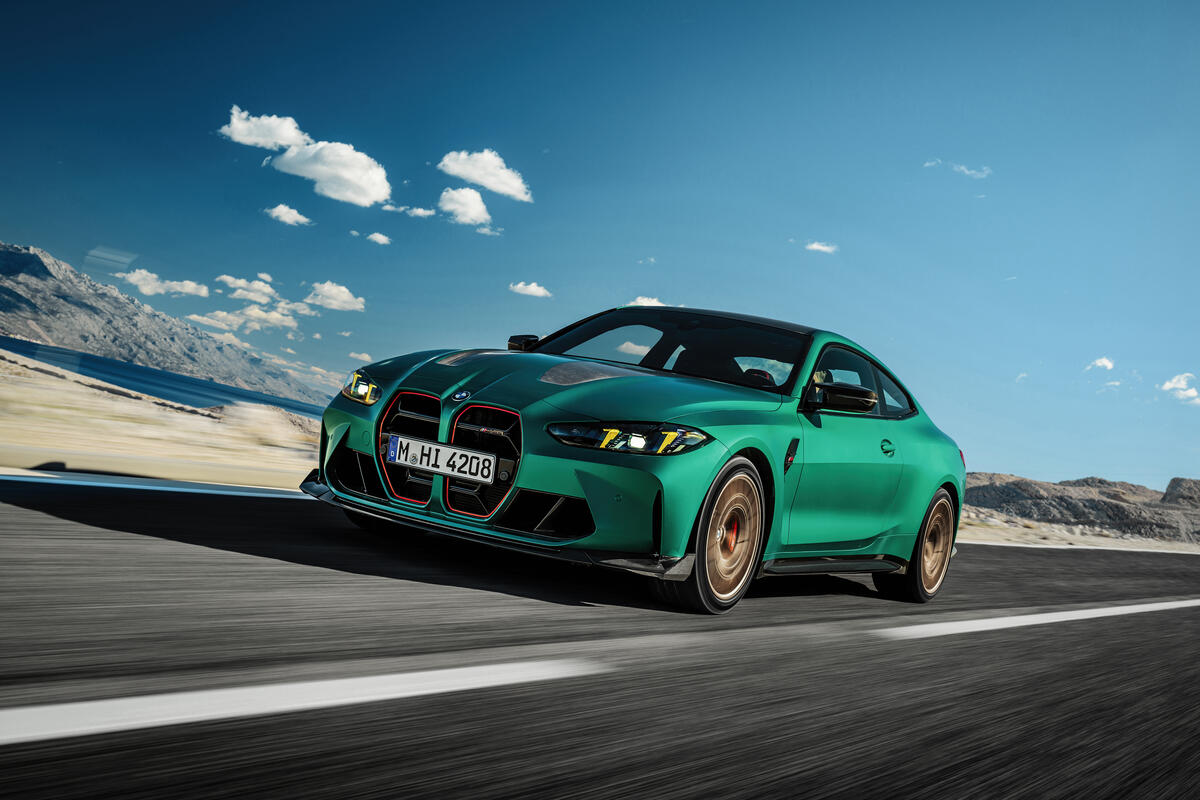
The BMW M4 is a high-performance version of a BMW sports car. It’s made to drive very aggressively, so it has more advanced systems than a regular car. If it has damage, repairs can be more complicated.
The BMW M5 is a powerful, performance-focused sedan. Because it’s built for high performance, it has more complex systems than a regular car. If it’s been damaged, repairs can be more involved.
High performance driving means pushing the car harder than you would on normal roads. The host is saying that people who only drive in traffic aren’t used to how quickly things change at track speeds.
A road course is a track with lots of different turns and sections. The host is pointing out that this kind of track is different from a simple oval, so driving technique matters more.
An oval track is more like a continuous loop with similar cornering most of the way around. The host is saying Road America isn’t like that—it has more varied turns.
Instead of waiting until you’re right at the corner to decide what to do, you look ahead and set up early. That way you brake and turn in a controlled way, not in a panic.
This is the moment you start slowing down for a turn. Starting at the right time helps the car stay stable and lets you turn smoothly instead of going too fast.
“Track out” means you move the car toward the outside of the turn as you finish it. The goal is usually to keep the turn wide so you can accelerate sooner.
It’s a little bit of gas you keep on while turning. The idea is to help the back tires stay stuck to the road so the car doesn’t start sliding and spin.
Term
computer will help you overcome your mistakes
Modern cars have electronic safety systems that can step in when the tires start losing traction. They can help the car stay under control if you do something wrong while driving.
This means you shouldn’t only look straight ahead through the windshield. You should turn your head and look where you want the car to go, because that helps you steer the right way—especially in tight turns.
A tight turn is one where the car has to change direction quickly. Looking to the side helps you judge where the road goes so you can steer more accurately.
“Smooth” driving means you turn the wheel and make inputs gently, not suddenly. Sudden steering can make the tires lose grip, which is extra risky on wet or icy pavement.
It’s a way to tell drivers to steer more gently and more slowly. The goal is to avoid over-correcting and making the car feel unstable, especially when traction is low.
The host mentions Formula One to make a point about steering. Race drivers don’t just wiggle the wheel—they control it carefully, sometimes slowly and sometimes very quickly.
NASCAR is brought up as another example of how drivers steer. The takeaway is that fast driving comes from controlled inputs, not constant frantic wheel movement.
The host uses Indy car racing as another example of steering control. Drivers adjust their steering inputs carefully—sometimes slowly, sometimes very quickly—based on the situation.
“Lost grip” means the tires can’t hold the road anymore. When that happens, the car can start to slide, and you have to correct quickly to stay in control.
The “front end” is the front of the car. If it loses grip, turning the wheel may not make the car go where you want, so you need to adjust your inputs to get traction back.
The “rear end” is the back of the car. If it loses traction, the car can start turning or spinning in an unexpected way, so you have to react fast to straighten it out.
The Corvette is a sports car made by Chevrolet. It’s known for being a performance-focused car, and many owners join clubs and events. In the podcast, it’s mentioned as a car that those groups often accept.
The Mustang is a sports car from Ford that’s been around for a long time. Many people like them, and they often show up in car clubs and meetups. In the podcast, it’s brought up as one of the cars that groups will accept.
HPDE means “high performance drivers education.” It’s a track event where you practice driving skills with guidance, usually without racing against other cars.
The Camry is a mid-sized family sedan meant for comfortable, everyday driving. It’s not designed to be a sports car—it’s more about being practical. The podcast mentions it to show you don’t have to own a sports car to have a good car.
LIVE
Well, today we're here in Rhodes America, the legendary racetrack here in Wisconsin.
I don't even know, I mean, I don't know how to, Elk Lake, I think?
Elkhart Lake.
There you go.
We're with Brad Pines, who is the chief instructor for CGI Motorsports, what that CGI stands
for?
Oh, it's a boring corporate name.
Oh, really?
It really is.
Can you make up something fun?
I do.
I say that we have certainly great instructors.
Oh, okay.
That's what I say CGI stands for.
Excellent.
I like that.
And certainly you do.
You do have great instructors because that's why you're here, right?
We have people out making sure that the drivers I hear at Rhodes America, members of the media
are safe and enjoying some of the cars.
We've been employed to work on the safety committee and really keep motorsports as safe
as we possibly can.
So this, we are here for the Mama Raleigh Midwest Automotive Media Association.
I live in Miami and somehow I sneaked into the Midwest.
So here was the first member for Florida to join.
And this is a great event because every year we come here, and I have to be completely
honest with you.
The first time they invited me, I was still running and they said, you can run the track
four miles.
Four miles.
So we did it.
Now my niece, they said like I shouldn't run anymore.
So I'm not running anymore, but that was a great way to learn the track because I've
been here before many, many times.
I'm not that good of a driver, but I've been there.
I never crashed.
That's the most important.
But I'm not like a superhero in the race tag or anything like that.
But anyway, that was a great way to learn the track because this is very, very technical.
Probably maybe with Laguna Seca and Coda, that high level of technical.
It's one of America's great racetracks.
Yeah.
It was one of the first permanent racetracks in America, I believe in 1955, Willow Springs
in Rosamund, California is older.
But what about at Watkins Glen around the same time?
Right about the same time.
I think it's 55.
Right about that VIR, excuse me, VIR is 57, Virginia International Raceway, correct.
And all of these, the great thing about the tracks of that era is that they use the natural
topography so that the corners flow one to the other.
The knock against some of the more modern tracks, especially the new Formula One tracks, is
they give you a problem to solve.
They're somewhat sterile and they're testing the equipment here.
The road really does flow around the landscape.
And it's just a pleasure to drive a track like this.
So again, at this event, the manufacturers bring the cars, not all of them are allowed
on the track because they're not capable, basically, right?
I mean, why do you want to drive, I'm not going to name names, but like a low horsepower
car in the track?
It doesn't make sense.
We have a Mazda Miata here too.
No, no, no, no, that's a great car to drive on the track.
I'm going to tell you a story.
Years ago, I was in California in the Malibu canyons and we did back-to-back test drives.
First one was a Ferrari 488, which is a Ferrari and it should be good.
Then we got the Miata and I have to be honest, the Miata was a lot more fun than the Ferrari.
Not saying that the Ferrari was bad, I'm just saying that you expect a Ferrari to be good,
but then you get into the Miata, you go 60 miles an hour, you feel you're going 100,
like manual transmission and all these things.
So I wasn't saying that about a Miata, but here there are some cars that are not that
capable of the Miata.
There's a very common saying that says it's a lot more fun to drive a slow car fast than
a fast car slow.
And driving a Miata or a BRZ or an FRS or a GR86, these are always going to be so much
more fun because you've got so much less weight, the car becomes almost like a part
of you.
I always think of it like I'm playing a musical instrument and it's absolutely, you and the
car become one and it's a lot more fun.
So again, a lot of cars, outroading, but I always enjoy your safety presentation
because you try to make it fun and reliable.
I mean, you really talk like how people basically make mistakes.
Well, the thing that if we were being deadly serious all the time, no one would really
listen and it really would kind of, we get tuned out.
So I have to mix in a little bit of humor.
And the thing that is really important is there are no speed limits on a racetrack.
Yeah.
You could.
That was great.
You could really get hurt.
Now you're wearing the helmet, you're in a car with lots of safety equipment, but the
potential is always there at a track event.
Having said that, this event, certainly the CGI events that we do at a different racetrack
called Ginger Man Raceway in Michigan, we have a superb safety record.
And that's because we take the time to sweat the details to make sure that everybody knows
the rules, that we have proper safety equipment, and we have a really good respect.
Here, one of the cars, for example, that are on the racetrack today is a Dodge Durango,
one of the variants.
As you'll be.
It weighs more than 5,500 pounds.
And the variant that we have today, the Jailbreak, has over 800 horse power.
Crazy, huh?
We're in the SUV.
That's a lot of mass, metal, that you get moving in one direction.
And if you are, I think the technical term is a knucklehead, and you try to throw that
around like a Miata, a bed and dangerous and expensive things can happen.
But the good news is, our journalists listen to me, praddle on on the dangers, and they
don't.
They don't hurt the cars.
We like to say that, you know, the faster you go, the slower your hands have to move.
Although I've heard that in the past, there's been a few incidents here in Road America,
because it's again, it's very technical, I hear like a BMW M4, M5 got a little damage
or a lot of damage, but mistakes happen.
And I want to get into that, because what's the most common mistake people without experience
make, and then people with experience make, because they're like two different levels.
Yes, probably the most people who have never done high performance driving, they're used
to driving in traffic, where their speed limit is the bumper of the car in front of them.
So their world is in a bubble that's way too small.
So they're surprised about what happens in front of them.
This is people on the highway, and they constantly react to changes.
When we go to the racetrack, the road is the same lap after lap.
We don't add different corners.
The track is the same.
So even a four mile racetrack, so this is a road course.
It's not an oval.
It's not a circle.
You go left, you go right, you go uphill, you go downhill.
Road America defines it as 14 separate corners.
I'll debate that.
I'll take a couple of them away, because they're not really corners.
But anyway, so you've got to change in direction.
You have a twisty road with long straightaways and high speeds.
So the trick is you must plan instead of reacting.
So if you are looking considerably further ahead than your average, I've never done this
before, driver would do, we're always on the racetrack planning for what comes next instead
of reacting.
One or two moves ahead.
Absolutely.
In fact, literally two moves ahead.
We at least.
So instead of being surprised by a corner, we're looking for where we will begin to apply
the brakes.
We're looking for where we will begin to melt off the brakes.
Where we'll stop going straight, begin the corner.
Some corners have a relatively slow rate of turn.
Some of them are relatively rapid.
And this larger racetrack has got a variety of different kinds of corners.
So another thing that is unusual about going from street driving to track driving is everybody's
going in the same direction and you can use the entire roadway.
Now, I'm not a traffic engineer, so I'm going to guess how wide a lane is.
I don't know, 16, 18 feet, I'm guessing.
This track might be 35, sometimes 40 feet wide.
A lot of room to move.
So the difference is, if I make a turn on the track radio, hopefully nothing bad has happened.
Nothing at all.
That's just routine.
But if you're in a parking lot and you make a quick turn, obviously you're going slowly.
If you're on a highway going 70 miles an hour, that turn is much larger.
Well, on the racetrack, our goal is to go as fast as possible.
So we want to make as wide a turn as possible.
So we don't stay in our lane.
We get to use the whole road.
And that's completely different from driving on the track.
There's a lot of technique involved in that.
Absolutely.
A lot of technique.
And you talk about the apron and everything.
Well here, for example, if you're driving on a country road and you're an enthusiast driver,
you're naturally going to kind of clip that corner.
Well, we call the inside edge of that corner the apex.
So we will turn in, meaning we will stop going straight.
We begin the corner at a particular spot.
And then we will clip that apex and then to make the corner as wide as possible, which
will allow the car to track out again.
So instead of making the track as short as possible, then you'd have to go really slow.
We make big, wide corners.
And then we can go flying through there.
And then brake straight.
And then accelerate also when you're straight, right?
Correct.
Yes.
More or less the formula.
Here's the deal.
If you want to use hard braking, and anybody who's ever driven in, well, if you're in the
north and you drive in the snow, this is exactly the same thing you do in your neighborhood
in the middle of winter.
If you're in a place where it rains a great deal in the tropical areas of the country,
it's the same thing.
It's slippery.
So if you're in Miami in a rainstorm, you don't jerk the wheel because the back end
would slide out.
It's the same thing in the snow.
It's the same thing on a racetrack.
So you guide the car with gentle hands.
You don't jump on the gas when it's raining in Miami, more snowing in Boston.
So it's a lot of similiarities, but obviously very different environments.
But is it true that accidents happen where people hesitate?
They're already doing something and they kind of stop a little bit and they try to restart.
And is that the same case on the road and on the track?
I will tell you that what will often happen is that people will think the only two controls
you have are the gas and the brake.
And if you are in the middle of a corner and you suddenly think, wow, the back end is starting
to slide a little, I'd better slow down and you hit the brake.
Well, what happens?
Think about it.
If you're driving in a straight line and you hit the brakes, the weight goes where?
To the front.
So if you're in the middle of a corner and you brake, that means you have less weight
on the back.
You're making it worse.
So actually on a racetrack, going around a corner, we teach you to accelerate slightly.
We don't even call it accelerating.
We call it maintenance throttle.
So what you're doing is you're taking a little bit of that weight and you're putting it on
the back of the car so the back end has grip.
However, the novice, the person who's never been on a racetrack before, they go into a
corner, they go, oh my gosh, I'm going too fast.
They hit the brakes, which makes it worse and they'll spin off the track.
That happens a lot when you were saying before like on snow or in ice because you start moving
and you panic and you start moving more and then you accelerate brake and
then you keep rolling around.
One of the nice things about modern cars is the computer will help you overcome your
mistakes.
So the trick is try to keep the first look where you want to go.
Oh, that's another one.
You have heard the story where, oh my God, there was only one light pole and the whole
parking lot and I hit it because you're looking at it.
So we train our eyes to look where we want to go.
Even if it's on the side window or whatever it is.
Especially if it's, we teach in the driving school, one of the things I point out is your
vision should not be limited by your windshield.
If you've got a tight turn coming up, you must turn your head and look out the side.
That's where the road's going.
Exactly.
So you have to look where you're going.
So what, through your experience, I don't know how many years you've been doing this
a lot.
But what would, if you have a couple of anecdotes or someone saying like, wow, I really learned
something.
What was the most important thing that people get surprised by, wow, this really helped me.
One of the things that I think I'm constantly surprised with is when we on the racetrack,
also true in slippery weather, also true whether it's wet or icy, is we really, it's the opposite
of what you see in a movie.
We talk about being smooth.
Now if you watch a movie, they're constantly moving the wheel.
They jiggle the wheel on the movies and somehow that makes the car go fast.
In fact, it's just the opposite.
If you ever, so we teach them to actually drive the car like their hands are underwater,
that they're moving slowly.
Now, if you ever watch racing Formula One or you watch a NASCAR or Indy car, the hands
of the driver move at two speeds, slow and slower and lightning fast.
Oh, okay.
When they move slowly, they are at the limit of adhesion, the ability of the tires to stay
on the track or below.
The instant the tires have lost grip and they have to grab the rear end or the front end
of the car, they have to make a correction and that correction is lightning fast.
So when we go to the driving schools, when our journalists drive on the racetrack, when
our enthusiasts drive on the racetrack, not in competition but for recreation, we try
to stay at that limit or just below so your hands move like they're underwater.
If you do start to lose the rear end of the car, you need to make a very quick correction
and then come back.
But often, instead of letting the car settle, someone will make a rapid change in steering.
They'll jump on the brakes and the poor car can't overcome the mistake and now you have
a crash.
Even though we're all that technology and all that kind of thing and things are going
to happen when those factors get to be there, I guess.
But you mentioned something and actually I was reading the headline and I think especially
young drivers get influenced by video games and movies and they think it's no big deal.
After they get an accident, they were said and they keep going.
But some simulations, real life is different.
I will have people who have done a lot of simulations come to the racetrack and some
of them and many of them are very skilled and that simulation work has really helped
them build the skills.
However, there are very real world consequences when you're on a racetrack but not in your
basement.
So that is, you know, there is no reset button.
Exactly.
If it's crash, it's crash.
So very interesting.
I mean, I hope this helps because a lot of people want to do this.
What we do is a privilege.
What we get to do and like come here, road, America.
I mean, how many people really like normal, quote unquote, normal people get to drive
it?
Not many.
There are a number of ways that ordinary, just regular people can drive on a racetrack.
There are clubs of owners of particular marks.
So the Porsche club, the BMW club, the Almey club, the Mustangs, the Corvette club and
many of them will accept people who have different kinds of cars.
You don't always have to have the, I've been, I've been an instructor at the Ferrari club
of America.
There's a Mercedes club.
So the Miata, the most driven car on a racetrack anywhere in the United States.
So there is an enthusiast, a non-competitive, not racing, but you can for fun, following
the rules, but for fun, you can drive on racetracks.
There's a wonderful, there's hooked on driving.
There's NASA, the national auto.
Not NASA to the space.
Not the space guys, the road racing guys.
So there are many different organizations that one can find.
The generic term for events like this is HPDE, high performance drivers education or
high performance driving event.
And some people call the same kind of event a driving school.
Some of them call it drivers education, but there are many ways to take your, my, anybody's
car as long as it's safe, has to be inspected for safety.
You can't have worn out tires, you have to have fresh brakes.
But it is safe.
I have had students in the family hatchback.
I've had a couple, a parent and a child who were in a family, you know, mid-sized sedan.
It was a Camry.
And you don't have to have a sports car.
You don't have a Ferrari or a Miata.
You learn the technique and then you move up.
Yes, any safe car.
And there are many ways in many road courses across America to get onto a racetrack.
But again, well, thank you for your time.
And hopefully again, this helps some people get into this and even people who know a little
bit or a lot like still take some tips.
Thank you very much for my pleasure.
Good to be with you.
Let's go and drive.
Okay.
And I hope I don't cross.
Great promise.
Go Aiman.
Hope that helps.
That's it for today's AI Auto podcast with Javier Moda.
Hope you enjoyed the ride as much as we did.
Tune in next time for more on how AI is steering the wheel of tomorrow's autos.
Drive safe, stay curious, and catch you later.
About this episode
At Elkhart Lake, the hosts talk with CGI Motorsports about why experts on track get listened to—especially when safety briefings, rules, and a safety committee are in play. They connect that theme to driving technique: planning instead of reacting, using smooth inputs, and understanding how braking, weight transfer, and tire grip limits can turn mistakes into crashes. The episode also explains why lighter cars can feel more fun, and how HPDE and driving schools help regular drivers learn safely.
In this episode, we head to the legendary Road America race track during the Midwest Automotive Media Association Spring Rally, where we get a private lesson from Bradley Pines, Chief Instructor at CGI MotorSports High Performance Driving Schools.
Hosted by Simplecast, an AdsWizz company. See pcm.adswizz.com for information about our collection and use of personal data for advertising.