
S7E31 - Why Don’t People Listen to the Experts on a Race Track?
About this episode
At Elkhart Lake, the hosts talk with CGI Motorsports about why experts on track get listened to—especially when safety briefings, rules, and a safety committee are in play. They connect that theme to driving technique: planning instead of reacting, using smooth inputs, and understanding how braking, weight transfer, and tire grip limits can turn mistakes into crashes. The episode also explains why lighter cars can feel more fun, and how HPDE and driving schools help regular drivers learn safely.
In this episode, we head to the legendary Road America race track during the Midwest Automotive Media Association Spring Rally, where we get a private lesson from Bradley Pines, Chief Instructor at CGI MotorSports High Performance Driving Schools.
Hosted by Simplecast, an AdsWizz company. See pcm.adswizz.com for information about our collection and use of personal data for advertising.
Willow Springs
"[130.7s] It was one of the first permanent racetracks in America, I believe in 1955, Willow Springs [139.2s] in Rosamund, California is older."
Willow Springs is a race track in California. They’re using it as an example of an older, early permanent circuit.
Willow Springs International Raceway is a California track known for its challenging layout and elevation changes. In this segment, it’s mentioned to support the speaker’s point about which early permanent tracks existed in the 1950s.
Watkins Glen
"[142.5s] But what about at Watkins Glen around the same time? [145.7s] Right about the same time."
Watkins Glen is a famous U.S. race track. They’re mentioning it to talk about how early permanent tracks were being built.
Watkins Glen International is a historic American road course often discussed in terms of its era and track character. The speaker brings it up to compare timing and development of permanent tracks in the mid-1950s.
VIR
"[148.6s] Right about that VIR, excuse me, VIR is 57, Virginia International Raceway, correct. [156.6s] And all of these, the great thing about the tracks of that era is that they use the natural"
VIR is Virginia International Raceway, another well-known U.S. road course. They’re comparing it to other tracks from the same era.
VIR refers to Virginia International Raceway, a well-known road course in Virginia. The speaker uses it as another example of an early permanent track and places it in a similar timeframe to other famous circuits.
natural topography
"And all of these, the great thing about the tracks of that era is that they use the natural topography so that the corners flow one to the other."
Instead of making the track perfectly flat, designers used the existing hills and terrain. That helps the corners feel like they flow into each other as you drive.
Some classic race tracks are built to follow the natural landscape—hills, valleys, and elevation changes—rather than being heavily engineered flat. That makes corner-to-corner transitions feel more “connected,” because the car is constantly reacting to changing elevation and grip conditions.
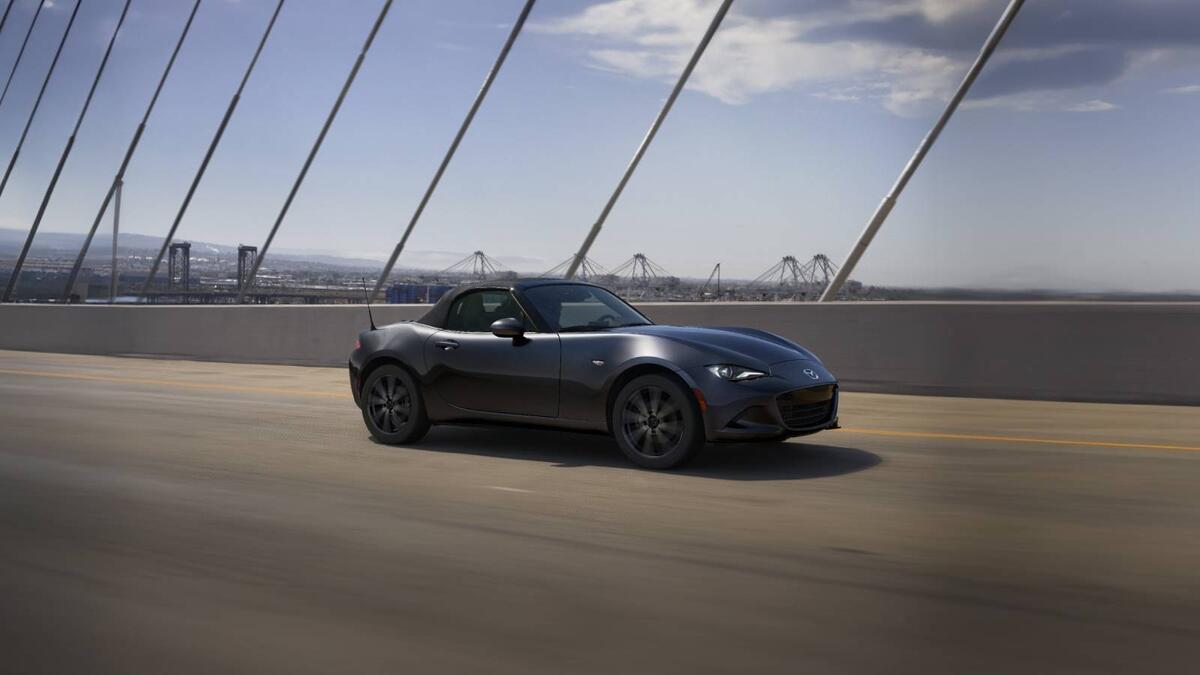
Mazda MX-5 / Miata
"It doesn't make sense. We have a Mazda Miata here too. No, no, no, no, that's a great car to d..."
The Miata is a small two-seat car made for driving enjoyment. It’s not mainly about top speed—it’s about feeling connected to the road. That’s why people bring it up when talking about fun cars.
The Mazda MX-5 Miata is a lightweight two-seat roadster known for being fun to drive rather than fast in a straight line. It often comes up in conversations about “real driving feel” because it’s small, balanced, and easy to enjoy on twisty roads. In the podcast context, it’s mentioned as a car that’s more fun than slower, heavier options.

Ferrari 488
"First one was a Ferrari 488, which is a Ferrari and it should be good. Then we got the Miata and I have to be honest, the Miata was a lot more fun than the Ferrari."
The Ferrari 488 is a very powerful, high-end sports car. In this story, the host says the Miata felt more fun than the Ferrari during back-to-back track driving.
The Ferrari 488 is a mid-engine supercar from Ferrari, built around a high-performance layout and strong acceleration. Here it’s used as a comparison point to the Mazda Miata to make the argument that a slower, lighter car can feel faster and more fun on track.
it's a lot more fun to drive a slow car fast than a fast car slow
"There's a very common saying that says it's a lot more fun to drive a slow car fast than a fast car slow."
The quote means you’ll usually enjoy track driving more when you can push a car hard. A super-fast car can feel boring if you’re not able to use its power safely or comfortably.
This is a driving philosophy often summarized as “drive a slow car fast.” The idea is that on track, being able to use more of the car’s capability (speed, braking, and cornering) creates more engagement than driving a powerful car gently.
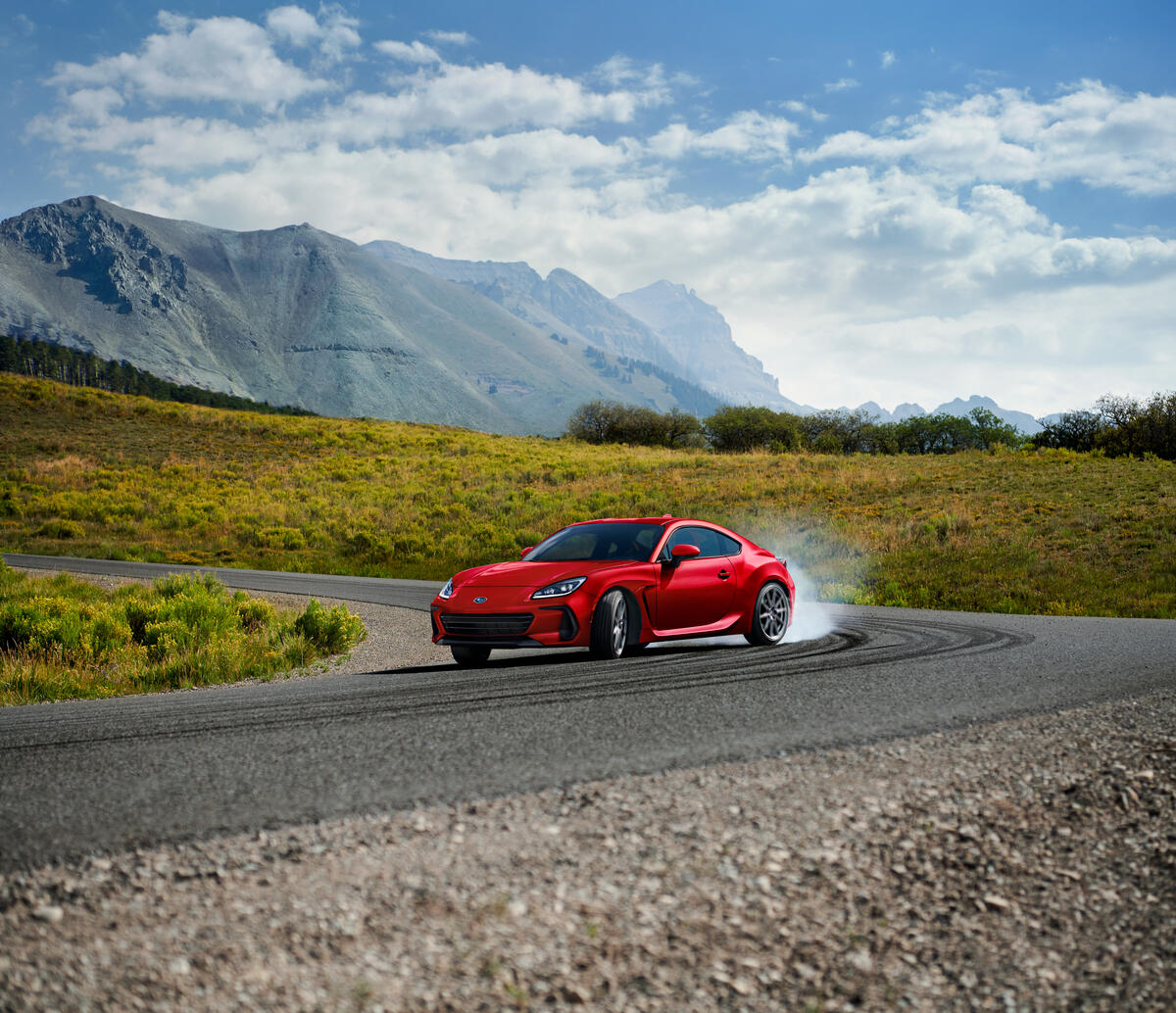
Subaru BRZ
"a fast car slow. And driving a Miata or a BRZ or an FRS or a GR86, these are always going to be..."
The BRZ is a small sports car made to feel fun when you drive it. It’s not mainly about being the fastest—it’s about handling and control. That’s why it’s grouped with other similar sports cars in the discussion.
The Subaru BRZ is a compact sports coupe designed for balanced handling and driver engagement. It’s often mentioned with cars like the Miata, GR 86, and FR-S because they share a similar “fun first” approach rather than chasing maximum power. In the podcast, it’s used as an example of a car that can be more enjoyable to drive than a slower-feeling alternative.
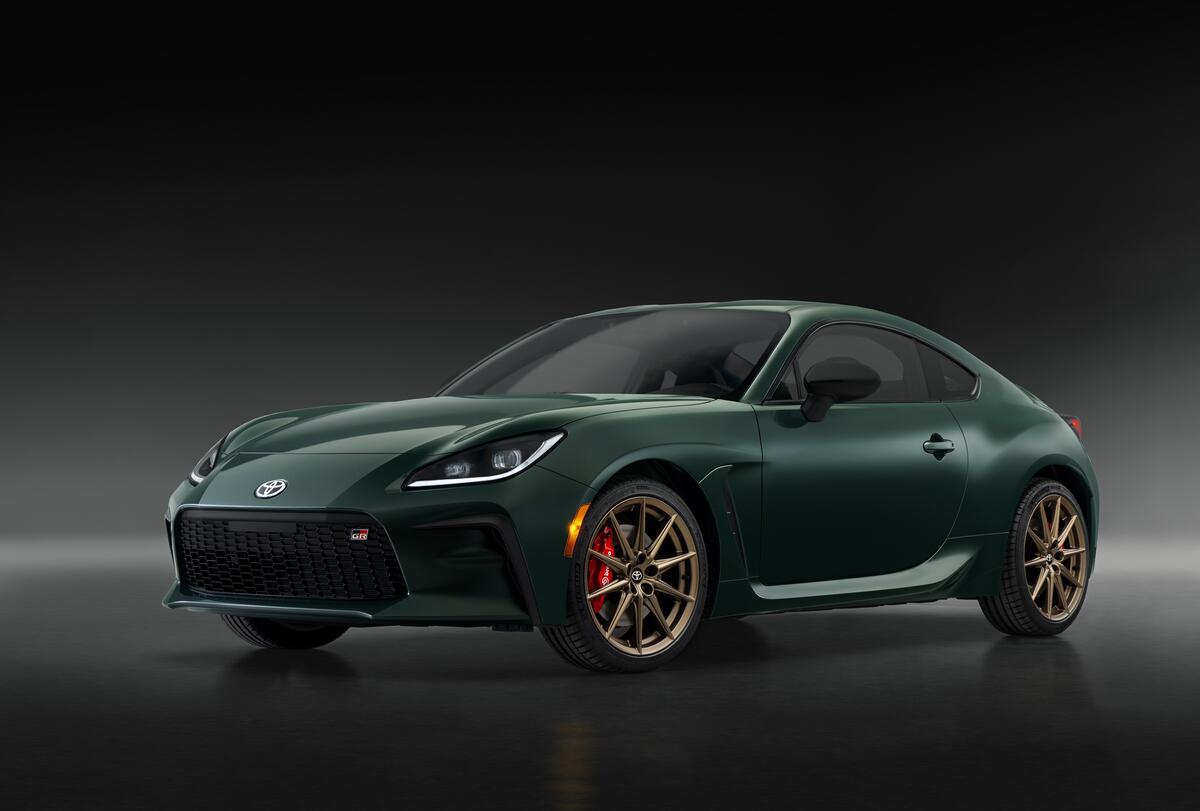
Toyota Gr86
"...slow. And driving a Miata or a BRZ or an FRS or a GR86, these are always going to be so much more fun be..."
The GR 86 is a small sports car meant to be fun to drive. It’s designed to handle well and feel responsive, not just to be fast in a straight line. That’s why it’s mentioned with other similar sports cars.
The Toyota GR 86 is a compact sports coupe designed to be engaging and predictable, with a focus on handling and driver feedback. It’s frequently discussed alongside other “small sports cars” because it can feel lively even when it isn’t the quickest on paper. In the podcast, it’s grouped with cars like the Miata/BRZ/FR-S as a more fun alternative to slower driving experiences.

Scion Frs
"...fast car slow. And driving a Miata or a BRZ or an FRS or a GR86, these are always going to be so much m..."
The FR-S is a small sports car designed to be fun to drive. It’s meant to feel responsive and easy to enjoy, not just to be fast in a straight line. That’s why it’s mentioned with other similar sports cars.
The Scion FR-S is a compact sports coupe known for being lightweight and fun to drive, with a focus on handling feel. It’s commonly discussed alongside the Miata, BRZ, and GR 86 because they represent a similar category of “small sports cars” that prioritize driver enjoyment. In the podcast, it’s included as another example of a car that’s more fun than slower alternatives.

Toyota BRZ
"And driving a Miata or a BRZ or an FRS or a GR86, these are always going to be so much more fun because you've got so much less weight, the car becomes almost like a part"
The Toyota BRZ is a small sports car that’s built to handle well. The host is saying cars like this are more fun on track because they’re light and easier to drive quickly.
The Toyota BRZ is a lightweight sports coupe known for its balanced handling and driver-focused feel, typically with a naturally aspirated engine and rear-wheel-drive layout. In this segment, it’s grouped with other light cars to support the claim that low weight makes track driving more fun.
Subaru FRS
"And driving a Miata or a BRZ or an FRS or a GR86, these are always going to be so much more fun because you've got so much less weight, the car becomes almost like a part"
The Subaru FRS is a small sports car meant to be fun to drive. The point in the episode is that lighter cars are easier to drive quickly on a track.
The Subaru FRS is a compact, lightweight rear-wheel-drive sports car (closely related to the Toyota 86/Scion FR-S platform). The host mentions it alongside the Miata and BRZ to emphasize how low weight can make a car feel more connected and enjoyable on track.
CGI events
"Having said that, this event, certainly the CGI events that we do at a different racetrack"
“CGI events” here means a particular kind of organized track day. The point they’re making is that the way the event is run—clear rules and good safety setup—helps keep people safer.
In this context, “CGI events” refers to organized track events run by a specific group or program. The hosts use it to connect event format to safety outcomes—claiming their safety record is strong because they focus on rules, equipment, and driver briefing.

Dodge Durango
"Here, one of the cars, for example, that are on the racetrack today is a Dodge Durango, [365.2s] one of the variants."
The Dodge Durango is a big SUV. Here, they’re talking about one being driven at a track event, which matters because it’s heavy and powerful, so safety rules have to be taken seriously.
The Dodge Durango is a full-size SUV that can be used in track-event contexts, even though it’s not a typical track car. In this episode, the hosts specifically discuss a Durango variant that’s being driven on a racetrack, highlighting how vehicle weight and power affect safety planning.
Road America
"Although I've heard that in the past, there's been a few incidents here in Road America, because it's again, it's very technical, I hear like a BMW M4, M5 got a little damage or a lot of damage, but mistakes happen."
Road America is a famous track that’s made of many different turns. The host mentions it because crashes and mistakes can still happen there.
Road America is a well-known road course in the U.S., meaning it uses a layout with varied turns rather than a simple left-right oval. The speaker references it to illustrate that incidents can happen even at experienced venues.
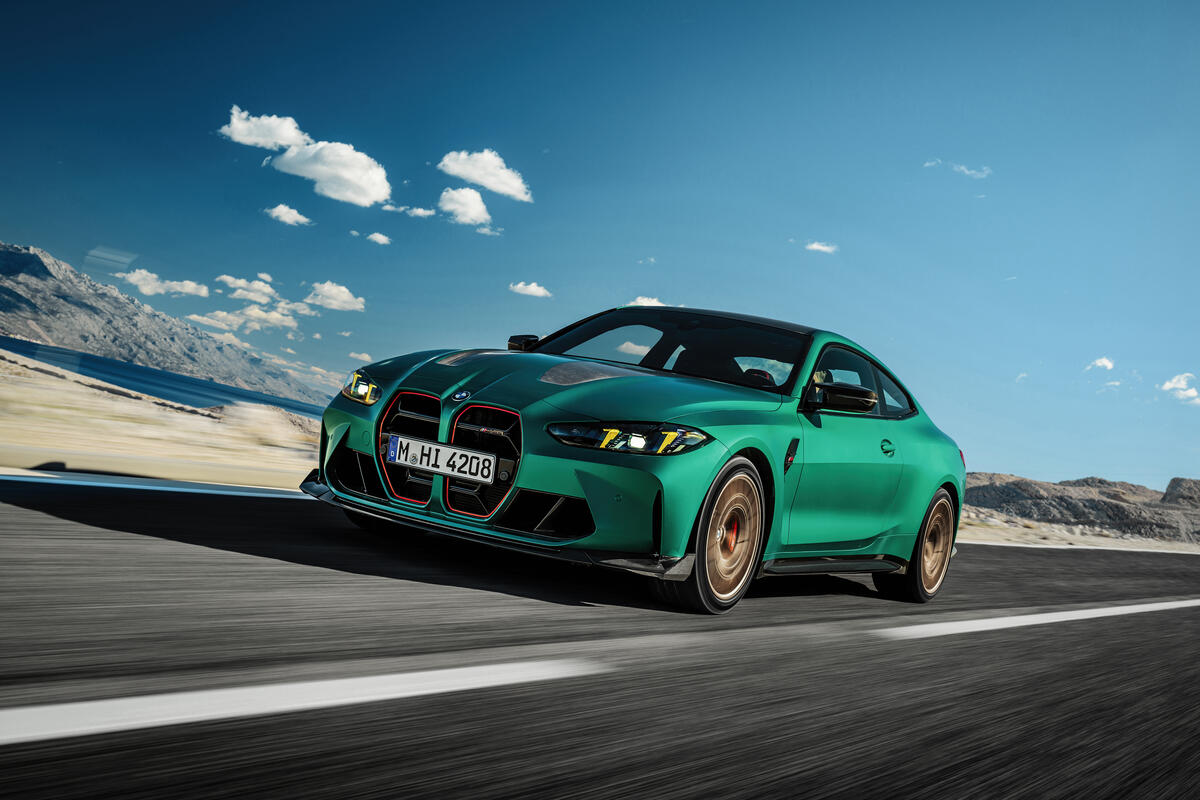
BMW M4
"...t's again, it's very technical, I hear like a BMW M4, M5 got a little damage or a lot of damage, but m..."
The BMW M4 is a high-performance version of a BMW sports car. It’s made to drive very aggressively, so it has more advanced systems than a regular car. If it has damage, repairs can be more complicated.
The BMW M4 is a performance coupe built for high-speed capability and precise handling, with systems that can be more complex than standard BMW models. In the podcast, it’s referenced alongside the M5 in the context of hearing about damage and the “technical” nature of these cars. That makes it relevant when discussing inspection and repair considerations.

BMW M5
"...again, it's very technical, I hear like a BMW M4, M5 got a little damage or a lot of damage, but mista..."
The BMW M5 is a powerful, performance-focused sedan. Because it’s built for high performance, it has more complex systems than a regular car. If it’s been damaged, repairs can be more involved.
The BMW M5 is a high-performance version of the 5 Series, built to deliver strong acceleration and confident control with a more technical, performance-oriented setup. It’s the kind of car people discuss in terms of condition and repair history because damage can be expensive to address on complex systems. In the podcast, it’s referenced in the context of hearing about M4/M5 damage and the technical nature of these cars.
high performance driving
"And I want to get into that, because what's the most common mistake people without experience make, and then people with experience make, because they're like two different levels. Yes, probably the most people who have never done high performance driving, they're used to driving in traffic, where their speed limit is the bumper of the car in front of them."
High performance driving means pushing the car harder than you would on normal roads. The host is saying that people who only drive in traffic aren’t used to how quickly things change at track speeds.
High performance driving is driving at speeds and with braking/turning demands that are much higher than everyday street use. The speaker contrasts it with traffic driving to explain why people without track experience often react too late or too abruptly.
road course
"So even a four mile racetrack, so this is a road course. It's not an oval."
A road course is a track with lots of different turns and sections. The host is pointing out that this kind of track is different from a simple oval, so driving technique matters more.
A road course is a track layout made of multiple types of turns and braking zones, not a simple loop. The speaker uses the term to clarify that Road America is a road course, which changes how drivers must manage speed and steering lap after lap.
oval
"So even a four mile racetrack, so this is a road course. It's not an oval. It's not a circle."
An oval track is more like a continuous loop with similar cornering most of the way around. The host is saying Road America isn’t like that—it has more varied turns.
An oval is a track shape where the racing line is mostly consistent, typically with fewer distinct corner types than a road course. The speaker contrasts oval racing with Road America’s road-course layout to highlight the different driving demands.
plan instead of reacting
"So the trick is you must plan instead of reacting. So if you are looking considerably further ahead than your average..."
Instead of waiting until you’re right at the corner to decide what to do, you look ahead and set up early. That way you brake and turn in a controlled way, not in a panic.
On a race track, “planning instead of reacting” means you look far enough ahead to set up your next actions before you reach the moment of braking or turning. Drivers use the track layout to decide where to slow down and how to position the car for the corner, rather than improvising at the last second.
begin to apply the brakes
"So instead of being surprised by a corner, we're looking for where we will begin to apply the brakes."
This is the moment you start slowing down for a turn. Starting at the right time helps the car stay stable and lets you turn smoothly instead of going too fast.
“Begin to apply the brakes” refers to the exact point where a driver starts decelerating for a corner. On track, braking is timed to manage speed and weight transfer so the car can rotate into the turn without overshooting or running wide.
melt off the brakes
"We're looking for where we will begin to melt off the brakes. Where we'll stop going straight, begin the corner."
It means you don’t just slam the brakes and then let go instantly—you ease off them gradually. That helps the car turn better and stay controlled.
“Melt off the brakes” describes gradually releasing brake pressure as the car transitions from slowing down to turning. The goal is to reduce deceleration load smoothly so the tires can grip and the car can rotate into the corner.
rate of turn
"Some corners have a relatively slow rate of turn. Some of them are relatively rapid."
This is how sharply the car has to turn in a corner. Some turns are gentle and gradual, while others make you turn in more quickly.
“Rate of turn” is how quickly the car changes direction through a corner. Some corners require a slower, more gradual steering/rotation, while others demand a faster turn-in, which affects braking release timing and how much steering angle you need.
apex
"Well, we call the inside edge of that corner the apex. So we will turn in, meaning we will stop going straight."
The apex is the closest point to the inside of a corner. Drivers use it to set up a smoother, faster way out of the turn.
On a racetrack, the apex is the inside point of a corner that the driver aims to reach. Hitting the apex helps the car rotate through the turn and sets up a faster exit by allowing the driver to “track out” toward the outside.
turn-in
"So we will turn in, meaning we will stop going straight. We begin the corner at a particular spot."
Turn-in is when you start steering into the corner. When you do it matters because it affects how you hit the inside point and how smoothly you exit.
Turn-in is the moment you begin steering into a corner, transitioning from going straight to following the curve. In racing driving, the timing and location of turn-in strongly affect how well you can reach the apex and carry speed through the corner.
track out
"And then we will clip that apex and then to make the corner as wide as possible, which will allow the car to track out again."
“Track out” means you move the car toward the outside of the turn as you finish it. The goal is usually to keep the turn wide so you can accelerate sooner.
“Track out” means letting the car drift toward the outside of the corner as you complete it. This increases the corner’s radius (it’s effectively a wider arc), which can help the car maintain speed and improve traction on exit.
weight transfer under braking
"If you're driving in a straight line and you hit the brakes, the weight goes where? [763.3s] To the front. [764.0s] So if you're in the middle of a corner and you brake, that means you have less weight [769.8s] on the back."
Braking makes the car “dip” forward. In a turn, that can take grip away from the back tires, which makes it easier for the car to slide or spin.
When you brake, the car’s weight shifts forward—this is called weight transfer. In a corner, braking shifts load away from the rear tires, reducing rear grip and making oversteer/spin more likely.
maintenance throttle
"So actually on a racetrack, going around a corner, we teach you to accelerate slightly. [779.9s] We don't even call it accelerating. [781.4s] We call it maintenance throttle."
It’s a little bit of gas you keep on while turning. The idea is to help the back tires stay stuck to the road so the car doesn’t start sliding and spin.
On a racetrack, “maintenance throttle” means applying a small amount of throttle while cornering instead of lifting completely or braking. The goal is to keep some weight on the rear tires so the car has grip and doesn’t rotate into a spin.
computer will help you overcome your mistakes
"One of the nice things about modern cars is the computer will help you overcome your [821.6s] mistakes."
Modern cars have electronic safety systems that can step in when the tires start losing traction. They can help the car stay under control if you do something wrong while driving.
Modern cars use stability and traction control systems to detect loss of grip and intervene by adjusting engine power and braking at individual wheels. That can help reduce the chance of a spin when a driver makes an error mid-corner.
vision should not be limited by your windshield
"Especially if it's, we teach in the driving school, one of the things I point out is your vision should not be limited by your windshield. If you've got a tight turn coming up, you must turn your head and look out the side."
This means you shouldn’t only look straight ahead through the windshield. You should turn your head and look where you want the car to go, because that helps you steer the right way—especially in tight turns.
This is a driving technique about “look where you want to go.” By using head and eye movement to scan the road ahead and to the side, drivers improve path planning and reduce the chance of steering toward hazards. It’s especially important for tight turns where the correct line depends on what’s around the corner.
tight turn
"vision should not be limited by your windshield. If you've got a tight turn coming up, you must turn your head and look out the side. That's where the road's going."
A tight turn is one where the car has to change direction quickly. Looking to the side helps you judge where the road goes so you can steer more accurately.
A “tight turn” requires more precise steering and better scanning because the car’s path changes quickly. The transcript links it to head movement—turning your head to look out the side—so you can judge the road’s direction and set up the correct line through the corner.
smooth
"One of the things that I think I'm constantly surprised with is when we on the racetrack, also true in slippery weather, also true whether it's wet or icy, is we really, it's the opposite of what you see in a movie. We talk about being smooth."
“Smooth” driving means you turn the wheel and make inputs gently, not suddenly. Sudden steering can make the tires lose grip, which is extra risky on wet or icy pavement.
In racing instruction, “smooth” means making steering and control inputs gradually rather than jerking the wheel. The idea is that abrupt movements can upset the car’s balance and reduce grip, especially on low-traction surfaces like wet or icy roads.
hands are underwater
"In fact, it's just the opposite. If you ever, so we teach them to actually drive the car like their hands are underwater, that they're moving slowly."
It’s a way to tell drivers to steer more gently and more slowly. The goal is to avoid over-correcting and making the car feel unstable, especially when traction is low.
The “hands are underwater” analogy describes deliberately slow steering input to avoid overcorrecting. It’s a training cue for maintaining stable vehicle attitude (direction and balance) by reducing the speed and abruptness of steering changes.
Formula One
"Now, if you ever watch racing Formula One or you watch a NASCAR or Indy car, the hands of the driver move at two speeds, slow and slower and lightning fast."
The host mentions Formula One to make a point about steering. Race drivers don’t just wiggle the wheel—they control it carefully, sometimes slowly and sometimes very quickly.
Formula One is referenced as an example of how race drivers manage steering inputs. The host uses it to illustrate that drivers modulate steering at different speeds—slow corrections when needed, then very fast movements when the situation demands it.
NASCAR
"Now, if you ever watch racing Formula One or you watch a NASCAR or Indy car, the hands of the driver move at two speeds, slow and slower and lightning fast."
NASCAR is brought up as another example of how drivers steer. The takeaway is that fast driving comes from controlled inputs, not constant frantic wheel movement.
NASCAR is mentioned alongside other series to support the idea that drivers vary steering input speed. The point is instructional: steering doesn’t need constant frantic movement to go fast.
Indy car
"Now, if you ever watch racing Formula One or you watch a NASCAR or Indy car, the hands of the driver move at two speeds, slow and slower and lightning fast."
The host uses Indy car racing as another example of steering control. Drivers adjust their steering inputs carefully—sometimes slowly, sometimes very quickly—based on the situation.
“Indy car” is referenced as part of a set of racing examples used to explain steering technique. The host’s message is that drivers use a mix of slow and very fast hand movements depending on what the car needs at that moment.
adhesion
"When they move slowly, they are at the limit of adhesion, the ability of the tires to stay on the track or below."
Adhesion is tire grip. At the limit, the tires are almost slipping, so the car becomes very sensitive to steering and braking.
In racing, adhesion is how much grip the tires can generate against the track surface. When the car is “at the limit of adhesion,” the tires are close to losing traction, so small inputs can cause the car to slide.
lost grip
"The instant the tires have lost grip and they have to grab the rear end or the front end of the car, they have to make a correction and that correction is lightning fast."
“Lost grip” means the tires can’t hold the road anymore. When that happens, the car can start to slide, and you have to correct quickly to stay in control.
“Lost grip” means the tires have exceeded the traction available from the tire/track interaction, so the car can no longer follow the intended path. At that point, the driver must react to regain control before the car rotates too far.
front end
"The instant the tires have lost grip and they have to grab the rear end or the front end of the car, they have to make a correction and that correction is lightning fast."
The “front end” is the front of the car. If it loses grip, turning the wheel may not make the car go where you want, so you need to adjust your inputs to get traction back.
When the “front end” loses traction, steering authority drops because the front tires can’t bite into the track. The car may push straight ahead despite steering input, requiring smoother inputs to regain grip.
rear end
"The instant the tires have lost grip and they have to grab the rear end or the front end of the car, they have to make a correction and that correction is lightning fast."
The “rear end” is the back of the car. If it loses traction, the car can start turning or spinning in an unexpected way, so you have to react fast to straighten it out.
When the “rear end” loses traction, the car can rotate around its front axle (often felt as oversteer). Drivers typically need to counter-steer and manage throttle/braking to bring the car back in line.
jump on the brakes
"Someone will make a rapid change in steering. They'll jump on the brakes and the poor car can't overcome the mistake and now you have a crash."
“Jump on the brakes” means braking suddenly and hard. If the tires are already close to slipping, that sudden stop can make the car lose control.
“Jump on the brakes” describes an abrupt braking input that can overwhelm available traction. If the tires are already near the grip limit, sudden braking can trigger a loss of control because the car can’t transfer weight and traction smoothly.
no reset button
"However, there are very real world consequences when you're on a racetrack but not in your basement. So that is, you know, there is no reset button."
In real life there’s no “undo.” If you make a mistake on track, you have to deal with it immediately, because the car and tires respond instantly.
The “no reset button” idea contrasts real-world driving with video games or simulations: in real life, mistakes have immediate physical consequences. Once traction is lost, you can’t simply undo the error—your only option is to recover in real time.

Chevrolet Corvette
"..., the BMW club, the Almey club, the Mustangs, the Corvette club and many of them will accept people who have..."
The Corvette is a sports car made by Chevrolet. It’s known for being a performance-focused car, and many owners join clubs and events. In the podcast, it’s mentioned as a car that those groups often accept.
The Chevrolet Corvette is a performance sports car known for its strong driving dynamics and dedicated enthusiast community. In the podcast, it’s referenced alongside other car clubs, highlighting that Corvette owners are part of organized groups and events. That’s why it comes up—Corvettes are a common, recognizable choice in those circles.

Ford Mustang
"...e Porsche club, the BMW club, the Almey club, the Mustangs, the Corvette club and many of them will accept p..."
The Mustang is a sports car from Ford that’s been around for a long time. Many people like them, and they often show up in car clubs and meetups. In the podcast, it’s brought up as one of the cars that groups will accept.
The Ford Mustang is a long-running American sports car/pony car known for its wide range of trims and strong enthusiast following. It’s mentioned in the podcast in the context of car clubs and events, where Mustangs are commonly accepted and represented. That makes it a relevant example of a popular platform with a large community.
HPDE
"So there are many different organizations that one can find. The generic term for events like this is HPDE, high performance drivers education or"
HPDE means “high performance drivers education.” It’s a track event where you practice driving skills with guidance, usually without racing against other cars.
HPDE stands for high performance drivers education. It’s a track-day format where drivers learn car control and driving technique on a racetrack—typically with instructors and rules—without needing to race competitively.
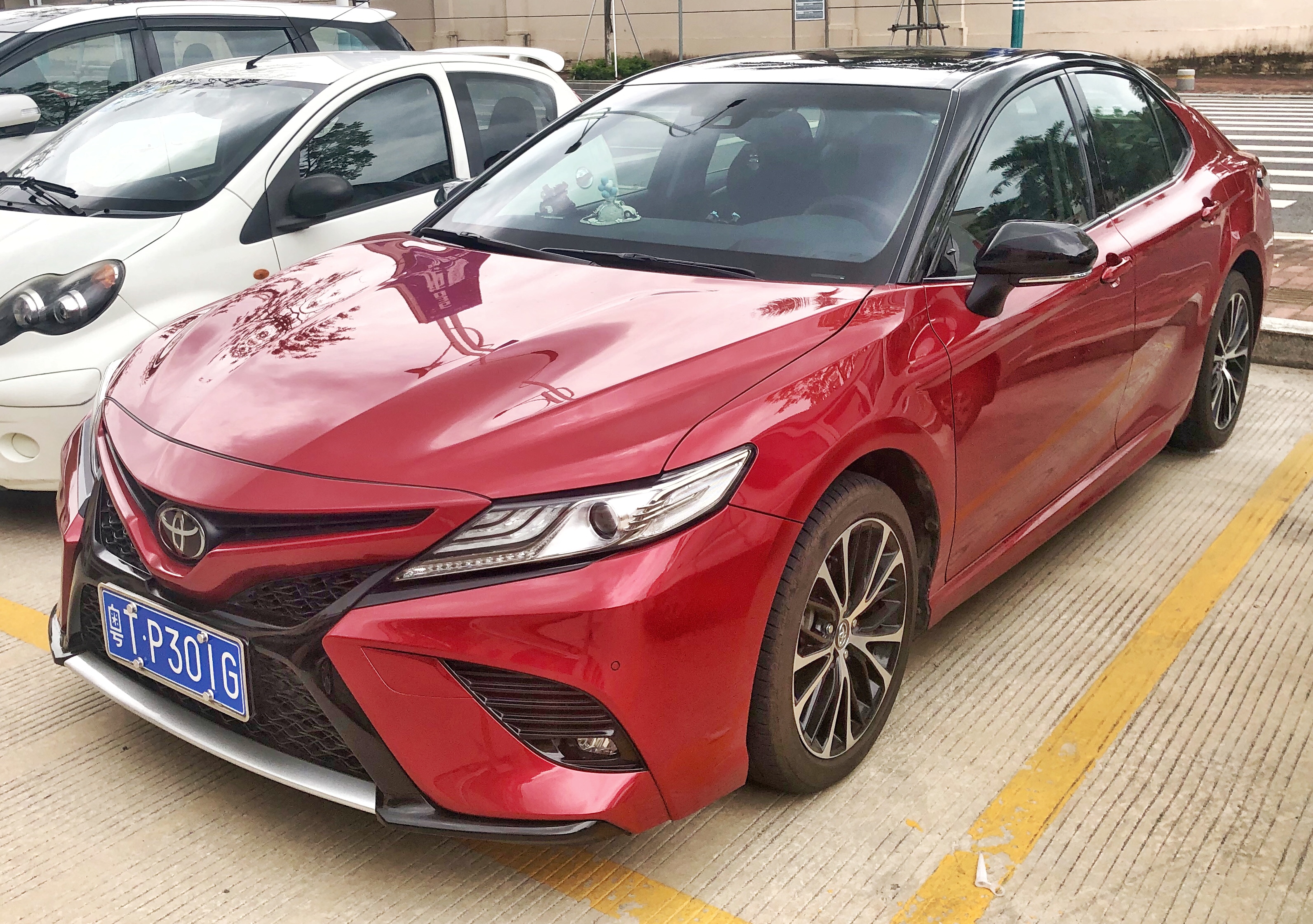
Toyota Camry
"... in a family, you know, mid-sized sedan. It was a Camry. And you don't have to have a sports car."
The Camry is a mid-sized family sedan meant for comfortable, everyday driving. It’s not designed to be a sports car—it’s more about being practical. The podcast mentions it to show you don’t have to own a sports car to have a good car.
The Toyota Camry is a mid-sized sedan built primarily for everyday comfort, practicality, and reliability. It’s discussed in the podcast as an example of a normal family car that doesn’t require sports-car expectations. That context contrasts “just getting around” with choosing a more performance-oriented vehicle.
Request an Explanation
Heard something you'd like explained? We'll add it to this episode.
Sign in to request explanations for terms you heard.
Want to learn more?
Browse our glossary for plain-English explanations of automotive terms, jargon, and concepts.
Help improve this episode
See something that's not quite right? Our annotations are AI-generated and can sometimes miss the mark. Click the flag icon on any annotation to suggest a correction.