The Toyota Corolla is a small, everyday car. People sometimes try to modify them for racing or rally driving, but that kind of driving is very demanding. The podcast is saying the converted Corollas didn’t hold up well.
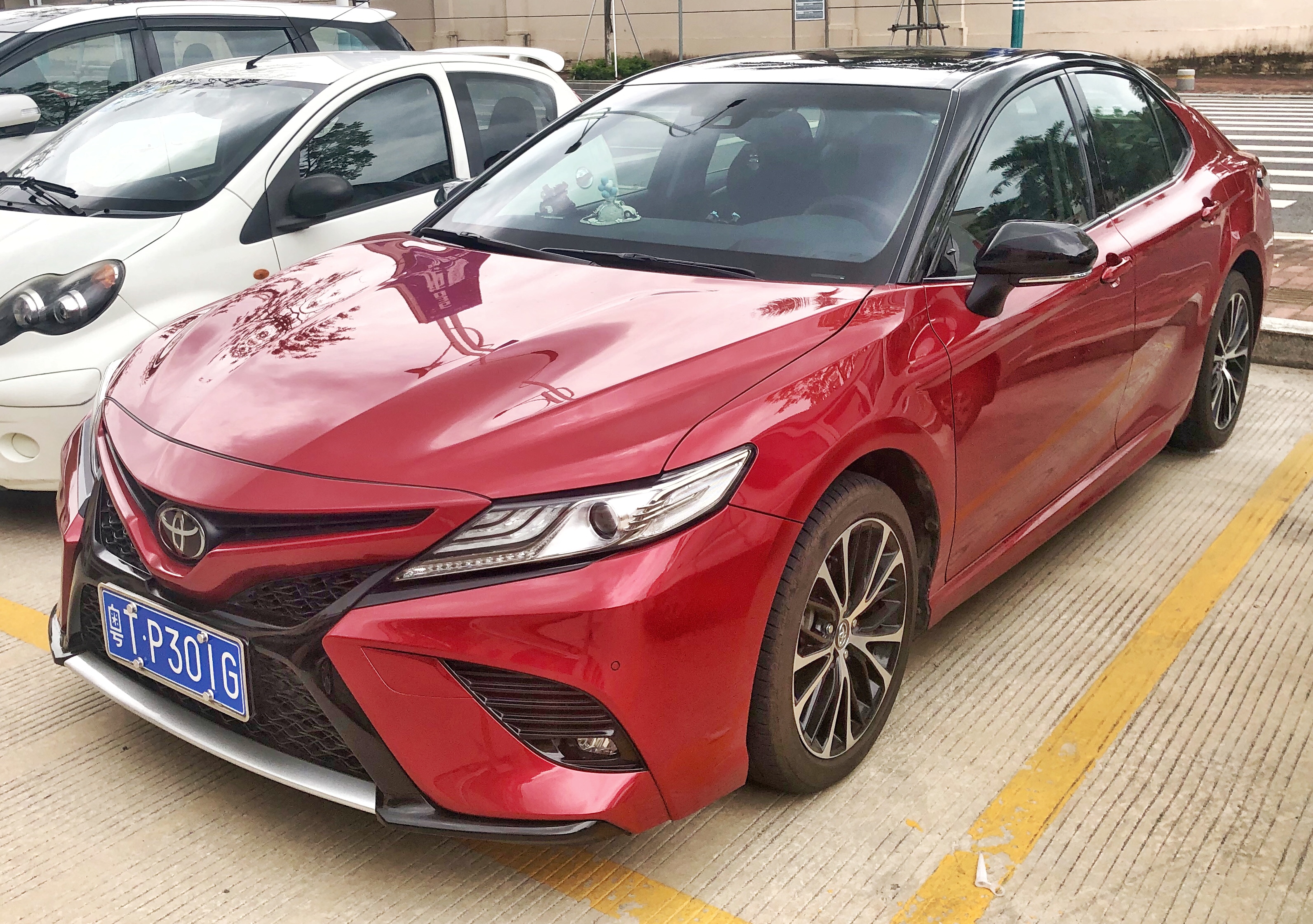
The Toyota Camry is a larger everyday car than the Corolla. It’s usually meant for normal driving, not rough racing. The podcast is describing Camrys that were modified for that kind of use and ended up badly damaged.
Car
Honda CRF 250s
The Honda CRF 250 is a small dirt bike that’s often used for trail riding. Here, they’re talking about the bikes they rode on the trip and a problem that happened with one of them.
In a bike engine, the cam chain helps control when the valves open and close. The cam chain tensioner keeps that chain tight—if it’s not working right, you can hear rattling.
A thermostat controls engine temperature by deciding when coolant should start flowing to the radiator. That helps the engine warm up correctly and not overheat.
Oxygen sensors read what’s coming out of the exhaust. The car uses that info to keep the fuel mixture right, and if the readings are off, you can get a check-engine light.
“Pre-cat” and “post-catalytic converter” refer to oxygen sensors placed before and after the catalytic converter. Comparing readings helps confirm whether the catalytic converter is working properly.
The engine light is the car’s warning that something isn’t right. It usually means the computer logged a fault code, often related to sensors or emissions.
VicRoads is the government office in Victoria that handles things like vehicle registration and license plates. They’re the place the host would order updated plates through.
Concept
restyled number plates
“Restyled number plates” means getting a new-looking license plate design for the car. The host says the online form doesn’t handle company-name registrations the way they want.
The Volvo XC40 is a small SUV from Volvo. Here, they’re talking about a 2018 XC40 with a 2.0-liter turbo engine (T5) and a regular automatic transmission, which is why they like how it drives.
CVT stands for a transmission that can change “gears” smoothly instead of shifting in steps. The speaker says their XC40 doesn’t have a CVT, and that’s part of why they like how it drives.
Two-tone just means the car uses two colors—usually one for the body and a different color for the roof. They’re pointing out the roof color difference on their XC40.
“Magic seats” means the back seats fold in a clever way. The point they’re making is that you can lay them flat to carry more stuff, even though the car is small.
The Suzuki Jimny is a small 4x4 that’s built like a traditional off-road vehicle. People either modify it for serious trails or just buy it because it’s fun and cute.
A ladder frame is a sturdy “frame” under the car, built like two main rails with bars connecting them. It helps the vehicle handle bumps and rough roads better than some unibody designs.
The host talks about two kinds of Jimny buyers: people who add upgrades for off-roading and people who just want something small and cute for the city.
They mean the electric version and the regular version are built on the same basic “bones.” That usually makes the car cheaper and faster to develop because manufacturers reuse a lot of the design.
In an electric car, the battery is the big pack that stores the electricity. The speaker is saying the electric version needs a much bigger battery than a normal (non-electric) version.
They’re talking about making the area around the tires wider. That helps fit wider tires/wheels and prevents the tire from hitting the body when you turn or drive.
R&D stands for research and development—the work required to design, test, and refine a product before it’s sold. The speaker is questioning whether the changes to the EV are substantial enough to justify the development effort.
The Mitsubishi Lancer is a compact car made by Mitsubishi. The podcast talks about a time period—“eight years”—connected to the Lancer. That suggests they’re discussing how long it’s been around or how long a situation has lasted.
The Fiat 500 is a small car designed for city driving. The podcast is talking about how many of them are still around. That helps show how easy it might be to find one today.
Bearings are small parts inside rotating machinery that help things spin smoothly. If they wear out, they can make loud whining noises and cause the unit to fail.
The radiator support is the metal frame that holds the radiator steady. If you need to reach something behind the front bumper area, you often have to move this support out of the way.
The slave cylinder is the part that actually moves the clutch parts. It uses hydraulic pressure from the master cylinder to push or pull the release mechanism.
The flywheel is a heavy spinning part on the engine. The clutch grabs it, and machining it means they resurface the contact area so the clutch can work properly.
The main spring helps push the clutch pedal back up after you press it. If it’s missing, the pedal might not return properly, which can cause clutch problems.
Push rod travel is how far the clutch release mechanism moves when you press the pedal. If travel is too short, the clutch may not fully disengage; if it’s correct, the release mechanism actuates the gearbox-side components as intended.
Full travel means the pedal/linkage moves far enough to do the job. If it doesn’t, the clutch might not fully release, so you can’t get the car into gear.
Gear grinding is the harsh metal-on-metal sound that happens when gears are not synchronized or the clutch isn’t fully disengaged. In a manual transmission, if the clutch doesn’t separate properly, the input shaft keeps spinning and the gears clash during selection.
The pivot ball is a small part inside the gearbox that acts like the “hinge point” for the clutch fork. If it’s not right, the lever can’t move the clutch parts properly. That can lead to clutch problems even if the pedal is being pressed fully.
“Gearbox out” means taking the transmission out of the car. It’s usually required when the problem is inside the gearbox and you can’t reach it easily. It’s more work than a quick external repair.
“Manualised” means the car has been converted to work like a manual. Conversions don’t always work perfectly right away, so you can get early problems that need fixing. That’s what the speaker is calling a temporary teething issue.
Grinding usually happens when you try to shift without the clutch fully doing its job. “No grinding” means the clutch and shifting are behaving correctly.
Term
fully engaged
“Fully engaged” describes the clutch being completely connected to the transmission when the pedal is released. If a clutch doesn’t fully engage, you can get incomplete power transfer, abnormal shifting behavior, or drivability issues.
The bell housing is the “connector” area between the engine and the transmission. If you swap parts, the bell housing (and related adapters) can determine whether everything lines up and works correctly.
“Sandwich plates” are thin metal spacers that go between the engine and the transmission. They help the parts line up correctly and sit at the right distance, so everything can move and engage properly.
A gearbox is the part that helps the engine power the wheels in different gears. On a manual car, you need the clutch to make the gearbox connect properly. If the clutch isn’t working, the gearbox can’t behave normally when you try to shift.
Here “bulbous” means the clutch hose gets swollen like a bubble. When that happens, the fluid pressure doesn’t push the clutch parts properly, so the clutch may not engage.
A hydraulic clutch uses fluid pressure to push and pull parts inside the clutch. If that pressure isn’t strong enough, the clutch may not fully disengage when you press the pedal.
Bleeding means getting the air out of the clutch fluid lines. Air makes the pedal feel wrong and can prevent the clutch from fully working, so bleeding restores proper operation.
“Knuckles” are parts near the wheel that help the suspension and steering connect. If they’re replaced or worn, it can change how the wheels sit and steer, which can make tires wear more evenly.
Power steering fluid is the liquid that helps your steering feel light and smooth. A “flush” means they drain out the old dirty fluid and put in new fluid.
A logbook service means you get your car serviced on the schedule the manufacturer specifies. It’s important because it can help keep your warranty valid if something goes wrong later.
A warranty is coverage that helps pay for certain repairs for a limited time. The speaker is worried that the warranty might not be handled the same way if there’s a disagreement about parts like tires.
Australian consumer law is the set of rules that protects car buyers. Here, the point is that if you service your car properly (as the manufacturer requires), you may not be forced to use only one shop to keep your warranty rights.
Genuine parts are the exact parts made for your car by (or for) the manufacturer. Using them can matter for warranty coverage because they match what the car was designed to use.
The Nissan Skyline is a popular Japanese car that enthusiasts really like. When someone says “Skyline money,” they mean it’s the kind of car that can cost a lot because it’s sought after.
The Honda Prelude is a sporty Honda coupe from Japan. Here it’s being talked about as an older Japanese car people already own.
Car
Holden Calais 2 wagon
This is a Holden wagon, and the problem they’re dealing with is the rear tailgate not opening. They think it may be related to how the latch/door mechanism lines up, and they mention a small electronic part that controls the release.
An alignment issue here likely means the tailgate or its mounting points aren’t positioned correctly relative to the body. Even small misalignment can prevent latches and power release mechanisms from engaging properly, which can stop the tailgate from opening.
Term
soft closed gate
A “soft closed” tailgate is designed to close smoothly instead of slamming. If the latch or release mechanism isn’t working right, it can cause problems like the tailgate not opening.
A solenoid is like an electrically powered “pull” that moves a latch. If it’s weak or slow, the door or tailgate might not open or close properly when you press the button.
The Toyota MR2 AW11 is the original MR2. The hosts are talking about special factory roof racks made for that exact car, which is why it’s a neat, uncommon detail.
The Nissan 300 ZX is a sports car. The podcast is saying they had a lot of them around at the event and that one was parked next to another similar car. It’s included because it was a common, noticeable sports car there.
They’re talking about a Toyota Celica from the early 1970s. They point out that the early versions look slightly different at the back, like the tail lights.
“Flat tail lights” describes a specific rear light shape used on early cars in this Celica discussion. It’s a visual identification cue: early 1971–1972 cars have a different tail-light layout than later versions.
They’re describing how the later tail lights are made of separate sections. That look is different from the earlier cars and helps you identify the version.
The tail light lens is the clear/red cover on the back lights of the car. If it cracks or gets damaged, or if you’re swapping parts from another year, you may need a replacement lens.
The petrol filler is where you put the gas nozzle when you refuel. Some cars put it in different spots, so if you’re used to one version, another version can feel “wrong” until you notice the change.
Restoring a car means fixing it up and bringing it back to a better, often “as-new” condition. Here, they’re describing work like repainting and interior updates.
Factory color means the car’s paint was the original color chosen by the manufacturer. It matters to collectors because it can be more “authentic” than a repaint.
White walls are tires that have a white band around the side. They’re a visual style choice, and the speaker is noting that this car didn’t have them at first.
The Ford Mustang is a sports car from Ford. It’s known for its distinctive look and driving feel. The podcast mentions it because another car’s design was inspired by the Mustang’s shape.
They’re saying the small Toyota might use an engine from a Toyota Yaris. That matters because it can make the car easier to maintain and parts easier to find.
The GMC Safari is a wagon-style vehicle. The podcast mentions a specific Safari wagon that’s being restored. That means it’s a project car that someone is working on over time.
A restoration project is when someone brings an older car back to a better condition. It usually takes time and involves fixing both the outside and the mechanical parts.
Original number plates are the license plates a car had when it first belonged to someone. Getting them back can make the car feel more “true to its history.”
The Honda Insight is a hybrid car designed to be efficient. The first generation is an older version of that model, and it can be pretty uncommon depending on where you live.
The Mazda 323 Astina is a sporty trim of the Mazda 323. Here it’s mentioned because it has pop-up headlights, which were a cool, distinctive feature on some older cars.
Pop-up headlights are headlamps that retract into the body and then rise when you turn them on. They were popular on many 1980s–1990s sports and JDM cars because they let the front end look cleaner while still providing conventional sealed-beam or projector lighting when deployed.
Trim work means fixing the car’s interior or exterior finishing parts—things like panels and covers. Here, it’s about repairing dashboard damage and cleaning up where old accessories were removed.
The dashboard is the front interior panel you see through the windshield. If it’s damaged, it can look bad and may need repair so everything lines up correctly.
The console is the center area inside the car, usually between the seats, with buttons or storage. In this case, something was mounted there before and removing it left holes that need fixing.
Sakura Picnic sounds like a car event or meet-up. The host suggests taking the car there, and the owner asks what it is.
Car
Subaru Sambar
The Subaru Sambar is a tiny Japanese van/pickup (a “kei” vehicle) designed for practicality in tight spaces. They’re just saying it was neat to spot at the event.
All-wheel drive means power goes to all four wheels. That helps the car grip the road better, especially on slippery surfaces.
Car
Mazda Astina
The Mazda Astina is a Japanese car that’s known for having pop-up headlights. In this segment, they’re excited to see several of them together in one place.
LIVE
This is a professional radio, gentlemen.
And it's front wheel drive.
Sorry, have you got anyone you want to thank?
Just myself.
And now we do the after hours.
General, what would you go for?
They see us in there.
Because it's not a super car.
It is.
It's not.
Automated perfection comes in the form of two letters, A and U.
Long live my LTD.
We're up in a car talk.
It's Shuzana here in Mali for 9 North West FM.
It's me, Matty J, online with Mr Jim Barlow,
Mr David Prince, Mr Rob Zidi,
Mr Chad DeBell,
Mr Adam Lee Singh, Mr Scotty Doe Johnson.
Full house, gentlemen.
How are you going?
Yeah, good.
Good.
Well, thank you.
Good to see you.
Your face is good to see you.
Welcome back.
Thank you.
Good to see you going well.
How was your trip, Rob?
The trip was very good, very hot.
38, 39 degree days every day for three,
like 200 bit weeks, three weeks, basically.
Oh, wow.
So it's pretty, pretty full on.
Yeah, real hot.
And that's probably why I probably end up getting pretty crook
being in air conditioning on the last few days
and then catch an airplane back.
I caught a pretty bad virus and sick for the week and a half.
So, but I'm back into it.
Besides the sickness, how was the trip?
It was an experience.
What happened, Dallas?
Well, if you, how could I explain it?
You think Vietnam is a little, you know,
underdeveloped and their road systems aren't anywhere in the
areas they should be and whatnot,
but when you get into Laos,
the Vietnamese roads are like a luxury.
Well, they're just, they're all sealed.
Very, very few potholes.
Yes, there's a lot of traffic and, you know,
in places and whatnot, but Laos is another level.
Their main highways are like our, you know,
Dargo back road to, you know,
somewhere up to Blue Rag or something like that,
one of our four-wheel drive tracks.
That's how bad it is.
And that's their main highway, you know,
and it's pothold out and there's trucks and there's bull dust
and there's bikes, four-wheel drives everywhere.
It's just like, it's just crazy, crazy.
And the bull dust is like next level.
It's like going through it out back, right?
And basically you can't see anything in front of you at all.
So when you get to a truck, you just have to stop.
Yeah, it's amazing the dust that we had to clean off
the four-wheel drive, our escort vehicle every day
was just phenomenal.
I had like, I'd say 45 inches of dust on the running
boards.
Wow.
And when you hit the dust, it's like hitting water.
Really?
It feels like you're actually flowing through water.
It's that much dust.
It's so fine.
It's unexplainable.
It really is.
So when you do see a river or a lake of that,
you're glad to see a bit of water to get yourself wet a bit.
So...
Is this your third time today?
Well, we didn't spend all that much time in Vietnam this time.
Okay.
It was pretty much two weeks in Laos.
Okay.
And we spent a couple of days on either side of that in Vietnam.
Oh, right.
Okay.
So most of it was spent in Laos.
The people are fantastic.
The food's great.
Very poor country.
But in Sanat, there seems to be a bit of development going on.
Australian company.
I saw Lin Fox trucks, believe it or not, on the road.
Oh, really?
Yeah, in Laos.
You didn't see any Chad's delivery trucks or...?
No, Chad's delivery trucks, but Lin Fox trucks I did.
Chad, I thought you were international now, mate.
Yeah, well, you know.
Not yet, apparently.
Not yet, not yet.
And then there is a lot of industry there.
I suppose trying to get into their resources.
Yeah, there's open-cut mines, rubber tree plantations,
a lot of paper mills, stuff like that all.
Yeah, I suppose trying to sort of build their country.
But it's a very poor country, very poor country.
People are friendly, as for some reason,
you get ripped with your exchange rates
because their currency is stronger than the Vietnamese currency.
There's only 8 million people, I think, in Laos.
Their currency is stronger, but when you get exchanged,
their currency back into Vietnamese and Vietnam,
Vietnam give you half the amount back.
Yeah, they rip you off.
You just get ripped.
But look, the beers are good, they're cheap.
And you drink plenty of beer after writing nine-hour days.
And yeah, you're looking forward to a nice cold drink.
So it's good.
Alright, so best part about the trip, Rob,
tell us what the best bits were.
Sitting by the river and watching the people
eating and socialising by the river on a hot night.
And you can just sit there and your drinks keep on coming.
But then they celebrated their new year.
It's called the water festival for three days straight.
And every time you go right through or go through a town
or stop at a town, they cover you with flour on your face,
splash you with water.
They tie wristbands on your wrist for good luck.
Oh, that's awesome.
It was phenomenal.
It was one of the best parts of the trip is the celebration
for three days straight.
And all the young kids are out dancing and music going
until about 11 at night.
And then they respect, you know, they shut everything down.
And the next day they'll be out there throwing,
having water fights, cars passing at each other
and backs of utes, full of people,
like the utes are packed with people splashing each other
with water up and down streets.
It's crazy, absolutely crazy.
It would have been a pretty surreal moment to see that
sort of stuff.
That's pretty incredible just to see it to witness, you know,
different countries' new year celebrations.
And I guess being amongst it and seeing how happy they are.
And, you know, it just would have,
I'm getting chills thinking about it.
It's amazing.
Some of the roads, they're so worn away.
The bridges are washed away from their wet season and whatnot.
But what came across this several places,
them trying to convert Corollas into rally cars,
and they're absolutely trashed.
And these Camrys and Corollas, yeah, trash, trash, trash.
If there's potholes in the road, like two foot deep, you know,
there's no suspension on these cars whatsoever.
They're all gone, right?
But they still keep on driving these cars around.
It's like, wow.
And even the brand new cars you go,
how did they survive these potholes?
How did they survive the roads?
Because I got two flat tires just hitting potholes.
Yeah.
So, and they're sharp.
Like they're pretty bad potholes.
And then you hit rusts on the roads, which is covered in bull dust,
and you can't see the rusts,
and all of a sudden, dust everywhere,
and you'll just crash.
You end up on a ground.
You go, how did I get here?
I'm on a ground.
Yeah, so you haven't...
How many times did you come off?
I came off once riding along the road,
once through a little sort of technical track,
and dropped it once.
So about three times, but nothing gnarly,
like, you know, at high speed or anything like that.
It's just stupid little mistakes getting tired, getting hot.
Yeah.
Yeah, so you just have to pace yourself
and just take it real easy.
Look ahead.
And when you see dust, stop.
Wait for the dust to clear and then go again,
because if you try going through it,
as we all found out, we all come a gutter.
Yeah.
So, yeah, we come across some French guys on Royal Enfields.
They're travelling from Cambodia across.
Very friendly people.
Met a couple of Indian blokes working the engineers,
electrical and civil engineers,
and they even invite me back.
When you're back, you can ride my Royal Enfield
when you're back in India,
if you ever come to India to see me.
So he's giving me his details.
So, yeah, it's just fantastic.
You know, like the people, everyone's just out there.
They have a good time and enjoy.
But the devastation, the wars that, you know,
they've come across over the years,
and the bomb craters and the torpedo missiles
and all the stuff that was left behind from the Americans.
And when the North and South had their fights,
because we followed a hatred minstrel all the way
from South to North through Laos all the way up.
Oh, wow.
So, and there's various entry points from the mountains
across to Vietnam and back again.
So we sort of skirted along the Vietnamese border,
but all of it's spent in Laos.
Yeah, so it was fantastic.
The scenery is nice.
It's more outback stuff, like you'd see here in the outback.
It's arid, dry.
Yeah, it's, again, dusty.
Again, people, the kids are so much,
and the people, everyone's just really happy to see people there.
Like, we came into one village,
stopped there by the river.
There's a huge bamboo bridge crossing the river,
as long as bamboo bridge in the country.
And I said to the tall guy, I said, his name's Haya,
I said, we've got to stop here.
We're going to go for a swim, no matter what.
We've had enough.
So we all just stopped for about an hour
and just jumped in the water and swam.
Hang on, let's just go back a little bit.
The largest bamboo bridge in the world?
No, in the country.
Oh, only in the country?
I don't know if it's in the world,
but every year, from what I'm told,
it gets washed away in the wet season.
I guess the bridges aren't usually made of bamboo.
That was my point.
Yeah, it was just amazing.
But again, the people, the extremities,
there's a place called the Plain of Pots,
and it was basically established 500 BC,
and there used to be an ancient burial ground,
and they actually made these huge pots,
and they used to actually put the ashes of the families
in there once they passed.
But it was actually, heck to say,
basically trashed by the Americans.
I don't know if you can see that,
but there's bomb craters and stuff like that.
Yeah, it was just amazing.
And again, it is that huge,
all the poor people have got their little plow,
like a tractor, with an auxiliary,
what do they call them, output,
where they can do plowing and all that sort of stuff,
but they actually attach a trailer onto it,
and that's how they carry their families around into town.
So a lot of people pack onto these little tractors.
So there's that extreme, and then the other extreme is,
everyone's driving brand new range of tractors.
Yeah, yeah, well, wow.
It's like the haves and the have-nots,
and it's extreme, you can see it.
So it's just amazing, it really is.
But if you ever get a chance to experience it,
yeah, I recommend it.
Would you do it again?
In a different way, yeah.
I'd maybe do the Mekong River tour in luxury,
and then get off at certain ports,
and just, yeah, and enjoy it.
Then again, boat trips aren't very good,
especially these days, people getting all sorts of viruses.
Yeah, so it's a bit scary.
No, it sounds like you've had an awesome trip.
Yeah, I know you mentioned the last couple trips
you went on the bikes, Rob,
but this one seems like it was pretty much next level,
so that's really...
Well, Hay's got a whole lot of brand new bikes,
the guide, the tour guide.
He's got these Honda 300s now.
We're on Honda CRF 250s,
and they just keep on going and going,
and one had a cam chain,
started a rattle of cam chain tensioner going on it.
So you've got a side of the road,
the mechanic pulled it all apart
and put new cam chain tensioner on it,
and off we went again,
but he's got brand new bikes now,
so if you guys ever learn how to ride,
we can go on a short trip.
A short trip.
Yeah, I'd be down for a short trip.
That is the tones
of Edward Bunting, who is also a joiner.
So how are you, Edward?
Yeah, good, I boys. Yeah, pretty good.
Yeah, good to see you.
Rob was just filling us in on his incredible trip
to Laos and to...
What's it called? Vietnam.
So yeah, it seems like it was a really, really cool trip.
But we're up to car updates,
so let's crack on, gentlemen,
before we get into talking about Sakura Picnic.
Actually, we'll start with you, Edward,
because you're at the bottom of my screen.
We'll start with you, Ed. Updates with you.
Um...
I've got a Toyota V-Enter for sale.
I took that to Sakura Picnic.
Had a little bit of interest online thus far.
You know, a few offers sort of coming in,
you know, not quite where I want them to be.
What else have I done?
The Falcon, that's going to get a thermostat.
It's going to get...
This is the Ute, not the sedan.
It's going to get a...
It does need to be more specific.
The Falcon, there's a fleet of them.
It's going to get new oxy sensors,
pre-cat and post-catalytic converter,
because the engine light
is coming on and we think
that it's that based on the codes.
I'm going to go tomorrow to VicRoads
and order
restyled number plates,
which of course you can do online,
but when it's in a company name,
it won't actually let you put the company name
online.
It wants a license number and a first name
and a last name.
I think that's a bit of a flaw in that system.
I'm not sure why you can't...
They don't give you that option.
Anyway.
All the Lin Fox ones are Lin Fox one.
Exactly right.
I'm sure they're in a company name.
I'm going to order the black and white
plates with the Ford logo in the middle.
It's the same plate, just restyled
with the little Ford branding.
I thought that was a nice touch.
What else? Matt and I are talking about
some wheels for that car
that are potentially going to bring it up
a bit.
I haven't got them yet, but we're
getting closer to that.
People are talking to my people.
Matt's brokering a deal on that.
What else? I've booked in both Falcons
to get the gas tanks restamped,
which is not mega cheap.
It's a bit cheap because it's
a single tank, I believe.
That's like $550 or something.
The Ute's like $650
because it's twin tanks.
They've got to be pulled out to be
re-pressure tested and put back in again.
Which is only once every 10 years.
All these things,
whilst it's great on fuel and cheap
to run,
I'm getting probably more involved with it
than I should be.
That negates any fuel saving I think
that I was ever going to have.
I think you're enjoying it too.
I'm enjoying it too much.
I'm going to have to drive this a lot
to recoup the money that I'm shipping into it.
What do you do?
I literally flew back in from Adelaide
and I was thinking on the plane,
what's life's for me?
You sit in a stainless steel room,
you don't do anything and you're bored.
You sit on a few thousand dollars
pile of money and you go,
what did I do with my life?
Nothing. I died with some money.
So you're much better off
buying cars I think.
Absolutely.
I don't think there's any other updates.
The Volvo is online.
That's a little XC40 that I bought.
That's actually Belgium built.
I think you told me that David.
It's not the later Chinese built ones.
I don't know if there's any difference.
I don't know if they got better or worse.
But it's a 2018
Belgian built XC40 2.0L T5.
And that goes really well.
It's got a normal auto in it,
not a CVT. It's that nice red metallic.
And ironically, a lot of those are two-tone.
They've got a black roof on them.
Mine has a white roof.
So it almost looks like an Australia post
delivery car, red with a white roof.
I quite like it,
but it's maybe not to everybody's taste.
But that's got
a lot of tech in it that car.
Everything is cameras
are all red and it's greens
and it's got the Harman Kardon and the heated seats.
And, you know, the keyless
entry on the rear doors as well as
on the front doors.
It's quite a nice spec.
You're really not wanting for anything in that car.
And I mean, that's
online at sort of lower 20s
drive away.
I think it's quite a lot of car for the
for the dollar.
It's done 106Ks, which is not
crazy for the year. It's got a very good history.
And I've talked
to a few people about them since I got it.
They reckon they're okay.
They don't reckon they're a horrible
nasty thing to own.
So, yeah,
maybe they're for car talk top tip.
If you're in the 20s and under
and you want a pretty modern SUV that looks good,
maybe a Volvo XC40 is
a good thing. What else?
I was out at Hondras during the week
for a meeting about other things.
And I just happen to say to the product planning team,
now, you know, let's talk
about the full pricing on the Super
One Electric hatch.
And they were like, oh, of course,
they didn't tell me anything about pricing, but
they said, oh, where do you think you should sit?
I said, 29, 9, 90,
absolute hit on your hands.
I said, but if it at mid-threes
I still think you'll have a bit of a cold hit on
your hands. I said,
push it to high threes, low four,
people all buy other things.
That was my little snapshot.
But I also said, as I mentioned to David
been during the week, you know, don't undersell the that's not
just a cheap little EV like that is a very, very practical
package with the way the magic seats work. And I said, you guys
invented those like milk that, you know, the fact that you can
go flat in the back and it's really small, you can fit stuff
in it, you can use the magic seats, you've got a boost mode,
of course, it's fun. It's the first EV that's actually, I
think, gonna be genuinely fun to drive from a from a car person
perspective. And I said, look at Jimny, you know, Jimny, Jimny
is true to its original, you know, design brief, it's a
ladder frame four by four, it's a four by four. But you so you
got motorheads buying them who tricked them to the max. And I
said, go on a site called os Jimny.com and just look at the
accessories you can get for that car. And then I said, the other
buy for a Jimny at the other end of the scale is someone who
knows nothing about cars and they literally think you know,
they're never going to go off road. It's never going to be
going in four wheel drive at all. It's purely a city run
about. But I said, it doesn't matter, you know, if you sell it,
you sell it. Like, and I think the the super one is is almost
that car appeal to motorheads. And it'll appeal to people who
just think it's cute. And it just happens to be a pure EV. You
know, it's almost beside the point, I think that it's a pure EV.
I think it's got more going for it. As we all know, on this
podcast through David's affinity with the one. That was my
little two cents worth, whether that resonates or does
anything. David, just checking with the same chassis as your
exact car or is it a newer version of that?
No, I'm pretty sure it's the same. Well, it certainly before
the one, there was an electric version of the N one, which
doesn't have the wheel, bumped out guards and
stuff like that. So you can just buy a straight electric N one.
Yeah, which is the N one. I think it's here. So it would be
that platform. Now I'm not sure how different it is changed.
Obviously, there's a huge battery involved or you know, bigger
battery than you would normally have in a normal in one. But
yeah, I'm pretty I'm 90% sure it's it is the same platform.
And that's one of its advantages is that they've got that car,
they can make that car, they've advertised it over the cost of
it over so many other cars. And that's the argument we hope
that's going to lean into them being able to price it, you
know, really keenly because, you know, the N one came out in
2012 or 2013. So this is a new car to Australia, but it's an
old car worldwide. So if all they've done is bung some sports
seats in it painted into funky colors and widen the wheel
arches, given it a little electronic boost mode, well, I
mean, you know, you had that much R&D. But do you reckon that
it hurt? It's, it's, you know, it's rare. It's range and it's
reach for people because they realize I was actually kind of an
older car. I don't think that no, because I don't think they
know that they don't know any better. They're not in the
circles that we're in. So I don't think and
they care. I think the fact that it is wider wheel arch and
boost mode, it is different enough. We've never had that
car in Australia. Yeah, I don't think so. it
really. And interestingly, when the first gen came out in 2012,
that actually ran for eight years now for a car to run for eight
years, basically unchanged in America is nuts. I mean, there's
I can't ever think of another car. Well, maybe the Vegero, but
that was through and the Lancer maybe. But yeah, eight years
is a long time for a car a car aligned to run in Japan. So and
then basically they released the upgraded car, which was look
the same, you know, except for the front and rear ends. But
that was a new platform and a new interior. I mean, look at
the Fiat 500 that the new Fiat 100. How many of those are
they had? I don't even know. But there was certainly one that
went for a long time. Yes. Yes, true. Absolutely. I think
cutesy little retro car. Well, you can get away with it. It
it's not needing to be updated in the same way as a maybe a
more conventional car. Anyway, I'll shut up. That's my car
updates. Scotty Doe. Cool me. So I'm not going to talk about
the car show, obviously. We'll get to that. We'll leave that
one. But that's where I went to on the weekend, took the blade
and then it started to rain. I noticed again, I noticed a
weird whining, whirring noise coming from the engine bay of
the blade. It happened a couple days early before going to
do the event. But then it went away. And then just as I was
leaving the event, it started again. I was gonna say, Scott
was there? Was she in the car or was it in the car or
something? Too funny. So got home, thought I'd just check it
out. You know, I already had a feeling of what it was going
to be hooked everything up just so I could see everything was
working fine, which it was. Open the bonnet and plug the
alternator and the sound completely goes away. So I'd
say it's the the bearings or some crap that's inside it that's
just starting to fail and getting the wearing whining
noise happening. It's a pain in the butt to do the job. Because
you need to pretty much try and remove the front bumper,
remove wheel to get to remove radiator support. So then you
can kind of pull the radiator radiator forward. So then you
can actually get the alternator out from the top. So I'm paying
someone to do it for me. I don't want to stuff around with
that. So pay someone to do that for me. Hopefully be able to do
it. She says should be free that day or Sunday to get that
done. It's already sourced and alternator for me to go in it.
That's about 1100 bucks which is about right for
one of those and yeah he'll slap it in for me and Bob's your
uncle. I'll be back on the road. I mean I'm still driving at the
moment. It's fine. It's still doing what it's doing what it
needs to do. It's just yeah it's on its way out but it's a
common thing with these two GRs that's usually every about
a 100000 Ks. They just decide that they've the
alternators had enough. Some earlier than others. I've heard
some people with the uh RAV4s that had the same engine in it
having some problems with multiple alternators before
those times. Yeah. And water pumps as well. Well it'll be on
the mend. Be back back in happy days and and uh making some
nice and quiet again. Yeah. Just while we're on Scott or just
finishing there right? On the weekend at the said car event
Chad you'll be interested in this. Got presented me with a gift
of something that I've been waiting a long time to get. What
have you Chad not given me for a long time? And answer that
cleanly please. What do you owe me Chad? Yes, I do owe you
something. What is it Chad? And you're on to a ding and and then
ATA. That's right. But a specific medjool dates. Medjool.
Scotty presented me with a bag of medjool dates which
I've been thoroughly enjoying. I couldn't believe what I was
saying. He's like, what did you say Scotty? I'm doing I'm
doing a Chad's job or something like that. He said he's
going to the car to get a present and I and I thought I
ought to be a model car for something that I own, you know,
bang medjool dates. I've never been so regular.
He just he just cracked him over and started eating him. He's
like them. Yep. This is true. Just be careful though with the
intake of them because you know, it's a very high in sugar.
Oh, is it? Uh yeah. So it's delicious. The brown rainbow.
Scotty, where did you get them from?
Ah, shot. Yeah, as you normally do. Yeah, I don't I don't
know. It's just because he actually heisted them off a
truck. No, he actually heisted them off a truck. Yes, Scotty's
got a whole, you know, a big load of dates apparently that
he's trying to get rid of. It was a it was a local shop. Um just
in just in Sunbury that was next to the butcher. Uh just as I
was saying on the day it was just a place where I um I was
really really thirsty and I needed a drink and in this spot
where the butcher is, there's a whole bunch of shops but
pretty much no one sells liquids down there. There's just a
whole bunch of nothing and I just saw this one that just
sells like um you know just bits and pieces that spices and
um groceries, you know, just just like that but it's just a
small yeah just a nice little exotic one in there. So I
thought uh just go in there. They're gonna have a drink.
Scotty, do they have charcoal barbecues outside? Like those
square metal ones, rectangular metal ones? No, that's not an
authentic store then.
It's not a northern suburbs uh tobacco shop. No, that that
there'll be five of them. Yeah, that's true. And Chad, just
the fact that Scott's given me a dual dates does not get you
off the fact that you owe me the dual dates. Yeah, no, that's
totally fair. I'm still saying I've got about six left, I
reckon. A load of miracles. I've got about six left and I
don't want to get all you know back up. Let's keep some when
we're talking about diabetes with Edward Bunting, right? So I
thought dates weren't that bad in sugar. They're like 50%
sugar, 50% fiber. Yeah. Okay. At least still be regular. You
you'll be regular. Chad, updates with you, my friend.
Updates with me. So I ended up doing a bunch of magna stuff
on the weekends. I had Maddy come around, had Paul Gatt
around, a couple of my other friends. So yeah, we ended up
putting pretty much the whole car back together.
Yeah, it was it was a big day. Unfortunately, we went to
start the car. I mean, it started, but we couldn't get it
into gear. So we're really scratching our heads trying to
think like, what is it? Like we've replaced master cylinder.
Sorry, I mean, we installed a master cylinder, replaced the
slave cylinder that was on the gearbox, new clutch, machine
flywheel, pretty much everything that we can think of clutch
pedal installed. It's pretty much it's a manual car now,
essentially. Describe what it's doing, Chad. When you when you
push the clutch, is it springing back like it should or
what's it doing? Yeah, look, yeah, it is except the the
pedal is still not fully assembled. So the that main
spring that gets the pedal back to it's like full travel is
not installed because it was just in a really tight spot.
And we're just trying to stop the car back together. So I
thought that can wait. We are we're getting full travel on
the pedal like in terms of how much it's going into the you
know, that's that's actuating on the gearbox. Yeah, so it's
actuating. Yeah, so it's you know, it's doing full push rod
travel. It's actuating on the gearbox side. And unfortunately,
from what we can work out. Yeah, so basically you had the car on
you put your clutch in you go to go into a gear and it just
grinds like your clutch isn't actually like
it's disengaging, which are engaging. So we're thinking, I
mean, like we've done everything essentially and after
thinking about it a little bit, we ended up giving up because
it was like, you know, 738 PM on a Saturday at
this point. And we just thought, you know, we're just
going to go back to the drawing board, see what's going on
and me and yeah, so it was really excited to get the car
going and you know, everything is back together
essentially. But I think what we ended up working out, we're
first thinking it was like something to do with the
clutch kit. Maybe it was the bearing that came with it. I
ended up getting another one. Wasn't that we could see it
all working inside the gearbox because you can sort of
peel the like a rubber, you know, inspection tunnel almost
you can almost see inside so you can see everything working.
So when you're pushing on the battle, you can see it, you
know, doing its thing. So it's it's not the clutch springs
that, you know, being collapsed or something like that.
No. And essentially, it's I think it's the actual the
clutch fork assembly. We may have damaged it when we were
putting the putting everything back together or it might
have been damaged prior. I think what it's doing is when
it's actuating because it's got a pivot point inside the
gearbox, when you put full travel of pedal into it, it's
not actuating like enough so that it's pushing the springs
in so it can engage the clutch. So I think what we've come
down to is it's bent clutch fork and potentially a is also
called a pivot ball which is inside the gearbox. It sits
like against the inner housing and the fork actually
pivots on that point to, you know, like touch the clutch
springs. So I think that's the next step. Unfortunately, it's
a gearbox out.
So gearbox is going to come back out.
It's like gearbox out for what? The third time?
This will be the third time. Yeah. Yeah. This is a little
third time.
As I said to you earlier chat, I said, you know, at least
it's manualised. It's full. done. It's a manual
car. It's just, I think it's just a teething issue and then
once it's assorted, we can, you know, it'll be happy days. No
more automatic, 90 kilos of misery boxes.
Yeah, absolutely. I'd rather have a non, I'd rather have a
non-driving manual car than a working automatic one at this
point. So I'm still still feel better about it. So yeah,
unfortunately, yeah, it's gearbox out. I've got a lot of
the parts trying to find some locally, but it doesn't seem
to be much. I found the pivot ball locally, $40 fine, but
the clutch fork itself is really hard to find. So I'm going
to bring you around to a couple of clutch and, you know,
clutch and brake joints and hopefully I'm going to find it as well.
What's that?
Drive Mr. Rigglesworth?
I haven't. I should ask him actually.
He's baited up at Horsham might have one.
He might have one, yeah.
Oh yeah. Okay. Yeah. Good call actually.
Yeah. No, I'll message him actually after this and see if
there's any luck with that.
Jack, did you drive the car that that gearbox came out of?
Did you drive that to test the manual?
Yeah. Yeah. We drove it onto the trailer and then off the
trailer gear and I drove it around like in and out of my
driveway a few times and it all shifts fine. No grinding.
It's fully engaged like it was fully engaging rather and
yeah. That's a really good call.
If that was the case, then yeah, it's obviously something in the
way that it's been mounted in, mounted up.
Yeah. And yeah, we thought it had to be stuffed something or was
it stuffed before, but it wasn't because I pretty much tried
maybe the first three gears and they were fine.
Is the bell housing, you know, does there need to be some sort
of adapter with the bell housing or something?
Not that I can. No, it's the exact same.
It's just one gearbox that mounts to the Asterion engine
and whether it's a manual or an auto, all you have to do is
change the flywheel stuff around from a manual to an auto.
And we did that and yeah.
Did you put those sandwich plates back in?
The which ones?
The sandwich plates, those little like small sheet metal
pieces in between the block and the gearbox.
No sandwich.
I don't remember those.
What have they come out of?
They come out of the old car.
They were in the boot of the car, I think.
I'm assuming he would have put them on.
Like, you know, Paul Gatt's pretty good with that sort of stuff.
So I don't think he would have forgotten.
But I mean, you know, because it might, I mean, that might be
the reason why.
Does that sort of separate it?
Yeah.
Or something.
Yeah.
It gives it like, you know, like a beeswizzle worth of...
Like you might have everything doing full travel perfectly,
but if it's, if it's too close or too far, it's not,
it's not having the effect that it needs.
Interesting.
So that's how it sits behind the flywheel?
No, it doesn't sit behind the flywheel.
It sits around it.
It just sits around for memory.
I couldn't remember.
I couldn't remember how.
Between the bow housing and the block.
Correct.
Between the bow housing and the block.
Exactly right.
Yeah.
So it's like a little sandwich plate.
Oh, yeah.
No, that's there.
Yeah, that never came off the engine.
Yeah, we didn't take that off.
Well, they were, they looked different between the auto and the manual one.
Yeah.
So, I mean, that could be, there could be something.
You might have a thin sandwich and you need a chunky fat Helga sandwich.
You need a sourdough rather than...
Yeah, yeah.
Rather than a good three cardboard.
Oh, I was going to say, I was going to say to you,
did you, did you speak to your friend Julian and arguing that part number?
And did he say that was fine?
Yeah, he said that's the right one.
It was, it's all the, yeah, it's for that car and for that gearbox engine.
Et cetera.
And from what I can see everything that I've sort of read up on,
that is the right thrust bearing.
So that's correct.
He goes, yeah, he, he even, as me and Paul were talking, he was like,
it could be the clutch fork.
So he goes that and also the pivot mount that they can wear out.
So apparently it's a common thing with Magna gearboxes specifically.
So he goes, did you replace those?
I said, no, that was like the only two things that are in replace essentially.
And, but yeah, so that, that and the sandwich plate,
that's the other thing that we didn't.
Oh yeah.
We, we kept the one that was on the auto, but we looked it up and it was
a look within a look at the thickness.
I'll be completely honest, but the pattern was the same.
Okay.
The thing is, if it's any thinner, then I'm thinking that wouldn't have an issue.
But if it was a thicker one, then yeah, sorry, other way around.
If it was thicker, it would be an issue.
It was thinner, it'd be fine.
I think, but yeah, I think, yeah.
Lucky Paul Gatt can get those gearboxes out in about half an hour.
So he's definitely got it down to a fine art.
Like speed running it.
Yeah.
So let's, let's, let's fix that up.
Let's get that done.
Is it because I think you can drive it.
Yeah.
I mean, it's pretty much all ready to go except for not going into gear.
And the other thing we did was like, we're just wondering what, what is the actual,
like, you know, what, what happens if we have the car off, put it into gear, turn it on.
Yeah.
And the wheels just spin.
So the wheels just spin like that.
You know, the wheels are in the air and you put the clutch in nothing.
They keep spinning.
Okay.
So yeah, that's definitely telling you that the clutch isn't engaging.
Yeah.
To take the speed out of the gearbox.
So yeah, it sounds like a clutch fork to me.
I had that year to go chat on my disco one, that old 93 disco,
that did a clutch fork in the driveway one day.
And that's all it was.
The clutch itself was, was fine, but it still needed to be boxed out to replace the fork,
but it just, it snapped the end off or came disconnected from that ball thing or something.
Something sounds like very similar.
Yeah.
Yeah.
It's quite frustrating because when you look through the, the slave cylinder,
like sort of where the fork comes out of the gearbox,
you can see the bearing touching the, the, the clutch spring fingers or whatever they're called.
And you're like, well, it must be working because it's pushing on the thing,
but it's just not pushing enough, I think.
Yeah.
This is the issue.
The other thing that those Magners had, like my mom's wagon that was the V6 manual,
that had a hydraulic clutch line, you know, that went like a, like a, you know,
yeah.
Yeah.
A hard line.
Like a, wasn't even a hard line.
I think it was a rubber line.
And that would get, we had an issue where the clutch would go to the floor and not engage.
And it was the, the line would sort of get bulbous, you know, it would, it would expand
like it had, had movement in it because it was old rather than sort of holding the line rather
than pushing the liquid.
Correct.
Correct.
So we replaced that in that car.
I remember once when the clutch sort of would go down and not come back,
it just didn't have that hydraulic pressure to bring it back.
I'm assuming you've got that line because it's now a manual.
Yeah.
Well, we took it off the donor car, Matty took it off and all the lines that went with it.
And yeah, we can't see any leaks.
I mean, we can't see any weird stuff happening with that.
So you did a full bleed on the marsh on the slave?
Yeah, we did too.
We did, we did two sets of bleeding and yeah.
You could replace that line and because if it's not getting enough,
it might have enough hydraulic pressure to get you so far, but not just that last bit
that you need.
And they are sensitive because the, you know, you think about when you push a clutch in it,
you know, they, if it's not a worn out clutch, it'll, it'll move not far off the floor.
So if you're not getting that, that could be enough to stop it.
Eventually.
I might stuff around with the pedal and where the push rod is sitting, like the full,
you know, like how much to, to get the maximum amount of travel.
But I just, yeah, I don't know.
We messed around with it for a while and it just feels like there's something else,
like a bent clutch fork or something, but I'll see how it goes.
What's that?
There might be a good place to start because like, you know, the pedal might have been adjusted for the,
well, I mean, I mean, the master's new.
So you probably, you can still adjust it, try adjust it all the way out and see,
see if that will make any difference.
So you get, you get a bit more, bit more travel and see if that makes any difference at all.
Cause that might, that might do it.
Otherwise, yeah, I think it's boxy out.
Yeah, I'll give that a go before I take the box out again.
So I'll, I'll do everything I can before I have to take that out again.
Yeah.
So yeah.
And that's me.
I didn't have the energy to come to the show on Sunday because it was just,
I was really sore and very defeated.
Yeah.
Poor Chad.
Alam, what about you?
Right, right, right.
As I was saying, before we had the technical difficulties,
I was assembling Aussie's kebabs for dinner, seven out of 10 chips, a little too salty,
but, you know, they'll do a nice mix of kebab.
Alam, you're still sideways on our screen.
I'd class that as a technical difficulty.
That's all right, there you go.
Hey, welcome back.
Oh, we put some lights on.
Wait, no, no, no, there's not a pair on the car.
Anyway.
Kebabs are our review.
Yeah, that's it.
That's it.
Kebab reviews.
Kebab Hunters was a sticker on Maddie's laser.
It was a one point.
We'll get a new one for the new laser anyway.
Yeah, I need one.
The D-Max is now basically at its service kilometers,
but I think I've discussed it a few times.
I'm not taking it back to Isuzu.
I think I've had enough of their shenanigans.
I did, in the meantime, rotate the tyres because I have access
to workshops that are, they're bus workshops,
but they're still workshops.
I decided on one late evening to rotate my tyres with the permission
of the mechanics, and they have these big old lifts
that obviously lift up buses from the wheels.
And I thought, well, one, it's probably too big for my
ute wheels, even though I've got a big man ute.
And two, if I lift them up via the wheels,
I can't really take off the wheels.
So I decided the next step was just to get a regular jack.
They had a few jacks there.
And I didn't want to get the biggest one,
just because I'm like, one, it's you.
I don't need a lift up a bus here.
But the one I got just was probably not the right size either.
I probably should have just gone for the big one
and not lifted the ute up as high,
because I basically had to just take it to full maximum height
and then quickly just get the jack stand under it.
And bring it down.
And yeah, I was huffing and puffing and sweating.
And they made the comment.
They're like, we haven't seen you work this hard.
I'm like, hey, my work is computer based.
And I, unfortunately, because I was doing basically
one side at a time, I wasn't able to do the rotation
the way I guess it's recommended where you would do
your rears to the front and then you crisscross your fronts
to the different sides, which I don't really mind.
I was just happy moving the fronts to the rear,
because at least that way I can have one, a proper look
at the tires, how they're wearing, and then give them
a bit of an extra chance if I've got the rears on the front
to minimize or reduce the level of bad wear
that I was getting at the front from the first set of tires.
But running my hands over the tires,
and these ones, I think I've now had them for about 20,000 k's
or more than 15 less than 20.
They're not doing as rough as the previous ones were.
So I think the previous ones at this point
had already started getting pretty rough,
whereas this set at the front is still pretty even.
So I was sneaking suspicions that Isuzu may have,
during my previous service, replaced some parts
and just not said anything because I had complained
about the tires being worn and they knew I was after
some kind of reimbursement for tires.
I think they did the internal investigation,
changed out the knuckles, and just said don't tell
them about it because they don't know it was our fault
and you'll ask for money for the tires.
Because like I said, I really don't feel that they
have worn the same way since this round.
But that being said, like I said, it's 20,000 k's
or less than maybe at 40.
I'll see a real difference.
But now that I've wrote how the tires, maybe I won't.
But I'm still at least on the lookout for it,
that bad wear.
Hopefully it's fixed.
Hopefully it's not going to be an issue.
But if it is, I'm coming for you Isuzu.
I'll be straight on the current affair,
being like I just want a fair go.
I'll be quaking in there.
Alan, how many k's on that car?
I am, I think 57,000 or close to 60,000.
And so you're not going back to Isuzu?
That's it because cracked it.
That's it, yeah.
So this would be my fourth service.
Where's it going to go to now?
A good independent mechanic.
Okay.
Who I'm still looking for.
I've got a couple of people that are on the shortlist will call it.
My side has always been I don't really worry about
having the cheapest mechanic.
I'm happy to pay a reasonable mechanic,
a reasonable amount of money.
As long as you do the work you say you do,
that's been my biggest pet peeve.
Unfortunately, it's a thing in any kind of repair industry
or service industry where you'll charge a customer for many a service,
but not as you perform them.
You'll say you flushed the power steering fluid,
all you did was get a tokyo baster and take the top bed out
and put some fresh stuff in that sort of thing.
And like I said, if you're going to charge me $700 for the service,
I don't care.
But do the things you said you did.
Don't try and tell me that I need drums and break shoes at $43,000.
Say offer the shoes and then say we recommend the drums
and I can at least say none of that.
Don't just try and rort me for, what do they want?
They want to be like, you know, no one ever needs drums.
Drums outlast religion.
They wanted like $1400 or some shit for drums and shoes in the rear.
Drums don't even work that hard in the back.
They don't do much at all.
They just talk about shoes.
That's all they do.
Yeah.
And they said they're not going to overlast to the next service.
I'm like, well, that's my problem, isn't it?
You won't get your $40,000 old drums will not last the next service.
And this is on an Isuzu, you know, industrial agricultural ute.
That's what you're telling me.
Yeah. On a ute that does not tow.
Yeah. Even if it did flow, $40,000 had a set of drums.
Kingswood's got $400,000 out of a set of drums.
Yeah. So again, no, a little bit of hate twice, but, you know,
they've been trying to sell things to me and I'm like, I've had enough.
Thank you.
You know, thank you for reminding me that I own my car
and I can get a logbook service somewhere else.
And that's that's the plan.
No, is this warranty?
Sorry?
Is it still under warranty?
Yes. I think it's a seven year warranty.
Okay.
But given how they've dodged the responsibility about the tires,
I don't know how keen they're going to be about warranties.
But, you know, under Australian consumer law,
I believe if you get your car service under the logbook, you know, system.
They've got to do all the things that are prescribed,
you know, by the manufacturer and you've got to use genuine parts.
But as long as you do that, then under Australian consumer law,
you can take your car anywhere.
Yeah.
They might kick and scream and try and make it harder, but that's the law.
Yeah. So that's that's my plan, at least.
But we'll see what kind of what happens.
I'll talk to the old man, see how much he wants to spend.
He may just take it back twice as he'll say, no, please.
Maybe I'll change the brake shoes before I send it there.
So I'll do the shoes myself and get them to just do the service and laugh at them.
But that's that's sort of where we're at.
Try another dealership.
Oh, that might actually be not a bad idea, David.
I think I might just get a different one.
Yeah. So that's that's what I'm looking at.
I have been more keen on Honda Super 1, but I guess we'll
talk more about that when when we're when there's closer to a launch and a price.
Are you keen on one, Alan?
I am keen on one.
And maybe we'll have a his and his garage.
I was going to say, were you keen on buying the Jazzback for a reasonable price?
But yeah, that was a nice car.
Yeah. So it's only got like a thousand more K's than when you sold it to me.
No, come on. Surely.
Actually would do the math.
I think it's it's probably no more than five.
That's for sure.
Really? Yeah.
Yeah.
I thought they were used all the time, but they loved it.
They don't go anywhere.
But anyway, that's that's that's the car updates for me.
Jim.
Yeah. So the Magna came back from being detailed and sort of coated.
And then I had some dense move down the passenger side doors
and the really obvious one that was in the front left fender,
as well as in the driver's side doors and the one at the back.
It's still it still is there as bad as it was.
Took that to the event upon the weekend, which was good.
And then drove it to work yesterday.
The and I drove the year to work today.
And the year is going in for a pre-ro with the inspection
and spark plugs tomorrow.
And then before that, I also caught up with you many on the weekend
and we went and looked at a car which I then bought.
And yeah.
So I've added that to yeah.
And so I've added that to my very, very full driveway.
And it's rather funny because it's the only one of my cars
that's meant family approval so far.
So it's rather funny.
But yeah.
So I mean, great to see what this is.
Yes.
It's a secret.
Yes, at the moment.
Yeah.
When can we expand?
I put in my calendar for the unveiling.
I think I think to quote, yes, Minister, in the fullness of time.
Okay, Jim.
I'm an old guy.
I could die at any minute.
It doesn't buy green bananas.
Well, you'll have to hang on, Ed.
Sorry.
I've been consuming a lot of medjool dates.
Well, perhaps, perhaps down how much you're consuming.
You wouldn't believe it.
Ed has diabetes.
Well, on that topic, I was googling before while we're talking
just as a little ad break, you know, on this on this topic.
And it said, impact on blood sugar, despite their sweetness,
studies suggest eating dates in moderation does not raise blood sugar,
even for those with type 2 diabetes.
They're not a race.
Be honest, Ed, was that moderation what you just did?
That's moderation.
And it says got a lot of fiber, which helps, you know,
make it a low glycemic index food.
There you go.
I'm having some more.
What do they classify as in moderation?
I don't know.
It's like about three kilos a week.
That's the rule of the day or something.
Like, I mean, I might have two dates in a session.
How many sessions?
12 sessions a day, no less.
Some with breakfast, some with dessert at the end.
You want to bookend it with a medjool.
He's probably, you know, he's probably got the brown rain.
He's that regular now.
He's just, you know, happy, happy days.
He's just all about it.
Anyway, enough, enough on that next.
New car for Jim.
New car for Jim.
No, we're not talking about it.
Very upsetting.
The only clue I'm giving you is that it's Japanese
and it's the manual.
Oof.
So that narrows the feeling so much.
Japanese and Manuel.
I reckon he's got a self-anise and skyline.
Oh, Jim would never spend skyline money.
I reckon he's got an old prelude.
Well, would Jim?
Spilled beans, Jim.
Hang on, no, but Jim already has a prelude.
Yes, well, my prelude is automatic though.
Any other updates, Jim, before we move to David?
No, it's all thanks.
David Prince.
Not a lot this week.
I went to the aforementioned event as well
and took my newest car, only because it's the only Japanese car show
that it can go to, because it's too new for classic Japan.
Yeah, so, no, no, and I've got one of my son's VF Calais 2 wagon
at the moment, which still has a dodgy tailgate.
But I'm thinking laterally, he doesn't need it for the next week or so.
So I will, I'm taking it to a panel shop, interestingly,
because I think it might be an alignment issue.
And I spoke to him.
When you say dodgy, what's it doing or not doing?
So the little solenoid releases, it's got a soft closed gate on the Calais
and he's had trouble with it before and it seemed to be fixed,
but then it's not fixed now.
So the tailgate won't open.
So the switch doesn't even engage when it's after it sucked it in.
So he has to climb in through the, you know, fold the backseat forward,
climb in, shove a screwdriver into the thing and turn it anti-clockwise,
and then that releases it again.
When the door's open, the solenoid works fine and it clicks and it opens
and closes and opens and closes with the button.
My friend from work has the same car, but not a Calais,
like in an Amiga or something, same wagon, and he has the exact same issue.
And I'll begin to hear how you solve that,
because he was asking me about that car the other day.
Okay, well, this panel will be the, who I've used previously,
a lovely, lovely bloke.
He says, look, it could be one or two things, it could be an alignment,
because I think that car, we know the owner's from New,
and I think I'm pretty sure someone ran into it in Kampak or something,
and the tailgate was repaired.
So whether it was actually not mounted properly,
but he said it'll either be that, he said,
or the solenoids do go lazy in them.
And sometimes when they're shut tight,
they physically don't have enough strength left,
so you can just buy the solenoid.
So, yeah, so that's a work in progress.
So I'll report back next week.
I should have some idea about that.
Updates with me, not much.
I've got a whole bunch, picked up a whole bunch of parts today
for my laser that all came in.
So it's pretty much ready to get whacked into the car.
It's also going to do the, to more...
Don't use that terminology, thank you.
It's whacked into the car.
Oh, please, I didn't use it.
That's a little bit triggering.
Those of us who contributed to your...
Installed into the car.
Correct, yes.
Thank you.
Factory train technicians.
Factory train technicians.
So that...
And then it's going in after that.
So it's going in on the 19th to get the towing belt
and stuff done, because I called the place that it came from.
They only apparently used service at once,
and they sent me the receipt.
It was just an oil and filter change.
So just for my own piece of mind,
I'll put the towing belt, water pump and do all that.
But I want to do the shocks and brakes and stuff myself.
Because I've got some time.
Then at the end of the...
So that's going in on the 19th,
and then it'll be going to the panel shop
on the Friday of that week.
And that's where it will stay for a little bit of time
to get all that's worked up.
So I want to see if I can offer to do a bit of the trim removal
and stuff to kind of cheapen the price.
So type all the headliner out and stuff and just drop that
and so I can take off the roof rails for a bit of David printing.
So they can be repaired while the car gets painted.
So we'll do that.
What else have I done car-wise?
I think that's pretty much it on my car updates, gentlemen.
Now, to tonight's topic of Classic Japan.
So I've done it again.
That's two weeks in a row, gentlemen.
That's you.
I think you're in the wrong event.
Classic Japan.
Classic Japan.
Now, this is Sakura Picnic.
I'm actually wearing a t-shirt today.
And I'm completely...
Where is it?
So there it is.
So yeah, good event.
Terrible weather.
So I think that was the general consensus
from everybody that went there.
Some cool cars I hadn't seen before that rocked up there.
Some usual stuff that we see.
But I wanted to get your opinion on the day, gentlemen.
Obviously it was wet and rainy and windy.
Then it kind of cleared up in the afternoon.
As soon as I left, it cleared up apparently.
So that says all you need to know about me.
So then I wanted to get your opinion on the day
and your favorite cars that you saw, gentlemen.
There was a MR2.
They're a white one that had something extremely rare on it.
I was going to steal from Maddie,
but there was just too many people around.
I hate that.
Just when you see something, you really...
No, I thought it would brighten his day.
He'd love it.
But no, there's people everywhere.
I know.
So this was an AW11 Supercharged Japanese import, two-tone.
And today were factory roof racks.
Factory racks for an MR2 AW11,
which is funny that they're unique to that car, Scotty.
They looked so cool.
Like, I can see my car with a little surfboard on the top.
Just there.
Would have looked good.
But yeah, I'm sure you wouldn't really be able to find them very often.
No, they don't come up ever.
Rather rare.
All the people that are selling their stuff,
there was a nice Fair Lady Z there.
Yes.
I know a bit about that.
I just talked to the owner about that one.
Oh, yeah.
Yeah, it was very clean.
Had a good great upgrade there for the front.
In case anyone didn't see us,
if I can kind of show it to you.
Yeah, it was tasty.
That's it there.
I thought that was the mighty car.
I wanted one for like a second.
I had to double take in it, but it's not.
It was a beautiful car, Scotty.
I had a good look at that car.
I really liked it.
It was owned by the guy that was manning the Donnington's Tent.
Oh, right.
Yeah, so I had a chat to him about it.
Yeah, he had one when he was younger.
He had a 260Z.
And since the owner carved a regret selling, he said,
so he hadn't had that one too long
and obviously paid the premium and paid the price,
literally, for getting rid of it.
But he'd always wanted to get one back again.
And but yeah, that was a lovely bit of kit.
And interestingly, I hadn't noticed before.
I mean, I suppose I had,
but it really struck me how much of the detailing was so petite
and quite a bit the 2000 GT.
Yeah, especially around the side windows at the back
and stuff like that.
Yeah, they're a good looking car.
And they're a good size.
They're a really good little sports car.
You park one of those next to like a 300ZX
to which there were plenty parked outside.
They're completely massive and they're tiny.
So I was a big fan of that car.
I liked it.
Another one that I liked was the Tommy Mac EVO.
Yeah.
That was there.
That's, I mean, can't go wrong with one of those.
You don't really see them around that much anymore.
No.
And another one was this,
and we all kind of, I don't think, agreed with it.
Oh, okay.
Original blue Celica still had the hubcaps.
White wall tires.
It was just, yeah, really, really clean.
Great example.
That is a 71, David?
72, I spoke to the lady about it.
Interestingly, I learned something from that car,
which I didn't realize.
The subtle differences between the next model
with the early cars, 71, 72, had the flat tail lights.
Whereas the later cars had sort of, each lens
was sort of a separate block.
And I know that because I've actually got in my garage
in a box, a new tail light lens for one,
and it's, but it's obviously for a later model.
Also, the petrol filler was between the tail lights in that car,
that too.
So she, because she'd had the Celicas before,
and she said, when she got that one, she thought there was,
you know, she thought, well, where's this,
she'd never won that early.
She didn't realize that until after she bought it
and went to fill it with petrol,
and the petrol filler wasn't in the side
where she expected it to be.
Did she give you any history of that car?
Yeah, she's restored it.
Yeah, I mean, that far away, hands down,
was Kara the show for me, you know, and...
Oh, it's been what, painted and upholstered and...
I did an upholstered.
But it was ordered, auto and air from a dealer in Melbourne.
She couldn't remember the name of the dealer, sadly.
But it was such an unusual color for those early cars,
and it was factory, all factory color.
She said the only thing that wasn't on it,
when she got it, that is on it now with the white walls,
but they just look perfect on it.
Even she had the little dragon badges on the quarters,
quarter trims sort of in front of the rear wheel.
She said she didn't realize that they were actually different
on the early cars to the later cars.
So she'd actually got a new set of them,
but they were from the later car.
So she actually cleaned up the ones that were on this car
and reused them again.
Look at those, wow.
So cool.
Yeah, it was lovely.
It literally took my breath away.
I was standing there when she sort of drove in
and had the hazard lights flashing and the headlights on,
because the weather was so appalling.
That was just chucking her down.
But yeah, that was absolutely stunning.
I just loved that.
It took me right back.
I did have driving lessons.
My aunt used to have one,
and I did have driving,
many driving lessons in an LT Salika.
No, it's very cool.
It was gorgeous.
And you can see that they really were inspired by a Mustang
with the, you know, in the middle.
Yeah, to fill it up with fuel.
I didn't know the early ones did that.
I thought I'd go.
No, I didn't either.
I didn't either.
It was really interesting talking to her.
And because she'd noticed having been part of the restoration
of the car, you know, she knew all the differences,
because it was so different to the one that she'd had previously.
But yeah, that was it.
That was a highlight for me.
Scotty, was that your list?
Yeah, that's my list.
And that was my number one.
Yep, David Prince.
That's obviously your number one.
What else was on your list of the day?
Oh, it was interesting, the cars that weren't there,
interestingly too, some, not one century this year.
That's true.
I saw one driving out from the car park as I was driving in.
Oh, OK, OK.
Well, they were none on display.
I'd be interested to know, and I will make the inquiry.
We've got a committee meeting for our club next week,
but I'll make an inquiry before then with one of the committee members
I know of Toyota.
I'd be interested to know how many people registered for the event
and didn't come, given that, yeah, the forecast was so bad.
And because, yeah, the numbers were significantly down on previous years,
but understandably given that some people probably didn't want to bring their car out
and what could have been a real mess.
And I think previously, a few years ago,
it was an absolute quagmire there.
It rained for almost the week.
And it wasn't wasn't that bad because it had been so dry
for the sort of 10 days leading up to it
that the rain did sort of soak away pretty quickly.
So I don't think anyone got bulged.
I don't think I saw anybody have to get dragged out.
But what else did I enjoy?
I enjoyed, oh, there was a really lovely little white Xer there.
And I really liked the little Melbourne Datto sticker on the back,
which is the yes.
I was a little bit of beer.
I thought that was pretty cool.
Yeah.
There was a very nice Toyota RQ there.
That's a pretty rare car.
The little Toyota's answer to the smart car.
Two-door little thing that looks like it's a
caricature of what it should have been.
One on Facebook marketplace right now for sale.
Oh, really?
Okay.
Yeah.
They're asking for that.
I think it was mid-teens.
Wow.
They had the Yaris.
I think they had a 1.3 Yaris engine in them, I think, from memory.
There was a very cool or couple of nice Liberty RSs.
I do like an early Liberty RS.
That was very cool.
I took a photo of the white blade that was there.
That was pretty cool, too.
That's the only one there, too.
Well, it's the only blade there.
And of course, our Magna friends came along, too.
We had a good turn out of Magna's.
James Harris and his beautiful burgundy car that used to belong to Tom.
Is it Tom Phillips?
Late managing director of Mitsubishi.
There was also a cool T-piece safari wagon that's an ongoing restoration project,
but it was there on its club plates with a bore.
No, actually, full-redge, actually.
It's not club-plated at all.
It's on full-redge, but light metallic blue,
sort of two-tone with silver down below.
It had a surfboard on the roof.
That was pretty cool.
We actually had a Honda had a manual CRZ,
which is the express car from Honda Australia
that Mr. Bunting was instrumental in reuniting with its original number plates
from when Honda had it as a test car.
And park next to that was a red first gen insight,
which was one of less than 50 that sold brand new in Australia.
So there were quite a few people.
Let's pop it up quite a few times on Instagram.
I think a lot of people haven't ever seen one of those before, probably.
A couple of guys were standing next to it,
and I just happened to be sort of walking past to go get food or something.
I'm not like, they're like, what's that?
Wow, they're just talking to each other.
Yeah.
And I thought, I can keep walking or I can tell them.
So I thought, all right, I'll tell them.
So I was 149 sold in the country.
You know, it's like this, this, they did it for economy and blah, blah.
And they're like, yeah, right.
Never seen one.
Like they're quite intrigued by the insight.
So that's your pick at a little?
Yeah.
David, do you mind?
Yeah.
I think like a reason I've touched on obviously the weather deterred some people.
There was quite good magnet turn out, which also included a TML as well.
Yes.
And I think the other things I liked looking at too was there was quite a good spread of
Hyundai N-cars there.
There were also quite a few.
The 323 Astina there with the pop-up headlights.
And a nice, I'm assuming it was originally an SP20, I think.
In terms of, I think the car that probably brought me the most joy there was,
I think, probably that blade, actually.
Oh.
But he's play.
Yeah, I just, I guess walking around it.
So yeah, that was my car of the show.
It was bunting.
Well, next time I see you, Jim, sorry, next time I see you, Jim,
you'll, I'll throw you the keys.
Thank you for, thank you for a drive.
You're going to say you'll get him a Mr. Medjool dates.
Scotty's dishing them out like candy.
I'm making friends.
In a very strange way.
So how do you make friends, Scott?
Well, I just give him a bag of medjool dates.
It works.
There was a beautiful red MR2 Gen 1 like yours, Matty.
Oh, yes.
Scotty and I were wandering around that.
It was for sale for $2,990.
That was very clean.
I worked on that yesterday.
Oh, really?
No, I don't even, yeah.
That's not the people from the Honda car club, is it?
No, it's another one.
He lives about three kilometers from the people in the car club that have got one.
Yeah, right.
Oh, wow.
140,000 Ks, I think, from you.
140,000 Ks.
It really cleaned.
It was lovely.
But he was only there because I've been talking to him during the week.
He's got a lot of top-end cars.
He's got a lot of people of a certain age where the MR2s were so evocative
of that time of their lives.
And he's done a bit of work to bring it up to where it should be.
And he'd been wanting me to do some trim work on it.
There was some damage on the dashboard and some holes
where the old phone kit had come out of the console.
And he rang me last week.
I said, oh, you should bring it to Sakura Picnic.
He said, what's that?
What's wood?
What do you mean?
But he was smart about it.
He actually took it down early, parked it, and then went out.
Went back home.
He said, I could see it was going to rain.
I didn't want to get wet.
So he got picked up.
And then, yeah, I caught up with him at the end of the day.
And then I'd had the job booked in for Monday.
So, yeah, I had a closer inspection on Monday morning.
Yeah.
That was a lot of money, I think, for it.
I mean, it's a real thing.
It's very nice.
What else did we like?
Scotty and our little tour.
I did, you know, I also noted those racks, Matt,
on the other white MR2.
I thought, I don't think I've ever seen one of the racks.
And Subaru, Sambar.
Oh, yeah, that was cool.
I mean, there was a little all-wheel drive
carry thing, I think.
That's always cool.
Like you, Jim, I noted the Astina, the pop-up light Astinas.
You sort of haven't had them there before.
The fact that there were three or four of them
from the Mazda car club was nice.
Yeah, all in row.
Couple had, or one at least, had a chrome nudge bar on it,
which I liked as an accessory.
Yeah, they're very cool, particularly the SP.
And I was talking to Sam, who's one of the Magna guys,
and he said, oh, I'd love an SP.
And one actually cropped up today,
and I sent it to him, a white SP manual on car sales
for like 4,400 or something.
And Jim's nodding his head.
Jim sees everything on Facebook.
Do you do any teaching, Jim, at all,
or are you just crawling marketplace like me?
I thought you should know I'm too busy striking
and to be teaching, remember?
Yes, on the strike days, you can look online.
I think they're a cracking car,
because the SP, particularly, they were a 1.8, not a 1.6.
They had the power windows, the sunroof, electric tilt slide
thing, and alloy wheels, and of course the better motor.
So sport seats, I think you got as well.
There's actually a Corolla SX equivalent,
weren't they, really?
They were, yeah.
They were really nice little thing.
They were actually, like, I spoke to someone about one
years ago, and it was like, it was always the automotive
journalist would buy an SP for the wife.
For the wife, yeah.
And I've heard that same thing, and the standard car was good,
the 1.6, whatever, but the SP was the one to get.
And I think, yeah, now, I mean, for $4,000,
that's something for a really tidy car marketplace.
I think that's a great club car.
Yeah, I made it mine in a few years, and he did,
like, he's what had done 400,000 kilometers off,
and it was just, it still went like an absolute
rocket ship.
It was great.
He loved it.
A well-engineered.
Yeah, it was a good car.
An hashtag, you know, pop-up lights.
Always nice.
So, yeah, I don't know, that'll do me.
My pick was the SP20 that was there.
The dark gray one?
Dark gray one, that was a little bit modified,
but it looked really cool.
The wheels are worth more than the actual car,
but that's okay.
That's nothing wrong with that.
That's it there.
Yeah, so that's had the option.
Got some lips and things on.
So this, like the standard lip, he's put lip on lip,
but that's an actual Mazda Speed lip,
so they're quite sought after,
but these put a lip on underneath,
which I don't think it needed.
But yeah, the paint was really good, I don't know.
You're going to have to say she with that one.
Because of the lips.
Oh, yes, yes, yes, she.
I got you, sorry.
Straight out of my head.
It looked like collagen.
That, it looked good.
It had, it also had, it had little touches
that from the American car.
So I think they've tried to go for the Mazda Speed protégé
or, you know, look.
So that's, they're the American headlights.
And the Mazda Speed's got that lip and front bar
and a few other bits and pieces.
So, so yeah, did the estate quite well, I thought.
There's a couple, there was a really nice couple of crowns there.
One of my students brought his crown there, which is cool.
It was a weird, that weird purple plum color,
which is quite rare apparently.
So, so, but there was two of them parked, one in front of the other,
which was, which was kind of cool.
Obviously that, that AW11 with the, with the racks,
I thought was really, really cool.
But no, look, there was some, some cracking cars there.
There was a, like, there was a, obviously, you know,
saw Scotty's car there.
Jim, your car looked fantastic after the ceramic coating.
The water was just beating like crazy on that thing.
It looked good.
It was, it was nice.
Got a, got a nice, it's the Focus and David Prince of the, the RS,
which I'll get to that a bit later.
And I saw, I actually saw the Vienta.
It was really tidy.
The Vienta.
It's a very, very tidy car.
It looked better in the rain than it does in the drive,
because, and it had just been detailed.
So the, the water was beating off that beautifully as well.
Yes.
I thought, I thought it was, was quite good.
So, but look, look, it obviously,
there wasn't as many cars as they usually is.
But again, you know, I, I, I guess people didn't want to be
standing out in the rain, but that's, that's okay.
I've got to see Mr. Rigglesworth there.
He was good to see me.
He brought, you know, the beige wagon, which is always a,
it's always a bit of a crowd favorite.
The Dakar, I think it's, it's a real, it's a real cool car.
Yeah.
So I saw that Sentry on, on, on my way in as it was leaving.
So I got my, I got my Sentry fix for the day.
And so I was, I was kind of happy.
But yeah, some, some cool EVOs and W-Rexes.
There was some nice EVOs and Rexes parked next to each other,
which I thought was cool.
One thing I do think about fourth was a bit weird.
There was a, the RS Turbo.
Liberty.
Liberty, but I had, had an escort sticker on the side of it.
I was like, what are they doing?
I'm just looking at that.
Yeah.
I was like, what are they doing?
Um, so I had an RS 2000 sticker.
So I looked at it and I was like, it's a funny looking escort.
Um, but then, but then Scottie was like,
Scottie proceeded to read out quad cam 24 valve.
Yeah.
16 valve, whatever it was.
He was like, yeah, that's, that's a David Prince sticker.
You know, he's a good guy.
So, but yeah, look, a good, good event.
They always put on a good event.
Can't wait for Classic Japan at the end of the year.
And then basically, yeah, go from there.
Let's see what we, see what we bring.
Which you'll have to call the current picnic of course.
The current picnic.
Cause I've been able to get this.
I'm like, complete.
At the moment.
Classic picnic and secure Japan.
Secure Japan.
Yeah, I like that.
But anyway, that's, that was the event.
Let's get into the car quiz, gentlemen.
Let's go.
Kind of being about a boom.
Ready to roll.
You know the rules.
10 questions plus plus because I'll have to leave.
Um, so, so you won't be calling shenanigans at the moment.
No, that's settled since I haven't restored any cars over the last few years.
Okay.
Okay.
Yeah.
So, cancel hasn't been knocking on the door.
So, it's all good.
Well, we have to get started again.
Yeah, Rob.
You don't have to restore a car soon.
Yeah.
We still got to pull out your P76.
Yeah, let's go.
Yeah, that's a lot of work.
I think it's time for that.
I'm keen for that.
Rob, we've shown on this podcast what you can do when you band together.
Yeah, absolutely.
I'll set up my bike first.
We're getting at a laser.
Yeah.
We can get Chad at three transmissions.
Doesn't matter.
If you get us all wet, put on a barbecue.
Oh, there you go.
Done.
Two little takes that Rob just had.
I'll be, you know.
A couple of packages of sausages.
Yeah.
People flock to your house.
Everyone's happy.
We'll all have a panel to sand back and block back for you, mate.
Yeah.
Done in one day.
We're there.
I mean, I'm joking, but I'm also sort of not.
Like, that's what these things need.
They need working bees to get involved and it's more fun.
Absolutely.
True.
Is when we all bash our heads against the wall in a garage on your own,
well, it's sort of no fun.
It's just the cars can defeat you.
But when you get together and you go,
okay, solve that problem, problem.
Who do you know who can do that?
And then you bang and stomp.
Just do it.
Maybe I'll do that with my Renault.
You do it with your P76.
I'll do it with my Renault Resto.
I think this is a good option.
Go on, Rob.
Let's pick a day.
Let's make it up.
Oh, I'll think about it.
Scotty's Golf Tip of the Week.
Golf Tip of the Week for today is, if you notice on your golf balls,
they've got like a little marker, a little line pointing in the direction.
When you're on the green, remember you are allowed to pick up your golf ball
as long as you've got a marker down there.
Use it.
Line it up properly.
Sit it down.
We see the pin and the angle that you want it on.
And yeah, you'll notice a huge difference.
You'll be two-putting instead of three-putting in no time.
Like it.
Is that like the optimal direction that that ball will travel?
It's just kind of like a guideline for yourself to line up with the middle of your
putter and where you want to hit at the direction.
Okay, cool.
Like it.
Chad's delivering it and magnet transmission swaps.
So yeah, I'll take it apart and then probably won't be able to put it back in.
No, I think we're very close, Chad.
I think we're very close.
Yeah.
But see you see our boy there.
Edward Bunty by swap himself.
Vienta 99, 174Ks, 3.0L, silky.
Priced at $5,250 on marker plays.
Volvo XC40, 23,900, drive away on car sales.
You'll be surprised how many people have shared me your bloody Vienta this week.
Really?
Yeah.
They're like, oh, you're like, can we switch to this?
I'm like, yes, I know.
I've seen this car.
Or like other just randoms.
Other P randoms, yeah.
Yeah, right.
So, well, that's good to know.
It should be probably like two or three times actually, yeah.
Wow, that's good to know.
It's getting a little bit of traction.
This, it is Jim's car taking, driving a car near you, I suppose?
Yeah, absolutely.
And also I'll pivot slightly this week and mention a fuel saving tip,
because I saw an idiot doing it, I think, this week,
which is if you're in an area where you can see that a light is about to change,
don't race up to it and then dive in the brakes.
Do try and see if you can coast and maintain movement before the light turns green again,
and you'll be amazed at how much fuel you can save.
Jim's fuel tips, like it, like it.
Like us on our Facebook page, car talk, TORQ,
we've made it here, if you miss any of our Prince episodes,
they're all up on iTunes, Spotify, or wherever you get your podcasting up.
So, don't forget to subscribe, rate and view us to us there.
Check out our merch, go online,
and you can get the merch through our show notes here,
but it's printlocker.com and type in Car Talk Store,
or you can support the show by becoming a patron to our Patreon,
go to patreon.com forward slash car talk podcast.
We are also on YouTube, so all our latest episodes are getting uploaded there,
as well as on the Spotify's and the podcast world's.
So, check us out there.
Gentlemen, honour is always, and I'll see you next time.
Take it easy.
Bye-bye.
Bye-bye.
See you guys.
Bye-bye.
About this episode
Roads, festivals, and workshop reality collide as the hosts recap travel through Vietnam and Laos—sealed roads in one place, then “bull dust” and near-zero visibility in another—plus a three-day water festival with flour, wristbands, and utes packed with people. Back home, the conversation pivots to maintenance and upgrades: Falcon sensor work, VicRoads plates, alternator diagnosis, and multiple clutch/hydraulic troubleshooting stories. The episode also swings through EV practicality, Japanese car-show highlights, and a late car-quiz round.
On this episode of Car Torque, Matty, David, Ed, Alam, Chad, Jim, Rob and Scotty discuss their latest updates as well as Sakura Picnic 2026! They then battle it out in the quiz at the end of the show!
Don't forget to subscribe, rate and review!
Please follow this show on Spotify. It really helps!
Support us and become a Patreon! https://www.patreon.com/cartorquepodcast
Check out our merch here!
https://cartorquepodcast.secure-decoration.com/
Check us out on YouTube: https://www.youtube.com/channel/UCybzrcsj4nhADsyfYKtXPzwhttps://