Corey Hime is a NASCAR driver. In this segment, the hosts talk about how he surprised people and ended up winning, showing he could be a strong future Cup Series teammate.
“Ran him dirty” means making a rough or borderline move on another driver, usually involving contact or an unsafe pass. The host is saying Redick didn’t do that and instead backed off and chose a smarter moment.
Person
Redick
“Redick” is another NASCAR driver the hosts are talking about during the race. They’re saying he had a chance to make a rough move, but didn’t—and then later got hurt by a bad tire situation.
The Cup Series is NASCAR’s main top-level racing series. When the hosts mention it here, they mean Corey Hime is being discussed as someone who could compete at the highest level and even become a teammate there.
A “tire up” means something goes wrong with the tires during the race. It can make the car slow or unstable, and in this story it’s what causes Redick to lose the lead to Corey Hime.
NASCAR races are divided into sections called stages. Drivers get points for their position in each stage, and those points can matter for the season standings.
NASCAR uses a points system to decide the champion, and it also has specific race formats. The host is saying people have argued about those rules a lot, not just the racing itself.
In NASCAR, “driver etiquette” means how drivers are supposed to act around each other—like whether they race cleanly and show respect. The host says some drivers don’t follow those norms anymore.
“Charter teams” are NASCAR teams that have a guaranteed spot in races under NASCAR’s charter system. The host is using that to place a driver/team in the pecking order.
Person
Terry Labani
Terry Labani is being mentioned as an example of an earlier NASCAR era. The host is contrasting old-school attitudes with today’s behavior.
Ned Jarrett is a famous NASCAR driver and TV personality from the sport’s earlier days. The host is using him to describe a more respectful, old-school style of racing.
“Integrity of the sport” here means whether NASCAR’s rules and norms are being followed in a way that preserves fair competition and sportsmanship. The hosts argue that certain race outcomes or driving behaviors are more damaging to legitimacy than others.
Corey Heim is a NASCAR driver. The hosts are highlighting that he got a Cup Series win early in his Cup career and that his rivalry is a big storyline right now.
Person
Josefar
“Josefar” is the other driver in the rivalry the hosts are discussing with Corey Heim. They’re saying the rivalry is likely to keep being a big storyline.
The Truck Series is NASCAR’s racing series that uses pickup-truck-style race cars. The hosts mention it because the rivalry they’re talking about started or was shaped by a Truck Series championship.
They’re talking about the biggest, most historically successful NASCAR teams. The point is that the teams in this conversation aren’t the usual “always-win” organizations, but they’re still getting results.
A “high wear track” is a track that beats up the tires and makes the car feel different as the race goes on. Drivers have to adjust their driving because grip can drop.
“Pocono” is a NASCAR track known for tricky corners. If they compare a turn to Pocono’s “tunnel turn,” it usually means that part of the track is hard to drive fast and can get sketchy.
Darlington is a famous NASCAR track that’s known for being tough and unpredictable. If they compare something to Darlington, it suggests that area can be easy to mess up.
“Race craft” means the smart, practiced way a driver handles the race—when to pass, when to defend, and how to manage tires and grip. It’s not just about having the fastest car.
In NASCAR, “points” refers to the season standings based on race results. Finishing high in the points means consistently running well across many races, not just winning one event.
A “road course” is a track with lots of corners, more like a road than an oval. Cars have to slow down and turn a lot, so handling and braking matter a ton.
Watkins Glen is a well-known race track in New York that hosts NASCAR road-course events. The hosts mention it to explain where they are in the schedule and why the racing looked the way it did.
A restart in NASCAR is the moment racing resumes after a caution period (like a crash or debris). Restarts are high-stakes because the field is bunched up, so positions can change quickly when the green flag comes back out.
A road street course is a type of race track that feels more like normal roads than a big oval. Cars don’t pass your spot as frequently, so it’s harder to catch them on camera.
“Wrecked” means the car crashed. They’re saying it wasn’t just a strategy decision—something went wrong and the driver struggled to keep the car stable.
“Cup” is NASCAR’s top series. When they say someone is “ready for Cup,” they mean the driver looks good enough to race against the best drivers in the highest league.
“Three wide” means three cars are trying to race next to each other at the same time. It’s risky because there’s less space to avoid mistakes, and a small error can cause a crash.
Charlotte Roval is a special road-course layout at Charlotte Motor Speedway. The hosts are comparing this moment to that track’s Turn 1 behavior—where if the control car overshoots, everyone behind can overshoot too.
The “control car” is the lead car that other cars are reacting to. If it goes too far past the corner, the cars behind may also end up missing the turn and crashing.
To overshoot a corner means you go past where you were supposed to turn in. That can force other drivers to react and can lead to wrecks if they can’t adjust in time.
Noah Gregson is a NASCAR race car driver. In this segment, the hosts are talking about whether he’ll be in the Cup Series and arguing about who caused a particular on-track incident.
Kevin Magnuson is a NASCAR driver the hosts say is making his Cup Series debut. They’re talking about a past race incident involving him and Noah Gregson and who was responsible.
“Cup debut” means it’s the driver’s first time racing in NASCAR’s top series (the Cup Series). It usually comes with a learning curve because the racing is tougher and the cars are different.
“Onboards” are videos filmed from inside the race car. They help you see exactly what the driver saw and did during a moment, especially when there’s an argument about what happened.
“Turn 12” is the name for a particular corner on the track. Saying “turn 12” helps everyone know where the incident happened when they watch the replay.
“Throwing a block” means one driver moves to stop another driver from getting past. Sometimes it’s fair racing, and sometimes it’s seen as too aggressive if it leads to contact.
“Doors him” means one driver cuts across or blocks another driver’s path so they lose the chance to pass. Doing it on the straightaway is often seen as more aggressive because speeds are higher.
“Under caution” means there’s a hazard on the track, so cars have to slow down and drive more carefully. Overtaking and aggressive blocking are usually restricted compared to green-flag racing.
“Punts him” means one car hits another hard enough to knock it out of the way. A “chicane” is a tight, twisty section of track, so a hit there can easily cause a big crash.
Person
Chris Rebell
Chris Rebell is the driver who got hurt, and then they had to replace him. When a driver is injured, the replacement usually has less time in the car, which can make the race harder.
Brent Cruz is the replacement driver who took over the car. The host is saying he didn’t really get enough experience, and that made it hard to score well in that race.
Shifting means changing gears while driving. If you shift wrong—or if something fails—you can lose speed or even cause the car to struggle, especially on a race weekend where drivers are used to a specific setup.
Toyota is mentioned as the brand behind the team/car program. The host’s point is that Toyota should help the driver get more experience so he’s better prepared next time.
“Money shifting” is slang for shifting into the wrong gear so the engine revs too high. It can be a big mistake because it can hurt the engine, and it usually costs speed right away.
“Seat time” just means how long the driver gets to practice and learn the car. More time behind the wheel usually helps them drive better and more consistently.
A “caution” is when the race slows down because of an incident. The “first caution” is the first time that happens, and teams often use it as a chance to pit and change strategy.
NASCAR races are split into stages, and points are awarded for each stage. If a caution happens during a stage, it can change when teams pit and how they chase those stage points.
The “bubble line” is the points cutoff where some drivers are safe and others are in danger of being knocked out. If you’re near it, one bad race can put you in trouble.
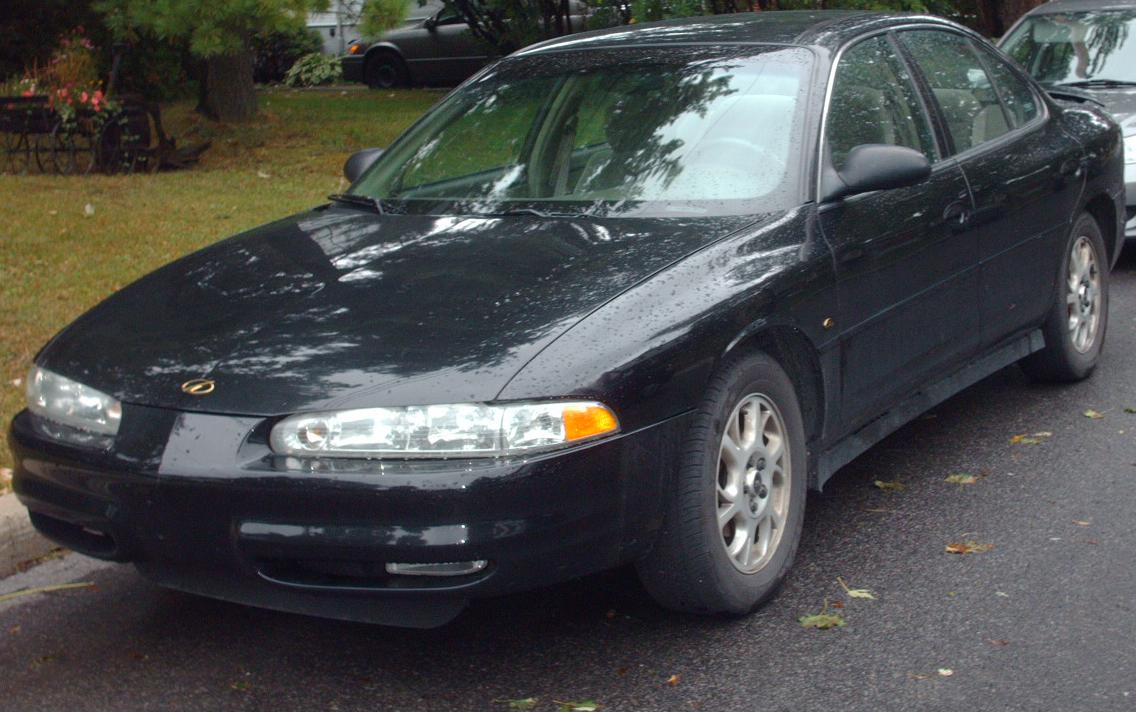
The Oldsmobile Intrigue is a mid-size car (a sedan). It’s not a race car by design, but it can come up in discussions when people talk about cars and track performance. The mention here seems more about interest in certain tracks than about technical details.
Atlanta is a NASCAR track where cars go fast and race for a long time. If someone is “good at Atlanta,” it usually means they can keep their car working well as the tires wear out.
Wilkesboro is a NASCAR oval track that’s shorter than many others. Shorter ovals often feel different because the turns and tire wear behave differently.
Nashville is referenced as a recent race location where the team had “runs,” implying performance that didn’t translate into strong finishing results. In NASCAR coverage, track-to-track differences often highlight setup and tire-management strengths or weaknesses.
Michigan is a NASCAR track where the tires and handling can behave differently than at other venues. A bad finish there, after better speed elsewhere, usually means the car didn’t work as well for that track.
“Cheese grater” is slang for a race where the track eats up tires quickly. If it’s that kind of race, teams have to manage the tires carefully and set the car up to survive the wear.
“Manage tires” means making sure the tires don’t wear out too fast. The driver and team try to keep the car handling well for as long as possible during each stint.
“Short, flat ovals” are tracks with tighter turns and less banking. Cars often need different setup and driving to keep good grip and keep the tires from wearing out too quickly.
Term
O'Reilly series race
O’Reilly series is a NASCAR racing series that’s sponsored by O’Reilly Auto Parts. The hosts are comparing how emotional the races can feel depending on which NASCAR series you’re watching.
Austin Hill is a NASCAR race driver. Here, the hosts are talking about how his wins and moments on track make fans feel a lot—especially when he’s racing for Richard Childress Racing.
A burnout is when the driver spins the tires on purpose, usually to make smoke and show off. In racing, it’s commonly done as a celebration after something big like a win.
Kyle Busch is a famous NASCAR driver. The “8” here refers to his car number, and the hosts are describing a celebratory moment involving that car.
Topic
losing Kyle
“Losing Kyle” here means Kyle Busch isn’t in the picture the way he normally would be. The hosts are connecting that to what it would mean for the team in upcoming races.
It’s a pass tactic where one car gently bumps the other to throw off their steering and make it easier to get by. How aggressive it is can be the difference between a normal move and a penalty.
Wheel hop is when a car’s tire starts bouncing instead of gripping the track smoothly. It usually happens when the car is loaded too hard or the driver’s inputs upset the car, and it can make the car harder to control.
Going offline means the car is not on the intended racing line through a corner. That can reduce grip because the tires may be on a different part of the track surface, changing how the car loads and potentially contributing to instability.
Shallow entry means you turn into the corner more gently than you should. That can make you run out of room and end up using more of the track than planned, which can cause problems with control or other cars.
Term
quality
This sounds like a transcription glitch. The speaker is basically saying the bad line and lack of space caused the problem, and it was the driver’s fault.
The green flag is NASCAR’s signal that the race is really starting and cars can go full speed. If it’s waved when the track is wet, drivers can get into trouble because the cars aren’t prepared for rain.
Rain tires are made to grip wet roads better by pushing water out of the way. If you don’t have them, the car can slide or spin much more easily in the rain.
“Getting laps back” means NASCAR may credit a team with extra laps after a stoppage. That matters because it can decide whether they’re still close enough to race for position.
Bristol Motor Speedway is a famous NASCAR race track in Tennessee. It’s known for tight, high-intensity racing, and track setup matters a lot for how the race goes.
Concept
giving him all the laps back
“Giving laps back” means NASCAR officials adjust the scoring so a driver doesn’t lose as many laps as they originally did. It’s basically a correction to the results after something happened during the race.
Dover refers to Dover International Speedway, a NASCAR oval known for its concrete surface and distinctive high-banked turns. The mention here is tied to a past incident, highlighting how venue-specific track issues can affect race events and decisions.
Track surface just means how the race track pavement feels and how worn it is. If it’s rough, the cars can grip differently and it can also make it easier for debris to show up.
Term
tail of Dega
They’re talking about Talladega, a track where the racing gets wild. “Tail” means near the back of the pack, and the idea is you can still have a chance later if you don’t get wrecked.
Martinsville is a short NASCAR track with lots of tight corners. Because it’s so close-quarters, drivers who handle traffic and tire wear well often do better there.
They’re talking about how NASCAR playoffs sometimes “reset” the points partway through. That means earlier points don’t carry as much weight, so more drivers can still fight for the championship later.
Matt Crafton is a NASCAR driver, especially known for racing in the Truck Series. The host is talking about his truck and whether it’s doing well enough to matter for playoff spots.
LIVE
Whether you're watching your favorite NBA team at the arena, the bar, or hanging at home,
grab an ice-cold Michelob Ultra and enjoy every moment of the NBA season.
Stuck up today and watch your team drop buckets with a bucket full of ice-cold Ultra,
Michelob Ultra, Superior Light Beer. Enjoy responsibly, Copyright 2026 and Hyzer Bush,
Michelob Ultra, Registered Light Beer, St. Louis, Missouri, must be 21 plus to order alcohol, alcohol
available only in select markets. Everything hits different after that first sip of Rockstar Energy.
Early gigs, late night sessions, power through anything with Rockstar Energy original,
punched or pure zero. Rockstar Original is the OG and it always hits. Rockstar Punch will give you
a serious kick of fruit flavor. Rockstar Pure Zero has all the taste and none of the sugar.
Original, punched, pure zero. Whatever flavor you're after, Rockstar has you covered.
Rockstar Energy. Live loud.
So you're saying with Hilton Honors I can use points for a free night stay anywhere?
Anywhere. What about fancy places like the Canopy in Paris?
Yeah, Hilton Honors Baby. Or relaxing sanctuaries like the Conrad and Tulum?
Hilton Honors Baby. What about the five-star Waldorf Astoria in the Maldives?
Are you gonna do this for all 9,000 properties? When you want points that can take you anywhere,
anytime, it matters where you stay. Hilton for the stay.
Warmer weather calls for a brighter look.
A vibrant palette. A fresh fragrance. Now imagine grabbing your beauty favorites
without worrying about your wallet. With PayPal Pay-in 4 on Sephora, you can buy now
and pay the rest later. No fees, no interest, no impact on your credit score. All glow up.
Download the PayPal app to get started. Subject to approval. Learn more at
PayPal.com pay-in-4. PayPal Inc. NMLS 910457.
Drivers! Start your engines!
No cabs gotta hang down here. Don't over drive. Just let me do my job.
I don't care if I wreck the whole f**king deal to sober him. He needs to get some more on.
That was an absolute bullsh**t. Not clear. Awesome. I'll tell you, I'm on my way to the
f**king... What the f**k are you doing out here?
Before saying this race is my f**king idiot. I don't care. Just let me drive.
What the f**king idiot?
Dude.
Did you ever think you would see that?
All the f**king that just happened.
Holy cow, where'd the F go?
Let the F go.
It's gonna be the F.
Let's go.
Oh, oh, oh, oh, sorry. I should have looked at my watch. I should know what time it is, guys.
Do you know what time it is?
Uh, 7-0-1.
Eric, you gotta guess what time it is.
I think I know what time it is.
It's Hime Time on NWP!
Corey Hime.
I thought it was time for you to get a watch.
I have one. It needs a charge, actually.
Yeah, it needs a charge.
A functioning watch. There we go.
It functions.
But no, it is Hime Time on NWP.
Corey Hime's first career cup series victory.
Guys, did we ever think we would be talking about this at this point this year?
Corey Hime winning at Naval Base Coronado in San Diego, California.
Luckily, a one-of-one race.
We probably won't go back here.
San Diego.
Yeah, San Diego right there.
But I didn't.
I mean, I'm as shocked as everybody else was.
Like the last couple laps.
I was watching the screen.
I'm like, wow, okay.
It's a late-race restart.
And he's starting up.
Okay, he's cleared a bunch of these.
He's up to second.
Wait a minute.
He might actually, holy hell, he might actually do this.
When he got past Larson on that restart,
when Kyle kind of got shuffled back to fourth or fifth,
and Hime was third behind host of our,
I'm like, he's better than these two guys,
or at least he was on the previous long run.
So if this goes at green, it was like 12 laps or so.
That's when I started to get that,
like those butterflies in my stomach.
I turned to Amelia.
I'm like, Hime might be in the best spot here.
Like we might be about to see something.
Like you said, Danny,
nobody saw it coming to start this year.
And, you know, he had to, you know,
punt the 77 and fight the 45 real hard down the stretch.
But lo and behold, Corey Hime got it done.
What a drive.
Just, wow, blown away.
I think that that moment where Redick very clearly,
could have ran him dirty, but paused to rethink that.
I really enjoyed seeing that,
that spoke very highly of where Redick sees Corey Hime in terms
of him as a prospect and a, you know,
a current slash future teammate in the cup series.
But had he not had that tire up,
I would, I think it would have been a lot more interesting to see,
could Redick have come back and,
and got the lead back from Hime there.
But in the end, Redick ends up with a very bad tire up.
And from there it was Corey Hime's race to just cruise.
I think he was about 10 seconds ahead towards the end of this race.
I mean, he, he looked like SVG,
but SVG was of course out of the race already.
Yeah.
We'll talk more about Shane in a minute,
but I thought, you know, Redick usually great on road courses.
You know, it was really,
it was usually great on road courses was not very good.
In this race did not earn any stage points had a couple incidents early on.
So he, him getting out front was sort of a gift.
And I do think that played a role psychologically into how he raced Corey.
I think you're right, Danny,
that a lot of cup drivers do have great respect for Hime more than they might
have for another cup series rookie.
I think he just had the greatest truck season we've ever seen.
I think that goes a long way.
But I also think Redick,
Newheim was faster, knew that he'd roughed him up once,
maybe twice there and with three laps to go.
And, and, and I think Redick in general, you know,
at this point, he's a proven cup series winner.
He's an O'Reilly series champion.
Like, yeah, he's gunning for that cup series title one day,
but I think he's always had, I think he's always been a principal driver.
I still remember when he,
when he overdrove it at Darlington and put Busher in the wall and Chris
Busher was mad at him at Darlington, Redick,
was remorseful.
Like Redick wasn't like, you kind of just took it.
He's like, yeah, man, that was on me.
Like I think Tyler Redick has one of the more solid driver codes,
if you will, in the garage.
And I think him cutting Hime a break there, obviously he thought he was going
to finish second.
He didn't know he was going to cut a tire and run 25th.
But I think that was one of those, hey, I respect you.
You're a teammate.
Hopefully other drivers in the field pay this one forward down the line.
It's in the back.
Like the same way that you're going to get a good job.
They go forward down the line.
It's in the back.
Like the same way everyone when they drive around Chris Busher,
for example, they know, man, I can't rough this guy up.
He'd never do it to me.
You know, I think, I think maybe then this, in that same way,
this is Tyler Redick putting the little deposit in the piggy bank.
If you will, that he's hoping other drivers in the field take note of
down the line.
That'd be my guess.
But I don't know.
Y'all hear Kevin Harvick.
He hated it.
He went on a ramp.
Host of our was a little more like, yeah, I don't like you just met.
I listened to Harvard.
So he dropped an uncensored F bomb.
That's how frustrated he was with that, with what Reddick did.
And I was like, I don't know if that far.
Maybe I'm just a weirdo here.
I don't, I don't see why anyone should be mad about this per se,
because I think in Reddit size, he sees it as.
Okay. Yes.
I'm battling a teammate here, but I'm also battling a car to get zero
points no matter what he does in this race.
So it kind of doesn't matter for me in that regard.
It's like at that point, he knows before he cut his tire, he's going for
second and he gets the most points that anyone could because winning
car is not going to get those extra points.
So I don't know if he was, if he was in that position,
we have someone was to say another teammate Bubba,
Riley Herbs, to be somehow miraculously was there.
Five fit points and finished a good race.
Yeah.
But or even Hamlin, if he was battling one of those guys,
then the points would start to matter a little bit more and become more of a,
okay, I need to get this spot.
I don't need to let this guy, you know, just take this from me.
So I think in that regards, I think there's a little bit of grace there,
but I don't, I'm not going to get like so mad.
I'm dropping F bombs like Kevin Harvick about it, but.
I mean, we spent the good part of the last two years in that whole debate
about points, formats and driver etiquette and all this other stuff.
Like we kept hammering about driver etiquette and talking about how a lot of these drivers
have no respect anymore for their competition.
And I get that some people might think and definitely was for modern NASCAR pretty radical
towards the Mark Martin side of it.
But I just, I can't see getting too upset about it either personally,
just because yeah, we need a bit of a course, correct.
I think after the last, especially 23 maybe five years, I would say even,
I think there needs to be somebody in the garage.
It's like, all right, we're going to try and do stuff a little more on the fair side of it.
The Mark Martin side is what everyone's talking about with it.
I, I do admit, you know, while Harvick, the Harvick one doesn't surprise me
because Harvick has always been on that line and neither is host of our,
the funny one with me because host of our being somebody that's actually going to compete against him
and tweet at him is, is to me, that's like, it's like, you know, Ernie Irvin calling out somebody
for racing like Mark Martin, like if anyone do you listen to about it?
And I like Carson a lot and I've said as much on here, but of anyone that in the garage area
that anyone's going to listen to on this, Carson host of ours, probably 36th out of the 36 charter teams.
Yeah, that's my take is it's like, it's yeah, I don't know, we long for the days of Mark Martin, Terry Labani
and then you know, all these like old school, you know, gentlemen Ned Jarrett, I know going way back there,
but like that used to mean something, you know, Matt Kenseth even, you know, like, and now we have a guy, you know,
like, what would you rather see? Would you rather see races decided like Richmond two years ago
or Austin Dillon just drives through two guys that he had no chance of beating,
or would you rather the sportsman like move like Redick made, or hey, I just got beat, I'm not going to clean this guy out.
What would you rather see? What's what what hurts the integrity of the sport more?
I think it's pretty obvious Richmond would is a greater stain on NASCAR's legitimacy than what we saw between Redick and Heim.
But yeah, I don't want to dwell on that too much. I do want to like, because Corey Heim beat him straight up before all that.
Well, I'll say like, I'm fine with people racing different ways too.
Like I want Carson, oh, so far to say like Carson host of our early, we talk about the Lebanese, the Martins, you know, the Bertons.
Well, then there's, you know, Dale Earnhardt that everyone looks at.
And I'm not going to compare each of these one to one. They're all different in a lot of different ways.
But like, I'm fine with people racing however they want, but I think that having that opportunity more and not being punished for it.
I'm not I'm not going to, you know, raise my hands up and, you know, scream that the sky is falling, especially when, you know,
there's going to be plenty of other races that we get to see people roughed up this year.
Like we're going to see a balance.
I don't know how many more races are on Corey Heim's Cup Series calendar, but I mean, it's just still looking back at this.
It's crazy. I think this was only what his 13th career Cup Series start and he gets a victory.
And, you know, kind of addressing elephant in the room here.
We talked about a little bit.
Josefar and Heim, their rivalry overall seems like it's still always going to be a talking point.
Going back to that Truck Series championship.
What year was that now?
23.
It was 23.
So I don't know how you guys feel about these two, but I think for me, at least I feel safe saying I think these two are actually on the same level as one another.
It's just the fact that Josefar got his shot at Cup sooner.
But while he's been developed, kind of rising through Cup, we basically kept Heim and trucks way too long that he got way too good for trucks.
I kind of, and then they both get their first Cup win in the same year, granted, until Josefar gets another one.
I think it's clear Heim's looks way more impressive on paper right now.
But I don't know. I feel like these two are very much on the same level as one another right now.
What do you guys think about that?
I would generally agree. I think right now, yes, they're about the same age.
Josefar has more Cup experience, which is an advantage.
But I think right now Heim is in probably the better situation.
I think both team, neither team is a JGR Hendrik Penske traditional superpower, but they're both like the leading disruptors.
23.11 is having a tremendous season.
They look like they could win the championship this year.
I think Spire is getting close with a couple of their cars.
I mean, they have two cars in the top 10 in points and have had them there for weeks at this juncture.
I think they're both similar scale size status of teams, similar in age.
Josefar's got more Cup experience, but Heim just had the greatest truck season we've ever seen.
So I tend to agree. I think they are pretty equal, which is why I genuinely think,
well, I don't necessarily think they hate each other.
I think in a lot of ways, Heim punting him here at San Diego maybe seems to have smoothed those waters for the time.
Like after all these years, they're finally like even.
And so now Honeycutt, Josefar is not looking over his shoulder.
Heim no longer seeing red.
Like I think for now they're actually even, but I still think they don't see eye to eye generally speaking.
And so this will be a really fun rivalry really starting next year and beyond.
Because I think you're right, Danny.
They'll both be contending for top 10s pretty much off rip.
That's my guess.
And what's going to interest me because I do think they're at a very similar level too is that their next race against each other,
and Cup is in less than two weeks.
Like because Heim's racing at Chicago land, that's supposed to be very high wear track,
like a track that has certain areas that are going to be really sketchy like the tunnel turn of Pocono kind of thing.
People compared to Darlington.
So they're not only going to see like just the raw speed side of it either between the two of them.
I think you're going to also see like which one has more honed in and harness the race craft as well in that.
I'm really excited to see what Heim can do full time next year.
I'm not going to in any way say he's going to be like 2006 Denny Hamlin and finish third in the points or anything like that.
But you know, we had this question about like what should be expected next year when this was announced and people are like,
I have borderline chase or listen, I know it's a one off street race road course.
We may or may not see it come back.
I'm expecting chase at this point.
If you can go out and win in your 13th start in this car with how different it is from what you've raised and how much we hear how difficult it is for young drivers to adapt to it.
I think Denny was a little over selling in his his podcast thing on one of the races he won.
I think it's Nashville.
He's like Heim was way better than me that night.
And like Denny Denny, cool it off there, man.
Like we're sold.
You don't need to oversell this one.
I'm so excited to see these two race against each other and not just the on track stuff, the off track stuff.
You see that a host of ours been going after K Adams all week.
Yeah.
So and I saw someone point out the fact that K Adams is 40.
She doesn't look 40.
I did not know that when I was on that.
There ain't a problem with that.
Go for it.
But then I said to a friend like Carson exactly where he wants to be.
Leave him alone.
Yeah.
I mean, I've never seen a problem with that.
I'm just having fun.
Yeah.
We didn't say hi.
Teach their own teach their own there.
No.
And did you see, you know, the host of our might be going after K Adams.
You see Corey Heim going after host of ours.
Internet sponsor.
There's a little back and forth on Twitter as well.
It's been funny.
Twitter's been funny this year.
I didn't love to send something over towards Carson after he was going
after the bromance of him and Zillich.
So the del junior download Carson was hosting it this week,
but and I'm not as familiar with it.
So I apologize.
I thought, I thought Heim was also supposed to be on this.
And I guess he didn't make it.
I can provide some insight into that.
So I spoke to Corey Heim today and it's Wednesday.
As you know, I do that show with NASCAR NASCAR film room,
typically Monday or Tuesday.
Corey, what I was told was originally planning to, you know,
fly back to North Carolina.
Most guys are staying out West because they're running Sonoma Heims not.
So he was going to fly back to North Carolina Sunday night,
winning the race, changed all those plans.
And so like I was originally supposed to interview Heim Tuesday and then
new things got added to his calendar, flights got changed and he couldn't
make it until today.
So I would imagine, I'm not going to assume that he was going to be on
Tuesday, but I would assume that he ducked host of ours interview on
purpose.
I'm going to assume it was, he just was busy all day.
The last two days doing all this media stuff,
post San Diego.
That's my assumption because I did talk to him today and I don't know if
y'all saw, he did say that he hosted our texted briefly after the race.
And it sounded like they were on pretty good terms.
Like host of our even congratulated him and said, Hey,
I was probably deserved that after all these years.
Like it sounded like I said earlier, they're kind of,
it's water under the bridge for now.
It's been terms.
We'll just see how it develops.
These two are going to be, these two are going to be like Dale Earnhardt and
Jeff Gordon, where they are probably low-kid, good to be cheddar behind
the scenes, but know how much a rivalry sales and they're going to play up to
it.
I hope they don't cheese it up too much.
Like some of the little Twitter threads, I'm like,
eh, this feels a little, cause wasn't, weren't there reports that like even
Earnhardt back in the day was like telling Jeff Gordon, let's lean into it.
You know, sell t-shirts.
I think it's okay to manufacture some drama.
I'm not going to say I'm opposed to that, but I don't want it to, you know,
I think Carson hosts of our work because he's so authentic.
People are saying it's less like Dale and Jeff and more like Rusty and Dale Earnhardt.
Maybe, yeah.
Well, yeah, because Dale and Jeff are like different generations,
whereas these two are literally like, I can, that comment, they don't literally
see eye to eye because Carson is very tall.
There was a Jeff Gordon.
It was Rusty and Dale.
That was the one that, even though they were, they were essentially what you
call a locker room, Ligater behind the scenes, they knew to play up to the rivalry a little bit.
Yeah.
Well, speaking of an RCR driver, how about Austin Hill cleaning out the trackhouse duo?
Not going to lie, before that happened, I thought Austin Hill had a legit shot to get
a sweep this weekend, but then, then he went bowling and we're not even at Watkins Glen.
Yeah.
That happened right in front of me.
I didn't have my camera out in time.
That was the one restart I didn't film.
When you're at a road street course, cars only come by you.
Who are you?
You always be recording, Eric.
I know.
I know, even especially on a restart when they're all flying, but I didn't record them.
You get to get you some of those, the meta glasses, so you're always filming.
I like that.
Good plan.
But that happened right in front of me and it was like, oh, God, it was one of those, you know,
crowd.
It was as crowd pop of a moment as you get in NASCAR.
And yeah, it was, but it was shocking when the dust cleared and I saw it was the two
Red Bull cars sandwiched between the Cheddar's mobile or whatever scheme Austin Hill was in
this weekend.
I already forgot.
That was big.
That was big.
That was a tough thing.
Austin Hill was in Cheddar's.
It was the Patriotics Cheddar's one.
Yes.
That's right.
Well, and with SVG, it's like, well, they played his radio on, on the air a bit.
And I saw some of it on, on Twitter before he got wrecked.
Like it wasn't just that he was like taking it easy.
He was struggling to keep the car underneath him too.
I still think he probably is the favorite to win.
Let's be honest.
He is the best road course racer out there, but it wasn't like this was a slam dunk.
Give it away right to him kind of race either.
He did say this was a very tough road course for him.
So.
And yeah, it felt more like Kota than it did Watkins Glen, I guess is a better way for me to put it.
And, and Connor too.
I mean, I think he was very easily on his way to his first career top five.
And I wouldn't blame him for being pissed at this point at, at just anyone possible,
including, you know, definitely Hill, but with Hill, I just,
there's some drivers that you can just tell when they're up there like Corey Heimer ready for cup
even before he won.
And then there's some like Austin Hill who I just don't think are ready for cup.
Yeah.
That's the way I felt too.
Cause he's a good road racer.
He obviously won the race Saturday.
Like y'all said, we've seen him in the mix, but he just, just over steps, you know,
and this is back to back weeks where him kind of over driving the corner took out SVG.
I mean, Pocono, he wedged Shane and Josh Berry into the fence.
I mean, he had to have known they were three wide or at least two wide.
He barely left a lane out there.
And then here in this race, he just overdrove turn one.
It was interesting because again, I was talking about how he was going to get into the next
time.
I was talking to Heim today and we looked at the replay and it's like, it almost was like a
Charlotte Roval situation where because Hill, the control car overshot the corner, everyone
kind of overshot turn one a little.
And then Heim was one of the first guys to didn't overshoot it and had a clear lane to
avoid the wreck, which was really interesting.
But yeah, I just, I'm with you like Austin Hill.
He's in a really tough spot.
Emotionally, the team obviously is filled and this is not a great scenario for anyone,
of course, but, and I'll give him credit for like,
I'm not sure if he's handled overall this whole transition with grace,
but yeah, mistakes the last two weeks.
It's like, yeah, this guy, he just doesn't really have a feel for the Cup series.
That's, that's probably the truth.
At this stage, Austin Hill, he about near Manchester car number.
He's 32 years old.
I kind of just don't, I kind of just see him as a lifer in the rally series at this stage.
He is perfect to fill in for this, you know, unfortunate role he's in.
I don't see him being the guy that drives the 33 next year or whatever number that they choose to
have for our CR second car next year.
I don't know who they go with, but I don't think it'll be Austin Hill per se next year.
I think I've seen some people talk about no Gregson.
I don't know if no Gregson's going to make it in the Cup the way it's been going,
but that could be a name to watch for too.
What do you think of him and Kevin Magnuson?
I'll give Greg, I'll give Gregson Craig.
He's more entertaining for sure.
Whether he's in a fight with Harrison Burton, Daniel Hemric, you know,
Rex Sage Caram at a Road America that one time, Drosh Chastain, like, oh yeah, the list goes on.
Like dude is, he's not afraid to let it rip and to let it rip in front of cameras, media, everyone.
And as commenters, we were all very thankful for Noah putting on a show wherever he goes.
In this instance though, I think he's in the wrong.
Like I get where he's coming from.
Magnuson is a visitor, if you will, making his Cup debut.
He's never raced NASCAR before, but if you watch the replay, at least all the onboards
that have been shared, it's like, you know, maybe Gregson threw a block, maybe Greg,
maybe Magnuson pushed too hard that one time, I think in turn 12.
Okay, maybe that's 50-50, but then Noah doors him on the straight away.
He's blocking him the next couple of laps.
He's swerving at him under caution.
He punts him in the chicane that one time to get the spot back.
Like after a while, you're looking at the scoreboard and you're like, man, Noah's gotten a bunch of shots.
Kevin's owed one and he finally took it.
And yeah, ruin Noah's day, but like I kind of agree with Magnuson.
You F around, you find out and he F around with Kevin Magnuson for 15 laps, which is a long time.
Enable based Coronado.
So I get where Noah's a little frustrated, but I didn't really, I felt like Magnuson handled that
like a savvy NASCAR vet.
That fight was interesting and I hate to be skipping series.
It was not as interesting as the Parker Kligerman and Adam Andretti fight this weekend.
That was also a lot of fun.
I can't dare try to quote any of what was said because I feel like if I did try to quote Adam Andretti,
it would be taken way out of context.
Probably not a good idea too.
Well, we got, we always got a transcript of it here.
There you go.
Stuff titles, but I mean, I think that where Noah probably was thinking, and I think kind of where
Denny to a degree defended him is I think a lot of these guys think that these outsiders
from NASCAR are going to come in and need to be like truck and O'Reilly reculars who are going
to have to kind of just lay over for the cup guys, try and earn your stripes.
And it's like, no, they're, they're here to, to try and win.
I mean, you guys, he won the fastest lap, which more power to him.
That was great.
But no, I just, he was kind of erratic when from the view I saw of the, the camera and
got past cleanly and then knocks him out of the way still.
Gregson knocking Magnus and out of the way.
So I'm, I want Magnus inside a bit with this one, right?
I think that Noah, I think the frustration overwhelmed him in that moment.
And I think that, I think this is one that a week or two later, you probably want back
because it just kind of looks dumb in context.
I heard him on serious today, kind of sort of doubling down still.
So I don't know.
I like, I, I get it, but I also am like, I don't know, like you can't, I almost think
Shane showing up and winning Chicago off, off the bat sort of is like, uh, oh no,
you need to treat these world-class drivers with some respect.
Like, cause like the respect needs to go both ways.
Cause I mean, I'm not saying Kevin Magnus, and obviously he's not the next Shane van
Gisburg and where he comes from, his background's not the same as Shane's not going to convert
as quickly to cup.
I'm not comparing, but I'm just saying ever since Shane showed up and one, it's like,
no, these guys are really good too.
And you can maybe, you could expect some common courtesies, but like you said,
Noah was driving erratically from my, from my perspective.
And at a certain point you just, you got to take care of him.
Like I, I like Noah, but I'm going to say it.
He got what he deserved for my, like I was literally watching, I went back and watched
like 15, 20 laps of KMAG's on board.
And I'm sitting here like, I don't know how you pass this guy.
Cause if you, if he did finally pass Gregson cleanly, he was just going to get punted.
So like at some point you, I honestly think Kev Max had no choice but to wreck Noah Gregson.
I actually think that was his only course of action or else that guy was going to be
a thorn in his side the entire race for no reason in my opinion, for no reason at all.
So yeah, unless there was something that happened earlier, I don't understand why
Noah was doing that other than you just being pissy.
Yeah. Like the one swipe or even the one bump in the chicane fair, but he kept going.
And that's what I'm like.
I don't, it's like, you just got to, you got to deal with him at that point.
Yeah.
Well, from, uh, from one, you know, incident to another, not necessarily incident, but
replacement, uh, Chris Rebell kind of as expected with his injury still sustained.
Um, don't think it was ever going to be a good idea to try to go through this race.
We could have how many turns there was and how much unpredictability this race really
presented itself, um, did end up stepping out of the car and Brent Cruz steps into the car
and step right out when the car said, I'm done too.
That's a tough break.
And I don't know if they ever confirmed it.
He make a mistake shifting because it is very different than what he obviously races on Saturdays
or if it was just a fluke failure, but either way, it's like, man,
you got Christopher Bell credit him for trying to gut it out, making more laps than a lot of us
expected. But at the end of the day, you get Brent Cruz in the car.
He gets very little experience and you only get one point over the whole thing.
So it was kind of a lose, lose for everyone.
I think Toyota's got to find a way to get, get Brent Cruz into a car to get some experience
because that one wasn't, that one wasn't the best opportunity there.
Well, and I know the prime side was like, no, he didn't do anything wrong when they showed
like the in car, but the in car camera, it looked like he money shifted it.
I mean, he literally was saying that he was like thinking it was an H pattern on the shifting.
So I think they haven't confirmed it, but it seems like he money shifted it,
but it wasn't confirmed.
I do think yeah, he definitely needs more seat time.
I think he might get more seat time this week, honestly.
I think that's more probable than not that he runs all the practice and qualifying,
jumps in the car on the first caution, which no insonoma could be the stage caution.
So poor Chris from might race his way to 30th and it'll be the hardest run to 30th of his career.
But I give him props for even being in the car as long as he was though.
I mean, that's, that's got, I mean, if it doesn't hurt, I mean, he basically said it was impossible
to drive it the way you're supposed to. He was driving one handed.
Because he can't grip the wheel with his, you know, fractured hand and shit.
Like it's just, it's yeah, it was, it was going to be time.
So no mode probably be similar.
Well, how about the points?
Yeah.
How about it?
All right.
I got them somewhere in here.
Oh, there they are.
It is close.
Oh my gosh.
I don't think anyone was expecting it to be within eight points with Denny gaining points
after this race.
And sanity, which I mean, it had ready, had ready been able to win
his sixth race this season.
This would look way different right now.
Or even just finish second.
Yeah.
I mean, I think we finished what?
25th.
So he lost 23 points with just that flat tire.
I think the, I think one of the interesting things though is third through sixth,
whereas Ryan Blaney is putting a gap on, on fourth through sixth right now.
And I don't know if he puts up the run that Denny and Denny has put on title right.
Just cause he's still, I mean, three top fives and 17 races.
I'm going to keep harping on that until we start scoring more of them.
But I mean, two points separating Larson, Gibbs and Elliott, that's going to be crucial
down the stretch these last, what is it, nine races until the chase.
Yeah.
That's going to be a really interesting battle to watch.
I want to say on Blaney, he had a really good race at San Diego here
and 16 stage points and finished ninth, I think, which that's pretty impressive.
You combine that.
He, I think he earned the second or third most points on the day.
So I, well, I want to come to with high, maybe here in the second most,
because I didn't get any points.
I don't know how that works, but like he had a really good day.
And I'll say on Blaney, yeah, he's not making up 130 points.
However, I'll keep saying it.
A lot of tracks in the next couple of months that fit team Penske's strong suits.
So I would not, I think he will get some more top fives here before the regular season ends.
I will throw it at you.
The two drivers tied for the most points scored.
Can you name those drivers?
Tied for the most points scored in the race.
Yes.
I would have said maybe Blaney and priests.
You're right on priests.
So priests is one of them.
Blaney is wrong.
He's not.
Oh, Blaney's not.
Now he got Blaney got 44.
The top two got 45.
Larson.
Larson got 42.
Oh, so.
I could just pull up the results.
I'm not going to cheat.
Man, now I want to get this, but wouldn't be Bubba.
He didn't get any stage points.
I don't think.
No, he didn't.
Um, Busher.
What's that?
Was it McDowell?
No, no, McDowell got 27.
Almond Dinger, maybe.
Yep.
A.J. Almond Dinger.
A.J. Almond Dinger, that dog.
Good for him.
Um, and then, you know, the interesting part, they're not on either of these just
because they're not close enough to be on the bubble line, but they're not good
enough to be in the top 10.
Byron, Briscoe and Bubba all are around 60 to 70 points to the good right now.
So even though it was a horrible finish for Christopher Bell, I think the total
amount of points he lost the cut line was like nine.
I want to say it could have been much worse.
Yeah.
I still for Bell, you want to get in that top 10 and I'll say I'm Bubba because we
kind of glossed over this bubble wall is to go from two laps down to second on a
road course.
Very impressive.
Really, really impressive.
Good for him.
Yeah.
Yeah.
The bubble is intriguing.
Ryan Priest jumped from 19th to 16th with his strong points day.
So that's, that's huge.
But Cota and this rights for SPJ really bummed on his, his mood this year.
Yeah.
So no, I mean,
I thought this personally was a must win Sonoma for sure is a must win for SVG.
I mean, to be five points out after this,
it's a must win for me for SVG because I have a prediction on the line that Red Bull
and Rockstar will join monster and having three energy drinks winning.
And I thought Red Bull could have happened last week.
Thankfully Red Bull is on SVG this weekend.
Oh, man.
What this race did with the cut line though is.
Yeah.
It's still a good amount back to like MacDowell and Ross Chastain,
but because so many people that could have had good runs or already were just mediocre,
had mediocre or bad runs, it's drawn all these guys back up.
AJ within 21, I think that might be of everyone on this list, maybe outside of Eric Jones.
And even then I might even say this might be the most impressive season out of 14th
or 22nd points.
AJ Almondanger with no factory support on a colleague team that already has struggled
somehow staying in contention.
I'll give you that.
Yeah, that he might be the most impressive performer on this list.
I will say we've talked about him here and there.
I feel like we kind of forgot about him as the summer started,
but Ross Chastain don't look now eight and seventh the last two weeks.
And he's now on this graphic.
I mean, yeah, there's a lot of guys between him and that red line,
but he's only 40 points back.
Is it the summer of Ross Chastain?
Just saying.
Or knows he needs it.
He's keeping it interesting.
Keeping it interesting.
Yeah, I'm really intrigued though with with below.
I mean, I think here's a question real quick.
Sorry.
Yeah, yeah.
Before we get off Shane, even if he wins Sonoma,
which I think all of us, if we could, we'd pick him.
Is he going to make the chase one point at San Diego?
Even if he wins Sonoma and let's say has a 30 or 40 point cushion after this week,
even if you win Sonoma, is he going to make the chase?
I think he could easily lose that cushion.
Honestly, I really do.
I don't know.
Yeah.
So that's how I'm feeling.
Well, that's, I'm not confident anymore.
I think that there's tracks that intrigue me.
Like he's been good at Atlanta, at least shown speed and maybe not gotten the finishes.
Wilkesboro seems like one that'll kind of line up as a shorter flat oval,
New Hampshire, but then I mean, this team will show up in races.
Like after the runs they had at Nashville and Charlotte and run 35th at Michigan.
And you're like, what the hell happened?
If Chicago Atlanta is going to be a cheese grater type race,
I'm not like his ability to manage tires.
I would like it.
I just don't know if, I'm with you on that.
Like the mentality you have is correct.
Like I think if it were up to him and he had the car,
I just don't trust Trackhouse to give him the car.
Let me find the stat, but I think it's something like since, oh, what was it?
It was like in the last five, in the five prime races,
Trackhouse drivers have scored like seven points or less or three points or less seven times
or something like that.
Like let me find that stat and I can like read it actually out to you.
It's, it's an insane stat.
And that's like, I just, I can't trust the team.
Yeah.
That's kind of where I'm at too.
And again, the type of tracks we're going to be going to here, it shifts.
There's going to be a lot of more kind of short, flat ovals.
There, yeah, there's the Chicago land.
Like you said, there's the Indianapolis mixed in.
We still have an Atlanta, a Daytona, but I'm, I'm, I agree with the word I see it in the chat.
Someone said 35% odds of making the chase.
I kind of agree with that.
Yeah.
Andrew, I'd say, yeah.
Here, I found it.
I found it.
So in the five races since the all-star break,
a track house driver has scored three or fewer points seven times.
And in that span have had three top tens combined.
It's not good at all.
No, not at all.
Not at all.
I just, I can't, can't trust him.
I can't, I wish I could because I would trust Shane, but I can't trust the team.
Yeah.
I think, I mean, majority of us all pictured SCG winning all four roadcourses this year.
And because of this, it means that he will definitely not,
he will definitely not tie Jeff Gordon's record this season off to do that next year,
but he can, he can still tie.
No, no, he has tied Chase Elliott for most of active Cup Series drivers and he can take it
for active drivers if he wins this weekend.
Let's see if he does it.
Yeah, we'll find out.
Most we got on the docket.
You may not be able to trust track house and SPJ, but you can trust the ratings that we have.
Yeah, we can't anymore because of their fact.
That's right.
Well, these are the numbers Jared has for us.
You can trust Jared, can't you?
Maybe.
I'm going up the panel.
I'm going up big panel.
I'm not, I'm not subscribing to NASCAR's.
We're going to change the numbers when they don't fit our narrative kind of deal.
Well, San Diego did score 2.28 million viewers.
There is no direct comparison, but it is the second most viewed of 10 overall prime races
between the two years.
Prime average 2.29 million per race and it is up 8% from 2025.
Prime was nearly even with FS1's average viewership 2.29 versus 2.37.
And the San Diego O'Reilly race scored 1.161 million viewers, which is up 4% to the same
weekend in 2025.
It peaked with 1.372 million viewers and it is the 18th straight O'Reilly series race over
1 million viewers.
And a note on that real quick.
I believe again, these viewership to one point, whatever, that's the average over the
entire broadcast window.
And I think it's worth noting with the O'Reilly series, wasn't there a broadcast window this
week over five hours because of the red flags and stuff.
So if it had been a more tightly compact race, I bet the average viewership would have been higher.
And longer races in the past can lead to better viewership until it hits a point over the window.
So like that's more positive.
It's more like the hour long, the hour long red flag for the track being destroyed, probably a
lot of folks tune out.
Which one hour?
Which red flag?
There were two.
That's the my point exactly.
So I do think that probably hurt their average viewership slightly.
Yeah.
Sorry, go ahead, Danny.
Says Pocono with 1.66 million and a start time moving two hours attributed to this.
The series is down 11% year over year and it peaked at 2.3 million finish above 2025's peak.
Yeah, it's back to Pocono.
Yeah, so those finally came in on like Friday last week.
Okay, that makes more sense.
I was like, why are we talking about Pocono?
Okay, that's why.
Yeah, they didn't report them until like Friday last week.
It's like, it's okay, Prime Week.
We can report them if they're down.
Like we get it.
We had to move the start time.
Well, things that we can report a little bit more live because we see the results coming
on live in real time is the poll, the famous iceberg poll.
Now, what did we get this week?
12,000 people voted for this poll and 62% people said it was a great race.
28% said it was good, giving this one very, very good.
90% net positivity with only 6% saying average and 4% of SPG fans
saying with a negative race.
A few tidbits on this.
This is the top one of one for San Diego races.
I know a shocker on that one.
This also is third of 19 polled 2026 races below only Atlanta and Nashville
for net positivity.
And it is now officially the top rated of 39 polled road course races all time on the poll.
So, wow.
First one above 90%.
I believe it displaced 2022 Cota, which was 89% net positive.
And it's 22nd all time out of 276 on the poll.
One of only 26 to hit 90%.
So, all in all, I think people really enjoyed this one in the audience.
Looking at the comments, the first one was from TankSlapper.
Is it positive, negative, or meme?
This is a positive one.
Meme.
All caps.
It's time, time.
Let's say a positive meme.
It's mostly positive.
But it's kind of a meme too.
Top ones from Spencer saying Squidward, the NASCAR drivers are racing the Navy.
Not the Navy.
The Navy.
ERG says we really got a Corey Haim cup win before GTA 6.
Let's see.
Lloyd says this was actually much better of a race than I anticipated,
which I think a lot of people honestly fell into that camp.
Tyler says best road course race of the next-gen era.
Question mark?
I personally am on that one.
I have to think about it.
It was good though.
Phoenix 28 fan, 6'7".
I knew one of them would be there.
There's my meme comment.
There's nothing weird about that.
That's the number of the car that won the race.
That's something unusual folks.
And then the gutter comment was from Master Carl9674,
which says gave up on crap car after stage racing.
Waste of time to watch now an IndyCar fan with better racing without stages.
Is this Carl Edwards burner account?
Just letting us know how he killed.
I always find it funny the ones I gave up a long time ago.
So I'm going to take the time to type out this long comment on an Ask Our Post.
Why? Because that's why.
But that was the poll this week.
Nice.
Poll.
Well, the O'Reilly series race is really proof that while on Sundays,
Austin Hill can make us want to just scream and ask why.
But on Saturday, it can make us all emotional wrecks because of how good that win felt for the
RCR organization.
Yeah.
Absolutely.
I think that's any win by that organization is needed.
I found it touching that he did the burnout next to the Kyle Busch 8.
I think he wanted to do it like all the way around.
And then he's like halfway through like, I know we're just going to do the normal burnout.
Let's not try and overdo this.
But 24 hours, he was a hero.
I still say that one was popular, but man, I'm really watching for him at Atlanta in a few weeks.
That'd be eight races after losing Kyle.
It would mean a lot for them to have not only had that moment at the same track of Harvick
in 01, but to do something like that.
It's going to be hard for me not to root for Austin Hill in that one.
That's a great point.
No.
And he was, I mean, like we said earlier, he's a very good road course racer.
I know the finish of this race was pretty exciting.
You had Taylor Gray get into Quaple and then you had Hill enter the picture, give a little
nudge to Gray.
Guys had to be angry with each other, bump and run.
It was good NASCAR racing.
And yeah, I know the Richard Childress after the race was visibly moved, which I mean, that was,
I was going to say it was cool to see, but I mean, none of this is cool.
It's all still very sad.
I don't want to be seeing any of this, but it was, you talk about those kind of healing
moments like Harvick in 2001.
And I'm not going to say this necessarily compares to that, but it is,
you know, it's the same kinds of emotions that you're feeling.
And, and I thought the way it was handled by the team and by Austin Hill, certainly,
like we joke about Austin Hill, this chat, I know, does, we joke about him a lot on the show.
Our chat is nicknamed him the big bully, but in that moment, I think he had us all feeling
like big softies.
Like that was a very cool tribute moment and congrats to him.
Well deserved.
And in that battle too, kind of looking at it all, I mean, I think it's a great moment
to be looking at all Taylor Gray kind of had it coming.
I've defended him a lot and kind of been on that.
I think he's underrated, but you know, he got into clopple and he started saying after
it's like wheel hop and he just sort of offhand said it.
I don't know how much I think it was wheel hop more than just kind of running through him.
And so like once, once he got bumped out of the way, I'm like, you kind of earned that
one.
You live by the sword, you die by the sword on that side of it.
I just, I find it funny that all these people one day are getting mad about reddit pulling
over and not, not going past all this and the other day before they're mad.
Well, I don't like these guys racing too hard.
Like that's, that's just like he ran through him and it's like, we got to make up our minds
here as a fan base.
Like both can be okay on different ends of the spectrum, but we can't hate them both at the same.
I, I'm, I'm going to get off my soapbox about that.
I just, I found that really funny the contrast between two days, different races.
I didn't hear the, Gray's comments about, oh, I wheel hop.
I hate when drivers, you know, like, and I like Taylor Gray, you know, this is maybe this,
maybe the first blemish on his record in my opinion.
I feel like he's been on, honestly, he's usually on the other end.
People are taking advantage of him and it's frustrating to watch sometimes.
But yeah, I just hate like you wheel hop probably because you overdrove it or you're
offline.
That's the problem is he like crowded.
Quaple too much.
Like he was on the inside, but it was like, I don't want to be in this, you know,
you know, shallow entry and just use too much track and got into quality.
So it was on him.
It was on him a hundred percent.
I'm with you.
Once he'll got to him, it's like, I think there was a target on Gray's back.
It's like, yeah, we saw what he just did.
You know, fair game.
If I do the same, and that's kind of sort of what happened.
It's a little different, but that's kind of sort of what happened.
So no, just that's, that's NASCAR.
That's physical stock car racing right there.
And, and Quaple, even though he got essentially spun out, still finished fourth,
I think, right?
He still finished top five because he got going right away and they were spread out
enough.
So I mean, the damage could have been a lot worse, I guess.
I mean, it could have been a lot worse like that Sam Mayer, Rick.
Good God.
I mean, I, we are, we're all, I think we like Sam.
He's a good driver.
And I think a lot of people saying he's an awful driver and even him himself,
like are going overboard, but he makes so many damn mistakes.
And it's so many just unprompted him on his own mistakes that it makes those
statements of like him getting impatient about wanting, you know, and wanting to go
to cup a few years ago and that he thought he was cup ready.
It makes that even more absurd just because I think he has what, how many DNFs does he have?
He has like five or six DNFs this year already, which is just insane.
When he first come onto the scene of Arca and Trucks, he looked as good as we have legitimately seen
Corey Heim and Carson Hosebar kind of prove themselves to be at this stage.
But yet the longer we've gone, we've just watched his young career stagnate and just kind of
grind to not a halt, but, but it's, it's slowing down.
It feels like it just feels so weird the way he's going.
And he's kind of backed himself into a corner by him when he left Junemotivus for it to go to
Hoss and then really Hoss.
Yes, there's a cup car, but that's cold custard.
If they even stay, I don't even know like where do you possibly go in the Hoss system?
There's not a future there at all.
Yeah.
I mean, at this point, I don't think we can even talk cup with Sam Mayer because we've
just seen these, these guys, I mean, Brent Cruz is the next one who's going to pass him up,
in terms of getting a cup ride.
And it's just, I'm with you.
Like what you said there, Danny is exactly right.
You know, when he was Sam Mayer, if I'm not mistaken, was 17 years old and he won a Bristol
truck race.
Yep.
Sam Mayer did that.
The same Sam Mayer who we see on the record as often as we see him across the finish line,
that Sam Mayer as a teenager, one at the last great Coliseum.
And you mentioned like comparing him to Hoss of Arheim, he was toe to toe with Ty Gibbs in
their arcadays and Ty Gibbs has gone on to have, you know, he's in his fourth cup season already.
So it is like five years ago, Sam Mayer was seen as kind of like the Jesse Love or,
you know, or Lane Riggs type of prospect.
And now it's just, it's, he seemingly plateaued as the way it appears.
Like he hasn't yet put together a full season.
He's had it like a season where he won four races, but a couple of those he kind of,
I don't want to say backed into.
And then when he wasn't winning, I think his average finish that year was still like 16th
because he was a lot of DNF, incidents.
And then I think it was last year, he had like a 10th or 11th place average finish.
We didn't win all that much.
And now it's like, so he just can't put it, he's, he's having a hard time.
He's either winning and wrecking or he's not winning and he's eight.
And it's, I don't know.
He's still in the, he's still in the chase for this series right now, but it's not,
not an impressive spot to begin.
No, and he's, he's got potential, but yeah, just too many mistakes.
Oh, I'm looking at the micro on the macro.
I mean, this year DNF wise at five, he's matched Lavar Scott and Jeb Burton.
And the only one in the series.
I think he's second behind.
Yeah, go ahead.
Sorry.
Go for it.
I think you, you might know my Kyle.
I didn't need it.
Yeah.
I didn't need to step on.
We both had the same fun fact.
So on, yeah, on the, on the micro, he's struggling big time, but this is a one season
thing.
It could be like, okay, we can brush this aside.
We'll get, you know, get him at the second half of the year.
But on the macro, he's too inconsistent with this and taking and not taking care of his equipment
that he can't even be like a Brandon Jones type consistently long-term.
Brandon Jones doesn't crash up his cars all the time.
He has one DNF this year, for example, and 10 top tens, you know, some of these guys that
can almost be considered lifers.
He's not in that vicinity either because he doesn't take care of equipment.
So I, I don't know what to do to him or what to do for him.
Like, he'll do, yeah, somebody's got to either take a chance on him or he's just going to sink
over time.
I think he'll be around until the funding runs out because I don't know what his situation is
by. He's got to be bringing, I know how the O'Reilly series operates.
You get a good car, you've got to be bringing some money to, like even Jesse Love, I think,
brings some money to RCR, even though it's mostly RCR sponsors on that car.
Like you've got to bring some money.
And if the money runs out, I, at this point, Mayor's got to show us something,
got to show us more consistency or I don't know, I don't, I don't know what the next level looks
like for him.
It's just still crazy to see.
He's, he's, he's up there in terms of very consistent with his number of top fives compared
to the rest of the upper half guys, but just the fact that he has as many top fives as DNFs,
five each, that, that is just, that is just so appalling for his season.
And you talk about Taylor Gray, I mean, those two are equally, Taylor Gray has a win,
only three top fives and four DNFs this season.
So, but that's why those two are both next to each other in a points, basically.
Speaking of other young drivers, what do you think of the call for Corey Day at the start?
Because I will admit my view of this has changed because some people brought,
some people in my chat brought up some pretty good points on it.
Okay.
What are your guys's takes on it?
Because I kind of have mine I'm solidified on now.
So I'm probably like you were, I'm probably like you were Saturday afternoon in terms of,
I don't feel super strongly one way or another.
My initial reaction was it's lap one.
This is such a different venue.
It's the venue's fault that Corey Day's race was over really before it started.
That is a very special set of circumstances.
I had no issue with them letting him repair his car under red.
That part I, that part I don't think was controversial.
I think that's the least they could do.
The controversial part was giving him his three or four laps back.
I are on the side of I was cool with it considering the extenuating circumstances,
but I completely understand that that does break past precedent and that some folks might not be
okay with it.
So I, like I said, I'm also kind of malleable.
I'd be curious to know what points your chat brought up and if they swayed you.
I thought at the time I was actually for it thinking it was fair just because it's such a
weird one-off scenario.
And like for the while, the most point that somebody would bring up was well,
you know, Jeff Gordon got screwed in 2004 by the track and NASCAR didn't let him do this and that.
And I'm like, okay, you know, it's kind of a little flimsy though on that.
But then somebody reminded me of 2021, I believe it was, and New Hampshire where the three leaders
all got taken out because NASCAR threw the green flag when it was raining out.
And we didn't have rain tires and they didn't let Kyle Busch and Denny Hamlin and Martin
Shurek's repair their cars under red.
They didn't let them get any of their laps back and any of that.
That's where I was kind of like, that's a precedent right there that's still recent enough to be used.
And that's why I don't like this necessarily as unfair as it is as it happened.
That was the start of the race, right?
That was the first time I saved the car out there to try to take them out.
So.
Yeah.
But sorry, the New Hampshire example, because I remember that.
That was the initial start, wasn't it?
It was about, I think the first three laps of 301.
I mean, so it's, it's, I do remember the same.
I do remember that sucked.
Like I wasn't a fan of, I think it was Bush and Truex both wrecked in that, if I'm not mistaken.
I think Denny too got into it.
Like it was three or two or three JGR cars.
Yeah.
Like I wasn't like, you know, necessarily a fan of any of those guys.
I'm gonna sit near like, but I was like, man, that seems wrong.
I do remember feeling like that feels wrong, but I also understand it's a,
it's very subjective.
It's a total slippery slope.
So yeah.
So that's, I could be swayed either way.
If they had said, sorry, Corey, you're in the garage, you're out.
I would have been like, I mean, he did, he put himself in the back by having issues in practice
or qualifying or whichever one it was.
So you could argue, he's not actually self-inflicted.
Yeah.
He's already in a backup car.
So I don't know.
That's where my question lies.
So like, where are we going to draw this arbitrary line at?
Like, is it going to be, well, it has to be lap one.
It has to be some, you know, weird, I guess, you know, kind of, you know, how in law there's
like the act of God kind of clause to a lot of things where it's like, well, you can't really
do this because this is so out of nowhere.
But then where do you draw the line of out of nowhere?
Is it NASCAR waving the green flag and there's rain on the track and NASCAR was irresponsible?
If that's the case, we should have had all those cars that wrecked up at Daytona
when they left them green and it was raining by that logic.
I don't think that's the same logic.
I'm just bringing up that point that people would bring up.
So like, that's where I'm, I get if it's an all-star race to not points race, it's an,
it's made for entertainment.
But when you're looking at points side of it as unfair as it is, you gifted four laps
to one of the main competitors that all these others racing them in points won't get.
And that's part of, that's the part that I think, I don't mind them.
Yeah.
So I go ahead, Danny, because I don't really have anything else to add.
I think I stand by what I say.
You hate to add this equation to it.
This is a Rick Hendrick owned and Rick Hendrick sponsored car.
I have to ask if this happens to, I don't know, Brennan Poole, does he get the same treatment?
I don't know.
It's a great point.
No, it is.
That's actually a fair point.
I'm not saying that because I'm a, I like Brennan Poole, I like that.
But like, that's a great point that it does feel like sometimes, you know, NASCAR is looking out
for its key stakeholders.
It's top, but at the same time, that New Hampshire example,
that's Joe Gibbs.
I mean, that's also not fair of me to raise that because it's like, well, that's just a lot of
ifs right there.
At the end of the day, that's what they chose to do.
And now you've got a president, you know, sitting, sitting down here at the same time,
though, it's like, well, okay, we're not going to go to, we're not going to go to Bristol Motor
Speedway and the tracks going to be flying up and going to people's grills, you know,
in this case, it's, you know, I guess NASCAR saw it as, hey, that's on us for not prepping this
makeshift course to where it could be functional here for long enough that we needed to be,
I don't know.
I think I don't we're going to be in this situation many more times.
I think that's why I'm okay with it largely, but giving him all the laps back was a question
when I still do agree with that.
But I think because this was such a unique course and these O'Reilly teams traveled 3000,
however many thousand miles to be out there for this, it's such there's so many eyeballs on this
event.
Like I think this, it was very specific to this race.
I'll bet if, you know, what would the Jeff Gordon thing was that Dover?
Is that where that happened?
Martinsville Dover was McMurray in 2014.
That's the other one I'm thinking of.
If a piece of concrete at Martinsville comes up and Rex Kyle, no, let's stick with O'Reilly.
Rex, Sam Mayer in a few months, I think NASCAR might not appreciate the same way because it's
Martinsville.
You kind of know like that stuff's going to happen.
I do think it came down to, and I'm not saying this is right, but I think I
understand them looking at this as such a special venue of special event and saying,
no, we need to like, make this right because it's our mess up.
We were talking about the track surface at Chicago land.
Looks pretty rough.
Don't know.
Could have something come up.
That's true.
That is true.
We'll see.
We're going to move regardless of the scenario though.
People are going to bring this up, but you want to know something we can all agree on.
And I got a video evidence of it.
We all enjoy, even if they don't end up leaving the track without handcuffs,
we do enjoy drunk fans from time to time.
I got sometimes.
Well, I got a video.
It's only like about 50 seconds.
I can play for you.
Yeah.
I didn't know we ever.
So look at this.
We had a fan.
He thinks that Matt Kintz is on my fence and got on track.
What's Sheldon Creed thinking right here?
What?
Do you have a Sharpie?
I know.
What is happening?
He didn't even get a selfie.
I mean, you talk about a missed opportunity.
Well, I'm going to tell you.
If they find out, they will find you.
Sheldon's like, you got to get out of here, man.
How did he get on the track?
Well, look how he gets off.
Look at him exit.
Oh, flip flops on.
Now watch this.
He loses one.
He's going to lose a flip flop.
They watch his shoe comes off.
He's got to hop the other fence.
Oh, yeah.
This is no problem.
That's this one really.
I mean, this is him.
Oh, he's in a hurry.
Yeah, he thinks he's playing in here.
But I think I'll take my hat off.
There's cameras all around here.
Man did it and flip flops.
I cannot believe what a legend.
And then showed up.
Yeah.
And then you got to rest.
I do think that's a funny moment.
Ultimately, it was harmless.
I mean, yeah, I got arrested.
You can't you can't let that can't be OK.
Then you'd have tons of copycats and you have a problem.
So that's fine.
Got arrested.
And you get NCIS.
Yeah.
Doing that on a military base is extraordinarily bold.
Some might say stupid.
I'll say bold.
I'll be fine.
I'll be nicer.
I do think it's wild, though, that other sports,
when there's a streaker or someone runs on the field,
like the cameras always cut away.
They do their best not to acknowledge it.
NASCAR is the exact opposite.
When someone climbs on the track, they zoom in,
they do live commentary.
I do I do feel like that is I mean,
it's wildly entertaining and amusing,
but I do find it interesting how NASCAR approaches this
so differently than literally every other sport.
If it's someone just run around with their shirt off
at a football game, they're going to pretend like
that never happened.
And only people only way you know about it is that people
on Twitter are posting videos of it.
Yeah, it's just it's just funny.
I'm just hoping it doesn't inspire more crazy folks.
We've had two of these now in the last 15 years,
plus the guy that climbed up the fence at Richmond.
So that was the only entertaining part of that Richmond race.
Like that was a boring ass race before that happened.
We've had ashes thrown into the race.
And all I can think about is my tweet that everyone
completely misinterpreted after that.
No one can't misinterpret though.
The point.
The point.
Or Riley.
Oh, okay.
His lead got cut into do we have a race for the top spot?
No.
No, no, no.
How many how many races up is he now?
Let's see.
He yeah, I mean, if he had this lead, he would he would
clinch after Iowa.
Which is four to go.
So no, it's not even close.
Everyone's pretty evenly spaced out too.
Like there's no like like in cup four through six,
they're right on top of each other.
You don't really have that right now.
No, right.
Everything was kind of just, you know, 10, 15, 20 points apart.
Yeah, I mean, the only close ones, Cory Day and Sheldon Creed.
Yeah, like that's they've been they've all been about that point.
Like the top four has basically been the top four all season.
Like congrats Austin Hill, you got to the top five.
Real quick, like these guys are so consistent here.
The top six finishers at San Diego, huge crash, crazy new course,
six hour insane race, top six finishers, Austin Hill, Taylor Gray,
Most of most everyone I just named is on this list right here.
He gets the same guys in the top five every week.
So yeah, I am sorry.
No, go for it.
I'm just gonna say I really wonder, I'm looking at the schedule for the ORLA series and
I'm legit wondering, even with the, I say reset and quotes, even with the reset,
I really wonder if Allgar could still be legitimately celebrating his championship
at Phoenix, even though that's definitely not the championship race no more.
It's actually four races until the end.
I don't know about that far, but if he has a clean tail of Dega, I mean, there's a,
there's a real shot if nobody else is as consistent that, I mean,
Martinsville could be your championship race.
He's pretty good there.
And I mean, you get a lot of points for winning.
This, if any series is to have anyone do it, I think this is the one because it's just long
enough that the sample size can grow that large, like you're saying, Danny.
And like the trucks are too short and cup is too good.
But I would, I would be very interested to see all the people that were debating last year that
were like pro chase coming back, being like, it's the best of both worlds.
It's competitive to the very end, but you only have one reset.
And I would love to be like, about that.
Justin Allgar, Hall of Famer in the making.
And then the cut line.
It's getting closer again.
Getting closer again.
My thing is 14th place.
Roger Caruth is just staying alive and Brett Cruz is just staying behind somehow.
Any way possible, it seems like every time you think he's going to get up there,
Oh, he gets caught in a big wreck.
Oh, something happens and he gets, he loses a boatload of points.
Like those two are the most intriguing ones on this list for me.
I agree.
I agree.
Yeah.
Roger has got to find a way to just, like I said, all year, he's got to keep maximizing
every opportunity to 88 car because that's his only hope.
I mean, the other week, he had a good one though in the 32, I think it was.
And he's had a few top, like at least two top tens this year in that car I can think of.
So it's like, it's not, that's if he goes from a top five car to like a 15th place car,
like you can work with that if you're really feeling it, you know,
starting to feel really confident about Parker Redflap staying in here.
As long as there's not some kind of major, just like explosion on lap one of his engine or a crash,
like he just, he consistently gets these stage points.
I mean, he's, every week we keep, you know, people keep being like, okay, when's it finally
going to be time? When's he going to fall off? And we're at six to go.
So actually that by the way, Fordigo would have been Atlanta.
We're at six races to go to the chase. And by next week, by the time we go to Chicago land,
if he gets enough points, he could have a race gap over the cut line, which I don't think
any of us saw coming at this point. I wonder what, what car is,
car is Redflap going to be in next year? Because I don't, I don't know if he'll be back at this
time because he's got this legacy deal lined up. Will he, will he have an opportunity where he can
go into a better truck next year? I don't know what to expect for him next year.
Well, how close is the relationship between JGR and, and legacy with Toyota right now? I mean,
outside of Brent careers, nobody is really performing where they should be. I guess Brandon
Jones is, but like, even you look at those other guys, Taylor Gray and William Swalich.
If they were going to cut somebody, I think it would maybe be William Swalich at this, at this stage.
I think it'd be great just because I think Swalich brings the money.
Yes. Well, it's got the cash. I'm sure Gray's got some too, but I don't know.
Taylor Gray could probably, Taylor Gray might be a good up, good one to go replace Jesse Love even,
I don't know. I have no insight in this. I've not thought that hard about,
about it yet, but I'm sure that I haven't needed it.
It feels like Rhett's laugh is not going to be in a 99 Chevy next year. I'll just say that.
Sure. That's probably true. Cause I think he's been on a different team every year.
So I'll bet, I'll bet on that happening again.
You know, is that a prediction spoiler?
Well, maybe I'll make it. Maybe I will make that a prediction. I need a second one for tonight.
Well, it might be a long show, but it won't be the longest ever like the truck race.
Oh God. Seriously, we witnessed history, the longest truck race ever.
This is actually the fifth longest O'Reilly race too.
We watched it. We watched the truck race outside our house and our outside TV set up.
And it was legit pitch black dark by time we were done watching the race and going inside.
I've got a funny, it's not really a story. It's more just a funny experience I want to share. So
my wife and I were in San Diego obviously this weekend. We only went to the track Sunday. So Friday,
we were on Coronado Island, maybe a mile from the racetrack, but we went over and checked out
the famous old hotel Del Coronado, which is very fancy, very cool hotel. We're at Walkaround
Exploring, did some shopping, took some pictures and we stopped by. They had like a kind of a
sun deck bar. It was just before dinner time. So I'm like, Hey, they got the race on big TV.
Gonna watch the race, have a couple drinks, vibe. I was very dehydrated that day. We've been in the
sun all day and that dry California air, I was had not adjusted to it yet. So I got a little
buzzed a little quicker than I thought I would. I'm watching the truck race. It's going on and on.
And I'm like, one more, please, one more. All right. Thank you. And then finally, it's time to go,
you know, grab our Uber to get to dinner races ending race. I think it just ended.
And I'm sitting there outside the hotel, little dizzy. Ty Dillon walks by and I'm like, Oh,
hey, he's like, Hey, how's it going? Ty? And we've done some stuff. Mike, how's it going?
Yeah, great. But I'm like, I don't feel great. Austin Hill walks by and I'm like, Oh God,
there's a lot of people here that like are in the industry. Alex Bowman walks right by me.
At this point, I turned to Amelia and I go, We got to get out of here. Cause I'm like,
I was drunk at this point. You know, I'm drunk of Alex Bowman.
When I am like working or in the garage, I'm obviously focused. I am fully aware of my
surroundings. In this moment, I was not. And I was afraid that freaking Steve O'Donnell was going
around the corner next. And I didn't know what I was going to say. I didn't know what I was feeling.
I was like, we got to get in this Uber, please. She got out of there. Got out of there in a hurry.
I saw Noah Gregson walk by. I was like, this is getting insane.
Oh, you would have staged you on the drink side of it though.
You know, like in that bar from the, from the NASCAR versus Navy thing, we're all just showing up.
That's how it felt. It was a lot of industry people. There's a fancy hotel, a lot of cup folks
hanging out at this fancy hotel. It was cool, but also I'm like, I was starting to see, I was seeing
double. I'm like, we got to get out of here. This is, this could get bad. So anyway, this one,
so that's how long this race was, is that I probably had too many things to drink on an empty
stomach. You were scared in a moment, but then you're proud to just admit this live on stream with
us. Well, cause I did ultimately, I didn't do it. Like I said, hi to Ty, Ty Dylan, because he's
cool. You know, he's a Longhorn UT fan. I was like, hey, sweet deal. Yeah. Great.
Do anything else embarrassing. Now I'm just imagining you like Spongebob and the Spongebob
movie. Oh, wait. He was, he was a drink away from being arrested by NCIS.
That's, I was probably a few away from that. I was, but I was definitely like, I was like,
this is not, this is not where I want to be right now.
Lane Van Riggs Bergen was where he wanted to be. That's for sure.
Okay. The fact that he had to go head to head, not with like, you know,
all of the great guys that he's racing against in trucks, not with, you know, Jimmy Johnson,
who ran good earlier in the event, Tyler Reif. I think I'm saying his name. Is it Reif?
Reif.
It's Reif. I literally was going, who?
Not to be mistaken for Tanner Reif, who is also race. It's like, there's multiple Reifs.
We are Reif with Reifs in the NASCAR world, apparently.
No offense to Tyler Reif. Literally, I just have not seen much about him. So I was in a
situation like, I'm going for this kid. Go Tyler. Go.
But you see the difference with him, like biffin it towards the end into the corner and just
completely missing it. Is the difference between somebody who has been up front racing in these
positions and somebody who is still really green to this, especially in trucks and,
man, we'll look at the points in a sec, but lane rigs. If there's anyone who's going to
follow kind of the Corey Heim, Carson Hosevar route of trucks to cup, or at least mostly
trucks to cup in Heim's case, I think it's going to be rigs. He looks ready for the next level,
in my opinion. He's not making as many dumb mistakes. He's good everywhere that they go.
Like he's just, he's doing what he has to at this point.
I would agree. I think he is right now the best all around driver in the Craftsman Truck Series.
I mean, he won at St. Pete. Now he wins here. So he's one of the two new street courses. That's
got to be pretty exciting. That's hence the nickname, the LVG, LVRG lane ban. We're going to,
you know what I'm saying? LVR, Las Vegas Raiders.
But that doesn't, yeah, that doesn't work. That doesn't, that doesn't ring the right bell here.
Felt bad for Reif. Yeah, you could tell he's gutted, but like, I think he's literally like 18
years old. This is like his eighth truck start ever. He's in, you know, a fine enough truck,
but not a team. That's not a team that showed up expecting we're going to win this race. And all
of a sudden they have a shot coming around the final couple of corners and to lose it.
I heard to see, but ever since Connor D'Zilish has time, I feel like
Nice has been struggling to find a legitimately really, really, really good truck. So his driver,
maybe this could be the start of something big for Tyler Reif. Maybe he can, you know,
beat our guy to kind of build around for a little bit.
So I got to ask, did either of you stick around watching it long enough to see Fox Sports 1
show the points and do the post-race show and all, or were you guys gone by then? Like, no, we're good.
I heard people say after that they like cut it off almost immediately. Like the wind,
it went to something else, soccer or bar, or tank.
They popped the points up and I'm like, and I'm live as this is happening. I'm like,
Oh, the points are up in it. Looks like, and immediately goes to soccer. I'm like,
it looks like we're done. I didn't even get a chance to sign off. Like Fox just pulled the
plug. So for those who didn't see here, the points, someone's got to trust them.
We are not stuck on that FIFA schedule right now.
Jared, turn off and look at me instead.
I mean, the top two are in a league of their own and Lane is pulling away a little bit more
and more each week and not a little bit, a lot of it.
I'm telling you, I said it last time we talked trucks.
Time of Jesky is my sleeper pick to have a top four or five seed entering into the chase.
I know he has a long way points wise to go, but he's good at road courses and short ovals.
And the remaining five races are Lime Rock, North Wilkesboro, IRP, Richmond and New Hampshire.
Like these are just points minds for somebody like Time of Jesky as long as he doesn't have
something stupid happen. I like it. I agree. I think great tracks lined up for him.
Another top five this weekend. He was my pick for San Diego and was in the mix.
Time of Jesky has the misfortune and Claudia kind of made me realize this when she had to
remind herself, oh, that's not Matt Crafton. He has the misfortune of still just being in
Matt Crafton's truck, trying to remind the world that Matt Crafton no longer exists in NASCAR.
And that's his truck. Let's be honest. It's probably the first time we've seen the 88 truck
running up front off of speed in like three years though. If he can start winning a bit more,
like we'll know. The cut line gets closer though. I'm sweating my prediction of Grant
Enfinger missing the chase right now. I will never sleep on Grant Enfinger because he always
just finds a way late in the season to show you what he can do. My question is will Ram get one
of their cars, their trucks into the chase because Brendan Queen, Justin Haley, those are doable gaps
right there. Oh yeah. I'm really interested in Butterbean when it comes to these short tracks
coming up because like, and he's been a pretty good road course guy. Like I'm just intrigued if
basically, because I feel like Hemmark is probably going to be good to go and I want to say Anchor
Mizz, but he's always near this place and points. I feel like some, not someone, I think all of them
from ninth to twelfth in front of them though, all have the opportunity pretty high compared to others
to get in their own way of not getting through into the chase after what's the cutoff? New Hampshire.
Yes. That's where I want to cut off race. New Hampshire. Nothing against New Hampshire. It's just
like you could have it at Richmond. You could have it at Daytona. You could have it anywhere on the
schedule. I mean, yeah, I mean, I guess you could have it at IRP. It could be worse, but.
I just love that with Stuart Brayson about a year ago. I didn't even know if he'd be racing
and in here he is contending to make the chase. Yeah. I mean, that's a hell of a story in and of
itself. I mean, I think in the moment, people are worried more than just the racing side of it
when he got in that crash. So sure, we'll let it come back. Well, we are a little bit further along
than we wanted to be at this point, but I will say it's about time to take a break for a super chat
stage break. Do it. Jared will keep track of time and let me know when about three minutes are up.
We're really starting off with Spencer Purcell. So we're breaking 60 months as a member of Danny
V. Superfans. Man, we're almost halfway through to 2026 season. That is absolutely right.
Irvin Alvarado, you were extremely generous very early on dropping a video on us here tonight.
Appreciate you always watching Irvin. Always great to see you in the chat and appreciate your sport
show. I attended the San Diego races and they were cool, but logistics were a D minus. Not enough
water slash cooling stations. Food and tram lines were overloaded. I will say tram. I'm speaking now.
Tram is in big quotes. I saw a cup of Kibodo with like two small trailers behind it. That is not a
tram system. Turn nine bridge bottleneck security took forever. Merch sold out. NASCAR was reactive,
not proactive. That's part of the reason I think this is a one time only race. I think it was mainly
to celebrate the country. I don't see this one happening again. Irvin also said, oh yeah, I
walked from turn nine on Saturday seeing the aftermath of guy getting arrested by NCIS after
hopping the fence. Good job. You drunk wrench moron. Right. It is appreciate you. Safe to
say Sonoma is now a must win for SVG. Yep, we talked about that earlier. It is definitely a must win.
Joshua Boston dropping a 20 on us. Appreciate that. Prime spy races on the Groovy Gauge this year
averaged a 76% C with how great their coverage has been with double digit rating percentages
increase year over year. Can we just give them the full season on TV, please? I don't think they
want to spend that money, unfortunately. Joshua Boston again with five interesting fact. Corey
Himes first cup win on Sunday is also the first win for the number 67 in the cup series in about
653 total starts. Cool, huh? That is very true. Palm tree 82. Appreciate it. Y'all, I screamed
and cried a little when Jimmy took the lead 20 plus years of being a fan and I finally got to see
my hero put the cape on in person. The whole weekend was an amazing experience. They also said,
I also spent the weekend looking for Eric, but turns out I just needed to look behind me on Sunday.
Literally a few rows behind me, apparently. A plus experience, but water, bathrooms, and food was an F.
I would generally agree with that assessment. Do you have a vlog from this week? I'm curious
to see what your experience was overall behind the scenes. Yeah, we filmed a decent amount of it.
I haven't edited it yet, but you'll either see it in the next couple of days or maybe next week,
sometime. But in general, I agree with that last comment. The scenery was really cool.
I think the way they had the driver intro slash victory lane stage set up was awesome. The big
aircrafts and everything around were super cool to see. Our seats had great view of the skyline
with the aircraft carrier and the foreground. That was awesome. Race was really good. We only went
Sunday. I heard Saturday though, the awful water, food and tram and bathroom lines were even worse.
Sunday alone, we went and got in line for a, you know, we kind of missed time. We knew what to
expect. We're like, all right, it's about lunchtime. Let's try to get some food. The food lines were
all well over an hour. So we got in a snack line because the churro and pretzel line was maybe 20
to 30 minutes. And even then they were running out of churros and pretzels. We basically, they were
basically throwing them at the crowd. Like we were all in the mosh pit like, please, please. And
they're like, here's, you want a pretzel? They're practically throwing them at us, just trying like
desperately to appease what few fans they could. So the food situation was a disaster. Bathrooms were
okay. We did like in stage three, I think Amelia left to go get some tacos near our seats and
that she waited like 10 minutes. So it got better as the day went on, but our lunch was, we split a
churro and a pretzel and still had to wait 30 minutes. So I would agree that logistically,
the food situation especially was an F. Everything else was solid. So yeah, urban
alvarado sent a chat to teriyaki ball. What's the fastest? We kind of got derailed a little bit.
I know we're past three minutes. I'm just going to rate a few more here. I'm all appreciate it.
10 crazy step for y'all, even though I'm probably the only one who cares about this. Riley Herbs
in the last five races has scored more points than 300 cars, two Pinsky cars and Bubba Wallace.
He's genuinely improving. And it's just, oh yeah, when you're comparing to Corey Haim, it's tough.
I'm going to keep reading down to LKV 18 because we got a bunch coming in from Jeffrey King. Appreciate
your generosity here, Jeffrey. Corey Haim wins. He is the next Gordon slash Johnson. Pump the
brakes on that one. They were getting a little too far ahead of ourselves. Jimmy Leading,
a few laps got me to feel again. Haim got snubbed by Gibbs. Now look, Haim 99 overall.
Elliot had the most Elliot race, 29th and 12th. Never know what to expect about him anymore.
And then SVG accidentally hit intimidator button on hill. Yeah, he hit square and
Riggs hit square on Rife under truck race. He hit the intimidator button. APC
Haim versus host of our rivalry going to be fire. And we're going to end on LKV 18. Thank you for
what you guys do. This is the first time I've watched live since Kyle Busch passed. And it's
been tough. Your show every week helps so much. Well, LKV, we appreciate you. Yeah, we appreciate it.
Check us out live. Again, very, very sad. No one should ever have to experience losing their
driver in the middle of a season. That's just sad. Still sad overall. We miss Kyle Busch every
single day. With that being said, it's been kind of dry here in Tennessee. Yeah. But I have
high limbs. Heat. Yeah. And sometimes when it gets hot, it does this thing called
heat lightning. You guys ever heard of it? I do. Yeah.
Turn for the lightning round. Looking at a few things here. First off, this actually broke
while we were live. AM racing is suing Sigma Performance Services. So NASCORP lives on forever.
That was, I believe, who was supposed to buy up AM racing. So there is that. Kyle Larson is
confirmed to be the cover athlete of NASCAR 26 and AJ Almendinger set to return to colleague in
2027. So we're going to go returning to NASCAR and going to colleague. Ryan Newman runs the 25 Ram
truck. Where's that? Is that IRPs running that app? Wilkesboro, I think. Wilkesboro. Nice. Something
about Ryan Newman and A Dodge, man. That just gets you excited to say that again. It does. It does.
Lime Rock is also set to open their garages to all who have general admission tickets,
which I think is a giant W, an HRA. It's literally what you get with your ticket. So
I absolutely love that. And I think that the more we open up to a fan experience, as long as we
make sure all of us fans behave ourselves, we don't want to get it taken away either. But I
think the more we open it up the sport to the fans, the better. There's the NWP channel for
episode replays and we connect it to this. So if you're watching because of that, thank you. And
if you're not subscribed to this, you can subscribe to that one. I don't know why you wouldn't like
to see our three beautiful faces very often more, but I don't know what the issue is there.
Next week, we will be on my channel, July the 1st. Michael Roots is going to be on that one. Not
this week. Like some people, I saw the chat, like half the people in the chat before were like,
Michael's going to be on tonight. And I'm like, have I not said for two or three weeks now,
July 1st? Next week is the closest show we're going to have to America's True 250th birthday.
We just need to, we need to all dress the most patriotic we possibly can next week,
just full on sparklers flying around in our room. I'm going to do the iShow speed and just
launch a giant firework in my office. Got him success. Yeah. Yeah. Yeah. Well,
he also got success through being iShow meet. So then there's certain places I'll pump the
brakes on success with that, but not with the lightning around. Appreciate you all for sticking
it out with me. And then we do have headlines. We do have some headlines.
I had, I missed this rumor. This is actually news mix. I don't think I see it coming back,
but San Diego might be back for a multi-year deal. They're working towards it. I know Stern put it
out. So I forgot if it was during the cup race, but I was like saying live, like, yeah, they've
said it's a one year thing and it's whatever. And then Adam Stern like comes out and it's like
the NASCAR and the naval base and NASCAR San Diego are exploring the option of a multi-year deal.
Ben Kennedy, of course, came out and spoke corporates to all of us.
You know, he said like all the positive things and then was very noncommittal,
shocker. And then later this past week, like I think either yesterday or today, they said
they're considering changes like viewing barges on the water, more ferry trips to and from the base,
and having a shorter circuit possibly for the next go around as well. So that's definitely
being explored. I guess I'm just in the, ironically, I'm in the boat. boat that doesn't
want the same city every year for a street course. I think it should be something that is seen
like a Super Bowl, like a WrestleMania. Your city, do you want NASCAR in your city? Put the bid in.
Show us how much you want it for next year. This should not be something that we're going
to go to the same city every time. If Seattle, Washington says I want a street course,
they should prove it and bid the money to generate money for their tourism. If Denver,
Colorado wants it, put the money in, whoever it is. If the city of Bristol, Tennessee,
who has Bristol, Missouri, has been with us, I want a Bristol street course, bid the money.
Show me the money. I generally agree with what you just said. Like I would like to see,
I like having a street race a year. And I think it'd be great to have a few different venues and,
you know, every, even if it's like every two years, because I do understand logistically, like,
like just this weekend alone from Friday to Saturday, based on what I've seen and saw personally,
heard secondhand, they made drastic logistical improvements just this weekend alone. So imagine
if they come back for a year or two, they could really do this event up even bigger, perhaps,
maybe even invite more people out because they'd be able to accommodate it. So I do understand,
maybe doing two year deals, two years in San Diego, we just did three in Chicago, then we do two in
Denver, two in Seattle, two, I don't necessarily think it has to be every single year we change,
but I'm with you. I don't want these, you know, cities to overstay their welcome. I don't want
these events to grow, grow stale. This one felt all along like a one and done because it is America
250. It's on it. It's the first cup race on an active military base. Like they could do this again
next year. And I think it would be really cool. The racing was great. I enjoyed my experience
overall, despite those logistical hurdles, I thought it was a solid viewing experience. All
things considered, it was fun to be there to say you were there and to watch the great racing.
But like, is this going to be one that I would want to go out to every single year? Like, you know,
I would argue Chicago from like a convenience experience was probably more bang for your
buck all around. Like, so I don't know, like, I don't know if this San Diego race is more than a
one and done, but it does accomplish one of NASCAR's goals of goals of being in Southern
California. So if this one ends up with another race next year, I wouldn't be shocked, but I'd
be a little surprised if this becomes a true annual tradition like, you know, like Walken's
Glen is or, you know, obviously, Daytona or Texas. Well, and there's been rumors about Chicago and
they've really been pushing to have it back. And I have a feeling that, you know, after
the city and state losing the Chicago Bears, they probably need any sports win at this point,
even if it's not as, you know, major as the NFL, I wouldn't put it past that there could be two
street races next year. And I'm all for one. I'm cool with one. I would like, Danny said,
I would like to have it rotate around, whether it's one or two years, I think that should be the
max with all of these new things they try outside of Coda really, none of them have lasted longer
than three years before it's felt stale. Coda seems like the only like one of this era that feels
like, yeah, in 20 years, I can see us going to Coda. But, you know, I brought it up on
Saturday and Sunday is that I wouldn't be surprised if street races over the time. This is kind of,
maybe not the majority of the schedule ever, but this could be a huge part of building the schedule
for years to come. Because if it comes back, there was a huge economic influx into San Diego
and Coronado even more than I thought it was somewhere to Chicago the first two years, I would
be surprised if there are cities coming to the table and bidding. I mean, can you imagine
bringing this kind of audience to a city like Cincinnati? Like they would be huge for them.
You know, I mean, I think it was the first year of the Chicago street race,
the only entity that brought in more tourism money that year for Chicago was Taylor Swift,
which no one's beating at this point. All right, it brought more than any other sports
teams individually did for an individual event. So like that would be huge. So I wouldn't be
surprised. I don't want it to be a bunch of them, but we got less race tracks around the country
every single day, especially NASCAR ready race tracks. So we can't switch up the schedule very
much more on the oval side without building tracks. And that's not going to happen. I wouldn't be
surprised if this becomes a thing where we're having one to two to maybe 34 street races a year.
I just hope we spread it out all over the place. I want to go to different places,
want to see different layouts. But I would like to come back one more year for this.
What is, let's just hear from you guys. What is one city in the United States that has not
had a street course race yet that you would love to see get 11 day? Because my personal one
is New Orleans, Louisiana. I would love a good reason to get to go there. I was actually just
pricing it just for the fun of it. If I drove down to Birmingham, Alabama, because we don't have
Amtrak services here in Nashville, but if I drove down to Birmingham, I can take a train
to New Orleans and back for about, for about a hundred bucks round trip and that's cheaper than a flight.
I don't have a great answer. I really don't. I think Denver is the most obvious one because
there's a lot of people out there, big airport, easy to get to for most folks. And that area of
the country is pretty well starved. Seattle would be cool, but I think Denver would be the place
to start. I've been cool with like Pittsburgh. I think it fits kind of the fan base of NASCAR,
at least for like a couple of years ago as an option, if I recall.
Pittsburgh and Cincinnati, I'll say personally, and granted, it's also because I'm pretty close
to it in comparison to Pittsburgh. I would love Cincinnati. I, every time I've been to the city,
I've had a great time there. Their sports culture is really great. And in general, when I'm, you
know, granted, I'm only there for, you know, Bengal Viking games or, you know, eventually reds,
Cubs games, but like their fan base is pretty chill when you're there in person. And that's
important to me. Trust me, that's important to me is seeing, seeing how crazy some can be. But
generally, like just a very underrated culture, it fits an area of the country that you don't get
as many races, especially since Kentucky Speedway has gone from that general area. So I'd say
Cincinnati or Pittsburgh for me would be the ones I'd like.
I saw someone say, uh, in the U S boot, and yeah, I guess there is some places in Canada that we
could. Montreal makes the most sense. I still hope that gets across the finish line eventually.
I think that would be a win for everyone. Here's, here's an idea. How do we take it up to
Niagara Falls and we, we race from, from New York to Canada. We would say, uh,
border patrols step aside for a second or we were bought border patrols. We got to check your
passport, H lab. Come on guys, come on. Give it here. Somehow Blaney would still get the slowest
stops on that one. You know, I saw they even talked about, they wanted to see how they could
race on the Golden Gate Bridge. And all I'm thinking is an extra long Martinsville. Like
that's just asking for a break failure to happen. I don't know how they would have done it.
If any car made it work going across the Cumberland River, like I'm, we can make bridges work.
I think that it's slightly different out there with the Golden Gate Bridge and how big it is.
Yeah. Now the bridge there at Niagara Falls actually wouldn't be too, too terrible compared
to that one. I will say before we move off San Diego, if they do come back, you know, as good as
this race was, I'd have to look at the course study it. If they could shave a mile off the,
the, the track length, I think that'd be best for just about everything. Caught it.
Three and a half miles, two and a half minute laps. That's just, that's too much.
Also tire barriers. Why, why were there no tire barriers in turn one, especially that,
that feels like it'd be the most obvious place for there to be. Cause those, those hits look like
they hurt a lot and they feel like they had to. I guess that's at least track wise on top of,
yeah, if we can even, even half a mile shortening it up would probably make a huge difference
time wise on cautions, but then we talk about long cautions and Tanny, what do we have next
as the one people have talked about? And I've had people DM me about it too. So like,
there's at least a little fire or to the smoke.
Yeah. Everyone still has a soft spot in our heart for road America. Never really wanted to see it go
away. It just kind of got screwed over in the process of things that, that be, but they still,
I still race in the car, right? Right.
This past week, actually, I think the biggest non Indy 500 Indy car audience since 2011,
they had to lead into the world cup, but still like they had almost 2000000 viewers.
So yeah, there's still a lot of people who, who love road America. How much the crowd? I don't,
I didn't get a chance to see it. So it's road America. There's always, I mean,
I don't know if it matched like the 120,000 that came for NASCAR that year, but they always have
a big crowd. So yeah, forever road America was always just an exclusive for the O'Reilly series.
And I feel like I would, I would be fine if it went back to just being like that. But I guess
there's some, some serious, you know, potential that we could see O'Reilly and trucks go back there,
which maybe, maybe that's an option. Like, I know it's, it's more enticing to set up these
straight course events where all three series go there, but forever we would see like an exclusive
cup event and then these guys go off and do their own thing. I'd be okay if, you know, if we, if it
was, if it made more sense to just have an exclusive, you know, cup straight course, you know, weekend.
Well, and I think what would could be an option is letting, I think they did this one year letting
O'Reilly just have the spotlight as the number one series of that weekend. Just taking the week off.
Yeah. Yeah. Like, because there's probably going to be an off week, I would assume in the summer
again, because Easter is even further back in the year next year. It's March 28th.
That was what happened when Jeremy Clements won his race there, right? It was, it was, it was a Sunday
exclusive for them. I think I can't, I personally can't remember, so don't quote me on that. But
yeah, I mean, I would, I would love that in August in Wisconsin. It's beautiful. It's really warm out.
Like it's perfect tourism weather in Wisconsin. I say it from living there. And that was usually
the weekend that me and my family would go up to the Wisconsin Dells. So like I, that's what I'm
aiming for. If we're going to have that bi week in August next year, let's have O'Reilly and trucks
go up for, for Road America. Yeah, that'd be fun. And then I'll get the last one. So I had about
12 people either DM or tag me on Twitter about this, the Chicago land Speedway sent out their
renewals. And I'm like, at least on the YouTube side, the Chicago land Speedway chief hype officer
on this one, I'm going to say hold your horses. This happens for every track. This is about the
time of year it happens in, you know, coinciding with the date doesn't mean that it's coming back.
If you put in renewals and pay for it, like you'll get your money back if it doesn't come back. I'm
not saying it's not going to, but I would, I don't want people jumping the gun on this one too.
I've seen, I've seen the attendance.
People buy Daytona clash tickets in for 2022. And they were in, they were in California.
I got, I got the pamphlet sent to me that year and it had the clash date and time and everything
set up. I got to dig it out somewhere. It's like that, that can be some fun lost media there.
But I've, I've, I've been warning, you know, not warning, but like telling people to maybe
simmer down about the attendance talk until about a week or two before. It's somehow it looks worse.
Like it's probably not like, well, for the while they said like that the center part of the grand
stands were sold. Now all of a sudden half of that has opened up. Like it looks like it's only half
full by at least ticket master. Maybe there'll be a good bound of walk-ups, but that's
about it. If you like Chicago Lansbadeway, show up with what we're saying.
Yeah, pretty much. And again, it could come back next year. Chicago isn't a done deal by any means.
It probably won't be this date because they have a giant EDM festival like a week or two,
maybe three before the fourth of July weekend set for next year. So I would assume it'd probably be
if I had to guess either later in July or like August, September, I doubt they're going to put it in May.
But I get people want that. I'm telling you at the track, nobody really was crazy about that at the time.
Like it kind of killed the attendance at the time when they did that.
Kind of like that summertime vibe from like this one has.
Well, yeah, it's the summertime. It definitely killed the party scene for sure at the track.
And then you add to that too. You know, it's like this is one of the, it will be one of the last
few years the Bears are actually in Chicago and they're good. Like Haley's comment has arrived.
And, and you know, if the Cubs are still in it, like, you know,
there are people, people in the sports market will not be thinking about NASCAR in September.
Like I'll just keep it like that. August is about as late as you can go before
everyone is checked out for football season. It would, I'd be fine with it. Personally,
I like to have in those September trips or the ones in the summer, which by the way,
advanced forecast is like mid nineties right now for that weekend. So yay.
And they're in the middle of like, they're a really busy storm season too. So yay.
Yeah. Behind the scenes, like I love watching all these guys who go out and just live chase
tornadoes on YouTube. They've been heavily streaming in the middle part of Illinois and
Indiana for the last several weeks now. I mean, I don't think Illinois is going to,
or Chicago is going to get hit by a tornado by any means. I would, what are the odds, but
Illinois has the most tornadoes of any state in the United States this year by like a wide margin.
Like it's over a hundred. I think Illinois number is more than Oklahoma, Arkansas and Texas combined.
And those are the traditional like tornado alley this time of year. Yeah, it's been, it even for
storm season. It's been a pretty mean one this year, but no. So I just figured I would get ahead
of that before more people tagged me saying, it's coming back. It's like, we'll see. We'll see.
Yeah. That's all you can do. You can just say.
Something else that we can see is possibly the future if we get predictions right.
Yeah. Possibly. We don't always do that though. Each host will make two motor sports or show
related predictions. Predictions are kept track each week in our accountability session by Mr.
Jarrett. He keeps track of all that. We try to keep predictions readily concise and within
about a few years time. Jarrett, what's been happening? Jarrett did get one right. Just an
all variable clinch. A Riley series chase spot by Chicago land. He was wrong though that Carson
Hosebar would be on the cover of NASCAR 26. Yeah. Eric two or three actually wrong this week.
Michael McDowell did not score a top five in every 2026 road course race. Kevin Magnussen did not
finish top 15 at San Diego and Connor Zillich did not get his first career top five in San Diego.
But to be fair, I feel like he was definitely contending for it. And McDowell was in the top
five when he got a piece of that same wreck. So I was close to two for three, but close doesn't
cut it, I guess. Right. I got one right. Brent Cruz did jump in for Christopher Bell in San
Diego as short lived as that was. I also said Carson Hosebar would be on the cover of NASCAR 26.
I think I think yeah, I don't know what I did there. I don't know what I did there. I'm pretty
sure I said Tyler Redding, not Carson Hosebar. Either way, either way was wrong. We were both wrong.
I was shocked that was wrong on this one. The San Diego flyover did not have more than six aircraft.
It didn't even have six. It had five. I know I will say that was maybe the biggest let down of
the weekend was the flyover. It felt like a very normal flyover to me. Like they did,
they did do an official on TV. A couple of those jets did buzz back, you know, over the grandstands
a few minutes later and that was cool. But the way they'd hyped this up going back months ago,
I remember I remember like in a press conference, they were like, yeah, flyover is going to be
pretty crazy. And then like, I don't know, it didn't hold a candle to what Daytona does in the
for the 500 and people are saying that there was a second flyover of two more planes.
Yeah, that was the like that two of them buzzed back over. They only showed five on the TV broadcast.
Okay. If it was the same, it was, if it was two of the same planes, no, that doesn't count. It has to be.
Yeah, no, it was two of the same planes. Yeah, they did have skydivers. The head skydivers, which
is cool. But yeah, I was like, I'll be honest, like that, that was probably the biggest let down
was that was like a very normal mascot flyover. If I can be honest, yeah, like get me like,
like give me what the UFC got. They had the Blue Angels and the Thunderbirds going together.
I thought we'd see something a little more. I don't need anything. it to be overboard,
but I thought we'd see, I was hoping it would be close to what we get for the Daytona 500.
And it really wasn't. Yeah.
Jared, still dominating this year 59.46% but Eric is catching up 53.13%. And here I am just a modest
32.35. I'll take that. And overall, Jared 40.27, Eric 35.04. And I'm just about right where I am
for the year 32.32. Model of consistency. That means I start again. You do start.
All right. I'm going to say this after the let down to this past week, SVG bounces back
really well and leads 80 or more laps in the cup race. I think it was like 97 last year,
so like I can up it if need be, but I think he's going to be out for blood.
I'm this guy, I know we had a super chat about him earlier. Chase Elliott has been very,
I would say very not great at road courses this year, but I think he bounces back at Sonoma.
I'm going to say Chase Elliott will be the best finishing Hendrick driver on Sunday.
This could be considered a layup, but it's not a give me either. So I'll go with I need some
points. SVG will sweep both races this weekend.
That is going and it's not a layup either because it was Zillich being in there. So I
agree it's going. I'll go in the Chicago land vein a little a week early. I will say the 2026
race there will not be the last Chicago land race. I know there's been doom and gloom and I've
been worried, but I do think we'll have another one. I don't know if it's 27 or beyond, but
I do think it will come back again. I don't know. I don't know how, but it will.
I'm going to predict that for the third week in a row, and this could also be in the O'Reilly
series, but either Cup or O'Reilly this weekend, Austin Hill will make contact with Shane Van
Gisburgen and it will be shown on TV. It could be like rubbing doors on a restart. It could be
light, but like, man, I think it's going for three weeks in a row. So I'm going to need to have a
history at Sonoma specifically. So that's my prediction.
Before I read my next one, we usually wait for Super Chats later, but I'll read this one from
Cbaffa right now. $5. You guys should just make your predictions being that Marcus will pick
Christopher Bell to win the Cup race. Easy win right there. No shade, Marcus.
Maybe. I will not make that prediction. Cbaffa. I will say I'm going to copy one
from Eric from last week. I think you'll get it this time. Connor Zillish, first career,
top five at Sonoma on Sunday. All right. Well, that's a good, I like all these. I don't think any of
these are layups. So two weeks in a row, I think that none of them are layups because like the
Danny one wasn't a layup because we didn't hear about the game time decision until the day before.
Right. So, all right. Well, that's fun. Very fun.
There's more fun to be had. Yeah. With random driver of the week. Random driver.
That's going to be in my head every damn time we do this now, Eric. I hope you know that.
Yes. So for those who are new, I will pop out different clues and these guys will have up to
three guesses to guess on the years. Please. Yeah. Or not on the year all time. Danny leads 44,
41 over Eric. Last week, Eric got Matt Kenseth correct as he probably should.
Yeah, boy. What was the clue? You got it right on it. What was it? What?
It was cat named Lars after Lars Ulrich. Hell yeah.
Yeah. Danny got field would say, yeah. Yeah. All right.
Danny got three of the last five right with James Buescher, Austin Cintrick and Danica Patrick.
And I got you guys on Jim Roper. So let's get it going. This random driver hails from
Aniston, Alabama. Aniston. Part of the Alabama gang. Jennifer Aniston.
Smart water. This random driver was actually tweeted about twice by me, but never by the two of you.
This does not bode well. It's a bit of a switch up person. Maybe one of those rolled
tide people I don't get along with. This random driver started racing in Talladega, Alabama.
The Mecca. Probably not at the super speedway. This random driver made 15 cup starts.
Who? That limits him. And 12 cup races. Whoa. Two for 15. How about that?
A little subjective, but I think this counts as a clue. This random driver was considered one of
the best of his era. Best. Okay. Keep going. This random driver was inducted into the International
Motorsports Hall of Fame in 1966. The NASCAR Hall of Fame in 2018. I can't remember much about who
went in and out here. Oh, I'm going to throw out. No, I don't think that this is right,
but I'm going to throw it out there anyways. Donny Allison. Donny Allison. I don't think that didn't add up.
This random driver was part of the 50 and 75 greatest driver lists.
This random driver retired from NASCAR at the age of 36.
Retired at 36. This was back in the 50s or 60s. Who is one of the OG pioneers?
Who am I missing? This random driver raced these numbers. Oh, gosh.
One, 22, and 83. That's it. Man, that should be a... Well, I mean, we're talking about the 50s and 60s
again, but that feels like a big hint. This random driver drove in Fords and Oldsmobiles.
Also, this random driver made only one USAC start.
That's a huge help. Thanks for that info. Yeah, appreciate it.
After NASCAR, this random driver became a mechanic for a sports car team.
Okay.
This random driver passed away in Chicago.
This random driver actually, when that happened, was in Chicago to talk to Anheuser-Busch about
starting and sponsoring a sports car team.
That's inopportune timing.
This random driver was a gunner in World War II.
Badass.
That could be a lot of guys. But that top 50 and top 75 all time, that's...
Man.
This random driver was hit by an explosion during the war as well.
Golly.
This random driver actually created a device to help him walk and drive, making him NASCAR's
first disabled driver.
Oh, man. It's definitely one of those I'm going to hate myself for not knowing.
This random driver is also NASCAR's first disabled champion.
Cup champion or just champion?
He won a cup title. Wow.
That's how he's in this Hall of Fame with two wins.
He went into playoffs with only two wins? My goodness.
Daniel Hemmerk, final answer.
Might as well. That's fine.
Is that all your clues?
I might have one more I can give you guys without fully giving it away with my last clue.
Are you sure the last clue is going to be a dead giveaway?
If it's not a severely question.
Oh, no. Don't do this to us on air in front of like 500 people. Don't do this to us.
This random driver won his cup championship during the Harry Truman administration.
Oh, yes, because I study all of the different era.
We've already established this was like the 50s and 60s.
That didn't really help me out that much. I don't know my specific 50s and 60s.
Year to year.
The chat is sending me right now.
Yeah. I mean, how you said Danny and I have never tweeted about this guy.
You probably only tweet about him because of all the Chicago stuff basically.
Nope.
Nope.
Should I give the easiest one away and then I'll just be ready to go for your answer?
No, no. Don't just yet. Is there any other clues?
Uh,
He tells us what he had for lunch in 1937.
Can you give me like his last initial or is that too obvious?
This random driver was the first modified champion of any NASCAR sanctioned series.
I don't know enough history on modified.
That's the kind of clue that you kind of just you just say it when you want to hear yourself talk.
It doesn't really do anything to help either of us.
Okay. Can I can I give it? Can I get the last two?
Sure.
Sure.
This random driver is the first NASCAR champion.
Oh, Red Byron.
I didn't know all the other stuff.
I thought we did Red Byron already. The name crossed my mind earlier.
Yeah.
My head. I was like, I think we did Red Byron.
You could have said something like there's a current driver of his last name.
You could have been a good clue.
It would have been a good one, but like, I thought that was too,
I thought that was too much of a dead giveaway when I was writing these up.
I got to admit like the only one of the only facts I know about,
at least knew about Red Byron until today was that final clue.
I've not done my deep dive into the history of Red Byron, but that, that was a good pull.
That was actually not like we did him.
I'm kind of mad.
I'm kind of mad that, you know, we took us so long.
I'm, I'm, I'm mad that Nader was just blanked on it because I have a prediction
that could have really used that to happen.
Oh yeah. You need to, you dare to stump us.
Danny's sitting there like, I'm just going to stay quiet on this one
and get my prediction right. Let's do that.
Offensive interest.
All right. Well, that'll do the chat. I'm telling you, the chat was,
Oh, I'm sure that was vicious.
They're calling you all frauds.
Well, thanks.
I mean, yeah, yes, we are actually. Thank you for coming.
I'll be the first to admit my NASCAR knowledge from the 50s and 60s.
I know, I know basic facts like redies, man.
50s and 60s and 40s.
Well, he did his championship and 49 or whatever, but he raced into the 50s.
Right. Did he not race into the 50s?
Did he not race into the 50s?
No, he did.
I mean, it's just funny hearing you say like 50s and 60s.
I'm like, there's another decade in there.
Well, I kissed 49 or whatever.
I got, yeah, but point is, I know the basic facts like red,
Byron won the first championship. I don't know much else.
And that's on me. I'll fluid meant that.
I'll tell you what, they didn't, the chat didn't get it all right away.
So I'm guaranteeing that a lot of people in the chat did learn a few things
about him tonight.
So I don't see, didn't know he was from Alabama.
That's why immediately I was thinking about Alabama guys.
But yeah, so I didn't know.
I didn't know he was from Alabama.
Good to know. I learned a lot tonight.
Just like we learned so much about Chad Chaffin two years ago.
And I'll never forget those fun facts.
I had to put in a guy actually interviewed at the track before.
An educational segment.
Never forget Bobby Daler and heartator.
Can't wait for that.
Oh yeah. That's definitely coming up.
All right. Well, what else do we got tonight?
It's going to be very, very good.
Jerry's probably going to have another hidden earn heart
lined up just for Michael next week.
Figgy.
April Fool's 2027.
That's good.
Now we've done random driver to week.
Let's talk about this weekend in Sonoma.
Cup series race.
It's going to be the Toyota save mark 350.
It's a 110 lap race.
It's broken up 25 laps in stage one, 30 in stage two,
55 laps in stage number three.
It's going to start at 3 30 p.m. Eastern time.
You can watch this race on TNT.
First time in a week.
You can also listen to it on PRN and Sirius XM radio.
The defending winner of this race.
No surprise. Shane Van Gith Bergen.
And the O'Reilly series race is the pit boss food max 250 to 79 lap race.
Broke up 20 laps in stage one, 25 in stage two, and 34 laps in stage number three.
This one's going to start at 5 30 p.m. Eastern time.
You can watch it on the CW or listen to it on PRN and Sirius XM radio.
Defending winner of this race is Connor Zillich.
And weather this weekend brought to you by our trusty friend Jeff Bork with Borkast.
Pretty good looking graphic right there.
He's prepared for us.
Napa Valley delivers comfortable and stunning weather this weekend.
A cold front moves through northern California Friday into Saturday,
bringing cloudy skies Friday night through mid-wording or so Saturday.
Winds will be gusty at times Friday and stiff Saturday.
Cool mornings give way to very nice afternoons under plenty of sunshine.
For what it's worth, track surface temperatures will be quite hot.
Enjoy the rain free weekend this weekend in Sonoma,
Alexina 80s and upper 70s for this weekend.
Seems pretty pleasant for California.
I like it.
But I did like that note that the sun will still be baking
on that California racing surface out there.
Oh yeah. Oh yeah.
So I like that. I don't know if I like what's coming up next.
I'm not going to lie, Jared, when I saw these points in here,
I was kind of hoping they were wrong from last week.
You just hadn't updated them.
This is no, they got worse.
They got worse for us.
We all fell further behind.
And I got a winner right this weekend.
Gosh.
So yeah.
And now I've got, I mean you are tied, but of course I have more
cup wins.
So that leaves me not able to get SVG.
Yeah.
Yeah.
So I guess roll the graphics for what it matters is the chat's
probably going to get us again this week.
So.
Yeah.
So Jared, who is going to win the overall A series race?
For what is worth with only two races and similarly maybe
predictable winners, maybe the easiest week going to get a sweep?
That's why I'm going to pick Connor Zillich who beat,
who is all time beat SVG head to head, I believe four to two on road courses.
It's a good pick.
Good stat, including Sonoma.
Then I'm going up SVG.
To be fair, I think SVG, I'm not saying he let Zillich have it last year,
but I think if he doesn't fence Zillich at Chicago the week before,
he probably wouldn't have gone as easy on Zillich at the end of Sonoma.
Just saying.
I don't know if I want to do this.
Here's the hair you got.
I think chat's making it obvious who they want.
I just peaked at the chat and they are split between the two that I'm split between.
I had Brent Cruz third in my power rankings.
So I think I'm going to stick with Brent Cruz.
I want this to be, we'd said a first time winner with Hyme on the cup side.
Let's keep the first time winner hype train going here with Brent Cruz at Sonoma.
It wasn't quite that split.
I think they were also thinking about Austin Hill.
So maybe they got to pivot to him.
Austin Hill was who I was.
Yeah.
I feel like Austin Hill might even be the more logical pick,
but I don't know.
I'm going with my heart on this one.
I want to see another new winner.
I think Blue Jimmy just spoke for the chat.
Fine, 21s that are going to take the big bully Austin Hill this weekend.
It's all 21s.
I can pop them on screen here underneath Eric.
You're going to be the only one that gets the attention of our Toyota fanboy on Twitter.
You know me.
I love Toyotas and hate Fords and Chevy's.
I only ever say good things about Toyotas.
You do drive a Toyota.
I do drive a Toyota.
Don't Danny, don't tell them that.
No, I told them that.
I know.
I do have a Toyota.
It's like four, 13 years old, 12 years old.
Still not like I'm giving it.
Let me read everyone his life things number on camera right now.
I'm surprised it's number.
You need the original number.
My wife, my wife bought a new car recently.
Anyone want to get?
Well, you guys might know, but if you don't know, feel free to guess.
My wife bought a new car.
What kind of what manufacturer car chat do you think my wife got?
What do you guys think?
Give it a second.
Give it a second.
This isn't as interesting as I thought she bought a Honda.
So remained impartial.
I got to be impartial.
I can't be out here, you know, trying to persuade them to come to NASCAR.
Well, for my suck pick, I won't.
Remain impartial towards Ross Chastain.
There's got to be a trackhouse guy that scores under three points this week,
and he's the most likely to me.
Oh, for suck now.
I'm not remain impartial to my boy Bowman by saying he will suck here.
I'll go.
I'll go low hanging fruit.
Brad just continues this free fall oval road course.
Doesn't matter.
Sorry, Brad.
Who's the check?
Yeah, they going Brad?
Yeah, they're saying Bradley.
Okay.
So that's a suck picks.
So my dark 20 got a few honorable mentions, but I've mainly saw Brad.
Well, I got my dark horse pick.
So I'm going to go Conor Zillich just because he sucks so much.
He can be a dark horse at this point.
Even where he's good.
My underdog is Austin Hill.
I know he made a lot of mad last week, but he's located a good red
course racer and he was right up there in the thick of it last week.
It's a good pick actually.
It'd be funny and I'm just going to stick with Brent Cruz because I'm convinced
he's going to get the 20 and I think it's going to go better than it did this
last week.
So I'll say Brent Cruz is my cup underdog just for funsies.
I like it.
Who's the chat going with?
Um,
Busher McDowell,
Hosevar.
Member, whoever you take in this, you can't pick for your win pick.
I'm seeing a little mixture of Conor and Hosevar, but I feel like I'm seeing
Hosevar more.
So I'll give them a Hosevar.
You know, and I'm seeing a couple of Ty Dillon.
So I'm like, why the hell are they saying Ty Dylan?
This is the first in season challenge race.
True.
Ty Dillon went nearly went all the way last year.
There's a bunch of 10s.
I'm laughing at someone's like, no, there's no 13.
Someone's been saying 13.
Should we just give him Ty Dillon?
I'm going to count the 13 as a Ty Dillon because that used to be one of his
numbers.
So I'm going to give him Ty Dillon now.
All right.
Ty Dillon.
Well, there's one to go.
So that's one to go.
I got it one bank.
Who's going to win the cup series race this weekend?
Jarrett.
Ty Dillon.
No, I'm kidding.
SVG, the SVG.
Yeah.
Of course.
Live Eric reaction.
A monkey.
Wasn't it this race a year ago that was the monkey race?
It might have been.
I could believe it.
It's about that.
I feel like it was around this time.
Then I am going to go with my one from last week.
The guy who wins usually when SVG is not looking.
Tyler Reddick.
I got options.
I'm going crazy this week.
I'm not betting on just I've been bitten by the first time
winner bug cup series alone this year.
Cup series.
Ryan Priest in the clash.
I'll count that one.
Ty Gibbs at Bristol.
Carson, who's of our talent.
They get Corey.
I'm Corey.
I'm at San Diego.
I have been bitten by the first time winner bug.
Connor Zillich.
He's going to win.
That's Sonoma and erase the bad vibes that have plagued him
the entirety of 2026.
Sorry.
I didn't mean to breathe on all of y'all.
That's that's on me.
I just feel like he could have got closer.
So who's the check yet?
They got McDowell.
They're doing McDowell supremacy.
It looks like
a smart pick.
So it might McDowell was my second pick.
Well, hold on.
Hold on.
I say that.
It changed my mind.
It changed my mind.
I think it's actually worth a poll.
Do you want 71 or the end dirt?
Yeah, that's very confusing because they are the same
numbers essentially.
And so it's like my eyes are playing tricks on me trying
to tell who's voting for what.
So I'm going to let you all poll it because it's
suddenly come out a ton of 17s right there when I thought
it was over.
Well, I can take this off the stage.
Oh, I can't see it.
So you all let me know where it goes.
I can't see it from the studio view.
It's it's seeming pretty obvious right now, but
give me just a second.
There's 71 votes, 78.
Well, who's it obvious for?
Who's leading?
McDowell.
I think it's over.
It's over.
Yeah, it's over.
Y'all had your chance to vote.
Give him Michael McDowell.
He got 62 percent of vote.
Smart move.
Smart move.
Oh, right.
Well, nice one more thing to do.
Back up on Superchats in the night.
See how.
See how many times you all end up probably keeping us up
past our bedtime.
Bolted Ben.
Appreciate the $5.
I brought three people to their first NASCAR races this
weekend and all of them wanted to go to more exactly why
races like this are essential.
Very good story.
Nice.
Alex left.
It's time time.
Tyrannosaurus.
Don't get the Tyrannosaurus reference, but okay.
I wonder what track is next, Jared.
I don't know.
I might be there.
Maybe slight chance.
Above zero chance.
You'll be at Sonoma?
What?
I think they mean after Sonoma.
Oh.
Yeah.
JQ's 98.
Been missing these Wednesday shows as I'm now delivering the Lord's
Chicken for Chick-fil-A.
Just for fun.
What are your go-tos?
A Chick-fil-A?
A Chick-fil-A or in general.
Grilled chicken sandwich and some waffle fries.
That's become my favorite too, actually.
Amelia is a big fan of that Pimento chicken sandwich
they've got this summer in the summertime.
Oh yeah.
I just like getting the nuggets.
Like little, you know, just put some in some Chick-fil-A sauce
and enjoy the chicken nugget.
I like the grilled nuggets they have.
Their grilled chicken is really good for grilled chicken standards.
Like I really like it for sure.
They have really good dipable buffalo sauce too at Chick-fil-A.
T. Suarez, did you guys see her post-race interview?
He got put into such an awkward position.
I don't think I saw that one.
Basically asked him about the stuff with Heim
and taking over and stuff like that.
Oh, yeah.
I'm kind of like, yeah, that's weird, but like
that professional athletes all get put in those positions.
So I don't see why we stopped now.
I didn't hear what the question was, so I can't really judge,
but it is a little awkward.
It was awkward, but like, they're professionals.
They know what they're doing.
Yeah.
Cash Travels USA.
Eric, I carried a pic of Chit Holmgren all Sunday
in case I saw you.
I was going to pretend I thought you were him.
Never saw you though.
Then I watched your post-race video and I'm literally in it.
That's funny because I only posted like one clip from the track,
so you must have been real close to our section.
That's fun.
I haven't been compared to Chit Holmgren before.
That's a new one.
Hard to look up who this is because I'm not familiar with Chit.
He's a basketball player.
Tall, skinny looking dude.
Curly hair.
I actually know what I think about.
I do get some of the similarities.
Just look at the next one from Justin Drake.
Damn.
Austin Hill, funny song, little Debbie Stan.
I said buy one, get two free.
And I had to get over there ASAP.
Come on now.
Cash Travels USA.
Also, I got distracted by a dog wearing camis
and almost knocked a guy off a scooter.
I go to apologize and turns out it's William Byron.
There was a lot of industry people just riding scooters
around Jeff Gluck was riding them.
Drivers were riding them.
I would say that Southport.
And you don't like them scooters.
I'm kind of chase Elliott.
Literally had his PR woman like riding one with him.
I saw Andrew FRC.
I think Noah spilled Magnusson's Machiato.
Calypso, instead of it just being the brain rot meme,
what is 6-7 was a code number for Hime Time?
It is this week.
True.
Speaking of which, let me just ask you guys this real quick.
Do you want them to keep that number instead of taking over to 35?
Yes.
I felt that way before you won this race.
I just said.
I saw something interesting that made it even cooler.
If they do that, they will have the numbers 2, 3, 4, 5, 6, 7.
That's exactly why I wanted to do it.
Well, that and it just, he's won in it.
Like this is his number.
Why change it?
I get changing the 91 for Shane to different numbers
because that was Project 91.
But let him have it.
Let him make something with it.
Let Riley keep the 35.
What are he's in an open car or just takes it over to legacy
and just puts it in the legacy font?
When I see the people too, they're like,
well, they announced will be in the 35.
Like stuff can change.
It's not that set in stone.
Yeah.
Yeah.
Nothing's set in stone.
Austin Cendrick was supposed to be in a 21.
Never forget that.
The people's champ, I predicted Corey Heim winning in 2026 last year.
Good to see him.
I like craze John two weeks in a row taken out by the same spud SVG.
Jay Lomis 48.
Unk still got it.
Please run more trick races in regards to Jimmy Johnson.
I would love one more.
One more cup race.
It sounds like I don't know about anything else.
David Bell.
Good to see you.
Happy for Corey wishing you man a great week.
You as well, David.
Ethan Nascar fan.
He is Sheldon's friend, but Sheldon had to lie to not make it seem like he paid
to come look at a damage under the red flag.
Eric, I missed up.
Talk about your incident in the hotel.
Yeah.
If I had known there'd be so many drivers wandering around,
I don't think I would have spent so much time there.
Indy Carson.
Hey, NDP trucks.
Congrats to Riggs and Front Row.
Great to see Jimmy be competitive.
Best finished awaken.
Oh, Riley.
What a wreckfest by mayor.
Congrats to Hill and RCR on first win since Rowdy left us.
Nate Smith, Wayne Van Riggs-Burkeren.
Yep.
Good fun nickname.
Indy Carson.
Cup.
It's about time time.
Who would have guessed SVG and Zillabilly would be wrecked?
Eric, how was your time at San Diego Zoo and cup race?
Cup race was good.
The zoo was awesome.
I'd been to the Safari Park half an hour outside of San Diego,
and that was pretty cool, but the zoo, the main zoo,
I get why it's so highly rated.
Did you see any pandas?
I read they were known for pandas.
Pandas.
I saw every bear in existence.
Panda bear, grizzly bear, polar bear.
I'd never seen a polar bear, and it was like three feet away
from me between glass, but it was just walking around,
a freaking polar bear.
What's a polar bear doing in San Diego, California?
That's what I said.
And then koala bear, which aren't actually bears,
but there's koalas.
That was cute.
They have a giant, like a skyway, like a bucket,
like sky buckets on a wire that go over the entire zoo,
and you're like way the hell up there.
That was pretty sick.
I love a good ride.
What can I say?
Rides are great.
It was a cool zoo.
Platypus bear.
The platypus is at the Safari Park.
I saw that last time I was in San Diego.
That was a good poll there about Peter
that the first ever YouTube video was at the San Diego Zoo.
That's right.
That's a, that is a good poll.
Deep lore.
Paint the 88 fan, but it looks like they are now
a Alex Bowman fan these days.
As an Alex Bowman fan, Blake Harris needs to go.
Didn't take tires in the last run at Pocono
when the field did.
And Sunday had Alex Pitt before to go to get the fastest lap.
Yeah, it's a,
ain't much he can do if the car is not going to be there for him.
Law pug.
Happy First Fathers Day, Jared.
Cherish it when you take your kid to their first race.
Lost my dad in 2020 and I'd do anything to go to another race with him.
Yeah.
Yeah.
I, I don't know what that'll be.
Yeah.
I, I, I'm sorry for that.
I, and I don't know what that'll be on my end.
She's still very tiny.
Might be able to scream louder than the cars, but
it's the First Fathers Day that she wasn't just sitting there as just a sleeping little,
you know, bundle of, of joy waiting to be, you know, changed.
Like that was basically the First Fathers Day, which I think she was three weeks old.
So this one, she was, she was happy.
And her mommy picked up daddy's favorite thing for, uh, to eat for dinner.
Big old thing of sushi.
Meanwhile, Eric and I are proud, uh, third, third fathers, you to Cosmo, Maitre Suggs.
Yeah.
Fred dog 81.
I'm going to be a drunken flop running around with one flip flop.
Gonna bother Sheldon Creed because I'm an idiot.
Indeed.
Just doing that in San Diego.
Not going to say that.
Um, Steve block.
That was this.
That was a awkward one.
We will not be allowing loud and slander in this household.
Oh, just freaked out on me.
More of a chase where we track then gateway in my opinion, go New England.
I enjoyed my time to New Hampshire a couple years ago.
It was a solid track to be at.
I wasn't slandering being in the chase.
I was slandering at being the lone cutoff race of the year to make the chase for trucks.
Uh, Indy Carson again, NWP, what for drivers would you have taken twin D's drivers that
have I debated before race day, SVG or Zell or Zell belly briscoe or Gibbs,
Redick or Larson, McDowell or Hype.
I had SVG Gibbs, Larson and McDowell.
I think aside from Larson, I'd have gone.
I'd have gone to Redick over Larson.
I mean, I know how I'm one of the race.
I would have still gone McDowell over him.
Yeah.
Yep.
I'd have too.
Philip, y'all see the production numbers on the 77 Talladega die cast.
Wow.
Also saw that NASCAR is removing front and rear bump, rear bumper foam for North Wilkesboro.
So there's a consequence for slamming into the car head like,
I think that's a good idea on the bumper idea.
And yes, I don't know the exact numbers for the Carson house for our die cast,
but I know we read a couple weeks back that it was the most sales within a 24 hour period of
any die cast ever that they track that data.
On the bumper thing, I sounds good.
I like there being consequence for bumping a guy super hard, but also,
unless I'm mistaken, you kind of have to bump guys really hard to get them off the bottom
at Martinsville with this car.
So now it's my worry.
Is it going to actually improve the race?
I don't know.
The stuff that Bozi had said a few weeks ago and was rumored was basically the two is that
it takes some of that bumper foam and added reinforcement, also takes away from what the
hit can be to the other car because the energy is absorbed by the foam, the different things that
are reinforcing it.
So you take less of that away.
In theory, you know, kind of knock the car out of the groove a little easier without having to
slam into each other.
I don't know if it'll work, you know, but we'll see.
I think in theory that works.
I just know that like in order to pass people at Martinsville, we've seen in this car,
you have to hit them pretty hard.
And if now you can't do that, we'll see.
I'm sure they wouldn't do it if they didn't think it would make the racing better.
So hopefully they're right.
Fingers crossed.
Below the apron, appreciate about dollars on Dell Junior Download.
A host of our had a long discussion why he disliked what Tyler did for Corey at the end
of the race said makes the sport look bad.
Yeah, we kind of talked about that briefly a little bit.
David Bell, appreciate that red, white and blue.
Many sacrifice for us.
Indeed, they did.
Thank you, everyone who has served in our military and first responders, everyone who
does what they do.
My dad, my dad's been part of the sheriff's department back home for a long time.
I always appreciate anyone no matter what they do.
Law pug, appreciate the 49, JGR lifer as my uncle started at JGR 94 when they had 15 employees.
KFB was my driver and goat manifesting a Denny championship this year.
Hashtag all in.
Yeah, a lot of people want to see Denny Hamlin get it done this year.
I remember this one from last time.
So the central Utah, North Texas, my freelance railroad has acquired all assets of yet another
railway, the Denver, inland and central Kansas.
You have fun with your railroads and never make abbreviated logos.
So I know you should join the Facebook group of men, the trains community if you like trains,
and go ahead make all of your fictional railroads you want on there with
reskins.
And I'm sure our community would love to see those creations.
You don't want an Austin Southern station?
Indy Carson, Indy Carr at Road America, awesome race in person seeing Lundgaard with
Treble early when the race and Armstrong or Armstrong.
They probably meant Armstrong.
Armstrong going for his first win had engine problems and final life while leading.
Radiate diecast.
I'd love for NASCAR to try my hometown of DC like Indy.
Yeah, I think that'd be a really cool idea as well.
Maybe see how this one in this Indy car race one goes first.
Yeah, they said that might be a multi-year one.
Justin Drake, Chicago wants NASCAR back, but they're
spanked or got real puckered up when a team that's been there for 100 plus years wanted money
to renovate a landmark city will probably now tear down for more condos.
Tough.
Palm tree 82 also forgot to mention I got to fist bump Steve O'Donnell outside of Victor
Lane told him thanks for the event.
Friends asked, who was that? Ha ha.
You should have said, it's my boss.
Ha ha.
They might understand football terms, but you just say that's basically Roger Goodell.
Yeah, that would make him sound really cool.
If you don't like that or not.
Look, we're supposed to boo him.
Yeah, yeah, maybe people will be, oh, I should have thrown a tomato.
Why do you have a tomato in a NASCAR race?
How do you speak that in through the security?
They don't let anything in this weekend.
I'm a tight sphincter.
Any Carson, best part about road America experience, I only needed Mick Schumacher,
autograph, and I got it.
I already have rest of the field.
I also love being so close to Victor Lane for drivers celebrating their win.
Yeah, that was something pretty cool about being at road America when I went that you
could just go straight to kind of save Victor Lane area.
Kiwi Nick with the 1699 in New Zealand didn't have SVG and Jimmy Jam
parting to get her on the bingo sheet.
My parents were there traveling over to weekend from New Zealand.
Sounds like they had a blast and they are going to Sonoma this weekend.
That's awesome.
Jimmy Jam was partying again.
I saw some photo of him and never learned a lesson.
Yeah.
Just don't put him on the broadcast.
Right.
I'm so happy to be here.
And what an incredible experience.
I was here in 23 driving, but to be here as a fan and soak it all in.
Okay, Jimmy.
Such a special, special weekend.
How special was it?
Special.
Imagine the day Eric Jones or John Hunter Niemannczyk wins a race and it turns out to be a prime
race and they're still doing, they're still doing stuff like an hour after they've already
celebrated a win.
Here comes Jimmy Jam with Dale Jr.
I hope, I hope you know, I'm saving that whole clip for next week.
You are?
Oh yeah.
Oh yeah.
Oh, for our special guest.
Coming on.
Oh yeah.
We got to hear his overall thoughts and opinion and analysis on that situation.
I like what we're calling it a situation.
Michael, welcome to the situation room.
It's as a great.
Road America attendance was more than 80,000 fans for IndyCar.
That's really good numbers for IndyCar.
Nice.
Zach Taylor, I'm waiting to get tickets until I know what the weather is supposed to be,
I guess for Chicagoland.
Fair.
Yeah, that's fair too because like we said, Illinois has been tornado alley as of late.
So.
Well, that old surface, that's going to be like, you know, it's going to be porous with the rain.
I mean, that's the oldest surface in NASCAR.
I believe it is.
I think it's 25 years old.
Seabaff again, we saw this one earlier saying how we should make predictions on Marcus.
Jonah Stuff, did you guys see the AM racing is suing Sigma and are seeking to return to several
chassis and for Sigma to stop using AM's intellectual property?
Yep.
We just broke that one earlier.
Ross Cresstein, appreciate that.
Who do you have winning the bracket slash any surprise exit this weekend for attorney?
Honestly, I'm just going to put like this.
I kind of don't care.
I haven't put that much thought into who I think is going to win the bracket.
I'll probably put a video tomorrow about it.
That's what I'm at.
Like I'm going to work on.
I've not looked at it in great detail.
There were some really interesting matchups though when I first looked at it.
And I do think Ryan Priest is selling himself a little short in his SVG matchup.
Like if SVG obviously, if he doesn't have any major issues, he's going to move on.
But Priest was really good at San Diego.
So if SVG just has like an untimely pit road penalty or loose wheel,
like I wouldn't rule out Priest with the ultimate upset.
So I'll keep an eye on him.
Are we going to do like a bang bang 12 punch me Thursday,
you Friday on this or like me in the morning, you in the afternoon, like there,
brackets, brackets, brackets.
I'm taking it.
I take things one day at a time.
It could be tomorrow morning.
It could be Saturday morning.
I don't know, man, but yeah, we'll be like back to back.
Sundays, Sundays, Sunday, brackets.
Maybe, you know, I had a month of suck.
Like maybe I could be wrong.
Maybe Alex Bowman could redeem his summer by winning this whole thing.
And then you remember he's on the 48 team.
Yeah.
Stolen Shelby, why'd you steal it?
Did y'all talk about the new softer short track bumpers?
If you did, what's your reaction?
So yeah, we talked about that.
Just brought about that last week too.
Jensen have some wine and enjoy Sonoma everyone.
Aloha.
Yep, that is wine country.
And if you're going out there, please drink responsibly because it's still going to be hot.
Alcohol and heat never mix well.
But at least there's some really great stories.
Especially from Jimmy Johnson on our radio broadcast.
Andy Carson, what's better writing during red flag?
Fan goes to Matt Kenseth at Watkins Glen 2007 or fan goes to Sheldon
create at San Diego 2026.
As much as the Kenseth one at Watkins Glen is iconic.
I mean, just affected dude literally, literally, you know,
risked several federal charges for Sheldon create.
That's got to top it.
Yeah, that's the thing.
I think the Creed fan, the athleticism getting over that fence,
practically barefoot, very impressive.
But it might have come with a felony charge, whereas the Kenseth Watkins Glen fan.
Luckily just a band from the track and that's it.
Probably.
Yeah, probably went about his day the next, his week.
The next one.
At this stage, the at this stage NASCAR has shown that so many times.
They've probably reached out to the person and be like, Hey, if you don't do that again,
you can come back to the race.
How did they even enforce it?
Like, especially the place like that that like it looks like a forest.
Like how are you just, oh, I bought the ticket while my brother bought the tickets.
How are you going to know?
How are you going to know?
Especially if that jeep fed guy keeps getting banned by like, like he'll show up at like a
random MLB game.
Be like, Hey, the MLB says you're banned.
You're not allowed to come inside.
If he keeps getting like literally upheld bands and stuff, then they find a way.
I don't know, man.
I think a lot of these tracks, I think a lot of these tracks are pretty laid back.
I agree.
I bet that I wonder where that guy, I wonder if that guy's been to other races.
Somebody's interviewed him.
Fred dog, that was a South Park reference.
Here's another one.
You blew it, Danny.
You had it all and you blew it.
You blew it.
You had it all and you blew it.
To be fair, I didn't watch South Park a lot.
I was more like a king of the hill person.
We know who the South Park fan was.
The guy who controls the buttons.
We all get along with random SpongeBob references.
By the way, Claudia watched the SpongeBob Squarepants movie this week for the first
time, one from 2004.
Oh, what did you think?
The only one, the cannon one, the one that.
Yeah.
There's like two or three new ones, but we don't count those.
What she did, she enjoyed the David Hasselhoff cameo.
She was like, what is he doing here?
He's literally the climax of the movie.
SpongeBob literally says.
He uses his pecs to launch Patrick and SpongeBob back to Bikini Bottom.
SpongeBob doesn't even say, I wrote David Hasselhoff.
He says, I wrote the Hasselhoff.
He's the Hasselhoff.
The Hoss.
I love it.
See, Beth, at this point, if they come together one more time, Shane and Big
Bull, they should just fight.
That'd be, that'd be a good fight.
They're, they're, they're both tall guys.
They've got each other on reapsed, but I think I'd give the edge to Shane just
because he, you know, he's a little, a little bit thinner than, than, than Austin.
So I'd give it to Shane and that one.
Someone son that cup of Danny reading that to the NASCOM account on Instagram.
I'm just like watching you guys.
Last two super chats.
Calypso, straight rice, Nashville through Kairns neighborhood.
Absolute cinema.
Yes.
I love that idea.
No walls either.
Sam may or be like, I'll get the dog.
I'm coming in your front door.
Maybe.
Going in this room.
Have them, have them, have them literally make a go where they, they come out.
They, they do, they do like half a lap through the fairgrounds and then they cut
into the infield, they go out and they just go through zigzags for every
neighborhood for a little bit.
Block party.
And then finally the last one, Kiwi Nick.
Yup.
And Shane tried the pants, Jimmy.
It was great.
It was great.
Oh man.
I don't think that doesn't sound great.
Everyone had a good time last weekend.
We had a good time here tonight.
And we're going to have a good time next week on Jared's channel, prepping for
probably, probably the most anticipated return to a track on this show since Nashville
for me a couple, couple years back.
Yeah.
Yeah.
It's going to be cool.
We're going to be out there at Chicago land, speak less than 10 days.
So I might have time.
I might, I might end up going to see a Cubs game potentially too.
I'm out there.
Nice.
Then one time went to the Cubs game when we went to road America.
So, well, the three of us got a, we got to like people watch on that night on 4th of
July after the O'Reilly race because I guarantee you it's going to be wild in there.
It was like my vlog won't be able to show some of the stuff that could happen there
or what you've told me.
No, no, no, you, you, you, you're going to be, well, no, the fun part is the fact that when
you have these races that are later in the afternoon or into the night means that people
have all day to drink, which means you get the crazy drunk people earlier and longer into the
night because it's not just like one wave during the race.
It's like, well, you first you got the people who wake up and have a serious problem or in
their case know what they're doing.
Then you got the people who are normal day drinkers, then you got the people who are
showing up in the afternoon for the party, then you have the 4th of July people.
And you know what?
I can have a few because for the first time since 2008, I don't have to light off fireworks
this year for the 4th of July.
The track has now covered.
So I can have fun at the track for once.
I'll be able to be in the, the vlog.
I just might sound like Jimmy Johnson.
It was great.
It was the greatest floor.
Yeah, I was here in 2007.
It was great.
It was great.
It was great.
Jared, tell me all about when Alex Bowman won here.
Tell me all about it.
It was great.
Just, just, just, it was amazing.
There was rain in there.
There were a bunch of people in the Ferris wheel with lighting.
It was great.
I promise I won't be like I was for the Texas All-Star race that you're Danny.
I promise I won't be that bad.
I really should have filmed you on that SimRig.
That was...
You would have had something to hold over my head for,
for the rest of my life that night.
Like I, I honestly, I'm ashamed that you didn't.
Yeah.
Yeah.
You, you have, you have Texas SimRig time and then I have, I have God job barred.
Eric was at Hotel Coronado.
Every NASCAR, maybe a driver person coming in on them hot.
And we are lucky enough that no one was filming in any of those moments.
Oh man.
That's a fun night.
That's a fun night.
Good show gentlemen.
Thanks everyone for watching.
See you on Jared's channel next week.
See you back here on my channel sometime next month.
Peace.
Oh crap it hit the...
Drivers!
Start your engines!
It's gonna be funny carnage some cool head on the...
Roundup.
Yee-haw, boy.
It's a f***ing junkyard.
He f***ed this too much time.
He's f***ing chill.
Back here.
No cabs gotta hang up here.
Don't ever drive.
Just let me do my job.
Ten times.
I don't care if I wreck the whole f***ing deal to over here.
He beat just the floor on us.
That was an absolute bullsh**t.
Not clear.
Awesome.
I tell you, I'm out of a race.
No f***ing...
What the f*** are you doing out here?
Before saying that you're just a great f***ing idiot.
I don't care.
Let me or not.
What the f*** is this?
It's a good...
This is an American morning climb show.
Did you ever think you would see that?
All the f***ing thing just happened.
Holy cow, where'd he have to go?
Let's go!
Here we go, baby!
Let's go!
Let's go!
You're not going to get me.
I'm not going to get you.
I'm not going to get you.
I'm not going to get you.
I'm not going to get you.
I'm not going to get you.
I'm not going to get you.
I'm not going to get you.
I'm not going to get you.
I'm not going to get you.
I'm not going to get you.
I'm not going to get you.
I'm not going to get you.
I'm not going to get you.
I'm not going to get you.
I'm not going to get you.
I'm not going to get you.
I'm not going to get you.
I'm not going to get you.
I'm not going to get you.
I'm not going to get you.
I'm not going to get you.
About this episode
Corey Hime’s first Cup win in San Diego takes center stage, with the hosts zeroing in on the late-race restart and the key pass that changed everything. They also unpack the “tire up” that hurt Tyler Reddick, plus the broader driver-etiquette debate and how points pressure shapes strategy. The show pivots into a Sonoma preview—race details, hot-track expectations, and matchup talk—while also covering schedule rumors, TV ratings, and fan reaction to the San Diego weekend.
San Diego was a crazy experience and we are going through all of it! On top of that the In-Season Challenge begins and we head to wine country in Sonoma.
Visit the Daily Downforce at dailydownforce.com
Learn more about your ad choices. Visit megaphone.fm/adchoices