San Diego Runs On Heim Time, Schedule Rumors, Rivalries, Sonoma Preview, and MORE!!!
About this episode
Corey Hime’s first Cup win in San Diego takes center stage, with the hosts zeroing in on the late-race restart and the key pass that changed everything. They also unpack the “tire up” that hurt Tyler Reddick, plus the broader driver-etiquette debate and how points pressure shapes strategy. The show pivots into a Sonoma preview—race details, hot-track expectations, and matchup talk—while also covering schedule rumors, TV ratings, and fan reaction to the San Diego weekend.
Corey Hime
"But lo and behold, Corey Hime got it done. What a drive. Just, wow, blown away."
Corey Hime is a NASCAR driver. In this segment, the hosts talk about how he surprised people and ended up winning, showing he could be a strong future Cup Series teammate.
Corey Hime is a NASCAR driver discussed here as the one who “got it done” and won the race. The hosts frame his performance as a breakthrough moment and a sign of his potential for the Cup Series.
ran him dirty
"I think that that moment where Redick very clearly, could have ran him dirty, but paused to rethink that. I really enjoyed seeing that, that spoke very highly of where Redick sees Corey Hime..."
“Ran him dirty” means making a rough or borderline move on another driver, usually involving contact or an unsafe pass. The host is saying Redick didn’t do that and instead backed off and chose a smarter moment.
“Ran him dirty” describes an aggressive, unsafe, or unsportsmanlike driving move—typically contact or a move that violates the expected racing line. The host contrasts that with Redick choosing to “pause to rethink that,” implying a cleaner, more controlled decision.
Redick
"I think that that moment where Redick very clearly, could have ran him dirty, but paused to rethink that. ... But in the end, Redick ends up with a very bad tire up."
“Redick” is another NASCAR driver the hosts are talking about during the race. They’re saying he had a chance to make a rough move, but didn’t—and then later got hurt by a bad tire situation.
“Redick” refers to NASCAR driver Ricky Stenhouse? (unclear) / likely Austin Dillon? (unclear) — the transcript doesn’t provide a first name, but it’s clearly a specific Cup Series driver being discussed in-race. The key point is the host’s strategic call: Redick could have “ran him dirty” but chose to pause, and later suffers a “very bad tire up.”
Cup series
"that spoke very highly of where Redick sees Corey Hime in terms of him as a prospect and a, you know, a current slash future teammate in the cup series."
The Cup Series is NASCAR’s main top-level racing series. When the hosts mention it here, they mean Corey Hime is being discussed as someone who could compete at the highest level and even become a teammate there.
The “Cup Series” is NASCAR’s top national racing series, where the sport’s biggest teams and most competitive cars race. The host uses it to frame Corey Hime’s status as both a current and future teammate at the highest level.
tire up
"But had he not had that tire up, I would, I think it would have been a lot more interesting to see, could Redick have come back and, and got the lead back from Hime there. But in the end, Redick ends up with a very bad tire up."
A “tire up” means something goes wrong with the tires during the race. It can make the car slow or unstable, and in this story it’s what causes Redick to lose the lead to Corey Hime.
In NASCAR, a “tire up” is a shorthand for a tire-related problem that ruins a car’s run—often meaning the tire goes down, gets damaged, or fails in a way that forces the driver to lose track position. Here, the host says Redick ends up with a “very bad tire up,” which effectively decides the race.
stage points
"In this race did not earn any stage points had a couple incidents early on."
NASCAR races are divided into sections called stages. Drivers get points for their position in each stage, and those points can matter for the season standings.
In NASCAR, races are split into stages, and drivers earn stage points based on where they finish in each stage. Those points can affect the overall standings even if a driver doesn’t win the race.
overdrove it
"I still remember when he, when he overdrove it at Darlington and put Busher in the wall and Chris Busher was mad at him at Darlington, Redick,"
“Overdrove it” means the driver tried to go faster or turn in harder than the car could handle. When that happens, the car can lose control and crash.
“Overdrove it” is racing shorthand for pushing the car beyond its grip or braking/turn-in limits. In NASCAR terms, it often leads to sliding up the track or hitting the wall when the driver can’t make the corner safely.
Kevin Harvick
"I'm dropping F bombs like Kevin Harvick about it, but. I mean, we spent the good part of the last two years in that whole debate"
Kevin Harvick is a famous NASCAR driver. Here, the host is basically saying someone is getting really heated about the situation.
Kevin Harvick is a well-known NASCAR driver (and later broadcaster) known for being outspoken and competitive. In this segment, the host uses him as a reference point for intensity and language, tying it to the broader debate about NASCAR conduct.
points, formats
"we spent the good part of the last two years in that whole debate about points, formats and driver etiquette"
NASCAR uses a points system to decide the champion, and it also has specific race formats. The host is saying people have argued about those rules a lot, not just the racing itself.
In NASCAR, “points” and “formats” refer to how the championship is scored and how races are structured (for example, playoff-style systems and race-stage rules). The host says they’ve spent years debating these rules alongside conduct and rivalry.
driver etiquette
"about points, formats and driver etiquette and all this other stuff. Like we kept hammering about driver etiquette and talking about how a lot of these drivers"
In NASCAR, “driver etiquette” means how drivers are supposed to act around each other—like whether they race cleanly and show respect. The host says some drivers don’t follow those norms anymore.
“Driver etiquette” in NASCAR refers to the unwritten rules of how drivers should behave around each other—especially during close racing and restarts. The host argues that some drivers no longer show respect for competitors, which has been a major topic in recent NASCAR debates.
Mark Martin
"definitely was for modern NASCAR pretty radical towards the Mark Martin side of it. But I just, I can't see getting too upset about it either personally"
Mark Martin is a famous NASCAR driver from earlier eras. The host is using him as a symbol for the more old-school, respectful way of racing.
Mark Martin is a legendary NASCAR driver associated with a more traditional, sportsmanlike approach. The host frames the discussion as a contrast between “modern NASCAR” and the “Mark Martin side,” implying a debate over driver etiquette and respect for competitors.
Ernie Irvin
"and tweet at him is, is to me, that's like, it's like, you know, Ernie Irvin calling out somebody for racing like Mark Martin"
Ernie Irvin is a NASCAR driver. The host is using him as an example of someone calling out another driver’s style of racing.
Ernie Irvin is a NASCAR driver known for his aggressive style and for being outspoken. The host compares a current situation to Irvin calling out someone for racing a certain way, using it as an analogy for hypocrisy or inconsistency in criticism.
garage area
"but of anyone that in the garage area that anyone's going to listen to on this, Carson host of ours"
The “garage area” is where NASCAR teams work on the cars during the weekend. It’s basically the team’s behind-the-scenes area, not the track.
The “garage area” is the working zone at a NASCAR event where teams service cars, make adjustments, and communicate during race weekends. The host uses it to describe who’s influential or likely to pay attention to the debate.
Carson Hocevar
"And I like Carson a lot and I've said as much on here, but of anyone that in the garage area that anyone's going to listen to on this, Carson host of ours"
Carson Hocevar is a NASCAR driver. The host is talking about where he sits among the teams and who would be paying attention to the debate.
Carson Hocevar is a NASCAR driver who competes in the NASCAR Cup Series. The host references him in the context of “the garage area” and charter-team ranking, implying he’s not in the top tier of charter teams by position or status.
charter teams
"Carson host of ours, probably 36th out of the 36 charter teams."
“Charter teams” are NASCAR teams that have a guaranteed spot in races under NASCAR’s charter system. The host is using that to place a driver/team in the pecking order.
“Charter teams” refers to NASCAR’s charter system, where certain teams have guaranteed entry into races (rather than qualifying for every event). The host’s “36th out of the 36 charter teams” phrasing uses that structure to talk about team standing or influence.
Terry Labani
"we long for the days of Mark Martin, Terry Labani and then you know, all these like old school, you know, gentlemen Ned Jarrett"
Terry Labani is being mentioned as an example of an earlier NASCAR era. The host is contrasting old-school attitudes with today’s behavior.
Terry Labani is mentioned as part of the host’s “old school” NASCAR references. The segment is using him to evoke earlier-era norms of conduct and rivalry, contrasting with what the host says is a more disrespectful modern culture.
Ned Jarrett
"and then you know, all these like old school, you know, gentlemen Ned Jarrett, I know going way back there,"
Ned Jarrett is a famous NASCAR driver and TV personality from the sport’s earlier days. The host is using him to describe a more respectful, old-school style of racing.
Ned Jarrett is a NASCAR Hall of Fame driver and broadcaster associated with the sport’s classic “gentleman” image. The host invokes him to represent older norms of respect and sportsmanship in NASCAR competition.
Matt Kenseth
"but like that used to mean something, you know, Matt Kenseth even, you know, like, and now we have a guy, you know,"
Matt Kenseth is a well-known NASCAR driver. The hosts mention him to compare older, more “clean” racing expectations to what they’re seeing now.
Matt Kenseth is a NASCAR driver known for his consistency and race-winning ability, especially in the Cup Series era when he was a regular front-runner. In this segment, he’s referenced as an example of how NASCAR “used to mean something,” contrasting with more recent on-track outcomes.
Austin Dillon
"like Richmond two years ago or Austin Dillon just drives through two guys that he had no chance of beating,"
Austin Dillon is a NASCAR driver. The discussion is about whether his aggressive style—pushing through other cars—crosses a line for what fans expect.
Austin Dillon is a NASCAR Cup Series driver. Here, he’s used as an example of a driving style where he “drives through” other cars, raising questions about whether that kind of racing is fair or harms NASCAR’s credibility.
integrity of the sport
"What would you rather see? What's what what hurts the integrity of the sport more? I think it's pretty obvious Richmond would is a greater stain on NASCAR's legitimacy than what we saw between Redick and Heim."
“Integrity of the sport” here means whether NASCAR’s rules and norms are being followed in a way that preserves fair competition and sportsmanship. The hosts argue that certain race outcomes or driving behaviors are more damaging to legitimacy than others.
Corey Heim
"especially when, you know, Corey Heim beat him straight up before all that. ... I don't know how many more races are on Corey Heim's Cup Series calendar, but I mean, it's just still looking back at this. It's crazy. I think this was only what his 13th career Cup Series start and he gets a victory."
Corey Heim is a NASCAR driver. The hosts are highlighting that he got a Cup Series win early in his Cup career and that his rivalry is a big storyline right now.
Corey Heim is a NASCAR driver who competes in the Cup Series (and is also known from the Truck Series). The segment focuses on his on-track results—specifically that he beat Josefar “straight up” and later that this was only his 13th Cup Series start when he got a victory—while also discussing his rivalry narrative.
Josefar
"Corey Heim beat him straight up before all that. ... Josefar and Heim, their rivalry overall seems like it's still always going to be a talking point."
“Josefar” is the other driver in the rivalry the hosts are discussing with Corey Heim. They’re saying the rivalry is likely to keep being a big storyline.
“Josefar” appears to be a driver name used in this rivalry discussion with Corey Heim. The host frames their rivalry as a continuing talking point, tying it back to a Truck Series championship year.
Truck Series
"Going back to that Truck Series championship. What year was that now?"
The Truck Series is NASCAR’s racing series that uses pickup-truck-style race cars. The hosts mention it because the rivalry they’re talking about started or was shaped by a Truck Series championship.
The Truck Series is NASCAR’s national series for pickup-truck-bodied stock cars, positioned below the Cup Series in the NASCAR ladder. The host references a Truck Series championship to explain the background of the Heim rivalry.
JGR Hendrik Penske traditional superpower
"But I think right now Heim is in probably the better situation. I think both team, neither team is a JGR Hendrik Penske traditional superpower, but they're both like the leading disruptors."
They’re talking about the biggest, most historically successful NASCAR teams. The point is that the teams in this conversation aren’t the usual “always-win” organizations, but they’re still getting results.
The phrase “JGR Hendrik Penske traditional superpower” is referencing major NASCAR team organizations that have historically dominated results. In this context, the hosts are saying the teams they’re discussing aren’t from those traditional powerhouse groups, but are still strong and disruptive.
truck season
"Josefar's got more Cup experience, but Heim just had the greatest truck season we've ever seen. So I tend to agree. I think they are pretty equal, which is why I genuinely think,"
“Truck season” means how well a driver did over the season in NASCAR’s Truck Series. They’re saying Heim’s Truck Series year was exceptionally strong.
“Truck season” refers to a driver’s performance across the NASCAR Truck Series season. The hosts use it to argue that Heim’s Truck Series results were so strong that it’s comparable to Cup-level competitiveness.
rivalry
"And so this will be a really fun rivalry really starting next year and beyond. Because I think you're right, Danny."
They’re talking about a competitive back-and-forth between two drivers. The idea is that it’ll become a bigger storyline in future seasons.
“Rivalry” here is the hosts’ framing of a competitive matchup between Heim and Josefar that they expect to intensify. It’s a narrative/season storyline concept rather than a specific technical term.
high wear track
"Like because Heim's racing at Chicago land, that's supposed to be very high wear track, like a track that has certain areas that are going to be really sketchy"
A “high wear track” is a track that beats up the tires and makes the car feel different as the race goes on. Drivers have to adjust their driving because grip can drop.
A “high wear track” is a circuit that quickly degrades tires and/or car setup during a run. That forces drivers to manage grip and speed carefully because the car can change noticeably as the tires wear.
Chicago land
"Like because Heim's racing at Chicago land, that's supposed to be very high wear track, like a track that has certain areas that are going to be really sketchy"
“Chicago land” is a NASCAR race track in Illinois. It’s known for being tough on tires, so the car can change a lot during the race.
“Chicago land” refers to Chicagoland Speedway, a NASCAR oval in Illinois. It’s known for being demanding on tires and setups, which can make races there feel especially “tight” and strategy-heavy.
Pocono
"like a track that has certain areas that are going to be really sketchy like the tunnel turn of Pocono kind of thing."
“Pocono” is a NASCAR track known for tricky corners. If they compare a turn to Pocono’s “tunnel turn,” it usually means that part of the track is hard to drive fast and can get sketchy.
“Pocono” is Pocono Raceway, famous in NASCAR for its unusual layout and the way certain turns can be especially challenging. Comparing a corner to Pocono’s “tunnel turn” implies a spot where cars can get unstable or lose grip.
Darlington
"People compared to Darlington."
Darlington is a famous NASCAR track that’s known for being tough and unpredictable. If they compare something to Darlington, it suggests that area can be easy to mess up.
Darlington Raceway is a NASCAR oval known for being difficult to drive consistently, with a reputation for catching drivers out. When people compare another track’s sections to Darlington, they’re usually talking about how unpredictable grip and car balance can be.
race craft
"I think you're going to also see like which one has more honed in and harness the race craft as well in that."
“Race craft” means the smart, practiced way a driver handles the race—when to pass, when to defend, and how to manage tires and grip. It’s not just about having the fastest car.
“Race craft” is the set of driving skills and decision-making used to race effectively—things like timing passes, managing tire wear, and choosing when to defend or attack. It’s different from raw speed because two cars can be similar, but the better racer can still win.
finish third in the points
"I'm not going to in any way say he's going to be like 2006 Denny Hamlin and finish third in the points or anything like that."
In NASCAR, “points” refers to the season standings based on race results. Finishing high in the points means consistently running well across many races, not just winning one event.
Denny Hamlin
"I'm not going to in any way say he's going to be like 2006 Denny Hamlin and finish third in the points or anything like that."
Denny Hamlin is a well-known NASCAR driver. The podcast is using his 2006 season as an example of what a top points finish looks like.
Denny Hamlin is an American NASCAR driver known for multiple wins and strong championship-level seasons. The host references Hamlin’s 2006 results as a benchmark for what a driver might achieve in the points.
road course
"I know it's a one off street race road course."
A “road course” is a track with lots of corners, more like a road than an oval. Cars have to slow down and turn a lot, so handling and braking matter a ton.
A “road course” is a track layout built like a road circuit, with frequent turns and braking zones rather than a simple oval. NASCAR road courses tend to emphasize braking stability, traction out of corners, and setup balance.
Watkins Glen
"but then, then he went bowling and we're not even at Watkins Glen."
Watkins Glen is a well-known race track in New York that hosts NASCAR road-course events. The hosts mention it to explain where they are in the schedule and why the racing looked the way it did.
Watkins Glen International is a famous NASCAR road-course venue in New York. The hosts reference it to set the timing of the weekend and to contrast road-course dynamics (like restarts and passing) with other track types.
restart
"I know, even especially on a restart when they're all flying, but I didn't record them."
A restart in NASCAR is the moment racing resumes after a caution period (like a crash or debris). Restarts are high-stakes because the field is bunched up, so positions can change quickly when the green flag comes back out.
road street course
"When you're at a road street course, cars only come by you."
A road street course is a type of race track that feels more like normal roads than a big oval. Cars don’t pass your spot as frequently, so it’s harder to catch them on camera.
A road street course is a track layout that’s more like a road course than an oval, often with tighter turns and less consistent passing zones. The host is explaining that at these tracks, cars pass by you less often than on an oval, so filming opportunities are different.
Red Bull
"And yeah, it was, but it was shocking when the dust cleared and I saw it was the two Red Bull cars sandwiched between the Cheddar's mobile or whatever scheme Austin Hill was in this weekend."
Red Bull is a company that sponsors racing teams. Here, they’re talking about cars tied to Red Bull that ended up in the middle of the action.
Red Bull is a major motorsport brand that sponsors teams in NASCAR. In this segment, the hosts mention Red Bull cars as part of what Austin Hill’s pass/restart sequence looked like when the dust cleared.
wrecked
"And I saw some of it on, on Twitter before he got wrecked. Like it wasn't just that he was like taking it easy. He was struggling to keep the car underneath him too."
“Wrecked” means the car crashed. They’re saying it wasn’t just a strategy decision—something went wrong and the driver struggled to keep the car stable.
In NASCAR, “wrecked” means the car was involved in a crash serious enough to end the driver’s run or require major recovery. The hosts are referencing that the driver’s situation wasn’t just slow driving—it was tied to trouble keeping the car under control.
Kota
"it felt more like Kota than it did Watkins Glen, I guess is a better way for me to put it."
“Kota” is short for Circuit of the Americas, a road-racing track in Austin, Texas. They’re saying this race felt similar to that track.
“Kota” is a common nickname for Circuit of the Americas (COTA) in Austin, Texas. The hosts compare the feel of the race to COTA, implying similar road-course characteristics like layout and driving demands.
top five
"I mean, I think he was very easily on his way to his first career top five."
“Top five” means finishing 5th place or better. They’re saying the driver was likely to get a strong result, possibly his first time doing that.
“Top five” is a finishing position threshold (5th place or better) used in NASCAR to describe strong results. The hosts are saying a driver was on track for a first career top-five finish.
ready for cup
"there's some drivers that you can just tell when they're up there like Corey Heimer ready for cup even before he won. And then there's some like Austin Hill who I just don't think are ready for cup."
“Cup” is NASCAR’s top series. When they say someone is “ready for Cup,” they mean the driver looks good enough to race against the best drivers in the highest league.
“Cup” refers to NASCAR’s top national series (the Cup Series). When the hosts say a driver is “ready for Cup,” they mean the driver has shown enough speed and racecraft to compete at the highest level, not just in lower series.
Josh Berry
"I mean, Pocono, he wedged Shane and Josh Berry into the fence. I mean, he had to have known they were three wide..."
Josh Berry is a NASCAR driver. In this segment, he’s mentioned because there was a crash at Pocono that involved him and other cars.
Josh Berry is a NASCAR driver mentioned here as being involved in a Pocono incident where he was pushed into the fence. The hosts use his involvement to illustrate how aggressive cornering and tight multi-car racing can lead to contact.
Shane
"I mean, Pocono, he wedged Shane and Josh Berry into the fence. I mean, he had to have known they were three wide..."
“Shane” is one of the NASCAR drivers mentioned as being caught up in a crash at Pocono. The hosts are using it to explain how the situation escalated.
“Shane” is referenced as one of the drivers involved in a Pocono fence incident. The segment treats him as a named participant in the crash chain, alongside Josh Berry.
three wide
"I mean, he had to have known they were three wide or at least two wide. He barely left a lane out there."
“Three wide” means three cars are trying to race next to each other at the same time. It’s risky because there’s less space to avoid mistakes, and a small error can cause a crash.
“Three wide” means three cars running side-by-side through the same section of track. It’s a higher-risk maneuver because there’s less room for each car to make corrections if someone’s line is off, which is why the hosts connect it to fence contact and wreck risk.
Charlotte Roval
"it's like, it almost was like a Charlotte Roval situation where because Hill, the control car overshot the corner, everyone kind of overshot turn one a little."
Charlotte Roval is a special road-course layout at Charlotte Motor Speedway. The hosts are comparing this moment to that track’s Turn 1 behavior—where if the control car overshoots, everyone behind can overshoot too.
Charlotte Roval is the road-course configuration at Charlotte Motor Speedway that combines road-course turns with NASCAR-style racing. The hosts compare the replay situation to a “Charlotte Roval situation,” meaning the corner-entry and overshoot effects caused a chain reaction into Turn 1.
control car
"because Hill, the control car overshot the corner, everyone kind of overshot turn one a little."
The “control car” is the lead car that other cars are reacting to. If it goes too far past the corner, the cars behind may also end up missing the turn and crashing.
In NASCAR road-course racing, the “control car” is the lead car that sets the pace and line through a corner. If the control car overshoots the corner, cars behind often have to react quickly, which can cause multiple drivers to miss the same turn and pile into a wreck.
overshot
"because Hill, the control car overshot the corner, everyone kind of overshot turn one a little. And then Heim was one of the first guys to didn't overshoot it..."
To overshoot a corner means you go past where you were supposed to turn in. That can force other drivers to react and can lead to wrecks if they can’t adjust in time.
To “overshoot” a corner means you carry too much speed or turn too late and end up going past the intended apex/entry point. The hosts describe how overshooting Turn 1 spread to multiple cars, and how Heim avoided it by staying on line and leaving a clear lane.
Noah Gregson
"I think I've seen some people talk about no Gregson. [1405.6s] I don't know if no Gregson's going to make it in the Cup the way it's been going, ... [1448.3s] In this instance though, I think he's in the wrong."
Noah Gregson is a NASCAR race car driver. In this segment, the hosts are talking about whether he’ll be in the Cup Series and arguing about who caused a particular on-track incident.
Noah Gregson is a NASCAR driver being discussed here in the context of whether he’ll move up to or stay in the Cup Series. The hosts also debate his on-track behavior in a specific incident, including whether he was at fault for contact.
Kevin Magnuson
"What do you think of him and Kevin Magnuson? [1416.4s] I'll give Greg, I'll give Gregson Craig. ... [1450.1s] Like I get where he's coming from. [1452.5s] Magnuson is a visitor, if you will, making his Cup debut."
Kevin Magnuson is a NASCAR driver the hosts say is making his Cup Series debut. They’re talking about a past race incident involving him and Noah Gregson and who was responsible.
Kevin Magnuson is discussed as a driver making his NASCAR Cup debut in this scenario. The hosts describe him as a “visitor” who hasn’t raced NASCAR before, then analyze a replay where he and Noah Gregson have contact during the same event.
Cup debut
"Magnuson is a visitor, if you will, making his Cup debut. [1456.4s] He's never raced NASCAR before, but if you watch the replay..."
“Cup debut” means it’s the driver’s first time racing in NASCAR’s top series (the Cup Series). It usually comes with a learning curve because the racing is tougher and the cars are different.
“Cup debut” means a driver’s first race in NASCAR’s Cup Series. It’s a big step up because the Cup Series is the top level of NASCAR, with different cars, competition, and racecraft expectations.
onboards
"He's never raced NASCAR before, but if you watch the replay, at least all the onboards [1461.4s] that have been shared, it's like, you know, maybe Gregson threw a block..."
“Onboards” are videos filmed from inside the race car. They help you see exactly what the driver saw and did during a moment, especially when there’s an argument about what happened.
“Onboards” are in-car camera recordings from a driver’s perspective. NASCAR broadcasts and teams share onboard footage to analyze incidents—like where a driver moved, braked, or made contact—more precisely than trackside video.
turn 12
"maybe Magnuson pushed too hard that one time, I think in turn 12. [1468.2s] Okay, maybe that's 50-50..."
“Turn 12” is the name for a particular corner on the track. Saying “turn 12” helps everyone know where the incident happened when they watch the replay.
“Turn 12” refers to a specific corner on the race track, used to pinpoint where an incident occurred. NASCAR fans and commentators use turn numbers so everyone can follow the replay and debate the exact moment.
thrown a block
"it's like, you know, maybe Gregson threw a block, maybe Greg, [1465.3s] maybe Magnuson pushed too hard that one time..."
“Throwing a block” means one driver moves to stop another driver from getting past. Sometimes it’s fair racing, and sometimes it’s seen as too aggressive if it leads to contact.
In NASCAR, “throwing a block” means using the car’s position to prevent another driver from passing, typically by moving to cover the lane at the last moment. It can be legal or controversial depending on timing, track position, and whether it causes contact.
doors him on the straight away
"but then Noah doors him on the straight away. [1471.7s] He's blocking him the next couple of laps."
“Doors him” means one driver cuts across or blocks another driver’s path so they lose the chance to pass. Doing it on the straightaway is often seen as more aggressive because speeds are higher.
“Doors him” is racing slang for forcing a car out of the way—typically by moving across their path so they can’t keep their line. “On the straight away” suggests the move happened on the fastest part of the track, which can make it especially risky and contentious.
under caution
"He's blocking him the next couple of laps. [1474.0s] He's swerving at him under caution."
“Under caution” means there’s a hazard on the track, so cars have to slow down and drive more carefully. Overtaking and aggressive blocking are usually restricted compared to green-flag racing.
“Under caution” means the race is running with reduced speed because of a hazard on track, usually controlled by a pace car. Drivers are expected to race carefully and avoid aggressive moves that could endanger others or violate caution rules.
punts him in the chicane
"He's swerving at him under caution. [1475.7s] He punts him in the chicane that one time to get the spot back."
“Punts him” means one car hits another hard enough to knock it out of the way. A “chicane” is a tight, twisty section of track, so a hit there can easily cause a big crash.
“Punts him” is slang for deliberately or forcefully driving into another car, causing a spin or loss of position. A “chicane” is a sequence of tight turns designed to slow cars and change direction, so contact there can be especially damaging and dangerous.
Chris Rebell
"Well, from, uh, from one, you know, incident to another, not necessarily incident, but replacement, uh, Chris Rebell kind of as expected with his injury still sustained."
Chris Rebell is the driver who got hurt, and then they had to replace him. When a driver is injured, the replacement usually has less time in the car, which can make the race harder.
Chris Rebell is mentioned as the driver who was replaced due to injury. In NASCAR, a driver injury can force a swap to a backup driver, which often changes how the car is driven and can affect results quickly.
Brent Cruz
"did end up stepping out of the car and Brent Cruz steps into the car and step right out when the car said, I'm done too. That's a tough break."
Brent Cruz is the replacement driver who took over the car. The host is saying he didn’t really get enough experience, and that made it hard to score well in that race.
Brent Cruz is described as stepping into the car after Chris Rebell’s injury. The host emphasizes that Cruz had very little experience in that situation, and that the team only ended up with one point—highlighting how tough it is to adapt mid-race.
shifting
"He make a mistake shifting because it is very different than what he obviously races on Saturdays or if it was just a fluke failure, but either way, it's like, man,"
Shifting means changing gears while driving. If you shift wrong—or if something fails—you can lose speed or even cause the car to struggle, especially on a race weekend where drivers are used to a specific setup.
Shifting refers to changing gears, which is critical for maintaining the right engine speed and traction. The host suggests the replacement driver’s shifting may have been a mistake because it’s “very different” from what he normally races, or it could have been a one-off failure.
Toyota
"I think Toyota's got to find a way to get, get Brent Cruz into a car to get some experience because that one wasn't, that one wasn't the best opportunity there."
Toyota is mentioned as the brand behind the team/car program. The host’s point is that Toyota should help the driver get more experience so he’s better prepared next time.
Toyota is referenced as the manufacturer/brand that the team is associated with in this NASCAR context. The host argues Toyota should get Brent Cruz more seat time so he can gain experience in future races.
money shifted
"Well, and I know the prime side was like, no, he didn't do anything wrong when they showed like the in car, but the in car camera, it looked like he money shifted it."
“Money shifting” is slang for shifting into the wrong gear so the engine revs too high. It can be a big mistake because it can hurt the engine, and it usually costs speed right away.
“Money shifting” is a slang term for an incorrect gear change that over-revs the engine (or otherwise sends it into an unintended RPM range), often risking damage. The host says the in-car footage looked like the driver “money shifted,” implying a serious mistake in gear selection.
H pattern
"I mean, he literally was saying that he was like thinking it was an H pattern on the shifting."
In a manual car, the shifter moves through a pattern that looks like an “H.” It helps you know how to move the stick to get into each gear.
An “H pattern” is the common layout of manual-transmission shift gates, where the gears are arranged so the shifter moves in an H-shaped path. Drivers use it to understand where each gear “lives” so they can shift smoothly and avoid missed gears.
seat time
"I do think yeah, he definitely needs more seat time. I think he might get more seat time this week, honestly."
“Seat time” just means how long the driver gets to practice and learn the car. More time behind the wheel usually helps them drive better and more consistently.
“Seat time” is the amount of time a driver spends in the car learning its setup, behavior, and how it responds to inputs. More seat time usually means better consistency and faster adaptation to track conditions and race strategy.
first caution
"I think that's more probable than not that he runs all the practice and qualifying, jumps in the car on the first caution, which no insonoma could be the stage caution."
A “caution” is when the race slows down because of an incident. The “first caution” is the first time that happens, and teams often use it as a chance to pit and change strategy.
The “first caution” is the earliest yellow-flag period in a race, when cars slow down and teams adjust strategy. In NASCAR, cautions often trigger pit decisions—like when to change tires or make adjustments—because the field is moving slower.
stage caution
"jumps in the car on the first caution, which no insonoma could be the stage caution."
NASCAR races are split into stages, and points are awarded for each stage. If a caution happens during a stage, it can change when teams pit and how they chase those stage points.
A “stage caution” refers to a caution that occurs during one of NASCAR’s race stages (planned segments of the event). Because stages award points, a caution in a stage can dramatically affect pit timing and how aggressively teams race for stage position.
bubble line
"Um, and then, you know, the interesting part, they're not on either of these just [1984.9s] because they're not close enough to be on the bubble line, but they're not good [1988.4s] enough to be in the top 10."
The “bubble line” is the points cutoff where some drivers are safe and others are in danger of being knocked out. If you’re near it, one bad race can put you in trouble.
In NASCAR points racing, the “bubble line” is the cutoff boundary between drivers who are safe and those who are at risk of missing the next stage of the playoffs. It’s a points threshold—if you’re below it, you need a strong result soon to avoid elimination.
cut line
"So even though it was a horrible finish for Christopher Bell, I think the total [2003.0s] amount of points he lost the cut line was like nine. [2006.7s] I want to say it could have been much worse."
The “cut line” is the playoff points cutoff that decides who moves on. If you lose ground to the cut line, you’re closer to getting eliminated.
The “cut line” is the points position that determines who advances and who gets eliminated at the end of a playoff round. When a driver “loses the cut line,” it means they fell closer to (or below) that elimination threshold due to their finish.
two laps down
"I still for Bell, you want to get in that top 10 and I'll say I'm Bubba because we [2013.6s] kind of glossed over this bubble wall is to go from two laps down to second on a [2017.2s] road course. [2018.2s] Very impressive."
“Two laps down” means you’re behind the leaders by two full laps. It’s very hard to recover, so coming back to the front is a big deal.
“Two laps down” means a driver has completed two fewer laps than the race leader (or the cars on the lead lap). In NASCAR, being multiple laps down is a major disadvantage because you’re effectively racing for position and strategy rather than competing for the lead directly.
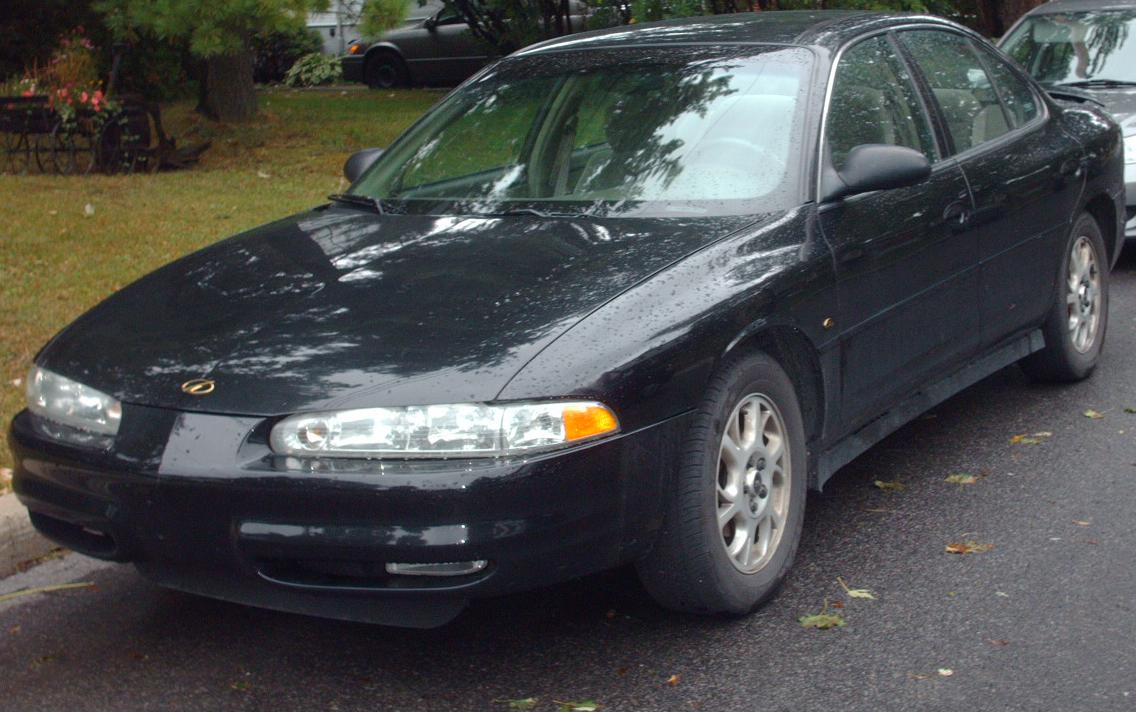
Oldsmobile Intrigue
"...nfident anymore. I think that there's tracks that intrigue me. Like he's been good at Atlanta, at least show..."
The Oldsmobile Intrigue is a mid-size car (a sedan). It’s not a race car by design, but it can come up in discussions when people talk about cars and track performance. The mention here seems more about interest in certain tracks than about technical details.
The Oldsmobile Intrigue is a mid-size sedan that was produced as part of Oldsmobile’s lineup. It’s the kind of car that might be mentioned when discussing how certain drivers or teams perform on specific tracks, since sedan models can be part of a racing or fan conversation. The context suggests the host is talking about what kinds of cars or track situations “intrigue” them based on past results.
Atlanta
"Like he's been good at Atlanta, at least shown speed and maybe not gotten the finishes."
Atlanta is a NASCAR track where cars go fast and race for a long time. If someone is “good at Atlanta,” it usually means they can keep their car working well as the tires wear out.
Atlanta is a NASCAR venue known for high-speed racing and sustained cornering loads. In NASCAR talk, “good at Atlanta” usually means the driver and team can keep the car fast over long runs and manage tire wear effectively.
Wilkesboro
"Wilkesboro seems like one that'll kind of line up as a shorter flat oval,"
Wilkesboro is a NASCAR oval track that’s shorter than many others. Shorter ovals often feel different because the turns and tire wear behave differently.
Wilkesboro refers to the NASCAR track at North Wilkesboro Speedway, which is known for being a shorter oval. The host describes it as a “shorter flat oval,” which implies lower banking and a different tire and handling balance than larger, more steeply banked ovals.
Nashville
"Like after the runs they had at Nashville and Charlotte and run 35th at Michigan."
Nashville is referenced as a recent race location where the team had “runs,” implying performance that didn’t translate into strong finishing results. In NASCAR coverage, track-to-track differences often highlight setup and tire-management strengths or weaknesses.
Michigan
"Like after the runs they had at Nashville and Charlotte and run 35th at Michigan."
Michigan is a NASCAR track where the tires and handling can behave differently than at other venues. A bad finish there, after better speed elsewhere, usually means the car didn’t work as well for that track.
Michigan refers to Michigan International Speedway, a NASCAR venue known for its distinct oval shape and tire demands. A “35th at Michigan” result after better speed elsewhere suggests the team may have struggled with setup, tire wear, or race execution on that specific track.
cheese grater type race
"If Chicago Atlanta is going to be a cheese grater type race,"
“Cheese grater” is slang for a race where the track eats up tires quickly. If it’s that kind of race, teams have to manage the tires carefully and set the car up to survive the wear.
“Cheese grater type race” is NASCAR slang for a track surface that aggressively scrubs tires, often due to abrasive asphalt or heavy tire wear characteristics. When a host says a race is “cheese grater,” they’re warning that tire management (and setup choices that reduce tire degradation) will be crucial.
manage tires
"I'm not like his ability to manage tires."
“Manage tires” means making sure the tires don’t wear out too fast. The driver and team try to keep the car handling well for as long as possible during each stint.
In NASCAR, “manage tires” means controlling tire temperature and wear so the car stays fast across a run and doesn’t fall off late. It’s a combination of driving style, pit strategy, and car setup (spring/damper balance, tire pressures, and alignment) to keep grip consistent.
Trackhouse
"Like I think if it were up to him and he had the car, I just don't trust Trackhouse to give him the car."
Trackhouse is a NASCAR team. The host is basically saying they don’t trust that team to give the driver the right car and support to do well.
Trackhouse is a NASCAR team/organization the host refers to as the one providing the car to a driver. In NASCAR, team capability affects everything from car setup and pit execution to how well the car performs at specific track types.
short, flat ovals
"And again, the type of tracks we're going to be going to here, it shifts. There's going to be a lot of more kind of short, flat ovals."
“Short, flat ovals” are tracks with tighter turns and less banking. Cars often need different setup and driving to keep good grip and keep the tires from wearing out too quickly.
“Short, flat ovals” describes NASCAR tracks that are relatively short in length and have low banking (“flat” turns). These tracks tend to emphasize mechanical grip and traction, and they often change how teams balance car rotation, braking stability, and tire wear compared with steeper or longer ovals.
O'Reilly series race
"Well, the O'Reilly series race is really proof that while on Sundays, Austin Hill can make us want to just scream and ask why."
O’Reilly series is a NASCAR racing series that’s sponsored by O’Reilly Auto Parts. The hosts are comparing how emotional the races can feel depending on which NASCAR series you’re watching.
“O’Reilly series” refers to NASCAR’s national series sponsored by O’Reilly Auto Parts (most commonly the Xfinity Series in recent years). The hosts are talking about how that series’ races can feel different from the Cup Series on Sundays.
Austin Hill
"Austin Hill can make us want to just scream and ask why. But on Saturday, it can make us all emotional wrecks because of how good that win felt for the RCR organization."
Austin Hill is a NASCAR race driver. Here, the hosts are talking about how his wins and moments on track make fans feel a lot—especially when he’s racing for Richard Childress Racing.
Austin Hill is a NASCAR driver known for competing in the Xfinity Series and for strong performances with Richard Childress Racing (RCR). In this segment, the hosts focus on his emotional impact on fans and his win with RCR.
RCR organization
"But on Saturday, it can make us all emotional wrecks because of how good that win felt for the RCR organization."
RCR (Richard Childress Racing) is a NASCAR team. When the hosts say “RCR organization,” they mean the team behind the car Austin Hill drives.
RCR refers to Richard Childress Racing, a major NASCAR team organization. The hosts credit the team’s win and the emotional reaction to how well Austin Hill performed for RCR.
burnout
"I found it touching that he did the burnout next to the Kyle Busch 8. I think he wanted to do it like all the way around."
A burnout is when the driver spins the tires on purpose, usually to make smoke and show off. In racing, it’s commonly done as a celebration after something big like a win.
A burnout is when a driver intentionally spins the tires to generate smoke and heat them up before or after a key moment. In NASCAR, it’s often used as a celebratory gesture after a win, and it can be part of the show for fans.
Kyle Busch
"I found it touching that he did the burnout next to the Kyle Busch 8."
Kyle Busch is a famous NASCAR driver. The “8” here refers to his car number, and the hosts are describing a celebratory moment involving that car.
Kyle Busch is a top NASCAR driver, and the transcript references his car number “8.” The hosts mention a burnout done next to the “Kyle Busch 8,” implying a visual/celebratory moment tied to his car.
losing Kyle
"That'd be eight races after losing Kyle. It would mean a lot for them to have not only had that moment at the same track of Harvick in 01, but to do something like that."
“Losing Kyle” here means Kyle Busch isn’t in the picture the way he normally would be. The hosts are connecting that to what it would mean for the team in upcoming races.
This phrase is used as shorthand for a major driver/team change or absence involving Kyle Busch. In NASCAR talk, “losing” a driver can refer to a departure, injury, or schedule shift that affects how teams and fans interpret upcoming races.
bump and run
"You had Taylor Gray get into Quaple and then you had Hill enter the picture, give a little nudge to Gray. Guys had to be angry with each other, bump and run. It was good NASCAR racing."
It’s a pass tactic where one car gently bumps the other to throw off their steering and make it easier to get by. How aggressive it is can be the difference between a normal move and a penalty.
“Bump and run” is a racing move where a driver lightly contacts the car ahead to disrupt their line and help themselves get alongside. In NASCAR-style racing, it’s often discussed as a physical but still race-legal way to pass, depending on how much contact occurs.
wheel hop
"I don't know how much I think it was wheel hop more than just kind of running through him. ... I didn't hear the, Gray's comments about, oh, I wheel hop. ... you wheel hop probably because you overdrove it or you're offline."
Wheel hop is when a car’s tire starts bouncing instead of gripping the track smoothly. It usually happens when the car is loaded too hard or the driver’s inputs upset the car, and it can make the car harder to control.
Wheel hop is a loss of traction where a tire repeatedly bounces or chatters, often under braking, acceleration, or when the suspension can’t stay settled. In racing, it’s commonly linked to tires getting overloaded or the car upsetting mid-corner, which can lead to contact or poor control.
offline
"But yeah, I just hate like you wheel hop probably because you overdrove it or you're offline."
Going offline means the car is not on the intended racing line through a corner. That can reduce grip because the tires may be on a different part of the track surface, changing how the car loads and potentially contributing to instability.
shallow entry
"He was on the inside, but it was like, I don't want to be in this, you know, shallow entry and just use too much track and got into quality."
Shallow entry means you turn into the corner more gently than you should. That can make you run out of room and end up using more of the track than planned, which can cause problems with control or other cars.
A shallow entry is a corner entry that turns in less aggressively than ideal, often resulting in a wider or less stable approach. In stock-car racing, that can force the driver to use more track later, increasing the chance of contact or getting “crowded” by other cars.
quality
"I don't want to be in this, you know, shallow entry and just use too much track and got into quality. So it was on him."
This sounds like a transcription glitch. The speaker is basically saying the bad line and lack of space caused the problem, and it was the driver’s fault.
In this context, “quality” appears to be a transcription error for “contact” or “chaos,” referring to the outcome of a bad racing situation. The speaker is describing how the driver’s line and space led to the incident being “on him.”
green flag
"New Hampshire where the three leaders all got taken out because NASCAR threw the green flag when it was raining out."
The green flag is NASCAR’s signal that the race is really starting and cars can go full speed. If it’s waved when the track is wet, drivers can get into trouble because the cars aren’t prepared for rain.
In NASCAR, the green flag signals the race is officially underway and cars are allowed to race at full speed. If the green flag is waved while conditions are unsafe (like heavy rain), it can lead to early wrecks because teams may not have the right setup or tires for the weather.
rain tires
"NASCAR threw the green flag when it was raining out. And we didn't have rain tires..."
Rain tires are made to grip wet roads better by pushing water out of the way. If you don’t have them, the car can slide or spin much more easily in the rain.
Rain tires are specialized tires with tread patterns designed to channel water and maintain grip on wet pavement. Without rain tires, a car can lose traction quickly, especially during the first laps when the track is still getting saturated.
get any of their laps back
"they didn't let Kyle Busch and Denny Hamlin and Martin Shurek's repair their cars under red. They didn't let them get any of their laps back..."
“Getting laps back” means NASCAR may credit a team with extra laps after a stoppage. That matters because it can decide whether they’re still close enough to race for position.
In NASCAR, “getting laps back” refers to being credited with additional laps after a stoppage or incident, depending on the rules and timing. It’s a major competitive factor because it can determine whether a team is effectively back in contention after being delayed or damaged.
Bristol Motor Speedway
"though, it's like, well, okay, we're not going to go to, we're not going to go to Bristol Motor [3547.5s] Speedway and the tracks going to be flying up and going to people's grills, you know,"
Bristol Motor Speedway is a famous NASCAR race track in Tennessee. It’s known for tight, high-intensity racing, and track setup matters a lot for how the race goes.
Bristol Motor Speedway is a NASCAR oval in Bristol, Tennessee, known for its short-track racing and intense, close-quarters action. In NASCAR discussions, it often comes up as a venue where track conditions and event logistics can strongly affect race outcomes.
giving him all the laps back
"I think that's why I'm okay with it largely, but giving him all the laps back was a question [3572.6s] when I still do agree with that."
“Giving laps back” means NASCAR officials adjust the scoring so a driver doesn’t lose as many laps as they originally did. It’s basically a correction to the results after something happened during the race.
In NASCAR scoring, “giving laps back” is a race-control decision that restores a driver’s position by returning laps that were previously lost due to penalties, stoppages, or other race events. It’s a way to correct the race order when officials determine the driver shouldn’t be disadvantaged in the final results.
Dover
"I'll bet if, you know, what would the Jeff Gordon thing was that Dover? [3593.8s] Is that where that happened? [3594.6s] Martinsville Dover was McMurray in 2014."
Dover refers to Dover International Speedway, a NASCAR oval known for its concrete surface and distinctive high-banked turns. The mention here is tied to a past incident, highlighting how venue-specific track issues can affect race events and decisions.
track surface
"We were talking about the track surface at Chicago land. [3627.5s] Looks pretty rough."
Track surface just means how the race track pavement feels and how worn it is. If it’s rough, the cars can grip differently and it can also make it easier for debris to show up.
Track surface refers to the condition and texture of the racing pavement—how rough, worn, or uneven it is. In NASCAR, surface quality affects tire grip, how cars slide or bite in corners, and how debris or loose material can become a problem.
tail of Dega
"I don't know about that far, but if he has a clean tail of Dega, I mean, there's a, there's a real shot if nobody else is as consistent that, I mean,"
They’re talking about Talladega, a track where the racing gets wild. “Tail” means near the back of the pack, and the idea is you can still have a chance later if you don’t get wrecked.
“Tail of Dega” is NASCAR shorthand for running near the back of the field at Talladega Superspeedway (often abbreviated “Dega”). In practice, it’s about surviving the chaos and staying in position so you can still capitalize when the race dynamics change.
Martinsville
"Martinsville could be your championship race. He's pretty good there."
Martinsville is a short NASCAR track with lots of tight corners. Because it’s so close-quarters, drivers who handle traffic and tire wear well often do better there.
Martinsville Speedway is a short track in Virginia known for tight turns and heavy braking zones. In NASCAR, it often rewards drivers who can manage tires and traffic, because the racing is close and cautions can bunch the field.
one reset
"…all the people that were debating last year that were like pro chase coming back, being like, it's the best of both worlds. It's competitive to the very end, but you only have one reset."
They’re talking about how NASCAR playoffs sometimes “reset” the points partway through. That means earlier points don’t carry as much weight, so more drivers can still fight for the championship later.
“One reset” describes NASCAR’s playoff structure where points are wiped or reset at a specific stage, giving drivers a fresh start for the next round. The debate is whether that reset keeps the racing competitive late while still allowing consistent performers to win overall.
Matt Crafton
"remind herself, oh, that's not Matt Crafton. He has the misfortune of still just being in Matt Crafton's truck, trying to remind the world that Matt Crafton no longer exists in NASCAR."
Matt Crafton is a NASCAR driver, especially known for racing in the Truck Series. The host is talking about his truck and whether it’s doing well enough to matter for playoff spots.
Matt Crafton is a long-time NASCAR driver best known for competing in the Truck Series. The host is referencing his former presence in NASCAR and discussing how his truck entry has been performing.
Request an Explanation
Heard something you'd like explained? We'll add it to this episode.
Sign in to request explanations for terms you heard.
Want to learn more?
Browse our glossary for plain-English explanations of automotive terms, jargon, and concepts.
Help improve this episode
See something that's not quite right? Our annotations are AI-generated and can sometimes miss the mark. Click the flag icon on any annotation to suggest a correction.