Briscoe's Dub, Chicagoland Returns, Atlanta Ahead, Schedule Rumors and MORE!!!
About this episode
Joliet’s return of Chicagoland Speedway delivered big weekend energy despite brutal weather and some messy logistics. Hosts swap infield camping stories, including a chaotic shuttle-bus detour, flooded parking lots, and spotty connectivity that left fans waiting in the mud. They also praise the crowd and the overall “Rowdy Nation” vibe, plus a standout neighbor who helped make it smoother. Racing talk centers on Chase Briscoe’s first win of the season, with discussion of how he managed the late-race challenge.
four-wheel drive
"Didn't have the vehicle and and four-wheel drive at that point. We Fortunately rented a we pay a little bit extra We rented a Ford Bronco for the weekend... ...But but I did put it in four-wheel drive and I just I felt back down. I'm just driving out"
Four-wheel drive means the car can push with all four wheels instead of just two. That helps when the ground is slippery, like mud, because it can grip better.
Four-wheel drive (4WD) sends power to all four wheels, which can improve traction when roads are slippery or uneven. In the mud, the speaker says they switched into four-wheel drive to help the vehicle move out of a soft, saturated area.

Ford Bronco
"Fortunately rented a we pay a little bit extra We rented a Ford Bronco for the weekend, which was the right call because especially after leaving on Saturday with even more rain"
The Ford Bronco is an SUV built for rough terrain and off-road driving. Here, the host says renting one helped them get around when the parking area turned into mud.
The Ford Bronco is a modern off-road SUV known for its rugged, trail-focused design and strong four-wheel-drive capability. In this segment, it’s mentioned as the weekend rental that helped the speaker deal with deep mud and soft ground.

Ford F-150 Lightning
"I heard that Yeah, the lightning round is starting a little Jarrett's lead us off ..."
The Ford F-150 Lightning is an electric pickup truck. Instead of using gasoline, it runs on a battery and an electric motor. It’s built to do truck jobs like carrying things and towing, but with electric power.
The Ford F-150 Lightning is an all-electric version of the F-150 pickup, designed to bring EV power to a truck platform. It’s significant because it targets buyers who want the utility of a full-size truck—like towing and bed use—while running on electricity. It may be discussed in a “lightning round” style segment because it’s a high-profile, modern vehicle that stands out in the truck conversation.
victory lane
"He is the latest and greatest Toyota to get to victory lane this year [813.8s] But he had to hold off his teammate Christopher Bell to hungry JGR drivers who are used to winning multiple races a season"
“Victory lane” is the special spot at the track where the winner goes to celebrate. When someone says a driver got to victory lane, they mean that driver won the race.
“Victory lane” is NASCAR’s term for the winner’s area where the winning driver parks and celebrates after the race. It’s a recognizable tradition across NASCAR events, so it’s shorthand for “the race winner.”
JGR
"But he had to hold off his teammate Christopher Bell to hungry JGR drivers who are used to winning multiple races a season [821.6s] Used to being in that championship fight"
“JGR” is short for Joe Gibbs Racing, a major NASCAR racing team. When they mention JGR drivers, they mean drivers who race for that team.
“JGR” refers to Joe Gibbs Racing, one of NASCAR’s top teams. The segment frames Bell and other drivers as “JGR drivers,” emphasizing team strength and how teammates often push each other in the same championship ecosystem.
green flag
"It was the end of like a hundred lap nearly long green flag run [834.6s] We saw a green flag hit cycle Denny Hamlin may have been a part of this battle if he didn't scrape the wall with a few laps to go"
A “green flag” means the race is going at full speed and drivers are racing normally. A “green flag run” is a stretch of laps where there weren’t cautions slowing everyone down.
A “green flag” indicates the race is under full-speed racing conditions, as opposed to caution periods. The segment mentions a “green flag run” lasting nearly a hundred laps, highlighting how long the race stayed in uninterrupted racing mode.
scrape the wall
"We saw a green flag hit cycle Denny Hamlin may have been a part of this battle if he didn't scrape the wall with a few laps to go [841.7s] Jared I'll start with you on this just thoughts on briscoe besting Bell there to get his first win of the season"
“Scrape the wall” means the car touched the outside barrier. Even if it doesn’t fully crash, it can hurt the car’s speed and handling for the rest of the race.
“Scrape the wall” describes a car making contact with the track barrier, usually while trying to hold position or recover from traffic. In NASCAR, even light contact can affect handling and tire wear, which can decide late-race battles.
Chase Briscoe
"Bell with with the [875.6s] Injury briscoe having to claw his way up the point standings and we'll look at that in a little bit, but he's done a great job [884.5s] I [884.9s] If you're a contender you don't want them getting into that top group and we'll look at the points a bit ... [952.1s] But I ended seeing a lot of Chase Briscoe actually over the weekend because I went to the [961.0s] Trackside Chapel thing"
Chase Briscoe is a NASCAR race driver. They’re talking about how he’s battled through adversity and still worked his way up the standings, and they also mention seeing him around the track.
Chase Briscoe is a NASCAR driver, and the segment frames his season as a story of overcoming setbacks to climb the points. The hosts also describe him as being active around the track and then winning, using his results as evidence for his momentum.
points standings
"Injury briscoe having to claw his way up the point standings and we'll look at that in a little bit, but he's done a great job [884.5s] I [884.9s] If you're a contender you don't want them getting into that top group and we'll look at the points a bit"
Points standings are the NASCAR season rankings. Drivers earn points from each race, and the hosts are talking about who’s moving up toward the front of that ranking.
Points standings are the season leaderboard in NASCAR, where drivers accumulate points based on race finishes. The hosts discuss drivers “clawing” up the points and teams getting closer to the top group, emphasizing how results translate into playoff positioning.
Toyota
"And I think this could be the start of a really big push Toyota still definitely I would say overall is [902.8s] The better of them the manufacturers right now, but there's more thunder [907.3s] Chevy and Hendrick I will say I want to point out them to they're catching up"
Toyota is a car company that competes in NASCAR by backing teams with racing technology. Here, they’re saying Toyota cars have been doing especially well compared with other brands this season.
Toyota is one of NASCAR’s major manufacturers, supplying engines and engineering support to teams. In this segment, the hosts are comparing Toyota’s performance to other manufacturers based on results like top-10 finishes and how strong the cars look as the season progresses.
Chevy
"but there's more thunder [907.3s] Chevy and Hendrick I will say I want to point out them to they're catching up [911.6s] I think I really think we're gonna see an interesting battle down the stretch, but and Toyota is the one to beat"
Chevy is a car brand that races in NASCAR with teams that use Chevrolet technology. In this part, they’re saying Chevy is starting to close the gap as the season goes on.
Chevy (Chevrolet) is another key NASCAR manufacturer brand, competing head-to-head with Toyota and others through teams like Hendrick Motorsports. The hosts mention Chevy as the one catching up, implying the Chevrolet-backed cars are improving relative to Toyota late in the season.
Hendrick
"but there's more thunder [907.3s] Chevy and Hendrick I will say I want to point out them to they're catching up [911.6s] I think I really think we're gonna see an interesting battle down the stretch, but and Toyota is the one to beat"
Hendrick Motorsports is a NASCAR racing team. Here, they’re saying Hendrick’s cars (with Chevy) are getting closer to the front as the season goes on.
Hendrick refers to Hendrick Motorsports, a top NASCAR team organization that fields cars for multiple drivers. In the segment, the hosts connect Hendrick with Chevy’s improvement, suggesting the team’s cars and strategy are trending better as the season continues.
mechanical failure
"That doesn't include Tyler Reddick who if not for mechanical failure would have probably been in that mix as well [930.5s] But Danny. Yeah, what do you say about Toyota?"
A mechanical failure is when something on the race car breaks or stops working properly. It can ruin a driver’s race even if they’re driving well.
Mechanical failure in NASCAR means a car component breaks or malfunctions during a race, forcing the team to slow down, retire, or lose track position. In this segment, it’s used to explain why a driver who otherwise might have finished near the front didn’t.
Tyler Reddick
"That doesn't include Tyler Reddick who if not for mechanical failure would have probably been in that mix as well [930.5s] But Danny. Yeah, what do you say about Toyota?"
Tyler Reddick is a NASCAR driver. They’re saying he had a chance to finish near the front, but a mechanical problem kept him from doing so.
Tyler Reddick is a NASCAR driver mentioned as an example of how close the front-running group was. The hosts say that without a mechanical failure, he likely would have been in the top mix, highlighting how reliability can swing race outcomes.
chase grid
"There's a reason why at the start of year when we gave our you know [988.2s] What do we think's gonna look like with the with the chase grid?"
NASCAR has a playoff system called the “Chase.” The “chase grid” just means which drivers are in the playoff hunt and where they stand going into that stretch.
In NASCAR, the “Chase” is the playoff-style stretch where drivers fight to qualify for the championship round. The “chase grid” refers to the lineup of drivers/positions entering that playoff phase, based on points and/or wins.
number one Seed
"What do we think's gonna look like with the with the chase grid? There's a reason I had Chase Briscoe as my number one [995.3s] Seed coming out of this and you know took them a while to get going"
In NASCAR playoffs, drivers get ranked like “seeds.” A “number one seed” means you’re starting the playoff hunt in the best position compared to the other drivers.
A “seed” in NASCAR refers to a driver’s ranking/position heading into the playoff format. Being a “number one seed” generally means you’re starting the Chase/Playoffs from the strongest spot in the points/win hierarchy.
Sonoma
"like like we said [1002.4s] He finished second at Sonoma last week then he won this week"
Sonoma Raceway is a NASCAR road course in California. It’s twisty and technical, so good car control and tire management matter a lot.
Sonoma refers to Sonoma Raceway in California, a road-course track used in NASCAR. It’s known for technical turns and braking zones that can reward drivers who manage tires and car balance well over a run.
Echo Park Speedway
"He could be second last week and could win this weekend at Echo Park Speedway [1014.6s] Chase Briscoe's"
Echo Park Speedway is the name of the race track they’re talking about for the upcoming weekend. Different tracks need different strategies to do well.
Echo Park Speedway is a NASCAR venue name used in the episode, referring to the track where the next race is scheduled. Track layout affects strategy—especially tire wear, fuel windows, and how passing works.
on pole
"He fired off fast last year if I recall wasn't he on pole at Daytona at the beginning of the year [1025.7s] Maybe that was this year."
“On pole” means the driver earned the best qualifying time and starts first. Starting up front usually makes it easier to avoid getting stuck in traffic early.
“On pole” means the driver qualified fastest and will start the race from the front position on the grid. In NASCAR, starting up front can reduce traffic risk and help a team control the early race.
Toyota JGR
"But it was his first year with Toyota JGR James Small took him a while [1033.8s] But then they won Pocono around this same time last year."
“Toyota JGR” means a Toyota-backed NASCAR team run by Joe Gibbs Racing. The team’s engineering and the car’s package can make a big difference in how well the driver performs.
“Toyota JGR” refers to Toyota race cars run by Joe Gibbs Racing (JGR). In NASCAR, the manufacturer and the team together strongly influence car setup, engineering, and how consistently a driver can run at the front.
Pocono
"But then they won Pocono around this same time last year. They won that Pocono race kind of in a similar fashion [1040.0s] It was a long run."
Pocono Raceway is a NASCAR track in Pennsylvania with a unique shape. Because it has long stretches and tricky corners, setup and tire wear matter a lot.
Pocono refers to Pocono Raceway (Pennsylvania), a NASCAR track with a distinctive layout. It’s known for long straightaways and a unique corner set, which makes car setup and tire management especially important.
air block
"It was a long run. He had to air block a little pick and choose his lanes the right way [1044.4s] He wins that race at Pocono and then the second half of last season you look at the stats"
An “air block” is when a driver blocks another car by positioning so the other car can’t get clean air for drafting and passing. It’s a defensive move to make it harder to overtake.
An “air block” is a defensive driving move where a car positions itself to disrupt another driver’s airflow and passing attempt. In NASCAR, aerodynamics and drafting are critical, so blocking can be about denying the other car the clean air it needs to gain speed.
Kyle Larson
"We'll start with Kyle Larson because he had a look like he was gonna get his fifth or sixth top five finish in a row Spins out"
Kyle Larson is a NASCAR driver. Here, the hosts are saying he was running well and could’ve finished near the front, but a spin hurt his day.
Kyle Larson is a NASCAR driver known for strong road-course and oval performance. In this segment, the hosts focus on his momentum and how he looked like he was headed for another top-five result before a spin.
William Byron
"William Byron, however led I think he led the most laps Yeah, I got that stuff like ninety-two. I would think 94"
William Byron is a NASCAR driver. In this race, he led a lot of laps and did well early, but the car didn’t stay as strong late in the run.
William Byron is a NASCAR driver associated with Hendrick Motorsports. The hosts credit him with leading the most laps and sweeping the stages, then note he faded late on the long run.
stages
"William byron led the most laps swept the stages finished fourth faded on the long run"
NASCAR races are divided into parts called stages. Finishing well in each stage earns points, so teams sometimes change their strategy during the race.
In NASCAR, races are split into multiple segments called stages. Drivers can earn points based on where they finish in each stage, which changes strategy versus racing for only the final result.
lead changes
"Plenty of lead changes think there were 28, which is a new track record"
“Lead changes” means how many times the lead driver changes during the race. More lead changes usually means the cars are running close and passing a lot.
“Lead changes” are the number of times the lead position switches between drivers. A high count usually indicates close competition and frequent passing, which can also affect tire and fuel strategy.
Alex Bowman
"Larson I think could have competed for the win before his issues Alex Bowman top five finish. He was coming on really strong at the end."
Alex Bowman is a NASCAR driver. The hosts say he finished in the top five and was getting better toward the end of the race.
Alex Bowman is a NASCAR driver, also tied to Hendrick Motorsports in the modern era. The hosts mention his top-five finish and that he was gaining strength late in the race.
top five
"And hey, I got a prediction right because he did finish top five, but I will say this"
A “top five” finish means the driver finished in the top five positions. It’s a big deal because it usually means the car was strong and the driver scored lots of points.
A “top five” finish means placing fifth or better in a race. In NASCAR, top-five results are a key performance marker because they correlate with points, playoff momentum, and overall car competitiveness.
long run
"You're talking about Hendrick having short short run speed but long run at 48 was about yeah"
“Long run” is how the car does when you’re racing for a longer stretch, not just the first few laps. As tires wear, the car can change a lot, so long-run performance matters for finishing strong.
“Long run” refers to how a NASCAR car performs over extended green-flag time as tires wear and track grip changes. Teams watch long-run behavior to judge tire management, balance, and whether the car will stay competitive late in the race.
short run speed
"You're talking about Hendrick having short short run speed but long run at 48 was about yeah"
“Short run speed” means how quickly the car can go during a short stretch of racing, like early in a stint. It often looks great when tires are new, but it may not tell you how the car will feel later.
In NASCAR, “short run speed” is how fast a car is over a brief stint—often when tires are fresh and fuel load is higher. It’s a setup and driving balance indicator, but it doesn’t always predict how the car will behave later in a longer run.
homestead
"But you know before things are all sudden done by the end of the year when we get to homestead"
“Homestead” refers to a NASCAR track in the Homestead area near Miami. It’s brought up because it’s one of the last big races of the season.
“Homestead” is shorthand for the Homestead-Miami Speedway, which is a key late-season NASCAR venue. The hosts mention it as the next major milestone “by the end of the year,” tying it to the season’s closing stretch.
Ryan Priest
"in shane's case He's well in the chase right now and he is Going to be battling that whole time in ryan priest's case That penalty is the difference right now between him being 17th and being 16th."
Ryan Priest is a NASCAR driver. In this segment, the hosts are saying a penalty he got (or didn’t get) affected where he ended up in the standings.
Ryan Priest is a NASCAR driver whose penalty is being discussed as affecting his position in the chase standings. The hosts connect the penalty to the difference between finishing 17th vs 16th.
penalty
"That penalty is the difference right now between him being 17th and being 16th. So I'm just I'm not crazy about it..."
A penalty is NASCAR’s way of saying a driver broke a rule. It can cost the driver positions and points, which is why it matters so much in the chase standings.
In NASCAR, a penalty is an official penalty assessed for on-track rule violations. It can change track position and points outcomes, which is why the hosts are discussing how it separates 17th from 16th.
right rear hook
"But really like you're saying balls and strikes a right rear hook head on into the fence at high speeds. That's a penalty."
A “right rear hook” is when one car’s right-rear corner catches another car. NASCAR looks at that kind of contact closely because it can be seen as a rule violation depending on how it happens.
“Right rear hook” describes a specific contact pattern where the right-rear area of one car clips or catches another car’s body. In NASCAR officiating, the exact contact geometry and resulting damage often determine whether it’s judged as intentional or a racing incident.
pit road
"You're wrecking someone under caution or or after the race when you know that we're no longer on pit road..."
Pit road is the area NASCAR uses for car stops and repairs. The point here is that NASCAR still enforces rules even when you’re not in the pit area.
Pit road is the controlled lane where NASCAR teams service cars during cautions and scheduled stops. The hosts note that actions “after the race” and “no longer on pit road” can still be penalized, emphasizing that rules apply beyond just the pit lane.
Austin Dillon
"you can even say like you know austin dillon at richmond drove in from five car links back clearly not even close to a racing move"
Austin Dillon is a NASCAR driver. The hosts are using his example from Richmond to argue that NASCAR should be able to tell when contact is clearly not a normal racing move.
Austin Dillon is a NASCAR driver referenced as an example of a move that was clearly not a typical racing maneuver. The hosts cite his Richmond incident to argue that NASCAR should be able to recognize intent and apply consistent penalties.
bump and run
"But bumper to bumper contact, you know a bump and run gone wrong with packing air like priest did the tie gives"
A “bump and run” is when one driver lightly hits the other to push them out of the way so they can pass. If it’s too hard or in the wrong situation, NASCAR can call it illegal and penalize it.
“Bump and run” is a racing tactic where a driver makes contact to unsettle the opponent and force them off their line. NASCAR rules and officiating vary by context, but the key point is that it’s often treated as aggressive and can be penalized if it crosses the line into unsafe or retaliatory driving.
bumper to bumper contact
"But bumper to bumper contact, you know a bump and run gone wrong with packing air like priest did the tie gives"
It means the cars actually touch each other—front to rear—while racing. NASCAR then decides whether it was normal racing or something that should be penalized.
“Bumper to bumper contact” describes direct physical contact between cars’ front/rear bumpers during racing. In NASCAR, the severity and intent of that contact often determines whether it’s treated as racing incident or a penalty-worthy infraction.
radio
"I I think no matter what you say on the radio, that's just self policing ... I think they need to drop the whole you know radio is the only piece of evidence we care about because it's just dumb"
“Radio” here means the live communication between the driver and their team. The debate is about whether NASCAR should use those words as evidence when deciding penalties.
In NASCAR, “radio” refers to the in-car driver-to-crew communications that can be used as evidence for intent, admissions, or context during an incident review. The hosts are arguing that relying on radio audio as the “only piece of evidence” can make the sport look less sophisticated.
self policing
"I I think no matter what you say on the radio, that's just self policing That's just hard racing let the two guys settle it themselves."
It means drivers sort out disagreements on the track instead of always waiting for officials to step in. The idea is that racing consequences can discourage bad behavior.
“Self policing” in racing means drivers and teams manage behavior among themselves—through on-track consequences, rivalries, and direct racing—rather than relying solely on officials. The host suggests that letting drivers “settle it themselves” is part of how NASCAR should handle certain disputes.
hard racing
"That's just hard racing let the two guys settle it themselves. I think that's the precedent they need to set going forward"
“Hard racing” means racing aggressively and going for position. The argument is that some aggressive moves are still considered normal racing, not automatically illegal.
“Hard racing” is a NASCAR-specific framing for aggressive, competitive driving that stays within the bounds of racing—even if it looks intense. The host contrasts it with penalties, implying that some contact is considered part of racing rather than a rules violation.
Chicago land Speedway
"No penalty for anyone regarding uh, on track incidents Sunday at chicago land Speedway good conversation gentlemen."
Chicago Land Speedway is a NASCAR race track near Chicago. It’s the kind of track where cars have to keep speed through the turns, so handling and tire wear matter a lot.
Chicago land Speedway is a NASCAR oval track in the Chicago area, known for its high-speed racing and multiple grooves through the corners. In NASCAR coverage, it’s often used as a reference point for how cars handle on intermediate tracks.
DNF
"Tyler reddick another Not a dnf. I think he came back out and finished the race 20 laps down"
DNF means the driver didn’t finish the race. In NASCAR, not finishing usually hurts your points a lot compared to finishing, even if you’re behind.
DNF stands for “Did Not Finish.” In NASCAR, it’s a major deal because failing to complete the race typically means you earn far fewer points than a car that finishes, even if it’s multiple laps down.
radiator
"But I mean and I still don't know because it starts up me to tell in person. Do we know What exactly caused this big? I think it was the radiator. I think he hit a piece of debris"
A radiator helps keep the engine from overheating by cooling the fluid that runs through the engine. If it gets damaged in a wreck, the car can overheat and lose power.
A radiator is the cooling component that helps remove heat from the engine’s coolant. In racing, radiator damage or coolant loss can quickly lead to overheating, forcing a driver to limp back to the pits or finish with reduced performance.
joe gibbs racing
"information and collaboration with joe gibbs racing which is Going to help them the same way it has for 23 11"
Joe Gibbs Racing is a major NASCAR team. The idea here is that working with them can bring better know-how and help a smaller team run faster.
Joe Gibbs Racing (JGR) is a top NASCAR team organization that often provides technical and operational support to other teams. In this segment, the hosts connect JGR collaboration to improved performance and information flow.
brad keselowski
"I find it funny it coincides with brad keselowski getting very vocal about that Seeing how he is 20th in the points"
Brad Keselowski is a NASCAR driver. The hosts are saying his public opinions line up with what they’re seeing in the standings.
Brad Keselowski is a NASCAR driver known for being outspoken about team performance and competitive fairness. Here, the hosts mention his recent comments as part of the broader discussion about support and results.
aj almond dinger
"But aj almond dinger 16 points out right now No factory support a team that is more than likely switching to dodge next year if not the year after"
AJ Allmendinger is a NASCAR driver. They’re saying he’s doing better than expected in the standings, even though the team situation sounds like it should be stronger.
AJ Allmendinger is a NASCAR driver discussed here in terms of his points position and how well (or poorly) his team is performing relative to expectations. The segment also frames his standing as both a compliment to him and an indictment of the mid-pack.
switching to dodge
"No factory support a team that is more than likely switching to dodge next year if not the year after"
“Switching to Dodge” means the team is changing which brand of race car they’ll run. Different brands can come with different parts and levels of help, so it can change how competitive the team is.
“Switching to Dodge” refers to a NASCAR team changing the manufacturer it races under (the car brand/engine family ruleset they build to). In NASCAR, manufacturer choice affects parts packages and how much manufacturer support a team can access.
factory support
"No factory support a team that is more than likely switching to dodge next year if not the year after"
“Factory support” means the car maker is helping the team directly. That can include better parts and technical help, which usually makes it easier to run up front.
In NASCAR, “factory support” means direct backing from a manufacturer (like Chevrolet, Ford, or Toyota) to a team. That support can include engineering help, parts, and sometimes funding, which can materially improve competitiveness.
the chase
"There is a real shot that he could make the chase with this being said"
“The Chase” is NASCAR’s playoff run to decide the champion. Drivers earn positions through points, then race through rounds where some get eliminated.
“The Chase” is NASCAR’s playoff-style championship format (historically called “The Chase for the Sprint Cup”). Drivers qualify based on points and then compete in elimination rounds to determine the season champion.
ty dillon
"Have I learned that ty dillon will not be joining with a teammate next year or am I mistaken? I'll talk about that a bit. It's just rumored. We don't know at this point"
Ty Dillon is a NASCAR driver. They’re talking about rumors of where he’ll be next year, but they say it’s not confirmed.
Ty Dillon is a NASCAR driver mentioned in the context of rumors about his future team situation. The hosts clarify that it’s not confirmed yet, emphasizing how driver lineups can change between seasons.
ross chastain
"Yeah, there's a lot of guys that like michael mcdowell Compared to his teammates is having a terrible season ross chastain. We know about track house track house looks lost"
Ross Chastain is a NASCAR driver. They’re using his results as an example of how one driver can struggle while others do better.
Ross Chastain is a NASCAR driver whose season performance is being contrasted with his teammates. The segment uses him as an example of how results can vary even within the same team ecosystem.
michael mcdowell
"Yeah, there's a lot of guys that like michael mcdowell Compared to his teammates is having a terrible season"
Michael McDowell is a NASCAR driver. They’re saying his season results compared to his teammates look rough.
Michael McDowell is a NASCAR driver referenced here in a comparison about teammate performance. The hosts are pointing out that his results relative to his teammates suggest a difficult season.
track house
"ross chastain. We know about track house track house looks lost The fact that ross chastain isn't on this list and aj almond dinger is crazy"
Trackhouse is a NASCAR team. The hosts are saying the team seems to be having a tough time right now.
Trackhouse Racing is a NASCAR team brand associated with drivers like Ross Chastain. In this segment, it’s referenced as looking “lost,” implying struggles in performance or direction.
schedule next year
"Do you think chicagoland speedway? We'll be back on the schedule next year beyond Can it coexist alongside the street race has been kennedy suggested?"
They’re talking about what races NASCAR will put on next year’s calendar. The question is whether Chicagoland Speedway will still be on it, and how that fits with other races being proposed.
This refers to NASCAR’s race calendar planning for the following season. The hosts are debating whether Chicagoland Speedway will be included again and how that decision interacts with other planned events.
Kansas
"Which feels like kind of it feels a lot like kansas looks kind of like kansas It's just just a classic mile and a half basic nascar race"
They’re comparing Chicagoland to Kansas, meaning the race atmosphere and track style feel similar. NASCAR fans often group tracks by how they race and what the event is like.
The hosts compare Chicagoland’s feel to Kansas, implying a similar NASCAR track experience. In NASCAR talk, “Kansas” usually points listeners toward the Kansas Speedway oval and its racing/attendance vibe.
mile and a half
"It's just just a classic mile and a half basic nascar race solid camping scene. It's okay"
“Mile and a half” means the track is 1.5 miles around. NASCAR races on different track sizes, and the size changes how the racing feels and how the cars run together.
“Mile and a half” refers to the track length (1.5 miles) of an oval. In NASCAR, track length strongly affects racing style—speed, drafting, and how cars behave in traffic—so fans often compare events by this measurement.
solid camping scene
"It's just just a classic mile and a half basic nascar race solid camping scene. It's okay Or would you rather be the street race?"
A “camping scene” means a lot of fans camp near the track for the weekend. The hosts are saying Chicagoland has that classic NASCAR-style weekend vibe.
A “camping scene” refers to fans staying overnight in campgrounds near the track, which can boost the overall event atmosphere and attendance. The hosts use it to describe Chicagoland’s traditional oval-weekend culture versus more city-centered street-race logistics.
street race
"Or would you rather be the street race? Which is very different than most everything else on the schedule? ...When it comes to the street course like the where I'm at with it"
A “street race” is an event held on temporary road-course layouts using city streets rather than a permanent oval. The hosts argue it’s “very different” from typical NASCAR tracks and can become less novel over time if it’s repeated in the same kind of market.
street course
"When it comes to the street course like the where I'm at with it I think it's going to get kind of like Wristled dirt you keep after a few years of it."
A “street course” is the temporary race track made from city streets. It usually feels more twisty and constrained than a normal track, and the hosts are saying it can start to feel repetitive.
A “street course” is the specific road-course layout used for a street race, typically with tighter turns and less consistent surfaces than purpose-built tracks. The hosts discuss how street-course events can become “redundant” after a few years.
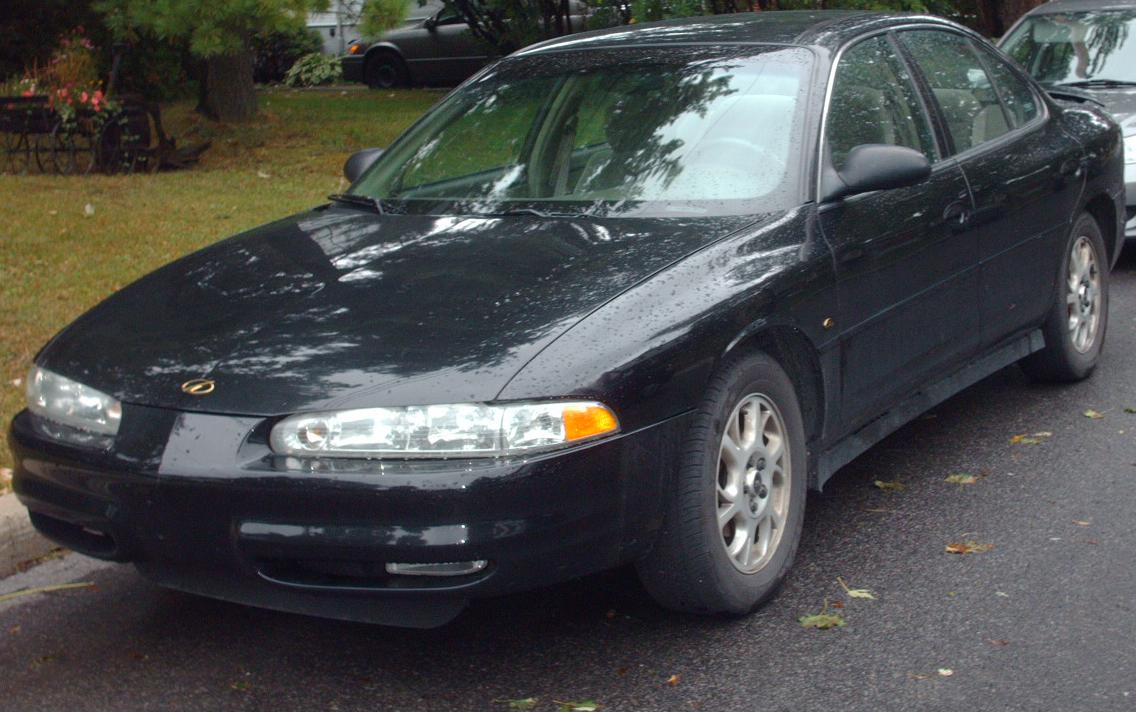
Oldsmobile Intrigue
"...n Nashville. I'd go and see like Yeah, it give me intrigue but The when we were at the sweet up jeff was ask..."
The Oldsmobile Intrigue is a mid-size car (a sedan) that was made for regular driving. It’s not a race car; it was meant to be comfortable for everyday trips. It may come up in stories because it’s a specific car people owned or encountered.
The Oldsmobile Intrigue is a mid-size sedan from Oldsmobile, built for comfortable daily driving rather than performance racing. It may be mentioned in a podcast as part of a story about what someone drove or saw in a particular place, since older sedans often come up in personal anecdotes. Its relevance here is mainly as a recognizable model from the past that fits the conversation’s “what we were doing/where we went” tone.
Daytona 500
"We kind of talk about building up the Daytona 500 with the clash being back at Daytona [3402.7s] So I I can see the theory"
The Daytona 500 is NASCAR’s biggest, most well-known race. People bring it up when they’re talking about how to schedule events to attract more fans.
The Daytona 500 is NASCAR’s most famous race, held at Daytona International Speedway. It’s often used as a benchmark in scheduling strategy because it’s a major event that can attract new viewers and build momentum for the season.
Clash
"We kind of talk about building up the Daytona 500 with the clash being back at Daytona [3402.7s] So I I can see the theory"
The “Clash” refers to NASCAR’s season-opening exhibition race, traditionally held at Daytona. It’s discussed alongside the Daytona 500 because it can help build early-season interest and momentum.
rotating deal
"I would like to see it as a rotating deal [3417.9s] Um two is very much pushing it. I can live with two street races."
A “rotating deal” means NASCAR would switch up where it races from year to year. The idea is to reach new cities while still keeping the main fans engaged.
A “rotating deal” here means changing which cities host NASCAR events over time rather than repeating the same locations every year. In scheduling terms, it’s about spreading exposure to new markets while balancing the core fan base.
straight racing
"Yeah, I think it'd be interesting if they doubled up because I do agree. They're two very different audiences [3453.9s] overlap [3454.8s] Yeah, like like I said, I think [3457.6s] I I want to see it [3460.0s] I want to see straight racing continue, but I want it to be something that you know"
“Straight racing” here means the usual NASCAR style of racing on oval tracks. They’re saying they still want that, even if NASCAR adds more city street events.
“Straight racing” in this context refers to NASCAR’s traditional oval-style racing where cars run sustained high-speed laps with fewer street-course constraints. The speaker contrasts it with street races, implying they want the core oval product to remain central.
restarts
"Matt had the top one saying restarts amazing caution to plenty chase implications and win Racing really fun chicagoland should be back permanently."
In NASCAR, a restart happens when the race resumes after a caution. It’s a big deal because the field bunches up again and drivers can move forward fast.
A NASCAR restart is the restart of racing after a caution period. Restarts are high-impact moments because drivers can gain or lose positions quickly, and they often determine who can capitalize on late-race “chase” scenarios.
chase implications
"Matt had the top one saying restarts amazing caution to plenty chase implications and win Racing really fun chicagoland should be back permanently."
“Chase implications” means how this race could impact who’s doing well in the season’s playoff/points race. A finish can move you closer—or farther—from advancing.
“Chase implications” refers to how a race result (often influenced by cautions and restarts) affects a driver’s chances in NASCAR’s season-ending points battle. In other words, it’s about who gains or loses ground toward advancing.
caution
"Matt had the top one saying restarts amazing caution to plenty chase implications and win Racing really fun chicagoland should be back permanently."
A caution is when NASCAR slows everyone down because something happened on the track. It changes strategy, because it sets up restarts and can shuffle who has the advantage.
A caution in NASCAR is when race officials slow the field due to an incident on track (like debris or a crash). During caution, drivers maintain controlled speed, and the timing of cautions can heavily affect strategy and restart outcomes.
Kentucky speedways
"So i'm on my way to cubs at since not a reds on saturday Kentucky speedways on my way. I might just have to swing by and see what the property is even looking like this weekend"
Kentucky Speedway is a NASCAR track in Kentucky. Like other ovals, it affects how the race feels—how cars line up, draft, and pass.
Kentucky Speedway(s) refers to NASCAR’s track in Kentucky (commonly referred to as Kentucky Speedway). It’s another oval venue where track length and banking shape how cars draft, brake, and handle—especially compared with other “mile and a half” tracks.
Chase Elliott
"Over highly series race brandon jones gets the best of chase elliot on the final over time Restarts, uh, this was a fun one chase on restarts was the aggressor most of the night"
Chase Elliott is a NASCAR driver. The hosts are saying he was in the fight at the end, but Brandon Jones got the advantage on the final restart sequence.
Chase Elliott is a NASCAR driver known for his success in the NASCAR Cup Series. In this segment, he’s described as being challenged by Brandon Jones late in the race, with the outcome hinging on restart timing and track position.
Brandon Jones
"So i'm not surprised. I seems like this 20 team has been really good at these type of mile and a half We always get that patented brandon jones win every year"
Brandon Jones is a NASCAR race driver. Here, the hosts are talking about how he did well late in the race and ended up winning after the final restart.
Brandon Jones is a NASCAR driver who competes in the NASCAR Xfinity Series. In this segment, he’s credited with being strong on “mile and a half” tracks and with winning a race after a late restart sequence.
Taylor Gray
"Against his teammate taylor gray. I don't think he wins if it goes green I think that brandon jones catches him"
Taylor Gray is another NASCAR driver. Here, the hosts are saying he was involved in the late-race situation as part of Elliott’s team, and that strategy mattered.
Taylor Gray is a NASCAR driver who has competed in NASCAR’s national series. In this segment, he’s mentioned as Chase Elliott’s teammate, and the hosts argue that the race outcome might have been different if it had stayed green.
power issues
"He also had issues in the o'reilly series race. Was it power issues? I forget he dropped out of the Yeah, he was I think he was leading the race or maybe a second He dominated stage he dominated stage one And then under caution was having power issues"
“Power issues” means the car isn’t making the usual engine power. That can make it slower and harder to keep up with the leaders.
In NASCAR, “power issues” usually means the car isn’t producing the expected engine power—often due to engine/ignition/fuel delivery problems. When that happens, the driver can lose speed, especially under caution or when trying to maintain position.
stage one
"He dominated stage he dominated stage one And then under caution was having power issues And he was still very fast because we watched him climb from the very back all the way up to like like top five It wasn't power. That's right. He ran out of fuel at the end of stage one."
NASCAR breaks the race into sections called stages. “Stage one” is the first section, and teams plan pit stops and fuel around it.
NASCAR races are split into “stages,” and “stage one” is the first segment of the event. Stage breaks affect strategy because teams manage fuel, tires, and pit timing to score points and position.
pit stop
"Well, he finished 10th because he had any spun out again and had other issues At one point he climbed it back to the top 10 and he had terrible A terrible pit stop to put him in the back again"
A pit stop is when the car pulls into the pits to get serviced, usually tires. If it goes badly, the driver can lose positions quickly.
A “pit stop” is when the car enters the pit lane for service—commonly tires and sometimes adjustments—then rejoins the race. A “terrible pit stop” can drop a driver back in the running order even if the car is fast.
O'Reilly series points
"Yeah, um before we move on O'Reilly series points Justin Allgaier still is a huge lead. Although, you know, he was he wasn't he finished six But wasn't really didn't seem like he was a huge factor the other night"
They’re talking about the points standings in the O’Reilly series. It’s a recap of who’s leading and how the latest race affected the rankings.
This segment discusses how drivers are doing in the O’Reilly series standings, focusing on points and who is gaining or losing ground. It’s essentially a standings update tied to recent race results.
make it in one race
"...the only way to make it in in one race is to get a win and a bunch of help..."
They’re talking about a driver needing a big result right now—like winning—because there isn’t enough time to climb the standings slowly. One race can be the difference.
This phrase describes a scenario where a driver can jump into playoff contention in a single event, usually by winning and gaining a large points/position boost. The speaker contrasts this with other series where points can be “caught up” more gradually.
chase spots
"...they've got two guys barely hanging onto it to the final two chase spots as it is..."
In NASCAR, only a certain number of drivers get into the playoffs. “Chase spots” means those playoff spots, and people talk about who’s close enough in points to make it.
“Chase spots” refers to the limited number of playoff positions a driver can earn based on points and/or wins. In NASCAR, teams and drivers track how many positions are still available and whether they can realistically qualify from where they are in the standings.
RCR
"Will not be driving that second car ty dillon. You know, he's still got those connections rcr"
RCR is a NASCAR racing team. The discussion here is about which drivers and car brand they might choose next.
RCR refers to Richard Childress Racing, a major NASCAR team organization. In this context, the hosts are discussing which manufacturer and driver lineup RCR might field for upcoming seasons.
Chevrolet
"His grandfather's team obviously might want to stick with chevrolet"
Chevrolet is the car brand being discussed. In NASCAR, teams race cars from specific brands, and that can affect which drivers they sign.
Chevrolet is one of NASCAR’s primary car brands (along with Ford and Toyota) used by teams in the Cup Series. NASCAR teams often align with a manufacturer, and driver opportunities can depend on which brand a team plans to run.
10 car
"So if ty dillon ends up out of the 10 car and if collie goes to dodge a couple of big ifs there"
NASCAR cars have numbers. The “10 car” is the car entry that runs with the number 10, so losing the “10 car” means losing that specific seat.
In NASCAR, the “10 car” means the race car assigned the number 10 for that team/driver entry. The number is tied to a specific team entry, so “out of the 10 car” implies a driver losing that particular seat.
Cup series
"I feel very safe both with multiple years of cup series experience across both of them"
In NASCAR, the Cup Series is the main, top-level racing. If a driver has Cup experience, they’ve raced at the highest level NASCAR runs most weeks.
The NASCAR Cup Series is the top-level national stock-car racing series in NASCAR. When someone has “Cup series experience,” it means they’ve raced at the highest regular level of competition, typically with the most competitive teams and cars.
fast track
"There's more than likely going to be two openings next year with rcr in the oralee series karson brown Very much being fast track."
“Fast track” means a faster route to bigger opportunities. In racing, it usually means a driver is being given chances that could move them up sooner.
“Fast track” here means a quicker-than-usual path to higher-level opportunities, like moving up to more prominent rides. In NASCAR discussions, it often refers to drivers getting tested in the right series/seat to accelerate their career.
oralee series
"There's more than likely going to be two openings next year with rcr in the oralee series karson brown Very much being fast track."
This sounds like the name of another NASCAR series. The point is that the team’s plans in that series can create openings and opportunities for drivers.
“Oralee series” appears to be a mis-transcription of a NASCAR series name (likely a lower-tier series). The hosts are discussing RCR’s participation and openings tied to that series, which affects driver development and seat availability.
North Wokesboro
"This week with wheeling on it At north wokesboro, which makes me also question."
This is a NASCAR track in North Carolina. It’s a short track where racing is tight, and testing there can help teams prepare for future events.
North Wokesboro refers to North Wilkesboro Speedway, a NASCAR venue in North Carolina. It’s known for its short-track racing and has been a fan-favorite; testing there is notable because it can provide useful data for future races.
Austin Hill
"Do you think that would be the right move? Is it right for rcr to keep austin hill in the cup series full time?"
Austin Hill is a NASCAR driver. In this segment, the hosts are debating whether he’s ready to race in NASCAR’s top series full-time.
Austin Hill is a NASCAR driver being discussed here in the context of whether he should run full-time in the Cup Series for RCR. The hosts compare his perceived Cup readiness to other drivers’ levels.
part-time deal
"You're in a part-time deal in a very definitely emotionally heightened time after you are the replacement for kyle bush"
A “part-time deal” means the driver won’t race every race. They’ll only be in the car for certain events, which can make it harder to build consistency and results.
A “part-time deal” in NASCAR usually means a driver is only scheduled to race in some events rather than running the full season. That affects points eligibility, seat time, and how much the team can develop the car around that driver.
Kyle Busch
"You're in a part-time deal in a very you know, definitely emotionally heightened time after you are the replacement for kyle bush"
Kyle Busch is another NASCAR driver mentioned here as the person whose seat Austin Hill is replacing. The hosts are talking about how big of a difference Busch made compared to Hill.
Kyle Busch is referenced as the driver Austin Hill would be replacing, which frames the conversation around a team seat change. The hosts also call Busch the “option” that could move the needle.
Kevin Harvick
"I think he's much closer to uh a ty dillon than I think he is juic Kevin harvick."
Kevin Harvick is a well-known NASCAR driver. The host is using him as an example of the kind of driver who can really change a team’s results.
Kevin Harvick is mentioned as the higher bar for what a “needle mover” looks like. The host contrasts Harvick’s level of impact with their view of Austin Hill’s potential.
needle mover
"But I don't think this team really has too many options at this point for anyone that's going to move the needle kyle bush was that option"
A “needle mover” means someone or something that makes a real difference. The idea is that the team needs a change that improves results or helps the team in a big way.
In motorsports team talk, a “needle mover” is a driver (or change) expected to noticeably improve results, sponsorship value, or competitiveness. It’s not a technical term—more of a performance/business expectation.
sponsor situation
"Yeah, I mean we don't know about the sponsor situation rcr Absolutely, they're navigating an impossible tragedy"
A “sponsor situation” means the business side—companies that pay to support a team or driver. The hosts are saying renewing those deals can be hard, especially during major disruptions.
A “sponsor situation” refers to the commercial side of NASCAR—who is paying for the team/driver and how sponsorship commitments are renewed. The hosts connect it to the difficulty of conversations for next year’s lineup.
Walkins glenn
"Wrangle his emotions whether it's the right hook of almirola last year in the moment ...whatever you want to say that walkins glenn crash was I mean just this week, you know, he gets wrecked by svg"
“Walkins glenn” is Watkins Glen, a track NASCAR races on that’s more like a road course than an oval. The host is bringing up a crash there as an example of poor judgment under pressure.
“Walkins glenn” refers to Watkins Glen, a road-course venue used in NASCAR. The host is referencing a specific incident there to argue that Austin Hill struggles with controlling emotions and decision-making in high-pressure moments.
SVG
"...walkins glenn crash was I mean just this week, you know, he gets wrecked by svg Being upset about that fair but to go out on track and door him under caution."
SVG is shorthand for a NASCAR driver, Shane van Gisbergen. The host is saying Hill got into trouble with him on track and then reacted badly.
SVG is a racing-driver abbreviation used in NASCAR coverage for Shane van Gisbergen. Here, the host says Austin Hill got wrecked by SVG, then reacted emotionally.
Eric Almirola
"I mean, so he punched my at snider in the face four years ago And really has anything changed he did attempted murder on eric almirola indy"
Eric Almirola is another NASCAR driver mentioned in the story. The host is saying Hill’s past actions toward Almirola show a recurring issue with how Hill handles conflict.
Eric Almirola is a NASCAR driver referenced as the person involved in an earlier incident involving Austin Hill. The host uses this history to argue Hill has a pattern of emotional or aggressive reactions.
indy
"And really has anything changed he did attempted murder on eric almirola indy That's what I'm saying. Like I just I think he's too emotional to be a"
“Indy” means Indianapolis Motor Speedway. The host is talking about an incident that happened during a race there.
“Indy” here refers to the Indianapolis Motor Speedway, a venue NASCAR has raced at (often in the context of the NASCAR Cup Series road-course events). The host is referencing an incident that happened during a race at that track.
Cup ready
"I just I don't think there's that many people in o'reilly right now who just are cup ready I don't you know, I think that you know when we had the conversation last year about conor zillich"
“Cup ready” is a NASCAR-specific evaluation meaning a driver is prepared to handle the higher level of competition, car setup demands, and race-weekend pressure in the Cup Series. The host argues there aren’t many current drivers in the Xfinity/other ranks who are clearly ready right now.
weekly accountability slash prediction segment
"I know fans are very interested in this next segment because we get to [5585.9s] Talk about how wrong we are we hold ourselves accountable each week in our weekly accountability slash prediction segment every week we make two [5593.5s] NASCAR motorsports or show related predictions."
The hosts make predictions about NASCAR races, then later they check how accurate they were. It’s a recurring weekly segment where they hold themselves to their picks.
This is the podcast’s recurring format where the hosts make NASCAR-related predictions and then track whether they were right in later episodes. It’s essentially a weekly “pick-and-check” segment tied to race weekends and series coverage.
chicago and cup race
"All right jaret 141 said the margin victory for the chicago and cup race will be less than one second [5613.2s] It was very true."
This refers to a specific NASCAR Cup Series race at Chicago (the hosts are discussing the expected finish tightness). In NASCAR talk, “Cup race” usually means the top-level NASCAR Cup Series event at that venue.
margin victory
"All right jaret 141 said the margin victory for the chicago and cup race will be less than one second [5613.2s] It was very true."
A “margin victory” is how much the winner beats the next car. If it’s predicted to be under one second, it means the race should finish really close.
In NASCAR, a “margin victory” is the time or distance by which the winner beats the runner-up. When hosts predict a margin like “less than one second,” they’re forecasting an extremely close finish in the race.
atlanta
"As they crossed the line taking the white flag last lap at atlanta cup race So anyway, danny, what about you? Austin hill will lead laps ... at echo parks beatway"
They’re talking about the NASCAR track in Atlanta. It’s a big oval where cars run fast together, and strategy matters a lot.
“Atlanta” here refers to Atlanta Motor Speedway, a NASCAR oval track known for high-speed racing and pack dynamics. The hosts use it as a reference point for how teams typically perform in recent plate-race conditions.
Request an Explanation
Heard something you'd like explained? We'll add it to this episode.
Sign in to request explanations for terms you heard.
Want to learn more?
Browse our glossary for plain-English explanations of automotive terms, jargon, and concepts.
Help improve this episode
See something that's not quite right? Our annotations are AI-generated and can sometimes miss the mark. Click the flag icon on any annotation to suggest a correction.