Piston rings need to seal tightly against the cylinder wall. If they don’t seal well, some combustion gases escape and the engine can burn oil or lose efficiency.
Total Seal makes piston rings, which are small parts that sit on the piston inside the engine. Their goal is to help the rings seal better so the engine burns fuel more efficiently and uses less oil.
The PRI show is a big event for racing and performance parts. It’s where companies show off new products and where people in the racing industry network.
Horsepower is basically how strong an engine is. Higher horsepower usually means the car can make more power and accelerate harder, especially at higher speeds.
Pro Stock is a category of drag racing where teams build cars to compete under specific rules. It’s competitive and winning major races usually means the car and engine are working really well.
Topic
Pomona's
“Pomona’s” refers to the Pomona NHRA race, a famous stop in Southern California. It’s mentioned as part of the set of big events Pro Stock drivers aim to win.
“Indy” here likely refers to an NHRA event at Indianapolis, which is commonly part of the drag racing schedule. The host is listing major stops that a Pro Stock driver can target during the season.
Gainesville refers to the NHRA drag racing venue in Gainesville, Florida, known for hosting major testing and race activity. The host mentions going there for testing and working with teams, which highlights how engine builders and teams use track time to dial in performance.
Piston rings are critical sealing components that control compression and oil consumption inside the engine. In high-stress racing applications, ring design (materials, coatings, gap, and tension) can directly influence reliability and power consistency.
In drag racing, “fuel cars” usually means race cars that use special fuels instead of regular gas. Those fuels burn differently, so the engine parts have to be built to handle it.
NHRA is the organization that runs a lot of the big drag races in the U.S. Saying “NHRA drag racing” tells you the guest competes in that mainstream drag-racing world.
The “Top Sportsman World Championship” is an NHRA championship event/class that recognizes top performers in the sportsman ranks. Winning it indicates a high level of consistency and race-day execution, not just raw engine output.
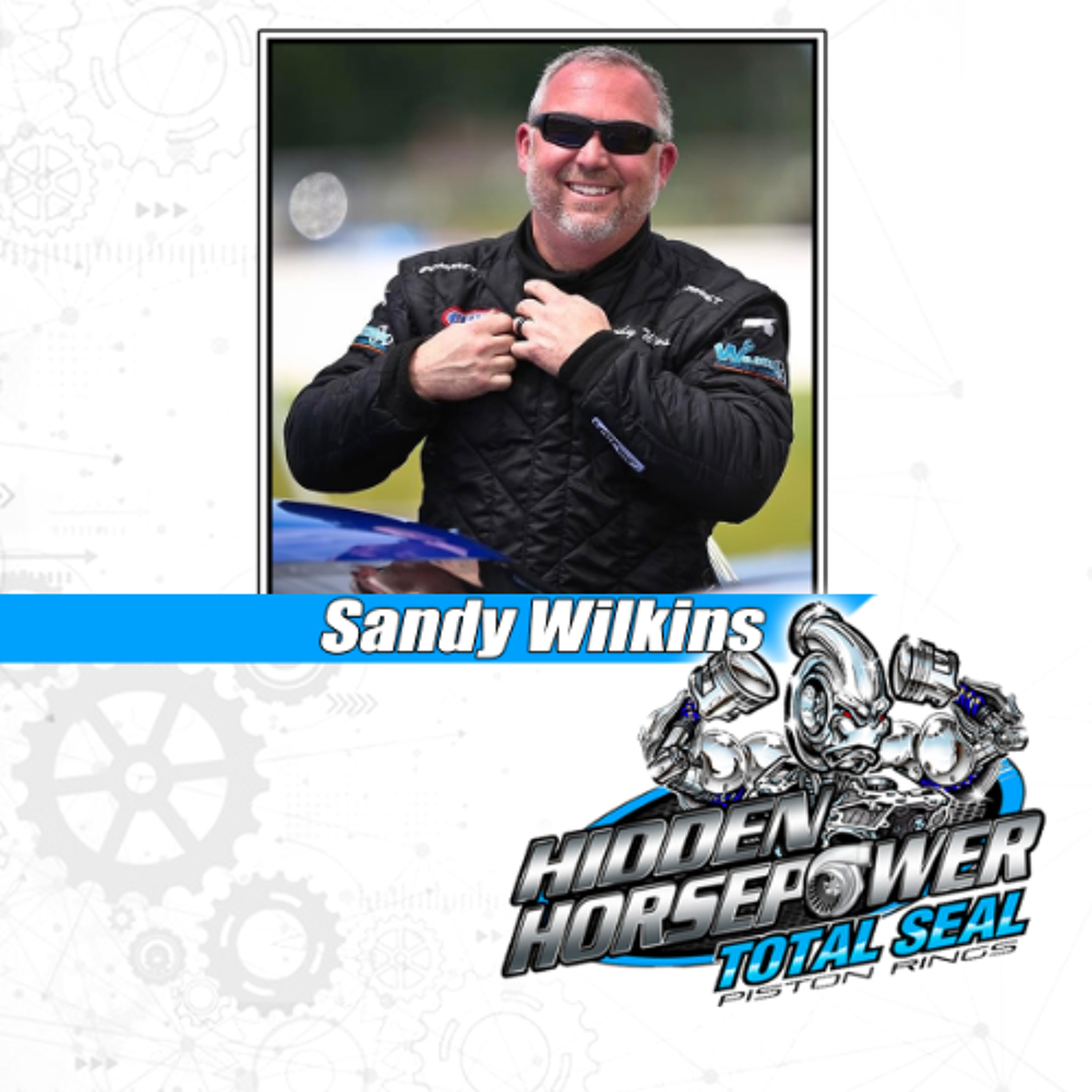
Wilkins racing engines is Sandy Wilkins’ engine-building business. The episode is about how engine builders develop parts and tune engines so they perform consistently in racing.
Concept
restarting the engine shop
That phrase means the engine builder is getting their business going again. It usually involves getting parts and starting new engine projects.
A drift car is set up to slide around corners on purpose. Because the tires are slipping a lot, the car needs tuning and parts that can handle that stress.
NASCAR is a stock-car racing series where teams build and develop engines to survive long races while maintaining consistent performance. Engine builders often tailor parts and calibration for the series’ rules, track types, and durability demands.
A crew chief is the person who runs the team and makes the big calls during preparation and race day. They coordinate the car setup and help solve problems so the driver can perform.
A drag strip is a straight-line race track. Cars are judged on how fast they accelerate, so the engine and drivetrain need to deliver strong power right away.
Concept
pro modified team
“Pro Modified” is a drag racing category where cars are significantly changed to make more power. The goal is fast acceleration, but the car still has to survive repeated runs.
Karting is racing with small go-karts. It’s a great training ground because the cars are simple and you learn how to drive fast by focusing on grip, lines, and control.
F1 (Formula 1) is referenced as the top tier of open-wheel racing that many drivers aspire to. The speaker is using it as an example of the career path from karting to higher-level racing.
Gear ratios are how the drivetrain “multiplies” the engine’s speed. The right ratio helps the car or kart accelerate strongly instead of bogging down or spinning too fast.
Tire size changes how far the vehicle travels with each wheel rotation. That can affect acceleration and grip, which is why racers pay attention to it.
Tire softeners are products used to make race tires grip better. They can help the tire feel “stickier,” but they can also make the tire wear out faster.
Term
DMSO
DMSO is a chemical that the speaker says they found could make tires act “softer” and grip better. It’s not a normal street-car product, and using chemicals on tires can be risky and rules-dependent.
The Craftsman Truck Series is NASCAR racing, but with pickup trucks instead of cars. Teams build and tune engines to match the series rules and the way the trucks race.
Concept
Bush series
“Bush series” is NASCAR slang for a specific series name that changed with sponsorship over the years. It indicates the speaker moved into another NASCAR truck/car series after the earlier one.
A drag racing program is basically a team’s whole setup for racing cars in straight-line sprints. The goal is maximum acceleration, so the engine and tune have to be built to survive hard launches again and again.
“Top Sportsman” is a level of drag racing competition with its own class rules. When someone says they’ve got Top Sportsman wins, it means they’ve been successful against other cars in that same competitive bracket.
Drag racing engines are built for short, intense bursts of power rather than long-duration consistency. That usually means careful fuel/air preparation, ignition timing strategy, and engine durability planning for repeated hard launches and high-stress runs.
Company
signal seals and fasteners
This sounds like a parts supplier for sealing and fastening—things that keep engine components tight and leak-free. In racing, those details matter because engines see extreme heat and stress.
Concept
RY 45
“RY 45” is described as a “very famous and historic” engine, implying a specific, notable racing powerplant with a known development story. For listeners, the key is that engine development names like this often correspond to a particular configuration, rule-era, or performance breakthrough rather than just a generic engine type.
Term
FR nine
They’re talking about a specific Ford racing engine family (“FR nine”) that served as the starting point. Instead of designing everything from scratch, they used parts from that engine and adapted them for a new racing application.
A “cup engine” means an engine designed for top-level NASCAR-style racing. It’s built to fit the rules and performance needs of that series, and here it’s being used as a starting point for another race engine.
Cylinder heads are the parts on top of the engine where the fuel burns and where the valves open and close. Using compatible heads is a big deal because it helps determine how well the engine breathes.
The rocker system is how the camshaft’s motion gets turned into valve movement. In racing engines, it’s important because it affects valve timing and how long the engine can handle hard use.
A “taller deck” means the engine block is built with more vertical space between key parts. That extra space can let the builder use a longer stroke to make the engine bigger (more displacement).
“Mains” refers to the main bearings that support the crankshaft. Bigger main bearing areas improve crankshaft support and strength, which helps an engine survive higher loads and increased displacement in racing applications.
Cubic inches is a way to describe engine displacement—how much space the pistons move through. More displacement often means more potential power, especially in racing builds.
Term
358
The “358” is shorthand for a 358 cubic-inch V8 displacement class used in NASCAR. Here it’s used as a benchmark to explain how the taller-deck/aluminum-block design can build more displacement than that common racing baseline.
Dirt late models are a grassroots-to-regional stock-car racing class run on dirt tracks, with engine rules that differ from asphalt series. The speaker says the engine was specifically designed for dirt late models, meaning the build targets durability and power delivery suited to traction-limited, stop-and-go racing.
Term
Windsor style engine
“Windsor” refers to Ford’s Windsor V8 engine family (a common small-block-style architecture in racing). The speaker contrasts their new dirt-late-model engine with the existing “Windsor style” engines that were widely used at the time.
Term
D head engine
They mention another common engine setup (“D head engine”) that racers were using before this new design. The exact details aren’t fully explained here, but it’s presented as a competitor to the new block/engine approach.
Scott Blumquist is named as one of the early dirt late model drivers to use this engine. Driver adoption is a key part of how new racing engine packages gain credibility—wins and early results validate the design.
The Jeep Wrangler is an off-road SUV designed to handle rough terrain. It’s popular with people who like to modify their vehicles for special setups. Calling one a “unicorn” usually means it’s an unusual or rare version compared to typical Wranglers.
Roush Yates is a racing-focused engine builder. They make high-performance engines for motorsports, and in this story they built the starting point for the engines Sandy was managing.
“Twin turbos” means the engine uses two turbochargers to make more power. More air gets forced into the engine, so it can burn more fuel and produce more horsepower—if everything is tuned and cooled correctly.
Switzer Dynamics is a performance shop/engineering company. In this case, they helped by designing a custom turbo manifold so the twin-turbo system could work effectively.
Drag racing tech is the stuff engineers use to make cars accelerate hard and reliably in short bursts. It often focuses on getting power to the wheels and keeping the engine from overheating under heavy load.
A billet manifold is a custom-made part that routes exhaust gases to the turbo(s). Using billet (machined from solid metal) can help it handle extreme heat and stress better than cheaper alternatives.
Concept
Hill Climb videos
Hill climb videos refer to motorsport content where cars race up steep courses, often emphasizing traction, cooling, and sustained performance. Sandy notes the timeline was “before” those videos, implying the tech and car development came earlier than the later media exposure.
All-wheel drive means the car can send power to more than just the rear wheels. That usually helps it grip the road better, but with huge power it can also feel surprising or hard to control.
Concept
unfun predictable
“Unfun predictable” here is describing drivability: when power delivery is so aggressive and consistent that it removes the driver’s ability to modulate traction and feel. With extreme horsepower, AWD, and turbo boost, the car can become difficult to enjoy because it behaves more like an on/off surge than a progressive power curve.
The cylinder head is where the fuel/air mixture burns and where the valves live. “Robert Yates D” is a specific high-performance cylinder head design that’s meant to flow well and support big power.
Concept
410 sprint engine
A “410 sprint engine” refers to a specific high-performance engine displacement/class used in sprint car racing (commonly associated with a 410 cubic-inch category). Sandy says the build was “based on” that engine, implying the project borrowed architecture or design lineage from sprint-car powerplants.
Martinsville is a NASCAR race track. It’s known for being hard on cars because you brake a lot and turn a lot. That can stress the engine, so teams talk a lot about reliability for the whole race.
Durability is the ability for an engine to survive the entire race distance without failing. The host describes a common development loop: if the engine breaks, you focus next on making it last under the same high-stress conditions. In racing, durability is often the limiting factor that prevents winning even when performance is strong.
Company
Roush H
The transcript appears to reference “Roush H,” which is likely shorthand for Roush Yates Racing, a major NASCAR engine and team organization. In this context, the host is contrasting earlier “cowboy-ish” experimentation with a more structured, large-team approach. That difference affects how parts are developed, tested, and implemented.
“Cowboy-ish” describes a hands-on, improvisational approach to racing development—trying things quickly, discarding what doesn’t work, and iterating fast. The host contrasts that with a more formal, process-driven environment. In engine building, this can influence how aggressively teams experiment versus how systematically they validate changes.
Hendrick is a major racing team. The takeaway is that big teams can connect you with specialists and parts suppliers that smaller builders might not reach.
Comp Cams makes performance engine parts, especially camshafts. The idea is that big racing shops can get in touch with companies like this to try new parts and get expert help.
They’re comparing how big companies can afford to try risky new ideas versus small shops that can’t take as many expensive chances. It’s about how development costs and failure risk change when you’re running a smaller operation.
They’re talking about engine speed (RPM). Going from 10,000 to 10,500 RPM means the engine is being pushed harder, so the builder has to make sure the engine can survive those higher speeds.
Endurance racing is like a marathon for engines. Instead of just being fast for a few minutes, the engine has to keep working reliably for a long time.
Le Mans is a famous endurance race where engines must run at high load for extended periods. The speaker references Le Mans specifically to highlight the stricter reliability demands compared with drag racing.
Bracket racing and dragster classes emphasize repeatable performance and consistency, not just peak power. The speaker is positioning the “648 beast” as a build tailored for that competition format.
A dry sump is a racing oil system that helps keep the engine properly lubricated when the car is being pushed hard. It uses extra pumps and a separate oil tank instead of relying only on the oil pan.
Term
fresh and ups
This is how racers talk about engine maintenance cycles—when the engine is built “fresh,” then how long it can go before it needs the next major step. It’s basically a way to describe rebuild intervals.
Cubic inches (displacement) is a key factor in how much air/fuel an engine can move and how it makes power. A 648 cubic inch engine is a very large displacement for drag racing, supporting high torque and power at high RPM when built with the right valvetrain and fuel system.
A carburetor mixes fuel and air mechanically before it enters the engine. The speaker’s example highlights that the build can make very high performance even with one carburetor, emphasizing efficiency and tuning.
The inside of the engine cylinder and the piston rings have to “mate” correctly. If the surfaces are finished the right way, the rings seal better and the engine runs more efficiently.
The segment describes a modern workflow where builders use advanced measuring tools to quantify cylinder geometry and surface finish, then iterate machining steps and validate outcomes with dyno testing. It’s an example of how racing engine development has become more scientific and repeatable over time.
The cylinder wall is the internal surface the piston rings ride against, and its shape and surface texture strongly affect sealing. Sandy describes a shift from worrying only about basic geometry (straight/round) to also controlling surface finish so the rings contact the cylinder properly.
An in-house dyno facility is a test setup where engines are run on a dynamometer to measure output and validate changes. Sandy connects dyno testing with their ability to correlate cylinder wall/ring setup changes to real performance results.
A profilometer is a measurement tool used to quantify surface roughness and texture. Here, it’s part of the workflow that lets the engine builder verify cylinder wall surface finish changes after honing, rather than relying on guesswork.
Honing is the process of finishing the inside of the cylinder so it’s the right shape and texture for the piston rings. Better honing helps the rings seal and perform consistently.
Term
air rings
This sounds like a problem where the piston ring doesn’t fully seal against the cylinder wall. Sandy is saying their ring-and-cylinder setup avoids that so the engine seals better.
Diamond hones are abrasive honing tools used to refine and control the cylinder wall’s geometry and surface texture. Sandy ties them to their honing process and measurement-driven iteration, implying that the honing method is critical to achieving the desired ring-to-cylinder contact.
Term
flame flunk travel across the combustion chamber
They’re talking about how fast the “fire” spreads through the cylinder. If you know how quickly and evenly it burns, you can tune the engine to make more power without running into problems like knock.
Term
trace boss
This sounds like a measurement tool that helps you map or verify surface details. The point is that instead of guessing, teams can measure what’s really going on.
Combustion analysis is basically “watching how the fuel burns” inside the engine. Instead of guessing why power or efficiency changes, teams can measure what’s happening during combustion and tune accordingly.
“Nitride” refers to nitriding, a surface treatment that hardens and improves wear resistance on metal parts. In ring/engine applications, nitriding can help rings resist scuffing and maintain sealing under harsh conditions.
In racing engine context, “gapless” typically refers to piston ring designs where the ring ends are arranged to reduce or eliminate the gap that can allow blow-by. Reducing blow-by can improve sealing and power consistency, especially under high boost and heat.
Topic
Tulsa ring
“Tulsa ring” sounds like a particular piston ring option they’re talking about. They’re basically saying the right ring design can help you make more power.
Part
gas ported pistol ring
This is a special piston ring design with built-in channels/ports. The goal is to help the ring seal and manage oil better, especially when rules don’t allow modifying the piston itself.
Boost is how much extra pressure the turbo is pushing into the engine. More boost can mean more power, but it also increases strain and can cause problems if the engine isn’t built or tuned for it.
Gas porting means adding small openings/paths in the piston/ring area so combustion gases are controlled better. That can help the rings seal tighter and keep oil and pressure where they belong.
A gas ported piston has small openings that help control combustion gases. When it’s matched with the right rings, it can help the rings seal more effectively.
A gas ported ring is a special piston ring with small holes/ports. Those ports help control how gases move, which can make the ring seal better against the cylinder wall.
Topic
Shavers
“Shavers” sounds like a place where they tested the engine parts. It matters because the results weren’t just theory—they were tried in real conditions.
LIVE
The following is brought to you by Total Seal Piston Rings, the leader in ring seal technology.
TotalSeal.com.
Hello and welcome to this edition of Hidden Horsepower, presented by Total Seal Piston
Rings.
I'm Joe Castello, and once again, joined by the director of technical sales, Mr. Keith
Jones, over at Total Seal, wearing his Hidden Horsepower t-shirt.
Look at that.
Proud to wear it.
Like I said, look at this thing.
What great graphics, great artwork.
If we still had them, I'd tell you to go to the website and get one, but it's a limited
edition sold out.
Sold out.
Okay.
So the one that I got, I got to like put it on the wall.
Absolutely.
I wear mine each year to the PRI show under a jacket.
It's kind of a cool deal.
Hidden Horsepower, Hartford's got the decals on the side of his race car that won the 2026
Amelie Motor Oil NHRA Gator Nationals.
We have not had, this is our first studio show, if you will, of 2026.
I've been playing those PRI shows up until this point, and in the interest of fair reporting,
many who follow me on WFO Radio and at the NHRA know that I've been kind of dealing with
some personal mom health situations.
So this is actually medicine for me, Keith.
I'm super excited to connect with you and talk a little horsepower on Hidden Horsepower.
Absolutely.
Glad to do it, Joe.
You and I have had some conversations about the family situation, and from when I understand
things seem to be on the upswing, which I think is wonderful.
At this moment, we're extending in the right direction, but it's like a horror movie.
You know, like just when you think you're out, you get pulled back in.
So I don't want to, I don't want to jinx it, but this is one, not jinxing anything here.
How about Hartford, though?
Real quick, this guy goes out there and wins a crown jewel event in pro stock.
That's one that if you win the Gator Nationals, you've had a successful year, and they got
it done and they won the race.
Yeah.
That's one of the big ones.
I mean, you've got, you know, the Gators, Indy, you know, of course, Pomona's, I mean,
so he's got a, he's got a couple more to swing at, but, you know, it's, that's a big one.
I actually went down early to Gainesville for the test.
You know, the top fuel guys were there.
There were quite a few pro stock guys there.
I had never been to Gainesville before.
It's one of those places that coming out of Phoenix, you know, travel pre-COVID was pretty
easy.
Get about anywhere you wanted to go and do it pretty cheaply.
After COVID, it's almost like, hey, you can't get there from here, but I went in, had a
great time, worked with all the teams.
We've developed some new rings for the fuel cars.
You know, talked a lot about pro stock guys.
So it was, it was great.
I finally made it to the Gators.
Wasn't to the race, but it got to the track.
All right.
So you didn't get to hang out for the Gator Nationals.
That's a bit of a wonder, but you saw the historic Gainesville raceway where the first
ever 300 mile per hour run happened.
That is, that is a big deal.
All right.
So our guest today on Hidden Horsepower, speaking of NHRA drag racing, he has been
involved in all forms of motor sports.
We're going to get into it, but he is a NHRA champion, won the top sportsman world
championship in 2019, which is a big, big deal.
Sandy Wilkins, Wilkins racing engines.
He worked at Roush Yates.
He's done so many different things.
I know you've worked very closely with Sandy and he's, he's been cutting edge in
engine development has done a lot of things over his career.
I'm super excited to speak with him.
Absolutely.
He's, he's, he's just a fantastic guy to work with.
And, and like so many we've talked about, always trying to deliver a consistent
product, quality product, and always trying to find the next thing.
Nobody ever comes at you asking for less, not ever.
And, and Sandy is one of those guys.
And we always want to try to make it better.
All right.
Let's bring him on the show.
Joining us now, a former champ and answering the phone.
Look at that.
Sandy Wilkins, Sandy, the phones are literally away from the phone.
They are literally ringing off the hook.
Go ahead and answer it.
Let's go and go ahead and answer the phone, Sandy.
I don't even know who this is.
Oh, it is.
It's important.
Go ahead.
Answer it.
Ed Dahl, Sandy Wilkins.
Hey, Ed, I, I did, I'm on it.
I'm going to put him like, what if he's got private stuff?
But yeah, well that phone's ringing.
I always say, Hey, that's money.
Pick it up because you just never know who's on the other end of that phone.
Which is why this show needs to be viewed by as many people as possible.
So if you're out there watching on YouTube or any social media account,
maybe you're watching a clip after the fact.
We ask you to subscribe and share because Keith Jones has taken time off to do this show.
Sandy, give me a thumbs up when you're ready to come back in.
All right.
There it is.
There there it is.
There's Sandy Keith.
We bring back Keith.
Everything cool.
Everything's great.
But it is that time of the year though, isn't it Sandy?
I mean, the phones were ringing off the wall.
Everybody wants it.
You know, they want it now.
There's no, it is definitely that time of year.
We were having some issues getting some parts, you know, as fast as the customers want them.
And that was one of my vendors getting back with me from an earlier email.
So thank you for your patience with me there.
It's like something happened on the show.
It's not just everything works out.
No, you got a phone call right in the middle and I think it's exciting now where you and I last left off.
I don't know exactly where we were speaking, but you were busier than could be and had so much going on.
And that sounded great.
I remember having a conversation.
I think it was at the Southeastern Division two championship banquet pre COVID about just that you were thinking about doing this.
And restarting the engine shop.
How are things going at this point in 2026?
Things things are going really well over the winter.
We had over 60 different engine engines in here.
We have different customers, different packages.
We have in the last two years, we've done our first engines for customers overseas.
We have drift engines in Ireland and in Spain at this point and working on
another program for a satellite team over in Europe.
So and that's not drag racing stuff.
That's drift car.
But we've been extremely busy and unfortunately working 13 plus hours every day of the week, which has decreased by racing.
But we've had a really good time.
We are always trying to work on new projects and we just keep having them flow in.
Keith and I were kind of kicking around your background prior to, you know, Keith dives in on the research and we're going to talk ring seal.
We're going to talk about engine development and NASCAR and and whatever else you want to throw out there on the table.
But the first thing that Keith said was that this guy is not just a straight line guy.
So why don't you tell us how you got started in this, you know, car culture, racing, car hobby?
What was the origin point?
Tell us how you got got started out.
My dad was the guy that helped push me in the direction and we started at age 14 with go-karts and had a great time first year out.
We finished second in our local division and then that progressed into sports car racing.
So my dad raced SCCA and the historic stock car group and I ended up at age 15 being the SCCA champion actually.
So that was that was my start and we all kind of thought that was the direction I would go.
But during college, the racing kind of slowed down and, you know, I got more involved in street cars, which took me to the drag strip and meeting some guys where I was actually a crew chief for a pro modified team in my early 20s.
And that got me a job in the engine building right out of college and the rest is history.
Wow. So he does turn, Keith, but drag racing pulled him back in.
It always does, you know, it always does.
But I will say, and I had the opportunity back with our prior owners, Joey Moriarty, who lives in North Carolina and, you know, great family, great people.
But he had a Tony car with a TM 125 in it.
And and I got to tell you, I got a whole lot of respect for those karting guys because that thing is a rocket ship and you're this far off the ground with no suspension.
And I was absolutely amazed at the cornering, how fast.
So we just say, I don't respect the world for the karting guys.
I really do.
And you see how many world champions.
I mean, look at all the F1, all that that comes out of karting into SCCA into like, say turning both ways.
It's amazing.
You know, it was it was an amazing experience to drive that.
Any of that you learned there, translate to drag racing, Sandy, like just being like a racer?
Yes, we did.
Did a lot of things.
You know, karting really got me more involved in mathematics and, you know, things like gear ratios, tire sizes, all this stuff, you know, played into kind of growing your brain.
And in high school, I think my senior project was on tire softeners that took me to a win at the North Carolina Science Fair.
And, you know, who knew that that DMSO, which is a bus or relaxant for horses, would have been the best tire softener, at least, you know, back when I was 18 years old.
But, but yeah, so, you know, all the things from karting, you know, my experience in college, which, believe it or not, I graduated it from NC State after five years and as a school teacher.
And so that's something that many people don't know, but my focus was technology education so I could teach auto mechanics, plastics, wood shop, machine shop, electronics, all of that was, was part of my curriculum so that we could learn how to teach students these things.
So anyway, it was a tremendous learning experience for me.
So I really enjoyed my, my college years started off in engineering, but it ended up in teaching.
Wow, that is teaching is such a noble profession.
You know, they don't get, they don't, they don't get paid as much as I think they should.
But boy, what an effect a great teacher can have on the future.
Well, well, that was a, that was an interesting experience for me was to, to student teach, which, you know, oddly enough, at college, they, you student teach your absolute last semester.
And that's when I realized that I really didn't want to be a teacher.
And which was as a bad time to figure that out.
But yeah, so I graduated college and went to work two days after graduation for a engine builder that built NASCAR late model stock engines, close to where I lived in Apex, North Carolina.
And anyway, that I was involved with NASCAR and the late model, late model stock series, the, the craftsman truck series, we built engines and trucks for that and then moved into the Bush series.
Anyway, and then eventually opened my own shop in Raleigh.
And after years of being in Raleigh, Ralph Shates approached me and basically bought my shop and, and moved me in to run a drag racing program.
Yeah, and then, you know, I graduated and then I was in NASCAR and then Jack Roush bought my shop and absorbed me pretty much Keith, you know, just like that.
Jack called me up one night and said, Hey man, what are you doing? Why can't we have a beer? Oh, I want to buy your shop.
It wasn't quite like that.
But Robert Yates actually bought a lot of my equipment and, and, and he and I have got to be friends through that and, and one of the neatest guys and, and most out of the box thinker that I've ever known.
And, and I really blessed to have been able to, to work with him and just meet him.
He was that guy that if the, if the UPS truck came or the freight truck came and they needed a forklift operator that he was the first guy on the forklift, you know, even at, you know, in the 60s.
So he was a worker for sure.
Wow. Keith, I've been with a question for Sandy, who's got the nickname on his car, the San Felipe.
Speaking of the car, there's your ride, Sandy, a world champion, six second Camaro that has carried you to many, many NHRA top sportsmen wins. Keith?
Well, I thought it was Michelle's car personally.
I didn't talk about that later.
She allows him to have the keys once in a while.
Well, Michelle will give you for sure.
She said, you know, you didn't have but five wallets before we started dating.
So, and now you have however many we have, right?
And she said, it's all due to her and, and she's a champion in her own right.
You know, she's a, the, uh, she, she's a division one top sportsman champion.
So, uh, anyway, she, she pushes me, you know, to do what we do.
And anyway, it's a good match.
It's a good match.
Team, teamwork.
Go ahead, Keith.
Certainly.
Now a question on the NASCAR side of it, Sandy, what was your timeframe there?
When were you guys involved with that?
Well, for, for, uh, well, from 92 to about 2005, I worked for, uh, Charlie Long, where we did the NASCAR late model stock, the, the truck engines, the bush engines.
We built agents for people like Dennis Setzer and Elliot Sadler and, and fielded cars for them.
And, and then I had so many people that wanted drag racing engines and I had the passion for drag racing.
And, and we didn't have time to do that at that agent shop.
So I said, there's enough business here.
I'm going to open my own shop and give, give it a try and it, it worked well.
And I had a lot of business right off the bat.
I was very, very blessed.
And, uh, you know, after a number of years of doing that, uh, and having a relationship with signal seals and fasteners, uh, Don Gray, who owns signal seals and faster, his, his neighbor worked at Rouse Shates and, and we met each other.
And we got to know each other over the years.
And then one, one year he just called me and he called me on the 1st of the month for 3 months in a row.
He wanted me to move up to Morrisville and do, do this with him.
And, uh, and finally he called me on the right day and I said, yes.
And, uh, and he worked out.
Wow.
That is, uh, that is wild.
Let's, let's focus in on some of the, the NASCAR stuffs.
I know you were, uh, big in the development of a very famous and historic, uh, engine, the, the RY 45.
Like when, when, and I, through reading learned a lot about this, but developing an engine like that.
What goes into it?
There, there's a lot that goes into that.
And I worked with a great group of engineers and I was the hands on guy.
So, uh, the engineers developed the block.
They took parts from the FR nine, which is the, uh, the cup engine that was debuted for Ford in 2009.
And that engine, uh, the parts like the cylinder heads, the, the rocker system, uh, all that will work on the
RY 45, which is an aluminum block version of the FR nine.
It has a taller deck.
It has bigger mains that can build more cubic inches than the 358 that they use in NASCAR.
So, um, I was the hands on guy.
So I actually built the very first engine.
We dinod it.
We took it over to the cup shop and we made 200 dyno pulls with it to validate the block and all the things that were new.
And, uh, anyway, that, uh, that engine was specifically designed for dirt late models.
And it was in, in, to take place of what they, the D head engine or the Windsor style engine, which was currently what everybody was using.
And, uh, it really took off there.
Please excuse me.
Um, it really took off and, uh, and it won a bunch of races right out of the gate.
People like Scott Blumquist was one of the first guys to have one of these.
And, uh, and I think he won a 50 grand or the first time out with it.
So, uh, it's really, really neat project, but it involved a lot of great people.
And I just had the small part, uh, basically assembly guy.
And, um, at route sheets, the guy in charge there used to call me the unicorn wrangler because I worked, they always gave me the odd ball projects.
That's what I got to work on.
The things that nobody else wanted to work on, or that was so far out of the, the norm that, uh, you know, it didn't move through the shop very smoothly.
So I was the guy that took care of all that.
Speaking of that, I, and I, maybe I'm remembering this wrong for those that don't know, you know, I've, I've called Sandy's name hundreds of times on the mic at the National Hot Rod Association.
The Roush Yates thing was always a big deal.
And, and, uh, you know, you assume one thing and then he kind of told us this.
The, uh, the Ken Block Jim Conestuff, weren't you involved with some of that?
Am I misremembering that or am I right?
That's correct.
So, uh, the engines were built at Roush Yates and, and I was one of the guys in charge of that in the beginning.
And then, uh, eventually we converted that entire engine over to twin turbos and we brought in or, or I was in charge of it at that point.
And we, uh, we brought in some drag racing technology.
So I had Brandon Switzer from Switzer Dynamics build us a billet manifold for that, for the twin turbo.
And this is many years ago.
So this is before the Hill Climb videos and, and, and all that.
Um, and, and that became an extremely powerful engine for that car.
And, and Ken got out of it the very first time he drove and said, this thing is going to kill me.
You know, it's, it's that, it's that unfun predictable, you know, cause it was 1400 horsepower, you know, all wheel drive, just a crazy, crazy package.
Um, but it was based on a 410 sprint engine effectively with, with, uh, the D, the Robert Yates D cylinder head.
How about that, Keith?
I remembered something.
Uh, especially that it wasn't specifically drag race oriented.
That's, that's the real impressive shocker, shocking.
But I was just asking about the timeframe because you know, I've got the, you know, a good friend and a rep of our company got him.
Keith Simmons and Keith worked at, you know, Sabcos and Gibbs, you know, back in that 90s, early 2000s and you may know Keith.
And, uh, like you said, there was, there was so much like, like with Robert thinking out of the box thinking, you know, we've today, we've
got, you know, uh, a lot of very, very smart people involved and, and a lot of computer power, uh, helping to guide us along the way.
But back in those days, it was kind of what I'll call a little more cowboy, a little more hate, but I didn't see what it does.
And if it didn't work, throw that out, put in another thing, see what it does.
And, uh, to me, a real time of innovation, I listened to some of the stories that he tells me about things that they tried and how they evolve parts.
And, you know, looked at this and what's made it like that, you know, and it just, you know, would you say very, a lot of creativity came out of, you know, out of that time and still does to this day.
But, uh, it's, you know, I just see a lot of great innovation that came out of that time.
Absolutely.
Absolutely.
I remember when I worked for, for Charlie and Apex right before, uh, when I, on my own, we built a, uh, we were working with Dave Crower on a 10,500
package for Martinsville.
And at that time, all the NASCAR guys were only turning, you know, 10,000 and we were, we were sort of outside of the box.
And Dave Crower was, he was adamant, he said, I've spent, Tron tested this, it'll work, do everything like I'm telling you to do.
It'll make it the 10, five for the entire race.
And I think we had, uh, think we had Elliot Sadler at that race and he was leading the race and it just passed the halfway.
And, and I remember right, you know, something happened in the half trade and the engine broke.
And, uh, you know, but we were turning 10, five at Martinsville and everybody else was, you know, 9,800 or 10,000.
And, uh, and it was, it was a great time.
And, and the guy that I worked for, he was just so happy that we were leaving the race when it broke, you know, because, meaning if we had the
durability, we could have won the race, right?
So then that's the next thing you work on the durability, you work on the next thing that fails.
So, um, anyway, that, that was, uh, that was a different time.
And then, and then leaving there, opening my own business and then going to Roush H, which I, you know, is, is a hundred plus people, all like-minded, all that have,
you know, lots of different experiences.
Uh, it's just, it's just a whole different way of going about it.
And, and there are lots of positives in that, but it is not the same as it was in the nineties when it was, as Keith would say, sort of cowboy-ish.
If you're going to summarize your time at Roush Yates, like what you learned there, because what you just described are two totally different scenarios.
And I'm thinking about like NASA and being at Roush Yates was probably the engine building equipment, uh, equivalent to that, like the best and the brightest all around you.
And you're there, an educator, a sponge learning.
So how would you summarize your experience there?
Well, number one, it was, it was a great experience.
Um, and, and I tell people all the time that if you had to pick, uh, a place in engine building to work, that's the place you want to go.
And I'm sure it's the same at other places like Hendrick and Children's, et cetera.
Um, and what, what I learned there is one of the things I learned was that, that when you have Roush Yates name or Hendrick name, you have access to more things that you don't normally have access to as the cowboy engine builder that we were, you know, back in Raleigh.
I mean, so, so now we have, you have vendors knocking on your door every day, you know, comp cams is coming in, totals is coming in.
Hey, we want to work on something new.
Let's, you know, and then we discuss the problems, et cetera.
And, and the regular old engine builder doesn't or didn't have that type of access and it's really important because if you're going to be on the forefront, you need access to the brains, you know, that are out there.
I mean, people like Keith, you know, people like the guys at comp cams, I mean, James Fry from comp cams.
If you all remember James, he used to come see us every couple months, you know, and working on something new.
And, uh, you know, and you, you have the money behind you to try something new.
If it fails, you don't go out of business.
And, and that is a problem, you know, currently with us.
I mean, I can't go spend $100,000 on something that's going to, that could possibly fail because that is, that's a business killer.
Whereas Ralph, you can say, all right, we're going to try this new coding and, and we've got 200 engines in service and we're going to try it on 25 of them and it doesn't work.
Well, there's, there's $200,000 worth of failures, you know, that you have to deal with and they can absorb that.
So anyway, it just shows you, to me, what I learned is how big business works and it's totally different than small business.
And, uh, and, and I'm trying to bring some of the big business mentality to my small business, but it's, it happens very slow for me.
Well, you're doing pretty good.
Keith jumping.
Well, you know, it's funny is one of the things I'll backtrack just a little bit and it's interesting.
The, you know, how we talk about engines and things like you said, you know, back in the day, you know, turning 10,000, want to turn it 10,500, you hear what you said, 10,000, now we're going to take it 10,500, you know, this is big RPM.
This is, you know, I'm coming out of days when 8,200 was a big deal.
I was talking to a good customer of mine this morning, I'll drop a name, Ray Barton, you know, Ray's building a little street, Hemi deals 500 inches.
Oh, it only makes a thousand horsepower.
I said, you hear yourself talking, it's only a thousand horsepower, you know, it's just a, you know, it's nothing, but it's just, it's my point of this is how far this has come and the power levels that everything is at today, the durability levels that things are at.
Think about it, we're going 500 miles turning 10 grand, you know, this is, you know, not taking any away from my drag racing brethren, you know, but to turn 10 grand over six seconds is one thing.
Try doing it for a couple hours.
Right.
Well, and in our business, you know, I was also, you know, once, once we got kind of passed what we were just talking about at my tenure at Roush 8, I worked on the B6 program for the Le Mans engines, which is a 24 hour endurance engine.
So that's a whole another level of things that have to work, you know, for 24 hours.
And the funniest thing about that was you run them for 24 hours, they ran however many miles at Le Mans, you bring them back, you put them on the dyno and they make eight more horsepower than they did when they left fresh, you know, and, and this, it's really a whole different mindset.
And so I bring that to our business here.
And so my currently most popular new build that we're doing is our 648 beast.
And I think the horsepower monster might have dropped a video today on our 648 beast and that is a top sportsman top dragster bracket program.
648 inches, it makes just under 1400 horsepower.
It is a dry sump engine that is meant to go 150 plus runs between fresh and ups.
It peaks power at 78, 79 hundred and we've shipped them at 81 82 and it's a 648 cubic inch engine.
So that's a lot of RPM for that big engine.
And it's a lot of power.
You know, we had a customer in South Georgia last weekend run 658 at 202 in their top dragster, you know, with one carburetor.
So it's a really, it's a really impressive piece in my opinion, but, but we're bringing
your things we learned from Keith and total seal things that we learned at, you know, building endurance engines, you know, it's all cumulative, right?
This business is one of the most, in my opinion, cumulative learning businesses there is.
I mean, I'm still using information that I picked up in 1985, right?
And we're just adding it to the information that we learned yesterday.
On that total seal note, you know, we've kind of chronicled the awakening of surface finish and rings and total seal has been a leader.
And really, that's what hidden horsepower has kind of done.
Keith, over the past few years, is like chronicle that, you know, from where we were to where we are now.
And the big budgets in NASCAR were kind of a part of it also, total seal, big part of it.
Talk about where we were to where we are now, Sandy, and like what you expect from Keith when you guys work together.
Well, I'll tell you, you know, and I've told this to Keith before, but we don't buy rings from anybody else.
I mean, total seal is the only place we get our rings.
And what has changed for us, and I know Keith talks about this at his seminars at the racetrack.
But what's changed for us is, you know, you used to worry about whether or not it was straight and whether or not the cylinders were round.
And now you worry about, you know, well, first, you assume they're straight and round because of the equipment we have nowadays.
And then, of course, the next thing is surface finish.
So we're constantly working on surface finish.
And with the in-house dyno facility, we can say, hey, now we've got this surface finish and this ring.
These are the results.
And, you know, it's not happened once.
It has happened a dozen times.
We don't like what we see.
We take it back off.
We try something different with surface finish because now with the profilometers and the things that the video cameras and all the things that you have, you can really tell and really see what you're doing to the cylinder wall.
And Keith's product, you know, if you've got a round cylinder, you better have a ring that's round too, this, you know, contacting the cylinder everywhere.
And that's why we use total cylinder because we don't have any issues with air rings, you know, and it has definitely stepped up our game.
I mean, you know, the things with the profilometer and the diamond hones, and we have a very unique honing setup, not exactly what everybody else is doing right now, but it works really well for us.
And, of course, you know, we've got to have the total silver rings to make it all happen.
Well, I appreciate you saying that, Sandy.
One of the big things that, you know, we all have access to today is a lot more technology, a lot more ability to measure things, manufacture things.
I love it when I get to go into, as Sandy had mentioned, some of the very, very well funded places.
And I, you know, I get to see stuff I've never seen before, inspection equipment I've never seen before.
It's like, well, you can actually measure that.
You know, you know, wow, you know, we're looking at, you know, flame flunk travel across the combustion chamber at what speed per second?
You know, I mean, it's amazing the access to equipment and the data that we have today that we simply didn't have even five or 10 years ago that keeps taking this to the next level.
You know, we don't have to assume anymore.
And that's the same thing with, you know, the profilometer and trace boss and the cameras.
You know, we're not guessing anymore.
We know, you know, we always thought we were doing these things, right?
But now we know whether we were or weren't, and it's access to that level of technology at what I'll call affordable prices that to me is a big, big part of what's advanced the entire racing industry world.
Well, you know, I remember very distinctly when combustion analysis became available for the CUP teams and it was a million dollars for the combustion analysis equipment.
And now, you know, I think I haven't purchased any recently, but I've heard that you can buy combustion analysis equipment for, you know, 1% of what it used to be, you know, price wise.
So, you know, a guy now can spend $20,000 and get what he needs to do the same thing it used to cost a million dollars for us to have that data.
And the data is important.
And then, of course, the internet, I mean, just like this show right here, you know, somebody may pick up on what we're talking about.
That's the whole idea, you know, hey, if I go to the Tulsa ring, it's a better ring or I can make more power with that ring if it's the gapless or, you know, nitride or whatever.
Right. So the internet has allowed people to show what they're doing and some of it's good data.
Some of it may not be good data, but, you know, if you assume all data is good, you know, you can learn from anybody.
I think the internet has probably helped spread the word, basically.
So you now have more access to data that you didn't have access to before.
Yeah, I agree.
And people willing to throw ideas out and share stuff, you know, like one of the things we introduced, you know, quite some time ago, it's been a few years now, is our gas ported pistol ring.
And, you know, the idea with that was for to bring that part out into applications like stockers, where you're not allowed to gas port the piston, but we could put it in the ring.
That's a great place.
And then, you know, applications where a guy's buying a kit piston, you know, from a place like Summit for his LS and he's going to turbo it.
And it's like, oh, how much boost are you going to put on?
Oh, it's just a little like, oh, it's a little well, 40 pounds.
Yeah, that's just a little you might want to consider gas porting.
And we can add that ring to that non gas ported piston.
But where I'm going with this is, you know, and a couple of guys, you know, they're like, oh, what do you think if I put the gas ported ring with the gas ported piston?
And I go, well, you know, I haven't tested it personally, but I think it will work well.
Lake ran it at Shavers.
We saw, you know, benefits from it.
And lo and behold, I haven't had a single person that hasn't gained from it.
You know, so it's just showing us, even with as much gas port as we put in the piston, it's still not enough.
It still wants more.
So when we combine the two, wow, the ring seals even that much more.
And now it just comes through, you know, the bottom line, like Sandy said, you know, conversations over the internet.
What about this?
What about that?
What do you think about trying this?
And, you know, fortunately, we have customers like Sandy that are willing to try things and not hold it against us.
If it doesn't work.
Well, chalk that up.
That didn't, and like you said, you know, the years that we've been doing this, that's that collective database of things that, you know, that did work, didn't work.
You go back to, you know, I think we tried that back in 85.
And here's why it didn't work.
And, you know, we have that, that we'll say that built in database of all those things that we've tried over years.
And hopefully most of them were successful.
Well, that, that is, you're going back to where we were talking a little while ago, one of the things that I learned working for the larger engine company is, is maintaining your data, you know, and how to document your data and how to go about retrieving that documentation later when you have a question.
And so we do a tremendously good job.
I feel like we do a tremendously good job of documenting everything that goes into the engine.
All the things that we have done.
So it's, it's the end of a build our, our spec sheet or spec sheets are in between 20 and 25 pages of data.
And that's all handwritten, you know, during the machining assembly, teardown, uh, dyno processes.
And, and it's really important to be able to have that and to categorize it in such a way that you go, Hey, I remember that when we did this.
Three years ago, 10 years ago, what have you, that it was, it worked out perfectly or it didn't work or just like he said, sometimes knowing what not to do is just as important as what no one what to do.
So that's, that's, that's something that we definitely learned, you know, working, working over there for a big company.
Well, and I'll, and I'll back you up on that because, you know, one of the things that we'll have to deal with and struggle with is the.
Okay, I didn't change anything, but this time is doing this and I went, well, all things being given, if nothing changed, we should have had the same result, but we've had a different result.
So we changed something somewhere along the line, something changed and having that documentation like Sandy just spoke about having, you know, everything we did, everything we, you know, what did we do?
How did we do it?
What parts went into it?
I had a gentleman that had an engine that was idling, you know, it would smoke a little bit, nothing bad, 4600, 043 combination, nothing unusual, there's no reason to be doing this.
And he starts going back through his and he keeps really, really good records and really, really good data.
And he observed that there was a change in the valve guide seal.
And I was like, okay, we knew something changed, we just didn't know what changed.
So he really started deep diving that valve guide seal and bingo, that was his problem.
So having that data, having that record, having that to be able to go back and look and say, you know, we did all these engines and never had a problem.
Then all of a sudden back, okay, this one, it started doing this.
And we'll just say, Joe's familiar with this gentleman, he knows him very well and he found it and goes, yep, it was that valve guide seal.
They changed the seal and that started creating a problem.
Well, that, and that documentation for us is important for another reason.
And one is time, you know, time is the only commodity that we cannot buy more of, right?
So time is very important.
So if a customer calls and says, hey, I'm at the track and I just had a rocker arm failure and I don't know what ratio it is and it damaged the pushrod.
Well, within about 15 seconds, I can give him a rocker arm ratio, a pushrod length, age of the pushrod, age of the rocker arms, etc.
And that, to me, that's so important because servicing the customer after the sale is one of the big things we really try to do here.
I mean, it's not, we don't just build you an engine and hope for the best, you know, we want to make sure that you have everything you need to be successful as a racer, not just an engine customer.
So anyway, the documentation is super important because we put everything in the computer after it's handwritten and have easy access to it.
So, you know, I want to keep moving and keep making that documentation better as we go.
And now, you know, we're creating a database with engine builds, profilometer numbers, you know, and the Keith knows how long it takes to check profilometer numbers a little.
We document it every cylinder, every time, you know, and it matters because you may find that, hey, that one cylinder didn't have the same RVK as the other seven and that left bank's got a little puff when you first start.
You know, it's what's going on in maybe maybe that's it.
But the more that you know, the more you realize that you don't know.
But keeping the data is vital.
So there's a big tip for all you kids out there.
We're going to ask you about that at some point, Sandy.
You know, your advice for the next generation of engine builders is kind of a cornerstone benchmark piece of information we try to put in all our episodes as we hope and wish.
There's some young person following in your footsteps, but we're not there yet.
All this has been about Sandy, the engine builder.
But what about this guy?
What about Sandy the racer?
You did some karting, you did some SCCA, but in the end you end up an NHRA champion, ended up going real fast in one of the baddest top sportsmen cars out there.
How did you find your class and now that you look back at having won a championship?
And I think you are the most recent winner at Zmax Dragway here in 2025, the end of the year last year.
I have a video I will play momentarily.
But how did you find your way to top sports?
Well, the I had I had bracket cars and I bought an old pro modified car.
Somebody you probably never heard of, but the Herb Atkins Country Boy Express Camaro and I put a small block in and I had always had small blocks.
And anyway, long story short, I took my small block to Cordova, Illinois for my first IHRA race and I put nitrous on it in the parking lot while everybody else was going to the casino.
And just to make sure that I can qualify for this event and I made it down to four cars, which was the TV round back then.
And that hooked me for the for the rest of my life, you know, I was like, man, this is so awesome.
So, so we bought another car, another small block and one time we had what I think may have been the fastest small block in top sportsmen competition.
And and that was sort of what people knew me for.
And in 2011, I didn't qualify for a race and Jerry Bickle was there and Jerry said, I've got a car coming in, you need to look at it.
And he was one of the coolest guys ever.
He he made a deal with me that I could not pass up and it was for the blue 69 Camaro that you're showing now.
And and that's been my best purchase ever because that car knows how to find the winner.
So if I screw up somehow or another, it saves me.
And and so then we built multiple engine combinations for that car.
We've had a 648, a 665, we've had a 55, an 872, all different combinations, different transmission, just trying things, trying to make the car better.
And and it's been, you know, I've been most successful at the NHRA than any other event.
And I really like quarter mile racing because it gives you more time to make the decision that you got to make as a drag racer.
You know, you can size up your competition or or or they can size you up if they're in a faster car.
Anyway, that's we've had a lot of success.
I think six division championships and one national championship in the NHRA.
Let's take a little risk here, Keith, in that I remember taking a video of Sandy and Charlotte
before the final, but I have no idea what's on the video.
And so like, what could go wrong? Right?
Let's this is from my phone, right?
I just uploaded it and we're going to watch an interview with Mr.
Wilkins as he gets ready for the final to be dangerous.
Look at that sportsmanship right before the final.
Hey, hey, Joe, we're ready.
You're ready.
It's a good final right here.
It is the good one.
It's going to be fun.
It's going to be fun.
That's what's all right.
All right, so it's like an easy one there, guys, like nothing controversial.
But what a cool class.
You get to run sixes.
You're right in the speed of a pro stalker.
Some are faster.
Some are a little slower, but you get to race your awesome 69 Camaro against that cool Henry J.
That's a final round, Jeff Brooks.
He's a great racer.
Obviously, we saw that sportsmanship moment.
How about me capturing that?
Yeah, that's that's really neat.
And Jeff, Jeff and I have raced many, many times and what a great family.
He, you know, he and his brother, I mean, they have such a such a nice following.
And in beautiful cars, they've always had beautiful cars.
But that's one of the neat things about top sportsmanship.
You have lots of beautiful cars and some of them are more like show cars.
I mean, you look at Bob Mandel's Camaro, I mean, 55 Chevy's or everything Bob builds.
I mean, it works of arts.
The Jerry Bickle, the Rick Jones is the Jerry Hauses.
I mean, all those chassis guys, you know, you've got new guys building cars.
You know, the Robert Hayses and the Chris Clines, which they aren't new guys.
They've been around a long time.
But I mean, there's there's so much new new life, I think, out there in drag racing.
And it's neat to see what people are building.
And they are all works of art now.
I mean, you can't go to a chassis shop and not see something new every time you go.
I mean, Robert, I mean, here in Moresville, there's so many different places you can go.
And so, you know, we'll go visit somebody's shop for the day.
And you're like, man, I've never seen this type of front suspension before.
Or, you know, who knows what it'll be.
But anyway, there's always innovation.
That's another that's the great thing about top sportsmen is that there's no engine
rules per se. I mean, you can run any power adder you want.
We choose nitrous.
I think that there is a distinct advantage by choosing nitrous over a supercharged
engine or a pro charge. But that's that's my opinion.
You know, why? Why do you feel that way?
Well, so putting you on the spot.
You can't say something like that without getting a question.
Maybe I don't want to tell my competition.
What would you say?
You may say that.
But no, I think that there's there's a tremendous benefit, you know, with.
You know, we're adding our own atmosphere, you know, per se.
You know, my car has has five nitrous systems.
Now, we never use all five at the same time, but I may use system one and system
three or I may use just system two or system four and two.
And depending on the weather conditions.
And so what I try to do, unlike some other guys, is I try to run the same
E.T. everywhere and I'm giving away my secrets.
But but so let's say it's the dead of winter.
And I have my car set up to run 650.
And let's say it's the dead of summer and I have my car set up to run 650.
And the reason I do that is so that my 60
foot are always similar.
And instead of, hey, man, it just got 40 degrees colder.
Now my car is going to going to run, you know, four tenths faster to 60 foot
and a shake the tires because because that's happening or we're wagging.
So we we we run our top sportsman car more like like maybe a guy would run a
Supercomp Dragster, you know, trying to run pretty much the same E.T. every pass.
And that way, when we go from track to track, we know what to expect.
So we we tune for the weather just like a Supercom guy would.
Some World Championship stuff right there, Keith Jones.
Well, exactly.
And what I was going to say is, you know, and not to contradict or anything,
but almost you run like a bracket car because you are trying to hit the same
number round after round after round and know the consistency of the car.
Know that the other guy is going to screw up and just go round after round.
And I mean, that's awesome.
My favorite race is the race that you go to, let's say, October.
And in the first qualifier, it's 70 degrees in first round, it's 55.
That's I love it because because I know what to do to make my car go down
the racetrack with that type of track temp.
Whereas a guy, let's just say, is just a guy that wants to go fast
and be the fastest guy every pass.
Well, now all of a sudden he's got a really fast car.
He's making a lot more power because the weather is there and the track's super
tight and he goes out and either blows the tires off, shakes them,
you know, rattles the back window out at 60 feet.
Who knows?
Well, that's the guy I want first round, you know, second round, third round, whatever.
Um, so I always like those those races when the weather changes a lot from day to day.
And and the other thing that makes top sports from really challenging,
like if you look at the schedule for the upcoming ZMAX race, we have one
qualifier Friday evening, four o'clock, five o'clock range.
We have second round to qualifying around 11 o'clock on Friday morning.
And then immediately, you know, top sports from top drag or top
dragster top sportsmen qualify E2 immediately, they come back for round one.
So we'll probably not have 30 minutes of downtime between runs.
So so not only do you have to have your stuff together, you know,
be ready for for E2.
I mean, I'm sorry, Q2 and E1 back to back, but you have to be able to
cool your car down, pack your shoots, all these other things, you know,
as a sportsman racer.
So it's very challenging.
You know, if you haven't prepared for that, you know, you know, for a guy
who just says, Hey, I just want to go run ZMAX first time I want to run a national event.
Well, you're going to be in for a shock if you hadn't looked at the schedule
before you get there and prepared for that.
It's one of the best classes.
I ran the double divisional in Rockingham last year with Project Pontiac.
And by the way, thank you, Keith.
I think you know this, but Sandy donated the machinist for the Project Pontiac
build at the Engine Performance Expo a couple of years ago.
Thank you for that, Sandy.
Appreciate it.
Send Dave over.
But I was disappointed because there were not a lot of fans there.
And to me, your car, like that run, you and Brooks at Charlotte, like those two cars.
When I was growing up, those two cars, match racing, three runs, best of three
was a $30 ticket and it was worth it.
You'd walk out of there feeling excited that you got to see those two amazing
machines like that is drag racing and top sportsmen is loaded with them.
And I don't understand and I'm not being critical of my employer, but like, man,
two hundred mile per hour nitrous oxide, supercharged door slammers.
That's worth watching wherever you are.
If it's a Lucas Oil series or otherwise, no, I totally agree.
And, you know, every market is is different.
The the rock and hand market is I think it's always been difficult to get fans
there just because of its location.
But, you know, you won't have trouble for the national event, but the divisional
events probably don't get quite as much advertising as maybe we would like.
And maybe maybe in today's world, we sort of concentrate too much on
the social media as advertising instead of the old radio advertisement
or television advertisement, which I mean, you rarely ever see a TV
advertisement for drag racing unless it is an HRA national event.
But I think that, you know, obviously, I love listening to guys like Joe
announce what's happening because you obviously have passion for drag racing.
You have passion for those cars and you could hear it in your voice.
And the fans, I mean, when you talk, when the good
announcers speak, it really it really hits home with the fans.
I mean, it hits home with me.
And I mean, I'm a racer and a fan.
So I'm still like watching drag racing.
If if there is a race on we have it playing in the shop.
If it's doesn't matter what series it is, we've got it on the loudspeaker back here.
You know, Thursday, Friday, Saturday, Sunday, every time.
So I mean, you can count on not hearing the radio during racing season,
you know, come Thursday, it's going to be in an answer somewhere.
Well, thank you for the kind words.
I appreciate it.
Keith, getting close to the end, final questions for Sandy Wilkins, the sand flea.
I know I know you've got some more.
Well, there is I want to do I do want to comment, you know, on what Sandy just said
about, you know, getting that information.
I mean, you think about it, you know, you're living here in Phoenix.
You know, my cars have got XM sound like I love it.
When was the last time I listened to a local radio broadcast?
I couldn't tell you.
Back in the day, I'd hear, you know, man's Anita Speedway this weekend.
You know, 410 Sprint cars are, you know, Sunday, Sunday, Sunday.
It's I'm in US 30 driveway.
I mean, you you've got that information coming at you now.
I you were in a desert.
I just literally this morning talking to a customer.
Mine goes, hey, you're going out to the NHRA heritage race in Chandler.
I go, when's that?
He goes, what's next weekend?
I go, it is.
He goes, well, yeah, I go, OK, when you guys go up, he goes like three o'clock
offing, I'll be there.
I had no idea.
You know, so it's like, see, we've got so many things coming out of so many
different directions, but that local media advertising, like, see, unless it's
a NHRA national event or a NASCAR race, you know, you just it's I don't know why.
It just seems harder to know about it today than it used to be in the old days.
Our national event that we just had here, you know, I had no idea the high
limit Sprint cars were down in Casper.
If pet peeve of mine, this is a, you know, personal topic coming out of localized
radio, don't want to hijack the show in that direction.
But you can't do it all with Facebook digital.
You can't.
There are a lot of people, especially fans of what we like, that they're not
wasting their time on Facebook and the stuff that is on the screen over there
and over there, they don't even see it, whatever it is.
You know, they're not looking at that.
You get them in the radio on the radio in their local community, posters in
machine shops, man, but going around a flyer, a piece of paper in your
mechanic shop, that still works.
It takes its labor intensive, unfortunately, but it still works.
Well, we we have the Morseable Dragway is almost one mile from my shop here.
You know, Zmax is 30 minutes away.
And so we're, we're, we're right in the hub.
You're close to KB Titan, then you've got to be very close to those guys, I think.
Oh, yeah.
We're, yeah, we have, I have lunch with some of those guys, pretty regular.
So, okay.
Chip Ellis is over there in Weldon.
I've been there a couple of times.
So, uh, yeah, we run into those guys at the burrito place, pretty, pretty regular.
But, uh, but we are, we're, we're in a good location and we often have, you know,
for 470 index or 450 index, we have flyers here, you know, and normally like no
card size of the guy that walks in can pick them up and, and see what's
happening, you know, locally anyway, um, because, you know, we want to promote the
sport, I mean, the more the better.
I mean, I wish we had 50 top sportsmen cars entered for ZMAX, but we don't yet.
Um, and I don't really know why we don't.
And, you know, that's, that's another subject for another time, I guess.
But, uh, I would, uh, I wish that we, we had races like we used to have when
Bill Bader had his racetrack years ago.
I remember 98 top sportsmen cars, uh, qualifying for a 48 car field and I mean,
what, what a fun time to be alive when, when I'm literally in line at the finish
line watching my class go down the racetrack, you know, and, you know, it
took, it must have taken an hour and a half to run, you know, all 98 cars and
qualifying, but I mean, anyway, I, I would like to see our class grow.
There's plenty of top sportsmen cars out there and, uh, and I'd like to see just
drag racing in general grow more.
And, and the good news is it is alive and well.
I mean, there are, I mean, we have series, new series, we have new classes.
Um, and I think some of the new classes are bringing in younger people that, that,
that weren't involved before.
I mean, the tuners, uh, I think there, one of the things I, I struggle with is,
is guys that want to come work here, um, you know, will bring resumes and they
kind of, the young guys kind of want the glory and there, there's not no glory
working in the engine shop.
What it is is a lot of hard work, a lot of man hours and just like racing, Joe,
and you'll understand this, and if you think about what we do, we work all these
hours, we spend all this money, we travel all these distances, and we're doing it
all for a little white piece of paper that's got some numbers written on it,
you know, along with the thrill of driving and all that.
But, but in the end, you know, everything we did over the last weeks, months,
years is validated by this piece of paper with numbers on it.
And the, and the exact same thing goes for the engine shop.
You know, we'll work and, and we'll try this new thing and take that engine back
apart and re hone it or re valve job it, change the seat angles or springs,
cam, whatever, all four numbers on a, on a screen.
And, and when whether those numbers are, are high or low, we'll determine whether
or not we're in a good mood, a bad mood, you know, whether it's validated all of
our work, or if we've just wasted our time, you know.
And then so if you, if you boil it all down to what we're doing, I mean, we're,
we're basically just working it every day for some numbers on a piece of paper.
And anyway, but, but what we do want, we still want the white tickets, not the yellow tickets.
Yes, that's still a thing.
You want the top one, the winner.
Keith, anything else for, for Sandy before we part ways?
Two quick comments that will comment the question because, you know, we didn't ask
the question, but I will, I'll say about, you know, about drag racing in general.
I mean, we had the national event here a few weeks ago.
For those that didn't know, you know, this is Arizona, it's hot.
You know, we know what it's going to be like.
You traditionally, you might see a day in March that might get near 100.
You know, typically going to see that maybe in April for sure in May.
We had nine days in March over 100 degrees.
And of course that was right in the middle of the NHRA national event.
It was brutal 105, 104, 106 every day.
And this just says something.
So, you know, you tell somebody, hey, let's go out to the track.
It's going to be 106 degrees.
They sold the place out 105, 106 the entire event.
So my hats off to all the racers that survived it, put up with it, were there for it.
The fans that came out endured that level of weather.
It was brutal hot.
And, you know, especially for that time of the year, but they showed up.
They showed up in droves.
So I'm with you.
It's growing.
It's got its head of steam back.
I'd love to see the, you know, sold out events at the division races, the sportsman races.
But my question for you, Sandy, is, you know, you've worked on road race stuff,
drifting cars, drag race stuff.
What's the one engine or type of racing or engine you haven't worked on that you want to work on?
Well, that is a really good question.
And it's something that I'm not sure that I've ever thought about.
But something that I haven't worked on that I think I would really enjoy working on
is maybe some new generation style engines, like the newer Formula One or something with
you know, when I said I was called the unicorn wrangler by one of my bosses years ago that,
that, you know, I was in charge of pushrod development engines.
And, and I've done overhead camp stuff.
But the, but I think that what I'd really like to delve in is whatever is the newest
and latest and greatest technology, even though I know pneumatic valving isn't new.
But, but I have never worked on something like that.
I think I'd really enjoy that.
Something with unlimited RPM capability with the valve train anyway.
I think that would really, that would be interesting.
Well, you know, to comment on that, I mean, you mentioned yours, Phil, and where you're located.
And I'll say this, you know, you think about the resources that you have in that area available
to you. So, you know, for those that don't know, or maybe don't follow forming the one,
you know, General Motors does have a 401 team, Cadillac F1.
And they could put that anywhere in the world, anywhere.
Because trust me, there's F1 teams that, you know, they may be based in this country,
but the operations in this country, it's, it can go anywhere.
Where is GM's operation in Sandy's backyard?
Wow.
That's a, that's, it's a really neat thing of what's happening, you know, in that area of,
of Concord, where, you know, they've got a new 10-tents, uh, road course over there across
from the drag strip. And I don't know exactly where the F1 team is, but I'm pretty sure it's
within rock throwing business of the drag strip.
Yes, it is.
Okay. Well, then I happen to be going in a couple of weeks, I'm going to see Sandy there.
And we got to go find it, Sandy. You could use your badge, you know.
I don't know that my badge will get us in the parking lot, but we'll give it a shot.
Yeah, we're here to see the Fast Cadillacs. Thank you very much.
I'm excited about that. I take a little pride in that, like an American manufacturer has decided
to give it a shot. How will it go? They got to figure out where the racetracks are first.
Usually should take a season or two. Haas F1 ended up doing good. They got Ferrari engines,
though. The Caddy engine, that's a big, big deal. That's a thing.
Whenever it comes about. All right, normally we end our shows off with advice for the next
generation, Sandy. You kind of touched on it a little bit a moment ago, but if you want to
like dot the i's and cross the t's, pretend you're talking to a teenager out there that's
interested in the engine trade, get him ahead, give him a shortcut, give him a little bit of
advice that he could take home and do well with it.
Well, definitely I advise anyone that wants to get in this, in this business to, you know,
to put your foot forward. I mean, the guys that I have hired were adamant about wanting to work
here. I mean, they came by multiple times and they, I think in today's world, you know, all the
children, at least, you know, I'm not picking on my kids, but they, everybody wants instant
gratification, right? Well, this business is not an instant gratification business, much, much
like life, right? So I feel like that you need to stick it out. You need to give it your all
and continue to give it your all and eventually it will pay off. It took me a lot of years
to feel like I was successful and it was, once again, this is a very cumulative business. So
the longer you're in it, the better it gets for you, you know. And so that's one of my things.
I definitely, I had a passion for racing and a passion for engines. I got in the engine business
because I was unable to pay a professional engine builder to work on my engine. And so I just,
I said, well, if somebody else built it, I can build it. And so I started, you know,
doing my research. I bought, you know, there's a whole, had a hot rod, had a hot rod of Chevy
magazine and, and the books, I can't remember the author now, but they had had all the, the,
but maybe Dave the Zard had all the books that we, you know, read over and over and over again.
And so education is extremely important. I use what I learned in college every day.
And I think that it's, that it's important to, to have some sort of education, whether it's,
it's the school of hard knocks or a formal education at a university. But I think that it,
that as long as you just keep your head down and keep digging, that, that it will all work out
and it will pay off at the end. How about that, Keith? We end off where we started off. Sandy
Wilkins, the educator. Sandy, appreciate you. Thank you so much. Can't wait to see out there
racing here in 2026. Thank you for making a little time for us here on Hidden Horsepower.
Well, you guys are welcome. I mean, it's my pleasure to look forward to seeing you next week.
Sounds good. There he goes. Thank you very much. Sandy Wilkins with us here,
former world champion educator. How about that, Keith? Great stuff.
It's awesome. I mean, like we've said so many times, these guys, you know, they're not only
customers that are friends and, you know, to sit here, we could sit here for days.
I didn't bust his chops. I was like, you know, Sandy, how does this happen?
I love that. I love that. How does this happen? He sent me that one, guys.
And I like, I'm gonna, I'm not gonna hit him like that. He's obviously very entertaining,
smart, talented person. That's how it happens. Well, he's obviously, I mean, it's evident.
He's passionate and he loves what he does. I mean, this is, he's enjoying life.
He's out there racing. He's winning races. He loves doing what he does and it shows.
Yes. 100%. How about me pulling the Sandy Wilkins interview video off my phone like
randomly cold? I love it. I love it. I love that you remembered you had that and hadn't used it yet.
I got so much stuff in here, Keith, the things that I capture that never like make it, you know,
because it's easy to capture them, but then you got to post it and that takes a lot of times BS.
That's work. You must have, you must have the 20, you know, the 20 gig of storage.
Should have. But I, you know, hey, before we go real quick, tell everybody how they can get a
hold of you and what's going on at Total Seal before we part ways. Well, that's easy to get all
of us. It's TotalSeal.com. You can reach out to myself. We've got quite a few other people here
that can help you out if you have any questions. You know, so we're always available at TotalSeal.com
or the 800-874-2753. Is that right? 800-874-2753. Yeah, that's it. I haven't said that number in a
so always glad to help you any way we can. As far as things going on here, it's explosive. I mean,
we have almost doubled our employee counts since last year at this time. We've had just explosive
growth. You know, we're doing a lot of aerospace projects now, which opens a lot of material
opportunities, coding opportunities, you know, stuff that we knew that was out there before,
but never were able to get our hands on. And that's incredible. I mean, we've actually started
producing piston rings out of Inkenow. Think about it. It's Inkenow and we're making rings out of it.
It's, you know, a couple of years ago, that was almost impossible to do, but the new aerospace
projects that we're working on have given us opportunities to purchase and work with material
vendors that we never had access to before. So it's an exciting time. It's that next step of
pushing this to the next level. That is great. And the drag racers and the racers will benefit at
some point, right? Absolutely. Positively. I mean, this is absolutely trickle down technology.
It allows us to make thinner, lighter, stronger because just like Sandy's were five stages of
nitrous. Come on. This is a lot of heat, folks. This is incredible. Just to touch on, I was out on
the road a couple of weeks ago back east and got to go into some very, very incredible pro stock
pulling tractor shops. And you want to talk about insanity. I mean, 5100 RPM. Well, that's a lot
for an inline six owner, but 6,200 foot pounds of torque. Try harnessing that and keeping that alive
and go a season without having failures. It's that technology. It's that materials technology,
coding technology that keeps advancing all of this and proud to be involved with it every day.
He's Keith Jones, the director of technical sales and total seal piston rings. Does a
great job here on Hidden Horsepower. If you've got a question, you can give him a call directly.
Keith, thank you so much. Thank you. Everybody have a great day and have a great life.
They have a great life. It sounds like his final sign off. It's not. Keith Jones with us here.
Guys, it was a slow start to the season. We did all our PRI stuff, but now we are rolling.
We're going to roll out some episodes. Subscribe. Click the bell. Never miss an episode. Sandy
Wilkins. He gave us his like championship secret. Some of them, one of them. There's plenty more
that he didn't reveal, but a lot of great advice and a lot of a lot of detail on the engine builder
side that drivers get all the love, but it's the engine builders behind the scenes that are making
it happen. My name is Joe Bepelli from NHRA. I hope to see you there. Appreciate you guys.
Thank you for checking out this episode of Hidden Horsepower by Total Seal.
About this episode
Sandy Wilkins of Wilkins Racing Engines shares his path from karting and SCCA success to NHRA Top Sportsman world champion, plus how his engine-building career evolved from NASCAR late models to Roush Yates and beyond. The conversation digs into the RY45 program, twin-turbo drag tech, and why modern engine building is increasingly driven by measurement—profilometers, surface finish, and rigorous dyno validation. They also connect Total Seal ring tech to consistency and durability, then shift to Top Sportsman strategy, nitrous tuning, and the importance of documenting every build.
Go inside the highly successful "small" business that is Wilkins Racing Engines with Hidden Horsepower. Sandy Wilkins joins Keith Jones and Joe Castello for a in depth conversation about his career as a engine builder, his business, and his racing career. Wilkins, who started his career as an educator, breaks down the lessons he learned at Roush Yates Racing Engines while on the road to becoming a World Champion NHRA Top Sportsman racer. The lessons of the past are always valuable regardless of how high tech things become in the world of engine building. Sandy and Keith discuss ring seal technology, and WFO Joe ever produces some behind the scenes content from Sandy's last race win. This is a fun episode filled with life lessons and information.