Diesel exhaust fluid is a liquid diesel cars use to help clean their exhaust. It’s injected into the exhaust system so the car can reduce harmful pollution.
Urea is a chemical that’s added to diesel exhaust systems. It helps the car clean up the exhaust so it produces fewer harmful gases.
Concept
exhaust aftertreatment
Exhaust aftertreatment is the part of the car that cleans the exhaust after the engine makes it. It helps reduce pollution before it comes out of the tailpipe.
This is a 2018 Ford Mustang, and it has a computer that watches how the engine and emissions systems are working. When something goes wrong, it turns on the check engine light and saves a code so you can figure out what area is causing the problem. Here, the code is connected to what happens when the fuel tank is overfilled.
P0430 is a “check engine” code that usually means the car thinks the catalytic converter isn’t working as efficiently as it should. Sometimes the real cause isn’t the converter itself—it can be a sensor reading that gets thrown off. In this story, overfilling is described as a way to mess with those readings.
EVAP is the system that keeps fuel vapors from just escaping into the air. If it’s not working right, the car can store EVAP-related trouble codes. The episode explains that even if the code you see isn’t labeled “EVAP,” EVAP issues can still cause other sensors to act weird.
The O2 sensor checks oxygen in the exhaust. If it thinks the mixture is “off,” the car’s computer may react by adjusting fueling and can also set trouble codes. Here, the discussion is that overfilling can cause the sensor to read incorrectly.
The canister is part of the EVAP system and it holds fuel vapors for later. If you overfill the tank, liquid fuel can get into the canister and mess up how it works. That can make the car think the engine is running too rich and trigger warning codes.
“Rich fuel” means there’s too much fuel compared to air. If raw fuel gets into the wrong place, the car can end up running “rich” and the oxygen sensor may read that as a problem. The computer may then set a trouble code.
Fuel injectors are the parts that spray fuel into the engine. The car’s computer controls how much fuel they deliver. If overfilling causes extra fuel to show up where it shouldn’t, the computer’s readings can get confused.
An emissions inspection is a test to make sure your car isn’t putting out too much pollution. In some places, you have to pass it to keep driving legally.
The check engine light means the car found a problem. If it’s flashing, it’s more serious; if it’s steady and the car feels normal, it may be something that can be diagnosed later.
The Chevrolet Colorado is a midsize truck. In this call, the owner is talking about maintenance on a Colorado with a 2.5-liter engine and a 6-speed manual/automatic setup, and how fleet use changes the service schedule.
Engine hours tell you how long the engine has been running. For fleet vehicles, that can matter more than odometer miles, and converting it to miles is only an estimate.
An “additive package” is the extra chemicals mixed into motor oil. Those chemicals help protect and clean the engine, and the hosts are saying switching between different oil formulas might not work as well.
“High mileage oil” is motor oil made for older, higher-mileage engines. It’s designed to help with issues that can show up as engines get worn, like oil leaks or increased wear.
“Synthetic” is a type of motor oil that’s made to be more consistent and often performs better than regular oil. The hosts mention it because some people think you shouldn’t switch between synthetic and non-synthetic oils.
Conventional oil is the more traditional, petroleum-based oil. The idea is that it’s made of a mix of different-sized molecules, unlike synthetic oil which is more uniform.
Transmission fluid is the oil that keeps the transmission working smoothly. It helps lubricate parts and also helps the transmission shift correctly, so you want the level and condition to be right.
The fill plug is a small plug you remove to check the transmission fluid level. When the car is warm, the fluid should just barely start to come out if the level is correct.
“Barely dripping” means you should see only a tiny amount of fluid come out when you remove the fill plug. If it pours out, it may be overfilled; if nothing comes out, it may be low.
They’re suggesting an early transmission fluid change around 20,000 miles. The goal is to get rid of early wear particles so the fluid stays cleaner for longer.
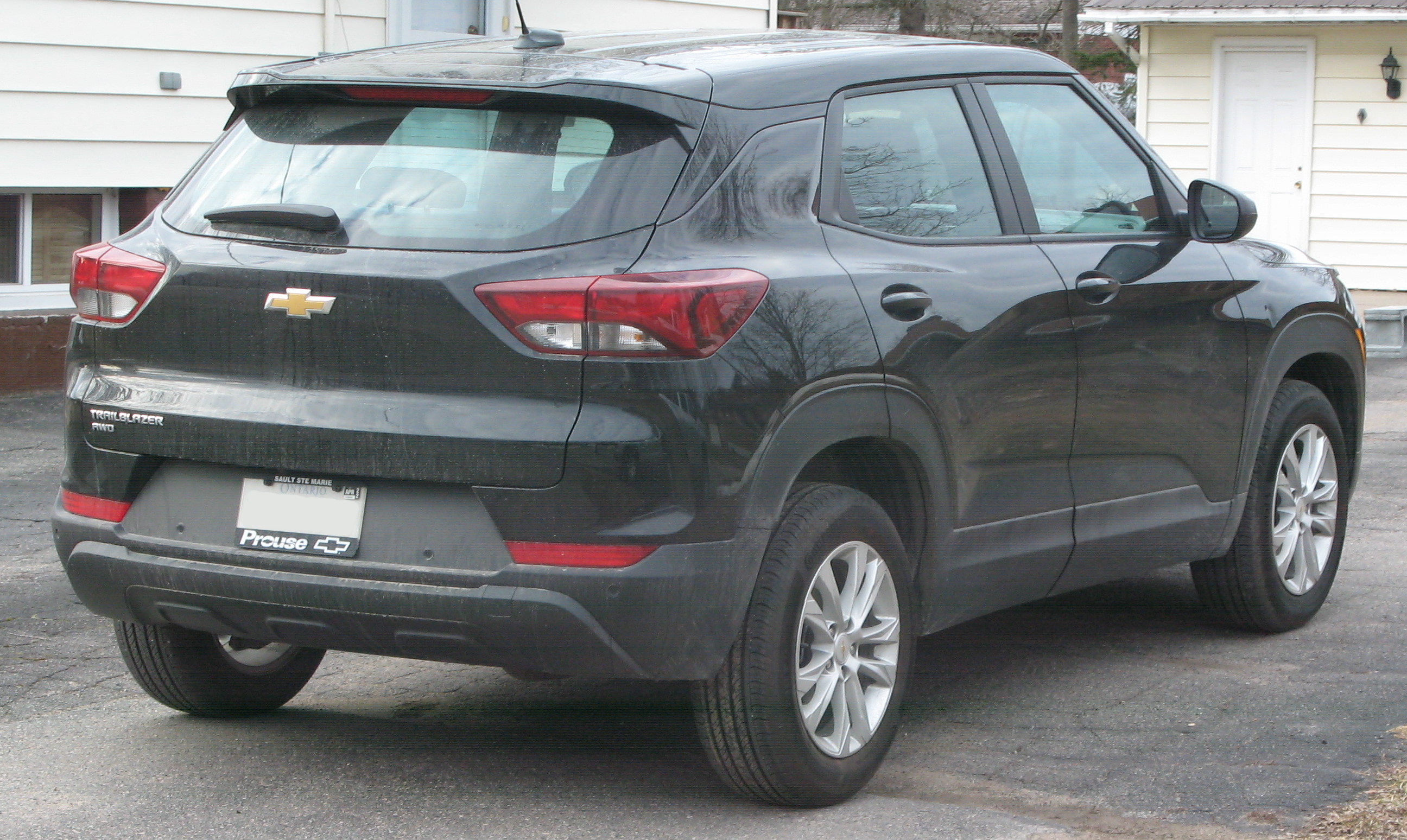
The Trailblazer is a Chevrolet SUV. Here they’re talking about what maintenance schedule to follow on a 2026 model, especially oil changes and transmission fluid.
An oil change means replacing the engine’s oil. Fresh oil helps the engine stay clean and cool, and the host recommends doing it earlier than the maximum schedule—especially if you live somewhere hot.
They’re saying don’t just follow the calendar—look at the fluid’s condition. If it still looks clean, you may be able to wait longer; if it looks bad, change it sooner.
Oil change interval just means how often you should change your engine oil. If you drive gently and the oil stays clean, you might be able to go a bit longer. If the oil gets dirty faster, you should change it sooner.
A warranty is the agreement that helps pay for certain repairs if something goes wrong. The hosts are saying you may need to follow the recommended maintenance schedule so the warranty stays valid.
Oil condition is basically how your oil looks. If it’s still light and clear, it may be okay to wait a little longer. If it’s getting darker or dirty, it’s a sign you should change it sooner.
Engine break-in is the early stage right after an engine is new (or newly installed). During this time, the engine’s internal parts are still settling in. That’s why many people do an early oil change to clear out initial debris.
A remanufactured engine is an engine that’s been rebuilt and restored instead of brand-new. After installing it, you usually need an early oil change because the engine is still settling in. The hosts mention a very short first interval (like 500 miles).
Break-in oil is the oil you use right after an engine is rebuilt or new. It helps the piston rings “seat” correctly so the engine can run smoothly and not burn oil later.
Piston rings are parts inside the engine that help seal things up and keep oil where it belongs. If they don’t seat correctly during break-in, the engine may start using/burning oil.
The Chevrolet Trax is a small SUV meant for regular driving, like commuting and errands. It’s usually not considered a rare or collectible vehicle. The podcast is basically saying that a new Trax is more of a normal daily car than something people buy for collecting.
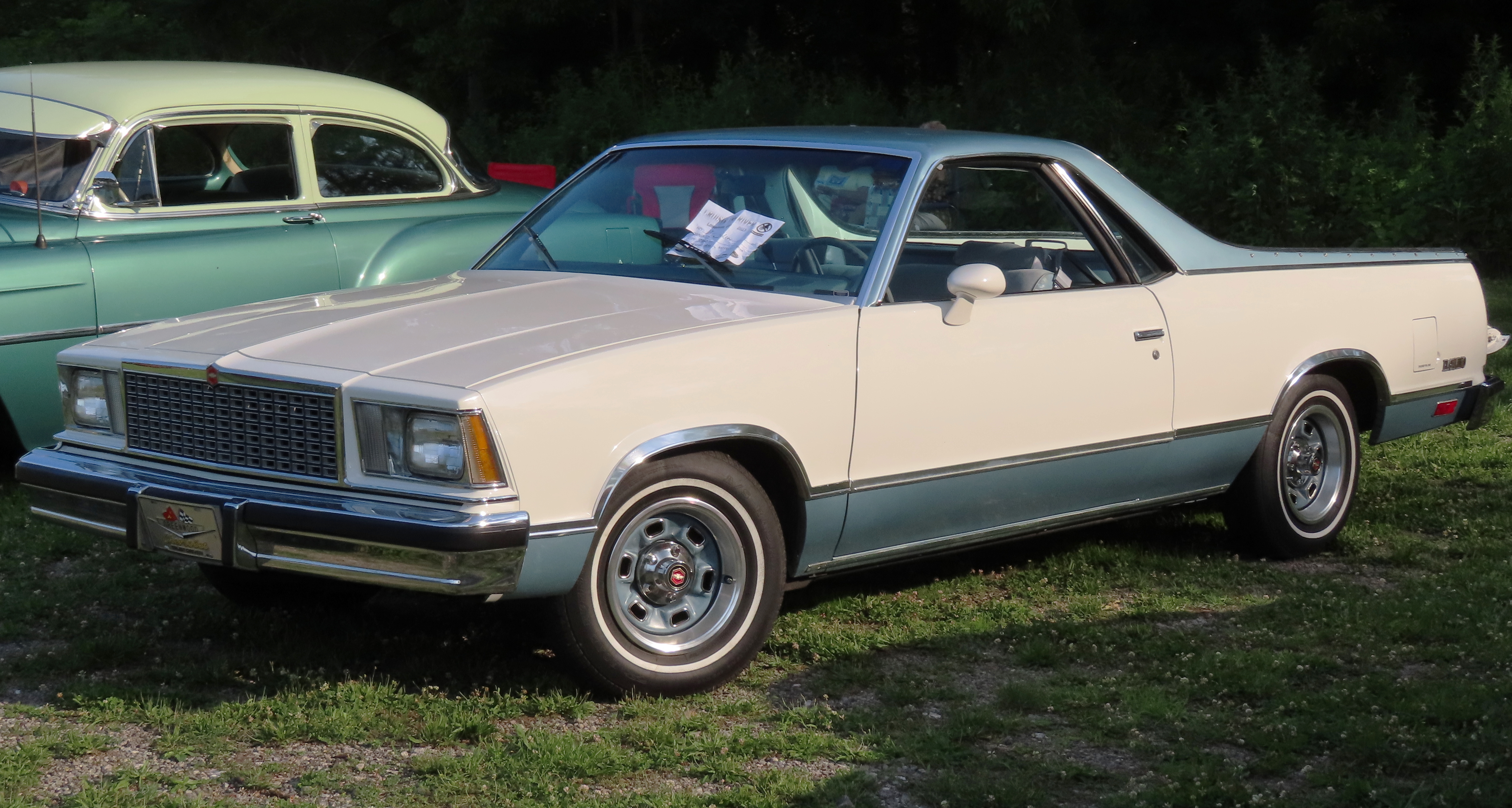
The Chevrolet El Camino is a vehicle that looks like a car but has a pickup-style bed for hauling. A 1982 El Camino can sometimes be a collector car, but it depends on things like how good the condition is and how original it is. The podcast is pointing out that not every one of them automatically becomes valuable.
A Chevrolet Tahoe is a big SUV. Here, the caller says their 2008 Tahoe’s transmission got too hot, started smoking, and then certain gears stopped working.
If a transmission overheats, the fluid inside gets too hot and can stop working the way it should. That can cause the transmission to shift poorly or fail.
A transmission external cooler is an extra radiator-like device that cools the fluid inside an automatic transmission. Cooler fluid helps the transmission last longer and can prevent overheating problems.
A hot flush machine is a shop tool that runs transmission fluid through the system to clean or replace it. “No resistance” here means fluid could move through the cooler/lines without being blocked.
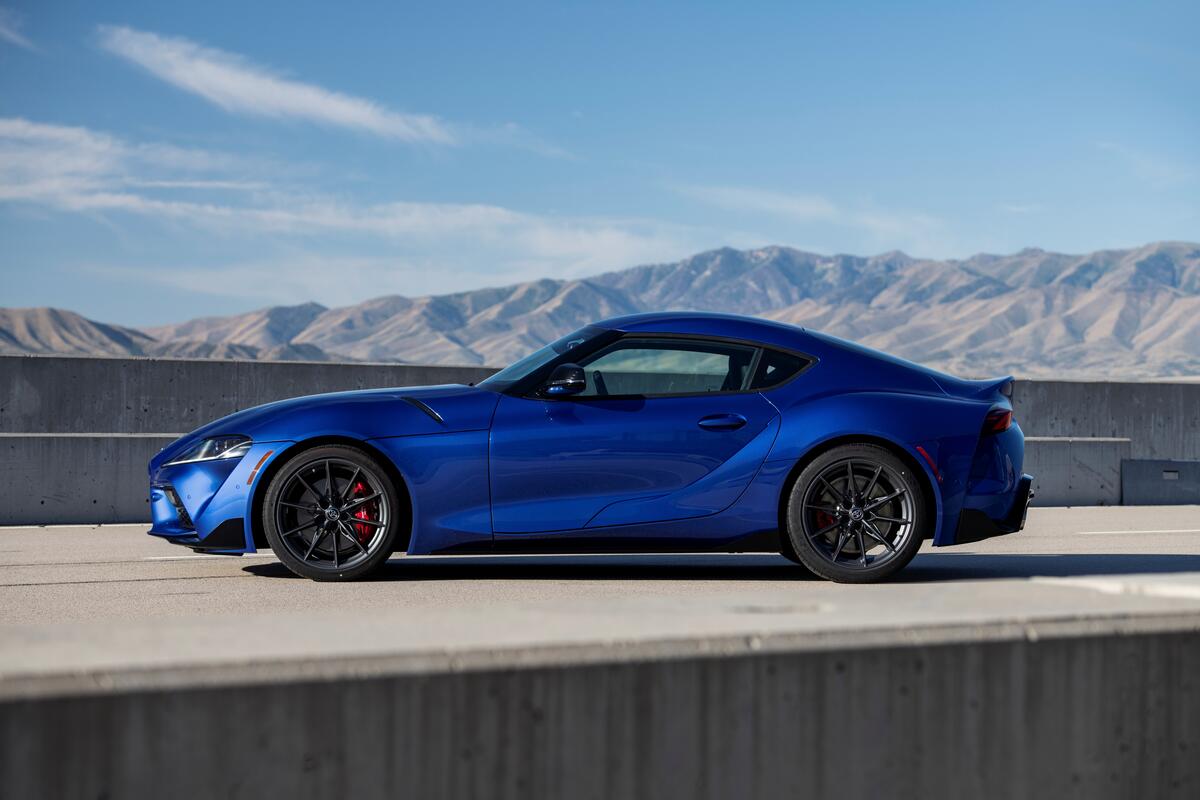
The Toyota Supra is a sports car made for fast driving and strong performance. If you add an external cooler, the goal is to keep important fluids from getting too hot. On a very hot day, the temperatures you see can be higher because the radiator and engine heat still warm the system.
Term
standard towing
Standard towing refers to typical trailer loads and driving conditions that significantly increase transmission workload. More load generally means higher transmission-fluid temperatures, which is why cooler sizing and temperature targets matter.
If transmission fluid gets too hot for too long, it can start to break down. When that happens, it loses its ability to protect the transmission parts.
A torque converter is the automatic-transmission part that uses fluid to transfer power from the engine to the drivetrain. When you’re stopped, it may not be working as hard, so the transmission fluid can cool more easily.
A transmission cooler helps keep the transmission fluid from getting too hot. It needs good airflow where it’s mounted so it can cool the fluid effectively.
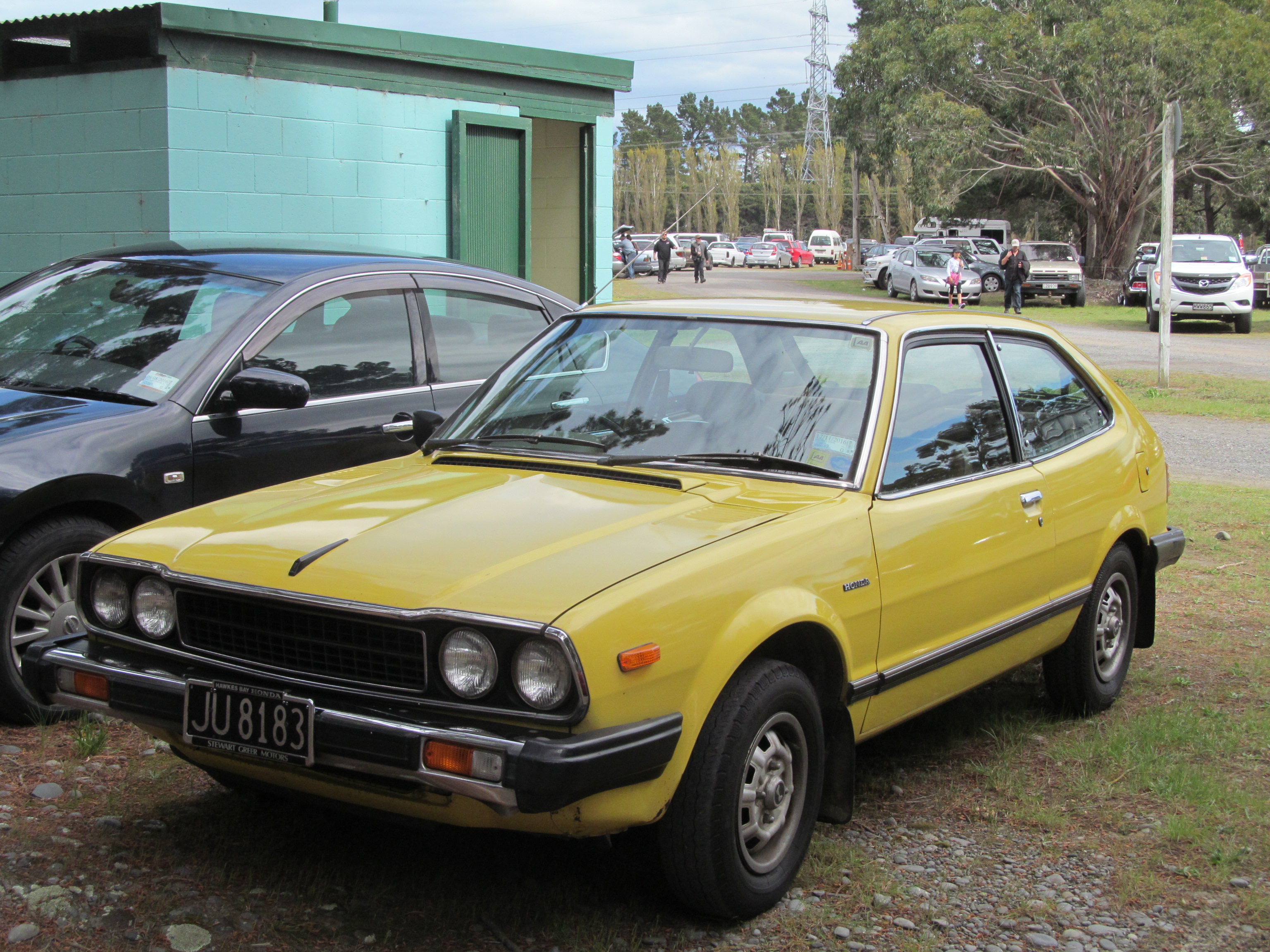
The 2019 Honda Accord Sport is a regular daily driver Honda with electronics that can detect engine problems. In this story, it’s the car that keeps having misfire and warning-related issues that limit how it drives.
Term
lift mode
“Limp mode” (what they’re calling “lift mode”) is when the car automatically limits power so you can drive it safely to get fixed. It usually happens after the car detects a serious problem.
A head gasket seals the engine’s cylinder head to the engine block, helping contain combustion pressure and keep coolant and oil where they belong. If it’s “blown,” coolant can leak into the combustion chambers or oil passages, often causing overheating and misfire-like symptoms.
P0304 is a computer code that means the engine isn’t firing correctly on one cylinder (cylinder 4). That can make the car run rough and may turn on warning lights or limit power.
An ignition coil makes the spark that lights the fuel in the engine. If a coil isn’t working right, one cylinder can misfire and the car may show warning codes.
OBD-II is the car’s built-in computer system for tracking problems. When something goes wrong, it stores a code (like P0304) that helps a mechanic find the cause.
Carbon build up is gunk that forms inside the engine over time. It can interfere with how the engine burns fuel and can lead to problems like rough running or misfires.
Ignition coils help create the spark that lights the fuel in the engine. If a coil is failing, the engine can misfire and the car may feel rough or lose power.
The cylinder wall is the inside surface of the engine cylinder. If coolant gets past it into the combustion area, the engine can misfire and cause other parts to fail.
A valve problem means the engine’s intake/exhaust valves aren’t working correctly. That can make the engine burn fuel unevenly and can lead to misfires and other failures.
Cylinder temperature is how hot each cylinder gets when it’s burning fuel. If one cylinder isn’t working right, it can run at the wrong temperature and contribute to misfires or coil problems.
“Put a head on it” means they repaired or replaced the top part of the engine (the cylinder head). That’s usually done when the issue is inside the head area, not just a quick sensor or ignition part.
The head gasket is a seal inside the engine that keeps coolant and engine gases from mixing. If it starts leaking, coolant can get into the cylinder and the engine may start misfiring.
Spark plugs create the spark that lights the fuel in each cylinder. If something is wrong in one cylinder, the spark plug can’t do its job and the engine can start misfiring.
Misfiring is when one cylinder doesn’t burn the fuel properly. That can happen if the ignition parts fail, or if coolant gets into the cylinder and prevents normal combustion.
K-seal is a product you add to the cooling system to help seal small leaks. The idea here is that it might plug a tiny leak path so coolant stops getting where it shouldn’t.
Cylinder pressure is the pressure inside the cylinder when the engine is running. When the engine is off, that pressure isn’t there, so coolant can slowly leak into the cylinder if the seal is failing.
A 2005 Mazda 6 is a regular everyday sedan, and this caller says it’s having a misfire. A misfire means the engine isn’t firing correctly in one or more cylinders.
“P0300” is a computer code that means the engine is misfiring in more than one cylinder. Misfire just means the spark/fuel/air mix didn’t ignite correctly in the cylinder.
“P0303” means the car’s computer thinks cylinder 3 is misfiring. If it keeps coming back even after fixing the coil, something else affecting cylinder 3 is usually the real problem.
They can test a bad cylinder by swapping parts with a cylinder that’s known to be good. If the misfire code moves to the other cylinder, the swapped part is likely bad; if it stays, something else about that cylinder is the problem.
The Ford F-150 is a popular full-size pickup truck. Here, the caller says they had a rear seal replaced and then noticed a new wind/noise when accelerating.
A rear pinion seal helps stop fluid from leaking around the rear differential. If it was replaced and something nearby wasn’t put back correctly, you might hear a new noise afterward.
A vacuum line is a small hose that helps the engine control certain systems. If it’s loose, air can leak and you may hear a whistling noise when you accelerate.
The air intake hose moves air toward the engine. If it’s not sealed correctly after a repair, air can leak and make a whistling sound when you press the gas.
A battery maintainer is a small charger you plug in to keep your car battery from going dead when the car isn’t driven. It’s meant to be safe for longer periods than a normal quick charge.
Even if you don’t drive, your car can still use a little bit of electricity. If you leave something on (like a door or lights) or the car sits too long, the battery can run down and the car won’t start.
The hood latch is what keeps the front hood closed. If it’s not properly latched, the hood can be left open by accident.
LIVE
Do you want to find a stress-free way to buy your next car?
Start at CarMax and shop your way.
If you want to browse with confidence, get pre-qualified online with no impact on your credit score
and shop cars within your budget, from luxury cars to family rides.
CarMax has options for almost every price range,
including more than 25,000 cars priced under $25,000.
So hey, want to get started?
Just head to carmax.com for details and get pre-qualified today.
Want to drive? CarMax.
During Memorial Day at Lowe's, shop household must-haves for less.
Save $80 on the Charbroil Performance Series 4 Burner Grill to chef up something special.
Plus, get up to 45% off select major appliances to keep things fresh.
Our best lineup is here at Lowe's.
Lowe's, we help you save.
Valid through $5.27.
While supplies last, selection varies by location.
See Lowe's.com for details.
Visit your nearby Lowe's on Apple's way in Lincoln.
Classics, your key to collector car insurance.
And road ready wheels, replica OEM wheels add huge savings.
Use the offer code hoodie for even more.
And by car dash part, over 200 million used parts ready to ship to you fast.
Here is the Under the Hood Show podcast.
Thanks for listening.
This is Under the Hood.
Welcome to the Under the Hood Show.
We are glad to have you with us.
Russ Evans is here to answer your automotive questions.
Thanks for joining us Under the Hood.
Shannon Nordstrom is not here this week to answer your automotive questions.
I'm Chris Carter here to answer your calls at 866-594-4150.
What has caught your attention in the automotive world?
So many things, so many things.
I've been looking a little more into the death.
And we were talking about emissions, maybe removing it all.
And it's not going away.
They're not going to stop putting it on the new trucks.
They're not going to let you take it off old trucks.
So stop emailing me asking when you can take it off your truck.
You can't.
What they're going to do, and they're already trying to apply this,
is that they are changing the way that the system senses
how much death is being consumed in there.
So they're trying to remove the sensor that it's been the most faulty
and causing people to be stuck on the side of the road with,
you know, D rates where they can't drive a vehicle.
They're in limp mode, things like that.
And it looks like a pretty good idea.
The death in the system is still going to be responsible for removing
a lot of contaminants that would get into the air.
And it's important to use.
The death fluid is made up primarily of water,
DI&I's water, and urea.
So you're basically like steam cleaning your exhaust.
And the urea is not made from, you know, no matter what Kennedy says.
It's not urine yet.
It's a byproduct.
It's the same thing they use for fertilizer.
Some people have diluted it and used it on their lawns.
It's biodegradable, so it's not toxic.
So you're using some of that.
A lot of people, they think that.
They think that the death fluid is toxic.
It's bad for you, so why are we putting it?
But it's not.
And it's actually, when it goes in,
it just helps complete that combustion process and scrub it.
A lot of things coming out on these.
And hopefully, if we could just eliminate the fact that
it was shutting people's vehicles down,
I think people wouldn't even notice that it was there.
They'd be like, I know I got to put it in there.
But still, we're going to have it for a while.
866-594-4150.
That's the number to reach us here at the end of the hood show.
Let's go to California and talk to Ozzy.
You're on the end of the hood show, Ozzy.
What can we do for you?
We have a 2018 Ford Mustang with a checked engine light on.
And the code that we're getting from the car is P0430.
Now, one thing, this is my son's car.
He remembers that the check engine light came on.
He's not completely sure, but he'd appear after he overfilled the gas tank.
So I read a little bit, and I was curious why did the P0430 code came on,
as opposed to EVAP-related code.
But also, I read that there's a relationship between evaporation poles and the O2 sensor.
How can you help me with this?
Well, what can happen in one of the plausible things for this is that if it was overfilled
and the canister became filled with raw fuel, wet fuel, instead of vapors, when you start the car
and even when it's running, it's going to draw an excessive amount of rich fuel into the system.
Instead of just oxygen in there and then the fuel that the computer is putting in through the
fuel injectors, it's got all this rich, heavy-fueled oxygen going into it.
And that can skew the oxygen sensor and cause it to read, say,
hey, we're not putting this much fuel in there. The computer is not commanding that with the
injectors, but we're putting enough in to keep it from misfiring. So we got a problem going on here,
so it throws that code. And that's pretty common when people overfill them,
especially if they overfill it with the vehicle running. If they've got it running when they're
filling that tank, it can really get crazy and dump a bunch of fuel in there.
And this will go on until that canister vents itself out. If it's completely full,
it'll never vent itself out. It'll just fill it and there won't be any airflow. But if you've
got some airflow, it will eventually evaporate and sometimes it'll completely cure itself. Other
times you've got to put a new canister on it, but I would give it a little time. I mean,
you've got a little bit of time until you need your emissions inspection done. I would guess,
hopefully, you're a while off on that in California. But if you are, then just drive it for a month
and see if it clears up on its own. It will reset itself if it clears out before you spend the money
on it. But if you have to, you may, if it won't fix itself, you may need to put a new canister on it
and vent valve. New canister. Would I run into the risk of damaging the auto sensor or the
car? No, no, you shouldn't. If it's, if it's just a canister issue causing that, it shouldn't
cause any other, other issues on the, on the car, but you won't be able to see what other codes may
be in it while the lights on. But as far as that itself, it's going to run a little rich and it'll
try to lean it out a little bit to fix it. If it's running smoothly, no flashing check engine light,
you should be fine. Okay. Okay. We've noticed, you know, the lights feel on when we have not
is the smell, the high smell of gasoline vapors in the ground. Yeah, you're going to smell that
because it's venting right to the air. It's just sitting right there. Okay.
Wow. All right. There you go. Thanks very much for the call, Ozzy. That's a, I like,
my favorite kind of fixes. Just wait a little bit and see if it gets better. Here's a tip on how
to fix your car. Don't. Yeah. That's my favorite. 866-594-4150. That's the number to reach us here
at the end of the hood show. Let's go to Missouri and talk to Jerry. You're on the end of the hood
show. Jerry, what can we do for you? I just purchased a 22 Chevy Colorado with a 2.5 and a
6-speed transmission. It appears it's a fleet vehicle and I've got oil change history on it.
This is pretty good. There's a couple long ones and then there's also some short interval changes
because this truck shows 75,000 miles, but it's got 3,800 engine hours,
which translates at 30 miles an hour to 114,000 miles. So I'm looking forward to getting on top
of the maintenance. Would like to, I'm a valvoline fan, would like to use the Max Life, but then I
was wondering, would there be a problem with alternating between Max Life and Restore and Protect?
No. You'd be fine on that. The Restore and Protect just got some more additives in the
package. It's basically the same thing, but they put a little extra. So I'd be putting it.
Or would I be better off just using that? Well, you can use it straight every time. It would just
be like if you're putting an additive in your vehicle that you're putting it in every other,
let's say you're switching back and forth every other oil change, it'd be like putting an additive
in just every other oil change. So it kind of defeats the purpose a little bit. You just
work on half and half or something like that. Well, you could do that too. You just have less
additives in there. It's up to you. The price of oil for the consumer for everybody is increasing
quickly. There's going to be some, you will see some and feel some major jumps coming up in oil
very shortly. And watch what it's priced at today and then watch what it's priced at next
month and you're going to see it. It takes a long time for oil to go up, but when it goes up,
it never comes down. We've had increases over the years and it does take, we'll see the price of
oil shoot up for a long time and it just rides out and then it goes up pretty quickly and stays
there. So even if the oil comes down, those stay up for, you know, it's just what they do on those.
It'd be crazy if we, every time you go to a quick loop, right? Oh, this week it's 80,
next week it's 120 and then 60 and it'd be great. But yeah, I think you'd be fine with
going with the Restorm Protect in there. Which one's more? I think they're the same price,
pretty close. You know, a lot of those products, you'll see a lot of different oils. If it's from
mobile or Penn's Oil or Valvoline, whatever it is, they'll be very similar, but you could
choose whether you want a high mileage one, Restorm Protect, you want a mileage one.
Jerry, do you know what Max Life and Restorm Protect are?
No, I'm not so much worried about the price. I just wanted to make sure if there wasn't a
problem with switch switching. I'd heard over the years people saying, oh, once you start with one
oil, you should stick with it. So they have additive packages in them. Same, Jerry. I've
heard that same thing. The biggest bigger problem is switching from a synthetic or from a non-synthetic
to a synthetic. If you've already always run a non-synthetic and you get a car that's older
and you have some significant wear on seals and things, and then you go to a full synthetic.
I've experienced that one. Yeah, and that's just because the synthetic is very uniform. If you
imagine if you take a big screen and you pour sand on it, the small finer pieces of sand will go
through the screen and the bigger pieces and the rocks won't. Well, that's like conventional oil,
all different sizes, larger pieces with synthetic, smaller molecules. They're all the same size.
All the same size, very uniform, very refined, smooth. They'll all fall through. So they'll
protect, but they can also leak when you've got a seal that's worn. It's not the oil that's causing
the problem. It's the worn seals in the engine that's doing it. But if you start off with it
and always keep it in there, it's like running a smoother sandpaper in there instead of a really
rough grit. You have just a nice, smooth surface. Does that help you out there, Jerry?
Yes, guys. I didn't find any transmission service information. How can I check transmission
fluid without... I've eventually planned on doing a change, but is there any way I can at least get
a peek at what the oil looks like right now, what the fluid looks like? Yeah, so there's a, on the
side of that transmission is where you fill it. And when the vehicle's warm and you take that plug
out, it's supposed to just be a barely dripping out of there to tell you it's full when it gets to
a certain level. You can take that out and see if it's dripping just a little bit and what the
color of it and consistency looks like. A lot of times, if you take it out with the vehicle off,
it'll be higher because you're supposed to fill it when it's running and it'll be just barely
dripping out. But when you shut it off, it stops pumping it out of the pan. So it is going to be
a little higher. Just make sure you don't lose any... I mean, you're just going to get a few drips
out of it. That's enough. Check the condition. With the miles you have on it, that's pretty low.
Even though it's got more hours on it, unless it was overheated, I don't think it's going to be
bad. You could probably go a ways yet. But on that first change, I like to see the first oil
changes on any transmission, somewhere in that 20,000 mile range, just because I want to get out
everything that was original in there that's worn off the clutches, clean the fluid, and then
I go longer. Like on my vehicle, I had that was a little newer. Just a couple years old.
I went 10,000 miles. I changed it. People are like, wow, that's pretty early. It's like, yeah,
and then I go 70 on the second one because I wasn't towing with it. So I was fine with that.
But just the reason I did it earlier, I wanted to get all that out of there. But I wanted to
let it break in first before I did it. So not too early, not too late.
Okay. Thank you for your help. Thanks, Jerry. Good luck. 866-594-4150. That's the number to
reach us here at the end of the hood show. Let's go to Massachusetts. Dr. John, you're on the end
of the hood show. John, what can we do for you? This is a question about a brand new vehicle.
My daughter lives down in Alabama, and she bought a 2026 trailblazer. I thought the best
maintenance schedule would be on that. John, we're losing you terribly. Hang right there.
I think the question, new 26 trailblazer maintenance schedule. What do you do?
Well, the factory is going to give you, they're going to give you an idea of what they want.
Don't exceed that for sure. Those engines have been pretty good, but we like to go a little bit
sooner on the oil changes on there. I recommend our customers. I don't like to see more than
4,000 miles, four months right in that area on that vehicle. Transmission, you've got plenty of
time on it. That new car, like I've said, I like to do them earlier, right away the first time,
but then you can go longer, but that's going to be, we see fluid changes in those, especially down
south where it's going to be warmer, probably in the 60,000 mile range or so. But again,
get your local mechanic to look at it and look at the condition of the fluid,
because if it looks great, go longer. If it doesn't, shorten it up some. But the oil changes,
use that recommended factory fluid in it and make sure that you don't exceed the factory,
because I believe the first oil change is going to come up like at 10,000 miles on that.
It's got break-in oil in it. It's made to run and seat the rings in and everything. But after
that, you're still going to see long, they do that to make you get a feeling of, hey, this vehicle
doesn't need many oil changes. If you think you don't need as many oil changes and they're
becoming more expensive, you're not going to want the car that recommends more oil changes.
Generally, if it does depend on, first of all, you want to make sure you don't exceed the dealer's
suggestions for warranty reasons. You've got to keep it in.
That would be so high. But we've seen people do it, 13,000, 14,000 miles. Well, the light came
on, but it wasn't that long ago. Well, sir, it looks like your light came on three months ago.
Right. Oh, was it that long? But if you buy a new car, and that's why I love this question,
if you buy a new car and you know you want to drive it for 10 years, 100,000, 200,000 miles,
then you want to get into that, kind of want to get into it quicker than even the dealer, right?
I mean, you want to make sure you're on that right away. You want to care for it. And
a lot of times you can judge by the condition of the fluid. If you're driving a car and after the
first oil change done, and you see that the oil is pretty clean, like it's clear looking,
you can see through it. It doesn't look burnt. And you're at six, 7,000 miles.
That's super clear. Yeah. So just got a light color to it. Right. Just a light color to it.
You may want to go a little longer. But if you see that, let's say the first time we're at 6,000
miles, and it's, you know, it's fairly clear yet, but we're at 6,000, we're going to change it.
The next time you come to 6,000, if it's even darker, and then the next time it's 6,000,
it's even darker than that, maybe you feel like you're going a little long and you want to
cut that back to 5,000. And now if you see that every time it's getting a little cleaner and
you're like, wow, I'm at 5,000, it still looks like brand new. Maybe you want 5,500. You can
adjust that. And then you'll know with your style of driving and where you're driving it at and the
where on the engine, how long it'll be. That first oil change, the $10,000 break in, a lot of people
have an aversion to that. They just can't bring themselves to do it. And yeah. And so when we
put a remanufactured engine in, we do a lot of them at our shop, all the manufacturers we use,
there's three of them, they say 500 miles period for the first oil change. 500. 500 to get everything
out of there that was machined. And then after the 500, they want you to change it. Most of them
about three months, 3000 miles, some a little longer. But what they want, what's more important
is the right oil, not a fully synthetic oil. If it's a break in oil to begin with, we want to
use a non synthetic oil, and you're going to find a synthetic blend because you're not going to find
a non synthetic, let's say buy a special racing oil, which is super expensive. But that just means
a synthetic blend. If you go out and you put a like, I don't know, max life or any of those,
like we just talked to earlier, fully synthetic, you run the risk of not seeding in the piston rings.
And when you do that, then the engine could burn oil. Now, some cars come with a fully
synthetic from the factory. So certain performance cars, other ones have that on the label as like
mobile one factory fill. But there's a break in oil in there for the first time. So you really
don't know, but that's what they want in there. Or it's a, you know, especially designed for it.
But like this one 2026 trailblazer 10,000 mile, I mean, I bet it's 10,000. I don't know what it is
for a fact, but I bet it is if they say a 10,000 mile break in, should we do that? Or should we
get close? Because that a lot of people have called and said they said 10,000 miles, I can't do that.
I'll go crazy. Yeah, on the on the first one, I would, I would be longer. I'd feel
comfortable with 5,000, but not, not 10. That's pretty long. Okay. That's that's you got to get
the right oil in it. If you're going to go earlier. Oh, I got you. I see what you're saying.
OEM replica wheels at a huge savings, roadreadywheels.com. Thanks for listening to the Under the
Hood Show podcast. It never happens at a good time. The pipe bursts at midnight. The heater
quits on the coldest night. Suddenly, you're overwhelmed. That's when HomeServe is here.
For $4.99 a month, you're never alone. Just call their 24 seven hotline and the local pro is on
the way trusted by millions. HomeServe delivers peace of mind when you need it most for plans
starting at just $4.99 a month. Go to HomeServe.com. That's HomeServe.com. Not available everywhere.
Most plans range between $4.99 to $11.99 a month. Your first year terms apply on covered repairs.
Let's talk about modern home shopping. It's sort of become a fun side hobby, right?
Scrolling listings at night, dreaming about kitchens you've never seen, or backyards you
haven't even stepped foot in, all from the comforts of pretty much anywhere. Redfin knows a lot of
people like you want to own, but are stuck in this browsing mode loop. That's where Redfin
lips the script. With listings that update within minutes and tours you can book right from the
Redfin app, you can see your dream home the moment it appears. Now liking a listing is easy, but
actually landing it, that's where Redfin comes in. Redfin has over 2,200 agents with local
expertise. And Redfin agents close twice as many deals as other agents. That means they want to help
you win, not just window shop. Redfin is built to help you go from just looking to wait. This
could actually be home. So become the newest neighbor on the block. Visit redfin.com to start
finding and start owning. That's redfin.com. Protect your pet with insurance from PetsBest.
Plants start from less than a dollar a day. Visit petsbest.com. Pet insurance products
offered and administered by PetsBest Insurance Services LLC are underwritten by American Pet
Insurance Company or Independence American Insurance Company. For terms and conditions,
visit www.petsbest.com backslash policy. Products are underwritten by American Pet Insurance Company,
Independence American Insurance Company, or MS Transverse Insurance Company, and administered
by PetsBest Insurance Services LLC. One dollar a day premium based on 2024 average new policy
holder data for accident and illness plans pets age 0 to 10. Hi, I'm Cindy Crawford,
and I'm the founder of Meaningful Beauty. When Dr. Sabah and I decided to do a skincare line
together, he said to me, we are going to give women meaningful beauty. And I said,
that's exactly right. We want to give women meaningful beauty, which means each and every
product is meaningful. It has a reason to exist. It's efficacious. You're going to get results.
And then you just go out and live your life. Meaningful beauty. Confidence is beautiful.
Learn more at meaningfulbeauty.com. When you need parts for your car, finding them is half
the battle. And we have a great source for you to find those parts you need at great prices.
If you need parts, whether it be for a brand new car or going back about 20 years, it doesn't matter,
check out car-part.com. It's fast and it's easy. Over 200 million parts strong all across North
America. Over 4,000 recyclers to choose from, giving you the largest selection available.
Whether it's an engine, transmission, doors, seats or wheels, you can find them on car-part.com.
We even let you know what parts from other models and years fit your car. Many recyclers supply
pictures of their parts too. We even have a mobile app. Search US and Canada or buy from
your local independent recycler. Whichever you choose, buying recycled is good for the environment
and good for your wallet. If you're a repair shop, there is a professional version available for you
at no charge. That's car-part.com. Check it out today.
Car-parts cars and rare exotic cars to antique vehicles including cars, trucks, tractors,
military vehicles and motorcycles. Over 50,000 of them a year. They give you confidence and your
vehicle's protection. Find Berkeley One Classics on the web at BerkeleyClassics.com. Get a free
quote and find out first hand what they can save you and how well they can cover your valuable
investment. It takes just a few minutes using their easy online quote tool. BerkeleyClassics.com
or call 1-800-603-3330. That's 800-603-3330. We want to tell you about our partner at
Road Ready Wheels. Road Ready Wheels has the very best aftermarket OEM replica wheels available
with a direct fit of the factory center caps and TPMS sensors so you don't need special
caps and sensors. Simply transfer yours over when you replace the wheel. With near perfect
ratings on Google, Amazon and eBay, consumers like you are extremely satisfied when it comes to
Road Ready Wheels. Maybe your wheels leak air or maybe you want to upgrade from an old rusty
steel wheel. Road Ready Wheels has both aluminum alloy and new steel wheels to fit many cars on
the road today. They stock thousands of wheels ready to ship and have free returns and shipping.
Plus save 10% more when you use the code HOODY at checkout. Aftermarket wheels can be very expensive
and it's so hard to choose what you want. With Road Ready Wheels you get an OEM looking wheel
that fits like it should but costs much less. Save money today and get yours at RoadReadyWheels.com.
Special discounts apply for large quantities and dealers and they have a special electronic
data feed and online portal waiting for you. Find out more by going to RoadReadyWheels.com
where you can use their online vehicle selection tool to find your Road Ready Wheels today.
That's RoadReadyWheels.com. Welcome back everybody. It's time to get back under the hood with a
motor medics. 866-594-4150. That's the number to reach us here at the end of the hood show.
Don't forget if you miss an episode you can find it wherever you get your podcast. You can watch
the show on our YouTube channel. If you subscribe there and join the Hoodie Fan Club at underthoodshow.com
you could win a hoodie. Like Susan German congratulations from our friends over at Berkeley
One Classics. They're celebrating over 50 years of collector car coverage. They could protect
just about anything. That's a classic collector. You got to check them out. You could give them a call.
And a collector can depend on a lot of things too. Depends on a lot of things. You might have a
collector. You could go buy a collector today. A brand new one off the showroom floor but it's
going to be specific. A new Chevy Trax is not a collector. But there are other things that are,
yes. And some cars can be collectors or not collectors depending on how you use them.
How you use them. The condition of the car. Things like that. Like a 1982 Chevy El Camino.
That could be a collector or it could be a crappy old car you used to haul paint and logs around
that's beat up with rust. That's not a classic. Not a Berkeley One Classic. But it could be
nice. Mint. It's part of my collection. I use it to drive around weekends. It's not my daily
driver to work. There's some things there. How do you know? You call Berkeley One Classics.
And they'll help you out. 866-594-4150. Let's go to Don in Pennsylvania. Don,
you're on the end of the hood show. What can we do for you?
Hey, guys. Going about the 2008 million dollar Tahoe. Okay.
So I got my transmission rebuilt because it overheated on me. It went up to 250 degrees.
That'll do it. And it smoked. Yep. It smoked the third and fourth gear out of it. So I took
to the shop. Before I took to the shop, I went over everything this guy was going to do to it.
And he said, and I specifically said put a transmission external cooler on this thing.
So I get there to pick it up and I asked him how hard it was to retrofit the cooler. And he's like,
oh, I didn't do that. He goes, so I put it on the hot flush machine and it showed no resistance.
So it's clear. I said, well, I'm not comfortable driving it
after putting this much money into it. And you and I had talked about putting this cooler on.
So he put the cooler on. What is the temperature I should be seeing on an external cooler
as I'm driving it on a 90 degree day? Well, it's still got the one in the radiator,
which is going to warm it up some and then you've got the external one goes on after.
Did he bypass it completely? Yeah. Okay, if it's gone, if it's gone completely without a load on
it, no towing anything like that, it's going to run a lot cooler. But you may be running,
you still may be running 160 to 180 degrees on a 90 degree day without towing. You start towing
with it, you could push that thing up to 250 if you overtoe. But on standard towing,
look around here, I've got some vehicles that have that transmission in it with only an external
cooler and it's a large one with fans and things like that. And I'll see it hit 200 degrees on a
very hot day in the mid 90s with a lot of humidity. So there's not a lot of dispersion from that.
They'll get pretty warm. But typically, you know, if it's 80 to 90 out and I'm not towing,
I'll see those things run about 170 or so. And it varies by vehicle and gear ratio and things
like that. But they'll still get, they'll still get warmer. And that doesn't hurt. If you're not
burning the fluid, you're not hurting anything. Once you hit 200, you're, you're getting hot
enough you can start oxidizing fluid and causing things to be damaged once that fluid protection
is gone. But you don't have to be worried about heat. It's over heat that you have to worry about.
All right. Well, I saw it hit 190. I'm like, what the hell's going on here? But it did go down.
Yeah. It went back down. It seems to go down when I'm stopped more than it goes down when
I'm driving. Is that right? Yeah, because you don't have the torque converters is just sitting
there. Everything's freewheel and it's really not doing a lot. It's just idling and you've got
plenty of flow. You got plenty of airflow. The fans are running and it's, it's cooling off,
but you're going on the road. It's got to, it's got to run, you know, the torque converter
slipping as you're accelerating, it's building heat. It will, it will go up typically as the
faster you go. Also, you know, the transmission shop is going to know where to mount that cooler,
but it's got to be mounted out in front of everything where it has good airflow through
all of it. Don, thanks very much for the call. Good luck. I, I recognize Don's
call there because when I had overheating problems and could watch the temp on my car,
you were a nut. I could not. Is it, is it hot? Is it too hot? It was like, dude,
yeah, like your car is just overheated. It did. Yeah. It killed it. And it just, it drove me nuts.
Once I had the problem, I would sit there and, and I would know that I could get,
I, I would know that I could go 10 or 20 degrees higher than it was sitting. So if it went to,
I was like, Oh no, here we go. It drives you nuts. 8665944
15 Oh, let's go to Illinois and talk to Mark here on the end of the hood show. Mark,
what can we do for you? How you doing guys? Fantastic. A little over a year ago, a little
over a year ago, I have a 2019 Honda Accord Sport. A little over a year ago, I had an issue with
all my lights turning on in the car and my car kind of went into lift mode. So I took my car
to be serviced. And when I took it into the dealership, they said I had a blown head gasket.
So I did not believe him. I took it out of there and I went to a few other places to get it checked
out. Finally, somebody thought it was potentially the ignition coil. So I was getting a misfire,
it was a P0304 misfire. So what had happened is the guy that I took it to, he just bought
some like Amazon part ignition coils. So he replaced them with those. Anyway, about six
months later, I had the same issue again. So again, it went into lift mode. I had problems
with the cargo not driving. And I took it to another dealership. And again, they thought it
was the ignition coils. This time they replaced them with more of the dealer type ignition coils.
And I'm having the same issue again. So I did see online that this particular car does have
misfires that happens quite frequently. But I can't seem to figure out exactly what's going on.
I know the engine's very small. I've been told by some people that sometimes there's carbon build
up and you need to get the carbon out of there. Any suggestions, I would appreciate it. I don't
want to sell the car, but I don't want to keep spending thousands and thousands of dollars
on trying to repair it and not fixing the actual problem. You got them six months coils on there.
You got to get the longer ones. Well, so yeah, you can get a cheap old Amazon coil,
garbage, or you can go to advanced auto parts. Is that his issue here? Yeah, well, here's the thing.
Or you go to advanced auto parts and get a motor red coil, a good solid one that's going to last,
it's got more windings in it. It's built heavier. It's what you pay for, for sure.
But do you think that's what it is? Oh, no, no, no, I'm not done.
Oh, no, you're fine. Mark, I could see his face. I felt it coming. So you can either
put that cheap coil in and have the problem occur quicker, or you could put the great coil in and
have it occur a little longer down the road. But not much. But you're not fixing the problem.
Right, right. The problem likely is a head gasket or a problem with a cylinder wall
leaking a small amount of coolant. And that is causing the coil to fail. It's an ignition problem
caused by the failure in the coils is caused by the engine itself. And Shannon had a 3.6
Chrysler. The replacing coils are, once it's fixed, you're still going to have... You'll go a little
longer. So he had this problem with a 3.6 Chrysler that had a valve problem. And that valve
problem was causing some differences in cylinder temperatures and causing the coil to fail
repeatedly. And they put a head on it and that fixed it. These Hondas, they're one of the
highest replaced engines we have in our shop with this little turbo engine
right after somebody bought it. So it seems like about 50% of all the engines and transmissions
we replace in our shop are in vehicles that people have bought within the last 90 days.
So somebody probably already knew there was a problem with the car when they
sold it. So they sold it. Now somebody else has bought it because it doesn't... We don't have that
percentage with people that have had them a long time, you know? We see on these that engine
has a long history of head gasket issues. You can run the engine till it's warm,
shut it off, and then right away take the spark plugs out of it and let it sit. And if you let
it sit four or five hours and you stick a bore scope down in there where you can see where the
head gasket is sandwiched between the block and the head, you look around it with a bore scope,
you can sometimes see just a drip of coolant in there. And that's all it takes. I just had one
three weeks ago and it was misfiring. We put coils on it. It lasted three or four weeks,
started misfiring again on the same cylinder. So I did this. I ran it. I pulled all those spark
plugs out. I scoped it with a bore scope and I saw two of the four cylinders had signs of coolant
in there and that was it. So it had to come out. Now you might be able to seal... It's a small leak
and K-seal that partner of ours that has the special sealer. That is a great sealer for this
type of problem where you shut the engine off. There's no more cylinder pressure. So it's now
coolant is seeping towards the cylinder. It's perfect because it's a very small leak and it's
something that is not being pushed out when the engine's running and into the cooling system to
pressurize it. So that could be something that fixes it and now it would be more of a permanent
repair. It wouldn't be... I'm going to throw this in. How long is it going to last six months?
Now if it does the trick in there and I think you got a pretty good chance of it,
I think it could really extend the life of this. So if you put a bottle of K-seal ultimate in there
and you run it a couple hundred miles and you replace that coil, probably it'll be under warranty
or something. But if you do get it replaced and it fixes it, then you know that's what was going
on. It was a head gasket issue. And him trying the K-seal won't make it worse if that doesn't
work. No, it doesn't affect a thing at all. No, it's good and it's actually got a money back
guarantee. So Mark, is it running? Did you put coils on it and it's running good now and you're
afraid of the clock or are you up against the coils on it now? I've replaced the coils two
different times. It seems to be okay right now. But like I said, I don't have a lot of confidence.
And the original gentleman that was talking, what did you call that material that you said
and where did you say to put that? Did you say to put that in with the antifreeze or the oil
answer? I didn't hear what you said. K-seal, make sure you put it in the coolant system only. I have
somebody called me the other day and said that, well, I put it in my oil and it didn't work. I'm
right on it. Coolant. K-seal is the product, the partner of ours. For cooling systems.
Look at the follow the directions on the bottle. And if you've gone to a dealership
and they put those coils on for you, I'm surprised they didn't first look at a head gasket because
if you got online to YouTube and looked at these 1.5 Honda and Acura engines, you will see a lot of
videos from dealership mechanics saying, oh, here's another one with coils that were replaced
unnecessarily. It's not a coil. It's a head gasket issue where they've come back and they're tired
of replacing coils under warranty because they know their coils are fine. It's something else
causing it. So now that he has done that, this is the perfect time. This is the perfect time
because it's running well. Yeah. Go to the store now. Advance auto parts will carry that. Go there,
get a bottle of K-seal ultimate. K-seal ultimate. It's a big round, tall thing. You put the whole
bottle in. You gotta shake it well. Is that the big one or is that the little one? It's the big
tall one. Okay. But you want to make sure it's completely shaken so there's no stuff sitting
on the bottom of it and drained down just enough coolant. There's a little valve on the bottom
of the radiator. Lower it down when it's cold to... It's like 20 bucks. Yeah. Yeah. And so you
put the whole bottle in there and then top it off. Make sure it's completely full and run.
K-seal. Follow the directions and just read it, right? Exactly. It'll tell you.
Mark, thanks very much for the call and let us know how it goes. Don't forget you can watch
the show on our YouTube channel and other social media channels. And if you miss an episode,
you can always go catch us wherever you get your podcasts. Just look up the under the hood
show podcast, 866-594-4150. Let's talk to you and you and you're on the end of the hood show. What
can we do for you? Hey, guys. Appreciate you taking my call. Yeah. I've got a 2005 Mazda 6
with a 2.3 liter, about 145,000 miles, and I am battling a misfire. If I go back a ways,
at about 120,000 miles, I was getting a PO 300 misfire code on random cylinders,
replace ignition coil, and that fixed it. So fast forward to now. And I've had another PO
303, so misfire on the third cylinder for the last two years and didn't really take care of it.
Finally, tested it, got no spark at the ignition coil again, and replaced that again, and that
seemed to fix it perfectly. But now we're 650 miles later, and it is giving me the PO 303
misfire code again. So I am just at a lot. Cylinder three.
Like we just talked earlier, you know, you can have repeat failures on a cylinder from
when you have a coil failure from either the coil itself failing a second time, which is rare,
but it can happen. More often we see something else externally causing the failure in the coil.
So if you've got a head gasket that's got a problem, you've even got an injector that's dirty,
and it's causing a variance in the cylinder temperature. So if you, I mean, the old two
sensors can only adjust so much, because it's looking at all the cylinders at once, and it's
trying to keep them all even. But if one is way off, it will compensate by kind of moving
everything in an average, but you can still have that one drop off with a misfire.
Yeah, you're just going to have to find it. So if you've got, if you've replaced a coil,
you got a misfire, repeat failure in that same one, you'll have to look and see if you've
got, you know, is it just a coil? And you can swap them around. So you could take a coil off
of cylinder one, we've gone as far as we'll swap the coil and the injector and the spark plug from
a known good cylinder like cylinder one, and you got that PO 303 means the three means cylinder three,
a four would mean cylinder four or PO 301 would be cylinder one, swap a known good one for the
bad hole, and then transfer the other stuff to we start with just a coil, and then we'll go with
the spark plug and then even the injector, move them around and see if the misfire follows it.
If it does, we know that that part is bad that we moved over, but then you got to find out what's
causing it. Was it just a repeat failure because one of those parts failed, you know, a warranty
type failure, or was it something more like a injector that's, that's bad or a head gasket that's
bad, or you're burning oil, and it's it's causing that problem. It's you've got to do some looking
to see what's what's going on there. Yeah, and this is this engine has the, you know, it's not the
coil over plug on each cylinder, it's the one to the side with four posts on it, and spark plug
wires go to each spark plug. Yeah, and you can have a coil fail that same way with the with either the
you know coil on plug, just like that, or on the with a wire, you can have them fail as well.
Okay. Got you. Any chance it could be the computer given, you know, me making that,
while making that a coil bed? Yeah, it's not very often it happens, but it can. We've seen them,
the drivers go bad in the computer, and they keep the spark, the coil energized too long,
which causes it to overheat. And the overheating will cause it to, to fail early. So if it's
supposed to keep it on for a few milliseconds, and it's keeping it on for 10 times as long every,
every fire cycle, it can, it can burn it out. And that's, that's not good. Okay.
Gotcha. All right, guys, I'll keep looking appreciate you guys. There you go. Thanks very
much for the call. Good luck. 866-594-4150. Let's talk to Frank. Frank, you're on the
end of the hood show. What can we do for you? Hi. I have a 22 Ford F-150. And I had the rear
pinion seal replaced because it was leaking. And ever since then, when I applied gas, you know,
the gas pedal to go faster, it gives like a wind noise. Is that something that could have been
caused from that seal being changed? Well, not necessarily the seal being changed, but something
else in the area. They left, possibly left something loose. You got a vacuum line loose,
you got a air intake hose loose or something like that. So it's causing that to,
to whistle when you accelerate. That's very, very plausible. Okay. I've had people,
they'll come back say, Hey, I'm hearing a noise ever, ever since you worked on it,
could you check it out? Sure, I'd be glad to. Because we want to either verify that we did it
and fix it or verify that we didn't and let them know what that noise is. Perfect. Okay. I'll take
it back in and see if they can find it. There you go. Thanks very much for the call. I want to ask
you about battery maintainers for a second. Okay. Is it so we have one car that just doesn't get
driven that much. So we have a battery maintainer on it. How long, like we don't necessarily know
that we're not going to drive it for a while. How long can you, how long should you not,
how long can you leave a battery maintainer on a car you're not using? Yeah, or how long
should you wait before you put it on? That's the question. Put it on immediately because you don't
know. Okay. If you think that you're going to drive it in the next couple of days and you don't
put it on unless you know for a fact you're going to drive it, put it on because you'll forget.
For sure. Because if you've been putting it on, you'll be like, Oh, it's on there. I don't need
to go check. I just I know I'm sure it's on there. Is it? Oh, well, then you'll forget. And then you'll
go to start it and it'll be dead. And then you'll leave a new battery. You'll be like, Oh, no, I
got to get a battery. I had a maintainer. Why didn't I put it on there? Should have would have
could have. So just put it on. You know what I did the other day? What did you do? I went out there
to put the maintainer on and I realized I'd already opened the hood, which reminded me
that like four days ago, I'd opened the hood by reaching in the open door of the vehicle
to hit the hood latch. And then I went up to the front and didn't I got distracted by something.
So not only was the hood open, the door was open,
the driver's door. So there was no, there was no maintaining. It was dead.
I know, I know. That's when I sent you that text that you know, next time I bring it in,
we should take a look at that battery because it's there's been issues with it. But that yeah,
that was me. And it was the, it was forgetting that I was working on it, that I
left the door open when I left the garage and it was dead. And then it came right back. I mean,
I put the maintainer on it and brought it back. Just fine over a, I didn't drive it for a couple
days. But when I went back out, it was just fine. Most things are amazing. What don't, what? I'm,
I don't shake your head at me. I'm being vulnerable here.
When was the last time you changed your oil?
Oh, recently, that one, recently, recently enough, recently enough this year, this year,
this calendar year, for sure. Oh, did I change it? Yeah. Oh, yeah, yeah, yeah.
How am I supposed to remember these things? No, I just, I'm just saying it's been, that one's been
recent. Okay. All right. That'll do it for this hour of The Under the Hood Show. Thanks for joining
us. Until next time, you can find us at UnderTheHoodShow.com. And don't forget, you can watch the
show at our YouTube channel. Just go to YouTube and search for The Under the Hood Show. Thanks for
joining us. With Russ Evans, this is Shannon Orts from thanking you for tuning into The
Nordstroms Under the Hood Show. Have a great day and remember PTLA. The opinions heard on this
program, based on the many years of experience of Russ and Shannon, are offered for entertainment
value only and as a guide to your repair needs. No claim to repair or cause is given or implied.
Always consult with your own certified technician and follow all safety procedures before
attempting any repair. To be a part of the show, call 866-594-4150. Find out more by visiting
UnderTheHoodShow.com. Under the Hood is produced by Prairie House Productions. All content is the
property of Nordstroms Automotive Incorporated and may not be used without our permission.
Copyright Nordstroms Automotive, Inc.
About this episode
Shopping smart, diagnosing smarter, and spending less on repairs: the hosts talk about using online pre-qualification and sourcing used parts, then pivot to real-world fixes. They explain how DEF/urea works, why emissions sensors can trigger limp mode, and how an overfilled tank can saturate an EVAP canister and skew O2 readings. The show also covers oil-change timing, break-in oil, transmission overheating and cooling temps, and misfire/ignition-coil issues that can trace back to head-gasket coolant leaks.
Money is tight and car repairs are expensive. Before you head to your shop call us for help with what might be wrong with your car. We are the Motor Medics working in our shop every day for decades now and broadcasting on over 250 radio stations and podcast helping people fix their cars and trucks since 1990. The call cost nothing but could save you thousands. Call us any day 866-594-4150 and leave us a message to get back to you or call live during the show. Thursdays from 9-11am Central. Here are today's callers. Why does my 18 Mustang have an o2 sensor code after I overfilled the gas tank? What fluid maintenance should I do on my Colorado? When should I do my first oil change on my 26 Trailblazer? What is the proper transmission temp range for a 08 Tahoe? What causes a repeat misfire and bad coils on a 19 Honda Accord 1.6?