
Save Money On Car Repairs With Our Car Talk Show
About this episode
Shopping smart, diagnosing smarter, and spending less on repairs: the hosts talk about using online pre-qualification and sourcing used parts, then pivot to real-world fixes. They explain how DEF/urea works, why emissions sensors can trigger limp mode, and how an overfilled tank can saturate an EVAP canister and skew O2 readings. The show also covers oil-change timing, break-in oil, transmission overheating and cooling temps, and misfire/ignition-coil issues that can trace back to head-gasket coolant leaks.
Money is tight and car repairs are expensive. Before you head to your shop call us for help with what might be wrong with your car. We are the Motor Medics working in our shop every day for decades now and broadcasting on over 250 radio stations and podcast helping people fix their cars and trucks since 1990. The call cost nothing but could save you thousands. Call us any day 866-594-4150 and leave us a message to get back to you or call live during the show. Thursdays from 9-11am Central. Here are today's callers. Why does my 18 Mustang have an o2 sensor code after I overfilled the gas tank? What fluid maintenance should I do on my Colorado? When should I do my first oil change on my 26 Trailblazer? What is the proper transmission temp range for a 08 Tahoe? What causes a repeat misfire and bad coils on a 19 Honda Accord 1.6?
diesel exhaust fluid
"The death fluid is made up primarily of water, DI&I's water, and urea. So you're basically like steam cleaning your exhaust. ... And it just helps complete that combustion process and scrub it."
Diesel exhaust fluid is a liquid diesel cars use to help clean their exhaust. It’s injected into the exhaust system so the car can reduce harmful pollution.
Diesel exhaust fluid (often called DEF) is a solution injected into a diesel vehicle’s exhaust aftertreatment system. Its job is to reduce emissions by helping the system “scrub” pollutants as exhaust passes through.
urea
"DI&I's water, and urea. So you're basically like steam cleaning your exhaust. And the urea is not made from, you know, no matter what Kennedy says."
Urea is a chemical that’s added to diesel exhaust systems. It helps the car clean up the exhaust so it produces fewer harmful gases.
In diesel exhaust treatment, urea is used as a chemical additive that gets injected into the exhaust stream. It helps convert harmful nitrogen oxides (NOx) into less harmful emissions by enabling the exhaust aftertreatment reaction.
exhaust aftertreatment
"And it's actually, when it goes in, it just helps complete that combustion process and scrub it. A lot of things coming out on these."
Exhaust aftertreatment is the part of the car that cleans the exhaust after the engine makes it. It helps reduce pollution before it comes out of the tailpipe.
Exhaust aftertreatment refers to emissions-control equipment that cleans exhaust after it leaves the engine. In diesel systems, it often relies on fluid injection and catalysts to reduce pollutants before they exit the tailpipe.

2018 Ford Mustang
"We have a 2018 Ford Mustang with a checked engine light on. And the code that we're getting from the car is P0430."
This is a 2018 Ford Mustang, and it has a computer that watches how the engine and emissions systems are working. When something goes wrong, it turns on the check engine light and saves a code so you can figure out what area is causing the problem. Here, the code is connected to what happens when the fuel tank is overfilled.
A 2018 Ford Mustang is a modern performance-focused muscle car that uses an onboard engine control system to monitor emissions and engine operation. When it shows a check engine light, the car stores diagnostic trouble codes (like P0430) that point to specific sensor/emissions system faults. In this case, the code is being linked to fuel-vapor/oxygen-sensor behavior after overfilling.
P0430
"And the code that we're getting from the car is P0430. Now, one thing, this is my son's car. He remembers that the check engine light came on."
P0430 is a “check engine” code that usually means the car thinks the catalytic converter isn’t working as efficiently as it should. Sometimes the real cause isn’t the converter itself—it can be a sensor reading that gets thrown off. In this story, overfilling is described as a way to mess with those readings.
P0430 is a diagnostic trouble code that generally points to an issue with the catalytic converter’s efficiency (often on the bank/sensor side the vehicle monitors). Even though it’s an emissions-related code, real-world causes can include sensor contamination or incorrect readings triggered by fuel vapor/overfill events. That’s why the hosts connect it to oxygen-sensor behavior after overfilling.
EVAP-related code
"But also, I read that there's a relationship between evaporation poles and the O2 sensor. How can you help me with this?"
EVAP is the system that keeps fuel vapors from just escaping into the air. If it’s not working right, the car can store EVAP-related trouble codes. The episode explains that even if the code you see isn’t labeled “EVAP,” EVAP issues can still cause other sensors to act weird.
EVAP refers to the evaporative emissions system, which captures fuel vapors from the tank and routes them to be burned by the engine instead of venting to the atmosphere. EVAP-related codes usually involve components like the charcoal canister and purge/vent valves. The host is contrasting EVAP codes with P0430 and explaining how EVAP problems can still affect O2 sensor readings.
O2 sensor
"But also, I read that there's a relationship between evaporation poles and the O2 sensor. How can you help me with this? ... it's going to draw an excessive amount of rich fuel into the system."
The O2 sensor checks oxygen in the exhaust. If it thinks the mixture is “off,” the car’s computer may react by adjusting fueling and can also set trouble codes. Here, the discussion is that overfilling can cause the sensor to read incorrectly.
An O2 sensor (oxygen sensor) measures how much oxygen is in the exhaust so the engine computer can judge whether the air-fuel mixture is too rich or too lean. If fuel vapor or raw fuel gets into the wrong part of the emissions system, it can skew the O2 sensor’s readings. That can lead the computer to make incorrect conclusions and set codes like P0430.
canister
"Well, what can happen ... is that if it was overfilled and the canister became filled with raw fuel, wet fuel, instead of vapors, when you start the car..."
The canister is part of the EVAP system and it holds fuel vapors for later. If you overfill the tank, liquid fuel can get into the canister and mess up how it works. That can make the car think the engine is running too rich and trigger warning codes.
In EVAP systems, the charcoal canister stores fuel vapors temporarily so they can be purged into the engine later. If the tank is overfilled, liquid fuel can saturate the canister instead of only vapors being stored. That can cause the system to pull in “rich” fuel and distort oxygen-sensor readings until the canister vents/purges normally.
rich fuel
"...it's going to draw an excessive amount of rich fuel into the system. Instead of just oxygen in there and then the fuel that the computer is putting in through the fuel injectors..."
“Rich fuel” means there’s too much fuel compared to air. If raw fuel gets into the wrong place, the car can end up running “rich” and the oxygen sensor may read that as a problem. The computer may then set a trouble code.
“Rich” means the air-fuel mixture has more fuel than the ideal ratio for combustion. When raw fuel enters the EVAP-related path and gets drawn into the system, it can make the mixture effectively rich. That can skew oxygen-sensor feedback and confuse the engine computer’s emissions diagnostics.
fuel injectors
"Instead of just oxygen in there and then the fuel that the computer is putting in through the fuel injectors, it's got all this rich, heavy-fueled oxygen going into it."
Fuel injectors are the parts that spray fuel into the engine. The car’s computer controls how much fuel they deliver. If overfilling causes extra fuel to show up where it shouldn’t, the computer’s readings can get confused.
Fuel injectors are electronically controlled valves that spray fuel into the engine in measured amounts. The engine computer uses sensor feedback (including the O2 sensor) to decide how long to open the injectors. If EVAP overfill causes extra fuel to enter the system, it can make the injector-controlled fueling look “wrong” to the diagnostics.
emissions inspection
"you've got a little bit of time until you need your emissions inspection done. I would guess, hopefully, you're a while off on that in California."
An emissions inspection is a test to make sure your car isn’t putting out too much pollution. In some places, you have to pass it to keep driving legally.
An emissions inspection is a required test (often by state) that checks whether a car’s exhaust meets legal limits for pollutants. If a check engine or emissions-related issue is present, the car may fail until the problem clears or is repaired.
vent valve
"you may need to put a new canister on it and vent valve. New canister... Would I run into the risk of damaging the auto sensor or the car?"
The vent valve helps control where fuel vapors go in the emissions system. If it’s not working, the car can throw warnings and may need repair.
A vent valve controls how the evaporative emissions system releases or routes fuel vapors. If the vent valve or related components stick or fail, the system can set diagnostic trouble codes and cause drivability or emissions issues.
codes
"but you won't be able to see what other codes may be in it while the lights on."
Codes are like the car’s error messages stored in its computer. A mechanic can read them with a scanner to figure out what’s wrong.
“Codes” are diagnostic trouble codes stored by the car’s computer when it detects an issue. They help technicians pinpoint what subsystem is failing, but some warning-light states can limit what you can see without a scan tool.
check engine light
"If it's running smoothly, no flashing check engine light, you should be fine."
The check engine light means the car found a problem. If it’s flashing, it’s more serious; if it’s steady and the car feels normal, it may be something that can be diagnosed later.
The check engine light is the dashboard warning that the car’s engine/emissions control computer has detected a fault. If it’s flashing, it usually indicates a more urgent issue; if it’s not flashing and the car runs smoothly, it may be less severe.

Chevy Colorado
"I just purchased a 22 Chevy Colorado with a 2.5 and a 6-speed transmission. It appears it's a fleet vehicle and I've got oil change history on it."
The Chevrolet Colorado is a midsize truck. In this call, the owner is talking about maintenance on a Colorado with a 2.5-liter engine and a 6-speed manual/automatic setup, and how fleet use changes the service schedule.
The Chevrolet Colorado is a midsize pickup, and this one is notable here because the caller is discussing a 2.5L engine paired with a 6-speed transmission. The episode uses it as a real-world example of how fleet usage affects maintenance planning.
engine hours
"but it's got 3,800 engine hours, which translates at 30 miles an hour to 114,000 miles."
Engine hours tell you how long the engine has been running. For fleet vehicles, that can matter more than odometer miles, and converting it to miles is only an estimate.
Engine hours measure how long the engine has run, commonly used on fleet or commercial vehicles. Converting engine hours to miles depends on average speed and driving conditions, which is why the “miles equivalent” can be an estimate.
Valvoline Max Life
"Would like to, I'm a valvoline fan, would like to use the Max Life, but then I was wondering, would there be a problem with alternating between Max Life and Restore and Protect?"
Valvoline Max Life is a type of engine oil. The caller is wondering if it’s okay to switch between this oil and another Valvoline product.
Valvoline Max Life is an aftermarket engine oil brand/product line marketed for higher-mileage engines. The caller is considering it as a way to match the truck’s usage history and wants to know whether switching between oil products is a problem.
Restore and Protect
"would like to use the Max Life, but then I was wondering, would there be a problem with alternating between Max Life and Restore and Protect?"
Restore and Protect is another engine oil product. The caller is asking if switching between two different oil types is likely to cause issues.
Restore and Protect is another Valvoline engine oil product line mentioned as an alternative to Max Life. The question is about alternating between two oil formulations, which can matter depending on viscosity and whether both meet the same manufacturer specs.
additive packages
"So they have additive packages in them. Same, Jerry. I've heard that same thing."
An “additive package” is the extra chemicals mixed into motor oil. Those chemicals help protect and clean the engine, and the hosts are saying switching between different oil formulas might not work as well.
An “additive package” is the blend of chemical additives mixed into engine oil to provide specific functions like detergency (cleaning), anti-wear protection, and corrosion resistance. The hosts are arguing that switching between oils with different additive packages could reduce the intended benefit if you don’t use the same system consistently.
high mileage oil
"you could do that too. You just have less additives in there. It's up to you. ... you could choose whether you want a high mileage one, Restorm Protect, you want a mileage one."
“High mileage oil” is motor oil made for older, higher-mileage engines. It’s designed to help with issues that can show up as engines get worn, like oil leaks or increased wear.
“High mileage oil” is a motor oil formulated for engines with more miles, typically using additives aimed at reducing oil consumption and wear as seals and internal components age. The hosts mention choosing a “high mileage” option as part of deciding which oil/additive product to use.
synthetic
"The biggest bigger problem is switching from a synthetic or from a non-synthetic"
“Synthetic” is a type of motor oil that’s made to be more consistent and often performs better than regular oil. The hosts mention it because some people think you shouldn’t switch between synthetic and non-synthetic oils.
“Synthetic” refers to synthetic motor oil, which is engineered rather than refined from crude in the same way as conventional oil. The hosts bring it up because people often worry about switching between synthetic and non-synthetic oils, even though modern oils are generally compatible.
conventional oil
"Well, that's like conventional oil, [725.5s] all different sizes, larger pieces with synthetic, smaller molecules. They're all the same size."
Conventional oil is the more traditional, petroleum-based oil. The idea is that it’s made of a mix of different-sized molecules, unlike synthetic oil which is more uniform.
“Conventional oil” is typically petroleum-based and has a wider range of molecule sizes compared with synthetic oil. That difference is why the hosts describe synthetic as “uniform,” while conventional oil is more mixed in composition.
transmission fluid
"Yes, guys. I didn't find any transmission service information. How can I check transmission [768.1s] fluid without... I've eventually planned on doing a change, but is there any way I can at least get [772.3s] a peek at what the oil looks like right now, what the fluid looks like?"
Transmission fluid is the oil that keeps the transmission working smoothly. It helps lubricate parts and also helps the transmission shift correctly, so you want the level and condition to be right.
Transmission fluid is the lubricant and hydraulic working fluid used by an automatic transmission (and many other transmission types). It lubricates internal components and helps control how the transmission shifts, so checking its level and condition matters for avoiding damage.
fill plug
"Yeah, so there's a, on the [777.2s] side of that transmission is where you fill it. And when the vehicle's warm and you take that plug [782.6s] out, it's supposed to just be a barely dripping out of there to tell you it's full when it gets to [787.8s] a certain level."
The fill plug is a small plug you remove to check the transmission fluid level. When the car is warm, the fluid should just barely start to come out if the level is correct.
A “fill plug” is the access point used to check and set the correct transmission fluid level. On many transmissions, the correct level is determined by removing the fill plug when the vehicle is warm, where fluid should come out at a specified rate (often “barely dripping”).
barely dripping
"And when the vehicle's warm and you take that plug [782.6s] out, it's supposed to just be a barely dripping out of there to tell you it's full when it gets to [787.8s] a certain level."
“Barely dripping” means you should see only a tiny amount of fluid come out when you remove the fill plug. If it pours out, it may be overfilled; if nothing comes out, it may be low.
“Barely dripping” describes the expected fluid behavior when checking level via the fill plug. The idea is that the transmission fluid should be at the correct height so that only a small amount escapes when the plug is removed at the proper operating temperature.
20,000 mile range
"But on that first change, I like to see the first oil [827.5s] changes on any transmission, somewhere in that 20,000 mile range, just because I want to get out"
They’re suggesting an early transmission fluid change around 20,000 miles. The goal is to get rid of early wear particles so the fluid stays cleaner for longer.
The hosts recommend doing an early transmission fluid change around a “20,000 mile range” for the first service. The reasoning is to remove break-in debris/contaminants that can accumulate after initial use, before they circulate longer-term.
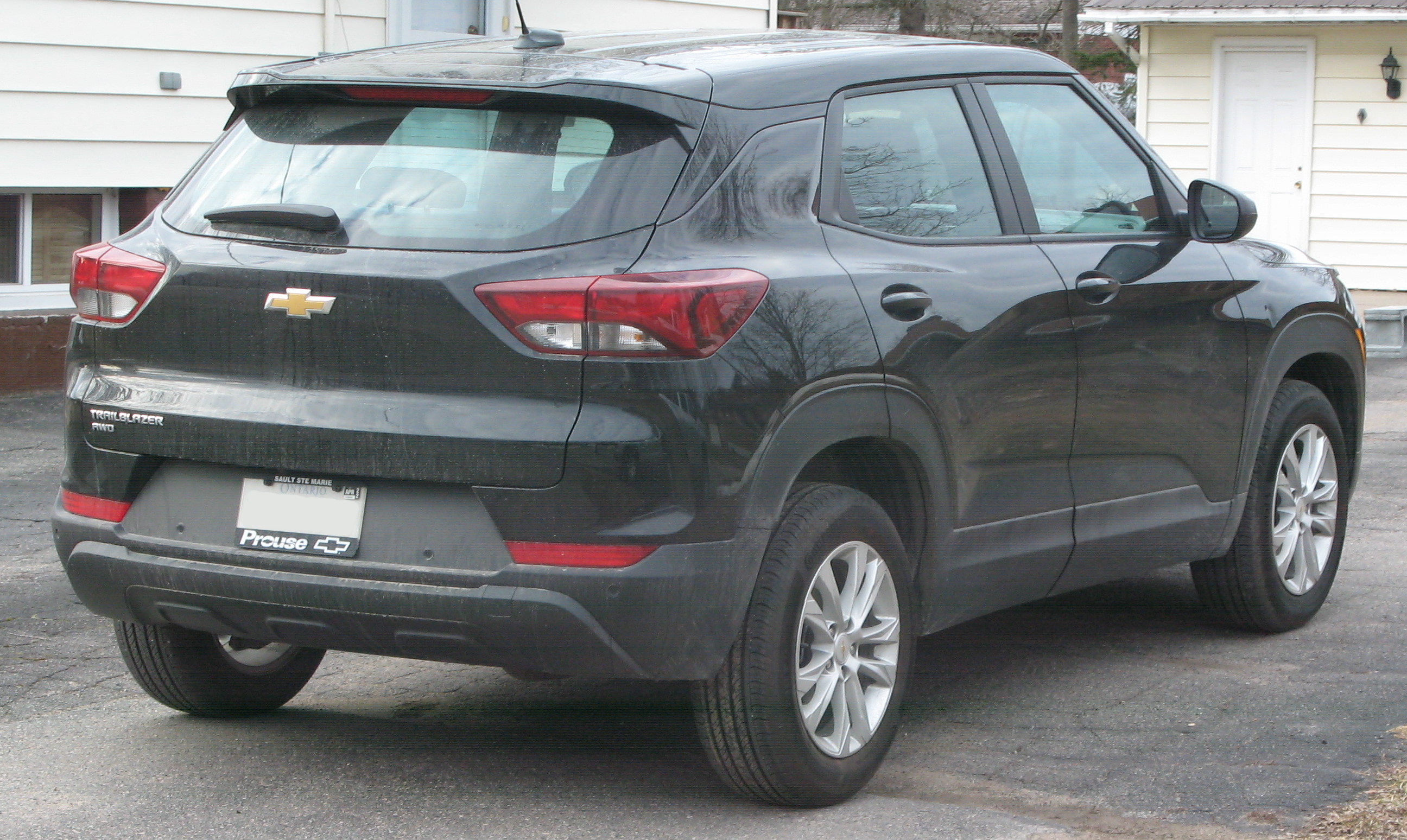
2026 trailblazer
"My daughter lives down in Alabama, and she bought a 2026 trailblazer. I thought the best maintenance schedule would be on that."
The Trailblazer is a Chevrolet SUV. Here they’re talking about what maintenance schedule to follow on a 2026 model, especially oil changes and transmission fluid.
The Chevrolet Trailblazer is a midsize SUV, and in this segment the hosts focus on how to follow its factory maintenance schedule. They specifically discuss oil-change timing and transmission fluid intervals for a 2026 model year.
oil changes
"I recommend our customers. I don't like to see more than 4,000 miles, four months right in that area on that vehicle... But the oil changes, use that recommended factory fluid in it and make sure that you don't exceed the factory, because I believe the first oil change is going to come up like at 10,000 miles on that."
An oil change means replacing the engine’s oil. Fresh oil helps the engine stay clean and cool, and the host recommends doing it earlier than the maximum schedule—especially if you live somewhere hot.
An oil change is the scheduled replacement of engine oil, which carries away heat and contaminants. The host argues for changing sooner than the factory interval (within limits) to keep the engine cleaner, especially in warmer climates.
fluid condition check
"But again, get your local mechanic to look at it and look at the condition of the fluid, because if it looks great, go longer. If it doesn't, shorten it up some."
They’re saying don’t just follow the calendar—look at the fluid’s condition. If it still looks clean, you may be able to wait longer; if it looks bad, change it sooner.
Instead of relying only on mileage/time intervals, the host recommends checking the actual condition of the fluid. If the fluid looks good, you can extend the interval; if it looks degraded, you should shorten it.
oil change interval
"doesn't need many oil changes. If you think you don't need as many oil changes and they're becoming more expensive... You want to care for it. And a lot of times you can judge by the condition of the fluid."
Oil change interval just means how often you should change your engine oil. If you drive gently and the oil stays clean, you might be able to go a bit longer. If the oil gets dirty faster, you should change it sooner.
An oil change interval is the mileage or time schedule for when you replace the engine oil. It matters because oil degrades and collects contaminants, and the “right” interval depends on how the car is used (short trips, heat, towing, etc.). The hosts are discussing how to adjust this schedule instead of blindly following a single number.
warranty
"you want to make sure you don't exceed the dealer's suggestions for warranty reasons. You've got to keep it in."
A warranty is the agreement that helps pay for certain repairs if something goes wrong. The hosts are saying you may need to follow the recommended maintenance schedule so the warranty stays valid.
Warranty is the manufacturer’s promise to cover certain repairs for a set period under specified conditions. In this segment, the hosts emphasize not exceeding the dealer’s recommended oil change schedule because it can affect warranty coverage. That’s why they frame maintenance timing as both a cost and a coverage issue.
oil condition
"a lot of times you can judge by the condition of the fluid. If you're driving a car and after the first oil change done, and you see that the oil is pretty clean... And you're at six, 7,000 miles."
Oil condition is basically how your oil looks. If it’s still light and clear, it may be okay to wait a little longer. If it’s getting darker or dirty, it’s a sign you should change it sooner.
“Oil condition” refers to how the oil looks and behaves—like color and whether it looks burnt or dirty. In this segment, the hosts use visual cues (light vs. dark, clear vs. darker) to decide whether to extend or shorten the next oil change interval. It’s a practical way to tailor maintenance to real driving conditions.
engine break-in
"That first oil change, the $10,000 break in, a lot of people have an aversion to that."
Engine break-in is the early stage right after an engine is new (or newly installed). During this time, the engine’s internal parts are still settling in. That’s why many people do an early oil change to clear out initial debris.
Engine break-in is the early period after a new engine is built (or installed) where internal parts seat and wear-in. During break-in, manufacturers often recommend a shorter oil change interval because initial wear and contaminants can be higher. The hosts reference a “first oil change” early on as part of that process.
remanufactured engine
"And so when we put a remanufactured engine in, we do a lot of them at our shop... they say 500 miles period for the first oil change."
A remanufactured engine is an engine that’s been rebuilt and restored instead of brand-new. After installing it, you usually need an early oil change because the engine is still settling in. The hosts mention a very short first interval (like 500 miles).
A remanufactured engine is an engine rebuilt from a core with worn parts replaced and the assembly brought back to spec. Because it’s rebuilt (and may have initial wear during reassembly/early operation), manufacturers often specify a short first oil change interval. The hosts say they follow a “500 miles” rule for the first oil change after installing one.
break-in oil
"But what they want, what's more important is the right oil, not a fully synthetic oil. If it's a break in oil to begin with, we want to use a non synthetic oil, and you're going to find a synthetic blend..."
Break-in oil is the oil you use right after an engine is rebuilt or new. It helps the piston rings “seat” correctly so the engine can run smoothly and not burn oil later.
“Break-in oil” is a specific engine oil used during the initial period after an engine is rebuilt or newly assembled. The goal is to help the piston rings seat properly while protecting the engine during that high-wear phase.
piston rings
"If you go out and you put a like, I don't know, max life or any of those, like we just talked to earlier, fully synthetic, you run the risk of not seeding in the piston rings. And when you do that, then the engine could burn oil."
Piston rings are parts inside the engine that help seal things up and keep oil where it belongs. If they don’t seat correctly during break-in, the engine may start using/burning oil.
Piston rings are the metal rings on the piston that seal the combustion chamber and control oil consumption. During break-in, they need to “seat” against the cylinder walls; if they don’t seat well, the engine can end up burning oil.

Chevrolet Trax
"... floor but it's going to be specific. A new Chevy Trax is not a collector. But there are other things th..."
The Chevrolet Trax is a small SUV meant for regular driving, like commuting and errands. It’s usually not considered a rare or collectible vehicle. The podcast is basically saying that a new Trax is more of a normal daily car than something people buy for collecting.
The Chevrolet Trax is a compact crossover SUV designed for everyday commuting and practical use. The podcast context is about how a new Trax generally isn’t treated like a collectible, which ties into how these vehicles are typically valued and maintained over time rather than being sought as rare collector cars. That makes it a common topic when discussing what kinds of cars tend to hold special interest versus everyday transportation.
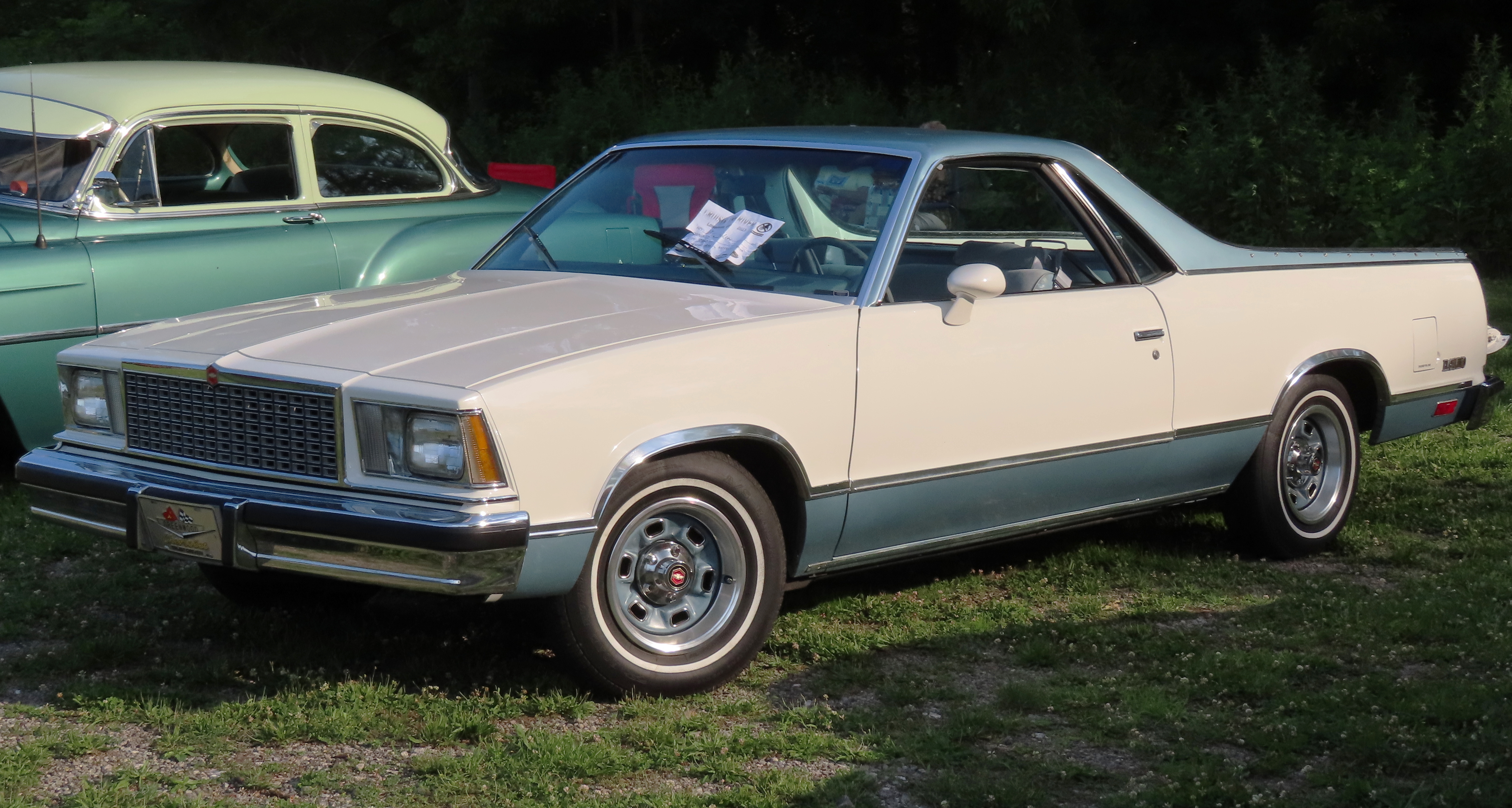
Chevrolet El Camino
"...n of the car. Things like that. Like a 1982 Chevy El Camino. That could be a collector or it could be a crapp..."
The Chevrolet El Camino is a vehicle that looks like a car but has a pickup-style bed for hauling. A 1982 El Camino can sometimes be a collector car, but it depends on things like how good the condition is and how original it is. The podcast is pointing out that not every one of them automatically becomes valuable.
The Chevrolet El Camino is a classic “car-based pickup” that blends passenger-car comfort with a truck-style cargo bed. In the podcast context, a specific example like a 1982 El Camino is mentioned to highlight that some versions can become collector cars, while others may not be worth much depending on condition and originality. That’s why the conversation frames it as something that could be collectible or could be a less valuable project, depending on the details.

2008 Tahoe
"Hey, guys. Going about the 2008 million dollar Tahoe. Okay. So I got my transmission rebuilt because it overheated on me."
A Chevrolet Tahoe is a big SUV. Here, the caller says their 2008 Tahoe’s transmission got too hot, started smoking, and then certain gears stopped working.
The Chevrolet Tahoe is a full-size SUV, and the 2008 model is known for being used as a family hauler and tow-capable vehicle. In this segment, the host discusses a 2008 Tahoe with a transmission that overheated and failed specific gears, which is a common failure mode when cooling is inadequate.
overheated
"So I got my transmission rebuilt because it overheated on me. It went up to 250 degrees."
If a transmission overheats, the fluid inside gets too hot and can stop working the way it should. That can cause the transmission to shift poorly or fail.
When a transmission overheats, the fluid temperature rises enough to break down the fluid’s lubricating and hydraulic properties. That can lead to internal wear and damage, often showing up as slipping or loss of specific gears.
transmission external cooler
"Before I took to the shop, I went over everything this guy was going to do to it. And he said, and I specifically said put a transmission external cooler on this thing."
A transmission external cooler is an extra radiator-like device that cools the fluid inside an automatic transmission. Cooler fluid helps the transmission last longer and can prevent overheating problems.
A transmission external cooler is an aftermarket heat exchanger that helps remove heat from automatic transmission fluid. Keeping transmission fluid cooler helps prevent overheating-related damage, which can cause slipping, smoking, and gear failures.
retrofit the cooler
"So I get there to pick it up and I asked him how hard it was to retrofit the cooler. And he's like, oh, I didn't do that."
Retrofit just means “add it later.” Here, they’re talking about installing an extra cooler to help keep the transmission fluid from getting too hot.
To retrofit a cooler means adding or upgrading a cooling component to a vehicle that didn’t originally have that setup (or didn’t have it in that configuration). In this context, they’re talking about an added external transmission cooler to manage fluid temperatures.
hot flush machine
"oh, I didn't do that. He goes, so I put it on the hot flush machine and it showed no resistance."
A hot flush machine is a shop tool that runs transmission fluid through the system to clean or replace it. “No resistance” here means fluid could move through the cooler/lines without being blocked.
A hot flush machine is a service tool used to circulate and exchange transmission fluid under controlled conditions, often with heat to improve flow and cleaning. When they say it showed “no resistance,” they’re implying the cooler circuit/flow path wasn’t restricted.
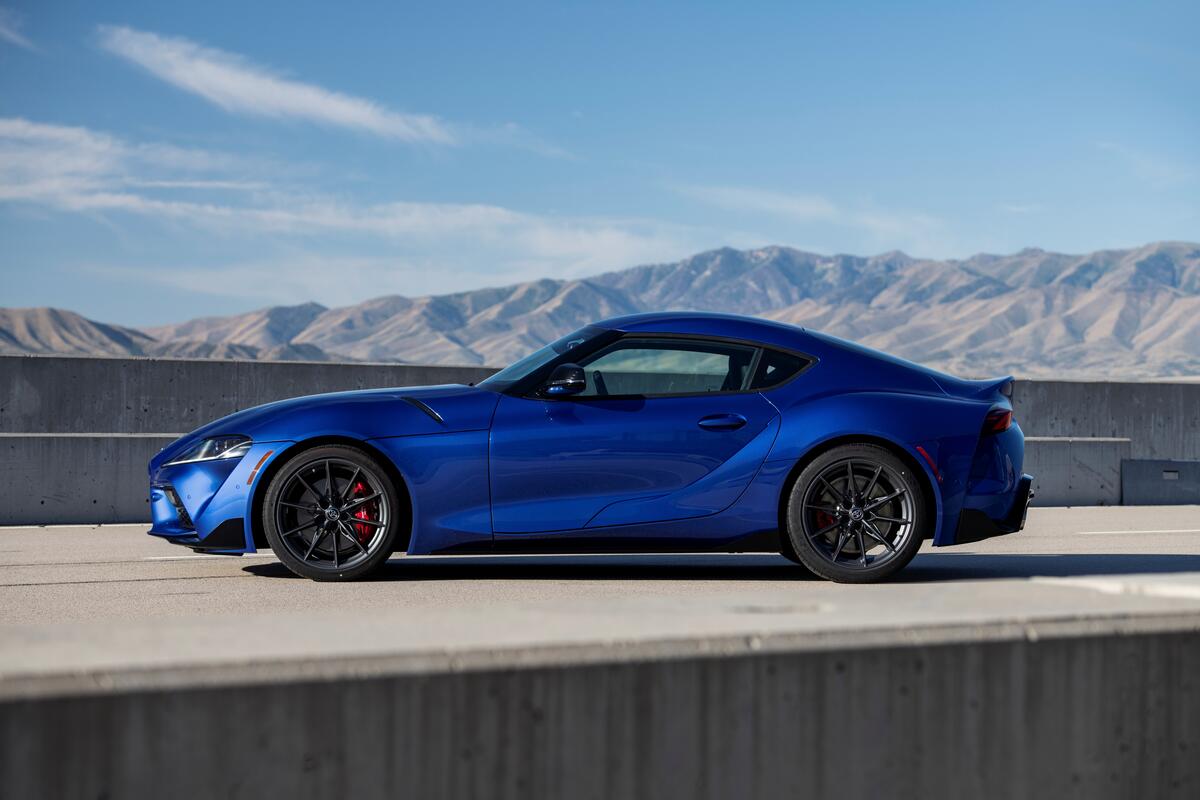
Toyota A90
"So he put the cooler on. What is the temperature I should be seeing on an external cooler as I'm driving it on a 90 degree day? Well, it's still got the one in the radiator, which is going to warm it up some and then you've got the external one goes on after."
The Toyota Supra is a sports car made for fast driving and strong performance. If you add an external cooler, the goal is to keep important fluids from getting too hot. On a very hot day, the temperatures you see can be higher because the radiator and engine heat still warm the system.
The Toyota Supra is a performance sports coupe known for its strong engine and enthusiast following. In this podcast context, it’s being discussed in relation to cooling and external cooler temperatures, which matters because keeping engine and transmission fluids within the right range helps protect performance components during hot weather driving. That’s why the conversation focuses on what temperatures you should expect while driving on a 90°F day.
standard towing
"But you may be running, you still may be running 160 to 180 degrees on a 90 degree day without towing. You start towing with it, you could push that thing up to 250 if you overtoe. But on standard towing, look around here, I've got some vehicles..."
Standard towing refers to typical trailer loads and driving conditions that significantly increase transmission workload. More load generally means higher transmission-fluid temperatures, which is why cooler sizing and temperature targets matter.
oxidizing fluid
"Once you hit 200, you're, you're getting hot enough you can start oxidizing fluid and causing things to be damaged once that fluid protection is gone."
If transmission fluid gets too hot for too long, it can start to break down. When that happens, it loses its ability to protect the transmission parts.
Oxidizing fluid means overheating transmission fluid enough that it chemically breaks down. Once the fluid’s protective properties are compromised, it can accelerate wear and lead to damage.
torque converters
"Yeah. It went back down. It seems to go down when I'm stopped more than it goes down when I'm driving. Is that right? Yeah, because you don't have the torque converters is just sitting there."
A torque converter is the automatic-transmission part that uses fluid to transfer power from the engine to the drivetrain. When you’re stopped, it may not be working as hard, so the transmission fluid can cool more easily.
A torque converter is the fluid coupling in an automatic transmission that transfers engine power to the transmission using hydraulic fluid. When the vehicle is stopped, the torque converter can be less “active,” which changes how much heat the fluid generates compared with driving.
transmission cooler
"Also, you know, the transmission shop is going to know where to mount that cooler, but it's got to be mounted out in front of everything where it has good airflow through all of it."
A transmission cooler helps keep the transmission fluid from getting too hot. It needs good airflow where it’s mounted so it can cool the fluid effectively.
A transmission cooler is an add-on or integrated heat exchanger that helps keep automatic transmission fluid at a safe temperature. Proper mounting and airflow matter because the cooler’s job is to shed heat into the air; poor placement can reduce cooling effectiveness.
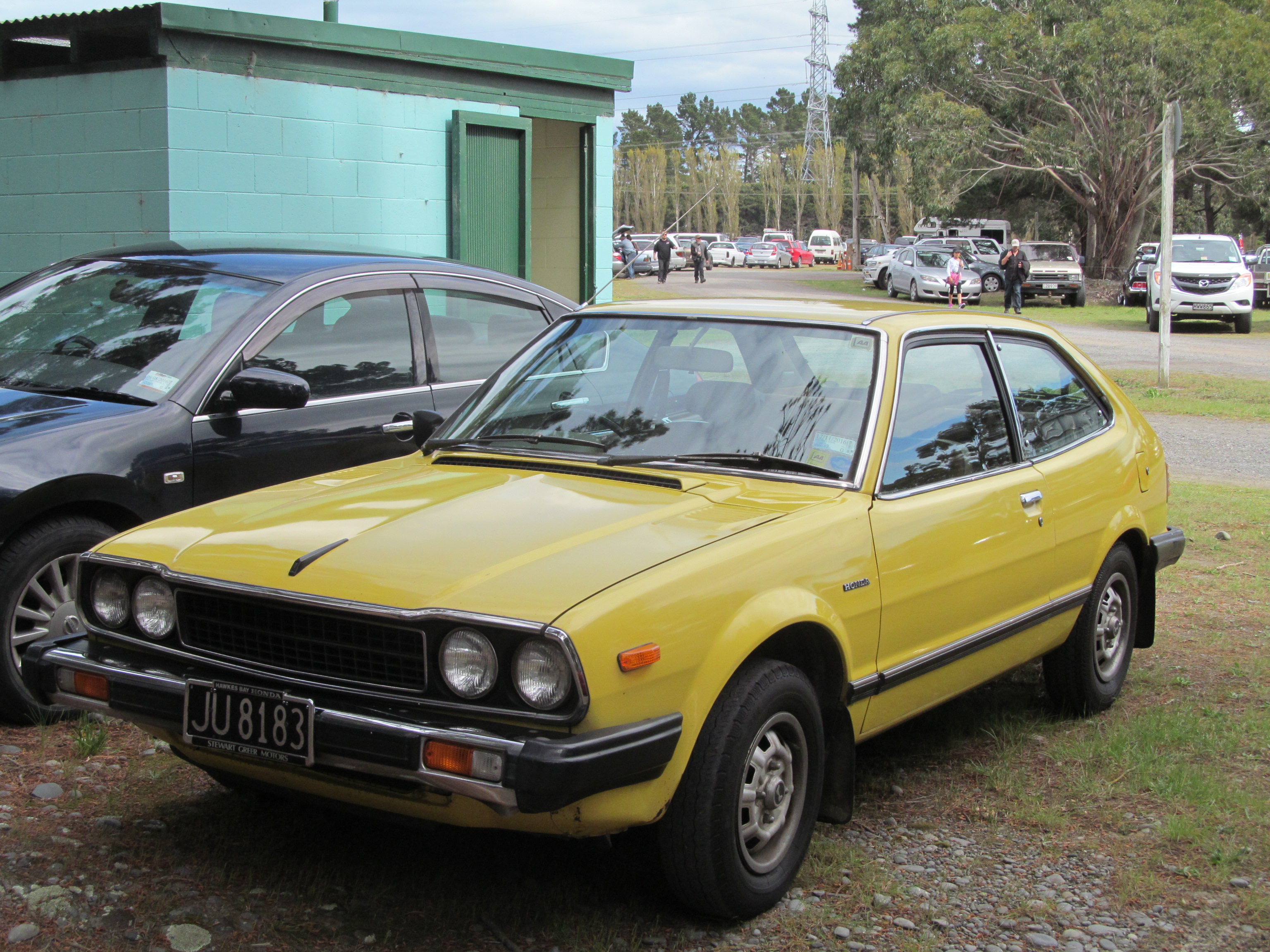
2019 Honda Accord Sport
"How you doing guys? Fantastic. A little over a year ago, a little over a year ago, I have a 2019 Honda Accord Sport. A little over a year ago, I had an issue with all my lights turning on in the car and my car kind of went into lift mode."
The 2019 Honda Accord Sport is a regular daily driver Honda with electronics that can detect engine problems. In this story, it’s the car that keeps having misfire and warning-related issues that limit how it drives.
The 2019 Honda Accord Sport is a mainstream midsize sedan that uses an automatic transmission and modern engine management that can detect misfires and other faults. In this call, it’s the specific car experiencing repeated misfire-related symptoms and a “limp/lift mode” behavior.
lift mode
"A little over a year ago, I had an issue with all my lights turning on in the car and my car kind of went into lift mode. So I took my car to be serviced."
“Limp mode” (what they’re calling “lift mode”) is when the car automatically limits power so you can drive it safely to get fixed. It usually happens after the car detects a serious problem.
“Lift mode” here refers to a reduced-power or limp-home strategy where the car limits performance to protect the engine and transmission after detecting a fault. It’s commonly triggered by serious drivability codes like misfires, sensor faults, or overheating-related issues.
blown head gasket
"And when I took it into the dealership, they said I had a blown head gasket. So I did not believe him."
A head gasket seals the engine’s cylinder head to the engine block, helping contain combustion pressure and keep coolant and oil where they belong. If it’s “blown,” coolant can leak into the combustion chambers or oil passages, often causing overheating and misfire-like symptoms.
P0304 misfire
"Finally, somebody thought it was potentially the ignition coil. So I was getting a misfire, it was a P0304 misfire."
P0304 is a computer code that means the engine isn’t firing correctly on one cylinder (cylinder 4). That can make the car run rough and may turn on warning lights or limit power.
P0304 is an OBD-II diagnostic trouble code indicating a misfire on a specific cylinder (cylinder 4 in this case). Misfires can be caused by ignition coil/plug issues, fuel delivery problems, or air intake problems, and they can also trigger limp-home behavior.
ignition coil
"Finally, somebody thought it was potentially the ignition coil. So I was getting a misfire, it was a P0304 misfire. So what had happened is the guy that I took it to, he just bought some like Amazon part ignition coils."
An ignition coil makes the spark that lights the fuel in the engine. If a coil isn’t working right, one cylinder can misfire and the car may show warning codes.
An ignition coil is the component that converts the battery’s low voltage into the high voltage needed to create a spark at the spark plug. If an ignition coil is weak or failing, that cylinder can misfire and set codes like P0304.
OBD-II diagnostic trouble code
"Finally, somebody thought it was potentially the ignition coil. So I was getting a misfire, it was a P0304 misfire."
OBD-II is the car’s built-in computer system for tracking problems. When something goes wrong, it stores a code (like P0304) that helps a mechanic find the cause.
OBD-II is the standardized onboard diagnostics system used in most modern vehicles. A “diagnostic trouble code” like P0304 is the car’s way of recording which fault it detected so technicians can diagnose the problem faster.
carbon build up
"I know the engine's very small. I've been told by some people that sometimes there's carbon build up and you need to get the carbon out of there."
Carbon build up is gunk that forms inside the engine over time. It can interfere with how the engine burns fuel and can lead to problems like rough running or misfires.
“Carbon build up” is the accumulation of soot-like deposits inside the engine, often on intake valves, in the combustion chamber, or around spark-related areas. It can reduce airflow or change combustion behavior, which may contribute to misfires or other drivability issues.
coils
"You got them six months coils on there. You got to get the longer ones."
Ignition coils help create the spark that lights the fuel in the engine. If a coil is failing, the engine can misfire and the car may feel rough or lose power.
“Coils” here refers to ignition coils, which generate the high voltage needed to fire the spark plugs. If an ignition coil is failing, the engine can misfire, run poorly, and in some cases the coil can be damaged repeatedly by the underlying cause.
cylinder wall
"The problem likely is a head gasket or a problem with a cylinder wall leaking a small amount of coolant."
The cylinder wall is the inside surface of the engine cylinder. If coolant gets past it into the combustion area, the engine can misfire and cause other parts to fail.
The “cylinder wall” is the inner surface of the engine’s cylinders where the piston moves. If it develops a leak or damage that allows coolant to pass into the combustion area, it can create misfires and stress ignition components.
valve problem
"So he had this problem with a 3.6 Chrysler that had a valve problem. And that valve problem was causing some differences in cylinder temperatures and causing the coil to fail"
A valve problem means the engine’s intake/exhaust valves aren’t working correctly. That can make the engine burn fuel unevenly and can lead to misfires and other failures.
A “valve problem” means something wrong with the engine’s intake or exhaust valves, which control airflow and exhaust gas release. Valve issues can disrupt combustion and create uneven cylinder conditions, which may show up as misfires and repeated ignition-coil failures.
cylinder temperatures
"So he had this problem with a 3.6 Chrysler that had a valve problem. And that valve problem was causing some differences in cylinder temperatures and causing the coil to fail"
Cylinder temperature is how hot each cylinder gets when it’s burning fuel. If one cylinder isn’t working right, it can run at the wrong temperature and contribute to misfires or coil problems.
“Cylinder temperatures” are how hot each cylinder’s combustion process gets. If a valve problem causes cylinders to run hotter or cooler than others, it can increase stress on ignition components and lead to misfires or repeated coil failures.
head on it
"And they put a head on it and that fixed it."
“Put a head on it” means they repaired or replaced the top part of the engine (the cylinder head). That’s usually done when the issue is inside the head area, not just a quick sensor or ignition part.
“Put a head on it” refers to replacing or reinstalling the cylinder head assembly. This is a major repair step often used when the cylinder head or its sealing surfaces (like around the valves) are the source of the problem.
head gasket issues
"has a long history of head gasket issues. You can run the engine till it's warm,"
The head gasket is a seal inside the engine that keeps coolant and engine gases from mixing. If it starts leaking, coolant can get into the cylinder and the engine may start misfiring.
A head gasket seals the boundary between the engine block and the cylinder head, keeping combustion gases, oil, and coolant separated. When it fails, coolant can leak into a cylinder, which can cause misfires and rough running.
spark plugs
"shut it off, and then right away take the spark plugs out of it and let it sit."
Spark plugs create the spark that lights the fuel in each cylinder. If something is wrong in one cylinder, the spark plug can’t do its job and the engine can start misfiring.
Spark plugs ignite the air-fuel mixture in each cylinder using an electric spark. If a cylinder is contaminated (for example by coolant from a leaking head gasket), the spark plug may not fire correctly, leading to misfires.
bore scope
"if you let it sit four or five hours and you stick a bore scope down in there where you can see where the head gasket is sandwiched between the block and the head, you look around it with a bore scope,"
A bore scope is like a tiny camera you can push into the engine to look inside. It helps spot clues—like coolant—without tearing the engine apart.
A bore scope is a small camera/inspection tool used to look inside an engine cylinder through the spark-plug hole. It can reveal signs like coolant residue that point to a sealing problem such as a head gasket leak.
misfiring
"I just had one three weeks ago and it was misfiring. We put coils on it."
Misfiring is when one cylinder doesn’t burn the fuel properly. That can happen if the ignition parts fail, or if coolant gets into the cylinder and prevents normal combustion.
Misfiring means a cylinder isn’t producing the expected combustion event. It can be caused by ignition problems (like coils or spark plugs) or by mechanical issues that foul the cylinder, such as coolant entering from a head gasket leak.
K-seal
"Now you might be able to seal... It's a small leak and K-seal that partner of ours that has the special sealer."
K-seal is a product you add to the cooling system to help seal small leaks. The idea here is that it might plug a tiny leak path so coolant stops getting where it shouldn’t.
K-seal is a commercial engine-cooling “stop leak” product designed to seal small leaks in the cooling system. In this discussion, it’s being used as a temporary/conditional fix for a small head-gasket leak that allows coolant to seep into a cylinder when the engine is off.
cylinder pressure
"That is a great sealer for this type of problem where you shut the engine off. There's no more cylinder pressure. So it's now coolant is seeping towards the cylinder."
Cylinder pressure is the pressure inside the cylinder when the engine is running. When the engine is off, that pressure isn’t there, so coolant can slowly leak into the cylinder if the seal is failing.
Cylinder pressure is the pressure inside an engine cylinder during the combustion cycle. The host’s point is that when the engine is shut off, there’s no combustion pressure pushing gases around, so coolant can seep toward the cylinder through a small leak path.
coolant system
"K-seal, make sure you put it in the coolant system only... Look at the follow the directions on the bottle."
Your coolant system is how the car keeps the engine from overheating. It’s the plumbing that carries coolant through the radiator and engine.
The coolant system is the car’s network of passages, radiator, and hoses that circulates coolant to remove heat from the engine. Adding sealants like K-seal is only appropriate when they’re intended to work inside this cooling circuit.

2005 Mazda 6
"Hey, guys... I've got a 2005 Mazda 6 with a 2.3 liter, about 145,000 miles, and I am battling a misfire."
A 2005 Mazda 6 is a regular everyday sedan, and this caller says it’s having a misfire. A misfire means the engine isn’t firing correctly in one or more cylinders.
The Mazda 6 is a mainstream midsize sedan, and this caller specifically has a 2005 Mazda 6 with a 2.3-liter engine. They’re describing a misfire condition, which is often tied to ignition, fuel, or—depending on the engine—cooling/head-gasket-related issues.
PO 300 misfire code
"at about 120,000 miles, I was getting a PO 300 misfire code on random cylinders, [2515.8s] replace ignition coil, and that fixed it."
“P0300” is a computer code that means the engine is misfiring in more than one cylinder. Misfire just means the spark/fuel/air mix didn’t ignite correctly in the cylinder.
“P0300” is an OBD-II diagnostic trouble code that indicates the engine is detecting random misfires across multiple cylinders. A misfire means one or more cylinders aren’t igniting properly, which can be caused by ignition components, fuel delivery, or engine mechanical issues.
PO 303
"I've had another PO [2525.9s] 303, so misfire on the third cylinder for the last two years... [2541.8s] seemed to fix it perfectly. But now we're 650 miles later, and it is giving me the PO 303 misfire code again."
“P0303” means the car’s computer thinks cylinder 3 is misfiring. If it keeps coming back even after fixing the coil, something else affecting cylinder 3 is usually the real problem.
“P0303” is an OBD-II misfire code that points to a misfire in cylinder 3 specifically. When the same cylinder keeps misfiring after replacing the ignition coil, it often suggests an external cause (like fuel injector issues, spark plug problems, or even engine conditions affecting that cylinder).
swap them around
"So if you've replaced a coil, [2607.4s] you got a misfire, repeat failure in that same one, you'll have to look and see if you've... you can swap them around."
They can test a bad cylinder by swapping parts with a cylinder that’s known to be good. If the misfire code moves to the other cylinder, the swapped part is likely bad; if it stays, something else about that cylinder is the problem.
The “swap test” is a diagnostic method: move suspect parts from a known-good cylinder to the misfiring cylinder (or vice versa) to see whether the misfire code follows the part. If the code moves with the swapped component, that component is likely the cause; if it stays on the same cylinder, the root cause is probably external (like injector, wiring, or engine condition).
coil on plug
"Yeah, and this is this engine has the, you know, it's not the coil over plug on each cylinder, it's the one to the side with four posts on it, and spark plug wires go to each spark plug."
“Coil on plug” means the ignition coil sits right on top of the spark plug. If that coil fails, the engine can run poorly or not fire correctly.
“Coil on plug” (COP) is an ignition design where each spark plug has its own ignition coil mounted directly on it. That reduces the need for long spark plug wires, but a failed coil can still cause misfires or other ignition problems.
spark plug wires
"it's the one to the side with four posts on it, and spark plug wires go to each spark plug. Yeah, and you can have a coil fail that same way with the with either the with a coil on plug..."
Spark plug wires carry the electrical spark to the spark plugs. If a wire is bad, the engine may misfire or feel like it’s not accelerating smoothly.
Spark plug wires deliver high-voltage electricity from the ignition system to each spark plug. If a wire is damaged or failing, it can cause weak or missing spark, leading to misfires and drivability issues.
coil energized too long
"We've seen them, the drivers go bad in the computer, and they keep the spark, the coil energized too long, which causes it to overheat. And the overheating will cause it to, to fail early."
The ignition coil is supposed to be turned on for a very short time before it fires. If it stays on too long, it can overheat and fail sooner.
When the ignition coil is “energized too long,” the coil is kept powered beyond its intended dwell time. That extra heat can damage the coil early, shortening its lifespan and causing ignition problems.

Ford F150
"Hi. I have a 22 Ford F-150. And I had the rear pinion seal replaced because it was leaking. And ever since then, when I applied gas..."
The Ford F-150 is a popular full-size pickup truck. Here, the caller says they had a rear seal replaced and then noticed a new wind/noise when accelerating.
The Ford F-150 is a full-size pickup known for being widely used and heavily worked, so repairs and driveline issues are common topics. In this call, the discussion centers on a rear driveline seal replacement and a new noise after the repair.
rear pinion seal
"I have a 22 Ford F-150. And I had the rear pinion seal replaced because it was leaking. And ever since then, when I applied gas..."
A rear pinion seal helps stop fluid from leaking around the rear differential. If it was replaced and something nearby wasn’t put back correctly, you might hear a new noise afterward.
The rear pinion seal seals the driveshaft pinion area in the rear differential so gear oil doesn’t leak out. If it’s replaced and something in the surrounding area is disturbed (or a component isn’t properly reconnected), you can get new noises or symptoms.
vacuum line
"Well, not necessarily the seal being changed, but something else in the area. They left, possibly left something loose. You got a vacuum line loose, you got a air intake hose loose or something like that. So it's causing that to, to whistle when you accelerate."
A vacuum line is a small hose that helps the engine control certain systems. If it’s loose, air can leak and you may hear a whistling noise when you accelerate.
A vacuum line carries engine vacuum to operate various systems (like emissions controls and some engine actuators). If a vacuum line is loose or disconnected, it can cause a whistle/whistling noise and affect how the engine responds to throttle.
air intake hose
"You got a vacuum line loose, you got a air intake hose loose or something like that. So it's causing that to, to whistle when you accelerate."
The air intake hose moves air toward the engine. If it’s not sealed correctly after a repair, air can leak and make a whistling sound when you press the gas.
An air intake hose connects parts of the intake system that route air to the engine. If an intake hose is loose, it can leak air and create a whistle under acceleration, along with possible drivability changes.
battery maintainer
"driven that much. So we have a battery maintainer on it. How long, like we don't necessarily know that we're not going to drive it for a while."
A battery maintainer is a small charger you plug in to keep your car battery from going dead when the car isn’t driven. It’s meant to be safe for longer periods than a normal quick charge.
A battery maintainer (also called a battery charger/maintainer) is a device that keeps a car battery at a healthy charge while the car sits. It typically uses a low, controlled charge and may switch to a maintenance mode so you don’t overcharge the battery.
battery drain while parked
"So just put it on. You know what I did the other day? ... not only was the hood open, the door was open, the driver's door. So there was no, there was no maintaining. It was dead."
Even if you don’t drive, your car can still use a little bit of electricity. If you leave something on (like a door or lights) or the car sits too long, the battery can run down and the car won’t start.
When a car sits, the battery can still lose charge due to small electrical loads (and sometimes lights or doors left open). If the battery drops too low, the car may not start, even if it would have been fine with normal driving.
hood latch
"four days ago, I'd opened the hood by reaching in the open door of the vehicle to hit the hood latch."
The hood latch is what keeps the front hood closed. If it’s not properly latched, the hood can be left open by accident.
The hood latch is the mechanism that holds the engine hood closed and locks it securely. If the latch isn’t fully engaged (or if the hood is left unlatched), the hood can pop open and the car may have additional electrical issues depending on the vehicle’s sensors.
Request an Explanation
Heard something you'd like explained? We'll add it to this episode.
Sign in to request explanations for terms you heard.
Want to learn more?
Browse our glossary for plain-English explanations of automotive terms, jargon, and concepts.
Help improve this episode
See something that's not quite right? Our annotations are AI-generated and can sometimes miss the mark. Click the flag icon on any annotation to suggest a correction.