
Talking About Car Repair on this Live Call In Car Talk Show
About this episode
Randy in Arizona kicks off a live call-in on Under The Hood show with a 1991 Toyota steering-wheel tilt that moves but won’t lift enough. The hosts and caller talk dealer reluctance over parts availability, then suggest manual inspection and possibly replacing the whole column. Later calls cover rodents chewing engine wiring and DIY prevention, classic Model T oil and fuel choices, and maintenance economics—oil-change intervals, spark plugs, and transmission service. The show also touches recalls, exhaust leak smoke testing, and even GM module upgrades.
The best call-in car talk show in America! Under The Hood. We take your live calls and get you answers to all your car repair problems fast. Give us a call today. Here are today's callers. Why is my oil so expensive now? 1. 91 Toyota with a steering column that won't tilt. 2. 1923 Model T stuff 3. Installing a drain plug in a transmission pan 4. Ford 6.2 oil change earlier than 12k miles and once a year. 5. 07 Denali exhaust tick or lifters?
steering column
"Yeah, because nothing ever breaks, except my steering column. The tilt, the tilt lever on the left, it still"
The steering column is the part that connects your steering wheel to the steering system. In this case, the problem is with the column’s adjustment so the steering wheel won’t move the way it should.
The steering column is the shaft and housing that connects the steering wheel to the steering gear. If the column’s adjustment mechanism (like tilt) sticks or won’t move, it can change the steering wheel’s position and make driving uncomfortable.
tilt levers
"The tilt, the tilt lever on the left, it still moves up and down. They adjust the degree of the steering wheel."
The tilt lever is the handle you pull or move to change the steering wheel’s angle. If the lever moves but the wheel won’t go up, something inside the adjustment mechanism is likely stuck or not engaging.
A tilt lever is the control that adjusts the steering wheel’s angle. When the lever moves but the wheel won’t raise, it usually points to a mechanical adjustment issue inside the steering column (like a stuck latch or worn linkage).
dealer
"OK, the reason the dealer doesn't want to work on it is because of the age. [192.0s] A lot of times they're afraid that they can't get parts"
A dealer is the official repair shop tied to the car brand. They may say “no” on older cars if they can’t get the needed parts.
A dealer is the manufacturer’s authorized service network. In older cars, dealers may refuse work because they can’t source parts or don’t want to disassemble a vehicle only to discover parts are unavailable.
parts availability
"[192.0s] A lot of times they're afraid that they can't get parts [194.4s] and they they don't want to start taking it apart and then go, [197.3s] oh, I can't get parts for this."
Parts availability just means whether replacement parts can still be found. If the parts aren’t available, a shop might not want to start because they could get stuck halfway through the repair.
Parts availability is the practical ability to obtain replacement components for a specific vehicle. For older cars, limited availability can force shops to stop mid-repair or refuse the job to avoid tearing things apart without being able to finish.
steering wheel moves up and down
"OK. Yeah. [220.4s] Yeah, yeah, just the steering wheel moves up and down. [223.6s] Yeah. [225.9s] Not the whole you're talking about the shaft, the columns."
That means the steering wheel can be raised or lowered. It’s usually done to help you sit comfortably and reach the wheel easily.
This describes a steering wheel that adjusts vertically, which is typically done via a tilt mechanism. It helps drivers set a comfortable steering position without changing the car’s alignment.
screwdriver
"If you don't have any success trying to find a little manual way to get a screwdriver in there."
A screwdriver is a hand tool you use to loosen or remove parts. In this situation, it’s being used to carefully get into a tight area to see what’s going on.
A screwdriver is a basic hand tool used to pry, lift, or remove fasteners and access points during minor disassembly. Here it’s referenced as a “manual way” to get into tight spaces to check or manipulate the mechanism.
manual inspection
"But that's the thing is you're just a good old manual inspection, remove some plastic covers and see if you can see anything more and get in there and get it back up there a little bit further."
Manual inspection just means checking the problem by hand—looking closely and moving parts yourself. Here, the idea is to remove some plastic covers and see what’s blocking the mechanism.
Manual inspection is a hands-on diagnostic approach where you remove accessible trim or covers and visually check what’s happening. In this context, it’s about checking the mechanism’s movement and whether something is physically preventing it from operating normally.
plastic covers
"remove some plastic covers and see if you can see anything more and get in there and get it back up there a little bit further."
Plastic covers are the removable panels or trim pieces on a car. Taking them off can give you access to what’s underneath so you can figure out what’s stuck or broken.
Plastic covers are removable interior or exterior trim pieces that protect wiring, fasteners, or access points. Removing them is often the first step in diagnosing issues because it lets you see the underlying mechanism or connector without fully disassembling the area.
frozen
"so I figure that's a good sign that it does move. Yeah, I think it's frozen."
“Frozen” here means the part is stuck and won’t move like it should. That often happens when something rusts, dries out, or gets blocked.
When a car mechanism is described as “frozen,” it usually means it’s seized or stuck and won’t move through its normal range. That can point to corrosion, dried lubricant, or a physical obstruction preventing the part from operating.
rodents get into your engine
"I've been doing it for about three and a half years because I found out that rodents get into your engine, two wires."
In some climates, animals like rodents can get into the space under your hood. They may chew the wiring, which can stop the car from starting or cause electrical problems.
Rodents can chew through wiring and insulation in an engine bay. That can cause no-start conditions or intermittent electrical faults because the damaged wires may short, open, or lose proper signal/power.
connectors
"I've been wrapping steel wool around all the connectors where it's all factory from Japan. And all the connectors are showing with the wires on top of them, different colors, and they're all in good shape."
Connectors are the plug-together parts where wires meet. If they’re damaged or the wires near them are chewed, the car can lose the electrical connection it needs to run.
Connectors are the plug-style junctions that join sections of automotive wiring. If a connector or its surrounding wiring is compromised, you can get intermittent electrical issues or a complete no-start even if the rest of the engine looks fine.
engine bay
"I looked inside the engine, everything looked good, but I saw one piece of steel wool that was out of place. It was above the wheel well inside the compartment on the driver's side, right against the wall, the metal wall."
The engine bay is the space under your hood. It’s where the engine and wiring are, and it can be a place rodents get into and damage wires.
The engine bay is the compartment under the hood where the engine and major components live. It’s also a common entry point for rodents, and wiring runs through this area where animals can chew insulation.
no-start
"So I said, oh, so I got my truck to see, but we'd still start. It would turn over and turn over like a bad fuel pump or something like that. It wouldn't start though."
A no-start means the engine won’t begin running. The starter may still crank the engine, but something important (like fuel or spark, or a key electrical signal) isn’t working.
A no-start is when the engine cranks but won’t actually run. It often points to fuel delivery, ignition, or critical electrical/sensor issues—so the fix depends on which system is failing.
bad fuel pump
"It would turn over and turn over like a bad fuel pump or something like that. It wouldn't start though."
The fuel pump’s job is to send gas to the engine. If it’s failing, the engine can crank but still won’t start because it isn’t getting fuel.
A fuel pump supplies pressurized fuel to the engine. If it’s weak or failing, the engine may crank but not start because there isn’t enough fuel reaching the fuel rail/injectors.
wiring
"And yeah, I had a good guy that does wiring in Kingman. So thank goodness I found him and he fixed it."
Wiring is the car’s electrical “cables” that connect the different parts under the hood. If those wires get damaged, the car may not start or may act strangely.
Automotive wiring is the network of wires and connectors that carries power and signals to sensors, modules, and actuators. When wiring is damaged—like by rodent chewing—systems can fail to communicate or receive power, leading to hard-to-diagnose no-start issues.
steel wool
"But now you think the steel wool will cause corrosion at all? What I do is when the hood goes back down between the seams..."
Steel wool is a rough pad made of tiny steel fibers. If it gets wet and stays in place, it can rust and cause problems instead of helping.
Steel wool is a bundle of fine steel fibers often used for cleaning or surface prep. In this context, it’s being discussed as a corrosion risk if it stays wet, since it can rust and accelerate metal damage.
fender well
"But now you think the steel wool will cause corrosion at all? What I do is when the hood goes back down between the seams of the fender well and the hood, I run a piece of blue tape, masking tape."
The fender well is the area around the wheel inside the fender. It can trap water and dirt, which can lead to rust if it stays wet.
The fender well is the wheel-arch area inside the fender where water, dirt, and road spray can collect. It’s a common spot for corrosion if moisture gets trapped.
masking tape
"I run a piece of blue tape, masking tape. It doesn't leave residue on the paint or nothing. But it sticks good."
Masking tape is the common tape painters use to cover areas. In this call, it’s being used to help block water from getting into the gap where rust can start.
Masking tape is a painter’s tape used to cover edges and protect surfaces during work. Here it’s used as a temporary seal between the hood and fender well to keep water out.
rusting out
"So I'll completely seal the hood from rain and it'll keep water from going in there and rusting out the steel wool and it's working."
“Rusting out” means the metal is getting eaten away by rust. If water keeps getting in, the metal can weaken over time.
“Rusting out” means corrosion has progressed far enough to damage metal structurally. Once steel is repeatedly exposed to moisture and oxygen, it can weaken and eventually fail.
New Hampshire Oil Undercoating
"Get on the internet and there's a company out there. It's NHOU and it's New Hampshire Oil Undercoating, NHOU and they have a product called Mouse Out..."
New Hampshire Oil Undercoating (NHOU) is the company behind the product the host recommends. They make a peppermint-based spray meant to repel rodents.
New Hampshire Oil Undercoating (NHOU) is the company the host names as making the rodent-repellent product “Mouse Out.” It’s mentioned as the source of the peppermint-based oil repellent.
oil and it repels mice
"It's NHOU and they have a product called Mouse Out and it's a peppermint based. It's an oil and it repels mice, rats, rodents, all sorts of things like that..."
This is a type of spray/oil that’s meant to keep mice and other rodents away by smell. The goal is to prevent them from getting under the hood and damaging things like wires.
This refers to an oil-based rodent repellent product that uses scent to discourage animals from nesting or chewing. The idea is that a strong smell can keep rodents away from vulnerable areas like wiring.
Mouse Out
"It's NHOU and they have a product called Mouse Out and it's a peppermint based. It's an oil and it repels mice, rats, rodents..."
Mouse Out is a peppermint-smelling spray meant to keep rodents away. The host says it works well for protecting areas under the hood, especially around wires.
Mouse Out is a peppermint-based rodent repellent product from New Hampshire Oil Undercoating (NHOU). The host claims it helps keep rodents away from areas like engine compartments and wiring.
wires
"We've used that here and I've had great success with that to keep rodents away from wires."
“Wires” here means the car’s electrical cables under the hood. If rodents chew them, the car can start acting up or fail to work correctly.
In an engine bay, “wires” refers to the vehicle’s electrical wiring harnesses and connectors. Rodents chewing on wires can lead to shorts, sensor faults, and other drivability problems.

Chevrolet Corvette
"...zona that got pack rats under the hood of his new Corvette inside storage and they came through the dryer ve..."
The Chevrolet Corvette is a sports car made by Chevrolet, built for fast driving and sporty handling. The podcast mentions a problem where animals got into the engine area while the car was stored. That can damage parts under the hood, especially wiring.
The Chevrolet Corvette is a performance sports car known for its fiberglass body and strong engine options, typically aimed at drivers who want quick acceleration and a driver-focused feel. In the podcast context, it’s mentioned in relation to an issue that happened “under the hood,” specifically pack rats getting into the car while it was stored. That kind of story is often discussed because small animals can cause expensive damage to wiring and components.
dryer vent
"...pack rats under the hood of his new Corvette inside storage and they came through the dryer vent."
A dryer vent is the pipe/duct that lets a dryer push air outside. The host says rodents used it like a route to get into the car’s hood area.
A dryer vent is the duct that exhausts hot, moist air from a clothes dryer to the outside. In this story, it’s described as an entry path rodents used to reach the engine bay.
straight 30
"I got the engine fired up. I did a few things prior to that, changed the oil, of course. And my first question is what weight of oil should I be using? I just put straight 30 in it."
“Straight 30” means a single-thickness oil (not an all-season blend). Older engines may be happier with that simpler oil choice.
“Straight 30” refers to a single-grade engine oil with a viscosity rating of 30 (not a multi-grade like 10W-30). Older engines often specify single-grade oils because their clearances and operating temperatures were designed around that viscosity.
non-detergent
"I just put straight 30 in it. Yeah, I use the 30 in mine, non-detergent because that truck, that vehicle does not have a oil filter on it."
Non-detergent oil is an older type of oil. It’s used in some older engines because the oil system wasn’t designed with modern filtration in mind.
Non-detergent oil is an older style of engine oil that doesn’t use detergents to keep contaminants suspended. That matters on engines without an oil filter because detergent oil can create a mess when there’s no filter to catch what it would normally help manage.
oil filter
"Yeah, I use the 30 in mine, non-detergent because that truck, that vehicle does not have a oil filter on it. So you've got to use a non-detergent oil in there and just dump it."
An oil filter is what catches dirt in the engine oil. This call highlights that the truck doesn’t have one, so you have to be careful about what kind of oil you use.
An oil filter is the part that traps debris and sludge circulating through the engine oil. The speaker emphasizes that this Model T truck doesn’t have an oil filter, which changes what oil type is appropriate.
transmission oil pan housing
"And then you use the two Petcox on the back of the transmission oil pan housing in order to check the oil level."
This is the part at the bottom of the transmission that holds the transmission oil. The call explains that you check the oil level using marks on that housing, and the correct level depends on whether the oil is hot or cold.
The transmission oil pan housing is the lower part of the transmission where oil collects and from which oil level is checked. The speaker describes using two marks/ports on the back of this housing to verify the correct oil level when hot vs cold.
zinc additive
"A lot of people have used diesel oils and heavy duty oils and things like that. In mine, I just use the, a standard non-detergent 30 weight oil. I think I was using havalin in mine with a ZDDP zinc additive to protect the camshaft and stuff and everything."
A zinc additive is something mixed into oil to help reduce wear inside the engine. It’s commonly discussed for older engines that need extra protection at the cam and valves.
A zinc additive is used to increase anti-wear protection in the oil. In older engines, zinc-based additives (often discussed alongside ZDDP) help protect camshafts and valve-train components from excessive wear.
cam shaft
"you want to put in there with it, or you want to use oil that's, that's set up for that. A lot of people have used diesel oils and heavy duty oils and things like that."
The camshaft is the part that times the opening and closing of the engine’s valves. The call mentions it because the right oil additives help prevent wear on it.
The camshaft controls when the engine’s valves open and close. The speaker specifically brings it up because zinc/ZDDP additives are used to protect the camshaft and valve-train surfaces from wear.
ZDDP
"I think I was using havalin in mine with a ZDDP zinc additive to protect the camshaft and stuff and everything."
ZDDP is an additive mixed into some engine oils to help protect internal engine parts from wear. In older engines, it can be especially important for camshaft and valve-train components.
ZDDP (zinc dialkyldithiophosphate) is an oil additive package that provides anti-wear protection, especially for flat-tappet camshafts. The speaker mentions using it to protect the camshaft in this older engine.
C cab truck
"Okay, then that's a C cab truck. If it has got no doors on it, it's just open. Yeah. Well, it's the, it has a door on the passenger side."
A “C cab truck” is a way of describing the truck’s cab shape and door layout. The hosts are using it like a quick visual label to figure out what kind of early truck it is.
A “C cab truck” describes a cab/body configuration where the cab is open on one side and the overall shape resembles a “C” when viewed from the side. In this segment, the hosts use it to classify the truck’s door/cab layout and approximate bed length.
short bed
"Okay, that's a 23 model T C cab truck. So it looks like a big letter C on the door on the side. And it's a, it's a pickup because it's got the short bed, a ton truck, which is a TT has a like an eight foot bed on the back of it."
A “short bed” just means the truck’s cargo box is shorter than some other pickups. The hosts use bed length to identify what kind of truck it is.
A “short bed” is a pickup truck bed length category. Short-bed pickups are typically easier to maneuver and park than long-bed versions, and in this segment it’s used to distinguish the vehicle from a longer-bed “ton truck.”
ruckstall transmission
"Does it have a, a ruckstall transmission in it, a second transmission with a gear shift lever inside or does it only have the three pedals on the floor?"
A “ruckstall transmission” here means an extra gear system beyond the normal driving controls. The hosts are checking whether the truck has that extra shifting lever or just the simple three-pedal setup.
“Ruckstall transmission” appears to refer to an auxiliary transmission/gearbox arrangement used on some early trucks, with an extra lever for selecting a different gear range. In the segment, the hosts are trying to determine whether the truck has this extra shifting setup or only the basic pedal-and-lever controls.
two speed rear end
"Doug, Doug, does yours have a ruckstall axle, two speed rear axle in it, second lever? No, just the, just the 20 mile an hour version."
A “two speed rear axle” means the truck’s back axle can switch between two different gearing options. That helps the truck feel different when you’re going slow versus when you’re moving faster.
A “two speed rear axle” is a rear differential assembly with two selectable gear ratios, usually controlled by a lever. It effectively gives the truck different drive ratios for different speeds/loads, which is why the hosts discuss it alongside a second transmission/lever setup.
inline fuel filter
"And when I put it all back together, I put an inline fuel filter in the fuel line. And then I cleaned, removed and cleaned out the sediment bowl on the bottom of the tank"
An “inline fuel filter” is a small filter placed in the fuel hose. It helps keep dirt from getting into the engine’s fuel system and messing up how it runs.
An “inline fuel filter” is a filter installed in the fuel line so debris can’t reach the carburetor and cause clogging. The host mentions adding one after blowing out the fuel line, which is a common step when restoring old fuel systems.
sediment bowl
"And then I cleaned, removed and cleaned out the sediment bowl on the bottom of the tank, got it working again, got the drain working, got the fuel shut off working."
A “sediment bowl” is a low point in the fuel system where dirt and water collect. Cleaning it helps the engine get clean fuel so it starts and runs better.
A “sediment bowl” is a fuel-system component (often at the bottom of the tank or on the fuel supply) that collects water and dirt before the fuel reaches the carburetor. Cleaning it is part of restoring reliable fuel delivery, especially on older vehicles.
carburetor
"got the drain working, got the fuel shut off working. And I went through the carburetor,"
A “carburetor” is the part that blends fuel with air so the engine can burn it. If fuel is dirty or the carburetor is clogged, the car may run poorly or not start.
A “carburetor” mixes air and fuel in the right ratio for combustion, using engine vacuum and internal jets. The host says they went through the carburetor after cleaning the tank and fuel shutoff, which suggests they were addressing fuel delivery/mixture issues common on older engines.
float setting
"I didn't replace anything in the carburetor, but I got it working now, as far as float setting and all that, or it doesn't dump gas all over the floor."
In a carburetor, the float helps keep the fuel level at the right height. If it’s adjusted wrong, the carb can flood and you can get fuel spilling instead of the right amount going into the engine.
Float setting is the adjustment inside a carburetor that controls the fuel level in the carb’s bowl. If it’s set wrong, the engine can run poorly or the carb can overflow and spill fuel.
fuel additives
"And is there some sort of fuel additive I should be using to replace what used to be lead, leaded fuel?"
A fuel additive is an extra chemical you put into gasoline. People use them to help the fuel burn better or to protect older engines that need something specific.
A fuel additive is a chemical product mixed with fuel to change how it burns or to protect components. In this context, the discussion is about additives intended to replace the role of lead in older engines.
leaded fuel
"And is there some sort of fuel additive I should be using to replace what used to be lead, leaded fuel? You got to use a lead additive in every tank."
Leaded fuel is gasoline that used to contain a chemical called lead. Older engines were designed around it, so when you run lead-free fuel you may need an additive to protect the engine the way lead used to.
Leaded fuel contains tetraethyl lead, which was historically used to protect engine components from wear and to help with combustion in older engines. Modern fuels are lead-free, so some classic engines need special solutions when running without lead.
lead additive
"You got to use a lead additive in every tank. Okay. I actually asked about that at the parts store..."
A lead additive is something you mix into lead-free gas to help older engines that were built for leaded fuel. It’s not always required, but it can be important for some classic setups.
A lead additive is a product added to lead-free gasoline to mimic some of lead’s protective effects for certain older engines. Whether you need it depends on the engine’s design and materials.
motor Medic
"I believe the one they have at advance is from Motor Medic. How ironic. I have an old jar of Motor Medic oil in my office. And it says lead substitute on it."
Motor Medic is a brand that sells engine-related products, including lead substitute/additive products for classic cars. The host mentions it as the source of the lead-substitute item sold at a parts store.
grain alcohol
"Henry Ford designed that vehicle for farmers. And that vehicle is designed to run on anything from zero to about 98% alcohol or grain alcohol right off the farm."
Grain alcohol is ethanol made from crops. In older-fuel discussions, it refers to alcohol-based fuel that can be blended with gasoline.
Grain alcohol is ethanol produced from grains, often used as fuel in alcohol-gas blends. The host is describing an engine designed to run on high-percentage alcohol fuels derived from farm sources.
E 85
"I've run mine on everything from E85 is the strongest I could get for it. But there's the only differences is spark and fuel setting."
E85 is a type of fuel that’s mostly alcohol (ethanol) mixed with gasoline. Because it burns differently than regular gas, older engines may need adjustments to run it well.
E85 is a fuel blend made mostly of ethanol (about 85% ethanol) mixed with gasoline. Ethanol blends can require different fuel and ignition settings because they have different energy content and combustion characteristics than regular gasoline.
spark control
"And you've got a fuel knob right on the dash where the choke pulls out to choke it and then turn it for a mixture. And you've got a spark control on the left side of the column."
Spark control is about changing when the engine’s spark happens. If you use a different fuel, the timing may need adjustment so the engine runs smoothly.
Spark control refers to adjusting ignition timing—when the spark plug fires relative to the engine’s position. Different fuels can need different timing for best combustion and drivability.
choke
"you've got a fuel knob right on the dash where the choke pulls out to choke it and then turn it for a mixture."
A choke helps an engine start when it’s cold by making the fuel mixture richer. Once the engine warms up, you usually open it back up.
A choke is a device used to enrich the air-fuel mixture for cold starting, helping the engine start and run until it warms up. On carbureted engines, it typically restricts airflow or changes mixture flow.
fuel knob
"you've got a fuel knob right on the dash where the choke pulls out to choke it and then turn it for a mixture."
The fuel knob is a manual adjustment that changes how much fuel the engine gets. It helps the engine run correctly when you switch fuel types.
A fuel knob (in this carburetor context) is a manual control used to adjust the fuel mixture delivered to the engine. It’s part of how the driver compensates for different fuel types.
fuel storage
"And sometimes I just put something different in there to see what it'll do. But I noticed when I run the E85 and that thing sits over a couple years, it doesn't go bad because alcohol never goes bad. It's the gasoline portion of the alcohol that goes bad."
Fuel storage is what happens to gas when it sits for a long time. Different fuel types can break down differently, which can affect things like corrosion inside the tank.
Fuel storage refers to how fuel changes while sitting unused for long periods, including issues like degradation and corrosion. The host argues that alcohol-based fuel can store differently than gasoline, affecting rust risk in the tank.
long term strategy
"As far as long term storage goes, I don't know if maybe sitting longer, the alcohol would evaporate faster than the fuel."
Long term storage means leaving a car unused for a long time. Fuel can change while it sits, and that can affect starting and whether parts corrode.
Long term storage refers to preparing a vehicle for extended periods without regular use. Fuel behavior during storage—like whether alcohol components evaporate faster than gasoline—can change how the engine starts and runs later, and can influence corrosion risk.
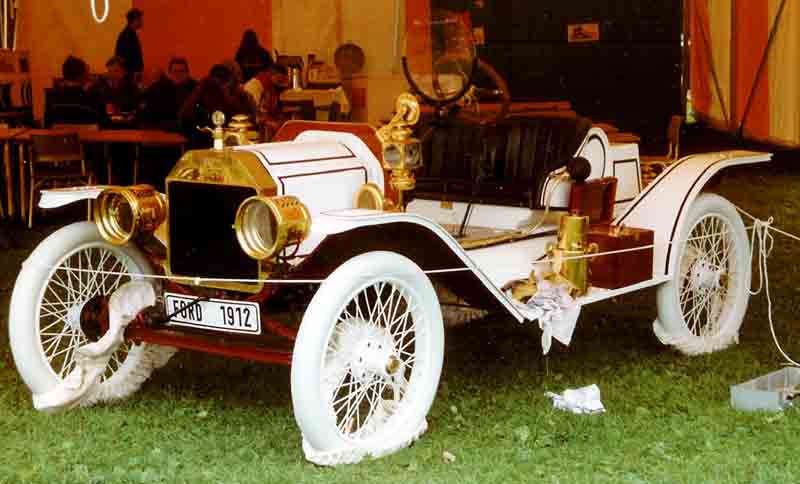
Model T
"Anything else you got questions on the Model T? Yeah, I'm just getting ready to replace the clutch bands."
The Ford Model T is an early, very famous Ford that’s known for being mechanically simple. In this segment, they’re talking about repairing the clutch so the car will shift correctly.
The Ford Model T is a landmark early mass-produced car from Ford, famous for its simple, serviceable mechanical design. In this call, the host and caller are discussing drivetrain service on the Model T, specifically clutch-related work and how it affects shifting.
clutch bands
"I'm just getting ready to replace the clutch bands. I've watched quite a few videos on that."
Clutch bands are friction parts that help the transmission engage the gears. If they’re worn or adjusted wrong, the car may not shift smoothly, so replacing and setting them correctly matters.
Clutch bands are friction bands used to engage/disengage a transmission’s gear sets by tightening around a drum. On the Model T, replacing worn clutch bands is a common repair because band condition directly affects shifting quality and how well the car responds.
low reverse band
"And right now, the reverse band is working just fine as far as I can tell. It's just a high and low left pedal that's messed up."
The reverse band is the part that makes the transmission go into reverse. If the reverse band is working but forward shifting is off, the issue is probably with the other bands or how they’re adjusted.
A reverse band is the specific clutch band responsible for engaging reverse on a band-style transmission. The caller notes the reverse band seems to work, implying the problem is more likely related to the forward bands and/or their adjustment.
alcohol fuel
"in regards to the fuel, I guess I was steering away from the alcohol fuel because I was afraid that it would cause corrosion problems and go bad quicker."
Alcohol fuel means fuel that contains alcohol (like ethanol). The worry is that it might behave differently over time and cause problems like corrosion if the car sits.
Alcohol fuel refers to fuel blends that include alcohol (commonly discussed in the context of ethanol). The caller is concerned that alcohol in the fuel could evaporate differently and potentially contribute to corrosion or fuel degradation during storage.
spark advance
"And I think I've got the spark advance down pretty good. I have there's a best way to do it. Just where it runs good."
Spark advance is about when the spark plug fires during the engine cycle. If it’s set right, the engine runs smoother; if it’s off, it can run poorly or not make power.
Spark advance is the timing of when the ignition fires relative to the engine’s position in the cycle. Setting it correctly affects how smoothly the engine runs and how efficiently it burns fuel—especially on older engines where timing is adjusted manually.
vacuum gauge
"thinking back to the 60s and putting a vacuum gauge on the intake. No, don't do that."
A vacuum gauge measures how much suction the engine is pulling. People sometimes use it to diagnose problems, but here they’re saying it’s not the right tool/approach for this engine setup.
A vacuum gauge measures manifold vacuum, which can indicate engine load, throttle position, and potential issues like leaks or ignition/fuel problems. The caller references using one on the intake, but the response suggests not to rely on that approach for this situation.
OEM
"Road ready wheels has replacement wheels for many OEM manufacturers at substantial cost savings. These wheels look and perform like OEM wheels so save money and go with road ready wheels when [1447.8s] you need a replacement."
OEM means the original parts made for the car by (or for) the car manufacturer. Here, it means the replacement wheels are meant to match the factory wheels.
OEM stands for “original equipment manufacturer.” In this context, it means the wheels are designed to match what the car maker originally installed, so they fit and function like factory parts.
Road-ready Wheels
"Road ready wheels has replacement wheels for many OEM manufacturers at substantial cost savings. These wheels look and perform like OEM wheels so save money and go with road ready wheels when [1447.8s] you need a replacement."
Road ready wheels is a company that sells replacement wheels for cars. They’re trying to offer a cheaper option than buying wheels directly from the car maker.
Road ready wheels is a wheel retailer that sells replacement wheels made to look and fit like original equipment (OEM) wheels. The pitch emphasizes cost savings versus buying wheels through the vehicle manufacturer.
year warranty
"Over 40,000 wheels with free shipping [1476.3s] available and returns with a one-year warranty. Under the hood listeners save 10% when you use [1481.5s] the code hoodie at checkout."
A one-year warranty is a promise from the seller that the product will be covered for defects or issues for a set period—here, one year. It’s part of the purchase risk protection compared with buying cheaper or unknown-brand wheels.
TPMS sensors
"These wheels are a direct fit so your factory caps and TPMS sensors [1486.6s] will fit."
TPMS sensors are the little parts that monitor tire pressure. They help your car warn you if a tire is low, and the ad says these wheels will work with the factory sensors.
TPMS sensors are the tire-pressure monitoring system sensors that measure each tire’s air pressure and send that data to the car. The host claims the wheels are a direct fit so the factory TPMS sensors can be reused.
direct fit
"These wheels are a direct fit so your factory caps and TPMS sensors [1486.6s] will fit."
“Direct fit” means the replacement wheels are supposed to install like the original wheels—no special modifications needed. It’s a way of saying they’re the right size and shape for the car.
“Direct fit” means the replacement wheels are made to match the factory wheel specifications so they bolt on without extra custom work. In practice, it usually implies correct bolt pattern, offset, and clearance for the vehicle.
drain plug
"So I was [1583.8s] curious about you putting a drain plug in your tin speed. Yeah GM. Obviously through the years with"
A drain plug is a screw/plug that seals a hole where fluid can be drained. Mechanics remove it to empty old fluid, then reinstall it before adding fresh fluid.
A drain plug is a threaded plug used to seal a fluid drain opening in a component (commonly for engine oil, transmission fluid, or differential fluid). Removing it allows the old fluid to be drained before refilling.
plastic washers
"It was a bolt and a nut [1620.6s] with a hole in the center of it and another bolt so I just it came with two little washers. Yeah [1627.5s] it came with two little plastic washers so they wouldn't corrode."
Washers are small flat pieces that go under a bolt or nut. Using plastic ones can help prevent leaks and reduce corrosion in wet, oily areas.
Plastic washers are thin spacers used under bolts/nuts to help seal and prevent corrosion. Here, the speaker uses them to keep the drain-plug hardware from leaking and from rusting together over time.
exhaust
"you can buy a pan with a drain plug in it but you got to drop that exhaust and everything [1682.7s] to get that to get the pan out which is dumbest thing ever"
The exhaust is the system that carries engine fumes out of the car. Some repairs require moving it out of the way, which makes the job harder.
The exhaust system routes hot exhaust gases from the engine to the tailpipe. In this repair scenario, dropping the exhaust is necessary to access the oil pan, which is why the speaker calls the job unnecessarily involved.
heat shield
"and I made it worse than the was it 19 and newer where you had to remove the heat [1696.5s] shield and yep two sensors and that's what I've got 21 so way worse a lot of stuff to pull out"
A heat shield is a thin metal cover that keeps heat from the exhaust from damaging other parts. If it has to come off for repairs, the job takes longer.
A heat shield is a metal cover that protects nearby components from exhaust heat. The speaker notes that newer models require removing the heat shield to access the oil pan, which increases labor.
1.5 turbo
"“terry asks about a 19 Chevy equinox with a 1.5 turbo it's only got 42,000 miles…”"
A turbo is a device that helps the engine make more power by compressing air before it enters the engine. It depends heavily on clean, fresh oil, so skipping oil changes can increase the chance of expensive problems.
A turbocharger (here, a 1.5T setup) forces more air into the engine so a smaller engine can make more power. Because the turbo spins at very high speeds and runs hot, it’s sensitive to oil quality and oil-change intervals, which is why the hosts connect it to the “most likely failure point.”

Chevrolet Equinox
"“terry asks about a 19 Chevy equinox with a 1.5 turbo it's only got 42,000 miles what do you guys think about those we get them into our shop all the time…”"
This is a 2019 Chevrolet Equinox with a small 1.5-liter engine that uses a turbo to make power. Turbos can be a common trouble spot, so regular oil changes and keeping up with spark-plug service matter more than you might expect.
The Chevrolet Equinox is a compact SUV, and the 1.5-liter turbocharged engine changes the maintenance and failure-risk profile versus a naturally aspirated setup. In this call, the hosts focus on the 1.5T’s likely weak point being the turbocharger and discuss how oil changes and spark-plug intervals affect reliability.
turbo itself
"“no you I think you're most likely failure point is going to be the turbo itself yeah at some point…”"
They’re saying the turbocharger is the part that’s most likely to cause trouble. Since the turbo is a high-stress component, keeping up with oil changes helps it last longer.
“The turbo itself” refers to the turbocharger hardware (not just the engine’s turbocharged design). The hosts are pointing to the turbocharger as the component most likely to fail first, which is a common concern on turbo engines when oil maintenance isn’t ideal.
maintenance interval
"“do they have a pretty uh short maintenance interval on the spark plugs…”"
A maintenance interval is how often you’re supposed to do a service item. In this case, they’re talking about how frequently spark plugs should be checked or replaced.
A maintenance interval is the planned schedule for servicing a component (like spark plugs) based on mileage or time. The hosts use it to compare how often spark plugs should be serviced on this turbo engine versus what someone might assume.
misfiring
"[1872.4s] in with like 80,000 and they weren't they were barely running and misfiring and there was no [1877.0s] electrode left on the plug and it's like hey uh those are well I thought everything was 100,000"
Misfiring is when the engine doesn’t burn fuel correctly in one or more cylinders. That can make the car run rough and may cause power loss.
Misfiring means one or more engine cylinders aren’t igniting properly during combustion. It can cause rough running, loss of power, and can be triggered by worn ignition parts like spark plugs or other issues.
spark plugs
"[1877.0s] electrode left on the plug and it's like hey uh those are well I thought everything was 100,000 [1882.0s] it's like where did you get that oh I don't know tv radio something well just plugs got longer for a"
Spark plugs are parts in a gas engine that make the spark to start combustion. If they wear out, the engine can start misfiring and feel like it’s running rough.
Spark plugs are the small ignition components that create the spark needed to ignite the air-fuel mixture in a gasoline engine. If a plug is worn or missing its electrode material, the engine can misfire and run poorly.
transmissions
"[1897.9s] they don't know the same way with oil when I I've had so many people we do a lot of engines and [1903.1s] transmissions at our shop and people are coming in they're saying oh I don't know why my engine"
The transmission is what helps the car use the engine’s power effectively, depending on speed and driving conditions. The shop does transmission repairs too.
A transmission is the drivetrain component that manages how engine power is delivered to the wheels through different gear ratios. The host mentions transmissions alongside engines as common repair work at their shop.
oil prices
"[1955.7s] yeah I'm just here giving them the bad news oil prices for those of us who buy oil and sell it to [1962.4s] you to put in your car so this would be at a wholesale price have doubled or more"
Oil prices refer to the market cost of crude oil and refined products, which can affect what shops and consumers pay for engine oil. In this segment, the host connects higher oil costs to higher oil-change pricing.
struts
"[1994.2s] but the price of that oil has really gone up so they're like oh I'm like well you know oil changes [2000.9s] are not our specialty that's not what we're doing because we're so busy doing engines and [2005.0s] transmissions and brakes and struts and tires and all that kind of stuff"
Struts are part of the suspension that help the car absorb bumps and stay stable. The shop says they work on those too.
Struts are suspension components that help control ride height and handling while also supporting the vehicle’s steering and damping. They’re mentioned as part of the shop’s typical repair workload.
oil change
"have the cheapest oil change but oil is going to go up and I know you're probably thinking [2015.5s] I don't want to change my oil at 3 000 miles that's actually the two things we just said back to"
An oil change is when you replace the engine oil (and often the filter). It keeps the engine running smoothly by removing dirt and keeping things properly lubricated.
An oil change is the scheduled replacement of engine oil and (usually) the oil filter. It helps keep the engine lubricated and removes contaminants that build up as the oil ages.
300 000 miles
"[2015.5s] I don't want to change my oil at 3 000 miles that's actually the two things we just said back to [2020.8s] really push against each other do you want to change your engine you know early and spend"
“3,000 miles” is an old rule of thumb for how often to change your oil. Some newer cars can go longer, but you still need to follow what your specific vehicle recommends.
“3,000 miles” refers to a traditional oil-change interval that many people used to follow. Modern engines and oil formulations often allow longer intervals, but the right schedule depends on the vehicle and driving conditions.

Ford F350
"they got hit with the increase this now for July 1st [2129.4s] Todd in Minnesota with a 24 F 350 how you doing Todd pretty good"
That’s a Ford F-350 truck. Trucks like this are built for heavier work, so maintenance—like oil changes—can come up more often and cost more.
This refers to a Ford F-350 pickup truck (the speaker says “24 F 350”), which is a heavy-duty model often used for towing and work. Heavy-duty use can make oil-change intervals and maintenance costs more noticeable.
142,000 miles
"um say I just got this vehicle length a couple months ago and uh I was checking how it went [2142.7s] to change oil in it and it says 12,000 miles every year on gas not right"
“12,000 miles” is how far the vehicle is saying you can go between oil changes. Some newer cars allow longer intervals, but you should still trust the car’s manual and consider how you drive.
“12,000 miles” is an oil-change interval claim the caller says the vehicle’s information says. Many newer vehicles use longer intervals than older rules like 3,000 miles, but the interval can still vary with engine type and driving conditions.
every year
"to change oil in it and it says 12,000 miles every year on gas not right [2151.7s] wow yeah that's that's stretching it which engines in it uh 62 gas 62 gas I'm"
“Every year” is the schedule the caller is reading as the oil-change recommendation. Even if you don’t drive a lot, oil can still wear out over time.
“Every year” here is a maintenance schedule the caller is interpreting from the vehicle’s oil-change guidance. Oil life can be affected by time as well as mileage, so some systems recommend intervals based on both.
fully synthetic oil
"[2169.8s] with fully synthetic oil if this was a construction truck and I was running on the highway but I [2175.9s] wasn't hauling anything on a trailer I was just hauling in the bed or whatever you know"
Synthetic oil is an oil that’s made to be more stable at high heat and stress. “Fully synthetic” usually means it’s all synthetic, not mixed, and it can often last longer between oil changes if your vehicle allows it.
Fully synthetic oil is a lubricant made from chemically engineered base stocks rather than conventional crude-derived oil. It typically resists breakdown better, which can allow longer oil-change intervals under the right conditions and specifications.
highway driving
"[2180.5s] three to 4000 pounds or whatever everywhere I went and it was always on the [2185.2s] highway so every day I'm going to get at least 100 miles of highway driving I'd feel pretty"
Highway driving usually means steady speeds and consistent engine temperature. The idea is that this kind of driving can help the engine run in a way that keeps oil from getting contaminated as quickly as in stop-and-go use.
Highway driving is steady-load operation that can help engines reach and maintain operating temperature. The speaker argues that consistent highway use can produce “good heat cycles,” which can influence oil condition and how quickly it degrades.
heat cycles
"[2190.5s] comfortable going maybe five or 6000 on it probably six because it's always on the [2197.4s] always getting good heat cycles through it it's actually going to run pretty good"
Heat cycles are the engine repeatedly warming up and then cooling down. The speaker’s point is that if the engine gets fully up to temperature regularly, it can help oil last longer than in short-trip driving.
Heat cycles are repeated periods of the engine warming up and cooling down. The speaker suggests that regular, properly hot operation can help oil stay cleaner and the engine run well, compared with short trips that don’t fully warm the engine.
pull that stick out
"[2197.4s] always getting good heat cycles through it it's actually going to run pretty good and if the oil [2201.9s] clean I might go as far as seven like if I pull that stick out at seven"
That means checking the oil with the dipstick. You can see whether the oil level is where it should be and sometimes get a sense of how dirty it looks.
“Pull that stick out” refers to checking the engine oil level using the dipstick. It’s a practical way to verify oil condition and level between scheduled services.
piston rings
"[2212.0s] a month on this thing ooh I'm going to watch that oil really close because it's the tight [2217.7s] counters are pretty tight in that engine so you're getting less hydrocarbons past the piston rings [2223.5s] into the oil to get the oil dirty"
Piston rings are small metal rings on the piston that help seal the engine so power stays efficient and oil doesn’t get contaminated. If they’re doing their job well, the oil may stay cleaner for longer.
Piston rings are sealing components on the piston that control compression and limit how much combustion gas and oil can pass into the wrong areas. If rings are tight and the engine is designed for low emissions, less blow-by can mean oil stays cleaner longer.
hydrocarbons
"[2217.7s] counters are pretty tight in that engine so you're getting less hydrocarbons past the piston rings [2223.5s] into the oil to get the oil dirty but you're still getting it in there"
Hydrocarbons are basically parts of fuel that can escape where they shouldn’t. If they get past the piston rings, they can mix into the oil and make it dirty sooner.
Hydrocarbons are fuel-related chemical compounds that can escape combustion and contribute to air pollution. In engines, some hydrocarbons can “blow by” past the piston rings and end up contaminating the oil, which is why oil can darken faster in certain conditions.
oil dirty
"[2223.5s] into the oil to get the oil dirty but you're still getting it in there um I just wow that's a lot of [2230.8s] miles but you know they're going to so what they're going to do"
When oil gets “dirty,” it means it’s picked up contaminants that can reduce how well it lubricates. Dirty oil is one reason you can’t always go as long as the car’s reminder suggests.
“Oil dirty” refers to oil contamination from combustion byproducts, wear particles, and moisture, which reduces lubrication effectiveness. The speaker links oil cleanliness to how far you can safely stretch oil-change mileage.
maintenance reminders
"[2284.3s] and we started seeing with technology the oils I think they felt comfortable to be able to stretch [2290.0s] out those intervals stretch out those maintenance reminders to the point where they felt comfortable"
Maintenance reminders are the dashboard alerts that tell you when to do things like an oil change. They’re basically the car’s way of saying, “It’s time for service,” based on how you’ve driven and/or how much time has passed.
Maintenance reminders are the vehicle’s service alerts (often based on time/mileage and sometimes driving conditions) that prompt scheduled upkeep like oil changes. They’re designed to keep you within warranty expectations and emissions/engine longevity targets.
oil condition
"yeah so I'm going to do it every 3,000 miles I watch the condition you can definitely not [2327.8s] going to hurt a thing watch the condition of that oil you may be able to go a little further"
Oil condition means how healthy the oil looks and behaves. If it’s getting noticeably darker faster than before, it can be a sign you should change it sooner.
“Oil condition” is the idea that you can assess engine oil health by observing changes like how dark it gets over time. The host uses this as a practical way to decide whether you’re extending the interval too far (e.g., oil getting darker each 4,000-mile change).
10-speed
"but you you can observe what's happening too and then make your decisions to adjust a bit [2357.3s] I'll keep doing my oil changes like that instead of buying a new engine or whatever but [2361.4s] what about that 10 speed in there what about that transmission"
A “10 speed” is an automatic transmission with ten different gear ratios. More gears can help the car shift smoothly and keep the engine in the right range.
A “10 speed” refers to a 10-gear automatic transmission, meaning it can select among ten gear ratios to keep the engine in a more efficient or responsive operating range. The host is asking what maintenance is needed around 90,000 miles for that transmission type.
transmission fluid
"those fords it seems like you know for our customers they when they get that if they [2376.1s] just change it drop the fluid a couple times because it's not a flush transmission"
Transmission fluid is the fluid that helps your automatic transmission shift smoothly. Changing it helps keep the transmission working correctly and can prevent wear over time.
Transmission fluid is the hydraulic fluid used by an automatic transmission to transfer power and operate clutches and bands. The host is advising customers to change it periodically, noting it’s not always a full “flush” depending on the service method.
flush your transmission
"those fords it seems like you know for our customers they when they get that if they [2376.1s] just change it drop the fluid a couple times because it's not a flush transmission"
A transmission flush is a more aggressive service that replaces a lot of old fluid at once. The host is saying some shops instead do a simpler drain-and-refill approach in steps.
A “flush” transmission service typically uses equipment to push new fluid through the transmission system, replacing more of the old fluid than a simple drain-and-fill. The host contrasts this with a service where fluid is dropped and refilled in steps rather than fully flushed.
drop the pan
"most people are just dropping the pan [2398.3s] gaskets reusable so they drop the pan down enough where they can get the fluid out of it"
Dropping the pan means taking off the bottom cover of the transmission. It lets the mechanic drain the old fluid and then put everything back together with fresh sealing parts.
“Dropping the pan” means removing the transmission oil pan to access the fluid and internal components like the filter and valve body area (depending on design). The host describes a common drain-and-fill method where the pan is removed, fluid is drained, then the pan is reinstalled with new sealing parts.
pan gaskets
"most people are just dropping the pan [2398.3s] gaskets reusable so they drop the pan down enough where they can get the fluid out of it"
Pan gaskets are the rubber or sealing material that keeps transmission fluid from leaking where the pan bolts on. If the seal isn’t right, you can end up with leaks.
Pan gaskets are the seals used between the transmission pan and the transmission housing to prevent fluid leaks. The host mentions reusing gaskets in the described procedure, which is a detail that can affect whether the service stays leak-free.
Takata situation
"some of the similar recalls backup cameras I hate to even discount at all the Takata situation because [2454.5s] anything to do with an airbag is completely very serious"
Takata is a brand that had a big safety problem with some airbags. The recall was about the airbag inflator not working safely. If you get a notice, it’s important to deal with it right away.
Takata is associated with a major airbag recall crisis caused by faulty airbag inflators. Over time, moisture and chemical degradation could make the inflator rupture, sending metal fragments toward occupants. That’s why the host treats any airbag-related recall as urgent.
airbag
"[2454.5s] anything to do with an airbag is completely very serious and when you get those in the mail please [2458.4s] pay attention to them"
An airbag is a supplemental restraint system that rapidly inflates during a crash to help protect occupants. Because it’s designed to deploy in an emergency, airbag recalls are treated as high priority safety repairs. The host emphasizes that any recall involving airbags should be addressed immediately.
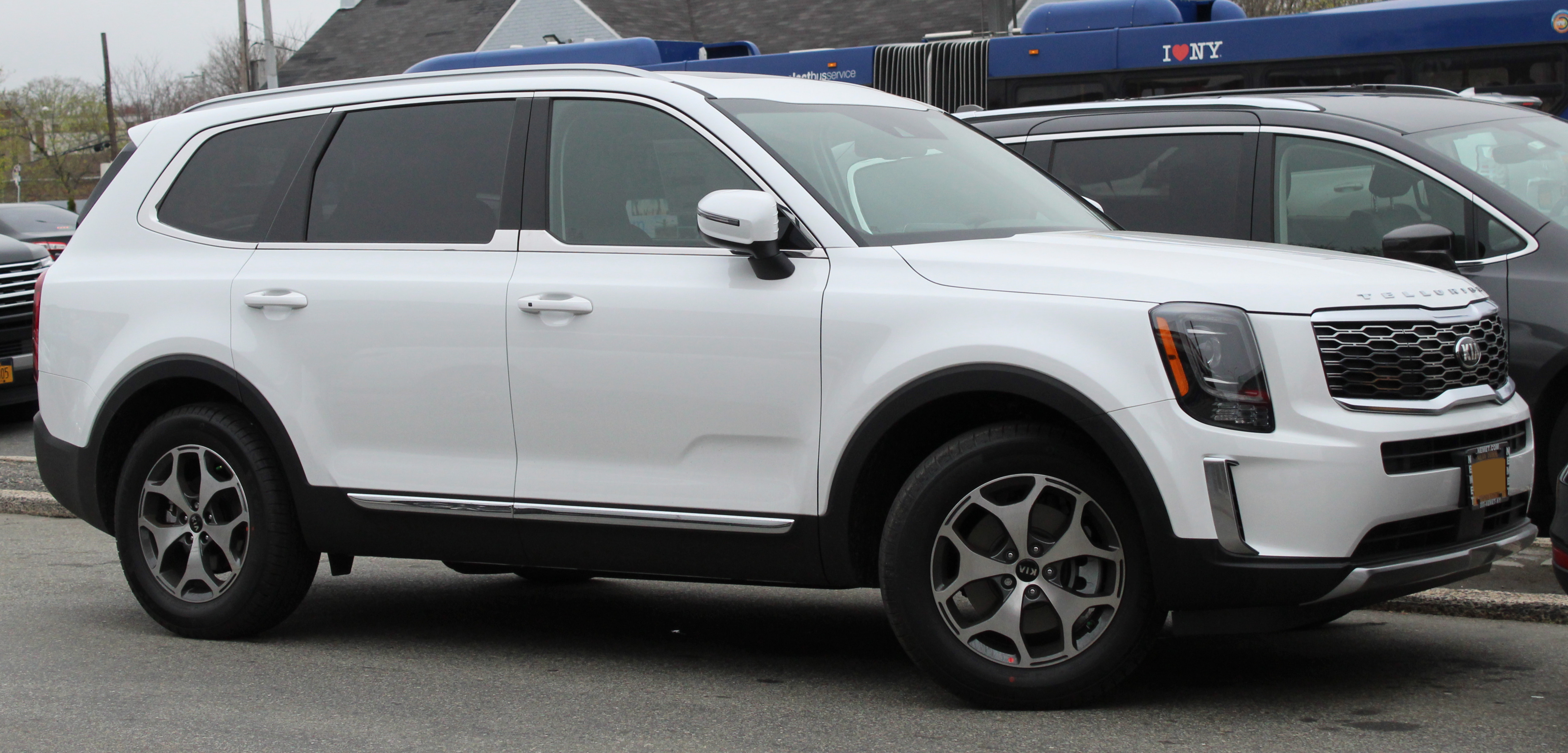
Kia tell you ride
"[2458.4s] pay attention to them but this one here is different Kia tell you ride fire danger they're [2465.1s] saying hey you know get it call the dealer right away"
The Kia Telluride is a family SUV with three rows. In this call, the host is talking about a recall related to the seat controls that could create a fire risk. If you own one, you should contact your Kia dealer right away.
The Kia Telluride is a midsize three-row SUV, and this segment is about a safety recall affecting it. The host says the recall involves a seat switch that could potentially catch fire, so owners should contact a Kia dealer promptly for the free repair. This is the kind of recall that’s treated as urgent because it’s tied to fire risk.
seat switch
"[2465.1s] saying hey you know get it call the dealer right away it's a danger because the seat switch might [2471.7s] catch on fire"
A seat switch is the button/control you use to operate something on your seat. Here, the host is saying the switch could be part of a problem that might lead to a fire. If you get a recall notice, the dealer can fix it.
A seat switch is the electrical control that lets you operate seat functions (like heating or adjustments). In this segment, the host says a recall is tied to the seat switch potentially catching fire if it’s bumped or disturbed. That’s why the advice is to contact the dealer immediately after receiving the notice.
seat heaters
"catch on fire now we've had seat heaters catch on fire over the years it's been a long time"
Seat heaters are the built-in heating pads that warm your seat. The host mentions that seat heaters have had fire issues before, which is why this kind of recall is treated as serious. If there’s a recall, it’s worth fixing promptly.
Seat heaters are an electrical comfort feature that warms the seat surface. The host notes that seat heaters have caught fire in the past, which is why they’re taking this recall seriously. This provides context for why fire-related electrical issues get urgent attention.

Hyundai Palisade
"they they want to take care of you and your car is it the is the Hyundai [2509.9s] Palisade in on the same one but you've probably you've got to call them"
The Hyundai Palisade is a family SUV with three rows. The host says it may be covered by the same safety recall as the Kia Telluride. If you have one, check your recall mail and contact the dealer.
The Hyundai Palisade is a midsize three-row SUV, and the host says it’s included in the same recall situation. That implies the affected parts or design are shared across models, so owners of a Palisade should also check their recall notices. The key point is that the repair is described as free and should be handled quickly.
Request an Explanation
Heard something you'd like explained? We'll add it to this episode.
Sign in to request explanations for terms you heard.
Want to learn more?
Browse our glossary for plain-English explanations of automotive terms, jargon, and concepts.
Help improve this episode
See something that's not quite right? Our annotations are AI-generated and can sometimes miss the mark. Click the flag icon on any annotation to suggest a correction.