Motorcycling just means riding a motorcycle. The idea here is that doing it as a kid can help you develop balance and control that can translate into other sports.
Motocross is dirt-bike racing on rough tracks. It’s more about handling and control over jumps and bumps than just speed.
Concept
duro
Duro is like enduro riding—longer off-road rides on trails. Instead of short track laps, you’re out for longer and have to stay steady over rough ground.
MotoGP is the biggest motorcycle racing league in the world. The riders race on tracks at very high speeds, and it’s considered the top level of motorcycle racing.
In motorsport, “legacy” refers to the lasting impact a person has on the sport—results, influence on others, and contributions beyond racing. The segment also connects legacy to building a team, which is a common way former competitors stay involved.
Sochi refers to the city in Russia that hosted major international sporting events, commonly associated here with a pivotal career moment. The transcript uses it as a reference point for a turning point that changed the speaker’s path.
“Flip that switch” is a metaphor for a decisive mental shift—changing motivation, commitment, or approach at a critical moment. It’s used to explain how the speaker turned their potential into results.
Wayne Rainey is a well-known motorcycle racer, often associated with elite racing and resilience. Mentioning him signals the speaker’s inspiration from high-level motorsport competitors and their career mindset.
Term
rivalry
In racing, rivalries are the intense competition between top drivers or riders. Over time, even rivals can develop respect for each other because they understand the pressure.
Formula One is the highest level of car racing with very advanced race cars. Drivers and teams prepare in a very structured way—both physically and by studying data—because the cars are so demanding.
In high-performance sports, “preparation” covers both mental routines and practical planning to reduce mistakes and improve execution. The segment contrasts preparation styles between an athlete’s craft-focused approach and the structured, team/data-driven approach typical in motorsport.
“Strong necks” points to the physical conditioning F1 drivers need to handle sustained high g-forces during braking, cornering, and acceleration. Neck strength helps reduce fatigue and maintain head/vision position under load, which is critical for consistent driving.
Tracks are often split into sections for timing. If you’re fast in each section, you’ll usually be fast overall, so drivers pay close attention to those split times.
A “perfect lap” means driving the track in the best possible way—hitting the right lines and timing. Drivers often mentally rehearse it so they can repeat it under pressure.
A pit stop is when the team stops the car briefly to do things like change tires. In racing, doing it at the right time and doing it fast can make a huge difference.
Aston Martin is a famous car brand that also has a presence in Formula One. In racing, people can be connected to different teams through friends and family.
A track is a closed course made for racing. When you’re on a track, the driving is faster and more controlled than normal roads, so it can feel intense.
Car
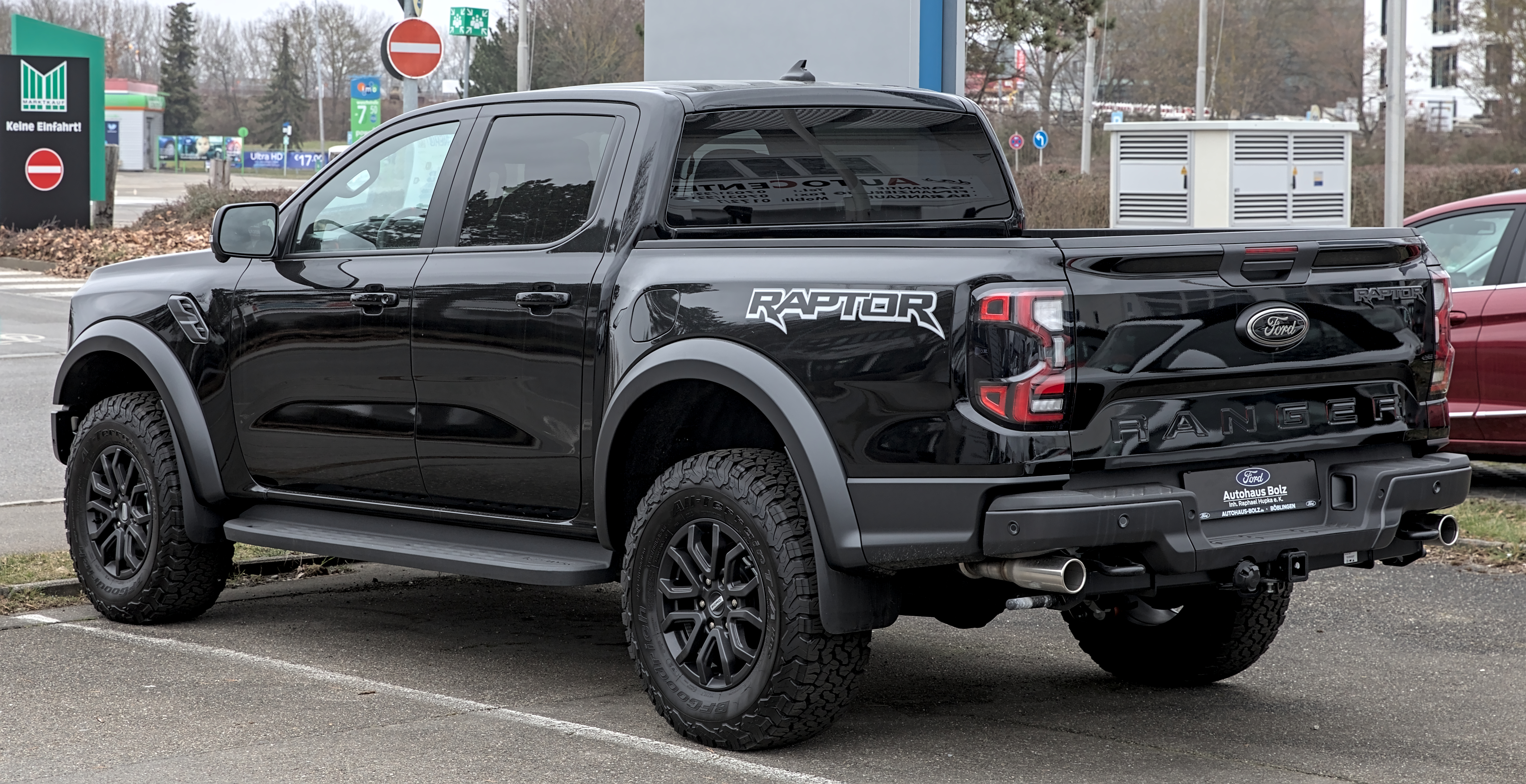
Ford Raptor
A Ford Raptor is a special kind of Ford pickup made for off-roading. It’s usually lifted and built to handle bumps and rough roads, so it can feel intense even when you’re just riding in it.
LIVE
And when you drop in, who are you doing it for?
When I drop in, I mean I do it for everyone that's supported me, helped me,
all my partners and everyone that's lived this dream with me forever.
I do it for all of them, but I do at this point, I think for me as well,
I want to take this amazing run for myself and feel really fulfilled on the other side,
regardless of what happens.
I'm Jim Farley and this is Drive.
I spoke with Scotty James, the Australian snowboarder just before the Olympics,
at a moment of real anticipation.
Scotty was about to compete in his fifth games.
Everything he'd been working towards was building to that single drop in.
There's a new documentary about his life called Scotty James, Pipe Dreams,
that takes you along on his journey.
The sacrifices and all the setbacks in his quiet but constant determination.
What struck me about talking to Scotty is that this wasn't a conversation about ego.
It was about his resilience and what it takes to stay with something long enough
to discover who you really are.
So you grew up riding motorcycles.
What role has motorcycling played in your childhood?
It's been a huge part.
It was my dad's passion.
To be honest, most people say,
what would you have done if you weren't a snowboarder?
For sure, everyone, all my family and friends would have said I would have been on two wheels.
I would have been motorbike riding.
My dad used to track race.
He did some motorcross racing as well in his early years, and that's his true passion.
For me, what I love about it most is I find a similarity.
I never really raced or anything like that,
more just doing duro and gets me outdoors and gets me adventurous.
I think I share that now with my dad, which is really fun.
To be honest, I think I'm probably happy that it stayed more of just a passion
and something that I enjoy with him.
Well, it's also a way to be somewhat competitive with your dad without being competitive.
It's like whenever there's two brothers and your dad in the middle of nowhere on bikes,
ultimately it's going to turn into some kind of race.
Absolutely, yeah, it definitely does.
Anything with an engine always turns into a race with my dad.
Go-karts, motorbikes, you name it.
It definitely turns into a pretty big rivalry, but it's a lot of fun.
That's what we love about it most.
It's such an amazing activity across, which is fun.
Same for our family.
I insisted on all my daughters to learn how to ride dirt bikes,
to ride trails up in northern Michigan.
Amazing.
Who would be your MotoGP, someone you respect and look up to as a professional athlete,
and who would your dad's be?
Oh, boy.
To be honest, I think Mark Marquez is pretty unbelievable from a riding perspective.
When you watch him walk down the paddock, it's like he's still on the bike.
We would both probably agree on that, that he's just a different beast when it comes to MotoGP,
and very cool to see his brother doing so well as well.
But my dad would probably say in history, he would obviously really loved McDoen, of course.
We see him around a lot now.
He's a great guy.
Valentino Rossi obviously can't go past him.
What a legacy and just everything he's done away from the sport and now having a team as well.
I think that's just such an amazing legacy to build in the sport.
To be honest, we actually share our love for the same riders in the sport.
That's cool.
So you started snowboarding, obviously, super young.
Everyone knows that about you.
Let's rewind a little bit about your snowboarding.
I don't want to say career, but your journey.
What was it like leaving your parents heading to the US?
Most kids, most people don't know what that's like to make that kind of tough choice.
I've seen what it meant to your parents and how difficult that was,
but I'm not sure the listeners know what it's like for you to make that choice.
Yeah, it was tough to say the least.
Look, it's also an incredible opportunity.
So as much as it was a bit of adversity in that moment to be 12 or was quite young,
to have made that decision to want to pursue my dream,
which was snowboarding was a massive decision and a big commitment.
Even more so for my parents, I think at the time I was just pretty wound up in this amazing idea of me going away and pursuing my dream.
Yeah, it sounded very glamorous until I got to the airport and the blood gates opened
and I was incredibly emotional for a few days from that point.
But my mum even said to me just recently, once we were watching the documentary,
she said, I'm so sorry if I had known you were so upset, I never would have let you go.
And I said, yeah, but mum, look what we realized.
I mean, it's as much as it was hard, it's also amazing to reflect on what has happened,
but what might not have happened if my parents didn't have the courage to let me take that first step.
And as I said earlier, give it a crack and see where we end up.
And we've been able to realize an amazing life and journey and it's brought me around the world.
And I've had some success in the sport, which has been amazing and yeah, it's been awesome.
But I've got such a caring big family and that was probably the hardest part was leaving my siblings.
And there was no guarantees going into sport.
Of course, you got to ride through the ranks and at such a young age, there was no guarantee.
So we made it worth it though, I hope, and it's been a fun journey.
So adversity to be the best in the world at something, in your case, that required you almost kind of starting over emotionally, you know, physically.
Tell us about that very moment that may not be obvious to people, even in the documentary, when the switch clicked and you said, I'm going to actually give this a try again.
Yeah, I think when I was, yeah, it was a challenging one because when you're so young, I think I went to my first Olympics at 15.
And you don't really, at that point in time, you don't really know how to communicate or talk about your emotions or how you're feeling in that moment.
And you just want to pretend everything is fine because that's what you think, that's what you feel you think everyone wants for you.
So that's the act that I put on at the time until I couldn't act anymore.
I'm an athlete, I'm not an actor and I, you know, I broke down and I struggled to enjoy the sport.
It was a punish for me to go up on the hill and go snowboarding and do what I once loved, which is a real shame.
But, you know, that was just also a roller coaster of failure after one.
It felt like every step I took, I was just failing and not meeting expectations of people that had given me an opportunity to go to the Olympics at 15.
And anyway, so it continued on like that.
And I went through my teenage years and I was able to make that Olympics, which is really special.
And, you know, I went through four more years of riding and I didn't mind.
I enjoyed it, but I still was struggling to really love it like I did.
And then after 2014 Olympics in Sochi, I kind of looked around and it was this very pivotal moment where I realized that I had the ability to achieve something.
I'd done it when I was younger.
I was one of the best juniors in the world when I was 13.
I was beating everyone.
So I knew I had something inside of me to give more.
I had more to give in the sport from a competition perspective.
So I just flipped everything upside down.
I like grabbed my world, flipped it upside down, looked who was around me, my team, you know, was everyone in my corner actually helping me get to that next step.
If they weren't, then I had to make those hard decisions and move on.
But yeah, and I made all those decisions and it was amazing.
I mean, it was obviously challenging for 12 months.
I kind of went through a season where I was trying to find my groove.
And then yeah, from then onwards, I want to say from about 2017 really until today, I've had to transform my life away from the mountain, but also on the mountain and really put my trust in people that I know can help me take the right steps forward professionally.
So yeah, there's a lot of really great learning curves.
I'm only young still, but you know, I did feel like I learned a lot in those younger years.
And even now today, I still learn from those experiences.
What advice would you give your younger self if you happen to run into your younger self 15, 16 years old?
What would you say to yourself?
I would say to myself now, if I was looking at myself when I'm 15, I'd actually,
there's a great quote that I'm living by at the moment and it is to pursue one great aim with force and determination.
And why I think that's such an amazing quote is because when I was 15, I think that I was pursuing one great aim,
but I was also looking every different direction at the time as well as looking left.
I was looking right.
What do they think of me?
You know, what's happening?
You know, never always falling over myself a little bit.
And why I would say that now is I would just say, hey, you know what you've got to do?
You got to enjoy it, but you know, you have to work hard and you've got a goal and you've just got to stay in that lane and murder that lane.
Because nowadays, where we live and we have social media, there's more demands off the hill.
You know, there's so many different ways to be distracted rather than just focus on this one thing.
Make that decision and have the force and determination to actually make it happen.
It takes a lot of time because there's a lot of mountains that you've got to go over and go around and go under if you have to to make it happen.
So if you really want something in your life and you really want to accomplish it, I would say to myself at 15, just pursue it.
Pick one thing and go for it.
And that's what I did with half pipe snowboarding.
I wanted to be one of the best in the world and that was my aim and I had the determination and the force and I wish I could have learnt that earlier at 15.
That's what I would tell myself and to enjoy the journey most importantly.
Do you ever visualize an alternative outcome for your life?
Like let's say that switch didn't get turned on the Sochi or maybe you didn't listen to yourself and didn't turn things upside down.
How do you reflect on that alternative view of yourself?
Yeah, I do ask myself that question a lot actually and it motivates me because to be honest, I probably would have lived in Australia, which is not a bad thing.
I might have maybe ended up working at my dad's factory, which I did anyway, but probably more frequently.
And I probably, I think I might have been a little bit upset that I didn't actually pursue my, yeah, actually squeeze all the juice from the orange out of what my potential was in snowboarding.
I probably would have lived a little bit in a bit better and a little bit, I don't know, not fulfilled, I would say actually is probably the best way to put it.
So I'm really happy that I was able to flip that switch.
Makes perfect sense to me.
My closest friend I would say is Wayne Rainey.
He's three-time MotoGP world champion and he had a bitter rivalry with Eddie Lawson, who was a champion before him.
And Wayne went on to win three and then on his fourth, he high-sided and, you know, was in a wheelchair.
I see him now.
Wayne got back on the motorcycle and though he's paralyzed and drove his 500cc GP bike up the hill at Goodwood and every one of his competitors came.
Everyone, Mick, everyone came because they wanted to see Wayne get on the bike that almost killed him and took a lot of courage for Wayne to do that.
But I'm bringing it up because any world champion, any icon of any sport like you has a foe, has someone that they compete against.
And that relationship is something that no one else can really understand like you do.
But now I see Eddie and Wayne together and you would never imagine that they couldn't even look at each other at the track.
But that's how it was for years and decades.
Sean's not going to be at the Olympics or competing, but I've heard you say that he inspired you to be the athlete you are today, the icon you are.
But on the other hand, there's a personal side of that rivalry too.
How do you approach that as a person, the personal side of it, not necessarily the competitive side of it, now that you guys are, you know, have different trajectories in your career, so to speak?
Yeah, it's really, it can be very healthy and that's an amazing story that all these competitors showed up to watch him.
Because I think that's the most amazing thing about sport is that, look, when it's all said and done, the bottom line is we all just respect each other because we're all really at the end of the day pursuing this thing mutually.
We love it, we're going to put ourselves on the edge mutually and we're going to push it.
I think that's in the moment, you don't look at that because you just want to beat each other.
But you, you know, down the line, you, I guess you get to a show each other appreciation in that sense and put the ego aside.
I think that when you, when you're in sport, you definitely have to have an ego.
You've got to have this ability to say, I'm better than you.
Because if you can't, then, then how are you ever going to beat someone, particularly someone like Sean or even my competitors now?
And that's really important to acknowledge that self-belief.
You know, you can put people on such a pedestal so much so that you just feel like, well, it's never really going to be in my league.
It's never going to be possible.
And I really do believe when you flip that switch to go, okay, hang on.
My dad would always say, he's made of the same thing.
He's got shoulders like you, legs like you, hips like you, feet like you, you know, you've got a good head on your shoulders.
You can actually realize it and you can actually beat these guys that are, you know, the best of the best.
And that's a funny way to look at it.
But I really do believe that and that was something, a flip, you know, a switch that I had to flip when coming up against some of my rivals.
But I do think that, you know, it's really healthy to have them because they push you that little bit further.
They make you do those little 1% things that you maybe wouldn't do otherwise.
And they, yeah, they motivate me to be honest.
So I've always had a really good relationship, although in moments it gets pretty heated when, you know, you're going back and forth in a, in a finals.
But at the end, you know, we usually try and give each other a high five.
I mean, it's usually pretty amicable.
There's not really, you're not chasing champagne or giving each other a hug, but, you know, you kind of find that ability to have respect for each other.
And I do love, I do love that part for sure.
Well, one aspect of your rigor and your robustness as an athlete that is so amazing and it's clear in the documentary is your commitment to doing what you do with perfection in mind.
And I had Tom Brady on drive this podcast.
And, you know, I was almost shocked to find out that one of the things he really visualized was throwing a perfect pass.
Throwing a football, an American football.
Do you see it the same way as you've gotten prepared for this Olympics and is snowboarding on a pipe kind of a like something that you visualize perfecting?
Yeah, I would.
I'm a massive fan of Tom, so that's very cool that he was on this podcast.
But yeah, I can resonate with that a lot actually very much.
So at the moment, because we're coming into the Olympics, which is really exciting and I'm feeling good.
And there's obviously a lot of talk and conversation about what can be done, what's possible.
And this year for me in particular, and I would say, yeah, for the past little while that I do really on that day when I'm up there and I'm about to perform.
I am just only thinking about how good I can do what I'm about to do.
And I do, you know, I visualize some runs and I think about the best possible outcome from an execution perspective.
I don't necessarily ever sit there and close my eyes and manifest, you know, holding a medal in my hand.
I really sit there and I think if if I need to, you know, I need to do this a little bit earlier and make sure I grab this part.
And like it's so I'm very detailed in that sense because I find when you become very or at least for myself is it becomes so obsessed with the craft.
Like how good and how much better can I do what I'm doing, even though it might be perceived as pretty good already.
I'm in that same I would say I'm sitting in the same boat where I go, OK, I would come home from a competition and watch it back.
And most would say even my coaches would say that was amazing.
You know, you should be really stoked.
I am but I always sit there and I'm never I'm from the get go.
I'm just thinking I should have done this better.
I could have done that better.
And so yeah, I'm definitely on that other end of the spectrum of seeking perfection.
I would say like that perfect throw every single time.
But I think that's the healthiest way to go because if you get caught up about thinking about the winning and the losing, you lose a love and the passion for like what the why you're actually up there.
I approach leading for the exact same way and I agree the 100 percent.
Some people would say, well, you know, you're not happy.
And I would say, no, that's not actually true.
You can be satisfied and happy and want more and visualize, you know, better performance.
Those are two things that can live in one hand at the same time.
But I think some a lot of people don't see it that way.
So as far as preparation, obviously you have a special connection to Formula One.
And I'm curious as you've gotten to know, you know, the sport and the athletes and Formula One, I know you and Daniel are friends.
How do you think their preparation is different?
Like for the listener today, how would you characterize the difference through your eyes of how you prepare for your sport versus how a Formula One driver prepares?
Well, they all have pretty strong necks.
That's one thing that's very different.
They do a whole lot of neck exercises and I don't do pretty well any.
So that's the first distinct difference in how we would get ready for a race or a competition in my respect.
Yeah, I think that, look, firstly, it's passion.
I think that they're on the limit.
They're pushing the cars as close to the limit without going over the limit as possible.
I'm doing the exact same thing in the half pipe with tricks and what I'm doing up on the mountain.
So from a preparation perspective, I think that I don't know exactly how to explain, you know, what the similarities would be there.
But I would say that I'm sure they have that perfect lap in their head, kind of like what we were just talking about or the perfect sector or whatever it may be that they might lose sleep over at night.
And I probably have a similar thing with my tricks and my riding, but I can imagine that they do a bit of visualization.
I would say that I do quite a lot of that myself in the half pipe as well.
And I say the difference is that, which is, you know, one of the most incredible things about Formula One is there has to be so many things to go right from the team, from the car, from pit stops to as much as you're in control, you're out of control,
which is something I love because it makes it dramatic, but something I also hate about the sport because I'm like, damn, if you could remove those elements, I can put a driver in the car, what happens?
So for me, from a preparation perspective, I love that about my sport because I'm in complete control about everything that happens, how fast my board's going, the tricks I do, the team that's around me,
the runs we decide to do to win the event. There's a lot more things that I have to take ownership of when you get to the end of the race or the competition for me.
Yeah, I would say there are obviously two totally different sports that preparation-wise, I can imagine there's a lot of moving parts for them.
There's a lot of moving parts for me, but there's, you know, obviously that conflict there where we have a difference in our outcome and how we realise it.
But I can imagine, I know Daniel obviously, yeah, quite well, he's a close friend and we both love music.
You know, he listens to music before racing and you see the guys wearing the headphones and I'm sure they all have a lot of few different rituals, but that's definitely something that I have in common with some of the drivers is music for sure.
And Formula One brought you a lot personally, your love and your life and are you glad it was Formula One that made that connection?
Yeah, it's how I met my wife Chloe. I actually met her brother first and then I connected through her brother and met Chloe in New York City.
And finally enough, I used to go watch and support Red Bull, but I've been with Red Bull the majority of my career.
So I go and watch and cheer on the Bulls and when I watched them originally, it was obviously watching Daniel.
And then, you know, now my brother-in-law is Lance in Aston Martin.
So I wear two different hats when you're in the paddock, to be honest, you've got the family one and then you've got, you know, the Red Bull one who I'm cheering for as well.
So it's always a fun, interesting dynamic there.
But to be honest, it's been amazing too, because I think as much as I'm a snowboarder and they're Formula One drivers, I hear about Lance's journey and the family element in that and my family and my journey.
And it's all relative at the end of the day.
I know Daniel left home when he was young to pursue Formula One, so I do have a lot of respect, obviously for the families that have had to move a lot of parts to be able to pursue a dream.
I think someone like Daniel and I'll ask her really well as well and they've had to do the same thing.
So it's amazing that the lengths you will go to to realize a dream, but it's been cool to watch it from a distance.
Yeah, we have a lot of fun, I think.
I could see that, yeah.
Yeah, we have a lot of fun.
I've been in the car with him on the track a couple times actually.
Are you a good passenger or a bad passenger?
I think I'm a good passenger.
I don't know.
Maybe I'll ask him.
He might say otherwise, but I think he would describe himself as a bad passenger.
Also been in his Ford Raptor in the US and that's also equally as terrifying.
So I mean, it's a lot of fun.
We have a lot of fun.
We're a few days away from the Olympics in Italy.
Any thoughts you have for the listeners?
What thoughts do I have?
Yeah, I mean, it's the Olympics.
My fifth game is actually some bit of a veteran at this point, which is cool.
So getting to represent my country again for the fifth time is an amazing, yeah, it's going to be an amazing experience.
And I look forward to it and it's been a lot of hard work that's gone into this year.
And yeah, to be honest, I'm very grateful for all my team, you know, my coach and my physios and, you know, people that are on the road with me.
I'm a dad now.
So I get it, you know, having pulling them away from their families to come and help support me with my dream is it doesn't go unnoticed.
And I'm really, you know, I hope I can go out and put on a really good show for them and my team and my family and everyone watching and yourself and me.
I want to be really fulfilled with what I come out with on the other side.
And as we've spoken about, I'm just very honed in on doing the best run that I can possibly do.
And that's all I'm focusing on.
So we'll see how we go.
I think expect a very tough competition, but I love those.
And I'm looking forward to being under the lights in in La Vigna.
It's going to be awesome.
And when you drop in, who are you doing it for?
When I drop in, I mean, I do it for everyone that's supported me, helped me, all my partners and everyone that's lived this dream with me forever.
And, you know, we see my family's been there since day one and all my amazing team and everyone.
But I won't lie.
I think, you know, I do it for all of them, but I do at this point, I think for me as well, I really want to come out the other side fulfilled.
So I think I'm dropping in thinking about everyone.
But at the end of the day, I'm, you know, I really want to, I want to take this amazing run for myself and feel really fulfilled on the other side, regardless of what happens.
Well, good luck person to person.
Good luck to you.
Thank you, Jim.
So I asked one last question to all my guests, and I'm very interested in your answer, which is as a CEO, Ford, what advice would you have for me?
That's a great question.
My first thought, honestly, well, firstly, I wish I could sit here for an hour and ask you questions because I love what you do.
But to be honest, back to this quote that I feel I'm living by at the moment, I can imagine that there's 10,000 things that you have to make decisions on a day and they're big decisions.
Yes.
Whatever those decisions are or where the business is moving forward, it's, yeah, it's pursue it with with force and determination and believe in it and be courageous with it.
Because I think it's very easy naturally to get caught off by maybe someone says something or maybe you guys want to pivot from it or whatever it may be.
But I feel like when you know something that you want to accomplish, you can feel it in your stomach and you can feel it in your two feet and you just got to stand your ground and pursue it with force and determination and see it through whatever it is.
So that would be my, that's what I would say.
That is great and actually super relevant advice right now.
Like I can, good.
I can action that this afternoon.
I love it.
What I, what I really love about the, the, the force and determination part of that is that sometimes when you get momentum or in your case, you know, you have success as an athlete, maybe, especially if you have a team around you that that's helped to lead that.
There's a maybe some time of tendency to defer to your team.
And for the, a lot of things, that's fine.
But once in a while, like you said, committing to something, you kind of have to make it, you know, your choice.
And, and of course that often means it's not a popular choice.
But I love that, that advice because also that statement of pursue it with force and determination is perhaps equally important as being decisive because sometimes in business, we can be almost too polite in pursuing something or too sensitive, overly sensitive over reactive to people.
But to be forceful and determined is a very specific way of executing something that has a lot of clarity, but also can have some casualties.
And I love the fact that your perspective, your advice to me is inclusive of both things, not just one.
That's that's great advice.
Well, I appreciate the time and we need to get you back to your activated hand and we'll all be watching.
And it was just, you know, very fulfilling to talk to you, to learn from you, to understand your perspectives and what a wonderful life you have.
You've, you've created.
Thank you, Jim.
And hopefully we get on a little drive together soon.
Yeah, I'm on my KTM two stroke.
Perfect. Sounds good.
I'll be following you and your dad.
Go.
Take care.
Thank you so much for having me see you.
Bye bye.
About this episode
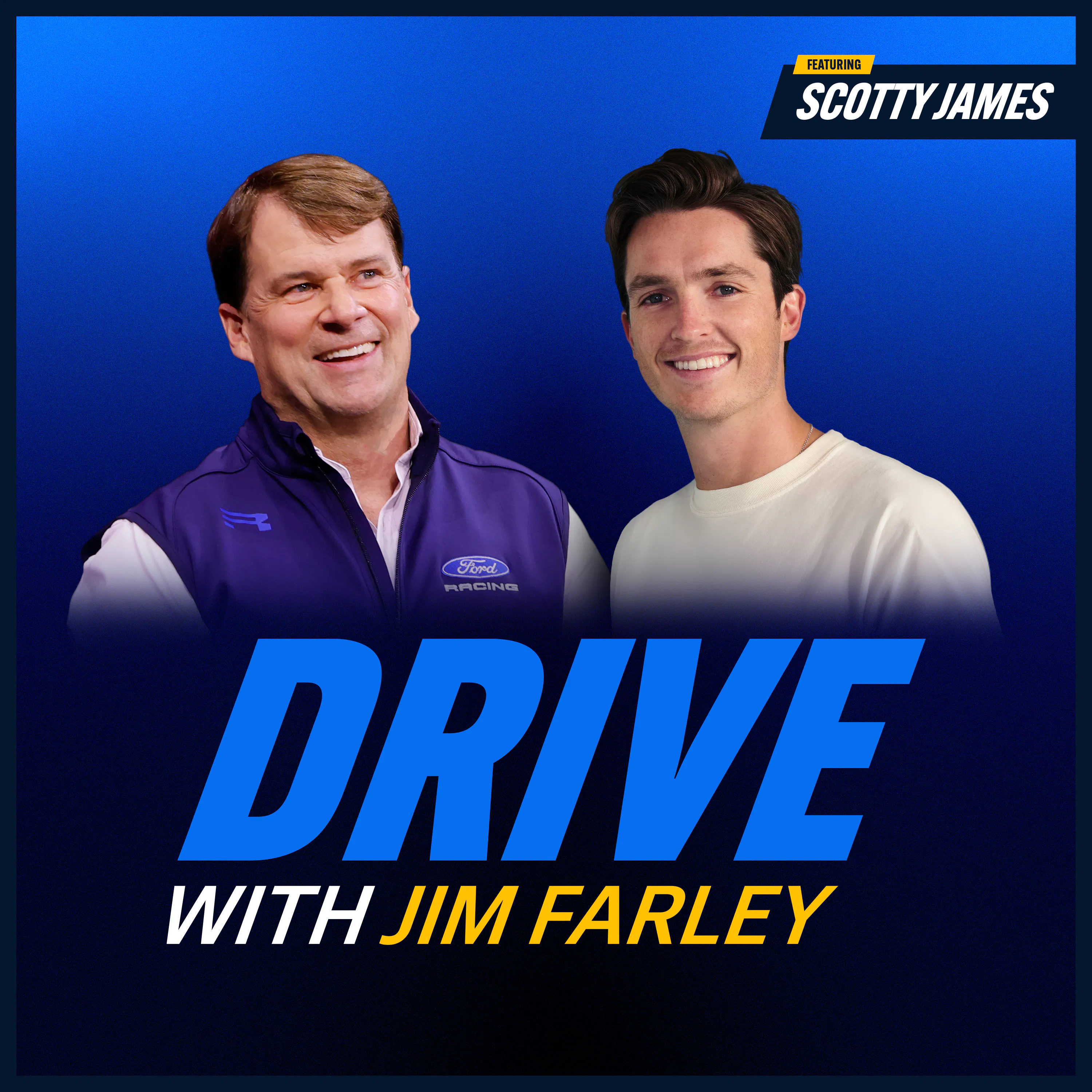
Scotty James talks with Jim Farley about building a career around one “great aim” and what resilience really looks like. The Australian snowboarder opens up on leaving home for the U.S. at 12, the emotional toll of chasing the Olympics young, and the moment after Sochi when he flipped his mindset and rebuilt his love for the sport. He connects motorcycling rivalries with his competitive drive, discusses perfection-focused visualization (not medal fantasies), and compares his control in snowboarding to Formula One’s team-and-car variables—plus how F1 helped him meet his wife and family ties in the paddock.
Jim hosts Australian halfpipe snowboarder Scotty James just before he competes in the 2026 Winter Olympics, alongside discussion of the documentary "Scotty James: Pipe Dreams." Scotty reflects on growing up around motorcycles with his dad, favorite MotoGP riders, and leaving home at twelve to pursue snowboarding, including the emotional toll and pressure after making his first Olympics at 15. He describes a pivotal post-Sochi reset—rebuilding his team and approach—leading to renewed focus from 2017 onward. Scotty shares advice to his younger self to “pursue one great aim with force and determination,” discusses healthy rivalries, and explains how he visualizes execution over medals.
00:00 Olympic Mindset Intro
00:50 Motorcycles and Family
02:54 MotoGP Heroes
04:02 Leaving Home at 12
06:38 Burnout and Reset
10:07 Advice to Younger Self
13:42 Rivals and Respect
18:15 Chasing Perfect Runs
27:42 Olympics Drop In
30:02 Force and Determination
33:09 Closing
DRIVE with Jim Farley is produced by Jesse Baker and Eric Nuzum of Magnificent Noise. Our production staff includes Sabrina Farhi and Kristen Mueller with help from Lori Arpin, Angela Brewer, Max Owen-Dunow, Anne Roberts, Samantha Singhal, Darnell Macon, Brandon Kennedy, and Mark Truby.
Follow Jim:
YouTube: https://www.youtube.com/@Jim.Farley
Instagram: https://www.instagram.com/jimfarley98/
Threads: https://www.threads.net/@jimfarley98
LinkedIn: https://www.linkedin.com/in/jim-farley/
Bluesky: https://bsky.app/profile/jimfarley.bsky.social
Twitter/X: https://twitter.com/jimfarley98
Learn more about your ad choices. Visit podcastchoices.com/adchoices