Happy New Year, everyone, and welcome back to the guest for our first show of 2026.
I'm Gary Gasteloo.
This is the Gary and Alec show.
And with me, fortunately not still wearing his disheveled tuxedo from New Year's Eve, Alex
Nunez.
How you doing?
Have you slept it off?
You feeling good?
You ready to go for the show?
I feel great.
I wanted to be sure I was like super on, you know, super on for today's show.
So here we are.
This is me super on.
We will be joined by a very exciting guest a little bit later on.
But right now I want to talk about the big kickoff to 2026.
Not often you see the first day of the year also a new model released the first
day of the year.
But that's what Ram did with the return of the Ram 1500 TRX.
Now with 777 horsepower, we knew this truck was coming Alex, but 777 that's pretty darn
cool.
It's pretty good.
And I have a feeling it's going to do just fine in the marketplace, you know, alongside
everything else in that price strata.
I think people have been waiting for this to come back.
You'll be happy it came back and some fun little new details on it, you know,
as well to, you know, also separate it from the previous iteration that, you know, had
its brief fight.
It is.
The nickname always has been the T Rex as in the dinosaur and they've actually updated
the logo now.
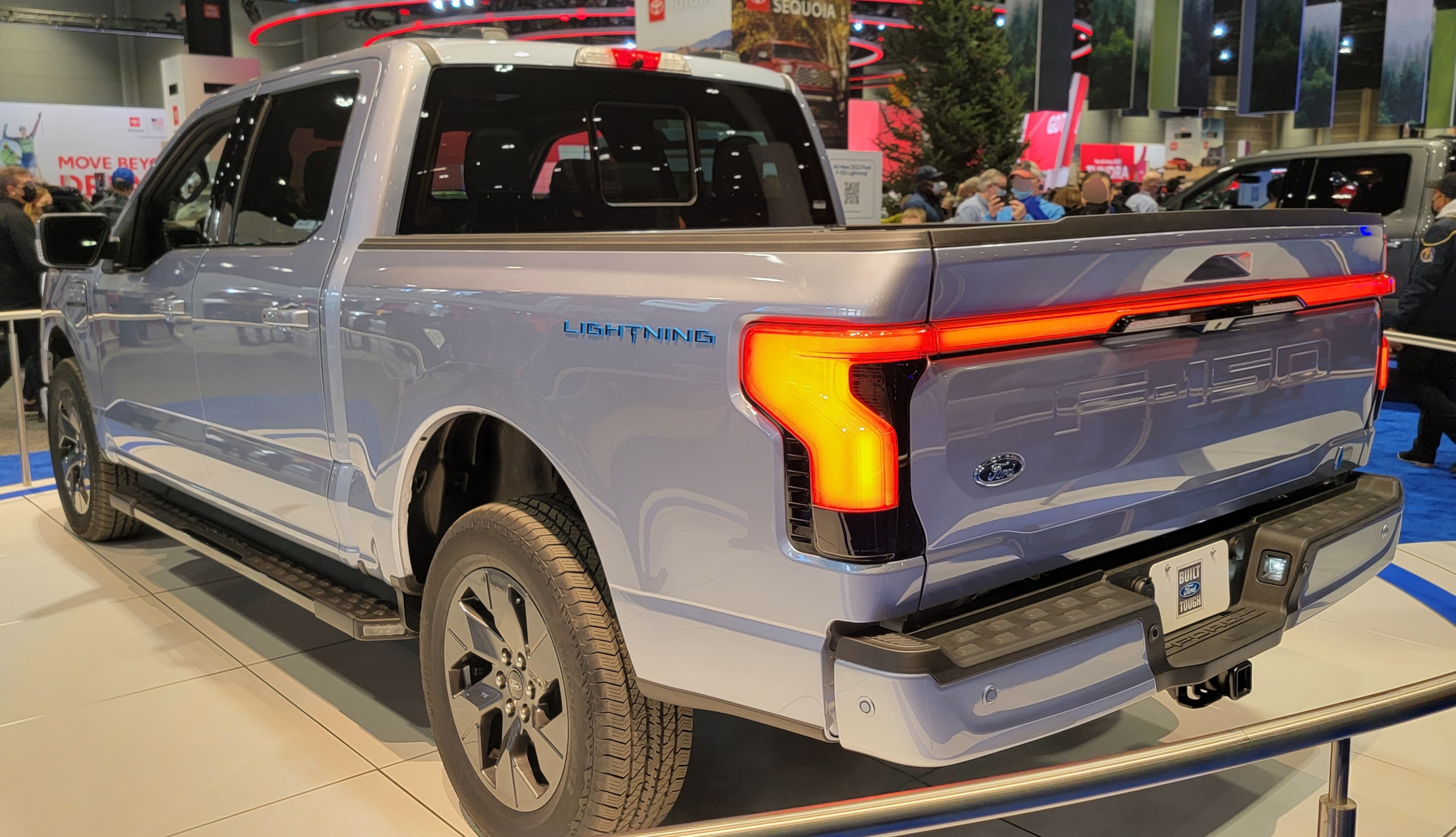
So there is a T Rex head on it $102,000 Ford F-150 Raptor R, of course, is its top
competitor.
That's about $114,000.
If you can believe that with 720 horsepower, I was checking the Internet listings the
other day.
I find seven Raptor R's on lots at dealers right now.
And they were all marked up to like $130,000, $140,000.
It's pretty wild how strong this market is for these big monster trucks.
Yes.
No, I mean, it's, it's there.
These are the everyday supercars for lack of a better, you know, term.
Listen, we know that the market for high value trucks is there.
I mean, you could spend more than that easily on a loaded up HD, anything.
So, you know, get your hot rod, TRX, Ram 1500, bazillion horsepower thing.
Maybe you'll start a new arm's race with Ford, who's going to, you know, who should
maybe react and, you know, could we see more power coming?
Who knows?
But this is the fun stuff.
And it's fun that it happened, you know, first day of the year.
Ford actually unveiled a 900 horsepower version of the Raptor R at SEMA last year.
They're thinking about doing one of those Ford racing parts kits for it, but that
doesn't count in the battle.
You're going to need to up it at the factory.
And honestly, the way things have been going with the Mustang lately, I wouldn't be surprised
to see a 2027 Raptor R that's got more than 720 horsepower.
Let the slug fest begin.
We know how much power the engines that these trucks run are actually capable of making.
And it's, it's far greater than, than what they're showing right now.
Still baffles me that General Motors is not in this game.
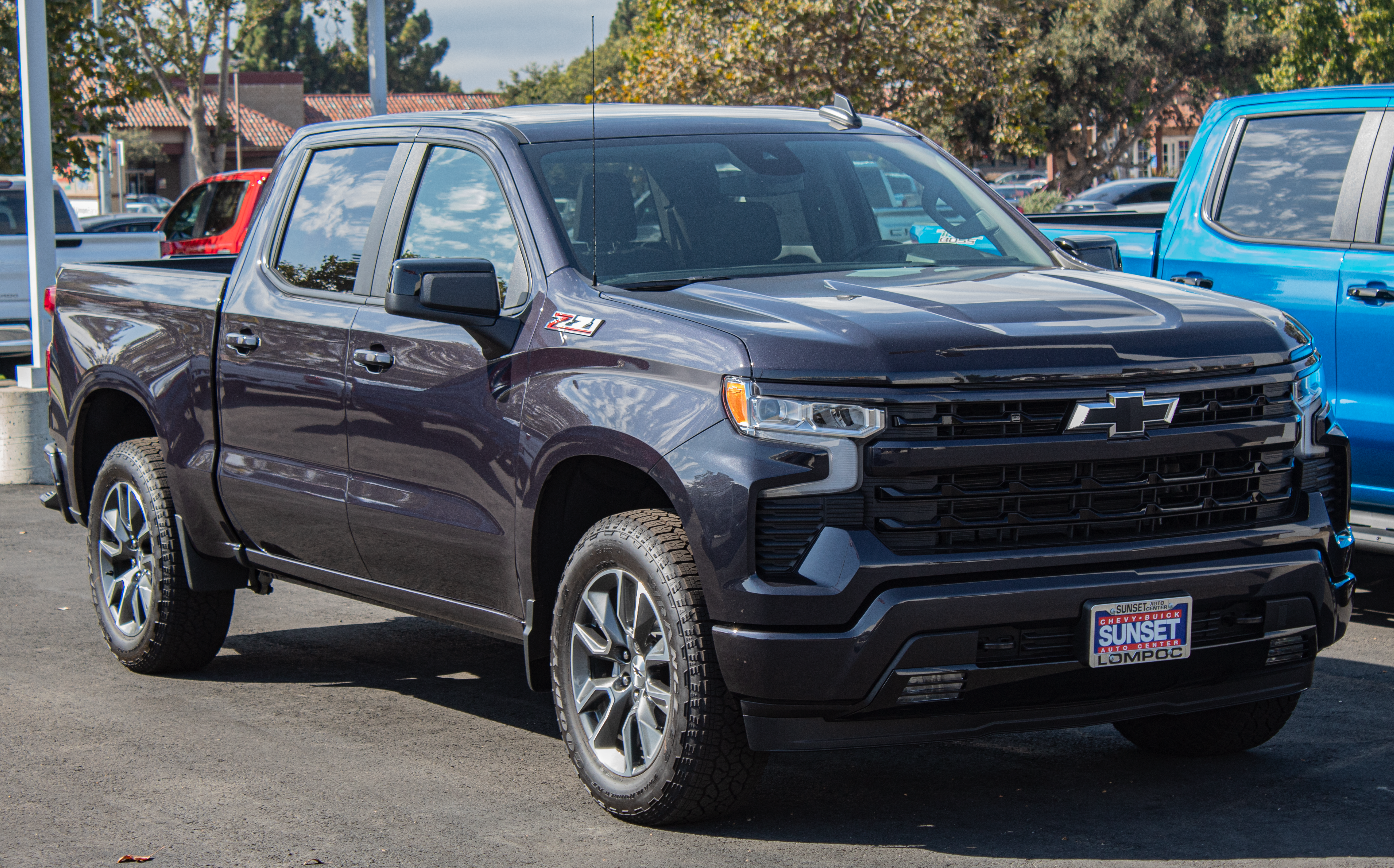
It's got the ZR2, the Silverado ZR2 lineup, but that's got the 420 horsepower V8.
They've done nothing with these superpower engines.
I'm guessing that's because they got caught up in the electrification thing.
But now that they have a new generation of V8s coming out next year, you think
they're finally going to get in to the super truck segment?
Listen, they have the parts bin.
They could do it so easily.
All the pieces are there.
You, you see it partially.
You see kind of what can happen.
Escalade V shows, I mean, it's really just like putting together for
scent Legos, but the blown V8 in, you know, in the truck chassis and,
and do your thing and, and you can go play with, with these guys.
You could do an off road, you know, God, or you could do a street truck thing
and go the totally opposite direction.
I would love to CG into it.
Let's see what happens.
Of course, the CRX is a big part of Ram's V8 engine truck resurgence.
An exciting part of that coming up is its return to NASCAR in February in
the NASCAR truck series with colleague racing.
That's one of the most exciting things happening this year in the world
of motorsports, but there's plenty more coming in the U.S.
and around the world and joining us now to help discuss that and also talk
about his exciting new project is motorsports photographer Jamie Price.
He's got a new book out called Raising Unfiltered a year in motorsports
captured on film.
You probably know Jamie from seeing his name down there under the photo
in one of your favorite automotive publications.
Jamie, thanks for joining us on the show.
Thanks for having me.
It's an honor.
So you shoot all over the world all the time, all these racing series,
but you have this idea that instead of shooting with a digital camera,
you're going to get some vintage cameras and bring them along and take shots
at some of these races.
What did inspire you to do that?
I'm sure your career has been in the digital age, I would imagine.
Did you ever even work in film or is this something entirely new for you?
I never shot film.
I kind of started my my first race that I covered was
a NASCAR truck race.
Actually, it was Kimmy Reichenan's debut in the NASCAR truck series
at Charlotte Motor Speedway in 2011.
That was one of the first first events that I ever shot with credentials.
I also covered an American Le Mans series race at mid Ohio
kind of around the same time in May of 2011.
So it was it all kind of happened at the same time for me,
but it was very deep into the digital age where I never shot film.
It just wasn't it still doesn't really have a place in modern sports
photography where our clients need pictures like rapidly within minutes
or at the most an hour after a session is a race is done.
Film just doesn't really work very well for that.
So film just was never something that I dabbled in.
But I found this photographer that was I guess he had he put up
a reel or something on Instagram with these little dinky NASCAR.
Like they look like NASCAR stock cars, but it's a film camera
and you reload 35 millimeter film into it.
And this photographer does not shoot any kind of motorsport or racing stuff.
And I was like, I have to have this.
I have to have this camera.
It looks so cool and so much fun.
And the pictures that he shot weren't awful.
So like I knew it had enough quality.
I just had enough of the components to be kind of interesting.
And so I brought one to to a test session actually
at Circuit of the Americas with Lamborghini when we were testing
the SC 63 hypercar that they had produced.
And I brought two or three rolls of film with me and it didn't work.
Basically like the camera I brought had broken
before I even loaded film into it.
So it was kind of a really discouraging start.
So I was like, all right, I'm going to give it one more shot.
And I bought another camera that I found on eBay and I brought it
to the Rolex 24 in 2024 and I shot five or six rolls of film on it.
And when they came back, I was like, OK, this is kind of cool, actually.
And so I just kept it going for the entire year of 2024.
It was really fun.
When you're shooting regular on digital cameras,
how many pictures do you take in a typical race?
Let's say a four in the one race, such a shorter race.
F1 is is honestly like not super labor intensive physically
or photography wise.
Like we're maybe doing, I don't know, like Monaco is kind of one
of the races where you shoot probably the most
because you can get to so much of the track so easily.
Somewhere like Circuit of the Americas or Miami, for example, or Vegas.
Like you might do maybe four or five thousand pictures
from the entire day, like drivers walking in and press conferences,
the race, the grid, all that stuff.
You know, it's it's actually not that much for a Formula One
just because the race is short and it's harder to get around corner to corner.
But Monaco, you know, you're probably doing eight to ten thousand
pictures from one race day.
And that doesn't include like practice or qualifying or anything.
And then a 24 hour race like Rolex 24,
you can almost triple that number.
It's closer to 30,000 because of the length of the race,
but because also like it's just a it's a great track
and the racing action is great.
But yeah, you're you're talking like tens of thousands of pictures.
And how many of those actually get used?
Or do you think are good enough to be used?
I'll probably deliver a couple hundred per client at the end of a race weekend.
So they'll probably get like between one hundred and fifty to two hundred.
So it's not it's not a small number of pictures that we're still delivering,
but it's not, you know, you're probably averaging like it's
it's like one percent of what you shoot is actually going to like end up anywhere.
And then what they use is ultimately up to them, not me.
So so what is it like to shoot just a couple of dozen pictures
and have no idea what they look like until you get them developed
a couple of days is really challenging.
It's really it's a weird thing for me because I have so much respect for
what my predecessors in photography and motorsport photography were doing
in the 60s, the 70s, the 80s, the 90s, you know, the early 2000s
before digital became something that was a reliable tool to use in a work environment
because there were a lot of holdouts for like the digital to the film
to digital switch, they were like, I don't know if this is going to work.
Like, you know, you've seen those funny headlines in newspapers
where it's like passing fad something called the Internet may or may not stick around.
It's kind of like that, where they were like,
digital is OK, but it's not as good quality as the film is.
And so there was a lot of holdouts to to digital.
But the work that they were producing, you know, in Formula One
in sports car racing, NASCAR World Rally Championship,
like Le Mans, you name it, some of the photographers,
I still think that their pictures are better than what we're producing today on digital.
I think it ultimately just comes down to, you know, the photographer
understanding the sport, which is still something that's important to understand.
You can't just go out there like wildly swinging
and hopefully you're going to get a nice picture.
You do actually have to think about your composition,
think about your lenses, think about your settings, all this stuff
that we're having to just kind of process on a minute by minute basis.
They were doing with film without being able to see it.
So when I have these dinky little cameras, I don't even have.
I don't have any ability to change settings.
I don't have any ability to change lenses.
The only thing I can change in these cameras is what film
stock I put in it and where I stand and point these cameras.
So it was it was kind of like almost back to basics type of photography for me.
The fun part about these cameras is that they even though I can't change the settings,
they just natively like for whatever however the shutter inside of it is built.
It has a slow shutter speed, meaning, you know, when you're taking a picture,
you if you're not panning with your subject or your subject
isn't standing perfectly still, you can you can get movement in the camera
and in the picture, which is a good and bad thing.
So if your subject is moving, it's great.
But if your subject isn't as moving and you're not wanting it to be moving,
it's really challenging.
So, you know, I can take these cameras out track side and I can do,
you know, basic level of panning with the cars as they go by.
But you don't know if you got it like I've gotten some really cool pictures
where I didn't intend for it to be as much movement as there is in it.
And it worked out like there's a really there's a shot in the book
where Fred Vassar, the team principal of Scooteria Ferrari,
was walking down Pit Lane and he walked in front of the Alpine.
They had set up a big Alpine team photo.
They were doing it actually for the F1 movie.
So all of the the cars, they lined them up on Pit Lane
and they had each car crew standing behind the cars and Brad Pitt
and some of the other actors went down the Pit Lane,
taking pictures with each crew as like a thank you for letting us ruin your
lives for three years or whatever it was, two and a half years.
And Fred's walking down Pit Lane after the Ferrari guys had done their photo
when he just walked in front of the Alpine team picture.
And I happen to like get a like I happen to take my little film camera
and take a picture of him walking past the Alpine car.
And he's kind of like doing like a funny hand motion,
like just kind of like trying to block the photographer.
And it's actually kind of a cool photo where you can see movement.
He's clearly walking.
The background is not super sharp, but he's sharp because I'm panning him.
It's stuff like that where it happened to work out,
but there's plenty of other times where a driver has been standing there.
I thought I got a shot where it's nice and sharp.
And then I get the film rolls back and it's like a muddy, massive blur.
And I'm like, well, well, going to be honest,
I was a little worried about doing an audio podcast about photography,
but you're drawing word pictures that are probably better than the real probably.
Pretty impressive to hear you describe the process and what these photos look like.
Let me ask you, do you have a particular favorite composition
you like to get at every race?
Cars come through a curve, cars up on the banking.
Like is there one you always are looking for when you go to the track?
It really depends on the track that we're going to.
I mean, some places like Monaco, again, for example, is a really cool race track.
Like, no, it doesn't produce great racing on TV,
but when you're standing there in person, it's incredible.
So you're trying to capture what the track is like to see in person.
Like I always kind of tell people that if you boil my job down
to the most basic element of what it is to be a photographer is that it's my job
to go and experience an event and document it through photography
for the people that weren't there or don't understand it
or don't have any understanding of what it's like to be at Le Mans
or what it's like to be at the Daytona 500 or Indy 500 or pick your race
and what it's like for someone to be there and experience that event,
the racetrack, the cars, how they attack the curbs.
So places like Daytona, you kind of have to do all of it
where they're up on the banking at sunrise in the middle of the night.
You go up to the grandstands
and then you go to places like Monaco, where you want to show the cars
right up against the Armco barriers, Le Mans.
You have big trees, like big, beautiful pine forests in the background
and the Dunlop Curve, which I guess is now the the Goodyear.
Goodyear Bridge and Goodyear Bridge, which is just I will die on the hill,
but it'll always be the Dunlop Bridge and Dunlop Curve.
Sorry, Goodyear, but you have to show all that stuff
and you have to go to as many places as you can.
And it always kind of makes me laugh when I see in my social media comments
where people are like, what an easy job to just stand there at one curb
like or one corner all day.
You know, like what a joke of a job.
This is like, dude, I've walked like 30 miles
like in the last 15 hours with camera gear and fighting the other guys
for that exactly. So yeah, like it's you kind of want to show all of it
and come away with what it's like to experience that event.
And that particular race, you know, not every event is a great event,
but some of them are pretty cool.
So you want to kind of show that as much as possible.
Given that everybody in the world has a camera now,
it's pretty impressive that some publications are still out there
hiring people like you to get the good stuff.
Do you think there's still a future you're going to be doing this
20 years from now or at some point?
Do they just give up and start throwing the junk on there?
You know, there's probably going to be a tipping point, but I don't know.
Like I'm hoping that AI, AI is a tool, like it's a tool that we all
can use in various different ways, you know, some ways or more.
They're going to hurt more jobs than others.
My hope is that, you know, a job like mine or wedding photographers,
you can't you can't recreate a moment.
You can't recreate like something that happened in real life.
And and those teams want that right then and there.
Like, could they go on chat, GPT and say, you know, make the A.O.
Rexy car be running on the banking at Daytona in the middle of the night?
Yes, they could.
But whether or not they choose to do that and choose to like fire
their photographers or I really don't know.
But my hope is that I'll be around for long enough to not have to worry about that.
But but we'll see, like it's all happened really fast.
And, you know, to be honest with you, the editorial side,
where magazines are hiring photographers, that probably stopped
being a pretty lucrative position probably
probably 10 years ago, maybe a little bit more than that.
When when print magazines kind of died a little bit, or they've just
shifted their editorial coverage, like it's just hard.
I personally don't go to Barnes and Noble anymore.
Like I don't, you know, I don't go to the bookstore anymore.
And, you know, unless I'm going through an airport,
it's it's rare that I'm picking up a magazine, you know, I'm a good example
of, you know, a millennial Gen Z, you know, like type of person
where it's I'm ingesting my news from the Internet
and I'm not holding print publications as much.
But the good news is that when editorial and newspapers and magazines
kind of stopped hiring photographers or stopped being it's not even that
they stopped hiring, they stopped being willing to pay for photography.
The teams and the manufacturers have not.
And that has that has stayed pretty consistent.
So, you know, even if even if the editorial side is dead,
you'll get some bronze driver that's running in a Corvette or a Ferrari.
They just want really cool pictures for their Instagram of them driving
in the Rolex 24 or Le Mans and they're willing to pay for it,
like far better than the magazines ever were, which is great.
I'll take that all day.
You got your season slated already.
What's your first race for twenty?
Yeah, more or less, it's I mean, it's kind of the good part
and bad part of a job like mine, where you don't
that there's not a ton of stability, but I do know more or less
where I am a year in advance.
So we can kind of plan some family vacations
because I have two kids and a wife and a dog.
So I have an actual life outside of the racetrack.
But my year usually starts with the Rolex 24
Imsa WeatherTech race.
So I'll be down in Daytona for almost two weeks
covering the test session.
We have a whole media day where we do staged studio,
like, you know, on a white backdrop photos with the drivers
or just teams together, that kind of stuff.
And then we go into actual race week, which is a whole another animal
into itself, which is just, you know, long days, long hours.
And then you then you have a 24 hour race at the back
of all of those long days and long hours.
And then I go straight to Canada for a winter ice driving event
with Lamborghini, which is always a really cool highlight of my year.
I mean, it's it's a cold, cold highlight.
But last year we had multiple days below zero.
And you're, you know, you're thrashing, you know,
Lamborghini Rivolto and the RSSE and some of the other products
that Lamborghini has and they have studded tires.
And we're just throwing them around an ice track in in Canada.
It's pretty awesome.
And they let me drive it occasionally, too.
So it's not a it's not a bad one.
And then I pretty much have a little bit of time off before I go to Bahrain
for the first, but it's not the actual first Formula One test of 2026.
So it kind of like it kind of just once it starts in January,
it doesn't really stop again until December.
Formula one, of course, the series with the most changes coming next year.
All new cars, all new power units, Cadillac join in the series,
Ford back in the series with Red Bull power trains.
And at least here in the US, the broadcast is going to be moving to Apple TV.
So that can have a big effect for the fans.
Alex, what do you think about the upcoming Formula One season?
I'm looking forward to it.
I'm looking forward to watching what comes out of Jamie's camera
because again, like new year, new cars, new everything.
It's exciting for everybody.
I mean, Jamie is so close to Formula One.
I think people forget, you know, the photographers that follow,
that travel to the different series and follow specific series,
like especially like Jamie does with Formula One amongst, you know,
his litany of other clients.
You sort of forget that the photographers are
are really tuned into what's going on on the ground.
And it's not because they're sitting in like every single
like meeting and everything like that.
It's just because you're so embedded, Jamie,
can you talk for a second about how you view the narratives
that happen in media and social, which I know you see.
It must be really interesting from your perspective
as somebody who actually sees what's going on, you know, on the ground,
sees some of the interplay between the teams and people
and has an understanding of how different the reality is
versus maybe what's presented.
I mean, the analogy I always use is like, you know,
once you see how the hot dog is made, like you'd never really look
at hot dogs the same way again.
It's very much the same way with Formula One.
And I think, you know, there's I won't say which publication
or which journalist it is, but there's a publication, a big one
in Formula One that pays an agency of photographers
to scoop them information occasionally.
Like, you know, because you're right, we do we do hear things
before almost everybody else, you know, sees it or does it.
Like, I have known about some of the projects
that have been coming down the pipe in sports car racing
long before they were announced, before they were shown to the world
because, you know, you start connecting dots.
It's like, why why do I see this driver walking into this
hauler or why is this person in this garage?
Why is this person sitting in this hospitality or you're asked
to even do like a photo shoot of said person in, you know,
somebody else's team gear before they've been announced
and you have a non-disclosure agreement, but we're not deaf.
Like, we're standing there with a camera with within generally,
like, like you can hear people talking.
Like, it's not that I can lip read, but like a little bit.
You can kind of tell what people are saying just by by listening
to what they're saying, but also seeing what their mouth is doing,
what their actions are and how they're there's just a whole side of it
that we are really, really entrenched in the the side of the sport
that the fans don't they have no idea.
They have no idea how how these teams utilize photographers
to on the technical side, on the tire management side.
That's just in Formula One.
Like, I've you know, I've done tech and spy photography
and MC WeatherTech World Endurance Championship Super
Trefeo, which is a one make series.
Like it's at every level and it's not just Formula One.
And that's not even talking about like kind of what you're talking about,
where it's, you know, the the inter-team politics of who's going where,
who's doing what or who's bringing in or, you know, sponsorship type
agreements, things like that, that for whatever reason,
we're almost usually the first people to hear about it just because
we're around all the time and we're just listening and talking to other people.
And, you know, we're we're not dumb.
We're journalists, essentially, just with a camera.
There is a handful of fans out there
that just think that photographers are just we just stand there and push buttons.
It's like, if you want to think that, be free, but it's not the actual case.
What was the vibe at the end of the season last year at F1?
Are they excited about this year?
Tripidacious, optimistic?
And what's what's the thought about how 2026 is going to go?
I think the cars are going to be completely different to drive.
I mean, I have colleagues, again, photographers that we are close
with the drivers and you talk to them and you kind of just chat as people,
but also people that are deeply passionate and passionate and interested
in motorsport and racing.
And, you know, like one of the drivers has said to a friend of mine
that the the cars are going to be completely different,
that there's going to be a lot of lift and coast down the straightaways
to recharge the batteries.
Then you go into a corner that it's going to be like corners
are going to be taken completely differently than they have been in the past.
So I think there's just a ton of question marks as to how this is actually going to go.
You know, big regulation change always has
like a big discrepancy between the top teams and the bottom teams.
I mean, it happens with every regulation change in Formula One
or or any type of racing where you have a big change to the aerodynamics
and the engines, you know, the last one Mercedes dominated
at the end of a Red Bull era previously.
So Mercedes then went on to win how many seasons consecutively.
It may be the same where you you have a lot of these teams
that just didn't didn't go down the right path
or their engine is underpowered or underperforming there.
They made a design chain or a design choice with the aerodynamics
that you can't easily unchange.
I think the teams are very cautious about where this is going to go.
I'm I'm curious just because, yes, they've made the cars smaller,
but they're not that much smaller and they're not that much lighter.
It's only like 50 kilograms or something lighter, which is,
you know, it's not that much at the end of the day.
And when you actually physically compare one of the cars from,
you know, the late nineties or early 2000s
to what we have to like, you know, at the end of 2025,
they are the 2025 cars are massive.
They are absolutely massive when you stand next to one.
And then you compare it to you're standing next to a car from 1998 or 2005.
They're so small and compared to what we have in the modern era.
And it's, you know, I'm I'm I'm going to hold my judgment
until I see the cars, hear the cars and see them performing
and see the drivers having to manage the the different
aerodynamic modes that they're going to have.
I think it's getting way too complicated, but it was already too complicated,
but it's getting even more complicated.
I've been watching some videos lately of people driving the old 1970s F1 cars.
And when you see them standing next to them, I mean, they were like,
yeah, literally, it's amazing that they were doing the speeds they were doing in them.
No crash protection whatsoever up front where their feet were in front of the front axle.
It really was just a whole different ballgame.
Yeah, I don't know that I want to go back to it, but at the same time,
wish there was a happy medium between, you know, the the boats that they've had
for the last couple of years and potentially what we'll have,
you know, for this new regulation change and
the smaller cars, lighter cars, nimble cars, where you see them turning on a dime,
like these cars don't turn on a dime unless they're,
you know, really doing, you know, 200 miles an hour
through maggots and beckets at Silverstone.
I don't know.
I really wish that Formula One would kind of go back to a simpler time a little bit.
Alex, one bummer with F1, the first three races,
Australia, China, Japan, they're all on in the middle of the night for many Americans.
So as far as that Cadillac kickoff, that's going to kind of stink.
On the other side of that, though, we've got the IndyCar season,
which is all on Fox Network this year again, which is great,
but not a lot of big changes to that series.
We talked about Mick Schumacher joining a couple of weeks ago.
They've got the new races at Arlington, Markham, Canada,
a city which Americans never heard of before IndyCar decided to hold a race there.
And the return to Phoenix, those are really the big things happening.
But do you think IndyCar's 2026 season
has potential to regain momentum for that series?
I think a lot of it depends on how Fox promotes,
gets out there and drives awareness.
I mean, I think the IndyCar series, I think, is full of great racing.
If you ask me, it's Alex Polo's series to lose once again,
unless and until someone shows up and demonstrates that on a consistent basis,
they could challenge, you know, a challenge you might see him run away with.
But I think the move to Fox, this second full year of it on,
for lack of a better term, free TV, helps a lot.
I think we saw some decent growth in that series last year.
And I love their season kickoff.
I love that. That's St. Pete Race. It looks so good on TV.
And it's always nice to see those cars
and, you know, that warm sort of palm tree backdrop environment.
When are they supposed to be getting a new chassis for IndyCar?
My understanding is I think it's 2028.
So it's like an eternity.
Yeah, they've bumped it to 2028.
That's supposed to be next year.
That's the biggest thing for me about IndyCar is that,
like, I've been shooting that chassis since 2012.
Yeah, that same chassis, like, OK, yeah, they added the air screen
and they've changed the aerodynamics.
Like there was the really heavy downforce versions of it,
but it hasn't changed.
Like I that's my biggest gripe with this with IndyCar is like,
I love IndyCar. It sounds good.
The racing is good.
The drivers at the like upper to elite level of IndyCar are great.
But it's just they need a new chassis like so badly.
And I don't know why it's taken this long.
One piece of good news for you is that one of the reasons
they delayed the new chassis is because the first prototype,
nobody liked how it looked and they wanted something
that had a better style to it.
So apparently they've worked on that
and are hopefully going to have something that looks good in 2028.
I hope so. We'll see.
I mean, I get to cover, you know, a handful of IndyCar races
and it's always a blast.
I've covered the Indy 500 before
and it's like nothing I've ever experienced.
And it does it has its place in motorsport.
Like, you know, I wish that the toxic F1 fan community
could like give it a chance and not it's not a comp.
It's not a competitor to Formula One.
It's just different.
And I love the series.
I think the drivers are some of the best in the world.
I mean, I wish that someone I wish we could get
like a proper taking Colton out of it.
Like I wish we could get like an Alex Polo sitting
in an actual F1 test where they're actually doing like times,
not kind of like a rookie test where we've got a Pato
doing like arrow testing or whatever he was doing in Abu Dhabi.
I would love to see like how they actually stocked up
because I know that they'd be competitive.
And I think everybody else in the racing industry knows
they'd be competitive, but the F1 fans are like, no,
stupid IndyCar drivers just go in circles.
It's going to be interesting to see how Colton Herta does in F2.
That's really going to give us an idea of where the level
of these drivers are, because that's where all the new Formula
One drivers come from.
Yep, it's going to be really interesting.
I know Colton, he's going to be driving for Wayne Taylor
Racing, which is one of my clients in in IMSA Leather Tech.
So I'll get a chance to kind of talk to him.
And I've known him for a couple of years now.
And he's a great guy, a great driver.
He he loves driving.
I mean, he's driven the GTLM cars.
He's driven IndyCar.
He's driven LMP2 cars.
He's driven the prototypes before.
He should be competitive.
Like if the Colton that I know shows up on track in F2,
he'll be competitive.
But F2 is extremely, extremely competitive and on tracks
that he doesn't have a ton of experience with.
So I hope it goes well.
Total coincidence that Colton Herta and Jordan Taylor
were on the last episode of The Gas in 2025.
Wow.
That's quite the lineup right there.
Rolex 24, of course, coming up as the first race really
of the 2026 season, first big race.
You guys are going to be there.
Any predictions for the IMSA season for either of you?
That's the beauty of IMSA is we could get a poll sitter.
Like we could say that Wayne Taylor racing will be on poll.
But then you at the end of Sunday afternoon
after the race, it could literally be anybody.
And I love that because you have so much at play.
You have so many different drivers
that have different strengths.
What if we get a wet race like we had in 2017 and 2015
before that?
There's so many different variables.
A couple of years ago, it was below 32 degrees at night.
It was like 26 or something.
And so you have some cars that absolutely just
came to life because of the cold temperatures.
And then other cars that just completely died off.
So sports car racing is one of those things that, again,
I wish fans would give it a chance.
Yes, it's hard to watch a 24 hour,
but there's so much going on with it
and how many different strategies there are
and how many different types of cars there are
with different strengths and weaknesses and looks
and engine sounds.
Like at the end of last season, we had the Valkyrie
running a straight pipe V12 competitive with the Cadillac
GTP car and a Lamborghini.
That's what I love about M-Sun, what
I love about world endurance championship
is that you just don't know until we get to the checkered
flag.
And that's what makes it fun.
You could think that your car is fast.
You could think your team's fast.
And it might not be.
From the driver perspective, you've got the Triple Crown,
Indy 500, Monaco, and then either Le Mans or Daytona.
But from the fans perspective, these
are really the amazing races to go to.
I mean, you can't beat.
Like, I'm a big advocate for going on social media
and trying to educate people.
And one of the things, like, even this morning,
I saw somebody like, what am I going to do in the off season
for Formula One?
Because it's two months long.
And no, what are we going to do with no racing on tracks?
They're already racing in Dakar right now.
And then we have the Rolex coming up in two and a half weeks,
three weeks for a race.
But you can also go to the Roar for free, I think.
If it's not free, it's like $5.
And then for the actual race week,
you get a four day ticket for $160 with garage access.
And you get to go on the grid.
I love the 24 hours of Le Mans.
Don't get me wrong, I love Le Mans.
I love Le Sarve.
I love the ACO and the World Endurance Championship
and the feeling of being on the grid
or watching the cars come to the start
for the 24 hours of Le Mans or being on the Mulsanne.
Like, I love it.
But the average person will not be allowed to go on the grid,
will not be allowed to go in the garage area
for the 24 hours of Le Mans.
Like, they have an open fan grid walk twice during the week.
But that's it.
And the garage area is open during Daytona all day,
all night for four days.
And you can go whenever you want without,
with no exceptions and the cars are literally lined up,
waiting to go out to qualifier,
waiting for when they get released
for their recon lap before the race starts.
Like, you can just go out there as a fan
with your, you know, your three-year-old.
Like, I have a four-year-old right now
and I could take her on the grid
for the 24 hours of Daytona.
And I think that's really, really special.
It is definitely like a really cool race.
You're gonna be bringing the film camera
with you again this year?
I will have it.
I don't know, I don't really know what my plan is with them.
I've shot enough that I could do a second book
from 2025.
And to be honest with you,
some of the pictures from this past year,
I actually like more than I,
some of the pictures from 2024.
I could do a second book,
but whether or not I want to is another story.
Like it was pretty labor-intensive.
And I, to be honest,
I don't honestly know how well it's selling right now.
So I haven't heard from the publisher,
like what our numbers are.
The European copies haven't even shipped yet
because they'll start shipping in January and mid-January.
So I don't, I really don't even have numbers.
Like, if we, if I just,
if we get all of these books sold,
then yeah, maybe we'll do a second one
because clearly there's the market for it,
but I don't, and we only did 1,500 copies.
It's not like I'm doing 20,000 copies.
It's only 1,500 copies.
So we'll see.
I will have the camera more for just to do it,
to have it for fun and maybe do a social media post,
but whether it turns into another book down the road,
I'm not sure yet.
All right, Jamie Price,
racing unfiltered a year in motorsports.
Captured on film, get it your favorite bookseller.
Don't expect to see Jamie in the bookstore
looking for it though.
He likes to shop online.
Thanks for joining us so much today.
We really enjoyed hearing about this.
Thanks Gary.
Thanks Alex.
It's been, it's been an honor.
Alex, hope you're feeling good and ready
for a big 2026 year on the gas.
I am super ready.
And I'm super ready to see Jamie in Daytona
because one of my clients happens to be Imsa.
So I will be there, you know?
Let's go baby.
It's going to be fun, man.
It will be a very good time.
And I hope everybody listening
makes a point to go to any race this year.
You know, to Jamie's point,
there is a lot more going on
in racing than Formula One
and a lot of it's affordable and a ton of fun.
If you have a track that's local
that is running literally anything,
go have a good time.
That's the gateway drug.
Just go to any race
and you will find yourself wanting to go
to a lot of races.
I think Jamie can back me up on that.
And then, you know, if you're smart,
you'll go to a race where he's taking photos
and you'll see the really cool stuff
that comes out of his camera.
And on your way to one of those tracks,
don't forget to tune in to The Gas
on your favorite podcast platform.
We'll see you next week.
The Gas is a production of ACARM Media
and American Cars and Ricin.com.
About this episode
Join Gary and Alex as they kick off 2026 with a discussion on the return of the Ram 1500 TRX, boasting 777 horsepower, and its competition against the Ford F-150 Raptor R. The episode features motorsports photographer Jamie Price, who shares insights from his new book 'Racing Unfiltered,' documenting a year in motorsports using vintage film cameras. Jamie discusses the challenges and joys of film photography in a digital age, his experiences at major races, and the evolving landscape of motorsport photography. The conversation also touches on the upcoming Formula 1 season and the excitement surrounding the Rolex 24.
Top motorsports photographer Jamey Price joins Gary and Alex to talk about his new book "Racing Unfiltered: A Year in Motorsports Captured on Film," which features photos taken at Formula 1 races, sports car races and premiere classic car events with old novelty 35mm NASCAR film cameras. Jamey also lifts the curtains to reveal what goes on behind the scenes in the life of a professional photographer following the world's top racing series.