Relationships are at the heart of everything we do,
and we pride ourselves on providing you
with the award-winning satisfaction
you've come to expect from us.
Thank you for rating TD Auto Finance number one
in dealer satisfaction among non-captive,
non-prime lenders with retail credit
for the eighth year in a row.
Contact us today at 1-855-TD-Auto-1
to learn more about our award-winning satisfaction.
For JD Power 2025 award information,
visit jdpower.com slash awards.
Hi everyone, and welcome to the September 12th,
2025 episode of the Automotive News Canada podcast.
I'm your host, Greg Lason,
the digital and mobile editor at Automotive News Canada.
Coming to you from just outside Windsor, Ontario,
the automotive capital of Canada.
Today on the show we'll hear
from Canadian Automobile Dealers Association CEO, Tim Royce.
He talks with Automotive News Canada,
Toronto Bureau Chief David Kennedy.
The two discuss the government's pause and review
of the zero emissions vehicle sales mandate.
They talk tariffs and sales and more.
But first, a look at some of the top Canadian
automotive stories of the week.
General Motors will continue
to operate its Oshawa assembly plant on three shifts.
Workers there will continue
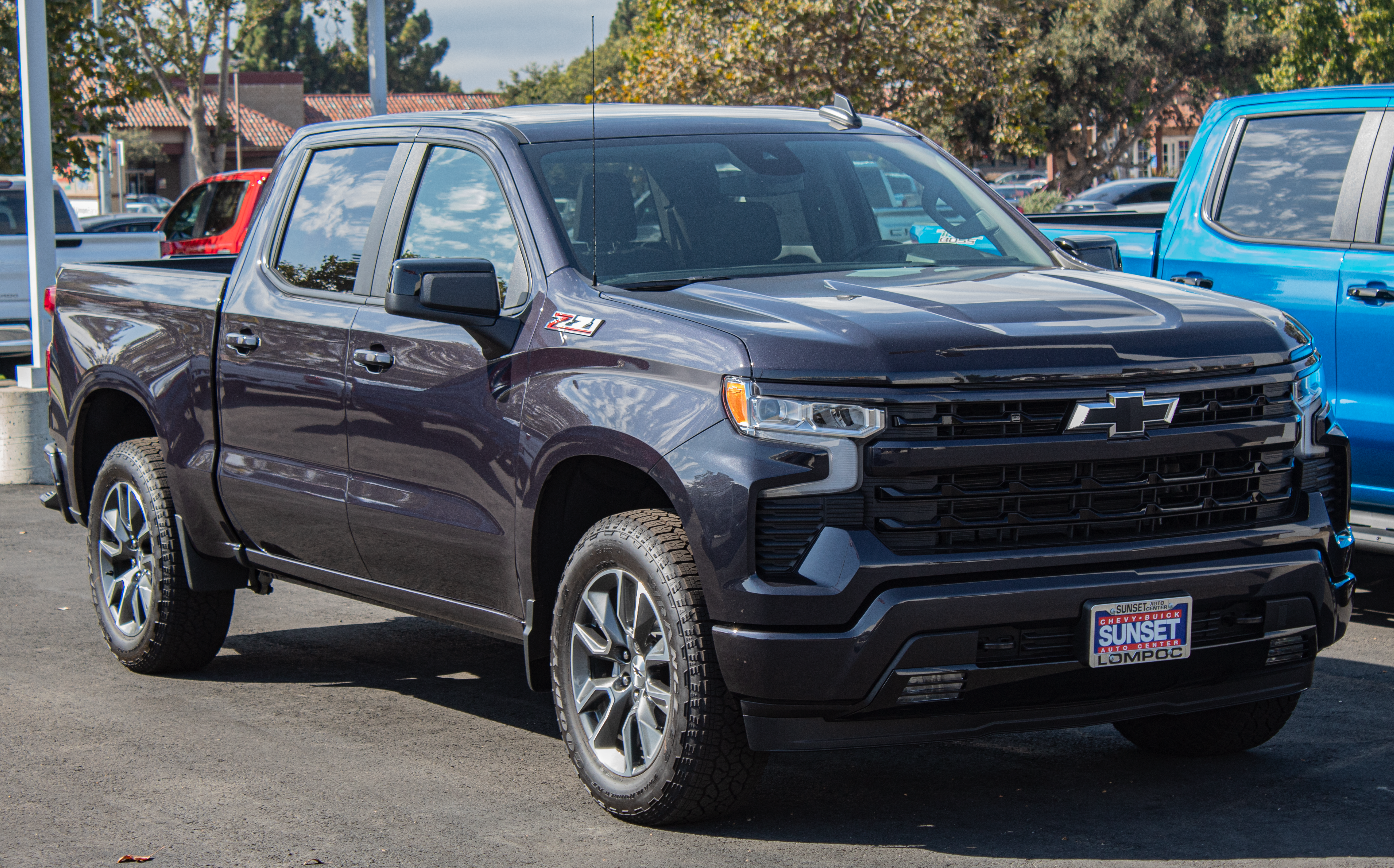
to build the Chevrolet Silverado pickup
on three shifts until January 30th, 2026.
The automaker said in May
that it would cancel the shift
during this year's third quarter.
Back then, it cited lower forecasted demand
and the evolving trade environment for its decision.
However, this week, GM said the extension
of the midnight shift was in response
to short-term production needs for light duty pickups.
In sticking with manufacturing,
Stellantis made similar news
a day after its competitor, General Motors.
Stellantis says that its Windsor assembly plant
in Windsor, Ontario
will return to a three shift operation.
The midnight shift will be added
during the first quarter of 2026.
The automaker says it made the decision, quote,
in anticipation of increased demand
for products built at the Windsor assembly plant.
Workers there build the Chrysler Pacifica minivan,
Chrysler Pacifica hybrid, Chrysler Grand Caravan
for the Canadian market,
and the Chrysler Voyager for US fleet sales.
They also build electric
and ice versions of the Dodge Charger.
We end with a retail note.
Canada's oldest Toyota dealership has been sold.
Northern Roads Auto Group recently acquired
Fort Erie's Bill's Toyota.
It was previously owned by the Pesinki family.
Bill Pesinki came to Canada from Hungary in 1957,
following the 1956 Hungarian Revolution.
Bill opened up Bill's Sonoco in December, 1958.
He then opened Bill's Texaco Toyota
and his Zuzu in 1965.
The store had been in the family ever since.
And that's a look at some of the top Canadian
automotive stories of the week.
Coming up, a conversation between our Toronto bureau chief,
David Kennedy, and Canadian automobile dealers
association CEO, Tim Royce.
Flexible, full spectrum,
and focused on the future of this great industry
with over 1 million customers served
in relationships with over 6,100 dealers nationwide.
We pride ourselves on our competitive programs,
digital solutions, and award-winning satisfaction.
We're committed to making it easy to finance a vehicle
and grow your business anywhere, anytime.
Thank you for rating TD Auto Finance number one
in dealer satisfaction among non-captive,
non-prime lenders with retail credit eight years in a row.
With your continued support,
we were also recognized as number one
in dealer satisfaction among non-captive prime lenders
with retail credit in the JD Power 2025
Canada Dealer Financing Satisfaction Study.
Contact us today at 1-855-TD-AUTO-1
to find out how we can support you
every step of the vehicle buying journey.
For JD Power 2025 award information,
visit jdpower.com slash awards.
Welcome back to the Automotive News Canada podcast.
And our host Greg Lason will now hear that conversation
between our Toronto Bureau Chief David Kennedy
and Canadian Automobile Dealers Association CEO Tim Royce.
So Tim, let's start with the big news.
The federal government has shelved the 2026 target
and put the EV mandate up for review.
You know, what's your reaction
and what do you want to see happen next?
This is actually welcome news
and a very good first positive step by the government
to realize that ambition and reality
where we're just not matching up at this point in time.
So we're very happy with this
because it gives all of industry a certainty now
at least for the next year of exactly where we stand.
And it gives all of us now a renewed avenue
with the government to engage with them
on what that revised plan should look like
if they want to adjust the plan or if it remains okay.
Let's go back to the drawing board completely.
And is that your hope?
Do you want things to go back to the drawing board here
or do you think there's a way to salvage
the legislation as it says?
Well, from our perspective,
any sort of adjusted plan needs to consider
just the vast differences that we have across Canada
when it comes to consumer demand.
One size does not fit all in our country.
The demand is not the same in downtown Vancouver
or Quebec City or Toronto than it is in rural Manitoba
or Alberta or even rural BC for that matter.
So whatever adjust the plan needs
to take that into consideration.
And also as well as just what is possible
and reasonable under what we currently have
in terms of charging infrastructure and energy grid,
both what we have and what is coming in also there,
the ambition and reality figures are staggering
when you look at what charging infrastructure
should have been built up by now
and where we currently actually are.
So this is, I think the main sort of input factors
that the government needs to consider
for any sort of adjustments
or any different plan that it wants to come up with.
So it's going to be our jobs, so to speak,
to provide it from our perspective
the maximum input that we can from the consumer side
and what consumers are seeing across this country.
And to also look at the pillar again
of what is required for consumer demand.
The mandate, the way it was conceived from the get-go
I think was flawed in saying,
well, we have to mandate what is available
in order for consumers to then buy them.
Well, I think jurisdictions that have been successful
with EVs and other parts of the world
have proven that it's actually the other way around.
What sort of incentives do you need on the consumer side?
Be it, yes, price incentives,
but also soft incentives
when it comes to charging availability infrastructure
infrastructure usage, like for example,
HOV lanes to be used by EVs
and things of that nature
that for example, No Way has been very successful.
And No Way didn't have
and has never had an EV mandate at all.
And yet they are very successful in EV.
So this is what we again,
we'll be trying to convey now to the government.
It's been an eventful year, I know.
So far sales have kind of managed to hold up
a little bit better than we probably thought initially
when the tariffs were first mentioned.
Has the resilience surprised you?
Quite frankly, it has.
The market has been surprisingly
resilient of first half of the year.
And through July, it was up by 5.8%
which if you were to extrapolate for the whole year
would put the total market at around 1.95
come into the year.
Now we do expect that the second half of the year
is gonna, the growth is gonna slow down somewhat.
And the August figures that actually just came out
this morning seem to indicate
that that's going to be the case.
So we don't necessarily see a market downturn
but we do see a slow in the growth.
So our current forecast is for a market of about 1.9,
1.92 for the total year.
What is interesting as well is that the growth
has come pretty much across the country in all provinces.
So even in the last couple of months
you've seen a growth in Quebec again
after the, let's call it the EV hangover
from last year after that was digested.
So we see strong growth across the country
in all provinces with the exception obviously
of the EV segment.
So to your question, yes, it's the market
has been surprisingly resilient.
Dealers have basically buckled down
and together with their manufacturers
and are finding the best way to deal
with the current uncertainties in the marketplace
when it comes to supplies
and what will now be supplied from where
and how and what a tariff rates
and that changes almost daily.
Some brands have already started adjusting
their supply into Canada from their various factories.
Others have had to hit the pause button for a bit
and are resuming supplies into Canada
especially those that were coming
from the US recently.
And there's going to be, let's just say
that the pricing impact of all of those changes
is only now starting to come
and hence are somewhat more cautious
a forecast for the second half of the year.
Yeah, and when it comes to some of those models
that we saw disappear but temporarily, hopefully
has that had an impact on sales for those brands?
Absolutely, it has and it has been
let's call it a tilting of the playing field
because not every brand was affected in the same way.
So if you recall back to let's say chip shortages
or the pandemic, pretty much everybody was affected
and everybody found ways to adjust to it
but regardless of what brand you had
if you did the right moves,
you were actually able to then adapt to the marketplace
and you weren't in a competitive disadvantage
to your dealer colleague down the street
and that is unfortunately now not the case.
So those brands that have been affected
have seen a let's say competitive disadvantage
versus other brands in the marketplace.
But again, even within that,
I must commend all OEMs working together
with their dealers, their dealer council
to find solutions, find and especially keep
their dealers appraised of what is going on
and keeping them informed so that they know
what is coming, what is not coming,
what to expect, what not.
And also being very open with dealers to say
this is what we don't know at this point in time
and that helps a lot for dealers then
to be able to adjust their planning.
So for example, if you were about to embark
on an expansion of your dealership or service workshop
do you put that off?
And yes, by how long, things of that nature
that dealers need to decide on a daily basis
that they're now able to do on a much good basis.
So I have to extend a kudos here to the OEMs
and what they have accomplished
in keeping dealers informed over the last months.
So when it comes to profitability,
automakers are obviously looking to find
some savings somewhere as they absorb these tariff costs.
You mentioned potential price hikes for consumers
kind of finding their way in,
probably some reduction in incentives
we're looking at as well.
Are automakers looking at cutting back dealer margin at all
to make up for some of those profits?
There was not a widespread discussion of that topic.
There are individual discussions around that
with certain brands,
but interestingly enough those discussions
were being had before any tariff issues.
So I'll just leave it at that.
The main focus I think is together the manufacturers
together with the dealers trying to figure out,
okay, what of this?
Can the market absorb or not?
How do we deal with it?
And it ends up being a combination
of things that need to happen.
You just mentioned one is, for example,
a cutback maybe an incentive spending into the marketplace.
A change in just straight up supply of vehicles
from one factor to another
somewhere else in the world,
those adjustments have already been made
over the last six months.
So I think it's in a different brand by brand
of what needs to be done or not be done.
And again, not every brand is affected.
There are certain brands that
due to the fact that they have production in Canada
are not affected with the remission scheme
that the Canadian government put in place.
Those that have production in Canada
as long as they maintain that production
are able to continue importing vehicles
without a Canadian tariff on it right now.
So those brands are not faced with those issues.
Yeah.
And when it comes to the tariffs
heading into the back half of the year,
I know you said you're a little bit worried
about where sales might go from here,
though they've been strong so far.
Is there anything else top of mind of concern
when it comes to tariffs?
If the concern is that things will not continue
in its current state of complete uncertainty.
Something will be,
some sort of agreement will be reached
perhaps a new USMCA or ACUSMA,
depending on which side of the border you talk about it,
will be reached or not reached
or is it going to be a trade agreement?
What are the details of those?
And we're starting to find out
there's lots of movement around those too.
There's now a bit of legal uncertainty
as to exactly how those tariffs are applied.
But I would caution everyone around,
even if there's certain legalities involved,
the political will is very clear.
And if it is not one path,
another one will be found for those things.
So just because there's a legal finding right now
for us doesn't signal that there's gonna be a change
in the approach of things,
meaning tariffs are here to stay
in one shape, way, or another.
And it's up to the different countries
to find our agreements with this new approach
of the US government.
But it does influence the timelines
and the mechanisms used for this for the tariffs.
So those will remain in place.
So that is what we do expect in the next,
let's call it month to two months,
something will have to be announced
between the US and Canada.
If it is a wholesale new renegotiation
and opening up of Kuzma now
or some sort of high level agreement
as has been found with other countries,
that is a bit uncertain at this moment,
but the current status quo will not continue.
Yeah, excellent.
And obviously I know you and your colleagues
spend quite a bit of time in Ottawa,
fighting for your members.
So tell me a little bit about what you're pushing for,
what sort of resolution to all of this
are you looking for from Ottawa?
Sure, so obviously on the tariff issue
we are as much involved as we can with the government
and we just finished a trade mission
down to Washington about a month ago
with our executive committee
where we met with US lawmakers, senators,
trade officials, Canadian embassy officials,
trade officials, et cetera,
in conveying our point of view for Canada.
So we are involved very much in that file
trying to influence things.
But however, we have been clear since quite a while ago
that regardless of that,
there's things that the Canadian government
should do and can do on their own
regardless of the current tariff discussions
to help the industry in its competitiveness.
And one of the other things I know
you've been arguing for in Ottawa this year
is sort of an expansion of the regulatory requirements
to bring in some more vehicles from Europe
and Japan and South Korea
that have never met North American standards.
But I think of station wagons for instance
have always been popular in Canada,
but not in the US.
So tell me a little bit about that push you've been having
and whether or not you found any receptive audience in Ottawa.
Yeah, that was the second point of our five-point framework
for automotive competitiveness
was to expand Canada's regulatory emissions
and standards and safety regulations.
We have the situation where
if the US doesn't want a vehicle,
we also don't get it in Canada.
And there's a number of vehicles
that Canadian consumers would love to buy.
Our members, the dealers would love to sell and service.
And the manufacturers would actually
also like to bring in and sell in Canada.
But the Canadian volume alone is too small
to warrant the adjustment investments
that need to be made for the standards.
And by the way, we're not talking about
the standards being better, which standard is better.
I mean, you've seen my quote and I continue to use that one.
If a vehicle is deemed safe enough environmentally
okay to driven on a German Autobahn,
why shouldn't it be driven on a Canadian highway?
So those things can be considered.
But again, we've put also very clear
from our perspective and our proposal
GART rails around the saying this should be applied
to those jurisdictions that have
a free trade agreement with Canada,
meaning South Korea, Japan, and European Union only.
And for those entities that are doing business in Canada
already, meaning they have either manufacturing
or production or a substantial sales
and marketing footprint in Canada
with a national therefore organization, right?
And the interesting part is we initially
received a lot of interest from the political side
in Ottawa, but again then some of the let's say transition
bureaucrats from the previous administration
and then quite frankly for years
they've been doing their job in trying
to only align with the US.
And by the way, we're not saying
we shouldn't align with the US, right?
What we're saying is there's a potential
for an additional add-on here.
They have sort of said, well,
but this is the way we've always done it.
Interestingly enough, in the US and European trade agreement,
the framework for the trade agreement,
there was a passage included as well
that both will look at reciprocal acceptance
of each other's standards.
So that's created a lot of interest as well.
And we'll be making sure that that is catches
the attention of all of our Canadian trade officials
as well in this discussion.
So it sounds like it may be turned into
of something a little bit more than just an idea.
Correct, correct.
And just over the last few days,
I've had conversations with those manufacturers
most interested in being able to do that
and they fully support this as well.
Again, not every single manufacturer, I have to say,
but there's quite a few that are behind this
and again our members would love to sell
and Canadian consumers would like to have those vehicles.
But we're not talking about changing
the complete makeup of the market to be clear.
95% of the market will still be fairly similar to the US,
pickups, SUVs, et cetera, but there are certain segments
in the market that are currently
not being served in Canada.
Now, some of the other points that we brought
to the forefront in our five point framework plan
are also still front and center for us.
The other one was the bank act which is up for review
and the Canadian banks wanna get into leasing in Canada,
which they're currently not able to do.
Our members do not support that expansion quite frankly
because then you would have big financial institutions
competing with them.
And those same financial institutions are the ones
that dictate the floor planning and the conditions
and have all of the information from the dealer.
So it would be unfair competition from our perspective.
So we're fighting against that.
The other one is the luxury tax,
the inefficient luxury tax.
It's time for that one to go.
And plus we're now faced with the fact that CRA,
which has been dealing with some issues on their own
was just the general Canadian population that you saw
and just this morning a Senator came out with saying,
you know, if the CRAs left the trust of the Canadian public
there's something to be said there
and an emergency plan of 100 days
is being put in place to correct that.
And now CRA is auditing dealers on the luxury tax
and we're heavily involved because they're unevenly applying
and they sometimes don't even know exactly the rules for that.
Like for example, our winter tires
to be included in the price yes or no
or a discount or a sales incentive from a manufacturer
and all of the things there's absolute chaos out there
which has led us to have to engage
with our great partners from MMP
to start providing support to dealers
as they have CRA auditors coming in
and what gets applied in one jurisdiction
is very different than another.
So that's something that we're also focused on.
And then the last one is, this might surprise you,
I'd like to thank the government
for finally doing what was the right thing
which is pay the dealers the money that were owed
for the emission vehicles, zero emission vehicle incentives
when the federal program wound down in February
dealers were left holding the bag
to the tune of almost an 11 million dollars in Canada.
That's something that we had to fight for months
but finally they relented, they saw that that was not right
and corrected the situation.
And we now know that the dealers
that were left holding the bag
they've been able to submit their claims
and are actually now receiving the money.
So thank you very much to the Canadian government
for doing that, I'll be a few months late
but better late than ever.
Yeah, and just on that ZEV incentive,
any word on when we might see something returned
I know the federal government has kind of been saying
that it will, but it's been months now
and really no word from Ottawa.
So this is an interesting one as well
where you have ministers that are not in charge
of the file saying something that it's gonna come back
and quite frankly making an announcement
this was months ago and basically any consumer
that was in the market saying,
oh, I'll hold off on buying a vehicle
because the incentives might be coming back.
It's been two months now and nothing's come back
but those were from ministers
that are not in charge of the files.
We do know that the government is
ruminating about potentially bringing back
EV incentives and they want to make certain adjustments
to it, which we would agree to
but we're also just concerned that in doing so
they might tilt the playing field
too much in one direction or another
like for example, you only get access to an EV incentive
if you're producing Canada
or for vehicles produced in Canada.
That would be a tilting of the playing field
too far in one direction
and that would not be something that we would agree to.
Now, if you wanna find a way to keep certain companies
out of those incentives that have been the ones
that have been unproportionately benefiting from that
and sometimes in dubious ways
as was the fact in February
when the incentive was wound down.
Okay, but then engage with industry on this
and that has so far not happened.
So both, all the manufacturers and us
we have told the government
if you're thinking of doing something
and tweaking it or changing it, consult with us
before you do so and before announcing something
that then might have certain areas of concern
especially if you still want the dealers
to continue fronting the money on your behalf
as was the case before.
Because again, the system in place
is that the dealer is giving that money to the consumer
in the assumption that he's gonna be paid back
by the government and that for a while there was not the case.
So if you want our members to continue on that
you better consult with us
on how that system is gonna look going forward.
So that is something that we hope that now
the government's back in session
we'll be able to get a bit of movement on.
I'd like to thank Tim for his time
and David for conducting the interview.
If you'd like to be a guest
or have a suggestion or simply want to comment,
email me at glasenatautonews.com
and remember you can listen to all our previous podcasts
on Spotify, iTunes, Google Play or on our website
automotivenews.ca.
Just scroll to the podcast hub
in the middle of our homepage
and don't forget you can follow Automotive News Canada
on X where we're at Autonews Canada
and you can find me there too under at glasen, A-N-C.
And finally, look for us on LinkedIn.
Just search Automotive News Canada.
That does it for this episode
of the Automotive News Canada podcast.
We hope you'll join us next time.
So long everybody.
About this episode
Tim Reuss, CEO of the Canadian Automobile Dealers Association, discusses the recent pause on the zero emissions vehicle (ZEV) sales mandate and its implications for the automotive industry. He emphasizes the need for a tailored approach to EV policies that considers regional consumer demand and infrastructure capabilities. The conversation also covers the resilience of vehicle sales amidst tariffs and supply chain challenges, as well as ongoing discussions about regulatory changes to allow more vehicle imports from Europe and Asia. Reuss highlights the importance of dealer input in shaping future policies.
GM Oshawa extends third shift; Stellantis to add shift in Windsor; Canada’s oldest Toyota store is sold. Plus, Canadian Automobile Dealers’ Association CEO Tim Ruess talks ZEV sales mandates, tariffs, sales and more.