This podcast is brought to you by Reynolds and Reynolds,
the industry leader in automotive technology.
Learn how Spark AI, Reynolds Unified AI data layer,
can help you unlock your full potential
by visiting rayray.com slash spark dash AI.
That's R-E-Y, R-E-Y dot com slash spark dash AI.
Welcome to Daily Drive for Friday, September 19th, 2025.
I'm Kellan Walker in Las Vegas.
Today on the show, VW will hike prices for most 2026 models.
Automakers and suppliers warn the unpredictability
of tariffs make it harder to justify U.S. investments.
And the Senate confirms a new NHTSA chief.
Plus, Pied Piper has a new look
at how well dealerships are doing
using their websites to set up service appointments.
The very first step to keeping those customers
as well as everybody else is making it super easy
and satisfying, let's say, to schedule service.
Let's run through all the news you need to know
to keep up in the auto industry.
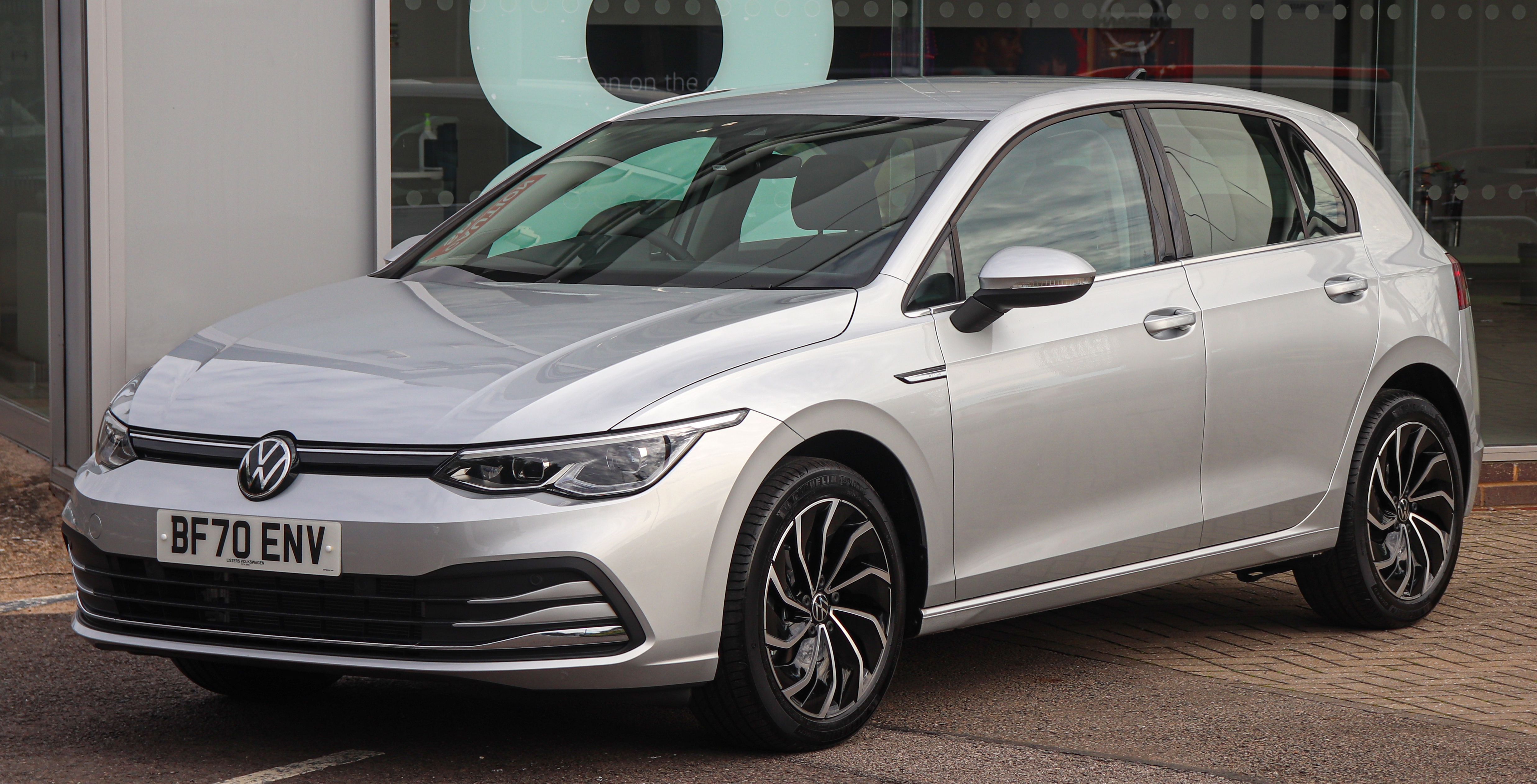
Volkswagen of America is raising starting prices
on most 2026 models.
In some cases, they're the second price hikes by VW
since the U.S. slapped steep tariffs
on light vehicle imports in April.
The latest price increases by VW range from 2.9 to 6.5%,
depending on the model.
The VW brand's U.S. sales plunged 29% in the second quarter
and 13% in the first half.
Automakers and suppliers are urging
the Trump administration to end
unpredictable expansions of tariffs,
saying they're making it harder
to justify investments in the U.S.
That's the message of a letter
this week to the Trump administration
from automotive trade groups and associations
representing other industries.
The business groups criticized the recent expansion
of steel and aluminum tariffs
to cover more than 400 new products,
including auto parts and industrial robotics.
They say it was implemented without adequate notice
and creates more cost and uncertainty for U.S. businesses.
The letter comes as the Trump administration
appears poised to expand the number
of vehicle parts subject to auto tariffs.
And the U.S. Senate has voted to confirm a new NHTSA chief.
The Senate voted on Thursday
to confirm Jonathan Morrison to head the agency,
along with 47 other nominees to other positions.
It's the first time that NHTSA has had
a permanent leader in three years.
Morrison is a former lawyer at Apple
and chief counsel at NHTSA
during President Trump's first term.
And those are today's headlines.
You can find more details on all those stories
at AutoNews.com.
Volkswagen's planned price hikes for the next model year
come at a pivotal time for the automaker.
Our own Jake Nier spoke with automotive news reporter
Jack Wallsworth today about the move
and how dealers might react.
Jack, welcome back to Daily Drive.
Great, thanks for having me.
Great, good to be here.
So Volkswagen of America is raising prices
on most of its 2026 models.
How much of this is about tariffs?
It's kind of tough to say.
Volkswagen hasn't come out and said
this is because of tariffs,
but kind of like reading in between the lines,
it definitely seems because of tariffs.
What's interesting with Volkswagen's lineup
is a lot of the vehicles were either refreshed
or redesigned for the 2025 model year,
which is typically when you see price increases,
but the fact that they're raising prices,
again, for the 2026 model year,
when there's been like hardly any significant changes
kind of makes you think of this
likely because of tariffs.
Volkswagen like many brands is reliant on imports.
They make vehicles in Mexico, Germany
and Chattanooga, Tennessee.
Most of their volume comes out of Mexico.
The vehicles that come out of Germany
are more lower volume, but still are significant.
So it kind of seemed like this was
probably gonna happen at some point.
The Volkswagen to their credit back in April
said they were gonna price guarantee vehicles through May.
They got extended through June
and then we saw a couple increases in mid July
and then as these 2026 model years
have come out more increases there.
So in some ways seemed inevitable,
but it's just kind of like the next chapter
on this, I guess.
Yeah, as you just mentioned,
and as you say in your reporting,
Volkswagen seems to be sort of especially exposed
to tariffs in this case,
but I'm curious how much of that could change maybe
with the new trade terms.
Obviously negotiations are going on.
We already have a framework in the EU.
Do you think that there's still a lot up in the air for VW?
Yeah, it does seem that way.
With, like I said, the vehicles they get out of Germany,
it's the Golf GTI and the Golf R and the ID bus.
Those are all relatively low volume,
but they're kind of halo vehicles.
They bring a lot of eyeballs to the brand.
The GTI and the R in this latest round of increases
had the most significant jump up close to 6.5%.
We don't have ID bus pricing,
but that potentially could go up.
And I think a lot of people like those vehicles,
but it's always the price is noticeable.
So if Volkswagen gets some relief on EU tariffs,
that would, it's still gonna be higher
than what they were pre-tariffs,
but that would certainly be better
than the 27.5% that they're facing right now.
And with the vehicles coming out of Mexico,
like I said earlier,
those are some really big volume nameplates.
The Tiguan has historically been their best seller.
We don't have 2026 while you're pricing,
but even if that's up a little bit,
that would be, the compact crossover segment
is super, super competitive.
And if Volkswagen's just redesigned their Tiguan,
it's the latest and best.
And if the price has to go up,
that's gonna have an impact.
So if they can get some relief out of Mexico,
it is worth noting that Volkswagen's made in Mexico
are USMCA compliant.
So it could have been worse.
It's not like Audi, where Audi has the Q5
also made in Mexico that is not compliant.
So Volkswagen brand is feeling a little less pain,
but I think Volkswagen like all automakers
are just, they're hoping for clarity.
And Volkswagen group leadership has just kind of alluded to
like once they have clarity on tariffs,
that might be when they make decisions
about potential plant expansions
or adding new production to US sites.
They've got the Chattanooga plant.
They could potentially add other brands and models there.
There's the Scout Motors plant
under construction in South Carolina.
That's been kind of alluded to being a potential spot
for additional Volkswagen group production.
But I think we might not see those announcements
until Volkswagen gets clarity on the tariffs
are gonna be going forward.
So more to come for sure.
I also assume that dealers are gonna be sort of waiting
very patiently, hopefully about the,
about what will happen with that.
As we mentioned on the show already,
BW brands, US sales, pretty rough first half of the year.
They've already been down.
Price increases, I assume, not great news for dealers.
Yeah, I know it's gonna be another thing
for them to work through.
At least they do have new-ish products.
You know, the Tiguan is,
it just came out in May of this year as a redesign.
The Taos and Jetta were freshened last year,
not significant.
I mean, at least the lineup is somewhat new.
It's not like they have a super old, old lineup here
and then the price increases come.
But yeah, another hoop for them
to jump through for sure.
Jack Wallsworth covers VW for us.
Here at Automotive News.
Jack, thanks so much for joining us.
You bet, thanks, Jake.
Coming up, a new look at which auto brands
are best at scheduling service appointments
by phone or a website.
That's next on Daily Drive.
As your business gets more complex,
it feels like productivity can't go any higher.
You need a way to move forward to a future
where you don't have to start every interaction
from scratch.
You don't have to search for actionable information.
You don't have to manually pull data to make decisions.
You need a future where the complex is made simple
and you can do more with less.
How do you get there?
It all starts with a spark.
Unlock your full potential with the next generation
of automotive dealership technology
that actually does some of the heavy lifting for you
by texting leads, transcribing calls,
making data backed recommendations
and boosting your overall productivity
so that you can spend your time and energy
on what truly matters, selling cars
and growing your business.
Spark AI, Reynolds Unified AI Data Layer
can empower your dealership to operate more efficiently
and effectively than ever before.
So you can do more, sell more and make more.
To learn how Spark AI can help your dealership
reach its full potential, visit rayray.com
slash spark dash AI today.
That's R-E-Y, R-E-Y.com slash spark dash AI to learn more.
Welcome back to Daily Drive.
I'm Kellan Walker.
Dealership service customers want a seamless experience
when scheduling a service appointment
either by phone or through the store's website.
Pied Pipers, Cam and Fran O'Hagan
speak with automotive news senior retail editor
Dan Shine about what differentiated the brands
on top of their rankings for scheduling service calls
effectively from those near the bottom.
Fran O'Hagan, welcome back to Daily Drive
and to Cam O'Hagan, welcome for the first time.
Hey, thanks for having us.
So Pied Pipers back with another index,
I guess you would say from the brands
and how they do with service effectiveness.
Tell me what you guys looked at this time around.
Sure, so we have been measuring the brands
for service telephone for a while and ranking them.
In other words, what happens when customers try to call
and schedule an appointment?
But this year for the first time,
yes, we measured what happens when they call on the phone
but we also measured what happens
when they go to a dealer website
and schedule service online.
We combined those two to create a new service
scheduling effectiveness that measures it both ways.
And how are brands ranked or measured
or judged to come up with, to come up with this ranking?
You know, the easiest way to think of it
is the first step, let's call it the ante to play
is to meet customer expectations.
And if you think about it,
you're calling on the phone or if you're scheduling online,
really what you want is to quickly be able to reach someone
or something that can give you an appointment
short amount of time and the appointment isn't too far out.
It's not four weeks out or eight weeks out.
It's a reasonable amount of time.
So those two things are really the only things
that customers are thinking about
when they set out to schedule service.
Now there are also a bunch of things
that dealerships can do that go above and beyond that.
And the dealerships with the highest customer loyalty
tend to be the ones who go above and beyond.
I'd say another one.
So this is your first year mentoring service website
effectiveness, another important aspect
that both service website, service phone,
both from the charity importance of quickly reaching
someone or something, you know,
a schedule appointment online, that's too far out.
But another aspect of service website effectiveness is
what's the follow up confirmation?
Like do you receive anything?
Do you receive both email and text?
And that part is important as well
because you submit your service inquiry.
Am I going to show up to the dealership
and are they going to say,
who are you?
Well, we actually get it from that.
That's an important satisfier.
So we mentioned that as well
that since you've done those,
and that's the results that we found this year
or a lower rate of consistency
than we probably would have predicted
prior to getting the data.
When things went poorly,
when people used a website to try
and schedule an appointment for at a dealership,
what were some of the things
that you kind of found over and over
that went wrong for consumers?
Let's say it's a mix of digital failures
such as the appointment calendar
within the program, not working.
That came up as a reason multiple times.
The other, that's the most common
is requiring a VIN number either by Chrome
or through the website.
And how many of us know
our VIN number off the top of our head right now?
Unlikely.
So that's a barrier as well.
And for switching out to those brands
that scored well
when it came to service telephone effectiveness,
what were some of kind of the common traits
or takeaways that you noticed
with the high-performing brands?
So the top-performing brand
from the phone side
was Lexus that scored 68
on average out of the dealerships.
And what that meant was
the rate of a customer calling out
kind of set up a service appointment
that resulted in an appointment
to be scheduled 91% of the time.
The industry average is 81%.
A lot of the brands are neck and neck
but that's a pretty big jump ahead
of the average and their average number of days
after their own established appointment
was less than half the amount of time
compared to the industry average.
They're less than two days out on average
compared to before for the industry.
And then at the rate of the unprompted,
the service associate
asking about any other services,
the customer needs on main one,
upselling opportunity
that occurred about a third of the time,
the rate of that current in the industry
though is a lot less, I think, 3%.
So the top brands are doing it
more than double the rate
on a per customer basis.
And then also, I guess we have to talk a little bit about
like for bad things that maybe went poorly
when customers tried to call on the phone.
What are some of those hiccups
that kind of keep occurring
when you study these brands?
Well, I'd say that similar
those same metrics, but on the bottom end,
either a combination of visual problems
such as not reaching the user for big drops
in transfer or required in combination
of all of those issues or other ones,
the lowest brands in terms of overall performance
or telephone, the customers getting an appointment
for specific dating time
in the fifties and sixties percent of the time.
So big drop compared to the industry.
And for a web, there's another angle to consider
and that is, is it easy to change your appointment
or cancel your appointment?
And if you look at the rankings of the brands
for their web performance,
the ones at the bottom also tend to be,
let's call it negligent
and not give their customers a way
to easily change or cancel the appointment
without having to call somebody.
Let's talk about, you mentioned,
the Lexus was scored the highest
for in the telephone effectiveness.
Who were the two through five
in the telephone effectiveness rankings?
So two through five for telephone.
Second place is Subaru, square 65.
Lexus was at the top of the 68.
Third place was Mini with the 64.
So Mini was high in both of these.
Toyota with the 63 and BMW with the 62.
And what about for a website?
What's one through five for a website effectiveness?
So for the website side,
Fortune was on top of an average score of 71.
Industry average for reference,
came out to 59.
Second place was Mini, so Mini was high in both.
That's how well their overall
service getting effects was number one.
Mazda was third place for
the telephone website with 66,
followed by BMW 65,
and fifth place Cadillac with 65 as well.
So those kind of scores were combined somewhat
and to make an overall ranking
and Caminch and Mini came out on top
because they just, you know, based off
being high in both of these ones.
What are the top five overall?
Top five overall, so her overall service
and going back to this,
and at which he's never the phone and web aspect.
Mini on top of an overall average score of 66.
Lexus was 64, BMW was 64,
Mazda was 64, and then Pondrum was 63.
Industry average of 51.
All right.
So what's the overall takeaway
for dealerships and their brands
when they're thinking about, you know,
an important fixed ops,
always important for the bottom line of dealerships?
What should they be mindful of,
the lessons that they can learn from this
and making it easy for people to make,
come in and for service?
So what we find from talking with
service directors at the large dealer groups,
for example, they wake up in the morning
thinking about how do I hold onto
these three, four, five year old car owners?
I wanna keep them.
I don't want them to go to an independent.
And the very first step to keeping those customers
as well as everybody else is making it super easy
and satisfying, let's say, to schedule service.
What we also have found is that what we're measuring,
what's happening on the phone
or what's happening with the website
tends to be invisible.
And you can have a brilliant service director
if the brilliant service director
just isn't aware of what's breaking
and what's happening.
They can't really manage their business.
So it's super important to actually know what is happening
both on the phone and through web.
Okay.
Well, always interesting insights into service,
fixed ops operations at dealerships
and their brands that they represent.
Cam, Fran, thanks so much for your time.
Thank you.
Pied Piper's Cam and Fran O'Hagan
spoke with Automotive News senior retail editor Dan Shine.
That's Daily Drive for today.
I'm Kellan Walker.
Thanks to Automotive News executive producer Jake Neer
as well as our own Jack Wallsworth and John Irwin
for their reporting for today's podcast.
You can get the latest news on service and parts,
tariffs and everything happening in the auto industry
at AutoNews.com.
Come back over the weekend
for our weekend drive edition of the show.
Automotive News journalist Hannah Lutz
and Mike Martinez talk about the biggest news stories
of the past week, including Ford's decision
to move to a new headquarters.
One way to attract and retain the best talent
is by having the most state-of-the-art
desirable places to work.
They are smart to do this
because they recognize who they're competing with.
They're competing with Silicon Valley.
We'd love to hear from you.
Let us know what you think of the show
and the topics we cover today.
Send us an email at Daily Drive at autonews.com
or leave us a voicemail at 313-444-2774.
And if you enjoy the podcast,
remember to like, leave a review and subscribe
so you never miss an episode.
About this episode
Volkswagen is raising prices on most 2026 models, citing tariffs as a potential factor amidst a significant drop in U.S. sales. The episode discusses the implications of these price hikes and the ongoing unpredictability of tariffs on U.S. investments. Additionally, Pied Piper reveals new rankings of auto brands based on their service appointment scheduling effectiveness, highlighting the importance of seamless customer experiences both online and via phone. Lexus and Mini emerge as top performers, while the episode emphasizes the need for dealerships to improve their service processes to retain customers.
Volkswagen of America is raising starting prices on most 2026 models. Automakers and suppliers warn the unpredictability of tariffs makes it harder to justify U.S. investments. Plus, Pied Piper has a new look at which auto brands are best at scheduling service appointments by phone or website.