This podcast is brought to you by AutoVision and its AI assistant, Avery.
Avery delivers data-driven appraisals, pricing, and detailed strategies for every vehicle.
Visit AutoVision.com to learn more about Avery, where precision meets profit.
Welcome to Daily Drive for Thursday, September 4th, 2025. I'm Kellen Walker in Las Vegas.
Today on the show, three Japanese automakers see U.S. sales fall in August.
Cadillac cuts back EV production, at least temporarily,
and dealers are feeling gloomier than ever about EV markets. Plus, automotive news
Canada's Greg Lason joins the show to give an update on how auto companies north of the border
are doing amid tariffs and on trade talks starting up again after about a month of silence.
It appears they're back on speaking terms. It appears to be one-on-one,
and we have sent some politicians to Washington to sort this out.
Let's run through all the news you need to know to keep up in the auto industry.
We had some positive U.S. sales news to report on yesterday's show,
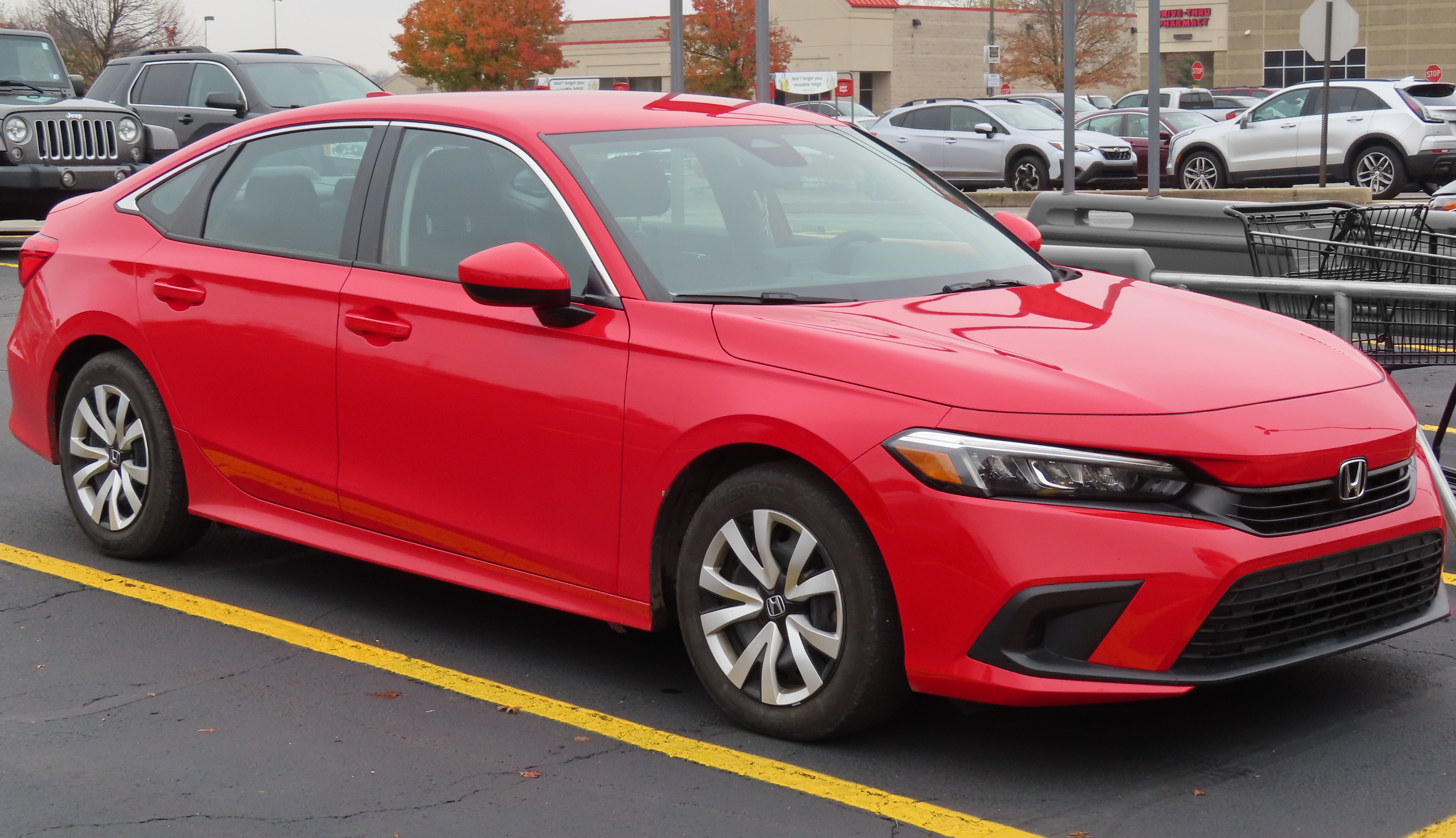
but the automakers reporting since then haven't fared as well. In August, Honda says U.S. sales
fell more than 5%. That's despite major gains for the Passport midsize crossover
and prologue electric crossover. Deliveries also fell for Subaru. They were down almost
3%. An import-reliant Mazda said U.S. deliveries fell more than 7.5% during the month.
Overall, U.S. light vehicle sales are expected to rise between 1.3% and 4.4% in August.
That's based on forecasts from JD Power and Global Data, S&P Global Mobility, and Cox Automotive.
General Motors is cutting output at one of its main electric vehicle factories.
GM will stop production of two electric Cadillac crossovers at its assembly plant in Spring Hill,
Tennessee during the month of December. That's according to a communication from GM to employees
that was seen by Reuters. The plant produces the midsize Cadillac Lyric and the three-row Vistik.
And dealerships are showing a record level of pessimism about the future of EVs.
In the third quarter, Cox Automotive dealer sentiment index poll, franchise dealers gave the
upcoming market a 33 on Cox's 100-point index scale. That's the lowest EV outlook since Cox began
asking the question in the second quarter of 2021. Independent dealers rated the EV market
three months out a 28, also a record low. Cox says both third-quarter results were significantly
lower than dealers' outlooks a year earlier. And those are today's headlines. You can find more
details on all those stories at AutoNews.com. Joining me now to talk more about Cox Automotive's
dealer sentiment poll is our own John Hutter. John, welcome back to Daily Drive.
Hey, great to be here.
So John, why are dealers so gloomy about the future of the EV market?
Yeah, it's pretty funny. Cox Automotive dealer sentiment index found just, you know,
dismal outlooks for EVs coming out of the dealerships. And really the issue is Cox's conclusion,
and this seems accurate, is that they know that the EV tax credits are going to end
after September 30th. And so I guess they're just terrified that's going to be the end of
kind of any EV demand. And how are dealers feeling about the overall new car market,
including ICE vehicles and hybrids?
You know, it's interesting. The overall market, they're actually kind of
feeling about, showing them about the same level. It's kind of mildly positive.
But you know, what's interesting is that it's the same, kind of around the same results
as during the second quarter Cox polling, which happened during a time when just vehicle
sales were like, you know, they're just flying off the lot because everyone was trying to get,
your consumers were afraid prices were going to go up because of tariffs and we're trying to buy
them in advance of that. But there wasn't really a significant drop off between the second and third
quarter. So that's good. I mean, for obviously the industry seems, you know, pretty happy with
things right now. Gotcha. Good stuff, John. Thank you so much for joining me.
Yeah, no worries. Coming up, we'll get an update about how the auto industry is faring
north of the border from automotive news Canada's Greg Lason. That's next on daily drive.
Daily drive listeners like you have access to the lowest price for automotive news Congress
2025 on September 11th. The event is where the industry's biggest players tackle its toughest
challenges. Congress attendees don't just follow the industry, they lead it. This year's
featured speakers include Hyundai Motor Group Executive Chair Yu Sung Chung, Asbury Automotive
CEO David Holt, and General Motors CEO Mary Bara. We are investing in America. We're creating jobs.
That's creating IP in this country. And I think, you know, the United States needs to lead in
key technologies. Join us to gain the insights and connections needed to steer your business
through massive change. To get the lowest price for the event, go to autonews.com
events, select auto news Congress, and type in the discount code daily drive. That's one word
all caps daily drive. And we'll see you on September 11th in Detroit.
Just when you think you've priced a vehicle perfectly to sell fast, the market changes,
and potential profit slips through your fingers. After all the work of scouring
auction sites, tracking competitor rates, and analyzing market trends, the loss of time
and money leaves you frustrated. Meet Avery, your A.I. assistant from AutoVision. Avery revolutionizes
how you acquire, price, and sell vehicles by analyzing every detail, from retail values
to market trends. And the best part? Avery doesn't just give you numbers. It explains every
recommendation so you know everything that was factored in. Picture this, faster appraisals,
smarter stocking decisions, and more profitable sales, all without the exhausting legwork.
With Avery, you don't just stay competitive, you lead the pack.
Ready to see Avery in action? Visit autovision.com.
Welcome back to daily drive. I'm Kellan Walker. There's been a lot of news from Canada in recent
weeks. That is, except when it comes to trade talks between Ottawa and Washington DC,
which have been pretty much silent since last month. Greg Lason is the digital and
mobile editor at Automotive News Canada, and he hosts the Automotive News Canada podcast,
available every Friday. Greg spoke with our own Jake Neer about how Canadian auto companies are
doing amid tariffs and where trade talks stand right now. Greg Lason, welcome back to daily
drive. Thanks for having me. Good to be here. Always a good time to check in on our northern
neighbors or if you're here in Metro Detroit, our southern neighbors across the river here.
You know, it's been a really interesting year so far, obviously, when it comes to the United
States relationship with Canada and the auto industries. How have Canadian auto companies
been faring amid tariffs so far this year? You know, it's odd. I would say they're faring
okay. You know, the odd fact in all of this is the tariffs arrived when Ford Oakville and
Stellantis Brampton were both down for retooling. Windsor, Stellantis plant there,
up and down for retooling, changing things out in terms of electric vehicles versus internal combustion
engines for their muscle car line. And I think what a lot of the general public forgets or maybe
doesn't even know, but our audience, because they're in the industry does, is that this 25%
tariff really only affects about, and I'm ballparking now, about half the parts content
inside vehicles assembled in Canada and then shipped to the United States. So it's
not as big a financial hit as that big scary 25% number seems, but by no means does this
not increase the cost of doing business because it does. But in terms of shipments of assembled vehicles,
I mean, they're still happening. They're affected a little, but they're affected by
other factors, that retooling for example, the price for example, inflation, a rush early to
beat tariffs. So we're still working our way through this. It seems like you and I've been
covering tariffs now for five years, but it's only been about five months, right? So to put it
in perspective, I would still say things are okay, but look, nobody, not the parts industry,
not the automakers want any tariffs. That's why the USMCA exists. I mean, they put it in
place because we're so integrated, because each country does its own thing. What I think
many people don't know is that what we build in Ontario are really popular vehicles in America,
and there are reasons that it's done in Canada. We have lower labor costs. We have the advantage
of a fluctuating dollar. We have universal healthcare. We have quality factories for
a number of plants. So when you add all of that up, I don't see it going away anytime
soon, because there's a reason the automakers build the Civic here, the Minivan here,
all of these vehicles that are popular in the United States.
We had predictions that the North American auto industry could screech to a halt with tariffs,
especially when it comes to the idea that parts are crossing over the... I mean,
you and I both live close to the Detroit border with Windsor, and you see the trucks
going across the Ambassador Bridge all the time. They're carrying parts back and forth and back and
forth, and that dynamic had a lot of people saying, how is this sustainable for more than a
week or so? We haven't seen the industry shut down and manufacturing shut down that way. Why is
that? I would say President Donald Trump either came to his senses or listened to the right
people. The reason it didn't happen is because he did not implement tariffs on standalone auto
parts. If you build a widget in, I don't know, London, Ontario, and that widget is used in a
Minivan built in Windsor, it's tariffed because it is within that vehicle, and those parts
are tariffed because it's non-US content. But if that widget built in London complies
with the United States-Canada-Mexico agreement, then it is not tariffed as it crosses the border.
So all of these thousands of parts that cross the border have not been affected by tariffs
as long as they comply with the USMCA. And so that is why we haven't seen it screech to a halt,
because all of the... Call it 50% again. Let's say 50% of the parts used in a vehicle
built in Metro Detroit come from Canada, and all of those parts are compliant. And I've checked,
the Auto Parts Manufacturers Association in Canada says it can't find any of its members
that make non-compliant parts. So everything we make is compliant with that free trade agreement,
therefore they avoid tariffs, therefore the auto industry did not shut down.
So what about the status of negotiations right now? We've seen the EU, we've seen other
countries able to strike at least framework agreements with the Trump administration,
but not much news out of Canada it seems like. No, I like that you use the word framework,
because I'm always asking, show me the ink dried on the document. I don't see a lot of that right
now. In terms of what Canada is doing, Prime Minister Mark Carney and Donald Trump just this
week quietly spoke, had a long conversation. Now, Carney wouldn't say which sectors were discussed,
but he did say they spoke at length. He said it was a good conversation. We sent a delegation
to Washington last week to go talk about trade, but Carney did say that small tariffs
in terms of value, so a small percentage of a tariff were discussed. And I think we're
heading toward a world in which tariffs will exist, but they'll be smaller than that 25%
number that we have been hearing about. Carney was quick to note that the tariffs that Canada
currently pays, they're actually smaller than most other countries face right now. So
they're progressing, but they're progressing slowly. It appears that they've taken a one-on-one
turn between Carney and Trump. At one point, I had more than one lobbyist and executive tell
me that Carney had just severed ties with the president after an August 1st deadline. So they
went about a month without speaking, but it appears they're back on speaking terms. It appears to be
one-on-one. And we have sent some politicians to Washington to sort this out, but as I've been
saying, as I've followed this and through the folks I've talked to, I still think we're in
for a period of tariffs until the USMCA is renegotiated.
Exactly. That's what I was going to ask next is that it seemed like there might be a chance,
and I learned this from you, Greg. So I'm not going to take any credit for this,
but the strategy might be that, look, if we're not making any progress here,
let's just wait until USMCA is renegotiated. But it sounds like that is less likely than
getting something done in the interim. Is that fair to say?
Yeah. I don't think anyone in Canada wants to agree to anything knowing that essentially
January 1st, you can start renegotiating the USMCA. We know that the country's moved up by a month
the letter of intent to renegotiate. So rather than October when they were supposed to sign it,
I believe they signed it in September or about to. And so the process is moving along more
quickly, and they're not rushing, but getting to it quicker than they need to. And I started
hearing these rumblings probably late July that Canada was essentially kicking all tariffs and
all talks down the road until they officially opened the USMCA. And I think that goes back
to my original point in that there are no tariffs on parts that are compliant. There are
only tariffs on the parts that are non-US made in Canadian assembled vehicles.
And so while the financial hit wasn't as big, it still exists. I think it'll still be there
for a while. But the end goal for Canada, I feel, is to wait and just renegotiate USMCA because
there are other things involved now. There are things about keeping America happy when it comes
to Chinese EVs and tariffs on those. There is the fact that we have potential digital
services taxes that the US administration doesn't like. There are other things today
that didn't exist when the original USMCA was written, just as there were things in the original
USMCA that didn't exist back in the 90s when NAFTA didn't exist. So they're continually updating it.
And I think that Canada just sees the better deal is to wait for the final deal rather
than a bunch of small ones along the way. Amid all of this, Lana Payne was recently
reelected president of Unifor up in Canada. Now, what does that say to you about the
union's role in this? It's attitude toward North American trade. She's been pretty critical of
President Trump. And I also know that the meeting happened behind closed doors, it sounds like.
So maybe we don't know all the details about what was debated or who else was running.
But what do you get from that news that Lana Payne will serve another term?
Lana Payne's in a different position than her predecessors when in terms of
auto, right? She doesn't come from auto. She's a former newspaper columnist. She was in the
fisheries industry. And then when Unifor merged with the CAW merged with the paper workers,
it became this giant private sector union, the biggest in Canada encompassing all kinds
of industries. And auto just happens to be one of them. And I think Lana Payne is fighting not just
for auto jobs, but all manufacturing jobs, all retail jobs that they represent during a trade
war. And so what I think her reelection shows is that she's done a really good job. If you
believe Unifor and I see no reason not to, they say she won in the landslide. She has been
front and center. She's an automotive news Canada all star for her work in fighting and
dealing with this trade war. I think it sends a message that she is the person that this union,
that is not only auto, wants representing them. She is ruthless and relentless in her public
appearances and on social media. She is not afraid to call out the president on what she thinks
are wrongs and inappropriate tariffs. And I think she's got the auto workers behind her,
which when she was initially elected might have been a concern, but I don't think that's a
concern anymore. All right, Greg, before I let you go, I could not pass up the opportunity to talk
with you and about a story that you wrote recently, which may be the most Canadian story I've read
since I've been here at Automotive News. Flow and Tim Hortons are partnering on EV Charger
locations. Like I said, this is a great story just for how Canadian is, but there's
some implications here. There's strategy here. There is an attitude toward how to go about making
owning an EV more convenient and also how businesses might take advantage of demand for charging.
Yeah, when this story came across my desk, I thought, one, how Canadian it is. That is
biggest coffee shop chain that was founded by a hockey player, installing electric vehicle
chargers made in Quebec where we have the highest EV uptake. I mean, it was just everything about it
was Canadian. And then my second thought was, well, it's about time. Doesn't this just make
sense on every single level, whether it's marketing or whether it's EV adoption or whether it's
ease of charging? This is something that I can't believe took this long. They're going to install
100 stations, which is about 400 ports across 10 provinces by 2028. And to just give you
a sense, I mean, this coffee chain serves millions of cups of coffee every day. The number of people
who have a Tim Hortons coffee at least once a month are staggering. So it only makes sense that if
you're an EV driver, you plug in, you go get your coffee. I still see people reading newspapers
at my local Tim Hortons. So you know people are going in. This will help Canada, which has
a strict zero emissions vehicle sales mandate still in place. 100% of sales need to be EVs
by 2035. And the biggest complaint by every JD power study, every government survey,
is that there aren't enough charging stations in Canada. So why wouldn't it make sense
to put chargers at the most popular coffee shop that you find on as many corners as you do gas
stations? It's funny, Greg, because it reminds me of during COVID when they were trying to
figure out the best way to distribute vaccines for COVID. And there was talk of in some actual
partnerships with Dollar General because everyone in the United States or at least in the contiguous
of the United States lives a certain distance away from a Dollar General location. Seems like
a similar strategy. It's like if we want to partner with a business and make this ubiquitous,
you know, what's already ubiquitous? What places can we partner with that are, you know,
that are out there that could also benefit from having people coming in and out of their doors?
Yeah, I'll just give you two stats. Five million cups of coffee served every day.
80% of Canadians say they get a Tim Hortons coffee once a month. They are everywhere. And
I'll bring this back to Otto in this sense. An executive that I know from Michigan came
over to a plant in London, Ontario. And the guys on the shop floor said, do you want a coffee?
We're going to Tim's. And he said, no. And those foremen looked at him like he had a third eye.
It was almost insulting to not accept a coffee from Tim Hortons on coffee break
at this part supplier. So I mean, it is just ingrained in the Canadian culture. I know
starting early at Automotive News Canada, I was asked to bring Tim Hortons coffee
to the Automotive News headquarters on Gration in downtown Detroit, because you didn't have as
many over there 10 years ago as you do today. So I'm telling you, it's a marketing match made in heaven.
Greg Lason, thank you so much for joining us today on Daily Drive. Really appreciate the
update on what's going on in Canada. Anytime. Greg Lason is the digital and mobile editor
of our sibling publication, Automotive News Canada. He also hosts the Automotive News
Canada podcast. And you can hear the latest episode of that on Friday. This week's guest
is Subaru Canada carline manager, Brad Evans. That's Daily Drive for today. I'm Kellan Walker.
Thanks to Automotive News journalist John Hutter and David Phillips for their reporting for
today's podcast. You can get the latest news on trade talks, sales results and everything
happening in the auto industry at AutoNews.com. Come back tomorrow for a conversation with
David Frontera, Director of National Compliance at Informative about FNI fraud and how to combat it.
Fraud is now taken on this multiple interconnected forms and every one of them is unique.
We'd love to hear from you. Let us know what you think of the show and the topics we covered
today. Send us an email at dailydrive at autonews.com or leave us a voicemail at 313-444-2774.
And if you enjoyed the podcast, remember to like, leave a review and subscribe so you never miss an episode.
About this episode
Sales figures for three major Japanese automakers dropped in August, with Honda, Subaru, and Mazda reporting declines. Cadillac is temporarily reducing EV production, reflecting growing dealer pessimism about the electric vehicle market, particularly as EV tax credits are set to expire. Automotive News Canada's Greg Lason discusses the state of Canadian automakers amidst tariffs and trade negotiations with the U.S., highlighting the impact of tariffs on parts and the ongoing discussions about the USMCA. The episode also touches on a partnership between Flow and Tim Hortons to install EV chargers across Canada.
Three Japanese automakers see sales slip in August. Dealers are feeling gloomier than ever about EV markets. Plus, Automotive News Canada’s Greg Layson gives an update on trade talks starting up again between Ottawa and Washington D.C. after about a month of silence.