Wayne Carini and Jay Ward celebrate Women's History Month by highlighting Shirley Muldowney's groundbreaking career in drag racing. They discuss her struggles breaking into a male-dominated sport, her fierce competitiveness against legendary racers, and the evolution of drag racing from grassroots to a costly, high-tech arena. Shirley shares insights on the technical aspects of fuel dragsters, the importance of driver feel, and the challenges of maintaining competitiveness with limited resources. The conversation also touches on nostalgia for the sport's earlier days and the impact of modern commercialization.
March is Women's History month, and on this episode of Talking Classic Cars, Wayne Carini sits down with Shirley Muldowney, the First Lady of Drag Racing, Cindy Cisson, Executive Director of Women in Motorsports North America and Terri Coppens, General Manager of Stahl's American Auto Experience for three great interviews conducted at the fabulous Savoy Automobile Museum in Cartersville, GA. Back in the studio, Wayne and Jay talk about what they've been up to the classic car market and what's coming up later this year.
"But most importantly, what I'm excited about is, it is Women's History Month. And we have so many great women in the world of automotive, which are finally getting recognized."
It's a special month where people celebrate what women have done in history, including in car racing and car building.
Women's History Month is an annual celebration recognizing the contributions and achievements of women throughout history, including in traditionally male-dominated fields like automotive and motorsports.
"it was such a struggle for her to get into drag racing and then to get to the upper fields and beat all the all the big guys."
Drag racing is a kind of car race where drivers try to go as fast as possible in a straight line over a short distance.
Drag racing is a type of motor racing in which cars compete to be the fastest over a short, straight distance, usually a quarter-mile. It is known for its intense acceleration and high speeds.
"the Shirley Moldowney story that really got so many people my age interested in that there was a woman in motorsport that it wasn't this all dudes club."
Motorsport means racing cars or motorcycles in competitions. People race to see who is the fastest or best at driving.
Motorsport refers to competitive sporting events involving motorized vehicles, including car and motorcycle racing. It encompasses various disciplines such as drag racing, Formula 1, rally, and more.
"It's a badass car, boy. I'll tell you, two fuel pumps. And that's what the PSI does."
A fuel pump is a part that moves gas from the car's tank to the engine so it can run. Some race cars have two pumps to send more fuel.
A fuel pump is a component that delivers fuel from the tank to the engine at the required pressure. In high-performance or racing cars, multiple fuel pumps may be used to ensure adequate fuel flow.
PSI is how we measure pressure, like how hard the fuel is pushed to the engine. Higher PSI means more pressure.
PSI stands for pounds per square inch and is a unit of pressure measurement. In automotive contexts, it often refers to fuel pressure or turbocharger boost pressure.
"You know, we watch the NHRA on television now and you see these huge teams with all the sponsors and all this money."
NHRA is a big group that runs drag races, which are very fast car races in a straight line. They organize many races for people who like fast cars.
The NHRA (National Hot Rod Association) is the largest governing body for drag racing in the United States, organizing professional and amateur drag racing events.
"The fuel cars fuel, meaning nitro methane. And, you know, I haven't been in probably 25 or 30 years."
Nitro methane is a special kind of fuel that drag racers use to make their cars go really fast. It helps the engine burn more fuel and makes the car super powerful.
Nitro methane is a highly combustible fuel commonly used in drag racing to produce extreme power output. It allows engines to burn more fuel and generate significantly more horsepower than conventional gasoline.
"Yeah, you're talking like today, 10,000 horsepower. Yeah. And you were driving cars with how many horsepower?"
Horsepower tells you how strong a car's engine is. More horsepower means the car can go faster and accelerate quicker.
Horsepower is a unit of measurement that quantifies the power output of an engine. It indicates how much work an engine can perform over time, directly affecting a vehicle's acceleration and top speed.
"And cubic inch always stays the same. And they put some limits on what used to be unlimited fuel dragster. Love the sound of that."
A fuel dragster is a very fast race car that uses special fuel to go super quick in a straight line for a short race.
A fuel dragster is a type of drag racing car that runs on nitro methane fuel and is designed for maximum straight-line acceleration over a short distance. These cars are known for their extreme power and speed.
""Oil pressure gauge, which is the that's the X-ray of what's happening inside that engine and a PSI gauge.""
This gauge shows how much pressure the engine oil has inside the car's engine. Good oil pressure means the engine is getting enough oil to keep it running smoothly.
An oil pressure gauge measures the pressure of the oil circulating in the engine, which is critical for engine lubrication and health. It helps monitor the engine's internal condition and can indicate potential problems.
""And that what that does, that tells you fuel pressure and you want a certain pressure with the for the burnout, certain pressure for backing up at an idle and then pull on the fuel.""
This gauge shows how hard the fuel is being pushed to the engine. The right pressure helps the car run well, especially when doing things like burnouts or racing.
A fuel pressure gauge measures the pressure of fuel being delivered to the engine. Maintaining correct fuel pressure is essential for proper engine performance, especially in high-performance or racing applications.
""...you want a certain pressure with the for the burnout, certain pressure for backing up at an idle and then pull on the fuel.""
A burnout is when a car's wheels spin really fast but the car doesn't move forward, making the tires smoke. Drivers do this to get better grip before a race.
A burnout is a driving technique where the driver spins the wheels of the car while keeping the vehicle stationary, causing the tires to heat up and produce smoke. It's commonly used in drag racing to warm up tires for better traction.
""Now they have a throttle stop, which the driver gets in and just buries the throttle to the floor. And it can go just so far because they have a throttle stop on it.""
A throttle stop is something that stops the gas pedal from going all the way down, so the car doesn't go too fast or get out of control.
A throttle stop is a mechanical device that limits how far the throttle can open, controlling the maximum engine power output. This can help maintain control and safety during high-performance driving.
"Yeah, I sat behind it for a number of years, three years in the funny car. And I just got tired of getting burned."
A funny car is a special kind of race car used in drag racing. It looks different from regular cars and is built to go very fast in short races.
Funny cars are a type of drag racing vehicle with a custom-built chassis and lightweight body designed for very high speeds over short distances. They are known for their powerful engines and distinctive appearance.
"Well, that's why this was a perfect opportunity to share a story not only with Shirley's documentary, but as you know, Wayne, we've done Betty Skeleton's boundless documentary, Polymerphy Undaunted. Those two documentaries alone have won well over 20 film festivals. Both were nominated for international motor form, international motor sports, film awards out of the UK."
A documentary is a movie that tells a true story or explains something real to help people learn about it.
A documentary is a non-fiction film that tells a real story or explores real events, often used to educate or inform viewers about a particular subject.
"We do have, as you said, the World Tour Theater organ plus many other automated musical instruments. And we ..."
The Morgan Plus 4 is a small, old-fashioned sports car made in Britain that looks like cars from a long time ago. It is made by hand and is very light, so it is fun to drive. People talk about it because it mixes old styles with some newer parts.
The Morgan Plus 4 is a classic British sports car known for its traditional craftsmanship, lightweight design, and vintage styling. It combines modern mechanical components with a hand-built wooden frame, offering a unique driving experience. The Plus 4 is often discussed for its blend of heritage and driving enjoyment.
"right up into the movie cars from the Great Race. Yes, and Chidi Chidi Bang Bang. Chidi Chidi Bang Bang."
Movie cars are special cars that you see in movies. They sometimes become famous because of the movies they are in.
Movie cars are vehicles that have appeared in films or television shows, often becoming iconic due to their screen presence. Examples include cars from movies like 'The Great Race' and 'Chitty Chitty Bang Bang'.
"You know, Pebble Beach, the Troy Concord last year. One best in show there."
Pebble Beach is a famous car event where people show off very special and old cars. The best car there wins a big prize called 'Best in Show'.
Pebble Beach Concours d'Elegance is a prestigious annual car show held in California, showcasing some of the world's most beautiful and rare automobiles. Winning 'Best in Show' at Pebble Beach is considered one of the highest honors in the classic car world.
""And the Leslie, one of the Leslie's that we have, the Leslie Special, that was Tony Curtis and Natalie Wood's car, we are sending down here to Savoy as well.""
The Leslie Special is a special car that was owned or used by famous actors Tony Curtis and Natalie Wood, making it well known to movie and car fans.
The Leslie Special is a famous car associated with actors Tony Curtis and Natalie Wood, known for its role in classic films or events.
"...t out, we have a Mustang, we've got a GT350 and a GT500. Oh, cool."
The Shelby GT500 is a special, very fast version of the Ford Mustang made to be even stronger and better to drive. It has a big engine and looks tough, so many people who like muscle cars really like it. It's one of the best Mustangs you can get.
The Shelby GT500 is a high-performance variant of the Ford Mustang, developed by Carroll Shelby to deliver enhanced power and handling. It is known for its powerful V8 engine and aggressive styling, making it a favorite among muscle car enthusiasts. The GT500 represents the pinnacle of Mustang performance in many generations.
"...he newest one that we just brought out, we have a Mustang, we've got a GT350 and a GT500. Oh, cool."
The Ford Mustang is a famous sporty car from America that lots of people like because it looks cool and goes fast. The GT350 and GT500 are special versions that are even faster and better to drive. People talk about them because they mix old-style muscle car looks with new technology.
The Ford Mustang is an iconic American muscle car first introduced in 1964, known for its sporty design and performance. The GT350 and GT500 are high-performance variants that offer enhanced power and handling, making them popular among enthusiasts. These models are often discussed for their blend of classic muscle car heritage with modern engineering.
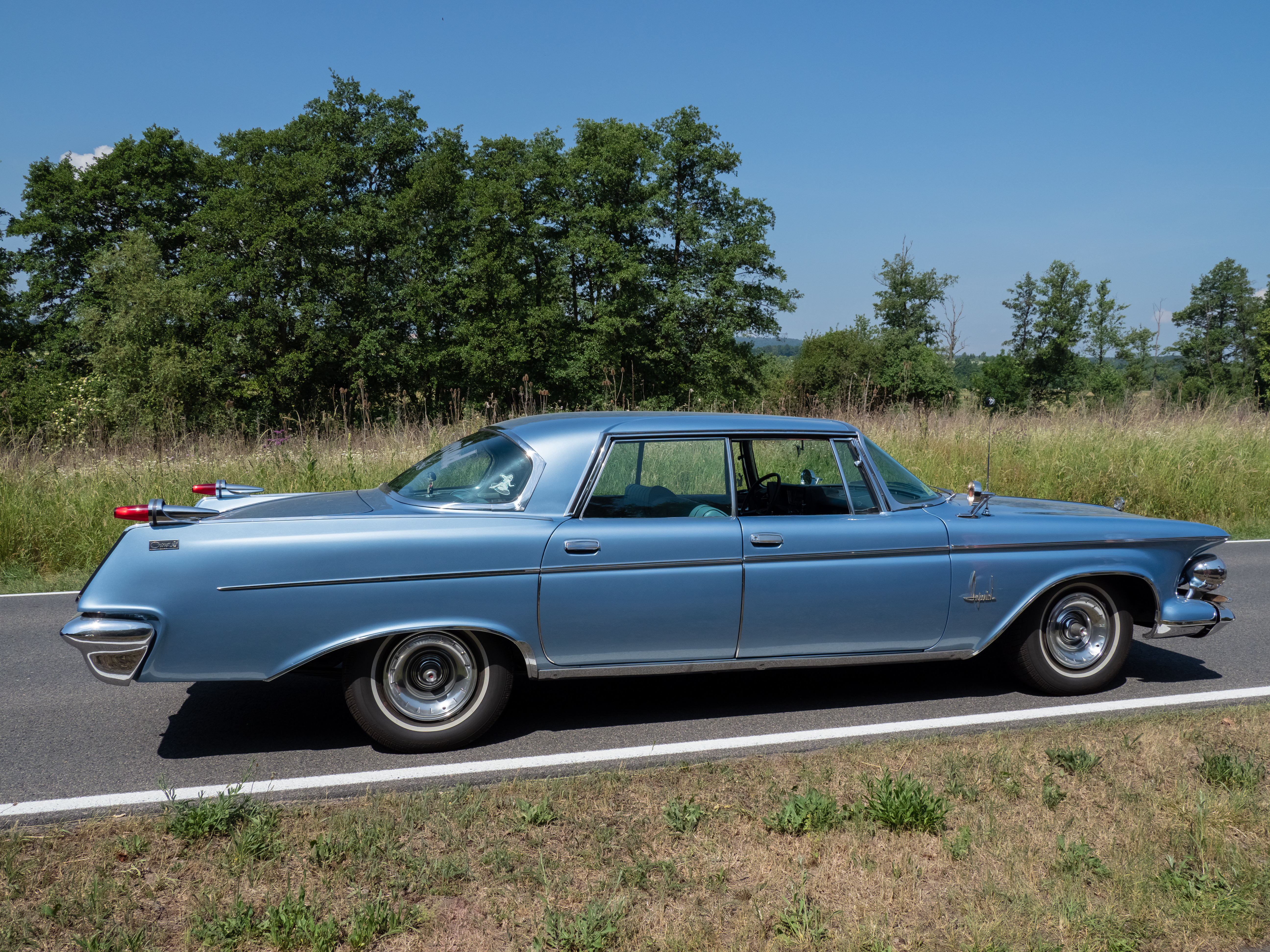
"...t's just an incredible piece. But the 31 Chrysler Imperial is one that I love to drive. The Tucker I love fo..."
The Chrysler Imperial is a very fancy and expensive car made a long time ago. The 1931 model is special because it was built with a lot of care and was very comfortable to drive. People like to talk about it because it shows how cars used to be made for rich people.
The Chrysler Imperial was Chrysler's luxury flagship model, especially notable in the early 20th century for its advanced engineering and opulent design. The 1931 Imperial is a classic example of pre-war luxury cars, admired for its craftsmanship and smooth ride. It is often discussed for its historical significance and collectible value.
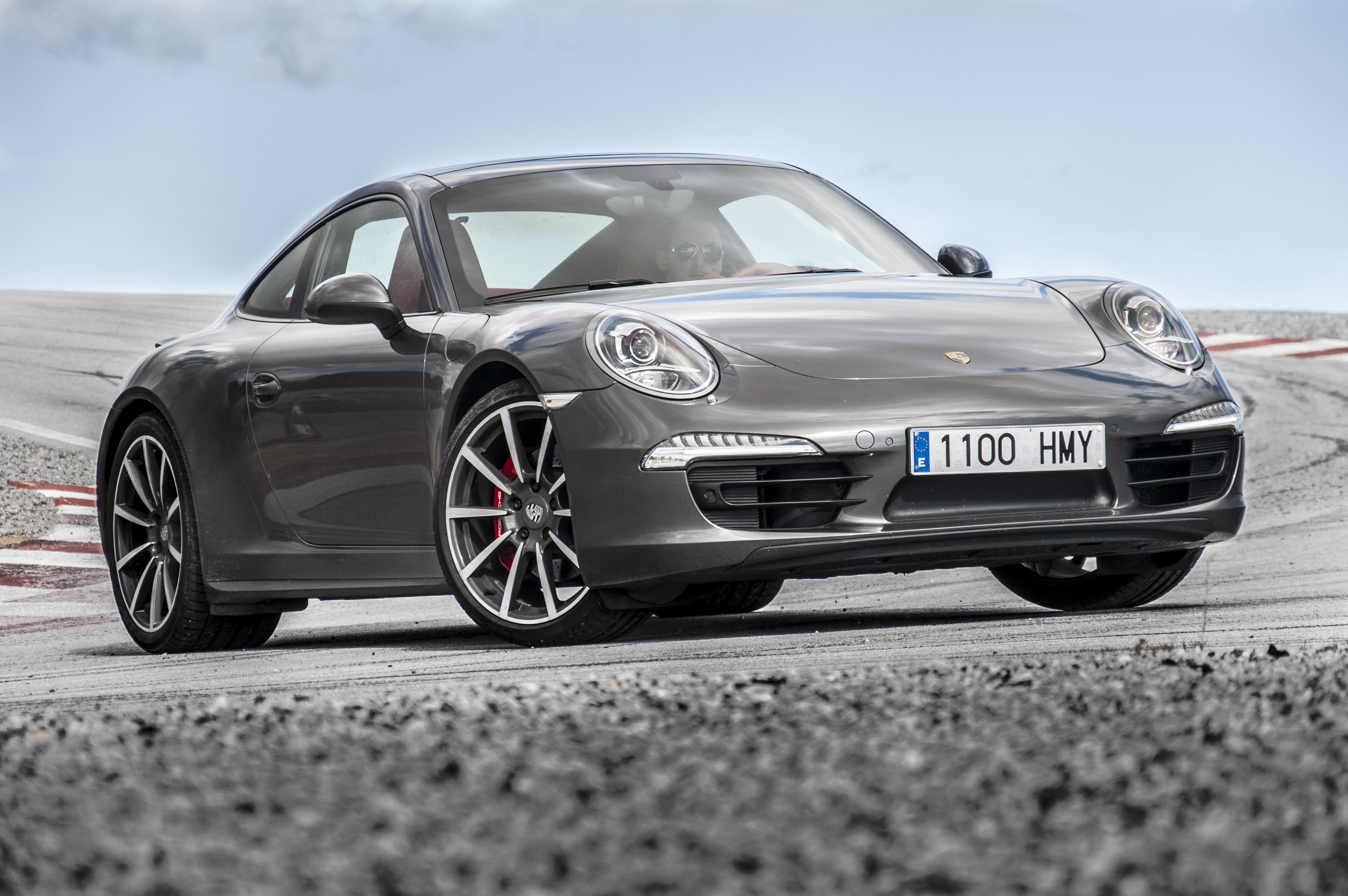
"Yeah. I've got a 76 911 S, my little blue car, what we call a little blue..."
The Porsche 911 is a famous fast car that has a unique shape and a special engine placed at the back. The 1976 911 S is an older model that many people love because it drives really well and looks great. It's popular because it has been made for a long time and still looks cool.
The Porsche 911 is a legendary sports car known for its distinctive design and rear-engine layout, first introduced in the 1960s. The 1976 911 S is a classic model prized for its performance and driving experience, often cherished by collectors. Its enduring popularity stems from a combination of engineering excellence and timeless style.
"They put catalytic converters on the car, all this stuff and then it gets limped, limp mode into a smog station."
Catalytic converters help clean the car's exhaust so it doesn't pollute the air as much. They change bad gases into safer ones before they leave the car.
Catalytic converters are emissions control devices installed in a car's exhaust system to reduce harmful pollutants by converting them into less harmful gases before release into the atmosphere.
"I've been out to Glendale, Arizona, where I was at the Mecom auction, which was kind of a fun auction."
A car auction is like a sale where people bid money to buy cars, sometimes special or rare ones.
Car auctions are events where vehicles are sold to the highest bidder, often including classic, collector, and rare cars. They can influence market trends and prices.
"... crazy money for it. I did okay with my Talladega Torino that I took out at Glendale."
Pontiac was a car company that made strong and fast cars. The Talladega Torino is one of their famous muscle cars that was good for racing and had a big engine. People talk about it because it is a cool old car that many collectors like.
Pontiac was a brand of American automobiles known for producing performance-oriented vehicles like the Talladega Torino. The Talladega Torino is a classic muscle car celebrated for its racing pedigree and powerful V8 engine. Discussions often focus on its collectible status and motorsport history.
"that I took out at Glendale. I think the Corvettes at Glendale went just crazy this year."
The Chevrolet Corvette is a well-known fast car from America that many people like because it looks sharp and is very powerful. It has been made in many versions over the years and is often seen at car shows and races. People enjoy it because it gives a lot of speed for the money.
The Chevrolet Corvette is America's iconic sports car, known for its powerful V8 engines and sleek design. The Corvette has evolved through multiple generations, often celebrated for delivering high performance at a relatively affordable price. Its presence at events like Glendale highlights its popularity among car enthusiasts and racers.
"... across two cars over and there was a 67 Cadillac Eldorado, like brand new. I just love that design of that ..."
The Cadillac Eldorado is a big, fancy car that was very popular in the 1960s. The 1967 model looks stylish and has a strong engine, making it a nice car to drive and show off. People like it because it represents luxury and cool design from that time.
The Cadillac Eldorado is a luxury car that epitomized American opulence, especially in the 1960s. The 1967 Eldorado is celebrated for its bold styling and powerful V8 engine, making it a classic symbol of luxury and performance. It is often discussed for its distinctive design and cultural impact.
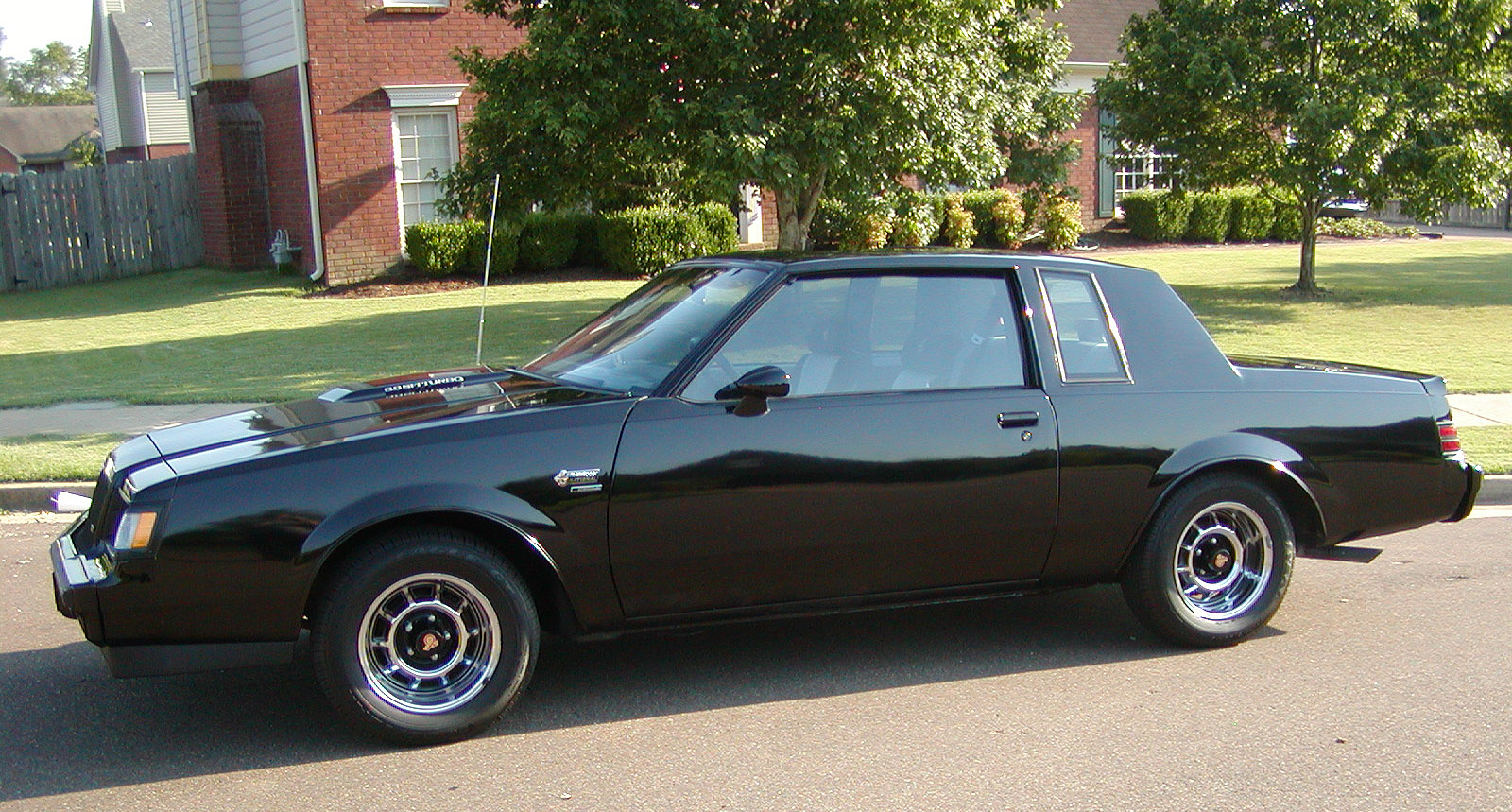
"Right, right. And that car was at the Grand National Roaster Show last year and you know, it's 67 Eldo..."
The Buick Grand National is a fast car from the 1980s that looks mostly black and can go very quickly. It was special because it had a turbo engine that made it strong. People like it because it was a powerful car that didn't look too flashy.
The Buick Grand National is a turbocharged performance version of the Buick Regal from the 1980s, famous for its dark color and impressive acceleration. It has a cult following due to its blend of muscle car power and understated styling. It is often highlighted for its significance in American performance car history.
"the way that they could retool, completely retool a car from the ground up year after year after year. There's nobody else that did it like General Motors. Honestly, no car company in the world, in the world in the 50s and 60s had more of a massive retooling for their cars."
Retooling means changing the machines and tools that make cars so they can build a new or different version of the car.
Retooling refers to the process of redesigning and rebuilding the manufacturing equipment and processes to produce a new or significantly updated version of a car, often involving changes to the body, interior, and mechanical components.
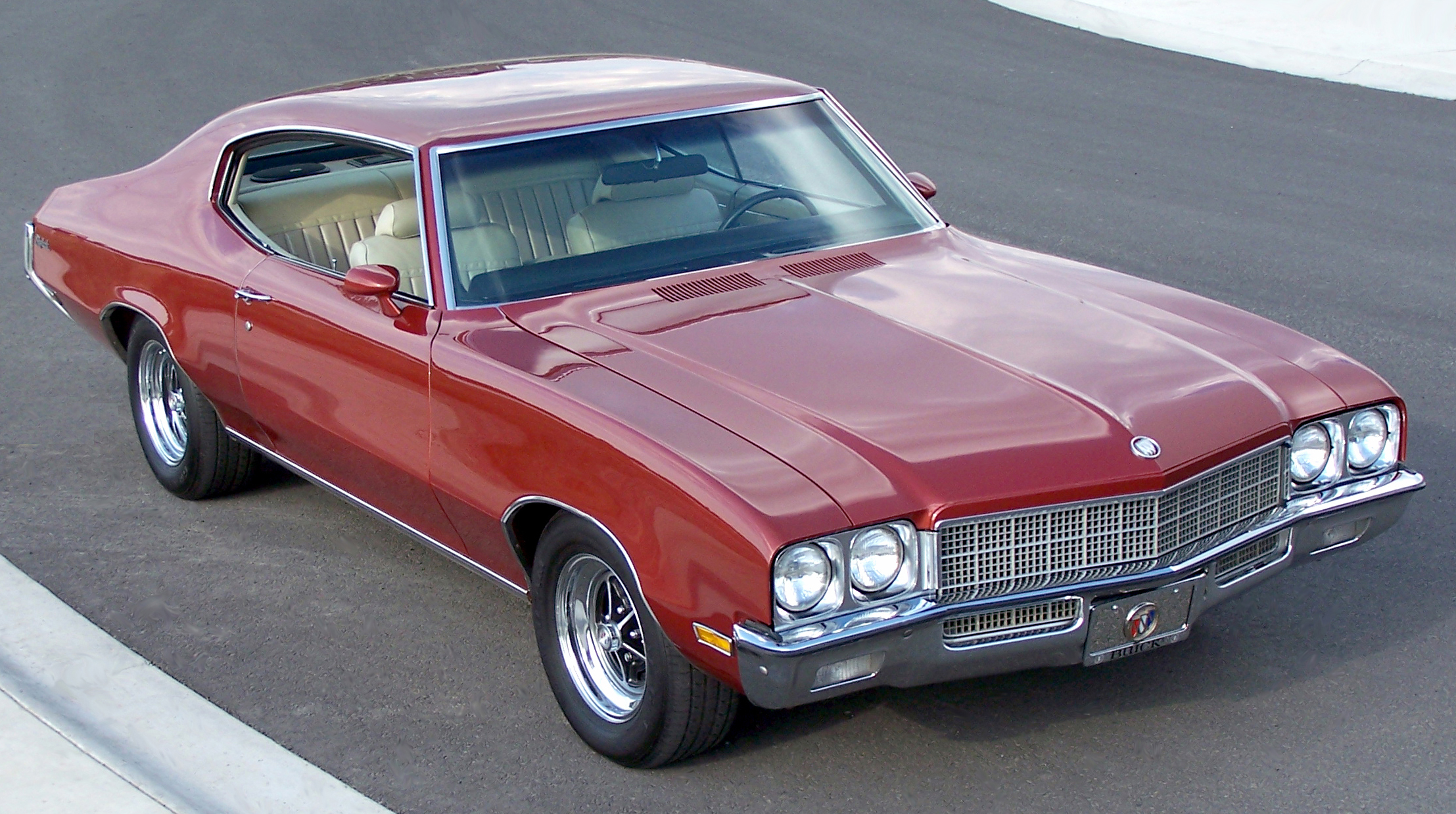
"...etooling for their cars. I think about a 53 Buick Skylark, radical car, right? 53 was that Eldorado Skylark..."
The 1953 Buick Skylark is a fancy and rare car from the early 1950s that looks very nice and was made to be comfortable. It was Buick's way of making a special car for people who wanted something elegant. People talk about it because it shows old-style American car design.
The 1953 Buick Skylark was a limited-edition luxury convertible that showcased Buick's styling and engineering prowess in the early 1950s. It is notable for its elegant design and was part of Buick's effort to compete in the luxury market. The Skylark is often discussed for its classic American automotive design.
"So the weekend after, we'll be down at Charlotte Motor Speedway for the Smith Invitational."
Charlotte Motor Speedway is a big race track where car races happen, especially NASCAR races. People also gather there for car shows and events.
Charlotte Motor Speedway is a famous motorsports complex located in Concord, North Carolina, known for hosting NASCAR races and various automotive events.
"yes, he worked under Bertone, but this is the guy who designed"
Bertone is a company from Italy that designs cars. They helped make some famous and beautiful cars in the 1960s and 1970s.
Bertone is an Italian design and coachbuilding company known for creating iconic car designs, including many by Marcello Gandini such as the Lamborghini Miura and Lancia Stratos.
"...s of the 60s. We're talking about the Kudash, the Miura, the 308 GT4, actually, the Lancia Stratos."
The Lamborghini Miura is a very fast and beautiful car made in the 1960s. It was one of the first cars to put the engine in the middle, which helped it go faster and handle better. People talk about it because it changed how sports cars were made and looks amazing.
The Lamborghini Miura, introduced in the 1960s, is often credited as the world's first supercar, featuring a mid-engine layout and stunning Italian design. It revolutionized sports car engineering and remains one of the most celebrated classic Lamborghinis. Its mention highlights a milestone in automotive history and exotic car culture.
"...ash, the Miura, the 308 GT4, actually, the Lancia Stratos. Right."
The Lancia Stratos is a small, very fast car made for racing on rough roads in the 1970s. It won many important races because it was built to be quick and easy to handle. People like to talk about it because it was one of the best rally cars ever.
The Lancia Stratos is a legendary rally car from the 1970s, renowned for its compact design and exceptional performance in motorsport. It was designed specifically for rally racing and won multiple World Rally Championships. Its mention often relates to its unique engineering and rally heritage.
Select text to request an explanation
Hello, everybody.
We are back for another episode of Talking Classic Cars.
You're here with me, Jay Ward.
And I'm Wayne Kearney, and we're Talking Classic Cars, of course.
But Jay, you know, it's been so long since we've seen each other.
Amelia, it seems like, you know, two or three months ago, or it was just a couple
weeks ago, almost.
Yeah.
You know, there's been so many car things happening around the world that you and
I have been bouncing in and out of.
And I'm excited to get into it today and talk.
But most importantly, what I'm excited about is, it is Women's History Month.
And we have so many great women in the world of automotive, which are finally
getting recognized.
And you recently met with Shirley Moldowney, which I am super excited about hearing about.
What a pleasure.
As they say, what a kick in the pants.
She is really fantastic.
She, you know, she was somebody that I looked up to for so many years because
it was such a struggle for her to get into drag racing and then to get to the upper
fields and beat all the all the big guys.
I mean, Big Daddy, Don Gartlett, her dome, Connie Colletta.
She beat them all at their game and they weren't happy about it at all.
That a woman had come and taken over their their sport.
And so she had a very rough time and but she plowed through it.
She's a she's a winner and and just such a pleasure to talk to.
Yeah, when I was a kid, the movie was Heart Like a Wheel was the Shirley Moldowney
story that really got so many people my age interested in that there was a woman
in motorsport that it wasn't this all dudes club.
You know, yeah, she had to get her elbows out to to be part of that world.
But what you're saying is really important.
There's a lot of women that are able to have some success in motorsport,
but she truly beat the best at their own game and not a lot of, you know,
people can say that when they come from the outside.
And it's very it's one thing to get into the sport and have some success.
She truly succeeded at the top level.
So why don't why don't we just let her do the talking and hear what she had to say?
Sounds good to me.
It's a badass car, boy.
I'll tell you, two fuel pumps.
And that's what the PSI does.
I I regulate the amount of fuel on the pumps.
You know, I do burnout in one pump and when you're ready to go,
you pull it back right here, this here, pull it back.
To go.
Hey, it's Wayne Carini from Talking Classic Cars,
and I'm here at the Savoy Museum in Cartersville, Georgia.
And I'm here with somebody I have admired almost my whole life.
I mean, you know, when I started when I started watching drag racing,
I hung out at Connecticut Dragway a lot.
And it was it was a wonderful thing to see somebody like you do so well.
You know, it's it's always fun to to see people succeed.
But but somebody that never they never thought you would succeed.
And look at what you did.
Yes, you you broke the barrier and made sure that you you kept going.
So Shirley Moldoni is here with us.
Thank you for all.
And and what a thrill when you walked in the door today and I was standing here.
And you the first thing you did is you bolted to that car
and you jumped right in. Yes, I couldn't do that.
I couldn't even fit in there and I'm not that big.
But you have to have you have to have a way of getting in.
I saw you get in.
Yes, you have to know how to do it.
Of course, the car is built for me.
So it's rather easy.
But before my knee replacements, I was able to enter the race car
and exit the race car a whole lot easier.
So we watched the video today of your life.
And it was just it was really it was my eyes watered up several times.
But but it's a really great story of your life.
And and if somebody were to tell me
about 20 years ago that I'd be sitting here talking to you,
I'd say you were crazy.
But yeah, absolutely. Not that hard to find.
Well, but how many wallies and to explain to people,
Wally is the ultimate. It's the trophy.
But you have to earn it.
You certainly have to earn it.
It's not like a committee choosing that your car is better than Joe's.
You have to earn that.
Yeah, you go out and it's a series of eliminations.
You know, one against the other.
They start out with the quickest 16 for qualifying and then come Sunday.
That's race day. 16 cars, one round.
You now have eight. Yeah.
Then you have four.
It's not like you can come back again.
You're one and done. That's right.
Yes, there is no sandbagging on the back stretch.
And you get beach.
You're you're out.
You're trying to play cards.
That's a way to play cards.
But, yeah, the sport, it's
it's
it's a lesson in learning how to be ready.
Not to jump the gun, but how to be ready for
probably the right of your life.
You know, we watch the NHRA on television now
and you see these huge teams with all the sponsors and all this money.
That wasn't you when you got into this.
It was by the senior pants.
Well, that's what drove me out of the sport, the cost of it.
Yeah. And I'd probably still be in probably as a car owner.
But it's just they turned it into a money pit, I must say.
And it doesn't delight me.
But these these crew chiefs
who tend to dig their the stars
and some of them are. Yeah.
Take that away from them.
But the crew members work a whole lot harder with the crew chiefs.
Do they they shout orders and everybody runs and hides.
But
the way it is today, it's again, a money pit and
you don't go with a spare slug.
A couple of years don't tear it apart between rounds.
They just put another, as they say, bullet in the in the in the
jancy and they've turned it into a, you know,
a rich kid's school and the little the little guy
that used to be able to look at it and see visions of a I could I could do this.
If I had the, you know, my dad helped me build my hot rod, I could go out
and you know, there's a class for every car.
Let's not that way any longer.
But what really intrigues me about you is that
you've you had this drive and there's so many things involved.
Time management, I mean, you have to make sure that you're at the event.
You have to make sure you make the round.
You have to make sure the car is ready for when the round comes around.
And you're in it. I mean, there's so many things involved.
And you were doing it almost on your own.
You had your son with you, but yet it was a small team,
a small team of three guys and yours truly.
They would I went with the car most of the same right in the truck.
I wrote, you know, the right seat for a lot of years.
And I enjoyed that at the time.
I enjoyed it. But it's it's now, you know, they fly in with their
first class boarding pass and they're one hand the helmet and the other.
And, you know, scare me in the right place.
The drivers today have no idea
what it took to build the sport to where it is today.
But you hit it, I think, just at the sweet spot.
It was really the sweet spot, the 70s and 80s.
I think that that was when television was sort of just starting to pay attention
to what was going on in the sport.
And it was it was something a lot of people couldn't wrap their head around.
How you were so intrigued to see a car go for driving a straight line.
Very few seconds and go 300 miles an hour.
Yes. But if what you have to do is you have to go the track and have to watch.
You you can see all you can see on television.
But if you haven't seen it live, you haven't seen anything.
You've got to see it live.
These cars are spectacular.
The fuel cars fuel, meaning nitro methane.
And, you know, I haven't been in probably 25 or 30 years.
I know. I know. One I used to go.
It was the coolest thing to sit, you know, within 20 feet of the cars
as they're revving them out.
And it's the sound is one thing.
But the vibrations as they pound your chest.
Yeah, well, they sound waves.
Yeah, you're talking like today, 10,000 horsepower.
Yeah. And you were driving cars with how many horsepower?
About eight. Eight thousand.
I stopped in 03.
And what they do, they just they add more.
Nitro to the tank, percentage wise.
And cubic inch always stays the same.
And they put some limits on what used to be unlimited fuel dragster.
Love the sound of that.
It's beautiful. Now has to be so far off the ground.
So long, just so long, the the we're all
relegated to that that rear gear, which I feel is
too low, it taxes the motor and it just RPMs.
The hell out of that car coming down through the lights.
And there's some changes that I would love to see made
that would lower the cost of the sport for the little guy.
Yeah. Yeah.
So what what what is the engine running in RPMs
when you go through the lights? I have no.
I don't really know.
Probably 15,000, 15,000.
I don't really know what the what the.
When you sat in the car today, you said two gauges.
That's it. I have today, I have two gauges.
Oil pressure gauge, which is the that's the X-ray of what's
happening inside that engine and a PSI gauge.
And that what that does, that tells you fuel pressure
and you want a certain pressure with the for the burnout,
certain pressure for backing up at an idle and then pull on the fuel.
Both pumps for the go.
And we do have two fuel pumps
and do a burnout on only one in high gear
and to keep the RPMs down.
Now they have a throttle stop, which the driver gets in
and just buries the throttle to the floor.
And it can go just so far because they have a throttle stop on it.
So that, you know, it's not.
We don't cultivate any new drivers
that have a good sound and feel for it.
I then and now I'm nothing but a sound and feel driver.
And that's the only thing I know I can go out there
and I could do a burnout with the sound
and I feel a bit and without a throttle stop.
Most of your drivers out there today could not do that.
When I was going to drag races years ago, there'd be a group
of guys that would come to down.
So there would be Pradome, you and Connie and Big and a bunch of people.
And it was like a show that went around the country.
Yes. You know, it was it was
wonderful to be able to see all you guys in one spot.
That was so cool. The biggies, yes, the big ones.
And the fans can get close to us.
The fans loved the cars back then, but they were scared to death of them.
And they would need to be very, very strong cars.
They are you're fixing to have a problem once you fire that thing up.
And it's just if you lean on it, lean on it hard,
it's going to talk back.
Yeah. And you can't give it too much because they, you know,
they're prone to breakage and breakage means
nitrated oil out on hot exhaust fire.
Right. And you've had your share of those things.
Yeah, I sat behind it for a number of years, three years in the funny car.
And I just got tired of getting burned.
Getting lit up, you know, I got tired of it.
Yeah. And, you know, you were talking about feel and that maybe is a little bit
something that some of the new drivers don't actually have.
I mean, it's no, they don't.
So, for instance, when you get too much power to the engine
and then all of a sudden the tires break loose, you know,
so you got to have that feel.
What's the right amount to get the job done?
Yes, exactly.
You just said it and you know, it goes out there.
And then finally somewhere downwind, you're going to get it one to one.
And that's what you want, right?
They have to tune these cars to the point where it is,
you know, they don't overpower the racetrack because then we overpower
you turn the tires, you spin the tires, the competition is gone.
Right. You chatter them a little bit at the line or even even a quarter
of a way down, you break them loose.
And that's it, end of the race.
Competition has won the drag race.
So it's all about getting a happy medium out there.
And these crew members are very sharp.
A lot of the crew chiefs are very good at it.
They know how to dial it in.
They are very good with it.
And then we have some phonies out there, some fakers and drawing these
big salaries that they can't get their ass with both hands.
Excuse me.
That's all right.
But you know, it was all of that.
That's what you had.
And it was a little bit of head games going on, you know, with Connie
with Don, you know, was that head game thing.
And with the dragster painted pink,
they couldn't miss you.
Well, yeah, right.
You know, it goes without saying.
They'd look over and glance over and go, oh, no, not her again.
Not her again.
Yes, you just said it.
That's great. That's great.
Pleasure to meet you.
Oh, it was my pleasure.
Thank you so much for talking with us.
And we'll look forward to seeing the video this coming Wednesday in FS1.
Yes.
And it'll be out there for many years to come.
Yes.
Thank thanks to Fox Sports.
That's right.
Well, thank you.
Thankful for that.
Thank you.
Yes, sir.
Wow.
Shirley Moldoni, I cannot believe when you told me her age at this point,
you said eighty or eighty six, eighty four, unbelievable and so much
still heart and energy and positivity, especially when you hear about
what circumstances she overcame to be so successful in the racing world.
I'm so glad you had that time with her.
That was at the Savoy.
Yes, Savoy Museum down at Carterville, Georgia.
I mean, just a wonderful place, fantastic place, especially to do
an interview with someone with the stage presence that they have.
It's really great.
You know, when she walked in the door, I was there when she saw her
drag race car for the first time.
She hasn't seen it in a couple of years.
She she just had some knee replacement surgery.
She gave her purse to a friend of hers and she went over and she jumped
in the car.
She literally I said, do you want a hand?
And she goes, I got this and she with the leg over and she jumped
in that car.
It was unbelievable.
Just like she was.
That's her office.
That's her home.
And that proved the point to me right there.
You know, she's a no thrills girl.
Gets the job done.
Yeah, super cool.
You also got to meet with Cindy Sisson, who is a person that I
really admire because she's worked so hard for women in motor
sport and really elevating these women, especially the past in
the 50s, 60s, 70s, 80s who didn't have much of a voice.
Hey, it's Wayne Carrini from Talking Classic Cars, and we're
here at the Savoy Museum in Carterville, Georgia.
And I'm here with my good friend, Cindy, who's got a
great story and working with a great organization.
Tell us about that.
Thank you, Wayne.
It's an honor to be with you.
I've always admired you over the years at many, many car shows,
but I'm the executive director of Women in Motorsports North
America.
We were founded in April two years ago by Lynn St. James
and Beth Pareta.
And in the simplest form, we're a community of professionals,
males and females advocating and celebrating women in
motorsports.
And what you've done here today is really something you
brought in one of the greatest women in motorsports,
Shirley Moldoni, that just, that the seminar we did just
blew me away.
And I was on the stage doing it, but it still blew me away.
And but today, when she walked in and she jumped in that car,
I mean, it's just like she stopped for a second, she
handed you her purse and she jumped in the car.
Yeah, it was amazing.
No fear.
And going to see an old friend for a while, you know,
I think that was more than it.
This car is like her best buddy.
2003, it's been her good friend.
And funny, the car that was originally going to be on
the display here where it's her 1989, her last win against
Darrell Gwynne.
And about three days before the Don Garlett's Museum was
going to ship it, three days before she had, she said, no,
no, it's got to be the last pass car.
So literally, Garlett's Museum had to like move
everything out and bring that car in.
And I'm so glad they did because that car shows really
well in this museum.
So good.
Looks so good.
You have women in motorsports.
And the gallery here is showing all these women
in motorsports.
You know, it's so great to see all the contributions
that women have done to car racing and motorsports
in general.
But to see all the different cars,
I'm very good friends with Aaron Crocker.
Well, Aaron's actually on our working group.
Oh, is that right?
So this is an eight car exhibit until July 7.
This is our premier car with Shirley Muldowney.
But in the exhibit hall, we have Danica 378 par.
We have Danica Patrick's 2005.
So those are Indy cars.
Yeah, Indy cars.
Indy cars, yeah, yeah.
Where she won Rookie of the Year awards that year.
We have Emily Arenas, which is a sweet young lady locally
here who's racing in the legends cars.
In the legends cars, yeah.
She just turned 19 this week.
And she'll be here tomorrow night.
Sarah Montgomery, MX5 Cup.
Of course, Kristen Lingafelter with a Z06.
Yeah, she was just here.
And Erica Enders, Junior Dragster,
six-time pro stock champion, winning a female driver.
Pretty big deal, pretty big deal.
That's great.
That's a great display of so many good drivers and cars,
that's for sure.
And so this, are you playing now?
This is the National Automobile Museum Convention.
And I'm sure that you're going to have so many
of these museums wanting the same type of displays.
And Shirley's going to be in demand like crazy,
not that she isn't already.
But so many museums want this kind of stuff
so they can bring in new people into their museum.
Well, that's why this was a perfect opportunity
to share a story not only with Shirley's documentary,
but as you know, Wayne, we've
done Betty Skeleton's boundless documentary,
Polymerphy Undaunted.
Those two documentaries alone have won well over 20 film
festivals.
Both were nominated for international motor
form, international motor sports, film awards out
of the UK.
And Betty won a Gracie Award.
And a Gracie Award is the highest award
a woman can get in film and television.
And we believe Shirley will win as many, if not more,
of those documentaries.
And as we keep continuing to make them,
we're creating a movement that is very exciting
for the museums.
I mean, what a better place to showcase the history of X.
And that's what this conference has been fantastic
because there were so many tracks focused
on the 52% of the population that most museums aren't
even talking to.
And what does that mean?
More tickets sold, more sponsorships,
sustainability for the museums.
The one thing, and we're here at this conference,
the one thing I really love is that every time
a museum, sort of an older museum,
sort of folds their doors, you go, oh, it's all over.
And then four more pop up.
And like this, I mean, when I came here two years ago,
I just couldn't believe my eyes what this was.
And kind of grossed it, told me all about it.
But it's still, and then when I walked in, I went,
oh my god, it's just sort of like going to the Barber
Museum.
Oh, yeah.
You open the door to the Barber Museum.
And I closed the door real quick.
And I just didn't see that, did I?
And it's an unbelievable experience.
Surprise and delight.
So more museums, and they get bigger and better.
And just, it's so good.
It's so good for our industry.
Football stadiums, they just keep growing bigger and bigger
and roosts and no roosts.
But the Savoy is magical.
I mean, even the storage back there that you're not
even allowed into, unless you could become
a card-carrying member.
Folks, you should become a card-carrying member
because they have some really classic cars back there.
Well, it's a great museum.
I love what you're doing.
Thank you.
Hopefully tremendous success with us all.
And I can't wait to see you in another museum, maybe.
Well, we'll see each other at car shows.
We see each other all the time.
Maybe pebble this year.
Maybe pebble.
Maybe another female forum.
That's great.
Great spot.
We'll look forward to seeing you there.
Thank you.
Thanks.
OK.
You know, it's really great.
Cindy's a wonderful person.
I know her very well from going to different photo events
across the country, concours and rallies and things.
She has helped out.
And she's been working at this for so many years
to get this going and rolling.
It's finally catching some traction.
And then, of course, to have a documentary that was done.
And we saw that documentary at the Savoy Museum.
And then it was on FS1 this past week on Wednesday night.
It was wonderful.
It was about an hour and a half documentary.
So Cindy's worked very, very hard for all this stuff.
And she deserves accolades for doing so many things for women
in motorsports.
Yeah.
I met her at the Audrain probably four years ago,
early days, maybe first or second year of the Audrain.
And immediately, she was just such a spirit, so alive
and so excited about amplifying women in motorsports.
How much room there was at the table for that to happen.
So I'm really glad you connected with her.
I'm really glad you got the time with Shirley Muldowney.
What other women in motorsports
have you connected with lately?
You've had a couple other good interviews.
Yeah, so museums were what we were talking about
while we were there down at the Savoy.
It was the National Automobile Museum Association.
And so Terri Cuppins from the Stahls Museum was there.
Terri does a wonderful job.
She's the general manager of the museum.
I'm here with Terri from the Stahls Museum in Michigan
and one of my favorite places in the world.
We love having you.
Yeah, it's a great place.
We do a lot of things together, especially
an autism program every year.
The Stahls Museum is something very, very special to me
because of the autism charity event that you do.
But also the museum and all the people like yourself
that work there, just great people.
We have about 100 cars on the floor.
There are approximately 230 in the whole collection
so that we get to rotate it.
So it's always something new when you come in.
We do have, as you said, the World Tour Theater
organ plus many other automated musical instruments.
And we force you to go through our music room
because many people come expecting just cars.
And when they come in, if they kind of looked in that room,
they might go, oh, no cars in there, so they won't go.
But once we make them go in, sometimes
they don't want to leave that room.
Well, I don't.
Every time I come.
It is.
It's incredible.
It's the engineering and technology behind those,
just as much as the cars that tell a great story.
But the musical instruments, so these
are self-playing.
So these are the ones where the paper roll goes
and it plays the songs.
And it's just unbelievable.
Most of them built in the 1800s and early 1900s.
Yes, definitely.
They re-issued from late 1800s to probably about 1930s.
And then we get into the museum.
And it's just the car selection is just unbelievable.
So you've got everything spanning from classic cars
right up into the movie cars from the Great Race.
Yes, and Chidi Chidi Bang Bang.
Chidi Chidi Bang Bang.
So we've got some great movie cars in there.
And the signage and all the signs on the wall and the neons.
But the biggest thing I think is just the diversity
and the beauty of some of the cars.
I mean, you've got some award-winning automobiles.
You know, Pebble Beach, the Troy Concord last year.
One best in show there.
So that Delahy is here at the Savoy.
We have it loaned here right now.
So you can come here and see it until I think
the end of March is when they would turn that one.
So we have two other cars here
that we've loaned to them as well.
It's just been great partnering with them for this.
But yes, we do have Chidi Chidi Bang Bang,
which is not the main driver, but the self-driving Chidi.
So it had some screen time.
It has its SEG card.
So it's definitely a movie car.
But in our cars, we have over 100 different makes.
So we do have something for everybody.
We have mostly American.
We do have one row that has more of the foreign cars.
But we've got something for everybody.
Something everybody can look at and have a story about.
Even the kids, because we have the Grinch car
from the Grinch movie.
So even the little kids can come in and say, I know that car.
And you've got the professor's car
from the Great Race where it goes up and down.
And the Leslie, we actually have two of each of those.
And the Leslie, one of the Leslie's
that we have, the Leslie Special, that was Tony Curtis
and Natalie Wood's car, we are sending down here
to Savoy as well.
Oh, that's great.
So that was going to be down here for three months,
I believe, starting in April.
Yeah, so I've got a couple of cars
that are going to appear here at the same time.
Okay, yeah, because I think they're doing movie cars.
Movie cars, yeah, that's right.
But you have some very important cars now.
Most museums these days are looking for tuckers.
You have a tucker.
Yes, we do.
It's a great car.
And then you've got one car that nobody else has got.
And that's the Chrysler Turbo.
Yes.
Yeah, that, as a matter of fact,
coming down here with the NAM group this weekend,
I've had, I think, three museums have come up
and asked me if they could borrow that car.
And that one doesn't really leave much,
but one or two of the places are local to us.
So it's easy for us to say, okay, maybe we can do that.
But the hard part for us is that
when people come to the museum,
they're coming expecting to see that.
And it's gone.
And that's kind of a hard thing for people as well.
Yeah, I know.
It's a car that they expect to see every time.
They have to say, well, no, you have to go to this museum.
We have to wait six months to see it again.
Right, right.
We definitely won't send that one out
for a long period of time.
So for the most part,
they want it for a weekend show or something.
So we could probably work that out.
Yeah, and you let me sit in it and start it up once.
Yeah.
That was a pretty cool thing.
That was at St. John's?
It was, it was at St. John's.
Good memory.
Well, send it.
Well, and then, so tell us about the Woolitzer, though.
I mean, this is one of the best things
of the museum, I think.
It is an incredible piece.
It is 1920s, and it was,
they call it the Woolitzer's Woolitzer
because it was built by in the Woolitzer factory
in Cincinnati, and that was moved to their mansion.
And it was never sale tag,
never no invoices or anything were done for it,
no serial number on it.
And then when the Woolitzer family,
they summered in California.
And, because Cincinnati is not a good place
to be for the winter.
And when they were there,
the church that they attended did not have an organ.
So they donated this organ from their home
to their church.
And so, like everybody doesn't know what a Woolitzer is,
but it's an unbelievable organ.
And this is not just an organ.
This is a musical instrument
that plays other musical instruments on its own.
Yes, this one, well, it's not technically on its own
because this one is different in the sense that
we have to have somebody play it.
So it has to be, we have,
World Renowned Organist, Dave Wickerham.
Thankfully, he lives in the upper peninsula of Michigan.
So he's, I tell him, when you're traveling,
you really have to pass us to go anywhere
because you gotta come through lower Michigan
unless he goes through Wisconsin.
But, so he stops in and he will record for us.
So the software that they've created
records the organist's movements.
So that we can play it back.
But if the organ goes out of tune,
you will hear it out of tune.
So it's not like a sound recording or an audio recording.
It is just the organ is receiving the information
in a different way.
So, but everything's in place.
He is the organist for the Detroit Red Wings,
is that true?
No, that is Lance Lutz.
Oh, Lance comes, yes.
We've had Lance.
He comes for,
Where's the sequined jacket?
He is an amazing organist as well.
He comes for the Autos for Autism event,
donates his time.
Oh, that's great.
Yes, and he plays, because the foundation
that we raised the money for is Ted Lindsay Foundation,
which is, Ted Lindsay was a former Detroit Red Wings.
So we connect them all together.
It's just been truly a really good event.
Because that's really the only time
I've been to the museum is during that charity event.
That's why I thought he was the organist.
Yes, no, no, Dave has come through.
We've had Dave there for our Veterans Day event,
which is our second largest event,
or actually Veterans Day is probably our largest.
And that's a day that we raise funds
to go to a Veterans charity,
which is the medical service dogs.
And they train dogs for veterans and forks,
those in need for service channels.
And they're just incredible, incredible place.
So if we were to come to museum next week,
when you go back home,
because we're here to Savoy right now,
what is the newest car in the collection?
Oh, well, the newest one that we just brought out,
we have a Mustang, we've got a GT350 and a GT500.
Oh, cool.
He just, those were two more recent ones
that we put out on the floor.
We've had to move some things around
and take some things out.
But we've got, so kind of leaning a little bit more
into the muscle cars now that we're getting into.
Because we have lots and lots of brass.
We have lots and lots of 30s, 40s cars.
And you know, but I still don't think,
well, according to him, you can never have enough.
What's your favorite car in the collection?
Mine go in levels.
My all-time top favorite is the 1931 cord,
LeGrand Speedster.
It is a recreation of the lost cord,
but I just, that car just oozes style
in just the time period.
And it's just an incredible piece.
But the 31 Chrysler Imperial is one that I love to drive.
The Tucker I love for the story,
the Turban I love because it's a Chrysler.
My dad worked for Chrysler, my family worked for Chrysler, so.
So what car are you bringing this year
to the Smith Heritage?
We are bringing our 1938 Peugeot Dunlop.
Oh, I love that car.
Yes.
It's a world-wide car.
It's so pretty.
Yeah.
Well, you've got great selection of cars.
Tell us how to get there,
what the website address is
and what times you're open during the week.
Okay, well, we are located in Chesterfield, Michigan.
The website is stalls auto and that's F-T-A-H-L-F-A-U-T-O.com
and our regular days are Tuesdays one to four
and the first Saturday of the month is 11 to four.
We do a special event other than our calendar
or website calendar does have our Autos for Autism
and other special events listed,
but we have another event coming up next week.
I believe it is, is our night at the museum.
So so many people come in
and they're just overwhelmed with the cars.
You see how many cars we have there
and it's just, you know,
you can walk through chronologically,
but you don't take notice of the signs and the neons.
So we shut off all the overhead lights
and then you can walk through
and then we do it in the evening.
Everybody gets a glow necklace when they come in
and you can walk through
and see the neon signs lit and the gas pumps lit
so they get to stand out a little bit.
What's an excellent idea.
Excellent idea.
What's the date of our Autism charity event this year?
That will be July 20th
and it's one of the only days the museum is free to get in.
And so we appreciate donations when you come in
or we usually say walk through
and donate what you feel it's worth on the way out.
But those on for the Autism event,
we do charge because again, that's a fundraiser.
Every penny we take in law does go to the charity.
So we don't keep any of it.
We're hoping for some special guests along with you
as well.
And we're looking to possibly doing another panel discussion
because that one did go off very well last year.
Yeah, it did.
I think people really enjoyed it.
And of course, you've got the car show outside.
Yes.
Which usually brings a lot of people, a lot of carers.
So you've got a band outside,
a lot of special things going on.
So you've got everything on the inside.
And the outside is free.
So you can come and join the outside
and we'll have raffles.
We'll have a food truck out there.
We'll have like you said, the band as well.
The weather holds out.
We'll definitely have a bounce house for the kids.
So we want it to be a big family event
and bring the kids and everything.
So I look forward to coming back again this year
and helping out with that.
And thank you for what you do for autism.
Thank you.
And I'm looking forward to my first ride
on the mechanical elephant these days.
So we got to fit that in.
Wendell will be waiting.
Well, we look forward to seeing you
and hope our viewers and people listening
will be able to visit your museum and help out.
Yes, we'd love that.
Thank you.
See you in July.
All right, sounds good.
The Stahls Museum is a gem
because you would never know in the middle
of this farm-type countryside
and all of a sudden you come up on the Stahls Museum
and the cars that are in there, oh my God,
it's unbelievable the amount of great automobiles they have.
I mean, the cream of the crop.
Oh, yeah.
So what else you've been doing?
Oh, there's so much going on.
So many things I'm getting ready for.
I've got some fun projects at work,
which I can't talk about yet,
but there are some fun things on the horizon.
Made a little bit of progress on my own car
on the Porsche of the 997.
I think I told you about that.
I've been building the Porsche Racing Green Metallic car.
I got a GTS front bumper mounted on that,
which was a lot of work
and that car is finally all ready to go.
So I'll probably talk a little bit more about that car
soon, but that's been a really fun project.
It's hard to think of a Porsche 997
as a modern classic,
but the car was built in 2009.
I mean, the thing is, you know,
it's 15 years old this year.
So it's not a modern, modern car.
So it's been a lot of fun
and kind of figuring out about the next classic.
I came very close on a 308 GT4.
You know, we talked about those cars recently
and I came very close on one that I found over in Europe,
but I did not bite the bullet on it.
I'm still looking for the perfect one.
It's got to be a 75 or older for me
because of smog stuff in California.
And those of you out here in California,
you know, if you get a 76 or newer car,
it's a pain to have to get it smogged.
It's not easy to get it through smog.
That's for sure.
Yeah.
I've got a 76 911 S, my little blue car,
what we call a little blue and the air pump
and the dialing back the injection
and all the stuff to get it to pass.
It's just, it's a little extra work.
I have a buddy here with a 308 GT4 in the Bay Area.
It's a 77 and every time it gets the car smog,
he has to take it to a shop.
They put catalytic converters on the car,
all this stuff and then it gets limped,
limp mode into a smog station.
It passes and then all the stuff has to come back off
as the car won't run with and on,
which kind of defeats the whole purpose.
You know, he's trying to be compliant.
He's not cheating and putting some racing system,
but the car, the way it was built,
it just won't pass.
It can't pass.
It hasn't done anything bad to it,
but it's such a high bar that he can't do it
without putting modern stuff on the car.
So it's just, it's silly.
I hope someday we get back to this rolling idea
of after 25 years,
nobody's daily driving these things, right?
You and I have a lot of old cars.
How many miles a year do you put on these things?
Maybe 1,000 if you drive it a lot.
But most of us, we're putting a couple hundred miles a year
on these cars, but we're paying the insurance,
we're paying the registration.
We just want to have the ability to not have to be traded
like a daily driver car does in terms of a mission.
That's all.
Right.
I mean, 90% of the cars that I have,
maybe get 10 to 15 miles out of a year.
Yeah, that's right.
You've got more than me.
And you know, the more you have,
the more you have to say,
okay, what am I going to drive this week?
That's right.
That's right.
Well, since we've seen each other at Amelia,
I've been out to Glendale, Arizona,
where I was at the Mecom auction,
which was kind of a fun auction.
I was...
I'd like to hear your two cents on auctions
because I'm hearing stuff is up.
I'm hearing stuff is down.
I'm hearing some stuff is sliding
and some stuff is setting records.
I don't know what to make of this market.
I'd love your two cents.
Just broad picture of where we're really at.
Is this the time to buy?
So it's not up all the time.
It seems to be up whenever I'm trying to buy a car.
That seems the biggest problem today is,
is that, you know, I see a car and I want to buy it
and all of a sudden I'm paying crazy money for it.
I did okay with my Talladega Torino
that I took out at Glendale.
I think the Corvettes at Glendale
went just crazy this year.
They had...
They must have had 15 or 18 split window Corvettes.
And a lot of rest of them on Corvettes.
63 is a special for those who don't know
that's a one-year only Corvette.
The only year they made the split window
was 63 in the coup.
And they're special.
Yeah, special cars.
But even at Amelia Island, you know,
I think Broad Arrow did a great job this year.
Their sales were great.
It was great.
But he's got crazy numbers for some cars
and that's so crazy for others.
There was no RM, of course, at Amelia this year.
They were down in Miami.
Yeah, and Bonham's numbers were down
because it seemed like they maybe didn't
bring the very best cars.
And people are passing on cars that have a little bit
of hair on the dog, right?
Yeah, I think if you're just looking
for a number three car, you know,
that you're gonna get a bargain right now
because the number three cars aren't selling well,
especially if they're no reserve.
I was at Amelia and I bought a Cadillac for a client.
And our top dollar was gonna be $150,000.
And I said, I don't think we'll have to go to that.
Well, I looked over and I saw who I was bidding against
and it was a really great friend of ours.
I won't say who he is, but he's got plenty of bendable cash.
And I'm bidding and he's bidding and we're looking
at each other and finally I ended up buying the car.
Of course, I think we had to pay 210,000
at the hammer for it.
For a 62 Cadillac, what's 62 Cadillac?
No, I'm sorry, 58 Cadillac,
but it was a Series 62 Cadillac.
So it's a 58 Series 62.
But it is spectacular.
Probably about $500,000 spent on the restoration.
And so you're buying the restoration.
So you're buying the car and you're getting a restoration
for free basically, so that happens down.
That's right.
You have to have restoration on this car.
That is the problem that people have to think about.
I see people that buy, like you said,
a number two or a number, sorry,
a number three or a number four car,
something that needs some work,
it's gonna need paint, it's gonna need interior.
And I say, you better do the math
because restoration, as you know,
running at 40 motorsport, it's not cheap.
And if you're trying to do a restoration cheap,
you're gonna get hose.
So a nice restoration on a car, if you're not careful,
if you're buying a car or you're fixing up a car
that doesn't have a super high blue book value,
you're definitely gonna spend more in restoration
than the car is selling for.
And if that's the case,
just know that going in with eyes wide open, right?
That's right.
And if you're buying a car at auction too,
what you have to watch out for,
if the paint is really spectacular
and the interior is really spectacular,
but you better look at the engine compartment
and the underside of the car
because what happens is they run out of money.
They spend all the money on the bodywork
and the paint, the interior,
and then it comes down to the mechanicals.
And I say, well, we totally run out of money.
Let's just sell it at auction.
And so you have to be very cautious of those things,
you know, what looks good on the outside,
maybe out of the inside, it's not so, so.
Yeah, that's really good intel.
We see a lot of it coming into our shop
where guys say, hey, it's a total restoration.
We just had it done.
We need you to do a couple of things on it.
We put it up and I say, what happened?
You forgot about doing the suspension.
Oh no, we just ran out of money.
So these are things we all have to look at,
you know, complete restoration is not
total complete restoration sometime.
Yeah, and one thing that really chaps me
is when people do retail red
and retail red for those who don't know
is like whatever the car was born in,
they just say go for a bright red
because that's gonna do well at auction.
And as soon as you open the jams
and you start looking around,
you can see there's no way this car was born in red.
And sure enough, they've done a retail red
and those people that do that
are typically people that don't pull off every data plate.
Those are the people that, you know,
do every inch of the firewall.
So you start looking around, you go,
sure enough, it was born in brown or green.
And boy, that chaps my hide
because they've literally done it at a service
because now if you ever wanna make the car correct,
you've gotta take all that garbage back off the car,
you know, that's a lot of work.
So I went to Glendale to sell my Talladega.
I think we did real well and hammered at $400,000.
Whoa, that's great.
Yeah, which was my reserve.
So, well, with that, then I came and I said,
I'm not gonna buy any cars.
I'm on this, of course, I'm selling a bunch of stuff
at the moment.
I sold probably three other cars in the past two months.
Yeah, trying to get the collection down
to a manageable size.
But I was walking around and I looked at,
there was a link in there that was concept car
that was built on the T-Bird chassis.
And a blocking guy in California,
he passed away and his son was selling it.
His last name was Powell.
I'm sorry, Powers.
Powers.
And he was a designer with General Motors and Ford.
And so he had this car and the minute I looked at,
I looked across two cars over
and there was a 67 Cadillac Eldorado, like brand new.
I just love that design of that car.
I just think it's a good tack.
Wayne 80 was the head of that department
at the time that that car was designed.
And Wayne had one down at the Savoy Museum
a few weeks ago when I was down there
and I just fell in love with it over again.
And so I paid too much and I bought a Cadillac Eldorado 67.
But I just, it was one of those cars that you buy it
and sometimes you buy a car at an auction
in the next day ago.
What do you pay that money for?
Oh, I regret it.
I fell in love with the car even more the day after
I bought it.
That's great.
Yes, that's called an auction hangover.
When you're like, why did I raise my hand so long?
Right.
Yeah, but you know, like you said,
if you're still excited about the next day
you did the right thing.
I remember walking into Bruce Canapa's shop
down in Scott's Valley and he was doing a body off
on a 67 Eldorado and doing mild customization for a guy.
You talk about going in deep.
Can you imagine just blocking and blocking,
sanding and painting a 67 Eldorado
that's at Bruce Canapa's shop?
You're talking 200 grand and painting all day easily
all day long.
Right, right.
And that car was at the Grand National Roaster Show
last year and you know, it's 67 Eldorado
and a Continental Mark II and a couple of these cars,
they were what I call born perfect.
There's not a lot you can do to customize them
because they're factory customs.
That's right.
You can pull some trim off and you can maybe
flare the wheel wells or whatever,
but you don't want to monkey with them
because they were very well designed.
You know, the 67 Eldorado of course
was the last of the great series of Riviera,
Tornado and then Eldorado.
Eldorado was the first front wheel drive Cadillac
and so it was a pretty spectacular car
and the sharp edges on those cars are so fantastic.
You know, the quarter panel top edge
and then that little skinny tail light in the back,
the rear glass on the car.
It's just such a beautiful design.
When you think of General Motors in the 50s and 60s,
the way that they could retool,
completely retool a car from the ground up
year after year after year.
There's nobody else that did it like General Motors.
Honestly, no car company in the world,
in the world in the 50s and 60s
had more of a massive retooling for their cars.
I think about a 53 Buick Skylark, radical car, right?
53 was that Eldorado Skylark Fiesta year, 53.
54, they totally redo the Skylark completely inside
and out with those crazy tail fin tail lights,
the body, the dash, the grille, everything changed.
And it's amazing because they didn't sell that many of them.
No, a couple of thousand if they were lucky.
Yeah, so a complete retooling
for a couple of thousand dollar production,
it just doesn't make any sense.
But they were looking at it at a different angle.
It was people dreamt of having
but maybe couldn't afford so you'd go buy the model
that was one down or two down and two notches down from that.
But you're still on the Cadillac or a Buick,
because now you say, hey,
mine's almost like that Skylark
or almost like that Eldorado, but yet it's not.
Great stuff, great cars.
And then after that, I went to the Savoy Museum
for the conference, the museum conference
and I'm finally getting two weeks
and then I'm back on the road again.
And really quick, we should just mention to the Savoy,
it looks like you and I might be there together
sometime later this summer to talk about movie cars,
which I'm excited about.
Yeah, so I'm shipping down the Rainman Buick
and the War of the Roses Morgan
that are in my collection.
And there's gonna be a lot of other movie cars.
Ray Evernham's got the 58 Chevrolet
from American graffiti going down.
And that's gonna be fun.
And hopefully maybe somebody else see one of those cars
in the cars movie down there too.
We're hoping that we have Lightning McLean,
they're life-sized Lightning McLean,
which there's only a couple of them in the world
and they're not easy to get moved around.
So I'm working on that for the Savoy.
So yeah, more to come.
So because of that, what I did is I talked to museum
into doing two seminars, one for the kids at noon
on that Saturday that we're gonna be there
where the kids can come in
and we do a seminar for them individually
and then one for the adults in the evening,
even though kids can still come to it.
It's a better time of the day.
So it'll be a lot of fun doing that with you, Jay.
It's always fun hanging out with you
and talking about cars and talking classic cars,
just like we are right now.
That's right.
And hopefully we'll see Matt there too.
We have the whole gang together.
We can do a reunion.
I love it.
Yeah.
So what's next on your plate?
Where are you going?
Well, before you know it, Pebble Beach will be here.
But actually before that,
I will be going to Concord in Lugano, Switzerland
called Lugano Elegance.
And then a week later, I'll be down at Villa Desta.
For those who I don't know if I mentioned Villa Desta
before on the show, but it is incredible.
Think about the European version of Pebble Beach.
Only 50 cars, only eight judges.
I'm one of the eight or nine jury members of this.
It's put on by BMW Classic.
But it is a show, a true show of elegance
on Lake Como on the South End.
And the cars are truly one of one.
They can only be invited once in their life
to this event and it's phenomenal.
And I was very, very fortunate to become a judge
to their last year.
So I'll be doing that again this year.
So get ready for Villa Desta.
And now Lugano the weekend before us.
I'll have a week in Italy and hopefully goof around
in Italy and look at some cars while I'm over there.
That's great.
I've just got the word that the Cadillac Valkyrie
that we're restoring, which was the Brook Stevens
design car is going to be accepted to Villa Desta
next year.
So we'll be going to 2025.
So that's kind of a cool thing.
Let's do some shows there together.
I'd love to.
I'm not going this year, but maybe next year.
Yeah, next year.
And then we're going down and next weekend we'll be down.
No, I'm sorry, the weekend after,
because next weekend is Easter.
So the weekend after, we'll be down at Charlotte Motor
Speedway for the Smith Invitational.
So there's going to be 30 cars
that are invited to be shown at the track.
Some really high-end cars.
And so Ralph, my buddy Ralph's going down with us
and a bunch of other friends.
Ray Evernham is the guy that helps us put this all together.
And then AACA National Regional Event,
I should say Regional Event down there.
So the AACA is having a show on the outside parking lot.
We've got our cars on the inside of the track.
And then there's a huge gathering of car
clubs on the inside.
So it's quite a day at Charlotte.
I think I really like to come to Smith Invitational
one day.
If I can be invited to the Smith Invitational,
I'd like to come.
We're going to make sure you're invited next year.
There's a new track that they're building.
It's a road course, sort of like Goodwood.
They want to have a type of race and a social event down
there.
So they're working on that.
The track's all done from what I understand.
And they're starting to build the buildings.
So it's going to be a thing where car clubs can go
and pitch car clubs and put on and race their cars
and then hopefully have that Goodwood vibe right
in Charlotte.
What's your weekend again for the Smith Invitational?
So we're going down on Friday.
They have a cocktail party over the new track course.
And then Saturday is the show.
And then they have a banquet on Saturday night right there
at the track that overlooks the whole track right up
in the beautiful power.
But the dates are?
I think it's like the eighth and ninth of April.
Of April.
OK.
Yeah.
Cool.
Great.
So we'll be down there for that.
And then Wilburham Hill Climbs coming up.
The Audran.
We're going to be doing the vintage tour.
You're coming up for that.
I think I'm going to try and come out for vintage tour.
I've never made it for that.
I think it'd be a blast to do that.
All right.
So I'm bringing two cars.
I'm going to bring in the 1901 Osmobile.
And then I'm going to be bringing the 1908 Baker Electro.
And we are going to see if we can do the 30 mile
venture on one charge of batteries.
But we will have a backup set of batteries in the chase car,
just in case it runs out of juice and we have to switch them.
I was thinking about putting a little trailer on the back
of it with a hitch and having a Honda generator on the back
to charge the batteries that we're driving.
Maybe you could get a vest made of AA batteries
with some leads hanging off of it.
Yeah.
Well, we were talking to our friend, Waller, yesterday.
And he offered up a couple of AA's.
He said, maybe that would help you out.
Wayne, something I forgot as we were talking,
I think that we have to recognize this week
is we lost a legend in the design world
who passed away last week is Marcello Gandini.
Yeah.
And Gandini, for those of you who don't know that name,
yes, he worked under Bertone, but this is the guy who designed
some of the most beautiful Italian cars of the 60s.
We're talking about the Kudash, the Miura, the 308 GT4,
actually, the Lancia Stratos.
Right.
I mean, it goes on and on.
And he lived a good life.
He lived up to 85, and he was definitely slowing down
there at the end.
But you talk about a legacy of 60s and 70s automotive design.
He was one of the best.
Yeah.
We're having a class of his cars actually at Lime Rock
this year.
I'm sorry, Greenwich.
And then, of course, Pebble's going to have that.
Ken Gross is putting that on wedge cars of that era.
I'll be helping to judge that class.
I'm looking forward to that.
Yeah.
Yeah, they're going to be a great class.
Can we start putting that together before?
Sorry, go ahead.
Pebble's going to be real busy in the upcoming weeks.
So I hope you enjoy yourself.
Stay healthy.
There's the key to life.
Yes.
Health is wealth.
Yes.
And we look forward to speaking to everyone next week.
We'll get together again and talk classic cars.
Sounds good.
We'll see you then.
Request an explanation for:
12 cars
Scroll for more
12 cars featured
Request an Explanation
Heard something you'd like explained? We'll add it to this episode.
Sign in to request explanations for terms you heard.
Want to learn more?
Browse our glossary for plain-English explanations of automotive terms, jargon, and concepts.
See something that's not quite right? Our annotations are AI-generated and can sometimes miss the mark.
Click the flag icon on any annotation to suggest a correction.
Report incorrect info
Suggest better explanations
Flag missing cars
More from Talking Classic Cars with Wayne Carini and Jay Ward