"Skip the Basics, Pay the Price: The Simple Habits That Keep Your Car Alive"
About this episode
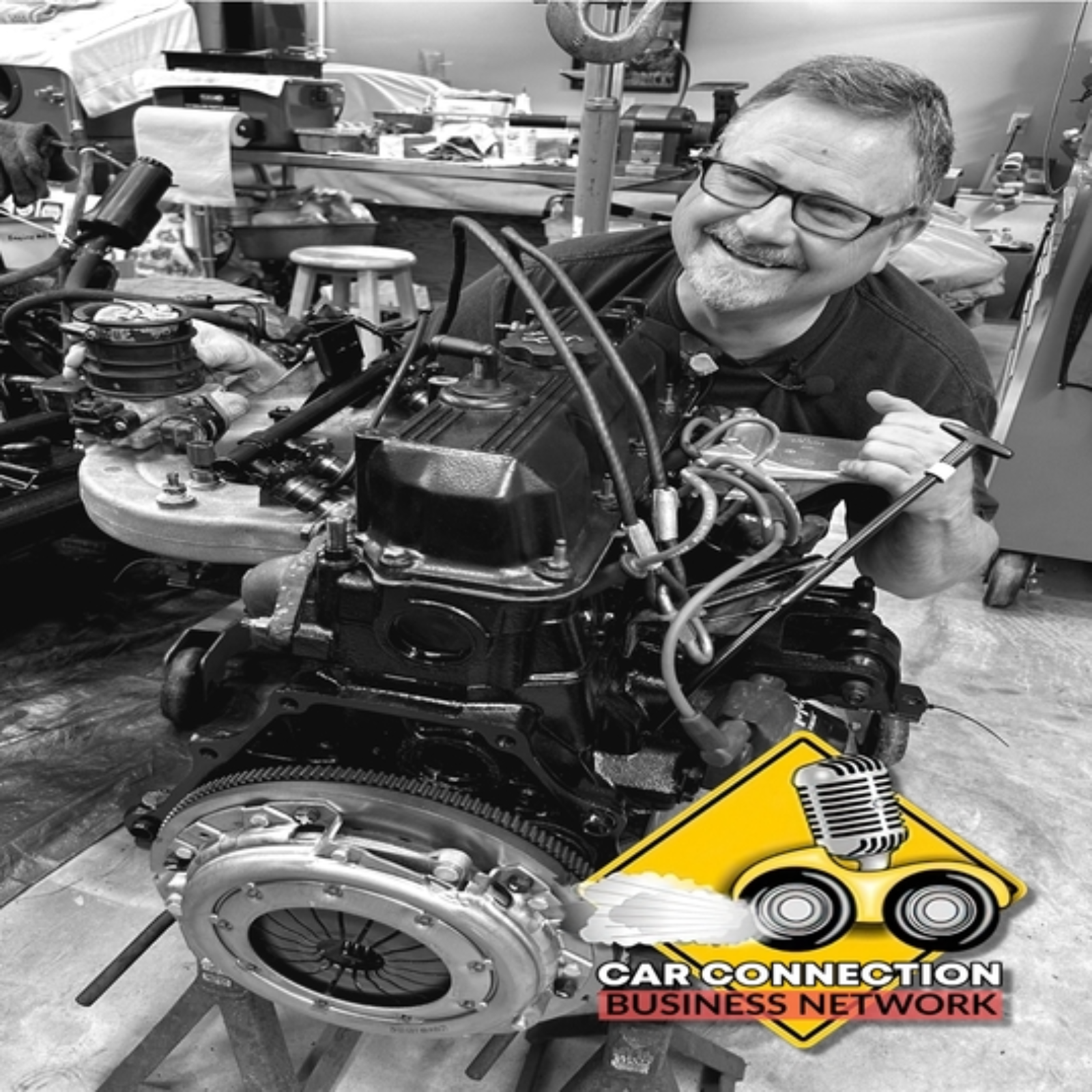
A lively workshop-style rant about keeping cars alive through simple, repeatable maintenance habits rather than overcomplicating everything. The host uses a high-mileage 2007 FJ Cruiser project as a real-world example, including a surprise alternator failure, to stress doing the basics on schedule. Along the way, the episode mixes practical car-buying advice, emotional decision-making, and listener Q&A reminders, with sponsor shoutouts and the usual humor, coffee-fueled banter, and life lessons about staying calm and sticking to the plan.
Are we overcomplicating vehicle ownership?
In today's episode of the Motormouth Morning Drive Podcast, we strip it all back to what actually works-the basics. No gimmicks, no overthinking, no unnecessary upgrades. Just the simple habits that separate the drivers who get years out of their vehicles... from the ones stuck on the side of the road
We're talking tire pressure, rotations,.brake checks, fluid inspections, and the power of a quick walk - around. The kind of stuff anyone can learn - but most people ignore.
Here's the truth:
You don't need to reinvent the wheel - you just need to stay on it.
Do the basics. Then do them again. That's how you win the long game in vehicle ownership.
#CarMaintenanceBasics #VehicleOwnership. #MotormouthPodcast
" If you're getting value here, the best way to support is simple - Like, Comment, Subscribe, That's how you Help us keep doing this." We Love You All Very Much❤️ Skippy & Motormouth
More Episodes and....project Details & Links are available at Car Connection Business Network .Com (ccbusnet.com) you'll find everything on our home page if you'd like to follow the build & Repair work & connect with our program partners. Thank You So Much Friends, 💕 Nile motormouth Jenkins.
Merch available Online @ ccbusnet.com
We'll See you in the next one! Happy Healthy Motoring Friends,
Peace Patience Kindness Always. NMJ
octane
"...but for us it's high octane boost, because that's what we run on, 99.5% octane boost, not a penny less. Let me tell you, it is a busy week here in the car connection workshop, lots of things"
Octane is basically how “smooth” the gasoline burns inside your engine. If the octane is too low for your car, the engine can start to knock, which isn’t good for performance or long-term health.
Octane is a measure of how resistant gasoline is to “knocking,” which is abnormal combustion in an engine. Higher-octane fuel is often recommended for engines with higher compression or turbocharging to keep combustion stable.
engine knocking
"...but for us it's high octane boost, because that's what we run on, 99.5% octane boost, not a penny less. Let me tell you, it is a busy week here in the car connection workshop, lots of things"
Knocking is when the fuel doesn’t burn in the right way, and the engine starts making a rattly/pinging sound. Using the right fuel helps prevent that and keeps the engine happier.
Engine knocking happens when fuel ignites too early or unevenly, causing pressure spikes that sound like pinging. It can reduce efficiency and, if severe or persistent, can contribute to engine damage.

Toyota FJ Cruiser
"going on, we're trying to get the 2007 FJ Cruiser back up and all healthy for the summer, and I found yet one more item, that it was a good thing that the alternator decided that was going to snap off the motor and head into the clutch fan, not good."
A 2007 FJ Cruiser is a Toyota SUV that a lot of people drive for a long time. Here they’re talking about doing maintenance so it stays reliable for the summer.
The Toyota FJ Cruiser (2007) is a rugged, off-road–styled SUV that many owners keep for very high mileage. In this segment, the hosts are working to get a 2007 FJ Cruiser “back up and all healthy for the summer,” implying ongoing maintenance to prevent breakdowns.
clutch fan
"was going to snap off the motor and head into the clutch fan, not good. So we headed that off, but while we're in there, you'll have to watch the videos because"
A clutch fan is a cooling fan that doesn’t always spin at full speed. It helps keep the engine from overheating, and if something hits it, cooling can be compromised.
A clutch fan is a cooling fan that uses a viscous or mechanical clutch to control how aggressively it spins. It’s designed to reduce noise and drag when full cooling isn’t needed, but it’s also a critical area—if something like a failing alternator swings into it, you can quickly create major damage.
maintenance by the month vs mileage
"whatever, I said this before, if I didn't have an odometer I'd just do my maintenance by the month, yeah by the time versus mileage, wouldn't matter, just keep doing the pattern,"
Car maintenance can be scheduled by how many miles you drive or by how much time passes. The point here is: if you can’t track miles, keep a regular time-based routine so the car doesn’t fall behind.
Maintenance schedules are often based on either time (months/years) or mileage, because some wear items degrade with use while others age regardless of how far you drive. The hosts are emphasizing a “pattern” approach—staying consistent even if you don’t track mileage precisely.
amygdala hijacking
"don't we, yeah we get the emotion going and then the amygdala hijacking takes place and then the emotional levels are high, intelligence levels pretty much drop off,"
This phrase means your emotions take over and make it harder to think clearly. The hosts use it to encourage staying calm and sticking to good habits.
“Amygdala hijacking” is a psychology term describing how stress or emotion can override rational decision-making. While not automotive-specific, it’s used here to explain why people make maintenance and driving decisions emotionally rather than systematically.
City Auto Sales and Leasing
"...thank our team, our husband and wife team, Earl Louise Grant at City Auto Sales and Leasing for being one of our car connection program partners..."
They’re a local dealership/partner the show works with. The hosts say they can help find the kind of used car you want, especially if you’re looking for something clean and with low miles.
City Auto Sales and Leasing is mentioned as a car connection program partner. The hosts describe Earl and Louise Grant as having the ability to locate clean, low-mileage vehicles and help source a specific car if it isn’t immediately available.
low mileage vehicles
"...providing low mileage, quality vehicles at fair prices... they have the resources to find and locate those quality vehicles so if you don't see the particular vehicle you're looking for..."
Low mileage usually means the car hasn’t been driven much. That can mean less wear, but you still want to check how well it was maintained and inspect it before buying.
“Low mileage” is a shorthand for cars that have been driven relatively little, which often helps reduce wear on many components. It’s commonly used as a proxy for condition, though maintenance history and overall inspection still matter more than miles alone.
pre-owned auto store
"that's why they are Greater Toronto Areas' Premier pre-owned auto store, is because they don't sell any junk, they sell good stuff, so remember, buy with confidence, be treated with nothing less than honesty and integrity, that's Earl and Louise Grant at City Auto Sales in Leasing"
“Pre-owned” just means the car has been owned before. When you buy used, you want to pay extra attention to condition and service history because it’s not brand new.
A pre-owned (used) auto store focuses on selling previously owned vehicles rather than new ones. The key difference for buyers is that you’re managing risk around prior use, maintenance history, and condition rather than relying on a factory warranty.
in-house leasing and financing
"in Toronto, fair prices, low mileage vehicles, in-house leasing and financing available, I'll tell you, Mama Louise will not let you go out the door without a little sit down in a chitty chat if you're getting in a little too deep on the automobile, which means you're going to be scraping"
In-house financing means the dealership helps set up your loan or lease. It can be easy, but you should still check whether the monthly payment and overall cost are actually a good deal.
“In-house” leasing and financing means the dealership arranges the loan/lease process itself (or through its own finance partners) rather than you shopping financing separately. This can be convenient, but it’s still important to compare rates and total costs so you don’t overpay.
Out-the-door price
"I'll tell you, Mama Louise will not let you go out the door without a little sit down in a chitty chat if you're getting in a little too deep on the automobile, which means you're going to be scraping"
The “out-the-door” price is the final total you pay to get the car. It includes the car price plus the extra charges, so it’s the number you should compare between deals.
“Out-the-door” (OTD) price is the total amount you pay to take the car home, including the vehicle price plus taxes, registration, and dealer fees. It matters because the advertised price alone can hide extra costs that change what the car really costs you.
car shopping emotionally
"but anyways you never go car shopping emotionally, oh I love the color, who cares, you know what, I actually haven't bought any vehicle that I have by color, it's practicality, what can this thing do and what is it going to be used for, okay we can work with that color, I actually really don't"
This is when you pick a car because you like it in the moment, not because it makes sense for your life and budget. The hosts are saying to focus on what you need, not just what looks good.
Shopping “emotionally” means choosing based on feelings (like color or hype) rather than practical needs and budget. The episode’s theme is that emotional decisions often lead to overspending or buying something that doesn’t fit your real use case.

Honda Crv
"insurance agent said Nile, I like your little green Honda CRV, it's very cute, thank you, but you need to make a statement when you arrive, like what, like drive through your "
The Honda CR-V is a common, practical family-friendly SUV/crossover. In this story, it’s brought up as a car someone liked, but the episode is really about picking based on usefulness, not just looks.
The Honda CR-V is a popular compact crossover known for practicality, comfort, and everyday usability. Here it’s mentioned as a “cute” vehicle, but the broader point is still about choosing a car that fits your needs and makes sense for you.
service bay
"said I'll wait my turn to get in the shop for spring maintenance and get these, the winter's off and the summer's on, I'm the last one in the door and it's a good thing because I'm holding up the service bay, we have other projects coming in"
A service bay is the garage space where a mechanic works on your car. They’re saying they had to wait until a bay was available for their maintenance.
A service bay is the workshop area where a vehicle is brought in for inspection and maintenance. In this context, the speaker is describing waiting for their turn to have the car serviced.
spring maintenance
"said I'll wait my turn to get in the shop for spring maintenance and get these, the winter's off and the summer's on, I'm the last one in the door"
Spring maintenance means doing a quick check and service after winter. It helps you find small issues early so they don’t turn into bigger, pricier problems.
“Spring maintenance” is the seasonal approach of doing checks and service after winter conditions—things like inspecting fluids, belts/hoses, and overall wear. The idea is to catch problems early before they become expensive repairs.
automotive maintenance basics
"and all the videos on our YouTube channel are all automotive maintenance basics, teaching you the basics, what it is, where it is, how it works, how it breaks, and what you could have learned is some basic automobile ownership fundamentals"
“Maintenance basics” refers to understanding what routine service items are, where they are on the car, and how they fail over time. The hosts emphasize learning fundamentals so you can avoid unnecessary work and wasted money.
prevention of wasted maintenance
"and what you could have learned is some basic automobile ownership fundamentals to save yourself, not hundreds of dollars a year in wasted maintenance, things that didn't need to happen or, but they happened and that'll save you thousands of dollars"
The segment argues that understanding ownership fundamentals helps prevent “wasted maintenance,” meaning services performed too early, too often, or for the wrong reason. That can reduce the chance of paying for work that doesn’t actually improve reliability.
power steering
"and I would have lost my power steering so I'm into that right now and thank goodness I had saved some parts in case that happened because I've already been there one time"
Power steering helps you steer with less effort. If something goes wrong with the system, the car can suddenly become much harder to turn—so it’s important to fix the underlying cause before it leaves you without assist.
Power steering uses hydraulic or electric assist to reduce the effort needed to turn the wheels. The speaker mentions a scenario where they would have lost power steering, which is a common “small failure → big safety problem” chain when a related component or bracket fails.
stainless steel
"and I can't remember how many years ago now but yeah I prepared with some stainless steel so now the rust out is not going to happen in the future"
Stainless steel resists rust better than regular steel. The host is using it to help the repair last longer and avoid the same corrosion problem later.
Stainless steel is a corrosion-resistant material often used in repairs where rust is a recurring problem. In this context, the host is preparing with stainless parts so the repaired area is less likely to rust out again.
rust out
"and I prepared with some stainless steel so now the rust out is not going to happen in the future so I'm right into that one now"
“Rust out” means corrosion gets so bad it actually wears through the metal. Using stainless parts is one way to slow that down so the same problem doesn’t come back.
“Rust out” refers to corrosion that eats through metal until a structural or mounting area fails. The speaker says they’re using stainless steel to prevent future rust-through, which is a common anti-corrosion strategy when repairing vulnerable areas.
flatbed of the tow truck
"that will keep your vehicle out of trouble and keep you off the flatbed of the tow truck and waiting on the side of the road and missing a day's worth of work or more"
A flatbed tow truck is used when a vehicle can’t be driven safely or at all, so it’s loaded onto a platform. The host uses this as a consequence of neglecting maintenance—small repairs can prevent the need for towing and lost work.
break down when it hurts
"remember cars don't break down when it's convenient they break when it hurts so that's what you got to remember they break when it hurts and that is so true"
The idea is that cars usually fail at the worst moment. If you fix small issues early, you’re less likely to end up stuck on the road or needing a tow.
This is a cautionary concept: mechanical issues often become failures at the worst possible time—when you’re busy, far from help, or relying on the car for work. The host ties it to preventative maintenance and early repairs so problems don’t escalate into towing or roadside breakdowns.
alternator
"if that alternator broke the last bracket because it was ready to break the main bolt holding it to the engine you have to watch the video to see see the bolt"
The alternator keeps your battery charged and runs the car’s electrical systems while you drive. If it breaks, the battery can run out and the car may not start or may act weird with lights and electronics.
The alternator is the engine-driven generator that powers the vehicle’s electrical system and recharges the battery. If the alternator fails, the car can lose charging, leading to a no-start condition or electrical failures—exactly the kind of “break when it hurts” scenario the host warns about.
main bolt
"because it was ready to break the main bolt holding it to the engine you have to watch the video to see see the bolt it's it's got a it's got a curve"
A main bolt is a big, important screw/fastener that keeps a part attached. If it’s loose, corroded, or about to fail, the part can move or break—so catching it early prevents bigger damage.
A “main bolt” is a primary fastener that holds a component (here, a bracket) to the engine. The host’s point is that a stressed or failing fastener can let a component shift or fail, which can cascade into a major failure like alternator loss.

2025 jeep
"we actually just i have another vehicle coming in from the neighborhood a 2025 jeep that's jen's new jeep because the other one got totaled yeah we'll talk about that later"
They’re talking about a Jeep from 2025 that’s coming into their shop. It’s just an example of a real car they’re dealing with while explaining how to stay on top of maintenance.
The host mentions a 2025 Jeep arriving from the neighborhood. They’re using it as an example of what the shop is working on, and they connect it to their broader message about keeping cars maintained.
basic maintenance
"and they all knew that we had to make a buck to have the shop so i could fix their cars for them and keep them on track with basic maintenance that's what we're shifting gears in that's my segue"
Basic maintenance is the regular stuff you do to keep a car healthy. It’s not complicated—think routine checkups and scheduled services—so you avoid bigger problems later.
“Basic maintenance” refers to routine service tasks that prevent small issues from becoming expensive failures. In practice, it usually means staying current on things like oil changes, filters, and inspections so the car remains reliable.
maintenance system
"...so that maintenance system will help you no matter and i want i want to diffuse all the excuses ... so this week you will see the page so that you can get your hands on car connection fleet maintenance system ... you put the check mark in the box ... you'll know what the service needs to be done next..."
They’re describing a simple plan for car upkeep—basically a checklist that tells you what service is coming next. Instead of wondering or forgetting, you can stay on schedule and avoid bigger problems later.
A “maintenance system” here refers to a structured way to track what service is needed and when, so you don’t rely on memory or guesswork. The host emphasizes using a checklist-style process to know what to do next and to reduce excuses and uncertainty.
Lexus SUV
"...he uh amazons if my pops can do all that and track his maintenance on his lexus suv that he loves ... here's a guy that drove dodge grand caravans ... and now he's driving a 17 lexus suv and he loves the thing..."
They’re using a Lexus SUV as an example of a car you can keep running well by staying on top of maintenance. The takeaway is that reliability doesn’t mean “no upkeep”—it just means good maintenance helps you avoid expensive problems.
The host mentions a Lexus SUV as an example of a vehicle whose maintenance can be tracked and managed. The point is that even with a modern, reliable brand, you still need a maintenance plan to avoid surprises and keep costs under control.

Dodge Grand
"...here's a guy that drove dodge grand caravans and before that was the astro safari vans and those things cost him a fortune to run they were always problems..."
They mention the Dodge Grand Caravan as an older vehicle that cost a lot to keep up. The message is that if you don’t stay on top of maintenance, even common family cars can get expensive fast.
The host contrasts older minivans—specifically a Dodge Grand Caravan—with a newer Lexus SUV. They’re using the Grand Caravan as an example of a vehicle that was expensive to run due to frequent problems, highlighting why maintenance habits matter.

GMC Safari
"...dge grand caravans and before that was the astro safari vans and those things cost him a fortune to run t..."
The GMC Safari is a large van made for carrying people or cargo. If it’s an older one, it can cost a lot to maintain because parts wear out over time. That’s likely why someone would bring it up when talking about expensive upkeep.
The GMC Safari is a full-size van built by GMC, typically used for family hauling or cargo work. It comes up in discussions because older vans like this can be expensive to keep running, especially as they age and their maintenance needs add up. That’s why it may be mentioned alongside other similar vans in a “cost to run” story.
tire pressures
"and do the basics if you just learn the basics tire pressures tire rotation checking fluids"
Tire pressure is how much air is in your tires. If it’s too low or too high, the car can handle poorly and the tires wear out faster, so it’s worth checking often.
Tire pressure affects how a car grips the road, how evenly the tires wear, and how efficiently the car rolls. Checking it regularly helps prevent uneven wear and handling issues before they become expensive problems.
tire rotation
"and do the basics if you just learn the basics tire pressures tire rotation checking fluids"
Tire rotation means swapping where each tire sits on the car. It helps the tires wear more evenly so you don’t replace them as soon.
Tire rotation is the practice of moving tires from one position to another to even out wear patterns. Because front and rear tires wear differently due to steering, braking, and drivetrain forces, rotation helps extend tire life.
checking fluids
"and do the basics if you just learn the basics tire pressures tire rotation checking fluids"
Checking fluids means looking at the levels of important liquids in your car. If any are low, the car can run worse or even get damaged, so it’s a simple habit that prevents big issues.
“Checking fluids” usually means inspecting levels and condition of key fluids like engine oil, coolant, brake fluid, power steering fluid (if equipped), and transmission fluid. Low or degraded fluids can cause overheating, poor lubrication, or brake performance problems.
cooling system
"belts hoses cooling system number one cooling system has to be top drawer all the time and"
The cooling system keeps the engine from getting too hot. If coolant isn’t circulating or levels are low, the engine can overheat and cause serious damage.
A car’s cooling system keeps the engine at the right temperature using coolant, a radiator, a water pump, and hoses. If it’s neglected, heat builds up quickly and can lead to overheating and major engine damage.
belts hoses
"belts hoses cooling system number one cooling system has to be top drawer all the time and"
Belts and hoses are rubber and belt parts that help the engine run and move fluids. If they get old or damaged, they can cause leaks or overheating, so it’s smart to keep an eye on them.
Belts and hoses are wear items that can crack, leak, or fail over time. Because they’re tied to engine accessories and coolant flow, problems here can quickly lead to overheating or loss of critical functions.
preventive maintenance
"and you'll get to see what basic maintenance is all about that's all i'm doing i'm doing basic maintenance items that are showing telltale signs there's a problem coming there's a storm coming"
Preventive maintenance is doing scheduled upkeep and addressing early warning signs before they turn into breakdowns. The goal is to keep wear items (like fluids, belts/hoses, and cooling components) in good condition so you avoid costly failures.
GMC Cyclone
"... vehicles down things it we just went through a a cyclone of problems with the vehicles that hit the road ..."
The GMC Cyclone is a performance version of a pickup truck, built to be very quick. Because it’s a special, high-output vehicle, repairs can get complicated if problems start. That’s why it may be mentioned when someone talks about a lot of issues happening at once.
The GMC Cyclone is a high-performance pickup truck from GMC, known for being unusually fast for its class. It’s often discussed because these specialty performance models can be prone to a “cascade” of problems when something goes wrong—fueling the idea of a “cyclone of problems.” That makes it a memorable example in stories about reliability and ownership costs.
basic diagnostics
"cancel it it needs to sit till i can get it in the door because i had a dead one in the shop the j-bean was dead it was a no start so you got to watch those videos too again basic diagnostics"
Basic diagnostics means figuring out what’s causing the problem before you start guessing. It’s like troubleshooting step-by-step so you fix the real issue, not just the symptoms.
Basic diagnostics is the process of narrowing down what’s wrong using simple checks like symptoms, fluid levels, warning signs, and straightforward tests before replacing parts. Doing this early can prevent wasted money and avoid missing the real root cause.
no start
"the j-bean was dead it was a no start so you got to watch those videos too again basic diagnostics"
“No start” means the car won’t start at all. It could be something simple like a dead battery, or something more involved, so it’s important to check systematically.
A “no start” means the engine won’t crank or start, which can come from issues like a dead battery, failed starter, alternator problems, or ignition/fuel faults. Treating it as a diagnostic problem helps avoid replacing parts blindly.
brake inspections
"and the list is really small tire pressures tire rotations brake inspections wheels are off anyway doing a tire rotation every second oil change that's how you do that"
Brake inspection is when you check that your brakes are in good shape. It looks for worn parts before they become a problem. Doing it regularly helps you avoid brake trouble later.
Brake inspections involve checking brake components for wear and proper operation, such as pads/rotors and related hardware. Catching issues early can prevent brake fade, uneven braking, and more expensive repairs.
oil change
"doing a tire rotation every second oil change that's how you do that how do you how do you remember"
An oil change is when old engine oil is drained and replaced with new oil. The oil keeps the engine parts from rubbing together dry. If you wait too long, the engine can wear out faster.
An oil change replaces used engine oil with fresh oil to maintain lubrication and protect engine wear. The right interval depends on the vehicle and oil type, but staying on schedule is key to long engine life.
maintenance schedule
"and that's what i'm trying to tell you all the basics of what you need to know and when you need to do it and what it is is all put together for you and so we had we had what we called the car connection maintenance schedule kit"
A maintenance schedule is a checklist of what your car needs and when it needs it. It helps you stay ahead of problems instead of waiting until something breaks. Keeping up with it can save money and keep the car reliable.
A maintenance schedule is a planned set of service tasks (like inspections, oil changes, and tire rotations) based on time and mileage. Following it helps prevent deferred maintenance and reduces the chance of small issues turning into expensive failures.
service manual
"and so we had what we called the car connection maintenance schedule kit that our listeners at the time were like is there any way you can give us a list motor mouth so we know what we need to do and it's all like right in front of us because i find them at the service manual very confusing"
A service manual is a detailed guide for how to maintain and repair a car. It can be hard to read if you’re not used to technical instructions. That’s why a simpler checklist can be easier to follow.
A service manual is a detailed reference guide used by technicians, typically including maintenance intervals, procedures, and specifications. The hosts mention it as confusing, which is why they created a simpler checklist for listeners.
under the hood inspection
"do the basics checking fluids looking around under the hood if here's the thing if you hear something smell something"
This is just a quick look under the hood to see if anything looks wrong. If you spot a leak, a damaged hose, or something unusual, it’s safer to deal with it sooner.
An “under the hood” inspection is a quick habit of looking for leaks, loose components, damaged hoses, or warning signs. The goal is to catch problems early—before they cause overheating, loss of power, or a breakdown on the road.
don't shrug it off (responding to unusual sounds/smells)
"if you hear something smell something or see something that doesn't look right don't shrug it off because as i've already mentioned"
If your car makes a weird noise or you smell something unusual, don’t ignore it. Paying attention early can help you fix the problem before it turns into a bigger repair.
The advice to not “shrug it off” emphasizes proactive troubleshooting when you notice abnormal sounds, smells, or visual cues. Early response can prevent minor problems (like a belt or fluid leak) from escalating into major engine damage.
dry belt
"she goes oh that's just a dry belt my husband when he was alive he would just put some ivory soap on that"
A “dry belt” is a belt that’s gotten stiff and worn out. If it’s slipping or cracking, it can stop important parts from working—so it’s worth checking and replacing before it breaks.
A “dry belt” usually means a drive belt (like a serpentine belt) that has hardened, cracked, or lost flexibility. Belts can slip or fail, which may lead to loss of charging (alternator), overheating (cooling system), or other accessory failures depending on the vehicle.
doing the basics
"i said just do the basics keep doing the basics it's just driving an old car in really good shape"
They mean the simple stuff you’re supposed to do regularly. If you handle small problems early, you avoid bigger, more expensive repairs later.
“Doing the basics” refers to routine maintenance tasks that prevent wear from turning into expensive failures. In practice, this usually means keeping up with fluids, filters, inspections, and addressing small issues early.
keeping an older car thing going
"that's what i'd talk about this morning is let's not complicate this keeping an older car thing going because a newer car some of this stuff that's out right now"
They’re basically saying: don’t ignore your older car. If you keep up with simple maintenance, it’s much less likely to break down later.
The hosts are arguing for a “maintenance mindset” on older vehicles: consistent basic upkeep can keep them reliable even as they age. The idea is that many problems are preventable with routine care rather than waiting for failures.
engine problems
"because this new one is just rubbish there's a lot of problems out there a lot of engine problems a lot of transmission problems"
They’re talking about big mechanical failures inside the engine. Their point is that regular care helps reduce the chances of those problems.
“Engine problems” is a broad category the hosts use to describe the kinds of failures people associate with newer vehicles. The takeaway is that regardless of model year, maintenance habits influence how often major issues happen.
transmission problems
"a lot of engine problems a lot of transmission problems a lot of goofy stuff coming apart"
They mean problems with the car’s shifting system. If you don’t maintain it, you can end up with costly repairs.
“Transmission problems” refers to issues in the gearbox and related systems that can be expensive to repair. The hosts lump these failures into the broader idea that neglect leads to breakdowns.
diesel pickup guys
"easel even for the the diesel guys out there the diesel pickup guys you guys better learn a lot in a hurry about taking care of a diesel"
They’re warning that diesel trucks aren’t “set it and forget it.” If you don’t keep up with maintenance, diesel problems can get expensive fast.
Diesel engines and diesel trucks often require more attention to specific maintenance items (like fuel system health and proper servicing intervals). The hosts are emphasizing that neglect can lead to costly problems.
rust proofed
"keep doing the basics keep the structure solid keep it rust proofed don't don't be afraid to spend money on that"
Rustproofing helps stop your car from getting eaten by corrosion. It’s especially important if you drive where they use salt in winter.
Rustproofing is about protecting a vehicle’s metal from corrosion, especially in areas exposed to moisture and road salt. Keeping rust under control helps preserve structure, which can also affect safety and long-term value.
throwing parts at it
"and reliable the rocket is absolutely reliable 1999 how old is that and i don't care if you have a vehicle that's five years old you're gonna be throwing parts at it"
They mean you’ll probably end up replacing worn-out parts as an older car ages. The key is to keep fixing things instead of ignoring them.
“Throwing parts at it” describes the common (and sometimes costly) approach of replacing components without necessarily diagnosing the root cause. The hosts’ framing suggests that with older cars, some repairs are expected, but you still want to keep addressing issues as they come up.
ladies night service classes
"when we ran the ladies night service classes they'd be full every time we could take 12 ladies and we put them in coveralls and put the glove them up and they had four electives to do in four different areas of the shop"
They’re talking about a hands-on class where people learn how to work on cars in a shop. The idea is to practice with real help from technicians, not just listen to lectures.
This segment describes a hands-on training program where participants rotate through service-bay electives with technicians. It’s a topic about education and getting people comfortable doing basic maintenance tasks.
Request an Explanation
Heard something you'd like explained? We'll add it to this episode.
Sign in to request explanations for terms you heard.
Want to learn more?
Browse our glossary for plain-English explanations of automotive terms, jargon, and concepts.
Help improve this episode
See something that's not quite right? Our annotations are AI-generated and can sometimes miss the mark. Click the flag icon on any annotation to suggest a correction.