
SnailMail: More Special Drinks “Pink Panty Droppers”
About this episode
The hosts kick off with a mix of community talk and listener voicemails, then dive into practical build details. Four Wheel Underground’s shift to buying suspension parts “all a cart” comes up alongside link-suspension upgrades and aluminum links. A caller argues about mismatched axle lug patterns (Sterling vs 10.25) and what it takes to make wheels fit, then the conversation moves to axle strength, differential rebuilds, and backlash setup. Later, the show pivots to camping gear—swags vs rooftop tents—and how to choose based on wheeling or tow-rig use.
- Caller 1: Kerin calls for Uncle Weirdo
- Caller 2: Nick from MT gives more Mental Health advice
- Caller 3: FU Bob tells everyone about Penash
- Caller 4: FU Bob asks about road trip routings
- Caller 5: FU Bob likes Pink Panty Droppers
- Text 1: DOT Travis converts train torque for us 383,562.5
- Caller 6: Alex from Botches says he is excited for TrailHeroX
- Caller 7: Jeff from OR explains how people work differently
- Caller 8: Alex from Botches talks RTT vs Trailer
- Caller 9: Alex from Botches is thinking about a custom-made RTT
Join Our Discord: https://discord.gg/yFyFFkQbuy
Come hang out with us on the SnailTrail4x4 Discord — it’s the easiest way to connect with Tyler and Jimmy directly, chat with fellow offroad enthusiasts, and get first access to Group Buys and Treasure Hunt token drops.
CALL US AND LEAVE US A VOICEMAIL!!!! We want to hear from you even more!!! You can call and say whatever you like! Ask a question, leave feedback, correct some information about welding, say how much you hate your Jeep, and wish you had a Toyota! We will air them all, live, on the podcast! +01-916-345-4744.
An alternative method would be sending us an email at [email protected] or at [email protected]. You can also find us on Instagram at SnailTrail4x4 or 4x4ToyotaTyler
Listener Discount Codes:
SnailTrail4x4 –SnailTrail15 for 15% off SnailTrail4x4 Merch
MORRFlate – snailtraill4x4 to get 10% off MORRFlate Multi Tire Inflation Deflation™ Kits
4WheelUnderground – snailtrail 10% off
Ironman 4×4 – snailtrail20 to get 20% off all Ironman 4×4 branded equipment!
Sidetracked Offroad – snailtrail4x4 (lowercase) to get 15% off lights and recovery gear
Spartan Rope – snailtrail4x4 to get 10% off sitewide
Shock Surplus – SNAILTRAIL4x4 to get $25 off any order!
Mob Armor – SNAILTRAIL4X4 for 15% off
SummerShine Supply – ST4x4 for 10%
Backpacker’s Pantry – Affiliate
a la carte system
"What's really cool about what they're doing right now is they're kind of changing the way the business is set in the sense that you get to now buy things all a cart. Absolutely. So if you want the upper frame bracket, you can just buy that."
It means you can buy parts individually. Instead of having to get a full kit, you can pick just the specific pieces you want for your setup.
An "a la carte" system means you can buy individual components separately instead of being forced to purchase a complete kit. In this case, you can select specific brackets and joints that match your build rather than buying the whole suspension package.
upper frame bracket
"So if you want the upper frame bracket, you can just buy that. Yeah. If you want the lower link bracket because it has the integrated bump stop and it's super stout and it looks really good too."
A bracket is a strong metal mount that bolts the suspension to the truck. The upper bracket is the part up on the frame that helps hold everything in the right position.
An upper frame bracket is a mounting piece that attaches suspension components to the vehicle’s frame. For link-style off-road suspensions, the bracket location and strength strongly affect how the suspension geometry holds up under load.
lower link bracket
"If you want the lower link bracket because it has the integrated bump stop and it's super stout and it looks really good too. You can get just those before you would have to buy the whole kit."
This is the mount where the lower suspension arms/links attach. If it has an integrated bump stop, it also helps prevent the suspension from bottoming out hard.
A lower link bracket is the mounting point for the lower suspension links, typically on the frame or crossmember. When it includes an integrated bump stop, it also helps define how the suspension limits travel at the end of its stroke.
integrated bump stop
"If you want the lower link bracket because it has the integrated bump stop and it's super stout and it looks really good too. You can get just those before you would have to buy the whole kit."
A bump stop is like a safety cushion. It kicks in when the suspension gets near the end of its movement so things don’t slam together.
A bump stop is a rubber or elastomer (or sometimes hydraulic) contact that cushions the suspension near the end of its travel. An "integrated" bump stop means it’s built into the bracket design, helping control suspension compression and protecting components from hard metal-to-metal impacts.
Johnny joints
"So now you can buy those all a cart from cartridge joints, rebuildable Johnny joints, hymes, offsets, all sorts of different ones."
Johnny joints are special suspension connection parts that let the suspension move more freely. They help the links stay working smoothly when the truck is flexing off-road.
Johnny joints are off-road suspension spherical-style joints designed to allow controlled articulation while reducing binding compared to softer bushings. They’re commonly used in link suspensions to maintain alignment and improve ride/handling consistency over uneven terrain.
hymes
"So now you can buy those all a cart from cartridge joints, rebuildable Johnny joints, hymes, offsets, all sorts of different ones."
Himes here likely means Heim joints—strong joint parts that let suspension links pivot smoothly. They’re often used on off-road setups because they can handle lots of movement.
"Hymes" is almost certainly shorthand for "Heim joints" (rod-end joints), which are common in performance and off-road linkages. Heim joints use a spherical bearing to allow angular movement, often with rebuildable designs for long-term service.
offsets
"So now you can buy those all a cart from cartridge joints, rebuildable Johnny joints, hymes, offsets, all sorts of different ones."
Offsets are ways to shift where a suspension part mounts. That helps tune the suspension so it fits better and behaves the way you want when the truck flexes.
In suspension hardware, "offsets" typically refer to adjustable or different-position mounting options that change where a link sits relative to the frame. That can be used to fine-tune suspension geometry, clearance, and how the truck tracks under articulation.
Aluminum links
"Do you know what else he brought in-house? Aluminum links. That's pretty rad. He found a way to source aluminum links so that there's no extra charge on the suspension kits."
These are the suspension arms/links made from aluminum. Aluminum can be lighter than steel, which can help the suspension react better over bumps.
Aluminum links are suspension links made from aluminum instead of steel. They’re often used to reduce unsprung weight and can be sourced in a way that keeps the suspension kit price competitive, while still providing the strength needed for off-road use.
link suspension kit
"So if you want to move your Toyota from Lee Springs to a link suspension kit, check out four-wheel underground."
A link suspension kit is an off-road suspension upgrade that uses arms/links to guide the wheels. It’s designed to help the truck flex more and handle better on rough trails.
A link suspension kit uses suspension links (arms) to control wheel movement and geometry, rather than relying on leaf springs or simpler setups. These kits are popular in off-road builds because they can be tuned for articulation, ride quality, and clearance while maintaining predictable handling.

Wrangler Rubicon
"...e a part of and use to do some maintenance on the Rubicon Trail too. They have an elite partnership."
The Wrangler is a 4-wheel-drive vehicle designed for off-road trails. It’s popular with people who like to take their vehicle off pavement and do their own maintenance. The podcast mentions it because it’s well-suited to trail use and upkeep.
The Jeep Wrangler is a rugged 4x4 built specifically for off-road driving, with a design that’s meant to handle trails and rough terrain. It’s frequently discussed in off-road communities because it’s easy to modify and maintain for trail use. In this podcast, it’s referenced in the context of using parts and doing maintenance related to trail driving (including the Rubicon Trail).
Sterling 1025
"Tyler, you are 100% wrong. If that rear end that you have is a Sterling 1025, it was the Lord's pattern. You sure you've already heard enough shit for this, but I haven't told you yet."
“Sterling 1025” is a specific heavy-truck rear axle. The point here is that its wheel/parts setup doesn’t match what’s on the front, so you may have fitment problems.
Sterling 1025 refers to a specific rear-axle model (a differential/axle assembly) used on heavy-duty trucks. The speaker is saying the rear axle’s design/bolt layout doesn’t match the front, which affects wheel and parts compatibility.
lug pattern
"That is the 8-on-6-5 rear end and your front end is a super duty front end, which is an 8-on-1 70 lug pattern. So at some point, somebody moved, changed, re-drilled, did whatever to make sure that your lug patterns match."
The lug pattern is how the wheel bolts are arranged. If the front and rear of a truck don’t use the same bolt layout, it’s harder to use the same wheels and replacement parts.
A lug pattern is the wheel’s bolt layout—how many lug nuts there are and the spacing/diameter of the circle they form. If the front and rear lug patterns don’t match, you can’t easily swap wheels/tires between axles and you may have trouble finding compatible parts.
8-on-6-5
"That is the 8-on-6-5 rear end and your front end is a super duty front end, which is an 8-on-1 70 lug pattern. So at some point, somebody moved, changed, re-drilled, did whatever to make sure that your lug patterns match."
“8-on-6-5” describes how many wheel bolts there are and the size of the circle they sit on. It helps you know whether a wheel will fit the hub.
“8-on-6-5” is a shorthand lug-pattern format: 8 lugs arranged on a 6.5-inch bolt circle. It’s a way to describe wheel/hub compatibility without listing every measurement.
super duty front end
"That is the 8-on-6-5 rear end and your front end is a super duty front end, which is an 8-on-1 70 lug pattern. So at some point, somebody moved, changed, re-drilled, did whatever to make sure that your lug patterns match."
“Super Duty” here means a heavy-duty truck front axle/wheel setup. They’re comparing that front setup to the rear axle so you can see why the bolt patterns don’t match.
“Super Duty” is a heavy-duty truck line name (commonly associated with Ford Super Duty) and, in this context, it indicates the front axle/wheel setup is from a heavy-duty application. The speaker uses it to contrast the front axle’s lug pattern with the rear axle’s pattern.
re-drilled
"So at some point, somebody moved, changed, re-drilled, did whatever to make sure that your lug patterns match. I personally would get rid of that 1025, find yourself another Sterling 1050."
Re-drilling is when someone drills new bolt holes so the wheel can fit. It usually means the truck has been modified, and that can make parts harder to find later.
Re-drilling means machining new bolt holes so a hub/axle matches a different lug pattern. It can be done to make parts fit, but it’s also a sign the vehicle has been modified and may affect wheel compatibility and parts sourcing.

Ford F-150 Lightning
"Call me. You don't have to post that lightning, let's talk. I've wanted one for years."
The Ford F-150 Lightning is a pickup truck that runs on electricity instead of gasoline. It’s built to do truck jobs like hauling and towing, but with an electric drivetrain. The podcast mention is about wanting one because it’s a different kind of F-150.
The Ford F-150 Lightning is an all-electric version of the F-150 pickup, combining the practicality of a full-size truck with electric power. It’s often discussed because it brings battery-electric capability into a segment traditionally known for towing and work use. In this podcast, it’s specifically called out as something the speaker has wanted for years, indicating interest in the electric truck experience.
Sterling 1050
"Next one was the rear axle under Fiona is a 10.25, not a Sterling 1050, which is correct."
“Sterling 1050” is a specific heavy-duty rear axle. People talk about it because it’s built to handle tougher off-road use, and it may require different parts to fit your truck.
“Sterling 1050” is a heavy-duty rear axle model name used in some off-road and commercial applications. It’s often discussed as a stronger alternative to smaller axle housings, and it changes what gear ratios, hubs, and mounting hardware you’ll need.
rear axle
"Next one was the rear axle under Fiona is a 10.25, not a Sterling 1050, which is correct."
The rear axle is the part that links the back wheels to the rest of the drivetrain. If you’re modifying an off-road truck, changing the rear axle can change strength and what upgrades fit.
The rear axle is the assembly that connects the rear wheels to the drivetrain and carries the vehicle’s load. In off-road builds, axle choice affects how strong the drivetrain is and what parts (like gears and hubs) you can swap in.
ring gear
"So I had it necessarily considered finding a 10.5 sterling and putting that in instead. ... Yeah, you have the 10.25 ring gear."
The ring gear is one of the main gears inside the rear differential. It works with another gear to transfer power to the wheels, and its size affects what axle setup you have.
The ring gear is the large gear in the differential that meshes with the pinion gear. Its size and design are central to axle gearing and strength, and it’s why axle models like “10.25” get identified by their ring gear.
eight on six and a half
"Because I did not realize that it's an eight on six and a half lug pattern. Mine is definitely an eight on 170 lug pattern right now."
That phrase is a specific wheel bolt pattern: 8 studs on a circle that measures 6.5 inches. It determines which wheels will bolt on correctly.
“Eight on six and a half” is a lug-pattern shorthand meaning 8 wheel studs arranged on a 6.5-inch bolt circle. It’s a specific wheel-fitment standard, so it matters when choosing wheels or when an axle has been modified.
eight on 170
"Mine is definitely an eight on 170 lug pattern right now. So somebody redrilled it and redid the wheel mount surface for the eight on 170 lug pattern"
“Eight on 170” describes a wheel bolt pattern: 8 studs on a 170 mm circle. If your axle is set up for a different pattern, your wheels won’t line up.
“Eight on 170” is shorthand for an 8-stud wheel bolt circle with a 170 mm diameter. It’s another wheel-fitment standard, and switching between lug patterns often requires re-drilling or reworking the wheel mounting surface.
unit bearings
"I'd rather have the unit bearings the way Kermit set up. So I had it necessarily considered finding a 10.5 sterling and putting that in instead."
Unit bearings are sealed wheel bearings built into a single replaceable unit. That usually makes maintenance easier and keeps the wheel running smoothly.
Unit bearings are wheel bearings packaged as a sealed, serviceable unit integrated with the hub. They’re popular in off-road builds because they simplify maintenance and can improve consistency compared with older bearing setups.
link brackets
"we'd have to reset up the link brackets and the shock mounts, but if I get the 10.5 sterling, it wouldn't be shaved."
Link brackets are the mounting points where suspension links attach to the axle. If you change the axle, you may need to move or adjust these brackets so the suspension still lines up properly.
Link brackets are mounting points for the suspension links that control axle location and alignment. When you swap axle housings, you often have to reset or rework these brackets so the suspension geometry stays correct.
shock mounts
"we'd have to reset up the link brackets and the shock mounts, but if I get the 10.5 sterling, it wouldn't be shaved."
Shock mounts are where the shocks bolt to the vehicle. If you change the axle, you may need to adjust the shock mounting points so the suspension works the way it should.
Shock mounts are the brackets/points where the shocks attach to the axle and/or chassis. They determine shock position and leverage, so axle swaps can require re-mounting to keep ride control and suspension travel correct.
shave kit
"Correct. That would be a dunder down side. I don't think I would take the time to do a shave kit on it."
A “shave kit” usually means trimming or modifying parts to make things fit with more clearance. People use it when the axle or wheel setup hits something.
A “shave kit” in axle/clearance contexts usually refers to trimming or modifying parts to create clearance for components (often wheels, hubs, or axle hardware). It’s a workaround when the axle or wheel-end setup interferes with something else.
crush sleeve
"It just needs to not have a crush sleeve on it. [662.9s] And I would rather have unit bearings, but I can live with spindles."
A crush sleeve is a small part that helps set the correct tightness for bearings in the axle. Because it gets deformed when tightened, mechanics typically replace it when rebuilding so the bearings stay properly adjusted.
A crush sleeve is a component used to set the preload on a differential/axle bearing. It’s designed to be tightened until it deforms (“crushes”), which means it usually can’t be reused and must be replaced during proper rebuilds.
spindles
"And I would rather have unit bearings, but I can live with spindles. [666.9s] Yeah. I just have to carry around an extra spindle nut to get those spindles off."
A spindle is part of the axle end that holds the wheel bearing/hub in place. If you want to take the wheel assembly apart for service, you often need specific hardware like the spindle nut.
In this context, “spindles” refers to the axle end components that support the wheel hub/bearing arrangement. They’re part of the assembly that you remove to service bearings, which is why the host mentions needing a spindle nut.
spindle nut
"Yeah. I just have to carry around an extra spindle nut to get those spindles off. [670.8s] Right. And maybe you need to carry around the part that is drilled out."
A spindle nut is the nut that holds the axle end parts together. If you’re taking the spindle/hub apart to fix bearings, you may need the correct nut to put everything back safely.
A spindle nut is the fastener used to secure the spindle/hub bearing components and maintain correct bearing preload and retention. If you’re doing roadside repairs or frequent service, having the right spindle nut (or spare) matters because it’s part of how the assembly is tightened and held.
axle shaft
"it's going to be an axle shaft or a third member, a third differential. [693.4s] Sure. The likelihood of breaking the wheel mount surface itself is super low."
An axle shaft is the part that sends power from the differential out to the wheel. If the axle is going to break, the shaft is one of the parts that can fail.
An axle shaft is the rotating shaft that transfers torque from the differential to the wheel hub. If something breaks in the rear axle, axle shafts are a common failure point compared with less stressed outer mounting surfaces.
third member
"it's going to be an axle shaft or a third member, a third differential. [693.4s] Sure. The likelihood of breaking the wheel mount surface itself is super low."
A third member is the removable chunk in the rear axle that holds the differential gears. It’s basically the “center” of the axle that you rebuild or replace if the gears are damaged.
A third member is the removable center section of many rear axles that contains the differential gears. When people say “third member” they usually mean the whole differential carrier assembly that can be swapped or rebuilt.
wheel mount surface
"The likelihood of breaking the wheel mount surface itself is super low. [700.6s] You're going to crack a wheel and have a lot of other destruction [703.6s] before I think you break one of those."
The wheel mount surface is the flat area where the wheel bolts on to the axle end. The point here is that it’s less likely to break than the internal parts.
The wheel mount surface is the mating area where the wheel/hub assembly attaches to the axle end. The host argues it’s unlikely to fail compared with internal drivetrain components like shafts or the differential assembly.
rear differential
"let me know because I do have to go through and rebuild the rear end, [716.2s] the rear differential and put a different locker in it and everything."
The rear differential is the gearbox inside the rear axle that lets the two rear wheels turn at different speeds. That’s important when you’re turning or driving over uneven ground.
The rear differential is the gear unit in the rear axle that allows the left and right wheels to rotate at different speeds while still sending power to both. Rebuilding it can involve replacing bearings/gears and setting up clearances and backlash.
locker
"the rear differential and put a different locker in it and everything. [719.5s] So I'm going to be spending $1,500, $2,000 on this."
A locker is a type of differential that can “lock” both rear wheels together so they spin together. That helps when one wheel is slipping off-road, but it can feel different when driving on regular roads.
A locker is a differential that can be engaged to lock the left and right axle shafts together, forcing both wheels to rotate at the same speed. Off-road lockers improve traction when one wheel loses grip, but they can change handling characteristics on pavement.
four to one transfer case
"They're Rubicon, Jeep Axel, you know, four to one transfer case for a JKU."
In a 4x4, the transfer case sends power to both the front and rear wheels. “4:1 low range” means you go slower but with more pulling power, which helps when climbing rocks or crawling through mud.
A transfer case is the gearbox that splits power to the front and rear axles in a 4x4. A “4:1” low-range ratio means the engine turns the wheels about four times slower than in high range, giving much more torque for crawling over obstacles.
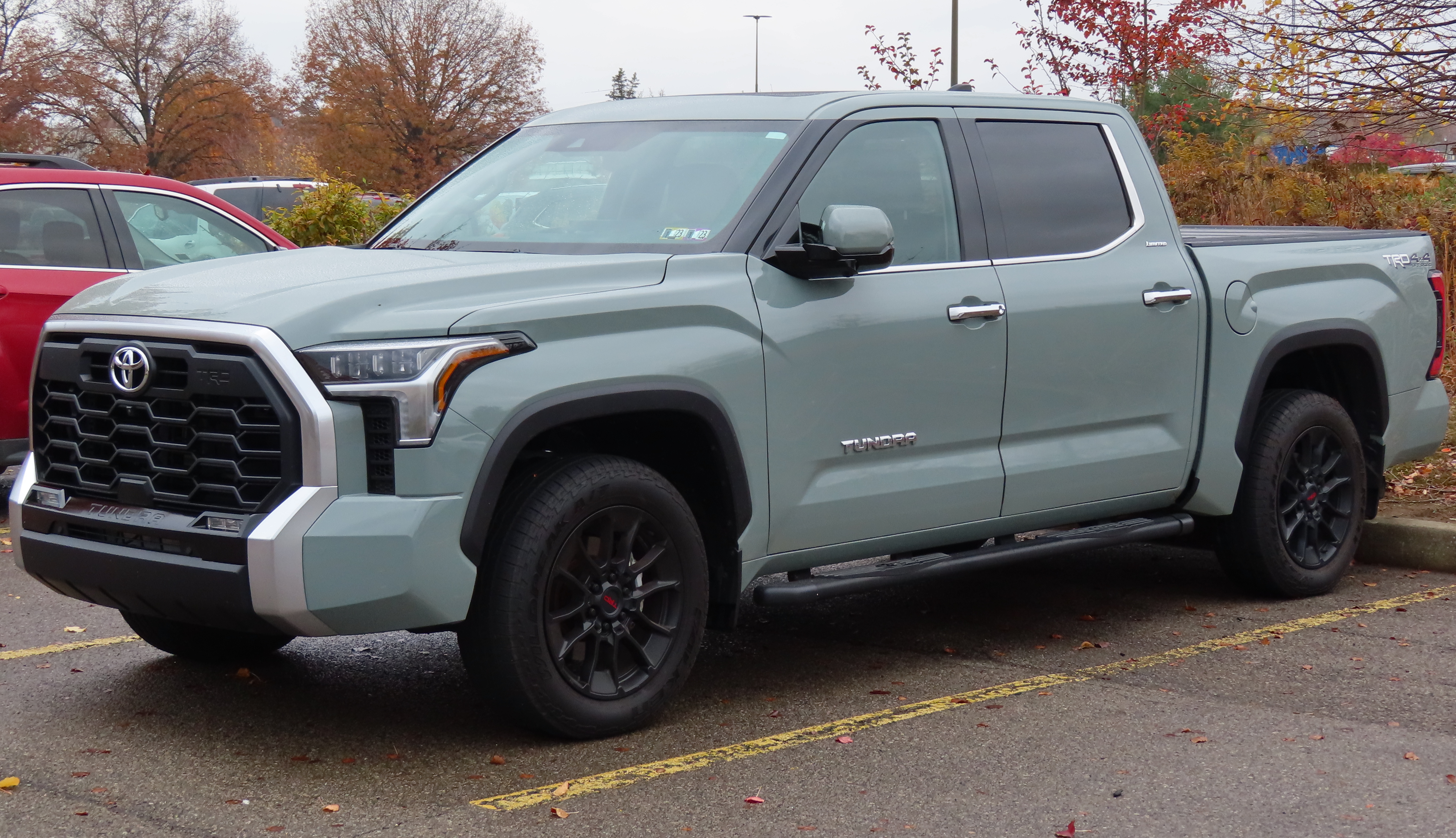
Toyota Tundra
"...'s pretty good. I'd say Toyota suck, but I'm in a tundra. So I better not. Tundra's don't die, Bob. They l..."
The Toyota Tundra is a large pickup truck made for work like towing and carrying things. People bring it up because many owners expect it to last a long time. In the quote, it’s being used to emphasize that it’s reliable.
The Toyota Tundra is a full-size pickup truck built for towing, hauling, and everyday driving, with a reputation for durability. It often comes up in off-road and trail conversations because owners expect it to keep working even after lots of hard use. In this podcast context, it’s mentioned as a truck that “doesn’t die,” highlighting long-term dependability.
22 RE
"Tundra's don't die, Bob. They live forever. They're the 22 RE of the half ton world."
They’re referencing a Toyota engine nickname (“22RE”) that off-road folks associate with being very tough and long-lasting. The point is just that the truck is “hard to kill.”
“22 RE” is being used as a comparison shorthand for a specific Toyota engine variant (the 22R/22RE family) that’s known in the Toyota off-road world for being long-lived. In this context, it’s a joke implying the Tundra is similarly hard to kill.
wheels just spin too much
"a big part. Not enough and the wheels just spin too much and you're just carrying around a bunch of extra dead weight."
Wheelspin is when your tires spin but don’t really grab the ground. It usually happens when the surface is slippery or when there isn’t enough traction for the power being sent to the wheels.
When the wheels spin without the vehicle moving forward, that’s wheelspin—usually caused by insufficient traction. In off-road setups, wheelspin can be worsened by too much power for the available grip or by weight distribution and tire choice.
dead weight
"Not enough and the wheels just spin too much and you're just carrying around a bunch of extra dead weight."
Dead weight is extra stuff that adds weight but doesn’t help you drive better. On trails, more weight can make it harder to get traction and move efficiently.
“Dead weight” is extra mass that doesn’t directly help performance—like unnecessary cargo or heavy components. In off-road driving, extra weight can increase the chance of wheelspin and makes it harder to accelerate and climb.
torque
"it produces a max of 383,562.5 pound feet of torque. Stay safe and later. Wow. That was amazing. That might be one of my favorite text messages we've ever gotten. How much torque 313 383,000 and 83,000 562.5."
Torque is the engine’s pulling power—the force that twists the drivetrain. More torque usually means it can pull harder, especially when you’re stuck in sand, mud, or towing heavy loads.
Torque is the twisting force an engine or motor produces. It’s what helps a vehicle get moving and pull under load, which is why off-road and towing discussions often focus on torque rather than just horsepower.

4Runner Forerunner
"... to give my remarks on Tyler's last update on his forerunner and my experience with Eastern European slash Rus..."
The Toyota 4Runner is a rugged SUV designed to go off-road and handle rough roads. People talk about it because it’s meant for trail driving and long trips. In the podcast, it’s included as part of the broader discussion about off-road vehicles and experiences.
The Toyota 4Runner is a body-on-frame SUV known for off-road capability and long-distance durability. It’s commonly discussed in trail and overlanding circles because it’s built to handle rough roads and uneven terrain. In this podcast context, it’s mentioned alongside other off-road vehicle talk, tying it to real-world trail experience and updates.
three-link bracket
"the other thing is a three-link bracket tearing off. I have welded up I don't know how many fucking track bar mounts and three-link mounts off of link suspensions on the trail like a lot."
A three-link suspension uses arms to hold the axle in the right place. The three-link bracket is the part that the arms attach to—if it rips off, the suspension can lose control and the axle can move unpredictably.
A three-link suspension uses three control arms to locate the axle, and the three-link bracket is the welded/bolted mounting structure that holds those arms to the frame. If the bracket tears off, it usually means the load path into the frame wasn’t strong enough for trail impacts, flex, and leverage.
track bar mounts
"the other thing is a three-link bracket tearing off. I have welded up I don't know how many fucking track bar mounts and three-link mounts off of link suspensions on the trail like a lot."
A track bar is a steering-stability link that helps keep the axle from shifting side-to-side. The mounts are the metal brackets where that link bolts or welds on—and if they’re not strong enough, they can rip off on rough trails.
On a lifted 4x4, the track bar (also called a panhard bar) helps keep the axle centered under cornering and trail loads. The track bar mounts are the brackets/connection points that attach the track bar to the frame or axle, and they can tear off if the mounting area isn’t reinforced.
JK's
"It's always track bar in JK's and it's always three-link brackets on Toyota's because they weld the sheet metal housings and then they tear apart."
“JK” is a nickname for a Jeep Wrangler generation. People mention it a lot in off-road suspension discussions because certain lift and link setups can stress the mounting points.
“JK” is shorthand for the Jeep Wrangler JK generation. In off-road suspension talk, it often comes up because many JK builds use aftermarket link suspensions and commonly discuss track bar mount failures when the frame isn’t reinforced.
plated the frame
"to like just spread the load out on the frame after I've plated the frame because I've seen so many tear out on the frame"
Plating the frame means adding extra metal reinforcement to the truck’s frame. It helps distribute the forces from suspension parts so the frame is less likely to rip or crack at the mounting holes.
“Plating the frame” means welding additional steel plates onto the frame to strengthen a weak area. In suspension work, it’s commonly used to spread the load from brackets so the frame doesn’t tear out around the mounting points.
gear guys
"and then gear guys finding a good gear guy is like impossible. My gear guy is like 83 years old and has bladder cancer now so I just bought all the tools."
“Gear guys” are the people who work on the drivetrain’s gear ratios inside the differentials. Changing or setting up those gears is specialized work, and doing it wrong can lead to problems later.
In off-road and drivetrain contexts, “gear guys” refers to specialists who set up and install differential gears (gear ratios) and related internal components. The host is emphasizing that finding someone experienced with this work is difficult, and that gear setup is precise enough that mistakes can cause drivability or durability issues.
setting up my own gears
"My gear guy is like 83 years old and has bladder cancer now so I just bought all the tools. I'm going to start setting up my own gears even though they sound like from my calls"
They mean they’re going to do the differential gear work themselves. That involves careful measuring and setup so the gears mesh correctly and don’t wear out quickly.
“Setting up my own gears” implies the host is planning to perform differential gear installation and setup themselves, including measuring clearances and dialing in backlash and contact pattern. This is a hands-on drivetrain job that requires tools and careful procedure to avoid premature wear.
ripped off of the axle
"showed them what happened to the three-link bracket on Fiona and why it fell off ripped off of the axle and I'm still waiting for this whole saga to"
This means the suspension part broke free from the axle. When that happens, the axle can shift and the truck’s handling can get unsafe fast.
When a suspension bracket “rips off” the axle, it means the mounting point failed under load—either tearing metal, breaking welds, or pulling hardware out. In a link suspension, axle-side failures can quickly compromise axle location and control.
gear set
"The gears. I really enjoy setting up gears. I think it's a fun little puzzle to solve... I just don't have the time to do gears... to get the proper pattern that you want."
A gear set is the set of gears that controls the “gearing” of the drivetrain. Swapping it changes how the truck feels—whether it pulls harder or runs quieter at highway speed. Setting it up correctly is important so the gears wear properly.
A gear set (in this context, differential ring-and-pinion gears) is the matched set of gears that determines the final drive ratio. Changing the gear set changes how the vehicle accelerates and how it cruises at a given speed. The host is describing the process of setting up gears and dialing in the correct mesh/pattern.
backlash
"at least a Toyota gear set with the caps, the bearing caps on there that you change the backlash by twisting the bearings rather than putting in shims."
Backlash is the tiny “slop” between gears when they’re meshing. Too much or too little can make the gears wear faster or sound bad. Gear builders measure and set it so the drivetrain works smoothly.
Backlash is the small amount of free play between meshing gears. In a gear set, setting backlash correctly helps the gears mesh quietly and reduces abnormal wear. It’s one of the key adjustments done during differential/gear setup.
shims
"at least a Toyota gear set with the caps, the bearing caps on there that you change the backlash by twisting the bearings rather than putting in shims."
Shims are thin spacers used to make small adjustments. In gear work, they help position parts so the gears line up correctly. That’s how you get the right fit without having to replace major components.
Shims are thin metal (or sometimes composite) spacers used to fine-tune clearances and alignment. In gear setup, shims can be used to adjust bearing position and therefore backlash and gear mesh. The host contrasts shims with an adjustment method using bearing caps.
case spreader
"You might need like a, what is that called? A pinchy grabby thing? No, the spreader, the case spreader to get the carrier bearing mounts spread in order to get the carrier in and out."
A case spreader is a tool that gently opens up the differential housing a little. That makes it easier to get the carrier in and out without forcing parts. It’s the kind of job-specific tool you use when the fit is tight.
A case spreader is a specialized tool used to slightly spread the differential carrier case so the carrier can be installed or removed. It helps overcome tight tolerances without damaging bearings or the housing. The host mentions it as a likely extra tool for Dana gear work.
rooftop tent
"I don't remember what snowmail it was, rooftop tent versus trailer or something along those lines. I rooftop tents are fine, but I would say check out a swag."
A rooftop tent is a tent that sits on top of your truck or SUV. When you stop, you open it up so you can sleep without pitching a tent on the ground.
A rooftop tent is a camping tent mounted on top of a vehicle, typically using a roof rack system. It’s designed to deploy quickly so you can sleep without setting up a traditional ground tent, but it can affect how easily you use the truck day-to-day.
swag
"but I would say check out a swag. You get a lot of the benefits of a rooftop tent where you can keep your bedding in it. It's quick setup. You just unroll it and pop in your poles and you're done."
A swag is a simple camping setup that you put on the ground. Instead of mounting a tent on your roof, you unroll it and set it up quickly where you park.
A swag is an Australian-style ground camping bedroll/tent system that lays on the ground rather than mounting on the vehicle. The host highlights key tradeoffs: quick setup (unroll and deploy poles) and not tying up the truck, making it better for frequent “new spot” overlanding.
overlanding
"Or it does set up and take down quick. So if you are overlanding where you're at a new spot all the time, it's not an issue to tear it down and set it up."
Overlanding means traveling farther off the usual routes and being prepared to camp on your trip. It’s the kind of trip where you might set up and pack up often at different stops.
Overlanding is long-distance, self-reliant travel where you’re set up to camp and move frequently, often in remote areas. The host uses it to frame why a ground-based swag can be easier than a rooftop tent when you’re constantly tearing down and setting up at new locations.
23 zero
"And they were talking about how they wanted like extra wide swags. And that 23 zero makes one, but they don't import it into America."
23Zero is a company that makes camping gear for off-road trips. Here it’s brought up because they make a bigger, extra-wide swag that the host wishes could be brought to the U.S.
23Zero is a brand known for off-road camping gear, including large swags designed for comfort and quick deployment. In this segment, it’s mentioned as a specific example of an extra-wide swag that the host wants to import into America.
fiberglass topper
"So what I ended up doing is I bought a topper, just a fiberglass topper and I'm going [2144.7s] to reinforce that with some seal on the inside and then bolt a rooftop tent to the top"
It’s a hard cover that sits on top of your truck bed. People use it to keep camping stuff dry, and you can mount other gear on top of it.
A fiberglass topper is a hard, shell-like cover that mounts on the bed of a pickup truck. It’s used to protect gear from weather and can be modified to carry camping equipment like a rooftop tent.
water seal
"and then obviously water seal it. [2158.0s] And I'm basically going to build like a mini like a go fast camper basically, but cheaply."
It means sealing the gaps so water can’t get inside. If you drill or cut holes, you need to seal them or you’ll get leaks and damage over time.
Water sealing means sealing joints and penetrations so water can’t leak into the truck topper or tent mounting points. When you cut holes and bolt things together, sealing is critical to prevent rot and interior water damage.
rock landing
"if you go [2272.5s] out like overlanding or rock landing or whatever, snow landing, whatever you do out there,"
It’s a way of talking about driving over rough, rocky ground and dealing with bumpy landings. The point is that your setup has to survive jolts and shaking.
“Rock landing” is a niche off-road phrase used for situations where you’re navigating rocky terrain and coming down onto rocks. It implies the vehicle and gear need to handle impacts and vibration without shifting or leaking.
Request an Explanation
Heard something you'd like explained? We'll add it to this episode.
Sign in to request explanations for terms you heard.
Want to learn more?
Browse our glossary for plain-English explanations of automotive terms, jargon, and concepts.
Help improve this episode
See something that's not quite right? Our annotations are AI-generated and can sometimes miss the mark. Click the flag icon on any annotation to suggest a correction.