An air locker is a device in the differential that can “lock” the wheels together using air pressure. That helps when one wheel starts spinning, because the other wheel can keep pulling too.
A locker solenoid is an electrical switch/valve that controls when the locker engages. If the system is leaking, you can sometimes see oil where it shouldn’t show up.
A breather hose is like a pressure vent for the differential. If oil starts coming out of it, something inside may be leaking or building too much pressure.
“Diff” means the differential, the part that manages how the wheels turn relative to each other. Off-road diffs may also include a locking feature to improve traction.
“Pressurizing” means the differential area is building extra pressure it shouldn’t. That extra pressure can push oil out through vents or seals, which is a sign of a problem.
Gear oil is the special oil used in the differential/axle to keep gears from wearing out. Here, they’re saying it’s leaking where it shouldn’t, which can mess up the locker’s operation.
An axle swap is replacing one axle assembly with another—often to change gear ratios, strength, or compatibility with a different differential/locker setup. In off-road builds, it’s commonly done to improve durability or traction.
The locking mechanism is the part inside the locker that actually makes the axle “lock up.” With an air locker, air pressure is what triggers that internal lock to engage.
An E-locker is a device that helps a 4x4 get traction off-road. It can “lock” the two wheels on an axle together so if one wheel slips, the other can still pull you forward.
In off-road racing, “recovery” means helping a vehicle that’s stuck or broken get unstuck and back on track. “Run recovery” is basically the crew’s job of doing that during the event.
A “winch point” is a strong spot on the vehicle or course where you hook up the winch cable. Using the right one helps the recovery work and keeps things safer.
Factor 55 makes off-road recovery equipment, like parts you use to connect a winch safely. People use their gear when they’re setting up recoveries at events.
Brand
Worn Industries
Worn Industries is a company that makes off-road gear used for things like recovery and rigging. The episode is saying their recovery setup items were stolen.
Topic
EMC
EMC appears to be the name of an event the speaker expects the recovery setup to be ready for on Friday. Since the transcript doesn’t expand the acronym, it’s best treated as an event topic rather than a defined technical term.
“Rolled over” means the vehicle flipped onto its side or roof. Because it can be unstable and dangerous, the crew shouldn’t just start moving it unless there’s a safety reason.
Concept
hindering course
“Hindering course” means a vehicle is getting in the way of the trail or blocking others. If it’s causing that kind of problem, the event may allow extra help to keep things safe and flowing.
A recovery crew is the group that helps when a truck gets stuck or flips over. They’re there to help safely—often by setting up the pull point for a winch—rather than jumping in and moving things around for everyone.
Toyota is a car brand. In this part of the episode, it’s mentioned as part of the conversation, but no specific Toyota model or technical details are given.
“Side-by-sides” (often called UTVs) are off-road vehicles with two seats side-by-side, typically used for trail riding and events. They can be prone to rollovers if they hit uneven ground at speed or take tight turns on loose surfaces.
King of the Hammers is a well-known extreme off-road race. It’s the kind of event where vehicles get stuck or flip, so people have to help with recovery to keep things safe and moving.
“On its lid” means the vehicle flipped over and is sitting on its roof. In a race, other drivers or marshals may need to help right it so it can move again safely.
Recovery efforts are what people do when a vehicle gets stuck or flips and needs help getting back on track. It usually involves tools like a winch and a team working together so the race can continue.
Topic
Jack Hammer
“Jack Hammer” sounds like a specific part of the off-road course where the speaker says recovery help was (or wasn’t) handled properly. It’s mentioned as a location, not as a vehicle or part.
Winching is when you use a powered cable/rope on a winch to pull a stuck vehicle out. It’s often used in mud or deep ruts when you can’t just drive forward.
The Wrangler is an off-road SUV made for driving on trails and rough roads. In the podcast, it’s mentioned because the speaker wants to take it on multiple off-road day trips. That kind of vehicle is chosen specifically for that repeated trail use.
A transfer case is the part that sends power to both the front and rear axles in a 4x4. Low range makes the vehicle crawl with more torque, which can be tough on drivetrain parts.
Side gears are the gears inside the differential that send power out to each axle shaft. If they’re small or not strong enough, they can break when you’re putting a lot of torque to the wheels.
Term
ARVs
ARVs here sound like a specific gear-related part. The hosts are saying you can learn a lot about how it’s made or how worn it is by taking it apart and looking at the teeth.
They’re telling a childhood story about using fast-food trays as a slippery surface to make a car slide. It’s not a real car mod—just how they learned the trick.
The e-brake is the parking brake. Locking it can help the car lose traction at the rear so it’s easier to spin or slide in a controlled way.
Concept
whip a cookie
“Whip a cookie” is a slang way to describe spinning/sliding the car around in a tight circle. They’re saying the slick UHMW setup makes that kind of drift easier.
Topic
man rovers still suck
They’re just joking/complaining about Land Rover-style vehicles in this moment. It’s not really explaining a specific mechanical detail.
A 3 wheeler is a vehicle that has three wheels instead of four. The podcast is using it as an example of how changing the tires or what’s around the wheels can change how the vehicle grips the ground. That can make it easier to slide or drift.
Concept
front wheel drive car
Front-wheel drive means the front wheels are the ones that get the engine’s power. On slippery surfaces, it can feel like the car is “stuck” unless the wheels that are driving have grip.
Eaton is a company that makes parts for off-road drivetrains, including locking differential components. Here, they’re being compared based on how their internal parts are sized and built.
ARB is a company that makes locking differential systems for off-road use. In this discussion, they’re described as using sturdier internal parts when the locking gear is larger.
Term
gear ring
The gear ring is part of the axle’s gear setup that the locker works with. When the gear ring is bigger, the locker internals often need to be built stronger to match.
Spider gears are the internal gears in a differential. They help the wheels turn at different speeds, and in a locker they’re part of what determines how the locking action handles stress.
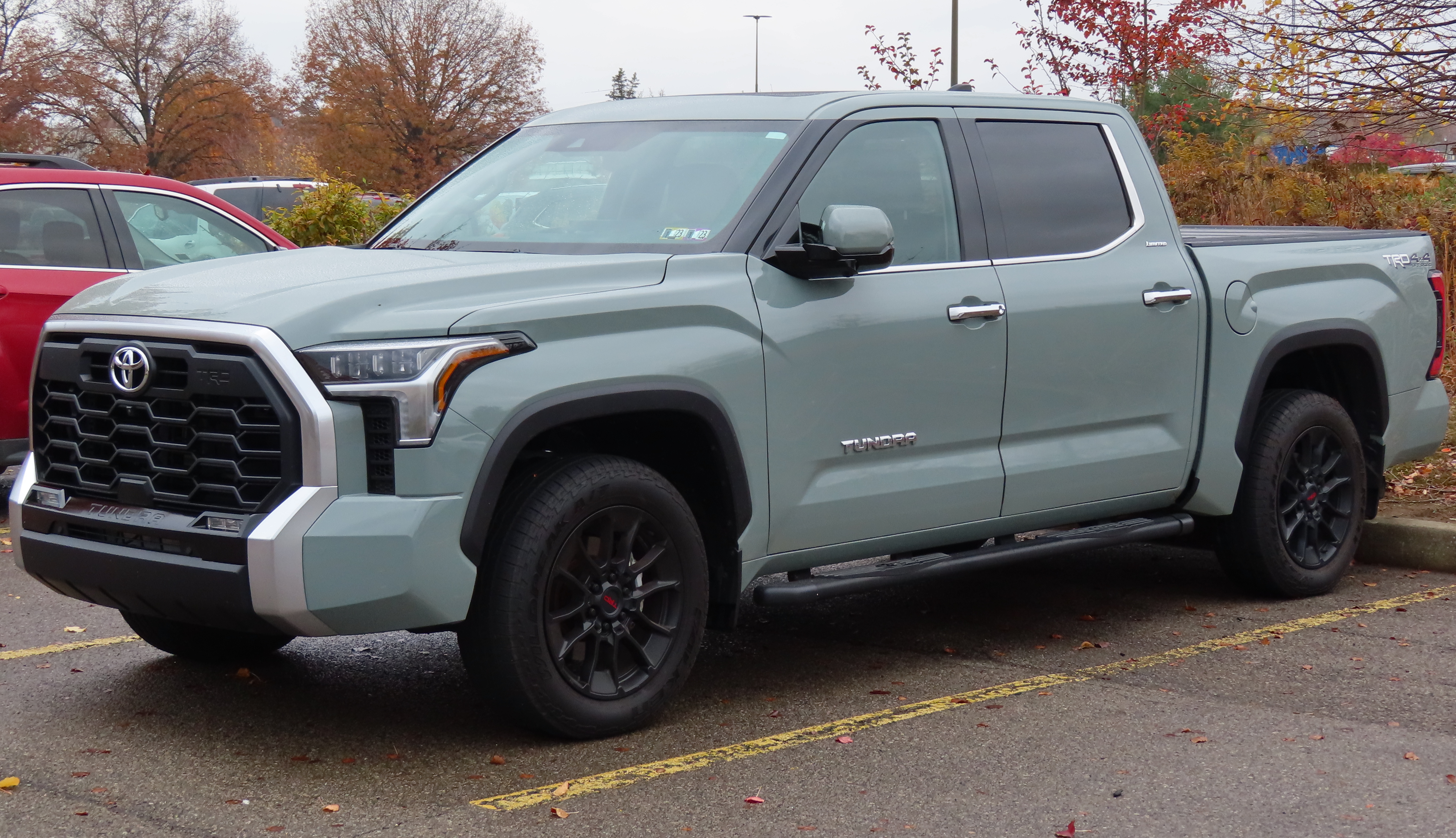
They’re discussing a Toyota Tundra that has an Eaton e-locker. They’re trying to figure out if the internal gears inside that locker are the same as in other trucks.
“Super Duty” is Ford’s heavy-duty truck line. They’re wondering if the Eaton locker inside a Super Duty uses the same internal gears as the one in a Tundra.
Term
10 and a half inch
“10 and a half inch” refers to the size class of the axle’s main gears. The speaker is wondering if that larger axle uses the same internal spider gears as a smaller one.
Term
nine and a half
“Nine and a half” is a way people describe the size of the axle’s main gear set. Different axle sizes can use different internal gear parts.
“High pinion” means the axle’s main gears are positioned higher in the housing. That can affect how the axle is built and what internal parts fit inside.
KOH is an off-road race/event they’re talking about. The idea is that if the problem happened there, it would likely be much worse because the terrain and speeds are more intense.
On some 4x4 trucks, the front wheels can be disconnected when you’re not using 4WD. “Unlocked hubs” means the truck isn’t fully driving the front wheels, which changes how the drivetrain behaves.
An engine change means swapping the engine in your vehicle for a different one. Since that can change how the car runs and meets safety/emissions rules, some places require extra approval before you can drive it legally.
“Factory tire size” is the tire size your vehicle was designed to use from the factory. If you go much bigger, it can change how the truck fits and drives, so some places require extra approval.
“Engineering” here means you can’t just change things and hope for the best—you have to get the modification reviewed and proven safe. That usually involves paperwork and inspections.
“Thirty ones” is a quick way of saying the tire is about 31 inches tall. It matters because tire size changes can affect fitment and how the vehicle drives.
They’re talking about “herd immunity.” If most people are protected, the disease spreads less, so it’s safer for people who can’t be protected as easily. They’re using it as a comparison to safety rules that protect everyone.
A root pass is the very first layer of weld you put down at the bottom of the joint. If that first layer doesn’t fuse properly, the rest of the weld can look fine but still be weak.
Fortune Off-Road is mentioned as someone who reached out and shared that they’d run into a similar problem. It’s likely part of the off-road community or a build-related contact.
In this context, the channel is the groove you make in the metal so the weld can go in and connect properly. If it’s not opened up enough, the weld may only fill the top instead of reaching where it should.
MIG is a welding method that feeds wire automatically while a protective gas helps keep the weld clean. It’s usually quicker and easier than TIG, but you still have to set it up right for small welds.
The puddle is the small pool of melted metal that forms where you’re welding. If you control it well, the weld will bond strongly where it needs to.
LIVE
You have reached the snail trail 4x4 podcast voicemail.
If you want to leave some feedback about Toyotas, have questions about Toyotas, maybe poke some
fun at Toyotas, or let us know how your JL came with a Starbucks membership, then leave
it all on the line and we'll get to it on the podcast.
Keep calling.
What's up, everybody?
Welcome to snail mail snail mail.
We're very sing songy today, Jimmy.
I'm the the assistant said I'm not allowed to sing.
Like the many assistant assistant told me I'm not allowed to sing.
I tell that to the secretary.
If we're in public, if we're at home, I just kind of like close my ears and
tune her. Yeah.
And I said on like on Thursday's episode that we had family over and the
many assistant played some ukulele with the family and people were singing.
And she was like, why aren't you singing?
And I was like, you guys have told me I'm not allowed to sing.
And they're like, no, you can sing now.
I'm like, well, then how do I know when I'm allowed to sing?
Like that's permission.
I have to, I guess.
Yeah, that's funny.
I think you're a fantastic singer based on that two second segment.
Yeah, so, okay, thank you.
I will take that clip and live live it.
Love it forever.
You can tell them that I give you permission to sing whatever you want.
It's perfect.
I'm a texture now after this episode and be like, Jimmy has permission to
sing whatever you want.
She's going to be like, what the hell?
That's funny.
What do you boys talk about?
I don't know how you got to listen to some episodes figured out.
Anyways, welcome everybody to Friday.
This is snail mail.
So we have a lot of voicemails.
Oh, goodie.
A lot, a lot that we get to go over with you guys today.
And we'll have some fun.
This is a fun segment.
We love doing it.
We love interacting with you guys, getting to listen to your guys voices,
learn a little bit more about you guys, what situations you got going on,
questions you have, events you're going to, your adventures out in the woods.
So give us a call and let us know anything on your mind.
The number is 916-345-4744.
And we play the voicemail without listening to it first.
That way you guys kind of get our genuine reactions about some of the funny
things you guys say and come up with.
And then we play it all, record it and release them on Fridays for you guys.
Yep.
Yep.
It's a lot of fun.
Shall we jump in?
Yeah.
How many do we have?
So we ended last week at 43 this week, 50, we broke the 50 mark, 50 total.
Exactly.
Five, zero voicemails and three text messages.
So 50.
Okay.
Wow.
Dang guys.
Oh, we could start with a text message.
Okay.
Cool.
Sweet.
Sounds fun.
Let's do it.
All right.
This is Austin from Washington state.
FYI, if an air locker is actuating correctly, you will not have gear oil coming up the
breather hose or the locker solenoid.
If that is happening, the caller inside the diff is leaking, which is pressurizing
the third member.
They're intended to be separate closed systems.
I 100% agree with him, but I also 100% think that that caller comes off way too
often.
Yes.
And it seems, I don't know, every car, granted, I've only had two cars with air
lockers, but it seems like no matter how many times I have the lockers rebuilt, I
always end up getting gear oil coming back up the hose and the solenoids popping out,
spraying out the solenoids.
Right.
It was happening in Fiona when I picked it up and took ownership of it.
And it was definitely happening all the time in the white forerunner, the first
gen I had.
Yeah, I remember that.
And it was happening before I did the axle swap and did the Ford Tundra, Super
Tundra axles under Kermit.
I agree.
Gear oil should not be coming up those.
If everything is sealed properly, then you have air going into the locker and
actuating the locking mechanism in there and pressurizing it.
If there's a leak, then it doesn't hold pressure.
Yes.
And you get gear oil up into your vehicle or wherever your solenoids are.
So, yeah, that's my main.
That's my main complaint with air lockers is, is the, the complexity of having
extra seals that need to stay good.
That depend on really, really good, very clean installs that if the seals go
bad, which I don't know, for some reason in my experience, whether I do it myself
or I have multiple professional shops do the installs, they keep going bad.
I was just sick and tired of it, so.
E-locker made things easy.
They're very simple, very easy.
They're definitely not as strong.
They have the limitations and that's the trade off that I've chosen to go with.
Is that why they're called E-lockers?
Cause they're easy lockers.
They're easy lockers.
Oh, I got it.
I just, I got it now.
I understand.
Yeah.
Next up, let's go to a voicemail, shall we?
Voicemail.
Let's do it.
Ah, Mr.
Rhea.
Mr. Rhea, I was just talking about you.
We were, we were just talking shit about you.
Just kidding.
Love you, buddy.
All right.
Here we go.
Mr.
Chris Rhea.
This was from March 22nd.
Okay.
Here we go.
Hey, what's going on?
It's Neil Trowell, guys.
This is your friendly ultra four escort, Chris Rhea or Rhea or Rhea, everyone
across my name this year.
Um, anyways, just catching up on some podcasts and I'm listening to episode
six 88 and I wanted to correct something for you guys.
Uh, Jack Hammer was not staged by a new guy.
Um, it was staged by a guy by the name of Benji.
He's a Billy badass at, uh, run recovery.
He was actually in Turkey Claw for the 2024 debacle all three days.
Um, the problem that they had was on Thursday for the UTV race.
Uh, all the winch points of factor 55 and worn industries had set up.
I had been stolen.
Um, so when we got there in the UTV, Benji was struggling to try to get
everything set up in time and get everything put back out.
I believe they had everything squared away again for the EMC on, uh, Friday.
But, um, even so, uh, whether there's one person there or not, the job of
recovery is not to make sure that the race flows.
Um, if somebody rolls, they're not supposed to roll them over unless it's,
uh, hindering course or, uh, causing problems.
So, uh, just because people are struggling, the recovery crew is not supposed
to get in there and fix them.
That's us on racers and that's part of why I really think we need to start
doing some more training.
And, and like Chris mentioned, um, you know, we need to figure out who the guys
are there that don't want to race or there to have fun.
Cause watching the videos of the people, um, just standing around, having a good
time, uh, not helping, you know, just because their four cars back is, is just,
it makes me frustrated.
It's a wrong seat filler, but, uh, yeah, unless it's a health or safety issue
or to try to actually, like if somebody's broken or rolled over, the
recovery crew is not supposed to touch the car.
Um, they can act as a winch point.
They can do all those things, but they do not, they are not required to clear
course.
So just wanted to check that, make sure that you guys understand that.
And also give a shout out to Benjy cause that dude is a badass and he
works his ass off every year, uh, for winter recovery and, um, we wouldn't
have been able to get through without him, uh, in 24 and we wouldn't have
been able to get through and it would have been an even bigger cluster if
he wasn't there.
Uh, anyways, uh, hope everybody's doing good and really enjoying the shows.
And, uh, I don't know, maybe everything sucks cause it's not just Toyota's,
it's not Rover's, it's Jeep's, it's just everybody's kindness.
Sometimes, you know, anyways, have a great weekend.
Everybody sucks.
Even OBS is Chris.
Oh, even OBS is funny.
Um, yeah, no, that, that's good.
Maybe that changed when I was doing, I did recovery three years in a row,
two years in a row.
It was the big year at back door when they had all the side-by-sides go down
back door.
Um, and then I did another year in aftershock by myself.
Um, I thought there was a third year in there somewhere, but I don't remember
where I was stationed.
Uh, so maybe it was just two years, but both years I was told that if, uh, team
rolls a car over and, or anything, and they're in the middle of the trail
and blocking traffic, our job is to help get them righted and make sure traffic
stays moving or that's one of our jobs, I should say, maybe it was a side-by-side
thing, maybe, uh, because they, I mean, that day we rolled over over 75 side-by-sides
at back door.
Um, so maybe it was just because they had so many cars coming down and rolling
over and there's such a huge crowd there.
And it's such a tight choke point that they, that was like our main job was
to keep traffic going there.
Um, but they told me to do that in aftershock too by my, when I was over
there by myself all day.
So I don't know, um, maybe the rule changed.
I, I, yeah, I don't know.
Maybe I don't, I don't, I have no idea.
I've never volunteered at King of the Hammers for recovery or anything.
I'm leaning towards, it's a strictly a side-by-side rule.
Like your, your goal, you have, if a side-by-side is on its lid, you need to get,
help them to get it over, um, to keep the race going.
Okay.
Because side-by-sides can't really compete on their own.
Okay.
Guys, I finally got where you're going with that.
Okay.
They need help.
The poor little guys.
That's funny.
Um, so cool.
That's good.
I didn't know about Benji.
Yeah.
I have heard Benji's name before about it here that he was the one up there.
I just heard it through kind of a third party, um, that, that used to be pretty
involved with recovery efforts up there, that, um, the lone person in Jack
Hammer was not doing their job or whatever.
So, um, I never talked to that person, talked to Benji, um, and I was not at
Jack Hammer or up in those trails to have a first-eye vision on it.
So, um, that's cool though.
I, if, if Benji was doing his job and everything sounds good, then cool, good
stuff, but that's great.
All right.
Thanks Benji for everything you do.
Absolutely.
And all the volunteers out there.
Yeah.
So, uh, next one is Mr.
Rhea called back.
Oh, ultra four.
All right.
Here we go.
Okay.
Hey, it's your ultra four escort again, uh, back.
Cause I had to pause while I was doing something.
And now I need to finish that up.
My thought up about the winching, um, especially on EMC day, I can't speak
for, uh, race Kings Day cause I didn't get there.
But, uh, on EMC day, I was at the bottom of sludge for a significant
amount of time, um, probably till around two o'clock.
Uh, I didn't see any of the recovery crew go past me.
Um, I, and I mean, we had the recovery crew with us for a significant
amount of time at the bottom.
So I don't know what happened, um, but I can say again that Benji does a great
job and like I said, he's not supposed to make the trail flow.
That's on us as racers.
Anyways, yeah, hope everyone's having a great weekend.
We'll talk to you later.
Bye.
Thanks, Grace.
So how much can a racer get paid off to be a trail plug?
That's an interesting point.
Yeah.
If it's up to the racers, you know, why don't you just, uh, you know, if
Shannon Campbell's in the wind, if Shannon Cam will give me a little
bit of that pocket purse money, you know, I'll stop in the middle of
the course and blog block everybody.
Yeah.
Shannon, you want to send me a freed new chassis?
I'll hang out and roll my car here.
And slowly work on getting myself ride it.
I'll give you like a 30 minute lead.
Yeah.
That's funny.
Um, yeah, I don't know.
I, I can just go, I do know that when I was doing recovery, that's what I was told.
Yeah.
That part of my job is to make sure that traffic does keep moving.
Um, but the, um, the second side of that is I did hear the report third hand.
So I very well could have gotten a bad report.
I could have mixed up something or heard something incorrectly and reported it
wrong.
So, um, it sounds like Chris has much better information than I did.
And that's cool.
I'm glad, I'm glad they got corrected.
Chris definitely has his finger on the pulse of this race is there.
Chris has his finger on a lot of things.
Anyways, all right.
Next up, giddy.
No comment.
Yeah.
Uh, all right.
Uh, let's see, March 23rd.
We have another one for March 27 text.
Okay.
Next up, uh, Jimmy from SoCal.
Hey, my buddy, it's one of the Jays.
Here we go.
Hey, Jimmy and Tyler.
This is Jimmy from SoCal.
Uh, just gave him a call back to respond when I left a few weeks ago actually
about, um, swimming.
Uh, Jimmy, it's just more of a honor system, um, saying that, Hey, do you swim?
I don't know.
I'll just say 2,500 yards, but it's kind of a lot.
Um, but something like that in a week or so.
And, um, I would do the same and not probably got to use things.
I found this much and forced, forced going.
Um, just really kind of stay healthy within this point.
26 that are really falling off on being healthy.
Um, another news, I also like, as a delivery driver at UPS, I like handling.
I'll think of saying packages, my little weird, uh, you've got these products.
I delivered a more flight product to your customer not too long ago.
And, uh, it's really cool doing deliveries, especially offer parts to someone
and you just see their bill, just progress and then happy end.
You see their final, I don't want to say final cause it's never done really,
but you just see their build and it's, it's pretty cool to see.
Other than that, love you guys.
Call you guys back.
Bye.
He signs off just like Chris.
He was like, love you guys.
I'm like, Oh, this is going to be Nick.
Um, that's fine.
So it sounds like he wants to join you in a swimming.
Yeah.
Well, he was, we talked a while ago, we talked about doing a race.
Yeah.
There was a swim or doing some sort of swim race and getting them to coma
beast in, I guess he was a swimmer and Matteo, um, I guess he was a swimmer.
I didn't know that.
Uh, but, um, and then it turned into just like a weekly workout, I guess.
Um, and so yeah, I have a few people that I check in on.
Um, I'm still doing that, um, that check a few of them are trying to lose
weight and one of them is trying to work out.
And it's just sort of a check in thing that I do once a week.
I'm just like checking in, saying, how's it going?
How are you doing?
What are you up to?
Um, and maybe we need to move it on to, yeah, some swimming level ones.
I haven't been swimming in a few years, but I'm definitely open to jump
them back in the pool again.
It was, it's always a great workout to swim.
So, um, yeah, Jimmy, let's, uh, hit me up on Instagram.
Let's talk about this a little more.
Can we have a, uh, uh, uh, I don't know about competition.
Um, couch, a group, we have a couch group put together a group to challenge
each other to go wheeling.
Probably.
Okay.
How many miles did you wheel this month?
I'm about miles.
Maybe hours or nights, nights or camping days.
I don't know how to do it.
I want Trevor, Trevor Clark on my team.
Oh, that's cheating.
Um, yeah, I don't know.
I, I definitely cause like, I don't know, man, I, I, I'm a workaholic
and I don't know how to sit still.
And so, um, I end up prioritizing work more than recreational time.
And I've lost sight of that rush recreational time, I think in the
past couple of years, um, and family stuff too.
But like the kid loves being outside and I would love to go on like one
of my goals this year is to get to Barrett Lake and Rubicon day trips at
least five or six times.
Okay.
So go take the kid out of daycare, skip daycare that day mid week and go
to Barrett Lake, have lunch, come out.
So we should have gone to Ford ice today.
Is that what you're telling me?
Yes.
But shit gets in the way and it's like, and it's, it's shits in the way, but
also like priorities, right?
It's all in what you prioritize, what you choose to prioritize and I'm
prioritizing work a lot and which is, can be a good thing, but at the same time,
I feel like I'm losing sight of that enjoyment of the outdoors.
Yeah.
So I understand that.
Yeah.
Sometimes you just need to take a day off.
Yep.
And in regards to Jimmy being a UPS driver,
did it sound like he was backing up when he was leaving that's voice message?
I was thoroughly impressed.
I'm like, dude, you are backing up and you're talking to us on the phone
about something like, wow.
Yeah.
Jimmy, you can handle my packages any day.
There you go.
He does like his package fondled.
Yep, I do.
Uh, let's see, uh, Alex botches off right up next.
Cool.
Here we go.
Hey, Jimmy.
Hey, Tyler, Alex from botches off road.
Alex.
Um, I don't just look for my name in the show notes.
I just, I use a zoom and when I'm listening to your show, the show notes are
right in front of my face.
So I always ring me.
Uh, sometimes I guess I skip through them if someone's being boring, but usually
that's just Tyler talking too much, but hi guys.
Uh, that's it.
I was about to just send myself a little bit.
I listened to that whole of your content.
I even listened to the, uh, think of the hammers schedule episode that Jimmy
later deleted and I have a copy of it.
So I could even switch it around to people.
All right.
Well, you guys have a good one.
And when you get to this in like five months, I guess I'll depend on my film.
All right, right.
A month and a half, sir.
I don't like that judginess in your voice, Alex.
Right.
Uh, Jimmy and I both kind of looked up and like looked at each other and
cocked our heads over like prairie dogs.
When you said the, the schedule episode that got that he, that we deleted.
Now Jimmy's going back and looking for it.
Um, I, I am still looking for it, but I'm up to when, how, so when did we do that?
We did it.
I think it was pretty damn close to KOH.
There's like a week or two weeks before, right?
So it'd have been mid January.
Okay.
Happy New Year's.
So that's January.
Let's see.
Then we have finishing all the snail males.
Then when we're back 2026 and we're then snail mail, we're back and we're already
behind, um, from all the voicemail nails.
Then it was rear end math, um, hot chocolate run, uh, trailers versus
rooftop tents.
I think I did that one with the assistant king of the ha, king of the hammers,
modos, RIP Clifford, uh, Jimmy is right.
Winter fun, fast, mule, king of the hammer schedule.
Okay.
Episode two or excuse me, six, seven, eight.
All right.
Still there.
Still there.
Something happened to Alex.
Yeah.
Don't know.
For what?
Not sure.
Um, but did he say his name was Alex or Alex, Alex, um, the Google has
it written down as Alice, Alice.
Yeah.
That's okay.
Got it.
Yep.
Um, from boxes off.
Yeah, it's not me.
It's Google box off route.
Yeah.
All right.
All right.
We have a text message now.
Uh, nope, not for a couple more days.
Okay.
Uh, this is Jeff Morgan from Oregon.
Sweet.
Mr. Morgan, Oregon.
Uh, this is a long one.
I'm excited.
Here we go.
Hey, it's Jeff from Oregon.
I feel like that's now, uh, calling in, but I just listened to your guys
with Monday podcast about the mule and that whole fiasco.
Um, please don't put an e-locker in the front.
If you really want to look at the inside of one of those e-lockers
with Madina 60 that's exploded and we've had three of them explode.
Ali, A-L-I, Mansur, M-A-N-S-L-R on YouTube.
He has a really good breakdown where he had him in his ultimate day to
60 under his jakey and he couldn't keep them alive.
And I don't think he wheels that hard.
The teeth on them are super duper small on the side gears.
I just had a friend.
Okay.
Come over to my house last week and we pulled the cover and what do you know?
Chunks of gear came out.
So he's putting ARVs in that.
Uh, you can look at an ARV and look to see how when they're pulled apart,
like the teeth are much larger, my opinion.
The other thing, the UHMW wheels give back in the day when I was a kid,
allegedly I would take a front wheel drive car, go steal some trays for McDonald's,
put them under the rear wheels, lock the e-brake and then when you drive in a circle,
you can like whip a cookie in a front wheel drive car like crazy.
Well, the problem was you wear through the trays pretty quick.
You'd have to stack multiple trays to then like wear through them.
Well, I get to see UHMWs from my work and boy, we whip a cookie so hard,
so fast that the gas would run to one side of the tank and then the engine would die
and then it would start back up and we'd keep going again until we blew a rear
diff at the, blew the front differential out of a Honda, uh, out on the road.
And that was pretty cool.
But anyways, yeah, time for good back in the day.
And, uh, man rovers still suck.
That's like putting a PVC pipe over the wheels on three wheelers.
Yeah, yeah, pretty much so you can drift.
Yeah. Oh yeah.
The McDonald's are any fast food chain to go trays.
Yeah, we'd have, you'd have to get like two or three of them.
Cause if you did one, I mean, it was like a few minutes worth of driving.
You ripped through it and yeah, any front wheel drive car, you drive forward,
you make sure that both rear tires are on those trays.
You pull the e-brake and you have no traction in the rear.
It's like driving on ice.
It was so fun.
Yeah. So we definitely did that.
Yeah. Two or three trays though is what you need to last a little while.
Definitely a lot of fun.
So, so did you actually end up putting an e-locker in the front?
I did.
So my question, and this is, this is a question for Jeff,
because I have e-lockers in Kermit and I have not had any issues with them
whatsoever and they've been fantastic and I've loved them every,
every time I go out wheeling with Kermit, I really enjoy the e-lockers.
I understand their limitations in the, the, the quote unquote,
how much distance you need to drive before they lock correctly,
as well as the strength of the carriers themselves.
I know the carriers that Eaton uses, they use,
they, they like to use one size carrier for multiple size lockers.
Right. So the whole carrier and everything on, like I said,
10 and a half is actually like the same carrier as like a nine inch.
Sure. OK.
So whereas ARB actually builds their carrier bigger and thicker,
the bigger the gear ring that you do goes right.
But I didn't know that the teeth in size,
inside the spider gears of the locker inside of the carrier,
are drastically smaller than the ARB teeth.
I did see a post and that somebody, maybe it was Jeff,
that somebody posted of a tooth spider gear comparisons between e-locker and ARB.
And ARB is noticeably bigger, but I didn't think it was drastically bigger.
I would like to see the strength ratings,
details of both of those designs of the spider gear teeth.
But my main question is, is the spider gear teeth in the tundra,
10 and a half inch e-locker from Eaton,
the same spider gear teeth that's in the super duty.
Eaton e-locker, nine and a half e-locker.
OK. Yeah, I don't know.
So I would have to take apart a super duty front e-locker
and a tundra e-locker and see how they compare,
because I haven't had any issues whatsoever.
And I've been running those for three years.
Yeah. Now, something like two years, three years, coming up on three years,
something like that.
And they've been awesome in Kermit, but they might also be bigger.
Sure, maybe then the super duty ones.
But I also know that Eaton likes to use the same carrier for multiple size ring
gears. So is the the tundra 10 and a half e-locker spider gears
the same size as the super duty nine and a half high pinion spider gear
on the e-locker? I have no idea.
I don't know. I really don't know.
And Jeff may know.
I don't know of many people that would know that off the top of their head.
Yeah, yeah. So Jeff, call in and we'll get an answer in a month and a half from you.
Or if you're on the discord, I'm still curious if he's WFO nine.
That's my initial thought too, because I think I did see it on the discord.
And I think it was WFO nine that posted it.
OK, so I'm wondering if Jeff is WFO nine.
Maybe, but if not, I think Jeff and WFO nine should get together
and have some fun discussions on this one. Yeah.
All right, this one needs to now start another profile named Jeff from Morgan.
Yeah, Jeff Morgan from Morgan.
Yeah, and then Jeff Morgan from Morgan can argue with WFO nine.
Yeah, be the same person. Yeah.
All right, next up. Yeah.
Suspected spam 408 number, which is a couple of friends of ours live in that area.
So it's only also six seconds long.
I don't think it's anything, but we'll see.
But dial, but dial, Brian.
I don't know if I have his number saved.
All right, next up is
it doesn't say who it is the same guy, no different number.
Here we go.
Just listen to the episode about the mule
folding its differential underneath it.
And God damn, you're lucky, man, that didn't happen somewhere else.
Also, not a very good commercial for stellar belt.
But, uh, yeah, probably a source of it.
Yeah.
What's your name?
It's not like you got cut off in the beginning.
So I don't know if he started talking before it was recording, but
yes, yes, and yes, currently.
Yeah. So yeah, very lucky it didn't happen.
I was on the way to pick up my kid from daycare.
There was nobody in the vehicle.
I wasn't on a freeway.
I was doing 25 miles an hour
and coming up on a blind turn.
So it's like it really was best case scenario that where it happened.
And somewhat, yeah, didn't have somebody else in the car with me.
There was no injuries.
And I wasn't down at KOH the week following, right?
If I had taken that rig and got to KOH,
like, let's just say the hubs were unlocked.
It's very likely that I would have taken that car to KOH the next week.
Yep. And it would have happened in KOH.
Yep. And that probably, if it had happened at KOH,
it would probably would have had drastic injuries
and possibly a very hefty lawsuit because I'm sure insurance would force
me to sue somebody maybe to cover costs of the insurance bills.
So, yeah, it's very lucky it happened where it did.
Not a great look.
I still haven't told everything.
I'm still holding stuff back, and I think I'm just going to try and let it go.
Well, we'll see how it goes.
But it is a very sore subject as well.
Yes. Yeah.
Moving on. Moving on.
Next up is an Australian. Oh, goodie.
Yeah, it doesn't say exactly who it is,
but we only have like two Australian listeners.
All right. Let's find out.
Good day, Charles.
I'm driving to work this morning, listening to the what happened to the mule,
as I said, so you probably hear this in August.
And I was thinking, this is why we have to go to engineers in Australia
to have someone who's actually been to university and studied mathematics
and forces, build your prime brackets,
but your front end doesn't fall out on the freeway or the trial or a city street.
That's yeah. All right.
For sure. It's it.
I don't know.
It kind of sucks that you guys have the engineering rules over in Australia,
but like I get it.
Like and I understand like when you do an engine change in California
in your vehicle, I get why they make you go to the referee
and get it refereed afterwards, right?
So like I get it. I totally get it.
And I think that there's there's proper ways to do things.
And those checks and balances ensure
safety, especially with vehicles, because they're very heavy.
They're very deadly.
They can be a very huge risk potential
to everybody else around you, including yourself.
And when you have that much risk and power driving around on the road
with a five, six thousand, eight thousand pound vehicle,
there needs to be checks and balances that you're not putting other people at risk.
So yeah. Yeah.
I understand it. I don't like it.
You don't like it?
I mean, I like the fact that we can have the freedoms
and we can build these crazy rigs and do what we want.
You know, it's it's that's some of the joy of the United States in a way.
You know, it's like, you know, what's the rules in Australia?
You can't go over two inches more than the factory tire size.
Like if you if you come stock with thirty ones,
you can only go up to thirty threes without engineering, without engineering.
Yeah. So but you can technically go and do whatever you want
as long as you go through the engineering and it still behaves
and passes all the engineering rules, I think.
Yeah, I don't know how far down that rabbit hole goes.
But yeah, I don't I don't know if you could do whatever you want.
Yeah, as long as it clears engineering,
I mean, they might still have rules like, you know,
you can't put an old engine or an old engine in a new car.
Maybe like we kind of have here.
They have to be the same year or newer engine. Yeah.
You know, they probably have some rules like that.
Yeah, the state you can't maybe you can't link, you know, a vehicle that's on coils.
You know, I don't they might have some funky rules.
But I do understand some of the facts of like,
yeah, it's probably good to have some sort of double check of some sort,
especially if you're driving it on the road.
If it's going to be like not maybe not a daily driver,
but if it's going to be like a licensed vehicle, then I don't know.
Maybe it maybe there needs to be some sort of check, but I don't want it.
Check everybody else but me. Yeah, please.
That'd be safer for everybody. Exactly.
That's what is the herd theory in vaccinations?
Oh, yeah, theory.
So, you know, if somebody has autoimmune issues and can't get vaccinated,
then the way you protect them is through herd theory.
You get everybody else vaccinated around them so that there's enough immunity
in the society to keep the autoimmune people safe.
Yeah, there you go. Exactly. That's exactly it.
Engineer, everybody else's vehicles, but mine.
I have an autoimmune engineering problem with my vehicle.
All right. Next up, Ryan Marley.
Oh, I'm not gnarly Marley.
Gnarly Marley. Ooh, we got some BMX bike talk. Here we go.
What's up, Tyler and Jimmy? This is Ryan Marley.
I think A. Gnarly Marley is an old nickname from my BMX days.
Just to clarify, I know you guys are probably laughing at I keep saying Shakeweight.
There was an episode with Brian from 4Wheel Underground
when he was talking about Tyler with a Shakeweight and I can't get that image out of my head.
So now I just call Tyler Shakeweight.
I don't know why, but it just stuck.
You can thank Brian for that.
But I didn't want to get clarification in case anybody was wondering why I kept calling you that.
But keep it up. Love the content.
You guys are killing it.
Hopefully I see both of you in my lap.
Talk to you later. Bye.
Sorry, Gnarly Marley.
We're going to make it next year.
I think we said that last year, but definitely next year is the 30th.
So, you know, we made sure to be there for the 25th
and we'll make sure to be there for the 30th.
I think that'll be a lot of fun.
I'm excited.
I'm why I'm definitely going to have Samantha there for that.
So that'll be cool to show that off.
Yeah, I don't.
When did Brian?
I don't remember.
Make a comment about me and Shakeweight.
We're going to have to go back and listen to some old 4Wheel Underground episodes, I guess.
Ryan, if you have that like time stamped in your head or note somewhere
of when Brian was made comments about me and a Shakeweight,
call in and play it on The Voice of Mail.
I'm curious now.
I do like me a good Shakeweight.
So yeah, yeah, Discord, that's funny.
Next up.
It's amazing what A.I. can do.
Next up is Tom from the Clinkham Beard Strong.
Tom, Google thinks your name is Tom West Clinton Beard Strong.
Just halfway.
All separate words.
Long one.
Here we go.
Hey guys, it's Tom West Clinton Beard Strong.
I'm actually really behind on episodes.
So I'm calling in about the February 20th snail mail.
The showing the one where the guy, Kyle, from Fortune Off-Road called in talking about humility.
And you guys kind of spoke to that a little bit.
And I kind of feel like you missed the mark a little bit.
Of course, perspective is kind of to everybody's own thing.
But in my opinion, you know, yeah, there are a lot of type A people in this trade or in this
section of life, but I wouldn't agree that it's necessarily a type A personality problem,
but it's a perseverance problem.
I think the fact that we're willing to persevere makes it look like we're type A.
And I think that's kind of like a misunderstanding about what the definition of failure actually is.
You guys are making any time you don't succeed sound like that's failure.
And that's not the truth, in my opinion.
Basically, what failure actually is, is not even trying when you need to try.
That's what failure is.
When you're being put to the test and you don't step up to a fast failure.
But if you step up when you need to and you don't succeed, that's not failure.
That just means that you have an opportunity to keep stepping up and keep trying until you do succeed.
I think it was Thomas Edison who said, I have not yet failed, but I found 10,000 ways that it won't work.
I think that's something that we all need to remember.
And then as far as your welding goes, or anybody's welding or anybody's, you know, whatever they have going on with repairs or fixes or building or that whole journeyman that used to say, it's only an asset if you leave it that way.
And that kind of goes to that whole welding thing in my mind where like you can mess up a weld as much as you want and you just grind it out and redo it again until you make it look nice.
But hopefully that kind of makes sense.
If not, you guys can call me a dingback on the on the episode.
I don't really care, but hopefully some of that kind of came through.
Anyway, we'll talk to you guys up here.
Listen here, dingback.
I was about to say, all right, dingback.
You brought that one on yourself, Tom.
Yeah, I agree.
Yeah, I do too.
I don't remember exactly what we were talking about, what the full context is.
It was when I was welding on the axle and I kept failing with like the root pass.
Okay.
And then Fortune Off-Road called back, called it and then said that he was, he did more or less the same thing.
And he felt humiliated, not humiliated, but he humbled, humbled by it or something.
And then he heard me talking about it on the podcast too.
And it was just like, there was a level of failure that we were both feeling because of like,
we can't weld as good as everybody else around us.
And, you know, that was the context.
That's where at all this conversation stepped from.
Where did the Type A personality stuff come from?
I don't remember that, but maybe we talked about something in regards to when we followed up with
what Kyle's message.
But I, you really reminded me of the, there's a story.
I don't know where it's, where it originates from.
Tyler has said a version of this before, but I've read this story in the four hour work week
about a guy, one of the managers over at, I think it was Microsoft.
One of his employees caused a major fuck up on the line and it cost the company like
millions of dollars.
A lot of money.
A lot of money.
It doesn't matter how much money.
And so like the next manager up level C level came to the, you know, the manager and said,
well, you're going to fire that guy.
He was like, well, no, I just spent a million dollars training that guy.
That guy is never going to make that mistake ever again in his life.
And if I hire a new person, that new person might make that mistake sometime.
So, you know, it's just a fun, it's a fun story to flip everything onto its head.
Right.
It's, you know, maybe it's, we're not fucking up.
Maybe we're not failing.
We're learning.
Absolutely.
Right.
It's all a learning experience.
And I like your version of failure.
Failure is not showing up.
Failure is not doing it.
Right.
Failure is, you know, not putting your feet on the grindstone or hands to the grindstone
or whatever, however that throwing dead cats in the yard.
Not doing the job that needs to get done.
That's failure.
But if you get out there and you try and you don't succeed, you're learning.
You probably learned something from it.
You definitely learned something from it.
And, and you didn't fuck up because you, a lot of what we do can be fixed.
Yeah.
So I think that's a, you made some excellent points there.
And I think there is a level of humbleness or humility to putting your tail between your
legs and asking for help.
Sometimes like husband had to step in when we were doing that root pass and he had to
clear it because I was only clearing out a little bit and my weld was filling up the
small section of the channel rather than getting down into the channel.
Yeah.
I would clear this tiny channel because I wanted to lay this tiny weld like you probably
should have done with a TIG welder and I'm doing it with a MIG, right?
And husband stepped in and he's like, cleared this channel way out.
So it made it much easier for me to get the puddle down where it needed to be, you know?
And it was, that was a learning experience for me, but I can't, I didn't,
I wasn't able to do the job the way that I was doing it, but I was
so focused on succeeding that I didn't think about opening the channel up more.
Yeah, yeah.
So, yeah, I think that, you know, it was a good learning experience for me and hopefully
people can see it that way for themselves in the future and, you know, and practice makes
perfect to some extent, you know, the more times you do these things, the more you're
going to learn from it.
Yep.
Yeah, the more proficient you get at it and you learn little tricks and things along the way.
100%, I adhere and I subscribe to the mentality of if an employee fucks something up,
that's kind of, I don't want to say it's a great thing, but it's a good thing because,
like you said, that's a training opportunity.
And the chances of firing them, hiring somebody new and that new person making the same fuck up
are very high.
They're very high.
So when somebody makes a fuck up, that's a good thing in my opinion.
Like I'm always like, dude, fail, fail, mess up.
It's learning happens very quickly when you mess things up.
And so I'm a big fan of messing things up and getting dirty and trying new things and
who cares if you mess it up as long as you learn from it, then you're, that's what it's
all about in my opinion.
And maybe the word fail needs to have a different definition.
Kind of definition, I guess, like you're not failing, like if you screw something up,
you're not failing, right?
You know, you just, you messed up or you had a mistake or you, you know,
and you need to have a learning experience.
It's not a failure.
If you can fix it, it's not a failure.
Yeah, I feel like I think that failure is one of those words that's like a dirty word that,
in my opinion, I think failure in the, the everyday use of the word now in the context
we're talking about it, I think it's a good thing.
But like if you, I think it becomes a bad thing when you don't step up to the point,
you don't challenge yourself, right?
That's when failure is bad, but I think there are good failures for sure.
I think another word that kind of, I've always, I don't know, I kind of get myself in trouble
because I use the word ignorant a lot because the definition of the word ignorant is you just
don't know, right?
And I've always, it's like, you don't know what you don't know.
And that's what, that's what ignorance is, right?
But because society uses it in such negative ways all the time to bring people down,
it becomes one of those dirty words, right?
And I feel like failure is kind of like that, right?
We're like, I think that there's good failures.
I think there's good ignorances.
So I don't know, the use of language is always kind of fascinating to me.
No, but I, Tom, I think you, you said it poetically.
I think you, you know, definitely hit the nail on the head there.
Alamy did a good job and I, both Tyler and I agree with you.
And yeah, I think, what?
I was going to ask if he hit the dead cat on the nail.
I wish I saw some more of those the other day of some guys screwing it up on purpose.
And I'm like, I just wish that I could do that on purpose.
Cause it's funny.
Yeah.
Man who, yeah, two birds in a bush equals a glass house.
Just whatever it is.
Yeah, I'm not good at that stuff.
But now I think, I think Tom did it, explained it very well.
And I think we're just rambling on about, we agree.
Yeah.
Well, cool.
We're a little bit into this one.
Should we call it there?
Yeah.
I think that's good.
I think it's a fun and poetic, perfect one to end on.
Yeah.
All right.
Sounds good.
If you guys have feedback for us, give us a call.
We love hearing from you.
916-345-4744.
Looks like we got through 10 voicemails and one text message today.
Not bad.
We'll kick it up next week while we are out at Trail Hero X.
You guys will have some snail mails.
And hopefully you guys are looking forward to the fun episodes
that we have planned for you starting on Monday.
So have a great weekend.
Love you guys.
Proud of you guys.
We're gone, Aria.
See ya.
Bye.
Bye bye.
The number you have called has been disconnected.
About this episode
Snail mail drives the conversation from locker troubleshooting and King of the Hammers recovery etiquette into listener check-ins, locker durability debates, and a surprising Australian engineering detour. The hosts also compare Eaton e-lockers and ARB designs, hear about a Mule differential failure, and wrap with a voicemail about how mistakes and failed attempts can still be part of learning. Along the way, the episode keeps circling back to trail responsibility, mechanical reliability, and the value of showing up.
Text Msg 1: Austin from WA talks about Air Lockers
Caller 1: Chris Rea calls to clarify recovery on the course
Caller 2: Chris Rea Talks about EMC Day
Caller 3: Jimmy from SoCal wants to go swimming
Caller 4: Ales from Botches offroad says Tyler is boring
Caller 5: Jeff Morgan from Oregon tells Tyler not to do an Elocker
Caller 6: Butt Dial Brian?
Caller 7: No Name, talks about the mule
Caller 8: Charles says this is why in Australia, they have to engineer everything
Caller 9: Gnarly Marley explains why Tyler is called Shake Weight
Caller 10: Tom Clinking Beards Strong talks about Failer
Join Our Discord: https://discord.gg/yFyFFkQbuy Come hang out with us on the SnailTrail4x4 Discord — it’s the easiest way to connect with Tyler and Jimmy directly, chat with fellow offroad enthusiasts, and get first access to Group Buys and Treasure Hunt token drops.
CALL US AND LEAVE US A VOICEMAIL!!!! We want to hear from you even more!!! You can call and say whatever you like! Ask a question, leave feedback, correct some information about welding, say how much you hate your Jeep, and wish you had a Toyota! We will air them all, live, on the podcast! +01-916-345-4744.
SnailTrail4x4 –SnailTrail15 for 15% off SnailTrail4x4 Merch MORRFlate – snailtraill4x4 to get 10% off MORRFlate Multi Tire Inflation Deflation™ Kits 4WheelUnderground – snailtrail 10% off Ironman 4×4 – snailtrail20 to get 20% off all Ironman 4×4 branded equipment! Sidetracked Offroad – snailtrail4x4 (lowercase) to get 15% off lights and recovery gear Spartan Rope – snailtrail4x4 to get 10% off sitewide Shock Surplus – SNAILTRAIL4x4 to get $25 off any order! Mob Armor – SNAILTRAIL4X4 for 15% off SummerShine Supply – ST4x4 for 10% Backpacker’s Pantry – Affiliate