Some thoughts for the holiday, PLUS, you buy a used car and the engine blows up....what happens next depends on who sold it to you
My Car Guru Podcast
Some thoughts for the holiday, PLUS, you buy a used car and the engine blows up....what happens next depends on who sold it to youMy Car Guru Podcast · Nov 25, 2025
The Toyota Highlander is a family SUV that can fit several passengers and has a lot of space for cargo. The 2022 version has modern safety features and is designed for comfort.
A warranty is like a guarantee from the car maker that they'll fix problems for free if they happen within a certain time. It helps protect you from unexpected repair costs.
Service records are like a report card for a car, showing what repairs and maintenance have been done. They help buyers know if the car has been taken care of.
Automotive service is all the work done to keep a car in good shape, like changing the oil or fixing brakes. It's important for keeping cars safe and reliable.
The Nissan Pathfinder is a type of vehicle called an SUV, which stands for Sport Utility Vehicle. It's designed to carry more people and cargo than a regular car and can handle rougher roads.
Wiper blades are the rubber parts that move back and forth on your car's windshield to wipe away rain or snow. They help you see clearly when driving in bad weather.
Rotating the tires means moving them from one position to another on the car, like switching the front tires to the back. This helps them wear evenly and last longer.
The check engine light is a warning light on your car's dashboard that tells you something might be wrong with the engine. It could be a small issue or something more serious, so it's important to get it checked out.
A knocking noise in your car's engine usually means something isn't working right inside. It could be a sign of serious problems, so it's important to have it looked at by a mechanic.
Hyundai is a car brand from South Korea that makes many different types of vehicles. While they are generally reliable, they can have issues just like any other car.
Coolant is a special liquid that helps keep your car's engine from getting too hot. It circulates through the engine to absorb heat and keep things running smoothly.
An engine rebuild is when a mechanic takes apart your car's engine to fix or replace parts that are worn out. It's a way to make an old engine work like new again without having to buy a whole new engine.
GM stands for General Motors, a big company that makes cars and trucks. They own several brands like Chevrolet and Cadillac, and they sell vehicles all over the world.
Checking your oil means looking at the oil in your car's engine to make sure there's enough and that it's clean. This is important to keep the engine running well.
LIVE
Hey folks, this is Lenny Lawson, the car guru and your host for this holiday week.
It definitely is here, the beginning of a season and you know, and it can be hard.
You really can.
Those who have experienced loss and disappointment, heartache, separation, there's all kinds
of emotions come with it and I wish it weren't that way, but it is.
I bury my emotion a lot.
I have to in order to be able to function.
You know, when you lose a child, it is something that you never get over.
You just learn how to live with it.
And I think we've done pretty good.
I mean, in the last 15 years, trying to survive the loss of my 27 year old son, it's and it
still hits.
I mean, just there's pictures all around me in my house and different places and I see
him multiple times and sometimes it's it's just like a picture and I move on and other
times it it just is like getting hit with a sledgehammer and the holidays can do that
to us.
And I think we have to acknowledge that and also acknowledge what we can do to help others
in this period of time.
Now I was thinking about this.
I was going down the road, headed to the dealership and I'm traveling at, I guess I was probably
doing the speed limit, which is 45 miles an hour on the main four lane out here should
be 55, but I'm not going to talk about that.
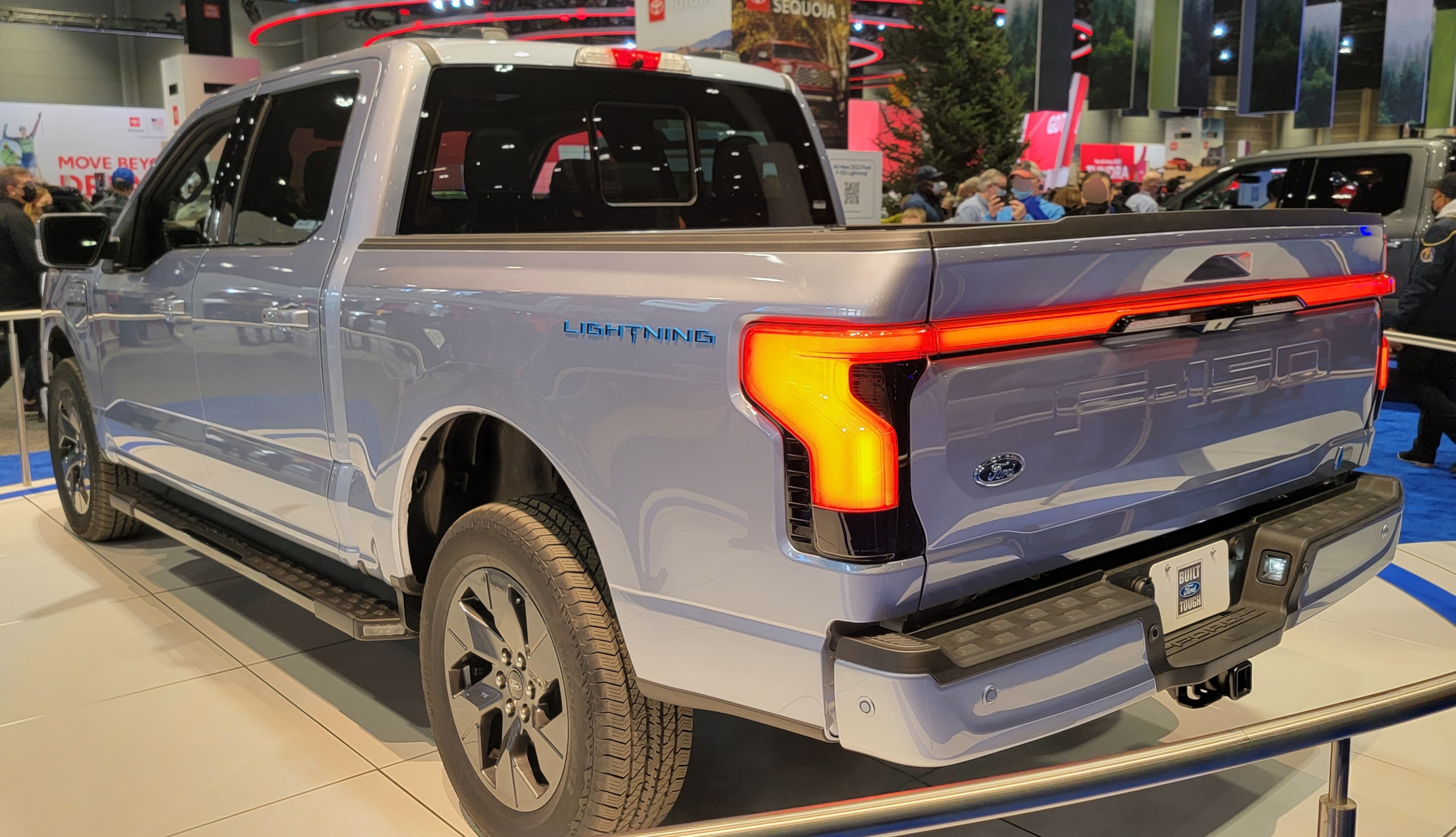
But I'm hurtling down the road at 45 and I'm controlling this 5000 pound F 150 with the
very bottom of my foot and my toes and the fingers on my left hand.
And that kind of power underneath, I think people don't appreciate that kind of power.
What we are responsible for and how just little movements of our hand adjustments to our feet
can make a big difference in the direction and the I guess what we run into or don't
run into how we avoid accidents and so forth.
That power to me is equivalent to the power that we have as humans to have a positive
impact on other people.
We do not have to do something dramatic.
Sometimes it's just a hello or a smile or just a nice greeting and I've been thinking
about you a phone call.
You know, I was at pals the other day, one of their few indoor restaurants.
I think there are only two.
Pals is a drive through chain for those of you not from this area, but if you are from
this area, brain knows what pals is, but that all of them are drive through except the one
in Greenville and the one in Kingsport, the original one.
And so I was in the one in Greenville and I was going in there to get some tea for me
and my wife and after they handed me my tea, I'm over there putting sweet and low in it,
which is a tradition and I look over and there's this girl walking towards me and you can't
help but notice it folks.
She has no legs.
She's got two prosthetics now she's walking as if she does have legs.
She's become very good at it, but there are no, there's no leg from the knee down.
And then I looked up at her and she pulled her hand out of her pocket.
She also had no hand, but she looked straight at me and no expression on her face and I
said, how you doing?
And I smiled at her and she smiled back and said, I'm doing fine.
And I think I have problems.
I have a friend, a very close friend, somebody that I've known for 40 years that has terminal
brain cancer and he goes to our church and I just decide what can I do?
What can I do for him?
And so I thought about it and I said, you know what I'm going to do?
I'm going to go, I'm going to take my guitar over to his house and I'm going to play some
music for him and do a little sing along songs from the seventies.
And I sent him a text and I said, would you like that?
He said, I would love that.
Come on over.
So I went over there and as I was coming in through the front door, his wife was leaving.
She had somewhere else to go.
So it was just me and him.
And I sat there.
We talked for a little bit and talked about what he was going through.
He's very positive, very optimistic.
He's doing the treatments and so forth.
But you know, from what I've read and what I know, the prognosis is not good, but you
know, he's fighting and he's positive about it and he's smiling.
He showed me his scar on this head where they took the tumor out and then I just sat down
and I said, okay, let's, let's escape.
And first song I did was take it easy from the Eagles and he was just singing right along
with me and we just had the best time.
We sang James Taylor music and Bob Dylan.
We did almost heaven, West Virginia with John Denver.
I've got quite the portfolio of songs that I've just learned over the years and I'm what
you'd call a closet guitar picker and I've done it selfishly, mostly for myself, but
I do play in church and stuff like that occasionally.
But this was just, it's just one of those things and it meant a lot to him.
I know it did and it meant more to me though.
Well, I say that it meant a lot to me.
Let's just put it that way.
Not because I was doing it because of what I saw it was doing for him.
And so, you know, we're coming up on Thanksgiving.
My Thanksgiving show is going to be with my two daughters and we're just going to talk
cars and life and everything else.
So that'll be coming up on Thursday.
But I don't know.
I felt compelled to say this and share this.
It's easy to get caught up in so much of the holidays, decorating, buying presents, wrapping
presents, fixing food.
You know, all of that is important.
And what makes it important is we're with those people that we love.
But there are a lot of people out there right now that don't feel loved and it's our responsibility
as fellow human beings and Christians and whatever you are to show a little love and
share a bit of yourself with somebody else who needs it.
And you may feel uncomfortable doing it.
I know I did a little bit, even though I've known this guy for a lot of years, it was,
you know, I felt a little bit uncomfortable.
But not once I got started, not once I saw the look on his face and saw him singing along
with me.
Nope.
I mean, that was exactly where I needed to be.
So it's not big things that we need to do.
Sometimes it's just little things, little adjustments, little bit of extra gas, little
adjustment on the steering wheel.
Sometimes it can make a huge difference in somebody's life.
Okay, I'll be back in just one minute.
Okay, I have a scenario for you.
So this, the question is, what would you do if you were me?
So this is the scenario.
Had a customer that traded in a, what is it, 2022 Toyota Highlander, pretty nice vehicle,
had 70,000 miles on it.
So it was out of warranty.
It was bought new in Johnson City.
And according to the service records on auto check slash car facts, and we call the dealer
as well, they didn't miss a beat when it came to automotive service.
That's what you want your customers to do, right?
Well, that's what I want you to do.
Maintain your car, maintain it at the dealership.
That's what these people did.
Well, they drove to Greenville and traded it on a new Nissan, Nissan Pathfinder, as
a matter of fact.
And so there really wasn't that much to do.
We changed the oil.
We inspected it.
I think it needed windshield wipers or wiper blades.
We replaced those and rotated the tires, the tires had good tread, detailed the car, put
all of our required labeling, the FTC sticker in the window, and parked it out there on
the used car lot.
Within, well, we had a bunch of leads on the internet on this thing because it was good
miles, well, a little bit high as far as miles were concerned, but still not too far out.
And it had the right equipment and so forth.
So we sold it real quickly to somebody that doesn't live around here.
They live in, well, outside of Knoxville.
So they drove up here, picked it up, great buying experience, everything was good.
And then they took it home two weeks later.
They call us and said the vehicle is at Toyota of Knoxville with the check engine light on
and it's making a knocking noise in the engine.
And Toyota Knoxville, after some evaluation, said that it probably needs a new engine.
So do you think these folks were happy with Gateway Ford or Gateway Nissan?
No, they were not.
They called and they said this is a serious problem.
What are you going to do about it?
Well, here's the deal.
I mean, from a legal standpoint, okay?
They purchased the car.
They refused to buy an extended warranty on the vehicle.
And they purchased the car as is with no warranty because we don't offer any kind
of dealer warranty unless somebody wants to buy one.
That's just the way it is.
And all dealers don't do that.
Some dealers charge a little bit more for their cars and offer, you know, a powertrain warranty
or something like that.
We don't do that on used cars.
We do it on new cars.
We do a lifetime powertrain warranty on new cars.
They list to say if we had a lifetime powertrain warranty on used cars,
then this wouldn't have been a problem.
But we don't.
We sold it to them as is.
They accepted that.
So what is our responsibility?
Our responsibility is nothing.
But what is our ethical responsibility?
It's everything it is.
I don't run that kind of business.
I'm not that kind of person.
Somebody buys a vehicle for me and two weeks later, the engine blows up.
That's on me.
And but why did it happen?
I mean, there's no good reason for it to happen.
It just happened.
I mean, the service history was perfect.
They took it to the dealership to have it done.
I called the dealership.
Can y'all help us?
They said pass.
Well, they were a little bit nicer than that, but not much.
They said that if the original owner was still driving that vehicle,
then they could probably cover it and it wouldn't be an issue.
But because they traded it into me and then I turned around and sold it to another customer
who had it for two weeks, it's not covered.
Now, unfortunately, I'm going to have to eat the cost of that engine.
So far, the engine that we have found for this vehicle is going to cost me 5,000.
Well, 5,000 plus.
That's plus labor.
So it's probably going to be close to $6,000.
This is what it's going to cost me to fix these people's vehicle.
If the original owner had still had it, it would have cost nothing.
Now, do you think that's right for Toyota to do that?
Should they back the vehicle or back the owner that has the vehicle?
Now, under most circumstances, if somebody buys a new Toyota and it breaks under warranty,
and even if it's the third owner, they'll still cover it because their warranty is on the vehicle.
It's not based on who owns it.
It's not to the first owner.
The second, they don't care.
It's covered.
But on any type of repair that's after the warranty runs out, if it's a good will repair,
and that's what this would be, it's not something that Toyota would have to do,
but they would look at the maintenance history and then they would also look at,
is this a loyal Toyota customer?
Have they bought Toyotas before?
Have they bought from this dealership before?
Then they'll look at that and they'll say, okay, yeah, we'll do an adjustment.
We'll help these people out.
But apparently, if you have something that breaks down that was maintained faithfully
and done at the dealership, just because it's changed hands and basically it's been three weeks
since the original owner turned it over, then no, they're going to wash their hands of it.
So I guess this has proven a couple of things to me.
I've seen it before and I'll see it again.
That's one thing.
The other thing is Toyotas break, just like any other car does.
There's a lot of people think that they're, they just never fail, they do.
Just like a Hyundai or a Mazda or a Ford or a Honda, they're all subject to a failure.
Now, something serious has gone on inside this engine.
Now, it's possible that these people had the check engine light come on
and you know how a lot of people say, well, it's just check engine light.
Don't worry about that.
It's possible that that was the, well, it definitely was the first sign of a problem.
If they had just pulled over at that point or just not driven it anymore,
it may not have led to a catastrophic engine failure.
It could have been something really simple.
That's really hard to say.
And we won't know unless we do an autopsy on that vehicle.
And you know how much that cost?
That's a lot of money.
Just to pull an engine and tear it apart and identify what the problem is.
We're not even going to bother because we have to put an engine in it anyway.
We know that much because it is locked up.
It will not turn over.
You can't even put a wrench on it and turn the engine.
Sometimes you can do that just to make sure that it's free, you know, that,
that the, the pistons are going up and down inside the block and it's, it's functional.
Now this one won't do that.
This one won't budge.
So we know we have to put an engine in it.
So while waste a bunch of money trying to figure out what failed,
what we're going to do is just pull it out and put a new engine in.
And that's what we're going to do.
Merry Christmas, I guess.
Now the sad thing is that I'd say it at 50% of the dealerships that are in this country
that they would not do anything.
I think that the other 50%, there's a certain percentage of the other 50% that would help,
you know, maybe pay for the labor or half of the repair.
I don't know.
It's really hard to say.
And I'm not trying to be a martyr here, but that's just the way I look at it.
Now if it had been a year, if they'd owned the vehicle for a year, that's different.
I would still help, but I probably wouldn't pay for the whole thing
because it's very possible that they did something to it.
You just don't know.
I mean, maybe they ignored, like I said, ignored the check engine light
or it overheated or there was, you know, some type of a weird sound that it was making.
It's so important just to stop, check your oil.
That's the first thing you do.
Make sure it's not overheating.
Make sure you got coolant.
And if you hear any kind of a ticking noise or especially a knocking noise,
I mean, that's going to be a lower end part of the engine and probably going to have to
have a rebuild, which would cost less than a whole new engine assembly.
But you just got to check certain things when you see something happening,
when a check engine light comes on or an oil light comes on,
you got to react just like my next door neighbor.
I was walking my baby granddaughter on the driveway this weekend
he saw me came running over and he said, I got to tell you something.
I said, what's this?
He said, I may not be a Chevrolet guy anymore.
Isn't it weird to have your next door neighbor of well,
the next door neighbor of a Ford dealer.
He's a die hard Chevy guy, but that's okay.
He has a brand new, what is it, a 2,500 diesel.
And because he got a free oil change from a dealership in Knoxville,
he drove it down there and they changed his oil.
He's driving back.
Stopped at Bucky's to fill up with gas and get a sandwich, came back out,
was driving on it on his way to Greenville.
And all of a sudden the oil light comes on.
Not good.
He's smart enough to know he needs to pull over.
He pulls his dipstick out.
It doesn't even reach the dipstick.
Now the car was hot, so he let it sit there for a few minutes.
Let it drain, let all the oil drain to the oil pan.
Checked it again, not touching the stick.
So he was stuck between a rock and a hard place.
It wasn't making any noises.
So he went down to the next exit, which also had a large gas station.
He added, what did he say?
Three quarts of oil before it touched the low mark.
He added another quart to get it up, so it was very low.
Caused the dealership.
First thing they do is start bucking on him, saying, well,
we have a video evidence that the oil was put in the vehicle.
And he didn't much like that comment.
He said, well, I've got physical evidence that you didn't put oil in it.
And what I would have said, I would have just said, no, you don't.
There's no way you have video evidence, because a lot of dealers record
the stuff that they do.
I guess to avoid situations like this, I don't know.
I don't know how you record somebody checking the oil after they put it in,
or how much oil they're putting into an engine.
Because most of those systems are automated.
You just set it to, I think his vehicle used like nine quarts.
You just set it to nine quarts, and it's supposed to put nine quarts in it.
Well, obviously, it didn't this time.
And so what's he supposed to do?
He drives it all the way to Greenville.
He calls him back, and they want him to bring it back to Knoxville.
Well, that's not convenient.
What should he ask for?
I tell you what, I'd ask for it, and I'll be back in just one minute.
Okay, I am back.
No, I wouldn't ask for a new truck.
As long as the engine sounds okay, and performs okay, and isn't running hot,
and it's not using oil after he drives it for a while,
I would just ask for an extended warranty.
I said, you guys screwed up, and I know the warranty.
I think the warranty on his engine is 100,000 miles.
I'd ask him to put an additional 50,000 miles on it or something,
and it would be paid for by them through GM or some other company,
an aftermarket warranty company or something.
Because long-term consequences, I don't know.
I mean, it could be fine, but you just don't know.
So my number one recommendation to anybody is when you get your car home,
I don't care if it's a new car or a used car.
When you get home, park it on level ground, let it get cool, and check your oil.
Because it is not uncommon.
Well, it's not unheard of.
It's not common, but it's not unheard of for even new cars to be a little shy on oil.
Now, folks, if you live somewhere else, that means it doesn't have quite enough oil in it.
So check it.
But absolutely, when you get your oil changed,
I don't care if it's a new car dealership or a Jiffy Lube place.
When you get it home, let it cool down and check your oil.
You should know how to do that after listening to this show for all these years.
Just pull the dipstick out, wipe it off, stick it back in,
pull it back out again, and look at it and see where it is on the mark.
And if it's low, if it's under the full mark and you just had it changed,
there's a problem and they need to know about it.
It won't hurt your engine to drive it back down there.
If it's long as it's not below the ad mark and you drive it back down there and say,
put more oil in my vehicle, and they should do it.
And they should give you a coupon for your next free oil change.
You know, if you don't ask, you won't receive.
Well, folks, thanks for listening to this edition of My Car Guru.
Hopefully there was some valuable holiday information and information about ways to
make your car life work a little bit better.
If you need me, call me 423-552-2020 or send me a text.
If you want the My Car Guru guidebook, it's 32 pages of absolute car brilliance.
Well, maybe not that, but it's really useful and it could save you a lot of money
with your buying, selling, trading, getting your car serviced, whatever.
Just send me your email address to 423-552-2020.
You can text it or you can email me, Lenny Lawson, 2020, at gmail.com.
And I will see you next time.
About this episode
Lenny Lawson shares personal reflections on the emotional challenges of the holiday season, emphasizing the importance of kindness and connection. He recounts a touching experience of playing music for a friend with terminal illness, highlighting how small gestures can make a significant difference. The episode also delves into a real-life scenario involving a used car sale where the engine fails shortly after purchase, discussing the ethical responsibilities of dealers and the implications of 'as-is' sales. Lenny offers practical advice on vehicle maintenance and the importance of checking oil levels.