Jaguar is a car company from the UK. The hosts are talking about why people worry about Jaguar’s future—especially if it stops making cars and changes its brand and powertrain plans.
“All-electric future” means the company wants to make only electric cars going forward. That’s a big change, because it can require a lot of new technology and new factories.
A complete halt of car production is a major operational disruption that can quickly damage a brand’s momentum, dealer relationships, and customer confidence. It also often signals deeper issues—like product readiness, financial strain, or restructuring—rather than a short-term supply problem.
Bentley is a luxury car brand that makes very expensive, high-end cars. The hosts mention it to explain what kind of higher-end market Jaguar was trying to enter.
“Perception of the mark” is about how the brand is viewed by buyers and the media, which can strongly influence sales even if the cars are objectively improved. In this segment, the hosts suggest Jaguar’s reputation—especially around reliability—was a bigger barrier than the product’s design.
“Reliability” refers to how consistently a car performs without breakdowns or major defects over time. The transcript argues that Jaguar’s reputation for poor reliability undermined its attempt to compete with German premium brands, even when the product itself was described as good.
This is about how nice the inside of the car feels and how the controls are arranged. The hosts are saying people compare Jaguar’s interior quality and design to German rivals.
The hosts criticize the idea of a “clean slate,” meaning a strategy that tries to reset the brand or approach rather than fixing the core product issues. They argue that the better path is improving what already exists—especially reliability and the ownership experience.
Moving up market means trying to sell to richer customers with more expensive cars. The point here is that you can’t just change the target audience—you have to make the car good enough to earn that trust.
Residuals are basically what the car is expected to be worth later. If a brand makes cars that are dependable and desirable, the resale value tends to stay higher, which makes the car easier to justify buying or leasing.
They mean the whole experience of owning the car, not just how it drives. If it’s not dependable or the service/support isn’t great, the ownership proposition feels weak.
The discussion mentions “fancy branding of dealerships,” implying that spending on presentation and retail image can’t replace improvements to the product and ownership experience. It’s a critique of prioritizing marketing over engineering and reliability.
This means the marketing is trying to get attention by being surprising or controversial. If it feels like they’re doing it just to get clicks, fans may not take the brand seriously.
Rebranding is when a company tries to look and sound different to customers. If they do it without good planning or without showing real proof (like new cars or a clear plan), people can react negatively.
Heritage is a brand’s history and legacy—its famous old cars and what it’s known for. The host is saying Jaguar should lean on that history because fans care about it.
They’re talking about paying to restore old cars so they look and perform like top-quality show cars. The host’s point is that if the company makes money restoring classics, it doesn’t make sense to act like those older cars “never existed.”
A Range Rover is a big, luxury SUV from Land Rover. The point here is that even a brand-new one can have quality-control issues, like a tailgate not fitting straight.
A three-year lease is when you drive a car for about three years and then hand it back. If you return it before problems show up later, it can make the car seem more reliable than it might be long-term.
The Jaguar XE is a Jaguar sedan. The host is saying that, at least for one commenter’s experience, it held up well over a typical three-year lease period.
The Jaguar XF is a bigger Jaguar sedan than the XE. The discussion uses it as an example of a car that someone says was great during a typical three-year lease.
The Jaguar F-Pace is Jaguar’s SUV. The host is using it as another example of a car that a commenter says was very good for the first few years of ownership.
“EV only” means the company wants to sell only electric cars going forward. The discussion is about whether that decision is smart when different countries’ buyers are reacting differently to EVs.
This is about very expensive electric cars—over about $100,000. The point is that, in Europe, buyers haven’t been buying them in the numbers people expected, so the business case may be weaker than planned.
The hosts are saying Western car brands are selling a smaller share of cars in China than they have in a long time. That makes it tougher for any brand—like Jaguar—to win customers there.
CISO means the person in charge of cybersecurity at a company. They help make sure the company’s computers and connected systems can’t be easily hacked.
Tata is a big company group that has interests in many industries, including parts of automotive. Here, it’s mentioned because people from Tata are being brought in to help guide strategy.
Logistics hub consolidation is when a company centralizes warehousing, distribution, or repair operations into fewer locations. The hosts argue that doing it “in on paper” was a good idea, but the execution caused a backlog in repairing vehicles—showing how process design and capacity planning can make or break service outcomes.
Supply chain issues mean the parts and materials a company needs don’t show up when they should. That can slow production or delay repairs, especially when companies rely on a small number of suppliers.
The chip issue was when computer chips used in cars were hard to get. Since cars need lots of chips for electronics, shortages can stop or slow down building vehicles.
Single suppliers means one company provides a key part. If anything goes wrong with that supplier, there’s no backup, so the whole operation can get stuck.
A backlog is just a pile of ideas or stories you plan to talk about later. For a news show, they’re trying to balance being current with having enough material to keep episodes going.
“New car news” means updates about cars that are newly coming out or just got announced. They’re saying that’s usually what they save for later when they need more to talk about.
They’re talking about whether Nissan can keep doing well despite big competition, especially from Chinese brands. They also bring up how Brexit-related issues can make it harder for some companies.
They bring up Lancia to show that a brand can be small but still do well in the right country. It’s an example of how “niche” doesn’t always mean “failing.”
They’re talking about Stellantis, the big company that owns many car brands. The debate is whether it should share the same underlying car designs or make each brand feel more unique.
They’re describing a common cost-saving approach where different car brands use the same basic “bones,” but look different on the outside. The downside is the cars can start to feel less unique as brands.
Brand
VW
They’re referencing VW as a real-world example of a company that has handled many brands without dropping them all. It’s used to support the idea that Stellantis can’t easily abandon brands.
The host argues that the biggest problem is “its model names,” suggesting that naming strategy can affect consumer clarity and brand perception. This is a marketing/positioning concept rather than a mechanical one.
They’re talking about which brand name to use—Opel versus Vauxhall—and how that affects how people think about the cars. It’s more about branding than a specific car model.
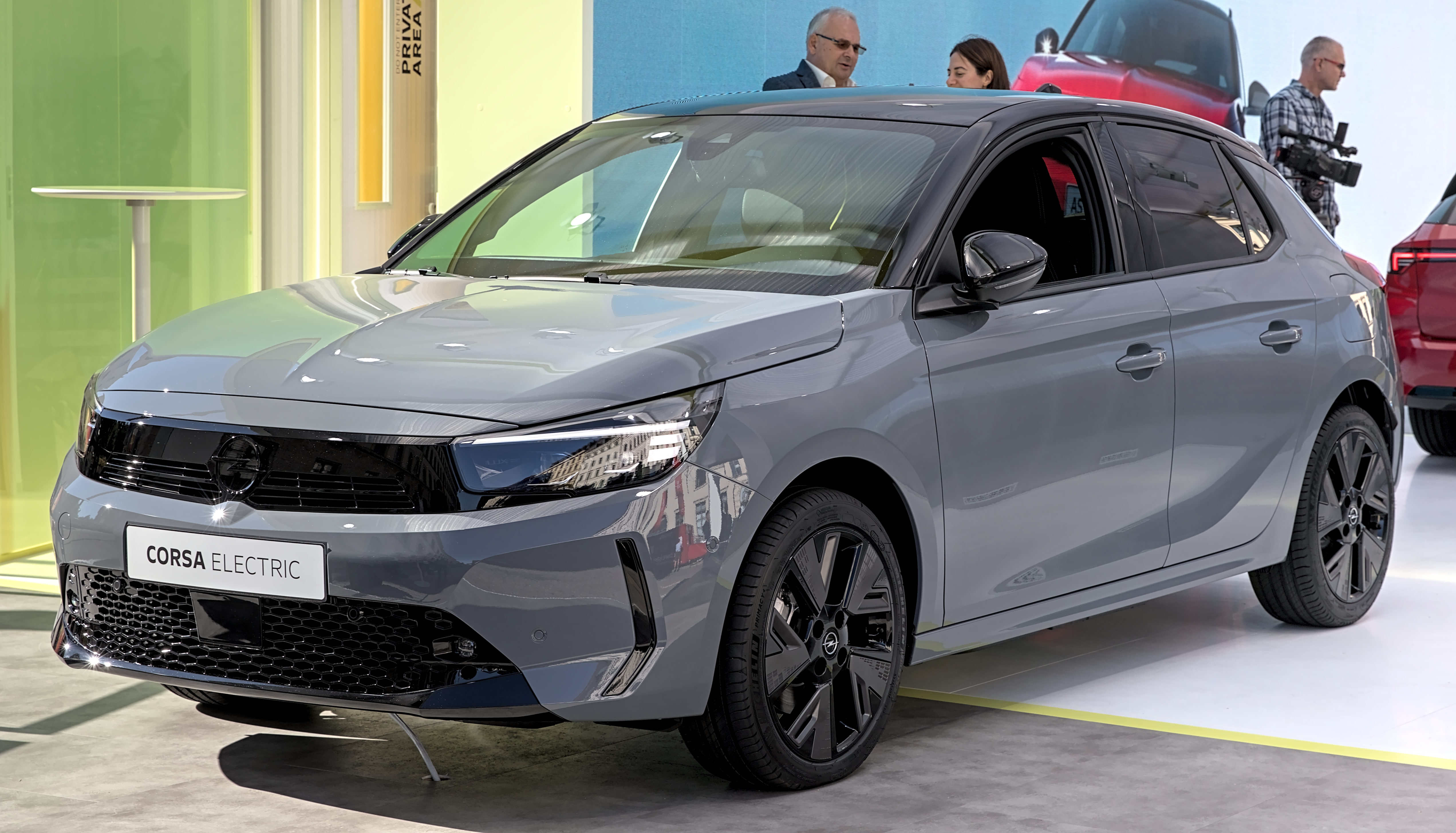
They mention the Corsa because the name instantly makes people think of a certain kind of car. The point is that the name can shape expectations, for better or worse.
They’re talking about the Astra name and how it makes people think of a particular type of car right away. The discussion is about branding and perception.
They’re saying Ford’s European business is struggling and might focus more on vans and commercial vehicles instead of regular passenger cars. That would be a major change in what Ford sells.
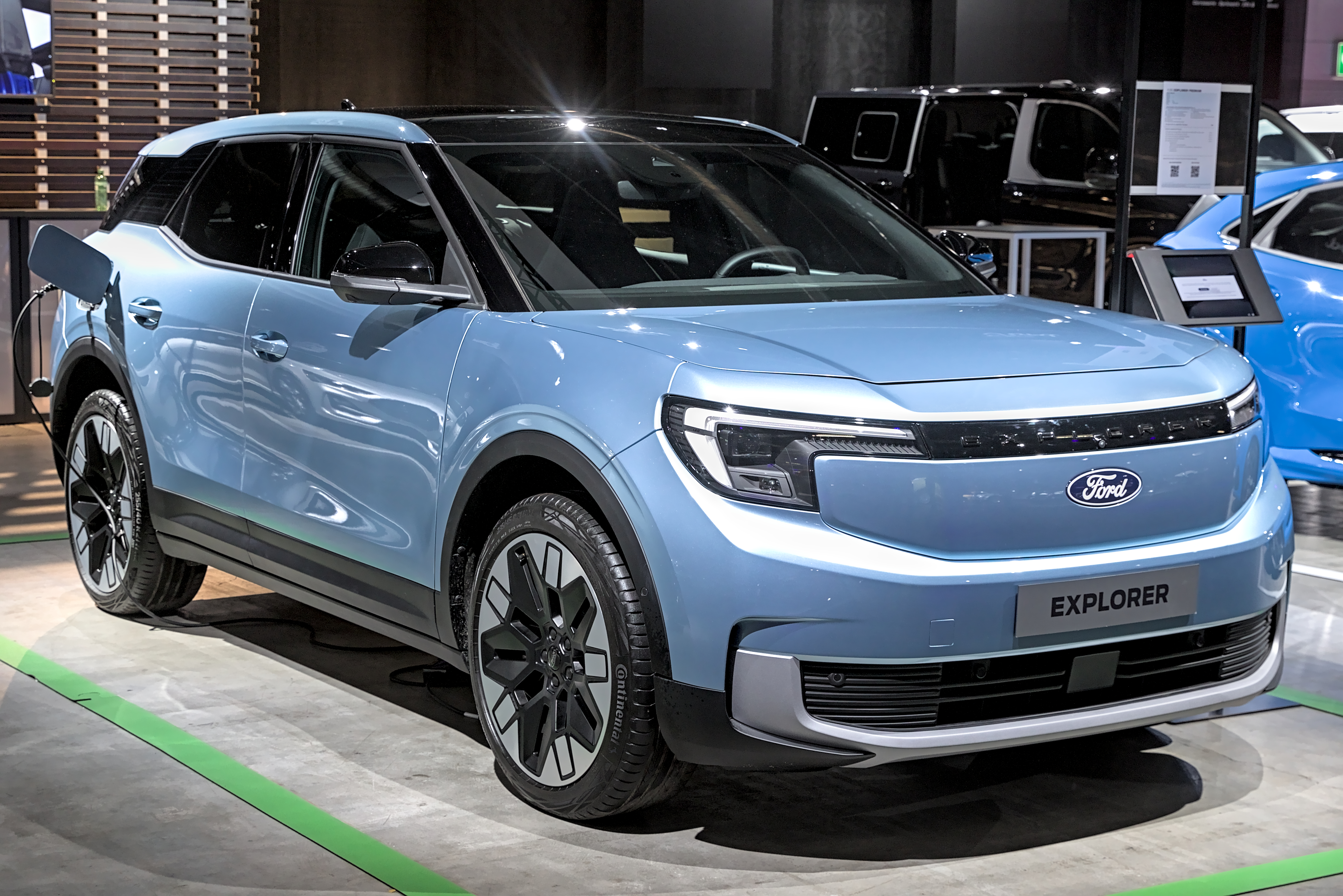
The Ford Explorer is a mid-size SUV made for everyday driving and carrying people. The podcast mentions a version that looks more like a van, which would be aimed at maximizing passenger space. It’s the same general vehicle idea, but with a layout meant for more people.
Fleet buyers are businesses that buy lots of vehicles at once for work. The idea is that Ford might focus on selling to companies instead of individual drivers.
They’re saying the brands that sell a lot of everyday cars in the middle of the market are the ones most in danger. If people don’t care much about the badge, they’ll choose whoever offers the best deal.
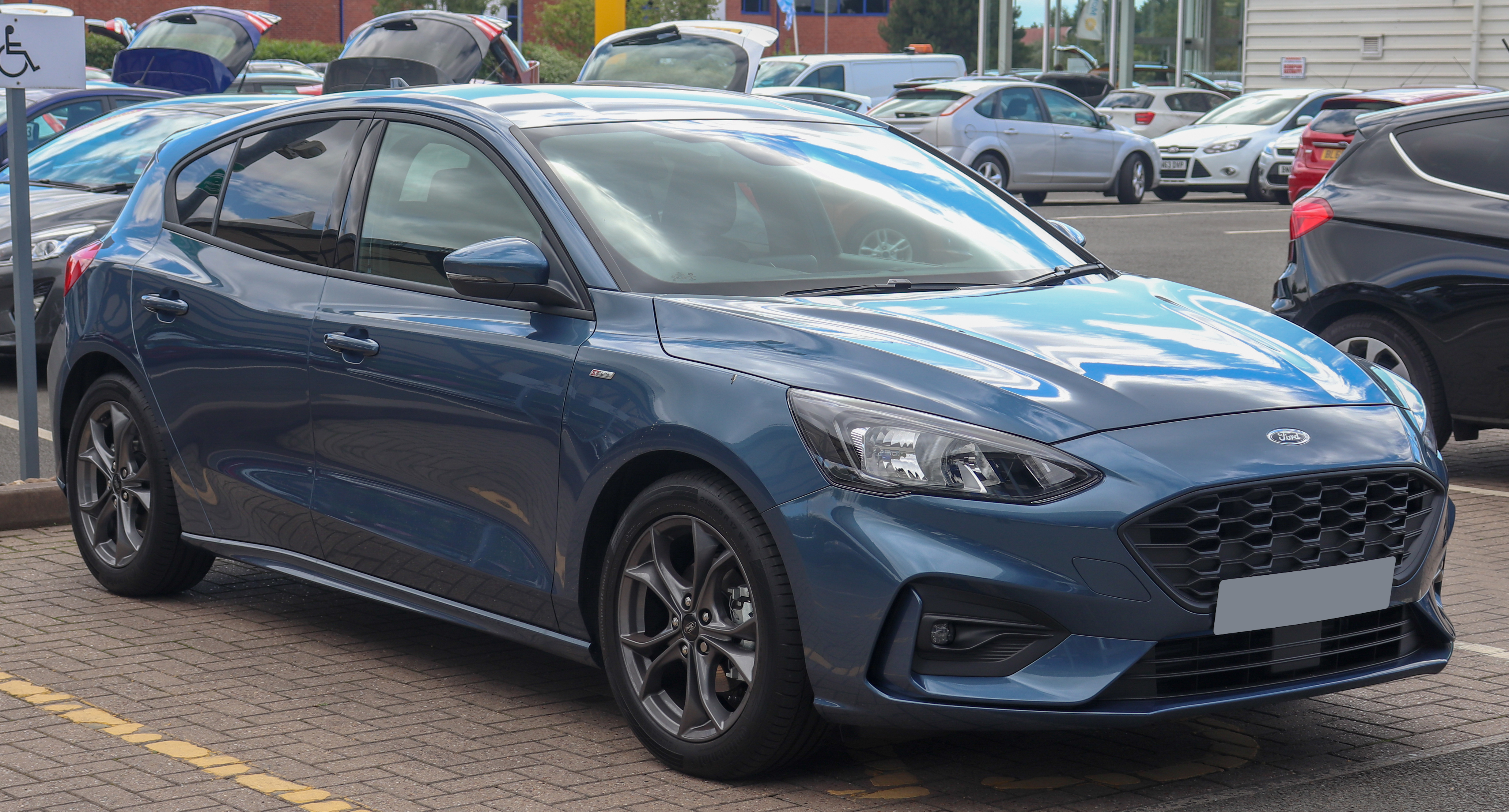
The Ford Focus is referenced as an example of a mainstream model that served buyers who “just need a car.” The speaker says Ford has “got rid of” it, framing that as part of Ford’s product planning challenges.
They’re talking about the Ford Fiesta as another common everyday car. The host’s point is that Ford dropped it, and that’s part of why their product strategy is being questioned.
A “press car” is a car a company lends to journalists to test and review. It’s useful for learning how the car drives, but it might not feel exactly the same as owning one.
A hot hatch is a small hatchback that’s been made sporty and quick. Even if it’s supposed to be fun, this caller is saying the ride and day-to-day experience didn’t work for them.
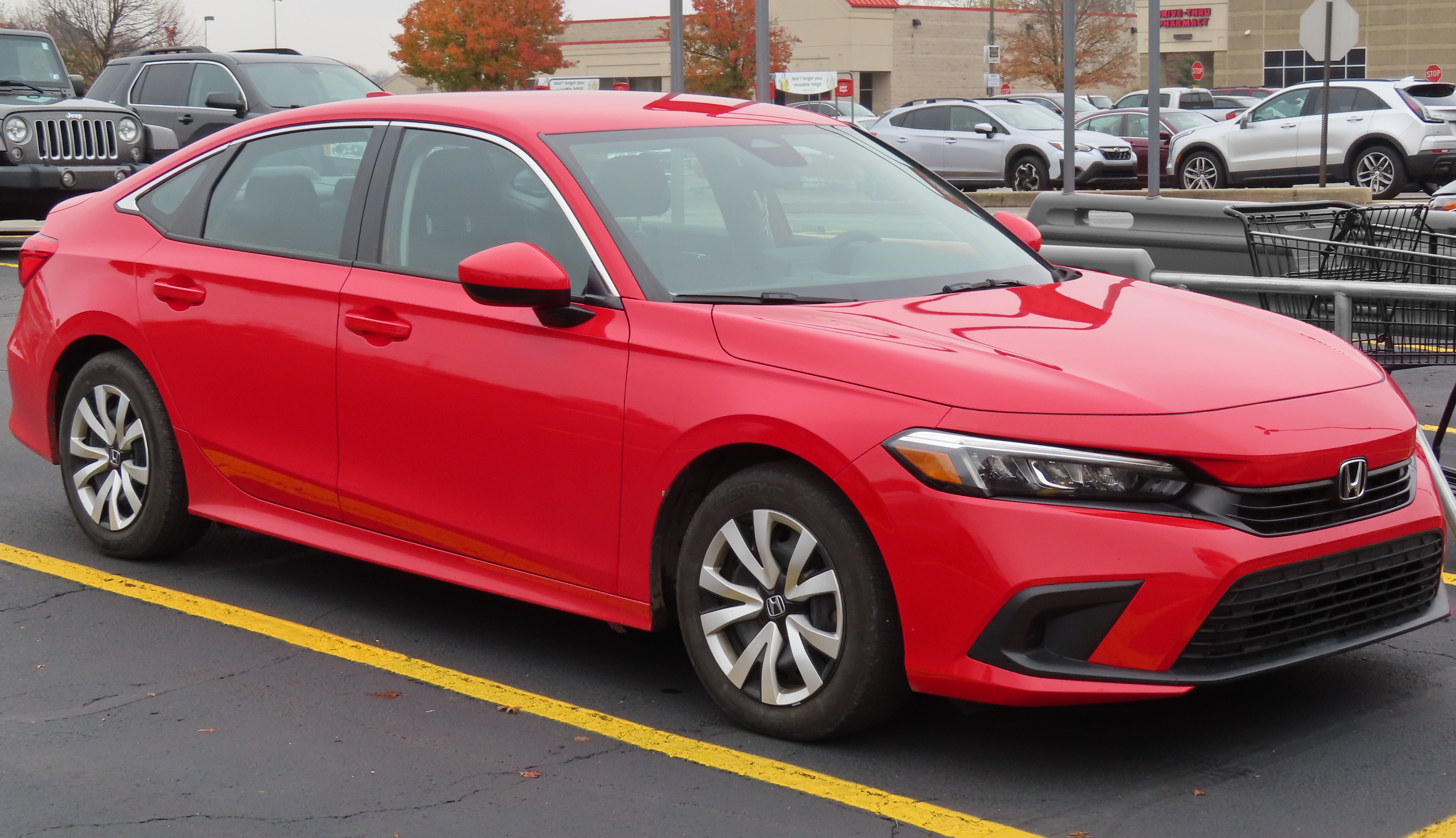
The Honda Civic is a compact car that’s built for normal everyday use. The Civic Type R is the sporty, high-performance version of that same model line. The podcast is referencing it because it’s the version people try when they want a more exciting drive.
Car
Volvo EX40
This is Volvo’s electric SUV. The host is saying it didn’t feel efficient or easy to live with in bad winter weather, especially because they didn’t have a home charger.
In EV context, efficiency usually means how much energy the car uses to travel a given distance (often discussed as range per kWh or miles per kWh). Cold and wet conditions can reduce efficiency because heating, battery performance, and tire grip all change.
This means the tires were spinning instead of gripping the road. In slippery conditions, the car can put down too much power too quickly and the wheels lose traction.
A home charger lets you plug in and charge your electric car overnight. If you don’t have one, you may have to rely on public chargers, which can be slower and more annoying.
The Dodge Charger is a car that’s built to feel sporty and powerful. The podcast mentions it in the context of charging at home, which matters if the Charger version being discussed needs electricity. If you don’t have a home charger, it can change how convenient it is to own.
They’re basically saying the car wasn’t right for what they needed at that moment. Even if it had good power, it didn’t match their driving style and daily routine.
The RX-8 is a Mazda sports car. In this conversation it’s being used as the “comfortable/relaxed” baseline, and the speaker says switching to the Panda felt much more upright and stiff.
They’re comparing to a Vauxhall Astra, which is a similar kind of everyday car. They’re saying they hated it because it made them uncomfortable and they still had to drive it a lot.
They’re talking about the COVID period and how it slowed down news. For cars, that kind of disruption can also slow down new releases and make it harder to get parts.
Concept
guest presenter
They’re discussing bringing in someone else to help host when one person can’t make it. It’s a common way to keep the show going.
The Tesla Model Y is an all-electric SUV from Tesla. In this segment, they’re talking about how well it’s selling in Europe and what might be driving that change.
FSD supervised is a Tesla feature that helps the car drive more on its own, but you’re still responsible for watching the road. It’s not fully hands-off driving.
Fleet dumping means companies with lots of cars sell them off quickly. That can make prices look unusually low because there are suddenly many cars for sale.
Autonomous vehicles are cars that try to drive themselves using sensors and computers. The host is questioning whether the current technology can really do what companies are promising.
Connected cars are cars that can communicate online—often for navigation, updates, and remote features. The host is linking that to AI and questioning how much is truly ready.
Privacy here means how much personal or driving data a connected car collects and shares. The host is saying this matters alongside AI and self-driving features.
Term
AI
AI is software that tries to “think” or make decisions based on data. The host is skeptical that today’s AI in cars can actually do everything companies are claiming.
Microsoft is a major software and cloud company. In this discussion, it’s being used as an example of a tech partner that automakers team up with for AI features.
An earnings call is when a company like Tesla talks to investors about performance and future plans. The host is saying some of the claims about future car features came from that call.
This means the car’s computer and sensors may need an upgrade before certain advanced features can work. The host is saying many owners bought cars that don’t have the upgraded parts, so the features can’t be enabled yet.
The Tesla Model 3 is an electric car that runs on a battery instead of gasoline. The podcast is talking about differences in the car’s internal equipment, meaning some cars may have different capabilities. That matters because it can affect which features work or can be used.
LIVE
Welcome to the Motoring Podcast. It's a live question-and-answer session on Thursday, the
23rd of April, 2026. Hello, I'm Alan.
Hello, I'm Andrew. So, Alan, what is this live Q&A session that you have just announced?
I don't know. I am slightly terrified. Yeah, well, the idea is we decided... We decided,
you decided, that really we should do on this because for the last... Okay, you suggested.
It wouldn't it be nice for people to actually tell us what they want us to talk about for a change
instead of us just deciding what we were going to talk about? So, here we are, everyone.
And some of you have wonderfully sent us in some questions as well, so that's very helpful.
Otherwise, this is going to be a lot of filling.
There was, yes. I have had this fear all day, by the way, that it's going to be like one of those,
you know, there's telethon videos of those two old guys trying to sit around trying to fill time
for however long until somebody calls in to pledge some money. Fingers crossed, it's not.
But we do have a bunch of questions. If you have questions, those of you who are watching,
watching along at home, then do put them into the chat. You should be able to do that and they
will appear on screen for us. Well, we tested it and they appeared on screen for us.
We tested it and it works. You will appear on screen for us on lots of different matter.
So, let's see, here we go.
Shall we start with the first question?
Yeah, I'll read out the first question and you take the first step.
Hang on, there's an important step to do some live streams that we haven't done,
that we have to do. And that, everyone, why not tell us where you're listening from? Put it in
the comments. I thought you were going to do the, by the way, if you are listening to this as an
audio podcast later, please be aware that this is the live raw feed. There is no editing of content
that typically happens to the weekly news show. So, there is a slight change in what you're going to
hear. Yes, and maybe the way it comes through. Yeah, I'm terrified by the lack of editing that's
going to go on behind this. Shall we get started with the first question then?
Yeah, I will ask you the first question and you can take the first stab at this and it is,
how concerned are you for the future of Jaguar following the, and by the way,
we are quoting the questions of a beta at the moment and that is the plan until we ever get
to a question where we don't think we can. But following the disastrous rebrand, the complete
halt of car production and the move to an all-electric future.
So, Alan, what do you think? How concerned are you for the future of Jaguar?
It goes, could we have started with an easier one?
How concerned am I for the future of Jaguar? I'm quite concerned for the future of Jaguar,
to be honest. I think, at least from the short and medium term, I'm a little bit concerned.
I think my concern ebbs off after a while because there's more time to try and put stuff right.
I don't necessarily, where do I go with this?
It's the complete halt of car production, I think scares me more than anything else.
I understand kind of the idea that was going on, the whole idea of moving Jaguar
upmarket to Bentley and whatever because previous attempts to move Jaguar to
be a direct competitor to BMW, Audi, Mercedes hadn't necessarily worked.
The thing is that it didn't not work because of the product itself. It didn't really work
because of the perception of the mark. No, and the big challenge with what?
The big reason it didn't work was because basically everybody looks at the product and goes,
but it's lovely and everything, but the reliability is so awful.
But the product wasn't as good as the Germans.
When the British press returns to these things, six months to 12 months down the line,
the perception of the product changed a little bit. The reporting, it was like, well,
yeah, it's not quite up there with Audi, up there with BMW, up there, in terms of the
material finishes and the layout and that sort of stuff.
I'm having trouble with the counter argument for that, to be perfectly frank.
Because we are guilty of it. If Jag comes out with something, we're also hopeful,
we're also positive. We know what an enormous employer it is as well, and we all of us wanted
to do well. So we're possibly caught up in the moment. This is really good,
this is going to do it, this is going to take on the Germans, et cetera, et cetera.
When you've had chance to breathe and a bit of time and separate from the emotion,
then it's like, oh, it's close, but it's not quite there. It's not, say, on design and stuff like
that. It's just the product, from the user's perspective.
But that doesn't require an entire clean slate. That doesn't need an entire clean slate.
I don't think the moving up market to come at Bentley and stuff, at Bentley prices,
is actually the right way to go either. So in all fairness, the strategists have been stuck
between a rock and a hard place. But I think trying to have a company which hasn't succeeded
against Mercedes-Benz, BMW, Audi, and then trying to go, well, it's definitely going to
succeed against Bentley, I think that that's a crazy idea. That's very hopeful.
It is very optimistic. Yes, that's probably fair. A crazy idea.
But that's the challenge. I don't know what... I don't know. I would have preferred that they
had just improved and actually invested in the products they had and made them have better
generations of those that were reliable, that came in a good monthly, so the residuals were higher
and focused on all that. I think that there's a point being made in the comments here,
which is great, which is pointing out that the biggest issue is probably the ingenious
engines and stuff. I can see that. That goes straight in with the whole reliability and the
complete product. I mean, some aspects were fantastic. I thought we thought they looked good.
They always handled well, but the ownership proposition I think wasn't there. And I think
that maybe they should have worked on that rather than fancy branding of dealerships,
rather than trying to wipe the slate clean and all of that, to do what they were doing right,
rather than try and do something harder from a position of public perception.
I can also see stepping away from the... Oh, it's a jag. It's a certain aged gentleman
who buys a jag type thing, because that is a small market. I could see them trying to do that,
however I feel... Well, for me to answer this question is how concerned I am. My gut feeling
is very, but it goes across the whole width and depth of the company. This is a proper question
and I've given it some proper thought today, because I felt... He's written notes, by the way,
which is more than I've done. I have written notes to try and just get my thoughts in order,
and I'm going to read bits from here. The way that they went around the launch of the new
identity felt very chaotic. There was no lead up to it, and it felt like it was shock for shock value.
Now, I can sort of understand that when they are trying to rebrand and reinvent the brand,
that you want to make a big splash. However, there was nothing to back that up. It was just,
here's an advert. It's not like they said they had, and here are a bunch of cars
of what we're going to launch. There was this sort of one vehicle that was a concept,
and I don't think that helped. I think that the reaction... I'm moving the gammon reaction to
one side, and we just ignore that. There was people who, because it's the internet, the loons
came out and they went loony. I think even the company realized that they'd misstepped,
because they fired the agency that organized that, and they got rid of their creative director
eventually. Sorry. Decided to move on to pastures new. However, they have managed to couch it to
themselves. Anyway, he's had a massive payoff to go off and set up his own consultancy.
It was all baffling to those of us who follow cars and jaguars. It just felt baffling.
In their latest marketing, they are at least acknowledging they have a heritage. They are
at least acknowledging that they have got cars in history. Because to not do so is even more
baffling because they've got a whole wing of their business, which is about paying lots of money to
have their older cars done up to a fantastic specification, which brings money into the
company. So to then go, oh, these never existed. Just nuts. Absolutely nuts.
Yeah, that was absolutely bad poo. All of this history doesn't matter.
Yeah. I still don't know who this car is going to be for. I cannot understand who the car is
aimed at because all we know is price. We don't know who the target market is. It's just price.
And as you said, quite rightly, their reputation from the JLR stable on reliability and quality
is not up there. I am worried they cannot make a 100K, a minimum 100K car that is what people
will expect. And people might go, oh, but what are our Range Rows and all the rest of it?
Just this week, I was stuck behind a brand new Range Rover and the tailgate wasn't even on straight.
In 2026, that is ridiculous.
Joe Upway in the comments has pointed out that perfect three year lease cars.
Wave it goodbye before it all goes wrong. And he had an XE and XF and an F-Pace and said they
were all superb for three years. So, yeah. Yeah, yeah. No, I can see that. Right. On top of
everything else. So in summary. No, but no, I know there's more because
I'm not finished yet. Sorry. This is why I'm saying there's width and breadth. On top of
everything else, they're going EV only at a time when the US has just gone, we hate EVs.
But at the time, hang on, just remember that at the time of making that decision,
then everyone was going all in on EVs and this is a big court. However, if you just look at Europe,
the 100K plus EVs have all had problems and they are not selling in the quantities that
everybody expected. On top of that, how is Jaguar supposed to go into China, the third
major market that they will be targeting and go, yeah, come to us. When today it was announced
that Western marks are at the lowest percentage they have been in in the Chinese market for
well over a decade, it's more closer to decades because of the local competition.
Bear in mind, they're coming in with this fresh product with no seemingly trying to ignore heritage
and all the rest of it. What have they got to offer that is effectively, we're a new startup?
Yeah, that's the thing. That's what the European...
Yeah, that's what the European brand had coming into China was always, well, you buy,
you're not just buying a car, of course, and it might not have all of the snazzy stuff that
maybe you expect from a Chinese brand, but it's got the heritage. I think people forget how much
heritage sells. It's the reason people come to Britain on holiday, for goodness sakes. I've seen
the busloads of tourists outside Buckingham Palace at 8 o'clock in the morning, all taking pictures.
You know, a lot of them aren't coming here for cool Britannia. They're coming here
to see the old stuff. They're going to see that. By lunchtime, they'll be Anne Hathaway's
cottage in Stratford-upon-Avon. It's all of that kind of stuff.
So on top of that, which is on top of everything else, no, not quite. I really still haven't
finished because I think... This is the stuff that normally gets edited, everyone.
We need to understand how much the company completely needs to fundamentally change or
have a grip on what they're doing. So we've got that there's a new board in place,
but there's a new CEO and there's already a new... They've had to get a new CISO.
They've appointed someone as a strategist, again from Tata.
So the new boss is restructuring the board in what he wants it to be. We don't know what their
strategy is. At the minute, it is carry on as it was, but that's going to change
over time because they're not the people who thought this up in the first place.
And we still don't know what that is. So are they still going all in on this?
And then... Because you look at recent issues the company's had, the consolidation of the
logistics hub. In theory, in on paper, that was a brilliant idea. It absolutely was so
hand fistedly done that it's caused a massive backlog in repairing vehicles.
They've had the hack, which again brings into question decisions made at high levels,
who they're working with, that sort of thing. And then you sit there with... They've got continued
supply chain issues. We were only talking about that the week or so ago because of...
It feels like they... Well, the whole car industry has not learned from the chip
issue, but also when the Ukraine war came and consolidating everything into single suppliers.
And it's so frustrating. It is so frustrating because we know people working in there.
And these are very good people who are very good at their jobs. It just... Something happens
between them and the senior level that means it just doesn't come out with the product it should.
And that's... All that wrapped up together, I think there is just so many big issues.
I am really concerned. But what do I think will actually happen? Is it will get launched?
They'll limp along and we'll be talking about them like this in another five years, 10 years.
Hopefully not, though. I'd love it. I'd love it to be the case.
Okay. See who's the positive one here. Do we want to take a... A, do we want to move on?
Okay. And B, do we want to take a short one or do we want to take a short, lightweight one
before... Do you want to take the one in the comments?
The start. I was going to take the... Yes, I've no lost to which one. Do you want the first one,
the second one, the start? Hang on. There's more than one. Oh. Let's take the first one.
Yes, go the first one. Sorry, I missed. I've actually been doing things whilst you've been
talking, by the way. Yeah, well... And next time... You know, I can't double.
I can't double. Somebody overthinks them.
It's your own fault you lost the question. Next one.
Yes, I know. Yeah. Blame yourselves, folks. So, question from Juan Mahir. How do you guys choose
what to leave in, what to leave out every week? Since it's a podcast about current things, we
can't have much of a backlog either. Shall we start with that last bit? Do you remember 10
years ago, we started a list of things we'll talk about when we don't have anything to cover?
Yes. How many of those topics have we ever used? I think we used one.
Yeah, I think you're right. I think it was topical.
Yeah, I think you're right. We do have, actually... We do have a few items that are backlogs
that generally is new, new car news, because we tend to only cover three a week.
And sometimes there's like this week coming, there's at least six cars that have been
announced during the last week. So, we'll pick and choose from that. How do... Well,
generally run. So, we know roughly the number of articles to put in that we go,
okay, that will be a quick one. That one, we're really going to go to town on. We know we're
going to go deep on that one because we've got opinions or we're cross or we're delighted,
whichever it is. I'll show you what's hiding in the background is that we do have a list of...
There's a sneak preview of what might be a next week's show already. And then we do have this list
of stuff now, okay, so it is quite long. But many of these really, it's one of these times,
we'll actually sit down and empty it out. But we do generally have a sort of list of stuff
that we can pick from and then that gets put into an order. And it's really making sure there's the
right balance of stories. Too many anchors on the right number of stories. Honestly.
Yeah, it literally comes down to that. And then it comes down to a Tesla one, like is that actually
important enough? Is it relevant or is it just some more wittering? So yeah, that kind of thing.
That's kind of how it goes. We've got all our devices set up so that, or certainly I have,
so that if I find an interesting story, then I just ping the link straight into Trello.
Yeah. And then we fight Trello, which we didn't for a decade, but we do now.
Yes. Yes. Shall we move on to... Just quickly about setting the live up for a change. Could
I quickly cover that? Quickly mention this one again. Very well prepared and executed to be
perfectly honest. We use this really awesome platform called StreamYard. It's one of the things
that the money from patrons goes to. It's a paid service where grandfather did. So we pay only a
fraction of what it would cost if we signed up now. But it's super. It makes... We are discovering how
easy it makes this stuff. It is designed especially for this sort of thing, for live stream. It's
brilliant. Love it. We only use a fraction of what it does on a weekly basis.
Double thumbs up. If anyone is looking for a video conferencing video calling type thing,
this would absolutely recommend this. We've got an affiliate link that we can share if you want,
so you get money off. This isn't sponsored at all, by the way. I'm telling you this because it's
really good. Okay. Shall we move on to the next one that was planned? Now, I think I've...
Whilst you were talking, I think I've made a banner. Oh, wow. Look at you.
I'm learning something tonight. This is literally on the fly. Under the obvious threat of the Chinese
car makers, which indigenous manufacturers will not survive? Actually, David, when he wrote this,
he went on and said, will we keep Nissan with all their trivias and the problems of Brexit? Well,
I think we covered that part in this week's news show because actually, David got this question
in before Tuesday night. He said, do you think about the DS for your Alfa Romeo, possibly many
others? I don't know. Well, there's an article next week that's tied to this, but I won't talk
at least one going. I can see more, but mainly because of the head of the group company
doesn't know what to do with them, has not got a clear plan for them. Also, let's not forget
when we are in the UK, we have got a very... It is a very narrow focus because what we see as
successful in the UK is not always what's successful in Europe or abroad. So we'd have to bear that
in mind as well because something that doesn't do well over here, there are car companies that do well
in Europe and stuff like that. So we just need to just bear that a little bit in mind.
For me... Yeah, I mean, Lancia remains a niche product for example, to take an actual example
of that, but it sells very well in Italy. It's so close to other models that it doesn't really
matter. Well, with the Stellantis thing, they are going to have to clean up.
They do so much. Here's the same platform, change a few body panels. I know then we talked about
this a couple of weeks ago, the new designer, the new head of the design for Stellantis has said,
no, each of these brands need to be individual. But if it had been probably 18 months ago, I
would have said, they've done so well for VW that they can't afford to get rid of them.
Yeah, and Cooper seems to have found itself a niche. I think that they actually are more
relevant than Audi these days. Yeah. Well, I think Alfa worries me. I don't want
that to go. I don't want any of these to go. Alfa, Lancia, DS, Vauxhall? Well, I totally agree with
what you've said for years. The biggest problem is its model names. Just call it Opel.
Just call it Opel. Have done with it. Forget the Vauxhall nonsense.
Call it Opel. Yeah, move on from the Corsa and Astra Names as well, because they have such an
immediate mental link for so many people. And it's not always good. And I don't think it reflects
the products right now either. I would be giving... I've said that for years,
and I think I'll probably end up keeping saying it for years, but maybe not that many more years.
But yeah, move on from model names, get rid of Vauxhall. Yeah, somebody's saying Vauxhall will
be off. Right, Joe? Yeah. But in terms of running as a business, Nissan are in trouble.
Stellantis are in trouble. Ford is in trouble. Ford Europe is in big trouble.
Now, Ford Europe, I can see... And we slightly talked about that this week,
is I can see Ford Europe really deciding, you know what, we're just going to be commercial
vehicles, like commercial vehicles. And really not caring about passenger cars. I mean,
they... I saw today, they released pictures of an Explorer van version.
I know, I know. It looks like the spring van. It's like the spring van. You're trying to
exploit a loophole and desperately trying to use this platform to do something else,
and it's not suited for it. Sorry, it's not designed for it initially.
No. Your right isn't designed for it because of course it's an ID for. But it's... But I can
see them wanting to sell that into fleet buyers. And that's where it goes. Ford is going to become
a commercial fleet vehicle. Seems a shame. The Ford particularly seems a shame.
There's plenty of car companies out there that are struggling. VW Group as well,
we've talked about that many times. So, something's going to come to a head.
And I really feel it's those mid... And you'll notice it's pretty much all those kind of mid-market
form of volume brands that we've been talking about. And I think it's where people just want a car,
then those are the ones that are at risk from the Chinese brands. I think...
Ford got rid of... If you just need a car, you would have a focus or a fiesta and they've
got rid of those two. We've discussed the specialness of Ford product planning before.
They don't seem to have any. And it is a bit of a challenge for them.
Should we have the second start question?
Should we have the second start? Yes.
So... Thank you, first-time caller.
Yes. The biggest automotive heartbreak other than my RX8.
Andrew, do you want to go first with this one? Heartbreak.
I don't know. I'm going to ask a follow-up. I seem to... I'm not sure. Is this...
I'm presuming it's our own vehicle.
But don't like. Or is it owned vehicles? Because there's different answers to each of those.
Are you still thinking about this one? Because if it includes cars we have driven and we have
tried driven and been really excited about its press cars and then hated with a passion or just
been so disappointed by, then I'm going to say the Honda Civic Type R where I've tried two of
them and I've disliked it. And for the first one I was... I really, really wanted it. I really
was so excited by it and then I was so disappointed because it was... I just found it so harsh
and so difficult and I didn't like the attention it attracted. And I found myself in the wrong
lane at one point and nobody would let me out.
Yeah. That is the car that we have the biggest difference in opinions on.
Yeah, you love it.
That we've tried.
I just... I can't even... I don't even want to try another one.
No, I know. I get it. Because I do believe that there are even now that there are cars
that you just get on with and there are cars you just don't... And there's no
obvious quantifiable reason. It just doesn't gel. In that one you obviously had extra reasons
on top of it but I really do feel it. Because my dad has got a couple of brands where he's
always really got on with them and then he's gone with a rival brand that's apparently at the same
level, hated it, hated the car with a passion and was delighted when it got written off.
And you know, it's flipped. My dad's a big BMW buyer, has been for many, many years,
doesn't really get on with current Mercedes for the last 20 years.
Doesn't really like them at all.
No particular reason. I mean, he's owned a couple but still doesn't really like them.
Yours is far more promiscuous, doesn't it?
Yeah, yeah, yeah. But equally, my dad doesn't like BMWs. So, you know...
Yes.
Different sides at the same point. Different sides at the same level. For me,
what has been my biggest disappointment?
I'm probably the Volvo EX40 electric.
Oh, yeah, that's true. I'd forgotten about that.
Now, I have to say, caveats to this, it was January. It wasn't freezing cold, but it was cold,
it was wet, it was miserable. Because on top of the shockingly bad efficiency,
and the fact that it lit the front tires up every time I pulled away from a junction,
no matter how gentle I was, everything I tried to do. And I know I can be heavy right footed,
but I was really, really, really trying. And it just lit up the front wheels every time I pulled
away from a junction. And, you know, I concluded that review with, I cannot recommend this car
unless you have a home charger. To sit in it was lovely. I thought it looked great.
This was before they'd gone too deep in with Google, so the interface was okay. It was easy
enough to navigate, generally. You know, the materials and the finish were lovely.
And everything is just, the ownership side of it was grim for me because I didn't have a home
charger. And I'm glad I didn't, because I wouldn't have known that. And the other side was just,
it was so, it was like, I'm getting one point something miles. That's just not good enough.
What about Odentwise? Is there anything outside the RX8 for you?
The Panda 100 horsepower that replaced it, it was obviously, it was a snap.
That you will not like you.
No, no, the thing was, it's wonderful. Panda 100 horsepower is great. Really is, really good.
But not for the mileage I was doing at the time, not for the type of driving I was doing at a time.
It's the wrong car at the wrong time and the wrong job.
Yeah, yeah, yeah, I get that.
Yeah, yeah. And it's, you know, when you've gone from the sort of smoothly relaxed sitting down this,
then of the RX8, then it's very difficult to go to then the very upright, very stiff
Panda. And yeah, I was scared I was shaking it and me to bits, which is why it didn't last very
long and it got replaced by an MX5. But really, I really like, I still really like the 100 horsepower,
but I just couldn't. I was scared I was going to break it, just and me.
Do you want to move to one of the other ones that just appeared in here?
I think I'll have to go with probably the worst car I've owned.
Um, yeah, that was, that was the probably the most surprisingly,
because I had a Mark one, two liter
C tech, I think it was focus five door in the classic dark blue today.
And it was at best and I read the reviews of these things.
And you would think it was the best thing since sliced bread.
Oh my word. I mean, I during the time it came out, I drove the equivalent Astra.
And that is the car that I hated the most because it made me put me in pain every time I drove it
through my back and my knee. I hated that car so much and I had to do
a lot of thousands of miles in it.
You remember, I think your problem with the focus. I think your problem with the focus
was that you didn't want to have to buy it because the Volvo you had and loved got written off.
Yeah. Yeah. I mean, that didn't help that as a result, you never liked the focus.
But I was I was expecting it at least to be fun and better than it was. It was just men.
But that goes to show how poor cars were at that time that that was markedly better
than anything else. Yeah.
Yeah, I suppose so. Yeah. I don't know.
Shall we start? I've just started on the comments. Let's answer that one because I think it's quite
a good one before we move on to the one of the other two that's that's already that that's saved.
How do we become friends and how did the podcast come about?
Friends. This was his friend stuff. I know. Who says we're friends?
Yeah, you tell us. What happened was we were both on Twitter at the time.
You remember that everyone?
Do you remember? Yeah. Do you remember that? That was when it was still a really good,
fun place to be. I don't know what it's like now. I deleted all my accounts,
which is a sad, sad day after many, many years.
We would, I always tell you that we were politely disagreeing with each other. We disagreed over
technology and cars. We disagreed over what we liked. And
But we weren't a-holes about it with each other.
But we weren't a-holes about it yet. And we both independently commented that we would really
like a podcast about Garnier. And nobody did it. And then we're selfish. They are. Everyone out there
was selfish. Yeah. And I had this URL, you see. And so we said, well, let's do it. And so we
let's do it. Let's have a quick
Skype call. God, it was so long ago. Let's have a quick-
When Skype was good.
Just to make sure neither of us had some terrible speech impediment or anything like
that, because we'd not met.
Yeah. We do. We have to remember we had not met each other at this time. We had not actually
seen each other's faces until we got on this Skype call.
Yeah. Because some captain security there, I've never shown his face in photos on social media.
And so, yeah. So we said, okay, let's do three of them.
Let's do one where we just talk about ourselves and our backgrounds and what cars we've owned
and stuff. And that's still episode zero. If you can find that and you can find it on
MotronPodcast.com, it's far too old to go through onto any of the streaming services, I think.
And I'm very sorry about the sound quality.
Oh, it's awful.
Yeah. So we did three, working on the basis that if they were crap, we would never release them.
And we would never tell anyone we'd done it. But we would know that we tried.
And that was like the first thing was we'd know that we tried. And we thought, well,
maybe we'll do a few. Maybe someone else will cotton on and take over from us.
And 11 years later, nobody has, which shows what a stupid idea it is to do a to do a podcast,
which has expired by the time you release it every week. Nothing has any, you know,
other than special editions, there's no some longevity in it. So you never get a great big
list in the numbers. It's a ridiculous thing to do. But we didn't know that we'd never done it
before, or we'd never done listen to podcasts. So we did it, we started it, we found that those
three were, I don't know, you just released the bloody things. We found that they were adequate.
So we put them out there and it took us good enough to learn some of the fundamentals.
Yeah, yeah. Yeah. And if you go back now, the sound quality.
Well, I'm hoping you can see a difference or hear a difference.
I hope. Yeah. I listened to last week's year, you can't. And it's, and that was it really,
pretty much every week since, because we're masochists.
Yeah, because only the truly insane to a weekly podcast without any breaks,
or very few breaks.
Yeah. Yeah, don't do, don't, don't do seasons or series to those if you are thinking about a podcast.
Yeah. And don't do stuff that expires before you've released it.
What else? I was going to talk about COVID in there as well, actually.
And there wasn't that much news during COVID, but we kept on doing it for our own sanity. And then
some of you guys got in touch with us and said, thanks for keeping on doing this. It keeps us
sane as well. It keeps us sane because it gives us a point that we're used to every week. And
that was kind of when we realized it probably mattered a wee bit.
Yeah. Yeah. There's things like you see certain people on social media commenting,
they've listened to us, depending on, you know, what organization, which individual and stuff
like that. And that's because we don't know who is listening. We get over overall numbers,
but with audio podcasts, it's not like other internet stuff where we can basically see
where you live, what you do, who it is, what device you're on. We don't get that so much,
that detail. We get general information, which is one of the reasons we like audio as well.
We could sneakily get that, but we don't go to the point of doing that.
No. That actually leads quite nicely into the
last of the questions that's in the list. Hang on, I'm just going to make a banner with it.
Oh, God, it's far too long. But...
Well, would you like me to read this one? I need to do my copy and pasting.
Okay. Yeah, go on. You read this one out whilst I try and copy and paste a pre-se.
Okay. Thank you again for the questions that you've all sent in and you're sending in on the chat.
That is much appreciated. So this was sent in.
When Angus Deaton got sacked for Have I Got News For You for taking cocaine and paying sex workers,
the show started using guest presenters. Now, I'm not suggesting that either of you are up to the
same thing when one of you is absent brackets, although I'm not ruling it out either, close
brackets. But have you considered using a guest presenter to join the one who isn't snuggled
up with the bag of Columbia's finest and a couple of hookers? Very good question.
I've preceded it.
Long-time listeners will know we have had guest presenters in the past.
We have had people come and help out with the news show.
That's what this question is about, because our output of special editions hasn't been as
consistent as we would like over the last few years for various reasons, mainly outside of our
control and nothing to do with the podcast. Recently, a lot of the solo episodes have been
with very limited warning from either of us. So we're not in a position that we can go.
Hello, person who has said that they were happy to help us out in the past. You've got 30 minutes.
Are you ready? Because that feels very harsh, when you're asking someone a favor.
It's an imposition at short notice.
Yeah. We feel it's an imposition full stop.
For reasons out with our personal, but I think what we do feel is an imposition full stop.
Because the guest presenters have been in the past.
How does it make anything off this?
Also, trying to hit how we deliver and follow what we do. So it's not like, oh,
we're just going to have a conversation. They are trying to replicate what Alan or I do
and bounce off each other and do in the order of stories and all that sort of stuff.
Well, we've done hundreds of them.
Many, many hundreds.
And so it's a lot of pressure. One of the reasons we don't for the new show
is because it's a lot of pressure and it's a lot of imposition on anyone we ask.
And we don't feel that that's fair. The flip side also no. We don't enjoy doing the solos.
Neither of us enjoys doing the solo. If we have to go, I'm really sorry, I can't do it.
So Tuesday coming, I will not be somewhere that I can record podcasts.
So Muggins there is going to have to do a solo show.
And as a result, he's going to have to move his day around and stuff like that
to accommodate that, to make up for the fact that you have to know,
you have to have read every story whereas sometimes we can kind of, if we're in a rush
and we're really busy, we maybe haven't both read all the stories.
And not to the same detail, though.
Not to the same level of detail. We've always scan read them and I'm very,
I'm the lazier one of us. Okay. Be aware of that. But I can scan read really quite quickly.
And so I can normally pick stuff up and go where I've not necessarily read more than a
couple of paragraphs of the story sometimes. I'm really giving it all the way here.
And yeah.
That's how good my editing is that no one notices on.
Also, the fact is that he edits it really well. If I'm doing a solo,
you can tell if I've done the audio editing that there is a market difference partly because
somebody's done hundreds of them. And I've done a few tens and I get bored.
I don't think the difference is as big as it used to be.
I really don't.
But between the editing, I think that's the quality of the initial recording is a lot to do with that.
Yeah. And the software we use now, I mean, the software that's come on in the last
decade, it is astonishing how it can help us.
Yeah. Yeah. I mean, we both started out with GarageBand because it was free.
Yeah.
Yeah.
And now we're a bit more spent. And, you know, we've got nicer mics and little mixing things at
both ends and stuff.
So we've learned by our mistakes makes a difference.
Oh, yeah. Yeah. Plenty of.
Yeah. So the short answer is we don't feel it's fair generally.
But if we've got lots of notice, we might approach some of the people that we know
have been prepared previously to help us out.
But thank you for the question.
Yeah. Good one. Last one from the ones before, which I have now just gone and moved away from
the banners page. So it's not completely seamless.
Yeah. One of the more serious ones. I mean, the short answer is, so the question, so I've
got to read them out because there's an audio version too. Tesla has stayed a remarkable
comeback with the Model Y in Europe, taking in conjunction with the Netherlands approved
FSD supervised. Is there any hope for mankind?
No. We need to put that Model Y in Europe in context because last month, the Model Y was
the best selling EV in Europe, making a astonishing comeback after many, many months
of Tesla sales being dramatically lower than they have been for some unknown reason.
Yes. I can't imagine what that was. I can only imagine this was fleet dumping on some level,
which only leads me to believe it's people who didn't have a, hadn't had a fleet of Tesla in
the past because pretty much everyone has been stung by that by the fact that you add them to
your fleet and then they don't get repaired when things go wrong. And also the residuals plummet
like a stone because the prices keep changing. Well, they have been doing that a lot. So I
think it's down to that that they've been the offers are so astonishingly good that people go,
yeah, well, my morals don't matter now because I can get this thing for so much less
because people. And I think that that's about just about where it sits.
Yeah. As far as the full self-driving and things like that, I am increasingly asking the question
how much more evidence do people need? And it seems there needs to be much more. I don't know
what else needs to be shown. It goes with the autonomous vehicles, it goes with connected
cars, it goes with privacy, it goes with all these things that I'm going. But
well, like with the Stellantis thing that we released today, the Stellantis has done a partnership
with Microsoft and saying, oh, AI is going to do all these great things for us. How much more
evidence do you need to start going? Actually, the promises are not there. The technology is not
there for what we are told or what we are promised it will do. And your question, and I'm talking
about consumer AI here at this moment in time, and I'm talking about... I'm not prepared to comment
on that. No, you shouldn't. That's why I'm saying it. And I know that, well, you look at certain
autonomous vehicle companies and the promises they're making, and if the people reporting
on them actually understood the technology, they'd go, well, your claims are absolutely bogus and
nonsense, clearly nonsense. But that's where we are today.
So there was a whole thread from Ed Niedermeyer today on Blue Sky. I think some of it's a carryover
from the Tesla earnings call that took place last night when I was tucked up in my bed.
And there were various promises and comments being made about, oh, it's definitely coming in
this next version of hardware. And basically every sold Model 3, Model Y, S, whatever, it
doesn't have that version of the hardware. So it simply can't run on it. And if you've owned that
and you've been paying for that, then I don't know. So six months, maybe nine, I guess, is probably
the answer. So I... The ching. Yeah. Yeah. I mean, it really, it's... I don't know. I don't know. I
think it's that, is that us? So we've timed that remarkably well in a way that we don't normally
manage. Any last questions, anybody's tapping away at Madlyn or play for time for a second or two,
if you do. But yeah, thank you, everyone who sent in questions beforehand. Thank you, everyone
who has attended, who's been putting questions and comments and feedback in the chat as we've been
going along. I've really enjoyed it. It's been a slightly new challenge, but it's been a lot of
fun. And thank you for taking time out of your evening to join us. Hopefully those of you who
listening to the podcast version of this enjoy it. We would like to do this again at some point.
We might well do it again. We'll try and give you some preview and everything
so that we can do the same kind of thing again. But yeah, anything else from you, Andrew?
No, just a bit of feedback. What did you think? Did you enjoy it? Is there anything you'd like to
hear us try in the future? Because we're open to ideas. I mean, this is going to come out as an
audio podcast tomorrow. It's obviously going to be on YouTube just immediately. And this is going
to be the first of a few more special editions. We've got some recorded. I've got at least one.
I'm working on editing, and we've got an awful lot to record, which is all down to me. Sorry
about that, everybody, which we'll be doing. So there will be... It's not just bad to you. I, you
know... Yeah, but I've got to write the notes, and then I've got a goat. Let's record. Oh, yeah,
more special editions coming out. But we would, as Alan said, we would love to slot this sort
of thing, which is less pressure on us in terms of when... Well, no. But it is because we can just
dig into the questions. And also, thank you for having some real fun questions in here as well as
serious questions that deserve some proper attention. So that was a great mix. You guys have
really done yourself proud there. And thank you for that, because it's made this
first attempt much easier than we feared it might be.
Yeah, we were worried we might have to invent questions.
Exactly. Yeah, we were worried we were going to have to invent some questions and pretend,
but thankfully not. However, don't forget, everyone, between now and next week,
you can give us any feedback. Share your thoughts for the show at motringpodcast.com
on Blue Sky at Motring Podcast on Instagram and Facebook, and on the contact page of
www.motringpodcast.com, the hub of all our activities. Remember, you can support us financially
via Patreon and please leave a review and rating on Apple Podcast, YouTube, or however
your podcast app lets you do such a thing. Andrew, what's the best way to get in touch with you?
You can get in touch with me via Blue Sky if you search for Crack Windscreen.
Or, failing that, if you prefer LinkedIn, I am on there under my full name. And Alan,
if people would like to get in touch with you personally, what is the best way for them to do that?
The best one for me is always Blue Sky, where I'm at AJP Bradley, that's B-I-D-L-E-Y,
at B Sky.Social. And you can also get in touch with me on LinkedIn if that is your back.
We'll be back very soon. Until then, I've been Al Bradley.
I've been Andrew Clews. And Safe Motoring.
About this episode
A live Q&A with Alan and Andrew tackles Jaguar’s shaky future, arguing the brand’s rebrand chaos, reliability reputation, and EV-only pivot leave it exposed—especially with weak China positioning and a lack of clear target buyers. The hosts also explain how they pick weekly news topics, share behind-the-scenes live-stream setup tips, and debate which automakers are most vulnerable to Chinese competition. Personal “biggest disappointment” car stories spark debate (notably the Honda Civic Type R). They close with thoughts on Tesla’s FSD claims and why guest presenters are rare.
We held our first ever live Question and Answer session, where you the listener supplied the topics you wanted to hear us discuss. This is the audio of that conversation, as a result the audio has not been edited for content in order for our real reactions to be heard.
We hope you enjoy it and do let us know your feedback, what can we do to improve it, do you want this to be a regular thing, all respectful comments will be considered.