
Annotations will appear as you listen
0:00
0:00

Car
Ford Mustang

Car
Chevrolet Camaro

Car
Ford Mustang GTD

Car
Jeep Cherokee

Car
Toyota Camry

Car
Toyota Corolla

Car
Porsche 928


Car
Shelby Cobra

Car
Pontiac Firebird
LIVE
Welcome to the podcast of Motor Week, television's original automotive magazine.
Motor Week is made possible by AutoValue and Bumper2Bumper and TireRack.com.
Here's your Motor Week podcast host, John Davis.
Welcome to Motor Week podcast number 361.
I am your host, John Davis, and this is a very special episode.
One of a series of podcasts to celebrate our 45th anniversary season.
And with that, we're also recording a video version of the podcast.
We are a TV show, after all.
So if you want to watch this podcast, you can do that at our Motor Week YouTube channel.
And another reason that we are doing video today is our very special guest who is joining
us.
Our anniversary seasons are a great excuse to look back at how we got to where we are
today and to talk to the folks that made up the crew that helped make this show possible
for so long.
We're 45 years, which is an eternity in our business.
So for the next year, we'll periodically have Motor Week alumni on both audio and
video to reminisce about the experiences from over their years on the show.
And what better guest to kick off this series than the guy who not only left
his signature on the first two decades of Motor Week, but also, besides being on the debut
show in 1981, actually was a key player in formulating the pilot way back in 1978.
He is most well known for his fun and quirky high road segments, but also for the level
of spontaneity and humor that he brought to everything he did on Motor Week.
Welcome back to Motor Week, the one and only Craig Singhaus.
Hey, thank you, John.
You're welcome.
Boy, we are great.
It's just glad to have you with us.
It's always fun to come back here.
It really is.
You know, it's funny because I was listening to the introduction for the podcast and they
said, you know, televisions are original.
And that's true.
When we went on the air in, I guess it was 81, right?
There really wasn't much TV out there.
Not on automotive sense.
No, there had been, there was a short annual show that was done out of, on public
television out of Chicago.
Right.
They talked about new cars.
There was a show in Australia called Torque, which I looked at sort of when we were talking
about putting the show together.
And that was about it.
As a matter of fact, you know, there really hadn't been very many video road tests
done of any server.
Right.
No, I remember.
But the thing is, you know, what amazes me is not only we were basically breaking new
ground there, most everybody thought we were nuts for doing it because, I mean, it'll go
13 weeks in.
Remember?
Yeah.
You and I would talk about it.
Well, this would be fun to do for a while.
Yeah.
This would be a good gig.
Hey, I got to stop before we get too far into it and introduce the young lady that's
sitting right next to me.
Most of you have heard her voice on many of our podcasts.
Our digital producer, Jessica Ray.
Hello, hello.
There she is.
Happy to be here.
Now, she's happy to see Craig.
Jessica is in charge of all of our social media, so she better than anyone else is in
communications with our fans on social media.
She's got questions for you that they want to ask.
Oh, I didn't know there was a quiz.
No, I have so, I do, I have like a lot of, I can't wait to pick your brain.
That's really what it is.
It may be empty, but we'll go with the best we can.
I want you to go back to the very beginning with the association.
Let's go back to 1978.
And I had this hair brain idea of bringing the automotive print magazine to TV on a weekly
basis.
We found that we could do the name Motor Week.
We did a search, and at the time nobody was using it.
And we did a pilot here at Maryland Public Television, and I tapped you for the pilot.
But what were you doing about that time here at MBC?
Basically I was doing freelance here.
I was a prop boy.
I was the makeup boy.
I was the costume person, you know.
Jack of all trades.
Yeah, exactly.
Do you know how to do that?
I don't know.
I really don't.
But yes, yes, of course, you know.
And I was working for my dad in his hardware store.
But you had a theater background.
Right, yeah.
I graduated from what they call, well, it's McDaniel College now, but in those days it was
Western Maryland.
Western Maryland, yeah.
And, you know, I genuinely thought when I was in college I'd be doing, you know, dinner
theater someplace, you know.
And to be honest with you, I was always, though, kind of attracted to television.
I had come down here and done a little bit of intern work and stuff like that.
And so, yeah, I was, you know, oh my gosh, John Davis wants to talk to me.
Well, you know why?
You know, number one, I found out you had some theatrical training.
So I thought that would be a good thing for the show to have somebody that actually is
comfortable in front of the camera, because I wasn't.
And humor.
What, John, you weren't comfortable in front of the camera?
No, I wasn't.
And those early days I had done news, TV news locally when I was in college.
But you know, that's fairly straight to the camera, read script, and it was
pretty serious stuff.
And you had, everybody knew you were funny.
OK, number one.
That's hard to be on television.
Thank you.
And you also had a Mustang sitting in the parking lot.
Well, and I always assumed I got the job because I had a noisy Mustang.
So I mean, that was that was fine.
There was other thought to your to your hiring me.
But yeah, I know.
And I don't know if you remember when we first shot the first show, I guess
it was like four or five days before we were putting the whole thing together.
They lost the audio for the car pulling away, which was your car.
Well, well, the car pulling away, I think was a modified Ford Fairmont.
We taped over to the taillights or something.
That was what the taillights.
Yes, right. But the noise was my car.
And ironically enough, you know, and they were scrambling that morning.
You know, who can we get a car?
And I had literally show you how little I knew.
I had literally I had forgot that.
Yeah, I had literally tried to retune my two barrel carburetor
and I had rejetted it and I had rejetted it too rich.
And so it was the plugs were slightly fouled and they gave it that.
And it worked out great.
You know, it became a signature for the show.
Yeah, I mean, it is always been fun.
So yeah, the actual taillights that we used on that original,
which was a live shot at that time.
Now it's animation or the taillights from a Ford Fairmont.
But we kind of taped it over so it looked more generic.
But yeah, generic.
Yeah, that's that's a good memory.
But now the sound was 100 percent crack.
Yeah. So then.
But you weren't on the pilot doing what you later did.
The high road segments.
Oh, my gosh, if you ever look at the pilot, I look so serious.
And you're in your schmaw.
Yeah, yeah, my my lab coat, your lab coat,
because you were the auto technician on the show.
You played the role.
Yeah, and it really was a role.
I'm here with our chief mechanic for Motor Week, Craig Singhas.
And tonight we're going to show you how to do the most basic of all automotive
maintenance that's changing your motor oil and filter.
Craig, most manufacturers recommend that you go 7500 miles
or about six months between oil and filter changes.
Is that sufficient?
Well, John, it really depends on your driving habits.
You see, urban stop and go driving is harder on motor oil than highway miles.
I knew a lot about a 66 Mustang.
I knew a little bit about a Shelby Mustang.
But as far as modern stuff, it was kind of like, well,
let me get a look that up kind of thing.
But yeah, now it's great.
And I genuinely appreciate because I was an enthusiast,
but I did not have the depth of information.
And by you giving me the opportunity to do the show,
to work with you about presentation, to work with Pat Goss
about specifics of questions that I had automotively, it launched my career.
I was in the automotive business in one form or another,
through Motor Week and some other training stuff for 44 years.
So in reality, I owe my entire career to you and to Pat Goss.
Well, what Craig is alluding to is after we did the pilot for the show,
the show was three years before we got to go out for production.
And by the time we did that, we needed someone that had the knowledge
because we had already decided at that point not to show how things were
repaired because that was tough to do on TV.
But to talk to the audience about car ownership,
what they needed to know to talk to their technician.
And that's where Pat Goss came in.
Well, and really, he gave me two factors.
He gave me the in-depth information about automobiles that I thought I had
that obviously I really didn't.
But the other factor is he taught me how to take something that was
a fairly complex concept and and bring it down so that it was correct.
It was informational, but it was clear.
He was like he was a teacher.
Oh, yeah, exactly. You knew how to teach, even though
he was he was he got his hands dirty all the time.
He had done a lot of classes, I guess,
you know, trying to get consumers to know more about when I met Pat.
He was, you know, he had he had decades of experience.
And then the other nice thing is while I wasn't technically on air,
I was the, I guess, a segment associate producer.
And and I just learned so much by watching him, by learning
not just automotive stuff, but how he would demonstrate things.
And so, you know, it was great.
And then I would watch you do the actual presentation stuff
over the overall show.
And I really kind of built my career on the things that I learned from you two guys.
So it was it was I'm very grateful, believe me.
So I mean, I'm curious.
So in like the the earliest of days when when the the Motor Week is greenlit,
what what were you doing?
Did you like do a little bit of everything?
Were you working on the road tests?
Were you helping in the studio?
I think the two things that I really brought to the show
was my ability to pick up orange cones.
Don't laugh. I was darn good at it.
We still have quite a few orange cones.
Because again, keep in mind, we thought we would have like a 13 week run.
Maybe, you know, we really weren't sure it was going to be,
you know, given a full 26 weeks or 52 weeks.
So, yeah, I basically did everything.
I mean, you know, and again, it wasn't just by myself.
There was a lot of other folks on the show.
We all pitched and there was no there was very little
hierarchy. It was the fun thing.
Oh, no, it was John John.
They say it's an ensemble cast.
It really is John. You know, we'd be out washing cars.
John come out and wash cars with us. Right.
And then that that was very exciting.
So, I mean, it was a community of car enthusiasts.
And that's really, I think, what made the show initially kick off,
because again, you know, we were not particularly well funded.
You know, we were making up the rules as we went along.
So it was it was nobody had done this kind of show.
And we needed, you know, we looked at what the magazines were doing.
And the whole idea was, OK, you've got a print magazine.
It comes out every month.
How can we get a hold of those cars to test in a time
of fashion so that folks can read the magazine, get all the details
and look at us and get all the video?
Well, and if you remember, that was right around the time that I don't
remember 60 minutes, whatever.
You know, Audi had the problem with the unintended acceleration,
which turned out to be bogus.
It was literally somebody putting their foot on the wrong pedal.
But the point being when they heard,
hi, we're motor week and we're a television show.
They went television. That's right.
They've they have they have not inspired us with confidence that they will tell
the, you know, the fourth right story.
So, yeah, it was it was fun, but it was challenging.
That's for sure. To touch on something you mentioned,
I literally went around the parking lot at MPT and looked at who drove what.
And if they drove something interesting, I would, you know,
and had the time to help us on motor week, I'd tap them on the shoulder
and say, hi, would you like to come play with cars with us?
But tell me about how high road and the segments there came about
and how you made that transition and what was that experience like?
Because that was, you know, we knew we had a show that we wanted to present
new car information. We knew we had car care,
but we had to do something that gave it a broader scope.
So people that were just interested in cars, but something to entertain them.
Yeah. Well, I think what you had presented to me is we want to explore
not just the engineering, but the social aspect, the love affair.
Exactly, the passion.
And keep in mind, you know, in the early throughout the 70s,
things were so slow, cars were just got to be tools.
They were not unimpressive.
The designs were very exciting.
And suddenly, you know, in 1980, 81, there were some cars
that had just a hint of excitement and through the early 80s,
you know, the first mustang GT and then the Camaro came out and stuff.
And the nice thing about me going on to on air presentations
was you had allowed all of us to be part of the road test process.
And so I remember you say, all right, Craig, get in the car
and futzle around with the controls, you know, and that's literally what we do.
You know, we get in there and saw the radio is cool.
And, you know, and so wanted to show how things operated.
How people interacted with the cars.
And I had had some training in that area when I was in college,
ergonomics, and cars were getting better at that time.
They were more convenient.
And the other fun thing I remember is when, you know, because part
of the appeal also for us was, oh, we get to try new cars.
We get to take them home.
Yeah, which was a big deal for the big deal.
Oh, you know, I was driving a 15, 16 year old Mustang at that point.
I didn't, you know, I didn't have anything cool or fancy, but we would take it home.
And I remember one of the neat things you had us do is, you know,
you got it for the weekend, are you going grocery shopping, take the car
and see what it's like to go to the grocery store with it.
Because I mean, frankly, while we did have lots of fun, exciting, sporty cars,
a lot of them also were, you know, it was at the beginning of the
minivan era, they still had station wagons and sedans and drive family
cars were just becoming in there.
So I mean, the whole the whole idea was let's not just, you know, let's not
just, you know, look at all the sexy stuff, look, let's look at the practical
stuff. And that I think that is really what initially attracted folks to.
People enjoy seeing the cool cars, but they may not be out
looking for a two door sports sedan.
They may actually need a station wagon or a minivan or in those days,
the beginning of the crossover and SUV vehicle.
That's correct. When the the early Jeep chair, well, early,
the Jeep Cherokees of the 1980s came out.
That was, yeah, that was the beginning of the family SUV market.
Well, I mean, and that kind of still is true today.
A lot. Our most popular content is typically going to be the high volume
cars. People want to know about the Camry's and the Corolla's and,
you know, the crossovers, the four runners or the Palisades and stuff
like that. So yeah, I think that was the nice balance.
Yes, we did do fun cars and we and we were doing some fun stuff.
I remember the first time we went to Summit Point Raceway.
And I think one of our very first was we had an 82 or 83.
We had a Porsche 928 and a Z28 Camaro.
And if you looked at them, you know, they were remarkably the same
except they were about, you know, 45, 50 thousand dollars part price wise.
And the interesting thing was, if you were looking at them strictly
from performance, if memory serves me when we ran around,
if memory serves me, the Camaro ended up about a half a second
faster than the Z28 up on that track.
It certainly was faster in a straight line.
Still, the Camaro fairly flew across the finish line.
In the time, are you ready?
One minute, 38.3 seconds for an average speed of 73.25
miles per hour.
Not only was that 1.7 seconds faster than the Porsche,
but over 12 seconds faster than the early model Z28 we tested here last year.
The the fun thing was, especially in the 80s through the early 90s, man,
the industry was changing so much that there was so much fun stuff
that was it was interesting, not because it was faster and expensive.
It was interesting because it was a new concept.
That was when technology and the automobiles really exploded.
Oh, yeah.
You know, the first electronic ignition systems
to come from the factory and all of that, you mentioned the tracks.
And so let's just stop and talk about that because you had a huge part
to play in where we test cars from the beginning.
We didn't want to just give impressions.
We wanted to do formal testing.
And it's gotten more sophisticated over the years.
But for many, many years, we were at a drag strip
called 7580 Dragaway in Monrovia, Maryland with Bill Wilkham,
who was the owner and the late Bill Wilkham, a great man.
But you're the one that basically got us in contact with Bill.
Well, I had gone up there on weekends
and drove my little 16 and a half second Mustang in the quarter mile,
which nowadays, you know, a good Akano car would blow away.
Oh, it's true.
Now, it looked cool, but our commenters would be like,
that's dangerously slow.
It was probably zero to 16, like eight seconds or something.
Maybe eight and a half.
Can't merge on a highway with that.
Yeah. But, you know, and it's because you got to remember
coming out of the 70s, cars were so they had put so much
small, small controls on them, but didn't have the technology
to bring out the performance yet.
And so cars had really gotten slow.
I mean, zero to six.
I remember, you know, if we did zero to sixty seven and a half
seconds in those days, it was kind of like, well, this is pretty peppy.
Well, remember, I had that Corvette, a 79 Corvette that had
one hundred and seventy five horsepower from it.
Yeah. Yeah. No, I remember.
The eight. Yeah.
It must have been a huge change going from testing
at the Martin State Airport, because I think the first eight or ten shows
we did at Martin's. And also, I don't know exactly the timeline
of this, but we did use a closed down version of I seventy.
Well, they had been the interstate I seven ninety five.
We did I seventy and seven ninety five, Baltimore Beltway
leading down to the Social Security complex, because that was a dead end.
Right. And it was close.
It was a park and ride, basically.
I remember. It's park and ride today.
Yeah. Yeah. We also used I seven ninety five
when it was being constructed, which is a an offshoot of the Baltimore.
I think viewers, viewers and we did the airport, say, if they look at
old road tests where we're doing the track, testing in the track
is a little curved and quite literally looks like a highway.
Oh, yeah. We were using a highway at the end of
of Route 70, literally one uphill, because I remember I think it was.
We did a a Suzu diesel, if memory serves, you know, we would always do.
I think we initially were supposed to do zero to fifty five.
Then they let us do zero to sixty, which is a more.
Yeah, because when we started out, that was the national speed limit.
It was fifty five miles an hour.
And I remember the deal was we we'd start out this little Suzu diesel.
It was non turbo.
And we go up. We never got it up to sixty.
We would run out of, you know, it was like 17, 18 seconds.
And we still hadn't.
And we were starting to get to the point where the main traffic
was feeding into Route 70.
And it was like, all right, well, approximately 18, 19 seconds.
Yeah, we were at Martin State Airport for the early part.
And I remember that when we were doing our acceleration runs,
we had to be careful because just beyond where we were running,
the MTA parked all their derelict buses.
Yeah, or else you ran into the river in the middle river.
Yeah, because that was that was the old launch ramp for Martin.
When Martin was doing sea planes during the war.
So then we transitioned from there to interstate 70,
which was still fairly new at that point.
And I remember that winter it was so icy
and we were out there trying to shoot
and we've got lots of cars in the ice spinning.
Then we made the transition to seventy five eighty.
Yeah, well, and if you remember, there was a point
even after we went to seventy five eighty for the first one or two years,
Bill was worried about us driving on the pavement up there in the winter time.
So I mean, I think we were on and off
down at the end of Route 70 for two or three years.
But that's when we got the idea about going somewhere warm
to do some winter testing.
And you're the one that came up
with Roebling Road Raceway outside of Savannah.
You saw an ad. I'll refresh your memory.
Oh, yeah, I do because you.
What was your name again?
Is it one of the used to be?
No, you saw an ad in a magazine.
I don't know if it's a car craft or what it was for a racetrack,
a road course. Yeah.
And it was, I think, three hundred bucks a day
and outside of Savannah.
So you were responsible for getting us in contact with those folks as well.
Well, thank you. I don't remember that.
You know, and it was well, I am an important guy.
You're an important guy to the history of the show.
There's no question about that.
And that's what got us starting going down there once or twice.
Yeah. And that was a winter test, because if you remember,
we went usually were in the end of January.
And, you know, a lot of times it was literally in the teens up here.
It was not nice.
And just to go down there where it was in the fifties, fifties,
maybe 60 in the sun, you know, it felt like we were off
to some exotic Caribbean place, you know, a Caribbean racetrack.
Well, speaking of that,
my favorite recollection of all the segments you did, and I'm going to ask
yours in a minute, was when you went to the Bahamas or the the classic races.
Yeah, Bahama, Bahama, vintage Grand Prix.
Yeah. And where you went, you you were at a party, I guess, post race.
They would have, you know, like receptions.
And you were you're the line, I'm sure I'll butcher it.
But basically you had a conch fritter in your hand.
And I never even heard of it.
I do remember that.
It was this is a conch fritter, and it is delicious.
And you've got to remember, I was a local kid who, you know, I'd been
to maybe Washington, D.C. and Hershey, Pennsylvania.
But that's about most.
And suddenly, you know, I flew to Detroit, lost my my plane ticket.
If you remember the first time you had to you had to buy me the way home.
Thanks for not leaving me there.
And but, you know, suddenly, you know, I'm you know, I'm going,
you know, a trip where I needed a passport.
And that was that was really exciting for me between that and meeting
people that as a kid, I idolized.
And then, you know, the next thing I know, it's lunch break,
and you sit down with, you know, Carol Shelby or somebody like that.
You know, Don Garlett's, it was incredible.
I feel like if you were a baseball fan, you got to sit down.
Yeah, it's got a little ways or something.
Willie Mays or Babe Ruth. Yeah, exactly.
Let's talk about that since you got into there.
And because you have met some extraordinary people
that really shaped the American automobile.
Oh, absolutely.
In this 80s and 90s and 2000s.
And I know you have a special affinity for Carol Shelby.
So let's stop because I think he deserves, you know,
a piece of your memory zone for this.
Well, and there's no talk to me about the great Carol Shelby
and how you met him and what, you know, the relationship was over the years.
He was a very interesting guy.
He wasn't a hardcore engineer, but he was an idea guy.
He would come up with an idea, get the appropriate people
to execute it and do real well.
I can't remember the first time I met him.
It was what some event might it might have been the bomb is saying, I don't know.
But the point being, I was like in awe of seeing Carol Shelby.
And, you know, and he's a really nice guy.
Actually, you know, not, not hoity toy.
Just a regular guy in a good, good Texas guy.
And, you know, I'm like, oh, Mr.
Shelby, it's it's such an honor to meet you.
And he goes, oh, just call me Carol. Yes, Mr.
Shelby, I never I don't think I ever called him Carol.
And he and I think he really wanted me to.
The other interesting thing about him is,
I mean, aside for his automotive genius, when he would see you,
he genuinely made you feel like he knew you knew you.
Yes. And he might not remember your name,
but he'd remember something about you.
And at that point, back in the back in the 90s, I had a yellow Mustang.
Well, in the in the in the 60s, when they had done Transam,
his Transam Mustangs, the ones that race in transam racing
had been painted yellow.
And I remember one time I showed him, I got a yellow Mustang, too.
And and so, you know, and they called it,
I think the color was God, awful yellow.
Literally, that's what they called it.
And it was like a school bus color.
Well, I had sponsorship from Penzole and so my car was very similar.
And the funny thing is, you know, he wouldn't see me for a year sometimes.
And I'd run into him and he might not remember my name.
But he go, you still have that yellow Mustang.
And I mean, it made you feel like a million bucks.
Oh, yeah, it did.
Because I was like, you know, I'm recognized by Carol Shelby.
You know, he was terrific.
I think I remember I was, you know, 10 years old, 1966,
when the Shelby Mustangs were first coming out,
the Cobras were coming on strong, you know, Ford had gone to Le Mans.
And so I was a kid in that era when American
automotive influence had gone international.
So I was really excited, you know.
And so to meet the creator of the Shelby Mustang.
And years later, I actually, you know, I got a Shelby Mustang.
It was frankly, it was a barn find. I found it, you know,
with no fenders from the, you know, nothing from the firewall for
the vendors and the whole front end was off of it.
But the point being to make that emotional connection with him was remarkable.
And again, you'd run into him two years later.
And when he would talk to you, it was like, you know,
he was a neighbor from up the street. It was a remarkable thing.
I didn't know him nearly as well as you did or meet him as many times.
But I was always amazed.
He was one of these folks that could make you feel like he knew you as a best
friend, like a neighbor and instantly at ease.
So this is a hard one, I think, for someone in your position.
You were just saying before we even started the podcast,
how you were amazed at all the segments that you did.
Can you give us an idea of two or three, maybe,
that really stood out in your minds?
And how did you develop the high road segments?
When you had an idea or the idea came over the transom or for me or whatever,
what was the process? Because you had, you had some assistance.
Yeah, oh, yeah, I had a lot of mentorship and here's the thing.
Frankly, when I first found out I was going to be an on air person
and I had no idea what I was doing and I'm not being facetious.
I remember we went to, I don't think any of us did.
I think we went to our first, first shoot and it was the rear view mirror
museum down in the Carolina somewhere.
And I'm, and you know, I'm supposed to be doing interviews
and Taylor Baxter, who was our editor, our editor.
Yeah, my guy, he's like, you have to ask them questions.
You don't just stick a camera and a microphone in front of their face.
And I'm like, oh, and then he was like, ask them questions
so that they know how to answer.
So what you say is, you know, tell me about how enthusiastic you are.
You know, and they go, yeah, I'm really enthusiastic about this.
You know, so it we could edit out my question
and then string their comments together and literally Taylor TV 101.
Yeah, it really was because again, I had done theater and stuff.
I'd done a lot of theater, but I had never done
any kind of journalistic type of thing.
And it was, again, it was fun. I mean, you know, we were doing stuff.
Taylor worked with me. I mean, in many respects,
he taught me how to assemble the thoughts together.
Because if you remember, you know, my segments were between two and a half
and three and a half minutes.
So you had to be pretty concise to get the store, you know,
it had a beginning, a middle and an appropriate and stuff like that.
And so I learned from him and from other people
and Lisa was really good at it.
You know, yeah, Lisa Barrow was great.
And so I learned to watch her how she was assembling her stuff.
So it was definitely a learn as you earn experience.
But it was fun.
And you know, had I known at the time how little I actually knew,
I probably would have been intimidated.
You know, I was, what, twenty four, twenty six years old.
I'm like, oh, yeah, I can do this, you know.
Well, I think we all basically were, you know,
we were given a freedom by the management at MPT at the times
to develop this.
They wanted to see what we could do.
Yeah. So we really didn't have a lot of balance.
And I have to stop and pay homage to a gentleman who was
did a lot of the work that led me into figuring out how to do a road test.
And he was the legendary journalist and PR guy, William Baker, Bill Baker.
Oh, yeah. I remember.
Done some road tests for dealers when he worked for automotive news.
And I got a hold of one of those tapes.
And it was the how to do a walk around the car, what to look for.
Yeah, it was instructions for dealers on basically how to demonstrate a car
for their customer.
That was very instrumental because around that concept,
I could see how you could it could make it into something
that would be suitable for TV.
Yeah, yeah, a time at all.
But I got you off the top of favorites, favorite segments.
And again, anything to do.
You know, I did some stuff that was associated with Carol Shelby.
I mean, we went to Monterey Historic Races when they, you know,
that was the Shelby was the honored mark that year.
And I did a story about in those days, it was the Carol Shelby Heart Fund,
which is now basically the Shelby Foundation where he raises money,
especially for kids who would need, you know, medical assistance and stuff.
So that was fantastic.
And again, a lot of it was just it was exciting because it was new.
Like, again, the Bahamas vintage car race was great.
You went all over the world.
Oh, yeah, really. I mean, I went to Tokyo, you know,
for a little kid from Eldersburg, Maryland to go to Tokyo was a big deal.
Well, there was a part that you did a whole segment
that was separate from High Road, where you roadside America.
Oh, you know, I'd forgotten about that.
Yeah, they were they were like two minutes long.
Yes. And so like I one, I'm thinking of actually, because it it's
it also starred Brian Roberts, who is from our staff, senior executive
producer, senior executive producer now.
But once upon a time was your assistant.
Oh, yeah. And you guys drove down to Daytona.
In a Mustang.
You don't remember.
Roadside America.
Oh, I know, I remember a quickie segment.
Yeah, I think we went to Daytona.
We went to Cape Canaveral, Cape Canaveral.
Right. And I admit this.
But the one thing I remember that part is we got on this crazy thing
that spun you around and it was for training astronauts and poor Brian.
Got. Yeah, yeah, he's he got so motion sick.
He was I thought, well, I'm going to he's going to die before we get home.
But that's good.
You do remember that.
Oh, yeah. I mean, it seemed like a cool trip.
I mean, it was and it had that the humor you guys were were just having fun,
driving down the A1A.
It was fun.
Yeah. I mean, nobody got Rachel Motor Week, especially in the early days.
But as far as having fun, because I mean, I always figured,
you know, what would I do if I was rich?
I would do these things.
Well, heck, I'm going to do them any way through motor week.
Yeah. So I mean, yeah, you know,
yeah, because I remember we went down there and if memory serves me,
we were supposed to meet Bill France and Bill had gotten, you know,
the little France that had a best car.
Yeah, exactly. And and he was pretty, pretty senior by then, you know.
So we went in there and it was me and a guy named Jack Griffith,
who had had the Griffith car and and Bill's like,
oh, you all want to ride around the track a little bit.
And I'm like, no, no, I'll climb in my station wagon and we'll go.
And at that point for the high speed stuff,
Bill had a driver for him and we're going around Daytona
racetrack and like, you know, one hundred and thirty mile an hour
in a station wagon, a big old Pontiac.
The founder of NASCAR, exactly.
So I mean, it was it was a really interesting situation. Wow.
I mean, yeah, you can when you watch pretty much
most of the segments that you were involved in,
you can just tell how much fun.
Oh, I was having a blast.
Well, and the and the funny thing is to this day,
somebody will send me something on Facebook or, you know,
through one of the motorway contact stuff.
And and, you know, they were like, hey, we just found this.
And I look at it and I go, oh, my gosh, I don't even remember doing.
Oh, yeah. And then I watch it.
And then I remember almost everything about it.
So it's it's really fun.
I think of fun ones we did.
Like, you know, obviously, let's say the the the High Road
was fun, the Roadside America stuff was fun, you know.
And so it and Roadside America was basically the idea is it's
it was, you know, if you were on a family vacation
and saw something interesting, hey, let's pull over and look at that.
So that it was a blast, you know, and to be honest,
we we didn't we didn't just drive around.
We would look for for interesting roadside.
And we some and sometimes we were we're doing a segment up that way
on the way the day before we'll shoot a Roadside America.
So we did try and we were very efficient.
But there was another reason in that you drove
everywhere you could because you didn't like to fly.
Oh, oh, yeah, I was terrified to fly.
Here's a man that does World War Two reenactments
by jumping out of airplanes.
But in those days, you weren't really about flying.
Yeah, I had only flown once or twice.
And I, you know, literally, I, you know, I I was so scared about,
you know, I went up, got up to Detroit, I was OK.
And again, you know, oh, my gosh, that's Woodward Avenue.
Yeah, you know, all these things that I had read about as a kid.
On the way back, you know, I think I was so nervous
and I was almost shaking because I was terrified of flying.
So, yeah, you know, I lost my lost my ticket.
John had to buy me, you know, he's like, OK, kid,
don't lose the next one in the days of paper tickets.
Yeah, and I did pay you back.
Wait, so we do.
I mean, I do a lot of flying now.
Oh, yeah, travel.
And so I don't know.
Would you go on like a press preview for like a new car?
Yeah, we would do that.
We would. And would you fly?
Yeah. It was in California.
It would fly if he had to.
OK. If he could drive.
Yeah, no.
And, you know, and frankly, if something was 12,
I mean, we drove to Detroit a lot.
Sure, sure. You know, it was 10, 12 hours, you know.
But with gear, with lots of gear, of course,
you had a bigographer with you.
Yeah, oh, yeah, absolutely.
And in those days, you probably had an engineer,
audio person as well. Yeah, yeah.
Yeah. So sometimes it was a little entourage
and we would drive up, you know, and it was a long day.
But, you know, and the and the other thing is
if we were footing the bill, we had to be budget conscious.
And so therefore, you know, it's like,
well, can we save three hundred and fifty dollars by.
And in those days, that was a lot of money.
It was a lot of money for us in those days.
So, yeah, yeah, well, I'll take, you know, an extra half a day.
But let's let's drive and save the money that way.
We can save the money up and make
because I'm sure you sure couldn't drive to the Bahamas
to do the vintage car race.
A little soggy at that point.
But yeah, it was a lot of fun.
But the humor that you brought to all your segments
and and those of you that watch a lot of our motor week
retro road tests on our marathons, you see Craig
and especially in the muscle car segments.
And when we would do comparisons, the humor that you brought
to even the road test, frankly, we've never been able to replace.
You know, it's very nice because everything we do
needs to be informative, but we want people to be entertained
and enjoy it. Well, you know, it's a great example.
You did it great.
The one that sticks out in my mind, specifically with the road test
is arguably one of our most popular YouTube videos ever.
It has like over a million views.
I think it has like one point five million views.
And it's the muscle car
comparison from the 1980s, the Firebird and the Camaro.
Yes, you guys are all pulling up to the dairy.
It's not a Dairy Queen.
It's like it was a Dairy Queen. Yeah, it was a Dairy.
OK, next Dairy Queen down by there you go.
You know, BWI Baltimore Washington Airport.
Hi, what do you have?
Yeah, a burger fries and a Coke.
And my Mustang GT, like that Trans Am for lunch.
Oh, yeah.
Isn't that Mustang and F-O-R-D as in found on road dead?
Hey, that's first on race day.
What a crock.
This new I Rock Camaro blow you both into the weeds.
There's only one place to settle this.
The racetrack.
It was kind of based on stuff that I had experienced
and stuff that was kind of like, well, I don't really
have the money to do this, but I can do it through Motor Week.
And all kidding aside, that was a lot of it.
I had been the next Dairy Queen with my car a couple of times
and I knew a lot of the folks in the community.
And I thought, well, where would three car nuts
with three brand new cars and muscle cars pull?
I said, well, let's do it at the next day.
And I contacted Jimmy Mack, a knack, I should say, Jimmy Knack.
And he put me in contact with some of the other
regulars there and we had people volunteer to bring their cars.
And so we parked it around and we shot there for a day.
Then we went to seventy five eighty and we shot there for a day.
And then we went to Pocono International Raceway
and shot there for the day.
It was you, Max Balton and Michael Goldsmith, who was a videographer.
Yeah, but a really good driver, a great driver.
Yeah, he did SCCA.
And so and it was fun because and some of it was planned out,
but some of it was just the spontaneity.
Yeah, it's just it's kind of like, oh, this happened.
Well, let's make something interesting about that.
You know, I remember the big deal was the Mustang I drove
and the the Firebird that I drove had carburetors.
The Camaro was fuel injected.
And so it turned out that the Mustang and the Firebird were just a skosh
faster than the Camaro.
And so we did this funny thing where, you know, because earlier,
Mike had been going on, oh, you know, everybody's bragging, you know,
my my car will beat your car.
My my my Mustang's got got the exhaust on it, the size of sewer pipes,
you know, and and Mike was like, well, you're not your old fashioned,
you know, you know, my car is
fuel injection.
Well, the funny thing is, you know, we got up there and again,
it might have been three or four mile an hour at most top end speed.
But the point being, I remember jumping up and down with with Max going
so much for, you know, fuel injection.
This car has carburetors.
And again, you got to remember, you know,
a lot of people really identified us with this segment.
Everybody thought, absolutely, you know, Craig's a Mustang person.
And in those days, I did like Mustang because I had one.
But, you know, it was kind of a role we were playing.
And we had so much fun doing that stuff.
So yeah, it was good times.
I mean, people will say, well, you know, if you if you enjoy
what you're doing, you never really work a day in your life.
And I must say, you know, the the
almost 24 years that I was associated with motor week, you know,
first with the high road segment and then coming back and doing
some freelance stuff with y'all, it was it was incredibly fun.
Was it the most fun you ever had working?
Yeah. Oh, yeah. No, without a doubt.
You know, it was when when Craig initially left the show
and then you came back freelancing, those were tough years for us.
Oh, my God. Yeah.
Basically, we're sure we were going to remain on the air.
About what years were we talking 98?
That was when you left full time.
Yeah. And then you did freelance.
Yeah, you hired me back in 2004, I guess. Yeah.
And I think I did one or two other ones over the.
It's public television.
Public television is, you know, always short of money.
Oh, yeah. And we were certainly in that boat.
But you were you were so instrumental
in establishing the show's identity as a fun and entertaining
place to learn about cars because you would let me do just about anything.
I got two and a half, three minutes to fill.
Craig, help me.
Yeah. Well, and the other fun thing is, even when we were doing the red test,
you know, I remember I had like a Snoopy aviators hat.
And for some reason, you know, I ended up jumping in through the window.
Yeah. Well, jumping in through the sunroof.
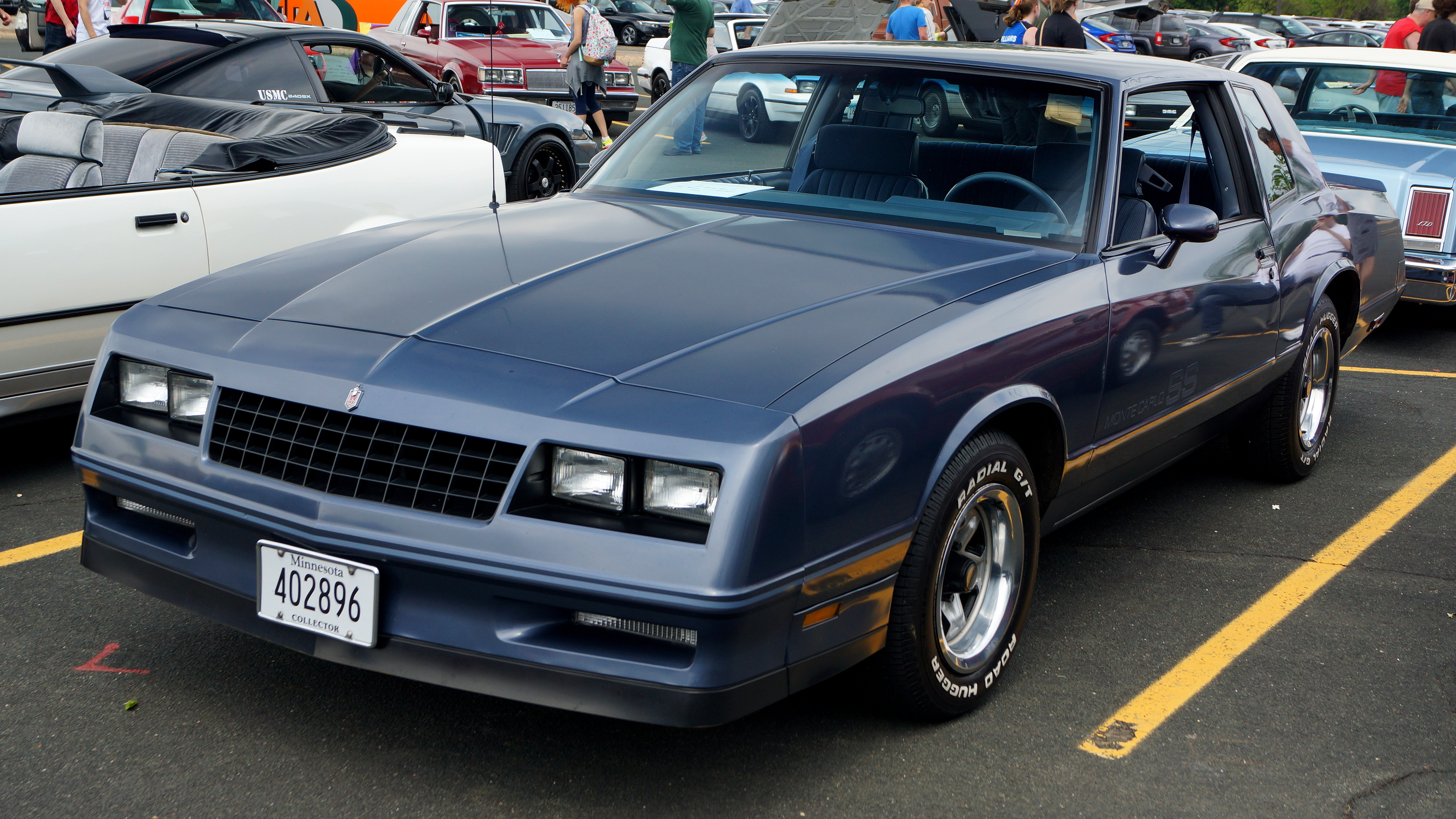
Yeah. OK. And then when we did the
Monte Carlo SS, the first, you know, because it was based on a moonshine car.
You know, I had this kind of Ozark mountain daredevil's
hat, you know, in the sun.
And the first time I went to jump in through the window, not opening the door,
I jump in, I got about three quarters away and I fell back out.
That's on our blooper reel.
Yeah. And what?
If memory serves me, that made it into the show.
It did. Yeah.
So, you know, that kind of fun, spontaneity stuff was was just incredible.
And again, you know, there would be some folks in this industry,
in the automotive industry, you know, we're so serious about ourselves.
We know we have a reputation.
And John was like, it looks kind of fun.
And as soon as put it in there, so he he allowed.
Us as individuals.
And again, there was a lot of us, you know, not the numbers,
say, if you have now, because you have the online, which, by the way,
I'm I'm thrilled, you know, it's great to see so many people involved
with the show now.
But, you know, we all had a vital part of we all brought something
to the table, so to speak.
And John allowed that.
And so that was what was so fun.
You know, I think that's probably the best way we could possibly
end this podcast is just on you brought such a great
joy, I think, to to the show and to the many viewers.
And I really want to thank you very much for coming on the podcast as well.
It should be, because if you remember, I was literally the first
motor week employee, I don't think Mac started to like the week afterwards.
And, you know, well, because of what you drove and your
reputation around the building, I tapped you on the shoulder first.
Absolutely. And I remember you handed me a bunch of
carcraft and and and motor trend and car and driver said, here, kid,
read these, learn something.
We're going to start shooting in a couple of weeks.
And we did.
And here we are.
Forty five years later. Absolutely.
Thanks, Craig. My pleasure.
This has been a wonderful opportunity to reminisce.
It's great to see you, same.
Jessica's wonderful to see you.
And literally to this day,
I look at motor week and my experience here as the
as literally the highlight of my life in many ways.
Well, it certainly has been mine.
Oh, yeah, I guess part of that is meeting you.
All right. Well, thank you, sir.
Hey, I want to thank everybody out there for watching our podcast.
I want to thank our sponsors first and foremost for not only the podcast,
but also our series Motor Week, the great folks at Auto Value and Bumper
to Bumper. Thank you very much.
And Tyraq.com. Terrific people.
We know our viewers and listeners all over the place.
Thank you for your dedication to all things Motor Week.
And don't forget, regardless of whether you are watching Motor Week
on a TV or on your phone or tablet,
you can stay up with everything that happens with our series,
our road tests, all our features by downloading the totally free
Motor Week app.
It's the quickest way to stay up with all things Motor Week.
Thanks, Craig.
And thank you for listening and watching today.
If you're wondering what time you can watch Motor Week
on your local public television station,
go to our website, MotorWeek.org, put in your zip code
after you hit the Watch Motor Week area.
And it'll give you all the times that you can see it
or hop over to Racer Network and Racer.com, our cable partner
and take a look at their schedule.
You can also watch recent episodes on the free PBS app.
And we're proud that we're now part of the to be streaming library.
And all of our individual road testing features are also available,
as we mentioned before, at youtube.com slash Motor Week.
If you've got a screen, you can watch Motor Week.
Podcast producer today, Jessica Ray, audio engineer David Wainwright,
podcast creator, Bob Mixtor.
Remember, for the fastest way to find car reviews,
be sure to include Motor Week in your search engine.
I'm John Davis.
Thank you for being a part of Motor Week.
You've been listening to the podcast of Motor Week,
television's original automotive magazine.
Motor Week is made possible by Auto Value and Bumper to Bumper
and Tyarac.com.
Visit our website at MotorWeek.org for more car reviews
and the latest automotive news and watch Motor Week,
television's longest running automotive magazine series
each week on your local PBS station or the Motor Week app.
About this episode
Celebrating 45 years of MotorWeek, host John Davis welcomes Craig Singhaus, a key figure from the show's inception. They reminisce about the early days of automotive television, discussing the challenges and triumphs of creating engaging content. Craig shares stories about his unique segments, including the High Road and Roadside America, and the spontaneity that made them memorable. The episode highlights the evolution of car culture and the personal connections forged with automotive legends like Carroll Shelby, making it a nostalgic trip down memory lane for fans of the show.
Original notes
In celebration of our 45th anniversary, MotorWeek alumni will be joining us throughout the year as guests for special episodes of our podcast!
Our first guest? None other than Craig Singhaus, who was grabbed by John Davis to assist in the 1978 pilot episode and eventually joined the staff when MotorWeek officially went on air in 1981. You’ll know him best from his outlandish “High Road” segments, but he played a big role in helping to cultivate those early seasons of the show.
There is also a video version of this podcast that can be found here: https://youtu.be/E5DK3PMwCdU
MotorWeek
Television's Original Automotive Magazine
0:00
0:00