00:00
Welcome to the podcast of Motor Week, television's original automotive magazine.
00:09
Motor Week is made possible by AutoValue and Bumper2Bumper and TireRack.com.
00:15
Here's your Motor Week podcast host, John Davis.
00:20
Welcome to Motor Week podcast number 361.
00:23
I am your host, John Davis, and this is a very special episode.
00:29
One of a series of podcasts to celebrate our 45th anniversary season.
00:34
And with that, we're also recording a video version of the podcast.
00:38
We are a TV show, after all.
00:40
So if you want to watch this podcast, you can do that at our Motor Week YouTube channel.
00:45
And another reason that we are doing video today is our very special guest who is joining
00:51
Our anniversary seasons are a great excuse to look back at how we got to where we are
00:56
today and to talk to the folks that made up the crew that helped make this show possible
01:03
We're 45 years, which is an eternity in our business.
01:07
So for the next year, we'll periodically have Motor Week alumni on both audio and
01:12
video to reminisce about the experiences from over their years on the show.
01:17
And what better guest to kick off this series than the guy who not only left
01:22
his signature on the first two decades of Motor Week, but also, besides being on the debut
01:28
show in 1981, actually was a key player in formulating the pilot way back in 1978.
01:36
He is most well known for his fun and quirky high road segments, but also for the level
01:42
of spontaneity and humor that he brought to everything he did on Motor Week.
01:47
Welcome back to Motor Week, the one and only Craig Singhaus.
01:50
Hey, thank you, John.
01:53
It's just glad to have you with us.
01:55
It's always fun to come back here.
01:57
You know, it's funny because I was listening to the introduction for the podcast and they
02:01
said, you know, televisions are original.
02:05
When we went on the air in, I guess it was 81, right?
02:10
There really wasn't much TV out there.
02:14
Not on automotive sense.
02:15
No, there had been, there was a short annual show that was done out of, on public
02:22
television out of Chicago.
02:25
They talked about new cars.
02:27
There was a show in Australia called Torque, which I looked at sort of when we were talking
02:32
about putting the show together.
02:35
And that was about it.
02:36
As a matter of fact, you know, there really hadn't been very many video road tests
02:42
done of any server.
02:46
But the thing is, you know, what amazes me is not only we were basically breaking new
02:52
ground there, most everybody thought we were nuts for doing it because, I mean, it'll go
03:01
You and I would talk about it.
03:02
Well, this would be fun to do for a while.
03:05
This would be a good gig.
03:06
Hey, I got to stop before we get too far into it and introduce the young lady that's
03:10
sitting right next to me.
03:12
Most of you have heard her voice on many of our podcasts.
03:14
Our digital producer, Jessica Ray.
03:19
Now, she's happy to see Craig.
03:20
Jessica is in charge of all of our social media, so she better than anyone else is in
03:26
communications with our fans on social media.
03:29
She's got questions for you that they want to ask.
03:32
Oh, I didn't know there was a quiz.
03:33
No, I have so, I do, I have like a lot of, I can't wait to pick your brain.
03:38
That's really what it is.
03:39
It may be empty, but we'll go with the best we can.
03:42
I want you to go back to the very beginning with the association.
03:47
Let's go back to 1978.
03:50
And I had this hair brain idea of bringing the automotive print magazine to TV on a weekly
03:58
We found that we could do the name Motor Week.
04:01
We did a search, and at the time nobody was using it.
04:04
And we did a pilot here at Maryland Public Television, and I tapped you for the pilot.
04:10
But what were you doing about that time here at MBC?
04:13
Basically I was doing freelance here.
04:18
I was the makeup boy.
04:20
I was the costume person, you know.
04:24
Jack of all trades.
04:26
Do you know how to do that?
04:29
But yes, yes, of course, you know.
04:30
And I was working for my dad in his hardware store.
04:33
But you had a theater background.
04:36
I graduated from what they call, well, it's McDaniel College now, but in those days it was
04:42
Western Maryland, yeah.
04:43
And, you know, I genuinely thought when I was in college I'd be doing, you know, dinner
04:50
theater someplace, you know.
04:51
And to be honest with you, I was always, though, kind of attracted to television.
04:55
I had come down here and done a little bit of intern work and stuff like that.
04:59
And so, yeah, I was, you know, oh my gosh, John Davis wants to talk to me.
05:04
Well, you know why?
05:05
You know, number one, I found out you had some theatrical training.
05:09
So I thought that would be a good thing for the show to have somebody that actually is
05:13
comfortable in front of the camera, because I wasn't.
05:17
What, John, you weren't comfortable in front of the camera?
05:21
And those early days I had done news, TV news locally when I was in college.
05:28
But you know, that's fairly straight to the camera, read script, and it was
05:32
pretty serious stuff.
05:34
And you had, everybody knew you were funny.
05:38
That's hard to be on television.
05:41
And you also had a Mustang sitting in the parking lot.
05:44
Well, and I always assumed I got the job because I had a noisy Mustang.
05:48
So I mean, that was that was fine.
05:50
There was other thought to your to your hiring me.
05:55
And I don't know if you remember when we first shot the first show, I guess
05:59
it was like four or five days before we were putting the whole thing together.
06:02
They lost the audio for the car pulling away, which was your car.
06:08
Well, well, the car pulling away, I think was a modified Ford Fairmont.
06:12
We taped over to the taillights or something.
06:14
That was what the taillights.
06:15
Yes, right. But the noise was my car.
06:18
And ironically enough, you know, and they were scrambling that morning.
06:22
You know, who can we get a car?
06:23
And I had literally show you how little I knew.
06:26
I had literally I had forgot that.
06:29
Yeah, I had literally tried to retune my two barrel carburetor
06:33
and I had rejetted it and I had rejetted it too rich.
06:36
And so it was the plugs were slightly fouled and they gave it that.
06:41
And it worked out great.
06:43
You know, it became a signature for the show.
06:45
Yeah, I mean, it is always been fun.
06:48
So yeah, the actual taillights that we used on that original,
06:52
which was a live shot at that time.
06:54
Now it's animation or the taillights from a Ford Fairmont.
06:57
But we kind of taped it over so it looked more generic.
07:01
Yeah, that's that's a good memory.
07:03
But now the sound was 100 percent crack.
07:07
But you weren't on the pilot doing what you later did.
07:12
The high road segments.
07:14
Oh, my gosh, if you ever look at the pilot, I look so serious.
07:16
And you're in your schmaw.
07:18
Yeah, yeah, my my lab coat, your lab coat,
07:22
because you were the auto technician on the show.
07:26
You played the role.
07:28
Yeah, and it really was a role.
07:36
I'm here with our chief mechanic for Motor Week, Craig Singhas.
07:40
And tonight we're going to show you how to do the most basic of all automotive
07:43
maintenance that's changing your motor oil and filter.
07:46
Craig, most manufacturers recommend that you go 7500 miles
07:50
or about six months between oil and filter changes.
07:53
Is that sufficient?
07:55
Well, John, it really depends on your driving habits.
07:57
You see, urban stop and go driving is harder on motor oil than highway miles.
08:03
I knew a lot about a 66 Mustang.
08:05
I knew a little bit about a Shelby Mustang.
08:08
But as far as modern stuff, it was kind of like, well,
08:12
let me get a look that up kind of thing.
08:13
But yeah, now it's great.
08:14
And I genuinely appreciate because I was an enthusiast,
08:18
but I did not have the depth of information.
08:22
And by you giving me the opportunity to do the show,
08:26
to work with you about presentation, to work with Pat Goss
08:29
about specifics of questions that I had automotively, it launched my career.
08:34
I was in the automotive business in one form or another,
08:36
through Motor Week and some other training stuff for 44 years.
08:40
So in reality, I owe my entire career to you and to Pat Goss.
08:45
Well, what Craig is alluding to is after we did the pilot for the show,
08:50
the show was three years before we got to go out for production.
08:54
And by the time we did that, we needed someone that had the knowledge
08:59
because we had already decided at that point not to show how things were
09:03
repaired because that was tough to do on TV.
09:07
But to talk to the audience about car ownership,
09:10
what they needed to know to talk to their technician.
09:13
And that's where Pat Goss came in.
09:15
Well, and really, he gave me two factors.
09:19
He gave me the in-depth information about automobiles that I thought I had
09:23
that obviously I really didn't.
09:25
But the other factor is he taught me how to take something that was
09:28
a fairly complex concept and and bring it down so that it was correct.
09:35
It was informational, but it was clear.
09:38
He was like he was a teacher.
09:39
Oh, yeah, exactly. You knew how to teach, even though
09:42
he was he was he got his hands dirty all the time.
09:45
He had done a lot of classes, I guess,
09:49
you know, trying to get consumers to know more about when I met Pat.
09:53
He was, you know, he had he had decades of experience.
09:56
And then the other nice thing is while I wasn't technically on air,
09:59
I was the, I guess, a segment associate producer.
10:04
And and I just learned so much by watching him, by learning
10:09
not just automotive stuff, but how he would demonstrate things.
10:12
And so, you know, it was great.
10:13
And then I would watch you do the actual presentation stuff
10:18
over the overall show.
10:19
And I really kind of built my career on the things that I learned from you two guys.
10:23
So it was it was I'm very grateful, believe me.
10:27
So I mean, I'm curious.
10:28
So in like the the earliest of days when when the the Motor Week is greenlit,
10:35
what what were you doing?
10:36
Did you like do a little bit of everything?
10:38
Were you working on the road tests?
10:40
Were you helping in the studio?
10:41
I think the two things that I really brought to the show
10:45
was my ability to pick up orange cones.
10:50
Don't laugh. I was darn good at it.
10:52
We still have quite a few orange cones.
10:55
Because again, keep in mind, we thought we would have like a 13 week run.
10:59
Maybe, you know, we really weren't sure it was going to be,
11:02
you know, given a full 26 weeks or 52 weeks.
11:05
So, yeah, I basically did everything.
11:09
I mean, you know, and again, it wasn't just by myself.
11:12
There was a lot of other folks on the show.
11:14
We all pitched and there was no there was very little
11:18
hierarchy. It was the fun thing.
11:21
Oh, no, it was John John.
11:22
They say it's an ensemble cast.
11:24
It really is John. You know, we'd be out washing cars.
11:27
John come out and wash cars with us. Right.
11:29
And then that that was very exciting.
11:31
So, I mean, it was a community of car enthusiasts.
11:37
And that's really, I think, what made the show initially kick off,
11:42
because again, you know, we were not particularly well funded.
11:46
You know, we were making up the rules as we went along.
11:49
So it was it was nobody had done this kind of show.
11:52
And we needed, you know, we looked at what the magazines were doing.
11:58
And the whole idea was, OK, you've got a print magazine.
12:02
It comes out every month.
12:03
How can we get a hold of those cars to test in a time
12:06
of fashion so that folks can read the magazine, get all the details
12:11
and look at us and get all the video?
12:13
Well, and if you remember, that was right around the time that I don't
12:17
remember 60 minutes, whatever.
12:19
You know, Audi had the problem with the unintended acceleration,
12:23
which turned out to be bogus.
12:24
It was literally somebody putting their foot on the wrong pedal.
12:26
But the point being when they heard,
12:29
hi, we're motor week and we're a television show.
12:32
They went television. That's right.
12:34
They've they have they have not inspired us with confidence that they will tell
12:38
the, you know, the fourth right story.
12:40
So, yeah, it was it was fun, but it was challenging.
12:44
That's for sure. To touch on something you mentioned,
12:46
I literally went around the parking lot at MPT and looked at who drove what.
12:52
And if they drove something interesting, I would, you know,
12:55
and had the time to help us on motor week, I'd tap them on the shoulder
12:58
and say, hi, would you like to come play with cars with us?
13:03
But tell me about how high road and the segments there came about
13:07
and how you made that transition and what was that experience like?
13:12
Because that was, you know, we knew we had a show that we wanted to present
13:16
new car information. We knew we had car care,
13:18
but we had to do something that gave it a broader scope.
13:22
So people that were just interested in cars, but something to entertain them.
13:26
Yeah. Well, I think what you had presented to me is we want to explore
13:30
not just the engineering, but the social aspect, the love affair.
13:34
Exactly, the passion.
13:36
And keep in mind, you know, in the early throughout the 70s,
13:41
things were so slow, cars were just got to be tools.
13:44
They were not unimpressive.
13:45
The designs were very exciting.
13:47
And suddenly, you know, in 1980, 81, there were some cars
13:52
that had just a hint of excitement and through the early 80s,
13:57
you know, the first mustang GT and then the Camaro came out and stuff.
14:02
And the nice thing about me going on to on air presentations
14:07
was you had allowed all of us to be part of the road test process.
14:13
And so I remember you say, all right, Craig, get in the car
14:17
and futzle around with the controls, you know, and that's literally what we do.
14:20
You know, we get in there and saw the radio is cool.
14:22
And, you know, and so wanted to show how things operated.
14:27
How people interacted with the cars.
14:31
And I had had some training in that area when I was in college,
14:36
ergonomics, and cars were getting better at that time.
14:39
They were more convenient.
14:40
And the other fun thing I remember is when, you know, because part
14:43
of the appeal also for us was, oh, we get to try new cars.
14:48
We get to take them home.
14:50
Yeah, which was a big deal for the big deal.
14:53
Oh, you know, I was driving a 15, 16 year old Mustang at that point.
14:58
I didn't, you know, I didn't have anything cool or fancy, but we would take it home.
15:01
And I remember one of the neat things you had us do is, you know,
15:04
you got it for the weekend, are you going grocery shopping, take the car
15:07
and see what it's like to go to the grocery store with it.
15:09
Because I mean, frankly, while we did have lots of fun, exciting, sporty cars,
15:14
a lot of them also were, you know, it was at the beginning of the
15:18
minivan era, they still had station wagons and sedans and drive family
15:22
cars were just becoming in there.
15:24
So I mean, the whole the whole idea was let's not just, you know, let's not
15:28
just, you know, look at all the sexy stuff, look, let's look at the practical
15:32
stuff. And that I think that is really what initially attracted folks to.
15:38
People enjoy seeing the cool cars, but they may not be out
15:42
looking for a two door sports sedan.
15:45
They may actually need a station wagon or a minivan or in those days,
15:49
the beginning of the crossover and SUV vehicle.
15:52
That's correct. When the the early Jeep chair, well, early,
15:56
the Jeep Cherokees of the 1980s came out.
15:58
That was, yeah, that was the beginning of the family SUV market.
16:04
Well, I mean, and that kind of still is true today.
16:06
A lot. Our most popular content is typically going to be the high volume
16:11
cars. People want to know about the Camry's and the Corolla's and,
16:17
you know, the crossovers, the four runners or the Palisades and stuff
16:21
like that. So yeah, I think that was the nice balance.
16:25
Yes, we did do fun cars and we and we were doing some fun stuff.
16:29
I remember the first time we went to Summit Point Raceway.
16:33
And I think one of our very first was we had an 82 or 83.
16:37
We had a Porsche 928 and a Z28 Camaro.
16:41
And if you looked at them, you know, they were remarkably the same
16:45
except they were about, you know, 45, 50 thousand dollars part price wise.
16:50
And the interesting thing was, if you were looking at them strictly
16:52
from performance, if memory serves me when we ran around,
16:57
if memory serves me, the Camaro ended up about a half a second
17:00
faster than the Z28 up on that track.
17:02
It certainly was faster in a straight line.
17:05
Still, the Camaro fairly flew across the finish line.
17:08
In the time, are you ready?
17:11
One minute, 38.3 seconds for an average speed of 73.25
17:18
Not only was that 1.7 seconds faster than the Porsche,
17:22
but over 12 seconds faster than the early model Z28 we tested here last year.
17:28
The the fun thing was, especially in the 80s through the early 90s, man,
17:33
the industry was changing so much that there was so much fun stuff
17:37
that was it was interesting, not because it was faster and expensive.
17:42
It was interesting because it was a new concept.
17:44
That was when technology and the automobiles really exploded.
17:48
You know, the first electronic ignition systems
17:52
to come from the factory and all of that, you mentioned the tracks.
17:56
And so let's just stop and talk about that because you had a huge part
18:00
to play in where we test cars from the beginning.
18:03
We didn't want to just give impressions.
18:05
We wanted to do formal testing.
18:08
And it's gotten more sophisticated over the years.
18:11
But for many, many years, we were at a drag strip
18:14
called 7580 Dragaway in Monrovia, Maryland with Bill Wilkham,
18:19
who was the owner and the late Bill Wilkham, a great man.
18:23
But you're the one that basically got us in contact with Bill.
18:27
Well, I had gone up there on weekends
18:30
and drove my little 16 and a half second Mustang in the quarter mile,
18:34
which nowadays, you know, a good Akano car would blow away.
18:39
Now, it looked cool, but our commenters would be like,
18:42
that's dangerously slow.
18:45
It was probably zero to 16, like eight seconds or something.
18:48
Maybe eight and a half.
18:49
Can't merge on a highway with that.
18:51
Yeah. But, you know, and it's because you got to remember
18:54
coming out of the 70s, cars were so they had put so much
19:00
small, small controls on them, but didn't have the technology
19:03
to bring out the performance yet.
19:06
And so cars had really gotten slow.
19:08
I mean, zero to six.
19:09
I remember, you know, if we did zero to sixty seven and a half
19:11
seconds in those days, it was kind of like, well, this is pretty peppy.
19:14
Well, remember, I had that Corvette, a 79 Corvette that had
19:17
one hundred and seventy five horsepower from it.
19:20
Yeah. Yeah. No, I remember.
19:23
It must have been a huge change going from testing
19:27
at the Martin State Airport, because I think the first eight or ten shows
19:31
we did at Martin's. And also, I don't know exactly the timeline
19:35
of this, but we did use a closed down version of I seventy.
19:40
Well, they had been the interstate I seven ninety five.
19:44
We did I seventy and seven ninety five, Baltimore Beltway
19:49
leading down to the Social Security complex, because that was a dead end.
19:52
Right. And it was close.
19:53
It was a park and ride, basically.
19:55
I remember. It's park and ride today.
19:56
Yeah. Yeah. We also used I seven ninety five
20:00
when it was being constructed, which is a an offshoot of the Baltimore.
20:04
I think viewers, viewers and we did the airport, say, if they look at
20:08
old road tests where we're doing the track, testing in the track
20:12
is a little curved and quite literally looks like a highway.
20:15
Oh, yeah. We were using a highway at the end of
20:17
of Route 70, literally one uphill, because I remember I think it was.
20:21
We did a a Suzu diesel, if memory serves, you know, we would always do.
20:27
I think we initially were supposed to do zero to fifty five.
20:30
Then they let us do zero to sixty, which is a more.
20:32
Yeah, because when we started out, that was the national speed limit.
20:36
It was fifty five miles an hour.
20:38
And I remember the deal was we we'd start out this little Suzu diesel.
20:45
And we go up. We never got it up to sixty.
20:49
We would run out of, you know, it was like 17, 18 seconds.
20:55
And we still hadn't.
20:56
And we were starting to get to the point where the main traffic
20:59
was feeding into Route 70.
21:01
And it was like, all right, well, approximately 18, 19 seconds.
21:05
Yeah, we were at Martin State Airport for the early part.
21:09
And I remember that when we were doing our acceleration runs,
21:13
we had to be careful because just beyond where we were running,
21:18
the MTA parked all their derelict buses.
21:22
Yeah, or else you ran into the river in the middle river.
21:26
Yeah, because that was that was the old launch ramp for Martin.
21:29
When Martin was doing sea planes during the war.
21:33
So then we transitioned from there to interstate 70,
21:37
which was still fairly new at that point.
21:39
And I remember that winter it was so icy
21:42
and we were out there trying to shoot
21:44
and we've got lots of cars in the ice spinning.
21:48
Then we made the transition to seventy five eighty.
21:50
Yeah, well, and if you remember, there was a point
21:53
even after we went to seventy five eighty for the first one or two years,
21:56
Bill was worried about us driving on the pavement up there in the winter time.
22:01
So I mean, I think we were on and off
22:06
down at the end of Route 70 for two or three years.
22:09
But that's when we got the idea about going somewhere warm
22:13
to do some winter testing.
22:15
And you're the one that came up
22:17
with Roebling Road Raceway outside of Savannah.
22:20
You saw an ad. I'll refresh your memory.
22:22
Oh, yeah, I do because you.
22:23
What was your name again?
22:25
Is it one of the used to be?
22:26
No, you saw an ad in a magazine.
22:28
I don't know if it's a car craft or what it was for a racetrack,
22:33
a road course. Yeah.
22:35
And it was, I think, three hundred bucks a day
22:38
and outside of Savannah.
22:39
So you were responsible for getting us in contact with those folks as well.
22:43
Well, thank you. I don't remember that.
22:46
You know, and it was well, I am an important guy.
22:50
You're an important guy to the history of the show.
22:52
There's no question about that.
22:53
And that's what got us starting going down there once or twice.
22:56
Yeah. And that was a winter test, because if you remember,
22:59
we went usually were in the end of January.
23:01
And, you know, a lot of times it was literally in the teens up here.
23:07
And just to go down there where it was in the fifties, fifties,
23:10
maybe 60 in the sun, you know, it felt like we were off
23:14
to some exotic Caribbean place, you know, a Caribbean racetrack.
23:20
Well, speaking of that,
23:22
my favorite recollection of all the segments you did, and I'm going to ask
23:26
yours in a minute, was when you went to the Bahamas or the the classic races.
23:31
Yeah, Bahama, Bahama, vintage Grand Prix.
23:34
Yeah. And where you went, you you were at a party, I guess, post race.
23:39
They would have, you know, like receptions.
23:41
And you were you're the line, I'm sure I'll butcher it.
23:44
But basically you had a conch fritter in your hand.
23:47
And I never even heard of it.
23:48
I do remember that.
23:50
It was this is a conch fritter, and it is delicious.
23:54
And you've got to remember, I was a local kid who, you know, I'd been
23:59
to maybe Washington, D.C. and Hershey, Pennsylvania.
24:02
But that's about most.
24:03
And suddenly, you know, I flew to Detroit, lost my my plane ticket.
24:07
If you remember the first time you had to you had to buy me the way home.
24:10
Thanks for not leaving me there.
24:12
And but, you know, suddenly, you know, I'm you know, I'm going,
24:17
you know, a trip where I needed a passport.
24:19
And that was that was really exciting for me between that and meeting
24:24
people that as a kid, I idolized.
24:27
And then, you know, the next thing I know, it's lunch break,
24:29
and you sit down with, you know, Carol Shelby or somebody like that.
24:32
You know, Don Garlett's, it was incredible.
24:36
I feel like if you were a baseball fan, you got to sit down.
24:38
Yeah, it's got a little ways or something.
24:40
Willie Mays or Babe Ruth. Yeah, exactly.
24:42
Let's talk about that since you got into there.
24:44
And because you have met some extraordinary people
24:49
that really shaped the American automobile.
24:52
In this 80s and 90s and 2000s.
24:55
And I know you have a special affinity for Carol Shelby.
24:58
So let's stop because I think he deserves, you know,
25:02
a piece of your memory zone for this.
25:04
Well, and there's no talk to me about the great Carol Shelby
25:08
and how you met him and what, you know, the relationship was over the years.
25:12
He was a very interesting guy.
25:14
He wasn't a hardcore engineer, but he was an idea guy.
25:18
He would come up with an idea, get the appropriate people
25:21
to execute it and do real well.
25:23
I can't remember the first time I met him.
25:25
It was what some event might it might have been the bomb is saying, I don't know.
25:29
But the point being, I was like in awe of seeing Carol Shelby.
25:35
And, you know, and he's a really nice guy.
25:38
Actually, you know, not, not hoity toy.
25:41
Just a regular guy in a good, good Texas guy.
25:44
And, you know, I'm like, oh, Mr.
25:47
Shelby, it's it's such an honor to meet you.
25:51
And he goes, oh, just call me Carol. Yes, Mr.
25:53
Shelby, I never I don't think I ever called him Carol.
25:57
And he and I think he really wanted me to.
26:01
The other interesting thing about him is,
26:02
I mean, aside for his automotive genius, when he would see you,
26:06
he genuinely made you feel like he knew you knew you.
26:10
Yes. And he might not remember your name,
26:13
but he'd remember something about you.
26:15
And at that point, back in the back in the 90s, I had a yellow Mustang.
26:21
Well, in the in the in the 60s, when they had done Transam,
26:25
his Transam Mustangs, the ones that race in transam racing
26:30
had been painted yellow.
26:31
And I remember one time I showed him, I got a yellow Mustang, too.
26:34
And and so, you know, and they called it,
26:36
I think the color was God, awful yellow.
26:39
Literally, that's what they called it.
26:40
And it was like a school bus color.
26:42
Well, I had sponsorship from Penzole and so my car was very similar.
26:46
And the funny thing is, you know, he wouldn't see me for a year sometimes.
26:50
And I'd run into him and he might not remember my name.
26:52
But he go, you still have that yellow Mustang.
26:56
And I mean, it made you feel like a million bucks.
27:00
Because I was like, you know, I'm recognized by Carol Shelby.
27:04
You know, he was terrific.
27:05
I think I remember I was, you know, 10 years old, 1966,
27:10
when the Shelby Mustangs were first coming out,
27:12
the Cobras were coming on strong, you know, Ford had gone to Le Mans.
27:16
And so I was a kid in that era when American
27:22
automotive influence had gone international.
27:24
So I was really excited, you know.
27:27
And so to meet the creator of the Shelby Mustang.
27:31
And years later, I actually, you know, I got a Shelby Mustang.
27:34
It was frankly, it was a barn find. I found it, you know,
27:37
with no fenders from the, you know, nothing from the firewall for
27:40
the vendors and the whole front end was off of it.
27:42
But the point being to make that emotional connection with him was remarkable.
27:46
And again, you'd run into him two years later.
27:52
And when he would talk to you, it was like, you know,
27:54
he was a neighbor from up the street. It was a remarkable thing.
27:57
I didn't know him nearly as well as you did or meet him as many times.
28:02
But I was always amazed.
28:04
He was one of these folks that could make you feel like he knew you as a best
28:09
friend, like a neighbor and instantly at ease.
28:14
So this is a hard one, I think, for someone in your position.
28:18
You were just saying before we even started the podcast,
28:20
how you were amazed at all the segments that you did.
28:25
Can you give us an idea of two or three, maybe,
28:29
that really stood out in your minds?
28:31
And how did you develop the high road segments?
28:34
When you had an idea or the idea came over the transom or for me or whatever,
28:39
what was the process? Because you had, you had some assistance.
28:43
Yeah, oh, yeah, I had a lot of mentorship and here's the thing.
28:48
Frankly, when I first found out I was going to be an on air person
28:51
and I had no idea what I was doing and I'm not being facetious.
28:57
I remember we went to, I don't think any of us did.
28:59
I think we went to our first, first shoot and it was the rear view mirror
29:04
museum down in the Carolina somewhere.
29:07
And I'm, and you know, I'm supposed to be doing interviews
29:10
and Taylor Baxter, who was our editor, our editor.
29:14
Yeah, my guy, he's like, you have to ask them questions.
29:20
You don't just stick a camera and a microphone in front of their face.
29:24
And I'm like, oh, and then he was like, ask them questions
29:27
so that they know how to answer.
29:30
So what you say is, you know, tell me about how enthusiastic you are.
29:35
You know, and they go, yeah, I'm really enthusiastic about this.
29:39
You know, so it we could edit out my question
29:42
and then string their comments together and literally Taylor TV 101.
29:47
Yeah, it really was because again, I had done theater and stuff.
29:51
I'd done a lot of theater, but I had never done
29:54
any kind of journalistic type of thing.
29:58
And it was, again, it was fun. I mean, you know, we were doing stuff.
30:02
Taylor worked with me. I mean, in many respects,
30:04
he taught me how to assemble the thoughts together.
30:09
Because if you remember, you know, my segments were between two and a half
30:12
and three and a half minutes.
30:13
So you had to be pretty concise to get the store, you know,
30:16
it had a beginning, a middle and an appropriate and stuff like that.
30:20
And so I learned from him and from other people
30:23
and Lisa was really good at it.
30:25
You know, yeah, Lisa Barrow was great.
30:27
And so I learned to watch her how she was assembling her stuff.
30:31
So it was definitely a learn as you earn experience.
30:34
And you know, had I known at the time how little I actually knew,
30:39
I probably would have been intimidated.
30:40
You know, I was, what, twenty four, twenty six years old.
30:44
I'm like, oh, yeah, I can do this, you know.
30:46
Well, I think we all basically were, you know,
30:49
we were given a freedom by the management at MPT at the times
30:55
They wanted to see what we could do.
30:57
Yeah. So we really didn't have a lot of balance.
30:59
And I have to stop and pay homage to a gentleman who was
31:04
did a lot of the work that led me into figuring out how to do a road test.
31:10
And he was the legendary journalist and PR guy, William Baker, Bill Baker.
31:15
Oh, yeah. I remember.
31:16
Done some road tests for dealers when he worked for automotive news.
31:22
And I got a hold of one of those tapes.
31:25
And it was the how to do a walk around the car, what to look for.
31:30
Yeah, it was instructions for dealers on basically how to demonstrate a car
31:34
for their customer.
31:36
That was very instrumental because around that concept,
31:39
I could see how you could it could make it into something
31:42
that would be suitable for TV.
31:44
Yeah, yeah, a time at all.
31:45
But I got you off the top of favorites, favorite segments.
31:49
And again, anything to do.
31:52
You know, I did some stuff that was associated with Carol Shelby.
31:57
I mean, we went to Monterey Historic Races when they, you know,
32:01
that was the Shelby was the honored mark that year.
32:05
And I did a story about in those days, it was the Carol Shelby Heart Fund,
32:08
which is now basically the Shelby Foundation where he raises money,
32:12
especially for kids who would need, you know, medical assistance and stuff.
32:17
So that was fantastic.
32:19
And again, a lot of it was just it was exciting because it was new.
32:22
Like, again, the Bahamas vintage car race was great.
32:25
You went all over the world.
32:26
Oh, yeah, really. I mean, I went to Tokyo, you know,
32:30
for a little kid from Eldersburg, Maryland to go to Tokyo was a big deal.
32:35
Well, there was a part that you did a whole segment
32:38
that was separate from High Road, where you roadside America.
32:42
Oh, you know, I'd forgotten about that.
32:45
Yeah, they were they were like two minutes long.
32:48
Yes. And so like I one, I'm thinking of actually, because it it's
32:52
it also starred Brian Roberts, who is from our staff, senior executive
32:58
producer, senior executive producer now.
33:00
But once upon a time was your assistant.
33:01
Oh, yeah. And you guys drove down to Daytona.
33:08
You don't remember.
33:11
Oh, I know, I remember a quickie segment.
33:13
Yeah, I think we went to Daytona.
33:16
We went to Cape Canaveral, Cape Canaveral.
33:20
Right. And I admit this.
33:21
But the one thing I remember that part is we got on this crazy thing
33:25
that spun you around and it was for training astronauts and poor Brian.
33:29
Got. Yeah, yeah, he's he got so motion sick.
33:33
He was I thought, well, I'm going to he's going to die before we get home.
33:40
You do remember that.
33:41
Oh, yeah. I mean, it seemed like a cool trip.
33:43
I mean, it was and it had that the humor you guys were were just having fun,
33:48
driving down the A1A.
33:51
Yeah. I mean, nobody got Rachel Motor Week, especially in the early days.
33:54
But as far as having fun, because I mean, I always figured,
33:59
you know, what would I do if I was rich?
34:01
I would do these things.
34:03
Well, heck, I'm going to do them any way through motor week.
34:06
Yeah. So I mean, yeah, you know,
34:08
yeah, because I remember we went down there and if memory serves me,
34:12
we were supposed to meet Bill France and Bill had gotten, you know,
34:15
the little France that had a best car.
34:17
Yeah, exactly. And and he was pretty, pretty senior by then, you know.
34:23
So we went in there and it was me and a guy named Jack Griffith,
34:25
who had had the Griffith car and and Bill's like,
34:30
oh, you all want to ride around the track a little bit.
34:33
And I'm like, no, no, I'll climb in my station wagon and we'll go.
34:37
And at that point for the high speed stuff,
34:39
Bill had a driver for him and we're going around Daytona
34:44
racetrack and like, you know, one hundred and thirty mile an hour
34:46
in a station wagon, a big old Pontiac.
34:49
The founder of NASCAR, exactly.
34:51
So I mean, it was it was a really interesting situation. Wow.
34:56
I mean, yeah, you can when you watch pretty much
35:00
most of the segments that you were involved in,
35:02
you can just tell how much fun.
35:04
Oh, I was having a blast.
35:06
Well, and the and the funny thing is to this day,
35:09
somebody will send me something on Facebook or, you know,
35:13
through one of the motorway contact stuff.
35:16
And and, you know, they were like, hey, we just found this.
35:21
And I look at it and I go, oh, my gosh, I don't even remember doing.
35:24
Oh, yeah. And then I watch it.
35:26
And then I remember almost everything about it.
35:27
So it's it's really fun.
35:29
I think of fun ones we did.
35:32
Like, you know, obviously, let's say the the the High Road
35:37
was fun, the Roadside America stuff was fun, you know.
35:42
And so it and Roadside America was basically the idea is it's
35:46
it was, you know, if you were on a family vacation
35:48
and saw something interesting, hey, let's pull over and look at that.
35:52
So that it was a blast, you know, and to be honest,
35:55
we we didn't we didn't just drive around.
35:57
We would look for for interesting roadside.
35:59
And we some and sometimes we were we're doing a segment up that way
36:04
on the way the day before we'll shoot a Roadside America.
36:07
So we did try and we were very efficient.
36:11
But there was another reason in that you drove
36:15
everywhere you could because you didn't like to fly.
36:18
Oh, oh, yeah, I was terrified to fly.
36:20
Here's a man that does World War Two reenactments
36:23
by jumping out of airplanes.
36:25
But in those days, you weren't really about flying.
36:27
Yeah, I had only flown once or twice.
36:30
And I, you know, literally, I, you know, I I was so scared about,
36:35
you know, I went up, got up to Detroit, I was OK.
36:39
And again, you know, oh, my gosh, that's Woodward Avenue.
36:42
Yeah, you know, all these things that I had read about as a kid.
36:47
On the way back, you know, I think I was so nervous
36:50
and I was almost shaking because I was terrified of flying.
36:54
So, yeah, you know, I lost my lost my ticket.
36:59
John had to buy me, you know, he's like, OK, kid,
37:01
don't lose the next one in the days of paper tickets.
37:05
Yeah, and I did pay you back.
37:09
I mean, I do a lot of flying now.
37:12
And so I don't know.
37:13
Would you go on like a press preview for like a new car?
37:16
Yeah, we would do that.
37:17
We would. And would you fly?
37:19
Yeah. It was in California.
37:20
It would fly if he had to.
37:22
OK. If he could drive.
37:24
And, you know, and frankly, if something was 12,
37:26
I mean, we drove to Detroit a lot.
37:28
Sure, sure. You know, it was 10, 12 hours, you know.
37:32
But with gear, with lots of gear, of course,
37:35
you had a bigographer with you.
37:36
Yeah, oh, yeah, absolutely.
37:38
And in those days, you probably had an engineer,
37:41
audio person as well. Yeah, yeah.
37:42
Yeah. So sometimes it was a little entourage
37:45
and we would drive up, you know, and it was a long day.
37:48
But, you know, and the and the other thing is
37:50
if we were footing the bill, we had to be budget conscious.
37:56
And so therefore, you know, it's like,
37:59
well, can we save three hundred and fifty dollars by.
38:03
And in those days, that was a lot of money.
38:05
It was a lot of money for us in those days.
38:06
So, yeah, yeah, well, I'll take, you know, an extra half a day.
38:10
But let's let's drive and save the money that way.
38:12
We can save the money up and make
38:14
because I'm sure you sure couldn't drive to the Bahamas
38:17
to do the vintage car race.
38:18
A little soggy at that point.
38:21
But yeah, it was a lot of fun.
38:23
But the humor that you brought to all your segments
38:26
and and those of you that watch a lot of our motor week
38:30
retro road tests on our marathons, you see Craig
38:34
and especially in the muscle car segments.
38:37
And when we would do comparisons, the humor that you brought
38:41
to even the road test, frankly, we've never been able to replace.
38:46
You know, it's very nice because everything we do
38:50
needs to be informative, but we want people to be entertained
38:54
and enjoy it. Well, you know, it's a great example.
38:57
The one that sticks out in my mind, specifically with the road test
39:00
is arguably one of our most popular YouTube videos ever.
39:05
It has like over a million views.
39:06
I think it has like one point five million views.
39:08
And it's the muscle car
39:11
comparison from the 1980s, the Firebird and the Camaro.
39:17
Yes, you guys are all pulling up to the dairy.
39:19
It's not a Dairy Queen.
39:21
It's like it was a Dairy Queen. Yeah, it was a Dairy.
39:23
OK, next Dairy Queen down by there you go.
39:26
You know, BWI Baltimore Washington Airport.
39:37
Hi, what do you have?
39:39
Yeah, a burger fries and a Coke.
39:41
And my Mustang GT, like that Trans Am for lunch.
39:46
Isn't that Mustang and F-O-R-D as in found on road dead?
39:51
Hey, that's first on race day.
39:54
This new I Rock Camaro blow you both into the weeds.
39:57
There's only one place to settle this.
40:01
It was kind of based on stuff that I had experienced
40:05
and stuff that was kind of like, well, I don't really
40:08
have the money to do this, but I can do it through Motor Week.
40:11
And all kidding aside, that was a lot of it.
40:16
I had been the next Dairy Queen with my car a couple of times
40:21
and I knew a lot of the folks in the community.
40:23
And I thought, well, where would three car nuts
40:26
with three brand new cars and muscle cars pull?
40:30
I said, well, let's do it at the next day.
40:31
And I contacted Jimmy Mack, a knack, I should say, Jimmy Knack.
40:35
And he put me in contact with some of the other
40:38
regulars there and we had people volunteer to bring their cars.
40:41
And so we parked it around and we shot there for a day.
40:44
Then we went to seventy five eighty and we shot there for a day.
40:48
And then we went to Pocono International Raceway
40:51
and shot there for the day.
40:53
It was you, Max Balton and Michael Goldsmith, who was a videographer.
40:58
Yeah, but a really good driver, a great driver.
41:05
And so and it was fun because and some of it was planned out,
41:12
but some of it was just the spontaneity.
41:13
Yeah, it's just it's kind of like, oh, this happened.
41:16
Well, let's make something interesting about that.
41:18
You know, I remember the big deal was the Mustang I drove
41:22
and the the Firebird that I drove had carburetors.
41:28
The Camaro was fuel injected.
41:31
And so it turned out that the Mustang and the Firebird were just a skosh
41:37
faster than the Camaro.
41:39
And so we did this funny thing where, you know, because earlier,
41:43
Mike had been going on, oh, you know, everybody's bragging, you know,
41:47
my my car will beat your car.
41:48
My my my Mustang's got got the exhaust on it, the size of sewer pipes,
41:53
you know, and and Mike was like, well, you're not your old fashioned,
41:57
you know, you know, my car is
42:02
Well, the funny thing is, you know, we got up there and again,
42:07
it might have been three or four mile an hour at most top end speed.
42:10
But the point being, I remember jumping up and down with with Max going
42:15
so much for, you know, fuel injection.
42:18
This car has carburetors.
42:21
And again, you got to remember, you know,
42:24
a lot of people really identified us with this segment.
42:29
Everybody thought, absolutely, you know, Craig's a Mustang person.
42:32
And in those days, I did like Mustang because I had one.
42:35
But, you know, it was kind of a role we were playing.
42:38
And we had so much fun doing that stuff.
42:40
So yeah, it was good times.
42:43
I mean, people will say, well, you know, if you if you enjoy
42:49
what you're doing, you never really work a day in your life.
42:51
And I must say, you know, the the
42:55
almost 24 years that I was associated with motor week, you know,
42:59
first with the high road segment and then coming back and doing
43:01
some freelance stuff with y'all, it was it was incredibly fun.
43:07
Was it the most fun you ever had working?
43:10
Yeah. Oh, yeah. No, without a doubt.
43:12
You know, it was when when Craig initially left the show
43:16
and then you came back freelancing, those were tough years for us.
43:20
Basically, we're sure we were going to remain on the air.
43:23
About what years were we talking 98?
43:26
That was when you left full time.
43:28
Yeah. And then you did freelance.
43:29
Yeah, you hired me back in 2004, I guess. Yeah.
43:33
And I think I did one or two other ones over the.
43:36
It's public television.
43:37
Public television is, you know, always short of money.
43:40
Oh, yeah. And we were certainly in that boat.
43:43
But you were you were so instrumental
43:46
in establishing the show's identity as a fun and entertaining
43:51
place to learn about cars because you would let me do just about anything.
43:56
I got two and a half, three minutes to fill.
43:59
Yeah. Well, and the other fun thing is, even when we were doing the red test,
44:03
you know, I remember I had like a Snoopy aviators hat.
44:06
And for some reason, you know, I ended up jumping in through the window.
44:10
Yeah. Well, jumping in through the sunroof.
44:13
Yeah. OK. And then when we did the
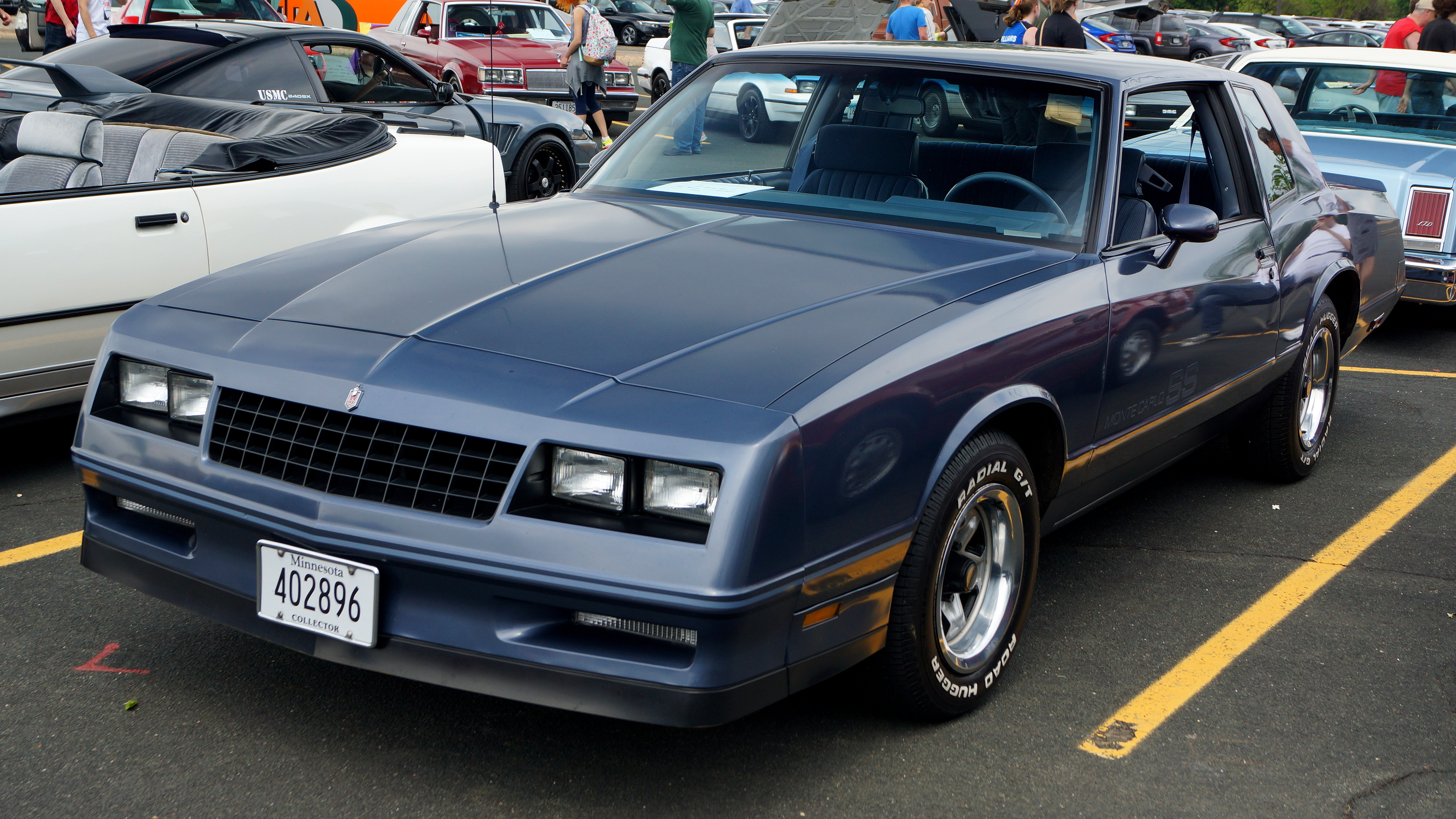
44:17
Monte Carlo SS, the first, you know, because it was based on a moonshine car.
44:21
You know, I had this kind of Ozark mountain daredevil's
44:25
hat, you know, in the sun.
44:26
And the first time I went to jump in through the window, not opening the door,
44:31
I jump in, I got about three quarters away and I fell back out.
44:34
That's on our blooper reel.
44:36
If memory serves me, that made it into the show.
44:40
So, you know, that kind of fun, spontaneity stuff was was just incredible.
44:46
And again, you know, there would be some folks in this industry,
44:49
in the automotive industry, you know, we're so serious about ourselves.
44:53
We know we have a reputation.
44:54
And John was like, it looks kind of fun.
44:56
And as soon as put it in there, so he he allowed.
45:02
And again, there was a lot of us, you know, not the numbers,
45:05
say, if you have now, because you have the online, which, by the way,
45:08
I'm I'm thrilled, you know, it's great to see so many people involved
45:13
But, you know, we all had a vital part of we all brought something
45:17
to the table, so to speak.
45:18
And John allowed that.
45:20
And so that was what was so fun.
45:23
You know, I think that's probably the best way we could possibly
45:26
end this podcast is just on you brought such a great
45:32
joy, I think, to to the show and to the many viewers.
45:36
And I really want to thank you very much for coming on the podcast as well.
45:40
It should be, because if you remember, I was literally the first
45:43
motor week employee, I don't think Mac started to like the week afterwards.
45:47
And, you know, well, because of what you drove and your
45:50
reputation around the building, I tapped you on the shoulder first.
45:54
Absolutely. And I remember you handed me a bunch of
45:56
carcraft and and and motor trend and car and driver said, here, kid,
46:00
read these, learn something.
46:02
We're going to start shooting in a couple of weeks.
46:06
Forty five years later. Absolutely.
46:09
Thanks, Craig. My pleasure.
46:10
This has been a wonderful opportunity to reminisce.
46:13
It's great to see you, same.
46:14
Jessica's wonderful to see you.
46:16
And literally to this day,
46:20
I look at motor week and my experience here as the
46:24
as literally the highlight of my life in many ways.
46:27
Well, it certainly has been mine.
46:28
Oh, yeah, I guess part of that is meeting you.
46:31
All right. Well, thank you, sir.
46:32
Hey, I want to thank everybody out there for watching our podcast.
46:36
I want to thank our sponsors first and foremost for not only the podcast,
46:40
but also our series Motor Week, the great folks at Auto Value and Bumper
46:44
to Bumper. Thank you very much.
46:46
And Tyraq.com. Terrific people.
46:50
We know our viewers and listeners all over the place.
46:53
Thank you for your dedication to all things Motor Week.
46:56
And don't forget, regardless of whether you are watching Motor Week
47:01
on a TV or on your phone or tablet,
47:04
you can stay up with everything that happens with our series,
47:07
our road tests, all our features by downloading the totally free
47:12
It's the quickest way to stay up with all things Motor Week.
47:16
And thank you for listening and watching today.
47:19
If you're wondering what time you can watch Motor Week
47:22
on your local public television station,
47:24
go to our website, MotorWeek.org, put in your zip code
47:28
after you hit the Watch Motor Week area.
47:31
And it'll give you all the times that you can see it
47:35
or hop over to Racer Network and Racer.com, our cable partner
47:40
and take a look at their schedule.
47:42
You can also watch recent episodes on the free PBS app.
47:46
And we're proud that we're now part of the to be streaming library.
47:51
And all of our individual road testing features are also available,
47:54
as we mentioned before, at youtube.com slash Motor Week.
47:58
If you've got a screen, you can watch Motor Week.
48:01
Podcast producer today, Jessica Ray, audio engineer David Wainwright,
48:06
podcast creator, Bob Mixtor.
48:08
Remember, for the fastest way to find car reviews,
48:11
be sure to include Motor Week in your search engine.
48:15
Thank you for being a part of Motor Week.
48:20
You've been listening to the podcast of Motor Week,
48:23
television's original automotive magazine.
48:26
Motor Week is made possible by Auto Value and Bumper to Bumper
48:32
Visit our website at MotorWeek.org for more car reviews
48:36
and the latest automotive news and watch Motor Week,
48:39
television's longest running automotive magazine series
48:42
each week on your local PBS station or the Motor Week app.