The Ford Bronco is a type of SUV that’s meant to handle rough roads and trails. The podcast mentions an older Bronco from around 1980, which is a classic model. It’s often talked about because it’s known for being tough and capable off-road.
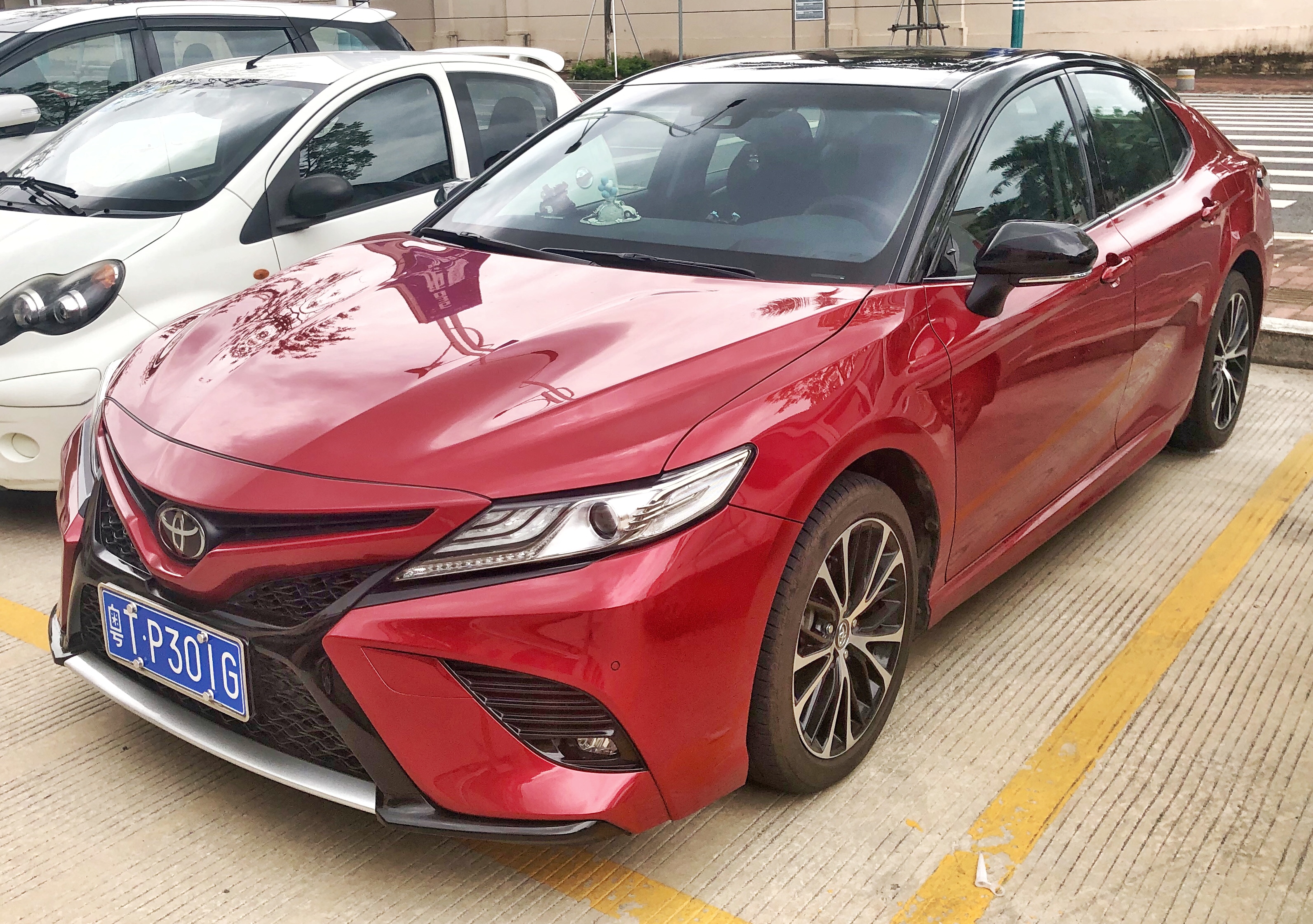
The Toyota Camry is a regular everyday car (a sedan) that many people use for commuting and errands. It’s known for being practical and generally dependable. The podcast just mentions it as a car someone wished they drove.
They used a special glue/epoxy called “Tank Weld” to seal tiny holes in a tank. It’s meant for exactly this kind of leak repair so the car can be driven safely.
Low beams are the headlights you use for regular driving at night. They were acting weird—dimly turning on—so the host suspected an electrical wiring/connectors problem.
The brake light switch is what tells your brake lights to turn on when you press the brake pedal. If it’s bad, the brake lights stay off, so swapping it restores normal operation.
Term
diagnosis as it happens
They’re troubleshooting the problem live: try something, watch what changes, and narrow down what’s causing it. This is especially useful when the issue comes and goes.
Continuity is a quick electrical check to see if current can flow through a wire or switch. If there’s no continuity, it usually means the connection is broken or the switch isn’t working.
A tachometer tells you how fast the engine is spinning, usually in RPM. It helps you know when to shift or when the engine is running too high or too low.
A wiring harness is the main bundle of wires that connects everything electrically. Routing it through the firewall with a grommet helps keep the wires safe and prevents damage.
An oil pressure gauge shows whether the engine is getting enough oil pressure. If it drops too low, it can mean the engine isn’t being lubricated properly.
That number is tire sizing. It tells you how wide the tire is and how tall the sidewall is, which changes how the car drives and how the tire fits.
Brand
Versteins
Versteins is the tire brand they’re talking about. Different Versteins tire models can feel very different because the tread and rubber compound change how the tire grips.
The Volkswagen ID. Buzz is an electric van, meaning it runs on electricity instead of gasoline. The podcast talks about using snow tires on it and being happy with how they work. That’s important because snow tires help the vehicle grip better in winter.
Tire date codes are stamped on the tire sidewall and indicate when the tire was manufactured (typically a week/year). Checking them helps estimate how old the tires are, which matters for safety and grip—especially if a car has been sitting.
These seals are like little rubber gaskets that keep fuel from leaking around the fuel injectors. When they wear out, fuel can seep out and the car may run poorly, so they often get replaced during injector work.
Injectors are the parts that spray fuel into the engine in the right amount and at the right time. If they get dirty, the car can run worse, so people sometimes pull them out and clean them.
“Zero to 60” means how fast the car gets from stopped to 60 mph. If that number feels slow, it usually means something isn’t working right—like boost from a turbo.
The boost gauge tells you how much extra pressure the turbo is making. If it says you’re getting boost but the car still feels slow, the reading may be misleading or the turbo may not be working properly.
Term
electronic trickery
In this context, “electronic trickery” suggests the dash boost indication may be affected by sensors, wiring, or the ECU’s interpretation rather than reflecting real turbo output. That can happen when a sensor is inaccurate or when the system is compensating for a fault.
A turbo is a device that helps the engine make more power by pushing extra air in. If the turbo isn’t working, the car may feel weak even if the gauge says it’s boosting.
Heat shields are protective metal covers that sit near the exhaust and turbo to keep heat from damaging nearby parts. They usually have to be removed before you can reach the turbo and exhaust hardware.
The downpipe is the pipe that takes exhaust gases from the turbo to the rest of the exhaust. It often gets very hot and can rust or seize, which makes it harder to remove.
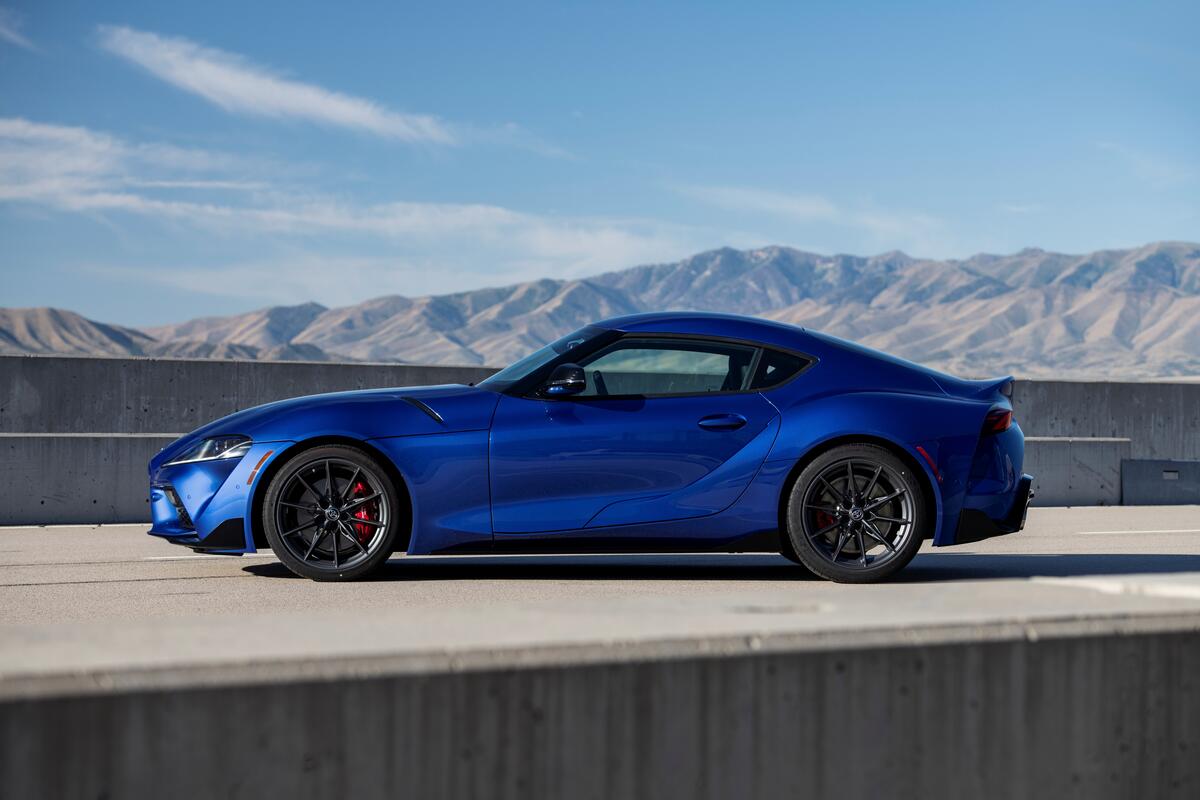
The Toyota Supra is a sports car designed for faster, more exciting driving. The podcast talks about working on the exhaust system near the turbo, where parts can be hard to remove. That’s a common issue when cars have heat cycles and corrosion over time.
Coolant lines are the hoses that carry the engine’s cooling fluid. If a turbo has coolant lines, it means the turbo is cooled not just by oil, but also by coolant to help control heat.
When a turbo compresses air, it heats it up. An intercooler cools that air before it goes into the engine, which can help the engine make more power and run more safely.
A clutch fan doesn’t spin at full speed all the time. It “grips” harder when the engine is hot so it can cool things down without wasting energy when it’s not needed.
A heater core is like a tiny radiator that uses hot engine coolant to warm the air inside the car. If it goes bad, the car may not heat well and you can get leaks or smells.
Crossover lines are coolant hoses/pipes that move coolant between parts of the engine’s cooling system. If you’re replacing something in that circuit, you often have to replace or reroute the lines too.
A crossover tube is a specific exhaust/turbo plumbing piece that routes exhaust gases between components—commonly between the exhaust manifold and turbo hardware. Because it’s positioned near the engine and exhaust ports, access can require removing nearby exhaust parts.
The exhaust manifold is the part that gathers exhaust from the engine cylinders and sends it down the exhaust system. If something behind it needs to be removed, the manifold may have to come off first.
Copper gasket material is a malleable sealing sheet used to create or repair gasket surfaces. It can conform to uneven mating surfaces and tolerate high temperatures, which is why it’s sometimes used for exhaust-related sealing when proper gaskets aren’t available.
A water neck is a coolant outlet housing that bolts to the engine and provides a connection point for hoses. In turbo applications, the water neck can also determine how coolant feed lines route to turbo cooling lines.
A feed line is a dedicated hose/pipe that supplies a fluid to a component—here, coolant feeding the turbo cooling circuit. If the receiving part doesn’t have the right provision for the feed line, you may need to swap the mating housing.
Coolant hoses are the rubber tubes that move the engine’s cooling liquid around the car. If a hose is bent too sharply, it can kink and restrict flow, which can cause overheating.
A crossover pipe is a connector tube that helps route coolant to the right places on the engine. If the car you’re converting has different plumbing, you may need to swap the crossover pipe so the hoses can connect correctly.
90-degree elbows are plumbing parts that turn a hose’s direction. They help you route coolant lines around obstacles without forcing the hose to bend too sharply.
Term
formed hose
A formed hose is a coolant hose that already has the right shape built in. It’s easier to install correctly than trying to bend a generic hose to match the factory routing.
The water pump is what pushes the engine’s coolant through the cooling system. If the coolant lines connect to the pump differently, you may need different hoses or pipes for the conversion.
An ultrasonic cleaner is a machine that cleans parts using vibrations in a cleaning liquid. The vibrations help knock dirt loose from small passages and surfaces.
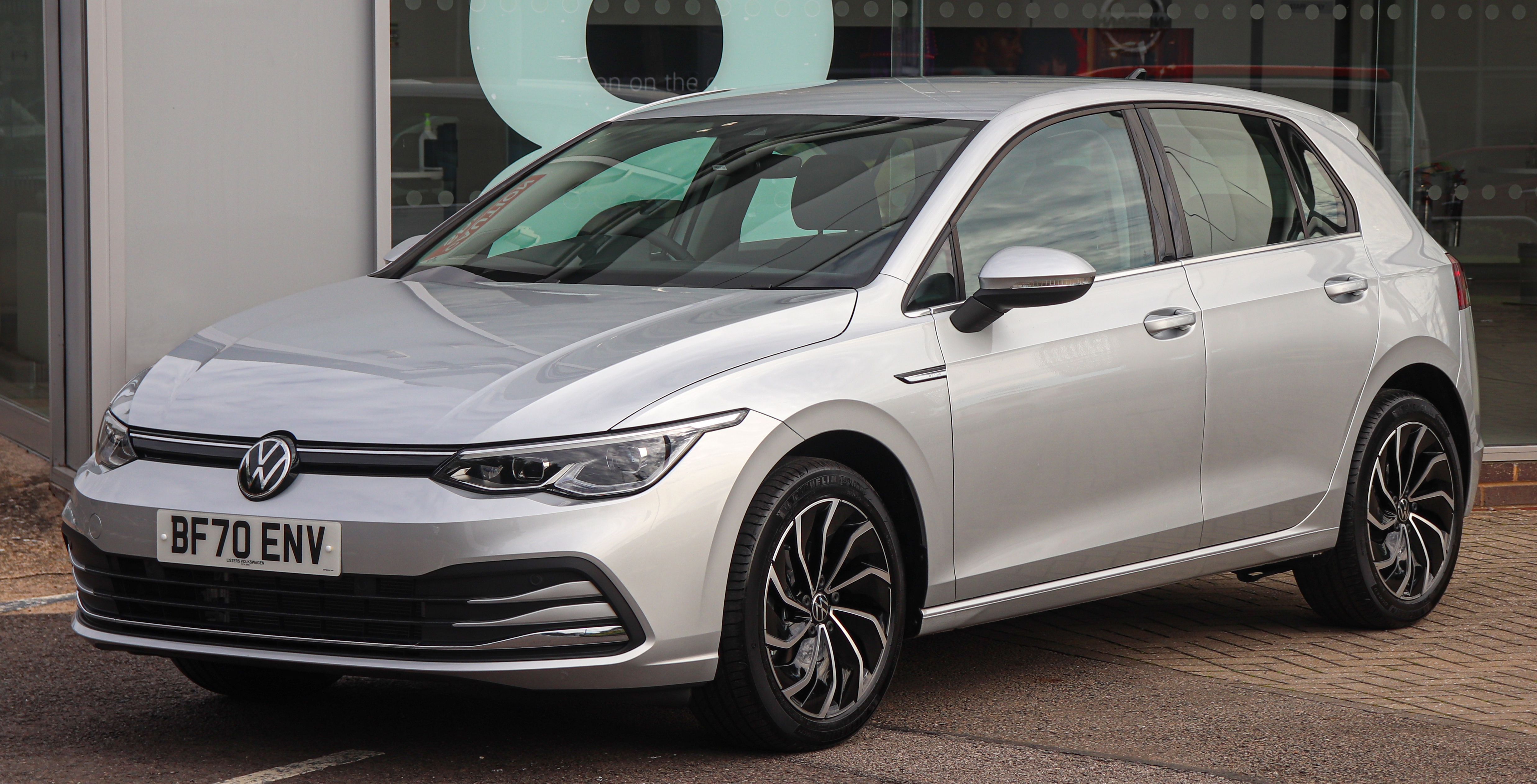
The Volkswagen Golf is a compact car that’s meant for everyday driving. The podcast mentions a GTI, which is a sportier version of the Golf. It’s brought up because people often share their cars online and talk about modifications.
Boosting is what happens when the turbo pressurizes the air going into the engine. More pressure usually means the engine makes more power and feels stronger.
A squealing noise can be a warning sign. It might mean something in or near the turbo isn’t spinning smoothly or isn’t getting the lubrication it needs.
The Porsche 944 is a sports car made by Porsche. The podcast says it was going to be a backup car, but it still needs work on the fuel system. That means it likely needs parts or adjustments so it can deliver fuel properly.
Shakedown miles are short test drives before a bigger trip. The goal is to find any problems early—especially if the car hasn’t been driven in a while.
Power steering fluid can trap air bubbles when you service it. Bleeding is the process of getting that air out so the steering works smoothly and quietly.
Fog lights are the smaller lights on the front of the car meant to help in bad weather. The bulbs inside them can burn out, and replacing them restores that extra visibility.
LEDs are a type of light bulb that uses electronics instead of a heated filament. People upgrade to them because they can be brighter and more efficient, but the headlight design still has to aim the light correctly.
H4 is a common type of headlight bulb and socket shape. The housing is the part inside the headlight that shapes the light, and the speaker is saying newer LED bulbs can work in that same setup without messing up the light pattern.
H4 is a specific kind of headlight bulb size/type used in many cars. The host is saying H4 bulbs would be brighter than the temporary replacement they used.
Penetrating fluid is a special spray that works its way into rusty or stuck connections. People use it to help loosen bolts so you can take things apart.
If the tires are smaller than the factory ones, the car can “think” it’s going a different distance than you expect. That can make fuel economy and range estimates come out wrong.
With a turbo, “boost” is the extra push the turbo makes. “Out of boost” means you’re not getting that extra turbo pressure right then, so the engine usually uses less fuel.
Wheel offset is basically how “in” or “out” the wheel sits on the car. If the wheels sit too far out, the tires can hit the fenders or suspension, causing rubbing.
The Infiniti G20 is a smaller luxury sedan. The podcast talks about tires they used on the G20 and how they also used similar tires on another car. That’s why it comes up—because it’s part of a discussion about what tires work well.
R-comp tires are made for grip, like track-focused tires. They can wear out faster and may feel overly aggressive for everyday or lots of highway driving.
Treadwear is a number that hints at how quickly a tire will wear out. Softer “grippier” tires usually have lower treadwear, and longer-lasting tires usually have higher treadwear.
“Track days” are events where people drive their cars on a race track. They stress the tires much more than normal driving, so the tires wear out sooner.
The Eagle Talon is a smaller sporty car. The podcast talks about using tires on their Talon for a long time, which shows it’s a car someone has owned and driven regularly. It’s the kind of car people often keep as a performance-focused project.
Fuel injectors are the parts that spray gasoline into the engine. If one gets stuck open, it can dump too much fuel, flooding the engine and making it run rough or die.
“Flooded” means the engine got too much fuel for it to burn cleanly. That can cause stalling and rough running until the fuel situation gets back under control.
Boost is extra pressure from a turbo or supercharger that forces more air into the engine. If you go from steady boost to vacuum, the engine’s fueling/air mix changes, and problems like leaks can show up.
A vacuum leak is like an air leak in the engine’s intake system. It can make the engine computer get the wrong information, so the car may run rough or shut down.
This is an older way of delivering fuel. Instead of spraying fuel at each cylinder, the car injects fuel near the throttle area, which can change how the engine behaves at idle and when you press the gas.
This sensor measures how hot the engine coolant is. If it’s wrong, the computer may add too much or too little fuel, which can make the car idle rough or stumble.
The Mitsubishi Galant is a Japanese sedan. In this discussion, the host says a bad coolant temperature sensor can make it idle rough and run poorly, especially when it’s cold.
LIVE
1000 cars sir you have a thousand cars I don't think I'd attempt to try this
stunt or we owe this horsepower to Uncle Sam's too big a car like I put my beer belly on
it yeah you can't immediately tell somebody how many cars you have you'll
really give those up at a yuppie something to think about stay on the bar
don't go off the bar with your Bronco 1980 Volvo horns what's right man's
coolant he's like oh I thought I'd be small it's for a small car and oh yeah
but it's still an automatic transmission they're never gonna be light
it's definitely gonna have to crash starting off with Brad by another car
that's the West you know is this a Nigerian oil print I also wish you drove
a tan Camry anyways that's a very horrible podcast content very inside
jump they'd love to be driven hard
hello welcome to auto off topic hello Brad good evening mr. Andrew how are you
today good great we're actually I'll talk about the weather but the weather is
finally broken we're here it's spring it's warm we're gonna start doing car
stuff we've been doing some car stuff but it's summers here it's coming so I
know did it cool off at all and it was super hot there it was super hot here
for a while and then after a couple weeks of actually about a week of over a
hundred it went back down to like 70 80 so it's been we've had a couple of days
where it spiked into the low 90s but we haven't had much over hundreds other
than that you know weird fake summer we got it looks like about another week or
so we're heading up to the triple digits so I'll get about a week left oh fuck it
well we had a lot of cover stuff to cover because we missed last week
because we gave you the we miss we missed the two weeks we did okay I guess we
did but I'll take it forward for I think yeah I don't know time is a I don't know
I don't know what time is anymore but sure we gave you some time off so that
you could finish the stereo and get it on the road and get it to the drive all
awesome was camping while awesome rally well awesome camping while awesome
vintage rally okay so we're gonna hear all about that we're gonna go over
because the last episode a quick recap you had just put the tank in the car
after it had been repaired there was like a couple tiny pinholes that got
missed so you know it was kind enough to use is it like quick steel tank patch
or something it's a JB weld product called tank weld it's literally for
this exact purpose and I can say spoiler alert it works it works yeah so let
me I'll do I did a couple things the Volvo I'll cover those because it won't
take long and then we'll let you speak all about getting this thing together on
the road which if you're hanging out in the discord you kind of know all about
this already so another reason comes on the discord we get the inside track yeah
I've been working on the Volvo a little bit here and there now as much as I'd
like to but I've pretty much finished up all the wiring that was under the dash
fixed it I've got working horn that wire was disconnected probably interrupted
for the horns or some other button I don't know it was disconnected from the
steering wheel the horn button for whatever reason got working headlights
low beams kind of funky well I'll see how it goes because where I was we're
playing with something else and like I turn the ignition on and the low beams
came on very dim without anything else on so there's some feedback somewhere but
then I kind of jiggled some wires and it was fine so that's gonna be like a
diagnosis as it happens again and the diagnosis the brake light switch is bad
so that's why the brake lights didn't work so I've got working brake lights down
put a new switch in it I'm glad that was simple because that was either gonna be
like the brake light switch or it was gonna be rewire the entire rear lights
yeah yeah that was after we went through like the basics of like made sure the
bulbs worked made sure there's continuity in the wires and then there was no
continuity across the switch so that made sense and the switch I took out
looked like a cheap replacement switch and I got a nicer one VP auto parts that
looked more like the original style switch that would have been in there so
that's was super easy to swap because it's just right under the dash I got that
all set I moved the tachometer because we had it under the hood is now on the
dash or near the dash I got it kind of rigged up on the steering column I might
figure out it's a different way to mount it it's just cable tied around the
steering column so and then yeah so that's inside now I ran the harness
once we were the firewall is already a hole I had a little one was a little grommet
things I moved the oil pressure gauge into the interior you know it's a
electronic one from under the hood because we're looking at what we're
running the car I think might mount those in the opening where the
radio was because I have a mount that holds them and it kind of fits by it
there's a shelf inside the dash behind it it almost looks like a single-din
gauge mount it looks pretty good actually yeah I might just do that because
I was gonna do like a Bluetooth radio anyways so it's that I haven't come up
with some block-off plate for that I'll just put gauges there so that seems like
a good idea and then they're not like in the way anywhere else what else did I
do yeah that's kind of it I gotta run you know there's a auxiliary switch from
the fan controller so I could flip the fan on I can run that wire in I've got a
voltmeter gauge I need to hook up not too worried about that kind of the point
where I want to get the hood on the car lead the brakes and it's together
enough that I just want to drive it around town and it should be able to get
a sticker to do the one mile five mile ten mile 25 mile yeah shake that I feel
like once I start driving it I'll have even more motivation to keep working on
it it's not that far off if there's no reason it's now it's warmer out like the
blower motors not working I'm not too worried about that because I don't really
need heat at the moment it's and plus I have a new dashboard well nicer
conditioned dashboard to swap in which it looks like you would have to pull the
top half of the dashboard out because I already have the lower half out to get to
the whole heater box to pull the blower motor out like it doesn't seem like a
easy job like a modern car so you know I'm kind of like gonna wait on that a
little bit and I think I should just drive it it doesn't need tires I gotta
figure out what size to put on but I can ask you that we don't have to discuss
it on air you will 55 15 maybe it's up there 15 by five and a half I'm kind of
thinking 195 60 so 195 60 15 yeah and maybe something of the Versteins or
Versteins Versteins yes that's probably that's probably very good and I can tell
you that those tires are very good yeah I was behind various car with those this
weekend yep the act live the names of my better top of my head but like the
vintage looking ones there's a little one and then there's a sprint plus which
is more like a Yokohama Flava competitor yeah these these were the vintage
looking ones and I was running on my brand new FLEVAS and it was very difficult
to keep the guys bumper in my vision so they are a good tire yeah yeah and I
have Versteins snow tires on the Volkswagen I like them very much so I
would definitely consider another set of them for a different car so yeah that's
that but I want to hear all about getting this Darian on the road because
there's a whole lot of stuff that went into getting in this thing on the road
in the last two weeks yeah let's put this way I've been home now from the trip
for two days and I am probably gonna go to bed right after I guess sounds good
I'm still tired I'm so beat let's see we last left off I think we discussed
before the podcast that it was the leak in the tank and Naomi had fixed that while
I was out at a concert which is amazing but that was what two weeks ago now it
was a while ago so I'm actually going to be relying on my picture album and
my cell phone to remember where I was off of it stuff so let's see step number
one tank was fixed that was good I was able to pull the car in out of the
garage under its own power proof of concept and just kind of like know that
the clutch worked and the brakes worked which they did without touching them
which is good doing a little more digging into this thing the date codes on the
tires were like 99 or 2000 they were very old so I figured that's probably
about the last time it was running on the road and then the oil filter I
changed was a brand I'd never heard of so my guess is that also shows the
timeline of the car I think based on the logo on the oil filter that it was do
you remember I don't think we had it on the east coast check her shucks and
kregen if I heard from like NASCAR sponsorships and stuff no yeah I don't
think we had them in the east coast but anyway so that's what that was I think I
talked about the fuel injection seals leaking oh yes we did cover that yep and
covered getting new ones did yeah I think you did and they did you pull the
injectors out of the parts car I pulled the injectors out of the parts car
because I knew that I had recently gone through them as in like the past few
years and I cleaned them by using the they worked I assumed use
the aerosol carb spray and a 9 volt battery to power them yep I was able to
clean them out so yeah those cleaned out pretty decently okay all right so yes I
moved the car in and out of the shop so that was good it worked and then Naomi and
I decided we were going to take the car around the block a few times because
that's what you do right we put about three miles in the car and it ran
decent it's the more I drove it the less it was breaking up like at first it was
breaking up under any kind of load and then it would start to clean up a little
bit and then you a little deeper in the pedal a little deeper in the pedal a
little deeper in the pedal and after about two or three miles it seemed to
pretty much clear up I was able to run the car from like zero to 60 miles an
hour success you'd think what I know what these cars are supposed to feel like
they're not fast cars by any means but they should be decently powerful enough
to keep up with modern traffic and they should certainly be faster than the same
engine in the Sapporo and my pickup truck but it was not it was very slow so
unfortunately I don't think that the boost gauge on the dash reads true boost
I think it might just be some kind of electronic trickery yeah yeah so it was
still showing as making boost but it felt like it wasn't making boost and I
don't know if you remember when I first bought the car one of the things that
this the owner's son who was selling the car said was his dad parked it because it
needed a turbo yep and we were like that seems unlikely based it does how these
cars run turbos turns out he was very correct the car definitely needed a
turbo slight panic sets in because now where about a week and a half from
leaving and maybe not a week and a half maybe like a week from leaving and the
turbo is bad so again thank God I had a parts car parts car of the rescue I go
over to the parts car and I look at turbo and I go oh my god this is gonna be a
nightmare because that car's from New England that car was driven in the
winter for many years and that car looks like every bolt on the car is one with
the mounting service so I said well let's try to turbo off the new car first
just so I can familiarize myself with what needs to come off before I dig too
deep into taking this one apart and get frustrated trying to take things apart I
have done a staring on turbo in the past but it was probably in like 2001 so it's
did it way back then I figured I could probably handle it now but working on
getting that done was a nightmare even in the newer car which has never seen
salt there's a bunch of heat shields obviously you have to pull off the
exhaust downpipe which is like like the front cat is on this car it comes right
off a 90 degree elbow off of the trip back of the turbo that was all kind of
frozen and difficult to get off I've actually got it all off I don't think I
even broke any bolts but I got it all off which is good there was one bolt
already missing from the exhaust manifold leaving me to believe that
somebody went in there and tried to do something before but nonetheless it all
came apart so then I was like all right let me go get the turbo off the other
car so I'm working on getting the turbo off the other car and I noticed there's
more stuff in the way but I didn't think much of it so I was trying to get the
turbo off so I get the whole turbo off and then I realized that it has extra
lines running off the sides of it and I follow the lines and that coolant lines
now this doesn't make any sense because both cars are the same car they're both
84s the new car has a production date of October of 84 excuse me of November of
84 the old car has a production date of October of 84 so the old car is a month
older than the new car so you wouldn't think there'd be a difference in turbos
that certainly wouldn't have backdated it to that we certainly would have started
to use a coolant cool turbo and then switch to a just oil cool turbo right
yeah yeah once they switched to coolant cooled they would leave it that way yeah
all oh I never touched them it's abuse turbo it wasn't coolant right fall
apparently 84 they were not coolant cooled I don't know when it changed I
would have to make an assumption that it changed when they became intercooled
that's my my assumption because those also are when it went from being a clutch
fan to electric fans yep so that's my assumption but I don't have actual facts
to back that up so I don't take that as fact I'll have to do a little more digging
before I figure that out because I also have the 84 factory service manual and
I mentioned nothing about coolant cooled turbo so was a little confused so then
I put this turbo on the car and run it without coolant because I only have a
week or less to get this whole project done and test driven and bugs worked out
or do I go ahead and run it as a coolant cooled turbo but that's going to require
replacing pretty much every coolant line on the car so I kind of asked around a
bunch of people some Mitsubishi experts some Mitsubishi enthusiasts some just
general car people the discord anybody who's opinion I trusted and I got an
answer that didn't help because it was pretty much a 5050 split some people
were like you'll probably be fine to run it because the old cars are supposed to
be set up that way and then some people were like you should probably run it
that way because if the center section is designed for coolant you should
probably have coolant in it and then some people said you could probably be just
fine for this trip but you probably would up the longevity of the turbo if
you add the coolant lines so my plan is to replace this turbo anyway so that was
very tempting but common sense got the better of me and I said to myself I'm
going to be driving this car thousands of miles I should probably make it work
properly fast forward to like four days of work to make this happen but we made
it happen so I switched over everything to make it a coolant cooled coolant
cooled and oil cooled turbo this involved changing lines that go to the
heater core it involved changing all the crossover lines it involved changing
the crossover tube the hard line inside of the engine changing that crossover
tube on a side of the engine required actually removing the entire exhaust
manifold which now became a whole another nightmare because that definitely
did not want to come off the parts car because the issue is the bolt that
holds that crossover tube to the block is behind one of the runners and there's
no room for any kind of a tool plated behind it without pulling the exhaust
off then the issue became well now all of these exhaust parts off I don't have
gaskets yeah and I didn't have turbo gaskets either and nobody sells turbo
gaskets locally thankfully they did sell exhaust manifold gaskets locally shout
out to Mitsubishi running the 2.6 and the 2.0 in propane applications for many
many years I was able to get that from the local O'Reilly's which I did also
learn during this whole process we have a brand new O'Reilly's north of here
that's open until 11 p.m. and is a hub for all the other O'Reilly's it's a huge
warehouse so it has everything and it's open late so killer find on that part
it's actually the old motorcycle mechanics Institute building so you
know how big the building is like it used to be a giant school so super awesome
they had that in stock so they still don't have turbo gaskets in stock but
the ones between the four of them that I had between the two cars I had two that
were in decent shape and I used some of that copper gasket material that's great
painting yeah to kind of like you know restore them up and they came out pretty
good so slop them up no issue there the other thing I took off the car was the
water neck because the one for the coolant cool turbo the feed line actually
comes out of the water neck and the one for the non coolant cool turbo did not
have a provision for that feed line so swap that over as well this project
would have been impossible without the parts car because it had everything you
needed to donate so yes and no it would have been impossible to do it in a week
but also yeah maybe if I was switching to a water cool turbo 100% it would have been impossible
um I don't think it would have gone nearly as smoothly without the parts car so thank
goodness for the parts car um anyway so I got everything swapped over the biggest issue was
one of the coolant hoses that went from the crossover pipe to the bottom of the intake manifold
was like a z-shaped formed hose and no matter what I did I could not make hose bend in the way
it needed to bend without kinking so that was one of those things that I had to overcome I was trying
to like find different ways to loop the coolant hose so I could have like you know a big you know
you can't do a tight bend but you can do a big loop somewhere and just like I didn't care if it was
30 feet long it didn't matter as long as it could hold coolant right um but I gave up on that uh and
I eventually went to the part store and I bought two 90 degree elbows and I cobbled together this
z-shaped hose with 123 lengths of hose two elbows and like five clamps um I figured if
anything was leaking it would be that but seems to be it did not leak so that's that's good that
did hold up the whole time um what I do replace the turbo in the future I will get that formed hose
it is available just not quickly or locally um I did not have time to get in a week so I had
improvised with with some 90 degree hoses and fittings so I got got that all taken care of got
that hose on got the crossover tube on the reason I had to change the crossover tube was on the
passenger side of the car the non-coolant one was just the coolant hose that went from the back of
the intake manifold so I had the return from the yep heater core the return the feed to
either the feed to the heater core and the intake manifold came from the backside of the water pump
on the coolant cooled turbo car there was a like intersection y on that pipe with an upper pipe
that was one of the feed lines to the turbo now that I'm saying all this it may all have been
returned for all those things because I think it was all returned but anyway um but there's no
provision of course in the other one for the coolant lines so that had to be changed uh so that
was changed um get the whole thing together remembered you talking about the oil feed tube
for the turbo and I said well before I bolt this all together let me make sure that this turbo feed
tube is clear so I left it unbolted to the turbo and put a little baggy on the bottom of it to
catch the oil and took the ignition lead off the coil and cranked the car over to build up some
oil pressure to get the oil pump spinning to see if I can get oil out of that feed tube to the turbo
and of course there was nothing so that explains a couple of things yep it explains that why the
old turbo went bad because there was no oil getting to the center bearing and this is a
um I'm gonna botch the name of the bearing I forget what it's called
it's not a ball bearing it's like a it's not quite a bushing either but it needs the oil to work
um a thin layer of oil is constantly going around it making it not overheat it's just like
crank bearings run-in bearings journal bearing journal bearing that's the word with the word
the journal bearing so it needs to have that thin layer of oil in it to make it work any
right just like a crank bearing rod bearing whatever it's the same kind of deal so we don't
give that oil it's going to get overheated and it's going to seize up so this car especially
not having a coolant cooled turbo relied solely on oil cooling that also means that when you drive
a turbo car that's like this if you're on boost or the turbo is spinning you have to make sure
you shut the car off after letting it idle down for a while to let things come back down to
temperature otherwise it gets too cool too quick and that oil in those small lines can
coke up or become a solid solidified right so my guess is yeah basically my my guess is because
of where this guy's house was where the car spent pretty much his entire life was at the top of a
hill so if he every day he drove the car home was boosting the car up the hill spinning the
turbo at ungodly hundreds of thousands of rpm and then just pulled in his driveway and shut it off
eventually that's what you know locked up the oil feed line and eventually starved the turbo of
oil and if the turbo doesn't have any lubrication just like the engine it's going to die so the turbo
shaft I could not even move it in any way shape or form by hand it was so locked tire so locked
so locked up tight you can't move it I put things in there to try to spin it but it does not move
we did call a local turbo rebuild shop and they basically said no chance can't get those parts
so we didn't try out the turbo rebuild shops but I had the other turbo anyway so
anyways now I get that done everything's on the car we did try to clean the old feed tube
I have that ultrasonic cleaner it's too long to fit in the ultrasonic cleaner so I do like a
half at a time and did not seem to clear it up I tried to clean it with you know pipe cleaners
and all kinds of different things and it not seem to clean it up I put 150 psi of compressed air at
it and it just laughed at it so that thing is uh jumped basically it wouldn't be difficult to make
a new one it basically looks almost like a a flared and almost like a brake line so thankfully though
I did have the one from the parts car and I was able to grab that out and swap it over and it was
close enough that it all worked at this point now I had everything all
half bolted back together just enough to make sure the car works and I went out and drove the car
around the block actually my friend Chris, Chris Cavallieri, Angry Bird GTI on the Instagram had
come over a couple of times and helped out with a couple of things in the car he was taking this
trip with me so he wanted to see that it got done so shout outs to him uh we took the car for a
ride around the block and everything seemed to work it was sputtering a lot especially at lower
idle when you were in the gas fully everything was good but when you were idling along it would
spitter and sputter and not work very well so I was trying to figure out why it was doing that and
couldn't quite get there on that but that's further down further down the line here uh so now
I driven the car between riding with him doing some driving around with Naomi uh the car is now
boosting you can definitely tell it's driving properly um I got panicked because I thought
the new turbo was bad because it made a squealing sound at a high rpm
and this is now I want to say Tuesday night not leading Thursday or maybe Monday night it was
Monday night and I heard the turbo start making a squealy noise and I was panicking so I put the
car away that night uh went back to it the next morning and realized when I had put belts on the
car um anybody familiar with early Mitsubishi style alternators knows that there's the adjustment
bolt on top and there's this giant like 17 millimeter nut on the bottom that's
hard to explain it's just like a giant long like three inch long nut but the 17 millimeter part
it's like three inches long and I've forgotten to tighten that so squealing at high pitch was
actually the alternator belt at higher f it just I thought it was the winding of the turbo which
unfortunately due to a previous starting on conquest I know what a blowing turbo sounds
like so it sounded just like that but it was not that it was just the loose belt so thank goodness
for that um again now I'm leaving on Thursday I'm still not a hundred percent sure that I'm
confident in the car I've only driven it 20 miles or so I haven't also not prepped a backup car at
this point because the backup car was going to be the 944 but that still needs to have fueling
stuff sorted out and I fore forewent that to try to get this car done and I was like well I guess
the eclipse could be the backup backup car um but still hadn't gone through that so panhandling a little
bit um decided on Tuesday I needed to put some shakedown miles in the car if I was going to
you know make this thing work or not uh so I called up Josh because Josh is a uh
well versed in Mitsubishi stuff and a friend of a very good friend of mine very good friend
of the show he's been on the show before I think um and we I drove to him he's about 45 miles away
so I figured it'd be about a good you know 90 mile round trip a couple days before leaving
for the event would be a good like solid this is going to work or this isn't going to work
kind of process because again I've driven this car 20 miles it seems to have sat for about 15 years
it had a bad turbo just all this stuff so I take off
right around rush hour which is obviously a choice um drive all the way to mesa in rush hour
fluent temps never go up above the middle everything seems good oil pressure is good
cars boosting away happily uh everything in the car seems to be working safe for the air conditioning
uh all the lights are working not great the lights are pretty dim but it is what it is
everything seems to be working otherwise drive all the way down there
hold it in uh our other friend Michael's backyard where they were hanging out where
Josh and some of his cars uh Michael and Josh I hand in the keys they go for a ride around the
block you know drive at 510 minutes come back and like pan this thing is really really nice
and I was like yeah right got here no problem at all uh we did a little work on the car there
we did the bleeding of the power steering system because that was still causing a little bit of
problems um and then went grab dinner to come back in the car drove the car all the way home
up in the driveway no problems at all and I said you know what
I think this is the I think this is the move I think this is the car we're going to take on
the California rally all right so at that point I driven the car 125 miles uh it's Tuesday night
we're leaving Thursday send it I have basically just said send it yeah I have one more night to
kind of clean things up um my whole plan for Wednesday night at this point was I had ordered
some headlights I ordered some ecode headlights with replaceable bulbs um and I ordered some
new fog light bulbs when the fog lights was out and I figured that would take me about
20 minutes and I could spend the rest of the night cleaning and just kind of going over
things and doing nothing bolt check um and then the headlight changing fiasco turned into an all
out affair no no um so that didn't happen but I got it done on Wednesday night again leaving
Thursday morning at 3 a.m so Thursday at about 9 o'clock I'm buttoning up the headlights now
I made a very poor choice and this is a hundred percent on me uh led technology has come a very
long way and you can now run leds in h4 housings used to be it wouldn't be a good beam pattern
but the new stuff works really good uh so I did a little bit of research I was not able to get I
wanted to get the vintage diodes ones but I was not able to get those in time they'll still order
they will get there um so I did not order the vintage diodes ones I did find a set that I
could get next day from amazon and I looked up the reviews and those lights and everybody said
they were good so I'm sorry I'll get those um so I swapped in one but they put it in with
holding together it was a nice color I made sure I got the ones that were like a you know a natural
not bright white but a natural looking beam pattern and color um whatever the kelvin reading
is I don't remember but it makes it look like a you know an extra an extra bright halogen
put it in everything worked I was great I buttoned the whole thing up you know
put the surrounds back on holding together went to the second one with the holding together
everything was great went turned back on again and the first one I put in blew out
oh it worked like for three cycles yeah so me obviously got screwed by cheap amazon parts
and I should have known better um but I shouldn't have the time to get the ones I wanted so I will
order a set from the diodes I'm not going to order the housings from him I'll just order the bulbs
you know um because I have the housings I'm going to return the bulbs back to Amazon um
but I'll support him I wanted to support him anyway because he's a you know small independent
shop that's of the good stuff but I just didn't have time so anyway so at that point I'm panicking
because it's like 8 30 at night I'm leaving at 3 a.m in the morning the next day I don't want to put
the other headlight back in because they were really garbage they were old one of them was actually
Kyoto so I assume it might be the original headlight from the car yeah um that one wasn't
terrible but the one that on the other side was a you know a generic sylvania from the 90s probably
and that one was pretty faded out so I'm sitting there panicking and I don't have to do
and now he's like hey I'll just go to walmart and grab his new headlights and I was like
please do that I definitely need that so she ran out and she grabbed two just sylvania standard
you know halogen replacement bulbs um they're much brighter than the ones that were in there
they're not nearly as bright as the e-codes and h4s would be but let things be um in the meantime
while she's out doing that I'm like all right I'm gonna change these fog light bulbs and I bought
nice bright yellow fog light bulbs I'm sure you remember my old white starry on I had bright
yellow fog lights in it yeah why don't you just put one on the parts car because they weren't good
in the parts car either oh they remember the part no the parts car got wrecked remember oh and we
did the old bumper when I replaced the front bumper I just put in whatever bulbs were in it I didn't
change them to anything good um so I had bought those at the same time um but I'm going to take
it apart and I realized that the car has like a bullet connector and the h11 bulbs they have the
one lead off of them and then the other the ground is the housing but the one lead is a bullet
connector and the parts I got have spade connectors on them so I'm like of course like
big deal it's a big deal with almost nine o'clock at night and you're trying to get out of bed and
finish packing yet nearly at 3 a.m. the next day let me know where I least I had no all the new
h11's all have spade connectors on them yeah but no connectors all I had the connect
connectors here so it wasn't a big deal I was able to cut things apart modify and put them together
and clean it all up and you put heat shrink on it and make it look professional like you know
like I learned to do in the pascara garage um you guys will be proud of proud of the connections
that were made but it's all together it has nice bright yellow uh fog lamp bulbs um and now it has
the nice regular sylvania halogen you know six and a half inch reposites they are square bulbs um
the lights all work everything went together everything seems pretty solid at that point it
was just scrambling to get some stuff packed uh I actually went to bed at about 10 30 11 o'clock
Naomi kindly stayed up and washed the windows in the car for me because they're filthy I hadn't
gotten there yet um and then came back for that um the next morning got up 2 30 a.m. after a solid
four hours of sleep and uh Gary had to go got in the car picked up Chris made our first stop you
know at the qt gas station around the corner from the house shut the car off whoring smoke
government of the hood hearing absolute panic sets in what do we do it's now time to leave it's
literally thursday morning we're supposed to meet everybody in malibu it just outside of malibu at
like 2 p.m. we knew we gave ourselves we left super early so we'd give ourselves plenty of time for
any kind of strange issues along the way um but like what do we do open the hood we catch up here
where the smoke's coming from both of us are like well doesn't smell like anything bad the car doesn't
smell hot it doesn't smell like oil it doesn't look like oil it's definitely not like gasoline
burning off it's nothing crazy what's the last thing we did to the car and i was like oh i
put all the heat shields back on and the heat shield of the turbo is from the parts car because
the heat shield from this car didn't have the provision for the coolant lines
so we sit there and go it must just be whatever penetrating fluid and old grease and okay hand
grease is on top of these heat shields effort let's just send it now of course i'm not confident in
this diagnostics but at that time it's like we're either gonna do it or not right like we don't have
a backup car prepped we've nowhere to get there it's a vintage pre 2000 rally i don't want to show
it we send it and we don't stop until we're way out of the 10 in uh
ermagard or i hate names these towns like somewhere in
arizona but a solid like two hours from home we just drove straight there don't have to
fill up a fuel you want to take a stab at the fuel mileage number now to be fair
i do have i missed a whole thing about tires tires are slightly undersized from factory
they're about five miles per hour off at 80 miles an hour so the fuel mileage is maybe off a little
bit but my calculated range any stab in the dark with the highway calculated range was at a steady
65 70
i mean i'm gonna cheat because i already know oh you do all right i bet in the discord
dang all right never mind we get 25 miles per gallon a little over 25 miles a gallon i mean that's
i mean that's it's low for me i expected it it's it's well it's what kind of what i expect to
my glant will do that up in the highway out of boost so yeah anyway 25 miles per gallon
reasonable gas is expensive right now gas is especially expensive in california right now
we do wasn't going to break us too bad at 25 miles a gallon so that's pretty good i'd say
correcting for the the tires and everything was probably more like 24 but whatever um
we'll be also rewind to the tires i bought tires for the car yeah um off of the parts car i had the
inky 92s the ones that were black with the polished lip they were quite dingy and terrible
and they had 185 65 snow tires on them that were from 2009 yeah what you're on those
had to chase those i mean one wouldn't hold there otherwise maybe no i wouldn't have done that um
looked around for tires the factory tire size on the starring in flat body car is a 215 60 15
big tire problem with that is i remember what i first got the parts car when i was driving it
with the factory size tires they rubbed a ton because the factory wheels are like a plus
30 offset or 32 offset and they're a 15 by six and a half and the inkeys are a 15 by seven with
a zero offset so with the factory size tires they rub like crazy and i didn't want to have rubbing
tires on the car also 215 60 15 is only the only availability of tires are like truck tires or
like really generic all seasons and i wanted a decent tire because this driving rally has a
lot of aggressor driving roads and i wanted to be able to drive the car aggressively so i went down
a saw a width to a 205 and ran a 205 55 15 which is why the speedometer is off just a little bit
but they look incredibly proper on the car they do not look undersized at all it looks like it's
made for the car i went with yokohama advan fleva which is the same tire you used to run or maybe
still do run on your g20 i also have them on the eclipse and i've been pretty happy with them
they're not a bad tire at all they're a pretty good compromise between a performance tire and a
good highway tire um and like i've said many times in the past a generic all season tire is better
than the best high performance tire available in a generic high a generic all season tire in 2026
is probably better or at least as good as a high performance radial from 1984
so running a decent tire on there it's going to be a huge difference and i didn't want to run
some ridiculous r-comp because there was a lot of highway driving to do and also
i think that that would be too much for this car it needs to have the ability to have some
sort of slip all right just yeah i don't want the car to just be too sticky those those yokos are
300 treadwear so there's some are only yes they're only 300 treadwear yeah they're good compromise
between a uh a super sticky 200 and then like a 600 treadwear tire so i think they have almost
20 000 miles on the ones in the eclipse and they're barely showing any signs of wear yeah i i ran the
prior versions which were what did they call those s drives yeah i ran a set of those i'm on my
second set on the glont there's still s drives i guess switch the new ones that'll be the third set
i'm actually do the samoro has a set of s drives that i put on there in when was redwood philadelphia
2018 yeah so i put those on in 2018 it went from boston to redwood philly back to boston
then it's driven from boston to austin texas austin texas here here to california and back
here to vegas and back yeah um i put a ton of miles in those tires those tires also still
look in great shape um yeah at this point they probably aged out because they're
seven or eight years old what year is it 2018 oh Jesus that's yeah eight years old i don't
so they're aging out but i don't currently have a set on the g20 because i wore them out
doing track days i put on the falcons on there but since i have a dedicated set of track tires
now i want to switch the eight spoke style wheels the black racing what knobby style wheels i have
back to those yocos because i do need to set a tire for that again but yeah you and i traditionally
have had really good luck with yocama tires i have i've been running them since my first talon
and my first conquest i used to be uh yocohama avs es 100s that was the equivalent to this
tire back in the early 2000s um and i bought probably three or four sets of es 100s in those
days uh i love those tires i think technically there's still a set of those on the old enkeys
i had on my first talon in the shed but how are parents us and it's just cool now that they threw
the odd my name on them just a little more about the performance yeah 100 it gives it that like
race car styling on the side wall right advent yes i think with an advanced sticker on the car
now it'll be good uh anyway i i'm totally happy with them they're super cool i am very glad that
you convinced me to run the enkeys um also shout out to Naomi again because when i was busy working
on changing the turbo over she pulled the wheels off the parts car and she cleaned them and gave
the lips a quick polish um so absolutely incredible human being and i thank her for that um they need
like a full detail and probably a repaint but they look they fit the patina of the car right now
so perfect uh and they look great in the car and it was cool to see basically the parts car that i
had at one point i had it looking decent but it was never nice because the car was rusty when we
bought it right was 800 car for a reason um it was cool to see those wheels on another white 84
in cleaner shape than the other one was and also there's the cool history of those wheels where
they probably came from my dad's wheel entire shop in 1986 because the shop that the guy bought them
from used my dad as a supplier so that's kind of a cool connection those wheels anyway so
i am glad that you convinced me to run those versus the Watanabe's um that being said
once i do all the things the car i want to do i think it'd be cool to switch the watts at that
point and i don't think that the enkeys will look out of place on a suboro so i've had this in
the back of my head to have watts on a flat body starion for a very long time and i think that uh
i'll eventually do it but for now i'm glad i ran the enkeys because they look good in the car
it's that same thing like with the the blue colt i took the steelies off and put the american
racy forcebooks on there and it just changes the whole car and i've never had a flat body
starion on stock wheels but they are very underwhelming they sit so deep inside the wheel arches that
just the car just looks it looks goofy and then filling out the arches with the zero offset
seven inch wheels is a much better prospect so um anyway getting ahead of myself here or behind
myself i don't even know anymore car ran amazing so that first gas stop except for when we got off
the highway i put the clutch in at the stop light at the end of the ramp and the car died
no obviously panic sets in again crank it over car fires right up i pull off the light it's
sputtering like crazy through first gear sputtering is a shift into second and then i just matted it
and cleared it out okay so now we're sitting in the car going what just happened
a couple of thoughts come to mind um one is that an injector is hanging open
and when we come off the highway it flooded itself out and when i restarted it and drive
it away there was too much fuel and it was not burning properly
or there's just something going on when the car was you know sitting under a constant boost level
and then went to vacuum that this may be a vacuum leak somewhere and just confused the ecu and it
shut it down um but where our brains are pretty much stuck on the uh it's got to be fuel leakage
from one of the injectors which would not surprise me because i don't know the history of
injectors also i know the injectors say python on them which i don't think python ever made
injectors for the early cars so the injector could be oversized because i know i had to
replace it at one point on the other car and it might be what i could get at the time but i don't
remember uh early cars have two i want to say i don't remember what size injectors they are
but they're two same size injectors and it's a throttle body style injection and it fires the
injectors in sequence the later cars use a smaller primary and a large secondary and
it just runs on the primary until you get a due high boost and it opens up you know the secondary
kind of like an old quarter jet converter um i think the ejector at this car might be the primary
injectors from a later car but i don't quote me on that i don't remember what they are i know at
some point i had to change them because they went bad so anyway it's running otherwise except for
off throttle idling or idling for a long time we've not realized because if you sit and let
the car idle for a while we can go to drive away it sputters and spits
oh i missed a hole jesus i'm doing bad here i missed a hole another saga with the coolant
temp sensor i was gonna ask about that but yep so let's rewind a little bit back to the garage
this is probably the previous weekend maybe maybe even monday tuesday try and put a coolant
temp sensor in the car because it's running it's idling super rough when we first started up
it smooths a little once it warms up and as you and anybody knows that's ever had a Mitsubishi
that's fuel injected these coolant temp sensors just go bad i think you have the same issue right
now with the galant you're trying to figure it out i've been through three or four sensors in that
car maybe five yes i've been four now ntks and now i'm gonna try some different ones and trace the
wires i've been i've been through three or four in the past week so yeah meanwhile the the not
turned up too long but the the talent is on i think the original one from 1990 and it seems fine
it's weird wow the original ones i think were ntks i think ntk made them for Mitsubishi i think
when i was doing my digging it seems to be that if you can get an ntk one that's the closest to
factory style which i also proved last week because i did get an ntk one i bought them all
from i bought the all remaining ones from uh rock auto i have three or four in my tool toolbox
drawer but all i can buy they need from rock auto so i did manage to get an ntk one from a local
parts store called parts authority um they're more like a they're like they're like a higher and
almost like job supplier kind of place um but they do have a customer counter too so
the issue with them is is that they're all supposed if you test them right you put your your
multimeter on kilo ohms and at a certain temperature it's supposed to read a certain
ohm level and four of them all sit on the bench in the same room all tested differently
four different manufacturers which obviously is not ideal because if the ecu sees the resistance
of the sensor and that's how it knows how much fuel to send to the fuel injectors or
whatever exactly the however exactly it works i'm sure it's how much fuel right because based
on air and fuel so if it's based on coolant temperature and based on the same number
that should be a consistent number across the sensors the one that was closest to oems style
was the ntk one problem with the ntk part is the threads were wrong they were not there wasn't
enough threads so when you went to bolt the piece in and obviously the sensor is the bolt itself
essentially it's a bolt with a sensor hanging out the bottom of it it wouldn't seal properly
so in reading about that later it seems that
other people have encountered this and they run a 15 millimeter hopper crush washer
in between the sensor and the port and that gives it just enough to seal so
whatever i don't understand exactly what's going on my guess is that maybe the
the sensor portion of it is too long and it bottoms out and doesn't let it thread all in
that hopper crush washer just gives it just a little bit of clearance that it needs
but anyway so i was unable to run the ntk one because at that time i hadn't figured that out yet
and i ran the one from advanced auto parts that's the store that still exists right
auto zone is gone advanced auto parts still exists no all the way around
okay so the uh boys auto's us what no advanced auto parts is gone out here
all the west coast advanced auto parts are gone oh i forgot about that yep so we have a riley's auto
zone parts authority and napa those are our choices now um it was the one from auto zone
is the one that i wound up running it was the next closest to what the factory spec for the
own reading should have been so it not being perfect might also have exacerbated the situation
of not running exactly perfectly um but it runs fine full throttle full boost half throttle half
boost wants us up to temperature car drives like a brand new car so i do not know um anyway so we
had that issue it only seemed to be a problem in those scenarios car was cold car was coming off of
extended periods of highway driving or cars idling for a long period of time so both of us
have now come to the agreement that it must be an injector hanging open and then just causing
issues because you're not using all the fuel yeah so anyway we go to get to california
we're way ahead of schedule because you never get to stop and service anything thankfully
um we decide that we're there it's about 11 o'clock and we're hungry we haven't had much
food yet just snacks in the car on the way and he goes hey we had to meet everybody just outside
of malibu about 35 minutes outside of malibu he's like why don't we head to malibu get to the coast
he's like we can get lunch somewhere on the coast i was like yeah sounds good to me we get
time right why not so we drove to and uh again not being a huge fan of the movie i never really
made the connection much in my brain but he suggests that we go to neptunes net which is the uh
little seafood place from fasten the furious where they uh say ferrari warden you can afford
pal outside of um it's definitely more than just a tourist trap it's mostly it's all the locals go
there all the tons of motorcycles were there grew up running like the canyons and stuff and
they go there for lunch um i have a killer set of fish tacos grilled fish tacos with
the crema and corn tortillas like absolutely killer tacos so definitely a good place
in a lunch there met up with art uh from dwa the rally and about 10 others that were meeting up in
soquel to head up to the actual event so that was pretty sweet because we pulled up everybody was
there and uh all was well the car was running and i think that was the first real site of relief that
i had a breath since leaving phoenix at three in the morning so first success right there i took a
bunch of pictures in front of the restaurant and the ocean like hey even if we only made it this far
we made it this far um i'm not sure 100 percent if uh chris was sold yet on the idea of using this
car for the whole rally but he was sold in the fact that it made it there so that was good
so day one we went with those guys outside malibu took a bunch of cool back roads drove around
at this point probably another i don't know 100 miles to the night meeting point we're supposed
to meet all the guys who are coming down from norcal uh we were in kayukos i think it's how you
pronounce it it's uh ca y u c os it's a ocean front town in california that's just north of moro bay
um so south of san francisco but north of la some of they're kind of in the middle
um moro bay's moro rock is where the big lake everybody knows the rock there
um we had a hotel that night in kayukos uh there were two hotels next to each other that pretty
much everybody was staying in so that was pretty cool um they had organized a dinner at a restaurant
in town um and this is the the first negative experience the whole event um even though the
restaurant knew we were coming they did not staff very well for it so yeah we sat at the table in
the back and all the tables were reserved for us and the waitress came over this is unimportant
but it's a funny story anyway the waitress came over after about 35 minutes i was like can i get
you guys some waters and menus and we're like yeah that would be ideal we've been here for a while
so there were six people sitting at our particular table and the waitress came back
with three waters and no menus we're like huh and we waited there to like 20 minutes or so
and they were like you know what i think we're gonna go elsewhere so the six of us got up and left
and then grabbed some of the people on the way and eventually about 30 people went to this little
burger place around the corner and had the best burgers you've ever had so good in that burger
place making the best burgers i ever had and uh sucks that's easily restaurant for blowing at
you the new year coming so anyway head dinner went back to the hotel hung out the hotel that
evening was a fire pit and everybody's sitting around just talking about stuff and telling the
story of the car and how it got there and how it ran the whole nine uh the next day we all met at
the parking lot in morrow bay of morrow rock uh with a little overcast a little misty now the
typical marine layer california fog and hanging over bunch of people out surfing super cool everybody
just meets up in the parking lot um warren and art and lane got together three guys from dwa and
a little driver's meeting you know typical don't be a dummy you can't win you can only lose that kind
of stuff kind of give us the the run of where we're going to be going that day what's going to be
happening um give out t-shirts and hats and route books and all that kind of cool stuff um super
neat just nice laid-back morning first hour of the drives we went from morrow bay to crest in
california uh obviously not just straight via map quest but through um directions that were provided
for us from the rally team to take advantage of as many fun roads as possible so staying off of
you know numbered highways and just using different roads crisscrossing across the valley and
taking what would have probably been an hour drive and turning it into like three or four um multiple
stops along the way for you know picture opportunities regroups for the cars everybody
kind of gets together and you know parks along a street somewhere and a bunch of pictures are taken
and talking about the road you just drove on super cool laid-back like awesome time like i can't
even explain how much fun this this whole day of just driving was um where we all met in crestin
for lunch was this place called the long branch saloon or long breach long branch long branch
saloon um legit super awesome place like all these towns in this part of california are all
fairly quiet it's not like la it's like you know just a few people live there and a few thousand
people lived in you know any crestin probably and it's just a very like middle of the country country
vibe um the restaurant has a giant mural on the wall of snowman from uh smoking the bandits truck
so kind of a cool vibe in the place really good steak um just a very very cool place
left there and we went to parkfield california now i don't know how familiar i with california
but parkfield is in the middle of nowhere and there's no easy way to get there but it is all
a ton of fun windy mountain pass roads to get there um parkfield is even smaller than crestin
the population of parkfield is 18 oh not a very big place yeah it's mostly giant farms
which is probably why it's 18 people because they all you know everybody everybody owns
118th of the land oh uh went to this place called uh i think it's called the parkfield ranch oh no
sorry it's the v6 ranch in parkfield um v6 having nothing to do with the car just having to do with
the six people with the name of the other v i think was the story but the v6 ranch it turns out hosts
a lot of motorcycle and car driving events um there was a bunch of stickers on the mirror
behind the bar from all the different events like the the snowball rally um the fault line rally
a couple different motorcycle events the driving law some guys that had a rally go through there
before uh they have a lodge there where they have like cabins they have a swimming pool and a hot tub
they have a cafe with a bar and like a big playground for the kids like it's a super cool
place closest they probably do like they do like a blues festival there it was they probably host
weddings like that kind of a venue uh interesting fact about parkfield california it is the
most closely observed and it is the most active earthquake zone in the world
so that obviously doesn't make you you know super settled but i guess you're not in a building
it's fine we're tent camping in the field so it wouldn't have been too big of a deal of a tent fell
on me um and actually it's it's because when you're driving there um right before you get to the actual
ranch itself you pass a sign you're like one of the you know uh geological signs that says where
you're at like you know um elevation height or whatever but it's actually says uh san andreas
vault so you drive over the fault line so okay yep pretty neat so we hung out there um it was
pretty hot that day it was the only day it was actually uncomfortably hot but they had a swimming
pool and a hot tub so everybody kind of convened to the swimming pool hung around the swimming pool
had some drinks and waited for dinner uh dinner was provided it was like a grilled chicken meal
with some salad and some homemade um tortilla chips and homemade salsa all from the restaurant
right there super killer meal um pretty good time next day we woke up and we had a driver's
meeting they also fed us breakfast breakfast and dinner were included for each each night except
that first night at the hotel so that was cool too um had breakfast the next morning
they provided us all with their own camping wild awesome dwa rally mugs that we got to bring home
with us um actually currently sipping coffee from it as i speak um very cool to have that as a little
bonus uh so day two or day two of the rally day three of the trip we left parkfield and we went
to um the mission i'm not 100 percent sure what it is but it was built in the late 1600s
oh okay yeah so just well it's funny it's because they'll be like
you know people in california like oh it's built in the 1600s and you're like yeah that's like
everything where i'm from here right it's it's it's different though because it's california
and i've been gone long enough that i forget that too so to me i was like whoa it's so old
but i forget that the town i lived in was built on 1600s so anyway so this is like the california
missions um sorry 1700s it's a historic chain of spanish religious and agricultural settlements
found between 1769 1823 um it's old by new england standards yeah it's it's super cool
or it's it's new by new england standards yes it is but whatever um it's super cool it exists
it's all restored as it was there's a big tree out front that's been there since it was built like
very cool place um i wish i knew more about it to tell you about it but i don't so tough luck
it's right outside a military base which is also interesting because he drove through the military
base to get there um leaving there so the drive there was fun a lot of cool little side roads
same kind of deal leaving there you had two choices um i don't think it's a big deal to say the name
of this particular road but there's a road called nasiamento ferguson road that is about 20 miles
from the mission and it is absolutely absurd of a road um that was one choice and the other
choice was to take a lake road that goes around like wineries and stuff um but the recommendation
was that we have never driven on that nasiamento ferguson road to uh do not do the lake road in
the wineries and do the that road that comes out a big sir because it is absolutely ridiculous
so obviously we chose that um the second day of the rally i kind of chose who i was going to
drive with based on the cars they were driving um and people like by the day before because obviously
even though it's a pre-2000 rally a lot of the cars are late 90s and a late 90s 993
Porsche is going to be a lot more capable and fast than my 84 starion so not that it's a race
but i don't want to be holding somebody up tremendously um waiting for me at the end or
somebody who doesn't care just taking off and me just kind of be out there by myself um we were
by ourselves a bunch on the first day which again it wasn't a big deal it was just you know we had
to figure out where we were going and um i wanted to do some drives with some people on the second
day so that at camping i had met a couple people i met um i don't know if you follow him on instagram
or not his name is j he goes by small whale 510 never met him but yeah i'm sorry yeah i followed
him now because i saw you reposted both pictures so yep that was him and his wife who goes by the
name waylon smithers until last name's waylon on instagram she was also in a 510 yellow 510
wagon he was in the green 510 two door um and another guy tom in his early 9 11 target like a
i don't know mid 60s kind of a ratty 9 11 target but had a fresh motor and full suspension so that
was kind of cool he was who i'm he was one of the ones him and j with the 510 were both on those
reds and redskins uh vert vertus bands red redskins vertus signs they were both in those
predestines so i was right with those guys and uh frank from another pointless automotive podcast
in his 63 or 4 barracuda so i figured with those cars i had no problem hanging with them
and there was another guy who was with us in his alpha you know 1700 g tv um
turns out those guys are fast um they know the roads they've driven a bunch of kind of roads
before they've very experienced with them um it was a it was i had to remember like this is thought
of race you don't have to be as fast as them if they're driving faster than you feel comfortable
slow down don't get yourself in a situation um because this road is i can't even explain the
amount of switchbacks and bagged corners and hills and bumps and absurd i did manage to keep the
Porsche pretty much in my windshield um the whole way down nasium into Ferguson so that's
good at least but man those guys some wheels and uh man it's it's uh it's it's a little intimidating
to drive with somebody who's been on these roads before when you haven't also remembering that
they're two-way roads and you know it's not full two cars wide so you have to be ready to you know
move out of the way and there's bicyclists and there's overlander guys and there's a lot of
kinds of stuff out there you just need to patience goes a long way and i can see how people get
themselves in trouble on these roads you know anytime you see these is instagram videos of
people out on these mountain roads in california driving off i can i can see how they do it especially
if they're not familiar with the roads and they're trying to keep up with somebody in front of them
in a faster car than them um not good so um let me re-back up a little bit to the day prior because
i missed a part of the story i want to talk about uh driving the second half of the day with a couple
of people that had kind of kind of fallen together and uh frank from not sorry i'm not sorry frank from
another pointless automotive podcast and he was driving the barracuda which much like the
starion had been sitting for a long time he owned it the whole time but had been sitting for about
15 years it was he he's owned the car since high school was his first car actually
and one of the interests he was having was his intake manifold valley gasket the ones in the front
of the motor disappeared so he found uh some rtv and kind of made his own gasket with rtv he was a
a can of rtv that worked like cheese whiz i've never seen that kind of rtv before but yeah it came out
like yeah not not like aerosol just like that like pressurized can somehow yeah um it came out
just like cheese whiz and it worked very well fixing that this is the one on my that you haven't
used one of those before never used them before i've always used the squeeze tube so this is a
much better system for much better for like perfect application like anyway so it filled the the
valley at his car perfectly and the morning of day two i think day two we were letting my car idle
and chris was checking fluids and while he was checking fluids frank came by and we were looking
at the car and we noticed that there was a bubbling of some kind of fluid coming out from the bottom
of the throttle body with needs the intake manifold just a small little like you
know when you have like a nail on your tire you look for the hole and eat a little bit of bubbles
coming out it was that kind of bubbles coming out of the intake manifold right there and we're
like oh i wonder so we had some brake clean cleaned that off and then used that cheese whiz rtv and
just kind of ran a bead along the edge between the intake manifold and the throttle body and uh
low and behold 90 percent of our idle problems went away no little gasket leak yep so there must
have been just just enough vacuum leak right there to cause issues when there was what it was sitting
at idle or off throttle which would make sense of why it would blow the fuel out a bullet
spark out because there's air in there right so that fixed 90 percent of the issues still if we
let it idle for a long time it will load up which makes me think that the injector is probably still
also an issue um but it's not enough to worry about it right now because the plans for the car
involve changing to the later style injectors with the secondary and primary when i change the ecu
to run more boosts with a new turbo so it runs good now as long as you don't sit idling for like
10 minutes so hopefully that's the problem but anyway so we were out in the road and uh the
first problem of the i guess one person had problem with the fuel pump on day one um haggardy was there
to provide towing and b-line motors was there to provide roadside assistance so that was cool
they uh they diagnosed that it was the fuel pump didn't have one on stock one of the guys from
b-line drove back to the shop picked up uh you know it's a universal bosh style fuel pump they
went on the shelf it was for uh early then 11 um haggardy towed the car back to camp on night one
and they fixed it in the parking lot and the guy's backed up by day two so super cool to have that kind
of level of service available too right like on the event so anyway the first one from the group
cars i was driving with that had a problem with frankstar and it was sputtering and he's having
fuel delivery problems and it's probably because his car sat for a while it was probably stuff in the
tank um so the first thing he did was he pulled out the main fuel filter it was like a replaceable
element but didn't have a replaceable element for it but the carburetor has those stone style
um filters on them like a you know holly dull bumper style carburetor so those got clogged
and the car died the side of the road and we managed to fix that on the side of the road
on that first day by taking it all apart and putting in um using carb clean to clean the
filter elements the little stone filter elements putting it back together and then replaced the
replaceable element one that he didn't have new replaceable elements for with an inline like
part store filter and that got him through the rest of the weekend so that's cool so that worked
out um that's the only real wrenching we did over the weekend so that's a good thing to know um
anyway so yeah that was uh day three we did that nasi mental Ferguson road it ends out down around
big sir uh ran up and down big sir a little bit actually got to see uh i don't know if you heard
the story of croc gt4 the Porsche owner who passed away a few weeks ago yeah they have they have a
plaque for him um mounted to the bottom of the big one the big sir signs uh so we were over there
and people that knew him paid his respects to him and uh kind of hung out the parking lot there we
went and saw the the sea lions or seals they're just seals um let's see that's he'll be all just
yeah they're all seals yep so we went to where the viewing spot to see all the seals and that was
kind of cool um and then from big sir went back to parkfield again not direct all fun roads super
cool made it back to parkfield that night we had dinner it was like a a steak and salad and a bunch
of other stuff i couldn't eat because of gluten so i don't know what that was but look good uh um
and we they had a little uh like ceremony for you know the closing out of the event um
gave awards for certain things um and i was incredibly surprised please shocked that we won
a organizers choice award for outside the box thinking with a car based on what else is there
and like rally spirit basically and for putting all that work in we put into the car to get it ready
for the event strictly and then just saying screw it and taking the car so we won the organizers
choice of um award which is super cool uh because there were only three awards and there were probably
i don't know 50 cars um actually exactly how many cars because there's a chart right here it says uh
they were of course i say that it's not easy to find there were 57 cars um but the award actually
came with a free entry to the next event we want to do so that's cool because the events are not
super cheap i mean they're not like you know a $15,000 fancy person rally but they're they're
cheap and i understand why there's a lot of planning and insurances and the roadside assistance
and food lodging and all that's provided so it's definitely a pretty good value but excellent
excellent day excellent weekend woke up the next day there was an optional final day you know like
a half day rally that went to lunch um but it went north and we wanted to go south and lunch was
supposed to be like between one and two o'clock and if we were further north at two o'clock in the
afternoon we wouldn't be home until well after midnight so we decided to leave in the morning
and just kind of head straight back down south um just to get home before it was super late
because that was sunday and we had to work on monday so uneventful drive home i don't know if
you follow mgideon on instagram he is the guy that runs the project cars anonymous
tries a green Porsche 911 like a 67 68 anyway he was also running home at the same time
heading down south probably somewhere down there la and uh we drove most of the first half of the
trip with him taking pictures of each other's cars and videos and whatnot so that's kind of fun
but that was the end of rally stuff and we uh came down crossed to arizona and
holding the driveway at probably about 6 6 30 so i'll take it it's a good good successful run
i still have not unpacked the car other than the perishables and i have not cleaned the car it's
absolutely filthy but with the entire week of late nights leading up to it and then a weekend of
camping and driving and being drained and then driving the car away home and then going way back
to work on monday i uh i've been pretty tired so hopefully tomorrow i'll get the car all cleaned
ready so the car deserves a good bath now and it deserves a full detail and a clay bar and a rub
and a polish and like it's it's it's time to try to make it really really nice
so no complaints everything works the car is amazing i can't even explain how nice that the car
drove over those like crazy roads i was glad to have very compliant suspension the trucks in the car
are not blown at all they work perfectly uh even chris was saying and now for those who don't know
chris chris's day job is working on exotic cars so chris gets to drive like you know lambos
and new porches and ferraris and all kinds of stuff and even he was impressed driving the car
he's like man this thing belies its age like it turns in so well like because it has a steering
box so it has a little bit of like numb feel in the dead center he's like but once the car turns
in it turns in perfectly and it loads up nice and just you can feel everything the car is doing
all around every corner he's like this car is really really nice he's like i did not go into
as a fan of stereo i understand it now i was like well that's a narrow stereo on way car
drives very nicely so i was incredibly impressed with the performance of the car other than those
couple little hiccups that i explained we had no major problems everything on the car works
except for the cruise control and the air conditioning so i can sort those as time goes on right
yeah but oh you'll actually one other thing did not work um i put all new wipers in the car
before he left and i was going to paint the wiper arms until i realized that the wiper
transmission seemed loose so i stopped messing with it and i put the bolt back on the arm but
i don't think i tightened it down enough because it started raining on the drive home and i turned
the wipers on and only the passenger wiper moved oh even though they bulk moved when i tested
earlier before i had loosened up that arm so i think that's on me i think i just didn't
i didn't want to over tighten it and i think i just didn't tighten it enough so my guess is
that the transmission was just spinning inside the the actual wiper arm itself so we'll fix that
oh and clean wipers on was an adventure too because they're that old 80s style pin
and the ones on the car the pin is part of the wiper arm not sorry sorry part of the
wiper blade not part of the wiper arm and when you buy new wipers they don't come with pins
i didn't have any pins in my toolbox once again right scara for the the win here because
the wipers on that had the pins that are movable so i was able to take the pins off of that put
them in the arms and then snap the new wipers onto the arms so anyway yeah overall success
the car drove incredible i i i've been i had not stopped smiling since i got home it was just
such a perfect perfect event there was no issues at all and given how many issues there could have
been i will 100 take no issues this car didn't drive 15 years Andrew i drove it 125 miles total
of our taking on the strip it's pretty good so i'm uh i'm quite proud of what we put together
i cannot thank Naomi enough i cannot thank chris enough i cannot thank josh and michael enough
i cannot thank people in discord enough who gave me advice and things as i went along
and uh kept giving me the the push to keep going because a couple of times i almost gave up but i
i um i'm over the moon happy uh was excellent hanging out with everybody all week was very cool
to spend a bunch of time with frank from not another from another point of thought sorry
not another from another pointless automotive podcast um i'm sure you saw the picture i made
him drink a polar because they had other koi boys um had spent the weekend we camp next to him
hung out with him a bunch made a bunch of new friends i said jay and his wife with the 510s
tom i think his name was 9 11 bunch of other people um met a bunch of listeners of the show
which was super cool to hear um and i apologize for forgetting names but there were a few names
i forget uh one gentleman who runs a bicycle company in albuquerque mone mone bikes sorry i
forget your first name and he's driving an old boxer um super cool guy hanging out with him
he's listening to the show um bobby reid i met him listening to the show um a few others it was just
it was super cool super cool to meet people and spend a whole weekend just enjoying a car
beating the crap out of a car like we were not nice to this car and it just took it all and
it came all the way home so nice absolutely stoked absolutely stoked like absolutely stoked
so i'm ready to do another one and i spoke to a bunch of people there about the other kinds
of rallies that i see people doing all time like i mentioned earlier the snowball rally
or the fault line rallyers of the california mealy um which i always assume they were all
super expensive snooty events and they're not um so i think that you get the vulvo sorted and
sometime get that back to the west coast it'd be a perfect snowball rally car so
equal to do the the vulvo that you follow on instagram who was rally prepping was not prepping
for this rally he was doing the snowball the week before yeah i saw that yep yeah so a bunch of
people did both but he did not so i did not get to see that car and bent his ear but
well he was asking me stuff about my setup because i had pictures he saw pictures of my
engine bay and i gave him the part numbers that some of the mig master car racing parts i used
nice perfect yeah fortunately i did not get to see his car but um anyway yeah at your the way
your volvo is being set up would be perfect for that event i think that's a pre-75 event
um oh when i met the guy who runs the slow baha i don't even heard this or not but it's another
event that i really want to run it's for vintage four by fours and they run basically the baha
1000 trail just like at a leisurely pace over five days oh so also very cool event that i want to
do one year for sure because that'd be cool in the old ram pickup so i was actually talking to him
because the year cut off for that i think is like 79 or 80 and my truck's in 85 and i showed
him a picture and he's like oh no no you'd be definitely come if it's the aesthetic that's
all we care about like we're not strict about the year we just wanted to look old no i was like okay
cool so yeah overall like again i i could sit here and just wax aesthetic about it all day long
and you know maybe i should but it was just a great time and i i i cannot believe how well the car
did i cannot believe the only the only time it even started getting warm was coming home um coming
across like uh yeah um desert hot springs on the 10 as a couple places where you're climbing for
quite some time um and he got up to it's probably still operating range because it was still below
the top line and well before the red but you know three quarters in the temp gauge climbing those
long hills at 80 85 miles an hour so i guess that's to be understood but i'll probably do it
on oil change now um especially because that was i probably did close to 2000 miles over the weekend
so and a lot of it hard miles so it deserves it deserves a fluid change i'll go through everything
but yeah everything worked perfect i just like again like i said i'll keep talking about it all
day because it was so good but everything worked perfect and um i'm incredibly happy with with
everything i'm incredibly proud of myself i'm incredibly proud of everybody around me and
mostly i'm incredibly proud of the car because what a car like it definitely was a very well
taken care of car or else we're not as impossible so yeah anyway crazy can save that's it that's my
story what's it said another crazy good save yeah no i'm uh i should stop while i'm ahead
because uh the past few have been really good i guess this uh means i gotta get to this the
old crest of that get that thing running so anyway that's all that's the trip in a nutshell
and if i hadn't thanked him enough i need to thank chris again because
it wouldn't be possible without him either so
anyway that's it so thanks dwa thanks everybody i thanked and uh thanks to the car
all right cool uh it's getting a little long so let's finish it up yeah follow us on instagram
on off topic you can check out breads posted a bunch of pictures in the rally already uh
so many more gum yeah that'll be pretty sweet and then uh i'm on instagram race and anger
where i work to find you by my instagram tsi ss 350 i'll try to cross post most of the stuff
to the auto off shopping page um but there might be some stuff just on my page as well um i did
for a couple of times put my gopro on the hood so hopefully i'll have some some footage of something
i don't know how good or bad it will be but it'll be something all right uh and then yeah
message us if you want to come join the discord and otherwise uh aint the roses and keep cars analog
About this episode
A Mitsubishi Starion takes center stage as the hosts work through turbo problems, coolant-line changes, and oil-feed troubleshooting before finally getting the car boosting properly. Along the way they compare tire sizes and wheel offsets, sort out lighting and wiper quirks, and talk through rally-style road trips with scenic backroads, Parkfield, and a few roadside repairs. The episode mixes hands-on wrenching with long-drive impressions, from shakedown miles to post-event detailing plans.
OK after a brief hiatus because Brad was absolutely thrashing on the Starion to get it ready for the Driving While Awesome, Camping While Awesome rally. Let's hear about how Brad got there and how it went.
Andrew gives a quick Volvo update, progress is progress right? Then we spend the rest of the episode talking about the Starion and the rally. Warning, you'll probably have some FOMO.
Please Rate, review and subscribe to the podcast on your favorite listening platform.
Comments, Questions, complaints; email us at [email protected]
Join the Discord, message us on the socials for a link.