The Toyota Grand Highlander is a bigger Toyota SUV with three rows of seats. They’re pointing out that the back row is roomy enough for adults, not just kids.
The Toyota Sienna is a minivan. They’re mentioning that it can come with screens/entertainment for people sitting in the back.
Car
Volkswagen VR6
The Volkswagen VR6 is a special type of engine layout. It’s basically a V6 that’s squeezed into a smaller space, so smaller cars can still get V6 power.
A five-speed manual is a car where you use a clutch and a shifter to pick gears. In this story, it’s notable because the VR6 engine was connected to a manual gearbox.
The Volvo S40 is a compact sedan, meaning it’s a smaller four-door car with a traditional trunk. It’s mentioned in the podcast because people sometimes mix up the S40 and V40 names. The point is usually to identify the exact model being discussed.
The Volvo V40 is a smaller Volvo car model. It’s the kind of car you’d look at for normal daily driving rather than something huge. In the podcast, it’s brought up as a possible name that might have been confused with another Volvo model.
Company
Ned Car
Ned Car is the company the hosts say built the car in the Netherlands. They bring it up to explain why the car didn’t really feel like it was made with true Volvo parts.
Company
Auto World
Auto World is where the hosts say they saw the news they’re talking about. It’s basically a news source, not a car part or technology.
Stellantis is a big car company that was created by combining two older automakers. In this segment, they’re talking about the company’s new CEO and which main car brands it wants to focus on.
A merger is when two companies join together to run as one. The hosts are saying Stellantis was formed by combining Fiat Chrysler with another automaker, which is why it ended up with many different brands.
PSA is a big car company from France. It owned several different car brands, and that’s part of the reason people talk about the group having lots of brands.
The Chrysler Pacifica is the main Chrysler vehicle the hosts mention. They’re pointing out that Chrysler doesn’t have many different models available at the moment.
The Dodge Durango is a current Dodge SUV they mention. The hosts are saying it’s one of the better-selling or more solid options in Dodge’s lineup right now.
All-electric means the car uses electricity from a battery to move, not gasoline. The hosts are saying that this model changed from that to using gasoline instead.
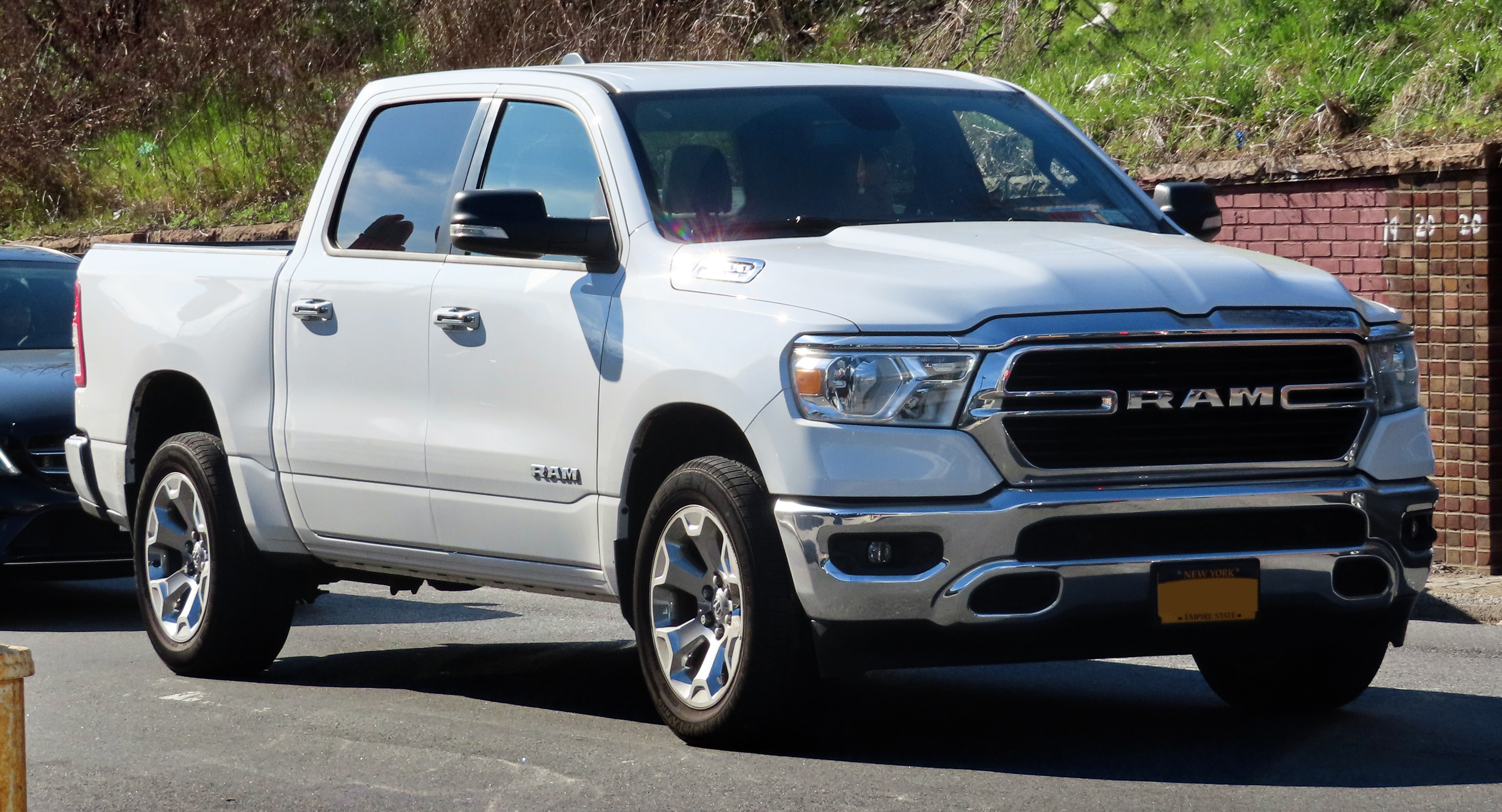
The Ram 1500 is a pickup truck. The hosts are saying that when Ram changed what engine it offered, sales dropped because many buyers didn’t like the change.
A “six-cylinder” engine has six combustion chambers. The idea here is that some truck buyers wanted the traditional V8 sound and feel, so they didn’t like the switch to only six cylinders.
The “Hurricane engine” is a newer engine option being discussed for Ram trucks. They say it’s designed to be more efficient and lighter, but people still preferred the older V8 setup.
A “Hemi engine” is a type of V8 engine. The hosts are saying Ram built a lot of its reputation around this engine, so when it wasn’t offered, some buyers lost interest.
“V8 Hemi” means a V8 engine with a specific combustion-chamber design. In this conversation it’s basically the engine people wanted, and when it was changed, sales dropped.
The Dodge Challenger is a performance car, often with a big V8 engine. It’s the kind of car people associate with strong acceleration and a classic muscle-car style. The podcast brings it up when talking about the brand’s focus on those high-performance models.
Brand
Red Isle
“Red Isle” sounds like a mishearing of a performance badge name. The point is that the company marketed specific high-performance versions, and that shaped what buyers expected.
Brand
DS
DS is a luxury car brand owned by Stellantis. It’s mainly sold in certain markets—here, the host says it’s mostly available in France.
Jeep is a well-known car brand, especially for SUVs. Here, they’re saying Stellantis plans to focus on Jeep as one of its main brands, especially in the U.S.
“Core brands” means the brands the company plans to focus on most. They’re talking about which brands Stellantis will emphasize in different parts of the world.
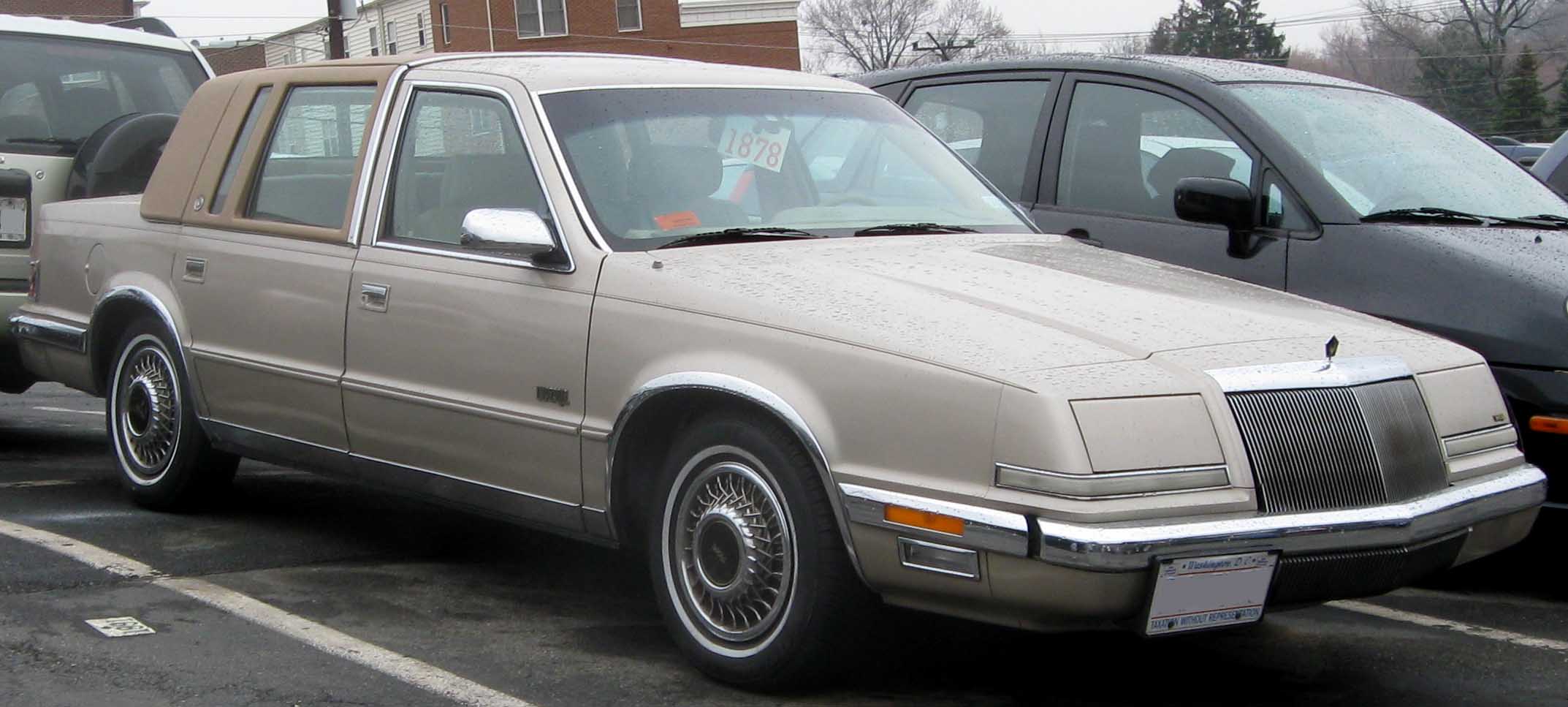
The Chrysler 300 is a long-running large sedan model from Chrysler. The hosts are saying it’s been around for a long time and has had different versions over the years.
Off-road diesel is regular diesel, but it’s meant for vehicles that don’t drive on public highways. Because it avoids highway taxes, it’s usually dyed so authorities can tell if someone is using it illegally in a street car.
There are taxes on fuel when it’s used for driving on public roads. Off-road diesel is treated differently so it doesn’t pay those highway-related taxes.
The Mitsubishi Outlander is a Mitsubishi SUV. It’s the bigger, more family-oriented crossover compared with the smaller Mitsubishi models mentioned right after it.
The Mitsubishi Eclipse Cross is a smaller SUV. The hosts are saying some long-time Mitsubishi fans don’t like that the “Eclipse” name is now used for this type of car.
Diamond Star was a partnership between Chrysler and Mitsubishi to build certain cars together. The hosts are reminding listeners that these Eclipse-based models came out of that joint production.
“Manual only” means you had to shift gears yourself with a clutch pedal and gear stick. The hosts are saying that the turbo version was set up to be driven in a very hands-on way.
“Dump the clutch” means you let the clutch out really fast to get moving quickly. It’s a more aggressive launch technique that can make the car jump forward.
The Mitsubishi Galant was a Mitsubishi car line that came in different versions. Here they’re talking about a more performance-focused setup: turbo power, all-wheel drive, and a manual transmission.
The Mitsubishi 3000 GT is a sporty Mitsubishi coupe from the 1990s. In this discussion, they’re saying the Dodge Stealth was basically the same idea—just sold under Dodge instead of Mitsubishi.
The Dodge Stealth is a sporty Dodge coupe from the 1990s. It shared a lot of engineering with Mitsubishi’s 3000GT, and it could come with different V6 engines, including turbo versions.
An engine cylinder has openings controlled by valves. “Valve per cylinder” tells you how many of those openings each cylinder has, and it can change how efficiently the engine runs.
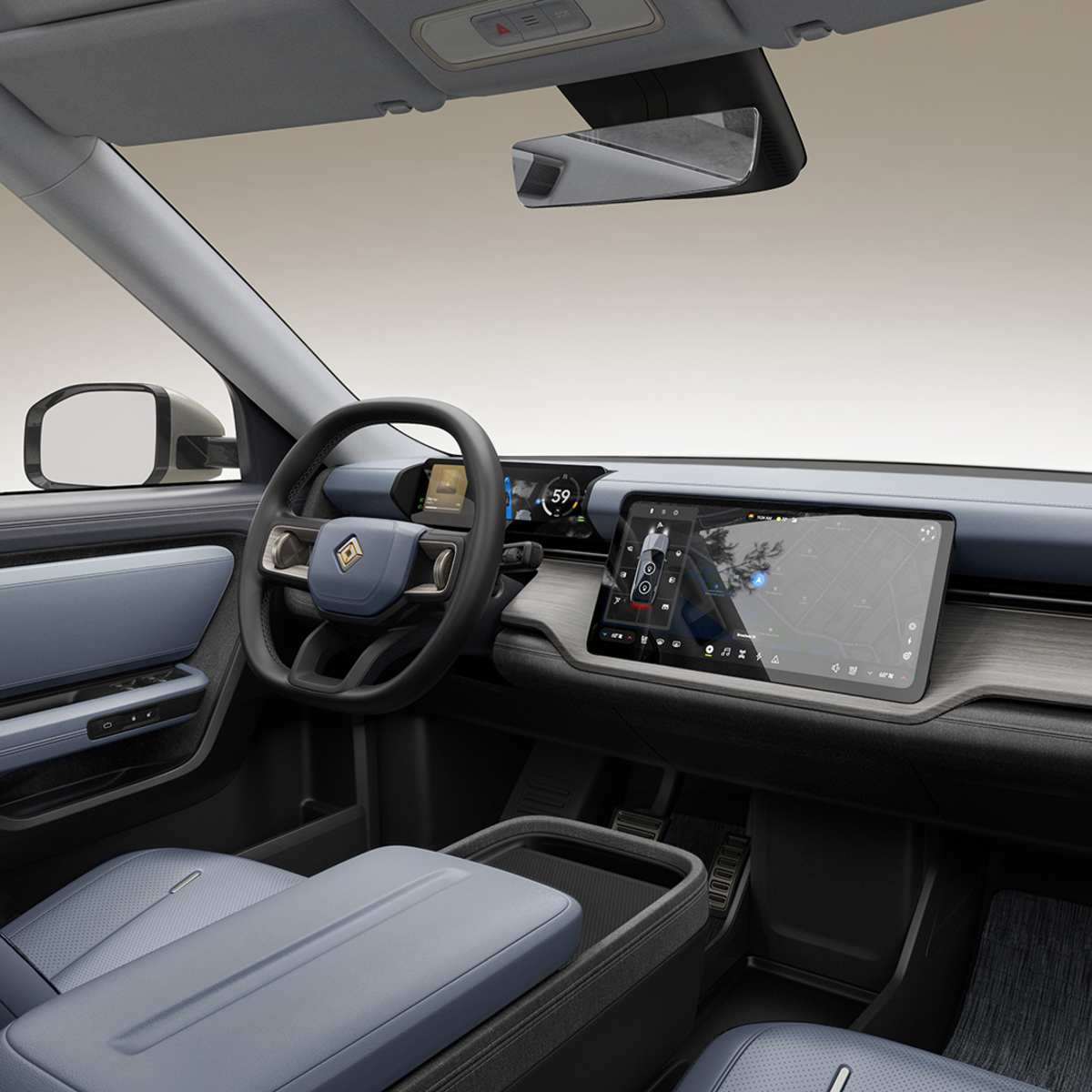
The Rivian R2 is a smaller electric Rivian vehicle that’s meant to be easier to live with than their bigger models. The hosts think it looks great and hope it can handle rough roads too.
The Rivian R3 is a future smaller electric Rivian model. The conversation frames it as something that could still be fun and capable, even if it’s not as big as their other cars.
“Quarterly results” are a company’s financial performance reports released every three months. The hosts point out that even with large investments, Rivian’s quarterly losses can still be significant.
Forensic accounting is like detective work for money. It looks through financial records to figure out where funds went and whether anything shady happened.
An earnings call is when a company talks to investors about how it did financially. It often includes a Q&A where people ask questions about the business.
Kilowatt is a podcast by Bodie Grimm that focuses on electric vehicles and the EV industry. The hosts reference it as a source for an analysis of Tesla’s earnings call.
The Subaru Outback is a car with extra ground clearance and a wagon-style body, made for everyday driving and tougher road conditions. Some versions are set up for more rugged use, like the “Wilderness” trim mentioned in the podcast. It’s brought up because it’s a capable, practical choice.
The Subaru Forester is a popular family SUV/crossover. In this segment, they’re pointing out that the regular Forester got updated first, and the Wilderness version came later.
When a car is “redesigned,” it usually gets a bigger update than just small changes. Different trims can be updated at different times, so one version may feel newer than another.
CVT means the car doesn’t use a set of gears like a normal automatic. It can “blend” between ratios smoothly, so the engine can sound like it’s revving up and down even when you’re just accelerating.
Some automatics shift between separate gears. With a stepped-gear automatic, the car picks a gear instead of smoothly changing ratios all the time, which can feel quicker to respond.
Towing is the maximum weight the car is allowed to pull with a trailer. They’re saying the Wilderness version can tow much more than the standard version.
Final drive ratio is a gearing setting that helps determine how hard the car pulls versus how fast it can go. If it’s changed, the car can feel better at tasks like towing because the engine and wheels work together differently.
Here, “shift” means the car changing gears. Some transmissions shift in a way you can feel clearly, while others (like CVTs) feel smoother and may not “thunk” into a new gear.
“Fake ratios” means the car is pretending to shift like a normal automatic. The CVT is still changing smoothly, but it’s giving you the feeling of steps.
Horsepower is a rough measure of how much power the engine makes. They’re basically saying the car doesn’t get good gas mileage even though it’s not a super powerful vehicle.
They’re talking about how much cars cost right now and why prices are moving. That matters because it affects what you can afford and what deals are available.
They’re talking about how electric-car prices are changing. Even if EVs as a whole get cheaper, the used prices can move differently depending on incentives and what buyers want.
They mean government programs that make EVs cheaper to buy. If those discounts or credits change, more or fewer people buy EVs, and that can change prices.
They’re talking about how big a slice of the used-car market EVs are taking. If EVs gain market share, it means more people are buying EVs compared with other used cars.
“Plug-in” refers to vehicles that must be connected to an external power source to recharge their battery (typically plug-in hybrids and battery-electric vehicles). The speaker is contrasting the “fuel world” (gas stations) with the “plug-in” world (charging at home or public chargers).
“Q1.25 to Q1.26” means the first three months of 2025 compared to the first three months of 2026. It helps show whether prices are rising or falling over that same part of the year.
They’re talking about how EV prices change over time. Their main point is that Tesla’s pricing trend doesn’t automatically tell you what every other EV brand is doing.
They’re saying: don’t mix Tesla with every other EV when you analyze prices. Tesla can pull the overall numbers around, so separating it gives a clearer picture of what non-Tesla EVs are doing.
The Tesla Model Y is an all-electric SUV from Tesla. It’s one of Tesla’s biggest sellers, so people often compare it to other EVs when talking about the market.
And they may only sell one or two models at any given time.
Okay.
But yeah, I actually literally, I did before Stellantis, I had never heard of DS.
Yeah.
Very low volume.
So obviously, they've got to get rid of these.
The four core brands now moving forward are Jeep, Ram, Pujo, and Fiat.
Okay.
And that's a lot of coverage, right?
You've got the first two brands get to the U.S.
So no Chrysler?
I'm sorry.
Did I not say Chrysler?
Well, Chrysler's not one of the core brands.
Oh, okay.
Yeah.
Gotcha.
Pujo gets you Europe and Fiat gets you a lot of emerging markets.
Okay.
Also Europe.
I mean, does this mean that we might see a Chrysler product that's actually made by Pujo?
Yes.
Okay.
Okay.
I think that's what this means.
Unless they kill, and we're waiting for more announcement, and apparently we're going
to hear more about this this month.
So we'll see where this goes.
I think they might be preparing us to finally start trimming some brands.
Yeah.
And it's really weird to trim Chrysler if they were to do that because that was the company.
That was the company.
If you're an American, that was it.
Yeah.
Yeah.
And they sold these big, beautiful big cars and Imperials, and it's weird to see that
go.
The 300 was around forever, too.
I didn't realize, and I don't know that this sold well, there was a 300 variant in the
early 70s.
It's really cool looking.
It's freaking huge because it's based on their big car architecture, but it was really
elegantly blacked out, and this is a cool car, but the 300, yeah.
And then there's the later 300, the one you're talking about, maybe the LX, which maybe they
should not have killed.
If they keep Chrysler, they should probably do a sedan version of the Charger for Chrysler.
And you know what they might get is some livery business, too.
Yeah.
A lot of the big backseat.
Yeah.
Big backseat.
A lot of the airport shuffles, shuttles and stuff.
Yeah.
Yeah.
So you got that going on.
Funny story here.
It comes up every time gas gets expensive.
I always forget about it.
Are you familiar with off-road diesel?
Yes.
At least I'm thinking it's at the farmer version.
It's like color to different color.
Yep.
It's agricultural diesel that is not subject to federal highway taxes.
So if you like, I think it's red or something?
Yep.
Okay, it's dyed red.
Oh, currently it's dyed blue.
Oh, blue, okay.
But it's funny because I watched a video.
I'm like, that's red.
Yeah.
Maybe I got this story wrong.
But I guess technically if they see you put it in your car, you're in big trouble.
That's a federal crime.
Don't do that.
And if you're a retailer, God forbid, allowing that or even encouraging that, you're going
to jail.
Yeah.
Yeah.
Don't do that.
You know what I drove in here today in for the first time in years?
You got me, Tom.
What did you drive in?
A Mitsubishi.
Oh, really?
I have not driven a Mitsubishi in years.
I think they make what?
Two models?
Basically.
But three.
Three, okay.
Yeah.
They have two subcompacts.
One compact.
The compact is the Outlander.
Then there's the Outlander Sport and the Eclipse Cross.
Okay.
And a lot of Mitsubishi loyalists are really upset about the use of Eclipse.
Yes.
Describes small.
That was back in my day.
Yeah.
Because the Eagle talent that I had was the Eagle version of the Mitsubishi Eclipse and
also the Pumeth laser.
Remind people about Diamond Star and those cars.
Yeah.
So they were built in normal Illinois.
It was a collaboration of Chrysler and Mitsubishi.
And that was a fantastic car actually.
Oh, yeah.
It was great.
It had a lot of power.
The turbo versions were 200 horsepower, just under 200 horsepower.
And then when they came out with all-wheel drive, it was one of the first compact sports
cars that had all-wheel drive.
And they were crazy.
It was a great all-wheel drive.
You could, I could, it was a manual only on the turbo.
So you could rev that thing to 5,000 RPMs, dump the clutch, and you were off.
That was peak Mitsubishi.
Yeah.
And there was a version of the Galant that shared a lot of that drive track.
Yes.
You could get a turbo all-wheel drive Galant with a manual.
Yeah.
For a while.
And that's what, I think, how we remember Mitsubishi.
And they kept simplifying their lineup.
And then the Eclipse just became a version of the Galant with a, it was a coupe.
There were such great cars.
And to see them just go away like that, it's just a shame.
Big, huge V6 in the later versions.
Yeah, because then they made the Dodge Stealth for Dodge, which was the 3000 GT Mitsubishi.
Forgot about that, because that's good stuff.
Yeah, yeah.
Yeah.
I knew someone who had the Stealth.
Yeah.
My father had one.
In fact, he still has it.
He didn't have the Stealth Turbo.
I think the Stealth could be had, the Dodge could be had with a two-valve V6, 30, what
is it?
There was the 24-valve V6.
The V6, 32-valve V6 twin-turbo.
And then there was the standard V6 without the twin-turbo.
Yeah, that's what my buddy had.
And it was still a really great car.
Yeah.
Good looking.
Did I say 32-valve V6?
24-valve.
24-valve.
Yeah.
That's confusing.
We would be so casual in discussing this, but it's really four-valve per cylinder.
That's what we're getting at here.
Yeah.
But it's good to drive this car.
I drove it exactly one mile, 1.1 miles so far, so far so good.
I think the problem with this car, just superficially, there's not that many dealers.
So if there's anyone here listening out in the plane states in the Southwest, I don't
know what your access to a Mitsubishi dealer.
Oh, yeah.
That can be a problem, especially for servicing.
Yeah.
Around here, there's lots of them.
Yeah.
We're in Chicago.
I was just going to mention something I forgot.
Oh, the Mitsubishi factory in normal Illinois is now the Rivian factory.
Yes, yes.
So they're cranking those out.
Rivian is in the process of getting ready to start selling compact.
Yeah, the smaller versions, which will look really good.
It looks so good.
That's the R2.
Yep.
And there's the R3 coming.
That looks delightful.
Yeah.
One of those cute mobiles.
Yeah.
Yeah.
And if it is as good off-road as it looks, holy cow.
That's cool.
Hopefully, it'll turn them around because they've been kind of stuck.
When I got all excited on this show, I got all excited when Volkswagen started handing
them buckets of cash.
Yeah.
And by buckets, I mean.
Billions.
Billion dollar buckets of cash.
And you're like, okay, they're good.
Yeah.
This is a lot of money.
This will get them through launching their smaller vehicle.
And then the quarterly results come out and they lost two or three billion dollars.
It's like, where did the money go?
Where did it go?
Exactly.
Yes.
Like, I don't know.
Eat some forensic accounting.
Yeah.
They are building another factory, which at this point feels optimistic because their
sales aren't going up.
I don't try to beat everything overnight.
Just take it step by step.
The thing about that was Elon Musk got away with it.
Yeah.
He just always distracted people with a new project.
And while they were distracted, he actually kind of did fix the stuff we weren't supposed
to look at, which is why there is a Tesla now.
Smoking mirrors.
You know what?
Maybe after the break, you drove a really cool Tescar and I want to talk about that.
But after the quiz, I did want to talk about listening to the Tesla earnings call, something
I've never done before.
And I cheated.
I did.
I listened to someone else's podcast, Bodie Grimm's Kilowatt podcast, and he did an analysis
of the call.
Okay.
But I have one crazy takeaway, and that said, Elon Musk doesn't care about cars anymore.
Oh, that was obvious a long time ago.
Yeah.
Like, he really just doesn't care.
Yeah.
He's got all these other things.
He's working on.
So, all righty.
I just drove, I just drove the Subaru Wilderness.
Yes.
Now, for people who aren't keeping up with the Forester, the Forester was redesigned last
year, but the Wilderness version wasn't redesigned until this year.
Which is a little odd.
It is odd.
That's something Volkswagen used to do, just to mess with journalists' heads.
But my review is up now.
I haven't given it a second run through, so I'll live with the typos, I'll fix them.
I do have one beef with your review, though.
Oh, do you?
Yes.
Okay.
You are not allowed to ever say this in the same sentence.
Okay.
A car with a CVT that's fun to drive.
Okay.
Tell us what a CVT is real quick.
It's a continuous variable transmission, so it's got one bungee cord gear.
And it sounds like a big rubber band under your hood, and it's whiny, and it's absolutely
horrible.
Dude, don't sugarcoat it.
For a car person, it's like fingernails on a chalkboard.
I accept everything you say as an enthusiast.
However, Subaru does the CVT very well.
For CVT.
Yeah, okay.
Of course I'm...
No, no, no, but you're right.
The CVT is not as responsive to throttle inputs and not as fun to drive as a stepped
gear automatic, or God forbid, a manual, a proper manual.
But that said, the power here is pretty good.
But the point I want to make about this car is the wilderness is a trim level that brings
you more off-road capability, or more correctly, the look and feel of more off-road capability.
And also it's kind of surprised where the standard is only towing is 1,500, but the wilderness
is 3,500.
That's a huge difference.
I confirm that number, and that's huge.
That's huge.
And I think part of that comes from revisions to, I don't know if it's the transmission
or the gear, like the final drive ratio.
Some software, something, yeah.
But they are getting more gear.
You're getting what we used to say was a higher or numerically lower gear out the back, basically
better acceleration, worse gas mileage.
And this feels nice and grumpy off the line, but I was just sort of driving this car and
there's a lot to poke at here, right?
It's a little bit loud.
I don't know if it has the nicest interior in the world.
You feel the road.
These are all things an enthusiast might like, but I don't know if a regular shopper would.
But really, what's interesting about this is that they all kind of work together and
give this car character.
And character is usually an excuse for a bunch of flaws.
But here, they really come together nicely.
This thing, it feels alive, it's fun to drive, it sprints from a light.
You said it again.
I did.
I did.
I know I did.
But it's a good CVT.
Okay, okay, okay.
Honda's doing it too.
Honda's getting away with the good CVTs.
Honda sells millions of cars with CVTs.
But yes, to your point, and I make this point all the time.
If you are young and don't know better, don't even think about what we're talking about
right now.
But if you have gone from a regular automatic transmission to this car, take it for a long
test drive and see if it's okay with you.
Because it may not be.
There are people who can't make the transition.
And part of what happens there is that you're looking for that sound, right?
And if you feel the engine rev, you hear the engine rev, and you want a shift.
Yes.
And there ain't no shift coming.
And you're also waiting for the feel through the cabin of that little, you know, where
the first becomes second, second becomes third, and so on.
And you don't get that.
You don't get that.
And if you play with the paddle shifters in some of those cars, which is weird that CVTs
have them, there are fake ratios.
They're fake.
They're fake ratios.
I think Audi might have been the first company to do that.
But anyway, it's just, I was very happy to drive this car.
And there's a couple of things about it that I really like that I want to get to real quick.
One, outward visibility, absolutely excellent, probably the best in the class.
Really roomy inside.
The seats are more upright and theater-like.
So even if you're a little kid, you can see out the window and enjoy the road.
Big glass all around you.
That's what makes the visibility so good.
It does have that nice feel off the line.
Just it's a little bit quicker.
Fuel economy is not great.
I've got about 23 miles per gallon, which is probably the bottom of the class.
Yeah.
That is actually for a 180 horsepower car.
That's not good, actually.
No.
So the vehicle I drove was 42 grand, a little high for this vehicle.
It's the penultimate trim level, but you can do one less.
But drive the wilderness because I thought it was pretty cool.
If I was going to buy one of these, and my wife and I keep, I'm going to say this for
the next five years.
My wife and I were looking for a car.
Okay.
For the next five years, yes.
Yeah.
Nothing may ever come of this, especially because she works from home a lot.
Okay.
She's a 10 year old Subaru Crosstrek with 60,000 miles on it that has never given us
a minute of trouble.
Oh, no, those are great cars.
Why would we buy another car?
Except that she's bored.
Yeah.
All right.
My full review is online now.
You can check us out our show notes.
Check us out at, uh, on Facebook, the carstuff podcast and follow us there and you can keep
track of stuff while our show notes will be posted there.
We're going to take a break.
When we come back, we talked to Carl Brower, he's the executive analyst at IC cars about
electric vehicle, used electric vehicle sales.
Oh boy.
Sounds good.
Questions or comments?
Drop us a line at carstuff at consumerguide.com.
That's carstuff at consumerguide.com.
Dear crew, it's Toyota with an adult sized third row.
Everyone's welcome in the Grand Highlander from sports fans to eco buffs and movie fans.
Seen back in the Sienna with an available rear seat entertainment system.
Slip into the RAV4 with available all wheel drive and let's go.
Toyota, find yours at Toyota.com.
Toyota, let's go places.
I drive my bus in a busy city.
That's why road safety is so important to me.
I know that I must slow down and be extra careful when I make a wide turn.
Buses need more room than cars.
Everyone can help keep our roads safe.
Next time you're driving, remember to give buses plenty of time and space to finish
turning before driving ahead.
Let's all plan to share the road safely.
Learn how at www.sharetheroadsafely.gov.
Welcome back to the Car Stuff Podcast.
And we're back.
This is the Consumer Guide Car Stuff Podcast.
I'm Tom Lappell, publisher of Consumer Guide Automotive in the co-pilot seat today.
Paul Harold of the Sons of Speed.
Nice enough to make some time for us.
How are you Paul?
I'm doing well, Tom.
Thank you.
We're in a very weird place these days, right in September.
The EV incentives disappeared.
Yes.
Sort of softening demand for EVs.
Softening is a good word for it, yes.
And then all of a sudden something crazy happened to the price of gas.
Tell me more about this, Tom.
What happened?
Oh, and by the way, you're not on social media, are you?
I am not, but I am Car Guide.
Thank you.
Let me just work that in now.
I am Car Guide Tom on Twitter X and I'm Blue Sky.
Blue Sky, very fun.
Having good conversations.
Good.
So we'll check that out.
On the phone with us, speaking of car prices.
Yes.
Carl Prower.
He is the executive analyst at ICcars.com.
Carl, how are you today?
Hey guys, I'm doing well and enjoying the opportunity to speak with you.
It's a fun topic, can't ever get bored talking about cars, especially these days.
No, you can't.
And the world is so strange and car prices are up, electric vehicle incentives are down,
but you've got some bunch of news there.
But real quick, tell us about ICcars and what you do there.
Sure.
So ICcars is primarily a vehicle listing site where you can go on and filter on everything
from price to range, distance from your house to fuel efficiency to brands, models, odometer
reading, and filter on all these things to find cars that you're interested in buying
new and used.
And we also have some unique things that no other sites have like predicted lifespan
for cars, which can be pretty helpful when you're looking at two or three of these cars
and you want to know how much, how long each one's going to last.
And then we also have a bunch of stuff that I think we're going to talk more about today,
which is the data that we use.
We have so much data that we have at a great data team and they're just crunching it and
always coming up with really cool stories.
Both just general knowledge about automotive, but also can be very helpful when you're again
shopping for a car, a lot of guidance there on which cars you should buy.
Good example, colors, which color holds their value the best, which color has higher depreciation.
We have a study for that along with a lot of other.
You really go deep then if you're talking about colors, that's great.
Yeah, fun stuff.
I just saw someone's most popular colors list and the first seven colors were variations
on white and black.
Like we're still boring.
Like on some level, the American industry car industry sucks.
Silver and gray, don't forget.
Meanwhile, I just saw an orange Chevy Colorado.
That's cool.
More of those, please.
Yeah.
Yeah.
You know, I was, I was watching an older TV show, like a 70s from the 70s, and they
had these random shots and I'm like, look at that color on the, you know, it was like
a rainbow in the park in the parking lot.
And I was like, boy, that's 1970, you know, like late 1970s versus the mid to 2020s.
That's for sure.
Yeah.
And I haven't watched this in a long time because it's not on when I see it and I'm
not going to chase after it.
But Adam 12, if people remember that show, police, police show, it's, it's a great show
because everything you need to sort of buy the book.
If you want to learn about police procedure, kind of watch this show, but, but it's a wonderful
document of Los Angeles in the late 60s and early 70s and the car scene out there.
And there's stuff out there that no one in Chicago ever saw.
And like the first Subaru's and stuff like that, but the colors are great and wood paneled
wagons are everywhere.
It's just a wonderful thing to see.
And Dunebuggies, Dunebuggies on the street, what a cool little that would have been.
But yeah, well, we should probably talk a little bit about the new market here.
One of the crazy things that you noticed and one of the things that you guys wrote to us
about before you joined us today was the fact that EV prices had been going down.
Used EV prices had been going down, but used Tesla prices were on the climb.
What was that about?
Yeah, it's really interesting because obviously you guys were mentioning that we've, we've
lost some incentive to buy EVs from the government and then we've theoretically gained some back
to buy EVs from our local fuel station pricing board.
And so a lot of people in the last month have been contacting us like, everyone's running
back to EVs, EVs, EVs, EVs, and it's like, well, EVs didn't have some growth in Q1, which
included the month of March when, and toward the end of February when prices are starting
to shoot up.
But they went up in terms of market share on the used market, how many cars were like
changing hands and all that by 15.9% EVs.
Oh, it's impressive.
Hybrid's been up by, hybrid's went up by 41.8% almost three times the rate that EVs went
up.
So I feel like to me that's just further validation that's like, okay, for every EV that someone
bought three people were buying a hybrid.
And that's that, that tether, you know, that you, you have to break from the fuel world
and add the other tether to the, to the plug, you know, literally a tether, a cord that
you have to be able to plug in.
And it's just hard for people to do that, even when gas prices have gone up 30 plus
percent in the last, you know, eight plus weeks.
So it's just, it was fascinating to look at that.
But there was one exception that, and that was Tesla, of course, Tesla, if anyone didn't
already know, Tesla kind of lives in their own world and they, you know, I feel, I almost
feel bad guys for all these car companies that have so clearly thought, well, Tesla
can do it.
We can do it.
And whether they're pure EV maker companies or traditional car companies dumping all their
investment into EVs, looking at Tesla's numbers, thinking, we'll just do what they did.
And as we all know, pretty much none of them have done it.
None of the US based ones are European based ones.
There's some Chinese car companies that have made some progress in the last five years,
as we know.
But there's just this Tesla world that kind of exists outside of all the normal things.
And in the last three months, Q1, first quarter of 2026, they were holding their prices better.
They were selling faster.
They were just not dropping from like a year earlier, you know, and their prices had gone
down from Q1.25 to Q1.26, their year over year price change of a Tesla EV, 0.1%.
We're going to call that flat.
And the non-Tesla EVs down 10.3%, a 10% drop.
So it's just a different world when you're talking Tesla.
You can't look at EV pricing and assume that that's every EV.
Tesla's still the bulk of the market and that makes EVs look one way.
When you filter Tesla and separate them out from the rest, you get a better picture of
what the non-EV Tesla market is and the Tesla market is.
I think some of that has to do with the fact that Tesla is EV.
Like when you think of Tesla, that's it.
But the other brands, you know, they have gasoline and EVs.
And sometimes I talk to customers and stuff like that and they're like, they don't even know that
Hyundai makes EVs.
And it's like, are you kidding me?
Like really, you don't know.
It's like, oh, no, I thought it's just Tesla.
So I have a feeling that part of this reason why Tesla seems to be rebound or bouncing in
the right direction might be just because they are so synonymous with the EV.
That's a really interesting point, Paul.
If you're thinking right now that gas prices are high and you were you'd have to have already
been ready to buy an EV, I think, you're not just going to jump into this because gas prices
went up a buck, hopefully because it's a big decision.
But if you were almost there anyway and you weren't really paying attention, but you knew
that Tesla made them, yeah, it's kind of the easy choice.
Yeah.
Also, I don't think people remember Model 3 or Model Y and they certainly don't
remember like EV6, you know, or Iodic 5.
Iodic 5, yeah.
Yeah.
They have the name out there.
Yeah.
And I think that's why they're the ones that are kind of still, they're not affected as
much as the other brands.
Carol, do you think the stigma is off of Tesla now or some of the stigma?
You know, I mean, I think, I think funny, I think there's less stigma on EVs than ever.
But I think there may be some stigma, more stigma on Tesla than ever from certain people,
certain people in certain circles and certain persuasions that are not fans of Tesla,
because they're not fans of Elon, like they were, you know, up until a couple of years ago.
So that's interesting.
But again, I got a lot of calls over last year plus, as you can imagine, it's like,
so everyone just takes Tesla now and they're on the outs.
And again, it's like, well, that makes for a great headline and a pithy quote,
but it's not really true.
I'd rather be honest with you guys.
So then I have to tell them the truth.
It's like, no, I'm sure he's lost some some customers by thinking about it,
gained some customers.
And I think we're talking edge cases here, margins.
I think people who wanted a Tesla forever still bought one, if they could,
in the last year and people who would never buy a Tesla didn't buy one
in the last year or two years.
And they don't really care about the other stuff.
The interesting thing about Tesla is I think that we're way past proof of concept with that.
The model one, there's millions of them out there.
I don't know how many are available used, but it's kind of a safety play at this point.
We know they're not disasters.
We know they don't burst into flames.
You know, we know the batteries last.
There might be little problems with them, but they're largely proven.
Yeah.
And I think it's kind of a safe play.
Kyle, do you have a sense of shifting gears slightly here?
Honda, for example, completely bailed on the EV thing now and for a bunch of good reasons.
But it's weird that now Toyota has stepped in and Subaru have stepped in
and Cadillac seems to have recommitted.
What do you think of these decisions?
And do you think the market's going to reward the companies for,
especially with high gas prices, reward these companies for sticking with it?
Well, I think outside it's just a tough world.
It's a tough world to enter the EV market and expect to do well and pay your bills with it.
Now, one of the big differences between Honda and Toyota, for instance,
is one of those car companies is kind of ginormous and one of them is not.
So Toyota can play in the EV world and not really risk their long-term health,
financial health, or stability very much.
Honda goes all in on EVs and gets it wrong.
They're in big trouble.
And I think that's what they realized and they said,
you know what, we're going to take this much of a write down, as they say,
which essentially is a loss if we bail on EVs right now.
And this much of a write down or the company kind of evaporating,
if we go all in and we have a problem selling these cars.
So we're going to be prudent and pull back at least for the near term.
And then Cadillac and GM is kind of more like the Toyota situation.
Again, Cadillac isn't a super high volume seller.
That's one of the divisions that's kind of struggled a bit within GM,
from all the other ones have done better.
So I think, I've said that for years.
I've said, notice the brands that said they were going all in EV,
the traditional brands that started.
You know, I didn't hear that from Chevy or Ford or Toyota.
I heard it from Mini and Jaguar.
No, I'm not painting a picture or anything.
I'm like, why is that?
Okay, I am.
I'm totally painting a picture.
Yeah.
Hey, our brand isn't doing very well anyway.
Everyone seems to think EVs are working with all EVs.
Yeah, yeah, that's what we're doing.
But Toyota was a, they really didn't jump into the EV right away.
Right, they dragged their feet.
They dragged their feet.
They were activist investors on their butts about not doing more about EVs.
And now they're coming out in a very measured way.
And I think it's totally market appropriate.
It feels market appropriate.
Yeah, I mean, obviously they were like, well, let's see what happens first,
you know, before they put $4 billion in investment into it.
So I think that was a smart move.
So Carol, go ahead.
I'm sorry.
I feel like Toyota is pretty brilliant.
And I mean, then I would, I was in a lot of these scrums, as they called them,
you know, while the journalists and they were kind of doing their
not so thinly veiled tisks for years.
Where's your EVs?
Where's your EVs?
And Toyota would very consistently and politely say as nice as they could.
They didn't use these words guys, but their response was
something nicely dressed up to we're not jumping money into a bad business mom.
They never said that, but that's what they were saying in a nice way.
And I was, and I respected them for that.
And all of a sudden, boom, somebody looks like the smartest guys in the room.
And my attitude is, hey guys, rest of the industry, you can bet against Toyota.
If you want to, everyone who's done that in the past has lost, but maybe you'll
be right this time.
Go ahead and bet against them.
And also I kind of like the Toyota story because to me, what you guys said is exactly right.
They prudently watched the market and now they're prudently dipping their
toe in the water without putting themselves at risk, which really is what all the car companies
should have done.
And ask me how I know, let's total up the way down from the last six months.
Part of what happens too, though, and this is especially with American car makers, but
globally too, is that car makers are way, way, way too responsive to shareholders, in my opinion.
Yeah.
And for a while before EVs, remember there was that brief period of time during which
Mark Fields was fired for not being tech enough at Ford.
We were all supposed to be going autonomous.
And I don't know where that washed away to, but then we were all going electric.
And until COVID, until COVID, when Ford launched the F-150 Lightning, that seemed like it.
We had just lit the EV fuse and we were going to be all electric in six months.
And it seemed like, and then COVID happened and supply chain shortages happened,
and Ford kept raising the price of the F-150, like ridiculously.
And then the whole world was like, this kind of sucks.
Also, I called about installing a charging station, and it was six grand, and I don't know.
Yeah.
Not to mention, once the range came out when you were towing something,
that was a lot of bad press too.
Yeah.
And it turned out to be true.
Pretty much towing with any EV.
Yeah.
It just did hurt.
Yeah.
Remember the tour that Farley did to go talk to all the happy Ford F-150 Lightning owners,
except he didn't find any happy.
Oh, God.
I mean, that was a tough PR tour.
It didn't quite build away.
I think it was a good picture.
It didn't.
The crazy thing is, the F-150 Lightning was a delight to drive.
Yeah.
I mean, I don't tow.
In what?
I don't tow.
So to me, what a nice vehicle.
Yeah.
Yeah.
I really liked it.
All the thing I drove was close to 90 grand.
But hey, Carl, let's switch gears for a second.
You have a new podcast.
Yeah, we do.
I have been working now for six months with Lauren Fix.
We have been doing The Drive with Lauren and Carl.
This is a kind of extension of The Drive with Alan Taylor.
He'd been doing that radio show and started doing podcasts like most people do in the last 10 years.
He'd been doing that since the 90s.
And then he kind of reached the stage where he was ready to move on.
He moved up to Oregon.
He's become Farmer Allen as we joke with him and all that.
And he's just got other things to do.
But he was happy as Lauren and I were one of his consistent guests to introduce us as the host
now of the show officially and have us take over.
And yeah, we're on the radio stations.
We're on the podcast.
And we added a visual element.
So if you go to The Drive with Lauren and Carl on YouTube,
you can watch us as well as hear us talk about car industry.
Sounds cool.
And you can download it any place.
Yeah, it's all over the podcast platform, Spotify, Apple,
iHeartRadio, wherever you need to go to get your podcast, it's there.
Very cool.
And then the most important question are you having fun doing it?
It's funny you say that because, you know, I went into this going,
well, I think this sounds like a fun idea.
But, you know, and it took about maybe two or three episodes before I was like,
no, no, this is absolutely fun.
And that that made me very much happier to keep going to like, this is adding to my plate.
But when I add fun to my plate, my plate seems to my plate overflow as they might think.
So it's okay.
How can we keep track of what you're working on, sir?
If you go to The Drive with Lauren and Carl on YouTube or any of those podcasts,
you can see that I'm on Forbes, of course.
I've got two stories going up that we're having to both be in Barbott for tomorrow,
you know, May 5th, although who knows when you're listening to this.
And I do have my own channel, Carl Brower Cars, also on YouTube.
Sounds good.
Carl, thank you so much for your time today.
Absolutely.
I'm being honest with you guys.
We'd love to be on again if you need any help.
And you're having a slow week for guests.
I'm happy to fill in.
Even if it's a busy week, we'd love to have you back up.
That'd be great.
All right.
That was Carl Brower.
He is executive analyst at IC Cars.
We're going to take a break and when we come back.
Quiz time.
Quiz time.
Questions or comments?
Drop us a line at carstuffatconsumerguide.com.
That's carstuffatconsumerguide.com.
Welcome back to the Car Stuff podcast.
All right, we're back.
This is the Consumer Guide Car Stuff podcast.
I'm Tom LaPell.
Thank you for joining us today.
In the co-host seat is Paul Harold of The Sons of Speed.
Paul, how are you doing?
Very well.
We're talking quiz here.
Yes.
It's quiz time.
Quiz time.
I've already lost the quiz, but I've got it here somewhere in all these papers.
But tell us real quick about The Sons of Speed
and how people can follow what you're working on
and when you might think we'll hear the podcast again.
Yes.
We had a little technical issues with the podcast,
but we should be back soon, hopefully.
And we are MotorDriven.com.
Coordinating the activities.
It's four people.
Five people.
Four people.
Four people.
That's a lot to try.
It is.
If you're trying to get four full-time employed working people in a room at the same time.
It is near impossible.
Yeah.
Which we're finding out.
Yeah.
It's a great podcast.
I hope to hear it again soon.
Yes.
We're excited to start it off again.
Tell us about We Are Motor Driven.
It's a collaboration of Jennifer Jensen from AutoZotica,
then Brendan Appel and myself for The Sons of Speed,
and Harvey Briggs with Rides and Drives.
These are good people.
Yes.
That's a good cast of characters.
All right.
Are you ready for quiz time?
I'm always ready, Tom.
All right.
Bring it on.
I don't know if you are.
Okay.
It's easy to kind of come up with questions I think will frustrate you.
Okay.
Or irritate you.
Okay.
And that's no good for you, but I think it's good for listeners.
Okay.
Okay.
All right.
Today's Consumer Guide Car Store Podcast Power Quiz is Best Sellers.
Okay.
I'm going to give you a model year and two cars.
You just have to tell me which one sold better that year.
Okay.
So it sounds straightforward.
Yeah.
I hope the years aren't too crazy.
The first one's not.
Okay.
Man, maybe a little bit.
This might have been, I forgot your birth year, but this might have been it.
I'm 1970.
Oh, this is 1976.
Okay.
In 1976, which sold better?
And this is a little bit of a trick question.
The Olds will be a Cutlass or the Ford LTD?
And I say it's a trick question because there's a bunch of crap that was called Cutlass.
Okay.
Which they lump into one.
Was the Ford like part of everyone with the cop cars?
Yep.
Okay.
Yeah.
LTD would in 1970, it was a very popular fleet car.
Yeah, yeah, yeah.
You know, you're laughing now.
So I don't know.
I'll go with the Oldsmobile.
It was.
Okay.
By a shocking amount.
Oh, wow.
Okay.
The Cutlass was so popular in the mid-70s.
The Cutlass 496,000 units.
Okay.
Almost five.
That's RAV4, my friend.
Yeah.
And the Ford LTD, just 362.
Okay.
Well, not too bad.
No.
All right.
You're on the board, sir.
You have won 1981.
Okay.
Now we're talking.
Oldsmobile Cutlass or Ford Escort?
Oh, that's a good, that's a tough one because at one point, I don't remember what year,
the Ford Escort was like the number one selling car on the planet.
Right.
Yeah.
Yeah.
And they sold a ton of them in Europe too.
Yeah.
But I know the Cutlass also sold gobs and gobs and gobs.
Yeah.
In Chicago alone, they probably sold 40 or 50 million.
So the question is, was 81 the year of the Ford or was that later on?
Yeah.
The Escort was certainly new.
Yeah.
Yeah.
That's why I was, I'm thinking, I'm thinking it's still the Oldsmobile then.
It is.
Okay.
Well, you're doing well here.
It's, it'd be hard for you to lose.
454,000 Cutlasses, 285,000 Escorts.
By the way, five questions.
You need three for a win.
The bonus question, which is always related to the topic of the day.
Okay.
Is one of the three.
All right.
Sounds.
All right.
You've got two points.
Nice.
Best Selling Car of 1920.
Oh, no.
Chevrolet, Ford or Cutlass?
That Cutlass is getting some.
It's getting to work out.
Getting to work out.
1920.
Okay.
What were they again?
Chevrolet or Ford?
Oh, it is not a specific brand.
Just no, there really wasn't.
Oh, okay.
Yeah.
I'm sure they're like Fatens and Coops and Oldsmobile.
No, Oldsmobile is not an option for you, sir.
Oh, no.
Okay.
That was just a bad joke on my part.
Oh, I see.
Okay.
It's got to be Ford then.
It is.
Yeah.
Okay.
By a lot.
Yeah.
Chevy was just coming online.
Oh, 806,000 Model T's and a couple of other things and 146,000 Chevy's.
So Chevy just coming online.
Okay.
So you got three then, right?
Yeah.
Nice job.
Thank you.
All right.
Best Selling Car of 1903.
Oldsmobile or Cadillac?
Oldsmobile.
It's got to be.
It was.
Yeah.
Yeah.
The curved dash holds raking them in.
3924.
Oldsmobile's and a bunch of Cadillacs, 2500.
Okay.
So they got the job done.
Those, those, these are ancient brands.
Yeah.
Nice to have Cadillac around.
We still do look around too.
Was that the time we're still alone?
Was still, was the head of Cadillac or no?
Um, what, what year is this, 1903?
This would be before Cadillac was part of General Motors.
Oh, okay.
Okay.
Okay.
Yeah.
Yeah.
That was going to happen later.
So Cadillac was on its own.
It was.
But Oldsmobile wasn't part of General Motors back then, was it?
No.
Yeah.
So.
And it was at the time, I think that when Oldsmobile was killed, it was the second oldest car brand.
Yeah.
And the oldest was, I think was a truck.
Was it?
No, it wasn't a time where it bends?
Oh, I'm in U of U.S.
Oh, of U.S.
Okay.
Yeah.
And I'm trying to remember now, but I thought it was a truck.
It might have been Rio, which was the way it was set up by Oldsmobile.
I had some.
Now you're talking about stuff I know nothing about.
All right.
So you have a four.
Okay.
Now you're going for a sweep.
Best selling non pickup truck of 2025.
Honda CRV or Toyota RAV4.
Oh, the RAV4.
Yep.
Yeah.
By a lot, but the RAV4, the CRV did nice.
479,000 RAV4.
Okay.
That's huge by modern standards.
Yeah, that's huge.
And then considering the competition out there, that's ridiculous.
There's so much.
It's all good.
And then the Honda CRV, 404,000.
Which is still amazing.
Yeah.
It is huge.
That's such a moneymaker for them.
And then we were talking about hybrids earlier.
RAV4 now hybrid only for 2026.
And the CRV then, I think they're selling more than half of those as hybrids.
Okay.
And it's hard to get one.
If you want a hybrid, you're stuck with one of those
black or white or on the lot things.
You may not get that.
And no negotiation, I bet.
No.
I'm pretty sure those are going for retail.
All right.
Very nice.
We're up to the bonus question and as always.
Related to the topic of the day.
Related to the topic today.
Tell me what you know about Illinois, the state of Illinois.
Well, I was born there.
Okay.
Can't wait to move out.
Okay.
That's two facts.
And, uh, one of the highest, uh, taxes in the country, so you sold me.
I'm, yeah.
All right.
Illinois is the 25th largest in terms of a US state in terms of landmass.
It is the sixth largest in terms of population, uh, 12.8 million people.
And it was incorporated in 1818.
That's when it became a state of the union.
Okay.
I need you to tell me which of the following is Illinois, uh, leading export.
Okay.
I got up late.
All right.
Are you ready?
Yep.
Machinery.
Okay.
Excluding electrical computers and electronic products, uh, transportation equipment or cheese.
Well, it's not cheese.
That would be Wisconsin.
You know what?
Actually, I think this is an easy one for me.
I think I'm going to go with the first one, machinery.
It is.
Okay.
Quite a bit of it.
We export $12.5 billion worth a year.
Because I guess I didn't know that.
Yeah.
I'm, I'm in the cabinet industry, as you know.
So I, I, I know there's a lot of stuff made here.
So interesting.
Yeah.
There are, we were talking about this off, off air, um, in the Schaumburg area,
which is very close to, to Palatine here.
There's a lot of machine tool, low level, huge buildings.
Yeah.
Cranking out some stuff so you can see where this stuff might be built.
Yeah.
But we get really ag too.
Like if you drive one hour south of here, it's just corn.
Yeah.
Just, that's it.
It's corn.
Flatland and corn.
It's Illinois is really just Iowa plus Chicago.
Yeah.
Really.
All right.
Nice job.
You went, you went six for six?
Yeah.
Wow.
Jill, are you listening?
It can be done.
All right.
Oh, thank you.
I am jealous of an opportunity you had.
Yes.
You're going to need to tell us about that.
We, we have a few minutes to talk too, which is nice.
But you recently spent some time behind the wheel of a vehicle that everyone
probably wants to spend some time behind the wheel of.
Yes.
This was my birthday Christmas present and everything wrapped up in the one.
I got some time into a 19, 2025 Roma Spider Ferrari.
Ferrari.
Yes.
Roma Spider.
Yes.
The Roma, probably the prettiest of Ferraris to come along in a while.
It's a very beautiful car.
Yes.
Yeah.
And it's not like after Ferrari stopped using Peniferrini, which was their kind
of go-to design job.
A lot of people thought they kind of strayed like they didn't really have like a
direction or they started going like, oh.
When did they stop doing that?
You know, I don't know the exact year.
It's not, it wasn't too long ago, but.
Because I've complained about supercars in general.
Yeah.
That they're not interesting to look at.
They're just all sorts of vents and ducts.
A lot of it is downforce designed by, you know, the wind tunnel.
So there's a, but.
It's functional.
Yeah.
But I love about the Roma though.
It's, it takes some of that, but it also brings back some classic lines.
And it's really, it's a beautiful car.
No, it's pretty.
Yeah.
It's just pretty.
And one of the things about it too, not a lot of ducting and stuff like that.
Yeah.
Apart from the simplicity, it's, the car you drove was kind of a GT.
Yes.
It's not an over the top sports car.
Yeah.
It's not a track beast.
It's, it's more a little bit more laid back, but it's still fast as hell.
It's still a Ferrari.
Yeah.
It's still a Ferrari.
What, the one thing though that it's not a problem, but it's kind of a problem is once
you drive this car, you will never appreciate any other car again.
And what I mean by that is like, okay, my daily car is a BMW M2, which is no slouch.
You know, it's, it's, it's got a lot of horsepower.
It's quick.
It's, it's, it's very handled.
Yeah.
I have driven the M2.
Yeah.
It counts very well.
Yeah.
And um, but if your commute is boring, this fixes that.
Yes.
But with that, I don't know if I can ever appreciate the M2 again.
Because I mean, okay.
Poor, poor Emmy.
Yeah.
Yeah.
I mean, okay.
Just the brakes on the Ferrari, like unbelievable, the stopping power, the feel, just unbelievable.
And then when you get back in my other car, I'm like, God, these brakes aren't as good as
I thought they were.
But what, what is the price difference?
Oh, it's ridiculous.
Yeah.
It's, it's insane.
I mean, the Ferrari should be those things.
Yeah.
Ferrari is like with options, it's like almost 400 grand.
Wow.
Yeah.
So.
I mean, they started like the, the spider starts at, I think like 270, but you know.
Oh, I didn't realize you could still, still do a Ferrari under 300.
You can, I don't think anyone's been successful at it because, you know, oh, you want the little
lights in the steering wheel and you want the shields on the, on the, you know, on the
sides of the car, which like, how could you not have those options?
And already now you're like 330,000, you know?
So, and it just goes up from there.
Funny story about that.
Back when Consumer Guide still had a print edition that ended in 2008, we covered the
portion on 11 because it was a relatively high volume vehicle available in the U.S.
And we had access to them.
We could test drive them.
So.
Yeah.
We reviewed them in the book.
But the pricing was so silly because the car way back when would start just at 60 grand.
Oh, a 911.
It's not an S. It's not anything based transmission.
60 grand.
And then you, there's all these little things you could do.
And a minute later, you were like 120 grand.
Oh, yeah.
Leather faced speedometer.
Yeah.
Leather accents in different places.
And then you could custom dye that leather for all the different leather accents and the
interior and yeah, all the cunnier by this car.
This car alone had over a hundred thousand hours in carbon fiber.
So I mean, it's it's it can get absolutely insane.
And real carbon.
Yeah, real, real carbon fiber.
The real stuff.
Yes.
I think a funny thing happened with carbon fiber.
I think that people get used to seeing whatever that is the whatever the artificial stuff was.
Yeah.
And that became the new thing.
Yes.
Oh, it should look like that.
And it's not carbon fiber.
But on the other hand, I guess you don't really need carbon fiber next to your transmission
shifter.
No, but I will say it looks really nice.
Yeah.
You know, the real stuff looks great.
Yeah.
Yeah.
Yeah.
And I don't even know some of the German makers.
Like I just drove an Audi was an SQ8.
I assume that's real carbon fiber.
But maybe not.
But whatever it was, they're sticking in the trim holes.
It's beautiful.
It's beautiful.
Yeah.
But you know, things like like the speed of this car is ridiculous.
You know, it's 612 horsepower and 561 pound pound feet of torque.
But like, okay.
So the DM2 has a ZF transmission, right?
The best automatic transmission you can buy today.
That's what they say.
Okay.
And it's in everything.
It's secretly in everything.
And when you shift the gears, it's fast and stuff.
But let me tell you something.
It's molasses compared to the transmission in the Ferrari.
Now the Ferrari isn't like a conventional automatic.
No, it's a dual clutch.
Oh, it's dual clutch?
Yeah.
So basically it's a manual transmission with an automated clutch pedal.
So it is lightning.
I mean, it is so fast.
It's telepathic.
Like you put your finger on the paddles on the steering column
and it's like shifting already.
It's just unbelievable fast.
Have you reviewed the car?
Not yet.
Oh, okay.
I'm still driving it.
Okay.
I'm looking forward to reading a review about that.
So the other thing that I never even thought about was in my M2,
you know, you got the armrest on the door.
You got the armrest in the center console.
Yeah.
And, you know, it's very comfortable.
And even when you're driving quickly and on curvy roads,
you know, basically you realize that those armrests are
a little bit in the way of making turns with the steering wheel.
So I find myself like tucking my arms in to miss them
and give myself more range of motion.
And the Ferrari, that's not a problem.
The armrest in the door and the armrest in the center console
are away from you.
Interesting.
You have no restriction in your range of motion
when you're turning the wheel.
I mean, just those little details that you never think about.
Which I never would have thought.
Yeah, but they obviously do because that's their business
making fast cars and that perform well on the track
as well as on curvy roads.
So, you know, they think about this kind of stuff.
So I have to ask the question.
I think everyone is thinking.
Yes.
Does it use a premium gas?
Yes, it does.
And it uses a lot of it.
This thing is so thirsty.
I find myself like every couple of days
putting in another half a tank of gas.
It's ridiculous.
Of course, I'm driving it like I stole it.
But of course.
But it's so much fun.
And the noise it makes with that flat plane crank,
it's just I'm loving every second of it.
Well, that's very cool.
I'm glad you had that opportunity.
Yeah.
Well, guess what we did?
We burned through another hour.
We did.
We did.
Big thanks to Carl Brower of IC Cars.
Thanks to you, Paul, for sitting in.
Sure, sure.
Thanks for having Jill this week.
Thanks to Producer John sitting in
for Producer Randy this week.
Let's talk more about cars next week.
Next week.
About this episode
The conversation jumps from Stellantis narrowing its lineup to Jeep, Ram, Peugeot, and Fiat, then into Subaru’s Forester Wilderness and its real-world towing and fuel economy. From there, the hosts bring in iSeeCars data on used EVs, where Tesla stands out from non-Tesla models, before debating Toyota’s cautious EV approach and Ford’s Lightning headaches. It wraps with a Ferrari Roma Spider drive, plus some pricing, performance, and fuel-thirst talk.
Paul Herrold of the Sons of Speed sits in for Jill this week, as she participates in the Trinitē Road Rally. Follow the link here for details.
The hosts open the show with a number of topics, including blue-dyed diesel fuel, and Tom's one-mile test drive of the Mitsubishi Outlander SEL.
Paul and Tom go on to discuss Stellantis's "Four Core Brand" strategy, which prioritizes a few of the carmaker's high-volume brands, in terms of product development and positioning. Tune in to hear what this means for lower-volume marques.
Still in the first segment, Tom reviews the 2026 Subaru Forester Wilderness.
In the second segment, Paul and Tom are joined by iSeeCars.com Executive Analyst Karl Brauer. Karl walks the hosts through some used-EV price data, noting especially interesting price swings for pre-owned Tesla models.
In the last segment Paul is subjected to Tom's "Best Seller" quiz. Also, Paul shares his review of the Ferrari Roma.
Hosted by Simplecast, an AdsWizz company. See pcm.adswizz.com for information about our collection and use of personal data for advertising.