
Stellantis "Core" Brands, Forester Wilderness, Used EV Prices
About this episode
The conversation jumps from Stellantis narrowing its lineup to Jeep, Ram, Peugeot, and Fiat, then into Subaru’s Forester Wilderness and its real-world towing and fuel economy. From there, the hosts bring in iSeeCars data on used EVs, where Tesla stands out from non-Tesla models, before debating Toyota’s cautious EV approach and Ford’s Lightning headaches. It wraps with a Ferrari Roma Spider drive, plus some pricing, performance, and fuel-thirst talk.
Paul Herrold of the Sons of Speed sits in for Jill this week, as she participates in the Trinitē Road Rally. Follow the link here for details.
The hosts open the show with a number of topics, including blue-dyed diesel fuel, and Tom's one-mile test drive of the Mitsubishi Outlander SEL.
Paul and Tom go on to discuss Stellantis's "Four Core Brand" strategy, which prioritizes a few of the carmaker's high-volume brands, in terms of product development and positioning. Tune in to hear what this means for lower-volume marques.
Still in the first segment, Tom reviews the 2026 Subaru Forester Wilderness.
In the second segment, Paul and Tom are joined by iSeeCars.com Executive Analyst Karl Brauer. Karl walks the hosts through some used-EV price data, noting especially interesting price swings for pre-owned Tesla models.
In the last segment Paul is subjected to Tom's "Best Seller" quiz. Also, Paul shares his review of the Ferrari Roma.
Hosted by Simplecast, an AdsWizz company. See pcm.adswizz.com for information about our collection and use of personal data for advertising.

Toyota Grand Highlander
"Dear Crew, it's Toyota. With an adult-sized third-row, everyone's welcome in the Grand Highlander."
The Toyota Grand Highlander is a bigger Toyota SUV with three rows of seats. They’re pointing out that the back row is roomy enough for adults, not just kids.
The Toyota Grand Highlander is a larger three-row SUV positioned above the standard Highlander. In this segment, it’s mentioned as having an “adult-sized” third row, which is a key selling point for families who need real rear-seat space.

Toyota Sienna
"From sports fans to eco-buffs and movie fans, sync back in the Sienna with an available rear seat entertainment system."
The Toyota Sienna is a minivan. They’re mentioning that it can come with screens/entertainment for people sitting in the back.
The Toyota Sienna is a minivan, and the segment specifically mentions an available rear seat entertainment system. That feature is aimed at keeping passengers occupied on longer trips.

Volkswagen VR6
"But it's an interesting story about the Volkswagen VR6. And we'll talk about that a little later in the show if we have a chance... It was the narrowest-angle V6 ever."
The Volkswagen VR6 is a special type of engine layout. It’s basically a V6 that’s squeezed into a smaller space, so smaller cars can still get V6 power.
The Volkswagen VR6 is a distinctive engine design where the cylinders are arranged in a very narrow “V” angle, allowing a V6 to fit in tighter engine bays. In the segment, it’s described as the narrowest-angle V6 and used to fit V6 power into smaller Volkswagen models.
narrowest-angle V6
"It was the narrowest-angle V6 ever. And it allowed Volkswagen to stuff V6 engines into the Gulf, the Jetta, into little places."
A “narrow-angle V6” means the V-shaped part of the engine is squeezed closer together. That helps the engine fit in smaller cars.
A “narrow-angle V6” describes a V6 engine where the two cylinder banks are set at a very small angle. Narrowing the angle helps the engine package fit into tighter engine bays, which is part of why the VR6 concept worked in smaller Volkswagen models.

Volkswagen Jetta
"It was the narrowest-angle V6 ever. And it allowed Volkswagen to stuff V6 engines into the Gulf, the Jetta, into little places."
The Volkswagen Jetta is a small sedan. They’re saying the VR6 engine could be put into it because the engine design was compact.
The Volkswagen Jetta is a compact sedan, and the segment mentions it as one of the smaller cars that could be fitted with VR6 power. That’s relevant because the VR6’s narrow design helped it fit where a typical V6 might not.

Eagle Talon
"Yeah. I had an Eagle Talon TSI all-wheel drive at the time."
The Eagle Talon TSI is a sporty version of the Talon. The speaker mentions theirs was all-wheel drive, which matters for how it accelerates and grips.
The Eagle Talon TSI is a performance-oriented variant of the Talon, and the speaker mentions it specifically as an all-wheel-drive car they owned. This provides context for why they were comparing driving feel and power against a VR6-equipped Volkswagen.
Volkswagen Jetta GLX
"My wife had a 1995 Jetta GLX, which I like to call my car. But it had the VR6 five-speed manual, Eagle GAs."
The Volkswagen Jetta GLX is a nicer version of the Jetta. In this story, the important part is that the 1995 had a VR6 engine and a manual gearbox.
The Volkswagen Jetta GLX is a higher-trim version of the Jetta, and the speaker says their wife owned a 1995 model. The key point here is that it had a VR6 paired with a manual transmission, which is a notable enthusiast setup.
five-speed manual
"My wife had a 1995 Jetta GLX... But it had the VR6 five-speed manual, Eagle GAs."
A five-speed manual is a car where you use a clutch and a shifter to pick gears. In this story, it’s notable because the VR6 engine was connected to a manual gearbox.
A five-speed manual transmission uses a clutch and gear lever, with five forward gears. The speaker’s point is that the VR6 was paired with a manual, which many enthusiasts prefer for driver involvement.
torque
"So quick. And the thing about the VR6, tiny little six-cylinder engine in the place of a four, it developed good torque. Like, it liked to rev, but it would rip away from a stoplight, too."
Torque is the engine’s “pulling power.” More torque usually means the car feels stronger when you start moving, like from a stoplight.
Torque is the twisting force an engine produces, and it strongly affects how quickly a car accelerates from low speeds. Even if two cars have similar horsepower, the one with more usable torque often feels quicker in everyday driving like pulling away from stoplights.

Volvo S40
"...nsumer guide. I think it was called the V40, the S40. And it was not a Volvo heritage. It was actuall..."
The Volvo S40 is a compact sedan, meaning it’s a smaller four-door car with a traditional trunk. It’s mentioned in the podcast because people sometimes mix up the S40 and V40 names. The point is usually to identify the exact model being discussed.
The Volvo S40 is a compact sedan model from Volvo, and it’s often mentioned alongside the V40 because the names are similar. It can come up in podcast discussions when someone is trying to recall the exact model referenced in an older consumer guide. That makes it relevant for clarifying which specific Volvo body style—sedan versus wagon/hatch—was intended.

Volvo V40
"...ar-old consumer guide. I think it was called the V40, the S40. And it was not a Volvo heritage. It wa..."
The Volvo V40 is a smaller Volvo car model. It’s the kind of car you’d look at for normal daily driving rather than something huge. In the podcast, it’s brought up as a possible name that might have been confused with another Volvo model.
The Volvo V40 is a compact car model from Volvo, typically associated with a smaller “V” platform lineup. It may be mentioned in a podcast when talking about older consumer guides or model naming, especially if the host is clarifying what model was actually being referenced. That kind of discussion helps listeners understand which Volvo model is being talked about.
Ned Car
"It wasn't interesting. It wasn't built by Volvo. It was built by something called Ned Car in the Netherlands. Oh, wow. They sold it here to hit a price point, but it did not do their legacy well."
Ned Car is the company the hosts say built the car in the Netherlands. They bring it up to explain why the car didn’t really feel like it was made with true Volvo parts.
Ned Car is mentioned as the company that built the car in the Netherlands. In this segment, it’s used to explain why the car didn’t have “real Volvo components,” tying manufacturing origin to perceived brand authenticity.
Auto World
"So interesting piece of news out of, I was going to say Detroit, but that's not correct, out of Auto World. And that said, Antonio Filosa, the new CEO of Stellantis, has picked his four core brands."
Auto World is where the hosts say they saw the news they’re talking about. It’s basically a news source, not a car part or technology.
Auto World is mentioned as the source of the “piece of news” the hosts are discussing. It’s a media outlet context marker rather than a technical automotive term.
Stellantis
"And that said, Antonio Filosa, the new CEO of Stellantis, has picked his four core brands. Yes, Tom. Tell me more about this. So Stellantis is a brand new company."
Stellantis is a big car company that was created by combining two older automakers. In this segment, they’re talking about the company’s new CEO and which main car brands it wants to focus on.
Stellantis is an automaker formed from the merger of Fiat Chrysler Automobiles and PSA Group. The hosts discuss Stellantis’ leadership and its strategy of picking “core brands,” which are the main marques it wants to prioritize.
merger of Fiat Chrysler
"Like it came together in 2022. Yeah. It’s pretty darn new, but it was the merger of Fiat Chrysler. Yeah. A company that already had too many brands."
A merger is when two companies join together to run as one. The hosts are saying Stellantis was formed by combining Fiat Chrysler with another automaker, which is why it ended up with many different brands.
A merger is when two companies combine into one. Here, the hosts refer to Stellantis being created via a merger involving Fiat Chrysler, which helps explain why Stellantis ended up with a large portfolio of brands.
PSA
"And with Pujo Citroen, PSA, a company with too many brands. The net effect was a really big company with too many brands."
PSA is a big car company from France. It owned several different car brands, and that’s part of the reason people talk about the group having lots of brands.
PSA (Peugeot Société Anonyme) is a major French automaker group that owned multiple brands. In the Stellantis era, PSA’s brand lineup and corporate structure are part of why the group is described as having “too many brands.”

Chrysler Pacifica
"Chrysler has one product right now. I know, the Pacifica. That's it. That's it."
The Chrysler Pacifica is the main Chrysler vehicle the hosts mention. They’re pointing out that Chrysler doesn’t have many different models available at the moment.
The Chrysler Pacifica is Chrysler’s current model mentioned in the segment. The hosts use it as an example of how Chrysler’s lineup is relatively narrow right now.

Dodge Durango
"And Dodge has two products right now. The Durango, which is a nice truck. Yeah."
The Dodge Durango is a current Dodge SUV they mention. The hosts are saying it’s one of the better-selling or more solid options in Dodge’s lineup right now.
The Dodge Durango is one of the two Dodge products the hosts name. They describe it as “a nice truck,” framing it as a current strength in Dodge’s lineup.

Dodge Charger
"And the Charger. And the Charger, which is not selling very well for them right now. They went from all-electric with that vehicle to gasoline-powered."
The Dodge Charger is another current Dodge model they bring up. They’re saying it’s not doing as well in sales as Dodge would like.
The Dodge Charger is the second Dodge product mentioned, and the hosts note it isn’t selling very well “for them right now.” They also discuss a powertrain shift tied to the Charger’s recent evolution.
all-electric
"They went from all-electric with that vehicle to gasoline-powered. Have you driven the gas version?"
All-electric means the car uses electricity from a battery to move, not gasoline. The hosts are saying that this model changed from that to using gasoline instead.
“All-electric” means the vehicle runs only on an electric motor powered by a battery, with no gasoline engine. The hosts contrast this with a later move back to gasoline power for the Charger.
gasoline-powered
"They went from all-electric with that vehicle to gasoline-powered. Have you driven the gas version?"
Gasoline-powered means the car mainly runs on a gasoline engine. The hosts are talking about a change in how that vehicle is powered.
“Gasoline-powered” indicates the vehicle uses a gasoline engine as its primary source of propulsion. In this segment, it’s used to describe the Charger’s shift away from an all-electric setup.
inline six
"It's got the inline... Is it inline six? Yeah, the Hurricane. Yeah, inline six."
An inline six is an engine with six cylinders lined up in a row. It’s a common engine layout, and the hosts are saying the Hurricane uses it.
An inline six is an engine configuration with six cylinders arranged in a single straight line. The hosts mention it in connection with the “Hurricane,” implying the new powertrain uses this layout.
V8
"Yeah, inline six. And then we're all waiting for the V8. Which no one has confirmed."
A V8 is an engine with eight cylinders, shaped like a V. The hosts are saying they hope a V8 version is coming, but it hasn’t been confirmed.
A V8 is an engine with eight cylinders arranged in a “V” shape. The hosts say they’re waiting for a V8, but note that no one has confirmed it yet.
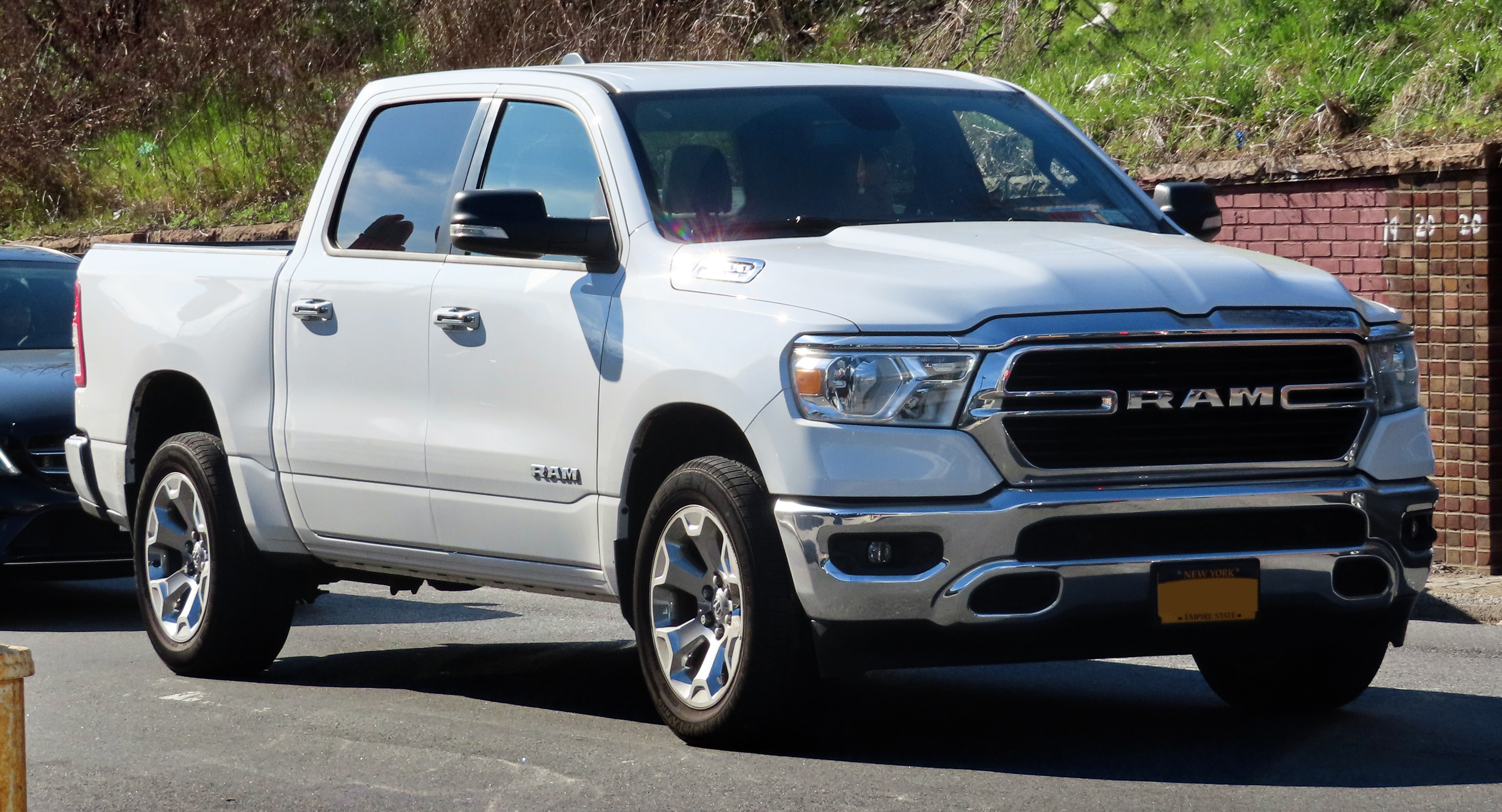
Ram 1500
"And here's part of the reason it has to be coming. Ram sales, the big Ram 1500 pickup truck sales, tanked when they went six-cylinder only."
The Ram 1500 is a pickup truck. The hosts are saying that when Ram changed what engine it offered, sales dropped because many buyers didn’t like the change.
The Ram 1500 is Ram’s full-size pickup truck. In this discussion, Ram 1500 sales are used as an example of how changing engine choices can affect buyer demand.
six-cylinder
"Ram sales, the big Ram 1500 pickup truck sales, tanked when they went six-cylinder only. Yes."
A “six-cylinder” engine has six combustion chambers. The idea here is that some truck buyers wanted the traditional V8 sound and feel, so they didn’t like the switch to only six cylinders.
“Six-cylinder” means the engine has six cylinders, which changes how power is made and how the engine feels compared with V8s. The hosts are arguing that limiting the Ram 1500 to a six-cylinder setup hurt sales because many buyers expected a V8.
Hurricane engine
"And it's the same engine, the Hurricane engine, which by the way, lighter, more efficient. Great engine."
The “Hurricane engine” is a newer engine option being discussed for Ram trucks. They say it’s designed to be more efficient and lighter, but people still preferred the older V8 setup.
The “Hurricane engine” refers to a specific Ram/ Stellantis-family engine program. The hosts claim it’s lighter and more efficient than the V8 they’re comparing it to, but that buyers didn’t want to give up the V8 identity.
Hemi engine
"Than the Hemi engine, but people didn't want any part of it. You know what's the only thing wrong with it?"
A “Hemi engine” is a type of V8 engine. The hosts are saying Ram built a lot of its reputation around this engine, so when it wasn’t offered, some buyers lost interest.
A “Hemi engine” is a V8 design known for hemispherical combustion chambers (the “Hemi” name). In this segment it’s treated as part of Ram’s brand identity, and the hosts argue that removing it hurt sales.
V8 Hemi
"You know what's the only thing wrong with it? It's not a V8 Hemi. It's not a V8 Hemi."
“V8 Hemi” means a V8 engine with a specific combustion-chamber design. In this conversation it’s basically the engine people wanted, and when it was changed, sales dropped.
“V8 Hemi” combines two ideas: a V8 cylinder layout and the Hemi combustion-chamber design. Here it’s used as a shorthand for the exact engine buyers expected, and the hosts say sales suffered when that wasn’t available.

Challenger Hellcats
"...ound Hemi. They built their brand around V8s and Hellcats and Red Isle. And overnight they just pulled the..."
The Dodge Challenger is a performance car, often with a big V8 engine. It’s the kind of car people associate with strong acceleration and a classic muscle-car style. The podcast brings it up when talking about the brand’s focus on those high-performance models.
The Dodge Challenger is a muscle car known for its performance-focused lineup, including V8-powered versions. It’s discussed in the podcast in the context of brand identity around big engines and models like Hellcats. That kind of mention usually signals a shift or surprise in what the brand is doing, especially when the conversation turns to “overnight” changes.
Red Isle
"They built their brand around Hemi. They built their brand around V8s and Hellcats and Red Isle."
“Red Isle” sounds like a mishearing of a performance badge name. The point is that the company marketed specific high-performance versions, and that shaped what buyers expected.
“Red Isle” appears to be a reference to the “Redeye” performance branding used by Dodge/Chrysler-era models. In this context it’s part of the hosts’ point about how the company marketed V8 performance identities.
DS
"I never heard of DS. DS is a luxury brand mostly available in France."
DS is a luxury car brand owned by Stellantis. It’s mainly sold in certain markets—here, the host says it’s mostly available in France.
DS is a luxury car brand within the Stellantis group. The hosts note it’s “mostly available in France,” which reflects how DS has historically been marketed and distributed compared with mainstream brands.
Jeep
"The four core brands now moving forward are Jeep, Ram, Pujo, and Fiat. Okay. And that's a lot of coverage, right? You've got the first two brands get to the U.S."
Jeep is a well-known car brand, especially for SUVs. Here, they’re saying Stellantis plans to focus on Jeep as one of its main brands, especially in the U.S.
Jeep is one of Stellantis’ “core brands” going forward, positioned as a key part of their lineup. The discussion frames Jeep as a brand that gets strong U.S. coverage.
Pujo
"The four core brands now moving forward are Jeep, Ram, Pujo, and Fiat. Okay. And that's a lot of coverage, right? You've got the first two brands get to the U.S. So no Chrysler? ... Pujo gets you Europe and Fiat gets you a lot of emerging markets."
“Pujo” is Peugeot, a car brand. They’re saying Peugeot is aimed more at Europe, as part of Stellantis’ plan to organize brands by region.
“Pujo” is the hosts’ pronunciation of Peugeot, another Stellantis brand. They say Peugeot covers Europe, suggesting Stellantis will align brand focus with regional markets.
core brands
"The four core brands now moving forward are Jeep, Ram, Pujo, and Fiat. Okay. And that's a lot of coverage, right? You've got the first two brands get to the U.S."
“Core brands” means the brands the company plans to focus on most. They’re talking about which brands Stellantis will emphasize in different parts of the world.
“Core brands” here means the subset of brands Stellantis intends to prioritize and keep pushing as the main pillars of its lineup. The hosts connect this to regional coverage (U.S. vs Europe vs emerging markets) and to which brands may be reduced.
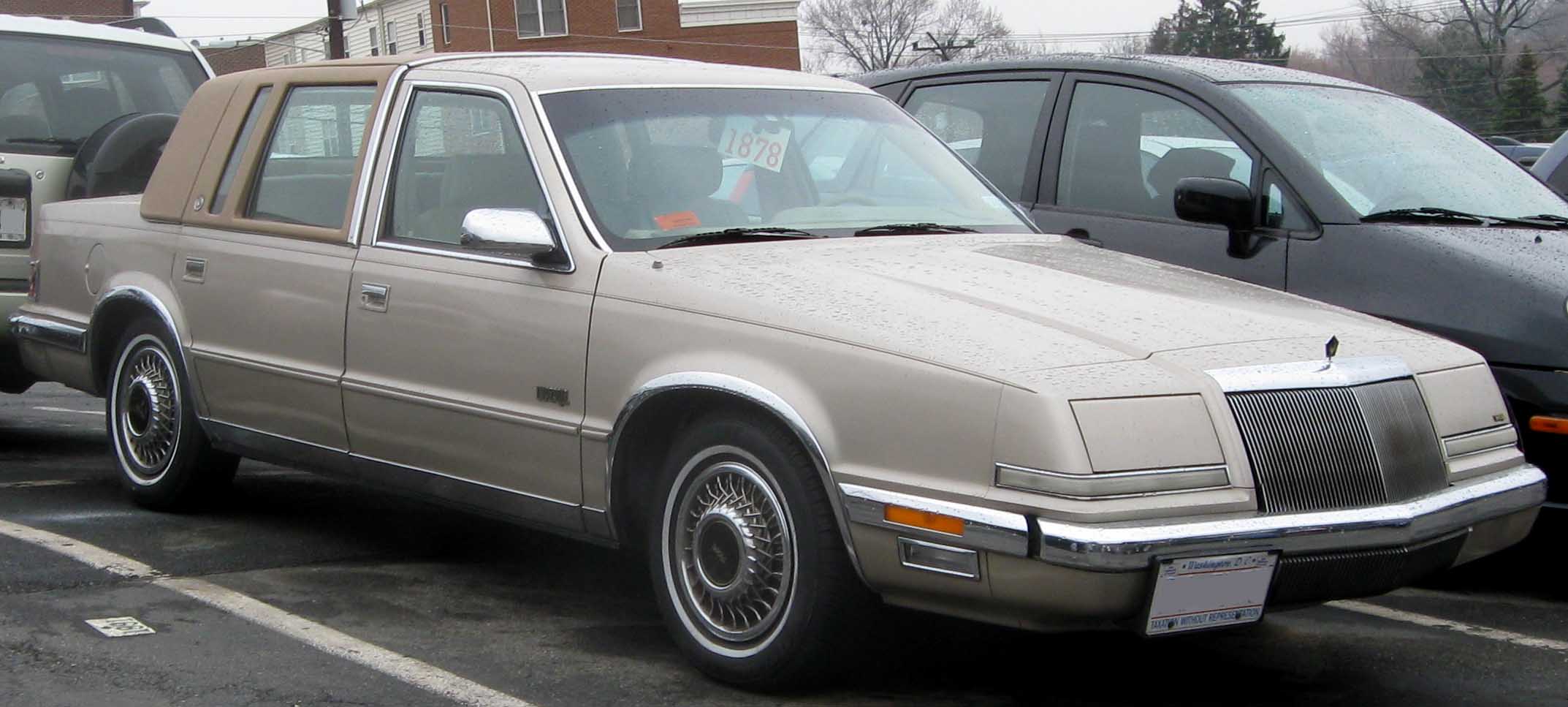
Imperials
"And they sold these big, beautiful big cars and Imperials, and it's weird to see that go. The 300 was around forever, too."
The Chrysler Imperial was Chrysler’s big, upscale car line. It’s brought up here as an example of the brand’s older luxury lineup.
The Chrysler Imperial was a flagship, full-size luxury car line. The hosts mention it as part of Chrysler’s history of selling big, “beautiful” cars.

300
"The 300 was around forever, too. I didn't realize, and I don't know that this sold well, there was a 300 variant in the early 70s."
The Chrysler 300 is a long-running large sedan model from Chrysler. The hosts are saying it’s been around for a long time and has had different versions over the years.
The Chrysler 300 is a long-running full-size sedan nameplate known for its “big car” styling and V8-era heritage. In this segment, the hosts discuss how the 300 lasted a long time and even had a variant in the early 1970s.
livery business
"If they keep Chrysler, they should probably do a sedan version of the Charger for Chrysler. And you know what they might get is some livery business, too."
A “livery” is the special paint/graphics on a vehicle. The hosts mean Chrysler could sell cars with those custom looks for fleets or special purposes.
“Livery” refers to a vehicle’s branded graphics, paint scheme, or special markings (often for fleets, taxis, police, or promotional use). “Livery business” here means selling vehicles or packages that are customized for those uses.
off-road diesel
"[558.3s] Are you familiar with off-road diesel? [561.7s] Yes. [563.7s] At least I'm thinking it's at the farmer version."
Off-road diesel is regular diesel, but it’s meant for vehicles that don’t drive on public highways. Because it avoids highway taxes, it’s usually dyed so authorities can tell if someone is using it illegally in a street car.
Off-road diesel is diesel fuel intended for non-highway uses (like farming equipment or construction). It’s typically exempt from certain federal highway taxes, which is why it’s often sold with dye and labeling to discourage highway use.
federal highway taxes
"[568.0s] It's agricultural diesel that is not subject to federal highway taxes. [572.3s] So if you like, I think it's red or something? [574.5s] Yep."
There are taxes on fuel when it’s used for driving on public roads. Off-road diesel is treated differently so it doesn’t pay those highway-related taxes.
Federal highway taxes are taxes tied to fuel used on public roads. The point of the exemption for off-road diesel is that it’s not taxed the same way as fuel intended for highway driving.
dyed red
"[574.5s] Yep. [574.7s] Okay, it's dyed red. [575.6s] Oh, currently it's dyed blue."
Some diesel is dyed a specific color so it can be identified later. If someone uses that dyed fuel in a regular street car, it can be detected.
Dyed diesel is diesel fuel that’s been colored (often red or blue) so regulators can identify it. The dye helps distinguish off-road fuel from taxed highway diesel if it’s used in a street vehicle.
dyed blue
"[575.6s] Oh, currently it's dyed blue. [577.5s] Oh, blue, okay. [578.1s] But it's funny because I watched a video."
Sometimes off-road diesel is dyed blue instead of red. The dye is there so authorities can tell it apart from the diesel meant for regular driving.
Dyed blue refers to a specific dye color used to mark off-road diesel. The color can change over time or by jurisdiction, but the purpose is the same: make it easier to detect fuel that’s not meant for highway use.

Mitsubishi Outlander
"They have two subcompacts. One compact. The compact is the Outlander."
The Mitsubishi Outlander is a Mitsubishi SUV. It’s the bigger, more family-oriented crossover compared with the smaller Mitsubishi models mentioned right after it.
The Mitsubishi Outlander is a compact crossover SUV from Mitsubishi. In this segment, it’s mentioned as the “compact” model in Mitsubishi’s lineup.

Mitsubishi Outlander Sport
"Then there's the Outlander Sport and the Eclipse Cross. Okay. And a lot of Mitsubishi loyalists are really upset about the use of Eclipse."
The Mitsubishi Outlander Sport is a smaller SUV than the Outlander. It’s one of Mitsubishi’s “smaller” crossover models.
The Mitsubishi Outlander Sport is a smaller crossover SUV positioned below the Outlander. The hosts mention it as one of Mitsubishi’s subcompact offerings.

Mitsubishi Eclipse Cross
"Then there's the Outlander Sport and the Eclipse Cross. Okay. And a lot of Mitsubishi loyalists are really upset about the use of Eclipse."
The Mitsubishi Eclipse Cross is a smaller SUV. The hosts are saying some long-time Mitsubishi fans don’t like that the “Eclipse” name is now used for this type of car.
The Mitsubishi Eclipse Cross is a subcompact crossover SUV. In the segment, the hosts discuss how Mitsubishi loyalists feel about the “Eclipse” name being used on this crossover.

Mitsubishi Eclipse
"Because the Eagle talent that I had was the Eagle version of the Mitsubishi Eclipse and [637.3s] also the Pumeth laser. [638.2s] Remind people about Diamond Star and those cars."
The Mitsubishi Eclipse is a sporty compact car. Here, they’re talking about the turbo versions and how the drivetrain made it feel quick.
The Mitsubishi Eclipse is a compact sports coupe/convertible line known for performance trims. In this segment, the hosts connect it to the “Eagle” version and discuss turbo power and drivetrain options.
Diamond Star
"Remind people about Diamond Star and those cars. [642.2s] Yeah. [642.9s] So they were built in normal Illinois. [645.5s] It was a collaboration of Chrysler and Mitsubishi."
Diamond Star was a partnership between Chrysler and Mitsubishi to build certain cars together. The hosts are reminding listeners that these Eclipse-based models came out of that joint production.
“Diamond Star” refers to the Diamond-Star Motors joint venture between Chrysler and Mitsubishi, which produced cars for both brands. The key point here is that the Eclipse-based cars were built through that collaboration.
turbo
"[652.9s] Oh, yeah. [653.4s] It was great. [654.4s] It had a lot of power. [655.3s] The turbo versions were 200 horsepower, just under 200 horsepower."
A turbo is a device that helps the engine make more power. It does this by pushing extra air into the engine so it can burn more fuel efficiently.
A turbocharger (“turbo”) forces more air into the engine, allowing it to make more power than a naturally aspirated engine of the same size. In this segment, the hosts specifically discuss the turbo versions’ output and how they felt.
all-wheel drive
"[660.0s] And then when they came out with all-wheel drive, it was one of the first compact sports [664.8s] cars that had all-wheel drive. [667.4s] And they were crazy. [669.0s] It was a great all-wheel drive."
All-wheel drive means the car can send power to all four tires. That usually helps it grip the road better and feel more stable when accelerating.
All-wheel drive (AWD) sends power to all four wheels, improving traction and stability—especially in low-grip conditions. The hosts highlight that AWD was an early feature on these compact sports cars and that it made the car feel “crazy” and great.
manual only
"[669.0s] It was a great all-wheel drive. [669.9s] You could, I could, it was a manual only on the turbo. [673.0s] So you could rev that thing to 5,000 RPMs, dump the clutch, and you were off."
“Manual only” means you had to shift gears yourself with a clutch pedal and gear stick. The hosts are saying that the turbo version was set up to be driven in a very hands-on way.
“Manual only” means the car’s transmission was offered only as a manual gearbox (with a clutch and gear lever), not an automatic. In this segment, they connect that to how the turbo car could be launched aggressively.
dump the clutch
"[669.9s] You could, I could, it was a manual only on the turbo. [673.0s] So you could rev that thing to 5,000 RPMs, dump the clutch, and you were off. [677.7s] That was peak Mitsubishi."
“Dump the clutch” means you let the clutch out really fast to get moving quickly. It’s a more aggressive launch technique that can make the car jump forward.
“Dump the clutch” is a driving technique where you release the clutch quickly to launch the car hard from a stop. It’s often associated with manual transmissions and can cause rapid drivetrain load and wheelspin if traction is limited.

Mitsubishi Galant
"You could get a turbo all-wheel drive Galant with a manual. Yeah. For a while. And that's what, I think, how we remember Mitsubishi."
The Mitsubishi Galant was a Mitsubishi car line that came in different versions. Here they’re talking about a more performance-focused setup: turbo power, all-wheel drive, and a manual transmission.
The Mitsubishi Galant was a long-running midsize sedan/coupe line from Mitsubishi. In this segment, the hosts mention a turbocharged all-wheel-drive Galant with a manual, which highlights how the Galant lineup could be configured for performance and traction.

Mitsubishi Gt Mitsubishi
"Yeah, because then they made the Dodge Stealth for Dodge, which was the 3000 GT Mitsubishi. Forgot about that, because that's good stuff. Yeah, yeah. Yeah. I knew someone who had the Stealth."
The Mitsubishi 3000 GT is a sporty Mitsubishi coupe from the 1990s. In this discussion, they’re saying the Dodge Stealth was basically the same idea—just sold under Dodge instead of Mitsubishi.
The Mitsubishi 3000 GT is a 1990s performance coupe known for advanced features like turbocharging and, in some versions, all-wheel drive. Here, the hosts connect it directly to the Dodge Stealth, noting that the Stealth was essentially the Dodge-branded version of the 3000 GT.

Dodge Stealth
"Yeah, because then they made the Dodge Stealth for Dodge, which was the 3000 GT Mitsubishi. Forgot about that, because that's good stuff. Yeah, yeah. Yeah. I knew someone who had the Stealth. Yeah. My father had one. In fact, he still has it. He didn't have the Stealth Turbo. I think the Stealth could be had, the Dodge could be had with a two-valve V6, 30, what is it? There was the 24-valve V6. The V6, 32-valve V6 twin-turbo. And then there was the standard V6 without the twin-turbo. Yeah, that's what my buddy had. And it was still a really great car."
The Dodge Stealth is a sporty Dodge coupe from the 1990s. It shared a lot of engineering with Mitsubishi’s 3000GT, and it could come with different V6 engines, including turbo versions.
The Dodge Stealth is a performance coupe from the 1990s that was closely related to Mitsubishi’s 3000GT. In the segment, they discuss its available V6 configurations, including twin-turbo setups, and how it was offered with different engine options.
valve per cylinder
"Yeah. Did I say 32-valve V6? 24-valve. 24-valve. Yeah. That's confusing. We would be so casual in discussing this, but it's really four-valve per cylinder."
An engine cylinder has openings controlled by valves. “Valve per cylinder” tells you how many of those openings each cylinder has, and it can change how efficiently the engine runs.
“Valve per cylinder” describes how many intake/exhaust valves each engine cylinder has. More valves can improve how well the engine breathes (air and exhaust flow), which can affect power and efficiency.
Rivian
"I was just going to mention something I forgot. Oh, the Mitsubishi factory in normal Illinois is now the Rivian factory. Yes, yes. So they're cranking those out."
Rivian is a company that makes electric vehicles. The hosts are saying a Mitsubishi factory location in Illinois is now used by Rivian to build EVs.
Rivian is an electric-vehicle brand/company that builds EVs and operates manufacturing facilities. In this segment, the hosts connect a former Mitsubishi factory in Normal, Illinois to Rivian’s production.
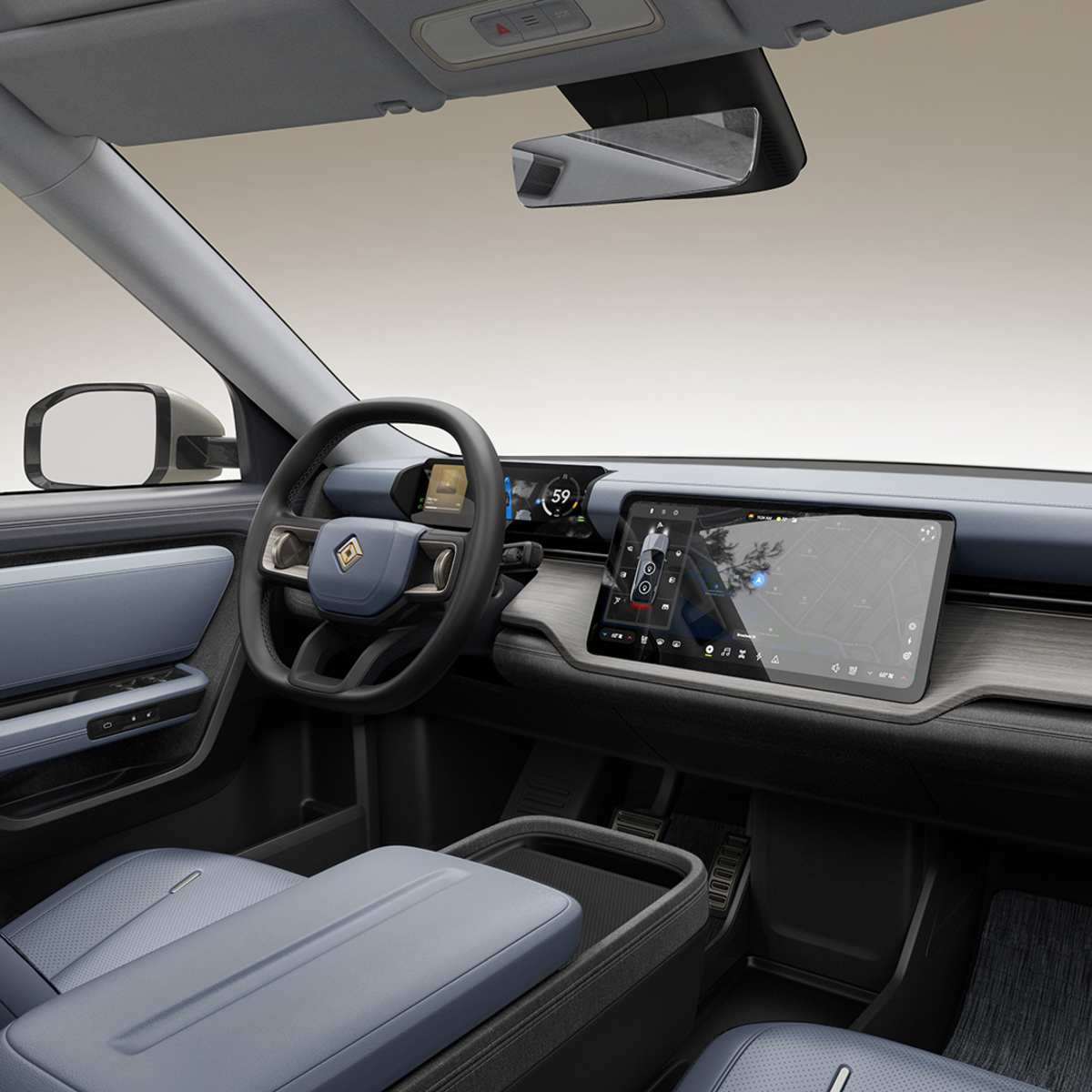
Rivian R2
"[798.3s] It looks so good. [799.8s] That's the R2. [801.7s] Yep. [802.0s] And there's the R3 coming."
The Rivian R2 is a smaller electric Rivian vehicle that’s meant to be easier to live with than their bigger models. The hosts think it looks great and hope it can handle rough roads too.
Rivian R2 is the smaller, more compact electric SUV/crossover Rivian is developing after its larger models. The hosts are reacting to its styling and expecting it to perform well, especially off-road.
Rivian R3
"[802.0s] And there's the R3 coming. [803.1s] That looks delightful. [804.1s] Yeah. [804.7s] One of those cute mobiles."
The Rivian R3 is a future smaller electric Rivian model. The conversation frames it as something that could still be fun and capable, even if it’s not as big as their other cars.
Rivian R3 is another upcoming, smaller Rivian electric vehicle positioned below the R2. In this segment, the hosts describe it as a cute, off-road-capable-looking option.
quarterly results
"[829.6s] This will get them through launching their smaller vehicle. [831.5s] And then the quarterly results come out and they lost two or three billion dollars."
“Quarterly results” are a company’s financial performance reports released every three months. The hosts point out that even with large investments, Rivian’s quarterly losses can still be significant.
forensic accounting
"Like, I don't know. Eat some forensic accounting. Yeah."
Forensic accounting is like detective work for money. It looks through financial records to figure out where funds went and whether anything shady happened.
Forensic accounting is an investigative approach to auditing financial records to find inconsistencies, fraud, or misuse of funds. Here, it’s used as a metaphor for digging into where money went.
Tesla earnings call
"But after the quiz, I did want to talk about listening to the Tesla earnings call, something I've never done before. And I cheated."
An earnings call is when a company talks to investors about how it did financially. It often includes a Q&A where people ask questions about the business.
An earnings call is a company’s scheduled presentation and Q&A session where it reports financial results and discusses future plans. The hosts mention listening to Tesla’s earnings call as part of their analysis.
Bodie Grimm's Kilowatt podcast
"I listened to someone else's podcast, Bodie Grimm's Kilowatt podcast, and he did an analysis of the call."
Kilowatt is a podcast by Bodie Grimm that focuses on electric vehicles and the EV industry. The hosts reference it as a source for an analysis of Tesla’s earnings call.

Outback Subaru Wilderness
"So, all righty. I just drove, I just drove the Subaru Wilderness. Yes."
The Subaru Outback is a car with extra ground clearance and a wagon-style body, made for everyday driving and tougher road conditions. Some versions are set up for more rugged use, like the “Wilderness” trim mentioned in the podcast. It’s brought up because it’s a capable, practical choice.
The Subaru Outback is a wagon-based crossover that’s built for versatile daily use, including rougher roads. It’s commonly discussed because it blends practical space with features that help it handle different conditions. In the podcast, it’s referenced through the idea of driving a “Subaru Wilderness,” which is an Outback-related trim focused on off-road capability.

Forester
"Now, for people who aren't keeping up with the Forester, the Forester was redesigned last year, but the Wilderness version wasn't redesigned until this year."
The Subaru Forester is a popular family SUV/crossover. In this segment, they’re pointing out that the regular Forester got updated first, and the Wilderness version came later.
The Subaru Forester is a compact crossover/SUV known for practical packaging and available all-wheel drive. Here, the hosts note that the standard Forester was redesigned before the Wilderness trim, which affects how the lineup evolves.
redesigned
"Now, for people who aren't keeping up with the Forester, the Forester was redesigned last year, but the Wilderness version wasn't redesigned until this year."
When a car is “redesigned,” it usually gets a bigger update than just small changes. Different trims can be updated at different times, so one version may feel newer than another.
“Redesigned” means the vehicle went through a major update—typically changing styling, interior, and/or the underlying platform and powertrain calibration. In car lineups, staggered redesigns across trims can make one version feel “new” while another still uses older hardware.
CVT
"Tell us what a CVT is real quick. It's a continuous variable transmission, so it's got one bungee cord gear. And it sounds like a big rubber band under your hood, and it's whiny, and it's absolutely horrible."
CVT means the car doesn’t use a set of gears like a normal automatic. It can “blend” between ratios smoothly, so the engine can sound like it’s revving up and down even when you’re just accelerating.
CVT stands for continuously variable transmission. Instead of fixed gear ratios, it uses a belt/chain and pulleys to smoothly change the ratio across a wide range, which can make engine speed rise and fall in a “rubber band” way.
stepped gear automatic
"The CVT is not as responsive to throttle inputs and not as fun to drive as a stepped gear automatic, or God forbid, a manual, a proper manual."
Some automatics shift between separate gears. With a stepped-gear automatic, the car picks a gear instead of smoothly changing ratios all the time, which can feel quicker to respond.
A stepped-gear automatic uses discrete gear ratios (like 1st, 2nd, 3rd, etc.) rather than continuously changing ratios. That typically makes throttle response feel more direct because the transmission “chooses” a specific gear ratio.
towing
"And also it's kind of surprised where the standard is only towing is 1,500, but the wilderness is 3,500. That's a huge difference."
Towing is the maximum weight the car is allowed to pull with a trailer. They’re saying the Wilderness version can tow much more than the standard version.
Towing refers to how much weight a vehicle is rated to pull behind it, usually expressed in pounds (or kilograms). The transcript compares a standard towing rating to the Wilderness trim’s higher rating, implying hardware or gearing changes that support towing loads.
final drive ratio
"I think part of that comes from revisions to, I don't know if it's the transmission or the gear, like the final drive ratio."
Final drive ratio is a gearing setting that helps determine how hard the car pulls versus how fast it can go. If it’s changed, the car can feel better at tasks like towing because the engine and wheels work together differently.
Final drive ratio is the gear ratio in the differential that multiplies torque from the transmission to the wheels. Changing it can affect how the car behaves under load—like towing—by altering engine speed and torque delivery at the wheels.
shift
"And if you feel the engine rev, you hear the engine rev, and you want a shift. Yes. And there ain't no shift coming."
Here, “shift” means the car changing gears. Some transmissions shift in a way you can feel clearly, while others (like CVTs) feel smoother and may not “thunk” into a new gear.
In this context, “shift” means the transmission changing to a new gear ratio in a way you can feel and hear. CVTs typically don’t produce the same distinct shift feel as traditional multi-gear automatics.
fake ratios
"And if you play with the paddle shifters in some of those cars, which is weird that CVTs have them, there are fake ratios. They're fake."
“Fake ratios” means the car is pretending to shift like a normal automatic. The CVT is still changing smoothly, but it’s giving you the feeling of steps.
“Fake ratios” refers to simulated stepped gear behavior. In a CVT, the transmission can pretend to shift between set ratios when you use paddle shifters, but the underlying continuously variable system is still operating.
fuel economy
"Just it's a little bit quicker. Fuel economy is not great. I've got about 23 miles per gallon, which is probably the bottom of the class."
Fuel economy is how far the car can go on a gallon of gas. If it’s low, you’ll stop for gas more frequently.
Fuel economy is how efficiently a vehicle uses fuel, usually expressed as miles per gallon (MPG) in the U.S. Lower fuel economy means you’ll need to refuel more often for the same distance.
miles per gallon
"Fuel economy is not great. I've got about 23 miles per gallon, which is probably the bottom of the class. Yeah."
MPG tells you how many miles you can drive on one gallon of gas. Higher MPG usually means you spend less on fuel.
Miles per gallon (MPG) is a measure of fuel economy: how many miles the car can travel using one gallon of fuel. It’s commonly used to compare how thirsty different vehicles are.
180 horsepower
"That is actually for a 180 horsepower car. That's not good, actually."
Horsepower is a rough measure of how much power the engine makes. They’re basically saying the car doesn’t get good gas mileage even though it’s not a super powerful vehicle.
Horsepower is a measure of engine output, and “180 horsepower” indicates the vehicle’s approximate power level. In this context, the hosts are saying the fuel economy is poor for a car with that power.
penultimate trim level
"So the vehicle I drove was 42 grand, a little high for this vehicle. It's the penultimate trim level, but you can do one less."
Trim level is the version of the car with certain features. “Penultimate” means it’s the second-most expensive version, just below the top one.
A trim level is a specific configuration of a model (equipment and features). “Penultimate” means the second-highest trim in the lineup, so it’s near the top but not the very most expensive.

Subaru Crosstrek
"Okay. She's a 10 year old Subaru Crosstrek with 60,000 miles on it that has never given us a minute of trouble. Oh, no, those are great cars. Why would we buy another car?"
They’re talking about their current Subaru crossover. The point is that it’s been trouble-free for them, so they’re questioning why they’d replace it.
The speaker mentions a Subaru Crosstrek as their current car. It’s a compact crossover SUV known for good visibility and everyday drivability, which is why they’re comparing it to other options.
IC cars
"When we come back, we talked to Carl Brower, he's the executive analyst at IC cars about electric vehicle, used electric vehicle sales."
They’re referencing a company called IC cars. The guest works there and studies car-market trends, especially for used electric vehicles.
The hosts mention IC cars as the source of an analyst they spoke with. It’s presented as an industry/market research outlet focused on automotive topics like electric-vehicle sales.
electric vehicle
"When we come back, we talked to Carl Brower, he's the executive analyst at IC cars about electric vehicle, used electric vehicle sales."
An electric vehicle is a car that runs on electricity from a battery instead of gasoline. This segment is about how used electric cars are selling.
An electric vehicle (EV) is a car that’s powered primarily by one or more electric motors and uses electricity stored in a battery pack. In this episode, the discussion is specifically about the used EV market and sales trends.
available rear seat entertainment system
"Seen back in the Sienna with an available rear seat entertainment system."
This is a built-in option that lets people in the back watch videos or listen to audio. It’s usually done with screens and media controls.
A rear seat entertainment system is a factory option that provides video/audio playback for passengers in the back seats, typically via screens and media inputs. It’s meant to reduce boredom on longer trips and keep rear passengers occupied.
car prices
"On the phone with us, speaking of car prices. Yes. Carl Prower."
They’re talking about how much cars cost right now and why prices are moving. That matters because it affects what you can afford and what deals are available.
The episode segment focuses on how car prices are changing and what that means for shoppers. It’s framed alongside broader market factors like incentives and EV pricing.
fuel efficiency
"...filter on everything from price to range, distance from your house to fuel efficiency to brands, models..."
Fuel efficiency is how “thrifty” a car is—how far it can go on a certain amount of fuel. Higher efficiency usually means cheaper driving.
Fuel efficiency is how much energy (gasoline or electricity) a vehicle uses to travel a given distance. On a listing site, it’s used to compare operating costs between different cars.
odometer reading
"...brands, models, odometer reading, and filter on all these things to find cars..."
The odometer reading is how many miles the car has been driven. It helps you estimate how much wear the car may have.
An odometer reading is the recorded mileage on a vehicle, typically shown on the dashboard and in listings. It’s a key data point because mileage often correlates with wear and remaining useful life.
predicted lifespan
"...unique things that no other sites have like predicted lifespan for cars, which can be pretty helpful when you're looking at two or three of these cars..."
Predicted lifespan is a guess at how long a car will keep running reliably. The idea here is to help you compare cars by how long they might last.
Predicted lifespan is an estimate of how long a vehicle is expected to last based on data and assumptions. In this segment, it’s presented as a way to compare two or three cars by expected longevity, not just price.
depreciation
"Good example, colors, which color holds their value the best, which color has higher depreciation. [1439.2s] We have a study for that along with a lot of other."
Depreciation just means the car is worth less as time goes on. They’re saying some paint colors can make that drop in value faster or slower.
Depreciation is how much a car’s value drops over time. When the hosts talk about which colors have higher depreciation, they mean some paint colors tend to lose resale value faster than others.

Chevy Colorado
"Meanwhile, I just saw an orange Chevy Colorado. [1465.2s] That's cool. [1465.9s] More of those, please."
The Chevrolet Colorado is a mid-size pickup truck. They’re using it as an example of a cool, less-common color choice (orange).
The Chevrolet Colorado is a midsize pickup truck. Mentioning an “orange Chevy Colorado” is a color example, but it also anchors the discussion to a specific model line that people might shop for.
EV prices
"...the fact that EV prices had been going down. Used EV prices had been going down, but used Tesla prices were on the climb. What was that about?"
They’re talking about how electric-car prices are changing. Even if EVs as a whole get cheaper, the used prices can move differently depending on incentives and what buyers want.
“EV prices” here refers to how much electric vehicles cost in the market, specifically noting a split between new incentives and used pricing trends. The discussion highlights that policy changes and supply/demand dynamics can move prices differently for EVs versus a particular brand like Tesla.
incentive to buy EVs
"...we've lost some incentive to buy EVs from the government and then we've theoretically gained some back to buy EVs from our local fuel station pricing board."
They mean government programs that make EVs cheaper to buy. If those discounts or credits change, more or fewer people buy EVs, and that can change prices.
This refers to government incentives that reduce the effective cost of buying an EV, which can directly affect demand. When incentives are reduced or removed, sales can slow; when they return, demand can rebound—often showing up first in pricing and market share.
market share on the used market
"...But they went up in terms of market share on the used market, how many cars were like"
They’re talking about how big a slice of the used-car market EVs are taking. If EVs gain market share, it means more people are buying EVs compared with other used cars.
“Market share” is the percentage of the used-car market that EVs (or a category) represent. The speaker is saying EVs gained share even while prices and growth were shifting, which suggests buyers were choosing EVs more often relative to other used cars.
Hybrid
"[1590.0s] Hybrid's been up by, hybrid's went up by 41.8% almost three times the rate that EVs went [1596.2s] up."
A hybrid is a car that uses two power sources—gasoline and electricity. It can switch between them to improve efficiency.
A hybrid vehicle uses both an internal-combustion engine (gasoline) and an electric motor/battery. In sales/price discussions, “hybrid” is often used to compare how quickly hybrid demand is rising versus EV demand.
plug-in
"[1603.5s] And that's that, that tether, you know, that you, you have to break from the fuel world [1609.5s] and add the other tether to the, to the plug, you know, literally a tether, a cord that [1615.2s] you have to be able to plug in."
“Plug-in” refers to vehicles that must be connected to an external power source to recharge their battery (typically plug-in hybrids and battery-electric vehicles). The speaker is contrasting the “fuel world” (gas stations) with the “plug-in” world (charging at home or public chargers).
Q1, first quarter of 2026
"[1665.9s] And in the last three months, Q1, first quarter of 2026, they were holding their prices better."
Q1 means the first three months of the year. They’re saying Tesla’s prices held up better during that time.
Q1 (first quarter) is a specific three-month reporting period used in business and market analysis. The speaker is referencing Tesla’s pricing performance during the first quarter of 2026.
Q1.25 to Q1.26
"They were just not dropping from like a year earlier, you know, and their prices had gone down from Q1.25 to Q1.26, their year over year price change of a Tesla EV, 0.1%."
“Q1.25 to Q1.26” means the first three months of 2025 compared to the first three months of 2026. It helps show whether prices are rising or falling over that same part of the year.
Q1.25 to Q1.26 refers to the first quarter of 2025 versus the first quarter of 2026. It’s a way to compare pricing trends over a specific, consistent time window.
year over year price change
"...down from Q1.25 to Q1.26, their year over year price change of a Tesla EV, 0.1%. We're going to call that flat."
“Year over year” means “compared to the same time last year.” It’s a simple way to tell if prices are trending up or down over time.
Year over year (YoY) price change compares pricing from one quarter (or month) to the same period one year earlier. It’s commonly used to smooth out short-term noise and show the underlying trend.
flat
"...their year over year price change of a Tesla EV, 0.1%. We're going to call that flat. And the non-Tesla EVs down 10.3%, a 10% drop."
Here, “flat” means prices didn’t really move much compared to last year. It’s basically “about the same.”
In this context, “flat” means the Tesla EV price change is essentially unchanged year over year (about 0.1%). It’s a shorthand for “no meaningful movement” rather than a literal zero.
EV pricing
"You can't look at EV pricing and assume that that's every EV. Tesla's still the bulk of the market and that makes EVs look one way."
They’re talking about how EV prices change over time. Their main point is that Tesla’s pricing trend doesn’t automatically tell you what every other EV brand is doing.
“EV pricing” here refers to how the market prices battery-electric vehicles over time, including differences between Tesla and non-Tesla brands. The hosts caution that you can’t assume one brand’s pricing trend represents the whole EV segment.
filter Tesla and separate them out
"Tesla's still the bulk of the market and that makes EVs look one way. When you filter Tesla and separate them out from the rest, you get a better picture of what the non-EV Tesla market is and the Tesla market is."
They’re saying: don’t mix Tesla with every other EV when you analyze prices. Tesla can pull the overall numbers around, so separating it gives a clearer picture of what non-Tesla EVs are doing.
“Filtering Tesla” means excluding Tesla from the overall EV dataset so you can compare the rest of the EV market on its own. This matters because Tesla’s scale and pricing behavior can skew averages for all EVs together.
Hyundai
"...they're like, they don't even know that Hyundai makes EVs. And it's like, are you kidding me?"
Hyundai sells EVs too, not only gas cars. The point here is that some people don’t realize non-Tesla brands offer electric models.
Hyundai is a major automaker that sells both gasoline vehicles and battery-electric vehicles (EVs). The hosts use Hyundai as an example of how many shoppers incorrectly assume EVs are “just Tesla.”
gas prices are high
"If you're thinking right now that gas prices are high and you were you'd have to have already been ready to buy an EV, I think, you're not just going to jump into this because gas prices went up a buck..."
They’re saying higher gas prices can push people toward EVs, but it doesn’t always make people jump immediately. Buying an EV is still a major choice.
The hosts connect fuel prices to EV purchase timing: when gasoline prices rise, some shoppers become more motivated to consider EVs. But they argue it’s not an instant switch—buying an EV is still a big decision.

Tesla Model Y
"Also, I don't think people remember Model 3 or Model Y and they certainly don't remember like EV6, you know, or Iodic 5."
The Tesla Model Y is an all-electric SUV from Tesla. It’s one of Tesla’s biggest sellers, so people often compare it to other EVs when talking about the market.
The Tesla Model Y is Tesla’s compact electric SUV. Like the Model 3, it’s a mainstream EV that’s frequently used as a benchmark for pricing, demand, and brand perception.

Tesla Model 3
"Also, I don't think people remember Model 3 or Model Y and they certainly don't remember like EV6, you know, or Iodic 5."
The Tesla Model 3 is an all-electric car made by Tesla. It’s one of the most popular EVs, and it’s a big part of why EVs became more common.
The Tesla Model 3 is Tesla’s high-volume electric sedan. It’s often discussed as one of the key mass-market EVs because it helped make EVs more mainstream and widely available.
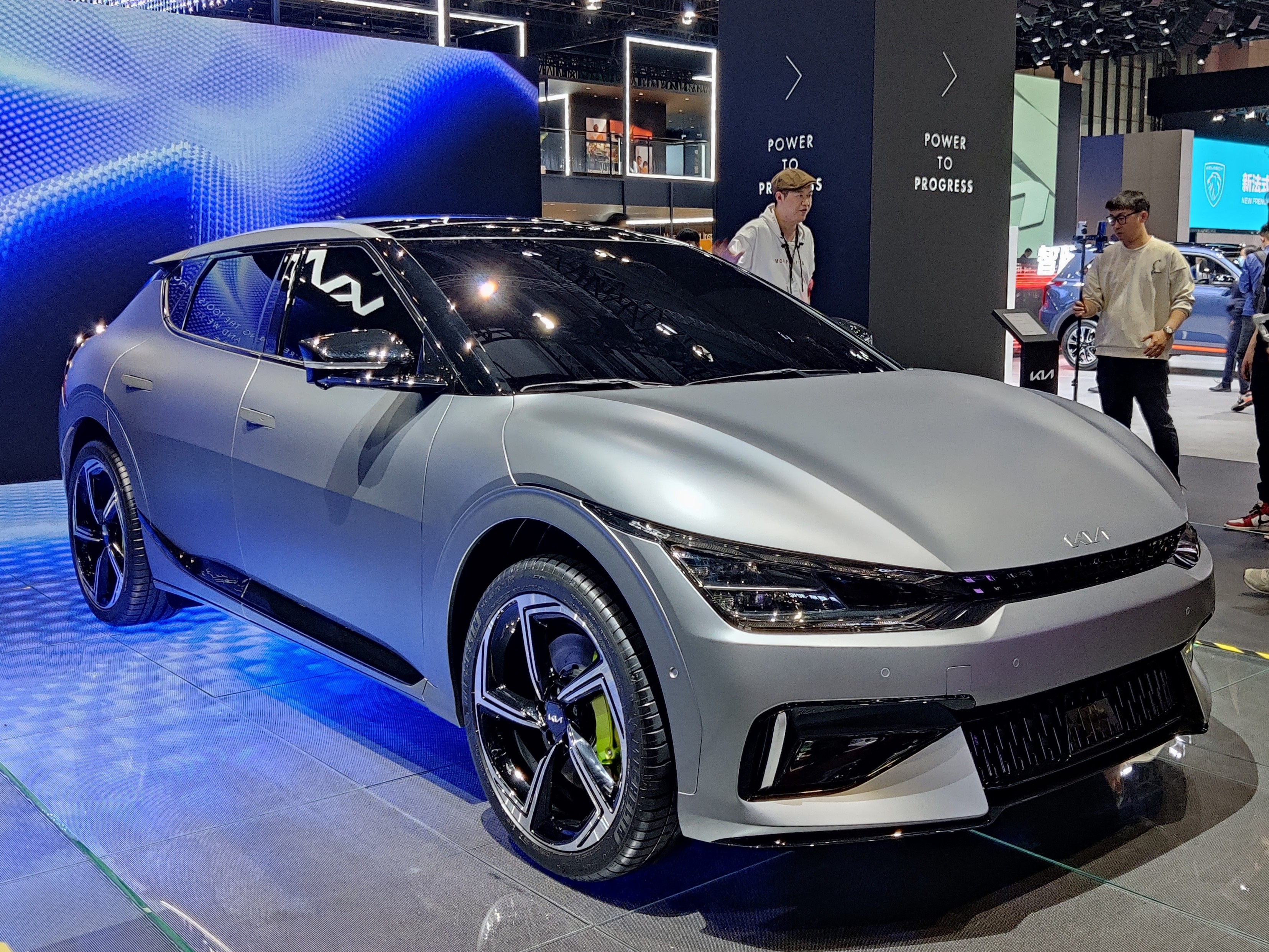
Kia EV6
"Also, I don't think people remember Model 3 or Model Y and they certainly don't remember like EV6, you know, or Iodic 5."
The Kia EV6 is an all-electric crossover SUV. It’s the kind of EV people compare to Tesla when they’re shopping for a practical daily driver.
The Kia EV6 is a battery-electric crossover that competes in the mainstream EV segment. It’s commonly mentioned alongside Tesla because it offers similar everyday usability and charging convenience.
Request an Explanation
Heard something you'd like explained? We'll add it to this episode.
Sign in to request explanations for terms you heard.
Want to learn more?
Browse our glossary for plain-English explanations of automotive terms, jargon, and concepts.
Help improve this episode
See something that's not quite right? Our annotations are AI-generated and can sometimes miss the mark. Click the flag icon on any annotation to suggest a correction.