The Grand Prix of Long Beach is a big race event in California. It’s run on city streets, so it feels more like a real-world course than a closed racetrack.
NHRA is a big organization that runs drag races. An “NHRA weekend” means they were at a drag-racing event with cars racing down a straight track.
Topic
Lufka Cult
They mention a group called “Lufka Cult” that puts on events. From the context, it seems like a fan/enthusiast community organizing car-related get-togethers.
They’re talking about older Porsches that don’t use a liquid cooling system like most modern cars. Collectors often love these because they feel more “classic” and have a unique driving and mechanical character.
Broad Arrow is a collector-car auction company. Here they’re described as running a Porsche-focused auction, which is why there’s a lot of activity around those cars.
They’re talking about the Long Beach Grand Prix, a big race weekend. The point is that IndyCar fans see it as one of the most important races—almost like a “second biggest” event after the Indy 500.
McLaren is referenced via Zach Brown, linking the world of Formula 1/modern racing leadership to vintage racing and IndyCar team management. It’s a brand name-drop that helps listeners understand the cross-over between racing disciplines.
The Long Beach Grand Prix is a famous racing event in California. The hosts are saying it didn’t start out as the big show it is today—it grew over many years.
Concept
Formula 5,000 race
“Formula 5,000” is an old type of racing where the rules were based on engine size—around 5.0 liters. The point here is that the Long Beach event started with a different rule set than it uses today.
Mecum Auctions is a company that sells classic and collector cars at auction. The host is saying the guest’s voice is familiar because he’s been part of their TV coverage.
They’re talking about how there used to be a lot of automotive shows on TV, and then many of them went away. They debate whether fans lost interest or TV networks stopped wanting that content.
World of Outlaws is a well-known type of dirt-track sprint car racing. They bring it up as an example of racing that still exists but isn’t always easy to find on TV.
Sprint car racing is short-track racing, usually on dirt tracks. They mention it to show that lots of different racing types are struggling to stay on TV.
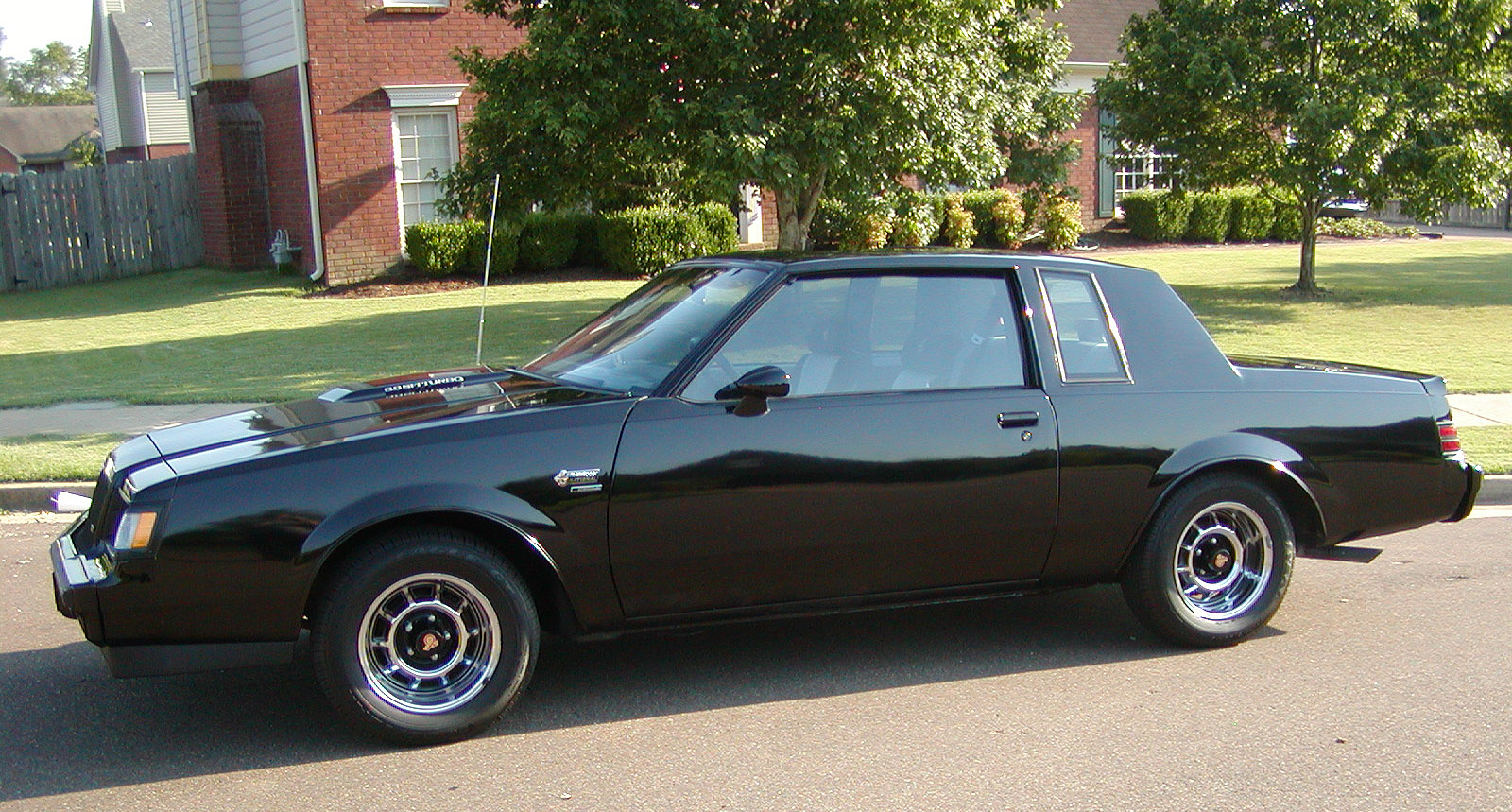
The Buick Grand National is a performance car model from Buick. The podcast mentions it in the context of racing series that use the “Grand National” name. It comes up because it’s connected to motorsports and performance fans.
They’re talking about how TV channels used to show racing more often, but now it’s harder to get on major TV. They think streaming is where the audience is moving instead.
A “gatekeeper” is basically the person or group that decides whether something gets on TV. The host is saying racing isn’t getting approved as easily as it used to.
Company
Mekam
It sounds like they meant Mecum, a well-known car auction company. The point is that they’ve already booked a lot of locations, so it’s getting harder to find new ones.
“Getting your finger on the pulse of values” refers to using auction results and viewing trends to understand how prices are moving in the collector-car market. Even people who aren’t buying or selling can use this information to gauge demand and pricing.
Monterey Car Week is a big classic-car time in California with lots of events happening. They’re saying streaming helps when you can’t be at every auction or show in person.
Concept
sampling
When platforms track viewers, they sometimes use a smaller slice of the data to estimate results. If that estimation goes away, the numbers can reflect what actually happened more closely.
They mention YouTube because it’s where many people already watch videos online. The idea is that if auctions are streamed there, more viewers will be comfortable watching.
Topic
racing organizations and forms of racing
The discussion points to the many different racing organizations and racing categories that exist beyond what mainstream TV covers. For car enthusiasts, this matters because different series have different rules, car types, and fan cultures.
Endurance racing is long-duration racing, like 90 minutes to a couple hours. Instead of just one fast lap, you have to keep the car running well and drive smoothly for a long time while dealing with other cars.
Topic
World Racing League
They mention the World Racing League as a racing series he drives in. The key takeaway is that he’s competing in organized racing events, not just casual track days.
Circle track racing is racing on an oval track where you keep going around and around. It’s a different style than endurance road-course racing.
Concept
qualifying vs race pace (open lap)
Qualifying is about one super-fast lap. In a long race, you usually can’t get that kind of clear track, so being consistently fast while passing other cars matters more than one peak lap.
This is a very long race at Daytona. Because so many cars show up, drivers spend a lot of time passing and working around traffic, not just chasing one perfect lap.
When there are lots of cars, you can’t just drive your own line all the time. The best drivers keep their laps steady and make smart passes without causing trouble.
In racing, cars are grouped into classes so they compete more fairly. “GT2” is one of those groups for sports cars, and winning that class means they were the best among the GT2 cars in that race.
SCCA is a big U.S. organization that organizes sports-car races. The host is saying his early racing experience was more short, fast events, before moving into longer races.
Wittenauer Racing is the racing team the host drove with. In endurance racing, the team’s setup and race strategy help you win as much as the driver does.
The host mentions “winter” in a racing context, likely meaning a winter season or set of races. It sounds like they expected strong results even without him.
Gorilla Sticker Racing is another team involved in the speaker’s racing. In endurance racing, having a supportive team can make a big difference in results.
Topic
Ozarks
The Ozarks is where they raced, and the host is saying the track feels intense and intimidating. That usually means it’s not an easy course to drive fast and safely.
They mention a company called JR Fastener Corporation as a sponsor. That means the company paid to support the show/racing, usually to get their name in front of car fans.
Topic
Daytona 24 hours vs Daytona 14 hours
They’re discussing a Daytona endurance race and correcting the exact event length. Daytona has more than one big race, and the specific one matters when talking about sponsorship and attention.
The conversation compares sponsorship earnings tied to racing/visibility. In motorsports, sponsorship “money” can be a major part of a team’s budget and is often negotiated based on event exposure and audience reach.
They mention Kissimmee as a different place/event you could go instead of Daytona. It’s brought up because it affects how much money or opportunity you get.
A “fad” in the collector car world is when everyone suddenly wants the same type of car. Prices can go way up during the hype, and then cool off later when people move on.
The Ford Bronco is a classic off-road SUV that has had collector “fad” cycles—periods when buyers chase whatever Bronco variant is in the spotlight. The key collector dynamic is that demand can spike quickly, pushing prices up before interest cools.
The “21 window” Volkswagen bus is a classic VW van with a lot of windows, and it’s a big deal to collectors. When people decide that exact version is “the one to have,” prices can jump quickly.
Bring a Trailer is a website where car enthusiasts buy and sell cars through auctions. Because a lot of knowledgeable buyers watch it, the results can help show what similar cars might sell for elsewhere.
People often talk about a “40-year” classic-car timing. The idea is that once a car is old enough, more collectors start wanting it, and prices can jump because more buyers are finally able to afford them. That’s why you see more of those cars showing up at auctions.
Car prices often rise when the right kind of buyers show up. In this case, a new generation has the money and the nostalgia for those cars, so more people want them at the same time.
The “Gullwing” is a famous Mercedes-Benz with doors that open upward. People mention it because when a super desirable car like that gets popular, it can make other similar cars from the same brand or time period more valuable too.
Concept
wrapper cars
“Wrapper cars” usually means cars that look and feel almost brand-new, often with very low miles. Collectors like them because they’re less worn and more likely to be original, so buyers feel more confident paying more.
A low-mile car just means it hasn’t been driven much. Collectors like them, but if you can’t enjoy driving it, it can become a problem and you might sell it.
Concept
collector value vs ability to drive
This segment highlights a collector dilemma: cars can be valuable because they’re rare, clean, or low-mile, but that doesn’t guarantee they’re enjoyable or practical to drive. If you can’t drive a car you own, the opportunity cost and frustration can outweigh the theoretical value, leading to selling.
They’re basically saying that collectors often keep several cars so they can drive the one they want and not always put miles on the most valuable one. That makes ownership less stressful and easier to manage.
The Dodge Charger Daytona is a sporty Charger model. The point here is that collectors sometimes own multiple similar cars so they can drive one without worrying as much about the others.
A limited edition is a special version of a car that doesn’t get built in huge numbers. Because fewer are made, it’s usually more collectible and sometimes includes extra features.
Restoration means repairing and rebuilding a car to make it look and work like it should. If it’s described as “intense,” it likely took a lot of time and money to get it back in great shape.
Concept
show car vs. daily driver
Some cars are treated like “event cars” and aren’t driven much, while others are meant to be used more often. Collectors do this to protect valuable cars from extra wear and tear.
The host is describing why some cars are worth more. If a car is rare and also fun/useful to drive, it tends to hold value better; if it’s just rare but you don’t use it, fewer people will want it.
A “garage queen” is a car kept primarily for looks or collecting—stored away with low mileage rather than driven. The speaker argues that buyers who park these cars and don’t use them may be disappointed because the market often expects some real-world usability or enjoyment.
501(c)(3) is a type of nonprofit status in the U.S. The idea here is that if you set something up as a nonprofit (like a museum), you may get legal and tax advantages compared to owning it personally.
A “low mileage car” means it hasn’t been driven much. The warning is that low miles alone don’t guarantee the car is a good buy—maintenance and how it was cared for matter a lot.
Concept
collector vs daily use (keeping a car vs driving it)
Some people collect cars like trophies and keep them mostly untouched. Others believe the whole point is to drive them, because cars are meant to be used and enjoyed.
“Vintage racing cars” refers to older race cars (or period-correct race-prepped cars) that are collected for their history and motorsport pedigree. Their value often depends on provenance, originality, and how they fit into current collector demand.
Market value is basically the going price for a car right now. It’s what someone would pay if they were shopping today, not what you personally think it’s worth.
Topic
Facebook Marketplace vs auctions
They’re comparing two ways to sell a car: listing it on Facebook Marketplace versus selling it at an auction. The discussion is about which method tends to produce a higher or more “real” price.
Auction bidding dynamics are how the auction process can push the price higher. When two people get competitive, they may keep raising their bids even if it goes beyond what the car is “worth.”
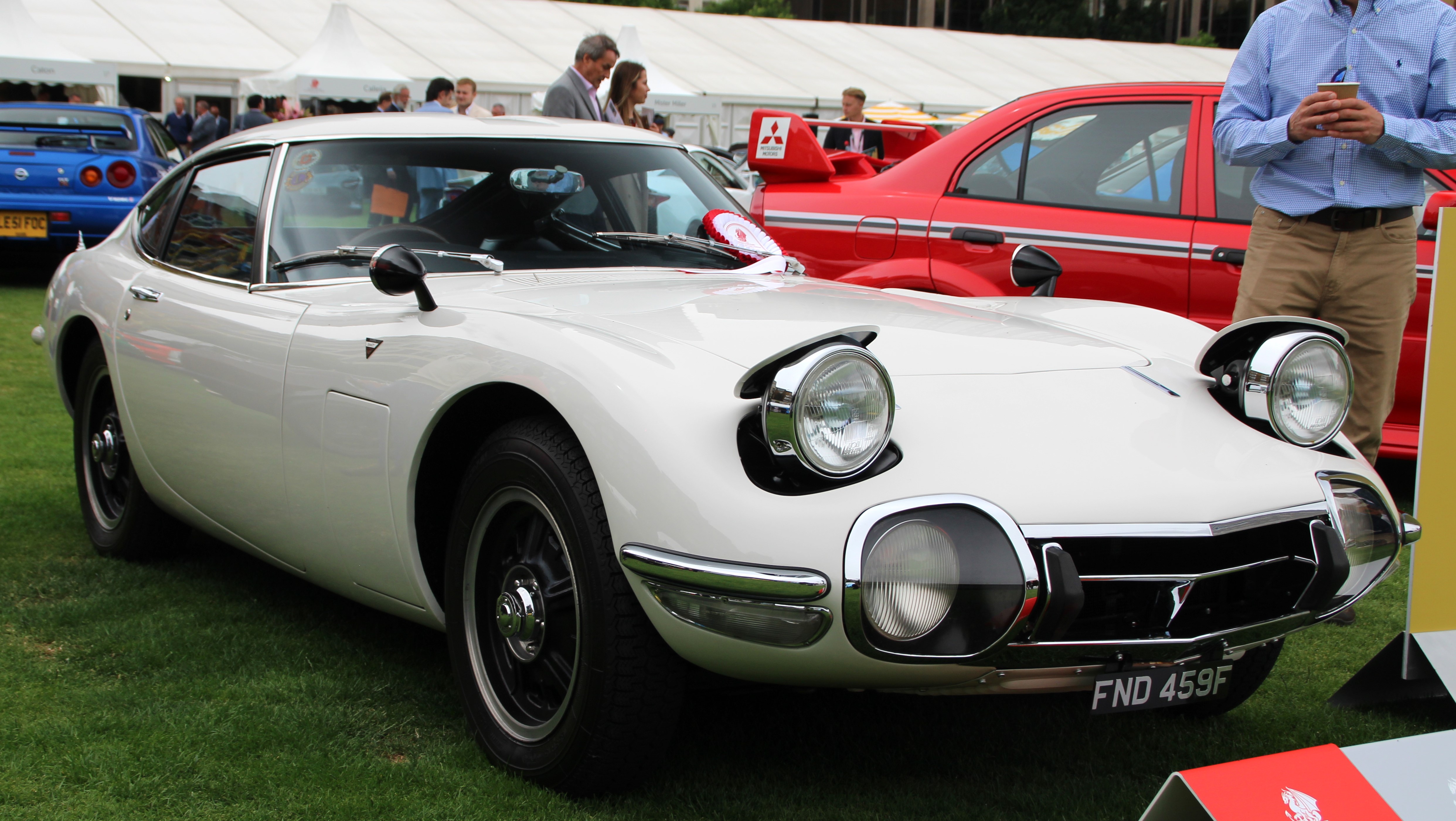
The Toyota 2000 GT is a rare, iconic old Toyota sports car that people consider a “real supercar” from Japan’s early days. Because it’s so special and hard to find, it can sell for huge money even if you compare it to bigger, more exotic European cars. The hosts are basically saying the price is driven by hype and history, not just numbers.
“Pricing it per horsepower” is a critique of valuing cars strictly by performance output. Auction and collector pricing often reflect rarity, historical significance, cultural impact, and emotional appeal—not just power. The segment suggests that if you used horsepower as the main metric, you’d get different “winners” than the ones people actually chase.
A “fun scale” is basically a way to judge a car by how much you enjoy driving it, not just by numbers like horsepower. Things like how it handles and how it feels in the driver’s hands matter a lot. The point here is that the most fun car isn’t always the most powerful or the priciest.
The Datsun 240Z is a landmark early-1970s Z-car from Nissan, famous for its classic styling and strong performance for the money. It’s often remembered as a “driver’s car” that delivered real excitement without needing exotic supercar status. In this segment, it’s mentioned as another example of a car that delivers big fun and emotion.
A “four speed” means the car has four forward gears. With a manual, you shift those gears yourself, and it can feel more engaging and old-school.
Car
Pagani
Pagani is a brand that builds very expensive, very fast supercars. Here, it’s being used as the example of “performance first,” compared to cars people love for other reasons.
The Toyota MR2 is a small sports car with the engine placed toward the middle of the car. That layout helps it feel nimble, and the hosts are saying it was a fun, affordable way to get into track driving.
“Mid-engine” means the engine sits closer to the middle of the car instead of the front. That usually makes the car feel more balanced and easier to steer through corners.
The Honda Prelude is a Honda sports coupe that many enthusiasts remember as fun to drive. It’s being mentioned as part of the same “bring back that kind of car” conversation.
The hosts are describing how social media creates near-instant feedback loops: public reaction to a new car can spread immediately. That contrasts with automakers’ development timelines, which are typically measured in years.
A “Skunkworks” is a special team inside a company that’s set up to work faster and take risks. It’s meant to get big projects done without the usual slow bureaucracy.
Computer modeling means using computer simulations to test a car design before making real parts. It helps engineers figure out what will work without waiting for every prototype.
A-pillars are the structural posts at the front of the car that hold up the roof. In crashes, they’re critical for safety, so today’s rules can require stronger or redesigned pillars.
The Aston Martin DB9 is a luxury sports car made by Aston Martin. It’s the kind of car people buy for a mix of comfort and performance, and owners sometimes tweak it with small changes to make it feel more personal.
This is about how safety rules can require certain parts to be installed exactly as tested. If you remove or change a required front piece, the car might not be considered “legal” in that configuration.
The “plastic box” here is the molded bracket/cover that holds the front license plate. The claim is that it’s not optional because it helps the car meet the safety test setup.
Your front license plate isn’t just for identification—it can be mounted in a way that affects the car’s front safety behavior. The host is saying the tested setup included that plate hardware, so removing it could break the “legal” configuration.
A crash test rating is a score from official crash tests that checks how safe a car is in an impact. In this story, changing certain front parts could make the car fail the safety rules.
The UK license plate is a different size than what you might see in other countries. That means the front plate mount and its fitment can be different too.
Crash testing is when a car is tested in controlled crashes to see how safe it is. If they say it was crash tested “with that on it,” it means the safety approval was based on that exact setup.
A loophole is a technical gap in the rules that lets someone do something that the rules don’t clearly forbid. They’re saying that gap got closed, so the same trick won’t work again.
LIVE
Now, at McDonald's, a McDouble is $250, so you can get your gym gains on, or just get lunch for only $250.
Get more value on the under $3.00.
Limit time only. Prices and participation may vary. Prices may be higher for delivery.
Ba-da-ba-ba-ba.
Lots of places can expose you to identity theft.
Oh, no.
That's why LifeLock monitors hundreds of millions of data points a second for threats to your identity,
which is way more than anyone can do on their own.
If we find anything suspicious, like new loans or changes to your financial accounts,
we alert you right away.
All through text, phone, email, or the LifeLock app.
Get the alerts that could make all the difference.
Save up to 40% your first year at liflock.com slash Spotify.
Terms apply.
You do it all.
So why not get all the electrolytes?
Hydrate better than water.
With new Gatorade lower sugar.
Now with no artificial flavors, sweeteners or colors.
And 75% less sugar than regular Gatorade.
New to the fridge.
All the Gatorade electrolytes you love.
Gatorade lower sugar.
Is it in you?
Now available nationwide.
Hello. Welcome to CarCast.
I'm Matt, the moderator, to Andrea.
We have a special show today.
We welcome Stephen Cox as our guest.
Stephen has been a longtime contributor
and the on-air voice of the Meekum Auctions.
He's also a successful race car driver,
which I'm sure he will share with us.
Before we get started, I want to remind you about our friends at FanDuel.
If you're watching games this week, jump on FanDuel.
Download the FanDuel app and place your bet.
Must be 21 and over and present in select states.
Game win problem, call 1-800-GAMLR.
All right, here we are with Stephen Cox.
Stephen, how are you doing?
I'm doing good.
Good to hear from you.
Thanks for having me on.
What's life like on the West Coast?
It's not too bad.
I know we're going to talk about some racing and some stuff,
but we just got back from the Grand Prix of Long Beach this past weekend.
Before that was NHRA weekend heading out to the Porsche Air Water event,
which is part of the group that does Lufka Cult.
They're about three years into doing this other version,
I think a little bit more modern cars for their...
Lufka Cult is just the air-cooled Porsche stuff.
This is pretty much everything.
And there's a big auction that goes on.
Broad Arrow has an auction up there.
It's exclusively Porsches, so there's a lot going on in the car world.
So how was the Long Beach of Grand Prix?
At that exact moment, I was on the opposite coast driving the 14 hours of Daytona.
I missed everything.
Was it a good race?
It was.
It was a fantastic race.
But the Long Beach race has kind of turned into, for me,
I guess for a lot of IndyCar fans,
it's now like the second biggest, the second most prestigious behind the Indy 500.
It's a huge event.
They do all the drifting ahead of time.
They bring the trophy trucks out.
There's some vintage car racing that happens as well.
Zach Brown from McLaren, he has cars.
He brought his Audi out.
He was vintage racing in that class and managing an IndyCar team
and managing all of his drivers and hospitality and everything else.
He just has to run off for a minute and drive his car, qualify it, race it,
come back.
It's a lot to do for a guy like that, for sure.
But it's quite the spectacle.
Yeah, I saw Zach at the McLaren headquarters,
which is in Indianapolis, very close to where I live last summer.
And everybody there was fantastic.
Security everywhere, all over the place.
It's like you're walking into the CIA's headquarters or something.
And it's funny how the Long Beach Grand Prix has built its history.
What it started out as like a Formula 5,000 race way back in the day.
And it went through several different iterations to become what it is.
So it's built that foundational history.
Yes.
A lot of that is from Jim McAlion, who recently passed away.
But Jim McAlion was basically the president or somehow involved
with the Long Beach Grand Prix for maybe 50 years.
He was there for a long time, putting that event together.
Okay, so let's back up a bit.
For those of you guys listening, Stephen's voice might be familiar to you
if you've been watching MECOM auctions for any part of your life.
It is one of the voices there in addition to many different car shows and events.
Let's talk a little bit about that.
So where we most know you from is from TV, from MECOM, but other stuff as well.
How long were you at MECOM?
I was there for 16 years.
I was on the very, literally the very first show ever shot.
Yeah.
And that was in, let's see, I think August of 2008.
And I left there in 2024 after 16 years and just had a great time.
Yeah.
Why, I was going to say, why leave MECOM, but obviously 16 years is a long time
and you've got other stuff that you set your sights on.
But also there was like a lot of things happening in the entertainment space
sort of behind the scenes, if you will.
We've seen motor trend kind of come and go and discovery channels up
and you know, we're a little confusing as to what's going on with discovery
and part of the Paramount deal and Warner Brothers.
And we have like this big boom of automotive shows, not just the auctions being on TV.
And then we kind of lost a bunch of the shows.
I don't know if we just sort of as enthusiasts lost our taste for it
or the networks just sort of lost their...
The networks don't want them, Matt.
It seems like they just don't want them anymore.
They don't want them.
If you're not IndyCar or NASCAR, you're having a hard time finding a home.
Yeah.
And it doesn't matter what.
Look at the short track series.
Look at the world of outlaws.
Look at the Grand National Super Series, Super Cup stock car series, Sprint car racing.
Where's it all gone?
ASA racing, ARCA racing.
Where is it?
Very, very few of those series can get any attention from what was once considered mainstream network television.
And I've done a lot of television production for race series as well.
And back in the day, you could call up speed.
You could call up speed vision before that.
You could call up MabTV and you could find, even if you had to buy your way on, which was common.
I mean, that's no sin.
A lot of people needed to buy a time slot to put your TV show on.
People would watch it.
You could get sponsors for it.
And now you call up the networks and you can't even get past the gatekeeper.
They don't want motorsports.
And the auctions are running out of places to go, man.
Look how many places Mekam has been.
They're running out of options.
All these bridges are behind them.
NBC, long gone, velocity discovery.
All these are long gone.
And everybody is moving toward a streaming platform.
And that's what you're going to see because mainstream networks.
And I can't tell you why, but I can tell you they don't want them.
Yeah, that's a good question because I don't really know why either,
but for some reason it's just not happening.
Now, interesting for the auctions.
So the auctions, the auctions really kind of like Barry Jackson and Mekam really were able to build up,
those brands and build up an audience because of that TV coverage.
You know, people loved watching it, even if they couldn't go.
You know, it's interesting to watch.
You kind of get your finger on the pulse of values.
But a lot of people that watching aren't necessarily trading cars or just looking to see how much they think their car is going to be worth.
Like it's just kind of interesting to kind of see what's going on in the market.
And that started streaming.
It seemed like it was, you know, the C class D class.
You're like, how do I do it?
Where does it go?
Like, you know, do I have a good internet connection?
You know, all kinds of things like that.
And now I think there's life after for the auctions specifically.
If there was no more TV coverage, I still think there's life for them streaming because we have so many.
So many people are getting online and doing that kind of stuff, even if they just did it on their own right through like a YouTube.
Oh, yeah, it would be fine.
But there are other partnerships that where they can probably stream that through as well.
So I think that it's a little different now.
Listen, I remember, you know, we go up to Monterey car week all the time and we may be.
At one event and streaming the auction on like on a phone while we're at that event because you can't.
Be at all these places at once.
So.
But a lot of the TV shows and the build shows and stuff like that, that they.
They're going to make the transition.
Fine.
It's here.
Here's what's going to happen.
If you look at, let's see, when we were at when I was with amicom, we would get 100,000 to 225,000 viewers per day.
Sure.
And then if you have a three day event, a lot of those are crossovers.
A lot of those are the same viewers watching twice.
But nevertheless, that's the numbers that you rack up.
Now, compare that to your favorite major podcast right now.
They're getting millions of views.
So here's where the loss is going to be.
Matt, you're going to find the faithful viewers are going to follow the auction.
They're going to follow your racing series.
The faithful viewers are going to follow you wherever you go.
And if you have to, you might even pay a little bit.
The only loss is going to be in what we call sampling where people are sitting down and they're scanning through with their remote control.
And they've gone past 15 channels in the last 12 seconds.
And oh, wait a second, go back to that last channel.
I had one of those cars when I was a kid.
Those are the only people you're losing.
Yeah.
So I think the industry will survive it just fine.
But the numbers will be more realistic.
The numbers that you could get from Nielsen ratings and, you know, there's various subscriptions that you can you can subscribe to to find your numbers.
They're inflated.
Now, they're not false, but if you get the same guy watching three days in a row, he's counted as a viewer all three days.
And you're going to get a little bit more honest summary when you go streaming and you're going to lose sampling.
That's going to be it.
Yeah.
All right.
So let's just hold on one second.
Let's get Bill Goldberg in here as well and have him join the conversation.
So just hold on.
Hello.
Morning gentlemen, sorry about my tardiness.
That's no problem.
We were just we were just talking about the state of automotive television and the lack of it.
Good programming.
Yeah, it's it's mostly online and nothing's really streaming anymore.
But because the platforms completely changed what we used to know of automotive and television 100% across the board.
It's just it's a it's a different concept.
Look at my Paramount Plus show that's been in suspended animation for a year and a half.
Yeah.
And it's as good if not better than anything out there, I believe I'm a little biased but
So we're we're in it.
You're joining us.
We're still recording that we hear with Steven Cox.
He's a long time fixture at me come auction left a few years ago to pursue some new things that we're also going to get into.
We were talking about the state of automotive television.
And honestly, we think the auctions could survive by streaming because people are so much more familiar with that process now streaming it on YouTube.
And you're right.
Some of the, you know, to Steven's point,
some of the car shows and the build shows that we're on getting, you know, even a few hundred thousand viewers.
There's YouTube's getting millions of viewers, you know, and they don't have the bureaucracy of a network to to, you know, to deal with.
So it's it's it's interesting because you think the networks are the big powerful player.
But the YouTubers that are doing well are going, Why would I want to deal with any of that?
I could do everything on my own.
I control the production.
I control the schedule.
I control the timing.
The content, the money, the advertising, like you control all of it.
And it's a hell of a business model.
So I mean, it truly is.
But I mean, but it's redefined everything.
And as you and I have talked about this concept that I'm pursuing right now with, you know, giving back to the military with all the sponsors involved, it's there's a version of it that will work here.
There's a version of it that works there, but there's a version that doesn't work.
You know, that the television version, how you would, you know, board it out and how you would shoot it with the arcs is doesn't transfer over to YouTube.
Yeah.
And vice versa.
So it's shot completely differently.
You have a different attention span.
There's so many different variables now.
It's a completely different ballgame.
Yeah.
And then Steven was pointing out all the various racing organizations and forms of racing that are out there that we don't really get to see on TV.
You've got to go and find it online from, you know, dirt tracks, circle tracks, you know, two-wheel, four-wheel, you know, everything out there.
But, okay, so Steven, you're an indie.
That's your home base there.
I know you've been getting into quite a bit of racing and not getting into.
You've been at it for some time now, winning championships and stuff.
Tell us a little bit about what forms of racing are you doing?
What are you racing?
What are some of the cars you've got out there?
Well, I'm thankful not to own a race car.
I drive for other people.
You do not want me working on your race car.
A few people may want me driving and nobody wants me working on it.
So I drive for other teams in the champ car endurance racing series and in the World Racing League.
And then I still occasionally will do some circle track stuff.
But really, I just, I feel like I kind of found a home in endurance racing when you're going through an entire 90-minute to two-hour stint.
It really rewards a patient driver and an experienced driver.
It rewards a guy who can dissect every single corner and learn every crack in the asphalt any place and just try to maximum.
I'll tell you what, maybe the difference is this.
In endurance racing, the fastest guy on an open track like you would have in qualifying really doesn't matter because you're never going to get that open lap.
There's 40, 50 and in fact, there were 106 entries at the 14 hours of Daytona last week.
So you're not getting an open lap.
What is rewarded is how well you can manage traffic and maintain consistent lap times even when you're having to pass on the outside through turn three.
That's what's rewarded.
And so I've really fallen in love with the concept.
I mean, I'm an Indiana boy.
I grew up on dirt tracks and asphalt ovals.
I was on the bull rings for 20 years.
And then a guy out at Halit Motor Racing Circuit one time, he said, look, we got a sports car.
We'd like you to try it.
And we put together a deal and I had no idea what I was doing.
And we entered the GT2 class and we went out and won the race.
And I was like, I don't know how that happened, but I'm into winning and sponsors are into winning.
And so let's try it.
And so sprint racing in SCCA style driving kind of morphed into endurance racing.
And I've really found a home there that I like.
It's a style of racing that I like.
I've been fortunate to be very successful at it.
You know, Wittenauer Racing basically carried me to the 2024 championship.
They, you know, I was fortunate to be a part of a team that was probably going to win winter with or without me.
Helped them win a couple of races at Nelson Ledges in Ohio.
Then Gorilla Sticker Racing, Joe Bungert and the guys have just been super nice to me.
We won there at Ozarks last year, which is a downright scary racetrack, but it's so fun.
So I've just had, I've had good luck in endurance racing.
It's what I love.
And why quit if you're winning?
Right. Yeah.
If you're having fun.
Yeah.
Having fun winning races, winning championships.
When you, when you, when you ended with me come a few years ago, was, was the intention to get more into racing?
I mean, you know, 16 years on the air, that's, that's a, that's a long stint.
It is, it is.
And, you know, the time had come to move on.
I had several other things that were already in the works then.
I had a, one of my books had been optioned for a film and the production company told me that they had a financier for the film.
And so that was one big thing that was going at the time.
Now, in the meantime, the financier left the production company and it's probably not going to happen.
But through the eyes of the moment, you know, dealing with the knowledge you have at that time, that was a big thing on my plate.
Then I had, you know, a major sponsor, then JR fastener corporation out of Chicago came on board.
And, you know, I, I actually, I remember, I stuck it.
You guys remember John Kramer on the Meekum broadcast.
He was the color guy that everybody was crazy about.
And John and I were good friends and we had dinner, probably six or eight months after I left Meekum and he asked me on the side.
He said, he goes, Hey, when you guys won the 24 or the 14 hours of Daytona, not the 24, the 14, there's a difference.
Yeah.
He said, he goes, what kind of sponsorship money and he was a close friend.
So I told him and he said, you made more money there than you would have if you had to come to Kissimmee.
And I was like, yeah, so, you know, exactly.
And then I had already begun the early laying the foundation for starting a new American luxury watch brand for men.
And so something had to go.
And, you know, normally in October of every year, I would send a text, you know, or somebody to Meekum and say, Hey, it's time to get on a new contract for the upcoming year.
Well, I didn't.
And then I put it off and then I didn't then I put it off and then I didn't.
And they didn't call me.
And so we eventually just parted ways and it was the right thing at the right time because something had to go.
Yeah.
Okay.
Now, do you still follow the collector car market?
Or I do some, I do some because I mean, I love cars.
So I'll always follow it to an extent.
And, you know, I'm a huge Fox body fan for the Ford Mustang.
I've, I've, I'm a lifelong Fox body driver.
I've got over probably a quarter of a million miles in Fox bodies.
And so I keep track of that.
What I have lost track of are the fads.
And believe it or not, there are fads that possess the mind of car collectors.
Just like anybody else.
I mean, we went through the Ford Bronco fad.
It didn't matter what Bronco you had, right?
Anybody would pay anything for it.
And then you go through what the 21 window Volkswagen bus.
You know, it's, it's, it's one fad after another.
And then the cars go crazy in price and then they disappear.
I've kind of lost track of that part of the market and I don't miss it.
Yeah.
I mean, right now we're seeing, I think we're seeing more attention.
We're seeing more attention on modern day super cars, right?
That that's happening.
And it's not that those cars don't deserve it.
Many of them do.
And then also we're seeing more in the nineties and even two thousands,
but the nineties cars are really starting to move.
I mean, I'm not saying they're at RM and they're getting $4 million,
but they're, they're, you're starting to see a lot of those listings
show up on bring a trailer and see them at meekum auction.
And that that's the 40 years cycle, man.
Yeah.
You know, it's based on age and the generate and the current generation.
Thank you.
100%.
So I, and I would add to that.
It's, it's the generation of people that can now afford those cars and
they're, they're sentimental to those cars and want them.
But also a lot of older cars have priced out, right?
They got too expensive.
And it's always been, we've said this a million times where the big
brother car brings up the little brother car, right?
The, the, the Mercedes Gullwing brings up the, you know, the 190.
Right.
Now the one thing that I use a different analogy that 190 is still
probably worth like 12 bucks.
Yeah.
I mean, it's still, it's something, it's something.
But the, the, the other thing that we're seeing is the, the wrapper
cars, the low mile cars.
And I, I, Bill's got a few and gets it, right?
Gets it.
I tried it.
I tried it with one of the cars that were behind me in the photo
with the, with the sack Mustang there.
I tried like getting my first like low mile car.
I can't really drive it.
What is it going to do to the value?
And I had to sell it because I, it was just too frustrating to not be
able to drive it for, for me.
Plus I don't have a, a bunch.
I don't have a bunch of cars to go.
But, but 100% that's the key.
And you just touched on it.
You have to have a bunch of cars to have the ability to point
at one and say, oh, you know, I don't drive that because it's
a bunch of the 501, you know, charger Daytona's in 2020.
And I don't have to use it because I have another one.
Right.
Extremely similar to it.
That, to me, as a collector, that's the only way that I can
attain that.
So if you don't have more than enough cars, it's tough to
pull back.
Well, it's tough.
And certainly if you have the resources to go, hey,
I'm going to get the new limited edition, whatever, right?
You know, Hellcat or something and go, can I get two?
You know, one to not drive and one to drive.
That's great.
And then there are some cars that come up where, you know,
are, are kind of special.
Like of course your law man Mustang, that one doesn't really
get driven much, especially now after the really intense
restoration it went through.
But that is a special car that you would bring that out to
the right event or the right military charity event or
something like that.
Because that car can go out there and, and be appreciated
by that audience, but also not, not something that gets
driven quite, quite that much.
But that car is pretty special.
But again, it's based upon the amount of cars that I have.
I'm extremely fortunate to have more than one.
The fact that I have 30 makes it easy to forget about one
in the corner.
I mean, it's just the reality of the situation.
Yeah.
And I, and as I said, if I have a car that I really,
that I know I'm not going to drive to satiate myself,
I get one similar to it.
If not the exact copy that I can drive the, the TRX.
You know, I had, I've got the 95th, number 95 of the
first version.
Yeah.
And I felt guilty about driving it.
So I bought another TRX.
Right.
So it makes it palatable.
Now, when I give my current TRX to gauge,
you bet your ass I'm driving number 95 as much as
humanly possible.
But it, it's, I think it can only be done if you
still are able to enjoy your collection while you
look over in the corner and go, well,
that one's not driven because of a reason.
Yeah.
Well, the guys that buy these cars and then put
them away, they're a different set of guys.
Value equals scarcity plus utility.
Now these cars don't have any utility anymore.
So the only thing they have going for them is scarcity.
So for the guys who own three cars or four cars and
they go by a low mileage garage queen,
they're going to be disappointed.
It's not going to be a good experience for them
because they're not taking advantage of the scarcity.
They need the utility.
Now for a guy who has been extremely successful.
He's a business owner.
He's got the money to do whatever he wants.
His job is to leverage the scarcity against
government's tendency to steal everything that you own.
So if they can find a pile of money,
they're going to find a way to take it.
So he has to hide it.
So he loves cars and he doesn't need the utility,
but he does need the ability to keep it from
being taken by government.
So he puts it into that and then he gets 15 of them.
And then he puts it under a 501C3 and calls it a museum.
And at that point,
he is completely protected from having his assets taken from him.
He can enjoy owning the vehicles and he doesn't need the utility.
So if you're not in that situation,
you car collector at home,
don't get your low mileage car.
Listen to what Matt said.
Don't get a low mileage car.
Don't do it.
You're going to be sorry that you did.
I, you know, in one way, shape or form, I mean, because I'm,
I'm a pure at the end of the day, but, but, and I,
and I'm a collector at the end of the day.
And I'm realistic about my expectations,
but it all boils down to rekindling that kid in you that just
loves to drive cars.
Yeah.
So I can't do both of them at the same time.
There's no way I'm keeping a car and not driving it.
Right.
Right.
It's just.
Yeah.
Car is an automobile and that means automated mobilization.
And if it's not mobilizing anything automatically,
then it's not an automobile anymore.
Now it's a museum piece.
Yeah, that is a piece of our grammar.
Okay.
Yeah, you're right.
I mean, might as well buy a painting or something else and hang it on your wall.
It's, it's, that's what it is at that point.
You know, recently that we saw, you know, again, talking about the market,
we saw at a big meekum auction was that whole Ferrari collection go up there.
And the numbers coming out of that were absolutely insane.
And everybody sort of looked at it and said, you know,
it was passion in the room.
And it was the, you know, whatever was going on that day.
And, you know, some of them are the right color.
And it's just like.
Yeah.
And that wasn't necessarily the case.
Like some of those pulled big money.
And after that, other auctions were starting to see similar dollars.
So there's, there's a, there's a bubble there for some of those cars.
Now you do run the risk.
And Steven, I know you were, you're kind of talking about this before,
but you run the risk of a couple of people at an auction bidding up a car.
That's not necessarily worth it.
At least not worth it yet.
You know, there's, I talk to people all the time to have vintage racing cars.
They go, I want a million two for this car.
And I go, okay, in six or seven years, you will get a million two for that car.
It's just not there yet.
So if you don't need it now, just wait it out.
You're not there yet.
That's out the window anymore.
That's out the window because none of the logs, there's no logic that goes to it.
It's all a fad.
It truly is.
That's my belief.
I mean, Steven, what, what do you think in what's happened the last three years with
these auctions and these cars hitting the roof?
Now granted, there, as you said, Matt, when it runs its course in six or seven
years, yeah, we believe that it's worth it.
But there's a group of people now that believe it's worth X right now.
And so they set the standard.
None of it makes sense.
You know, it makes sense, Bill.
If you stop and think to yourself, that's the only reason to hold an auction.
If you want definition value and market value out of your vehicle and you want
it right now, put it on Facebook Marketplace.
It'll be gone tomorrow.
If you are complaining about, well, you took it to an auction and you kind
of had this artificial synthetic situation where there were two guys and
they got egos in the room and they were going to outbid each other no matter why.
And it goes to this insane price.
Thank you.
That's the reason you have an auction.
There's no other reason to have an auction.
We have Facebook Marketplace.
That's the only reason an auction exists at all is to create that situation.
If you don't like that situation, turn off the auctions.
Don't ever watch another one and just scroll Facebook Marketplace.
Yes.
Yes.
For sure.
And so one of the things that have come up was we saw this years ago where
people, like you said, they kind of got excited.
The one that the example is the Toyota 2000 GT, which is the Japanese
supercar, but it's not a lot of car compared to some of the
Ferraris of that era, Lamborghinis of that era, those cars are 12 cylinder
aluminum body, more car compared to six cylinder and whatever.
And that car got up to a million dollars.
And when that car got up to a million dollars, we kind of looked
at that and said, that's not a million dollar car.
So someone's going to take a hundred.
Yeah.
It's a million dollar.
It's a million dollar emotion and it's a million dollar story.
If you were selling and you were pricing it per horsepower, obviously
you'd have different winners.
But at the end of the day, the first generation Toyota MR2 is one of
the best on the fun scale.
Forget horsepower on the fun scale.
It is a 10 out of 10.
Yeah.
Every single day I ever drove that car.
A Datsun 240Z.
If you get the four speed, the first early manuals, that's a 10
out of 10 on the fun scale every day, every mile in that car.
And what you're paying for is the story, the history, and the
emotion of it.
Because if you measure it by performance, then Pagani wins
every time, don't they?
Right.
Right.
The MR2 you mentioned specifically and Bill talking about the
audience is the right age group.
When we were all young, the MR2 was out there and you're
like, this is kind of a fun, affordable, small car you can
hit the track with.
The wedge cars.
Right.
And now that we're all older, there's an audience of our
generation going, when is Toyota bringing back that
nameplate?
When are they going to bring back a small, lightweight MR2
type of car, mid-engine, that kind of thing?
Because now there's demand for it.
Now there's people speaking out going, why not having that?
And also it helps when those cars value start to go up
a little bit more.
When you see the Honda Prelude or the Acura Type R
start getting bigger money at auctions and bring a
trailer, then you go, why don't we bring that nameplate
back?
Why don't we get a new version of that?
Right.
You see immediately what the public wants.
Yes.
You do.
You see it quickly.
You see it very quickly.
No, it's not quickly.
It's immediate.
With social media now, it is literally right when it comes
out of their mouth, everyone knows.
It's amazing.
The landscape has completely changed.
And what's crazy is the car companies, they can't
respond to that with that same immediacy, because it takes
them five years or more just to get a car developed.
I mean, sure, you hear about Ford has a Skunkworks, and
that's where the Ford GT came from, and they did the
whole thing with computer modeling.
I don't want to say AI, because that wasn't even a
term when they started the GT.
But they're saying, well, we didn't have the
bureaucracy, so we were able to get this done in a couple
of years and get a car out there.
But OK, so you did it with one supercar.
But can you do that with more mainstream vehicles?
How do we get that timeline down?
It's going to have to.
Matt, most of those cars can't be built now.
If you go back, and let's just take the example that
you used, and people are looking at the first
generation Toyota MR2.
Man, that was a great car.
It weighed next to nothing.
It didn't need a lot of horsepower.
It had very thin doors.
It was super lightweight.
It got fantastic mileage.
I'd get 38, 40 miles to a gallon at it when I was driving
the thing way too fast.
Wow, let's build that again.
The fact is they can't, because you've got the
NHTSA, you have mountains of prohibitive
regulatory disasters that come down on a regular basis.
If they wanted to rebuild that exact same car from
the same molds, government would not let them
market it and sell it, because the A-pillars won't
take the unlikely rollover that you're never going
to have, and on and on and on and on.
The fact is they would love to rebuild these cars.
They have most of the original tooling to this day.
They could fire it back up, and in less than a year
put these back on the market.
But the only thing that stands between the car
customer and the car manufacturer is government.
You can't do it.
Yeah.
All right, let's take a break.
We'll be right back.
Quick reminder, if you're watching Games This Week,
jump on FanDuel, whether it's NBA spreads,
player props, or same-gay parlays.
FanDuel makes it easy to get in on the action.
Download the FanDuel app and place your first bet today.
Lots of places can expose you to identity theft.
Oh, no.
That's why LifeLock monitors hundreds of millions
of data points a second for threats to your identity,
which is way more than anyone can do on their own.
If we find anything suspicious, like new loans
or changes to your financial accounts,
we alert you right away, all through text, phone,
email, or the LifeLock app.
Get the alerts that could make all the difference.
Save up to 40% your first year at lifelock.com
slash Spotify.
Terms apply.
Instacart makes grocery shopping easier.
And just because you're not doing the shopping yourself
doesn't mean you don't care how it's done.
With Instacart shopper notes, you can get particular
about what you want right in the app.
Like rotisserie chicken that's extra crispy,
steak with marbling the Romans would have loved,
and lettuce you'd actually pick yourself.
Just leave a note for your shopper so they can get it
right for you without having to ask.
That way you can get groceries just how you like.
Download the Instacart app and shop today.
Years ago we had Ian Callum.
He's the designer, Jaguar, Aston Martin.
He's doing his own design company now, I believe.
And we had an Aston Martin DB9 over there
and part of Adam's collection.
And Ian Callum was at the studio
and we were looking at the DB9
and we had a couple little modifications to it
and he was critiquing them, scratching his chin.
We'll see.
And he told me an interesting story.
And I said, you know,
you can't really make the car like this
because look at the slope of that front end,
how low it is, where it is.
And now there's all these weird crash test rules.
And he said, oh, when we did the DB9
you weren't allowed to make that car.
And he goes, and he said,
that big plastic box that fits on the front of the car
where the license plate goes,
like it's the big plastic holder, right?
That covers the grille of the car, right?
And that's where you were supposed to put
your front license plate on.
And he said, technically,
that is the only way it would pass its crash test rating
where it clips you in the shins is with that thing on there.
Once you take it off, it's not technically legal.
So all of those cars are supposed to be sold
with that license plate.
Now, of course, in the UK,
it's the longer one than what we have here, right?
We have the longer, thinner plate.
He goes, that is, it's crash tested with that on it.
When we're done with DB9, like you can't do that again.
We're never going to get away with that little loophole again.
You're never going to see that car again.
And that wasn't that long ago.
That was mid-2000s.
Well, I mean, I was talking with Scott Hoek
who is Meekum's main anchor.
And we had the same conversation one time
and I told him, I said, Scott,
you're not buying the car of your dreams.
You're not buying the car you want.
If you're looking for a new car today,
what you're going to buy is what the government
will permit you to have.
Not what you want.
What you want, they're not allowed to build.
And when car lovers grasp that situation
and they accept that reality
instead of trying to deny it,
then maybe things will start to change.
Yeah.
Well, there is a little bit of light
at the end of the tunnel for guys like us
and Bill and I.
And we're not afraid to modify.
We're not afraid to personalize.
We're not afraid to make it around.
We'll cut it up.
We'll do what we want to it.
There's definitely some cars that you don't want to touch
because of certain history,
maybe value, but certain history.
But we can certainly appreciate, you know,
just walk around the floor of the SEMA show
and see what some of these amazing builders are doing.
And fortunately for them,
there are clients out there willing to spend, you know,
a million dollars, two million dollars or more
getting a, you know, a hand built, you know,
at this point, really just a hand built car.
You may start and go, you know,
I want a Lincoln or I want an Aston Martin.
And the only thing left is, you know,
a piece of glass or a door handle
or a VIN number or something.
But you get this hand built car.
And my curb guys are going crazy right now.
And if you can sell two or three of those
at a really, really solid price,
now you got them out there.
Now you've got your video.
You've got your, you know, you got the advertising.
You have what you need to start selling
at least a handful of those and getting them out there.
So I love going to SEMA just to watch,
just to look for the stuff that you just mentioned.
Yeah, for sure.
And we go out there and to see that and to talk to them.
Yeah, talk to the ring brothers every year.
But I talked to Troy Trapani talked about chip foods,
talked about, you know, talk with a bunch of the builders
that are out there doing these things.
And yes, so we're seeing a couple of things is one,
we are seeing more of these builders trying to do
turnkey versions going, hey, we're, you know,
this is a carbon fiber Mustang or Camaro or something.
And we would like to build five of these or 10 of these,
you know, in some cases more.
You know, we'll do five or 10 of these and you can pick
some options and stuff on it.
It's good because you get that personalized, you know,
custom built car and a company can actually make some money,
make a living off of it while doing it.
But then there's also, we're starting to see some
of the well built cars now get decent money later
at auction.
I mean, for the longest time, you know,
Boyd cars would go up in auction and be like, you know,
that for the price you're paying at Barrett Jackson,
that's what it cost to machine the set of wheels
that they were doing at the time.
You know, now, now you buy the whole car and then
some of those cars have really kind of come back
and change the market.
We've seen some ring brother cars go up at Barrett
Jackson.
We've seen some old Boyd Coddington cars go up
and get pretty decent money for them now.
Maybe not quite what they were when they were new
and that's tough to get to, but it's nice to see
some of those get recognized.
So I like seeing those at auction.
Yeah, and it's the, at that point,
people are following the builder.
It's Boyd Coddington.
It's Gene Pontiac Transam.
You guys know his last name.
I can't think of it, but it's these guys that
are actually selling the cars.
It's their reputation.
Yeah, for sure.
And it's taken a while for some of these guys to do it.
You know, they were hot rod builders before they were
really kind of building businesses.
You know, Boyd was one of the first, you know, to go,
Hey, we're a hot rod builder, but we need, you know,
we need social media people.
We need a PR person.
We need, you know, content creation.
We need to, you know, explain what this car is
and how it came to be and not just unveil it at a show.
You know, and go, here's, you know, great.
We're going to go for Grand National Roadster, you know, award.
With people having short attention spans these days,
that's why they don't understand what they're looking at
because they don't give the time to investigate the history of the vehicle.
It's just, you know, every eight seconds,
they have to see something freaking cooler, right?
Yeah.
I don't think the time has invested.
Now, my question is they're in that period when Boyd's cars
and cars, cars of that, you know, level quality.
What were people thinking for those 10 years or that period of time when
they were bringing, you know, great money and then they stalled for that period
and now they're bringing great money again.
You know, so if you heard during that time, during that lag, man,
you really made out.
Right.
You're right.
People's attention.
Yeah.
Like a fish.
I see the next shiny thing and I go and I go to see that for, you know,
but, you know, it's nice to see some of those cars showed up at like
the right collections in certain museums.
But kind of thinking about it now, Stephen, what do you think is.
I don't want to say that the next collector car or the future of
collector cars, but there's got to be some things we should be
maybe taking a look at as potential collector cars.
Well, first of all, get a C7 while you can.
The last front engine Corvette.
I just, that still may be my all time favorite Corvette.
The C7s were just magic and I got a lot of time racing the C6s
and the sixes were just fast straight out of the box.
They didn't need you to go through and tinker with the suspension.
The brakes held up even under track conditions.
The C6 and the C7, I know it's the easiest thing to do is to look
into the future and say, well, see a Corvette will be valuable one
day.
Well, that's a self self fulfilling prophecy.
We all know that, but these are unappreciated under
appreciated cars right now there at the bottom of their value
curve and they're gorgeous and they're still in very good
condition.
You don't need to go back and take your C7 and restore it
right now.
They're still in good original condition in most cases.
That's the one that just jumps out at me right now.
And then, you know, there's there's other cars.
I think people are starting to appreciate some of the
Japanese cars, you know, the NSX.
I mean, that was that was a super fast amazing car and
that's what they're 40 years old now.
I mean, 35, it's been a long time and that's an early
90s model car, but that's starting to get some love.
Super turbo.
Yeah, the Supra and which could, you know, eat a Mustang
and a Camaro and still have, you know, Corvette for
dessert back in its day.
That was a fast car.
So I think those cars are somewhat underappreciated as
well right now.
I would agree with that.
A friend of mine, the past several months now has
recognized exactly what you just said on the Corvette
C7 and and has been buying up a handful of them.
Yeah, not 10, but, you know, two, three, maybe
looking at four and looking at going, oh, what are
the looking into?
Like maybe zero six, maybe the right spec, maybe
zero zero ones are already C7 zero ones are
getting really expensive, but looking at the right
spec of car and and going, this is, you know,
low miles.
It's super clean.
Nobody drove it.
It's like it's kind of a steal right now.
And well, the ZR ones are going to drag just the
your your garden variety Corvettes up with it over
time.
So they're going to be the first ones to be
scooped up.
I wouldn't even worry about them.
The car is fast enough anyway.
Yeah.
They're just there's more car there than there
is the average driver to handle anyway.
So just buy yourself a really strong good horsepower
C7.
Try to find yourself a manual transmission and just
go have fun with the thing and put miles on it
now.
And don't worry about it.
It'll build its own value later.
Yeah.
What do you think the production numbers have to
do with the value of that being the next car?
They they have some impact on it, but you
know, look how many times we've sat in an
auction and you see a car that that was not
produced in any limited numbers whatsoever.
Take a 70 1970 Camaro.
Okay.
You got a gen two Camaro and you got two guys
in the room and they both love that gorgeous
shade of deep metallic blue and they're going
crazy over it.
And they built a blue million of those things.
You know, the gen two Camaro was with us
probably for too long.
Honestly, they probably built the car for three or four
more years longer than they should have, but you
still have guys that go crazy over it.
So my feeling has always been if you have to
sell the car based on the limited number of them
that were built, you've got a weak case.
You're trying to use statistics to appeal to
emotion.
Emotion is what spends money, not statistics.
I agree with that.
I think if the value of the car is completely
based off of its low miles or its low production
number or even last production number,
something, right?
If it's just based off of that, that that's
too volatile.
Like it's tough, but if there's more to the
car and you're right and in the right room,
that production number might be special to
somebody.
You may go, I've been buying up cars for years,
maybe not the most valuable cars in the world,
but I've always kind of wanted a low production
number of cars.
I want to say Bo Bachman at Galpin,
he's got a hell of a collection and a museum
over there as well at Galpin Ford and he
kind of did the math and he was just like,
yeah, somebody at Ford gets number one and
Jay Leno gets number two or whatever and he
just kind of came up with a number one day.
I don't know if it was him, it might have been
before him, his dad, and said we just like
the nine and whatever possible he would just
like a new car would come out and he would
go to Ford and go, well, I'm your number one
dealer.
You're mark number nine for me.
So now he's got a museum of number nine
or whatever.
I don't know exactly what number it is,
but there was a number that they kind of
like a bunch of those and it kind of just
doesn't talk about it, doesn't like brag about
it, like it came up in one of our interviews
once and how many they were in there,
but it's not like advertised.
It's just something more internally.
They just had this emotional kind of thing
to it.
So yeah, and it's worth it.
In a modern context, ask yourself,
so far as the limited production of the
entire run, ask yourself what that
really means because and here's the
sense that I mean that in.
If you like the Ford Mustang
Boss 429, OK, you got 1969, you got
1970, you have very, very limited production
runs, but all those cars still
don't exist.
But if somebody finds a chassis
of one at some Iowa
junkyard somewhere, there's going to be
one more next year than there was this
year, but there won't be any fewer.
No matter how bad somebody
wrecks it or it gets hit by lightning,
they're going to be restored.
So you're going to find Boss 429
numbers may eke up slowly over time.
However, look at the
1971 Ford Torino.
How many of those cars survived?
Not very many at all.
There's very, very few of them out there,
but there were a million of them back
in the day.
Your grandma drove a four door
Torino from 1971.
How many two doors with big block
V8s are still out there.
So the production numbers
really are only meaningful
in the sense of modern
context.
You have very, very, very
few survivors from
a 1971 Ford Torino,
but there's going to be more
Shelby's and GT's because every time
somebody finds a chassis, they're going to rebuild
around it.
So what are those production numbers
for a planter?
Yeah, right.
I mean, there's a lot
that goes into it for damn sure.
All right.
So Stephen, tell us what's
in your garage these days?
I have a 1980
Ford Mustang
and it is a
nicknamed Blue Thunder and
I bought that car when I was 17
years old.
I'm the second owner.
I dated my wife in that car.
It's sort of the car of my life.
And of course, when I bought it, I was a
kid.
I didn't know that I was buying what would
eventually be recognized as one of the
least valuable Mustangs ever.
But who knew?
It was 1980.
So I decided
to rebuild
that car
the way I felt
Ford should have done it to begin
with.
And Stiffler's
came out of Moorsville, Indiana came on
board and McGonagall engines
out of Muncie, Indiana helped me out.
I got a 347
stroker McGonagall
actually built my
stock car engines for the I think the
2012 through 2014 season
somewhere in there.
And I was hugely impressed.
So whenever I needed a small block
Ford guess who I went to a cold case
aluminum radiators came on board.
And so now it's a
now it's the car that I
I kept thinking in my head.
I was buying when I was 17.
You know, now it's over 400 horsepower.
It doesn't even weigh 3,000
pounds.
It established
the first lap record for a licensed
Fox body at Nelson
Ledges Road course about a year and a half ago.
And I
have loved Fox bodies my entire life.
There's a 1990 Fox body
that needs a rebuild out there
right now. Oh, hey, you
look at that. You found the new interior.
I just put that in.
And I'm again, I told you guys
I'm no mechanic and believe me I am not
but I can do the interior as
a kid. I didn't know that I couldn't
do it. And so I tore everything out of the interior
over and over and over and I kind of got to where I
was, you know, pretty good at the interior.
So did the interior with myself
and a couple of friends.
Then I also have
a second Fox body out there
that needs rebuilding then
let's see.
I have a 2003
first year
BMW
Z4
and oh, what a
gorgeous car. It is so beautiful
and then those
are my two daily draw both of those
cars get driven and driven a lot.
Then I have
two motorcycles, a Suzuki
V-Strom which is all set up for
long distance road travel and adventure
motorcycling. And then I've got what
I consider the most beautiful
motorcycle built in the history
of ever and that is
the Bonneville
T100 from Triumph
and it is the retro version
it's based on the 1959 except
it's all modern parts and all what
a gorgeous, gorgeous, gorgeous
motorcycle. So whenever
I go out in the morning
I tell you this is like a big deal to me. I don't
have 30 cars but everything
I have is ready to run
and I can go out in
my five bay garage in the morning
and
it's like a woman going
to
to see a pair of shoes, okay. And there's
like an ocean of shoes here and it's like
what do I feel like today? Do I want
a
European
true roadster
with open air experience? Do I
want a Ford Mustang
with this nasty vicious horsepower
and upgraded suspension and every
day do I want to go motorcycling? If I want
to go motorcycling do I want classic or
ADV? I love that
every day when I go to the gym in the
morning I walk out in my garage and it's
like a smorgasbord. Yeah
that's the dream.
To be able to go out and pick based off
your mood based off the weather just where
you want to go just any of that
is nice to be able to have
that is quite
the luxury for sure. And I rotate through
them every now and then and I've
heard me talking about Datsun 240's
because I've had them had a 260 which
they only made for about 18 months then
had Toyota MR
2 first generation which again
is why I was speaking about it earlier on
I've rotated through a bunch of cars probably
not as many as some of you guys
because I tend to get married to cars
I really if I really like it I
hang on to it I'll drive the same car
for 5-10 years
so you know I keep
a small garage
but well maintained
ready to go all the time
and I
every 10 years or so I'll turn them over
I've had Miata's and all the other fun stuff
but that's what's out there right now.
Awesome
I love it I think to be able to go out
and just go into the garage
and pick something that you know is going to
work it's going to run
having so many projects
that we've stared at and can't finish
or get to or time or money and just go
ah what's going on
you know
that oftentimes
sell them off but
real quick before we wrap up I know you mentioned
a watch company this
maybe we're not quite there yet
but it is something we're work you're working on
so why don't you just tell us a little bit about that
because there's a story there
we're there
yeah I have
an oddball interest
that I've never pursued professionally
I don't know how you would but I have always
loved aviation
especially fighter airplanes from World War
1 and to some extent World War 2
just crazy about them and I've been to France
9 times with a you know
a shovel in one hand and a metal detector
in the other and doing all kinds of research
and it's just something that I really really enjoy
and so I
I started thinking around 2018-2019
what
can I do
with
all of the watches since I was a kid I've always just been
crazy about watches what can I do
that is substantially
different
from what luxury watch companies are
doing today and I thought you know
I can get stuff
that nobody else can get
and I can get
for instance there was an airplane
called the Newport 28
which was America's first
fighter airplane in World War 1
and I actually
found
three or four cylinders
from that airplane the rest of the airplane
was wooden fabric and they don't survive
and we take these
metals and we
recast them into watch cases
and there's a
foundational difference between
everything we do at South with
Watch Company and everything that
everybody else in the watch industry does
you'll find several companies
out there and they're doing a good job at this
they will take
a small piece
of a famous car or an airplane
or something like that they'll
incorporate that into a watch
we don't do that
they do it very well we don't need to
for us the
entire watch case is
the airplane
we recast that
steel into the shape
of a watch case and then we
put the watch movement inside it
and so if you want
a watch that is
literally made from
the
behind the pilot's head
cockpit armor
of a Messerschmitt BF109
from 1944
we've got it for you
and we
sell to collectors and it is
a high end luxury product
that we can meet in
that financial strata
and we also just
wrapped up I'll give you some news
I'll give you guys some news
we just wrapped up a deal with Richard
Petty
was over at Petty's garage
in North Carolina
and in my garage
right now sitting right in front
of my triumph Bonneville
are four
rear gear sets
from Richard
Petty's Chrysler products
that he drove
at Talladega and Daytona
in the late 60's and early 1970's
and that's going to be our next run
of racing chronograph watches
they're sitting out there right now
so that is
what is keeping me busy
that's what I love
that's number one
in life right now that is
a huge investment
and it's
something I'm looking forward to see this come to maturity
we're in the pre-order phase right now
and sometime in the next 30 to 60 days
we should have product completely ready to go
tell us again where we can find it
go to
www.SopwithWatch.com
S-O-P-W-I-T-H
like the old airplane
www.SopwithWatch.com
and just scroll down
we make all of our own films
we have in fact a brand new film
that's coming out in Watchtime magazine
day morning
we're doing something
I didn't see any point
whatsoever in coming out
with a standard stainless steel watch
with a Swiss movement
and entering into the luxury watch space
it's already crowded go buy a Rolex
there's no shortage
but we wanted to do something
that foundationally changed
what
we wanted a watch with an identity
that's the best way to say it
if you buy a luxury watch
from another company
great watches
but that steel has no identity
it comes in a rod
it's sent across the ocean
from Asia somewhere
they bring it in they melt it down
and it could become a transmission
it could become a dental instrument
it could become a weed eater
that steel could be anything
but it has no identity
ours does
it's the story that you're acquiring
the truth of the matter is
it's the story because
you can find a digital watch at Walmart
for $50 it'll tell the time
it's the story that we're selling
your watches have history to them
it does
my brother's a watch collector
and he has a T-34 that he does the aerobatics in
so you cater to
it's the same crowd
exactly
and if you're wearing a SOP with watch
unless
you happen to have scored
three aerial victories
in Iraq in 1993
you have the best story
at the bar for the rest of your life
bar none
awesome
I love it I think it's a great idea
like you said you're selling
that story and listen
every time we go to a car auction
we look at those cars up on the block
it's the story
behind that car
what do you have with the product
I get it completely
I definitely appreciate that
Steven
thanks so much for coming on the show
we're
running out of time now but
fantastic good luck with the watch company
can't wait to see you out there on the track
you guys can
give them a follow on Instagram as well
remind us what your Instagram
is
let's see
I don't know
I'm on Facebook at Steven Cox
just look up Steven Cox racing driver
and I've got an Instagram
but all my stuff
from Facebook bounces over to it
so if you look up Steven Cox on Instagram
you'll find me
we got quite a few followers there so it's not hard to find
and if you need to route around
just look up Steven Cox racing driver
on
on Facebook
we'll route you through to it
and then I've got a link tree
actually hang on a second
I've got my link tree right here Steven's official Instagram
hang on
you would think I would know this wouldn't I
stop with motorsports
stop with motorsports
there you go
alright guys thanks so much
Bill thanks for joining us I know you were busy this morning
but I appreciate you coming in
and hop it in with this
I'll take this out
oh yeah
paperwork for a firearm these days is like buying a vehicle
yeah
hang on don't go yet
Bill I want to see that
it's a little glock
oh yeah
9mm or 40
it's a 9mm
I had to deliver two
Desert Eagles because I'm getting them both seracoded
to match each other so I can do the
Clint Eastwood things
yeah yeah
the Desert Eagle is that a 50?
yes sir
yeah that's not a 45 I think it's a 50 isn't it
yeah
I've never fired one
I've seen the videos of
Bill firing that thing
imagine Bill firing two at once
well
I'm 100
with about a 12 inch barrel
and then I had the Desert Eagle on the other hand
and I did the double
double shot thing but I
worked with Magnum Research for about five years
and
if you're a gun guy they provided me
the biggest finest revolvers if you look online
they provided me
with a wheel gun
that shoots 45-70
oh
that's gotta be fun
you need a backstop
for you not the bullet
it's the most
beautiful gun I've ever shot
it doesn't give you the kick
that you would think that it would
I think it's a 10 and 3 quarter inch barrel
but I mean I've got a
460
that will blow your wrist off
but the
that 10 inch barrel is really going to use
up a lot of that felt recoil
so that helps a lot
and I'm a Walther guy
I still think even though they don't make it anymore
the Walther P99 to me
is the finest gun ever made
I've got like three of them
I don't know if I'm going to close it right now behind me
I'm down crazy about them so anyway
love that that's a beautiful Glock
yes sir I appreciate it very much
yeah well congratulations on that
it was a pleasure talking with you this morning Stephen
thank you
alright guys thanks so much and we will be back
next week and until then
keep the air in the spare and the bag in the wheel
we all do it
you have a night for yourself but don't like the sound of the silence
so you turn on the TV just for the ambience
it's a little trick
it helps you feel like you've got company and aren't alone
and other insurers
well they may make you feel alone
but when you switch to Geico you've got claims reps
available around the clock
so whenever you need you'll have people around to help
and let's turn on the washing machine
just for good measure
but isn't that soothing
it feels good to have support
it feels good to Geico
in the US Army you have a whole world
of opportunities
get training in some of the 200 career fields
which will help you advance in your career in the army
as well as in your civilian life
learn how you can be all you can be
at goarmy.com
About this episode
Stephen Cox—longtime Mecom Auctions voice and an endurance racer—talks about the spectacle of events like the Grand Prix of Long Beach and how motorsports coverage has shifted away from mainstream TV toward streaming and YouTube. He argues auctions will survive, but streaming changes the “viewer” math and reduces channel-surfing sampling. The conversation then pivots to collector-car strategy: fads vs long-term value, why “low-mile garage queens” can disappoint, and how emotion and scarcity drive bids. Cox also shares his Fox-body Mustang build, his current garage, and his aviation-inspired Sopwith Watch project.