
Stephen Cox TV host, racer and longtime voice of Mecum auctions.
About this episode
Stephen Cox—longtime Mecom Auctions voice and an endurance racer—talks about the spectacle of events like the Grand Prix of Long Beach and how motorsports coverage has shifted away from mainstream TV toward streaming and YouTube. He argues auctions will survive, but streaming changes the “viewer” math and reduces channel-surfing sampling. The conversation then pivots to collector-car strategy: fads vs long-term value, why “low-mile garage queens” can disappoint, and how emotion and scarcity drive bids. Cox also shares his Fox-body Mustang build, his current garage, and his aviation-inspired Sopwith Watch project.
Follow @motorator
Follow @goldbergsgarage
Presented by Bravago Beverages
Hosted by Simplecast, an AdsWizz company. See pcm.adswizz.com for information about our collection and use of personal data for advertising.
Mecum Auctions
"Stephen has been a longtime contributor and the on-air voice of the Meekum Auctions. He's also a successful race car driver,"
Mecum Auctions is a company that sells cars at auction. If you like collector cars, it’s one of the big names you’ll hear about.
Mecum Auctions is a well-known collector-car auction company in the U.S. Their events are a major part of the classic and enthusiast car marketplace, where cars are bought and sold in public auction settings.
Grand Prix of Long Beach
"but we just got back from the Grand Prix of Long Beach this past weekend. Before that was NHRA weekend heading out to the Porsche Air Water event,"
The Grand Prix of Long Beach is a big race event in California. It’s run on city streets, so it feels more like a real-world course than a closed racetrack.
The Grand Prix of Long Beach is a major motorsports event held on a street circuit in Long Beach, California. It typically features open-wheel racing and draws a lot of attention from both fans and teams.
NHRA weekend
"Before that was NHRA weekend heading out to the Porsche Air Water event, which is part of the group that does Lufka Cult."
NHRA is a big organization that runs drag races. An “NHRA weekend” means they were at a drag-racing event with cars racing down a straight track.
NHRA stands for the National Hot Rod Association, which organizes drag racing events in the U.S. An “NHRA weekend” usually means attending a drag-racing meet with multiple classes and qualifying/race sessions.
Lufka Cult
"heading out to the Porsche Air Water event, which is part of the group that does Lufka Cult. They're about three years into doing this other version,"
They mention a group called “Lufka Cult” that puts on events. From the context, it seems like a fan/enthusiast community organizing car-related get-togethers.
“Lufka Cult” appears to be the name of a group that organizes events, mentioned in connection with the Porsche Air Water event. Without more context, it sounds like a niche enthusiast community rather than a mainstream racing series.

Porsche
"Lufka Cult is just the air-cooled Porsche stuff. This is pretty much everything. And there's a big auction that goes on."
They’re talking about older Porsches that don’t use a liquid cooling system like most modern cars. Collectors often love these because they feel more “classic” and have a unique driving and mechanical character.
The host is talking about air-cooled Porsche cars, which are a specific generation of Porsche engineering known for their distinctive sound and layout. Air-cooled Porsches are a big focus for collectors and auction houses because many enthusiasts value their mechanical simplicity and classic character.
Broad Arrow
"And there's a big auction that goes on. Broad Arrow has an auction up there. It's exclusively Porsches, so there's a lot going on in the car world."
Broad Arrow is a collector-car auction company. Here they’re described as running a Porsche-focused auction, which is why there’s a lot of activity around those cars.
Broad Arrow is an auction company that specializes in high-end collector vehicles. In this segment, it’s mentioned as running an auction that’s exclusively focused on Porsches, which helps explain why the event draws so much attention from the Porsche community.
Long Beach of Grand Prix
"So how was the Long Beach of Grand Prix? At that exact moment, I was on the opposite coast driving the 14 hours of Daytona. I missed everything."
They’re talking about the Long Beach Grand Prix, a big race weekend. The point is that IndyCar fans see it as one of the most important races—almost like a “second biggest” event after the Indy 500.
The host is referencing the Long Beach Grand Prix, a major motorsport event that has become especially important to IndyCar fans. They compare its prestige to other series landmarks, positioning it as a top-tier event after the Indy 500.
Indy 500
"I guess for a lot of IndyCar fans, it's now like the second biggest, the second most prestigious behind the Indy 500. It's a huge event."
The Indy 500 is the biggest IndyCar race. They’re saying Long Beach is almost as important—second only to the Indy 500—for a lot of IndyCar fans.
The Indy 500 is the premier IndyCar race and is used here as the benchmark for prestige. The host’s comparison frames Long Beach as the next most prestigious event for many IndyCar fans.
McLaren
"Zach Brown from McLaren, he has cars. He brought his Audi out. He was vintage racing in that class and managing an IndyCar team and managing all of his drivers and hospitality and everything else."
McLaren is referenced via Zach Brown, linking the world of Formula 1/modern racing leadership to vintage racing and IndyCar team management. It’s a brand name-drop that helps listeners understand the cross-over between racing disciplines.
Long Beach Grand Prix
"And it's funny how the Long Beach Grand Prix has built its history. What it started out as like a Formula 5,000 race way back in the day."
The Long Beach Grand Prix is a famous racing event in California. The hosts are saying it didn’t start out as the big show it is today—it grew over many years.
The Long Beach Grand Prix is a major motorsports event held in Long Beach, California, known for its long-running history and evolution over time. In this segment, the hosts discuss how it started as a smaller “Formula 5,000” style race and grew into the modern event.
Formula 5,000 race
"What it started out as like a Formula 5,000 race way back in the day. And it went through several different iterations to become what it is."
“Formula 5,000” is an old type of racing where the rules were based on engine size—around 5.0 liters. The point here is that the Long Beach event started with a different rule set than it uses today.
“Formula 5,000” refers to an older open-wheel racing formula where the engine displacement (about 5.0 liters) was the key rule. It’s an example of how racing series evolve their regulations and format as the sport grows.
MECOM auctions
"For those of you guys listening, Stephen's voice might be familiar to you if you've been watching MECOM auctions for any part of your life."
Mecum Auctions is a company that sells classic and collector cars at auction. The host is saying the guest’s voice is familiar because he’s been part of their TV coverage.
Mecum Auctions is a well-known collector-car auction company, and the transcript references “MECOM” as the show/brand listeners may recognize. The key point is that the guest’s voice is associated with Mecum’s TV coverage and auction presence.
automotive shows boom and disappearance
"We've seen motor trend kind of come and go and discovery channels up... And we have like this big boom of automotive shows... And then we kind of lost a bunch of the shows."
They’re talking about how there used to be a lot of automotive shows on TV, and then many of them went away. They debate whether fans lost interest or TV networks stopped wanting that content.
This segment focuses on the rise and fall of automotive TV programming, including networks dropping shows. The hosts speculate whether it’s due to changing enthusiast interest or network strategy.
Motor Trend
"We've seen motor trend kind of come and go and discovery channels up"
Motor Trend is a car-focused media brand. Here they’re using it as an example of how automotive TV channels have shifted or disappeared.
Motor Trend is a well-known automotive media brand that has produced TV programming and coverage for decades. The hosts mention it as an example of automotive-focused channels changing over time.
IndyCar or NASCAR as the only TV-friendly options
"If you're not IndyCar or NASCAR, you're having a hard time finding a home..."
They’re saying TV networks seem to prefer big-name racing like IndyCar and NASCAR. Other racing series don’t get the same support for broadcasting.
The hosts argue that networks are more willing to carry major American motorsports like IndyCar and NASCAR. They contrast that with other racing series that struggle to find consistent TV coverage.
World of Outlaws
"Look at the short track series... Look at the world of outlaws."
World of Outlaws is a well-known type of dirt-track sprint car racing. They bring it up as an example of racing that still exists but isn’t always easy to find on TV.
The World of Outlaws is a prominent sprint car racing series in the United States. It’s mentioned to illustrate how even major non-NASCAR/IndyCar series can struggle for TV visibility.
Sprint car racing
"...Grand National Super Series, Super Cup stock car series, Sprint car racing. Where's it all gone?"
Sprint car racing is short-track racing, usually on dirt tracks. They mention it to show that lots of different racing types are struggling to stay on TV.
Sprint car racing is a form of short-track racing, often on dirt ovals, with lightweight cars and high power-to-weight. It’s referenced as part of the broader point that many non-NASCAR/IndyCar series are losing TV exposure.
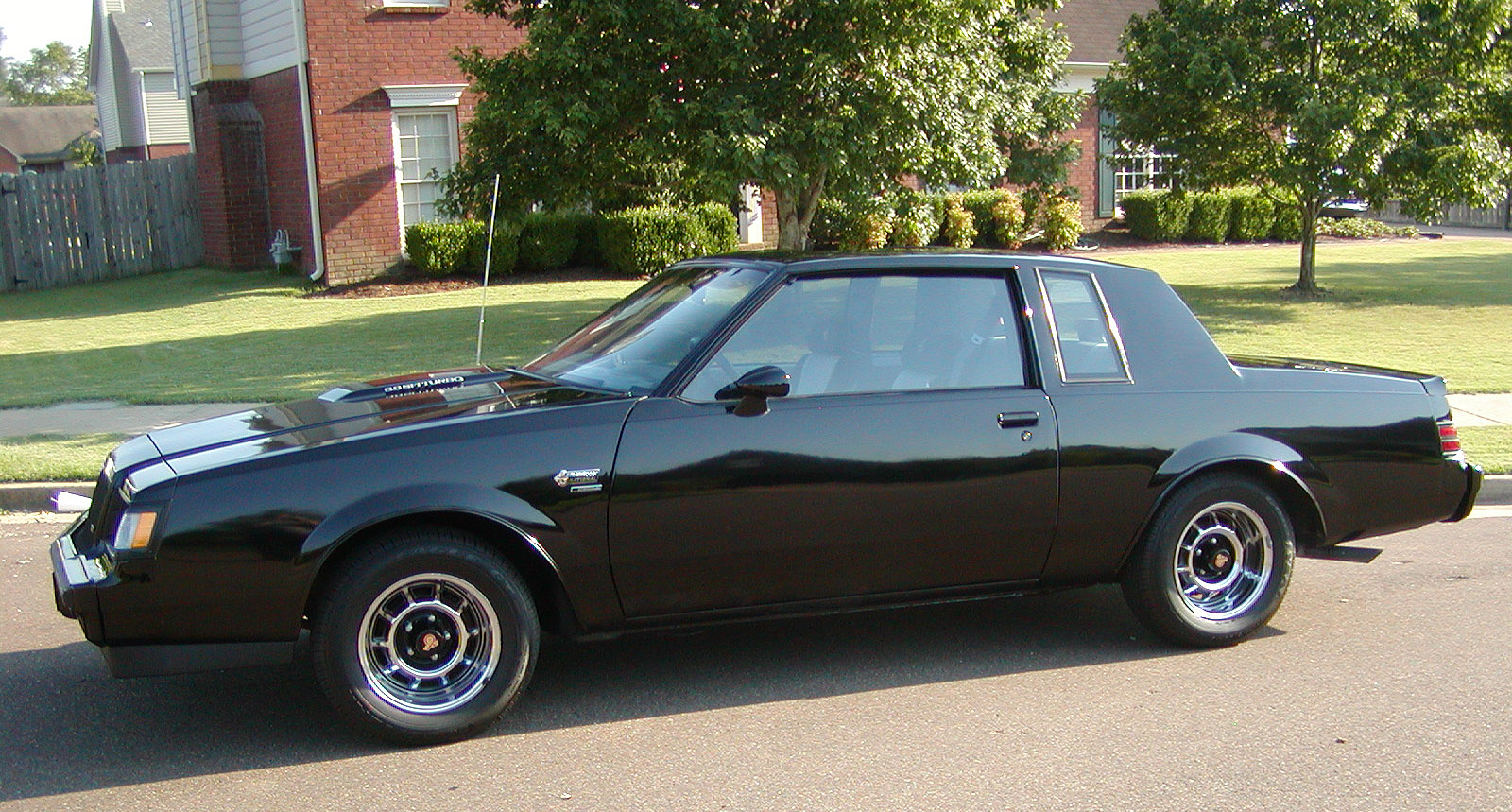
Buick Grand National
"Look at the world of outlaws. Look at the Grand National Super Series, Super Cup stock car series, Sprint ..."
The Buick Grand National is a performance car model from Buick. The podcast mentions it in the context of racing series that use the “Grand National” name. It comes up because it’s connected to motorsports and performance fans.
The Buick Grand National is a performance-oriented model that’s strongly associated with stock-car racing culture and enthusiast interest. The podcast references racing series like the “Grand National Super Series” and “Super Cup,” tying the name to motorsport events. It’s discussed because the car’s identity overlaps with racing history and collector appeal.
ASA racing, ARCA racing
"[406.0s] ASA racing, ARCA racing. [408.0s] Where is it?"
These are two different kinds of stock-car racing leagues in the U.S. They’re where many drivers cut their teeth and get noticed.
ASA and ARCA are American stock-car racing series. They’re important feeder and regional platforms that help drivers build experience and visibility before moving into bigger national series.
mainstream network television
"[410.0s] Very, very few of those series can get any attention from what was once considered mainstream network television. [463.0s] And everybody is moving toward a streaming platform."
They’re talking about how TV channels used to show racing more often, but now it’s harder to get on major TV. They think streaming is where the audience is moving instead.
The segment contrasts traditional broadcast/cable motorsports coverage with the shift toward streaming. The hosts argue that mainstream networks have become less willing to carry motorsports, affecting exposure for racing series and related businesses like auctions.
gatekeeper
"[442.0s] You could get sponsors for it. [446.0s] They don't want motorsports."
A “gatekeeper” is basically the person or group that decides whether something gets on TV. The host is saying racing isn’t getting approved as easily as it used to.
“Gatekeeper” here refers to the decision-makers at TV networks who control what gets approved for broadcast. The host claims motorsports can’t get past that approval barrier anymore, limiting mainstream exposure.
Mekam
"[452.0s] Look how many places Mekam has been. [455.0s] They're running out of options."
It sounds like they meant Mecum, a well-known car auction company. The point is that they’ve already booked a lot of locations, so it’s getting harder to find new ones.
This appears to be a transcription error for Mecum, the collector-car auction company. The host is saying Mecum has already used many venues and is running out of options.
streaming platform
"[463.0s] And everybody is moving toward a streaming platform. [467.0s] And that's what you're going to see because mainstream networks."
They’re saying people are watching more online now, not on traditional TV. That changes how racing shows and auction coverage get seen and funded.
The hosts predict that streaming platforms will replace traditional networks as the primary way motorsports content reaches viewers. This matters for racing series and auction coverage because sponsorship and audience discovery increasingly follow where viewers watch.
values
"You kind of get your finger on the pulse of values. But a lot of people that watching aren't necessarily trading cars or just looking to see how much they think their car is going to be worth."
“Getting your finger on the pulse of values” refers to using auction results and viewing trends to understand how prices are moving in the collector-car market. Even people who aren’t buying or selling can use this information to gauge demand and pricing.
Monterey car week
"Listen, I remember, you know, we go up to Monterey car week all the time and we may be. At one event and streaming the auction on like on a phone while we're at that event because you can't."
Monterey Car Week is a big classic-car time in California with lots of events happening. They’re saying streaming helps when you can’t be at every auction or show in person.
Monterey Car Week is a major annual collector-car event in California, with multiple auctions and shows happening close together. The hosts mention streaming an auction on a phone during Monterey because you can’t attend everything at once.
sampling
"And you're going to get a little bit more honest summary when you go streaming and you're going to lose sampling. That's going to be it."
When platforms track viewers, they sometimes use a smaller slice of the data to estimate results. If that estimation goes away, the numbers can reflect what actually happened more closely.
In streaming analytics, “sampling” means the platform estimates performance or audience metrics using only a subset of data. When you “lose sampling,” the numbers can become more directly measured, which may make summaries feel more accurate or “honest.”
automotive television
"We were just we were just talking about the state of automotive television and the lack of it... We were talking about the state of automotive television. And honestly, we think the auctions could survive by streaming..."
They’re talking about how car shows used to be on TV, but now most of it lives online. That shift changes how people watch and how shows are made.
The hosts are discussing how automotive TV has changed from traditional broadcast/cable to online video platforms. This matters because streaming changes audience behavior, content formats, and how shows are funded and measured.
YouTube
"...auctions could survive by streaming because people are so much more familiar with that process now streaming it on YouTube."
They mention YouTube because it’s where many people already watch videos online. The idea is that if auctions are streamed there, more viewers will be comfortable watching.
YouTube is cited as the platform where people are now familiar with streaming auction content. That familiarity reduces friction for viewers who might not attend live auctions but will watch online.
racing organizations and forms of racing
"Yeah. And then Steven was pointing out all the various racing organizations and forms of racing that are out there that we don't really get to see on TV."
The discussion points to the many different racing organizations and racing categories that exist beyond what mainstream TV covers. For car enthusiasts, this matters because different series have different rules, car types, and fan cultures.
endurance racing
"...I feel like I kind of found a home in endurance racing when you're going through an entire 90-minute to two-hour stint. It really rewards a patient driver and an experienced driver."
Endurance racing is long-duration racing, like 90 minutes to a couple hours. Instead of just one fast lap, you have to keep the car running well and drive smoothly for a long time while dealing with other cars.
Endurance racing is a format where cars race for long stretches—often 90 minutes to several hours—so the goal is to stay fast and consistent while managing tires, fuel, and driver fatigue. Because there are many cars on track, traffic and passing strategy matter as much as outright speed.
World Racing League
"...I drive for other people. You do not want me working on your race car... in the champ car endurance racing series and in the World Racing League."
They mention the World Racing League as a racing series he drives in. The key takeaway is that he’s competing in organized racing events, not just casual track days.
The World Racing League is mentioned as one of the series where the host drives. For listeners, it signals the kind of organized endurance/road-racing competition being discussed, even though the transcript doesn’t provide technical details about the cars.
circle track
"And then I still occasionally will do some circle track stuff. But really, I just, I feel like I kind of found a home in endurance racing..."
Circle track racing is racing on an oval track where you keep going around and around. It’s a different style than endurance road-course racing.
Circle track racing is oval-based racing where cars run repeated laps around a track shape (often short ovals or speedways). It’s distinct from endurance road-course racing, which typically involves longer stints and more complex cornering/traffic patterns.
qualifying vs race pace (open lap)
"In endurance racing, the fastest guy on an open track like you would have in qualifying really doesn't matter because you're never going to get that open lap."
Qualifying is about one super-fast lap. In a long race, you usually can’t get that kind of clear track, so being consistently fast while passing other cars matters more than one peak lap.
In qualifying, drivers chase the fastest possible single lap on relatively clear track. In endurance races, you rarely get a clean “open lap,” so the fastest qualifying pace doesn’t translate directly to race results; consistency and traffic management become more important.
14 hours of Daytona
"There's 40, 50 and in fact, there were 106 entries at the 14 hours of Daytona last week."
This is a very long race at Daytona. Because so many cars show up, drivers spend a lot of time passing and working around traffic, not just chasing one perfect lap.
The “14 hours of Daytona” refers to a long-distance endurance event at Daytona International Speedway. Events like this typically feature large entry lists, which reinforces the idea that drivers spend much of the race dealing with traffic rather than running clean laps.
traffic management and consistent lap times
"What is rewarded is how well you can manage traffic and maintain consistent lap times even when you're having to pass on the outside through turn three."
When there are lots of cars, you can’t just drive your own line all the time. The best drivers keep their laps steady and make smart passes without causing trouble.
With many cars on track, drivers must plan passes and line choices to avoid incidents and minimize time loss. Consistent lap times—especially while navigating slower traffic—are often the key to gaining positions over the full stint.
GT2 class
"And we entered the GT2 class and we went out and won the race. [1028.0s] And I was like, I don't know how that happened, but I'm into winning and sponsors are into winning."
In racing, cars are grouped into classes so they compete more fairly. “GT2” is one of those groups for sports cars, and winning that class means they were the best among the GT2 cars in that race.
“GT2” is a racing class designation for certain production-based sports cars, typically grouped by performance rules like weight, power, and balance of performance. Winning a GT2 class race implies the car and team met the class requirements and executed well against other GT2 competitors.
SCCA
"And so sprint racing in SCCA style driving kind of morphed into endurance racing."
SCCA is a big U.S. organization that organizes sports-car races. The host is saying his early racing experience was more short, fast events, before moving into longer races.
SCCA refers to the Sports Car Club of America, a major U.S. road-racing organization that runs many amateur and club-level series. In the transcript, it’s used to describe a “sprint” style of racing that later evolved into endurance events.
Wittenauer Racing
"You know, Wittenauer Racing basically carried me to the 2024 championship. [1061.0s] They, you know, I was fortunate to be a part of a team that was probably going to win winter with or without me."
Wittenauer Racing is the racing team the host drove with. In endurance racing, the team’s setup and race strategy help you win as much as the driver does.
Wittenauer Racing is the team the speaker credits with helping him toward the 2024 championship. In endurance racing, team support—car preparation, strategy, and driver lineup—can be as important as raw driving talent.
winter
"They, you know, I was fortunate to be a part of a team that was probably going to win winter with or without me. [1068.0s] Helped them win a couple of races at Nelson Ledges in Ohio."
The host mentions “winter” in a racing context, likely meaning a winter season or set of races. It sounds like they expected strong results even without him.
The speaker says the team was “probably going to win winter with or without me,” which likely refers to a seasonal championship or winter series. In racing, “winter” often denotes a specific part of the calendar with its own events and standings.
Nelson Ledges
"Helped them win a couple of races at Nelson Ledges in Ohio. [1072.0s] Then Gorilla Sticker Racing, Joe Bungert and the guys have just been super nice to me."
Nelson Ledges is a race track in Ohio. It’s known for being tricky, so doing well there usually means the team handled the course well.
Nelson Ledges is a road course in Ohio known for its challenging layout and elevation changes. It’s often used for regional and endurance-style racing, so winning there is a meaningful accomplishment for a team.
Gorilla Sticker Racing
"Then Gorilla Sticker Racing, Joe Bungert and the guys have just been super nice to me. [1077.0s] We won there at Ozarks last year, which is a downright scary racetrack, but it's so fun."
Gorilla Sticker Racing is another team involved in the speaker’s racing. In endurance racing, having a supportive team can make a big difference in results.
Gorilla Sticker Racing is another team mentioned as providing support and helping the speaker succeed. Team culture and resources matter in endurance events because consistent performance depends on preparation and execution.
Ozarks
"We won there at Ozarks last year, which is a downright scary racetrack, but it's so fun. [1082.0s] So I've just had, I've had good luck in endurance racing."
The Ozarks is where they raced, and the host is saying the track feels intense and intimidating. That usually means it’s not an easy course to drive fast and safely.
“Ozarks” here refers to a racing venue in the Ozark region, where the speaker says they won “last year.” The comment about it being “downright scary” suggests the track has demanding corners or elevation/visibility challenges that test drivers in endurance conditions.
JR fastener corporation
"Then I had, you know, a major sponsor, then JR fastener corporation out of Chicago came on board."
They mention a company called JR Fastener Corporation as a sponsor. That means the company paid to support the show/racing, usually to get their name in front of car fans.
JR Fastener Corporation is named as a major sponsor that came on board. Sponsorship from industrial suppliers like fastener companies is common in racing and motorsports media because they benefit from brand visibility with enthusiasts.
Daytona 24 hours vs Daytona 14 hours
"He said, he goes, Hey, when you guys won the 24 or the 14 hours of Daytona, not the 24, the 14, there's a difference..."
They’re discussing a Daytona endurance race and correcting the exact event length. Daytona has more than one big race, and the specific one matters when talking about sponsorship and attention.
The host clarifies a race name: “24 or the 14 hours of Daytona,” emphasizing that “there’s a difference.” This is a useful reminder that Daytona has multiple endurance events with different formats/branding, and sponsorship conversations often hinge on the specific event.
Sponsorship money
"He said, he goes, what kind of sponsorship money and he was a close friend. So I told him and he said, you made more money there than you would have if you had to come to Kissimmee."
The conversation compares sponsorship earnings tied to racing/visibility. In motorsports, sponsorship “money” can be a major part of a team’s budget and is often negotiated based on event exposure and audience reach.
Kissimmee
"...you made more money there than you would have if you had to come to Kissimmee."
They mention Kissimmee as a different place/event you could go instead of Daytona. It’s brought up because it affects how much money or opportunity you get.
Kissimmee is referenced as an alternative location/event compared to Daytona for earning sponsorship value. In collector-car and racing circles, Kissimmee is commonly associated with major auction activity and motorsports-related events in Florida.
collector car market fads
"What I have lost track of are the fads. And believe it or not, there are fads that possess the mind of car collectors... And then the cars go crazy in price and then they disappear."
A “fad” in the collector car world is when everyone suddenly wants the same type of car. Prices can go way up during the hype, and then cool off later when people move on.
Collector car “fads” are short-lived waves of hype where buyers chase a specific model or variant, often regardless of condition or long-term fundamentals. When attention shifts, prices can drop just as fast—so experienced collectors watch trends but avoid overpaying during the peak.

Ford Bronco
"I mean, we went through the Ford Bronco fad. It didn't matter what Bronco you had, right? Anybody would pay anything for it."
The Ford Bronco is a classic off-road SUV that has had collector “fad” cycles—periods when buyers chase whatever Bronco variant is in the spotlight. The key collector dynamic is that demand can spike quickly, pushing prices up before interest cools.

Volkswagen Bus
"And then you go through what the 21 window Volkswagen bus. You know, it's, it's, it's one fad after another."
The “21 window” Volkswagen bus is a classic VW van with a lot of windows, and it’s a big deal to collectors. When people decide that exact version is “the one to have,” prices can jump quickly.
The “21-window” Volkswagen bus refers to a specific early-1960s Microbus/Transporter configuration known for its distinctive window count and classic styling. Like other collector fads, prices can surge when a particular variant becomes the trend, then soften when the market moves on.
bring a trailer
"but they're, they're, you're starting to see a lot of those listings show up on bring a trailer and see them at meekum auction."
Bring a Trailer is a website where car enthusiasts buy and sell cars through auctions. Because a lot of knowledgeable buyers watch it, the results can help show what similar cars might sell for elsewhere.
Bring a Trailer (BaT) is a popular online auction platform focused heavily on enthusiast cars. When sellers list cars there, it can quickly set market expectations for what similar vehicles are “worth,” influencing other auction venues too.
40 years cycle
"And that that's the 40 years cycle, man. Yeah."
People often talk about a “40-year” classic-car timing. The idea is that once a car is old enough, more collectors start wanting it, and prices can jump because more buyers are finally able to afford them. That’s why you see more of those cars showing up at auctions.
The “40 years cycle” is the idea that classic-car values tend to rise as a car reaches a certain age, often around four decades old. By then, the original owners are gone or selling off, and a new generation of enthusiasts has both the interest and the money to buy. Auction listings and collector demand often start clustering around that milestone.
generation of people that can now afford those cars
"It's, it's the generation of people that can now afford those cars and they're, they're sentimental to those cars and want them."
Car prices often rise when the right kind of buyers show up. In this case, a new generation has the money and the nostalgia for those cars, so more people want them at the same time.
This is the “buyer cohort” effect: values don’t just depend on the car’s age, but on whether the next generation of buyers has both disposable income and emotional connection to the model. That combination can drive demand and push prices up even if earlier buyers couldn’t afford them.

Mercedes Gullwing
"where the big brother car brings up the little brother car, right? The, the, the Mercedes Gullwing brings up the, you know, the 190."
The “Gullwing” is a famous Mercedes-Benz with doors that open upward. People mention it because when a super desirable car like that gets popular, it can make other similar cars from the same brand or time period more valuable too.
“Mercedes Gullwing” is shorthand for the Mercedes-Benz 300 SL, famous for its distinctive upward-opening doors. In collector-market talk, it’s often used as an example of a halo car that can boost interest—and pricing—for related “little brother” models from the same era.
wrapper cars
"But the, the, the other thing that we're seeing is the, the, the wrapper cars, the low mile cars."
“Wrapper cars” usually means cars that look and feel almost brand-new, often with very low miles. Collectors like them because they’re less worn and more likely to be original, so buyers feel more confident paying more.
“Wrapper cars” are collector cars that are presented as being in near-original, untouched condition—often implying low miles and minimal use, sometimes with protective coverings or documentation that suggests they’ve been kept “like new.” In auctions, these cars tend to attract buyers willing to pay a premium because originality and low wear reduce uncertainty.
low-mile car
"I tried like getting my first like low mile car. I can't really drive it. What is it going to do to the value?"
A low-mile car just means it hasn’t been driven much. Collectors like them, but if you can’t enjoy driving it, it can become a problem and you might sell it.
A “low-mile” car is one with relatively few miles on the odometer, which often makes it more desirable to collectors. However, if it’s too frustrating to drive (or you can’t use it), you may end up selling it because the ownership experience doesn’t match the value you’re trying to preserve.
collector value vs ability to drive
"What is it going to do to the value? And I had to sell it because I, it was just too frustrating to not be able to drive it for, for me."
This segment highlights a collector dilemma: cars can be valuable because they’re rare, clean, or low-mile, but that doesn’t guarantee they’re enjoyable or practical to drive. If you can’t drive a car you own, the opportunity cost and frustration can outweigh the theoretical value, leading to selling.
having a bunch of cars to rotate ownership
"You have to have a bunch of cars to have the ability to point at one and say, oh, you know, I don't drive that because it's a bunch of the 501... So if you don't have more than enough cars, it's tough to pull back."
They’re basically saying that collectors often keep several cars so they can drive the one they want and not always put miles on the most valuable one. That makes ownership less stressful and easier to manage.
The speaker describes a “rotation” strategy: owning enough cars that you can pick and choose which one to drive, rather than being forced to use a single prized car. In collector terms, this helps manage wear, reduces stress about mileage, and makes it easier to justify keeping multiple similar models.

Dodge Charger
"you have to have a bunch of cars to have the ability to point at one and say, oh, you know, I don't drive that because it's a bunch of the 501, you know, charger Daytona's in 2020."
The Dodge Charger Daytona is a sporty Charger model. The point here is that collectors sometimes own multiple similar cars so they can drive one without worrying as much about the others.
The Dodge Charger Daytona is a performance-focused Charger variant tied to the Daytona nameplate, and it’s often discussed in collector and enthusiast contexts. The speaker is using it as an example of how collectors can “rotate” similar cars—owning multiple versions so they can choose what to drive without feeling like they’re risking a specific car’s value.
limited edition
"And certainly if you have the resources to go, hey, I'm going to get the new limited edition, whatever, right?"
A limited edition is a special version of a car that doesn’t get built in huge numbers. Because fewer are made, it’s usually more collectible and sometimes includes extra features.
A limited edition is a production run with a restricted number of cars (or a special package) to make the model more exclusive. These often come with unique styling, trim, or performance/comfort upgrades compared with the standard version.

Challenger Hellcat
"You know, Hellcat or something and go, can I get two?"
“Hellcat” is Dodge’s nickname for a very powerful performance version. It usually means a big engine and a supercharger, so it’s meant to be fast.
“Hellcat” is Dodge’s high-performance nameplate associated with supercharged V8 models (most commonly the Challenger and Charger). In enthusiast circles, it signals a car built for big power and strong straight-line performance.
restoration
"Like of course your law man Mustang, that one doesn't really get driven much, especially now after the really intense restoration it went through."
Restoration means repairing and rebuilding a car to make it look and work like it should. If it’s described as “intense,” it likely took a lot of time and money to get it back in great shape.
Restoration is the process of bringing a car back to a desired condition—often to factory-correct appearance and function. “Intense restoration” implies significant work, which can increase a car’s historical value and make it more suitable for show and charity-event appearances.
show car vs. daily driver
"Because that car can go out there and, and be appreciated by that audience, but also not, not something that gets driven quite, quite that much."
Some cars are treated like “event cars” and aren’t driven much, while others are meant to be used more often. Collectors do this to protect valuable cars from extra wear and tear.
The host contrasts cars that are kept for special events with cars that are actually driven regularly. This is a common collector strategy: preserve a valuable or historically significant car by limiting mileage and wear while still enjoying the hobby through other cars.
scarcity plus utility
"Value equals scarcity plus utility. Now these cars don't have any utility anymore. So the only thing they have going for them is scarcity."
The host is describing why some cars are worth more. If a car is rare and also fun/useful to drive, it tends to hold value better; if it’s just rare but you don’t use it, fewer people will want it.
This is a valuation idea: value comes from scarcity (how few exist) plus utility (how useful or enjoyable they are to use). If a car loses utility—like becoming something you only store—its value is driven mostly by scarcity, which can limit buyer interest.
garage queen
"Well, the guys that buy these cars and then put them away, they're a different set of guys. ... they go by a low mileage garage queen, they're going to be disappointed."
A “garage queen” is a car kept primarily for looks or collecting—stored away with low mileage rather than driven. The speaker argues that buyers who park these cars and don’t use them may be disappointed because the market often expects some real-world usability or enjoyment.
501C3
"And then he puts it under a 501C3 and calls it a museum. And at that point, he is completely protected from having his assets taken from him."
501(c)(3) is a type of nonprofit status in the U.S. The idea here is that if you set something up as a nonprofit (like a museum), you may get legal and tax advantages compared to owning it personally.
A “501(c)(3)” is a U.S. nonprofit tax status. The speaker is using it as an example of how someone might structure ownership (e.g., a museum) to gain legal protections and tax-related benefits.
low mileage car
"So if you're not in that situation, you car collector at home, don't get your low mileage car. Listen to what Matt said. Don't get a low mileage car."
A “low mileage car” means it hasn’t been driven much. The warning is that low miles alone don’t guarantee the car is a good buy—maintenance and how it was cared for matter a lot.
A “low mileage car” is one with relatively few miles on the odometer, which often appeals to collectors. However, the speaker is warning that buying purely for low mileage can be a mistake if the car wasn’t properly used, maintained, or stored.
collector vs daily use (keeping a car vs driving it)
"And I'm realistic about my expectations, but it all boils down to rekindling that kid in you that just loves to drive cars. ... There's no way I'm keeping a car and not driving it."
Some people collect cars like trophies and keep them mostly untouched. Others believe the whole point is to drive them, because cars are meant to be used and enjoyed.
The hosts are contrasting two mindsets: collecting cars as static assets versus using them as machines meant to be driven. In enthusiast circles, this often comes down to whether you treat a car like an investment/museum piece or like a hobby you actively enjoy on the road and track.
bubble there for some of those cars
"And after that, other auctions were starting to see similar dollars. [1747.0s] So there's, there's a, there's a bubble there for some of those cars."
They mean some cars are getting overpriced for a while. People are paying big money because it feels hot right now, but that doesn’t always last.
The hosts are describing a “bubble” where certain collectible cars are temporarily selling for unusually high prices. In an auction environment, demand can spike faster than real long-term value, so prices can cool later.
bidding up a car
"Now you do run the risk. [1754.0s] And Steven, I know you were, you're kind of talking about this before, [1757.0s] but you run the risk of a couple of people at an auction bidding up a car. [1765.0s] That's not necessarily worth it."
Sometimes a few people keep raising the price at an auction. That can make the car cost more than it should, even if it’s not a great deal.
“Bidding up” is when a small group of bidders pushes the auction price higher than the market would normally support. This can happen when bidders are competing emotionally or strategically rather than based on what the car is truly worth.
vintage racing cars
"You know, there's, I talk to people all the time to have vintage racing cars. [1774.0s] They go, I want a million two for this car."
“Vintage racing cars” refers to older race cars (or period-correct race-prepped cars) that are collected for their history and motorsport pedigree. Their value often depends on provenance, originality, and how they fit into current collector demand.
market value
"If you want definition value and market value out of your vehicle and you want it right now, put it on Facebook Marketplace."
Market value is basically the going price for a car right now. It’s what someone would pay if they were shopping today, not what you personally think it’s worth.
Market value is the price a vehicle can realistically sell for in today’s market, based on what buyers are willing to pay. In auctions, market value can be influenced by bidding dynamics, while private listings aim to reflect what the market will bear without that same pressure.
Facebook Marketplace vs auctions
"If you want definition value and market value out of your vehicle and you want it right now, put it on Facebook Marketplace... If you don't like that situation, turn off the auctions. Don't ever watch another one and just scroll Facebook Marketplace."
They’re comparing two ways to sell a car: listing it on Facebook Marketplace versus selling it at an auction. The discussion is about which method tends to produce a higher or more “real” price.
The hosts compare selling a vehicle through Facebook Marketplace versus using an auction format. The key difference is how each channel sets price discovery: Marketplace relies on broader buyer interest over time, while auctions concentrate competition into a short bidding window.
auction bidding dynamics
"...you kind of had this artificial synthetic situation where there were two guys and they got egos in the room and they were going to outbid each other no matter why... And it goes to this insane price."
Auction bidding dynamics are how the auction process can push the price higher. When two people get competitive, they may keep raising their bids even if it goes beyond what the car is “worth.”
Auction bidding dynamics are the behavioral forces that drive prices up—especially when bidders are competing in real time. The transcript describes an “artificial synthetic situation” where bidders may outbid each other due to ego and competition, not just the car’s underlying value.
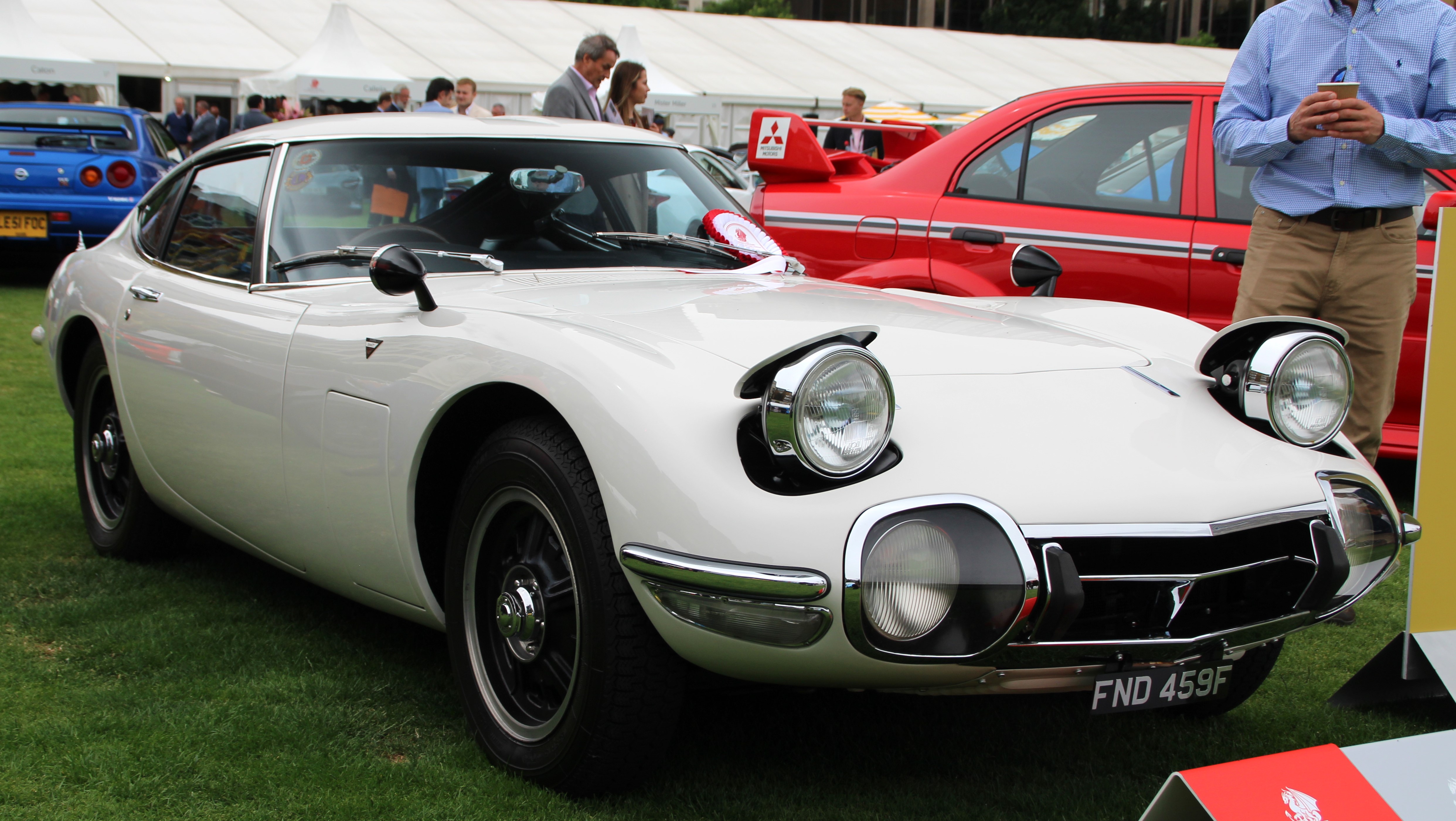
Toyota 2000 GT
"The one that the example is the Toyota 2000 GT, which is the Japanese supercar, but it's not a lot of car compared to some of the Ferraris of that era, Lamborghinis of that era... And that car got up to a million dollars."
The Toyota 2000 GT is a rare, iconic old Toyota sports car that people consider a “real supercar” from Japan’s early days. Because it’s so special and hard to find, it can sell for huge money even if you compare it to bigger, more exotic European cars. The hosts are basically saying the price is driven by hype and history, not just numbers.
The Toyota 2000 GT is a classic Japanese sports car from Toyota’s late-1960s era, often treated as Japan’s first true “supercar” benchmark. It’s famous for its high-revving performance and rarity, which is why auction prices can climb dramatically. In this segment, it’s used as an example of how emotion and story can outweigh pure specs.
pricing it per horsepower
"If you were selling and you were pricing it per horsepower, obviously you'd have different winners. But at the end of the day..."
“Pricing it per horsepower” is a critique of valuing cars strictly by performance output. Auction and collector pricing often reflect rarity, historical significance, cultural impact, and emotional appeal—not just power. The segment suggests that if you used horsepower as the main metric, you’d get different “winners” than the ones people actually chase.
fun scale
"But at the end of the day, the first generation Toyota MR2 is one of the best on the fun scale. Forget horsepower on the fun scale."
A “fun scale” is basically a way to judge a car by how much you enjoy driving it, not just by numbers like horsepower. Things like how it handles and how it feels in the driver’s hands matter a lot. The point here is that the most fun car isn’t always the most powerful or the priciest.
“Fun scale” is an enthusiast way of ranking cars based on how enjoyable they are to drive rather than on objective metrics like horsepower or top speed. It often includes factors like steering feel, balance, throttle response, and how rewarding the car is at everyday speeds. The hosts use it to argue that a car can be “better” in real life even if it’s not the most powerful or expensive.

Datsun 240Z
"Every single day I ever drove that car. A Datsun 240Z."
The Datsun 240Z is a landmark early-1970s Z-car from Nissan, famous for its classic styling and strong performance for the money. It’s often remembered as a “driver’s car” that delivered real excitement without needing exotic supercar status. In this segment, it’s mentioned as another example of a car that delivers big fun and emotion.
four speed
"If you get the four speed, the first early manuals, that's a 10 out of 10 on the fun scale every day, every mile in that car."
A “four speed” means the car has four forward gears. With a manual, you shift those gears yourself, and it can feel more engaging and old-school.
“Four speed” usually refers to a four-speed manual transmission. In older cars, that often means a simpler, more mechanical driving experience than modern multi-gear automatics or dual-clutch setups.

Pagani
"Because if you measure it by performance, then Pagani wins every time, don't they?"
Pagani is a brand that builds very expensive, very fast supercars. Here, it’s being used as the example of “performance first,” compared to cars people love for other reasons.
Pagani is an Italian supercar maker known for extreme performance and high-end materials. In the segment, the host uses Pagani as the benchmark for pure performance, contrasting it with the emotional value of older, more affordable cars.

MR2
"The MR2 you mentioned specifically and Bill talking about the audience is the right age group. When we were all young, the MR2 was out there and you're like, this is kind of a fun, affordable, small car you can hit the track with."
The Toyota MR2 is a small sports car with the engine placed toward the middle of the car. That layout helps it feel nimble, and the hosts are saying it was a fun, affordable way to get into track driving.
The Toyota MR2 is a small, lightweight sports car famous for its mid-engine layout and go-kart-like feel. The hosts connect it to a specific age group because it was an affordable way to experience track-style driving.
wedge cars
"The wedge cars. Right."
“Wedge cars” are sports cars with a low, pointy, angular shape. It’s a design style that also helps airflow over the car.
“Wedge cars” refers to sports cars with a low, angular, wedge-shaped body design. The shape is partly aerodynamic and partly stylistic, and it became a recognizable look for many 1980s–1990s performance cars.
mid-engine
"When are they going to bring back a small, lightweight MR2 type of car, mid-engine, that kind of thing?"
“Mid-engine” means the engine sits closer to the middle of the car instead of the front. That usually makes the car feel more balanced and easier to steer through corners.
A mid-engine car places the engine near the center of the vehicle, typically behind the front seats and ahead of the rear axle. That helps balance weight distribution and can improve handling response, especially for cornering.

Honda Prelude
"When you see the Honda Prelude or the Acura Type R"
The Honda Prelude is a Honda sports coupe that many enthusiasts remember as fun to drive. It’s being mentioned as part of the same “bring back that kind of car” conversation.
The Honda Prelude is a Japanese coupe that became popular for its sporty handling and enthusiast appeal. Mentioning it alongside other “small, fun” cars ties into the idea of a generation remembering affordable performance nameplates.
nameplate
"...then you go, why don't we bring that nameplate back? [2043.0s] Why don't we get a new version of that?"
A “nameplate” is the car’s model name—like the label on the back. Bringing it back means making a new car under that same model name.
A “nameplate” is the brand/model identity used on a car (like a model line name). When people say “bring that nameplate back,” they mean reviving that specific model line rather than just building a one-off car.
social media immediacy
"With social media now, it is literally right when it comes out of their mouth, everyone knows... [2061.0s] The landscape has completely changed."
The hosts are describing how social media creates near-instant feedback loops: public reaction to a new car can spread immediately. That contrasts with automakers’ development timelines, which are typically measured in years.
Skunkworks
"I mean, sure, you hear about Ford has a Skunkworks, and that's where the Ford GT came from..."
A “Skunkworks” is a special team inside a company that’s set up to work faster and take risks. It’s meant to get big projects done without the usual slow bureaucracy.
“Skunkworks” refers to a small, highly focused internal team that works outside normal corporate processes to move quickly and experiment. The transcript uses it to explain how Ford could accelerate development for a project like the Ford GT.

Ford Gt
"...you hear about Ford has a Skunkworks, and that's where the Ford GT came from, and they did the whole thing with computer modeling."
The Ford GT is Ford’s high-performance supercar. The point here is that Ford found a way to develop it faster than usual by using a special approach.
The Ford GT is a high-performance supercar built by Ford, originally inspired by the company’s racing heritage. In the transcript, it’s used as an example of how Ford could move faster than typical automaker timelines by using specialized development methods.
computer modeling
"...and they did the whole thing with computer modeling."
Computer modeling means using computer simulations to test a car design before making real parts. It helps engineers figure out what will work without waiting for every prototype.
Computer modeling uses software simulations to predict how a design will behave before building physical prototypes. In automotive development, it can reduce time and cost by letting engineers test aerodynamics, structures, and performance virtually.
NHTSA
"The fact is they can't, because you've got the NHTSA, you have mountains of prohibitive regulatory disasters that come down on a regular basis."
NHTSA is the U.S. agency that makes sure cars meet safety rules. If a car’s design doesn’t meet today’s safety standards, it can’t be sold as-is.
NHTSA is the U.S. National Highway Traffic Safety Administration, which sets and enforces vehicle safety standards. When regulations change, it can make it difficult or impossible for automakers to sell older designs or rebuild cars “from the same molds” without redesigning key structures.
A-pillars
"If they wanted to rebuild that exact same car from the same molds, government would not let them market it and sell it, because the A-pillars won't"
A-pillars are the structural posts at the front of the car that hold up the roof. In crashes, they’re critical for safety, so today’s rules can require stronger or redesigned pillars.
A-pillars are the front roof supports that sit between the windshield and the front side windows. Modern crash-safety requirements often force changes to A-pillar strength, shape, and materials, which can prevent a company from selling a car that’s too close to an older design.
Jaguar
"Years ago we had Ian Callum. He's the designer, Jaguar, Aston Martin. He's doing his own design company now, I believe."
Jaguar is a British car brand that makes stylish, performance-focused cars. The host is mentioning it to explain Ian Callum’s career in car design.
Jaguar is a British automaker known for performance-oriented luxury cars and for having a strong design heritage. In the transcript, it’s mentioned as part of Ian Callum’s background, which helps listeners understand his design influence.
Aston Martin
"Years ago we had Ian Callum. He's the designer, Jaguar, Aston Martin. He's doing his own design company now, I believe."
Aston Martin is a luxury sports-car brand from the UK. The host brings it up because Ian Callum worked there as a designer.
Aston Martin is a British luxury sports-car brand famous for its grand touring cars and distinctive design language. Here it’s referenced in connection with Ian Callum, tying the brand to its modern design leadership.

Aston Martin DB9
"And we had an Aston Martin DB9 over there and part of Adam's collection. And Ian Callum was at the studio and we were looking at the DB9 and we had a couple little modifications to it"
The Aston Martin DB9 is a luxury sports car made by Aston Martin. It’s the kind of car people buy for a mix of comfort and performance, and owners sometimes tweak it with small changes to make it feel more personal.
The Aston Martin DB9 is a grand touring (GT) sports car from Aston Martin, known for its elegant styling and V12 performance. In collector circles, it’s often discussed in terms of how it’s set up and modified for taste—like the “little modifications” mentioned here.
crash-test compliance hardware (license plate mount)
"you can't really make the car like this because look at the slope of that front end... And now there's all these weird crash test rules... Once you take it off, it's not technically legal."
This is about how safety rules can require certain parts to be installed exactly as tested. If you remove or change a required front piece, the car might not be considered “legal” in that configuration.
This segment highlights how crash-test compliance can depend on specific installed hardware, not just the car’s body shape. If a required component (like the license plate mounting hardware) is removed or altered, the vehicle may no longer match the configuration that was certified.
plastic box
"that big plastic box that fits on the front of the car where the license plate goes..."
The “plastic box” here is the molded bracket/cover that holds the front license plate. The claim is that it’s not optional because it helps the car meet the safety test setup.
The “plastic box” refers to the front license plate bracket/cover used on some cars to mount the plate in a specific position. In this story, the speaker argues that this piece is part of the tested front-end geometry for crash compliance.
front license plate
"And that's where you were supposed to put your front license plate on. And he said, technically, that is the only way it would pass its crash test rating..."
Your front license plate isn’t just for identification—it can be mounted in a way that affects the car’s front safety behavior. The host is saying the tested setup included that plate hardware, so removing it could break the “legal” configuration.
The front license plate mount can be more than cosmetic: it may include a specific bracket or cover that changes how the front bumper area behaves in a crash. The speaker claims that removing the required plate hardware would make the configuration no longer match what was tested.
crash test rating
"that is the only way it would pass its crash test rating where it clips you in the shins is with that thing on there."
A crash test rating is a score from official crash tests that checks how safe a car is in an impact. In this story, changing certain front parts could make the car fail the safety rules.
A crash test rating is the measured outcome from standardized crash tests (like frontal impact) used to determine whether a vehicle meets safety requirements. This segment suggests that specific front-end hardware changes can affect whether the car passes those tests.
UK license plate
"Now, of course, in the UK, it's the longer one than what we have here, right?"
The UK license plate is a different size than what you might see in other countries. That means the front plate mount and its fitment can be different too.
The UK uses different front license plate dimensions and mounting conventions than many other markets. The speaker notes that the UK plate is longer, implying that the required front mounting hardware and how it covers the grille area can differ by region.
crash tested
"He goes, that is, it's crash tested with that on it. When we're done with DB9, like you can't do that again."
Crash testing is when a car is tested in controlled crashes to see how safe it is. If they say it was crash tested “with that on it,” it means the safety approval was based on that exact setup.
“Crash tested” refers to formal safety testing where a vehicle is evaluated for how well it protects occupants in collisions. If a car is “crash tested with that on it,” it implies the tested configuration (including specific components or modifications) is what regulators accepted for compliance.
loophole
"We're never going to get away with that little loophole again. You're never going to see that car again."
A loophole is a technical gap in the rules that lets someone do something that the rules don’t clearly forbid. They’re saying that gap got closed, so the same trick won’t work again.
A “loophole” here suggests a regulatory gap or interpretation that allowed a manufacturer or seller to get away with a certain configuration or approach. The hosts imply that once the issue is closed, similar cars won’t be able to use the same workaround going forward.
Request an Explanation
Heard something you'd like explained? We'll add it to this episode.
Sign in to request explanations for terms you heard.
Want to learn more?
Browse our glossary for plain-English explanations of automotive terms, jargon, and concepts.
Help improve this episode
See something that's not quite right? Our annotations are AI-generated and can sometimes miss the mark. Click the flag icon on any annotation to suggest a correction.