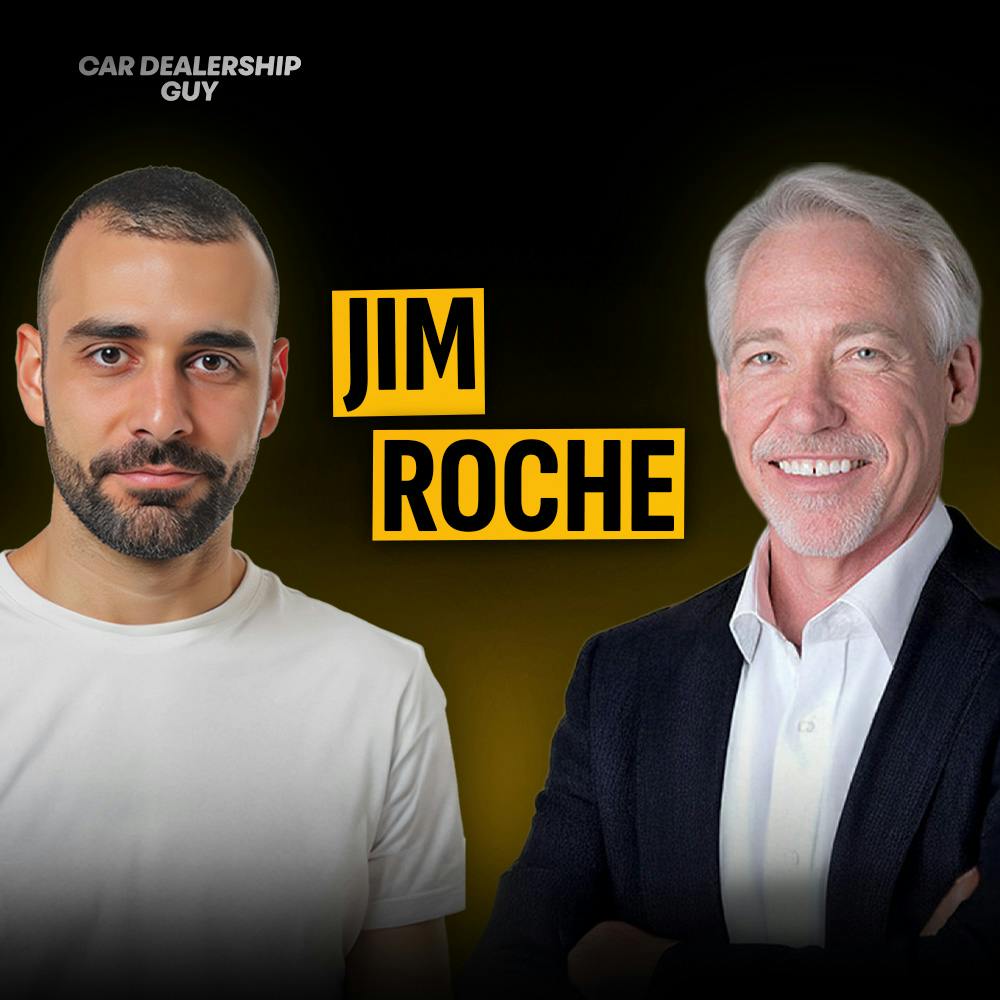
Jim Roche, CEO of WarCloud, discusses the significant growth in OEM warranty claims compared to a decline in customer pay services in the automotive industry. He emphasizes the need for dealerships to rethink their approach to warranty management to capitalize on this trend. Roche shares insights on how AI and robotic process automation (RPA) can streamline warranty processing, enhance operational efficiency, and ultimately improve dealer margins. The conversation also touches on the evolving landscape of vehicle sales, service dynamics, and the importance of adapting to changing consumer behaviors.
Today I’m joined by Jim Roche, CEO of WarrCloud. We dig into the $100K+ most dealers miss in warranty work, why surging warranty volume has made WarrCloud one of the fastest-growing companies in America (#1 in Missouri), and how you can retain techs and boost profits at the same time—plus much more.
This episode is brought to you by:
1. Matador AI - Discover why the biggest dealership groups in America are using Matador AI to enhance their Sales and BDC teams to sell and service more cars than ever before. Right now, podcast listeners get the first 30 days risk-free with an included white-glove onboarding, so you can experience the difference in your store. This offer is only available until the end of the month, so don’t wait! Head to @ http://www.matador.ai and book your demo today.
2. Digital Dealer - Digital Dealer Conference & Expo – Get real strategies that work in marketing, advertising, AI, fixed ops and more when you register to attend. Plus, the expo hall is packed with top exhibitors, quick-hit expert talks, and hands-on workshops that’ll help you turn ideas into action. Mark your calendars for October 14-15, 2025 at Mandalay Bay in Las Vegas and register today @ http://www.digitaldealer.com/registration
3. WarrCloud - Your warranty claims process shouldn’t drain your profits—or your people. Our award-winning AI technology transforms OEM warranty processing, helping you capture every dollar you’ve earned. Dealers reduce costs, speed up reimbursements, and uncover new revenue opportunities—while consistently improving OEM claim scores. The future of fixed ops belongs to those who adapt. Let’s talk about automating your warranty processing today. Visit @ https://warrcloud.com/get-an-analysis
Check out Car Dealership Guy’s stuff:
For dealers:
Industry job board ➤ http://jobs.dealershipguy.com
Dealership recruiting ➤ http://www.cdgrecruiting.com
Fix your dealership’s social media ➤ http://www.trynomad.co
Request to be a podcast guest ➤ http://www.cdgguest.com
For industry vendors:
Advertise with Car Dealership Guy ➤ http://www.cdgpartner.com
Industry job board ➤ http://jobs.dealershipguy.com
Request to be a podcast guest ➤ http://www.cdgguest.com
Topics:
00:47 Current auto sales and service trends?
01:38 Why the shift towards vehicle service?
02:18 How to interpret market forecasts?
04:44 Warranty vs customer pay dynamics?
09:58 AI and RPA's role in dealerships?
18:06 How to optimize warranty claims?
28:05 Key insights for business growth?
31:38 Future trends for dealerships?
Car Dealership Guy Socials:
X ➤ x.com/GuyDealership
Instagram ➤ instagram.com/cardealershipguy/
TikTok ➤ tiktok.com/@guydealership
LinkedIn ➤ linkedin.com/company/cardealershipguy
Threads ➤ threads.net/@cardealershipguy
Facebook ➤ facebook.com/profile.php?id=100077402857683
Everything else ➤ dealershipguy.com
"...how many new vehicle sales will be in 25 was changed. I think Cox is saying now about 16.1 million this year. EV sales up, internal combustion down..."
New vehicle sales are how many brand-new cars are sold in a certain time frame, like a year. It's important because it shows how popular cars are and how well car companies are doing.
New vehicle sales refer to the total number of new cars sold within a specific period, often tracked annually or monthly. This metric is crucial for understanding market trends and consumer demand in the automotive industry.
"...EV sales up, internal combustion down, but the combination will get us to come in around 16.1 million next year flatter than that..."
Internal combustion means engines that use fuel, like gas or diesel, to run. Most cars have used this type of engine for a long time, but now more electric cars are being made.
Internal combustion refers to engines that burn fuel to create power, typically gasoline or diesel engines. This technology has been the standard for automobiles for over a century but is being challenged by the rise of electric vehicles.
"...EV sales up, internal combustion down, but the combination will get us to come in around 16.1 million next year flatter than that..."
EV sales are the number of electric cars sold. Electric vehicles are becoming more popular because they are better for the environment, and this affects how car companies plan for the future.
EV sales refer to the sales of electric vehicles, which have been increasing as consumers shift towards more sustainable transportation options. This trend is significant as it impacts the overall automotive market and the strategies of manufacturers.
"And this is just basic OEM warranty. This is not extended warranty. Basic OEM warranty grew over 19% to $29 billion..."
An OEM warranty is a guarantee from the car maker that they'll fix certain problems with your car for a specific time or mileage. It's like a promise that if something goes wrong, they will take care of it without you having to pay extra.
OEM warranty refers to the original equipment manufacturer warranty that covers repairs and defects for a specified period after purchasing a vehicle. This warranty is provided by the car manufacturer and typically includes coverage for major components and systems.
"And this is just basic OEM warranty. This is not extended warranty. Basic OEM warranty grew over 19%..."
An extended warranty is like extra insurance for your car that you can buy to cover repairs after the original warranty ends. It helps protect you from high repair costs later on.
An extended warranty is a service contract that provides additional coverage for repairs and services beyond the standard OEM warranty period. It can cover various components and is often purchased separately by the vehicle owner.
"Consumers now get a fewer than a third of their service visits done at the dealer..."
Service visits are the times when you take your car to a mechanic or dealership to get it checked or fixed. This can be for regular maintenance or for repairs when something is wrong.
Service visits refer to the occasions when a vehicle is taken to a dealership or repair shop for maintenance or repairs. These visits can include routine services like oil changes, tire rotations, or more extensive repairs.
"And one dealer described you as kind of butchering this, but like the warranty, sorry, the margin expander or should I say the margin preserver."
A margin expander is something that helps car dealerships make more money on each sale. This could be selling extra services or warranties that customers might want.
A margin expander refers to strategies or practices that increase the profit margins for dealerships or manufacturers. This can include upselling services, offering extended warranties, or improving operational efficiencies.
"And one dealer described you as kind of butchering this, but like the warranty, sorry, the margin expander or should I say the margin preserver."
A margin preserver is something that helps keep the profits steady for car dealerships, especially when times are tough. It makes sure they don't lose money on sales.
A margin preserver is a strategy or practice aimed at maintaining profit margins, especially in challenging market conditions. This could involve managing costs or ensuring that pricing remains competitive without sacrificing profitability.
"Now, my question to you is, what is driving this increase, this rapid increase in warranty pay versus customer pay?"
Customer pay is the money that car owners have to spend on repairs or services that aren't covered by the warranty. If your car needs fixing and it's not under warranty anymore, you have to pay for it yourself.
Customer pay refers to the costs that vehicle owners are responsible for when their vehicle requires repairs or services that are not covered by a warranty. This includes routine maintenance and repairs for issues that arise after the warranty period.
"Now, my question to you is, what is driving this increase, this rapid increase in warranty pay versus customer pay?"
Warranty pay is the money that car manufacturers spend to fix problems on cars that are still under warranty. If something goes wrong with your car and it's covered by the warranty, the manufacturer pays for the repairs.
Warranty pay refers to the costs covered by a manufacturer's warranty for repairs or services needed on a vehicle. This can include parts and labor for issues that arise during the warranty period, which is typically a set number of years or miles driven.
"yeah it's a great question um so warranty claims processing is incredibly complex nowadays..."
Warranty claims processing is how car repair shops manage requests for free repairs that are covered by the car's warranty. It can be complicated because different cars have different rules for what repairs are covered.
Warranty claims processing refers to the procedure through which service centers handle claims made by customers for repairs covered under warranty. This process can involve complex coding and varies significantly based on the vehicle's specifications.
"...depending on the year the make the model the engine type the trim level the accessories..."
Trim level is a way to describe the different versions of a car model that have different features. For example, one trim might have leather seats while another has cloth seats.
Trim level refers to the different versions of a car model that come with varying features and options. Each trim level can affect the car's price, performance, and available accessories.
Current auto sales and service trends?
Why the shift towards vehicle service?
How to interpret market forecasts?
Warranty vs customer pay dynamics?
AI and RPA's role in dealerships?
How to optimize warranty claims?
Key insights for business growth?
Future trends for dealerships?
Select text to request an explanation
Basic OEM warranty grew over 19% to $29 billion, which is an incredible amount of growth for
those size dollars. Compare that to customer pay. Customer pay growth was 2.2% and that was cut in
half from the year before and even more significant decline. So what we're seeing is a deceleration
of customer pay growth and incredible growth in warranty. Today I'm joined by Jim Roche,
CEO of WarCloud. As CEO of one of the fastest growing companies in America, Jim uncovered
a massive opportunity for dealers reclaiming the money they're already owed on warranty work.
The result over 1,000 dealers on board and tens of thousands of dollars recovered for each of them.
A big thank you to our sponsors for making today's episode possible.
Matador AI, digital dealer, and of course, WarCloud. And now let's get into the show.
Jim Roche, back on the CUG podcast. Jim, welcome back.
You'll see. It's great to see you again. Thank you for having me.
Great to see you as well. I'm glad we were able to steal you for a couple minutes here while
you're on vacation. Appreciate that. Yeah. Well, you know what? When you're working automotive,
I don't know if there ever really is a vacation, but glad we could get together.
There's no such thing. Let's you work at MacHake Automotive,
where Josh Potts mandates that they give routine vacation. Then there is such thing.
So shout out Josh Potts at MacHake. By the way, Josh Potts, if you're listening,
if you're not a WarCloud customer, you should be a WarCloud customer.
So there's hopefully we've got a customer there. Jim, welcome to the pot. It's been a while.
Yeah. Oh, it has been. No shortage of interesting things going on, though.
I know. What's in your mind nowadays? I like to start like that because you talk to many
dealers. You're doing many things. You have an interesting day to day. And so just generally
speaking, what's in your mind? Well, gosh, I've been in automotive for over 30 years,
and every day you wake up and there's a new set of challenges, new interesting things to think on.
I mean, I think it was yesterday or the day before. It looks like the prediction for how
many new vehicle sales will be in 25 was changed. I think Cox is saying now about 16.1 million
this year. EV sales up, internal combustion down, but the combination will get us to come in
in around 16.1 million next year flatter than that. But it's like the weather in Florida.
It'll change tomorrow. But what's really on my mind, and I think you and I've discussed this
before, is my observation of automotive, not literally, but to some degree, is that it's a
pendulum that swings back and forth between vehicle sales and vehicle service. And it seems very
clear now the pendulum is swinging back towards vehicle service. You know, dealers are tightening
things up because they're getting harder to make money. They're looking to fixed operations to back
fill that. And sort of underneath that, everyone is looking to AI to find operational efficiencies.
So a lot going on as always. Two questions there. How do you interpret this reduced forecast
of 16.1 million forecast for this year through Cox Automotive for new vehicle sales next year,
even lower? How do you interpret that forecast? What does that tell you? Oh, I think what we're
seeing is that because of political and economic factors, I think prices are going to be up.
And when prices are up, volume is down. I really don't think it's any more or less
simple than that. There are some things we may see that may have a stimulating factor.
Interest rates, consumer sentiment, whole host of things may push and pull that as we go forward.
But I really just think it's, you know, with the uncertainty around tariffs,
everybody's anticipating prices up and, you know, that will push consumers away from new vehicle
purchases. Okay. So follow up to that. You mentioned a pendulum swinging back and forth
in sales to service. You know, we all, us humans have a very short memory and we always think that,
you know, this time is different, right? But will, do you see any scenario playing out where
service becomes less attractive? Like you mentioned, pendulum swinging to service
in sales now, which has clearly been the case. SAR has been consistently coming down. Of course,
margins have slightly risen throughout as, you know, vehicle sales as there was a shortage.
But that said, I struggled to see the pendulum swinging back strictly speaking because of,
you know, fewer vehicles, used vehicles in the market and the prices having risen so much.
And so the mindset I'm coming from is, is it going to swing back or are we going to see
SAR continue to decline to the point where, you know, vehicles continue to be held for longer,
service continue to become a more important part of the dealership as it stands today.
What do you think about that? Yeah, I think, you know, through 26, I think we will see
SAR decline, but not significantly. I think we'll, you know, drop from the 16.1 million
down into the mid to high 15s. So not a precipitous drop like we saw during the pandemic,
but still, you know, a material change. The, what's happening in service, if you zoom in a little
bit, the dynamics are really interesting. So according to NADA last year, so, you know, the
two primary revenue streams in service are customer pay and warranty warranty last year.
And this is just basic OEM warranty. This is not extended warranty. Basic OEM warranty grew
over 19% to $29 billion, which is an incredible amount of growth for those size dollars.
Compare that to customer pay. Customer pay growth was 2.2%. And that was cut in half
from the year before and even more significant decline. So what we're seeing is a deceleration
of customer pay growth and incredible growth in warranty. The short-term reaction to that
on the part of some dealers is to raise customer pay prices. But the problem with that is that
that is very, very short-term thinking. Consumers now get a fewer than a third of their service
visits done at the dealer. And the, by far, the largest objection to going to the dealer is price.
So I think dealers need to be a little bit more thoughtful, a little bit more strategic in how
they're doing their customer pay pricing. And I also think that what they need to do is they,
you know, for decades, you'll see warranty has sort of been a gimme, right? You know,
it's a captured market. You can't go anywhere else and get that work done. But with warranty
growing that quickly, I think dealers need to rethink how they manage warranty totally. How
do you schedule warranty? How do you market warranty to take advantage of this incredible
growth that's happening? So I think if I'm in a dealer's shoes and I, you know, as you know,
I talk to a lot of dealers, that's the recommendation that I make is that they really,
really look strategically at warranty and how they're managing it.
Well, I did speak to several dealers before this podcast because, you know, I like to check the
pulse on the business and in your case, WarCloud. And one dealer, they essentially described you,
I said, well, like, like no one cares about X, Y or Z product. I mean, people want to know what's
in it for me, right? And one dealer described you as kind of butchering this, but like the warranty,
sorry, the margin expander or should I say the margin preserver. And that was, I thought it was
a, you know, it was a good way of describing sort of what your mission is in this industry because
that's essentially what you're doing at the end of the day today. Now, my question to you is,
what is driving this increase, this rapid increase in warranty pay versus customer pay?
Is this being driven by a weaker consumer driving down CP? Or is there any other reason where,
you know, warranty pay is rising so quickly? Can you reconcile that for us?
Yeah, I think that a couple of things are happening that it's driving up warranty.
One, the most obvious, we've been selling millions more new vehicles in the last couple
of years, which means millions more warranty covered vehicles on the road.
The second interesting one is that we're seeing an increasing number of EVs. I think, you know,
this year, EV sales will be up 27%, if I'm remembering right. So, and EVs, even though
they're simpler mechanically, are much more complex technically, and the components are more
costly and complex. So I think an increasing percent of EVs is also driving up the warranty costs.
You know, the, so I think it's those two things combined are the two primary factors that are
driving it up. And, you know, on the customer pay side, you know, I think that it's the reason
we're seeing growth deceleration is just because fewer and fewer consumers are going to the dealer
once they're out of the warranty period. I think the last figures I saw show that it had dropped
from 33% of all service visits to down to around 31%. And that's driven primarily again by price.
You know, so if the dealers want to capture more of that customer pay work, I think they need to
be a little bit more dynamic in how they do their customer pay pricing. But I think those are the
two cut to come back to warranty. Those are the two primary factors that drive it up. It's great
to hear a dealer you spoke to say we are the the margin improvers of the margin maintainers. I've
you know, dealers have processed their warranty claims the same way for 80 years. It's been human
beings looking up things in catalogs, chasing down scraps of paper, doing data entry, and that is
very, very costly. You know, depending on the brand that you have, the cost of processing warranty
claims, you know, takes 14 to 16% of the gross from that work. And that's one of the things that we
do is because we use machines augmented by people, we're able to bring those costs down
significantly for the dealer and find additional revenue. This episode is brought to you by Matador
AI. Real talk, most dealership AI tools suck, they're great at collecting leads, and then dumping
them right back on your desk. Sound familiar? That's not AI. That's a glorified autoresponder
and task creator. Matador AI is different. It gives dealerships a fully customizable AI agent
that not only handles conversations end to end over SMS, email and social media, but also helps
you organize your team around their strengths. If someone's great at video walkarounds route
those opportunities their way automatically got a closer who crushes out of state deals,
the AI make sure they're looped in those specific conversations at the perfect time,
discover why the biggest dealership groups in America are using Matador AI to enhance their
sales and BDC teams to sell and service more cars than ever before. Right now, podcast listeners
get the first 30 days risk free with an included white glove onboarding. This offer is only available
until the end of the month, so don't wait. Head to matador.ai and book your demo today.
That's matador.ai or click the link in the show notes below. So Jim, this might be a silly question,
but if I'm coming from outside the industry and I don't know anything about the back office of a
dealership and I see all this gen AI stuff and I see the impact you've been able to make with
faster warranty claims in the back office of a dealership. What are you seeing in terms of
best practices within dealership back offices today? Like I want to understand the transformation
because things are accelerating very, very quickly in this world and you're on the forefront of that
in the back office. How have you seen back offices like transform? Like can you give us
an example of some of the most like remarkable transformation you've seen in a back office?
How do they do it? What was done? I want to get a play by play of some example out there in the
market. Sure. There's a number of factors that go into the modern back office, if you will.
The one that I would say has been the most stark has been just the incredible increase of the
compliance environment overall. It used to be, I guess it's not a technical term, but I would
describe it as Lucy Goosey and now just because of the world we live in, the need to be compliant
in HR, in warranty, in accounting has gone up just tremendously over the last little while
and that brings with it complexity because you have to have systems, you have to have processes,
but you also have to have knowledgeable people. Now overlay on that, what until very recently
was mostly manual processes chasing that and the reason it was manual is because yeah you
sure you'd have a system that does this and a system that did that, but those systems most
of the time didn't talk to each other and so what you had is you had a lot of confusion,
you had a lot of duplicate data, data that didn't match, you had a lot of people who had to do
redundant data entry, you know enter something into this system, now enter into that system
and that's costly, that's prone to error, but also in this day and age of it's hard to recruit
people, you know that's not a satisfying job for employees so you would have a significant
amount of turnover. So fast forward to now what we're seeing is we're seeing people use AI more
and more not to replace the people wholesale, but to take sort of the mundane easy to do tasks
out of the loop. AI can handle those and there's a tool, it's not AI, but it is a technology tool
called RPA, stands for robotic process automation and it essentially it mimics a human being typing
into a computer, so that's one of the ways that you can get away from this problem of having people
do dual or triple data entry and transposition errors is you use RPA now to make sure that all
of your systems that don't talk to each other are updated properly and that's a way a great way to
keep your costs down and keep your people focused on the high value tasks, the things that improve
the guest experience that improve retention, whether it's customer retention or employee
retention. So to circle back around I think it really is it's AI augmented by RPA is really
starting to transform the back office significantly. I haven't heard of that before. Do you tell me
more about RPA? Do you have this integrated into war cloud? Yeah, yeah, if you there are a number
of vendors and there are a number of the larger dealer groups who are already using RPA as I
mentioned, but yeah that's what we do it's it replaces a human being and having to sit there
and type things in but it's it is it is think of it as an intelligent data entry tool it is fully
secure you know like if you look at the Fortune 500 whether it's the financial sector the medical
sector all of them use RPA nowadays to pick up efficiencies so the AI does the decision making
and it hands it to the RPA which then does the the data transportation.
Understood so Jim if when you walk into dealership today how do how are you sizing up the opportunity
in the dealerships back office like what what do you look for? Well we it really is situational I
mean some dealers are are interested in the latest AI some dealers are you know and and those are the
progressive they just they just love technology some are looking to reduced expenses some are
looking for additional revenue some are looking to improve compliance so it really is situational
so when we come into a dealership we we have a conversation we take a consultative approach
you know our latest results are that you know dealers in year one with war clouds see a 15.1
percent increase in warranty revenue and we typically reduce expenses by about half of from
the cost of you know a human being doing all this work and we improve factory compliance
so it's kind of your typical technology think of it as faster better cheaper but but it really
just depends on the dealer's situation and how we can we can help you know it's a it's a wonderful
thing one year so war cloud is what's called a category creator meaning we are the first to do
what we do in automotive and one of my my favorite things is it you know knock on wood so far
in all of the conversations that we've had with dealers no one has ever said no some say not
right now but they can see that this is the future of where warranty claims processing is going to
go to so you know it's uh i guess it's just a matter of time well why would someone not operate
this way we all want to you know operate more efficiently and expand our margin so can you
give me a reason why someone in today's day and age in a dealership will not want to automate as
much of their back office in this case automate warranty processing yeah um so i'm going to give
you a reason that i may surprise it certainly is counterintuitive um you know dealers are survival
you know they survive they're survivors they um are very pragmatic we know we've heard stories
before of you know dealers come in on sunday to the showroom and you know two sales people are gone
you know they're they can be tough business people but when we go in and we talk to a dealer about
war cloud and using ai to transform warranty claims processing you know they say oh that that
is exactly what i need i'm looking to leverage ai then they pause and they say but you know
henry or mabel you know pick pick your favorite name you know they've been here 20 years processing
claims for us and boy i just don't want to you know don't want to get rid of henry right now
so you start so there's a there's a this unexplained level of sentimentality uh to an employee who's
been there a long time um which uh you know like as i said is surprising but um one of the things
that we help dealers think through is you know sure you can reduce your your payroll expense
using war cloud but um the last uh the last survey i saw said that dealers typically had three open
wrecks three open positions that they hadn't been able to fill so we work with them on look
don't get rid of henry you know repurpose henry uh you know henry knows all your systems knows
knows your paperwork knows your processes i'm sure that there's something else henry can do
that helps you improve the guest experience and by the way they can work with us you know
two hours a week to help you know help us chase down things that the computer doesn't get so one
second i want to i do want a back pedal though you were talking about increase in revenue and
i'm used to i'm used to associating your solution with let's call it more efficiency and like
preserving margin uh how are you really increasing revenue in a service department yeah great question
driven by you know more business coming into the store so you're able to are you have more processing
capacity so you can handle more business or what actually drives that growth and revenue
yeah it's a great question um so warranty claims processing is incredibly complex nowadays
you know it's not it used to be uh you know hey operation code one two three four paid one hour
when you change this part on a truck now it's depending on the year the make the model the
engine type the trim level the accessories all of these codes what they pay uh are completely
different and it takes so much time to look them up a lot of the time what people try to do
is they they either try to memorize codes um or they or they don't look up something
and you leave money on the table um you know let's say that something pays one a technician
1.0 hours um but if you know that it's got a particular trim uh uh option it adds another
four tenths so our machines are able to identify that extra four tenths or that extra fee you
know you also get paid fees you can get twenty five dollars here fifty dollars there i give you
a one crazy example so if you're a water or maximizing it essentially exactly if you're a
Ford or a Lincoln dealer and you have a shuttle um you can claim up to two shuttles a reimbursement
under warranty for i think it's thirty one hundred dollars a month so you know just knowing that and
claiming that is an extra over thirty thousand dollars a year if you know to ask and you do ask
well we do know to ask and we do ask so that's really where we see that that lift in um uh in
revenue come from and the and one of the reasons that technicians don't like doing warranty work
is because they feel they get underpaid so if we're able to get every tenth for your technicians
every time in some ways we're also a technician retention tool because we're making sure that
they are get every penny that they're entitled to i like where we're going here this is like uh
this is like a branding session i think the only thing i would add to that but we are our systems
our ai is programmed with all of the manufacturers labor time guides correct so everything that we
get is we're also 100 compliant because we're just making sure you're getting everything
you're entitled to under the rules you know and that's that's correct one of the keys of course
so for the for our listeners who are very tactical um can you tell us just paint a picture
what does like a weekly ar close look like right or like to an optimal weekly ar close look like
and specifically i want to understand you know who owns it what reports really matter
what constitutes a problem so let's just start with a simple who who owns it and what reports
matter well you know that at the week yeah warranty is the dealer's second largest receivable
a lot of people don't really put that together uh so it's incredibly important in terms of the
amount of money um the optimal uh weekly closing is that every warranty ro is closed even if the
work isn't done i mean a best practice is to close the ro and then when the part comes in the car
comes back reopen it that way you're minimizing that work in process uh and you know how you have
to manage to it but one of the things that we do so if i could take two steps back um i think
the old school style of thinking was that um you know warranty how you got paid for warranty is you
process the claim you submitted it you got paid and you were done it is really a lot more complicated
now sure you have to process the claims but more and more manufacturers are requiring supplemental
documentation you know you need a rental car receipt to get paid for that you need the battery test
slip or whatever so you also have to make sure that you're managing supplemental documentation
in some cases including pictures which is really uh challenging and then the third is you got to
manage the schedule properly to to minimize the amount of money that you uh that that you have
hanging out there so you have to think holistically about warranty processing claims management
supplemental documentation and schedule management uh and having a view to those things particularly
if you're managing you know a dealer group where you know you've got multiple of these um but to
come back to your question and just put a bow on it yeah that it really i mean closing every RO every
week uh is a best practice and that keeps things nice and tidy this episode is brought to you by
digital dealer if you're in the automotive world you already know this industry moves fast new tech
new trends it's tough to keep up that's why i'm excited to tell you about the digital dealer conference
and expo happening october 14th through 15th at mandalay bay in las vegas this is the event for
dealerships looking to stay ahead of the game you'll get real strategies that work marketing
advertising ai fixed ops you name it plus the expo hall is packed with top exhibitors quick
hit expert talks and hands-on workshops that help you turn ideas into action and let me tell you
it's not just about learning it's a ton of fun you'll meet some of the best people in the business
make connections that matter and hey it's vegas so don't wait head to digital dealer com and get
registered today trust me you don't want to miss this one so at what point do you label an issue
or problem i'm assuming you have that automated we do yeah we we have a uh an application we call
chirp uh that you know sits on your phone or on your tablet or on your desktop and every the status
of every claim that goes through war cloud you can look up in chirp but we highlight the ones
where there's a discrepancy you know it's paying it's paying less than what we put in here's the
reason it also highlights not only to the service manager service advisors to the technicians if
they're on chirp but to the controller or the general manager you know here here's the aging of
claims you know we're waiting on a rental car receipt it's been 60 days so that there's managerial
oversight so that you can make sure that you're managing your receivables as tightly as possible
using chirp that's got it all right so now zooming back out i'm putting myself in the shoes of a
dealer who's speaking with you today and you come in with this great solution hey i'm going to grow
your warranty pay and we're going to process it a lot faster you're going to make more money amazing
one of the concerns that i may have is if my mix if my warranty pay mix of service business spikes
compared to customer pay that's going to come at the expense of potential customers and look every
day in the different dealer we're talking about i need more technicians i need more technicians
we all know that there's a very finite resource within the dealership so how do you balance that
or manage through that i mean i have to imagine that some dealers have experiences where warranty
pay grows and it creates some imbalance in service are we talking like you know different
texts for different jobs are we doing warranty pay only texts how do you navigate through that as a
dealer or or by the way or is that just not an issue that you've experienced where you're taking
what's already there or making it better as and growing the pie is not so much a focus rather it's
just you know getting more out of what's already there yeah i've not heard that as a as a concern
you'll see but and i think the reason is is that as i said we we increase warranty revenue
in year one by 15 1.1 percent and then it's about 13 percent every year after that but
we're not bringing in more vehicles we're increasing the the dollars that get paid on every warranty
ro and and in all cases the technician already did that work well you know we're just making sure
that you get paid for it so we're not you know if a tech you know if you had 10 texts and they
did eight you know eight hours of work last week that's 800 you know and another 15 percent gets
you almost to a thousand but that's not hours worked by the tech that's hours paid to the shop
and to the tech um so it's really that's goes back to your earlier comment of you know we're kind
of the margin enhancer the margin defender yeah okay that answers that question then i just have
to imagine right if i'm optimizing this part of my operation i'm going to want to drive more
business there but i get your point where it's sort of two different things right one thing is
immediate and that is processing a lot faster in the back end being more efficient the other
thing is sort of a linear growth or if i know now that you know this this part of my business
operates very efficiently i will make a concerted effort over a period of time to push more business
that direction in which in this case try to generate more warranty work because i know i'm
going to get my money faster and it's going to be done a lot smoother and i have less concern less
worry precisely i i saw a study recently that said the fourth highest reason for tech dissatisfaction
was warranty work and if you're taking that down obviously you have higher tech satisfaction
which gives you a more stable service department but the other great thing and this is one of the
things i you know to take a step back that i urge dealers to rethink how they how they manage their
shop for warranty work is that you know i really think that you need to be taking a look in your
pma let dealers or let let consumers know how warranty friendly you are particularly around
recalls because the more warranty work you get into the shop keep in mind the consumer doesn't
pay for that that's not out of pocket but the car is already in the shop it's already in the service
department when it's already there and they know they're getting a safety item taken care of or
or or or something that's malfunctioning taken care of and it doesn't cost them anything it's
much easier to sell the 30 000 mile service it's much easier to sell the brake job because the car
is already there and they're not coming out of pocket so you know warranty work is is a wonderful
thing to upsell more customer pay on top of it's a great retention tool because you've got one more
chance to really to really um satisfy the customer uh in your service department indeed so jim you
recently uh war cloud recently was named a ink 5000 company and the fastest growing company
in Missouri which is very impressive thank you um so that was uh that i mean it's no easy feat so
it is Missouri so we know we'll say that well number one but it's still impressive yeah number 182
in the United States incredible so how fast are you growing i mean tell i'm just curious
from a business as a just you know i love business and how are you doing it how fast are you really
growing like give us a little bit the behind the scenes well what ink uh i don't know exactly how
ink uh calculates the ink 5000 but i believe uh they uh theirs was uh we grew 2100 percent
so that's the ink number you know we are coming up on one year no i believe that's a three year
period um but i don't quote me because i know 2100 percent of one year you're about to ring the
ball at uh at the new york stock exchange no i and don't quote me on that because i don't really
know how the ink formula works but i do remember the percentage but the way i like to think of it
is uh just the number of dealers that we're certainly we're working with and we're coming up on our
1000th the dealer sold we should have that uh well certainly before the end of the year um
and in could you know considering that we just came to market in 2021
that is tremendous growth you know we're sort of out of the early adopter stage uh and now you
know we're uh you know we're we're pretty well known in the marketplace as i mentioned we're a
category creator um and we're seeing more and more interest uh you know every day so they're
glad to see dealers taking a lot more interest in warranty and you know using ai to drive those
back office efficiencies incredible work and what's the biggest revelation you've had throughout
this process because look you're you're no spring chicken you've been in the car business for a couple
decades right you've lots of experience you know this industry very well uh and so i am curious
what has just been a big revelation for you as you've been building this company doing tremendous
work what have you learned that you maybe didn't know otherwise you know i think the the sort of
big surprise for me when you and i started having these conversations a couple years ago
was how little warranty was understood in terms of its importance in terms of its size particularly
its growth level in the dealership and you know when you and i first started talking about it but
then but then flash fast fast forward to now and what we know about what happened last year warranty
growth of 19 percent versus 2.2 percent for customer pay i mean that is incredible when we're
talking about as big a numbers as we're talking about you know i mean i think it with memory
service again this is according to nada i believe we went from 25 billion in warranty work all brands
in the us to 29 billion uh i mean that's that's round numbers um that's just incredible growth um
and all of that you know that warranty revenue is going in the dealer's pockets in one form or
another so i mean it's really really important the dealers understand the shifting dynamics in
the service department because you know typically service drives more than 50 percent of total
dealership gross um you know you've really got to be watching that closely and i know there are a
lot of smart operators who are but i was surprised that that uh it wasn't better known yeah and on
that note before we wrap up what are you watching right over this next quarter year there's a lot
of change right now happening in our industry and these things are just shifting quickly we're trying
to put it all in the forefront and you know bring the conversation um to the front but what what are
you watching from your vantage point as the most important lever is going into 2026 well i certainly
watch uh so overall service i watch loyalty rates i watch warranty versus customer pay as we've
discussed um the other thing that i keep a really close eye on is m&a activity you know i i think
we continue to see the rise of dealer groups you know you've got sort of the mega groups very large
but we're seeing uh in the middle a really significant rising there you know uh think
anywhere from 40 to 80 rooftops and and we're and we also see people playing more in between
sort of the the mid-sized dealer groups and the and the very large dealer groups and the reason
i watch that is because as you see the rise of those larger and larger dealer groups what they
are looking for is really operational efficiencies and for those groups what that means is that means
fewer vendors not more vendors so as dealers move uh more and more into the larger dealer groups
you're seeing that streamlining uh of of you know vendors across the board but particularly
technology vendors uh and i think you know anybody who's you know sitting in my seat is a CEO of a
tech company really wants to keep an eye on that because that consolidation drives the dynamics of
our business amazing jim always always a pleasure and you're always very insightful so it's always
just fun talking with you any closing thoughts anything i didn't ask you that i should have
you see as always you ask me everything and then some uh you know you it's very thought
provoking to be on here uh with you as well so no nothing really to add other than you know
we all love the industry we're in it's never boring uh looking forward to you know finishing
up 2025 strong and into 26 go fixed operations amazing amazing work jim rose war cloud jim
thanks for coming back on always a pleasure thanks for having me good seeing you
all right hope you enjoyed that episode please give the podcast a rating consider subscribing
to the show and check the show notes for links to what we talked about thanks for tuning in i'll see
you guys next time
Request an explanation for:
1 cars
1 cars featured
Request an Explanation
Heard something you'd like explained? We'll add it to this episode.
Sign in to request explanations for terms you heard.
Want to learn more?
Browse our glossary for plain-English explanations of automotive terms, jargon, and concepts.
See something that's not quite right? Our annotations are AI-generated and can sometimes miss the mark.
Click the flag icon on any annotation to suggest a correction.