Sunken Hemi: The Chrysler Concept Car At The Bottom of the Atlantic Ocean
About this episode
A story that starts with Virgil Exner’s design career and Chrysler’s postwar “idea cars,” then follows how the Norseman concept was built in Italy with Italian coachbuilders and shipped across the Atlantic. The episode pivots to the Andrea Doria and Stockholm collision that sank the Norseman on July 26, 1956. Chrysler had planned a 1957 show tour and destructive roof testing, but divers later found the wreck nearly gone—cut up for scrap in 2025.
It was late 1956 and craftsmen in Turin were thrashing to complete the latest, mosrt beautiful, and most complex project they had ever done for Chrysler.
It was a concept car called The Norseman and it was both an exceptional design and a near impossible build.
After missing its first shipping date, the job was finished a month later and the car ewas hurriedly placed on the Italian luxury liner Andrea Doria, one of the best known ships in the world, for its trip to New York City. No one outside of the factory in Turin that produced it had ever seen the car in person. It would be a grand reveal.
The Stockholm was a much smaller ocean liner, in fact the smallest to be sailing the high seas in that class of ship at the time. A little more dowdy than the Andrea Doria, it was a tough ship with an ice breaking prow that could smash its way through just about anything.
This is the story of the disaster that befell these two ships and sent one of the most beautfiul Detroit dream cars, concept cars, or idea cars ever created to the bottom of the sea forever.
Exner
"of the credit for, but really, Exner penned a lot of those cars. In 1949, he departed Studebaker to take a job as the head of styling at Chrysler. His major effort here was to evolve a line of boxy, frumpy Chryslers and make them modern"
Exner was a designer at Chrysler who helped change how the cars looked after World War II. The idea was to make Chrysler cars look more modern and exciting, not just boxy and old-fashioned.
Virgil Exner was a Chrysler styling executive who helped shape the brand’s postwar look. In this segment, he’s credited with evolving Chrysler’s “boxy” designs into more modern, dynamic cars as the industry shifted from wartime production back to civilian vehicles.
Studebaker
"In 1949, he departed Studebaker to take a job as the head of styling at Chrysler. His major effort here was to evolve a line of boxy, frumpy Chryslers and make them modern"
Studebaker was another car company in the U.S. before Exner went to work at Chrysler. It matters here because it explains where he came from before leading Chrysler’s design work.
Studebaker was an American automaker that employed designers and engineers before Exner moved to Chrysler. In this segment, it’s part of the career path that led Exner to become Chrysler’s head of styling.
Chrysler
"His major effort here was to evolve a line of boxy, frumpy Chryslers and make them modern and as dynamic as the cars that were starting to appear from other companies as the automotive industry really completed its transition from wartime work to full civilian concentration. Chrysler first started producing their so-called idea cars in 1940."
Chrysler is the car company in this story. They used special prototype-style “idea cars” to show off design directions and get people excited about what might come next.
Chrysler is the automaker being discussed, specifically its postwar design direction and its use of “idea cars” to preview future styling. The segment frames Chrysler’s concept-car program as a long-running brand tradition, even during wartime exclusions.
idea cars
"Chrysler first started producing their so-called idea cars in 1940. Today, we'd call them concept cars or dream cars or some other name, but the tradition at Chrysler would span the decades in excluding the years where the country was at war, idea"
In this context, “idea cars” are Chrysler prototypes made to explore new design ideas. The key point is that they were more than just models on a stand—they were meant to be practical and workable.
“Idea cars” is Chrysler’s term in the segment for prototype vehicles used to test styling directions and public reaction. The host emphasizes that these weren’t just static showpieces—they were intended to be fully functional and buildable in some form.
concept cars
"Today, we'd call them concept cars or dream cars or some other name, but the tradition at Chrysler would span the decades in excluding the years where the country was at war, idea cars were definitely part of their program."
A concept car is a one-off or limited prototype built to show what a company might do in the future. It’s not usually meant to be a normal car you can buy right away.
Concept cars are vehicles built mainly to explore styling and technology ideas rather than to be sold immediately. Here, the host explains that Chrysler’s “idea cars” were essentially concept/dream cars meant to preview future trends and influence upcoming models.
rolling static display models
"In short, these were more than just rolling static display models made in-house. The how-to-build-them-and-the-where-to-build-them took a historic turn in 1950 because of a man"
This phrase means a car that’s basically just for show—pretty to look at, but not really usable. The host says Chrysler wanted their prototypes to actually work and feel like something you could ride in.
The host contrasts Chrysler’s “idea cars” with “rolling static display models,” meaning cars that only look good on display and don’t actually function. The segment argues Chrysler’s approach aimed for usable passenger features and full functionality, not just a visual concept.
C.B. Thomas
"The how-to-build-them-and-the-where-to-build-them took a historic turn in 1950 because of a man named C.B. Thomas and C.B. Thomas held the seemingly unrelated position as the head of Chrysler's export department."
C.B. Thomas worked for Chrysler in charge of selling cars abroad. The host says his connections helped shape decisions about how and where Chrysler could build or market these cars internationally.
C.B. Thomas is described as Chrysler’s head of export, with global contacts—especially in Italy—that influenced what Chrysler learned for selling cars internationally. In this segment, he’s positioned as a key figure in how the concept-car program’s “how-to-build” and “where-to-build” considerations evolved.
K.T. Keller
"When he presented his findings to the company Brass, namely Chrysler President K.T. Keller, saying with confidence that the cars could be crafted for about 10 percent of what they'd cost to build in-house at Chrysler, the company decided to give it a shot."
K.T. Keller was a top executive at Chrysler. The episode says he was the person who got convinced by the plan and helped approve it.
K.T. Keller was Chrysler’s president at the time, and he’s the executive the episode says received the cost-and-ability pitch. In the context of concept-car development, his approval is portrayed as the decision point that greenlit the Italy-based build plan.
Gia
"The car that Gia was tasked to build was known as the XX500 and reportedly Gia's quality of work was so high they won out over Pininfarina and it would be Gia that Chrysler would partner with for the ensuing years and the ensuing builds."
Gia is an Italian company that helped build these special concept cars. The episode says Chrysler liked their quality so much that Gia ended up doing the XX500 and later projects too.
Gia refers to an Italian coachbuilding firm Chrysler partnered with for concept-car construction. The episode claims Gia’s craftsmanship quality was high enough to win the XX500 project over Pininfarina, and that Chrysler continued working with Gia for subsequent builds.
Pininfarina
"Hedging their bets, Chrysler decided to hire two companies to build cars. One was the legendary Pininfarina and the other was Gia."
Pininfarina is an Italian company that designs and builds car bodies. Here, Chrysler brings them in to help build concept cars, but the episode says another firm ended up doing the XX500 work.
Pininfarina is an Italian design and coachbuilding brand known for shaping many famous cars’ bodies. In this episode, Chrysler hires Pininfarina as one of the two companies to build concept cars, but the story says another Italian firm ultimately won the work for the XX500.
Chrysler K310
"Virgil Echster was not involved in the 1950 project as he was too new in his job, but he was instantly engaged with the relationship with Gia and his own project, which was 1952's Chrysler K310."
The Chrysler K310 is a Chrysler concept car from 1952. In the episode, it’s tied to the people and planning that led to the later concept cars like the Norseman.
The Chrysler K310 is a 1952 Chrysler concept car mentioned as Virgil Echster’s project. The episode frames it as part of the internal-and-partner relationship that produced multiple concept vehicles, culminating in the Norseman.

Ford Falcon
"...relationship would produce cars like the dramatic Falcon, the oddly endearing Plainsman wagon, the Flight ..."
The Ford Falcon is a mid-size car that Ford made in different versions. Some versions were wagons, which are cars with extra space for cargo and passengers. It’s mentioned because it was a well-known model line with multiple body styles.
The Ford Falcon is a mid-size car line known for producing a range of body styles, including wagons, that were popular in their era. It’s often discussed in automotive history because it represents how manufacturers built “everyday” cars with distinctive styling and practical layouts. In a podcast context, it may come up as an example of a specific model family and its variety, like the Plainsman wagon and other related variants.
plaster model
"Chrysler designers would pen the car, create a perfectly scaled and finished plaster model, and then ship it along to Italy with the technical drawings for Gia."
A plaster model is a physical “prototype” made to show the car’s shape. The idea is to get the design right before the real body is built.
A plaster model is a full-scale physical mockup made from plaster to refine the car’s shape before final bodywork. In this episode, Chrysler designers create a scaled and finished plaster model, then send it to Italy so the Italian builders can translate the design into a full-size body.
wooden buck
"From there, the craftsman would create a full-size wooden buck and the body would be made by hand."
A wooden buck is like a full-size template or frame. Builders use it to shape the car’s body panels by hand so the final car matches the design.
A wooden buck is a full-size form or framework used as the foundation for hand-built body panels. The episode says Italian craftsmen create a full-size wooden buck from the plaster model and drawings, and then build the body by hand over that shape.
running gear and drivetrain
"Other elements like the chassis and some other things would be supplied and completed by Chrysler and then shipped over, other times they'd be completed by Gia. The running gear and drivetrain would always be sent from the USA and the Chrysler plants to Italy for fitment in the car."
Running gear and drivetrain are the parts that make the car move and connect the engine’s power to the wheels. The episode says Chrysler shipped those parts to Italy so they could be installed into the concept car bodies.
Running gear and drivetrain refer to the mechanical components that let the car move—typically including suspension/rolling components and the power-transfer parts. The episode notes these were always sent from the USA to Italy for fitment, meaning the Italian builders focused on the body while Chrysler supplied the key mechanicals.
auto show season
"Now the deadlines of one year to the next would be predicated on the auto show season in the United States where these cars would be toured around the country and displayed from"
Auto show season is when lots of car shows are happening. The episode says the concept cars had to be ready by those show dates.
Auto show season is the annual period when major car shows happen and automakers time concept-car debuts to coincide with those events. The episode says the deadlines for each year’s builds were driven by the U.S. auto show calendar.

Ford Taurus
"...e more modern cabin class. Even the budget minded Taurus class were presented in such a way no other liner..."
The Ford Taurus is a regular-size sedan that Ford made for everyday driving. It became known for having a nicer-looking and more comfortable interior, even on cheaper versions. The podcast brings it up because it helped set expectations for how budget cars could feel inside.
The Ford Taurus is a mainstream “cabin class” sedan that became known for offering a more modern, comfortable interior compared with many budget-focused cars of its time. The podcast highlights that even lower-priced Taurus models were presented with a more refined feel, suggesting a focus on packaging and driver/passenger comfort. It’s discussed because it represents a shift toward making everyday cars feel more upscale inside.
Stockholm
"One interesting first for the Stockholm was that every passenger cabin, no matter the class of service, was on the outside... And without them, it was a big problem right off the bat."
This part is about the Stockholm and why its design made the trip rough for passengers. They talk about what it had (and didn’t have) and how that changed the experience.
The segment focuses on the Stockholm ship’s design choices and how they affected passenger comfort and safety. The discussion contrasts its construction and equipment with other vessels and explains why it struggled on the North Atlantic.
icebreaker level strengthened prowl
"it was based in Sweden, remember, the ship had a heavily reinforced icebreaker level strengthened prowl. And the prowl is a part of a ship's bow that you actually see above the water line."
This is the front of the ship (the bow) built extra tough for icy water. The goal is to let the ship push through ice instead of getting trapped.
An icebreaker-style reinforced bow (the “prowl”) is strengthened to survive impacts with ice. It’s shaped and built so the ship can push into ice and keep moving instead of getting stuck or damaged.
stabilizers
"The Stockholm lacks stabilizers, which work under the water like a set of wings to help steady the ship. And without them, it was a big problem right off the bat."
Stabilizers are parts that stick out under the water to help stop the ship from rocking side-to-side. Less rocking usually means fewer people get sick.
Ship stabilizers are underwater devices that reduce rolling motion by creating a stabilizing force. They act like “wings” in the water, helping the vessel stay level so passengers are less likely to get seasick.
Turin
"But as that was happening, the men in Turin at the Gia works were under the gun during the summer of 1956."
Turin is a city in Italy. The hosts mention it because that’s where the workshop was located that was building the Chrysler concept car.
Turin (in Italy) is referenced as the location of the Gia works, where Chrysler’s craftsmen were building the concept car. Turin is historically important in automotive design and coachbuilding, which is why concept-car bodies often get associated with Italian workshops.
the Norsemen
"Their most ambitious idea car yet for Chrysler, a beautiful creation known as the Norsemen, was giving them fits. Well, that may have actually been Chrysler management at this point."
The Norsemen is a Chrysler concept car the hosts are talking about. In this story, it stands out because it tries a different body design—specifically, it doesn’t use the usual support piece for the windshield.
The Norsemen is a Chrysler concept car discussed as Chrysler’s most ambitious idea car at the Gia works in Turin. It’s notable here for an unusual body/structure approach: the design eliminates the A-pillar that normally supports the windshield.
A-pillar
"Its most wonderful feature was the fact that it had no A-pillar supporting the windshield, something that every car known to mankind from then to now has used."
The A-pillar is the vertical metal post at the front of a car that supports the windshield. If a concept car removes it, the car has to be redesigned so the body still stays strong and safe.
The A-pillar is the front vertical structural support that typically holds up the windshield and helps provide crash protection. Removing it (as described for the Norsemen) forces the rest of the body structure to carry the load and can affect safety and rigidity.
cantilever mounted roof
"Let's start with the roof. The centerpiece of the design was the cantilever mounted roof, [1027.4s] which ended up as a pillarless program up front."
A cantilever roof is like a part that sticks out and is supported from one side. Here, the episode explains it’s designed to react in a crash by changing how the roof is held.
A cantilever mounted roof is supported in a way that lets it extend outward with minimal direct vertical supports. In this design, the roof is effectively “held” by tensioned components so it can change behavior in a crash.
pillarless program
"which ended up as a pillarless program up front. Two quarter inch steel rods were used..."
A pillarless design means the car’s roof doesn’t use the usual front posts. It looks more open, but it’s harder to build safely because the car still needs to be strong in a crash.
A pillarless design removes the usual vertical roof supports (like A-pillars), creating a wide-open look. It’s a structural challenge because the car still has to maintain rigidity and crash protection without those traditional supports.
PPG crush-proof windshield
"Two quarter inch steel rods were used in the [1033.0s] corners of the custom made PPG crush-proof windshield to hold the roof under tension..."
PPG is a company that makes car glass. A “crush-proof” windshield means it’s designed to better survive crash forces, and in this concept it also helps hold up the roof system.
PPG is an automotive glass supplier, and a “crush-proof” windshield refers to glass engineered to better resist deformation during impact. In this concept, the windshield is part of the roof-holding system using tensioned rods.
under tension
"Two quarter inch steel rods were used in the [1033.0s] corners of the custom made PPG crush-proof windshield to hold the roof under tension, [1038.7s] meaning hold it down."
“Under tension” means the parts are being pulled tight. The episode says the roof is held in place by that tightness, and in a crash the system is designed to let the roof move.
“Under tension” means the rods are stretched and pulling against each other to keep the roof in position. The idea is that in a crash the rods would fail in a controlled way so the roof can move rather than stay rigid.
retractable
"The back window, some 12 square feet in area, was retractable into the roof of the car, which was another design feature that gave the Kia guys fits."
A retractable window can slide away instead of staying in one fixed position. This concept retracts the back window into the roof, which is harder than it sounds because it has to seal up properly.
A retractable window is one that can move into or out of the body rather than staying fixed. Here, the back window retracts into the roof structure, which is a major packaging and sealing challenge.
hideaway headlights
"It sported beautiful lines, [1078.1s] running front to back, hideaway headlights, the oval shaped front grille..."
Hideaway headlights are headlights that can tuck into the car when you’re not using them. The benefit is a cleaner look and less wind resistance.
Hideaway headlights are headlights that retract into the body when not in use. This reduces aerodynamic drag and can also protect the lights from debris.

Norseman
"There were 50,000 man hours of work into the creation of the Norseman, [1115.9s] with a 227 inch total length..."
The Chrysler Norseman is a famous concept car from the 1950s. In this episode, they’re describing it as a one-off showpiece with futuristic design and special engineering details, not just a styling exercise.
The Chrysler Norseman is a 1950s Chrysler concept car built to showcase futuristic styling and engineering ideas. It’s notable here because it combines a lightweight aluminum body, an advanced cantilever roof concept, and a purpose-built chassis with aerodynamic underbody work.
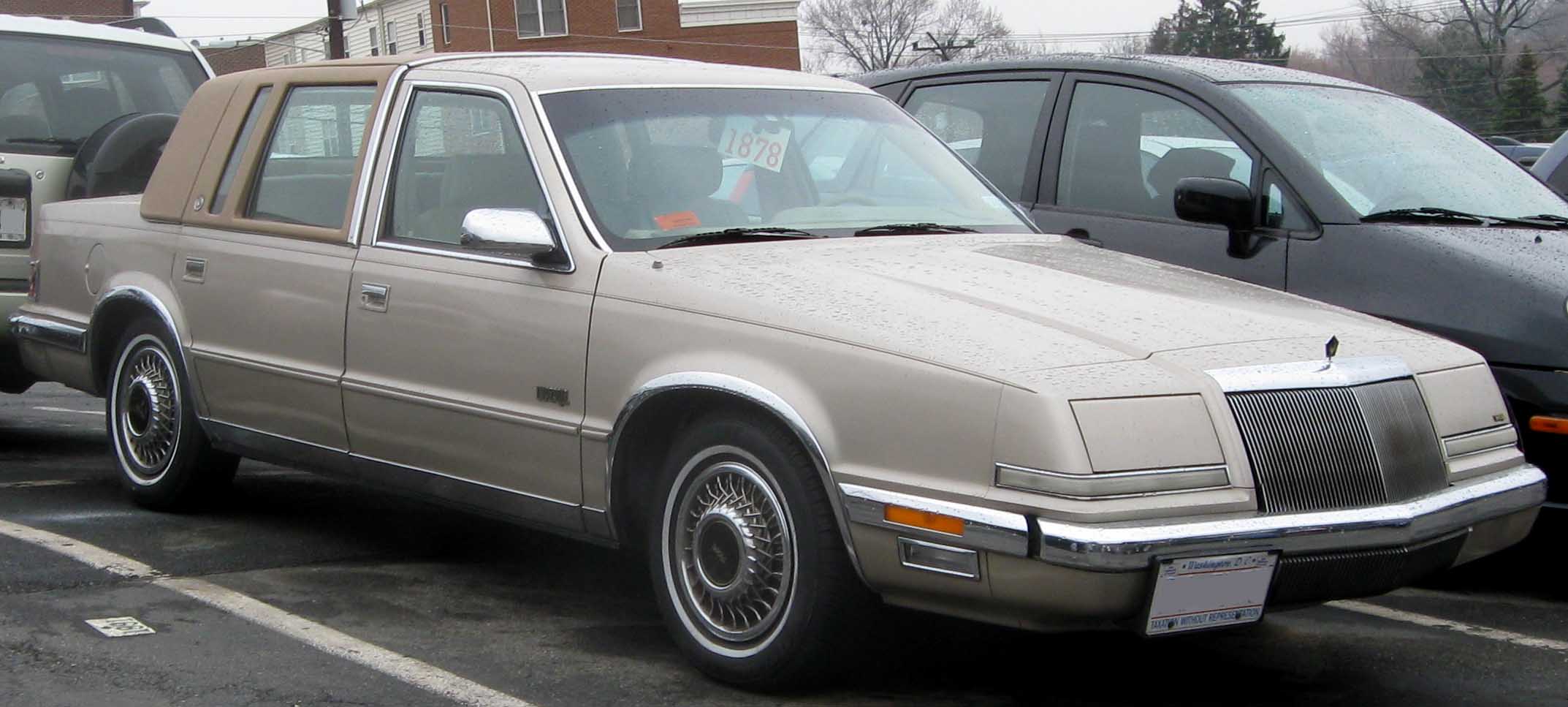
Chrysler Imperial
"...9 inch wheelbase which was the same as a Chrysler Imperial of the day. The interior with its futuristic dash..."
The Chrysler Imperial is a large, luxury car made by Chrysler. It’s known for having a more upscale interior and a distinctive dashboard design. In the podcast, it’s mentioned to compare size and cabin style to another car.
The Chrysler Imperial is a full-size luxury car that Chrysler produced, and it’s often referenced as a benchmark for size and interior design during its time. The podcast context points to matching dimensions and highlights a futuristic-looking dashboard, which is a common reason these cars get discussed. It’s being used as a comparison to explain how another vehicle’s proportions and cabin layout were influenced by the Imperial.
wheelbase
"and sitting 56 inches high, [1123.2s] the car rode on a significant 129 inch wheelbase which was the same as a Chrysler Imperial of the day."
Wheelbase is the distance between the front and rear wheels. A longer wheelbase usually changes how the car rides and feels, and it also affects how much space you can fit inside.
Wheelbase is the distance between the front and rear axles. It strongly affects ride characteristics and interior packaging, and this concept uses a wheelbase matching a Chrysler Imperial of the era.
smooth belly pan for aerodynamics
"The chassis was custom and the car had a completely smooth belly pan for aerodynamics under the floor, [1141.4s] which also sat under the driveline components."
A belly pan is a flat panel on the bottom of the car. It helps the car cut through the air more efficiently by smoothing out the airflow underneath.
A belly pan is a panel under the car that covers the underside to reduce airflow turbulence. A smoother underbody improves aerodynamics by helping air flow more cleanly under the chassis.
331 cubic inch hemi
"The engine was a 331 cubic inch hemi that made 235 horsepower and a transmission that was a two speed powerflate automatic."
A “hemi” engine has a combustion chamber shape that helps the engine burn fuel more efficiently. “331 cubic inch” is just how big the engine is inside—its displacement.
A “hemi” refers to a hemispherical combustion chamber design that can improve airflow and combustion efficiency. The “331 cubic inch” specifies the engine’s displacement, and it’s paired here with a concept-car powertrain.
driveline components
"which also sat under the driveline components. [1147.2s] The engine was a 331 cubic inch hemi..."
The driveline is the mechanical system that sends power from the engine to the wheels. In this concept, the belly pan is shaped to cover and streamline the parts underneath that do the power transfer.
The driveline is the set of parts that transmit power from the engine to the wheels, such as the transmission output and related shafts. “Driveline components” refers to those power-transfer parts located under the floor.
two speed powerflate automatic
"The engine was a 331 cubic inch hemi that made 235 horsepower and a transmission that was a two speed powerflate automatic. [1155.7s] And yes, this was a fully functional car..."
This is an automatic transmission with only two forward gears. “Powerflite” is Chrysler’s transmission design, and the episode is saying this concept used a two-gear automatic.
A two-speed automatic transmission uses two forward gear ratios instead of the more common multi-gear setups today. “Powerflite” is Chrysler’s name for its automatic transmission family, and this concept uses a two-speed version.
radar systems
"presence of another vessel and the blips were getting closer. These early radar systems were basically good for an alert and a basic direction of travel but really had no details as to much of anything else."
Radar is a detection system that uses radio waves to “see” other objects. It can tell you something is out there and roughly where it is, but older versions may not show enough detail to avoid trouble.
Radar systems use radio waves to detect objects and estimate things like distance and direction. In this story, the early radar could alert the crew and give a rough direction of travel, but it lacked the detail needed to prevent a collision.
knots
"They were now about 50 miles off the coast of Nantucket and closing in on each other with a combined speed of about 40 knots. Neither attempted to radio each other..."
Knots are how ships measure speed. One knot means traveling one nautical mile in one hour.
Knots are a unit of speed commonly used for ships and aircraft, equal to one nautical mile per hour. Saying the vessels had a combined speed of about 40 knots helps translate the closing speed into a maritime context.
T-Bone
"At 11.10 pm the unthinkable happened. The Stockholm T-Bone the Andrea Doria and a couple of hundred feet of Atlantic water."
A “T-bone” collision is when one vehicle/ship strikes another broadside, forming a shape like the letter “T.” Here, the Stockholm hits the Andrea Doria on the side, which is especially damaging because it concentrates impact forces into the struck hull area.
watertight compartment
"As the ship was taking water into only one watertight compartment, it was easily sealed off and pumped out. Once this was managed,"
A watertight compartment is like a sealed “room” inside a ship. If the hull gets damaged, the goal is to keep water from spreading everywhere so the ship can stay afloat.
A watertight compartment is a sealed section of a ship designed to limit flooding if the hull is damaged. The transcript notes that only one compartment was taking on water, which could then be sealed off and pumped out to prevent total loss.
1957 car show circuit
"The plan for the Norseman was to have it travel around through the 1957 car show circuit and then to be brought to Chrysler Proving Grounds to see if the roof design actually worked."
The “car show circuit” refers to the sequence of auto events where automakers display concept cars and new designs to generate buzz and feedback. Here, Chrysler planned for the Norseman to tour these 1957 events before it went to proving grounds for engineering evaluation.
destructive testing
"The plan for the Norseman was to have it travel around through the 1957 car show circuit and then to be brought to Chrysler Proving Grounds to see if the roof design actually worked. And that means destructive testing."
Destructive testing means you test a part by stressing it until it breaks. The goal is to learn what the design can really handle, not just whether it looks good.
Destructive testing is when engineers evaluate a design by pushing it until it fails, so they can measure how and why it breaks. In the Norseman’s case, Chrysler planned to test whether the roof design actually worked by using a method that could damage or destroy the prototype.
Nantucket
"If you can believe it, the fate of the Norseman sinking to the bottom of the Atlantic Ocean off the shore of Nantucket was far more peaceful and far less violent than the end that was planned for it by the guys who designed it in the first place."
Nantucket is an island near the U.S. East Coast. The episode says the ship carrying the Norseman sank in the Atlantic off Nantucket, which is part of why the car ended up being “found” only much later.
Nantucket is an island off the coast of Massachusetts, and this episode places the Norseman shipwreck in the Atlantic off Nantucket. The location matters because it explains why the wreck remained hidden for so long and why the car’s story became so mysterious.
cut up for scrap
"in 1956 were on the high seas and was on the high seas until 2025 when it was cut up for scrap."
“Cut up for scrap” means the wreck was taken apart so the metal could be reused. The hosts are using it to explain that the ship was eventually dismantled.
“Cut up for scrap” means the wreck was dismantled and processed for reusable metal. In this story, it’s used to explain what happened to the ship/cargo after it remained at sea for decades.
body was all but evaporated
"Those divers reported many years ago that the body was all but evaporated. The wooden crate was gone and all that remained were basically the tires and maybe the glass."
They mean the wreck has deteriorated so badly that almost nothing of it is left. Underwater, materials break down at different speeds, so you may only find a few remnants.
This phrase describes extreme underwater deterioration—most of the original structure has broken down or disappeared over time. It’s relevant to how wrecks survive: wood, metal, glass, and rubber degrade very differently.
Request an Explanation
Heard something you'd like explained? We'll add it to this episode.
Sign in to request explanations for terms you heard.
Want to learn more?
Browse our glossary for plain-English explanations of automotive terms, jargon, and concepts.
Help improve this episode
See something that's not quite right? Our annotations are AI-generated and can sometimes miss the mark. Click the flag icon on any annotation to suggest a correction.