The Land Cruiser is a large SUV made for tough driving, including rough roads. People talk about it a lot because it’s a popular, long-lasting model and it can be affected by supply and shipping problems. That’s why it might show up in a discussion about what’s happening with Toyota worldwide.
The Prius is a car that uses a gas engine plus an electric motor to help save fuel. If a dealership can’t get one right away, you may have to wait for a delivery date. That’s likely what the podcast is referring to with the “can’t have one until July” comment.
Oversupply means there are too many of certain cars sitting around compared to how many people want to buy them. It can cause sales to drop, especially if other popular models are hard to find.
They’re describing a change in the auto market where things that were improving start to stall. In this case, they think it’s because fewer people can afford cars.
They mean that buying a new car has become harder for many people because it costs too much. So even if cars are available, fewer people can afford to purchase them.
Market share is basically how much of the car-buying market a brand gets. If Toyota’s share is shrinking, it can mean it’s selling fewer cars than competitors.
In this context, “incentives” are marketing offers that reduce the effective price of a new Toyota—like cash rebates, special financing, or lease deals. Automakers use them to stimulate demand when sales slow down, but the host argues Toyota may not need to increase them if the whole market is down.
A “Toyota-thon” is Toyota’s name for a sales promotion period with extra deals. The host is asking whether Toyota will do one sooner or with bigger discounts.
Tariffs are taxes on imported products. If Toyota has to pay more because of tariffs, it can raise costs and make it harder to offer deals or manage inventory.
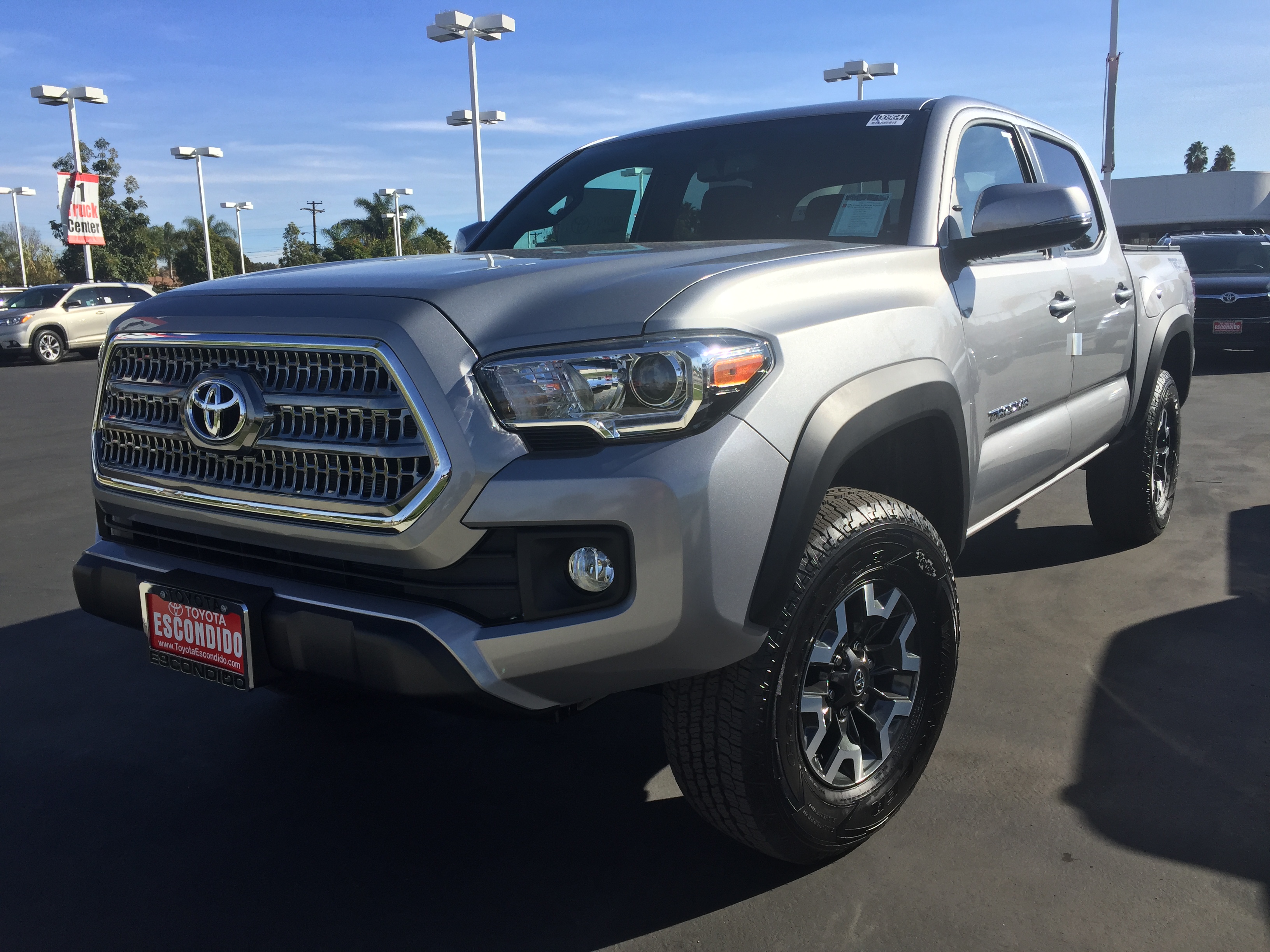
The Toyota Tacoma is a midsize pickup truck. The hosts are saying Toyota hasn’t been selling as well as it wants, so it may need a new truck to compete better.
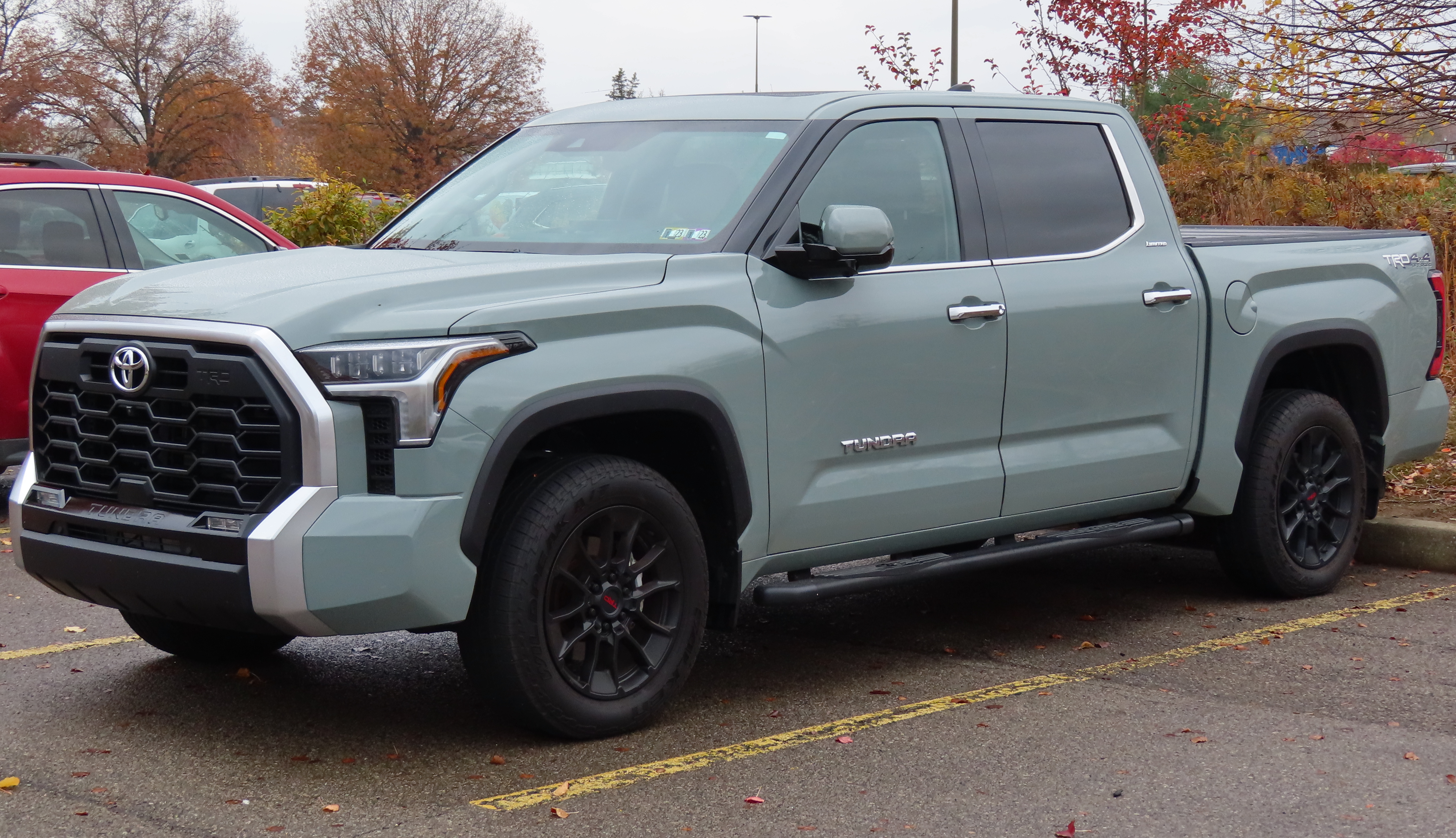
The Toyota Tundra is Toyota’s larger pickup truck. They’re saying Toyota hasn’t been selling as strongly, which could lead to Toyota building a new competitor in the pickup segment.
The Ford Maverick is a smaller, more affordable pickup truck. The hosts are saying it sold really well, so Toyota would likely want a similar kind of truck to compete.
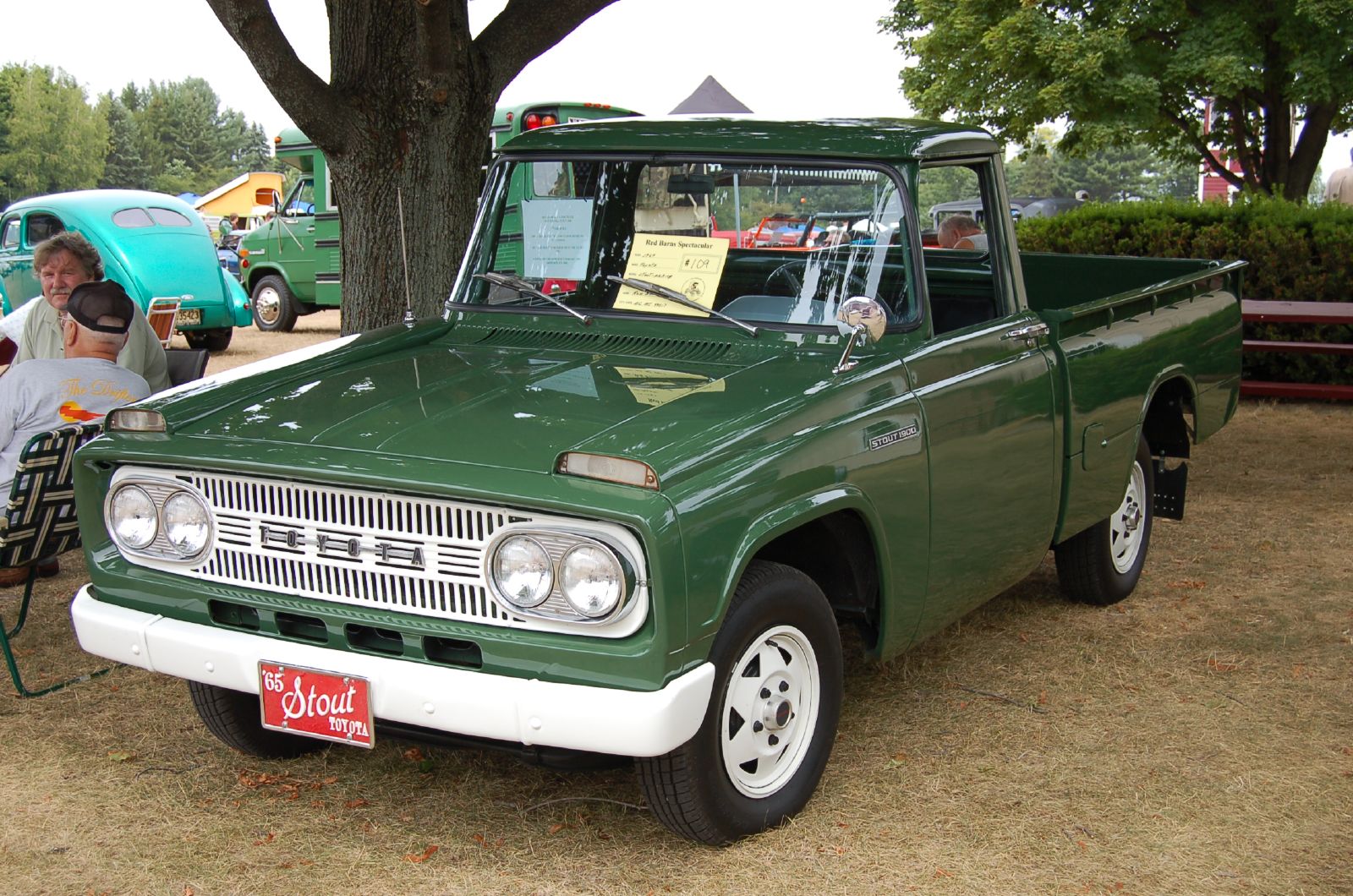
“Stout” here sounds like a possible name for a future Toyota pickup. The podcast is talking about whether Toyota might make a small truck to compete with other compact pickups. It’s more of a speculation than a clearly identified current model.
The Mazda B2000 is a small pickup truck. The podcast mentions it because someone is listing different pickup models people know or want to compare. It’s likely part of a general discussion rather than a deep dive into one specific current model.
This means the market for smaller pickup trucks, not the big full-size ones. The host is saying companies think the future growth is in smaller, cheaper trucks, so more brands will try to sell them.
Mitsubishi is a car brand the host says is entering the smaller pickup market. The host thinks that move will push Toyota to offer a similar small pickup too.
Nissan is mentioned as a partner to Mitsubishi. The host is using that partnership to explain how Mitsubishi might be able to bring a small pickup to market.
Reliability means how likely the car is to avoid breakdowns. Engine issues are problems with the engine that could require repairs, so the hosts are warning buyers to pay attention to that.
Supply and demand is about how many cars are available versus how many people want them. If there are too many of a certain truck on the market, it can hurt sales and change pricing.
In automotive retail, inventory refers to the number of vehicles a dealership has physically available to sell on its lot or through immediate delivery. The segment emphasizes that many Toyota dealers don’t have enough inventory, especially for newly introduced models and variants.
The used car market is where people buy and sell cars that are already owned. If new Toyotas are hard to find, more shoppers may look at used cars instead, which can change prices and supply.
This is a specific version of the Toyota Sienna minivan (the Woodland Edition) for the 2026 model year. The point is that even though it’s a Toyota, it can show up for sale through other dealers—showing how shortages and trade-ins affect used prices and availability.
A stock keeping number is the dealer’s internal label for a specific car. It helps them track that exact vehicle in their computer system, especially when it’s being sold or involved in a trade-in.
VIN is the car’s unique ID number. It’s like a fingerprint for that specific vehicle, and dealers use parts of it to keep track of which car is which in their system.
A trade-in is when you sell your current car to the dealer to help pay for the next car. The dealer may mark the paperwork/stock number to show how many trade-ins are involved.
MSRP is the price listed by the manufacturer on the car’s sticker. Here they’re saying some buyers end up paying more than that official sticker price.
The Hyundai Palisade is a big family SUV with three rows of seats. They’re suggesting some people who can’t get a Sienna might buy something like this instead.
Dealer reviews are ratings or comments from people who bought cars from a dealership. The host is pointing listeners to those reviews to find Toyota dealers that are straightforward.
A wait list is when the dealer can’t get you the car right away, so you’re put in line. The host is saying their list focuses on dealers that aren’t using that situation to add pressure or extra costs.
A “pay-to-play list” means a list where companies might get better placement because they paid for it. The host is saying their Toyota dealer list isn’t like that.
“Objective data” means information that can be checked or measured, not just someone’s opinion. The host is saying their Toyota dealer ratings are based on that kind of evidence.
A naturally aspirated engine doesn’t use a turbo or supercharger to push extra air in. It usually feels more straightforward and predictable when you press the gas.
“Hemmys” refers to a famous Chrysler V8 engine design. It’s known for making strong power, and the host is saying people like that engine enough that Ram wants it in their trucks.
The Ford F-150 is a very popular big pickup truck. The point being made is that even with Ford’s choices about engines and tech, people still bought it—so Ram’s similar strategy could work too.
This phrase means “people keep making the same kind of choices over time.” Here, they’re saying if customers liked a certain kind of truck/engine before, other brands will likely copy it again.
This is about how companies make decisions. The host is saying the smart move is to build what customers actually want, instead of trying to sell something people don’t ask for.
Ram is a brand of pickup trucks, and people often talk about which engine options are available. In the podcast, the point is that Ram/Dodge owners have wanted certain Hemi engines over the years. That kind of feedback can affect what trucks get built and sold.
Gas mileage means how efficiently a car uses fuel. The host is saying these buyers don’t care as much about saving gas as they do about having the HEMI-style power.
Stellantis is a big car company that makes brands like Ram, Chrysler, and Jeep. The hosts are saying Stellantis tried to sell more expensive cars, and some customers got upset and left.
Chrysler and Jeep are two different car brands. The hosts are saying that Stellantis had a similar customer problem with these brands, and they’re wondering if Toyota is facing the same kind of issue.
The RAV4 is a compact SUV that many people buy for everyday driving. The podcast is mentioning it because it’s usually a top-selling model, so it can represent how well Toyota is doing overall. That’s why it’s brought up when talking about which car sold the most recently.
The Corolla is a small, everyday car that’s designed to be reliable and affordable to run. The podcast mentions it because it’s a major seller, so it often reflects what’s happening with Toyota’s sales and supply. That’s why it comes up when comparing which models did well in a given month.
LIVE
It's noon here in Venture City, New Jersey, and well, it's noon in a lot of places, and
it's a different time and a different place.
But this is Car Eng Live for Friday, May 29th with your host, me, Ray, and my damn good-looking
son, Zach, hanging out by my side in my condo from my living room.
Okay.
It is as loud as I imagine it is for you sitting right next to me.
Fantastic to be here, Dad.
Happy Friday.
And it's going to be the end of birthday week.
I'm done wishing you happy birthday after today.
Today's show.
Can I say something?
Say something.
I'm done celebrating the day of the thing.
Okay.
It's enough for us.
That's fair.
That's fair.
Today's show is brought to you by CarEdge.com.
Six years.
We've been working on this.
Us and our incredible team back at CarEdge are helping folks save tons of money when they
go through the car buying process.
For those of you that are unfamiliar, we have a car search that we've built.
We have invoice pricing.
We've got dealer price quotes, window stickers.
We keep track of the best deals every month.
We have CarEdge Pro.
We have our car buying services, which, if I may, I encourage everyone to get a free
consultation call with us.
See if it's a good fit.
With a human.
With a real human on our team.
You can chat with us, schedule a time talk, or have us call you, or just call that number.
They're meat, the incredible concierges who are working with our customers as well.
We've got the research center.
We've got our dealer reviews, insurance warranty, and so much more.
Check it all out back at CarEdge.
Putting the edge in car buying.
Can I ask a question?
Yes.
How can we have more?
I mean, my God, wasn't that enough for this show?
All right, folks.
Here's the deal.
Yes.
Terrible trouble at Toyota.
We've got two headlines, one in Reuters this morning, Dad and the other in Bloomberg.
I'm going to pull them both up on the screen.
Toyota sales dropped for third month on declines in China and the Middle East.
Let me pull it up here on Bloomberg as well.
It's the same exact headline Toyota sales slide for third month on Middle East conflict.
What is going on over in Toyota land?
It's not just globally for them.
They've seen it.
It is globally for them.
It's also here domestically in the United States, to the point I wanted to make as well.
Here in the United States, Toyota is struggling too, making one of their first ever losses
here domestically in the United States.
So anyway, let's turn our attention to the headlines.
What's going on at Toyota?
They're building more and selling less.
Now, where are they building more and selling less?
They're selling fewer vehicles in China.
Sales have declined in China.
Sales have declined in the Middle East.
Sales have declined in North America.
And I believe the decline in North America was 4.5 or 4.8% decline in sales.
And when you're the number one brand in the world, that's pretty significant.
Now, having said that, they still sold 850,000 new cars last month.
But last year, they sold on average.
I can't get any closer.
Last year, they sold on average of just under a million cars a month for the year.
So for the world's largest automobile manufacturer to be struggling to some degree,
that's a pretty big story.
It is.
And it is global, to your point.
And you've already, Dad, seen some comments in the chat here.
For example, from Zippy, we've got, I wanted a new Prius, but I can't have one until July.
They really should be making more of those.
So Toyota does have one of the unique challenges right now,
which is they do have an oversupply of certain vehicles.
I see that here with this comment from Stu Glenn.
Toyota should be ashamed of itself with the new Tundra engine.
We've seen them struggle to sell some of these vehicles that they produced a lot of.
The Honduras and Tacomas, but then not have enough supply of vehicles that are really
in short supply right now in high demand.
And it ultimately has led them to sales declines globally for three months in a row.
Which is kind of insane.
It's almost as insane.
It's more insane, I'd actually say, than when Subaru saw their sales growth get stymied.
Subaru had been a brand that was growing year over year and every single month.
Perpetuity for decades.
Yes.
And that stopped as well.
So it's like a reset happening, it seems like, in the auto industry.
I think, at least globally, it kind of suggests that it's an affordability situation around the
world, not just, you know, we talk about it here in the United States and North America all the time.
But I think it's the economies of many major nations are nowhere near where those nations
would like their economies to be.
And so because of that, I think we're seeing a much more conservative approach from potential consumers.
And that's causing sales to decline.
So is that your, I'm going to pull back up on the screen, the headlines here from Reuters.
Yes.
Or we've got a 25% drop off in sales in China.
So are you saying, Dad, and I don't want to go too far down this path because honestly,
I'm not an economist and I don't think you claim to be an economist.
I knew you slept well last night, but I don't think you claim.
Well, I didn't stay at the Holiday Inn Express, if that's what you're asking.
You know, like, are you saying Middle East sales for Toyota were down 33% because people in the Middle East
can't afford as much as they used to be able to or 25% in China?
I think there's a conflict in the Middle East that could have some impact on people deciding
whether or not they should bury their money under their mattress or they should go out and buy a
vehicle. And I think right now, especially in the Middle East, that people are probably
erring on the side of being conservative with their money rather than spending.
I mean, you know, when there's conflicts like we're seeing, it impacts
not only the global economy, but especially...
So then what's... I want to make this more Toyota-specific. I don't want to... Yeah,
I don't want to go too far. Toyota has a 4.6% sales decline here in the United States.
They have a 33% decline in the Middle East.
Yes.
They have a 25% decline in China.
Yes.
Does that mean that they're going to try and do more to get sales in the United States to go
back up, like, incentivize things more, like, buoy their overall global performance or what's
your thinking here? Like, what's the actual tangible takeaway for these challenges that
Toyota is facing right now?
Well, you know, you'd like to think that because their market share is slipping slightly here
in North America, that it would cause them to want to increase incentives to regain some of that.
But that's what I'm wondering, like, will this be a catalyst for them to come out with
Toyota-thon earlier this year or more aggressively?
But when you look at the overall market in the United States, it's down, not just for Toyota,
it's down for everybody.
Yeah.
Okay. So, everybody kind of sort of expected and projected that sales were going to be down
in 2026, new car sales from what they had been in 2025.
And those projections are turning out to be true.
So, and we also know that Toyota struggled financially because of tariffs and other related
costs that impacted what they could do.
So, if they understand that their sales are down and they understand that everybody else's
sales seem to be down to some degree and that the overall market is down,
I don't see them increasing incentives to try and increase sales.
I see them, if it were me running Toyota at the moment, I see them being somewhat steady at the helm
and figuring out how to make it work with slightly lower sales.
Yeah, I think you're right.
And I think the anecdotes of people waiting months to get their hands on a new Toyota is
going to stay true.
And I wouldn't be surprised if they do push heavily on the vehicles that have,
unfortunately, gotten a bad rap, for example, the Tundras, the Tacomas.
Those vehicles are sitting out there for a long time.
And those will potentially be the few that get those big incentives.
Now, it does lead me to another story from another global automaker that makes me wonder
if this is going to force Toyota's hand.
We've got that Mitsubishi getting into the pickup truck game.
Again, Mitsubishi to enter the US midsize pickup race with the Nissan source truck to
fight the Toyota Tacoma Chevy Colorado.
They're going to bring the Pajaro.
Pajaro.
Pajaro.
I don't know how they're going to pronounce it.
Well, that's how they pronounce it.
They had it in the past.
Thank you.
This makes me wonder, Dad.
Toyota, I want to stay on Toyota for a second here and then we'll come to Mitsubishi.
This makes me wonder if Toyota is ever going to come out with that Maverick competitor.
Because Toyota, excuse me, has struggled with Tacoma and Tundra sales here in the United States.
And again, those are probably like your buyer's market opportunities if you're a Toyota shopper.
But we know that the Maverick has sold out very well for Ford and Toyota has hinted
at doing that.
Now Mitsubishi is getting into the game.
Do you think this forces their hand at all to come out with the Toyota stout or something
like that that's going to be a Maverick competitor?
I think what it says when you look at this is that just about every major manufacturer,
and I don't know that I would necessarily say that Mitsubishi is a major manufacturer,
they're on the cusp of that perhaps.
But every major or on the cusp of being major manufacturer wants to play in that small pickup
truck sandbox.
And one wonders, when I say one, that would be made.
I wonder just how many people can play in that sandbox and it'd be profitable for all those
who want to participate in that market.
What it suggests is that, at least in my mind, that whatever future growth they expect to have
in pickups, it's going to be in smaller, less expensive pickups.
So I think it's a way for all of the manufacturers to say we can't continue to go down the path
of 60, 70, 80 thousand dollar full size pickups.
And for people who want the utility of some type of pickup truck, we're going to need to
revert to the past and come out with smaller pickup trucks again.
So that's where I'm guessing everybody thinks there's going to be growth.
And my guess is that ultimately, they'll all overestimate what that growth will be.
Everybody will get into that market and then some will suffer the slings of arrows of being
misguided in what they thought they could actually sell and some will disappear again.
But there was a time, you don't know this, because you were just a little itty bitty
Let me hear it.
But there was a time when just about everybody was in the small truck market.
Nissan had a small truck.
Mazda had a small truck.
It was based on a Ford at the same time.
They were the same.
They were Mazda, Toyota, Nissan.
Everybody had a small pickup truck.
Tacoma used to be a small truck.
And then eventually, most of them went away.
And I guess this is, in a sense, falling into the category of history tends to repeat itself.
So everybody had a small pickup truck.
Zuzu had a small pickup truck.
I mean, everybody had.
Wow.
Yeah.
Everyone's in the chat.
That's Chevy S10, the Zuzu Pop, the B2000.
Yeah.
So many of them.
Everyone had one.
And then suddenly there were like none.
And now suddenly they're all coming back with them.
So apparently history does repeat itself.
We will see many more players in the small pickup market fighting for whatever market share they can get.
But like I said, that indicates to me that this is where manufacturers think the growth will be
when it comes to pickup trucks, not the full-size stuff anymore.
I mean, they're going to continue to make.
Of course.
It's so profitable for them.
But if they want to experience growth, it's going to be in the smaller, less expensive.
So I do think Mitsubishi making this move, which again is part of their work with Nissan,
is going to force the hand of Toyota to finally come to market with their small pickup truck.
The troubles at Toyota, again, to be very clear, are gloop.
Like they are still the largest car manufacturer in the whole world.
Yeah.
They are the leader in that regard.
But their sales are down for three months in a row.
And here even domestically for us in the United States, not domestically for them, sales are down.
And now one of their competitors is going to take market share from them.
Who knows how big it'll be in a space where right now their trucks are not selling well.
Tacomas are not selling well.
Tundras are not selling well.
If you take anything away from this video from today's live stream,
if you're in the market for a pickup truck, look at the Toyota options.
Now, reliability and engine issues, that's something you need to be very mindful of.
But supply and demand, there's an oversupply of those vehicles relative to all the others.
And you've got a competitor taking market share.
Toyota has been teasing us for two or three years now about a small pickup truck.
They should just do it already.
They will.
They're going.
And it's going to sell out just like the Maverick has.
Of course it will.
The saving grace for Toyota over the last several months has been domestically for them.
Japan, sales have increased.
That is where they have seen an increase in sales.
You know, China is a struggle.
I think they're missing on customers here in the United States though.
I really do.
Unless you're in the market for that Tacoma or that Tundra,
in a lot of cases, if you're looking for a new Toyota, you're waiting.
There's still so many dealers that don't have inventory on their lots,
especially with the new models and the new variants.
I think they've pissed off a lot of customers here in the United States.
They have.
But they also have, statistically, some of the most loyal customers out there.
And it takes a certain level of loyalty to wait 369 12 months to get something.
And you're willing to do it only because it has the Toyota name on the front of it.
And the longest period of time has been considered some of the most reliable
vehicles in the world.
Now, we do see this having impacts over on the used car market.
It's worth sharing.
We were doing some research before the show.
Here's a perfect example.
2026 Toyota Sienna Woodland Edition for a sale at a Hyundai dealership.
So this one got traded in.
That's my only assumption here.
Well, it is.
Based on the stock number.
So there's two things that stand out here.
One, it's got 4200 miles on it.
The stock number, explain.
This is a great tidbit for my dad.
Explain what that A at the end of a stock.
Well, typically at new car dealerships, when you sell a vehicle.
What is a stock?
Let's start there.
You need to keep track of each vehicle.
So every vehicle has its own individualized stock keeping number.
This is a unique identifier.
And it looks as if the way this dealership does it.
They use the last seven digits of the VIN.
Which in this case would be H166.
Last six digits of the VIN.
Last 688
And then the A.
Now, at most dealerships, the A is if you take a trade.
So if there's one trade, it becomes that stock number plus the letter A, typically.
And sometimes you'll see B and that means there's two trades.
Well, it won't be A and B because this vehicle, when it gets sold,
could have a trade in.
And then the stock number of that would become A would be a B.
All right.
So anyway, this is a trade at a Hyundai dealership.
Kia dealership, what I say, Hyundai dealership.
And dad, they're asking $55,489 for it.
Yes.
That's almost $2,500 more than the original MSRP for that vehicle.
And that's because on the new car side for Toyota,
this is some of the terrible trouble they've created for themselves.
There's not enough Sienas in the right places in this country to satisfy new car demand.
That's crazy.
Some unsuspecting used car shopper who doesn't do their research
is potentially going to pay over the MSRP for one that is 4,000 miles.
So what do you suggest?
I'm suggesting Toyota's got some troubles here in the United States.
They're going to have some pissed off Hussars or some unsuspecting Hussars
that may be down the line watch one of our videos
and realize they paid over MSRP for a used one,
or they have to wait six months.
And so instead they're going to Mazda, Subaru, Hyundai, even Kia, et cetera.
But if you, as two people that sit here and try and discuss
the car industry on a daily basis, I'm sitting here wondering,
what would a Toyota Sienna buyer want to trade a brand new one in with 4,000 miles
and a Hyundai Dior?
What are they buying?
Because they're not...
They're getting a Carnival?
Well, that would be a Kia.
So I'm assuming it would be a Palisade of some kind.
So you're trading in a family minivan for a family SUV
and you're giving up Toyota reliability for questionable Hyundai reliability?
Well, I don't know, but if I were a Toyota dealer or if I was Toyota corporate,
that would be a question I would try and figure out who that customer was that bought it brand new
and ask them if it would be okay to ask them why they got rid of it with only 4,000 miles long.
Now, Dad, I want to remind everyone back at CarEdge.com, under dealer reviews,
you can look at things broken down by brand.
We're talking a lot today about Toyota.
I encourage everyone to go dealer reviews, browse by brand or dealer reviews and then use the map.
Find Toyota dealers that are actually transparent, honest.
You don't have to worry about add-ons, wait lists, things like that.
This is not a pay-to-play list by any stretch.
This is just objective data about how transparent dealerships are.
Please use this list, which I'll scroll all the way down here.
We've rated and graded hundreds of Toyota dealerships and there are tons.
You can see here, tons of good ones, lots of really good ones.
Good in the sense of transparency.
Yes.
And then you can see there's a long tail here, Bs, Cs, wait for it, Bs.
And even some Fs.
These would be the ones that obviously not go spent.
I always pick on these poor guys, but you know what?
They add on average $3,882 and add-ons.
And the thing that I used to work for them in a Mazda VW dealership that they own.
To be clear, that was what?
30 years ago, 20 years ago?
1994?
In a minute.
So anyway, use those resources as part of your research process with all the talk we've been doing here
about Toyota.
Now, one other story I wanted to turn our attention to it.
Honestly, you always have a tie back to everything we've been talking about.
You've got another automaker out there that's just taken a different approach.
And that is Ram looking to defy history with muscular Rumblebee street trucks.
Instead, Ram continues to go down the path of big, naturally aspirated engines, fast trucks.
I mean, these things look absolutely crazy.
And Hemmys, they're just going.
They're like, hey, this worked over at Dodge with the demons.
Let's put them into our trucks.
Let's go big gas-powered engines.
Well, hey, the F-150 wrapped their cells.
So there's no reason to believe that these won't sell.
This is like your history repeats itself comment.
Oh, absolutely.
It repeats itself.
Yeah.
And the beautiful thing about this is it's history where some of these manufacturers
are beginning to realize that perhaps we should listen to what it is that our customers are saying
and what it is that they're requesting, as opposed to us just building whatever it is
we want to build and trying to force it down our customers' throats.
Because we know over the years that Ram and Dodge owners have said they want those Hemmys.
They don't care about the gas mileage.
They want that real sound that comes from those vehicles.
They don't care that they're not as fast as an EV.
They want those muscle cars and they want those muscle trucks.
And so there's always going to be a decent size percentage of the buying public airfare
that is going to look at vehicles like that and go, that's the vehicle for me.
The fact that it has a useless bed behind it is, well, maybe it's got you, but I can't,
let's see how fast we can get that plywood home.
Mark's right, though.
Because Atlantis at the same time is getting into the small truck market as well.
They have their big investor conference.
What was it last week?
This couple weeks ago.
And they're also, so they're hitting it from both sides.
They're going small trucks.
They're going big street racing trucks.
I mean, they're trying to just truck everything, essentially.
To have a truck for everybody is really their mindset over there.
If I was running for president, maybe my slogan would be a truck for everyone.
A fast truck in every driveway.
Yeah, it is interesting, though, because again, they have a strategy which is both sides of the
ball. They want to hit the affordable small truck.
They also want to do that with their Chrysler brand as well.
And then they want these big, massive Hemmys and these souped up muscle trucks,
which is a fun sentence to say.
Well, but that's because they realize.
They got beat up.
They got beat up by their customers for not building stuff that they actually wanted.
Yes, yes. That was the big thing.
You look at the course that Stalantis took, where they tried to go more upscale and more
upscale and kept raising prices.
And then they eventually basically abandoned their customer base.
And now they're trying to do whatever they can to get that customer base back.
And how are they doing it?
Well, they want to provide those customers with the vehicles that they never wanted to
see go away in the first place.
Do you feel like this is a stretch and it's a hypothetical?
Yes.
Do you think what Toyota is doing right now, ostracizing many of their customers who can't
get their hands on their products or have to be on wait lists or are buying over MSRP?
Do you think Toyota is kind of experiencing the same thing that Stalantis with the Ram
Chrysler Jeep brand experienced a couple of years ago?
Like, will Toyota ultimately swing back on the pendulum just like Graham is doing right now?
Like, they're swinging back on the pendulum.
What was the number one selling vehicle last month?
Probably the RAV4.
No, I think it was the Toyota Camry.
We did a thing on it.
Let me pull it up.
Yeah, if I remember correctly, it was the Toyota Camry.
And what was one of the other best-selling vehicles in the same month?
I believe it was the Toyota Corolla.
So what Toyota does is they have done their best not to, damn, they have done their best
to not abandon their base customers.
They sell the proverbial poop ton of Camry's and Corolla's.
They sell a proverbial poop ton of Tacoma's.
Maybe not so much when it comes to the tundra.
And that's not to say that some of their tundras are really, really, really expensive.
But the sandbox that they seem to be playing in the most
is the sandbox that still caters to the most affordable of their vehicles,
as opposed to the least affordable of their vehicles.
And Stalantis, when they went through this, really just abandoned the least affordable
of their vehicles.
Or they took the least affordable of their vehicles and priced them as if they had done
something special to them, other than just raise the price.
It is incredibly remarkable that they were so easily able to just reduce the MSRP's
year over here.
It's like, we just started charging more because we could.
Because we thought we could.
And then we went too far and lost market share.
I hear it is very different between what's going on and what's going on.
Yes.
Yeah, I think so.
Yeah.
All right, Dad, let's call it a show for today.
We're going to go enjoy an early start to the weekend.
Yeah, we're going to go get some lunch and fill some content.
But if we can help you out with anything, caredge.com is the company my dad and I started.
So please check out the website.
Share it with a friend.
It's always so humbling to meet people in person in real life.
We both had experiences recently.
I was in the ACME the other day and Billy from Billy's
Collision Repair Center has stopped me in the middle of the bread aisle.
To take a selfie with me.
It's humbling.
It is.
He said, my God, you're a celebrity.
I said, my God, I'm not.
Okay, I don't know how to break it to you.
You haven't met one yet.
Okay, but it is so wonderful to run into people who know us.
Yeah, so the reason we're ready is something to thank you.
Thank you everyone that tunes in continues to support us and shares what we're doing
with everyone.
Let's go get some lunch.
I'm hungry.
Let's enjoy the day.
You're always home.
And we'll be back on Monday.
Absolutely.
But you'll be.
You'll be in DC and I'll still be here in my living room.
That's how it works.
Yes, it does.
Thanks, everybody.
About this episode
Toyota’s sales slump takes center stage, with the hosts pointing to oversupply of some vehicles, shortages of others, and affordability pressures worldwide. They break down regional drops—U.S., Middle East, and China—and connect the pain to inventory delays, over-MSRP used pricing, and slow-moving Tacoma/Tundra stock. The conversation then pivots to what could change next: Mitsubishi’s pickup push and the likely return of smaller, cheaper trucks that could even “sell out” like the Maverick. Along the way, CarEdge’s invoice pricing and transparent dealer reviews get a plug.
Today on CarEdge Live, Ray and Zach discuss the latest on Toyota. Tune in to learn more! Hosted by Simplecast, an AdsWizz company. See https://pcm.adswizz.com
for information about our collection and use of personal data for
advertising.