
Tesla Model Y L FSD (Supervised) 14.3.3 - Is it worth $149 per month?
About this episode
Hosts weigh whether Tesla Model Y FSD (Supervised) 14.3.3 is worth $149/month in Australia. They say it’s great for highway and slow, single-lane country driving—reducing workload—but it stumbles on speed-sign recognition (like 110 km/h), exits, and roadwork when map data is inconsistent or outdated. They debate best use cases (commutes, tourists, unfamiliar roads) versus risky ones (school drop-offs, pedestrian-heavy areas, peak-hour gridlock).
Got a Question or Comment? Send us a Text Message!
Catch up on the latest in Electric Vehicle news from Australia and around the world! Hosted by Tom & Joy Gan of Ludicrous Feed, Riz Akhtar from Carloop and Roland Lam from Zapped
Catch us LIVE on Wednesday nights 9pm Sydney time on YouTube
Contact Ludicrous Feed
FSD
"[5.5s] version 14.3.3 renew or cancel. So as a full disclosure we've actually paid $149 [13.0s] for our first month of FSD at 14.3.3 on the Tesla Model YL."
FSD is Tesla’s software that helps the car drive more automatically. The hosts are testing it and deciding if paying for it is actually worth it.
FSD (Full Self-Driving) is Tesla’s driver-assistance software package that adds advanced automated driving features. In this episode, the hosts discuss whether subscribing to FSD is worth it, and they evaluate it by road type and real-world behavior.

Tesla Model YL
"for our first month of FSD at 14.3.3 on the Tesla Model YL. Now I know that a lot [18.9s] of you are still waiting for FSD 14.3.3 hasn't dropped yet for you."
This is a Tesla Model Y, which is an electric SUV. The hosts are talking about how the FSD software behaves when installed on their Model Y.
The Tesla Model Y is an electric crossover/SUV, and this segment is specifically about running FSD on a Model Y. The host says they tested FSD version 14.3.3 on their Model YL, tying the software behavior to this particular vehicle platform.
110 kilometres an hour speed sign
"Unfortunately [80.7s] there are some occasions such as when it doesn't recognise the 110 kilometres [84.2s] an hour speed sign. That can be quite frustrating for me personally."
The car is supposed to read the posted speed limit signs. The host says that sometimes it doesn’t correctly recognize a 110 km/h sign, which makes driving annoying.
This refers to the car’s ability to recognize and follow posted speed limits (here, a 110 km/h sign). The host says FSD sometimes fails to recognize that sign, which can cause frustrating behavior during highway driving.
map data
"And if the [88.9s] map data is inconsistent and I know that there's been a recent map data [91.9s] software update so yes I'm aware of that but on the map version we were"
Map data is the information the car uses about roads and exits. The hosts suggest that if the map info is out of date or inconsistent, FSD can make mistakes.
Map data is the navigation and road-information dataset the vehicle uses to understand where it is and what road features (like exits) are coming up. The host links FSD issues to inconsistent map data and mentions a recent map-data software update.
M1
"driving there were some exits where it tried to exit like on the M1 for example [100.8s] between Gold Coast and Brisbane."
The M1 is a highway in Australia. The host is using it as an example of a place where the car sometimes misreads which exit you should take.
The M1 is a major motorway route in Australia, and the host uses it as a concrete example of where FSD behavior can be wrong. They say exits on the M1 (between Gold Coast and Brisbane) sometimes trigger incorrect exit decisions.
speed limit
"I know you can drive at a hundred that's fine but we I like to drive at the speed limit a 110 just because I think it's safer personally."
The speed limit is the highest speed you’re allowed to drive on that road. Here, they’re saying they prefer matching the posted limit because it feels safer and helps avoid faster traffic passing them.
The speed limit is the legally posted maximum driving speed for a given road segment. In this discussion, it’s used as a safety benchmark for choosing between 100 km/h and 110 km/h in a highway zone.

Alpine A110
"frustrating. I know you can drive at a hundred that's fine but we I like to drive at the speed limit a 110 just because I think it's safer personally. I don't like cars going rushing past me all the time. I like to"
The Alpine A110 is a small sports car designed to feel nimble and easy to steer. Because it’s built for handling, it can be enjoyable even when you’re just driving at normal speeds. It may come up in conversations about driving safely and not speeding.
The Alpine A110 is a lightweight, mid-engine sports car known for agile handling and a driver-focused feel. It’s the kind of car that often gets discussed in relation to how comfortable it is at normal road speeds, not just track performance. That makes it relevant when someone talks about preferring to drive at the speed limit for safety and comfort.
cruise control
"of course obviously a lot of cars do have you know cruise control and some cars even have lanes entering so it is it is a step above that as well"
Cruise control is a feature that keeps your car at a chosen speed without you constantly pressing the accelerator. They’re saying Tesla’s system is a step beyond that because it also helps with other driving tasks.
Cruise control is a driver-assistance feature that automatically maintains a set speed. The hosts compare it to Tesla’s highway automation, implying that the newer system does more than just hold speed.
lanes entering
"and some cars even have lanes entering so it is it is a step above that as well but I am aware that other cars have kind of like a"
This means the car helps keep itself lined up in the lane, especially when you’re moving into or near a lane. The hosts are saying some cars can do that, and Tesla’s system goes further.
“Lanes entering” refers to lane-centering or lane-keeping behavior where the car helps position itself within lane markings, especially when approaching or joining lanes. In this segment it’s mentioned as another level of driver assistance beyond basic cruise control.
supervised
"the cars driving for you most of the time and you're just literally supervising the car so yes I think it's definitely definitely a better to have it on than not overall ... it's still supervised"
“Supervised” means the car helps drive, but you’re still responsible for watching everything. If the system makes a mistake, you have to step in.
“Supervised” describes driver-assist automation where the car can handle driving tasks, but the human remains responsible for monitoring and intervening. It’s a safety framing used with Tesla’s advanced driver-assistance features.
country roads
"next category is country roads we're talking like regional roads where it's single lane you know both ways both directions"
“Country roads” here means quieter regional roads with fewer lane changes and less complexity. The speaker thinks FSD handles that kind of road especially well.
“Country roads” is being used as a specific driving scenario for evaluating FSD behavior—typically narrower, lower-variation regional roads. The speaker argues it’s a strong match for the system’s capabilities.
tailgate
"when we were in hurry or even standard it would tend to tailgate the car in front so being able to back off"
“Tailgate” means the car is too close to the car in front. If the system tailgates, it can feel stressful, so better following distance helps.
“Tailgate” here means the car following the vehicle ahead too closely. Driver-assistance systems can be tuned to keep more distance, which affects comfort and perceived safety.
version 14
"you can't adjust the max speed anymore with version 14 but you can change the personalities"
“Version 14” is a specific update of Tesla’s driving software. Updates can change how the features work and what you can control.
“Version 14” refers to a specific Tesla software release for its driver-assistance/autopilot feature set. Software versions can change what controls are available (like speed adjustments) and how the system behaves.
max speed
"you can't adjust the max speed anymore with version 14 but you can change the personalities"
“Max speed” is the highest speed the car’s driver-assist is allowed to aim for. If you can’t change it, the car may feel more or less aggressive depending on the setting.
“Max speed” is the upper limit the driver-assistance system will target while following traffic or operating on a route. Changing or removing max-speed control can affect how aggressively the system keeps up.
driver types
"okay so they're kind of the four major road types let's go through driver types this is more interesting more human so let's start with older or older drivers or drivers with let's say mobility issues or accessibility issues"
They’re talking about different kinds of drivers and whether the same tech would help each group. For example, someone with mobility or accessibility challenges might benefit more than others.
“Driver types” here is a way of grouping drivers by needs and circumstances (for example, mobility or accessibility issues) to evaluate whether a feature like FSD is likely to help. It’s essentially a user-fit framework rather than a technical description of the car.
hazards
"recognise that medical episode put on the hazards slowly you know go over to the left in the shoulder and then call emergency services"
Hazards are the car’s emergency flashers that blink all the turn-signal lights together. People use them to warn others when something urgent is happening.
Hazards are the vehicle’s emergency flashers—typically all turn signals blinking at once. They’re commonly used to warn other drivers when the car is stopped unexpectedly or there’s an urgent situation.
peak hour traffic
"okay peak hour traffic now this is obviously something I'm very keen on discussing because I have driven this in peak hour in Sydney"
Peak hour traffic is when roads are most crowded, like during the morning or evening commute. In heavy traffic, it can be harder for driver-assistance features to handle everything smoothly.
Peak hour traffic refers to the busiest commuting periods when roads are congested and driving conditions are unpredictable. For driver-assistance systems, dense traffic can increase the workload of perception and decision-making.
M1 motorway
"because there was a stage when we were on the M1 and you know it's like basically 45 on the M1 motorway"
The M1 motorway is a big highway where people commute. The host is saying that in heavy congestion it can feel like everything is stuck, which tests driver-assistance systems.
The M1 motorway is a major highway route used in Australia for high-speed commuting. The speaker describes it as gridlocked, which matters because driver-assistance systems can behave differently in stop-and-go congestion than on free-flowing roads.

Dodge Dakota
"...on the M1 motorway I should say up in up in South Dakota and there's 45 lanes of essentially gridlock ther..."
The Dodge Dakota is a mid-size pickup truck. It’s mainly made for carrying things and general utility, like hauling or work use. It can come up when discussing traffic because it’s a common type of vehicle on busy roads.
The Dodge Dakota is a mid-size pickup truck, typically used for hauling and everyday utility rather than sports-car performance. It may be mentioned in a motorway or gridlock context because pickup trucks are common on major roads and can be part of the traffic mix during slow-moving commutes. The reference helps set the scene for how vehicles behave in heavy congestion.
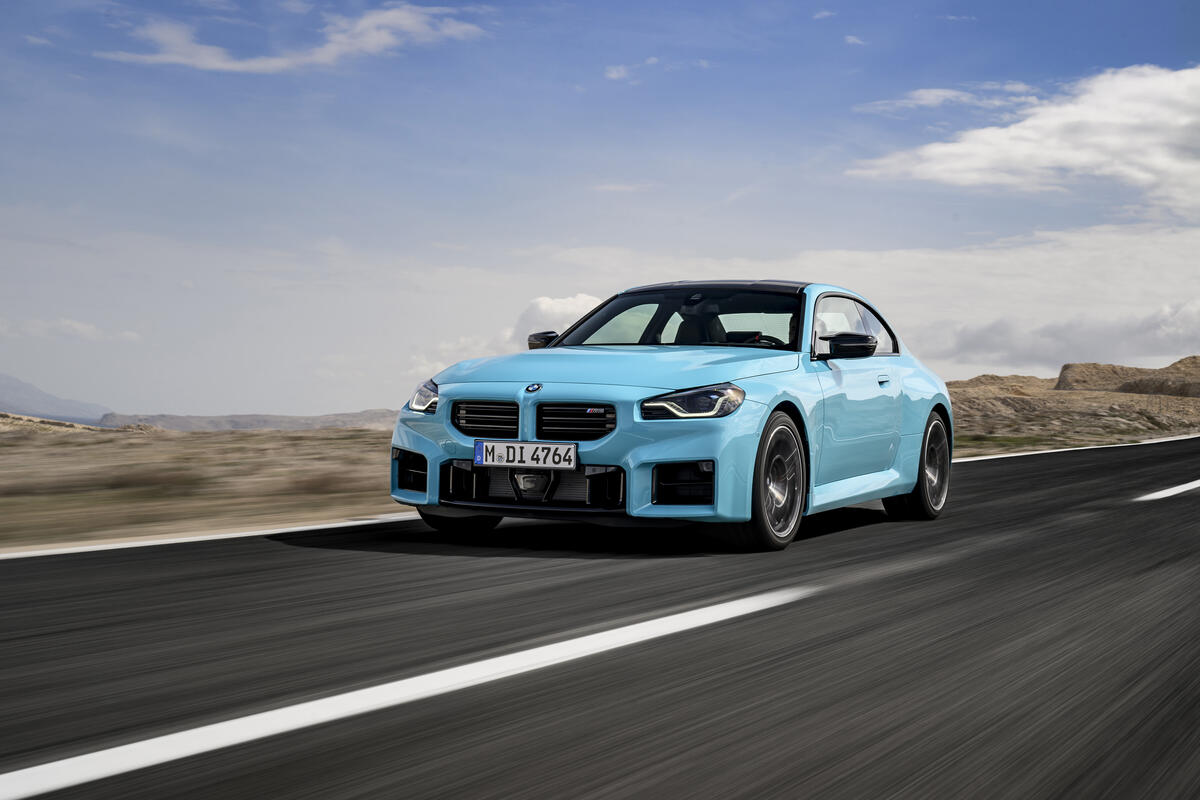
BMW M2
"...it's like on a highway like the M4 and 5 you know M2 yeah in Brisbane the M1 that's where it's useful ..."
The BMW M2 is a sporty two-door BMW that’s built for quicker driving and better handling. It’s smaller than some other performance BMWs, which can make it feel easier to drive. People may mention it when talking about using a performance car on highways.
The BMW M2 is a compact performance coupe from BMW’s M division, positioned as a smaller, more accessible alternative to larger M cars. It’s often discussed for highway use because it delivers strong power while remaining relatively easy to place and control in traffic. In the context of motorway routes, it can be mentioned as a practical performance choice for frequent driving.
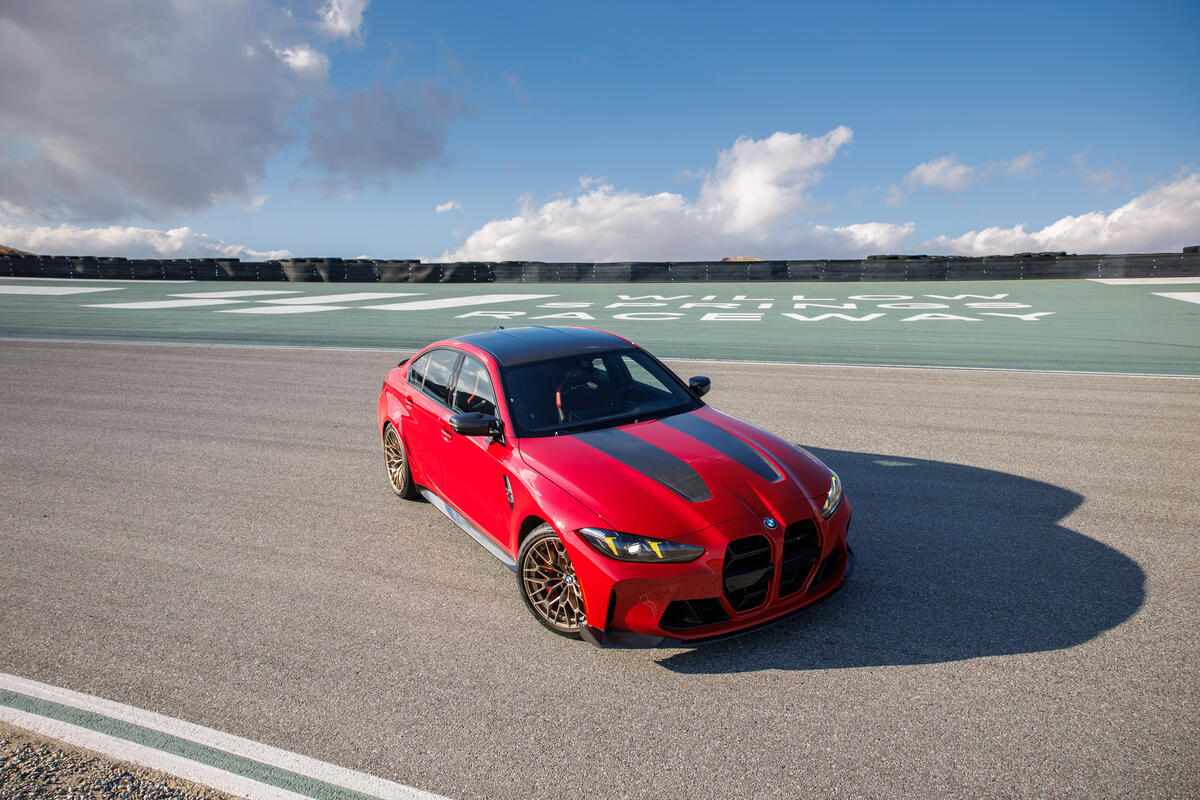
BMW M3
"...f I was on stuck on the M1 all the time or the M2 M3 and 4 in Sydney I would probably still use it yes..."
The BMW M3 is a fast, sporty version of a BMW sedan. It’s made to accelerate quickly and handle well, so it can feel confident on highways. It may be mentioned because it’s a performance car that still works for everyday driving.
The BMW M3 is a high-performance sports sedan from BMW’s M division, built for strong acceleration and confident handling. It often comes up in discussions about driving on busy highways because it’s designed to be quick and stable even when traffic is moving unpredictably. In a city or motorway context, people may mention it as a car they’d choose for frequent commuting or spirited driving.
FST
"this one's an easy one for me new and young drivers so this one's like a blanket no definitely not don't let them use FST let them get used to like road and being being a what's the word responsive to traffic issues before using FST personally"
“FST” here is shorthand for a Tesla self-driving/driver-assist mode that helps with steering and driving. The point is that new drivers shouldn’t rely on it until they understand how the car reacts in normal traffic.
In this context, “FST” is being used as a shorthand for Tesla’s driver-assistance feature that handles steering and driving tasks under supervision. The hosts are discussing when it’s appropriate to let drivers use it, especially for new drivers learning how the car responds to traffic.
0 to 100 kilometer an hour
"“...and then cut out so yeah I need to make that decision yeah 110 kilometer an hour roads yes this is not what it's not so good at yeah and look I mean road work is like a safety issue but 110 kph is just a quality of life...”"
110 kph is just a speed number the hosts use to talk about how the car behaves. They’re saying that at that speed, road-work situations can be more annoying or problematic for the system.
110 kilometers per hour (110 kph) is a speed reference used to discuss how driver-assistance behavior changes at higher speeds. The point is that even if road work is a safety issue, the system’s speed/behavior can still affect ride quality and driver experience.
real-time map updates
"“...it needs to be almost real-time we need to get like real-time map updates I'm not even sure that's possible whether they get like daily updates with the map because that's what you need in real life we can't rely on data from six months ago...”"
Real-time map updates mean the car gets road information that’s current right now. If the map is outdated, the car may think a road is open when it’s actually changed due to construction.
Real-time map updates are continuously refreshed digital map data that reflects current road conditions. For automated driving features, stale maps—like information from months ago—can be unsafe or at least frustrating when road work changes lanes, exits, or road availability.
hurry mode
"“...hopefully one day sticking to the speed limit in hurry mode what FSD is not so good at I mean that's just an Australia thing isn't”"
Hurry mode is a Tesla setting that makes the car drive more aggressively or quickly. The hosts are saying it may not handle speed limits as well as you’d want.
Hurry mode is a Tesla driving behavior setting that makes the car more assertive about speed and responsiveness. The discussion here suggests it can conflict with strict speed-limit adherence, especially in environments where road rules and signage are complex.
tailgating
"correct hurry mode tailgating [1111.2s] it follows the car a little bit too close ahead yeah I don't like that either yeah"
Tailgating means you’re following the car ahead too closely. The speaker doesn’t like how the car sometimes keeps a very short gap.
Tailgating is driving too close to the vehicle in front. The speaker says the car’s following behavior can be overly close, which can feel unsafe or inconsiderate to other drivers.
emotional quotient EQ
"and finally what it's [1121.0s] not so good at which I'm not sure whether it can improve is a lack of [1123.5s] emotional quotient EQ in the lane change decision-making in peak hour"
EQ is a way people talk about emotional awareness and self-control. In this context, the speaker is using it as a metaphor to say the car doesn’t seem to “read” traffic situations well.
Emotional quotient (EQ) is a psychological concept for measuring or describing emotional awareness and control. Here it’s used metaphorically to criticize the system’s “social” driving behavior—how it chooses lane changes and interacts with traffic.
lane change decision-making
"not so good at which I'm not sure whether it can improve is a lack of [1123.5s] emotional quotient EQ in the lane change decision-making in peak hour [1127.3s] traffic I mean that's similar to what you mentioned before yeah yeah yes not"
Lane change decision-making refers to how an automated driving system chooses when to merge or shift lanes. The speaker criticizes it as lacking good judgment during peak-hour traffic, leading to unnecessary or disruptive moves.
cameras on the car
"yeah and look if we can see it up ahead as humans surely the car can see it too it's got like how many cameras on the car so right you should be able to see that up ahead so don't know that's a tough one okay"
The car uses cameras to “see” the road. They help it detect lanes and other traffic so it can decide what to do next.
“Cameras on the car” refers to the vehicle’s vision sensors used to detect lanes, vehicles, pedestrians, and road signs. In driver-assistance systems, cameras complement map data and help the system interpret what’s happening ahead.
higher patrol mode
"like not it's gonna be calling nanny state mode or higher patrol mode or something right"
They’re talking about a stricter setting where the car watches you more closely or becomes more forceful about following rules. The idea is: break the behavior guidelines and it responds by tightening control.
“Higher patrol mode” appears to refer to a stricter driver-monitoring or intervention level in Tesla’s system. The speaker is implying that if the car doesn’t follow rules (like speed limits), it may escalate monitoring or enforcement behavior.
roadwork
"roadwork room for improvement I do feel though that given just where FSD supervised currently is this anytime there's roadwork I really feel just take over the car don't don't see what it's gonna do like this is one of those situations where there's people on the road there are lives at stake"
Roadwork is when construction is actively changing the road layout. The car may not handle it well because the lanes and signs can be different from what it expects.
Roadwork refers to active construction or maintenance that changes traffic patterns—like shifted lanes, cones, or temporary barriers. Driver-assistance systems can struggle here because the environment may not match the latest map data or sensor expectations.
subscription player
"I know some of you said well it's not the same as KO or Spotify or Apple Music or some other subscription player this is different..."
A subscription player is like paying every month to keep using a service. They’re comparing Tesla’s monthly charge to things like music apps so you can understand the “pay ongoing” mindset.
A subscription player is a paid service model where you pay regularly to access features or content, rather than buying it once. The hosts compare Tesla’s monthly fee to music-streaming subscriptions to explain why the value proposition feels different.
highway driving
"this is game-changing and I agree it's in some scenarios as we've said highway driving country roads it is game changing..."
Highway driving is the kind of driving where the road is simpler and the car can “predict” what’s going on more easily. The hosts say the Tesla system tends to work better in these situations.
Highway driving is a driving context where driver-assistance systems often perform best because lane markings are clearer and traffic behavior is more predictable. The hosts argue FSD (Supervised) can be especially useful on highways and similar steady routes.
Sydney
"certainly for my scenario and maybe for joys in Sydney I personally have switched it off I'm not renewing for this update..."
Sydney is where the host drives most of the time. They’re saying the subscription may be less worth it for them because their daily trips don’t match the situations where the system shines.
Sydney is referenced as the hosts’ local driving environment, which affects whether a driver-assistance subscription feels worth it. They suggest their routes involve less highway and country driving, reducing the feature’s day-to-day value.
14.3.3
"but I think day-to-day at the moment at 14.3.3 it's a no so and if you are gonna do a long trip"
“14.3.3” is the version number of Tesla’s software. Different versions can change how well the self-driving features work, so the host is saying this version didn’t impress them.
“14.3.3” refers to a specific Tesla software/firmware version that affects how driver-assistance behaves. When the host says “at 14.3.3 it’s a no,” they’re judging the feature based on that exact software build.
value thing
"don't have to pay yeah and suddenly it's a value thing like is is the Tesla product $140 more or whatever $50 more $100 more better than this competitor product that's what I'm really very curious about"
The hosts frame the decision as a “value” question: whether the extra cost of Tesla’s self-driving package is justified compared with alternatives. This is essentially a cost-vs-benefit evaluation based on real-world usefulness rather than marketing claims.
software update
"all right well look until the next FSD software update we will be there we'll pay it again and we'll test it for you guys on the channel"
An FSD software update is a new download for Tesla’s self-driving features. The hosts plan to test it again after the update because the way the car drives with FSD can change.
An FSD software update is a new version of Tesla’s Full Self-Driving software delivered over the air. The hosts treat it as a recurring event worth re-testing, because improvements (or changes in behavior) can affect how useful the system feels in different driving situations.
Request an Explanation
Heard something you'd like explained? We'll add it to this episode.
Sign in to request explanations for terms you heard.
Want to learn more?
Browse our glossary for plain-English explanations of automotive terms, jargon, and concepts.
Help improve this episode
See something that's not quite right? Our annotations are AI-generated and can sometimes miss the mark. Click the flag icon on any annotation to suggest a correction.