That light means the car found something wrong with the engine or emissions system. Sometimes it’s small, but you still want to check it so it doesn’t turn into a bigger problem.
ABS helps your wheels keep turning during hard braking so you can steer. If the ABS light is on, the system may not work correctly when you need it most.
Veriscan helps figure out why your warning lights are on by reading the car’s stored error codes. Instead of guessing, it gives you a clearer starting point for what to do next.
ASE is a certification that shows a mechanic has proven skills. “Master technician” usually means they’re highly qualified and have passed tougher requirements.
Progressive is an insurance company. Their “Name Your Price” tool helps you pick coverage based on what you want to pay, so it’s easier to compare options.
The Toyota Grand Highlander is a larger three-row SUV positioned as an “adult-sized” family hauler. The segment emphasizes seating capacity and comfort, suggesting it’s aimed at buyers who need more space than a typical two-row crossover.
The Toyota Sienna is a minivan. The ad is pointing out that it can come with entertainment for passengers in the back, which is handy for kids on long trips.
Hardware 3 is the computer Tesla uses in the car to run its driving-assist features. They’re saying this version isn’t powerful enough for fully hands-off, no-supervision driving.
Forward-looking statements are guesses about the future—like what a company expects to happen next. They also warn that real results might be different because of risks.
Autonomous driving means the car can help drive itself using sensors and computers. The level can vary, but it’s basically about how much control the car can take over safely.
An earnings call is a formal presentation and Q&A session where a public company reports quarterly financial results and provides forward-looking commentary. For EV companies like Tesla, these calls can also signal technology and product direction, not just revenue.
Capex means big spending on things like factories and equipment. When a company says it’s increasing capex, it usually means it’s preparing to build more cars.
In an EV, the “powertrain” is everything that turns battery energy into motion. “Battery powertrain” here means Tesla is working on the battery and the system that uses it to drive the wheels.
This is the computer software that uses AI to help the car “understand” what’s happening and make decisions. Tesla is saying it’s investing heavily in that software.
The car uses computer chips to run all its electronics and AI. “Chip design” means Tesla is working on the chips themselves, not just the software that runs on them.
AI training is how the car’s AI gets “taught” using lots of examples. More training usually means the AI can get better at recognizing situations and making decisions.
Vehicle production is how many cars the company can build. When they say they’re laying groundwork for more production, it means they’re preparing to make more cars later.
Optimus is Tesla’s robot idea—basically a humanoid robot. Tesla is saying they’re ramping up testing and production so it can eventually do useful work outside of Tesla too.
Tesla Semi is Tesla’s electric big rig (heavy truck). Tesla is warning that the first phase of production will be slow, then ramp up once manufacturing and suppliers are fully working.
CyberCab is Tesla’s next new vehicle they’re starting to build. Tesla expects early production to be slow because it’s a totally new setup, then it should pick up later as they work out the supply chain.
An S-curve is a way to describe how something ramps up. It usually starts slow, then speeds up once the factory and suppliers are working smoothly, and eventually levels off.
Megapack is Tesla’s big battery system used to store electricity for the power grid. Tesla is saying people want a lot of it, and they’re preparing to start making the next version, Megapack 3.
FSD is Tesla’s driver-assistance software that’s trying to do more of the driving for you. The company is talking about updates that make the system safer and eventually work without a person watching—only where the law allows it.
RoboTaxi is Tesla’s idea of a self-driving taxi service. They’re talking about software updates that would be used to run those rides without a human driver, where the law allows it.
A “software architecture overhaul” means Tesla is restructuring how the FSD software is organized internally—how modules interact, how decisions are made, and how the system is built to scale. Tesla implies this is a major step change rather than a small feature update.
Term
AIFO
AIFO sounds like a new “computer platform” inside the car that Tesla wants to use for the self-driving software. The idea is that the new setup can help the system make decisions faster and more reliably.
They’re saying the self-driving system should be safer than an average human driver. But “safer” depends on how they measure things like crashes, near-misses, and what driving situations they count.
The Cybertruck is Tesla’s electric pickup. People bring it up because it’s a big new Tesla product, and they’re trying to judge whether Tesla can make it successful at scale.
They’re talking about whether robot-maker data gets sent back to the company that built the robot. If that information could reveal how your factory works—or help Tesla compete with you—then buying the robots becomes a harder decision.
Tesla uses cameras on the car to “see” the road. Those cameras help the car’s computer understand what’s happening so it can assist with driving features.
“Autonomy ready” means the car is set up so it can eventually support more self-driving features. It’s not always the same as having full self-driving right now.
Hardware 2 is an older version of the computer Tesla used for its self-driving features. The host is saying that earlier promises didn’t instantly translate into the final capability.
“14.3” here is the name of a software update version for Tesla’s self-driving features. It’s not a car model—just a new release they say will work better.
Term
15
“15” is the next planned software version after 14.3 for Tesla’s self-driving system. The speaker is saying Tesla expects it to fix problems and improve performance.
Rover Taxi refers to Tesla’s robotaxi service expansion mentioned in the call. The segment highlights that growth is constrained by “rigorous validation” focused on safety, implying extensive testing and monitoring before scaling to new cities.
“Rigorous validation” means they do a lot of checking to prove the system is safe before letting it operate widely. It’s basically the safety testing and verification step.
“Starter production” means they’re starting to build the product in small numbers first. It’s like the early test run to make sure everything is working before making a lot.
A supply chain is basically how all the materials and parts get sourced and delivered to build something. If it’s brand new, it can take time to ramp up because suppliers and production lines are still getting dialed in.
“Ramp up” means starting slow and then building more and more cars/robots as the factory gets better at making them. It’s common for new production to start small and grow once everything is working reliably.
That means competitors watch the video very carefully, like pausing on every frame, to figure out how the robot works. Tesla is basically saying they don’t want to give away too much too early.
They’re saying they prefer to wait to show new tech until it’s almost ready to be built at scale. That way, what people see is closer to the real final product.
It’s a saying meaning the product is almost ready and mostly figured out. They’re implying they don’t want to talk about it until it’s stable and reliable.
Programming is the robot’s software—how it decides what to do and how it controls its movements. The speaker is saying videos show the outside, but not the internal software that makes it work.
Concept
tilt the scale
“Tilt the scale” just means “make one side win more.” Here it’s about whether Tesla’s robot videos are convincing enough to change how people view Tesla compared to other robotics companies.
Concept
scrap 80% of the work
The speaker is describing a scenario where a competitor sees something new and decides to throw away most of what they’ve already built. They’re basically arguing that you probably can’t justify restarting from scratch just from a few clips.
AI5 is Tesla’s new AI computer chip. “Taped out” means the design is finished and ready to be made, so it can eventually power the car’s real-time AI features.
This is a special computer chip that runs AI decisions in real time. “Edge compute” means the car thinks for itself using hardware inside the vehicle, rather than sending everything to the internet first.
Dojo is Tesla’s supercomputer system for training its self-driving AI. “Dojo 3” means the next, upgraded version they’re working on to train the software better and faster.
AI6 is Tesla’s planned next AI chip after AI5. The idea is that newer chips can make the car’s AI faster and more capable while using less power.
Concept
research chip fab on the Gigatexus campus
A “fab” is a factory that makes computer chips. Tesla is talking about building a new chip-making facility at its Gigatexus campus, which could help them control and speed up chip development.
Instead of getting permission country-by-country, Tesla is waiting for a broader approval that would cover many EU countries at once. That kind of approval usually takes longer, so rollout timing can slip depending on regulators.
This means Tesla can update cars people already own with new software. If regulators approve FSD, Tesla can roll it out to those cars, which can boost demand and revenue over time.
Lumpy just means the company’s energy storage sales don’t come in evenly. They depend on when customers finish planning and installing projects, so results can jump around by quarter.
Term
GW of energy storage
GW is a unit for how big the system is. When they say they deployed “GW of energy storage,” they’re talking about the scale of storage projects they delivered in that quarter.
Gross margin is basically how much money is left after paying the direct costs to make or deliver the product. They’re saying their margin looked great partly because of one-time tariff-related effects, not only from day-to-day operations.
Tariffs are extra taxes on imported parts. If key battery components come from China, tariff changes can raise costs and make profits swing more than you’d expect.
Normalized means they’re trying to remove one-off effects so you can see the more typical trend. They’re saying the real underlying situation is less rosy once you account for those unusual tariff benefits.
“CapEx” (capital expenditures) are large, upfront investments in factories, equipment, and infrastructure. When Tesla discusses big CapEx plans, it usually signals spending to expand production capacity or build new manufacturing capabilities.
The Tesla Model X is an electric SUV, meaning it runs on a battery instead of gasoline. It’s a larger vehicle designed to carry people and cargo. It may be discussed in relation to whether Tesla is making it or changing its production schedule.
A production line is the factory workflow where components are built and assembled in a coordinated sequence to produce vehicles at scale. The speaker emphasizes that changing or dismantling a line isn’t just about the final assembly—upstream steps like battery pack production, motor production, and parts manufacturing all need to be considered. This is why the transition takes months and why predicting production rates is difficult.
Battery packs are the assembled high-voltage energy storage units used in electric vehicles, typically made from many cells plus modules, cooling, and protective electronics. The speaker includes battery pack production as part of the upstream manufacturing that must be considered when retooling a factory. That highlights how EV production depends on both vehicle assembly and the complex pack-building process.
Motor production refers to manufacturing the electric drive units (the traction motors) that convert electrical energy into motion. Like battery packs, motor production is an upstream process that must be aligned with vehicle assembly schedules. The speaker’s point is that reconfiguring a factory involves multiple interdependent production streams, not just the final assembly line.
“Dismantling the line” describes taking apart and removing manufacturing equipment when transitioning a factory to a different product. The speaker notes they dismantle from smaller parts first and only later move to final assembly, because the factory is organized into stages with dependencies. This sequencing is a practical constraint on how fast production can be changed.
Wiring and communication refer to the electrical connections and data/control networks that allow factory equipment to coordinate and operate safely. In modern manufacturing, machines rely on sensors, controllers, and networked systems to synchronize steps and report status. The speaker’s mention underscores that factory retooling is as much about systems integration as it is about swapping hardware.
“Turning that on” means commissioning—bringing a new or reconfigured production line online and verifying it can run at the required performance and safety levels. The speaker frames a four-month transition as unusually fast, emphasizing the combined work of dismantling, reinstalling, integrating, and testing. This is a manufacturing operations concept rather than a vehicle-specific technical detail.
Production rate is how many units a factory can produce over a given time period. The speaker says it’s impossible to predict Optimus’s production rate for the year, reflecting how commissioning, supply constraints, and ramp-up variability affect output. This is a common manufacturing reality during transitions between programs.
“Ramp production” means gradually increasing how many units a factory can make. At first, some parts or steps don’t work smoothly, so the whole factory ends up going at the pace of the slowest problem area.
They’re saying the product has thousands of different parts. When you have so many different components, it’s harder to get everything working perfectly at the start, so production tends to be slower.
Concept
fine production
“Fine production” means the factory is finally making the product smoothly and consistently. Early on, there are usually problems to fix, but later production becomes more steady.
An assembly line is how factories build things in stages. Each station does one part of the job, and the whole process only moves as fast as the slowest step. New factories and new products usually take longer to get everything working smoothly.
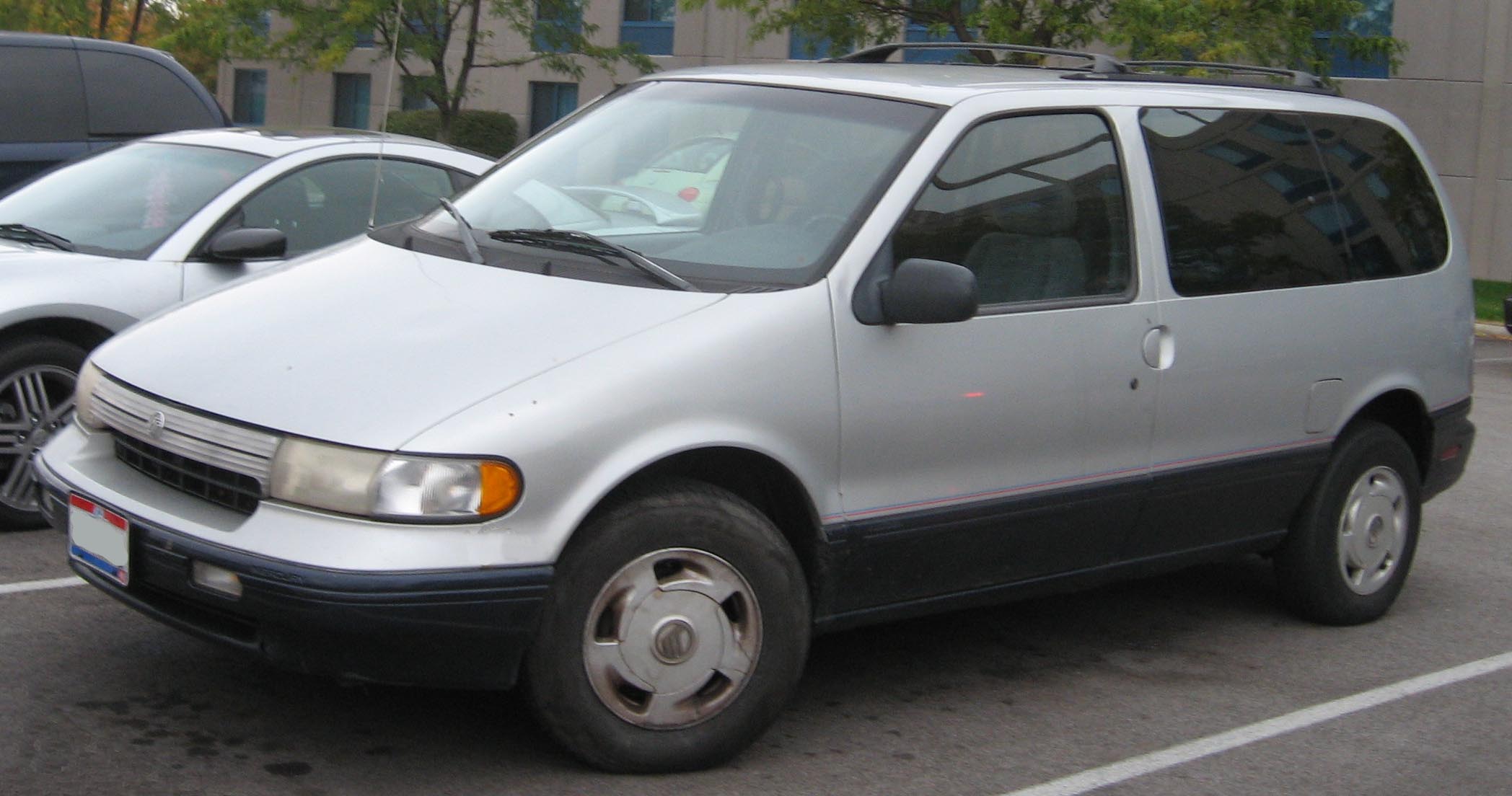
The Mercury Villager is a minivan, which is a type of car made to carry people and family gear. It’s generally used for trips, errands, and transporting a group. In your excerpt, it’s mentioned as part of a story rather than for its technical details.
Recurring revenue is money that keeps coming in regularly. Here, they’re talking about making money from ongoing autonomous rides, not just selling cars once.
A “cautious rollout” is a phased deployment strategy—expanding capability gradually while closely monitoring safety and performance. For autonomy, this often means limiting geography, driver supervision requirements, and operating conditions before broader expansion.
They’re talking about safety reporting—what counts as an “injury” in their data. The hosts are concerned that “no injuries” might still mean small injuries, depending on how Tesla defines the term.
NHTSA is a U.S. government agency that tracks vehicle safety issues. When someone references NHTSA here, they’re talking about an official way to define and report crashes.
Some places are harder for self-driving cars than others—like intersections where drivers often crash or where the road markings are unclear. The software has to handle those tricky situations reliably.
Instead of turning it on for everyone immediately, the company may release it in steps. That way they can watch how it behaves and fix issues before it’s widely used.
Even if the software is good, it can behave differently depending on where you are. The company is saying it may only turn on self-driving in places that have been proven to work safely.
The claim is that self-driving might roll out to robot-taxi services before it’s allowed in regular people’s cars. That’s often because taxis can be run under tighter rules and monitoring.
Memory bandwidth is basically how fast the car’s computer can read and write data. If it’s too slow, the self-driving AI can’t process everything quickly enough for the hardest driving tasks.
A trade-in is when you get a discount by turning in your current car (or current setup) toward an upgrade. Tesla is describing a deal for owners whose cars have the older self-driving computer.
Tesla is saying this won’t just be a software download. They plan to physically replace the car’s self-driving computer so it can run the newer FSD version.
Tesla is saying you may need new cameras too, not just a new computer. The cameras have to work with the newer self-driving system to get the full features.
Tesla is describing a plan to do upgrades in smaller local production-style setups. They’re saying doing it only at regular service centers would be slow and inefficient.
A robot taxi fleet is a group of self-driving cars used for ride-hailing. The speaker is saying the car needs the newer computer (hardware 4) to be able to do that without a driver.
Term
V14
“V14” is a specific version of Tesla’s self-driving software. Tesla says hardware 3 cars will get a simplified (“distilled”) version of the same V14 software so they can still use many of the features.
“Distilled” means Tesla is making a lighter, more efficient version of the software. It’s tailored to run on the older computer (hardware 3) without needing the full power of hardware 4.
Term
Park State
This is about how you start the self-driving feature. Tesla is saying you should be able to initiate it from a normal parked state.
Concept
free hardware upgrades vs refunds vs replacing the car
If Tesla changes what computer parts are needed for the best features, they have a few options: upgrade your car for free, give you your money back, or ask you to buy a newer car. The segment highlights that doing hardware swaps can be costly and slow.
This is the idea that a car could drive on its own without a person constantly monitoring it. The claim is that the system could be safer than humans, which is why it’s a big deal for future vehicle capability.
Even if a computer system works today, older hardware eventually becomes limiting. The idea here is that they’ll need to upgrade the AI hardware because it won’t stay efficient or supported forever.
An SOC is like a computer-in-a-chip, where several key parts are built together. When they say “per SOC,” they mean each of those chip units gets more memory.
AI4.1 sounds like a small step-up version of the AI4 computer system. It’s not necessarily a brand-new platform—more like an upgrade that improves speed and memory.
LIVE
Check engine, ABS or maintenance light on, take the guesswork out of your warning lights
with O'Reilly Veriscan.
The service is free and provides a report with solutions verified by ASE certified master
technicians.
And if you need help, we could recommend a shop for you.
Ask for O'Reilly Veriscan today.
O'Reilly Auto Parts
Insurance isn't one size fits all.
That's why drivers have enjoyed Progressive's name your price tool for years now.
With the name your price tool, you tell them what you want to pay, and they'll show you
options that fit your budget.
So whether you're picking out your first policy, or just looking for something that
works better for you and your family.
They make it easy to see your options.
Visit Progressive.com.
Find a rate that works for you with the Name Your Price tool.
Progressive Casualty Insurance Company and Affiliates
price and coverage match limited by state law.
Dear crew, it's Toyota.
With an adult-sized third row,
everyone's welcome in the Grand Highlander.
From sports fans to eco buffs and movie fans.
Seen back in the Sienna with an available rear seat
entertainment system.
Slip into the RAV4 with available all-wheel drive.
And let's go.
Toyota, find yours at Toyota.com.
Toyota, let's go places.
Unfortunately, Hardware 3, I wish it were otherwise,
but Hardware 3 simply does not have the capability
to achieve unsupervised FSD.
Toyota, let's go places.
Good afternoon, everyone, and welcome to Tesla's
first quarter 2026 Q&A webcast.
My name is Travis Axelrod.
Head of Investor Relations.
And I'm joined today by Elon Musk, Vibhav Taneja,
and a number of other executives.
Our Q1 results were announced at about 3 p.m.
central time in the update deck we published
at the same link as this webcast.
During this call, we will discuss our business outlook
and make forward-looking statements.
These comments are based on our predictions
and expectations as of today.
Actual events or results could differ materially
due to a number of risks and uncertainties,
including those mentioned in our most recent
filings with the SEC.
Hello, everyone, and welcome to
the Kilowata podcast about electric vehicles,
renewable energy, autonomous driving,
and much, much more.
My name is Bode, and I am your host,
and today we've got the much, much more.
Today we're going to talk Tesla's Q1
2026 earnings call.
We have interesting details, as you heard.
Elon admitted that Hardware 3
is not going to work.
He was kind of leaning that way for a while.
I don't know that this is a big revelation,
like people are making it out to be,
but we'll get into that when we get to that part of the
earnings call.
I have listened to this earnings call all the way through,
so I think I have a pretty good idea
of how it went, and in my mind,
it was a very kind of subdued earnings call.
There wasn't a lot in this that was like,
light your hair on fire news.
There was a lot of like,
there's a lot of like, this is the best product ever type stuff,
but I don't know, I'm going to try to,
I'll include some of that, but I'm going to try to,
you know, just include the nutritious part of that.
Another thing is Vivhev, who is the CFO,
his CFO opening remarks tend to sound like commercials.
So while the first part of his opening remarks were commercial-like,
I'm not sure I'm going to use any of the second part of his opening remarks,
but we'll see, we'll see.
When I listen to it again, maybe I'll change my mind on that.
But let's go ahead and start off with Elon's opening remarks.
I think we've got a very exciting year ahead of us with 2026.
We're going to be substantially increasing our investments in the future,
so you should expect to see a very significant increase in capital expenditures,
but I think well justified for a substantially increased future revenue stream.
And obviously, Tesla's not alone in this.
I think you've seen in most, if not all,
certainly the major technology companies substantially increasing their capital investments.
And we're going to be doing the same.
I think it's going to pay off in a very big way.
So we're investing in and improving our core technologies, battery powertrain,
AI software, AI training, chip design, manufacturing,
laying the groundwork for significantly increased manufacturing production.
We're also strengthening our supply chain across the board, batteries, energy,
AI silicon, everything.
And laying the groundwork, like I said,
for what we expect to be a significant increase in vehicle production in the future,
and of course, a very significant increase,
well, actually releasing Optimus,
but increasing our internal production for testing,
and then probably being able to have Optimus be useful outside of Tesla sometime next year.
As you've heard me say a few times,
I think Optimus will be our biggest product,
not just Tesla's biggest product ever,
but probably the biggest product ever.
And I remain convinced of that conclusion.
So on the optical side, it's always, I think,
worth noting that Tesla car is incredibly, incredible value for money,
and they're all autonomy ready, depending on what part of the world you're in.
The supervised full self-driving is getting extremely good.
We have just started production of CyberCab,
and we'll begin production of our semi-truck soon.
Now I should say whenever you have a new product
with a completely new supply chain, new everything,
it's always a stretched out S-curve,
so you should expect that initial production of CyberCab and semi will be very slow,
but then ramping up and going kind of exponential towards the end of the year and totally next year.
And in fact, we'll be ramping up production of all vehicles and all factories
to the best of our ability through the balance of this year.
On the energy front, the United States and the whole world
will need a lot of energy storage to meet growing electricity demand.
Demand for our megapack is very strong,
and we're excited to begin production of megapack 3 later this year
in our new world-class factory outside Houston.
For full self-driving in RoboTaxi,
version 14.3 was a major architectural update,
and we have a whole pipeline of major improvements to full self-driving
that we believe will lead to unsupervised full self-driving
being available anywhere in the world that it is legal to do so.
And then there's a version 15, hopefully by the end of this year,
but certainly by early next year,
and that will be a complete overhaul of the software architecture,
and we'll run on AIFO.
At that point, we're really just increasing the safety level
of FSD above human safety level even more,
meaning I think even within version 14,
we're significantly safer than human,
but B15 will take that to another level.
Okay, lots of investments in 2026,
and Vivev talks about this quite a bit.
So like I said, maybe I'll include some of that,
but significant capital expenditures.
You know what?
I mean, Tesla's working on a lot of stuff that makes sense.
You know, powertrain, AI, chip design,
I'm guessing that's where most of the money's going,
you know, into their big fab that they're building.
So yeah, I mean the silicon and the whole bit,
you know, there's a lot going into that, what they're doing.
Optimus out this year, be useful outside of Tesla sometime next year.
I mean, maybe, you know,
he said that Optimus was going to be Tesla's biggest product ever,
which, you know, he's also said that about Tesla AI.
He said that about Tesla Energy.
He has said that about a lot of different products
that Tesla has produced.
Cybertruck was going to be a huge hit,
and it's not to say that he's lying or anything like that.
It's just, you know, will companies want to purchase a robot from Tesla
knowing that the information that's fed into that robot on the manufacturing line
is going back to Tesla, a company that manufactures a wide variety of products.
I don't know.
I mean, that's a decision that those companies have to make.
Is it worth saving the few dollars that you spend on people
to potentially unwittingly send data back to the company
that you're buying the robots from who might at some point in time compete with you?
Now, if they're building, you know, toy trucks,
I don't think Tesla's going to be competing with you on that level,
but I'm just saying, like, there are some things out there that are kind of sensitive.
So we'll see where this goes.
And based on how Tesla has handled their data,
I mean, when Optimus first came out, it was all for this.
Recent revelations about how they've handled their data
and, you know, spreading videos around from the FSD cameras internally between teams,
I wouldn't have one of these.
I don't have cameras in my house.
I wouldn't have an Optimus in my house based on that.
Now, is that unique to Tesla?
No.
That could happen anywhere.
So I would have to really rethink what I'd have to...
I would like somebody to do my vacuuming.
Maybe when I'm like 80 years old and I need somebody to help me with different things,
that will be an easier sell for me.
But right now, like I have young kids and I have a wife and stuff like that.
I don't want videos of them being passed around Tesla headquarters,
or any headquarters for that matter.
I do agree that Tesla is a huge value for the money.
He talked about every car being autonomy ready.
Maybe.
Maybe AI4.
We'll talk about that with Hardware 3.
But yeah, maybe it's autonomy ready.
I don't know.
I'm not putting a lot of...
I don't put a lot of stock in that statement because I've heard it twice before with Hardware 2 and Hardware 3.
Megapack version 3 is coming out.
That's great.
Version 15.
I've kind of already talked about Tesla's versions for the FSD.
14.3 comes out.
That's supposed to make this huge improvement.
And 15 is now the new target of what's going to be amazing and fix all the problems.
I just think we're...
Let's appreciate what we have right now and not worry about what's coming down the line.
Again, and I've said this plenty of times.
Let's go ahead and jump into our next Elon clip.
We've expanded Rover Taxi to Dallas and Houston using the same software source in the Bay Area.
And the limiting factor for expansion is really rigorous validation, making sure things are completely safe.
We don't want to have a single accident or injury with the expansion of Rover Taxi.
And we have, to the credit of the team, not had a single one to date.
Now we know that they've had at least 18 accidents and a few of those have been injuries.
So I don't know quite what he means here.
He is on an earnings call, so he cannot lie without having some sort of legal repercussion.
But they have had accidents with injuries.
And this is something that somebody else on the team repeats as well.
So I'm a little confused.
I'm not saying they're lying.
I'm saying I'll have to do a little bit more research and see what exactly they're talking about.
Because if they're saying they haven't had any accidents or any injuries, that's simply untrue.
So we'll keep an eye on this and see where it goes.
Let's continue on with the call.
Thomas, we're preparing Fremont for starter production later this year with Optimus.
Again, totally new supply chain, totally new technology.
So therefore, the production at Escove is always very slow in the beginning.
But we'll ramp up to significant numbers next year.
And we're constructing a second Optimus factory at our gigatexus location.
And that will probably start production around summer next year.
The V3 Optimus design is almost ready to demonstrate.
I think we want to just make sure it's polished.
It works functionally, but there's some aesthetic elements that need to be finalized.
And I think probably middle of this year, we should be able to show it off.
We're also a little hesitant to show V3 off because we find our competitors do a frame-by-frame analysis whenever we release something
and copy everything they possibly can.
So I think there's some value to not showing new technology until it's close to production.
I think there's value in not talking about technology until it's nearly fully baked.
One of the cool things is that Tesla used to have this very transparent way of doing things
because Elon was just unable to not talk about stuff and he's gotten more disciplined over the years.
But early on, he was just like, he would just talk about whatever.
And while that was fun, now we're kind of at a point where talking about future products
or talking about current products and what they're going to be in what he calls next year, next month, next whatever.
But they don't end up that way.
And I feel like I'm just beating this to death.
But yeah, don't talk about it.
On the other side, when he says that people, competitors are taking frame-by-frame analysis of Optimus,
you're only seeing the outside of the Optimus.
You're not seeing the insides.
You're not seeing the programming.
You're not seeing the hard parts.
You're seeing the outside.
Like, I would imagine that robotics engineers probably already have a good idea of what Tesla's doing.
One, because they're robotics engineers and they're not dumb.
But two, they're probably working on similar things.
And they're probably in similar places.
And yes, we don't want to give a bunch of information to our competitors.
But on the other side, showing off Optimus 3, walk from one place to another,
you don't think that's enough to tilt the scale one way or the other when it comes to a company that's working on similar products.
Let's say there's a company that's 80% along on this one problem.
And they frame-by-frame one of Tesla's videos, one of their Optimus robots hanging out serving drinks to people.
They frame-by-frame that video.
And they were like, oh, we're doing it all wrong.
We're going to scrap 80% of the work we've done.
No, they might rethink something if they kind of get an idea.
But really, I don't think any of this stuff is something they haven't already thought of.
It's like Tesla has their way of doing things and these other companies have their way of doing things.
I just don't know, unless they're starting from scratch, I don't know what the value is in completely ripping up what you've done
because you saw three frames of the Optimus robot.
Now, if you've got a whole of an Optimus robot and you are able to completely rip it apart,
yeah, I totally get that.
But if we show it off, they're going to steal from us.
I don't think there's enough information there to steal that they don't already know.
Visit progressive.com after this episode to see if you could save.
Progressive Casualty Insurance Company and Affiliates.
Potential savings will vary, not available in all states.
All right, let's continue on with the earnings call.
Congratulations again to the Tesla AI chip team for taping out AI5.
That's going to be a great chip.
I think probably the best AI inference chip for edge compute that exists.
I think unequivocally the best value for money.
The team did a great job and we already have a lot of momentum for designing AI6
and we've begun to discuss ideas for Dojo 3.
So this is all very exciting.
We've also finalized plans for the research chip fab on the Gigatexus campus
and we'll start construction of that this year.
In conclusion, Tesla is working on a lot of large ambitious projects.
They're all very challenging, but I think they're going to be revolutionary.
This is what the team does best, solve the hardest problems and build amazing products.
I'd like to thank the Tesla team for all the hard work and thank you to all of our supporters.
All right, I don't have any more to add.
I mean, I'm sure you could imagine what I'm thinking with that, but that's a nice update
and I'll just leave that as it is.
Next up, we're either going to get a few clips from Vibhav's opening remarks.
I'll re-listen to it again.
If I still think there's nothing worth talking about or listening to,
then I'll go ahead and move on to our retail investor questions.
So let's go ahead and listen to our next clip.
On the FSD adoption front, we continue to see improvement, reaching nearly 1.3 million paid customers globally.
The bulk of the growth came from subscriptions, while upfront purchases only increased 7%
as we removed the purchase option in some markets in Q1.
We recently received approvals for FSD in Netherlands.
This sets us up well for an EU-wide approval later in Q2,
and we're just gated by how the regulators go about it.
Additionally, we've also received approvals in China.
The broader approval is still not there, but we're working with the regulators in the country
and we're hoping that we can get approval by Q3.
With these approvals coming through, we expect the broader adoption of the software
in the existing fleet and incremental demand for our vehicles.
With all this in mind, we have evolved our vehicle sales strategy,
where we now emphasize FSD as a product and vehicle as only the delivery mechanism.
As we have noted previously, the energy storage business is inherently lumpy,
tied to customer deployment timelines.
In Q1, we deployed 6 8.8 GW of energy storage, a 38% sequential decline.
However, we still expect 2026 deployments to be higher than 2025.
We set yet another record with gross margins in this business over 39.5%
due to some onetime benefits from certain tariff recognitions
of more than 250 million from certain tariffs which we've paid in prior quarters.
On a normalized basis, we continue to expect energy compression from here
with increasing competition and tariff impacts.
As previously discussed, tariffs in this business can have outsize impacts
as most of the battery cells are procured from China.
Alright, so he goes on a little bit more to talk about tariffs and all that stuff.
They haven't, as far as I know, they haven't applied.
Sounds like they haven't applied to get their refunds on tariffs yet.
When it comes to, let's see, 1.3 million paid FSD customers worldwide,
that obviously includes China and Europe and all that stuff.
I would like to know how many subscribers they gained in 2026 and Q1 in 2026.
And the paid customers, you know, that wasn't very many, 7% is what he said.
So that's, you know, I would like to know how many they picked up,
how many subscribers they picked up in Q1 2023 and what their churn is.
Like when people decide to stop using it.
But I mean, I didn't think we'd be getting these numbers, so that's a positive,
but I doubt we'll get the churn anytime soon.
Tesla, we talked about when Elon said that they're going to do investments,
big cap X investments.
Vivev said that that's going to be $25 billion in 2026.
That is not so big investments in 2026.
All right, let's move on to our retail investor questions.
Now we're going to go to investor questions, starting with a question from say.com.
The first question is, when will we have the Optimus 3 reveal, which we already touched on?
But the rest of the question is, when will Optimus production start
since we ended the Model X and S production earlier this mid-year?
And then what's the expected Optimus production rate exiting this year
and what are the initial targeted skills?
Well, as I was saying, what we found is that when we unveiled various Optimus versions,
we found out how competitors literally do a frame by frame analysis
and copy everything we're doing.
So I think we want to push the Optimus 3 unveil maybe closer to production.
Start of production is, we're assuming is somewhere around the late July, August time frame.
And I mean, just to inject some reality into these questions,
since these questions are not, you know,
the square root of this question does not fully understand what happens with the production line.
The last SX production will be in early May,
but you have to look at the entire upstream portion of the production line.
So you start with sales, battery packs, motor production, all the parts production.
And so we've been dismantling the SX production line from the more basic level parts
as you get to larger sub-assemblies.
You start dismantling the line from the small parts first, not from the final assembly first.
So the final assembly line will be dismantled next month
after the last of the SX vehicles done.
Now you can't dismantle some gigantic production line overnight.
It takes at least a few months to do so.
And then you've got to install a new production line
and you've got to provide all of the wiring and communication,
test out the machines of the new production line for Optimus.
So that also takes several months.
So frankly, if we're able to go from stuffing production on one line,
dismantling that entire line, reinstalling a whole new line,
and turning that on in a matter of four months,
that is an insanely fast speed.
I don't think any other company on Earth has ever done that before,
just to put things into perspective and inject some reality into the situation here.
I don't know what the production rate of Optimus will be this year.
It is impossible to predict these things.
When you have a brand new product in an entirely new production line
and you have 10,000 unique items, all of which have to go right to ramp production,
it will move as fast as the least lucky, slowest, dumbest part in the entire 10,000.
Optimus is a completely new product with a completely new production line.
It's just literally impossible to predict,
except that I think it will be quite slow for us,
as we iron out the 10,000 plus unique items that have to be sold for Optimus to reach fine production.
Initial skills will be, obviously, we're going to start with simple skills in the factory
and then build up from there.
I don't think this was a very kind response to the person that asked that question.
Elon said in the beginning, something about this person knows nothing about assembly lines or something to that effect.
He also made mention that these things are, I want to inject a little bit of reality into this.
What was the other thing that he said?
I can't predict how many, it's impossible to predict how many products we'll build this year.
It's not, but also, it's probably not going to be very many,
and I think Tesla could be forgiven for it not being very many,
because they are building a brand new product,
but I just really feel like the way that he explained this was condescending and kind of jerky.
Maybe he's just trying to be really thorough, I don't know,
but I didn't like the way he did it.
Let's just inject some reality into this, just very irritating to me.
Also, and again, the prediction, he predicts all the time, all the time.
He has no problem throwing numbers out that don't end up becoming true.
He's going to do with this earnings call.
He's the one that sets the expectations.
He's done this before, which is why people are asking.
There's where I have the problem.
Don't get irritated, because you created the monster,
so don't get mad when it goes into the village and wrecks all the villagers' homes,
because you're the one that created the monster.
Alright, let's go on to our next question.
The next question is,
what milestones are you targeting for unsupervised FSD and RoboTaxi expansion
beyond Austin this year, and how will that drive recurring revenue?
Well, we certainly hope to have unsupervised FSD or slash RoboTaxi operating,
and I don't know, it does nor so states by the end of this year.
Initially, we're taking a very cautious approach to the rollout here.
We haven't had any injuries and certainly no fatalities to date
with the unsupervised FSD and RoboTaxi expansion.
We want to keep it that way.
I think probably unsupervised FSD or RoboTaxi revenue will not be supermaterial this year,
but I do think it will be material probably in a significant way next year.
Okay, so he said again, no injuries.
I don't know what they're qualifying as an injury,
because it clearly states they're minor injuries.
Now, I don't think if they're minor injuries, we should be making that big of a deal about it,
but if you're saying no injuries, an injury could be something like a stiff neck
when you get into an accident or it could be a little tissue damage
when the seatbelt yanks against your chest or around your abdomen.
I would really like to know what they qualify as an injury,
because I think that might clear it up for me a little better and what they qualify as an accident.
I would say anything that you had to report to the National Highway Traffic Safety Administration,
I would qualify that as an accident or an injury, but who am I?
Alright, let's move on to the next question, which is about unsupervised full self-driving
and when will normal people get it in their cars?
The next question is, when do you expect FSD unsupervised to reach customer cars?
I'm just guessing here, probably in the fourth quarter.
It's simple to release this to everyone, everywhere or at once,
because we do want to make sure that there are not unique situations in a city that particularly complex intersection
or actually, there tend to be places where people get into accidents a lot,
because there's an unsafe intersection or bad road markings or a lot of weather challenges.
I think we would release unsupervised gradually to the customer fleet,
as we feel like a particular geography is confirmed to be safe.
So, yes, where people tend to get into accidents is where the robot taxis get into accidents.
There, he says that the cars get into accidents.
This is where my problem is.
I really need to know what exactly he means by no injuries, no accidents, but yet there's accidents.
Anyway, that does make sense, because that's where we most tend to get into accidents the most.
Unsupervised FSD for regular people in the fourth quarter, I believe is highly unlikely.
And where unsupervised for regular people, full self-driving, when it will come out,
I would be very, I'd be willing to bet a coffee, and I can't go one to many,
but I'll bet one person a coffee that it's going to get rolled out where robot taxis approved first,
because that's a less of a lift for them to get that approved versus a state or area
where they won't even allow robot taxi, where are they going to have full self-driving cars,
unsupervised full self-driving cars.
So, yeah, that's my guess.
All right, here comes the big question.
Let's go ahead and listen to that.
The next question is, how will hardware 3 cars reach unsupervised FSD?
Unfortunately, hardware 3, I wish it were otherwise, but hardware 3 simply does not have the capability to achieve unsupervised FSD.
We did think at one point it would have that, but relative to hardware 4,
it has only one eighth of the memory bandwidth of hardware 4,
and memory bandwidth is one of the key elements needed for unsupervised FSD.
It's just generally a thing that's needed for AI,
if you're doing an order aggressive transformer memory bandwidth, that's the true point.
So, for customers that have bought FSD,
what we're offering is essentially a trade-in, like a discounted trade-in for cars that have AI4 hardware.
And we'll also be offering the ability to upgrade the car to replace the computer,
and you also need to replace the cameras, unfortunately, to go to hardware 4.
So, to do this efficiently, we're going to have to set up kind of micro factories or small factories
in major metropolitan areas in order to do it efficiently,
because if it's done just at the service center, it is extremely slow to do so and inefficient,
so we basically need many production lines to make the change.
And I do think over time it's going to make sense for us to convert all hardware 3 cars to hardware 4,
because that's what enables them to enter the robot taxi fleet and have unsupervised FSD.
And for what it's worth, in the meantime, we're going to also release a V14 version for hardware 3.
This will be a distilled version of the same V14 software that we release for hardware 4,
and people should be able to start the drive from Park State
and basically have all the features that V14 for hardware 4 has.
And that's expected to come end of June.
Maybe it'll have all the features that V14 hardware 4 has.
I mean, maybe V14 without the 0.3 or the 0.2.
I don't know.
We'll see if it comes out in June.
For folks who have hardware 3 vehicles, how does that make you feel?
Obviously, it would be great if you could take your car, especially if you purchased it in 2019.
You could take your car and have it, the hardware updated for free.
I guess I should say people with FSD hardware 3 vehicles, like if you paid for FSD, how does that make you feel?
I mean, that sounds cool.
I really think Tesla's going to look at that and they're going to have to see,
because this is not going to be a cheap fix for them,
is it make more sense to just give people their money back and say,
see you later or try to get them into a newer car.
Then it does to replace the hardware 3 vehicles with hardware 4,
with the actual components.
If you have to set up your own factory, if you can't do this at a service center,
because it'll be too slow, that seems like it's going to cost a little bit of money to get it all set up and stuff.
That seems like it's going to be harder than what some people might expect,
harder than what I thought, because I thought they were just going to replace the computer,
I didn't think they were going to replace the camera.
It remains to be seen once they crunch all the numbers out and actually get ready to roll out the change into hardware 4,
whether or not Tesla thinks the juice is worth the squeeze and they just don't give you your money back.
Alright, let's go ahead and move to our next question.
Great, thank you very much.
The next question is, what enabled you to finish the AI5 tape out early,
and were there any changes to the original vision?
Last week Elon said AI5 will go into Optimus and the Supercomputer,
but one month ago said it would go into the RoboTaxi.
Has AI5 been dropped from the vehicle roadmap?
Well, the reason AI5 tape out finished early was because the team worked incredibly hard to make it happen,
and just over time we gathered a lot of momentum,
but we did have to work every weekend for six months straight, including every holiday,
so it was a lot of sacrifice by the team and I was there, of course, myself every weekend.
Fortunately, we didn't encounter any major mistakes that we're aware of that required pushing out the tape out,
so the team just did a great job and worked incredibly hard is the reason.
I do expect that AI5 will go into Optimus and into the data center,
because it's looking like we'll be able to achieve unsupervised self-driving with AI4
that is far greater than human safety levels.
Which means it's not immediately needed in the car.
At some point I think it will make sense for us to switch to AI5 in the car,
but there's not a pressing issue to do so.
At some point the AI4 hardware is going to get so old that it's like,
the only reason they keep in the factory open is for AI4.
We are planning an AI4 upgrade to use a newer generation RAM,
so it'll go from 16 gigabytes to I think 32 gigabytes per SOC, so a total of 64 gigabytes,
and probably a 10% increase in compute and trillions of operations per second and in memory bandwidth.
So that's AI4.1, AI4 plus probably goes into production in the next year I think.
It depends on Samsung's doing the modifications for us,
so it sort of depends on when they're able to finish those modifications and bring it to production.
It was my understanding, sometime last year Elon had tried to talk a little bit about the AI platform,
like AI5, AI6 and what the rollout would be, and the way he made it sound like they were going to be coming out yearly,
and it might even be sooner than a year or sooner than 12 months in some cases.
And at that time I was like, that's weird because you don't spend billions of dollars developing something to make it obsolete in eight months.
Like you want to get as much money out of that product as you can.
So it sounds like that's what they're going to do.
Putting AI5 in Optimus, okay, I mean, that's great, I think that's cool.
I would not be surprised if they don't go, you know, once AI4 has run its course,
I would not be surprised if we don't get AI6 in the cars and we just skip AI5 in the cars altogether.
I might be wrong on that, but if that's kind of how they're doing things,
and they think, if this all is predicated on them actually,
hardware for AI4 actually being able to have as long of a life as he's saying it will have here with the new update to AI4,
the new hardware update to it, and if that's the case, you know, when AI6 is ready,
why wouldn't you put it in the car and just skip AI5 altogether if it's going into Optimus?
And I'm sure there's lots of things that Optimus can do and AI5 sounds like a promising chip,
but maybe that's a purpose-built chip for robots and not so much for cars.
Insurance isn't one size fits all.
That's why drivers have enjoyed Progressive's Name Your Price tool for years now.
With the Name Your Price tool, you tell them what you want to pay and they'll show you options that fit your budget.
So whether you're picking out your first policy or just looking for something that works better for you and your family,
they make it easy to see your options.
Visit Progressive.com.
Find a rate that works for you with the Name Your Price tool.
Progressive Casualty Insurance Company and Affiliates price and coverage match limited by state law.
And movie fans, sync back in the Sienna with an available rear seat entertainment system.
Slip into the RAV4 with available all-wheel drive and let's go.
Toyota, find yours at Toyota.com.
Toyota, let's go places.
Alright, let's go ahead and go on to our next question.
The next question is, given the recent NHTSA incident filings, can you update us on the RoboTaxi safety data?
If safety validation remains the primary bottleneck, why not deploy thousands of vehicles to accelerate removal of the safety driver?
Shark, do you want to take that?
Yeah, we are increasing the amount of our QA fleet but we also want to use the customer fleet to give us the useful metrics back so that we can scale it safely.
Like you don't mention, we are absolutely focused on safety and so far we have zero incidents and that's what the NHTSA filing also shows.
In addition to safety, we are also solving some of these so-called scaling issues.
For example, you do not want the RoboTaxi to be stuck blocking intersections or don't want to be dropping people off at slightly incorrect locations and so on.
We are simultaneously solving the long tail of safety by monitoring the metrics across the entire Tesla customer vehicle fleet which is close to driving 10 billion miles on FSD in the next few weeks
and also scaling up the amount of QA fleet that we have across the entire US to accelerate our safety validation while also scaling the rest of the factors that can throttle the increase of unsuppressed vehicles.
Huh, I mean again he says there's no incidents but there's been at least 18 incidents.
I don't know why this is bothering me but not a Tesla app which is a fairly apologetic but they put Tesla in a positive light in most of the articles.
And by the way, I love not a Tesla app.
They do a great job but they report 18 accidents based on NHTSA and two transports to the hospital.
Like we talked about this the other day, I genuinely don't know what they mean when they say there's not been any incidents and then they refer back to the National Highway Traffic Safety Administration.
There are accidents, they're minor but man, where's, I don't know why we're, I don't know where this information is coming from.
On the other side I do think there's a little bit of cover going on with it's like well we don't need more robo taxis out in the field simply because you know we have data from you driving your car around and we use that to kind of augment.
And maybe they do use it to augment but also you've had people drive it around with FSD for a really long time now and you know it's still not perfect as you know as we've heard and it still needs work and it still needs like I just don't understand this at all.
By the way I also don't understand the person who asked the questions like why not just add more to the fleet.
I don't know that that's the right solution either so just FYI I think this is a problematic question but I also think it's a problematic answer.
Alright moving on to our next question.
Alright the next question is, is V14.3 still the last piece of the puzzle to enable large scale unsupervised FSD and robo taxi or do we have to wait until V15?
Well I think 14.3 is the last piece of the puzzle for unsupervised FSD.
Alright now the question is like degrees of safety like how, safety and convenience I suppose.
We have a lot of known improvements like major architectural improvements that we know would improve the probability of safety significantly.
So I think it's not going to make sense for us to deploy unsupervised FSD or robo taxi at large scale when we know that there are major architectural improvements to the software that can improve safety.
So I think we're going to want to finish writing that software, validate it and release it before going to large scale unsupervised FSD depending on what large scale means.
I mean we are of course, as I mentioned earlier, doing unsupervised FSD in three cities and will expand to like I said probably a dozen states or more later this year.
So it kind of depends on where your definition of large scale is.
But I do think it wouldn't be right for us to go to very large scale unsupervised FSD when we know that there are software improvements in the pipeline that would improve safety.
Yep and I'd like to note that the version of robo taxi that's running in Austin, Dallas, Houston etc. those are essentially 14.3 variants.
And it's obviously safe that that's why we're able to launch in those cities and we continue to expand based on the V14.3 base for a while until V15 lands and V15 is going to be a major upgrade.
Alright, I think I've beat that to death. I'm not going to cover it again. Let's go ahead and go to our next question.
Considering the various parties involved in the TerraFab project, I'm hoping you can provide some details for investors about which party is going to take responsibility for each aspect of that project, funding it, designing it, building it, operating, taking production and the like.
We'd love to hear some more details.
Yeah, so we're still working out the details of the TerraFab deployment.
In the near term, Tesla will be building the research fab on our gigatexus campus.
This is something we expect to be probably a $3 billion-ish initiative and capable of maybe a few thousand WAFAs per month.
But it's really intended to try out ideas, the research fab, both in terms of maybe we have some ideas for improving the fundamental technology of how chips are made and some new physics we'd like to test out.
But we also want to test out the ability to see if something is working in production.
So you need kind of like a few thousand WAFAs per month to make sure that a production process is sound.
And then SpaceX is going to take care of the initial phase of the scaled-up TerraFab.
And that's what we've figured out thus far.
Any kind of intra-company thing has to be approved by both the SpaceX and Tesla board of directors.
It's got to go through a conflict resolution.
It's kind of unfortunately a lot of complexity because we've got to make sure Tesla shareholders are served and SpaceX shareholders are served and strike the right balance there.
So it takes a while to work through the kind of independent director reviews on this.
So that's basically what we've figured out thus far is Tesla is doing the research fab, SpaceX is doing the initial part of the large-scale TerraFab, and then we've got to figure out the rest.
And what about Intel's involvement?
Yeah, so Intel is excited to partner with us on some of the core manufacturing technologies.
So we plan to use Intel's 14A process, which is state-of-the-art and in fact not yet totally complete.
But given that by the time TerraFab scales up, 14A will be probably fairly mature or ready for prime time.
So I don't have a lot to add to this.
Daily Tech News Show had, and I'll have to look.
Oh, I was on the Daily Tech News Show today, by the way.
I wasn't talking about this, I was talking about CATL's new battery.
But anyway, I'll try and remember to find the shows where they talk about this.
If you want more information on it, they do a better job that I can do talking about this topic.
Alright, let's go ahead and move on to our next one.
I recognize the importance of FST and that FST can help to drive vehicle sales
and nice to see some of the improvements in the FST technology more recently with version 14.
However, I'm also hoping to understand if the company's view on new vehicle models has evolved.
And I ask, given that Elon, you posted on X recently that Tesla could develop a family vehicle.
There's also been some past discussion about a compact vehicle.
Well, I mean, Cybercap is a compact vehicle.
I mean, it's very roomy, but it's a two-person vehicle.
And we do think probably most of our production long-term will be Cybercap
because 90% of miles driven are with two or one or two people.
So it would mean that, you know, you'd want a vast majority of your production to be Cybercap.
Then over time, it's going to make sense for our whole lineup to be autonomous vehicles of different sizes.
And I did talk a bit about this when we did the kind of AI day and LA at Warner Brothers
and showed like this is our current lineup and this is what, you know,
some idea of what our future lineup will be, which is that it's going to be almost entirely autonomous.
In fact, long-term, the only manually driven car will be the New York Tesla Roadster.
Speaking of which, we may be able to debut that in a month or so.
It requires a lot of testing and validation before we can actually have a demo
and not, you know, have something go wrong with the demo.
But I think it will be one of the most exciting product unveils ever.
I don't think it moves the needle massively from a revenue standpoint, but it is very cool.
I think it might be one of the most spectacular demos ever.
Okay, let's start with the last thing first.
We were promised a demo in December. We've been promised demos before,
but we were promised a demo in December coincidentally enough right before people were set to vote on Elon's pay package.
And then that demo got kicked down the road and then it got kicked down the road.
And now it's kicked down the road again.
I do not expect to see this in a month.
I just don't. We'll see.
Then on the other side of things, you know, this is kind of a thing that I was talking about before
with Elon, Bill, Elon created this monster.
Like he says things like, you know, the family mover or the, the minivan type of thing.
And then he says, yeah, but then, you know, everybody's going to want to be driving full self-driving
and you don't even need a car.
And then, you know, Tesla was the one Tesla was the company that came out
and had a whole big production about how we had this affordable compact car that more people can afford.
And now that's the cybercap.
I'm going to be honest with you.
If the cybercap only has two seats, not very many people are going to buy it.
And, and the people who are going to buy it are probably going to be the people who can put it on the robot taxi.
If that ever becomes an actual thing that they can do.
And honestly, the people who buy it will be the people who think they can put it on the robot taxi.
And maybe they never will be able to put it on the, on the robot taxi network.
Well, that remains to be seen.
But Elon says these things, people respond to them.
And then this is like, well, honestly, you know, you only need to, there's only usually two people in the car.
That's probably true.
But there are occasions when you want to take a third person.
And if you're the person that has a car, and what are you going to do?
I mean, I guess in that point, you're going to take an Uber.
But if you want to take a road trip or whatever, it doesn't cause that much extra to put an extra two seats in the back or a bench seat in the back.
Like, I don't, I don't know.
I think this is an out of touch.
I think that kind of thought process is out of touch.
I'll just leave it at that.
Let's move to our next question.
You moved the safety driver in Austin and you're now expanding into Allison Houston.
What are the key safety metrics that you're tracking that gives you confidence that Robo taxi is safe enough to expand?
Is it sort of miles per intervention, miles per accident, per fatality?
And where do you stand on that now?
Yeah, we track basically all the metrics that you mentioned.
We have a pretty large QA fleet spread across all of the United States.
And then we, you know, look at any intervention that could happen and then sort of simulate both in practice and also in our simulators that are very, very good nowadays.
Using neural networks as what would have happened.
And then based on all these analysis in the end make the call to expand.
And so far, all of the expansions have gone according to our expectations.
Yeah, a lot of the limiting, a lot of what limits wider deployment of road tax are actually not safety issues, but convenience issues or the car basically gets paranoid and gets stuck.
Like sometimes it gets, because it's programmed for maximum safety.
So the problem is that then it sometimes just gets scared to do things.
So like sometimes gets scared to cross railroads, for example, or it'll get stuck at, you know, a light where there's the light never changes from red.
Or, I mean, there was one kind of amusing situation where a whole bunch of road taxis got stuck in the left turn lane in Austin, because I kid you not a waymo had crashed into a bus.
And so they could not turn left because the waymo crashed into the bus.
And so you had this like long line of like, I don't know, it does no more.
It has a rubber taxis that we're waiting for the bus to move, but the bus was never going to move because the waymo has crashed into the bus.
So that obviously drives people crazy if there's a whole bunch of rubber taxis blocking the whole road.
So it's a ton of things like that.
That's the single biggest thing is just the car being scared to move or getting kind of stuck in situations like that.
We've also had literal infinite loops where, you know, the car might want to make a turn into a road, but there's construction.
And then it goes around the block, tries to turn into the road with construction, goes around the block, tries to turn the road.
And so you have to stop the infinite looping, literal infinite looping.
So those are actually, those are by far the issues that we have to resolve as opposed to direct safety issues.
Okay. I mean, this sounds a lot like waymo.
It sounds a lot like the problems that waymo has.
And, you know, some of the things that they're talking about here, I remember, you know, members of the people on this call.
Making fun of waymo because of those similar things.
And yeah, I mean, it's, I just, I just don't, I don't know.
Like, I, this, I don't know if it's because it's late in the day, but this earnings call is starting to irritate me.
Fortunately, it's done though.
We have had our last question.
But yeah, I just, like, if you can't, if you can't fix this, and then you're saying, well, there's nothing really stopping us except for regulation for expanding.
I don't know, there's just a lot of stories being told, and it's exhausting.
So we're going to end it here before I say something that I shouldn't say.
Uh, if you want to email me though, and you can say it, BodiBODIE at 918digital.com.
You can also find me on X at 918digital, but I'm never there.
But if you want to go somewhere where I actually am, it is LinkedIn, which is BodiGrim, B-O-D-I-E-G-R-I-M-M.
And when I started this recording, when I started recording this episode, it was light outside, and it is currently dark.
We are, I started at about 545, it is 820.
So that might be part of the reason why my brain is melting.
So we'll just, that's the excuse we'll use for today.
So thank you everybody for listening to the episode.
Thank you everybody for supporting the show, all the Patreon supporters.
I hope you enjoyed this episode.
And I will talk to you next week.
Oh, next week we're going to start off with Kim Lundgren.
She owned an EV1, which is super cool.
So Kim is going to talk about just, you know, practical things that cities can do or local municipal, not municipalities, local localities can do to kind of improve their carbon footprint.
And she's got some good practical advice.
It's not like, you know, we just built a whole building and it's not efficient.
So let's tear everything out and make it more efficient.
It's like, hey, if old equipment is on its way out, let's pick a product.
Let's pick something to replace it that is going to be more efficient.
That kind of thing.
And man, Kim is a lot of fun to talk to.
And then I get a chance to talk to Max Patton.
Gene put this together.
But Max is with EVs for All America, which is a bipartisan organization that is their specific goal is to, you know, bridge the divide when it comes to EVs, which I think is just super dumb.
Not that what they're doing is dumb.
I think that, you know, how a car is is powered is a political statement.
I think that's kind of dumb, but he actually does a really good job of explaining kind of maybe why and where that all started, which is cool.
And then we have Jill Siminello and man, Jill and I talked yesterday and what a delightful person she is.
One, I was very intimidated.
She clearly knows more about cars than I do.
But two, we just like we had three things that we were going to talk about and we just kind of rolled into a bunch of other things.
It was a fun conversation.
So I think you're going to like that.
So it's going to go Kim and then Max and then Jill.
So I hope you all are looking forward to the next three episodes.
I'm looking forward to sharing them with you and thanks everybody so much for listening and I will talk to you soon.
Dear crew, it's Toyota with an adult sized third row.
Everyone's welcome in the Grand Highlander from sports fans to eco buffs and movie fans.
Seen back in the Sienna with an available rear seat entertainment system.
Slip into the RAV4 with available all wheel drive and let's go.
Toyota, find yours at Toyota.com.
Toyota, let's go places.
If you liked the show, please take a moment to rate, review and subscribe.
It really does help the show to grow.
Thank you for listening.
About this episode
Tesla’s Q1 2026 earnings call gets framed as surprisingly subdued, with big promises but few immediate “fire” announcements. Elon emphasizes sharply higher 2026 capex for batteries, AI/AI training, chip design, and manufacturing, plus CyberCab, Semi, Optimus, and Megapack 3. FSD updates highlight growing paid adoption (about 1.3M customers) and regulatory progress, while the biggest bombshell is that Hardware 3 can’t reach unsupervised FSD—requiring upgrades to AI4 (and camera swaps). The host also questions Tesla’s “no incidents” claims for RoboTaxi expansion and digs into safety/validation bottlenecks, tariffs, and TerraFab roles.
In this episode, we take a deep dive into Tesla's Q1 2026 earnings call, featuring critical insights from Elon Musk and Vaibhav Taneja. The conversation centers on the technical limitations of Hardware 3 for unsupervised Full Self-Driving (FSD) and Tesla’s massive $25 billion capital investment strategy. We explore the production roadmap for the highly anticipated CyberCab and semi-trucks, alongside the surging demand for Megapack energy storage. The team also breaks down the complexities of the Optimus robot project and the delicate balance Tesla must strike between futuristic innovation and investor expectations. Finally, we look ahead to upcoming discussions on bipartisan EV initiatives and practical urban carbon footprint solutions.