
Tesla's Q1 2026 Earnings Call
About this episode
Tesla’s Q1 2026 earnings call gets framed as surprisingly subdued, with big promises but few immediate “fire” announcements. Elon emphasizes sharply higher 2026 capex for batteries, AI/AI training, chip design, and manufacturing, plus CyberCab, Semi, Optimus, and Megapack 3. FSD updates highlight growing paid adoption (about 1.3M customers) and regulatory progress, while the biggest bombshell is that Hardware 3 can’t reach unsupervised FSD—requiring upgrades to AI4 (and camera swaps). The host also questions Tesla’s “no incidents” claims for RoboTaxi expansion and digs into safety/validation bottlenecks, tariffs, and TerraFab roles.
Description:
In this episode, we take a deep dive into Tesla's Q1 2026 earnings call, featuring critical insights from Elon Musk and Vaibhav Taneja. The conversation centers on the technical limitations of Hardware 3 for unsupervised Full Self-Driving (FSD) and Tesla’s massive $25 billion capital investment strategy. We explore the production roadmap for the highly anticipated CyberCab and semi-trucks, alongside the surging demand for Megapack energy storage. The team also breaks down the complexities of the Optimus robot project and the delicate balance Tesla must strike between futuristic innovation and investor expectations. Finally, we look ahead to upcoming discussions on bipartisan EV initiatives and practical urban carbon footprint solutions.
Support the Show: https://www.supportkilowatt.com/
Other Podcasts:
News Links:
*Show Art Created By Gemini
Hosted by Simplecast, an AdsWizz company. See pcm.adswizz.com for information about our collection and use of personal data for advertising.
Check engine light
"Check engine, ABS or maintenance light on, take the guesswork out of your warning lights with O'Reilly Veriscan."
That light means the car found something wrong with the engine or emissions system. Sometimes it’s small, but you still want to check it so it doesn’t turn into a bigger problem.
The check engine light is a dashboard warning that indicates the vehicle’s engine or emissions system has detected a fault. It can range from minor issues (like a loose gas cap) to problems that need prompt diagnosis.
ABS
"Check engine, ABS or maintenance light on, take the guesswork out of your warning lights with O'Reilly Veriscan."
ABS helps your wheels keep turning during hard braking so you can steer. If the ABS light is on, the system may not work correctly when you need it most.
ABS stands for Anti-lock Braking System. When it detects a problem, the ABS warning light can come on, indicating the system may not prevent wheel lockup during hard braking.
O'Reilly Veriscan
"with O'Reilly Veriscan. The service is free and provides a report with solutions verified by ASE certified master technicians."
Veriscan helps figure out why your warning lights are on by reading the car’s stored error codes. Instead of guessing, it gives you a clearer starting point for what to do next.
O'Reilly Veriscan is a diagnostic service/tool that reads vehicle warning codes and generates a report. The pitch here is that it reduces guesswork by providing verified solutions and can point you toward next steps.
ASE certified master technicians
"The service is free and provides a report with solutions verified by ASE certified master technicians."
ASE is a certification that shows a mechanic has proven skills. “Master technician” usually means they’re highly qualified and have passed tougher requirements.
ASE is the National Institute for Automotive Service Excellence, a widely recognized certification program for automotive technicians. “Master technician” typically indicates advanced, high-level credentials across multiple areas of vehicle repair.
Progressive
"That's why drivers have enjoyed Progressive's name your price tool for years now."
Progressive is an insurance company. Their “Name Your Price” tool helps you pick coverage based on what you want to pay, so it’s easier to compare options.
Progressive is an insurance company that offers tools like “Name Your Price,” which helps customers choose coverage options aligned with a target budget. It’s presented as a way to compare policy choices more easily.
Name Your Price tool
"With the name your price tool, you tell them what you want to pay, and they'll show you options that fit your budget."
This tool lets you tell the insurer what you want to spend. Then it shows you insurance options that match that price range.
“Name Your Price” is a Progressive feature where you set a target monthly price and the system shows policy options that can fit that budget. It’s essentially a budgeting-first way to shop insurance.

Toyota Grand Highlander
"Dear crew, it's Toyota. With an adult-sized third row, everyone's welcome in the Grand Highlander."
The Toyota Grand Highlander is a larger three-row SUV positioned as an “adult-sized” family hauler. The segment emphasizes seating capacity and comfort, suggesting it’s aimed at buyers who need more space than a typical two-row crossover.

Toyota Sienna
"Seen back in the Sienna with an available rear seat entertainment system."
The Toyota Sienna is a minivan. The ad is pointing out that it can come with entertainment for passengers in the back, which is handy for kids on long trips.
The Toyota Sienna is a minivan, and the segment highlights it “back in the Sienna” with an available rear-seat entertainment system. Minivans are often chosen for family logistics because they make it easier to access the second and third rows.

Toyota RAV4
"Slip into the RAV4 with available all-wheel drive."
The Toyota RAV4 is a compact SUV. The ad is saying you can get it with all-wheel drive, which helps the car grip better when roads are slippery.
The Toyota RAV4 is a compact SUV, and the segment mentions “slip into the RAV4 with available all-wheel drive.” All-wheel drive can improve traction in rain, snow, or uneven surfaces by distributing power to more wheels.
all-wheel drive
"Slip into the RAV4 with available all-wheel drive."
All-wheel drive means power goes to all four wheels. That usually helps you stay in control on wet, snowy, or rough roads.
All-wheel drive (AWD) sends power to all four wheels, improving traction compared with two-wheel drive. Many AWD systems are optimized for normal driving but can react quickly when grip is reduced.
Hardware 3
"Unfortunately, Hardware 3, I wish it were otherwise, but Hardware 3 simply does not have the capability to achieve unsupervised FSD."
Hardware 3 is the computer Tesla uses in the car to run its driving-assist features. They’re saying this version isn’t powerful enough for fully hands-off, no-supervision driving.
“Hardware 3” refers to Tesla’s onboard compute hardware used for driver-assistance and autonomy features. In this segment, Tesla is saying Hardware 3 lacks the capability to reach unsupervised FSD, meaning it can’t fully operate without driver monitoring.
Tesla
"Good afternoon, everyone, and welcome to Tesla's first quarter 2026 Q&A webcast. My name is Travis Axelrod. Head of Investor Relations."
Tesla is the EV company running this earnings call. They’re talking about how the business is doing and what they expect next.
Tesla is the electric-vehicle company hosting this Q&A webcast. The call is focused on Tesla’s quarterly results and forward-looking outlook for its EV and software businesses.
forward-looking statements
"During this call, we will discuss our business outlook and make forward-looking statements. These comments are based on our predictions and expectations as of today."
Forward-looking statements are guesses about the future—like what a company expects to happen next. They also warn that real results might be different because of risks.
“Forward-looking statements” are predictions about future performance or plans that may not come true. The speaker notes that actual results can differ due to risks and uncertainties, including items discussed in SEC filings.
autonomous driving
"renewable energy, autonomous driving, and much, much more."
Autonomous driving means the car can help drive itself using sensors and computers. The level can vary, but it’s basically about how much control the car can take over safely.
Autonomous driving refers to vehicle systems that can perceive the road and control the car with varying levels of driver assistance, from lane centering to full self-driving in limited conditions. In Tesla’s context, autonomous-driving progress is closely tied to onboard hardware and software updates.
earnings call
"Today we're going to talk Tesla's Q1 2026 earnings call. We have interesting details, as you heard."
An earnings call is a formal presentation and Q&A session where a public company reports quarterly financial results and provides forward-looking commentary. For EV companies like Tesla, these calls can also signal technology and product direction, not just revenue.
capital expenditures
"We're going to be substantially increasing our investments in the future, [308.4s] so you should expect to see a very significant increase in capital expenditures, [314.2s] but I think well justified..."
Capex means big spending on things like factories and equipment. When a company says it’s increasing capex, it usually means it’s preparing to build more cars.
“Capital expenditures” (capex) are large, upfront spending commitments—typically for factories, equipment, and major infrastructure. In an earnings call, capex is a key indicator of how aggressively a company plans to expand manufacturing capacity and scale production.
battery powertrain
"So we're investing in and improving our core technologies, battery powertrain, [348.6s] AI software, AI training, chip design, manufacturing,"
In an EV, the “powertrain” is everything that turns battery energy into motion. “Battery powertrain” here means Tesla is working on the battery and the system that uses it to drive the wheels.
A battery powertrain is the full EV propulsion system centered on the battery pack, including how energy is delivered to the motors and managed by the vehicle’s control electronics. When Tesla mentions investing in battery powertrain, they’re signaling work on efficiency, performance, and cost improvements across the EV’s core energy system.
AI software
"So we're investing in and improving our core technologies, battery powertrain, [348.6s] AI software, AI training, chip design, manufacturing,"
This is the computer software that uses AI to help the car “understand” what’s happening and make decisions. Tesla is saying it’s investing heavily in that software.
“AI software” in an EV context typically refers to software systems that use machine learning for functions like driver assistance, vehicle perception, and optimization of driving/charging behaviors. Tesla’s emphasis on AI software suggests it sees software as a major differentiator alongside hardware.
chip design
"...AI software, AI training, chip design, manufacturing, [355.2s] laying the groundwork for significantly increased manufacturing production."
The car uses computer chips to run all its electronics and AI. “Chip design” means Tesla is working on the chips themselves, not just the software that runs on them.
Chip design refers to developing the specialized semiconductors used to run vehicle computing tasks, such as perception, control, and AI workloads. For EV makers, in-house or closely managed chip design can improve performance, supply reliability, and cost over time.
AI training
"So we're investing in and improving our core technologies, battery powertrain, [348.6s] AI software, AI training, chip design, manufacturing,"
AI training is how the car’s AI gets “taught” using lots of examples. More training usually means the AI can get better at recognizing situations and making decisions.
AI training is the process of teaching machine-learning models using large datasets and compute resources so they can perform tasks reliably. In an automotive company’s earnings discussion, “AI training” usually implies ongoing investment in data pipelines, training infrastructure, and model improvement cycles.
vehicle production
"...laying the groundwork, like I said, [374.6s] for what we expect to be a significant increase in vehicle production in the future, [379.3s] and of course, a very significant increase,"
Vehicle production is how many cars the company can build. When they say they’re laying groundwork for more production, it means they’re preparing to make more cars later.
Vehicle production refers to the rate at which a manufacturer builds cars, typically tied to factory capacity, component availability, and manufacturing process improvements. Earnings-call language about “laying the groundwork” for increased vehicle production usually signals plans to ramp output in future quarters/years.
Optimus
"well, actually releasing Optimus, increasing our internal production for testing, and then probably being able to have Optimus be useful outside of Tesla sometime next year."
Optimus is Tesla’s robot idea—basically a humanoid robot. Tesla is saying they’re ramping up testing and production so it can eventually do useful work outside of Tesla too.
Optimus is Tesla’s humanoid robot project. In the earnings-call context, Tesla is describing how it’s moving from releasing/advancing the robot to increasing internal production for testing, with a goal of making it useful beyond Tesla.
supervised full self-driving
"The supervised full self-driving is getting extremely good. We have just started production of CyberCab..."
This is Tesla’s advanced driver-assist feature. The car can do a lot of driving, but you still have to watch and be ready to take over.
“Supervised full self-driving” refers to Tesla’s driver-assistance system where the car can handle more driving tasks, but a human supervises and remains responsible. Tesla is claiming it’s improving rapidly, implying better real-world capability and reliability.

semi-truck
"We have just started production of CyberCab, and we'll begin production of our semi-truck soon. Now I should say whenever you have a new product with a completely new supply chain..."
Tesla Semi is Tesla’s electric big rig (heavy truck). Tesla is warning that the first phase of production will be slow, then ramp up once manufacturing and suppliers are fully working.
Tesla’s Semi is the company’s electric heavy-duty truck. Here, Tesla is saying it’s about to begin production and that early output will be limited by the challenges of standing up a new supply chain and manufacturing process.

Tesla Cybercab
"We have just started production of CyberCab, and we'll begin production of our semi-truck soon. Now I should say whenever you have a new product with a completely new supply chain, new everything, it's always a stretched out S-curve..."
CyberCab is Tesla’s next new vehicle they’re starting to build. Tesla expects early production to be slow because it’s a totally new setup, then it should pick up later as they work out the supply chain.
CyberCab is Tesla’s upcoming new vehicle product being introduced in this call. Tesla says it has just started production, and that ramping will be slow at first due to a brand-new supply chain before accelerating later.
S-curve
"whenever you have a new product with a completely new supply chain, new everything, it's always a stretched out S-curve, so you should expect that initial production of CyberCab and semi will be very slow..."
An S-curve is a way to describe how something ramps up. It usually starts slow, then speeds up once the factory and suppliers are working smoothly, and eventually levels off.
An S-curve describes how production ramps over time: slow at first, then faster as processes stabilize, and finally leveling off. Tesla is using it to set expectations that CyberCab and Semi output will start low due to a new supply chain, then increase more quickly later.
megapack
"Demand for our megapack is very strong, and we're excited to begin production of megapack 3 later this year"
Megapack is Tesla’s big battery system used to store electricity for the power grid. Tesla is saying people want a lot of it, and they’re preparing to start making the next version, Megapack 3.
Megapack is Tesla’s large-scale grid energy storage product. Tesla says demand is strong and that it plans to begin production of “megapack 3” later this year, tying it to the need for energy storage as electricity demand grows.
Full self-driving (FSD)
"For full self-driving in RoboTaxi, version 14.3 was a major architectural update... that we believe will lead to unsupervised full self-driving being available anywhere in the world that it is legal to do so."
FSD is Tesla’s driver-assistance software that’s trying to do more of the driving for you. The company is talking about updates that make the system safer and eventually work without a person watching—only where the law allows it.
“Full self-driving” (FSD) is Tesla’s software suite aimed at automating driving tasks. In the call, Tesla discusses how newer FSD versions change the software architecture and safety behavior, with the goal of eventually enabling unsupervised operation where legal.
RoboTaxi
"For full self-driving in RoboTaxi, version 14.3 was a major architectural update..."
RoboTaxi is Tesla’s idea of a self-driving taxi service. They’re talking about software updates that would be used to run those rides without a human driver, where the law allows it.
RoboTaxi refers to Tesla’s planned autonomous ride-hailing service using its self-driving software. The transcript links FSD version updates to RoboTaxi, implying the software roadmap is intended to support a commercial, driverless-style operation where permitted.
software architecture overhaul
"...version 15... will be a complete overhaul of the software architecture, and we'll run on AIFO."
A “software architecture overhaul” means Tesla is restructuring how the FSD software is organized internally—how modules interact, how decisions are made, and how the system is built to scale. Tesla implies this is a major step change rather than a small feature update.
AIFO
"...we'll run on AIFO. At that point, we're really just increasing the safety level of FSD above human safety level even more..."
AIFO sounds like a new “computer platform” inside the car that Tesla wants to use for the self-driving software. The idea is that the new setup can help the system make decisions faster and more reliably.
AIFO is referenced as the compute platform the next FSD version will run on. In this context, it suggests a shift in the hardware/software stack used for perception and decision-making, which can affect latency, safety, and scalability.
safety level above human safety level
"At that point, we're really just increasing the safety level of FSD above human safety level even more... meaning I think even within version 14, we're significantly safer than human..."
They’re saying the self-driving system should be safer than an average human driver. But “safer” depends on how they measure things like crashes, near-misses, and what driving situations they count.
Tesla is claiming its FSD safety performance can exceed human driving safety, and that newer versions will raise that bar further. This is typically based on safety metrics and scenario analysis, but the exact definition and measurement method matter a lot when interpreting such claims.

Tesla Cybertruck
"Cybertruck was going to be a huge hit, and it's not to say that he's lying or anything like that."
The Cybertruck is Tesla’s electric pickup. People bring it up because it’s a big new Tesla product, and they’re trying to judge whether Tesla can make it successful at scale.
Tesla’s Cybertruck is the company’s angular, stainless-steel pickup truck. In earnings-call discussions, it often comes up as an example of Tesla’s ability (or difficulty) to scale a new product to mass-market demand.
data sharing from manufacturing lines
"Will companies want to purchase a robot from Tesla knowing that the information that's fed into that robot on the manufacturing line is going back to Tesla... Recent revelations about how they've handled their data"
They’re talking about whether robot-maker data gets sent back to the company that built the robot. If that information could reveal how your factory works—or help Tesla compete with you—then buying the robots becomes a harder decision.
The segment raises a key risk in robotics and automation: if a robot’s sensors, training, or production feedback are transmitted back to the robot maker, buyers may worry about confidentiality and future competition. This is especially sensitive when the robot is built using data from a customer’s manufacturing process.
FSD cameras
"and, you know, spreading videos around from the FSD cameras internally between teams, [738.7s] I wouldn't have one of these."
Tesla uses cameras on the car to “see” the road. Those cameras help the car’s computer understand what’s happening so it can assist with driving features.
“FSD cameras” refers to the camera suite Tesla uses for its Full Self-Driving (FSD) driver-assistance and autonomy features. These cameras feed the vehicle’s computer so it can perceive the road and traffic and support functions like lane guidance and automated driving behaviors.
autonomy ready
"He talked about every car being autonomy ready. [793.3s] Maybe. [795.0s] Maybe AI4. [796.2s] We'll talk about that with Hardware 3."
“Autonomy ready” means the car is set up so it can eventually support more self-driving features. It’s not always the same as having full self-driving right now.
“Autonomy ready” is a marketing/engineering claim that a vehicle has the hardware and software foundation to support future self-driving capabilities. In Tesla’s ecosystem, this is often discussed alongside computer and sensor upgrades that change what the car can do over time.
Hardware 2
"[802.0s] I'm not putting a lot of... [805.1s] I don't put a lot of stock in that statement because I've heard it twice before with Hardware 2 and Hardware 3. [813.2s] Megapack version 3 is coming out."
Hardware 2 is an older version of the computer Tesla used for its self-driving features. The host is saying that earlier promises didn’t instantly translate into the final capability.
“Hardware 2” is Tesla’s earlier-generation onboard computer for autonomy-related processing. The host references it to highlight that Tesla has previously made similar capability/roadmap claims across multiple hardware generations.
14.3
"14.3 comes out. That's supposed to make this huge improvement. And 15 is now the new target of what's going to be amazing and fix all the problems."
“14.3” here is the name of a software update version for Tesla’s self-driving features. It’s not a car model—just a new release they say will work better.
“14.3” is a specific Tesla FSD software release mentioned as arriving soon and claimed to deliver a major improvement. Listeners should treat it as a software update version rather than a vehicle model or hardware change.
15
"And 15 is now the new target of what's going to be amazing and fix all the problems. I just think we're... Let's appreciate what we have right now and not worry about what's coming down the line."
“15” is the next planned software version after 14.3 for Tesla’s self-driving system. The speaker is saying Tesla expects it to fix problems and improve performance.
“15” is presented as the next FSD software target after 14.3, with Tesla claiming it will be a step-change improvement. In practice, these version numbers typically correspond to iterative updates to driving behavior, perception, and planning.
Rover Taxi
"We've expanded Rover Taxi to Dallas and Houston using the same software source in the Bay Area. And the limiting factor for expansion is really rigorous validation, making sure things are completely safe."
Rover Taxi refers to Tesla’s robotaxi service expansion mentioned in the call. The segment highlights that growth is constrained by “rigorous validation” focused on safety, implying extensive testing and monitoring before scaling to new cities.
rigorous validation
"And the limiting factor for expansion is really rigorous validation, making sure things are completely safe. We don't want to have a single accident or injury with the expansion of Rover Taxi."
“Rigorous validation” means they do a lot of checking to prove the system is safe before letting it operate widely. It’s basically the safety testing and verification step.
“Rigorous validation” describes the process of proving the robotaxi software is safe enough to operate in public. It typically involves scenario testing, data review, and operational monitoring to reduce the risk of accidents as service expands.
starter production
"Thomas, we're preparing Fremont for starter production later this year with Optimus."
“Starter production” means they’re starting to build the product in small numbers first. It’s like the early test run to make sure everything is working before making a lot.
“Starter production” usually means an initial manufacturing run—limited quantities to validate the production process, supply chain, and quality control. It’s a common phase between prototype and full-scale production ramp.
supply chain
"Again, totally new supply chain, totally new technology. So therefore, the production at Escove is always very slow in the beginning."
A supply chain is basically how all the materials and parts get sourced and delivered to build something. If it’s brand new, it can take time to ramp up because suppliers and production lines are still getting dialed in.
A “supply chain” is the network of suppliers, logistics, and manufacturing steps needed to make parts and assemble a product. When Tesla says the supply chain is “totally new,” it usually means new sourcing and processes that can slow early production until everything is running smoothly.
ramp up to significant numbers
"But we'll ramp up to significant numbers next year. And we're constructing a second Optimus factory at our gigatexus location."
“Ramp up” means starting slow and then building more and more cars/robots as the factory gets better at making them. It’s common for new production to start small and grow once everything is working reliably.
“Ramp up” refers to increasing production volume over time as manufacturing processes stabilize and yield improves. Early output is often limited while factories and suppliers work through learning curves and quality issues.
frame-by-frame analysis
"We're also a little hesitant to show V3 off because we find our competitors do a frame-by-frame analysis whenever we release something... you're only seeing the outside of the Optimus."
That means competitors watch the video very carefully, like pausing on every frame, to figure out how the robot works. Tesla is basically saying they don’t want to give away too much too early.
“Frame-by-frame analysis” refers to competitors studying released footage in detail to infer design choices, motion characteristics, and potentially software behavior. In product launches, this can drive companies to delay revealing details until closer to production to reduce the amount of actionable information leaked.
not showing new technology until it's close to production
"So I think there's some value to not showing new technology until it's close to production. I think there's value in not talking about technology until it's nearly fully baked."
They’re saying they prefer to wait to show new tech until it’s almost ready to be built at scale. That way, what people see is closer to the real final product.
This is a product strategy of timing disclosures to minimize competitive copying and to ensure the technology is mature enough to represent the final product. It also manages expectations by avoiding early prototypes that may change significantly before mass production.
nearly fully baked
"I think there's value in not talking about technology until it's nearly fully baked. One of the cool things is that Tesla used to have this very transparent way of doing things..."
It’s a saying meaning the product is almost ready and mostly figured out. They’re implying they don’t want to talk about it until it’s stable and reliable.
“Nearly fully baked” is a metaphor for reaching a mature, stable state where the design is largely finalized and risks are reduced. In manufacturing and engineering, this typically means fewer last-minute changes and more predictable performance.
programming
"you're only seeing the outside of the Optimus. You're not seeing the insides. You're not seeing the programming."
Programming is the robot’s software—how it decides what to do and how it controls its movements. The speaker is saying videos show the outside, but not the internal software that makes it work.
“Programming” here refers to the robot’s software—its control logic, behaviors, and autonomy. The speaker’s point is that competitors can only see external appearance from public demos, not the internal software and system details that determine real capability.
tilt the scale
"...you don't think that's enough to tilt the scale one way or the other when it comes to a company that's working on similar products."
“Tilt the scale” just means “make one side win more.” Here it’s about whether Tesla’s robot videos are convincing enough to change how people view Tesla compared to other robotics companies.
“Tilt the scale” is used here as a metaphor for shifting competitive advantage or investor perception. The host is weighing whether Tesla’s public robot demonstrations provide enough evidence to influence how people judge Tesla versus other companies working on similar robotics.
scrap 80% of the work
"...they were like, oh, we're doing it all wrong. [1130.1s] We're going to scrap 80% of the work we've done."
The speaker is describing a scenario where a competitor sees something new and decides to throw away most of what they’ve already built. They’re basically arguing that you probably can’t justify restarting from scratch just from a few clips.
This is an example of how competitors might respond to new information: if they believe Tesla’s approach is fundamentally different, they could discard most of their existing progress and restart. The host questions whether that drastic pivot would be rational based on limited public footage.
AI5
"Congratulations again to the Tesla AI chip team for taping out AI5. That's going to be a great chip."
AI5 is Tesla’s new AI computer chip. “Taped out” means the design is finished and ready to be made, so it can eventually power the car’s real-time AI features.
AI5 is Tesla’s next-generation AI chip they’re describing as having been “taped out,” meaning the design has been finalized for manufacturing. The speaker frames it as a top-tier inference chip, suggesting it’s optimized for running the autonomy/AI workload inside the vehicle.
AI inference chip for edge compute
"I think probably the best AI inference chip for edge compute that exists. I think unequivocally the best value for money."
This is a special computer chip that runs AI decisions in real time. “Edge compute” means the car thinks for itself using hardware inside the vehicle, rather than sending everything to the internet first.
An AI inference chip is designed to run trained neural networks to make real-time decisions. “Edge compute” means the car processes AI locally on the vehicle (near the sensors) instead of relying on cloud servers, which can reduce latency and improve responsiveness.
Dojo 3
"we already have a lot of momentum for designing AI6 and we've begun to discuss ideas for Dojo 3. So this is all very exciting."
Dojo is Tesla’s supercomputer system for training its self-driving AI. “Dojo 3” means the next, upgraded version they’re working on to train the software better and faster.
Dojo is Tesla’s purpose-built AI training system used to process large amounts of driving data and improve its autonomy software. “Dojo 3” refers to the next generation of that training platform, implying more compute capacity and faster iteration on models.
AI6
"we already have a lot of momentum for designing AI6 and we've begun to discuss ideas for Dojo 3."
AI6 is Tesla’s planned next AI chip after AI5. The idea is that newer chips can make the car’s AI faster and more capable while using less power.
AI6 is mentioned as the next step after AI5, indicating Tesla is already designing the subsequent generation of its in-house AI chip. This matters because each new chip generation can improve performance, efficiency, and the complexity of what the vehicle can do locally.
research chip fab on the Gigatexus campus
"We've also finalized plans for the research chip fab on the Gigatexus campus and we'll start construction of that this year."
A “fab” is a factory that makes computer chips. Tesla is talking about building a new chip-making facility at its Gigatexus campus, which could help them control and speed up chip development.
A chip “fab” is a manufacturing facility for producing semiconductor chips. Building a research chip fab on the “Gigatexus” campus suggests Tesla is expanding its vertical integration—doing more of the chip development/manufacturing work closer to its broader AI and vehicle programs.
EU-wide approval
"This sets us up well for an EU-wide approval later in Q2, and we're just gated by how the regulators go about it."
Instead of getting permission country-by-country, Tesla is waiting for a broader approval that would cover many EU countries at once. That kind of approval usually takes longer, so rollout timing can slip depending on regulators.
An EU-wide approval refers to regulatory permission that would allow Tesla’s FSD software to be offered across multiple European Union countries under a broader authorization. The call frames it as a step beyond individual country approvals, with timing dependent on regulators’ processes.
software adoption in the existing fleet
"With these approvals coming through, we expect the broader adoption of the software in the existing fleet and incremental demand for our vehicles."
This means Tesla can update cars people already own with new software. If regulators approve FSD, Tesla can roll it out to those cars, which can boost demand and revenue over time.
“Existing fleet” means Tesla vehicles already in customers’ hands. When approvals arrive, Tesla can push software updates to those cars, increasing usage without needing customers to buy a new vehicle immediately.
energy storage business is inherently lumpy
"As we have noted previously, the energy storage business is inherently lumpy, tied to customer deployment timelines."
Lumpy just means the company’s energy storage sales don’t come in evenly. They depend on when customers finish planning and installing projects, so results can jump around by quarter.
“Lumpy” means deployments don’t happen smoothly month-to-month; they cluster around customer project schedules and installation timelines. Tesla is tying variability to when customers actually deploy storage systems, which affects quarterly results.
GW of energy storage
"In Q1, we deployed 6 8.8 GW of energy storage, a 38% sequential decline."
GW is a unit for how big the system is. When they say they deployed “GW of energy storage,” they’re talking about the scale of storage projects they delivered in that quarter.
“GW” here is a power capacity unit (gigawatts) used to describe the scale of energy storage deployments. In practice, energy storage systems are often discussed in terms of how much power they can deliver, and the call uses it to quantify quarterly deployment volume.
gross margins over 39.5%
"We set yet another record with gross margins in this business over 39.5% due to some onetime benefits from certain tariff recognitions..."
Gross margin is basically how much money is left after paying the direct costs to make or deliver the product. They’re saying their margin looked great partly because of one-time tariff-related effects, not only from day-to-day operations.
Gross margin is the percentage of revenue left after direct costs, before operating expenses. Tesla is highlighting that margins in the energy storage business were unusually high due to one-time benefits related to tariff accounting/recognitions.
tariffs
"...tariff recognitions of more than 250 million... On a normalized basis... energy compression... As previously discussed, tariffs in this business can have outsize impacts as most of the battery cells are procured from China."
Tariffs are extra taxes on imported parts. If key battery components come from China, tariff changes can raise costs and make profits swing more than you’d expect.
Tariffs are taxes or import fees applied to goods crossing borders. Tesla says tariffs can have outsized impacts in energy storage because many battery cells are procured from China, so changes in trade costs can quickly affect costs and pricing.
normalized basis
"On a normalized basis, we continue to expect energy compression from here with increasing competition and tariff impacts."
Normalized means they’re trying to remove one-off effects so you can see the more typical trend. They’re saying the real underlying situation is less rosy once you account for those unusual tariff benefits.
“Normalized” results adjust for unusual or one-time items to show what performance might look like under typical conditions. Here, Tesla is separating one-time tariff-related benefits from the underlying trend, which they expect to be pressured by competition and tariffs.
churn
"...how many subscribers they picked up in Q1 2023 and what their churn is. Like when people decide to stop using it."
Churn means customers leaving. Here it’s about how many people stop paying for Tesla’s FSD after signing up.
Churn is the rate at which customers stop using a service. In the context of Tesla’s FSD subscription, it’s a metric for subscription retention—how many paid customers cancel over a given period.
cap X investments
"Tesla, we talked about when Elon said that they're going to do investments, big cap X investments... That’s going to be $25 billion in 2026."
“CapEx” (capital expenditures) are large, upfront investments in factories, equipment, and infrastructure. When Tesla discusses big CapEx plans, it usually signals spending to expand production capacity or build new manufacturing capabilities.

Tesla Model X
"...will Optimus production start since we ended the Model X and S production earlier this mid-year? And then..."
The Tesla Model X is an electric SUV, meaning it runs on a battery instead of gasoline. It’s a larger vehicle designed to carry people and cargo. It may be discussed in relation to whether Tesla is making it or changing its production schedule.
The Tesla Model X is a fully electric, battery-powered SUV known for its family-friendly size and distinctive design. In podcast discussions, it often comes up because it represents Tesla’s lineup strategy and production timing, especially when hosts talk about whether certain models are being paused or restarted. That’s why it’s mentioned alongside questions about production plans and the status of other Tesla vehicles.
production line
"...these questions are not... fully understand what happens with the production line... So you start with sales, battery packs, motor production, all the parts production."
A production line is the factory workflow where components are built and assembled in a coordinated sequence to produce vehicles at scale. The speaker emphasizes that changing or dismantling a line isn’t just about the final assembly—upstream steps like battery pack production, motor production, and parts manufacturing all need to be considered. This is why the transition takes months and why predicting production rates is difficult.
battery packs
"So you start with sales, battery packs, motor production, all the parts production."
Battery packs are the assembled high-voltage energy storage units used in electric vehicles, typically made from many cells plus modules, cooling, and protective electronics. The speaker includes battery pack production as part of the upstream manufacturing that must be considered when retooling a factory. That highlights how EV production depends on both vehicle assembly and the complex pack-building process.
motor production
"So you start with sales, battery packs, motor production, all the parts production."
Motor production refers to manufacturing the electric drive units (the traction motors) that convert electrical energy into motion. Like battery packs, motor production is an upstream process that must be aligned with vehicle assembly schedules. The speaker’s point is that reconfiguring a factory involves multiple interdependent production streams, not just the final assembly line.
dismantling the line
"So we've been dismantling the SX production line from the more basic level parts... You start dismantling the line from the small parts first, not from the final assembly first."
“Dismantling the line” describes taking apart and removing manufacturing equipment when transitioning a factory to a different product. The speaker notes they dismantle from smaller parts first and only later move to final assembly, because the factory is organized into stages with dependencies. This sequencing is a practical constraint on how fast production can be changed.
wiring and communication
"...you've got to provide all of the wiring and communication, test out the machines of the new production line for Optimus."
Wiring and communication refer to the electrical connections and data/control networks that allow factory equipment to coordinate and operate safely. In modern manufacturing, machines rely on sensors, controllers, and networked systems to synchronize steps and report status. The speaker’s mention underscores that factory retooling is as much about systems integration as it is about swapping hardware.
turning that on
"...if we're able to go from stuffing production on one line, dismantling that entire line, reinstalling a whole new line, and turning that on in a matter of four months..."
“Turning that on” means commissioning—bringing a new or reconfigured production line online and verifying it can run at the required performance and safety levels. The speaker frames a four-month transition as unusually fast, emphasizing the combined work of dismantling, reinstalling, integrating, and testing. This is a manufacturing operations concept rather than a vehicle-specific technical detail.
production rate
"I don't know what the production rate of Optimus will be this year. It is impossible to predict these things."
Production rate is how many units a factory can produce over a given time period. The speaker says it’s impossible to predict Optimus’s production rate for the year, reflecting how commissioning, supply constraints, and ramp-up variability affect output. This is a common manufacturing reality during transitions between programs.
ramp production
"and you have 10,000 unique items, all of which have to go right to ramp production, it will move as fast as the least lucky, slowest, dumbest part in the entire 10,000."
“Ramp production” means gradually increasing how many units a factory can make. At first, some parts or steps don’t work smoothly, so the whole factory ends up going at the pace of the slowest problem area.
“Ramp production” is the process of increasing manufacturing output from early builds to steady, high-volume production. The transcript highlights a common manufacturing reality: output is limited by the slowest or most problematic component or process step during the ramp.
10,000 unique items
"and you have 10,000 unique items, all of which have to go right to ramp production, it will move as fast as the least lucky, slowest, dumbest part in the entire 10,000."
They’re saying the product has thousands of different parts. When you have so many different components, it’s harder to get everything working perfectly at the start, so production tends to be slower.
The “10,000 unique items” framing emphasizes how complex a new product launch can be when many different parts must be sourced, manufactured, and assembled correctly. In manufacturing terms, more unique components generally increases the number of potential bottlenecks during early production.
fine production
"as we iron out the 10,000 plus unique items that have to be sold for Optimus to reach fine production. Initial skills will be, obviously, we're going to start with simple skills in the factory"
“Fine production” means the factory is finally making the product smoothly and consistently. Early on, there are usually problems to fix, but later production becomes more steady.
“Fine production” here appears to mean reaching stable, repeatable manufacturing output—where the process is mature enough that production is no longer dominated by debugging and rework. It’s essentially the point where the factory can consistently build units without major interruptions.
assembly lines
"Elon said in the beginning, something about this person knows nothing about assembly lines or something to that effect."
An assembly line is how factories build things in stages. Each station does one part of the job, and the whole process only moves as fast as the slowest step. New factories and new products usually take longer to get everything working smoothly.
An assembly line is a manufacturing system where a product is built through a sequence of stations, each performing a specific task. When a company introduces a brand-new product and production line, the early ramp phase is often slow because every step and component has to work together reliably.
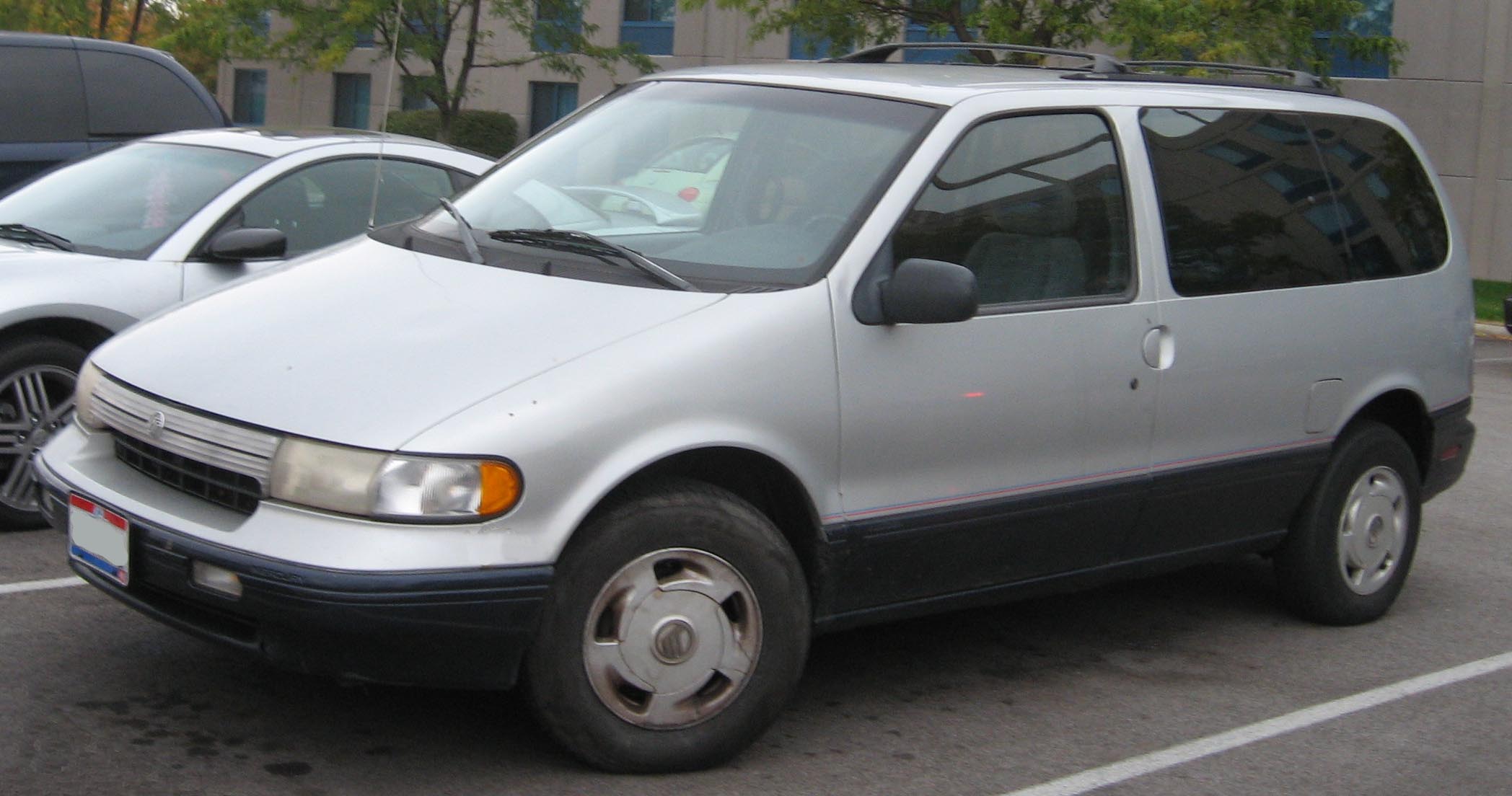
Mercury Villager
"... when it goes into the village and wrecks all the villagers' homes, because you're the one that created the ..."
The Mercury Villager is a minivan, which is a type of car made to carry people and family gear. It’s generally used for trips, errands, and transporting a group. In your excerpt, it’s mentioned as part of a story rather than for its technical details.
The Mercury Villager is a minivan model associated with the Mercury brand, typically used for family transportation and everyday hauling. In the podcast context you provided, it appears as part of a humorous or fictional scenario rather than a technical discussion of the vehicle. That kind of mention usually signals the car as a recognizable “everyday” minivan reference.
recurring revenue
"...how will that drive recurring revenue?... I think probably unsupervised FSD or RoboTaxi revenue will not be supermaterial this year, but... next year."
Recurring revenue is money that keeps coming in regularly. Here, they’re talking about making money from ongoing autonomous rides, not just selling cars once.
“Recurring revenue” means income that repeats over time, such as subscription fees or ongoing service charges. In this context, the hosts are discussing how autonomous services (like RoboTaxi) could generate ongoing money instead of one-time vehicle sales.
cautious rollout
"Initially, we're taking a very cautious approach to the rollout here... We haven't had any injuries... We want to keep it that way."
A “cautious rollout” is a phased deployment strategy—expanding capability gradually while closely monitoring safety and performance. For autonomy, this often means limiting geography, driver supervision requirements, and operating conditions before broader expansion.
injuries
"We haven't had any injuries and certainly no fatalities to date with the unsupervised FSD and RoboTaxi expansion... I don't know what they're qualifying as an injury... it clearly states they're minor injuries..."
They’re talking about safety reporting—what counts as an “injury” in their data. The hosts are concerned that “no injuries” might still mean small injuries, depending on how Tesla defines the term.
The transcript focuses on how Tesla qualifies “injuries” when reporting safety outcomes for unsupervised FSD/RoboTaxi operations. The hosts note that “no injuries” may still allow minor injuries, which can be defined differently depending on reporting standards.
National Highway Traffic Safety Administration
"I would say anything that you had to report to the National Highway Traffic Safety Administration, I would qualify that as an accident or an injury, but who am I?"
NHTSA is a U.S. government agency that tracks vehicle safety issues. When someone references NHTSA here, they’re talking about an official way to define and report crashes.
The National Highway Traffic Safety Administration (NHTSA) is the U.S. agency that oversees vehicle safety and collects crash-related reporting. Referencing NHTSA implies the speaker is using a formal definition of what counts as an “accident” for reporting purposes.
unsafe intersection or bad road markings
"... because we do want to make sure that there are not unique situations in a city that particularly complex intersection or actually, there tend to be places where people get into accidents a lot, because there's an unsafe intersection or bad road markings or a lot of weather challenges."
Some places are harder for self-driving cars than others—like intersections where drivers often crash or where the road markings are unclear. The software has to handle those tricky situations reliably.
The transcript highlights that certain infrastructure factors—like confusing lane markings or intersections with high crash histories—can be especially challenging for automated driving systems. These factors can increase the likelihood of edge cases where perception and decision-making struggle.
gradually to the customer fleet
"I think we would release unsupervised gradually to the customer fleet, as we feel like a particular geography is confirmed to be safe."
Instead of turning it on for everyone immediately, the company may release it in steps. That way they can watch how it behaves and fix issues before it’s widely used.
“Gradual” rollout means enabling advanced autonomy in stages rather than all at once. This approach helps the company monitor real-world performance, learn from edge cases, and adjust before broader deployment.
geography is confirmed to be safe
"I think we would release unsupervised gradually to the customer fleet, as we feel like a particular geography is confirmed to be safe. So, yes, where people tend to get into accidents is where the robot taxis get into accidents."
Even if the software is good, it can behave differently depending on where you are. The company is saying it may only turn on self-driving in places that have been proven to work safely.
The idea is that autonomy performance depends heavily on local conditions—road design, signage, weather patterns, and traffic behavior. So companies may enable advanced driving features only after a specific area meets safety criteria.
robot taxis approved first
"... I'll bet one person a coffee that it's going to get rolled out where robot taxis approved first, because that's a less of a lift for them to get that approved versus a state or area where they won't even allow robot taxi..."
The claim is that self-driving might roll out to robot-taxi services before it’s allowed in regular people’s cars. That’s often because taxis can be run under tighter rules and monitoring.
This suggests Tesla (or its partners) may seek approval for limited, controlled robot-taxi operations before enabling the same capability for private customer vehicles. Taxi deployments can be easier to manage operationally and to regulate in specific areas.
hardware 4
"...relative to hardware 4, it has only one eighth of the memory bandwidth of hardware 4... needed for unsupervised FSD."
“Hardware 4” is Tesla’s newer computer in the car. Tesla is saying it has the extra computing resources needed for the next level of self-driving.
“Hardware 4” is Tesla’s newer onboard compute platform used to run more advanced FSD capabilities. The speaker ties hardware 4’s higher memory bandwidth to enabling unsupervised FSD and later robotaxi operations.
memory bandwidth
"...it has only one eighth of the memory bandwidth of hardware 4, and memory bandwidth is one of the key elements needed for unsupervised FSD."
Memory bandwidth is basically how fast the car’s computer can read and write data. If it’s too slow, the self-driving AI can’t process everything quickly enough for the hardest driving tasks.
Memory bandwidth is how quickly the onboard computer can move data to and from memory. The call frames it as a key limiting factor for AI workloads used in unsupervised FSD, especially for large transformer-style models that need lots of data throughput.
trade-in
"For customers that have bought FSD, what we're offering is essentially a trade-in, like a discounted trade-in for cars that have AI4 hardware."
A trade-in is when you get a discount by turning in your current car (or current setup) toward an upgrade. Tesla is describing a deal for owners whose cars have the older self-driving computer.
A trade-in is when Tesla offers a discounted value for a customer’s current vehicle hardware configuration in exchange for upgrading to a newer one. Here, Tesla describes a discounted trade-in for cars with AI4 hardware (as stated in the call) as part of the path toward hardware upgrades.
upgrade the car to replace the computer
"...we'll also be offering the ability to upgrade the car to replace the computer, and you also need to replace the cameras... to go to hardware 4."
Tesla is saying this won’t just be a software download. They plan to physically replace the car’s self-driving computer so it can run the newer FSD version.
The speaker says Tesla will offer an upgrade that replaces the vehicle’s onboard compute computer (the FSD computer) to move from hardware 3 to hardware 4. This is more than a software update—it implies physical hardware replacement.
replace the cameras
"...and you also need to replace the cameras, unfortunately, to go to hardware 4."
Tesla is saying you may need new cameras too, not just a new computer. The cameras have to work with the newer self-driving system to get the full features.
The transcript indicates that upgrading to hardware 4 also requires replacing the vehicle’s cameras. That suggests the camera hardware (sensor capability, interface, or resolution) must match the newer compute platform for the intended FSD performance.
micro factories
"...we're going to have to set up kind of micro factories or small factories in major metropolitan areas... if it's done just at the service center, it is extremely slow..."
Tesla is describing a plan to do upgrades in smaller local production-style setups. They’re saying doing it only at regular service centers would be slow and inefficient.
“Micro factories” here refers to setting up small, localized production/assembly lines in major metropolitan areas to perform hardware upgrade work efficiently. The speaker contrasts this with doing upgrades only at traditional service centers, which they say would be too slow and inefficient.
robot taxi fleet
"...convert all hardware 3 cars to hardware 4, because that's what enables them to enter the robot taxi fleet and have unsupervised FSD."
A robot taxi fleet is a group of self-driving cars used for ride-hailing. The speaker is saying the car needs the newer computer (hardware 4) to be able to do that without a driver.
A “robot taxi fleet” is a planned operation where vehicles drive themselves to provide ride-hailing service without a human driver. In the transcript, Tesla links converting vehicles to hardware 4 as a prerequisite for entering that fleet with unsupervised FSD.
V14
"...we're going to also release a V14 version for hardware 3. This will be a distilled version of the same V14 software that we release for hardware 4..."
“V14” is a specific version of Tesla’s self-driving software. Tesla says hardware 3 cars will get a simplified (“distilled”) version of the same V14 software so they can still use many of the features.
“V14” is the version number of Tesla’s FSD software being discussed. The call says Tesla will release a V14 version for hardware 3 that is distilled from the V14 software intended for hardware 4, aiming to deliver similar features within hardware limits.
distilled version
"This will be a distilled version of the same V14 software that we release for hardware 4..."
“Distilled” means Tesla is making a lighter, more efficient version of the software. It’s tailored to run on the older computer (hardware 3) without needing the full power of hardware 4.
A “distilled” software version is a smaller or more efficient model derived from a larger one, designed to run on less-capable hardware. In this context, it’s how Tesla plans to bring many V14 features to hardware 3 despite its lower compute/memory resources.
Park State
"...people should be able to start the drive from Park State and basically have all the features that V14 for hardware 4 has."
This is about how you start the self-driving feature. Tesla is saying you should be able to initiate it from a normal parked state.
“Park State” refers to starting the driving feature from the vehicle’s parked condition. The speaker claims that with the V14 hardware 3 release, users should be able to begin the drive from Park State and access the same feature set as hardware 4’s V14 (as described).
free hardware upgrades vs refunds vs replacing the car
"Obviously, it would be great if you could take your car... have it, the hardware updated for free... is it make more sense to just give people their money back... or try to get them into a newer car?"
If Tesla changes what computer parts are needed for the best features, they have a few options: upgrade your car for free, give you your money back, or ask you to buy a newer car. The segment highlights that doing hardware swaps can be costly and slow.
The hosts discuss the business and customer-impact tradeoffs Tesla faces when upgrading older cars: offering free hardware updates, issuing refunds, or moving customers into newer vehicles. This matters because replacing hardware can be expensive and logistically difficult (e.g., not feasible at every service center).
unsupervised self-driving
"I do expect that AI5 will go into Optimus and into the data center, because it's looking like we'll be able to achieve unsupervised self-driving with AI4 ... Which means it's not immediately needed in the car."
This is the idea that a car could drive on its own without a person constantly monitoring it. The claim is that the system could be safer than humans, which is why it’s a big deal for future vehicle capability.
“Unsupervised self-driving” refers to autonomy that can operate without continuous human intervention or ongoing supervision. The speaker frames AI4 as being able to reach this level of capability, and claims it would exceed “human safety levels,” which is a key threshold in autonomy roadmaps.
AI4 hardware getting so old
"At some point the AI4 hardware is going to get so old that it's like, the only reason they keep in the factory open is for AI4."
Even if a computer system works today, older hardware eventually becomes limiting. The idea here is that they’ll need to upgrade the AI hardware because it won’t stay efficient or supported forever.
The speaker suggests the AI4 compute hardware will age enough that it becomes a reason to keep upgrading systems, even if it’s still used in the factory. This highlights how AI roadmaps often depend on hardware lifecycle, not just software improvements.
SOC
"... it'll go from 16 gigabytes to I think 32 gigabytes per SOC, so a total of 64 gigabytes ... and in memory bandwidth."
An SOC is like a computer-in-a-chip, where several key parts are built together. When they say “per SOC,” they mean each of those chip units gets more memory.
SOC stands for “system on a chip,” meaning multiple computing components are integrated into a single chip package. The transcript ties SOC to memory configuration (32 GB per SOC) and compute/memory performance, indicating how the AI platform scales across its hardware.
AI4.1
"So that's AI4.1, AI4 plus probably goes into production in the next year I think."
AI4.1 sounds like a small step-up version of the AI4 computer system. It’s not necessarily a brand-new platform—more like an upgrade that improves speed and memory.
“AI4.1” is presented as an incremental upgrade path from AI4, likely reflecting the RAM and performance improvements described earlier. The speaker also links timing to production readiness, suggesting a staged rollout rather than a single all-at-once replacement.
Request an Explanation
Heard something you'd like explained? We'll add it to this episode.
Sign in to request explanations for terms you heard.
Want to learn more?
Browse our glossary for plain-English explanations of automotive terms, jargon, and concepts.
Help improve this episode
See something that's not quite right? Our annotations are AI-generated and can sometimes miss the mark. Click the flag icon on any annotation to suggest a correction.