Under Pressure: How to Increase EV Battery Life
About this episode
The host opens with a personal update—family health stress, show scheduling, and his plan to retire in September 2027—then pivots to EV news. He notes Lucid’s struggles under new CEO Silvio Nopoli: major layoffs at the Arizona plant, elimination of an executive role, a huge Q2 net loss, low production vs deliveries, and a recall of Gravity SUVs. Despite the financial pressure, Lucid still has positives like strong reviews and awards. The episode frames battery-life “pressure” as a theme, but the provided transcript mainly covers Lucid and show direction.
In this episode of Kilowatt, we dive deep into the shifting landscape of the electric vehicle industry, starting with major structural shakeups and layoffs at Lucid Motors under new CEO Silvio Napoli. We also unpack why Slate Auto is bypassing Canada for its highly customizable, budget-friendly electric pickup, alongside a detailed look at Subaru’s impressive new 2027 EV lineup featuring the Trailseeker and Uncharted. Overseas, European automakers are pivoting from massive SUVs to highly affordable, compact city EVs to counter a massive push from Chinese brands, while the UK celebrates an explosive month with battery electric vehicles capturing nearly 30% of the new car market. On the quirky side of things, we look at the ultra-compact Fiat Topolino coming to America—a tiny, low-speed cruiser that blurs the line between a beach-bound golf cart and a neighborhood EV. Finally, we explore groundbreaking battery breakthroughs from researchers at Cambridge, Purdue, and Texas Instruments who are discovering that physical pressure and smarter charging algorithms can completely reshape how we prevent cell degradation and extend EV lifespan.
Show Notes Support the Show Other Podcasts Friends of the Show News Links- CleanTechnica: Exclusive: Lucid Motors’ Saudi Bet Meets Harsh Reality As New CEO Cuts Deep To Keep Cosmos Alive
- InsideEVs: Slate Has No Plans To Sell Its Cheap EV Pickup In Canada
- Electrek: Subaru’s new Trailseeker EV starts at $40,000
- The Guardian: How Europe’s EVs Shrank to Challenge the SUV and China
- InsideEVs: Fiat's $13,995 EV For America Is Cute, But Barely A Car
- DigitalTrends: Cambridge Experts Find Utterly Simple Fix for Longer-Lasting EV Batteries
- Purdue University ME News: Lithium Plating: Purdue Researchers Tackle the Toughest Problem With Lithium-Ion Batteries
*Show Art Created By Gemini
Hosted by Simplecast, an AdsWizz company. See pcm.adswizz.com for information about our collection and use of personal data for advertising.
Lucid Motors
"Silvio Nopoli, totally butchering that name, is the new CEO of Lucid Motors. Officially took over on June 1st and he has been making a number of changes."
Lucid Motors is a company that makes electric cars. Here, the hosts talk about who runs the company now and changes they’re making, including layoffs.
Lucid Motors is an EV manufacturer focused on electric sedans and battery-electric powertrains. In this segment, the hosts discuss leadership changes and workforce reductions at Lucid as part of the company’s current business situation.
Silvio Nopoli
"Silvio Nopoli, totally butchering that name, is the new CEO of Lucid Motors. Officially took over on June 1st and he has been making a number of changes."
Silvio Nopoli is the person the hosts say is now running Lucid Motors as CEO. They mention that after he took over, the company made major changes.
Silvio Nopoli is identified in the segment as the new CEO of Lucid Motors. The hosts connect his start date to operational changes, including layoffs.
Casa Grande, Arizona
"at the factory in Casa Grande, Arizona, amp one. That's about 18% of their employees."
Casa Grande, Arizona is where Lucid has a factory. The hosts say layoffs are happening there, so it’s the specific place affected.
Casa Grande, Arizona is referenced as the location of Lucid’s factory where layoffs are occurring. It’s a specific production site, so it matters for understanding where manufacturing headcount is being reduced.
chief operating officer
"And interim CEO, Mark Winterhoff, who was the chief operating officer, he was supposed to once they had they got a new CEO, he was supposed to go back to being the chief operating officer."
A chief operating officer is the executive who focuses on running the company’s day-to-day operations. The hosts mention this because Mark Winterhoff used to be in that job at Lucid.
Chief operating officer (COO) is a corporate executive role responsible for day-to-day operations—how the company runs internally to meet production and business goals. In this segment, the hosts say Mark Winterhoff previously held this role at Lucid.
Mark Winterhoff
"And interim CEO, Mark Winterhoff, who was the chief operating officer, he was supposed to once they had they got a new CEO, Mark was supposed to go back to being the chief operating officer."
Mark Winterhoff is mentioned as the interim CEO of Lucid. Before that, he was the company’s COO, and the hosts say that role was removed after the new CEO arrived.
Mark Winterhoff is described as Lucid’s interim CEO and previously the chief operating officer (COO). The hosts discuss eliminating his COO role after the new CEO took over.
Q2, 2026
"Now, as far as how Lucid did in Q2, 2026, they posted a net loss of around a billion dollars."
Q2, 2026 means the company’s financial results for the second quarter of 2026. The hosts use those results to talk about how Lucid is doing recently.
Q2, 2026 refers to the second quarter of the year 2026, a standard financial reporting period. The hosts use it to discuss Lucid’s recent results like net loss and production/delivery numbers.
recall
"they had to recall 4,500 gravity SUVs. And that's pretty much all of them, if not all of them."
A vehicle recall is when an automaker asks owners to return vehicles to fix a safety or compliance problem. Recalls can be expensive and can also affect customer trust and production schedules, especially for smaller EV brands.
Saudi Arabia
"as long as Saudi Arabia is willing to pay, Lucid will be okay. ... it was in Saudi Arabia, which is probably true that still probably the world luxury car of the year in Saudi Arabia"
Saudi Arabia is the country the host keeps bringing up. They connect it to money/support for Lucid and to where Lucid is building and promoting cars.
Saudi Arabia is the country the host repeatedly ties to Lucid’s funding, marketing, and manufacturing plans. In this segment, it’s also where the host says the Gravity award recognition and the new factory context matter.
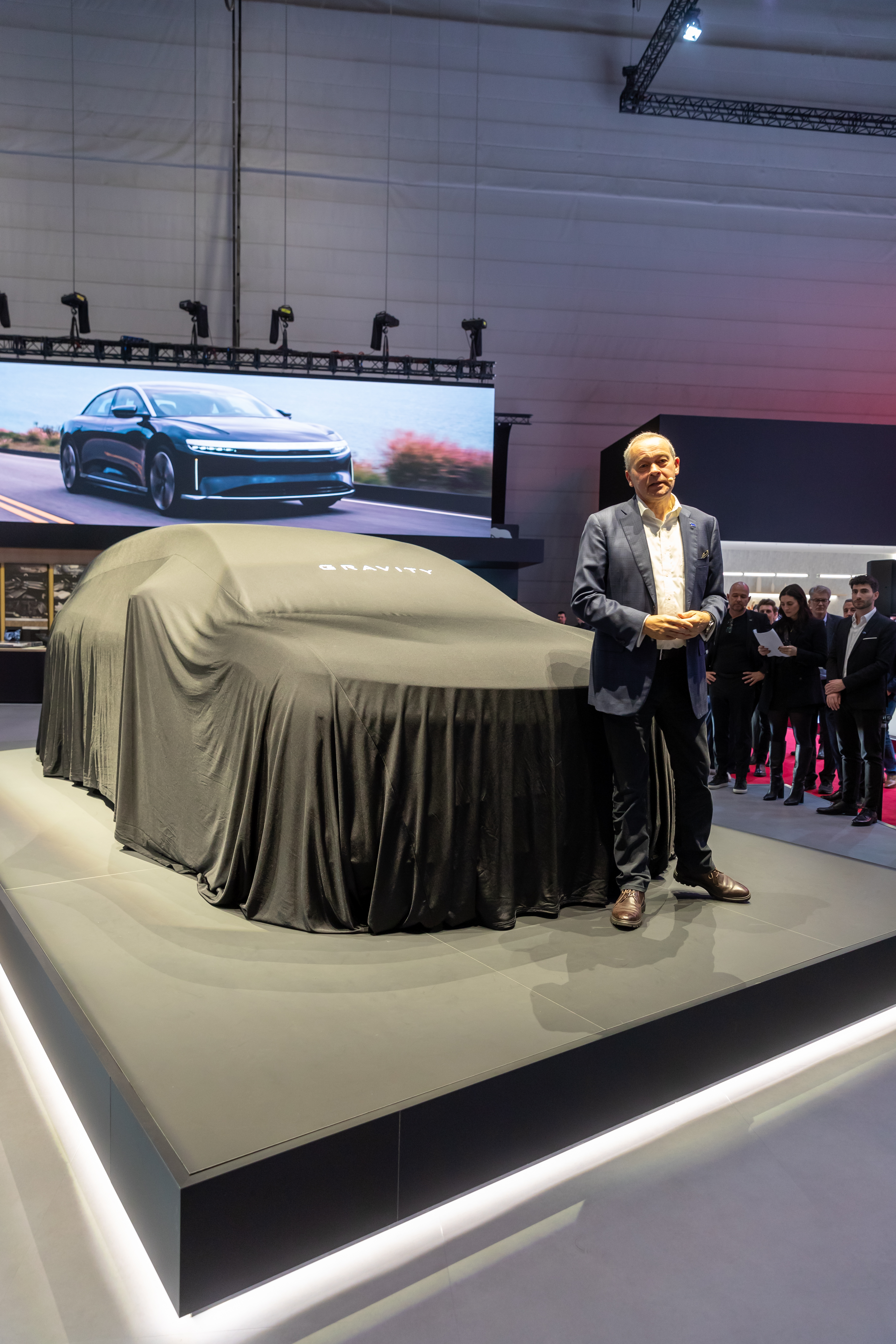
Lucid gravity
"The Lucid gravity was named the 2026 luxury car of the year, which is great except for, it was in Saudi Arabia"
The Lucid Gravity is Lucid’s electric SUV. In this part, the host says it won a “luxury car of the year” award for 2026, which helps Lucid’s image—especially in Saudi Arabia.
The Lucid Gravity is Lucid’s electric luxury SUV, positioned as a flagship family vehicle. The host mentions it being named “2026 luxury car of the year,” tying the model’s brand value to recognition in Saudi Arabia.
AMP2
"especially with AMP2, their new factory in Saudi Arabia. So, I just thought that was funny."
AMP2 is mentioned as a new Lucid factory site in Saudi Arabia. It matters because building more capacity can help a company produce cars and stabilize its business.
AMP2 is referenced as Lucid’s new factory in Saudi Arabia. In EV manufacturing, factory expansions like this are often tied to scaling production and improving financial viability.

Lucid Air
"This is going to be a super important vehicle for Lucid, and I think if they can, you know, take what makes the air and the gravity great"
The Lucid Air is one of Lucid’s electric cars (a sedan). Here it’s mentioned as a model whose “good stuff” Lucid wants to reuse when building the Cosmos.
The Lucid Air is Lucid’s electric sedan, referenced here as a source of what the company wants to carry over into the upcoming Cosmos. The host is framing the Air’s strengths as design/engineering lessons for future models.
Lucid Cosmos
"I think the Lucid gravity looks great. It's a little too much for me, but a $50,000 Lucid Cosmos sounds like it would be a contender. My next EV, I would like it to be a pickup truck, but I have seven more years before I buy a car, so Lucid had some time to figure this out,"
Lucid Cosmos is a new electric car from Lucid that the host expects to be priced much lower than some of their other models. They also talk about when and where it would start being built and sold.
Lucid Cosmos is an EV model Lucid plans to produce, and the host frames it as a lower-cost alternative (around a $50,000 target) compared with Lucid’s more expensive lineup. The segment also discusses where production would start and how quickly it might reach the US.

Lucid Sapphire
"Saudi Arabia is a kingdom, and they can, what's the, they could subsidize this car initially by the government buying it and giving it to government employees to drive around for different things. Like, I don't think that somebody needs to be driving around in a $260,000 Lucid Sapphire checking water meters, for instance, they could probably do that in a gravity and still be good."
Lucid Sapphire is a more expensive Lucid EV model mentioned as an example of a vehicle that would be unnecessary for low-stakes municipal tasks. The host contrasts its price with the idea that a cheaper model like gravity/Cosmos could still do the job.
Uber
"Now, in other good news for Lucid, Lucid has that partnership with Uber for the RoboTaxi deal, and that would mean 35,000 vehicles sold to Uber if everything goes right, and those vehicles would be a mix between the Lucid gravities and the Cosmos."
Uber is working with Lucid on an autonomous ride-hailing (RoboTaxi) plan. The host is highlighting that this could mean a large number of Lucid EVs being bought for Uber’s service.
Uber is partnering with Lucid for a RoboTaxi program, which the host says could translate into tens of thousands of vehicles. In this segment, the key point is the potential scale of vehicle orders and how that could support Lucid’s production ramp.
RoboTaxi deal
"Now, in other good news for Lucid, Lucid has that partnership with Uber for the RoboTaxi deal, and that would mean 35,000 vehicles sold to Uber if everything goes right, and those vehicles would be a mix between the Lucid gravities and the Cosmos."
A RoboTaxi deal is basically a contract to provide cars for self-driving ride services. The host is saying Uber could buy a lot of Lucid EVs for that kind of service.
A RoboTaxi deal is an agreement to supply vehicles for autonomous ride-hailing operations. Here, the host ties it to a projected volume of Lucid EVs going to Uber, with the mix including Lucid gravity and Lucid Cosmos.
Neural
"and hopefully they're able to maintain that partnership with Uber. And another little bit of good news is Uber and Lucid and Neural, which is the third member of that partnership, they secured a permit for gravity RoboTaxi operations"
Neural is named as another partner in the RoboTaxi project along with Uber and Lucid. The host is treating it as part of the team needed to make the self-driving ride service work.
Neural is mentioned as the third member of the partnership with Uber and Lucid for the RoboTaxi effort. In this context, Neural appears to be part of the autonomy/operations stack needed to run RoboTaxi services.
permit for gravity RoboTaxi operations
"Uber and Lucid and Neural, which is the third member of that partnership, they secured a permit for gravity RoboTaxi operations in San Francisco, or in California, I don't know specifically for San Francisco, but a lot needs to happen before their fortunes turn."
This is official permission to run self-driving ride services in a certain place. The host is saying it’s a positive step, but it doesn’t mean everything is ready yet.
A permit for RoboTaxi operations is regulatory approval that allows autonomous ride-hailing vehicles to operate in a specific area. The host uses it to suggest the project is moving forward, but emphasizes that more work is still needed before results fully materialize.
San Francisco
"Uber and Lucid and Neural, which is the third member of that partnership, they secured a permit for gravity RoboTaxi operations in San Francisco, or in California, I don't know specifically for San Francisco,"
The host says they got permission to run RoboTaxis in the San Francisco area. Getting permits is important because it determines whether the cars can operate there.
San Francisco is referenced as the location where the partnership secured a permit for RoboTaxi operations. For EV and autonomy projects, permits and local approvals are a major gating factor for when vehicles can operate publicly.
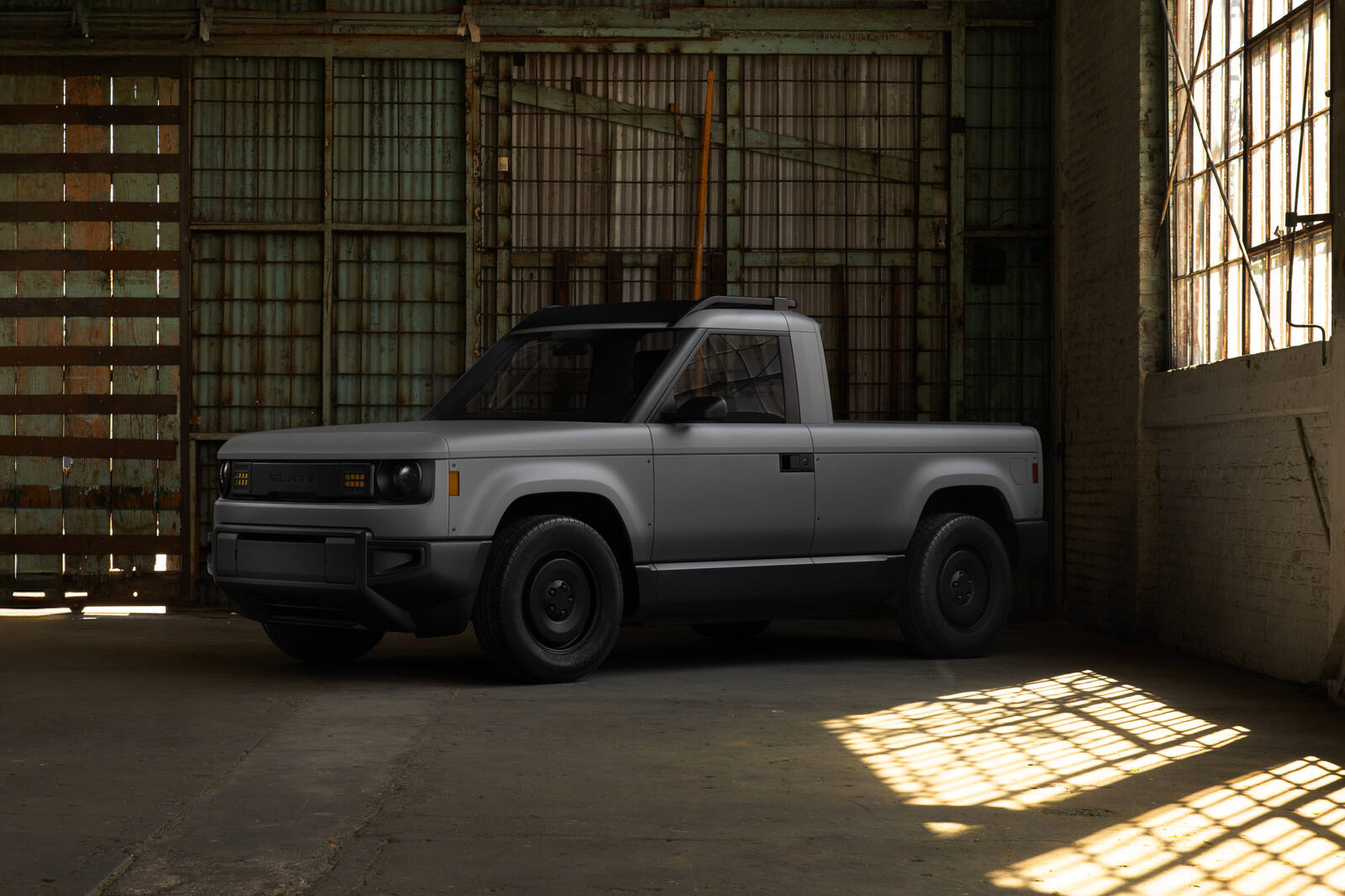
Truck Slate Auto
"...ive car company to a very affordable car company. Slate Auto says that it has no plans to sell its pickup in C..."
The podcast is talking about a pickup truck from a company that wants to sell affordable vehicles. It also mentions that the company doesn’t plan to sell that pickup in a certain place. That’s relevant because it affects where you can actually buy one.
The podcast segment refers to a pickup truck being considered for sale by a company that’s positioned as an affordable car brand. This matters in an EV conversation because trucks are a major market for electrification, and pricing is a big factor in adoption. The mention of “no plans to sell its pickup in C…” suggests a geographic or market limitation being discussed.
tariffs
"They didn't go into any detail as to why, but if I had two guesses, I would say the first reason would be tariffs. Canada currently has a 25% reciprocal tariff on all vehicles that are imported from the US."
Tariffs are taxes governments place on imported goods, and they can significantly change what consumers pay for vehicles. In this segment, the host uses tariffs to explain why an EV pickup’s Canadian price might rise enough that it competes differently against existing trucks.
reciprocal tariff
"Canada currently has a 25% reciprocal tariff on all vehicles that are imported from the US. So that would bump the price of the slate up from 25,000 base price to"
A reciprocal tariff is a government tax on imported vehicles that’s meant to match or respond to another country’s taxes. In this case, it makes imported trucks more expensive in Canada.
A reciprocal tariff is a trade tax where one country applies a tariff in response to another country’s tariffs. Here, the host says Canada has a 25% reciprocal tariff on vehicles imported from the US, which directly affects EV and truck pricing.

Ford Maverick
"So that would bump the price of the slate up from 25,000 base price to around $31,000 US, which is about 44,000 Canadian. And for that price point, you could get a Ford Maverick or a Ranger or a Chevy Colorado."
The Ford Maverick is a small pickup truck. The host brings it up because its price is similar to the Slate’s expected Canadian price, and the Maverick can be bought with a hybrid option.
The Ford Maverick is a compact pickup used here as a pricing benchmark for what consumers might buy instead of the Slate pickup. The host notes it has a hybrid version, which matters because it’s not purely an ICE-only competitor.

Chevy Colorado
"And for that price point, you could get a Ford Maverick or a Ranger or a Chevy Colorado. All of those vehicles are in that price point."
The Chevy Colorado is a pickup truck the host lists as competing in the same price range. The point is that tariffs could make the EV pickup cost more than people expect.
The Chevrolet Colorado is referenced as an ICE pickup alternative at the same rough price point the host estimates for the Slate after tariffs. The comparison is meant to highlight that the EV’s lower starting price may not stay low once import taxes apply.

Ford Ranger
"And for that price point, you could get a Ford Maverick or a Ranger or a Chevy Colorado. All of those vehicles are in that price point."
The Ford Ranger is another pickup truck the host says you could buy at a similar price. It’s part of the comparison showing what customers might choose instead.
The Ford Ranger is mentioned as one of the mainstream pickup options that sits near the same price tier the host expects for the Slate in Canada. It’s used to illustrate how tariffs could push the EV pickup into direct competition with established ICE trucks.
automatic windows
"for that price point, automatic windows, a radio, that kind of thing, the kind of things you expect to have in a car."
Automatic windows means the windows go up and down with buttons, not by hand. The host is saying that buyers expect basic convenience features like this.
Automatic windows refers to power-operated window switches rather than manual cranks. The host uses it as an example of “creature comforts” that buyers expect even in lower-priced trucks, and implies the Slate may not include enough of these features at the target price.
initial production run
"However, there are a ton of different things that can go wrong during your initial production run. You can have supplier issues, you can have manufacturing issues, you can have different battery issues."
An initial production run is the first batch of cars a company builds when it starts making them for real. Early on, things can go wrong—like parts not arriving correctly, manufacturing problems, or battery issues.
An initial production run is the early phase of manufacturing when a new vehicle is ramped into real-world production. The host emphasizes that even if the truck seems simple, early builds can suffer from supplier problems, manufacturing defects, or battery-related issues.
battery issues
"You can have supplier issues, you can have manufacturing issues, you can have different battery issues. There's just so much that could happen."
Battery issues means problems with the EV’s battery pack—like reliability or how well it’s built and managed. The host is saying that batteries are one of the things that can cause trouble when a new EV starts production.
Battery issues refers to problems with EV battery systems—such as cell quality, pack integration, thermal management, or early reliability faults. The host lists battery issues alongside supplier and manufacturing issues as a key risk during the first production phase.
trade agreement
"At some point in time, we have a new or supposed to have a new agreement with trade agreement with Mexico and Canada done, and whether it's like we're just going to put a rubber stamp on the current trade agreement or we're going to completely renegotiate it"
A trade agreement is a deal between countries about how products move across borders. The host is saying changes to that deal could affect tariffs and whether an EV pickup can be sold in Canada.
A trade agreement is a formal set of rules between countries that can determine how goods are taxed or restricted at the border. The host discusses a new or renegotiated trade agreement involving Mexico, Canada, and the US, and how it could change whether Slate’s EV pickup is sold in Canada.

2027 Subaru Trailseeker EV
"So next up we have the 2027 Subaru Trailseeker EV. It starts at a very impressive $40,000... 74.7 kilowatt hour battery, which gets you 281 miles of range."
This is Subaru’s upcoming electric SUV. The host talks about how much it can carry, how far it can drive on a charge, and how fast it can charge, plus the phone/infotainment features.
The 2027 Subaru Trailseeker EV is positioned as a smaller-than-Model Y EV with a focus on practical cargo space and towing. The host highlights its charging and battery specs (74.7 kWh battery, 281 miles of range) plus driver-tech features like Apple CarPlay and Android Auto.

Tesla Model Y
"This car is a little bit smaller than a Model Y... But they're comparable in size... the Model Y has roughly the same size battery and has 320 miles of range."
The host compares the Subaru to the Tesla Model Y because it’s a common reference point for EV size and efficiency. They point out the Tesla gets more miles from a similar battery size.
The Tesla Model Y is used as the benchmark for size, battery capacity, and real-world range comparisons. The host notes that it has roughly the same battery size but more range (320 miles), implying there’s room for efficiency improvements on the Subaru’s side.
Apple CarPlay
"The Trailseeker does have Apple CarPlay, Android Auto, 375 horsepower, you know, zero to 16, 4.3 seconds."
Apple CarPlay lets you connect your iPhone to the car and use certain apps on the car’s screen. It’s meant to make navigation and music easier while driving.
Apple CarPlay is a smartphone integration system that mirrors compatible iPhone apps and navigation onto the car’s infotainment screen. It’s commonly used so you can access maps, music, and messaging through the vehicle interface.
Android Auto
"The Trailseeker does have Apple CarPlay, Android Auto, 375 horsepower, you know, zero to 16, 4.3 seconds."
Android Auto lets you connect an Android phone to the car and use supported apps on the car’s screen. It’s mainly for navigation, music, and calls.
Android Auto is the Android counterpart to Apple CarPlay, projecting supported phone apps onto the car’s infotainment display. It’s designed to keep navigation and media accessible through the vehicle controls.
charge
"It'll come in with a next port or it has an export, 150 kilowatts of charge."
Here, “charge” is about how fast the car can refill its battery at a charger. The faster the charging power, the less time you spend plugged in.
In this context, “charge” refers to how much electrical power the EV can accept from a charger, which affects how quickly it can recharge. The host pairs it with a power figure (150 kilowatts) to discuss charging capability.
kilowatt hour battery
"74.7 kilowatt hour battery, which gets you 281 miles of range."
The kilowatt-hour (kWh) number tells you how much energy the EV battery can hold. More energy usually means you can drive farther, but efficiency also matters.
A kilowatt-hour (kWh) battery rating is a measure of how much electrical energy the EV’s battery pack can store. Higher kWh generally means more potential range, though real range also depends on efficiency and driving conditions.
3,500 pounds of towing
"3,500 pounds of towing. This car is reviewing very well."
Towing capacity is the maximum weight the car is allowed to pull. If you tow, the EV often uses energy faster, so range can drop.
Towing capacity is the maximum weight the vehicle is rated to pull safely. For EVs, towing can noticeably affect efficiency and range, so the host includes it as a practical capability alongside battery and charging specs.
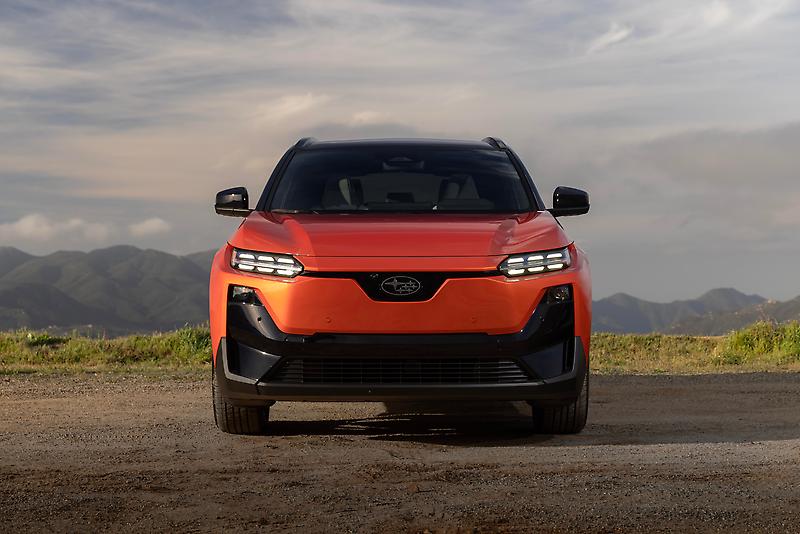
2027 Subaru Uncharted
"And then on top of that, the 2027 Subaru Uncharted will start at $35,000... take a look at the Uncharted."
This is another upcoming Subaru EV option, but the host says it’s cheaper than the Trailseeker. They also prefer its styling.
The 2027 Subaru Uncharted is presented as a more affordable alternative to the Trailseeker EV, starting at $35,000. The host also makes a design comparison, saying it looks more like what they expect from Subaru.
electric SUVs
"European car makers are moving from larger electric SUVs to smaller, more affordable EVs, which especially in Europe makes a lot of sense."
“Electric SUVs” are EVs shaped like SUVs. The point here is that makers are moving from bigger, pricier EV SUVs to smaller, cheaper EVs.
“Electric SUVs” are battery-electric vehicles built on the SUV body style, typically with larger mass and packaging needs than smaller EVs. The host says European makers are shifting away from larger electric SUVs toward smaller, more affordable EVs.
battery tech
"now because of advances in battery tech, we have increased energy density with a decreased price."
“Battery tech” means how EV batteries are made and improved over time. Better battery tech can make batteries cheaper and let them store more energy for the same size.
“Battery tech” refers to improvements in EV battery chemistry, design, and manufacturing that make packs cheaper and more capable. In this segment, the host links battery tech advances to higher energy density and lower costs.
energy density
"we have increased energy density with a decreased price."
Energy density is basically “how much battery power fits in the battery.” Higher energy density usually means more range without needing a larger battery.
Energy density is how much electrical energy a battery can store for a given weight or volume. Higher energy density helps EVs achieve more range without making the battery pack bigger or heavier.
margin
"So there's more opportunities for margin at those smaller compact EVs..."
“Margin” here means how much money a company keeps after it pays to build the car. If batteries get cheaper, it can be easier to make a profit on lower-priced EVs.
In automotive pricing, “margin” is the profit left after accounting for production and other costs. The host connects EV cost reductions (especially battery-related) to the ability to earn better margins on smaller, more affordable models.
compact EVs
"So there's more opportunities for margin at those smaller compact EVs, you know, you might buy a car for 18 or 22,000 euros..."
“Compact EVs” are smaller electric cars that are usually cheaper than big EVs. The host is saying they can still go far enough for many people while costing less to build.
“Compact EVs” are smaller battery-electric cars aimed at lower purchase prices and easier everyday use. The host argues that with improved battery tech, compact EVs can deliver adequate range while improving profitability.
smaller car battery
"there are some trade-offs and you have to be okay with a smaller car battery, [1840.2s] which gives you shorter range."
If an EV has a smaller battery, it can store less energy. That usually means less range—so you’re trading convenience for cost.
A smaller EV battery generally means less stored energy, which directly limits how far the car can travel on a charge (shorter range). The episode frames this as a trade-off: you can pay less up front, but you give up some long-distance capability.
shorter range
"which gives you shorter range. So, it's up to the whoever's buying it to decide whether that [1847.3s] trade-off is worth it or not."
Shorter range means you can drive fewer miles before the battery needs charging. It matters because it affects how often you’ll have to stop to charge.
Shorter range is the practical outcome of having less battery capacity or less efficient energy use. In EV buying decisions, it’s a key factor because it determines how often you’ll need to charge and whether the car fits your typical driving.
Stellantis
"it's about a fiat and, you know, i've kind of made my frustrations known with what Stellantis is doing with their [1893.2s] auto brands here in the US."
Stellantis is a big company that owns several car brands. The host is talking about how Stellantis is handling those brands and their EVs in the US.
Stellantis is the automaker group that owns multiple car brands, including Fiat. The host is criticizing how Stellantis is managing those brands in the US market, especially around EV offerings.
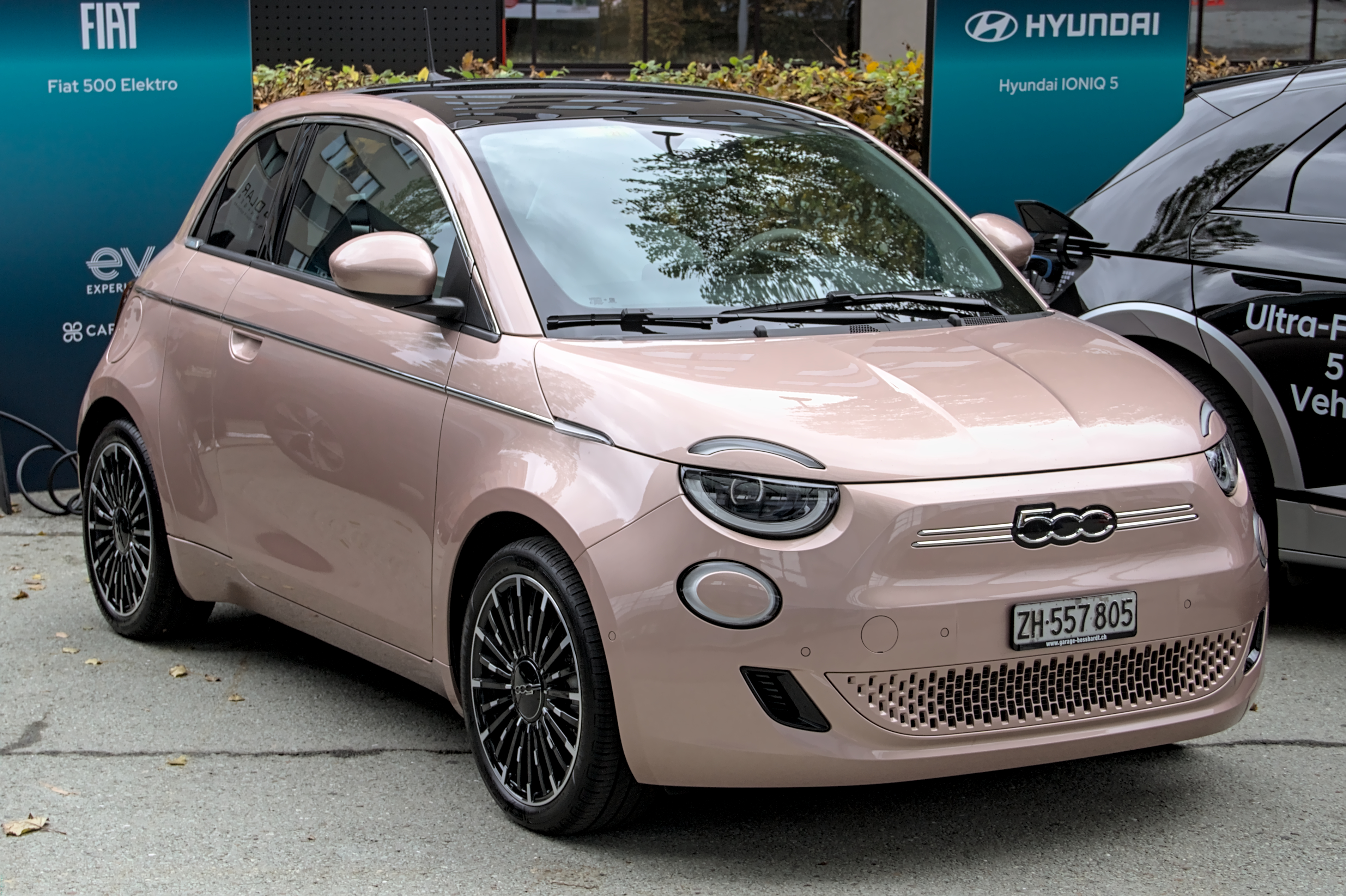
Fiat 500E
"They do, when it comes to the fiat brand, they do sell the fiat 500 [1899.7s] and the 500E, which is the electric version of the 500 here in the US. It is pretty affordable."
The Fiat 500E is the electric version of the Fiat 500. It’s designed to be cheaper, but that usually means a smaller battery, which means you can’t drive as far on a full charge.
The Fiat 500E is Fiat’s electric version of the 500, built around a smaller EV battery to keep the car affordable. Because the battery is smaller, it typically delivers less driving range than larger EVs, so it’s more about city commuting than long-distance trips.

Fiat Topolino
"There's another fiat model headed to the US. And this is the fiat Topolino."
The Fiat Topolino is a new small Fiat model the host says is coming to the US. The key idea in the episode is that smaller, cheaper EVs often trade range for price.
The Fiat Topolino is a small Fiat model that the host says is headed to the US. It’s being positioned as an affordable, EV-friendly option, and the discussion ties it to the same theme: smaller battery capacity can mean shorter range.

Topolino
"So Topolino, [1961.6s] which I am butchering... But the Topolino is Italian for little mouse... [1975.1s] is a small car as you can imagine for $14,000."
The Topolino is a very small electric car meant for short, simple trips. The host is saying it’s cheap because it’s more like a basic neighborhood vehicle than a normal street car.
The Topolino is a tiny, two-seat Italian micro-EV positioned as an ultra-low-cost city vehicle. In this segment, the host highlights its small size and basic equipment to explain why it can be priced under $14,000.
street legal upgrade
"It's not technically street legal in the US unless you pay for a street legal upgrade that will max the top speed out at 25 miles per hour."
A street legal upgrade is what you do so a vehicle can legally drive on public roads. The host says it changes the speed limit (and may make the battery last less long).
A street legal upgrade refers to modifications or approvals that allow a vehicle to be driven on public roads where it otherwise wouldn’t qualify. In this segment, the host says the upgrade raises the top speed limit from 19 mph to 25 mph, but also warns it will reduce range.
golf cart classification
"But this is really golf cart. It's classified as a golf cart, or it's in the same classification as a golf cart."
Golf cart classification means the vehicle is regulated more like a golf cart than a normal car. That usually limits where and how fast it can be driven, so it’s aimed at campuses and communities that already use golf carts.
Golf cart classification is a regulatory category that treats certain low-speed vehicles differently from normal street-legal cars. The host explains that this vehicle is classified like a golf cart, which is why it’s intended for places where residents drive golf carts rather than regular roads.
Sun City
"This would be really good for folks who live in a beach community or people who live in communities like Sun City here in Arizona, where the residents drive golf carts from place to place."
Sun City is a community in Arizona where people often get around using golf carts. The host is saying a small, low-speed EV could work well in places like that.
Sun City is a well-known retirement community in Arizona where residents commonly use golf carts for local transportation. The host uses it as an example of a place where a low-speed, golf-cart-classified EV would fit everyday life.
battery electric vehicle
"Mark K in the UK, he sent along a few articles for us today, starting off in June, battery electric vehicle registrations in the UK were up nearly 30% overall... There were 64,440 battery electric vehicle registrations in June."
A battery electric vehicle is a car that uses electricity stored in a battery to move. There’s no gas engine—so the battery’s condition is a big deal for how long the car can keep performing well.
A battery electric vehicle (BEV) is an EV that runs only on electricity stored in a battery pack. It has an electric motor and no gasoline engine, so its driving range and battery health depend heavily on how the battery is charged and used.
lithium ion battery packs
"The first part is Mark. So researchers at the University of Cambridge found that putting physical pressure on lithium ion battery packs, that could double their lifespan or its lifespan."
An EV’s lithium-ion battery pack is the big battery made of many smaller battery cells. How you use it—especially charging and discharging—can affect how long it lasts.
A lithium ion battery pack is the multi-cell battery system in an EV, made from many individual lithium-ion cells arranged together. Its lifespan is affected by how the cells are charged/discharged and by mechanical stresses that can cause internal wear over time.
physical pressure
"researchers at the University of Cambridge found that putting physical pressure on lithium ion battery packs, that could double their lifespan"
In this context, physical pressure refers to mechanically constraining the battery pack or cells to reduce harmful internal movement during cycling. The idea is that controlling stress can slow down wear mechanisms that shorten battery life.
cell degradation
"And the repeated stress of this expanding and contracting can contribute to cell degradation for a variety of different reasons."
Cell degradation means the battery cells slowly get worse with use. Over time, that can lead to less range or the battery not working as efficiently.
Cell degradation is the gradual loss of battery cell performance over time, such as reduced capacity or increased internal resistance. In lithium-ion packs, repeated mechanical stress during charge/discharge can accelerate this wear.
pouch cells
"they didn't do prismatic cells or cylinder cells, they were using pouch cells in this"
A pouch cell is a lithium battery cell that’s sealed in a flexible bag instead of a hard metal can. Because it can flex a bit, how much pressure it’s under can affect how well it lasts.
Pouch cells are a type of lithium-ion battery cell that uses a flexible, sealed pouch to hold the electrodes and electrolyte. Compared with rigid cylindrical or prismatic designs, pouch cells can deform slightly under stress, which is why pressure management can matter for longevity and safety.
181 psi
"they adjusted the the pressure to stay at 181 psi or 12 and a half bars to make sure that the cell received that pressure constantly."
They kept the battery under a specific amount of pressure—181 psi (12.5 bar)—to keep the cell mechanically stable. The idea is that the battery ages differently if the pressure is too low or too high.
181 psi (about 12.5 bar) is the applied pressure the researchers held on the battery cell to keep it at a steady mechanical load. In EV batteries, controlling pressure can reduce harmful electrode movement and help limit degradation mechanisms during cycling.
cathode cracking
"So if there's too little pressure, it actually accelerated cathode cracking."
Cathode cracking means the battery’s positive electrode starts developing tiny cracks over time. That can make it harder for the battery to work well and can speed up battery aging.
Cathode cracking is a degradation process where the cathode material develops micro-cracks as the battery cycles. Those cracks can increase resistance and reduce how much power the battery can deliver, accelerating capacity loss.
anode
"lithium ions will start to accumulate at the surface of the anode. And those little metallic deposits can grow"
The anode is the battery’s negative electrode. If conditions aren’t right during charging, lithium can build up there as metal, which is bad for battery life.
The anode is the battery electrode where lithium ions originate during discharge and where they can plate as metal under certain charging conditions. In lithium-ion cells, protecting the anode from plating is a key strategy for improving cycle life.
DC fast charging
"it's it sounds like most of this is due or occurs during DC fast charging."
DC fast charging is the quick-charging method you use at many public chargers. Because it charges the battery quickly with high power, it can increase the chances of damaging processes like lithium plating.
DC fast charging is a high-power charging method that delivers electricity directly as DC to the battery. It tends to push cells harder (higher current and faster charging), which can increase the likelihood of lithium plating and other degradation mechanisms.
Texas Instruments
"the University of Purdue researchers partnered with Texas Instruments, and they're actually working on tools and algorithms to detect and mitigate the plating."
Texas Instruments is a company that makes electronics used in many technical systems. Here, they’re working with researchers to help detect and reduce harmful battery effects like lithium plating.
Texas Instruments is a semiconductor and electronics company that provides components and tools used in battery monitoring and power electronics. In this segment, they’re partnered with university researchers to develop ways to detect and reduce lithium plating.
voltage, time and temperature
"what they're measuring is voltage, time and temperature. And from that, they're able to those are their observations."
They use things you can measure during charging—battery voltage, how long it’s been charging, and the battery temperature. Those measurements help an algorithm estimate whether lithium plating is happening.
Voltage, time, and temperature are measurable signals used to infer battery degradation behavior. In this study’s approach, those observations feed an algorithm to estimate plating-related metrics.
plating period
"they're able to find or determine like a plating period, plating power and plating energy."
Plating period is a calculated measure of how long the battery spends in the state where lithium plating is happening. Knowing that helps researchers judge how to prevent it.
Plating period is a derived metric representing the time window during which lithium plating is occurring or is most active. Quantifying it helps compare charging conditions and evaluate mitigation strategies.
lithium plating
"there's like this sweet spot they call the Burrida Triangle, where lithium plating can occur. And... they can track this... reduce the risk of lithium plating"
Lithium plating is when a battery starts “putting down” lithium metal on the inside instead of storing it normally. It can happen when you charge too fast or the battery conditions aren’t right. That metal can damage the battery over time, making it wear out sooner.
Lithium plating is when metallic lithium deposits on the anode surface instead of staying in the battery’s normal charge/discharge process. It’s most likely during aggressive charging (especially DC fast charging) when the battery can’t accept charge quickly enough. Over time, it can accelerate battery degradation and reduce capacity.
Burrida Triangle
"there's like this sweet spot they call the Burrida Triangle, where lithium plating can occur... stay out of that Bermuda Triangle or that danger zone that would... encourage lithium plating."
The “Burrida Triangle” is a specific set of battery conditions where charging becomes risky. In that zone, the battery is more likely to form lithium metal deposits. The goal is to avoid those conditions while charging.
The “Burrida Triangle” is a named region of battery operating conditions where lithium plating is more likely. It’s typically defined by relationships between variables like temperature, voltage, and charging rate. The idea is to keep the battery out of that condition window during charging.
constant current
"our traditional charging infrastructure relies on like a constant current or constant voltage."
Constant current means the charger tries to push the same “amount of charge per second” into the battery. It’s simple and works for many cars, but it doesn’t adapt as well to the battery’s exact temperature and condition. That lack of adaptation can increase risk in some situations.
Constant current is a charging control mode where the charger holds the same charging current (amps) over a portion of the charge. It’s a common approach in traditional charging infrastructure because it’s straightforward to deliver power to many vehicles. However, it may not be optimal for avoiding lithium plating across different battery temperatures and states of charge.
constant voltage
"our traditional charging infrastructure relies on like a constant current or constant voltage."
Constant voltage means the charger keeps the battery at a set voltage, and the charging rate gradually slows down. It’s a common charging method. But it may not be smart enough to prevent lithium plating under every battery condition.
Constant voltage is a charging control mode where the charger holds the battery at a target voltage while the current tapers down as the battery fills. Traditional charging setups often use constant-current/constant-voltage strategies. While effective, this approach may not actively manage lithium plating risk as precisely as adaptive algorithms.
smart charging algorithm
"what researchers are proposing is using their smart charging algorithm... monitor the battery temperature, the voltage, and they'll throttle the current accordingly."
A smart charging algorithm is software that “watches” the battery while it charges. It uses readings like temperature and voltage to decide how fast to charge. That helps avoid risky conditions that can wear the battery out.
A smart charging algorithm is software that adjusts charging behavior based on real-time battery measurements. In this segment, it monitors battery temperature and voltage and then throttles the current to reduce lithium plating risk. The key point is adaptive control rather than fixed charging profiles.
throttle the current
"monitor the battery temperature, the voltage, and they'll throttle the current accordingly."
Throttling the current means slowing down how much power the charger is sending into the battery. If the battery is in a risky state, reducing the current helps prevent damage. It’s like charging more gently instead of pushing full speed.
Throttling the current means actively reducing the charging current (amps) when conditions become unfavorable. In battery charging, this can prevent lithium plating by slowing charge delivery when the battery is too cold, too full, or otherwise at higher risk. It’s a control strategy that works alongside temperature and voltage monitoring.
battery degradation
"allow you to charge twice as many times before you start seeing battery degradation."
Battery degradation means the battery slowly gets worse with use. It can lose capacity, so it won’t hold as much charge. Certain charging conditions can make that wear happen faster.
Battery degradation is the gradual loss of battery capacity and/or power capability over time. Charging-related degradation can be accelerated by stressors like lithium plating. The segment claims that adaptive charging algorithms could extend how many charge cycles occur before degradation becomes noticeable.
battery chemistry
"they're improving battery technology without changing any battery chemistry, they're not adding dopants"
Battery chemistry is what the battery is made of inside—its core materials and reactions. The segment says the proposal tries to help battery life without changing those materials. Instead, it focuses on smarter charging to reduce damage.
Battery chemistry refers to the fundamental materials and electrochemical design inside a battery (for example, the types of electrodes and electrolytes). The segment emphasizes that the proposed approach aims to improve battery life without changing battery chemistry—meaning no new additives or material changes, just smarter charging control. That distinction matters because chemistry changes are harder and slower to implement.
dopants
"they're not adding dopants or any of these other additives to the chemistry to make these things last longer"
Dopants are extra materials added to the battery’s internal materials to change how it behaves. The segment says this approach doesn’t rely on adding those extras. Instead, it uses smarter charging to reduce problems like lithium plating.
Dopants are small added substances introduced into battery materials to change their behavior. In this segment, dopants are mentioned as an alternative strategy to improve durability, but the researchers’ approach avoids adding these additives. That implies the method relies on control algorithms rather than altering the cell materials.
software update
"That would not be something that you could issue over a software update. However, if these algorithms work... there could be an update to a charger in a car"
A software update is a change to the EV’s computer settings. The segment suggests charging behavior might be improved by updating the charging control logic. That could help protect the battery without changing the battery itself.
A software update is a change to the EV’s control software that can modify how systems behave without replacing hardware. In this segment, the idea is that charger/car communication plus updated charging logic could help keep the battery out of the lithium-plating risk zone. That means charging behavior could improve over time.
Request an Explanation
Heard something you'd like explained? We'll add it to this episode.
Sign in to request explanations for terms you heard.
Want to learn more?
Browse our glossary for plain-English explanations of automotive terms, jargon, and concepts.
Help improve this episode
See something that's not quite right? Our annotations are AI-generated and can sometimes miss the mark. Click the flag icon on any annotation to suggest a correction.