A “D cell” is a way of describing the battery cell type used inside the pack. It’s about the battery’s physical design, which can change how the whole battery system is built and cooled.
The TX mentioned in the podcast is a Lexus SUV model. They’re talking about how people are responding to it. It’s being compared to the Highlander category, meaning it’s aimed at similar family-SUV needs.
The Chevrolet Bolt EV is an everyday electric car. They’re saying a real-world test was encouraging, which matters because EV range can be different in normal driving than on paper.
The Porsche Taycan is Porsche’s electric performance car. They’re talking about it setting a Nürburgring record, which is a tough test track that shows how fast and consistent the car is.
BYD is a big Chinese company that makes electric cars and batteries. They’re growing fast, which can change what EVs are available and how competitive prices get.
“Chemistry” here means what the battery is made of inside. Different battery materials can change how long it lasts and how it performs, even if the battery is the same size.
“Battery Day” is Tesla’s 2020 event where it unveiled plans for next-generation battery technology, including the 4680 cell. The episode frames the current 4680 rollout as frustrating for buyers versus what was originally promised for the “next gen” batteries.
Faster charging means the car can add energy to the battery more quickly. How fast it charges can slow down as the battery gets fuller, depending on the battery and conditions.
Energy density is basically “how much battery power fits in the battery.” More energy density usually means you can go farther on the same battery size.
Concept
dry electrode manufacturing process
A dry electrode manufacturing process is an alternative way to make battery electrodes without using solvents to coat the electrode materials. Tesla’s “dry” approach was intended to cut cost and simplify production, but the transcript suggests it didn’t work out as originally planned.
The Tesla Cybertruck is Tesla’s electric pickup. Here it’s used as the example of where 4680 batteries showed up more, and the host argues the real results didn’t match the early promises.
“4680” is the name for a specific type of Tesla battery cell. The idea is that it’s built to be cheaper and pack more energy, but the hosts say it also affected what range versions of Tesla vehicles actually ended up being offered.
A “charge curve” is how charging speed changes as the battery gets fuller. If it’s “worse,” it usually means you may get slower charging later in the session, even if the car’s range numbers seem fine.
A battery pack is the whole battery system in the car, not just one cell. They’re talking about how much usable energy it has (capacity), which impacts range and charging behavior.
Energy density describes how much energy a battery can store for a given size or weight. If a vehicle has less “energy dense” storage, it may carry less usable energy even if the pack’s physical size is similar, which can reduce range.
Cell capacity is how much energy the battery cells can hold. If the cells have less capacity, the car can store less energy, so you typically get less range.
Battery chemistry is what the battery is made of inside—its material recipe. That recipe affects how much energy it stores, how it charges, and how long it lasts.
Battery cells are the individual battery units inside the bigger battery pack. Making lots of them reliably is difficult and expensive, especially when you’re trying to do it yourself.
“LG pack” means the battery pack came from LG. The speaker is saying Tesla plans to use its own cells instead, which can change what buyers thought they were getting.
Term
46 cities
“46 cities” sounds like it’s meant to be Tesla’s 4680 battery. It’s a bigger battery cell Tesla uses to try to make EV batteries cheaper and more efficient to produce.
Concept
autonomy is just around the corner
The speaker is talking about Tesla betting heavily on self-driving features. The claim is that this focus affected how Tesla planned other parts of the business, like vehicles and batteries.
CATL is a major company that makes the battery cells inside EVs. If someone says CATL has the “latest tech,” they mean newer battery designs that can charge better and cost less.
The Tesla Model S was one of Tesla’s first big EVs, and it was built with a lot of new EV technology. The point here is that Tesla had to invent a lot of the system rather than just copy what others already had.
The Tesla Model 3 is Tesla’s more affordable EV. Here it’s mentioned because Tesla started making more of the battery system themselves to scale up production.
The Tesla Model Y is Tesla’s compact SUV. The hosts bring it up because Tesla kept scaling up and making more of the battery pack itself.
Company
LG
LG is a big company that makes electronics and also supplies batteries. The hosts mention it as an example of a supplier automakers can buy from rather than making everything themselves.
Vertical integration means a company tries to make more of the process itself instead of relying on other companies. The point here is that Tesla tried to do too much in-house, which can slow things down if something isn’t already available.
The Tesla Semi is Tesla’s electric truck for hauling goods. The hosts are about to connect the battery supply/manufacturing discussion to how the truck works in real life.
Total cost of ownership (TCO) compares the full cost of running a vehicle over time, including things like energy/fuel and operating expenses. For fleets, TCO is often more important than purchase price because it predicts the real cost per mile or per year.
Fleet operators are companies that use vehicles for business—often many trucks at once. They care a lot about the ongoing operating cost, like fuel or electricity.
A network fee is an extra charge from the charging company, on top of the electricity itself. It matters because it can make charging cost more than you’d expect.
The Dodge Charger is a larger, performance-oriented car. If you’re using a home charger, you may need to pay for installing the charging equipment. The podcast brings it up because charging at home can cost more than people expect.
Concept
electricity vs diesel cost comparison for trucking
They’re comparing the day-to-day cost of running a diesel truck versus an electric truck. If electricity is cheap enough where you live, the electric truck can end up costing less to operate even if it costs more to buy.
The Tesla Roadster is Tesla’s planned high-end supercar. Here, they’re talking about whether it will have its own special badge/branding instead of just using the regular Tesla logo.
Windshield projection mode means the car projects information onto the windshield. That way you can see things like guidance or driving info without looking away from the road.
They’re talking about a Kickstarter project tied to the Tesla community. The point is that it raised a lot of money fast, suggesting people really want it.
The Rivian R2 is a mid-size SUV. It’s the kind of vehicle lots of people shop for, and the hosts are talking about how its pricing and high trim levels could help it do well.
A “platform” is the underlying design that multiple cars can share. If Rivian uses the R2 platform for a pickup, it can build a new body style while reusing a lot of the same core engineering.
Here, “variants” means different versions of the same basic vehicle idea. Rivian is hinting that the R2 could come in more than one form, like a pickup version, but they’re not sharing all the specifics yet.
A “plant” is where cars get built. The host is saying Rivian’s Georgia facility expansion could allow more versions of the R2, but they’re not saying exactly what those versions will be.
An infotainment system is the car’s built-in screen and electronics for things like music, maps, and settings. The host is saying this vehicle might skip that and just use your phone instead.
Term
driving assistance plus
“Driving assistance plus” is a package of safety/driver-help features. They’re saying it comes included with that specific trim level, not something you have to add separately.
The Lucid Air is an electric car (a sedan). The podcast is saying that if you want a lot of range, the Lucid Air is usually the model to consider. It’s being used as an example in a conversation about how far EVs can go.
“Off-road focused” refers to vehicle design priorities for rough terrain—things like traction, ground clearance, and durability under uneven surfaces. The host uses it to explain why Rivian’s EVs are positioned differently from Tesla and BMW, which are more mainstream-oriented.
Towing capacity is the maximum weight the car is allowed to tow. The number they give (3,500 pounds) is meant to tell you what kinds of trailers the vehicle can handle.
This is how fast the car can charge at a charger. “150 kilowatts” is the charger’s power level—more power usually means faster charging, but the car and battery conditions can change the actual speed.
A “frunk” is the front trunk on an EV. Since there’s no engine in the front like on many gas cars, the space can be used for storage, and how easy it is to open matters for daily use.
The Mercedes-Benz EQS is a luxury electric car. Here it’s mentioned because it doesn’t have a front trunk (“frunk”), showing that not all EVs package storage the same way.
The Ford Mustang Mach-E is an electric crossover. The host brings it up to make a point about the front trunk (“frunk”)—some people don’t like it if it’s awkward to open.
The Ford Mustang is a well-known performance car from Ford. In this episode, they’re talking about the Mustang Mach-E, which is the electric version. The point is that some customers have opinions about certain styling details.
EPA is the U.S. agency that sets the official “range” number for EVs. It’s measured in a standardized test, so your real range can differ based on how you drive and conditions.
An LFP battery is a type of lithium battery chemistry used in some electric cars. It’s generally known for being sturdy and safe, and it can affect how the car delivers range.
kWh is how much energy the battery can store. In general, more kWh means the car has more energy to drive with, but range also depends on how efficiently the car uses that energy.
The Bolt EUV is a roomier, slightly bigger version of the Bolt EV. They bring it up because the range test result they’re discussing applies to the EUV model.
How you drive matters for EV range. City driving has lots of speeding up and slowing down, which uses more energy. Highway driving is steadier, so it can help the EV go farther.
A “production EV” means an electric car that’s actually available for regular customers, not just a special prototype. The host is saying the rules depend on what equipment the car has and whether it’s installed at the factory.
The Porsche Taycan Turbo GT is Porsche’s very fast electric car. Here, they’re talking about it being used for a Nürburgring record attempt and how it’s configured to count as a production EV.
Term
electric executive core category
This is a category label for how the car is grouped for record timing. The host is saying the car’s Nürburgring time is officially counted under that specific EV category.
The Xiaomi SU7 is an electric car made by Xiaomi. The podcast talks about a higher-end version (SU7 Ultra) and how it’s trying to compete with other new EVs. It’s mentioned because it’s one of the newer options people are paying attention to.
“Stripped down” means they remove parts that aren’t needed for the record attempt, usually to save weight. That can make the car faster, but it may not be the same as what you’d buy.
“Blade cells” are BYD’s type of EV battery. The idea is that the battery cells are shaped differently (“blade-like”), and BYD is rolling them out as part of updates to its cars.
Flash charging means charging the battery really fast for a short time. It’s meant to get you a lot of driving range quickly—if you’re using a fast charger.
The Toyota Highlander is a family SUV. It’s the kind of vehicle people compare when they’re looking for a mid-size option for everyday use. The podcast mentions it because another SUV is being compared to this same general category.
FSD stands for Full Self-Driving. It’s Tesla’s software that tries to help the car drive more on its own, but it’s not the same as a fully autonomous robot car.
A driver assistance system is tech that helps you drive, like keeping you in your lane or controlling speed. It usually still expects the human driver to stay alert.
When speakers say “all the hardware is there” on a prototype, they mean the physical sensors/compute needed for the intended driving features are already installed. That suggests the company is technically prepared to move from prototypes to production software and capabilities.
Assistance driving means the car helps you with parts of driving, like staying in the lane or adjusting speed. You’re still responsible for watching the road and taking over if the system can’t handle something.
“High volume” just means selling a lot of cars. Selling more cars can lower the cost per car, but it also takes a lot of money to ramp up production and expand into new markets.
“Growth pain” means the problems a company runs into when it grows fast. In car terms, it can be things like needing lots of money and fixing production or logistics while selling more cars.
Bi-directional charging means your EV can not only charge from the wall, but also send power back out. That can be useful for backup power or feeding electricity to a home.
CACS is the name for Tesla’s charging plug/connector system. The key point here is that not every car maker supports the same charging setup for special features like sending power back out.
Synergy One is mentioned as a company/system that makes charging equipment for EVs. Here it’s brought up as an example of third-party hardware for two-way charging.
Discibel is mentioned as a company that builds two-way charging equipment. The episode says it works with automakers through partnerships, which helps make the system compatible with certain EVs.
The “Cosmos” is a Lucid vehicle that people are hoping to learn more about. In the podcast, they say there isn’t really new information right now. It’s mentioned because listeners want updates on what’s coming next.
The Lucid Gravity is an electric SUV that Lucid is working on. The podcast says they’re still getting it ready and increasing production. It’s discussed because it’s part of Lucid’s next big step.
The Chevrolet Silverado is a large pickup truck. It comes in different versions, and some may be electrified depending on the model. The podcast mentions it because people are comparing options and prices.
The GMC Sierra EV is a full-size pickup truck that runs on electricity. The podcast brings it up while comparing different electric truck options. The goal is to understand what each version offers and how they stack up.
“EV adoption issues” refers to obstacles that slow down how quickly electric vehicles are purchased and used in a given market. In this segment, the host points to the U.S. as having adoption friction that makes it harder for electric pickups to gain traction.
This is Tesla’s idea of a car driving on its own without you needing to watch the road or be ready to take over. Whether it’s actually available depends on software updates and government rules.
“Hardware 3” is the computer inside certain Tesla cars that runs the self-driving features. If Tesla says something about it, it can change what people expect those cars can do later.
LiDAR is a sensor that uses lasers to measure how far away things are. It helps the car build a detailed 3D picture of the road and nearby objects, which can make advanced driving features more dependable.
Rivian R1 Refresh is an updated version of Rivian’s earlier vehicles. The hosts bring it up because they think early versions can have quality problems, which matters when you’re deciding whether to buy something new.
When a car is brand new, the first versions often have more problems because the company is still working out bugs. The hosts are basically saying it can be worth it only if you’re okay with extra trips to the shop and possible recalls.
The hosts are saying some advanced features may cost extra after you buy the car. Basic safety features are expected to be included, but convenience features might be subscription or unlocks.
Level 2 means the car can help with steering and speed, but you still have to watch the road and be ready to take control. It’s not full self-driving.
LIVE
So we're live for a new episode of the electric podcast.
I am Fred Lambert, your host, and as usual, I'm joined by the great set,
Wintra. How are you doing this week set?
I'm good. All right. We're going to have a lot to talk about this week.
We got some new information on the Tesla Semi, which seemed to actually,
this is, I'm very confident that the Semi is happening right now.
So it's going to be the year of the Semi, which might greatly,
most likely not great,
yeah, accelerate trucking electrification in the US,
which is lagging behind the rest of the world.
We have some not so good news about the 4680,
which is actually the D cell inside the Tesla Semi though.
We got, you know,
just breathing a little bit of hope into the Roadster program again.
We got Rivian CEO that hinted at something that said,
and I have been talking on the podcast for a better part of a year.
So that was a nice little acknowledgement that, you know,
could be big for Rivian and for the truck market in the US also.
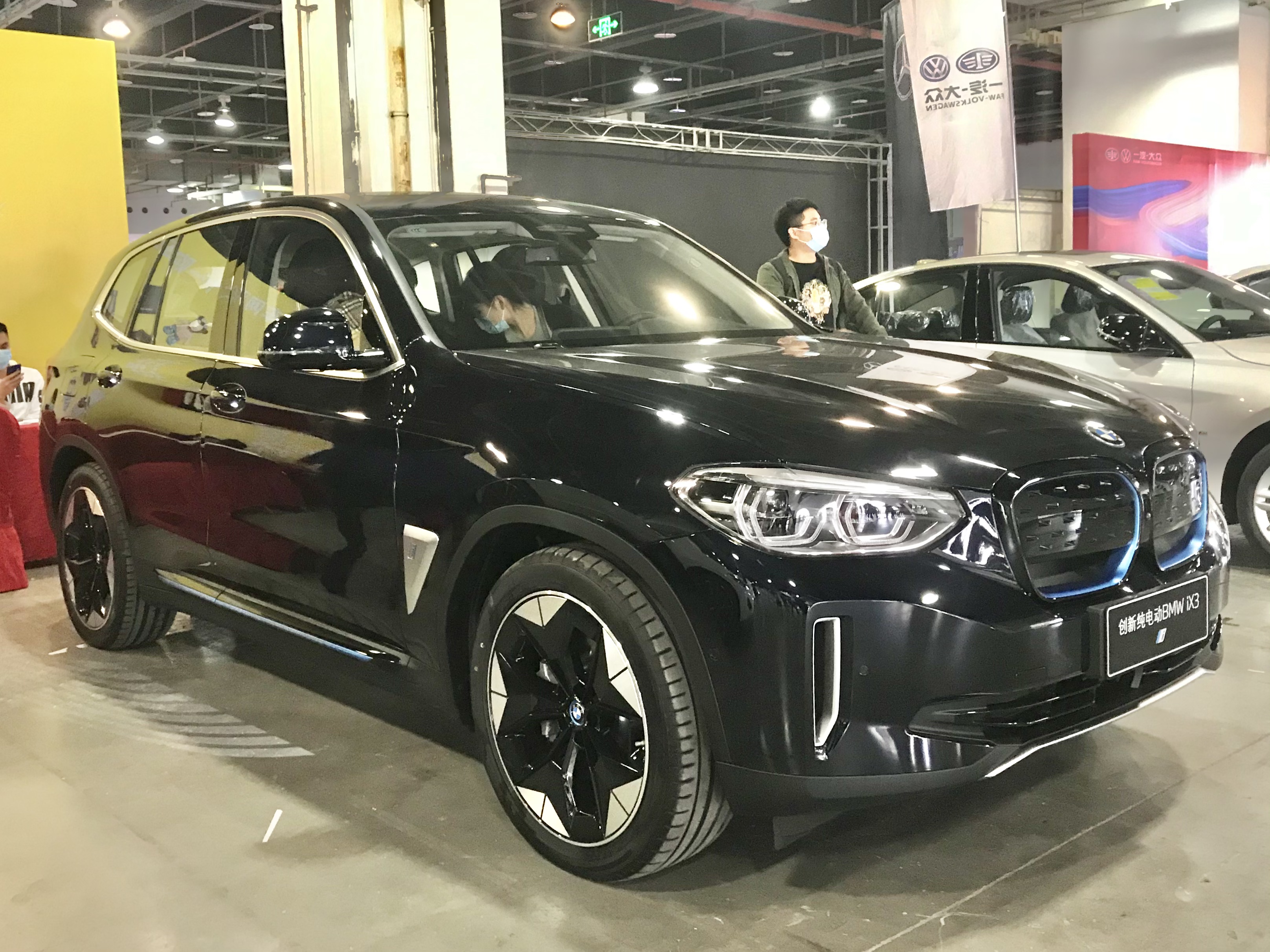
We're going to talk about the IX3 from BMW. Pricing has come out.
People are liking it.
Then the Lexus TZ that was unveiled the Highlander version of the Lexus.
We got a real world test of the Chevy Bolt EV that was really encouraging.
We got the Porsche Taycan taking back the Norbering record.
We're going to talk about that and BYD that is, you know,
just racking up hoarders for their new vehicles.
But before we get into that,
I want to just give a quick acknowledgement to today's episode sponsor.
We have GM Energy sponsoring today's episode.
If you want to experience more resilience and control over your home energy,
the GM Energy Home System had stationary battery power for always ready backup
energy for your home.
And the GM Energy PowerBanks takes in energy from the grid
and stores it for when you need it the most.
You can learn more at gminergy.gm.com.
We have a link in the show notes and we're going to talk a little bit more about
them halfway through the show. We are also sponsored by NeuroHUD.
Check out the NeuroHUD Pro featuring a true Tesla-focused HUD experience
with navigation, blindsport alerts, autopilot status,
and freely switchable display modes now on Kickstarter or trendtervision.com.
We have also the link in the show notes.
And we're going to talk a little bit more about them later on on the show.
But first, let's talk about the 4680.
Here's a situation right now on the 4680 sales from Tesla that is,
you know, frustrating a lot of buyers.
It's 4680 sales, you know, that's just for, that's what we call them.
Like there's a bunch, they're not all equal, obviously.
4680 is the format of the sale, but there's different chemistries available.
They're down, there's different companies manufacturing them.
It's not just Tesla, but originally they were announced at the original
battery day in 2020 and it was supposed to be the next gen batteries
that's going to enable a bunch of new performance in Tesla vehicles.
Lower costs, you know, that's when Tesla announced the $25,000 Tesla
that the 4680 was going to enable and higher energy density and faster charging.
Like basically like everything that you want from a battery sale.
And it hasn't really played out the way that Tesla originally announced.
And, you know, the story of it, like there was a dry electoral
manufacturing process that didn't really work out.
Now it's actually back on the table, apparently.
And the rent into a lot of bottlenecks that reduce not only the production capacity,
but also just the viability of the sales themselves, limiting them to, you know,
in 2023, 2022, 2023, some made it into the Molo Y, early Molo Ys.
And people were not impressed by the performance of that particular
Molo Y back then produced at the factory, Texas.
It was just not the best pack at all.
And then they stopped producing in the Molo Y with 4680
and only used it in the Cybertruck.
And the Cybertruck had, you know, a higher charging capacity.
But even then, it was not the best charging capacity.
And it was also enabled by the iconic volt system rather than the sale
themselves and obviously Cybertruck was a commercial failure by any standard.
And part of that can be attributed to the 4680 sales because it was much
more expensive than originally announced.
And like I said, the charging curve wasn't as good and the range was much lower
than that, well, depending on how you look at it.
But, you know, this also changed the trims and everything.
But there was, there was supposed to be a 500 mile Cybertruck didn't happen.
And then there was supposed to be like a $60,000 Cybertruck at 500 miles.
Also didn't happen.
So part of that blame go to the 4680 sale.
Now, a few months ago, Tesla announced that we are actually bringing back
the 4680 sale, Tesla made sale into the Molo Y, some Molo Y.
They did not elaborate on which one.
And that's part of the issue here.
Like people are not sure what sale they are getting and what trim of the Molo Y
because everything points to you not really one thing that sell in your Molo Y.
And so some of them are produced, all the sales are produced in Gigafactory
Austin, but they are selling some of them in the trim, pre and trim in the US.
And then now in they are in exporting them to Germany and making using them
in a Molo Y configuration there, the Molo Y with the rural drive long range,
I think is the a bit confused here.
Where did I put that in the article?
I just put Molo Y.
Yeah, premium long range will drive.
All right.
So that there was a you know, right away, that it is those sales
based on the range, the range drop from 661 kilometers to 609 kilometers.
I guess so now that's that's an ideal, you know, you get a range reduction of 52
kilometers. But at least you like you know that the thing that people don't
really know is the charge curve on this is is worse.
So now you get a total capacity of 79 kilowatt hour out of that battery pack,
74 usable.
So it's a little bit down from the previous 82 to 84 kilowatt hour version.
So you see here that technically that's it's not necessarily that it's less
efficient. So either heavier or not as energy, energy dense is that Tesla put
less cell capacity into the vehicle.
But so that's where you get your range difference.
But I might be a cost issue.
That's what did that for cost.
And the charging curve is the worst part.
So the charging curve, I'll respect the video on testing it.
And the they ran a 15 minute charging test from 10 percent say the charge
and only added 39 percent.
So 10 to 49 percent in that window.
So it's 27 kilowatt hour had it.
And in the same window, you would have 29 kilowatt hour had it on the previous
version of the of the Malawi with the that was the LG batteries,
which by the way, the LG battery pack is also was like the second worst.
So people were not happy with the LG battery pack either.
We did a report on that earlier this year where they are having a lot of issues
with them that are they're breaking down, basically.
So even compared to the worst battery pack that has ever had the 4680
in the new Malawi in Europe is also is even worse in terms of charging performance.
I mean, I'll expect which I see as like pretty much like a Tesla friendly
publication is said not to buy the car like we cannot recommend that version
of the vehicle. It's pretty, pretty rough.
So what do I mean?
You know, obviously we went from, you know, like double a size batteries
to bigger batteries, laptop kind of batteries to the two series batteries.
Now the four batteries you think as they get bigger, they would get better,
faster charging, better capacity, all this stuff.
What what's going on?
You know, I mean, I I'm going to go back to
this the CTL CEO's comments.
Like, I don't think Tesla knows how to make batteries.
And yeah, I mean, it is harsh to say, because obviously Tesla has not
been making batteries for long.
And I mean, we're talking about like six years at this one.
I mean, there was some efforts before the announcement.
They've been working on it for a little bit longer than that.
They've been working on that chemistry for two decades at this point.
So this is not completely new to batteries, but making batteries at scale
is extremely difficult.
And there's the we the only thing we can say for sure right now is Tesla
is obviously way behind in the making of producing their own battery cells.
That's that's clear as day.
And that there's some backlash like I'm showing a tweet right now here from.
An EV reporter from from France.
So a lot of people are canceling the orders because the thing is like Tesla
didn't really also let people know that by the way, we're switching
the premium real drive from from the LG pack to the to our own cells.
Like it's not it they don't announce that.
So they just you get like a little email, a little update in your app that say,
by the way, now you're you're down to 603 kilometers.
Well, by the way, it was originally 603 and then they bump it up to 609.
But still, so there's a lot of frustration around that.
And then people so that Tesla has to disclose.
But then after the fact, you get the car and you realize also the charging
curve is like a lot worse.
The charging curve.
So basically, that's like the situation right now, how it is.
But I think that the biggest story here around the 46 cities, like I think
the 46 city and Tesla's effort to make its own battery cells.
Well, while, you know, commendable, especially when it was done at a time
where Tesla, you know, thought it was going to keep growing
at their deliveries at 50% a year.
And then they thought like, are we gonna need, you know, to make our own
battery cells or otherwise our suppliers won't be able to keep up with our demand.
That turned out to be completely like miscalculation from Tesla's part
or or or a change of direction.
You know, I think some of Tesla's demand problems are related to their own decisions.
But I think the 46 city in itself set is kind of part of the reason
where Tesla is kind of falling behind in EVs, where much like the decision
to go with autonomy and then having designed decision within your vehicle
programs related to thinking that, you know, autonomy is just around the corner.
I think Tesla has made decision around their battery programs, thinking
that we have those 46 city cells coming.
So is it worth, you know, validating and integrating the latest and best technology
from CATL, from BYD and everything like that right now in a new vehicle program
or just keep the existing cells that we have that is getting cheaper because
it's the previous generation.
It's already all integrated into a vehicle.
So we don't have to do new validation and everything and just wait
until we get around 46 city.
And what has resulted in that is like we've seen Tesla Tesla's lead
inefficiency have been reduced to basically nothing, especially compared
to, you know, more premium automakers.
And then we've seen the charging lead from Tesla.
I mean, on the vehicle side, obviously, supercharger is still, you know,
top of the line, but except on total output capacity, obviously.
But the charging curve of Tesla's vehicles are, you know,
terrible compared to, you know, the latest and best technology out there.
So I think I think that is part of it.
I don't know if that makes sense what I just said.
Yeah, I mean, on a high level, you know, Tesla kind of built its company
on building, like it when built the Model S, they kind of had to build
everything from scratch, right?
They did all that stuff and when they built the Model 3 and the Model Y,
they did a lot of their own battery, you know, pack manufacturing.
So they kind of had came come from a mindset where, you know,
this thing doesn't exist yet, so we have to build it.
And that worked for them for a while because they, you know, they really
had to do that.
And there was, and, you know, GM and whatever they had, you know, other
they were like, LG, save us, whatever.
So, you know, fast forward to today.
You have the CATLs of the world and, you know, BYD and everybody else
building like large scale batteries and doing it well.
And all the other companies are just outsourcing to these and where Tesla
is still trying to build it.
So obviously Tesla is outsourcing as well.
But, you know, I don't think Tesla is, I don't think they're a leader
in the battery manufacturing business.
Bydometric, yeah.
Yeah.
Yeah, that's basically what you're saying is like vertical Tesla turned
to vertical integration by necessity, but took it a little bit too far now.
And, you know, now it's stuck with subpoor component that where, where they
be, you know, if it makes sense, if you say like, this part just doesn't exist.
So I'm going to make it myself instead of going to a supplier.
But if something out there already exists, it's better.
Maybe it makes sense for you to do it yourself.
Maybe you have the expertise, the capacity, but I think, but in
terms of battery cell, I think we now have the evidence that it's just
not the case with Tesla.
That's a good segue to the Tesla Semi, because the Tesla Semi is actually
one of the few vehicle programs that you use, the 4680 battery cells from Tesla.
And maybe that's where they're going to shine.
Now we have the actual pack capacity thanks to a California Air Resource Board
regulatory filing that was released this week.
So we know that the long range, parallel model version as a 822 kilowatt
hour pack, why the short, shorter range, standard range version at 325 miles
of range as a 548 kilowatt hour pack.
So a pretty massive, massive difference in range too.
And I made this little gift here where you can see the difference between the two.
So, you know, a pretty significant size difference.
So as you can see, Tesla basically had an other, you know, in parallel system
of battery modules that sits in the back of the longer wheelbase, a vastly
different vehicle here.
And I posted this week, I did a little total cost of ownership comparison
between the Tesla Semi, the Formula Model version and the comparable diesel truck
to try to figure out really, like, can this, you know, be diesel at, you know,
the cost of operation, which is the main thing that they look at fleet
operators and truck owners.
And at a 1.7 kilowatt hour per mile consumption, and depending on the
electricity, so the electricity rates is really the difference maker.
We talked about it last week when Tesla released their Megacharger prices.
And if you buy a Megacharger, Tesla charge you at eight cents per kilowatt
hour of a network fee on before anything else.
So before your actual electricity cost and everything, which the fee itself
is higher than Tesla said they were going to sell electricity had to Tesla.
So my owner is back in 2017.
So this has changed quite a bit.
But what else has changed, especially in the last few months, is diesel prices
are through the roof, like absolutely ridiculous prices.
I think they went up 40% since the beginning of the year.
It's absolutely nuts.
And, you know, we don't know what's going to happen with this war in the Middle
East right now in Iran.
Every day there's appears to be a resolution.
And then by the end of the day, it's like, oh, actually, it's not a resolution.
We just bomb them again and so on and so on.
So it's you're at the mercy of the geopolitical situation when you come to
diesel. So I actually build a little, did I link to it here?
Yeah, the whole cost of ownership here.
You have, you know, the whole study is in the article, but also build this
little HTML slider thing here where you can actually you slide the cost of electricity
and the cost of diesel.
So right now, because of these, I think this is the average 5.35 per gallons in
the US, you know, realistically speaking, it should, you know, sell down a little
bit. Let's say we bring it back to 450 at 450 that there's a semi-efficiency
100,000 miles annually, which I think is the average for class eight trucks,
eight miles per gallon, which is what you get from a brand new truck.
So there are more efficient than I put the price of $165,000, which is, you
know, actually on the lower side, let's say, so it's trying to advantage diesel
here to make it look as good as possible to diesel to show you how you can still
beat, you know, almost a best case scenario.
I mean, let's say best case scenario, the diesel price would be four dollars.
Now, at this point is like how much you pay for your electricity to charge the
test of somebody that changes everything else.
So you see at 14 cents per gallon, we have Dean here that says a diesel price
on our own 750 gallon in California, California, that's right, California,
but California, the price of the electricity that you're going to charge it
to is going to be way higher than this 14 cents.
So it doesn't even out, but pretty much.
So at 14 cents per kilowatt hour here, you save $64,000.
That's on five years after five years, $114,000 after seven years and over
10 years, which, you know, assumes like the lifetime of the truck, $208,000.
And this is by the way, I can't think for, so you buy the, the, the SSMI for
$290,000 and then also a $60,000 cost of installing a base charger.
So you have a home base where you have your charger.
And obviously this affects electricity rate.
Because this is probably what you're going to pay at home using the base
charger, but then if you go public charging, you know, the price is going
to be much higher and you can see here in life, how it changes.
So as soon as you get to 20 cents, like now I'm at 22 cents for the first
five years, you actually lose a thousand dollar difference, but you
gain it back in the seven and 10 year timeframe up to $72,000 in saving.
But then if you keep going up now, about the five years and seven years is
in the red at 24 cents.
And then if you go higher than that, like 30, 30 cents, everything is in the red.
So there's a, there's a big, there's a really high importance of controlling
your electricity costs.
That's the, that's the main thing.
But it's, it's feasible.
Like there is definitely scenarios where, and also this is before
incentive.
So for example, California, you have 77 50 a gallon per diesel.
And you have, uh, let's do it for fun.
Let's look, you have also incentive on the, on the side.
So let's say you're going to pay, uh, you know, you're going to
pay quite a bit in electricity.
Like you can go easily on average, let's say 35 with a mix of charging
on the road and charging at home, you know, this, you know, you lose
$120,000 by year five compared to diesel.
But now you put it at seven 50 a gallon.
I doubt it's going to stay there for a long time, but still goes off the slider.
Yeah.
I didn't account for more than $8, I think a gallon in the slider.
So that now you save $95,000 a first year, $265,000.
So basically the price of the truck over 10 years.
And this is before any incentive.
So in California, you have also electric trucking incentive, which basically,
you know, cut the entire, I think you, you're going to make money the first
year at this point.
Yeah.
So the difference in diesel that you pay over electricity is more than the
price of the truck.
So you get basically a free truck.
Yeah.
Crazy.
So I encourage you to look like your local like electricity rates here.
You put them there and then maybe a hat, you know, 50% if, uh, depending on how
much you think you would charge at a mega charger at a public charger and then
look at your local diesel price, which of course going to fluctuate, but you can
get a pretty good idea of just how, you know, financially viable at Tesla.
So my would be, was there anything else in there in the filing?
I don't think so.
Nothing too crazy in there in the Tesla.
So my filing.
All right.
Last Tesla news I want to discuss before we move on.
And then we're going to have a little word from our sponsors that we want to
talk to you about guys, which I think, I think it, you know, it's, I do value that
value added at like it's things that I think that you're going to be, you're
going to find interesting.
And then after that, we're going to discuss some non-test and news and then go
to you guys comments.
So if you guys have a question for us, you can put it in the comments right now
and get to it at the, uh, before the end of the show.
We, uh, we got some little bit, tiny little bit of hope still for the roadster by
the end of the month or maybe early June, that is the latest word for Elon, but
you know, take it with the biggest grain of salt you can find.
Because obviously you said that this thing's going to happen every year for
the last, uh, 67 years at this point.
And this thing was on bill almost a decade ago.
Same time.
What happened?
Say that again.
Same time as the semi.
Yep.
Yeah.
Exactly.
But the semi is now entering into production.
So it kind of makes sense that the roadster is supposed to be a year behind.
Originally that was the plan.
That was 2000.
So the unveiling was 2017.
The Tesla Semi was supposed to enter production in 2019.
The roadster in 2020.
I see we're now in 2026 and the Tesla Semi is entering production.
Um, yeah.
So what happened this week with the roadster is that there was two new
trademark filing.
So the, we, there was another one a few, uh, a few months ago in February that
we showed you that was the kind of a silhouette of the vehicle that was updated.
Uh, and, uh, now it's the word mark.
So this is a new roadster word mark, kind of have a little blade runner
field to it, like, uh, of the typo.
And, uh, and the second one is this badge.
So it looks like the roadster is going to have its own badge, which
would be a first for Tesla.
Well, unless you count like the plaid, uh, mol as next, uh, yeah, but they
still, they still have the mol as the next and it's kind of a had it.
Badge the roadster and then you have the, the Tesla badge, obviously.
But the roadster is almost like, or this size, this format of badge
could almost replace the Tesla badge.
Do you see that happening?
Like, uh, it's hard to say.
Like this year might have both.
Um, also it's not like, it's not like cyber truck either.
Like I noticed, um, it doesn't feel like, you know, they're going with
the spray paint on the wall, kind of graffiti stuff.
This is a different kind of vibe.
Yeah.
I mean, it's a sleek, you know, ultra hypercar.
So it's, uh, and also it's going to be much more expensive.
I think you want something a little bit more classy, maybe.
But yeah, now the latest timeline for the, the, the Tesla roadster is an
unveiling end of May or early June, uh, you know, and said that the
demonstration is going to be the craziest thing you've ever seen.
And, um, yeah, it's, uh, I think it might be happening.
To be honest with you, like, I think when, when the, you know, FSD aside,
let you know, two weeks thing, but normally when Elon's timeline for an
unveiling or something keeps getting closer and closer and closer, at least
you have an idea that they're working on it and everything is just like
something is not going great, probably in the, you know, they probably
tested the demonstration didn't go super great.
And also I would note that, you know, this is a demonstration of an
updated version of the new roadster, which was unveiled almost a decade ago.
So I think that, you know, we're going to see the new vehicle and then
bringing that to production is, uh, you know, likely going to take another
year minimum if, and that's a big if.
All right.
Let's talk a little bit about, uh, GM energy or sponsor for this week's episode.
All right.
Today's episode is sponsored by GM energy.
Smart energy features are no longer just a luxury.
There are necessity.
One in four homes experiences power outages each year from grid shutoffs to
extreme weather.
Many homeowners are looking for new ways to stay powered and connected.
Fortunately, home energy systems can be offer resilience, style, sustainability
benefits all in one package.
A power outage doesn't have to put your life on pause.
GM EV owners can now use the GM energy home system to beat the blackout.
This advanced system allows vehicle to home capable Chevrolet Cadillac or GMC
EVs to store energy and when needed supply electricity back to the home,
keeping the essentials running and your sanity in check during an outage.
If you really want to experience more resilience and control over your home
energy, the GM energy home system adds stationary battery power for always ready
backup energy for your home.
The GM energy power bank takes in energy from the grid and stores it for
when you need it most.
Learn more at GM energy.gm.com.
A huge thank you to GM energy for sponsoring the show.
Yes, thank you very much.
And then we also sponsored for today's episode by NeuroHUD.
All right.
This week's episode is all sponsored by NeuroHUD, the world's first true heads
up display built specifically for Tesla drivers.
You can currently get the NeuroHUD Pro for a special limited time price by
hitting the link in the show notes or visiting trantorvision.com.
NeuroHUD brings key Tesla driving information directly to your line of
sight, including Tesla navigation, blind spot alerts, autopilot status and more,
helping you keep your eyes on the road where they belong.
What makes it especially unique is is the installation process.
NeuroHUD is completely noninvasive with no trim removal, no factory wiring
modifications, and it's 100% warranty safe.
It works through Tesla's API integration and direct visual reading of the center
screen. The NeuroHUD Pro also gives drivers the freedom to switch between
windshield projection mode and combined or display mode, depending on driving
preference or visibility conditions.
It's also been shaped directly by the Tesla community with over a year and a
half of development feedback from thousands of Tesla owners, and it's
already surpassed 400,000 in Kickstarter funding within the first 72 hours.
Check out more details on Kickstarter or at trantorvision.com.
Thanks again to NeuroHUD for sponsoring.
Yes, thank you, NeuroHUD and TrantorVision.
Let me go back to this one here.
All right, we have 12346 other news items to discuss before
we jump into the comments section.
So if you guys have a question for us or any comments about any of the stories
that we discussed today or any doctor story in the EV world that you want
to set our eyes take on, you can put them in the comment section below or live.
We are already getting comments from YouTube, Facebook, X.
We have Paul Mueller on X.
I said the roaster badge looks like the punisher, right?
The little three, the line on the bottom is kind of punisher-like.
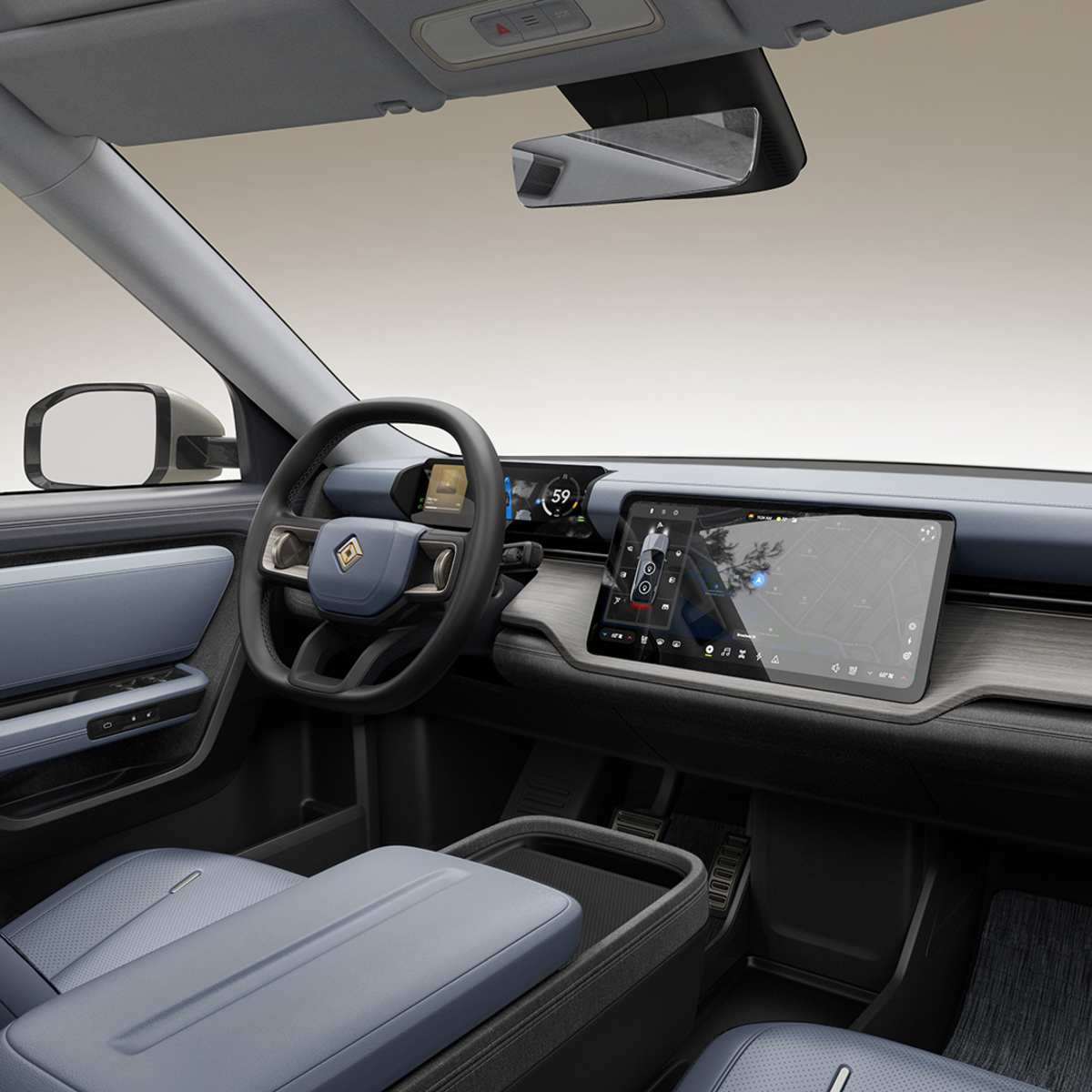
All right, so Seth and I have been talking about like, yeah, the R2 is amazing.
R2 is in the mid-size SUV segment, one of the most popular
segment ever, and it's probably going to do quite well.
We've seen the pricing being released lately with the full spec, you know,
it's top of the line stuff.
But, you know, Rivian was first on the field.
The big thing that it was, I mean, it was like 2019.
I want to say that they unveiled the first prototypes and everything and they
announced the R1s.
The big thing was like it's an electric pickup truck and it was like no electric
pickup truck available at the time.
It was a big deal.
And a lot of people still, when they think Rivian, they still think pickup.
And the R2 platform would be an ideal platform to make a, you know,
mid-size pickup variant.
And we've been pushing that for a little bit now.
And it's nice to see RJ's current, the CEO of Rivian, sort of hinting had it.
So what did he say exactly?
I want to use his word.
So he was asked directly about, they were talking about variants of the R2.
But at first it sounded more like they were talking about trims.
Like different, different, like the R2 we will drive versus the R2 I will drive,
et cetera.
But then when asked specifically about a pickup variant of the R2, Scarridge
didn't deny it.
Instead, he told Rodders that they were building the upcoming Georgia Plants 2,
and I quote, allow for a different variation without disclosing the
specific details of those variation.
So he acknowledged that it could also be like a R2X, just so thinking of like
the R2 3X, which is, the R3X, sorry, which is the adgeback three,
three mortar, you know, unhatched at the unveil of the same time that they
unveiled the R2.
So it could be that too.
But, you know, he said that he was careful not to announce a new vehicle
program or anything, but it basically didn't deny that yes, the R2 could
support another pickup variant, and that is something that could be built at
the Georgia plant that is under construction now.
So this is exciting.
Yeah, I mean, it kind of, the pickup kind of makes a lot of sense.
Unfortunately, or, you know, fortunately for consumers, like there are some new
options coming out, like Slate, Ford is talking about it.
I think that some of the Chinese makers are also smaller pickups.
So good for consumers might be a little late for reviewing the jump on that.
I think it would probably, as of now, I think it would sit in its own kind of
market.
I think Slate is downmarket from that.
You know, Slate is kind of, you know, I think it's a really cool idea and
everything, but it's kind of out there.
Like, you know, even in no infotainment system, you have your phone.
I mean, I think it basically just has AC in that, and that's it.
It's a completely different vehicle.
And then you have the next gen Ford.
I don't know how much people are counting on Ford to actually deliver with what
they've been doing with their EV programs in the last few years.
But it does sound like it's still the plan to bring the next gen cheaper
pickup, but even then it's supposed to be like a $30,000 pickup, which would be
very cool.
But they will probably be closer to the Slate than it would be from an R2
pickup, in my opinion, because an R2 pickup would probably still be like 50
to $60,000, I think, like in that range, maybe start at 50 and goes to like 60,
65, which there's nothing in that range right now at 50, starting at $50,000.
And I think it would still be like a premium vehicle like Rivian is known for.
Speaking of premium vehicle, the IEX tree is a lot of people eyeing this right now.
It's a very interesting entry from the MWU, the 2027 IEX tree pre-orders are
open now and we have the price and final range.
And it's interesting.
It's not cheap, but for what you get, it's really not bad.
So the 2027 IEX tree 50 X drive starts at $61,500.
And I think 61 is with the delivery fee, I think, too, because I remember seeing 60.
So I would assume that includes the delivery fee.
That's the sport trim standard with 20-inch Ariole bi-color wheels,
multi-function steering wheel and driving assistance plus.
So that's the option that you get.
So obviously BMW also has a lot of other, you know, you can configure this thing easily over
$75,000 if you if you want to by just packing it up.
But at that price, you so let me make sure I'm not.
I just want to make sure the range here.
Yeah, so the base version with the 20-inch wheel on summer tires is the one that gets you 435
miles of range.
And that's EPA, I think, right?
That was the US release.
Yeah, I think that was the US release of 435 miles of range on the on the EPA.
It's it's, you know, quite a bit of range at that.
You know, you would have to go with a lucid air normally to get to get that kind of range.
And that's, you know, $10,000, $15,000 more.
And then, you know, you don't have a big SUV because this is still full size SUV here.
And a nice one too, I think the visually speaking, like the upgrade is
the smaller beaver teeth instead of the big beaver teeth, big upgrade.
A three-quarter back too.
We don't have a picture of it here is like really nice.
The profile is really nice.
I think this is also something kind of a market of its own in the in the premium segment.
Like I don't think this is going to be like a Z-Rex, like MOLY competitor.
Even even the R2, I think it's probably more of a R2 competitor, but even then
it still starts like $10,000 more than the R2 basically.
Technically, the R2 is going to start at $45 by the end of 2037, but for now it's still
like $10,000 more than the R2.
So it's not exactly the same segment, but still pretty close.
Yeah.
And I always think that Rivian really is so much more off-road focused than Tesla or BMW
or anybody else.
Yes.
Yeah.
So not necessarily someone would be thinking of like, do I get R2 or do I get the iX3 because
of that?
But I think if you are in the market for an iX3, like you might think, maybe I can look
at the R2.
It's a little bit cheaper and I just I get more off-road performance, maybe not as comfortable
on the road.
But you know, Jeremy Clarkson with the R2.
Yeah, just a $5,000 difference is huge.
Yeah.
I mean, Jeremy Clarkson would probably tell you to get the iX3 because he had an aversion
for the anything that's off-road because they see and he does have a point.
Like most people that have an off-road vehicle, if it's your main vehicle, probably not going
off-roading nowhere near the majority of the time.
So technically you want to optimize for on-road comfort, but still.
This thing is going to be optimized for off-road comfort, for on-road comfort, sorry,
the Lexus TZ.
So it's basically, if I understand correctly, it's the Highlander version for Lexus.
And so we already discussed the Highlander quite a bit.
We're pretty impressed.
I think they hit a lot of the, you know, they check a lot of boxes with the Highlander.
And obviously the Lexus TZ checks all the same boxes with a little bit more luxury.
It also comes with a 77 or 96 kilowatt-hour battery pack.
You're also going to get, you know, up to 300 miles of range.
You're going to get a towing capacity of 3,500 pounds.
Not crazy, but still usable.
Get a little bit more refined interior, a bit more button heavy.
And obviously you have the three, we show the two-road right now, but it's a three-road
SUV.
The second-road seat looks like really nice captain seats are like them.
Here you see the back with the third-road down.
And pricing, I think the pricing is the only thing that they have not released so far.
Yeah.
Charging speed of 150 kilowatts, probably one of the main thing that the,
the boxes that they didn't check for like a 2026, 2027 vehicle is just a little bit behind.
Yeah, that is kind of weird.
And no fron too.
And that's the difference.
Yeah.
No fronks that are disappointed by that.
Yeah.
So, you know, I got a Mercedes EQS and doesn't have a fronk.
And, you know, it's funny because like Ford will say like, you know, their
Mustang Mach-E customers don't like the fronk, but it's a, you know, it's a big heavy thing to lift
up and it's, you know, you can only open it from inside.
Whereas like a Rivian or a Tesla owner will be like, yeah, the fronk is awesome.
Like I use it all the time.
This is very easy to open.
You can open it from the app.
You can, you know, whatever.
So it's not just building a fronk.
It's making it easy to get to and, you know, making the hood light.
And so if you're not going to do a fronk, it's better to not do a fronk than do a bad fronk
because nobody's going to use a bad fronk.
You're not going to do it.
Don't do it.
And I guess.
I would like to look under the entire cover to see what's like what's going on.
Like you would get a better idea of like why they could not do one.
But I do agree with you.
Like if you do one that like basically can fit a laptop, it's like, what's, what's the point?
But I mean, in the three rows, because personally, I don't use my fronk.
I only use my fronk if I absolutely need it.
Everything else is full.
I use it.
But for, for, if you have a three third row SUV though, you have a much smaller trunk
and it gets like, if, if your car is full of people and you still need to carry some things,
you know, the, the, the trunk gets filled right pretty quickly.
Then the fronk become automatically super more useful.
So it's something to think about if you're looking at three row SUVs because they are
some that do have a fronk.
All right.
Chevy Bolt EV, the new version just got a range test from our friends at Edmunds.
And good news, it, it beat the, the, the EPA, some caveats though, but
so the official range is 262 on this.
Yeah.
Up to 262 miles of range on the 65 kWh LFP battery.
It's, you know, not, not, I don't think it's a lot more than what the original bolt was getting,
but this is the EUV version too.
So it's a little bit bigger version.
Yes.
Three miles more than the 259 that was in the 2023.
Yeah.
So on paper it is 391, but Edmunds did their test and they got 290 miles on range
under their, you know, real test scenario, which they claim is, you know, more representative
of the average driving experience, but it's so, so it's 60% city, 40% highway
average of 40 miles per hour, which is what, like 60 is 65 kilometers an hour.
So, I don't know.
I, because it was 60, 60 city, 40% highway.
So that means that 60% of the mileage was city.
So that makes sense for the average speed, you know, being dragged down by the city driving
versus highway driving.
But then if you're looking at distance, normally I do a lot more distance highway
versus city.
Like I drive a bunch in the city, but if you look at the distance that I've driven
in the city, it's nothing compared to the distance I drive on the highway.
So I don't, I don't know how representative their test really is,
but, but it's good that they still, they beat it in a real world test.
So I, I take that still as a win for, for, for GM, for Chevy, but I would, you know,
your mileage may vary.
Let's just say it like that.
Literally.
Yeah.
All right.
Porsche is back at the top of the leaderboard on the Nurburgring EV record, production EV
record, you know, and another thing that needs some caveats here is what, what counts as a
production EV.
Sorry, my, my trouble.
But they have their latest version of the Porsche Taycan Turbo GT, which is equipped
with a new Monday kit.
And with that new Monday kit, which they claim is factory installed.
So you can buy it and it's installed a factory making it a production car.
Officially from the Nurburgring record though, it's, it's classified as an electric
executive core category.
And the record is now 655.55.
If I remember correctly, it's like a good, I'm sorry,
a good like three seconds better than the BYD record, which also was like stretching it.
I think they are, they are planning to make, so it's the Wangyang U9 and it's, you know,
the U9 is definitely a production car, but it was an, you know, a track version of the
U9 called the U9 Extreme, which they plan to make 30 units on.
So again, production car by name.
Yeah.
659 was the U9 back in August.
So the record didn't last a year.
And this is fun.
Like this is like the record, you know, for a while it was between Tesla and Porsche.
They were, it was going back and forth in the early 2020s.
And then Tesla lost it in 2023.
It hasn't really, you know, competed for it since because they haven't released anything
new really since 2023 in terms of the, you know, of its top performance cars.
Then it was BYD taking it.
Then there was also the Xiaomi with the Su7 Ultra that competed for it.
And now it's the Porsche Taycan with this new kit.
So if you compare it, like the Xiaomi Su7 Ultra, but it was a stripped down version.
So they remove a lot of the interior, got 646.
So just a little bit faster, about 10 seconds faster almost.
It's significant, but you cannot, you cannot claim it because it was stripped down.
So maybe, maybe we see the Xiaomi coming back with the Su7 Ultra and trying for it again.
Yeah.
And they all use different drivers, but I think these drivers are pretty optimistic.
They're like right at the tip of their game.
Yeah.
They make a difference for sure.
It's not all car, but you know, they get so used to it for a while that it makes a difference.
I think, I think that the driver for the Porsche Taycan this time was also the same driver that
got a record when they were competing against Tesla.
Did we meet that guy in Germany one time?
Or were we driving in a car with him?
Oh, I might be.
But the Porsche though, I don't know.
Maybe last time I went with the Porsche.
Maybe that was just you, you're generally the one that does the Porsche test drives.
BYD, BYD has been, you know, there's a lot of headlines about BYD cells going down and everything.
But BYD is kind of like Tesla and early last year where they're updating a lot of their vehicle
programs right now and they are releasing the new blade cells.
So their cells are going down quite a bit, but they are ramping up for a huge second half of the
year and they're showing up with a lot of pre-orders locked in.
So this is their new SUV that was unveiled, you know, just a few weeks ago at the Beijing
Auto Show and, you know, it has the latest blade technology with a five minute flash
charging up to a thousand miles of range, a thousand kilometers of range, 590 miles.
And it starts at just 250,000 yen, which is about $37,000, goes up, you know, $10,000 more.
And they announced that they have already over a 100000 reservation for it.
It's, sorry, it's basically a kind of a Toyota Highland competitor, I would say.
So you see here in the interior.
Yeah, that's a little different than a Toyota Highland though.
Almost a Lexus, almost the Lexus version.
So you basically have the Lexus version for half the price here.
Oh, I don't know, that's not fair.
I think we don't have the price of the Lexus just yet, but you know, it's probably going to be around
$10,000 more than the Highland, so it should sit like in the 60s.
And this starts in the 30s and, you know, fully equipped like that and everything,
it's in the 40s.
So yeah, probably $20,000 less than the Lexus.
Yeah, there are no jokes.
I get why they're nervous, the Jim Farley's of the world when they talk about it.
I think Jim Farley is probably the most honest one, and he said something like,
ah, if they come in, it's over.
Just like close it all down.
Detroit gone.
All right, to the comments we go, why is Tesla not prioritizing FSD on the semi?
Seems a bit odd since they've got the entirety of the passenger car business on autonomy.
It is a good question.
Yeah, we've talked about that before.
It's, I think it's strategic.
Like at first, they even said like, oh, they didn't say anything about it.
And then when they unveiled the production, like the first production version in 2022,
which was just for the low volume hand-built vehicles,
they talked a little bit more about it and focused more on the driver assistance system,
the safety and all that.
So it's becoming quite clear.
And also we see it on the prototype, all the hardware is there.
So they're ready for it.
I think they don't want to talk about full autonomy because I think it's,
it would potentially scare buyers.
I mean, I don't think it would scare necessarily like fleet operators and all that,
but owner's operator for sure, they don't want to get the trucking industry,
you know, to think negatively of them as like, this is a product that you buy to replace yourself.
So it's more of a strategic approach not to talk about it.
But if they solve it for the cars,
I'm sure they would apply it to the trucks pretty quickly.
And they share the same hardware anyway.
All right. Dean McManus, diesel prices are around $7.58 a gallon now in California.
That's crazy.
That's nuts.
It's nuts.
Like we talk about $10 a gallon, it's going to happen.
Yeah. I mean, I think it happened before, right?
I think there was one of the crisis that has like,
yeah, like, you know, like in Malibu or something.
Yeah.
Touched.
All right, Crown of San Diego, because FSD is a toy for techies to play with.
It's a liability for any company to use it with an employee.
As of right now, it's kind of true.
I don't think they would actually use it for commercial trucking right now,
but there's there's features of it can be used for assistance driving.
But in the future, you know, who knows potential.
Paul Mueller says the Roadster badge looks like the Punishers.
Yeah, we agree with that.
I mean, question.
Do you think Elon or Drew set such crazy expectations for the 4680?
Why did they not develop LFP and said?
They there is like I said earlier in the show,
there's different chemistry of 4680, including LFP.
So they can make sales LFP sales with 4680.
Eve, for example, made also 4680 sales with LFP.
There's plenty of companies that do that now, including Tesla.
I don't think the chemistry itself is the problem.
I think it is the way Tesla manufactured the cells.
That is just not optimal right now.
Like I said, they were quite new to making sales,
especially sales in volume.
So they're not on par with with top of the line manufacturers right now.
All right, midsize R2 pickup would be a hit.
I think we can do that.
Do you think it would be better for Rivian to launch an R2T or R2S?
Do you think they would have been better off?
Well, but the R2 is the R2S, is it?
Yeah, the R2 is the R2S.
Yeah, so I don't know.
I think they're kind of moving away from I don't know what they're doing with that.
Maybe once they launch an R2T, they call the R2 the R2S or something like that.
I think I definitely think the R2S is the move in terms of volume,
you know, getting out of the volume and everything.
I think the biggest question is more the bigger question would be like,
should they do the R2T before they do the R3 or R3S?
The way I see it, probably yes.
Because if you learn from Tesla and you should, because you know,
they were trailblazer in all in EVs, profitable EVs, high volume,
and expanding as a new brand globally, there was extreme growing pain for Tesla.
Once they went from, you know, North America to Europe with the Model 3 in volume,
almost went bankrupt.
It takes a lot of cash to expand to new market and expand in volume doing so.
I think Riven is already well established in North America, still growing in North America.
And I know that they are hiring global markets.
I think that the R3 is going to be good for that, you know, smaller vehicle,
better for European market, better for Asian markets.
And I think that if they do the R2T, whatever it's going to be called first,
and maximize the North American market while they plan and start, you know,
investing into the rollout in Europe, starting with the R3 and then the R2 behind it.
And the R1 is also potentially just maybe a little much lower volume.
I think that would be the best strategy in my opinion.
All right. Speculator question.
What is the minivan like vehicle Elon mentioned?
Is it just the Model YL?
Yeah, we didn't get a great risk.
That was, I think, almost directly asked during the last running call,
and we didn't get a clear response from him.
Right now, I think the speculation, it's either he was talking about either Robovan or the Model YL.
If he was talking about the, like, the Robovan is just stupid to think of it as a van and to
think of it as, you know, an actual like minivan, which people would think about, you know,
consumer product that you can buy. But, you know, I wouldn't get it past Elon to think like that.
While the Model YL can also make sense when you say, like, oh, it's even better than a minivan.
Like, I think Elon probably would say that also.
And it's closer to reality in term that you get a three-row vehicle.
It's not a minivan at all, though.
But again, it's not a minivan.
He said something better than a minivan.
So yeah, I think the two top contenders are Robovan and Model YL.
Yep.
And the Model YL is coming.
A few weeks ago, we reported it was spotted with manufacturer plates in the U.S.
So, you know, it should be coming, you know, early second half of this year, I would think.
All right, he follows with the question, who do I have to yell at to get a Nax bi-directional
standard finalized and released?
There he is one.
Yeah, I was going to say, doesn't Nax use the CACS stand?
Just a different plug.
Yeah, the standard exists.
Not every automaker has officially adopted it.
And therefore, they're not officially, you know, authorize the use of the battery capacity
in their vehicle with specific bi-directional chargers.
So there's a few bi-directional chargers now that you can buy, you know, directly from the
automakers, like Tesla, like GM, like a few others.
But there is, you know, a growing market now of third-party system.
We talked about the Synergy one before.
That's really interesting.
There's the Discibel one also built right here in Montreal.
And they have a partnership with Volvo.
They have a partnership with Polestar and all that.
So there's these systems out there.
And I think like everyone, the standard approach is kind of figured out.
Now, I think it's like just validating each unit with each vehicle and all that.
I think that's what's happening.
And there's no clear way to do that yet.
Well, there's no easy process to do that.
So it takes a while.
But I agree with you, we need to standardize all of that.
You don't have to buy a specific system from a specific manufacturer.
And obviously, if you have a home right now, I want to install one of those system in it.
If I buy the GM system or buy a Tesla system, like obviously, if I sell my home,
I don't want the next person to be stuck with absolutely having a Tesla,
absolutely having a GM car just doesn't make sense.
So yeah, it needs to be all standardized.
All right.
Question from Dean.
Is there any news about the Lucid Cosmos?
No, not really.
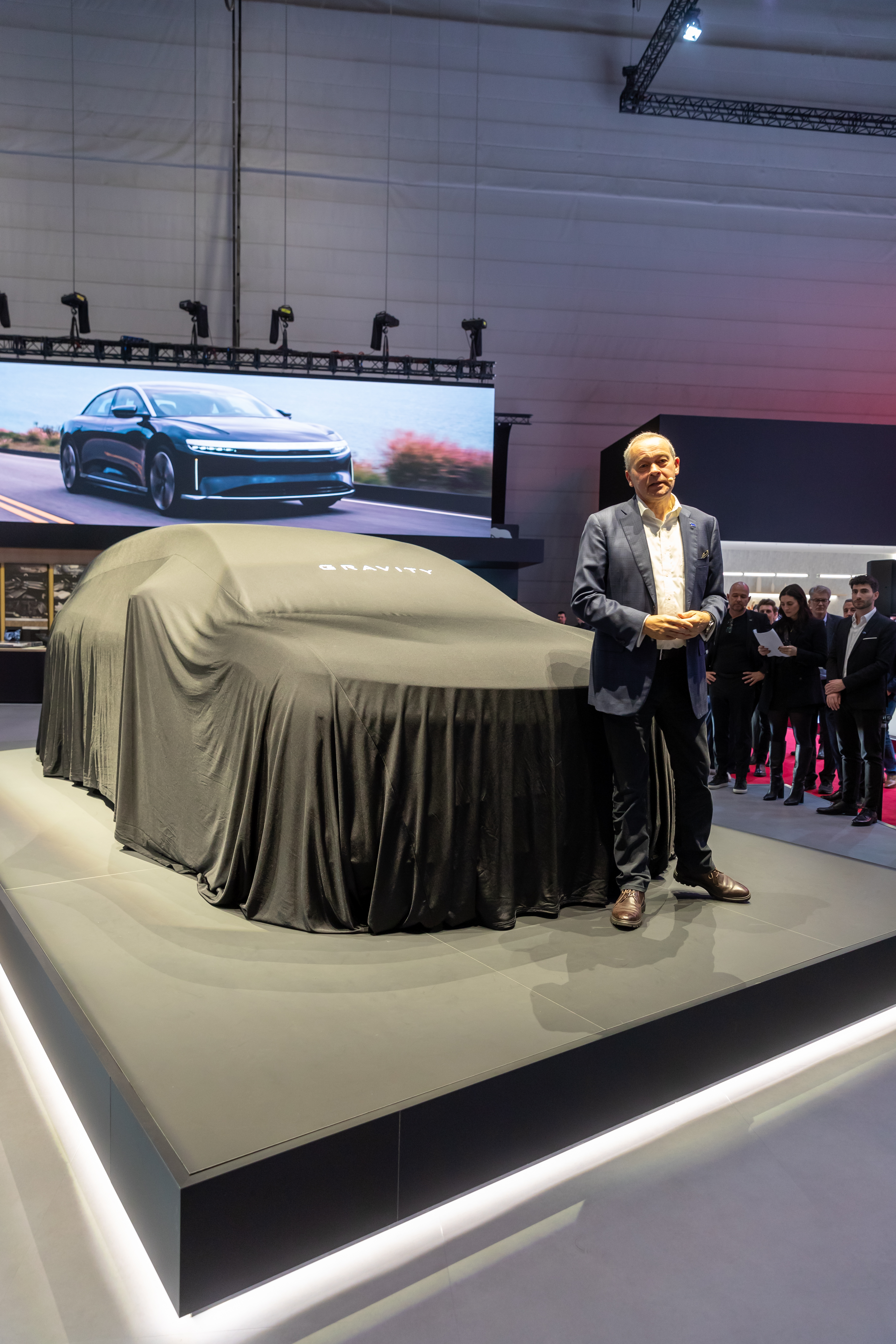
I think, you know, they're still ramping up the gravity.
And they're not focused on that too much.
But by the end of this year, we should learn a little bit more about that.
So model three, model Y?
Well, yeah, probably more model Y, but yeah.
All right.
Specular pretty much every pickup has failed so far.
What do you think are the chances for the upcoming Slate, Scout,
and $30,000 Ford EV pickups?
You know, I think they have failed, you know, in term,
if you look at the actual like sales volumes, only on the basis of prices.
I think like the Silverado and all its different variants from the Sierra EV to the even the
Hummer, like if you had all of them together, they also like the sales are not awful for vehicles
of that price.
It's not bad.
It's just, you know, they are expensive.
And yeah, I think if we can go down market a little bit,
I think pickups are going to do just fine.
Also just the, you know, I think the U.S. is obviously the biggest market for pickups.
And there's still some EV adoption issues in the U.S. that's not helping.
But yeah, I think if you go to other markets and you actually launch these electric pickup
programs there, you know, they're not doing it right now because, you know, it's very small
vehicle programs.
But if you go to a market that's not big on pickup truck that has a few of them,
and then you launch that, I think it takes over those markets pretty easily.
But yeah, I think the Slate Scout and, you know, cheaper Ford pickup would be on the
market of their own that, you know, it's untested yet.
And I think they would do well because like I said, again, the price is the biggest
disadvantage right now for electric pickup trucks.
All right, Lakers, so X question, what's the impact of the used Tesla market from the
earnings call and the Hardware 3 admission regarding unsupervised full self-driving?
Are Hardware 3 cars about to fall off a cliff?
I haven't looked into that specifically.
But, you know, price of used EVs including Tesla are doing very well.
So I think that would camouflage a lot of any drink impact on the Hardware 3 stuff.
I think in reality to the admission that happened at the last earning calls,
I mean, if you were shocked by it, if you, you know, didn't see it coming or something like that,
like I think you are in the very small minority that was not following this closely enough
or not, you know, open-minded as the idea that Elon was lying to us for years.
So it's not a surprise.
I don't think it affects the price greatly.
I think also people are kind of in the holding period right now, like,
because Elon said that he was going to offer more money,
like a discount on you upgrading to a new car.
If you have an Hardware 3, then there was the mini factory stuff,
which, you know, I can kind of finally at least tell you right now,
it's never going to happen in a meaningful way whatsoever,
any kind of like major scale that Elon was talking about.
So people are still waiting.
It's like, what is going to be your actual recourse if we go direct to Tesla?
I still in the cam that I think most of this is going to be resolved in courts
with settlement in courts.
You know, there was, I don't know if you follow this with the Apple this week that I found interesting.
Apple got a settlement for the Apple intelligence stuff.
Yeah, the AI stuff for $250 million.
Now, I don't remember exactly the number of phone that's affected,
but I think it's a few million.
It's like five or between five or 10 million.
So it's nothing.
It's like, I think it's up to $95 per person,
depending on like if you get the pro phone and everything.
Oh, hey, Dougie.
But, you know, it's nothing.
But this is for, you know, it's not even a feature that Apple sold to people.
It was like in their marketing, they were talking about this Apple intelligence
stuff that never came to fruition through software update.
Similar thing to what Tesla is talking about.
The big difference is that Tesla actually sold the features to customers
on top of buying the vehicle and then never delivered.
So it's a much bigger deal, obviously.
But it's not that like Apple, it's already like all set,
everything is done while this thing was like,
happened like a year and a half ago or something.
I know, it's like, it went from beginning to end so quickly.
I guess cars' life cycle is a little bit longer than a phone, but not much.
Yeah, depending on how you use it.
Yeah.
All right, question.
Would you get an R2 in 2026 with no LiDAR?
They had a lot of quality issues with the R1 Refresh.
Yeah, those are kind of two questions.
But I mean, I guess the main question is like,
should you buy a first generation of a new vehicle program?
Yeah, normally I would tell you no, like if you're an early adopter and everything
and you're like, don't mind having to go through a few more service visit
and maybe a few recalls, maybe that's fine.
But generally it's not, if that's not in the cards for you,
you should skip the first gen, the first few months of production,
even the first year production sometimes.
Then there's the second thing going on on top of this is that apparently,
so Rivian R2s are getting into production right now.
First deliveries of customers in the next few weeks really.
Probably, I would assume it's going to be like some kind of event
at the end of the month or early June, something like that.
And those cars don't have LiDAR.
And apparently they're only going to have LiDAR at the end of the year,
I think, or early next year.
I want to say, say at the end of the year,
they're going to have a LiDAR to it.
I would say yes, if the automated driving features are important to you.
Like if that's important to you, go for it.
But Rivian is taking a Tesla approach where you buy them.
I mean, I'm sure they're going to have a bunch of safety,
active safety features that are standard,
but the more convenience features are paid features.
So if you don't want them, or if you're okay with just having
some kind of level two advanced level two system, just like FSD,
then you're going to probably be fine.
But Rivian has been clear that they plan to move to ends free by the end of the year.
And then eyes free, I think they said by the end of the year too,
they're going to have some kind of level three in certain conditions
by the end of the year, or at least by next year.
So if you want that, I think that is all stretchable without LiDAR.
Honestly.
But then if you want more comprehensive feature,
I'm sure they're going to focus on LiDAR for more advanced level three up to level four.
I think that makes sense.
Yeah.
All right. Got a series of questions here.
Rivian might want to cancel the R1T because of closed sales,
might even cancel R1S if Rivian can build a R2L long wheelbase.
So we're talking kind of like the Tesla model YL
with third row small seats and an R2T, four and a half foot bed,
which is basically like a four and a half foot is not,
you can't even put a bike in there.
Yeah.
So then at 152 doors, 40,000 price tag and Rivian R2T with two doors,
a sun foot bed is competitive because all right.
So we're going kind of off the rails here, but yeah,
he continues Australia diesel is $9 to $15 a gallon.
But that's Australian dollars.
So I don't know, it's not that much less than U.S. I would think.
Yeah.
Maybe that's change.
Yeah.
Australia should be all EV.
You have the highest penetration of rooftop solar,
photovoltaic and you can buy cheap Chinese EVs.
I think they're going fast right now.
I don't know what's the EV new sales rate.
The downside of Australia is everything so far apart.
Yeah.
As of April, 2026, it's between 16 and 17%.
So not, not huge, but still like twice, twice the U.S.
Maverick is four and a half foot, but smaller interior than the R2.
All right.
We're all going to buy these small pickups.
Test and GM bi-directional chargers are proprietary, not standard.
I think, you know, we talked a couple of weeks ago with a GM energy guy and he said that,
you know, while currently the software limits GM to only GM vehicles,
they're going to be upgrading it as the specs, you know, mature so that it'll work with all vehicles.
The charger are proprietary, but the protocols are the same.
And he used the CCS bi-directional charging protocol.
So I think it's all going to be doable.
Maybe some limitations, you know, depending on the chargers and the car, depending on the bottlenecks of each.
But yeah, it's, hey, there's the dog.
All right.
Slate sent out an email this week saying they've got the robots installed at their new factory
and they're still planning deliveries by the end of the year.
So we've got that going for us.
You know, I can see it happen.
It's definitely in the realm of possibilities.
All right.
Any updates on NVIDIA's Alpameo?
We know that the Mercedes is moving forward with using it.
And I'm sure there's going to be a lot of companies that are going to test it out.
Like, I don't know what's going to be the adoption rate because it's not a full system.
So it's a great basis for a computer vision system.
So you can, if you're an automaker, you can decide like I can, you know, buy NVIDIA system,
you know, this is hardware, use Alpameo and, you know, kickstart a FSD competitor program
with that, install that Alma vehicles, gather the data, train it myself.
I think it actually comes with, you know, a big data set to start with also.
So you can kickstart your program with that.
And, you know, we've talked about this quite a bit, but with the, you know,
my experience in China, seeing the X-Pen system, the Huawei system, the Xiaomi system,
is like, it's pretty clear to me that you can catch up to FSD pretty fast now.
Like, getting from, getting to the 99% level is very doable.
The bigger question is like, who is going to be willing to go to the 99.99999 and
trade responsibility and go level four?
In the consumer vehicle market, I mean, there, like that's going to be a lot harder.
And, you know, Tesla definitely has a lead there, I would think, but it's like how much
of a lead and just how fast can you catch up?
It's just, it's more of an accelerator of that stuff.
But there's also plenty of other competitor as well.
So it's, I don't, I don't know just how big of a difference Oppo Mario makes.
All right.
Carl says the challenge with EV pickups has been that the battery packs need to be big
to make callers happy and that destroys the profit margin.
You know what?
One thing that's kind of come up recently is the range extenders that, you know,
Scout is talking about and some others are using.
I wonder if, you know, you get a cheap range extender and you can put it under the bed or
whatever if that just eases people's range anxiety.
And if you can make them cheap, you know, a couple hundred bucks or something.
I don't know.
I mean, you can get a generator for a hundred bucks, not
but a couple hundred bucks.
Like, I don't know, just put one of those in the back.
Anyway, uh, one idea of the, that challenge because with the cold and towing and all the
other stuff, it's hard to make.
In China is becoming a standard.
Like there's this two, like two liter motors, like very small two liter motors that it's
all those ER EV that they call like the extended range EV that is just,
it's probably super cheap because it's everyone is the same motor.
Basically all these EV companies are adding it into their system and it's to kill this
range anxiety and, you know, set us right for for towing.
It would be like a good alternative solution.
Slate needs an update with a four by four option and a crew cab option later on.
And with the crew cab, an option for three row SUV option, but that's later updates.
And then you'd be ready when sales drop down.
I think that sounds like a maverick or probably what Ford's coming out with.
So I don't know if it needs to build that.
Yeah, they're down market.
Their idea is like being cheaper than everybody else.
So maybe it's good like product planning in the future.
But if they get there, like it would be great because that means that the
first generation of the program worked and they still have a lot of work to get there.
All right.
Why we don't have any GM energy charging in public parking in Canada.
I don't think that's what they do.
They don't do public.
All right.
So we have been sold out just 40 to 47 k on lots GM is going to have their best month yet.
Mark my words, Trump best EV salesman.
Yeah.
Trump's war machine is the best EV salesman.
No, I'm sure that the EVs are flying off the lot right now.
I everywhere is just it's pretty clear that the kind of level of gas prices like here here,
it's like two, it's just it's I think it's maintaining past two dollars a liter and you
every time it's past 180 people start freaking out.
Now it's like you're 10% over that.
It's it's huge.
All right.
Did you see the discounted Tesla insurance when driving using FSD?
It might be worth it to get supervised FSD 14 X light with hardware three if you can save on
insurance costs.
So Tesla announced like a version of that like three different times and I almost every time
the feedback I got from the owners that do have insurance is like and not really like it
doesn't add up to real real discount.
Apparently this time like the it's more like an ironclad guarantee that if you use FSD,
you do get a discount.
So but it was just announced like a week or two ago.
So I'm waiting to see feedback from from owners after like a couple months of premiums to see
what it looks like.
But yeah, I mean, that's a first sign of like Tesla taking some responsibility for it.
So I commend them for that.
But I would still be curious to see if you do get a crash on FSD.
If Tesla, you know, now takes responsibility for it was like pay, you know, Tesla insurance
pays for it or or or, you know, they come back, you're like, hey, we have quite a bit of data
on you not paying attention when there was this crash happening and everything like that.
You know, something to think about.
All right. GM deserves it. Lots of good models and good prices on the EV sales.
I agree. Like good for them.
And we saw the dog.
Yes. Speculator, go to your Chevy dealership.
And then finally last thing yet very small rev motor can cause problems that caused the BME
i3 Rex losses.
What happened there?
Yeah, you don't remember that.
Like there was a few fires that like
it all where people were like, hey, another EV that catches on fire.
I was like, no, it's this little small generator inside the EV that's actually catching on fire.
Yeah. I mean, not a bad point, but that was a long time ago.
Like we're talking a decade ago at this point.
Like it's it has evolved quite a bit.
It, you know, I'm I'm at electric where be these guys, like we are all electric.
We think, you know, it's that's where it's going.
Um, we're obviously, and it's such a more, you know, a cleaner, more beautiful solution to have
just, you know, battery powered battery into the electric motor into the average or electric
motor. That's it. You know, it's simple. It's clean.
You know, ideally we all electric, we're all about, you know, solar or whatever clean energy
solution you have zero in the battery pack, you know, drive off of that is the best solution.
I ever, you know, we are a global brand too.
And we follow the entire world and we see what's happening in the world.
And then we see what's happening in the US.
And we're like, there's clearly like big problems for EV adoption in the US
that we don't see elsewhere in the world.
And every little bit of solution you can bring, whatever it is, you know, to curb range
anxiety or, you know, capacity in long distance towing and all that.
If these things, these range extender can be a solution to that, even if temporary solution,
maybe, maybe, you know, someone gets a pickup truck with a range extender.
And scout is, if it works out would be a great example of that where I definitely can't see
people buying a scout with a range extender and, you know, using it for a year or two,
then realizing it, you know what, I use my range extender twice in those two years.
I've been on the 300 miles, you know, battery pack most of the time.
So I'm going to upgrade my scout and get the new scout that just be EV.
Like I can see that happening.
And if it helps more people getting into EVs with that, I'm all for it.
Yeah, same here.
And it would be nice, you know, like maybe don't even include a generator, but, you know,
put a space and make a spec for a third party to, you know,
Generac or whatever come up with a generator.
Like a plug in the, the bed, you mean like,
Yeah, just like a third, you know, like a DC, you know, outlet or something.
A bit like what the Cybertruck was supposed to get with the range extender.
I was supposed to be a battery pack, of course, but, you know, you could,
you couldn't do a plug that does the same thing with, you know, like you said, the Generac.
Yeah, that makes sense to me.
All right.
Well, that's it for the electric podcast for this week.
Thank you for everyone that's listening.
Thank you to our sponsor GM Energy and the NeuroHUD.
And we're going to see you same time, same place next week.
Have a good and safe weekend.
Bye-bye.
About this episode
Confidence around the Tesla Semi and what’s really going on with Tesla’s 4680 cells sets the tone, including promises from Battery Day and the reality of frustrating sales plus worse-than-expected charging curves. The hosts then pivot to EV pricing and spec talk across BMW iX3, Lexus TZ, and a real-world Chevy Bolt EV range test, before turning to Rivian R2: mid-size positioning, possible pickup variants, and LiDAR/automation timing. The episode also covers electric trucking cost-of-ownership math and Tesla Semi timeline slips.
In the Electrek Podcast, we discuss the most popular news in the world of sustainable transport and energy. In this week’s episode, we discuss Tesla Semi, the 4680 battery cell, BMW iX3 price, Rivian R2 pickup, and more.
Today’s episode is sponsored by GM Energy. If you want to experience more resilience and control over your home energy, the GM Energy Home System adds stationary battery power for always-ready backup energy for your home, and the GM Energy PowerBank takes in energy from the grid and stores it for when you need it most. Learn more at gmenergy.gm.com
We are also sponsored by NeuroHUD: Check out the NeuroHUD PRO featuring a true Tesla-focused HUD experience with navigation, blind-spot alerts, Autopilot status, and freely switchable display modes now on Kickstarter or Trantor Vision.com
As a reminder, we’ll have an accompanying post, like this one, on the site with an embedded link to the live stream. Head to the YouTube channel to get your questions and comments in.
After the show ends at around 5 p.m. ET, the video will be archived on YouTube and the audio on all your favorite podcast apps:
We now have a Patreon if you want to help us avoid more ads and invest more in our content. We have some awesome gifts for our Patreons and more coming.
Here are a few of the articles that we will discuss during the podcast: