An automatic transmission is a part of a car that changes gears for you, so you don't have to do it yourself. It makes driving easier, especially in traffic.
A manual transmission is a type of car system where you have to change gears yourself using a stick and a pedal. It gives you more control but can be harder to drive, especially in busy traffic.
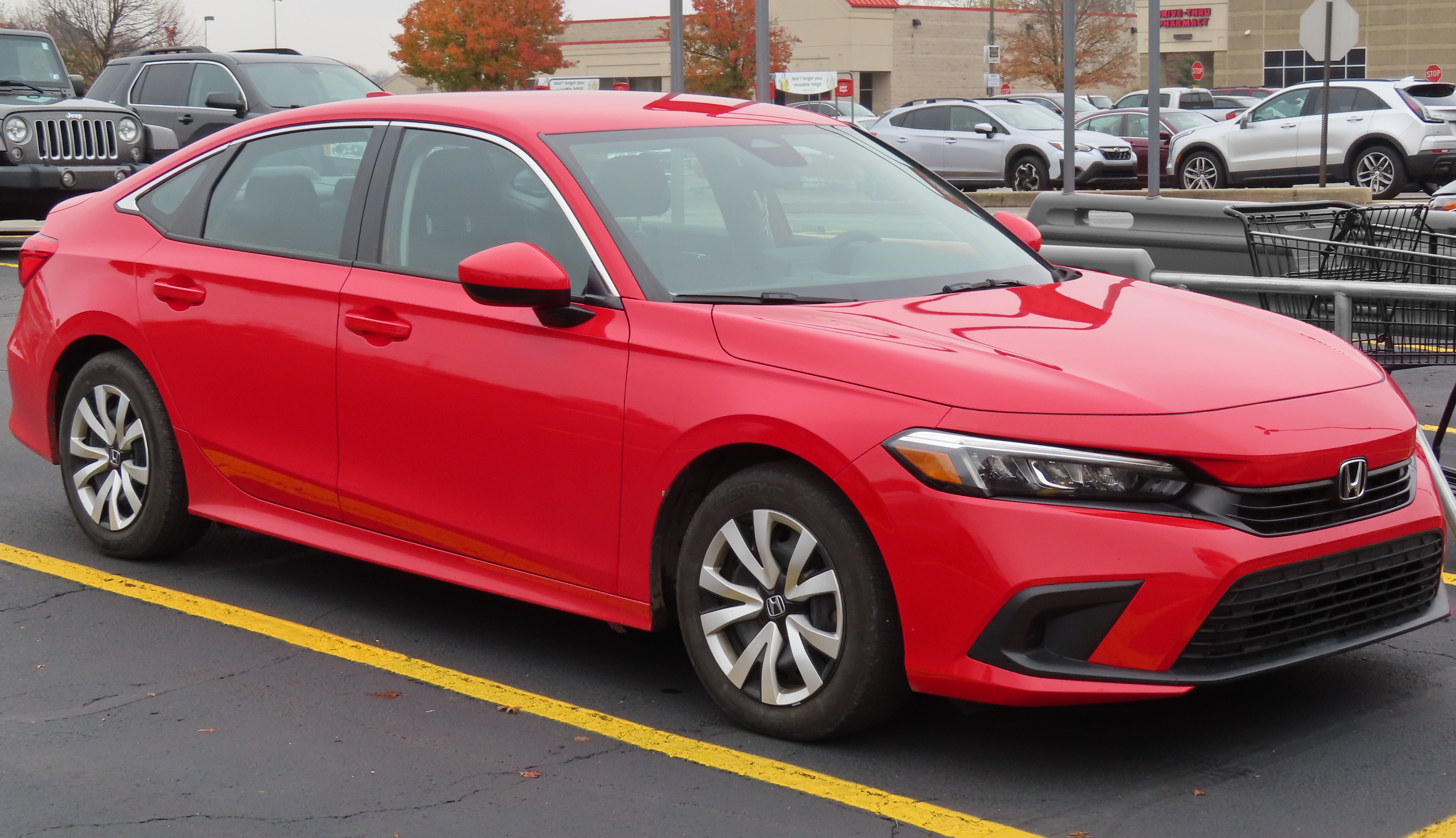
The Honda Civic DX is a version of the Honda Civic from 1999. It's known for being dependable and good on gas, making it a popular choice for many drivers.
The Buick LeSabre is a big car that people liked for being comfortable and reliable. The 1978 version is one of the older models that many remember fondly.
A winter beater is a car that you use in the winter, especially when the weather is bad. It's usually an older car that you don't mind getting a bit damaged from snow and ice.
Floor mats are like carpets for the inside of your car. They help keep the floor clean by catching dirt and spills, and you can take them out to clean them.
A catalytic converter is a part of the car's exhaust system that helps clean up the gases that come out of the engine. It makes the car better for the environment.
The Toyota FJ Cruiser is a tough-looking SUV that can handle rough terrains and is designed for adventure. It has a unique style that many people love, but some older models, like the 2007, can have problems with parts that help clean the exhaust, which might cost money to fix.
OBD2 is a system in cars that helps check if everything is working properly. It can tell mechanics what's wrong with the car by using a special connector.
The check engine light is a warning light on your car's dashboard that tells you there might be something wrong with the engine. It's important to get it checked out to avoid bigger problems.
The coolant system helps keep the engine from getting too hot by moving a special liquid around to cool it down. If it doesn't work, the engine can overheat.
TPMS is a system that checks if your tires have enough air. If the air pressure is too low, it lets you know so you can fill them up and stay safe on the road.
The evap system helps keep harmful fuel vapors from getting into the air. It includes parts like the fuel cap that seals the fuel tank and sensors that check for leaks.
Trinostics is a method used by mechanics to figure out what's wrong with a car. Instead of just guessing and replacing parts, they use special tools to find the real problem.
The 'parts cannon' is when mechanics just start replacing different parts of a car to see if it fixes the problem, instead of figuring out what’s really wrong first. It can end up costing a lot of money.
The 'money light' is a warning light on your car's dashboard that tells you something is wrong and might cost you money to fix. It’s a way of saying that repairs could be expensive.
LIVE
Good morning Niagara, you're tuned into car connection
where the coffee's hot, the tools are ready
and the talk is always tuned up.
I'm your host, Niall Motormouth Jenkins,
coming to you straight from the car connection workshop
where we mix a little humor, a little know-how
and a whole lot of horsepower.
Here it's not just about fixing cars,
it's about keeping you rolling, saving you money
and giving you the confidence to understand
what's under that hood.
From the classics to the commuters, the weird noises
to the what, the hack moments, we've got you covered.
So grab your cup of joe, check your order
before you slide out of the drive-thru,
lock it down in your cup holder, sit back,
don't get too comfortable, keep an eye on the road,
and the other guys out there.
And join the crew this morning
because this is car connection,
your Monday through Saturday morning pit stop
for stories, smarts, a few good laughs,
and I'm Niall Motormouth Jenkins joining you this morning.
Thank you for bringing me into your automobile
for Motormouth's 8 a.m. morning drive
or from wherever you are listening from.
Everything we talk about right here
and on our YouTube channel lives on our website
at carconnectionbusinessnetwork.com,
that's the huge form.
The short form is ccbusbusnesamnet.com.
It's the biggest drawer in our toolbox.
That's where we have all our contacting information
is there for our program partners.
All their logos are on the homepage.
Click and connect, it's that simple.
Just click on their logo,
it will open a profile page from there.
You have all their information, you can check them out,
they've been a part of car connection.
As we've just come off 31 years on radio
with our morning program, 7 a.m. Saturdays only,
car connection live, live call and automotive program.
So on the top right hand corner of our homepage
at ccbusnet.com is where you'll find all our links
so you can follow YouTube, Facebook, Instagram,
iHeartRadio, Stevensvilleontheweb.ca,
some awesome businesses in Stevensville.
My pops has lived there 30 plus years
and they made us a nice profile page
on their local website.
So just click on the businesses tab to find our profile
and there is a website form through that link as well
for you to send me an email.
So if there's something specific,
a topic specific you'd like me to cover,
send me an email, drop a comment in one of our videos.
We put three videos up every single week,
two for Tuesday, one every Friday, yes,
we'll drop today at 4.30 for you.
And some great videos where you will always learn
five things, what it is, where it is,
how it works, how it breaks, costs you money.
And what are some of the basic fundamentals
of vehicle ownership that you could learn very easily
that would help reduce your automotive repair bills?
How many are in for that?
Yeah, I can help you on this channel
and our YouTube channel by learning the basic fundamentals
of owning and operating an automobile,
keeping that vehicle longer
and putting money back in your wallet.
So if that is of interest to you,
you're in the right place.
So let's get started this morning.
We have a brand new topic to kick off.
I haven't forgotten about the transmission myth
and how you can avoid a $7,000 bill.
I'm working on estimates.
So, you know, all the guys are busy.
It's not like they're just gonna stop.
So hey, motor mouth, I'll get that done for you.
They're busy.
And I want you to see the big picture
and I will share that with you.
The big picture being neglecting your vehicles,
automatic or manual transmission,
particularly the automatics,
you get into a big hole very, very quickly with repairs
and 7,000 is still kind of a starting point.
So I have some estimates coming,
real world numbers right from a transmission rebuilding shop
on what it costs for an average vehicle
out there on the road.
So something that's very popular
and there's lots of them
and there are a lot of transmission problems as well
with the domestics.
You know, only lately I've been hearing
a lot more online influencers that are mechanical
in some way, shape, or form really recommending,
you know, like Honda, Toyota, Nissan,
well, maybe not as much,
but Honda and Toyota fans out there that are mechanics
and just watched the video yesterday
and the gentleman who has the shop,
he has four of the same domestic vehicles on his lot
with all sharing the exact same transmission problem.
Four, I'm going, wow, must be generous motors, I don't know.
Yeah, he did say that.
They were all Chevrolet, same brand, same make and model.
There's a pattern failure there that's huge.
It's absolutely huge and he was just sharing his thoughts
on it, he goes like, this shouldn't be happening
and it shouldn't, he's right, it shouldn't be happening.
Give us a better product, that's all we're saying
for the money, give us a better product
because I'll just admit right now,
there's no way I could afford in my budget
to drive a domestic vehicle.
No disrespect, but you know what?
Start building something for Pete's sake.
Start building something, how does my FJ,
we're gonna hit the 400,000 kilometer club this year,
heading for 600,000.
How does a 99 Honda Civic DX get 321,000 kilometers on it?
Man, I couldn't even get one year on the Cadillac I drove
that thing was a freak show.
The service light was on full time, I could floss.
Yeah, night or day.
And then I turned it into an Oldsmobile
and pulled all the junk out of there
and it was a great car, then I got rid of it.
Yeah, I got a Supra, there you go.
Like, yeah, I did have a really good Buick with Saber
that I love, it was really good.
It was a 1978, that was my winter beater
and I bought that through some friends in the trade,
someone through someone also had it as a winter car
and it came from Florida.
It was chalky blue because it was faded
but that vehicle, I was talked into selling it three times
and I bought it back three times.
It was a really good one.
I sold it to my friend Boner and I said Boner,
that was his nickname, his last name was,
I can't say it because it's on the air, right?
We worked together.
So I said, if you're gonna, you know, he goes,
come on, come on, motor mouse, sell that to me.
I don't wanna put my Honda away for the winter.
So anyways, I did and I said, well, this stipulation is,
sign here, I get the car back the day you say you don't want it
and I got it back from him and it was great.
When I got it back from my lawn maintenance guy,
I told him, I said, you gotta put floor mats in,
get some really good floor mats.
Now, didn't listen, took the floors out on both sides,
passenger and front because it was soaking wet all winter
but I bought it back and I fixed it
and then I sold it again.
Anyways, but that was a great car
and I say that to say this, no matter what vehicle
you have chosen, there are going to be problems.
So that's why we're gonna cover that today.
The topic, you ready for it?
Can I get a timpani?
Maybe, let me see if I can pull it off.
Yes.
What does that dashboard light really mean?
We're gonna unpack that.
I'm gonna deal with the fear, the phobia, all of it.
Yeah, exactly.
So we're gonna unpack that.
So don't be afraid, babies.
Get your crayons, pass them over to your co-pilot
if you have one this morning.
Give them the fold it up, I like to call it laptop,
leaf bag, once you fold it right,
you can just keep unfolding it
and fold where you've written, tuck it under
and you got a clean surface, it's just like that.
It's better than an Exosketch, truly.
Yeah, so you take some notes.
If you can't take some notes because you're driving,
homepage, the biggest drawer in our toolbox
at cartconnectionbusinessnetwork.com
and I put all these details in the description
of every podcast, so don't worry.
I got your back completely
and you can go to the homepage at ccbusnet.com,
click on the iHeart radio icon
and it'll take you right to our channel.
So wherever you pull your podcast from,
your family, your friend, your peeps,
your circle of friends, tell them to type
cartconnectionworkshop in the search bar and we're there.
We're on all the big platforms, Spotify, Amazon and Apple
and a plethora of podcasting channels.
Thanks to iHeart radio, we appreciate them very, very much.
All right, let's have our swiggy together
and let's really get rolling now.
Let's get into this this morning
because there's a lot of people get all bent out of shape
and I've talked about it before,
some of the craziest things that I've seen
that are covering the service light.
When you get in the car and you turn the key
and I look at the dash and I go,
oh, I can't see the service light.
There's a little dog over there, a little cat, a budgie.
Oh, whose children are those?
Is that your favorite mother-in-law, et cetera?
Hockey cards, favorite player, yeah, covering up
what I like to call the money light
because that's what everybody else does
is you panic when that lights on.
Hey, all four of mine came on this week.
Yes, it did and I had my scan tool with me
because I kind of suspected we just may be able to catch
this little boogity thing that's been driving me crazy.
So first and foremost, whatever your morning beverages,
take it easier if you're out there on the highway.
Don't leave the road, stay on the road.
It just makes it easier to maneuver today.
It's still quite slippery out there.
It is winter, this is the great white north.
So raise your cup on three, two, one.
We'll have a little swiggy together this morning
and let's get the ball rolling.
Three, two, one.
Oh, that is so good.
Mind if I have another one?
Not at all.
You go ahead too.
That is just one of the odds of light.
Car Connection is brought to you by Niagara Block
at 5,000 Montrose Road, Niagara Falls,
building Canada since 1931, providing building supplies,
hardscape landscaping supplies to help you create
that beautiful backyard space just for you.
And I'll tell you, it is worth every penny.
It really is.
I love that backyard space in late spring
all the way through the summer.
It is worth it.
It is that tranquil spot that you can own
and hide there and just relax.
Just let it go.
And they'll help you with all of that
and even give you referrals to landscapers
that can truly, truly put together something
very beautiful for you so that you can enjoy
that backyard space.
Check them out on our website.
Just click on the link below their logo
and you can connect and say hi to the Greenmo family
and you will get customer service
like you have never, ever seen before in your life.
Car Connection also brought to you
by Rainbow Motors and Garage.
Sales and service you can trust.
In Scarborough, Ontario, Canada,
they've been a part of Car Connection for years
and we're glad to have them along with us
on this journey on our podcast and our YouTube channel.
And you'll also find references to our program partners
and sponsors on all our YouTube videos.
We don't spend a lot of time talking and nattering,
we just get right into the work just like that.
All the details for you to connect
and find some businesses that have my seal of approval
on them night or day, they're there for you.
Well, let's talk about that service like, shall we?
And when it comes on, how does that make you feel?
Yeah, my professor used to say that,
professor of psychology, how does that make you feel?
I don't know, everyone knows.
So when that service lights on, what is your interpretation?
Drop a comment in one of our videos on our YouTube channel.
We have almost 100, I think we're almost just
on the back door of 150 videos up there for you
that are all teaching videos,
showing you the basic fundamentals
on how an automobile works and how you can learn
about the functions and perhaps even pick up a few tips,
things that you've been doing that are really bad habits,
like not using your parking brake
every time you park the car, that's fun.
And what that looks like.
And what happens when the service light comes on?
Did I use my own particular vehicle to show you that?
Because we're still having a challenge with it,
but we know what it is now.
So it's just a matter of money, that's all.
Yeah, the 2007 FJ Cruiser has decided that one or two
of the catalytic converters are lazy.
They're not reading the exhaust fast enough.
And one of them is really lagging behind
and that's the one that is throwing the service light on.
So that's where we're going next.
We gotta save the money up
and we're gonna have to replace catalytic converters
and it has wonderful four.
It has four catalytic converters, not Cadillac converters,
but because one of the catalytic converters,
the fault code is saying that one of them
is just not reading correctly.
So it's out of sync and we've tried some things
and it worked for a while,
but there's still a complication there.
The lights all came on earlier in the week
and I had to go on the road to get a pile
of things taken care of,
including some dental all at the same time.
Yeah, we're not gonna talk about that.
It's a white-knock-o moment.
That's all I can tell you.
For me, for me, it's a why.
You know, I'm better than when I was a kid.
Yeah, I don't scream and cry and everything anymore,
but I still don't like it.
No, it just does what it is for me.
Just does what it is.
So the lights were on when I left the driveway
and I thought I'm gonna drop them off,
clear out the system and I'm going for a long run.
I'll leave the scan tool on there
so I can monitor the monitors.
And what does that mean?
It means the service light is the way
for the vehicle to communicate with you.
That's it, to communicate.
It's not there to scare you.
I've heard it called the money light
and all kinds of other things.
If it's not flashing, then you're okay
to continue to drive,
but that doesn't mean drive it forever
with the service light on.
Why is that?
Because if other systems that are communicating
to the onboard computers find a
system that is faulty,
if the light is already on, here's the kicker,
if the light is already on
and it has been on for quite some time,
the computer can't flag the problem to you
and turn the light on again
because it's already on.
See, if you turn on the kitchen light
and you wanna turn it on again,
but it's already on, it's on, right?
You gotta turn it off to turn it back on.
That's how that works.
So you gotta get your mind around that.
You know, many years ago, not that long,
you know, in the 90s,
I can't tell you the number of people
that would say to me,
if only our vehicles could tell us when there's a problem,
bam, would you?
Look at that now.
Later in the 90s,
we don't like to talk about the feedback carburetor
in the OBD-1 system.
That thing was on nightmare for us in the service space.
Let me tell you, it was an absolute nightmare.
The service light was on all the time.
You might as well build like a little, you know,
memorial to your family or your pets around it
because it was always on.
And the systems were very archaic at the time,
but we did make it through that.
You know, the first computers, ECMs that came out,
were just absolutely great to beat and lay a whale in on
with a hammer or crush it in the vice in the shop
because the electronics were absolute junk inside them.
Yeah, I think there's some little old fella
in a closet or a small dark room somewhere
with a Heath kit building ECMs back then.
We had all kinds of stories,
that's service techs, just going,
yeah, I got six of them outside with the service light on.
And at that time, it was just a little red light
that would flash in the dash,
bloop, bloop, bloop, and totally drive you crazy.
And then we had to go into the system
and press a button and hold it.
And then it would flash three times fast, bloop, bloop, bloop.
And then now you gotta count the flashes.
One, two, three.
One, two, three.
And one more time, and one, two, three.
Okay, that's the first digit of a two digit fault code.
So now it's cycling, the computer's cycling,
and now we get to count the flashes again.
And then record, sit there and record all this.
Yeah, so that's where we were.
And now we have more electronics on our vehicle
than what powers the space shuttle.
And that's a fact, you can check that out,
you can fact check me on that.
Yeah, I didn't make it up, it's true.
So now we have systems that we moved into another era
where we got into OBD2, onboard diagnostics two,
and now we have a proper check engine light.
That's where that came from.
Check engine light was the midterm, OBD2.
I think we're up as high as OBD5 now, five or six.
Yeah, there's still a lot of vehicles out there on OBD2,
onboard diagnostics two, the ALDL port
that we plug into, it's all the same right at the moment.
That could change anytime, it sure could.
So when we went to OBD2, what we found was still
a lot of the monitored systems on your vehicle,
so I'll give you an example, the coolant system,
anything to do with air fuel, fuel supply,
well, not really supply the fuel injectors themselves,
but not supply, there is no monitoring system
on getting the fuel from the tank to the injectors.
There isn't one, that's called your fuel filter,
which is a fuel purifier.
We're gonna crack that open a little bit too
in another program.
So you've got coolant, fuel, air flow, intake temperature,
oxygen sensors, your favorite, fuel caps,
there's another one, that's a very,
it's a simple system, but it's complicated.
And then we have TPMS, tire pressure monitoring system.
Yeah, so we have on the evap side, that's your fuel cap.
So all those are most of your service lights.
And then we have transmission control modules, TCMs,
that are also monitoring shift points
and pressure points inside the transmission.
So that can also throw its own fault code.
So that's a separate computer monitoring the transmission,
then you have another ECM that's monitoring
everything on the engine.
Pretty much everything, except the driver.
Yeah, the driver is sleeping.
And you have a picture of a budgie over the engine light.
No, just kidding.
You gotta laugh about it because I keep thinking,
and I remember those conversations
like it happened yesterday,
only our vehicles could tell us when something's wrong.
And now we're going, stop it, just stop it, stop it.
Turn that light on, exactly.
Now we're freaking out and having to go for treatment
and therapy for months on end.
My service light came on, I can't handle it.
I'm gonna lose it.
No, don't lose it, yeah.
The reason the light is on is one of the monitored systems
on the vehicle by the computer, the ECM,
has said something is not right in Denmark.
And I'm letting you know, boom, light goes on.
At least we don't have the systems,
the earlier systems where if a pigeon flew over
and put a package on your windshield for you,
the service light would come on.
And we had all kinds of laughs in the service base
over this, did you close the car door?
Yeah, well you turned the service light on.
Did a black cat go in front of the car on your road test?
Yes, it turned the service light on.
The systems then were so oversensitive
that if any monitored systems just had a split,
a 1,000th of a second glitch, bam, the service light came on.
And that was a difficult period of time for us
in the service base because service lights,
a duck could fart and turn the service light on, yeah.
Exactly, it was very patience trying time.
Now we at least have systems where the computer watches
for the glitch multiple times from the same zone
that it's monitoring before it triggers
the service light and a fault code.
Okay, that's where we're going next.
So the computer is able to communicate
and now it's great because we can use Bluetooth.
We don't even need to bring the car in from outside
of the shop so if we're busy and we need to just quickly
scan the vehicle, we can do that.
We can do that from our own living room actually
with our engine analyzer.
We can connect, we can access and we can see
what the computer's been looking at and monitoring
and where a problem is developing.
What I don't want you to think is this
and this is unfortunately where a lot of heads,
talking heads have come together and said,
oh, you just gotta go down to the Princess of the Palace
store or the jungle website and get yourself a code reader.
Okay, for $79 or whatever it is, less than 200 bucks.
Mind you, there are some that are pretty decent.
It gives you a lot of information, but that's the thing.
I just said the key, gives you a lot of information.
Just because the service light is on and you can take a look
and see what the fault code is, that doesn't give you
the answer to the problem.
What it gives you is a suspect.
It's almost like a murder mystery, service lifetime.
We need to gather information, how do we do that?
There has been a murder, yeah, in the kitchen
with a stale donut, get out of here.
Or was it a croissant?
Well, we're still determining what the cause,
what the weapon was used.
So that's what I'm saying is it's funny,
but it's exactly how it works.
So there's been a crime committed.
How do we get down to the knucklehead that did it?
Is there's gotta be interviews, right?
Asking questions, going door to door, checking things out,
video footage, your service light is exactly the same idea.
The light is on, oh, a crime has been committed here.
Put your little cutesy woodsy little $79 code reader
in there, I got this, no you don't.
No, not usually, highly unlikely.
You've gathered some information,
but now you've gotta take that information
to the next level, what is that?
We gotta start asking questions and checking things.
That's called diagnostics.
If I had a nickel for every time someone used
one of those code readers and changed an oxygen sensor
or a fuel cap, I'd probably be talking to you
from some very warm address right now
and listening to the water lapping on my feet
and watching ice melt in my nice fruit beverage
with the little umbrella in it.
Okay, that might've been too far.
But anyhow, that's what happens.
Dude gets the code reader, could be a name,
could be a friend, somebody in your circle of peeps,
thinks he's now a brain surgeon
because he's got this little code reader.
Yep, there's a code, this is what it is, change it.
If it were just that easy friends,
we'd all be mechanics, right?
That's called Trinostics.
That's when the parts cannon comes out
and here's where the term money light comes in.
The parts cannon comes out and we just start
firing parts on it, but the service light
still comes back on.
That's the difference between Trinostics.
Try a part, spend your money and,
oh, that didn't fix it.
Try a part, spend your money, oh, that didn't fix it.
That's when you look at them and go,
do you even know what you're doing?
You're costing me a fortune.
Yeah, who's paying for this?
Well, here's, I love the answer.
Well, I don't know anything.
You shouldn't just take my word for it,
I don't know nothing, I'm just trying to help you.
Spend your money.
So if it were that easy,
but if you get caught up in that cycle
where the parts cannon comes out,
dude's trying to do you a favor and blesses
a little heart for that, but you know what?
Once you plug something in that's an electronic device
on a car, you own it, you cannot send it back
and all that literature is in every box,
every package, every parcel
that has an electronic component in a sensor
or a control module of any type,
you plug it in, you touch, you buy, it's that simple.
So we can't send it back, that's the problem.
And that's usually where the stories come in.
You know, well, because the left rear tire
had less tire pressure in, that's why the light came on
and then we had to change the ECM
and it was dirty anyway, so we put a new one in.
Yeah, that didn't fix it.
But then we moved the passenger seat
and a wire got chafed, so we had to change
the control module that's mounted under the seat.
The stories start to cover up the parts cannon.
That's what happened.
That's again called Trinostics.
So that's where the money light is on theme came from.
That's how it was born, okay?
That's not how it should go.
If you're working with a true diagnostician,
that is a mechanic that's not sitting eating bonbons,
chips and drinking a two liter bottle of pop every night
in front of the TV and is a brain surgeon on automobiles.
No, not that guy.
It's the guy who spends time at seminars,
buys tickets to get into the seminar out of his own pocket
and gets into classes, evening classes to learn
how to diagnose faster, better and more accurate
and learning tips and tricks on how to do that.
That diagnostician tech is an asset to you, not a liability.
And they deserve to be paid to diagnose, you know why?
Because they're not getting out the parts cannon
to just throw a pile of parts on.
You know, even a blind hog can find an acorn
once in a while, yeah?
Exactly.
So now that vehicles can communicate with us
on a really big level and even by Bluetooth, wireless,
it's made things easier but complicated.
When we pull out the fault codes,
that's not the end of the story.
That's the beginning of the process to get to the answer.
Why is that light on?
What systems are linked together that could set
this particular fault code?
You see where I'm going?
Just because you have one fault code,
what systems work together that can set
that exact same fault code?
That's where pinpoint testing comes in.
What are the circuits?
Where are the monitored systems and the sensors
for control units?
And now the wiring diagram comes out.
Now we've got a test.
Input signals, output signals.
So in other words, is there a signal going to the sensor
that on the system that's being monitored
and is there a electrical system,
electrical system monitoring coming out?
So we have a signal going in
but do we have monitoring coming out?
A signal coming out.
That's where the rubber meets the road.
That's the difference between parts cannon,
diagnostician, truly diagnosing and getting down
to the causal component.
So just reading the fault code isn't, I got it.
Yippee!
Yep, change the fuel cap.
Oh, that wasn't it.
Well, maybe you can take it back.
No, you can't.
Well, let's try again.
Oh, I don't know what happened.
It's a heated oxygen sensor.
Yep, I'm bank one.
So you get your guy or a fella to change that
and a couple of days go by.
Oh, lights back on.
I thought you fixed it.
Well, let me have another look at it.
Get the little cute reader out, plug it in.
Yeah, yeah.
There's still a problem with oxygen sensor.
Oh, well, maybe it was a defective one.
These are real stories, folks.
You cannot make this crap up.
You cannot.
What does it do?
It's all, you're not saving a dime.
It's costing you money to play this game.
Pay the diagnostician tech that knows,
A, how to go after diagnosing it.
Yeah, because there's a troubleshooting tree that we use.
And you don't skip a beat.
You follow the diagnostic tree,
do all your testing to get down to the causal component.
The causal component.
And it could end up being that there is a component
that's not monitored, but it's in the monitored system
that has failed.
You understand what I'm saying?
It may not necessarily be the monitoring component,
the sensor for a better term, an easier term to understand,
but there's a component that has failed
in that system that's monitored by the computer
that's triggering that service code.
That's what we're talking about.
That's diagnosing.
Then getting down to determining,
okay, it's gotta be this component.
Now, testing that component to determine,
is it good or bad?
That's what we have to do.
And sometimes it's not that, it's not easy.
It can be an intermittent problem where the light's on
and it may not be on for five, six months,
and then bam, it's back on.
And then we go back in,
we've got the history, we've collected the data,
the information from previous visits to the shop.
We can look back and go, okay, yeah, we tested this,
we did this, we did this, we did this.
Yeah, kinda like a doctor.
See the charts, look at the patient's charts,
look at the history.
What did we do last time?
Did they come in for something similar?
We have to do the same thing as a service tech.
What did we do last time?
When was that?
How many kilometers miles ago?
How many months ago?
Exactly, we have to start the process, start the process.
So there is a process to the service light.
It becomes the money light when you have someone
who gets the parts cannon out
and starts throwing parts on your car.
Not diagnosing, doing trinostics.
Try a part, hope for the best.
You're not saving money, you're blowing your wallet
full of holes.
That's how diagnosis works.
When the service light is on, we plug in our Bluetooth,
read what the computer has seen and now the work begins.
Asking questions, interviewing components,
verifying signals, testing, pinpoint testing,
looking at the circuits.
What's included in that particular monitored circuit
that can make that service light come on
with that particular fault code?
There can be more than one component
related to that fault code.
That's what I'm trying to tell you in short term.
There can be a number of components related
directly to the fault code that you're pulling off
with your little cutesy woodsy $79 reader.
We need an engine analyzer that we can actually see
the monitored systems and check input signals
and output signals without tearing the whole car apart.
But actually taking and gathering information
that's going to help us get down to what?
The causal component, that's where we need to go.
So that, my friends, is the short story
of how that service light works.
So remember this, don't get caught up
in the Trinostics team, they're trying to help you,
but you know what, it always blows out a pile of money
and then the car ends up coming to us.
Number two, don't be afraid of that service light.
Your car is speaking to you,
letting you know that something's going on
before it turns into a catastrophic problem
that causes some catastrophic,
that just insert the word expensive damage.
Yeah, and then there's emotional damage after that,
lots of it, and therapy,
and copious quantities of high-test coffee, exactly.
So I hope this has helped you
to get a better understanding.
If Nave wants to come over with the code reader,
just say, hey, I appreciate it, but I got this.
Not to say maybe your neighbor is a service tech,
but how good of a diagnostic service tech is he?
Cause there's two types of techs.
There's those that are good at the mechanical side,
so that's brakes, tires, exhaust, suspension,
steering, cooling systems, engine parts,
but not a true diagnostician.
Those guys and gals, I know some gals
that are diagnosticians, what they do
is the vehicle comes to their bay
and it's like their little office,
they got their laptop, they got everything they need
right there, they diagnose, they write the recipe,
they put it on the windshield, the car goes out,
they bring the next one in.
What they do all day is they diagnose
why the service light is on,
on whatever automobiles are on the schedule for the day.
They don't do the repair, they do the diagnosis,
they do the road test, they do the diagnosis,
they write the prescription for the patient
and Skippy does the work and then it comes back
to the diagnostician for another checkup,
a road test, a verification, confirmation, vehicles fixed,
then it leaves that service bay.
Those are technicians that are being paid very well
for their knowledge, their time and their skills, big time.
Because that's where the rubber meets the road truly.
So I hope this is kind of giving you a better idea
of the quote, quote, money light.
Covering it up doesn't help you at all,
can actually put your vehicle in a position
where catastrophic big dollar items get broken
because if the light is on already,
the computer can't trigger the light a second time.
Got it?
Good, if you have any questions whatsoever at any time,
our website is the biggest drawer in our toolbox
for you to connect with us.
That's where you can like, follow, share
the whole nine yards on our homepage at ccbusnet.com.
That's where you can connect with businesses
that we align ourselves with,
that I have given them my seal of approval.
Many of them, pretty much all of them
that are with us right now, all of them
have been a part of car connection,
one way shape or another for quite some time.
They're there to help you, they don't work for free,
but if they wanna give you a blessing,
they'll do that on their own.
And on our homepage is where you can grab all the links
for our YouTube channel would be a great asset to you
because all the videos up there are all teaching videos.
We have a lot of fun, Skippy, my videographer,
puts together reels and outtakes and bloopers
that are up on Facebook, Instagram.
You won't see any of those videos anywhere else.
They're not on our YouTube channel
and she puts together some pretty interesting things
that will definitely make you laugh.
There's Stevensville on the web.ca,
iHeartRadio is up there,
icon just click and it'll take you right to our channel
and our podcasts are on all platforms.
So just type car connection workshop in the search engine
and you'll find us and our merch store is there.
And we now have, after 31 years on radio,
we have our very own car connection official,
car connection coffee mug, limited edition.
So anytime you purchase merch on our merch store,
it's all done online.
You order online, pick the color of the size,
the product and pay safely online
and it comes right to your door.
It's shipped out by Freedom Expressions.
Thank you to Total Freedom Darien Center New York
and Total Freedom Sydney, Manitoba, Canada.
That's a man only campus.
What do they do there?
They change lives.
They help people with addictions to fix their life
and get them back on track
and get them back into the workforce,
back into becoming who they were born
to be in the first place.
Exactly, so our merch doesn't fill our pockets.
It helps those who just need a hand up, not a handout.
So when you buy some merch,
know that you're helping someone to get to the camp one
or other campus to get that addiction worked on
and take care of for good.
So thank you for joining us today.
Car Connection brought to you by City Auto Sales and Leasing
providing low mileage, top quality pre-owned vehicles
at fair prices.
That's how they've earned the title,
Greater Toronto Areas, Premier Pre-Owned Auto Store.
They have leasing, they have in-house financing
and most of all, you can buy with confidence
and be treated with nothing less than honesty and integrity.
They do carry a large inventory of vehicles.
If they don't have what you're looking for,
let them know because they have 25 plus years
in the business and lots of resources
to help you find that vehicle.
And in Scarborough, Rainbow Motors and Garage,
same thing, they have a small car lot.
They can't keep everything there.
If you're looking for something specific,
they don't have it.
Let them know.
Let Rita and Ramiz, Shanu to know what you're looking for
so they can source it and see if they can find something
that you are looking for that's in top-door condition
because these people don't sell any junk to anyone.
Car Connection brought to you by
our certified financial planning professionals,
Tony Miele and Larry Teacherall
are my brothers from other mothers.
50 years experience as fiduciaries.
They are two of the best of the best
in their field in all of Canada.
And you'll never hear them say that
because they're very humble.
They work with IG Wealth Management,
so whether you have a dollar, $100,000,
they'll take a look at your portfolio,
review it and make some suggestions.
They deal with debt retirement,
estate planning, powers of attorney, all of it.
Mortgages, life insurance, critical illness insurance,
and you have access to what we call
the discovery meeting, an hour and a coffee.
That's complimentary, get together by Zoom, by phone,
in their office, in their boardroom,
at a coffee shop, at your home, wherever you're comfortable.
They don't need any more clients, Tony and Larry, they don't.
I just met with Larry this week on Monday.
And they've been at this for a long time
and helped a lot of people.
So before you take advice from someone
who's not standing where your feet should want to be,
get that hour and a coffee.
There'll be no sales, no gimmicks.
Nobody's pushing anything on you, they're gonna listen,
and then see how they can draft the plan to help you.
So take advantage of their time,
but don't take advantage of them.
If you're not willing to give them all the honesty
they need to hear from you to help you,
then don't waste their time.
Just don't, because you know,
that person that really needs that hour and a coffee,
that discovery meeting,
you may take that time away from them.
So all you do to book your meeting is to click on
the logo for Tony or Larry
and choose who you wanna work with,
connect and book it and get it done.
Watch what happens.
Your world will change, absolutely will change.
Crystal Ridge Dream Center,
serving men and women, children, meals, love and hope,
changing lives one at a time,
and in the times when the community support is crucial,
Crystal Ridge Dream Center shines as a beacon
of compassionate transformation.
For 31 years, Car Connection has always aligned itself
with a nonprofit faith-based organization in our area,
in our own backyard that is helping people
in all walks of life.
They feed out of the building twice a week, Tuesdays
and Fridays, today is that day,
and they're seeing the numbers go up.
They're up to over 200 meals every Tuesday, every Friday.
So if you could see,
clear to help them in any way, shape, or form,
become a volunteer, donate some products.
They don't get any government funding whatsoever,
so they are responsible to create their own
fundraising packages for businesses to come alongside.
So if you have small business, medium business,
or large business, or just someone who wants to get involved,
you'd be sowing some great seeds there,
because they know how to take a nickel
and hammer it into a dollar,
changing lives from children all the way up to seniors,
single moms, no one's excluded.
There are programs for free at Crystal Ridge Dream Center
for all age groups.
So till tomorrow morning, we'll be Saturday morning.
We'll see you for another motor mouth morning drive
Saturday morning, so stay with us.
You can find us at carconnectionbusinessnetwork.com,
ccbustet.com, always read the description box
for all our podcasts and all our YouTube channel videos,
because that's where you will find that information.
So if you didn't get a chance to write it down,
it's always there for you so that you can connect with us.
Hey, keep it under 100, be safe out there,
drive according to road conditions,
and remember, peace, patience, and kindness.
Bye for now.
About this episode
Understanding dashboard warning lights can save you from costly repairs and unnecessary panic. Niall Motormouth Jenkins dives deep into what those lights really mean, emphasizing that they are your vehicle's way of communicating issues before they escalate. He shares personal anecdotes and insights on the importance of proper diagnostics versus simply replacing parts. The episode also highlights the evolution of vehicle technology and the significance of consulting true diagnosticians for accurate repairs. Tune in for practical advice and a few laughs along the way.
In Part 1 of this series, Motormouth breaks down what your dashboard warning lights actually mean, why the check engine light causes so much fear, and why throwing parts at a problem rarely fixes it.
Is a $79 code reader really the answer? Or does proper diagnoses still matter in today's high-tech vehicles?
We dive into:
1) Why warning lights come in the first place
2) The difference between reading a code and diagnosing a problem
4) When it's safe to drive - and when it absolutely isn't
5) How professional diagnostics save money not waste it
If it were as easy as plugging in a scanner, even a dog could fix it - but real-world repairs don't work that way.
This episode sets the foundation. Part 2will dig deeper into real examples, common misdiagnoses, and what drivers should do next.
More episodes and ...project details & links are available at Car Connection Business Network.com (ccbusnet.com) you'll find everything on our homepage if you'd like to follow the build/repair work we do, connect with our program partners simply click on their logo and connect with them Thank You! Grab some Motormouth merch ,help us provide funds to help others get free from their addiction at Total Freedom Campuses Canada & USA.. Tnx for watching & listening friends, Happy Healthy Motoring, Peace Patience Kindness Always, Nile Motormouth Jenkins NMJ