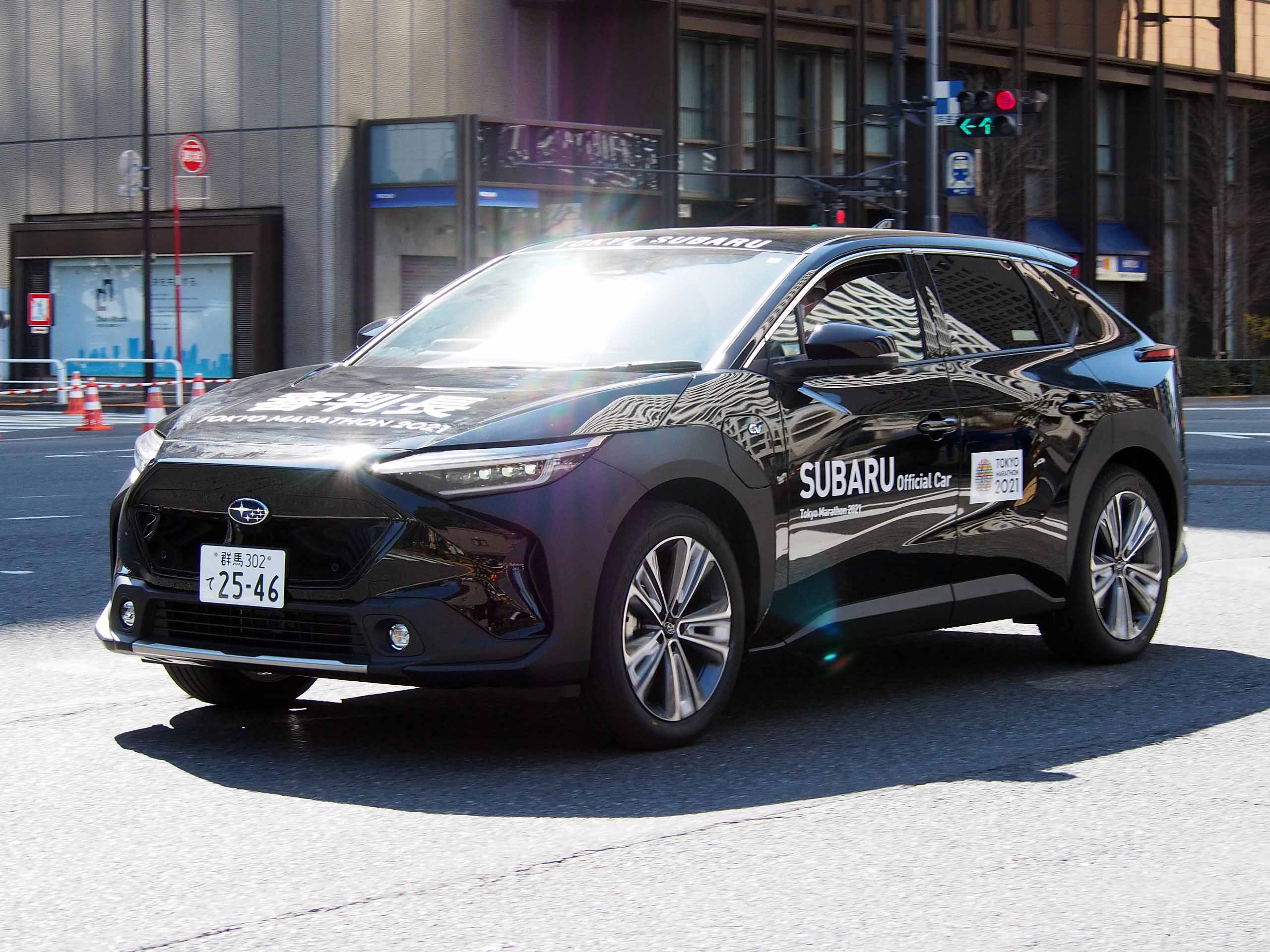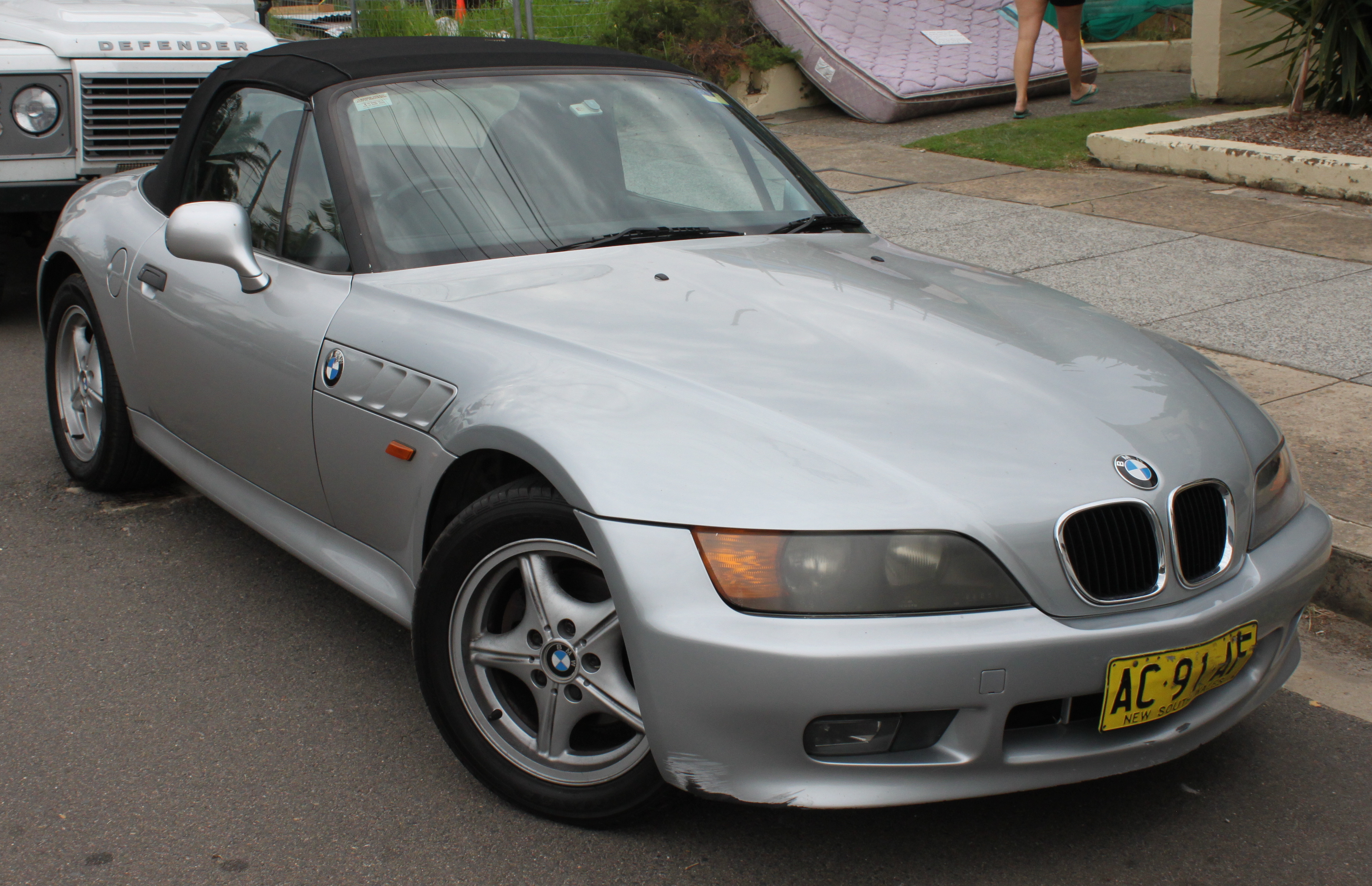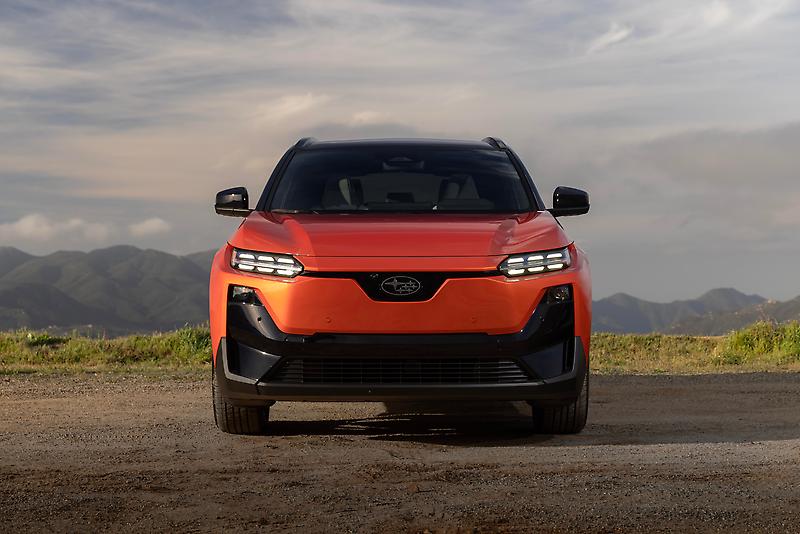
The 2026 Subaru Uncharted EV is Subaru’s small electric SUV. In this episode, they’re comparing it to the Crosstrek, but with an electric powertrain instead of gas.
“EPA estimated” range is the driving-distance figure calculated using U.S. Environmental Protection Agency test procedures. It’s a standardized way to compare EV range claims, though real-world results can vary with speed, weather, and driving style.
This is a test where they drive the EV at a steady 70 mph and see how many miles it can go. It helps show what range looks like on the highway, not just in lab conditions.
The Toyota CHR is the Toyota model they say is closely related to the Uncharted. They’re pointing out that it’s part of the same electric family of vehicles.
E-TNGA is Toyota’s electric-car “base design.” If two cars share the same platform, they often have similar layouts and engineering choices underneath.
This is the common fast-charging plug shape used by many EVs. If your car uses this connector, you can usually use more of the chargers you see on the road.
74.7 kilowatt refers to how big the battery is. A bigger battery usually means you can drive farther, but it still depends on how you drive and the weather.
Front-wheel drive means the car’s power goes to the front wheels. It’s often used on cheaper versions because it can be simpler and less expensive than driving all four wheels.
The Toyota C-HR is a small SUV meant for everyday driving. It’s often compared by price because it’s usually one of the more affordable options in its class. The podcast mention is about how another car’s starting price is lower than the C-HR’s.
A single-motor EV uses one electric motor to move the car. It’s usually simpler than having two motors, and it can affect how the car feels in acceleration and grip.
Car
Subaru Crosstrak
The Subaru Crosstrak is another Subaru model the host uses to compare size. They’re basically saying the Uncharted is very close in overall dimensions, so it should feel familiar if you’re used to Crosstrak sizing.
All-wheel drive means power goes to all four wheels. The host is saying it makes the car feel more confident and responsive in situations like merging onto the highway.
The Subaru Solterra is an earlier Subaru electric vehicle. The hosts are comparing it to the new Uncharted by saying the Solterra they tested came in lower-power versions, while this one doesn’t.
A hatchback is a car where the back door opens upward and you can reach the cargo area from that one door. The hosts are talking about how this shape affects how much space you get in an EV.
Ventilated seats have small fans that blow air through the seat to help it feel cooler. They’re suggesting this because the seat material feels sweaty as the cabin warms up.
Infotainment is the car’s screen system for things like music, maps, and phone features. They’re talking about how fast it reacts when you tap the screen.
“One Mississippi” is just a playful way to say “about a second.” They’re using it to describe a noticeable pause before the car’s screen does what they tapped.
The trip odometer measures how far you’ve driven since you last reset it. A physical button lets you reset it quickly without digging through touchscreen menus.
Emergency flashers are the hazard lights that blink to warn other drivers something’s going on. The point here is that you want a button you can press quickly when you need it.
A two-way opening center armrest can be opened from either the driver side or the passenger side. That makes it easier to grab things depending on where you’re sitting.
Dual wireless charging pads mean there are two spots in the car where you can set your phone to charge without plugging in. You can charge two devices at once.
A glove box is the little closed compartment in the front passenger area for storing things. If a car has “no glove box,” it’s missing that usual storage space.
A surround view parking camera uses multiple cameras to show what’s around the car, often from above. It makes parking easier because you can see nearby obstacles more clearly.
The rear view mirror is what you look at to see cars behind you. The speaker says it’s harder for them to use because of their height, so the camera view helps.
Body roll is when a car leans over to one side while you’re turning. If the suspension is soft, it usually leans more. Less lean often feels more stable, especially in quick turns.
Suspension stiffness affects how the car absorbs bumps and how it behaves under cornering loads. A fairly soft suspension can improve ride comfort, but it often allows more movement like body roll when pushed hard. The speaker links the soft setup to the back-road feel.
“Chassis” is basically the car’s main structure—what everything is mounted to. When someone says it’s responsive, they mean the car feels quick to react and doesn’t feel sloppy. It’s about how the whole platform behaves, not just one part.
Accelerator pressure means how much you’re pressing the gas pedal. In turns, changing how much gas you give can change how the car grips and how it feels. The speaker is saying you can calm the car by easing off the gas a bit.
Steering angle just means how turned the steering wheel is. Turning more or less changes the direction the front wheels point. In a corner, small steering changes can help the car feel more controlled.
Turn-in feedback is how the car “talks back” when you first start turning into a corner. If it’s strong, you can feel how much grip you have. If it’s weak or muted, the steering can feel less informative at the start of the turn.
Artificial steering is when the steering feels a bit unnatural or disconnected, like it’s not giving you the same road feel you expect. Some EVs can feel very light or “too controlled” depending on how the steering is tuned. The speaker thinks that can be a downside for some people.
“Computer-like” is how some people describe EVs when they feel too smooth or too controlled, like there’s less natural feedback. The speaker says it’s partly because EVs are quieter and the steering can feel artificial. It’s a feel thing, not a technical failure.
Haterade is a funny made-up word the host uses for “hate” or complaining about something. It’s basically a label for negative vibes. The episode treats it like a new slang term.
The driver’s display is the screen the driver looks at for gauges and alerts. Here, the issue is that the screen’s text is too small and confusing to read easily.
Ergonomics means how comfortable and easy something is to use. In this case, the dashboard screen and steering wheel setup make it harder to see important information.
The instrument binnacle is the dashboard area where the driver’s gauges and screens live. The point here is that newer screen designs may be positioned so the steering wheel blocks part of what you need to see.
Rectangular screens are the wide digital displays used for the dashboard. The complaint is that, with this layout, the steering wheel can cover part of the screen.
A head-up display shows important car info right in front of you, usually on the windshield. That way you don’t have to look down as much while driving.
Driver assist is the set of safety features that help you drive, like warnings or keeping the car in its lane. The point here is that if it’s always showing you status, it can make real warnings easier to miss.
Wireless phone chargers are pads that charge your phone without plugging in a cable. The complaint here is that the charger area takes up space and makes the phone hard to ignore.
Android Auto connects an Android phone to your car so you can use certain apps on the car’s screen. It’s meant to make it easier and safer to use your phone features while driving.
Apple CarPlay lets you connect an iPhone to your car and see certain apps on the car’s screen. The idea is to reduce phone handling while driving by using the dashboard display instead.
A shift knob is the handle you use to select gears in a manual or automatic transmission. In modern cars, its shape and placement can affect how intuitive the gear selection feels and how much space the center console takes up.
The host mentions the Hyundai Ioniq 5 as an example of an EV with a gear selector that’s not very visible. They say you have to learn which way to twist it because you can’t easily see it.
Neutral is the mode where the car isn’t actively driving forward or backward. The host is saying you can sometimes accidentally end up in neutral if the shifter/knob is easy to misread or you think you moved it far enough.
They’re talking about electronic gear shifters. Instead of a classic shifter that physically moves parts, it uses electronics to tell the car what gear/mode you want.
A gear selector is the control you use to pick what the car should do—like drive forward, reverse, or neutral. The host is discussing how different designs (especially electronic/knob styles) can be easier or harder to use.
Term
beep, beep, beep
That “beep, beep, beep” is the sound the car makes when you’re in reverse to warn people nearby. The host thinks it’s annoying because it can keep going longer than you’d expect.
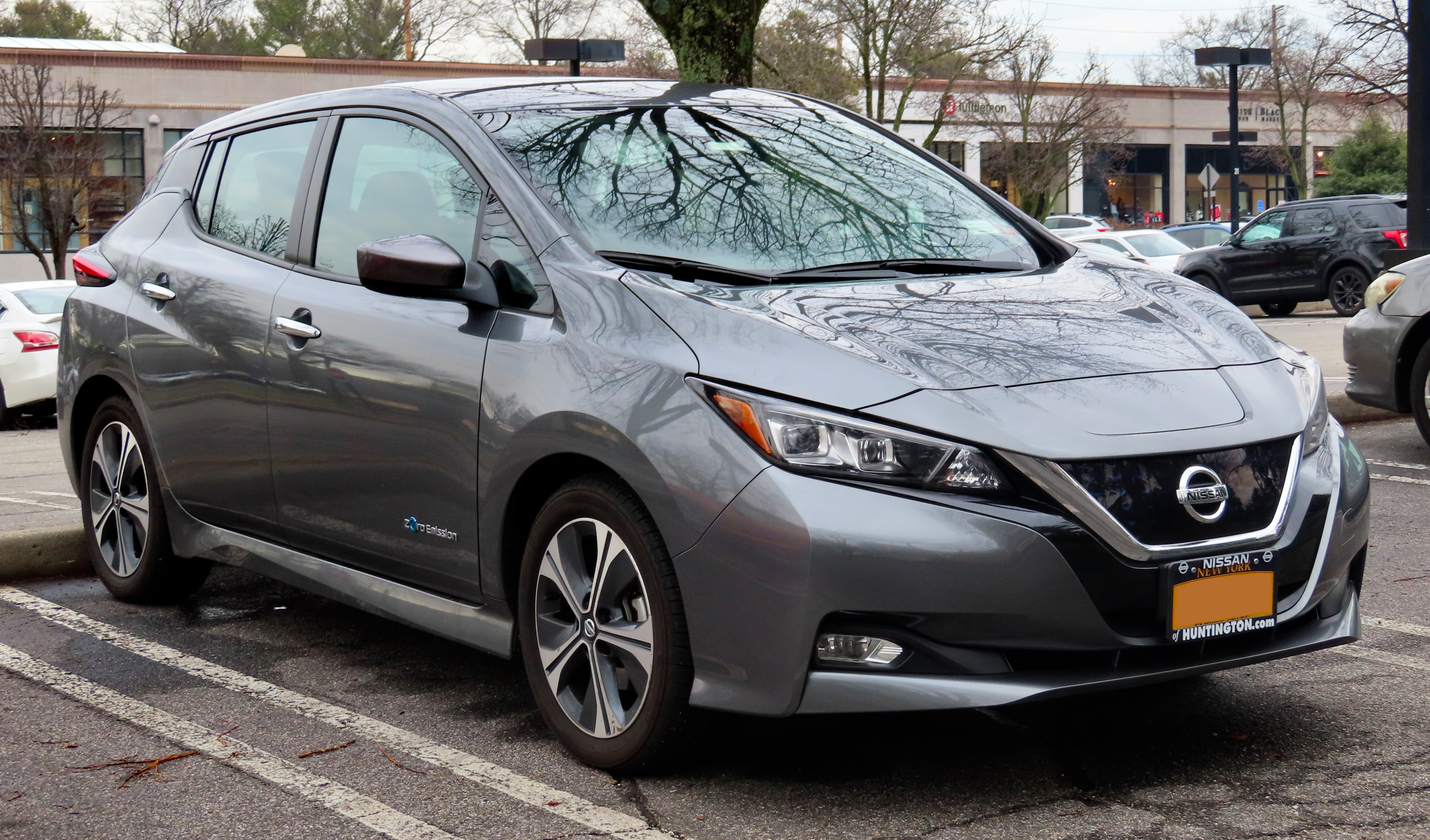
The Nissan Leaf is used as the benchmark for modern EV usability in this segment. The host highlights Leaf features like route planning that can find chargers and plan stops based on battery state of charge, plus a charging workflow that unlocks the charger button near the charging station.
A frunk is a trunk in the front of the car. Since EVs don’t have an engine in the front, some models use that space for extra storage, and the host is disappointed this one doesn’t have it.
An EV route planner helps you plan where to stop to charge during a trip. The host says the Uncharted doesn’t have that helpful feature, while the Leaf does it well.
State of charge is basically how full the battery is—often shown as a percent. The host is saying the Leaf uses that info to plan charging stops if your battery level isn’t enough to reach the destination.
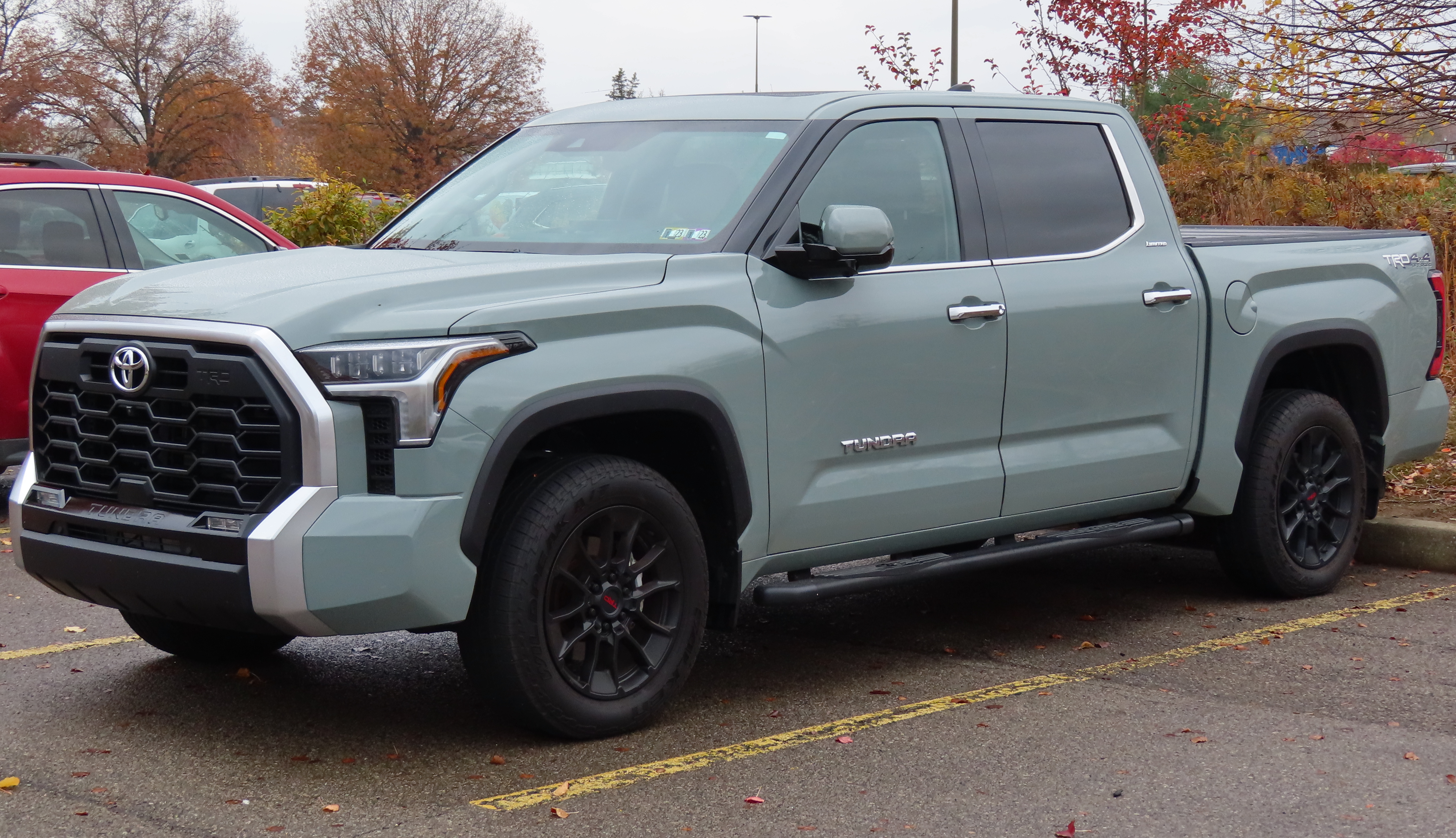
The host mentions the 2022 Tundra to say the Uncharted’s system feels reused from an older Toyota. Their complaint is that it doesn’t feel tailored to EV charging and trip planning.
A charging lock is what controls when you can safely remove the charging plug. The host says the Leaf makes this step more foolproof, but the Uncharted’s setup makes it easier to forget the adapter.
The Dodge Charger is a sedan (a four-door car) that’s built to feel powerful. People talk about it because it can be fast and still work for normal driving. The podcast mention sounds like they’re describing something you can do with the car’s button or controls.
Regenerative braking is how an electric car slows down while also recharging the battery a little. When you lift off the accelerator or brake, the car recovers some energy instead of wasting it.
One-pedal driving means you can do most slowing down just by lifting your foot off the accelerator. The car uses the electric motor to slow you down and recharge the battery, so you don’t have to use the brake as much.
The Hyundai Ioniq 5 is an electric car (it runs on a battery instead of gas). It’s talked about because it can charge faster than some other EVs. In the podcast, they’re mentioning it as a value option with quicker charging.
Faster charging refers to higher power delivery from the charger to the EV, which reduces the time needed to add a given amount of battery energy. In practice, it depends on the car’s onboard charging limits and the charger’s output.
Solterra is the name of Subaru’s electric SUV. In the podcast, they’re talking about it in terms of size—like who might want a smaller version or a more compact fit. The main idea is matching the EV to what you want day to day.
They’re using 70 mph as an example of highway driving. At higher speeds, an EV typically uses more energy, so the battery doesn’t last as long as the advertised test number. That’s why they want to see how the car does at real highway speed.
Charging features are the things that make it easier to plug in and recharge while you’re out driving. The hosts are saying that better charging support can make the car feel more usable, especially when you can’t charge at home. It’s about convenience, not just raw battery size.
An adapter is a small connector piece that helps your EV plug into certain charging stations. The hosts are describing how, if something goes wrong with the adapter—like it getting stuck—it can make charging feel miserable, especially when it’s cold. It’s an example of the practical hassles EV owners deal with.
Route planning is how the car (or an app) helps you plan a trip with charging stops. For EVs, it can tell you when you’ll need to recharge so you don’t run out of battery. The hosts are saying some solutions work better, but may require extra setup in a separate app.
A hairpin turn is a very tight corner where you have to turn the wheel a lot to change direction. It can feel tricky because the steering has to be precise.
Shuffle steering is what you do when parking—moving your hands around the steering wheel to turn it a lot at low speed. Some steering-wheel designs make this feel more awkward than others.
Detents are the little clicks you feel when you turn a knob to a specific setting. If the clicks are weak, it’s harder to tell you changed the setting by the right amount.
Lexus is Toyota’s luxury car brand. Here it’s mentioned because the climate-control knobs can feel like they don’t “click” clearly when you adjust them a little.
Ground clearance is how much space there is between the ground and the bottom of the car. More clearance can help the car handle rough or snowy roads without getting stuck or scraping underneath.
Subaru’s X-Mode is an off-road/snow driving mode that adjusts traction and drivetrain behavior to help the vehicle move through low-grip conditions. The idea is to better manage wheel slip and maintain progress in situations like snow, mud, or deep snow.
A test drive is when you personally drive the car to see if it feels right. It’s the best way to check comfort, how easy it is to use the controls, and whether the driving experience matches what you want.
Center console intrusion means the middle part of the car (the console/tunnel) takes up space where your legs or arms want to go. If you drive for a long time, it can make you feel cramped or uncomfortable.
A driver screen is the main digital display the driver looks at for info like speed and navigation. The host is saying the Uncharted’s screen setup makes you look around more than it should.
Break-in miles are the early miles a new car is driven before reviewers do their official tests. The idea is to let the car “settle in” so the test results are more consistent and fair.
Instrumented testing is when testers use equipment to measure how the car behaves, not just how it feels. It helps them produce more objective, repeatable results for a road test.
The Mini Cooper Countryman is a bigger Mini with a hatchback/crossover feel. Here they’re talking about buying one from the second generation used market.
This is the Mazda 3 with a turbo engine. They’re also saying it tends to be more reliable than some alternatives, which is important for dependable commuting.
Car
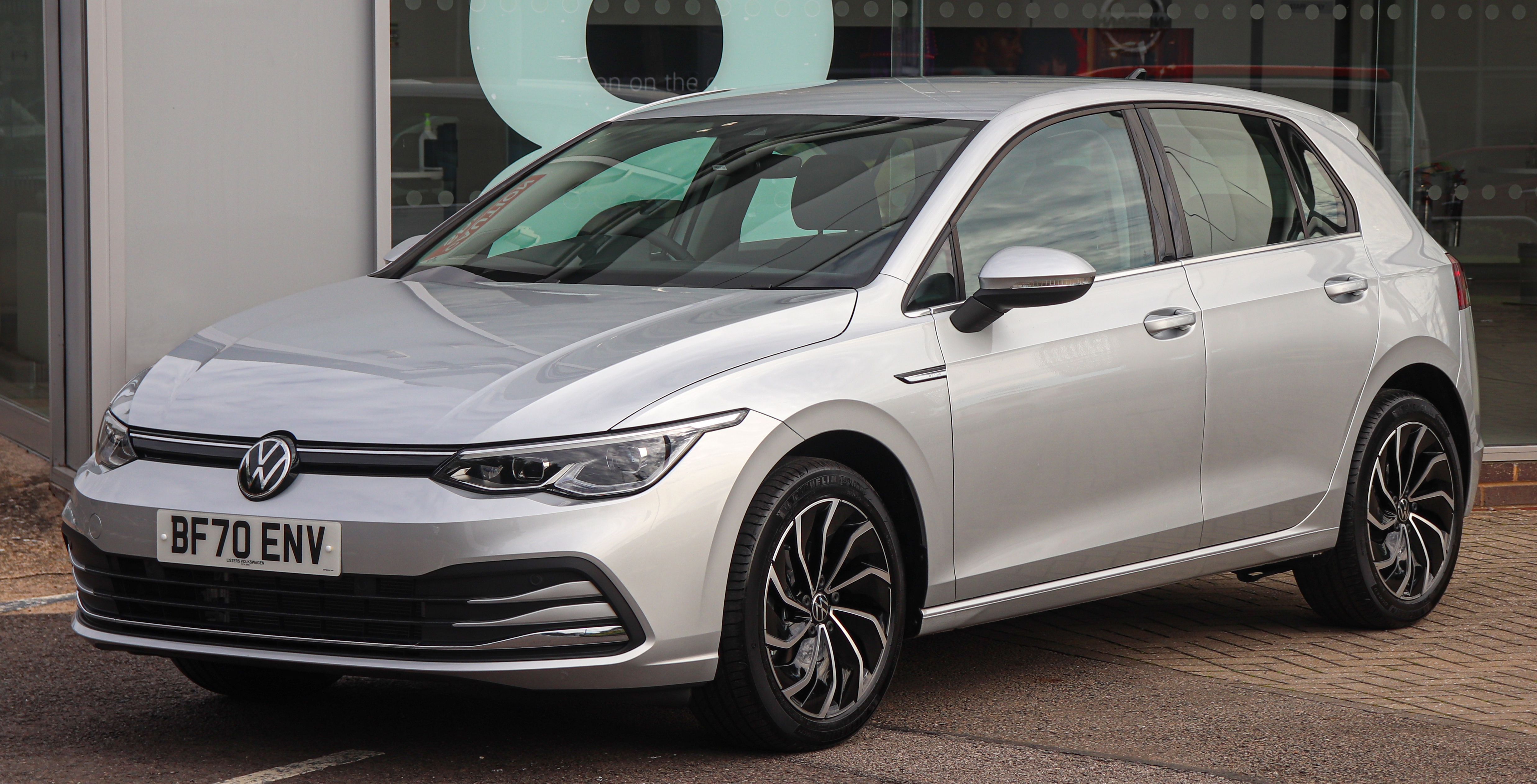
Volkswagen GTI
The GTI is Volkswagen’s sporty hatchback. It’s designed to feel fun to drive while still being practical for daily life.
The Mazda RX-3 is an older Mazda sports car. It’s known for using a rotary-type engine, which is different from the usual engine most cars have. The podcast is likely mentioning it because it’s a memorable, enthusiast-style car.
The Volkswagen Golf is a small hatchback car that’s meant for everyday use. Some versions are made to be more sporty, depending on the trim. The podcast is likely comparing it to other similar cars people might buy used or for a fun-but-practical setup.
The Acura Integra is a compact Acura that the hosts previously borrowed. They mention it was a manual, which usually makes the car feel more engaging to drive.
A manual transmission is the kind of car where you shift gears yourself using a clutch and a gear stick. The host is saying that, for some people, that makes the car more fun to drive.
The Civic Si is a sportier version of the regular Honda Civic. It’s meant to drive more like a fun enthusiast car, and this host specifically likes how it feels with a manual transmission.
The Honda Integra is a sportier Honda that’s designed to feel more special than a basic commuter car. The host is talking about how it looks—especially in a blue color—and why someone might choose it.
A hot hatch is a small hatchback that’s been tuned to feel sporty and fast, not just practical. The host is saying you can get one without paying full new-car prices if you accept some compromises.
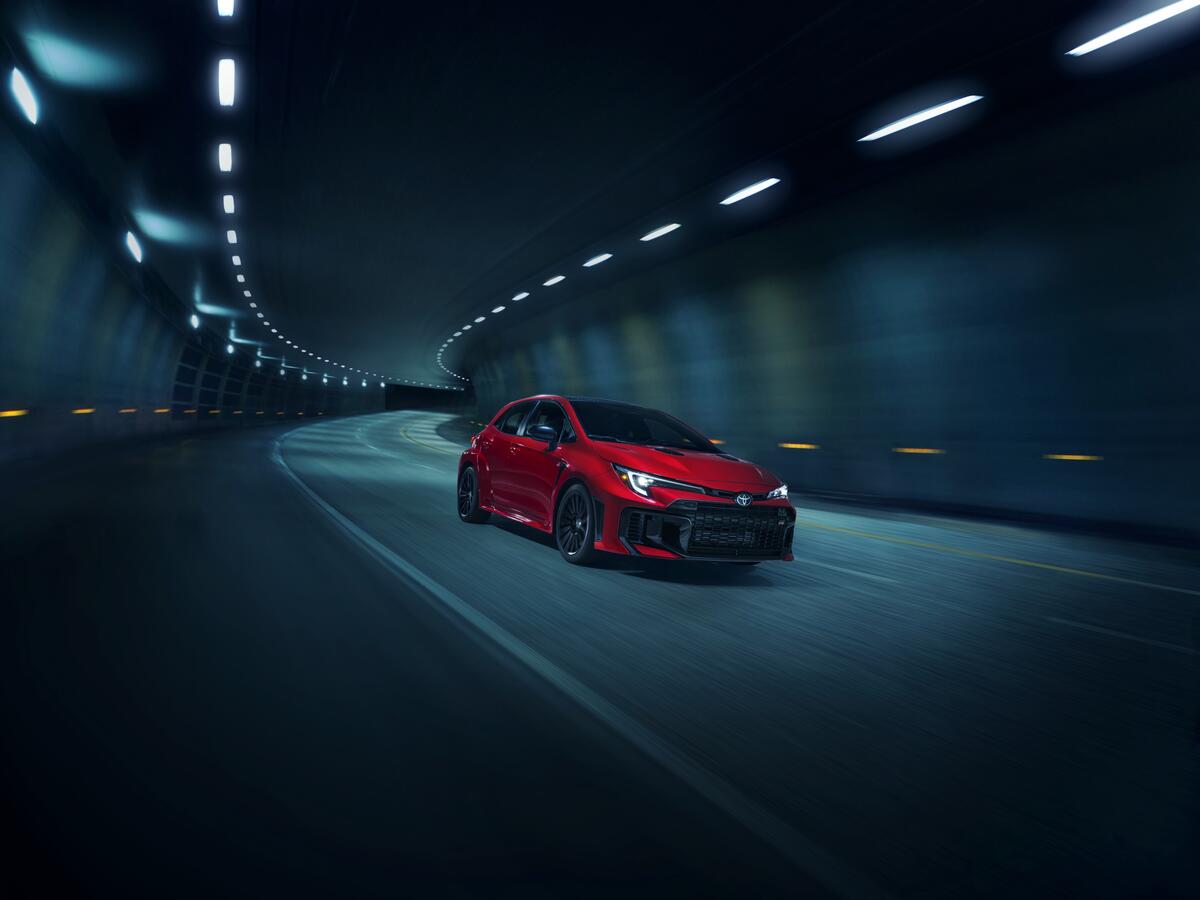
The GR Corolla is a sporty Toyota hatchback meant to feel like a rally car. It’s the kind of car you can drive daily, but it’s also exciting—whether you choose an automatic or a manual.
The host is talking about physical buttons in the car—real knobs and buttons you can press—rather than relying only on touchscreens. They like it because it’s easier and faster to use while driving.
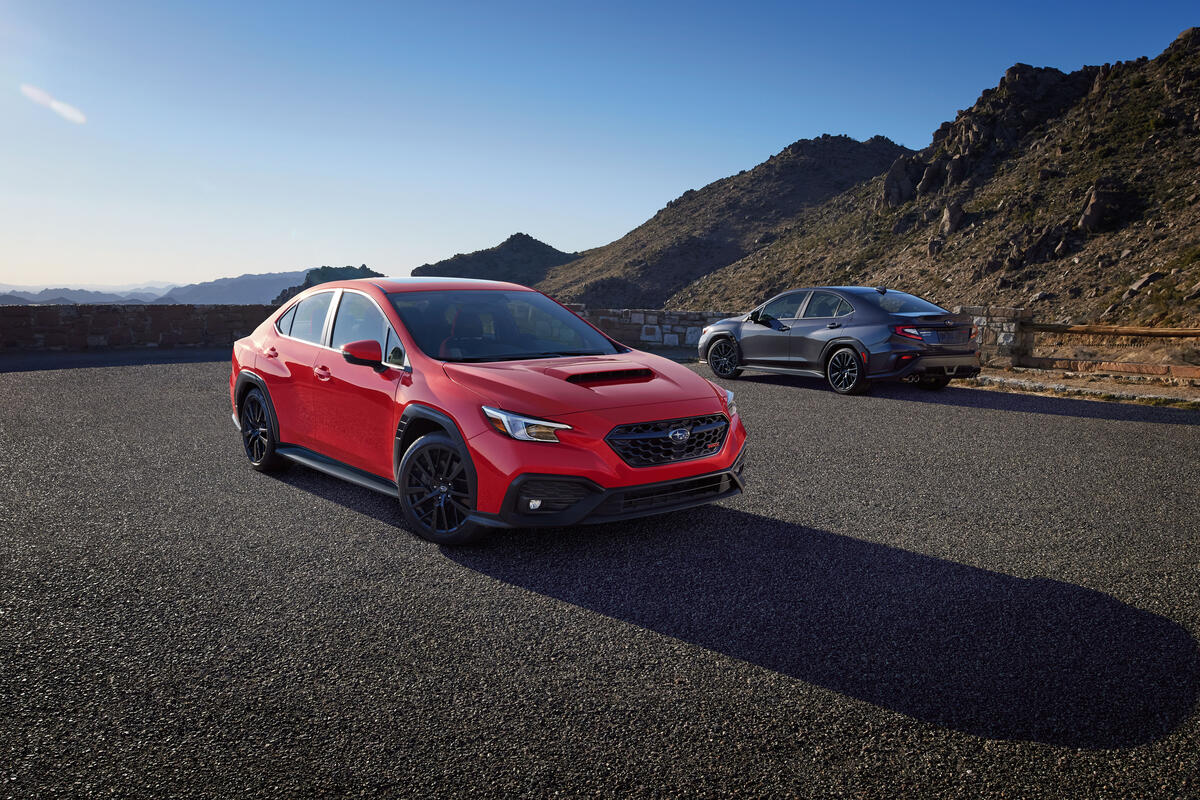
The Subaru WRX is a sporty compact car made by Subaru. It’s designed for faster driving but still works for regular commuting. It’s also known for having all-wheel drive and a turbo engine, which helps it feel capable in different conditions.
The Kia Stinger GT2 is a sportier, more expensive trim of the Stinger. The host is saying they almost bought one used because it feels like a lot of car for the money.
The BMW M Coupe (E36) is a sporty two-door BMW from the 1990s era. It’s made for driving feel and performance rather than family practicality. The podcast mention sounds like they’re talking about who helped shape the design and why the car looks the way it does.
A turbo engine uses a turbocharger to push extra air into the engine. More air usually means the car feels stronger and more responsive, especially when you accelerate.
The Volvo P1800 is an older sports coupe made by Volvo. It’s known for its unique, classic look and for being a car enthusiasts talk about. The podcast is using it as an example while discussing different possible body styles.
A dual-clutch transmission is an automatic gearbox that uses two clutches to shift faster and more smoothly than a traditional automatic. The host is saying this car sometimes behaves like that, especially when driving slowly.
DCT stands for dual-clutch transmission. It’s a type of automatic gearbox, and the host is saying it can feel a little weird when you’re creeping around slowly.
LIVE
Hi, everybody. Welcome to another episode. I'm Mike Monticello. I'm Steph Schrader. I'm Alex
George. So today we're going to be talking about our first impressions of the all new
2026 Subaru Uncharted EV. Think of the Uncharted as basically the electric counterpart to the
Crosstrek, right? So it's basically a fairly small EV SUV. If you're wondering it, yes,
it's smaller than the Subaru Soltera, but it does use a lot of the same mechanical bits,
and that includes the 338 horsepower from its dual electric motors. And lastly, what's the
one thing that everyone wants to know about an EV? Driving range, right? So for our Uncharted
all-wheel drive test car, it has an EPA estimated 287 miles. As always, with every EV that comes
through our test program, we will do our own 70 mile per hour highway range test with the Uncharted
once it goes through our program. So we bought a 2026 Subaru Uncharted Sport all-wheel drive.
Our test car was only equipped with a few options, including its metropolis gray metallic paint,
which I kind of like. dig it. It's got some purple in it. Yeah. Yeah. Along with its
$1,050 destination charge, the total cost for a test vehicle is $42,083. Now before we get
into what we like and what we don't like about the Uncharted, Steph, help us navigate the waters
of how the Uncharted got here. Let's get it. Oh. Navigate the water. Never mind. Anyway,
because there's a lot of similarities with other Toyotas and the Subaru Solterra. So tell us a
little bit about that and all the intermingling. Yeah. It's a bit of a partspin special. It is
nearly identical on the spec sheet and its interior size to its twin on the Toyota side,
the CHR. And that used to be a gas powered car, kind of a small little SUV. And now it's all
electric. It's seven inches shorter than the Subaru Solterra and Toyota BZ. All of these are
based on Toyota's E-TNGA platform. Similar interior across even the bigger ones. CHR and Uncharted,
of course, have a smaller back seat. And they'll have the North American charging standard ports.
That's the Tesla style slim connector. All of them offer some version of this dual motor
338 horsepower drivetrain. All of them offer at least one model that has the 74.7 kilowatt
battery. But the interesting thing about the Uncharted is it not the Toyota version, but the
Subaru. Subaru being known for all will drive everything. Subaru is offering a base front
wheel drive model that undercuts the CHR's base price. By about $2,000, CHR starts at around
37. Solterra starts at around 35. But you only get front wheel drive in that one. And that one has
a 221 horsepower single motor powertrain that isn't offered on the little CHR, but is offered
on the bigger Toyota BZ. Yeah, go figure, right? So let's get into what people really care about,
which is, what is it like to drive this car? So Alex, let's start with you. What are you
liking so far with this new Uncharted? I'm a defender of this size car. I think that this
particular footprint, which is, again, about the same as a, as a Subaru Crosstrak, if that's,
you know, if you're a Subaru buyer and that's what you're thinking. I think the difference in
length is within an inch or less. It's a little, the Uncharted's a little bit wider.
If I was reading the spec sheet, right, if you get the highest end GT line, it's like
a thousand pounds heavier. However, you don't really feel that is a pretty quick car. I kind
of have fun driving this. And it's a sub five seconds or a 60. Again, ours is the all wheel
drive, which has power for that. But once you, you know, I've owned DVs and once you've owned one,
and you know that you never have to worry about a highway merge, you always have power for that.
It's kind of hard to go back. Unfortunately, this one has that. I think it's got plenty of power,
and that's, you know, something that you really want when you buy an EV today.
Totally agree. And, and, you know, that's the not, you know, the original Solterra we,
we tested did not have a whole lot of power, right? There was, there's lower horsepower versions.
This one, there's none of that, you know, some EVs when they, you get to 60 miles per hour,
they kind of like they're quick up to 60, but then they kind of run out of steam. This one
does not run out of steam at 60 miles per hour. And so I found that really fun. And it's also just
really smooth. Like it's not super quiet. Most EV power trains are quite smooth, but certainly
we've found that they aren't all smooth. And just about everything about this, whether it's
on throttle, off throttle is just so easy to use and enjoyable to use. And I think maybe one of
the coolest things is it's also really quiet. Again, a lot of EVs are quiet, not all EVs. Some
have this, you know, pretty annoying high-pitched electric motorwind and you barely hear anything
with this one, even if you floor it. I mean, even the wind noise is pretty well controlled.
It's pretty impressive. Yeah. Yeah, for sure. What else do you like on Alex? So whenever you see these
cars, especially the ones that have the side profile, they're kind of cupified, they're
sloping back. I'm not particularly tall, 5'11". I get in the back with the driver's seat, as soon as
whatever setting I would have, just fine in this one. I mean, it's a little bit more claustrophobic
than I think other cars you can get into for the same price, but I think it was just fine for it.
The trunk space is the thing that you find with EVs, the way it's architected. Basically,
the surface of the trunk is a little high, and this one's a kind of hatchback. So if you're
going to have this hatchback setup, so if your space is not that great, I would have to look at
side by side with the cross-stretch to see exactly, but it's not much worse than that.
So I think interior proportions are just fine. Yeah, it's a little less gargoyle room than
I think we're talking four or five cubic feet, according to Subaru than the Solterra. So not
a ton less. I also liked the ride. I thought the ride was impressive. Not even just like
for an EV, like overall, the ride quality, it absorbs bumps really well. It's really smooth.
It can get a little bouncy, but I mean, you really have to... I really had to push it before I felt
it going... Yeah, I mean, it surprised me because it has a shorter wheelbase than the Beat Toyota
BZ, which we're also testing, right? Which is... That's a nicer ride.
Yeah, I wasn't expecting that. I thought, okay, it's gonna... I mean, they do have the same size
wheels and tires, but the suspension obviously is tuned on the softer side, but it really does end up
and pretty comfortable going on down the road. Especially the thing I forgot to think about too
is the seats and the interior trim. Nice as Subaru, I can remember sitting in all the materials. I
think so. Yeah, the seat qualities and all that. I mean, compared to what I think most people will
get when they buy a Subaru and what they're looking for from it, the utility and all that,
it's a comparatively luxurious experience in here. Yeah, so maybe it's a more of a Toyota seat than
it is a Subaru seat, because that's honestly what it felt like to me. I really like them. Did you
like the seats? I mean, we all have such... When you look at us, all three of us have very different
body types, so this is why we send so many people through our test cars, because we want to get all
those varying types of people. So, if it didn't work as well for you, we can save that for a
dislike. Well, I mean, the seating position is a different thing. The seat itself is comfortable.
I'm just not a huge fan of the pleather material. It's sweaty. It's starting to warm up. It's not
super hot here, but it is just kind of sweaty. So, you need ventilated seats?
Or the Basement Loffers cloth. Yeah, I agree. It's called Star-Tex. It's Star-Tex fake leather,
and the material didn't bother me from any kind of a perspective other than it's slippy,
you know, slippery. And so, it just like, again, cloth helps hold you in place. But I thought,
as far as... I thought the padding was good. I thought the bolstering holds you in place nicely,
so I was really impressed with that. I can't argue with the pleather. Also, service announcement,
if you ever see something advertised as vegan leather or whatever, what was it called in this
one? This is called Star-Tex. Star-Tex. It's plastic. It's plastic. Which is sweaty. Plastic,
it puts bare skin on plastic. It's a little bit sweaty. I have had the taxi driver beads for the
in my Amazon cart for months now, and I know I just need those. If I had a car like this,
I would probably be getting those. The last one, I think this falls under a like. So,
because this is a... So, it's a Subaru badge, but it's a Toyota underneath it. One thing that
Suparus suffer from is you tap their infotainment, and you account one Mississippi. Oh, flag.
The flag. Before it does what you want it to do. This is a Toyota one, responsive. Everything
works pretty quickly with what you need it to. I think the menu format is very logical and
intuitive. Might not be familiar for use to Subaru, but I thought that was kind of an
invern thing that improved upon other Subarus. Yeah, for sure. Yeah, and it's got fairly big print.
I wish it had a home screen where it had more like tiles that are big, and you can... I'd
rather have physical controls, but I'd also, if it's got to be on the screen, big colors,
bright colors, but the center screen at least, I'll talk about the gauge a little later, but
the kind of main interface for climate and everything, you've still got physical knobs
for the climate. It is pretty normal in there. You have like normal stocks, normal buttons for
adjusting the mirrors and windows, and that I appreciate. Yeah, I mean, I like simple things
like there's an actual physical odometer trip button on the driver's left dashboard,
and those are going... Those are fewer and farther between these days. I also am a big
emergency flashers guy. Doesn't mean I'm always going under 35 miles an hour on the highway,
like the truckers. That's not what it is. That's not what it's for. But it's large and
essentially located, and you really want a button that you can find and press quickly when you do
have to warn people behind you that something is going on ahead. I also really like the dual
wireless charging pads and two-way opening center armrests, and I just wrote, love them. I didn't
write any other notes, so you guys agree with that? Concur. Yeah. So what we're talking about, folks,
is that Toyota has this center armrest that you press a button and opens for the driver,
so it's easy access, and the front passenger has a button. On the other side, it can open.
And does this one have the taco tray, like the RAV4? I believe you can take it out.
And turn it upside down, right, and slot it back into place. If you're launching your car as I
have on many occasions, yeah, it's great for that. That's how you get ants. And you know,
well, this is dipping into the dislikes. Part of the reason you need that flexibility,
no glove box. Right, yeah, which is silly. Steph, anything else you're liking about this car?
The surround view parking camera is great. It's always good to have like a simple button to push.
I can see what's around me. Kind of need that because the rear view mirror is kind of getting
away. I'm short, and they're big, and they're right there. So it's helpful to have that kind of
back. It's really clear. Yeah, I really like that. Yeah, I wrote down decent handling. You know,
I almost feel like though, like producer Dave, you should figure out like we have these likes
and not likes or dislikes, but what about in between? Like the handling I sort of thought was
in between. I think it handles well for what it is. It's nothing special. It's not like it's really
sporty, but it does have that shorter wheelbase with which does help with agility. But it also has
fairly soft suspension. But so when you push it a little bit hard on the back road, you're definitely
going to feel some body roll. But at the same time, the chassis is very responsive. So if you're
going through a corner and it starts, you know, hiking over a little bit, you know, you can adjust
things very easily just by, you know, dialing back the accelerator pressure a little bit,
or maybe even your steering angle. And the steering itself, I thought it was nicely weighted.
Natural turn in feedback is pretty weak. But all of that overall, it's just a kind of a
decent handling little car. Yeah. Again, the feedback, I also thought it was kind of muted.
But I mean, for most of the people who would buy a small little SUV like this,
I don't know if they're really, I think it did a good job of balancing like
good ride quality with, you know, unquestionably, decent dynamics.
I'm not sure anybody's taking this to the track. No, probably not. But I think the point that you're
making is correct is that this is a thing that a lot of EVs get wrong, where it's all, you know,
it's all kind of artificial. So it can be left to be, you know, I guess, very light steering or
whatever they think will be most appreciated by the average driver seeing traffic. Yeah,
almost computer like, right, is what some EVs feel like. There's too much computer like in
general going on, you know, from the lack of sound and then the artificial steering, right.
And so then this one actually feels, in a lot of ways, like kind of like a normal EV, if that's
a thing. All right, so let's talk about what we don't like. And let's turn to Steph.
What did you say? You said something to me earlier today.
What was that term you used about hating something? What was that?
Haterade. Haterade. Haterade is the new term that Steph has developed.
I cannot take credit for Haterade. Haterade predates me.
So we don't have to let's let's dial back the hatred and more just what are we not
liking so much about the uncharted? Oh boy. All right. I'm nearsighted. It has the seven
inch driver's display that sits right here on the dashboard. I think I might even be further away
than that. Yeah, it's super far away. It's got tiny text. It's all jumbled up. It's got a bunch of
icons and like the seating position is hard to get into for at least me. I know some people have
an easier time than others, but a lot of us were complaining about the ergonomics of this thing.
And quite a few of us had the issue of the steering wheel blocks part of this teeny tiny panel.
And of course, the the information I really want from an EV, you know, how much range do I have left?
You know, what am I, am I going to need to stop soon? And that's kind of another complain I'll
bring up is it seems to have fewer EV specific like assist and features and right bells and
whistles on that end. But that's under this like wad of always on icons, you know, like something's
wrong with the car, except it's it's not that just shows you what safety systems are active.
And it's an itty bitty text. And it's often blocked by the wheel. Meaning if you're gonna
put the instrument screen further away, make at least some of that text or all of it larger than
if it was right up here is what you're saying, right? At least give me a bigger screen and space
things out better and maybe maybe make it as nice to look at as the center screen because the center
screen is got big text. It's very clear. It's colorful. This is like a black and white thing.
It looks like they hired somebody who's last did like the Oregon Trail game in the 80s. Like,
it's terrible. So what we have found so far is we've been having a lot of vehicles lately come
through that especially because, you know, it's no longer like this instrument binnacle, right?
It's they've gone rectangular screens. And so we're finding a lot of cars stuff towards the
upper part of the instrument screen is being blocked by the steering wheel, right? Especially
for those of us. And this is why where I'm getting to is I want to talk to you, Alex, about how you
have you dealt with this. But so for an a lot of cars, we those that like the steering wheel a
little lower, this upper stuff is getting blocked off. So for those of us that like them lower,
this actually works really well from the perspective of you put it just about as low as it goes,
and nothing is blocked whatsoever. Is that where you are? Or because I know, like Steph said,
that the people who typically those other ones work, this one doesn't work.
Right. I see what you're saying too, because the for people trying to imagine that the it's
basically placed so rather than in some cars, where you would look through the steering wheel
at the instrument cluster dashboard, whatever, it's set up high, almost where you would see
like a head up display or something like that. Yeah. But with the screen instead, it wasn't as
much of an issue for me. But the play the way getting the steering wheel just right was a little
bit tough. It skews kind of more, it didn't, I like it, tells it up, bus driver angle a little
bit. And you can't quite get there. So it took a little bit of getting used to, but that wasn't
as much of an issue. I will concur with that. You know, the graphics look very if like a Rivian
or like a Rivian Tesla is like a PlayStation five, these, it looks very like,
I don't know about Oregon Trail, like PlayStation two at least in terms of like the numbers on there
and maybe maybe early Nintendo. Yeah. And like you said, it has these kind of, I don't know,
as you're driving along, if you don't have the driver assist stuff on, there's a green icon
that says ready and green letters the entire time you're driving almost like there's something
else that you're supposed to still do. It probably goes not using it enough.
Like it's saying I'm ready, put me in, but no. If everything's a warning, then nothing's a warning,
that it dilutes kind of your attention away from anything important that might,
you know, need immediate attention that could show up. All right, what else, what else are
you not liking? I actually really don't like that center console where, I mean, the two most
prominent things are two wireless phone chargers. And, you know, I don't want to see my phone when
it's there. That's why they're phone mirroring things. Thankfully, it does have wireless carplay
and wireless Android. That's great. Some EVs don't do that, but it just, it moves everything
backwards. And then you have this dumb shifter that is, you have to like, so park is a separate
button. If you press it down once, it's a neutral, you know, you turn once, turn one direction for
drive and turn the other direction for reverse. What I found was it was kind of easy to even
neutral. Like if I started to back up and then I was like, oh, well, you know, I should look this
thing up. I should stop and, you know, take care of this on my phone before I drive. It's not an
easy motion to get back into park. And maybe you'll, I'm sure some people get used to this over time.
I hated it. It takes up too much space. And then the cupholders are down in this hole. And then
the armrest is way back here, which, you know, I still shorter, I'm a shorter person, I sit
closer to the dashboard. And it's just like, there's this hard armrest is way back here. And I have
to reach in this hole for my coffee. And I don't like it at all. It's just the priorities. I'm just
like, hide my phone, you know, leave it somewhere where I can notice it when I need to pick it up.
But it's, it's a distraction. It's right there. It's flashing with whatever notifications.
So you, you suffer from some kind of OCD or something or whatever, like, you're easily distracted by
anything. Like, yeah, I mean, that's the whole point of, of, of Apple CarPlay and Android Auto,
though, is that they're up on the screen. So hopefully you wouldn't even look at your phone
because you don't need to, because it's all right there. You know, so I guess it's closer to me
because I'm short. Well, there's, there's definitely some issues with that, with that
console anyway, though, Steph, you're right. You know, whether people like
two wireless chargers or not, or maybe there's a better place to put them, but it's also
intrusive. I found it intrusive, like on my right knee space, and it's plastic, it's not padded,
and it just, I don't know if it's bad luck for the, the, you know, length of my legs,
but I'm hitting like almost an angle of the plastic instead of being a flat surface there.
And so that, that made it, besides being plastic and unpadded, it's just my knee was hitting kind
of an uncomfortable spot. Yeah. This shift knob is worth getting into it. So you both drive a lot
more, you know, if you get hands on it earlier with the cars than I do typically. And within the
last, certainly within the last decade, a lot of new approaches to how you shift the car into
drive, reverse, test this case, maybe you don't, it just doesn't automatically. I was thinking about
this. So I, I lease a Ioniq five, which has the Hyundai, it's a little protrusion out of the
twist. And you turn, and I drive that car a ton. Everyone's in my life, I have to tell
myself, oh no, no, reverse, you twist the knob this direction. Because you can't really see it,
right? That's, yeah, it's hidden there. I mean, I guess kind of the same thing with this one,
the Uncharted is this knob that you, you know, it's a default is at 12 o'clock, you push it down
and then turn it to like two o'clock for forward, then to 10 o'clock for reverse. And it's kind
of, yeah, you really have to be deliberate about it. Again, I'm sure you, you know, you get more
used to it. But are there, I mean, I guess with EVs, you can do whatever you want to with how
you decide that. But I mean, certainly some car companies do this better than others.
Yeah, I feel like we standardized everything for a lot of these like simple controls, like
how do I put the thing and drive? And now people are messing with it. And, you know,
especially if you share cars, if you have multiple vehicles that you're in and out of,
no, stop getting creative. I don't want creativity in that space.
Strange as it is, it's a little bit pleasantly tactile.
Like you get a spring with it. I will admit to like having, you know, I'm on the highway and I
can't help kind of touching it. And I've like actually thrown it into neutral at like 75 miles
an hour. Because it's kind of good size. That's kind of right. I personally, I was, I'm not a
defender of these different, all these different types of gear selectors, the electronic ones.
But I didn't really have a problem with it. I've used these a fair amount now that you kind of
get used to it. I think most owners will get used to it. That's not to say that you won't
occasionally go into neutral when you don't mean to go into neutral. That said, you can
occasionally go into neutral with an old fashioned one of these where you think you've gone, you
know, far enough and you haven't. So I mean, but points certainly well, well taken. And
it would be nice if there was a lot more normalcy with these, with these electronic
gear selectors for sure. At least it does. A lot of people, this is kind of a polarizing thing.
A lot of people, it does have a faint beep, beep, not like full box truck, but like reverse.
Yeah. So at least, you know, when you put it in reverse, is it beep, beep, beep. Love it or hate it.
I don't know what to mean though. It's a, it's a, I took a recording of it because I had the same
observation because like it's that chime that you get, like if you left the key in the car or you
open the door or whatever, but it's on the whole time when you're in reverse. And so like, which
is strange. It's strange in a parking lot and you have to sit in reverse while you're waiting for
cars to go by or something. Can you stop that off? Yeah. Can I turn that off please?
All right. All right. What else stuff? I feel like you've got a long list or we,
are we getting near the end or? I mean, we only have a, you know, a half hour to go.
Oh, oh, well, I mean, I think the biggest, my biggest beef is it, it feels outdated out of the
box. Like the car in general overall as an overall. Yeah. Cause I mean, when it comes to
electric vehicle features after, you know, I just finished doing the road test for the leaf.
And I'm just like, the leaf feels like a newer car. It's got similar specs, you know, 150 kilowatt,
which is already, you know, a little behind what other fast charging capabilities are out there.
Both don't have a frunk. That's annoying. Both don't have a rear wiper. Both are kind of the same
size. There's a lot of similarities, but there's no route planner on. Uncharted. Uncharted. Iron
like it feels like back to back with the leaf. It feels like going back to using a compass. I'm
just like, okay, you know, the leaf's route planning was so good, you could find chargers,
you could go to your preferred network. If you put in a destination that was,
that would require a higher state of charge than you currently have, it would plot in points to
stop. And this is, it just feels copied and pasted from the 2022 Tundra that I tested several years
ago. That's one of those things that like newer EVs have that is just missing. And then there's
the charging lock, like a lot of EVs leaf included will put the button to unlock the charger right
by the charger. Well, this one, you know, it's kind of easy to accidentally leave the adapter in.
And when I've done that, I've either had to like button mash the unlock button on the key,
or I've had to replug it in, go in the car and tell it to like manually stop charging through
the little seven inch screen. And I'm just, this is solvable with a button, you know, there's also
this like vague charging light above that, you know, it's kind of hard to, it's not clear what the
You're talking in the port. Yeah, right above the port. It's, you know, it's teeny tiny little green
LED. And it's not super clear what it's doing. And also, you know, other cars, leaf being a good
example, it's got a 14 inch, the base model on the leaf has a 12 inch green. All of these,
they're big, their color, you can see exactly what it's doing, what it's charged to through the
window. You know, I was wearing sunglasses the other day and trying to see, you know, anywhere
in the interior, it's not on the big screen in the uncharted, it's on the dumb little gauge pod
that's already hard to see. And I had to open the door, take my sunglasses off. I mean, you can
still see it with sunglasses, but you know, it's just to brighten it. And it'll turn off after a
little while. So you don't even have that to know if it's still charging, you just have the little
status light, which everybody so far has had to look up in the manual, because it's just so
unintuitive. Goodness. And then there's regenerative braking, a lot of, you know, neither the leaf
or the uncharted offer one pedal driving. But the leaf at least will give you stronger modes.
It's really weak on the uncharted. And then, you know, you've got the pricing. It's like, well,
at mid 30s, you're looking at, you know, the IONIQ 5 as well, which offers faster charging, which
offers all of these features and one pedal driving. So I'm just like, I guess if you
really like your Soltera and you want a downsize, perfect. You don't have to learn anything new.
But for everyone else, I'm just kind of like, this is a little behind.
Yeah, especially on the EV specific stuff is what I'm hearing. Alex, what about you? Besides
what Steph has already mentioned, is there anything else that she didn't mention that you
think maybe could be a little bit better on this? Nothing left.
No, the thing actually that I've been mulling over driving this is it's reminding me first
up, like, I know it's inflation, everything's expensive, but a sub $40,000 electric vehicle.
I like that. That was, I don't know, that was the thing we were hoping for a decade or so ago.
I was remembering like the first batch of cars that were getting above 300 miles of range and
all that. But the range specifically is what I'm trying to make sense of. Like, so again,
at this price point, good for that price point, the average person in the United States drives
40 miles a day. A 200, what was ours? 287. 287 EPA estimate, plenty. The fee out of 500 each.
That even that would be plenty for a lot of people. But that 300 mark is a big demarcation
between like, well, can I depend on this car for more of my driving than just the,
you know, can I use it outside of just my regular commute? I don't know. Does 287,
does that number, if that's proven right by our testing, if that's proven accurate,
is that enough for people who are buying this car?
I mean, I think you could say maybe for the price, it's pretty good, right? This is one of the more,
you know, less expensive EVs out there right now. So I think, I mean, we'll see what it really does
in what we consider more real world, you know, situations where range really matters,
which is on the highway at 70 miles per hour. So I don't know. I think 287 isn't too bad,
I think. I think it's pretty livable. Although I know one of the things from our test with the
BZ was the range often didn't go up to its, you know, stated EPA range. So that's something
that we'll be looking as we test this one further. But I think 287 is more than enough.
It's just like, it's a lot more livable when you have those extra charging features,
when it's easier to charge away from home, when you're not worried about, oh my gosh,
I got the stupid adapter stuck in, it's cold and I'm grouchy and I'm having a bad day.
Is that a specific example or is that always that you're grouchy?
I'm always having a bad day. Yeah, yeah. No, but, you know, and things like route planning,
it's a lot less, you can do kind of aftermarket solutions, things like a better route planner,
but it's also like, well, but then you have to input your car into a standalone app.
It's not going to be able to pick up your state of charge because it's, you know,
something you're projecting off of Apple CarPlay or Android Auto. It just,
the things that make an EV more livable for longer range trips aren't there.
Yeah. I just want to bring up a couple other things that I noticed that I, first of all,
I actually like this vehicle a lot more than the stuff, obviously, but there are a couple
of other things that people should know, which is that, you know, the rear seat is,
it's pretty tight and it's not that comfortable. Headroom isn't bad and I thought the padding
of the seat is actually pretty comfortable, but knee room is tight, toe space is really squished,
you know, underneath the front seats and maybe the biggest thing is that the bottom cushion is
just too low to the floor. So you're really, for adults especially anyway, you're lacking that under,
under leg support that really, you know, helps for comfort on longer drives. Seats pretty flat as
well. And one other odd thing about the rear seat is that if you only have two people back there and
using the center drop down armrest, for some reason it comes, instead of coming down flat,
it goes down a little bit further, which is just, you know, and you can't bring it back up to, like,
you know, it's not adjustable and it's just kind of an odd thing. So if you're resting on, you're
slipping down? Yeah, it's a little, it's a little strange. Okay. The other thing that I don't like
is, I don't like this non-round steering wheel, you know, nine and three, it's totally fine and
it's, and there, and it's pretty, pretty, it's okay for most driving and even spirited driving,
but anytime you have to take, whether it's on a back road and you get to a hairpin turn and,
or of course, any kind of parking maneuver when you start doing shuffle steering, that's when the
steering just feels, that shape of that wheel just feels odd. And then the other things that I don't
like, I know you mentioned that the temp knobs as their actual knobs, but we've seen this before
in Toyota's and even Lexus is that the detents of these things, when you turn them, it's easy to
turn it if you're trying to just do one degree and you turn it and it's so weak that it sometimes
it does nothing or, you know, like it doesn't change a degree at all because it doesn't click at
all, it just, you know, has this so weak. And so I don't like those, even though at least you can
grab them. And then the other thing I don't like is, is that the, there's these levers on the dashboard
events that they're just unergonomic and they're just very difficult to use and to figure out
exactly where, how you're adjusting the air to go the way you want it. And we've seen this before
on other vehicles as well at Toyota's and Lexus and it's just, it's kind of annoying.
I think I must be the only one at the office. I get in a car, assuming there's the, you know,
you can say 72, hit auto and never do anything about it. Well, apparently, Steph and I run hot
since she was talking about the seat material and sweating and I definitely run hot. So I'm
immediately, I'm always a manual guy. I got to turn it to full cold, but the ventilated seats on,
if I have them, which this one doesn't. So, and then I'm always trying to fiddle with,
to get both of my vents here. And if no one's over here, and even if they are over there,
I'm turning everything toward me full blast on my face.
Steal your passengers there. Yeah.
What I've noticed, okay, am I the only one that like, and I noticed this on the BZ as well,
I get in and like, none of my climate settings have been remembered. I have no idea where it's
pulling the climate settings that it comes up with, but you know,
you get in from having just driven it, or you get into it after someone else had driven it.
Well, I get in after I drove it, I parked it, and then I get back out to it. And you know,
I know it's been warm out, I've had the aircon on, and then I get back out there and AC is not
highlighted. AC, that's a toy thing. That's The AC does, and I think Lexus as well,
the AC does not stay on. So you can turn it on as much as you want. But as soon as you
key cycle that thing, you're going to have to re-hit the AC, which I agree with you. It's
stupid and annoying, and there's no reason for that. It should remember how it was.
They're based in Texas. They should know better by now.
They should know better. Okay, so let's kind of wrap up this segment here on The Uncharted.
So, and Alex, I'm going to start with you. Say for someone who is interested in a Subaru EV,
do you think this is a pretty good place to start?
Yeah, I'm thinking about that. You've never had an EV before, but maybe you like Suparus.
Yeah, it's a question of, are you getting what you want out of a Subaru, what you come to expect
from it? And so, I mean, despite this being a Toyota underneath it, I saw a couple of
traces that made me think, okay, I get that. The first, the marketing, decades-long marketing of
Subaru and all-wheel drive completely works. You absolutely expect that when you get it.
There's a front-wheel drive version, but I expect a lot of people will buy the all-wheel drive.
And the other things, so it's got 8.2 inches of ground clearance, which, again, anecdotally,
the market for Suparus is New England, Colorado, places where you have snow and slush. I think
you're fine for something like that. It also has Subaru the X mode, which you choose like
snow and mud or deep snow and mud and get out with that. Yeah, so, I mean, if you're a
Subaru person, you'll see some traces in there, but yeah, I mean, understand that you're not,
this is not a come through and through super product the way you might be expecting. But,
if that's not a vital thing for you, you can find some stuff to like about it.
What about you, Steph?
I think people really like, I'm not going to dissuade somebody, but I will say,
if they watch this podcast, you're going to have dissuaded them.
Siddin' it, does it fit your life? Does it fit your body?
But yeah, people really like just going back to the Subaru. And it's probably the least
controversial brand I can think of. What is their biggest scandal? They didn't bring enough puppies
to the auto show or that was a problem. And they really like buying Zubers. If they're
downsizing from a Solterra, presumably they're like, I want something smaller. This one's more
fun, I think, than it's bigger brother because of the shorter wheelbase. It's a little more nimble.
338 horsepower in this does go like stink. So even though I'm saying here's some practical,
ones with more EV features, I'm not going to talk you out of it, but just
test drive a few different ones. And if you are going to go on longer trips,
you may want something that can chart a course a little better.
Nice. Yeah. What would you say?
Look, what I would say that I think it's a pretty darn nice car to drive. I know there's
definitely some quirks about it, but the powertrain is strong, smooth, very quiet.
The comfortable ride was not expecting that. The front seats, again,
it's very much body dependent, but they really worked for me. And I think having comfortable
front seats goes a long way towards your daily livability with the car. That said,
the driving position quirks would be a little bit of an issue for me. It might make me pause
that center console intrusion. The armrests, both of the front armrests are very thinly
padded. And so that means on a long trip, if you're the kind of person that kind of has
hands in the lower position on the steering wheel and both elbows on the armrest, that's
going to get uncomfortable. And then that weird far away instrument panel is just strange. It's
like, how about we come up with something in between a head up display and a regular driver
screen and it's actually worse than either one, right? So those are the things. As long as you
know that going in, and obviously this is definitely a car, I think we can all agree you
should go definitely take that test drive and maybe a little longer test drive. But I think
there are definitely some positives about it. Another positive is that the Uncharted is currently
racking up its break in miles. We do 2,000 break in miles on every vehicle we buy
before it goes through our actual instrumented testing. And also Steph is hard at work right
now on a first drive of the Uncharted that you'll see on consumerreports.org with even a lot more
information than we talked about today. And of course don't forget to stay tuned to consumerreports.org
for our full road test results of the Uncharted as soon as it gets through the program. So with
that, let's move on to our audience question of the week. Don't forget the best way to send us
those questions, comments or video clips is text us at TalkingCarsaticloud.com. And to give you
like an extra incentive to not just give us a question or a video clip or you know a comment,
but an amazing question. If we use your question on this show, our producers will send you some
CR swag like a CR branded t-shirt, maybe even auto test center t-shirt. That's be the really
okay, producer Dave saying yes. We do have an auto test. That's the cool thing, not just a CR
t-shirt, but a CR auto test center. That makes a complete difference. As soon as I start working
here, every relative hit me up. I get that. Okay. And of course, you know, I've said it before,
but don't forget we really love, love those video questions. So keep those coming. But we do have
a written question from Adrian and Adrian. Quite detailed too. I like the amount of detail on this.
Adrian says, I'm graduating high school this year and I'm looking for a new car that will
comfortably get me to college every day around 40 minutes each way. I was hoping you could give me
some advice. My budget is capped at $35,000. I really love driving. So good dynamics are a must.
I'd like premium comforts, but at a minimum, heated leather seats, a sunroof and a heated
steering wheel. I don't want anything boring. So no Honda or Subaru. I guess, I guess he's not
getting uncharted. I can't go another year stuck in a sensible brick. I've currently been looking
at the Kia K4 hatchback GT line turbo, a used second gen Mini Cooper Countryman, Volkswagen
Jetta, GLI, GTI and the Mazda 3 turbo. What do you think? I'm of course open to use vehicles,
but I'd like to keep it as new as possible. Look, that's a lot. That's a lot of desires.
Appreciate that Adrian knows what they want and seems, and I also like that they care about
driving dynamics. That makes me so happy. Kids are all right. Let's start with you, Steph.
What are you thinking for Adrian here? We just borrowed a Kia K4 GT line turbo
and really liked it. It's fun to drive. It's got the practical hatchback. I like it a lot better
than the sedan. I liked it a lot better than the one that we did a full road test of that was a
lower spec. The Mazda 3 also, one of the higher reliability stores. I'm going to go off script
here. The Acura Integra we had with the manual is the type asset thing that we borrowed. It starts
at $33,000 and feels a little more special than the base Honda. It has a great stick shift. I don't
know if you're into manual transmissions at all, but I've heard even the automatic ones are pretty
fun to drive. The infotainment, really easy to use, live with. The Civic Si
also wasn't boring to me, but I could understand wanting to stand out a little more. No Hondas.
Integra comes in a cool blue. That was a nice looking color. It was a very nice looking color.
If you're willing to compromise on the sunroof and go gently used, you get a legit hot hatch.
The Toyota GR Corolla, which I mean, both of these are cars that I'm like,
I kind of want that. After I've tested them, I kind of want that.
That's a super fun car.
Yeah. Again, both the automatic and the manual versions are good. Handles great,
straightforward controls, which I'm sorry, I'm going to keep harping on buttons. I love buttons,
but it's also hatchback. It's also pretty practical. It reminds me of the WRX and the EVO,
these kind of performance rally inspired car and also made into rally cars.
I love that. I wish more of those cars would come back.
All right, Alex, what about you?
So I'm going to give them a used car that I came very close to buying a Kia Stinger GT2.
These were made for, this was 2018 to 2023 model year, so I know he was asking for new, but
for what they cost and what you get out of it, especially what he's asking for,
you get a ton like the GT2 trim.
I love that Kia Stinger. That was so good.
They look so cool.
He did everything. And for context, a lot of the credit for the design goes to this guy,
Albert Bierman, who Kia posed from BMW's M Performance Division.
So the end, if you're wondering why it's such an amazing car to drive, that's part of it.
It's also a hatchback, so you get a little bit of practicality for it.
I was looking at some of the, I was looking at listings on CarMax just before we got on,
and you could find one in the 2018, 2020 range for about 31K, someone going for 28.
If you can make do with that, like the 360 camera GT1 is also an option,
but they're just kind of a sleeper car that I think hits a lot of what he's asking for.
They look cool too.
Great.
And it's kind of a rare spot nowadays.
Yeah.
So I, I'm going to piggyback off of what Steph said, that K4 hatchback GT line turbo,
which we borrowed, I really think that's a good way to go.
If the GT line turbo starts at 28,890, I think is what my glasses are saying here.
And as far as features, heated front seats, a power driver's seat, and a power sunroof,
if that's okay, Alex?
A lot.
Okay, he'll allow it.
If you add the technology package, you get ventilated front seats and a heated steering
wheel.
I know the heated steering wheel is also important.
As driven with that tech package, it was, let me get my glasses, 32,870.
That's including the $1,195 destination charge.
And, but for me, it was just like, I just enjoyed driving it.
I mean, like it doesn't have, it's not like it has a ton of power, but it does,
this does have a turbo engine.
And I thought that the handling was, was really good.
It's what, without being so firm that it beat you up.
The steering was quite natural, nicely weighted.
And, but honestly, I think maybe it's the styling that got me almost the most because
it's so unique.
Cool.
Right?
Yeah.
It's a hatchback, but it kind of reminds me more of like, if, if there was a four door
version of the BMW Z3 Coupe, or maybe the old Volvo 1800 ES, which also I had the mustard
like color was the Volvo had that back in the day as well.
You know, so this is not a boring car to drive.
It's not a boring car to look at.
It's kind of unique.
I'm not going to say it's perfect.
Road noise is pretty elevated.
And again, I had some steering wheel, you know, instrument screen blockage,
the opposite of what I had with the Uncharted.
But, and the transmission has some, it's a, it's a true automatic.
And it had some, you know, sort of like DCT, DCT like so dual clutch transmission,
low speed oddities, but definitely not a deal breaker.
And I just think it's, it's, you know, it's well within the price range and it's a pretty
fun car to drive.
And, you know, there's something to be said about having a new car that's all you,
you know exactly what it's, what's happened to it.
And you've got a full warranty.
Yeah, for sure.
Keys is pretty long too.
Yeah.
All right.
So Adrian, hopefully we gave you some good choices there.
That's going to do it for this episode.
But before you go, don't leave anyone.
We want to talk a little bit about the fact that Consumer Reports is a non-profit, right?
So we don't have any ads on our website.
And unlike most automotive media outlets, we buy every car that we test, every car that
goes through our test program we buy from a local dealer anonymously.
So that costs a lot of money, right?
So we survive through subscriptions and through donations.
So if you, if you watch this on YouTube, there's a donate button that you can give
a little money or give a lot of money if you want it.
It's, it helps us continue to do what we do, which is to give you unbiased reporting, telling
it like it is without feeling like we're, we are beholden to anybody, right?
We just, we're doing it for you guys out there.
So now that really is it for the episode.
If you want to learn more about the topics and the vehicles that we talked about,
you can click on the show notes.
Don't forget to send us your questions, comments, videos to TalkingCarsItiCloud.com.
As always, our podcast is produced by Dave Abrams and edited by Andrew Belize and Anatoly Schumsky.
Thanks so much for watching and we'll see you all next week.
About this episode
The hosts frame the 2026 Subaru Uncharted as an electric Crosstrek-sized SUV, built on Toyota’s E-TNGA platform, and share early numbers like an EPA-estimated 287 miles and dual-motor output. They then put the driving feel, quietness, and cabin usability under a microscope—praising AWD pull and surround-view visibility while criticizing cluttered, hard-to-read EV screens, distracting driver-assist cues, and confusing charging UI. Range and real-world charging convenience become the identity crisis.
Is the all-new Subaru Uncharted a rugged Subaru, a rebadged Toyota, or something in between? We share our first impressions of the compact EV's strong performance, comfortable ride, confusing ergonomics, and missing EV features. Plus, we answer a viewer's question about the best fun-to-drive car for a college student with a $35,000 budget.
Join CR at https://CR.org/joinviaYT to access our comprehensive ratings for items you use every day. CR is a mission-driven, independent, nonprofit organization.
SHOW NOTES
-----------------------------------
00:00 Introduction
00:23 2026 Subaru Uncharted Overview
01:36 Subaru-Toyota Relationship Explained
03:25 What We Like: Performance & Driving Experience
05:23 What We Like: Ride Comfort, Space & Seats
08:59 What We Like: Infotainment & Interior Features
11:42 Handling Impressions
13:39 What We Don't Like: Driver Display & Ergonomics
18:04 What We Don't Like: Center Console & Shifter
23:45 Is the Uncharted Behind the Competition?
27:37 Final Thoughts: Who Should Buy the Uncharted?