Analogue driving experience means driving a car that feels more connected and natural, like older cars that don't rely on computers or electronics. It usually involves things like steering without power assistance and using a stick shift to change gears.
Naturally aspirated engines are engines that get air naturally from the environment without any help from a turbocharger. They usually provide a smooth and predictable power delivery.
Unassisted steering means the steering wheel doesn't have any power help, so you have to use more strength to turn it. It can make you feel more connected to the car but can be tougher to steer.
A manual transmission is a type of car gearbox where you have to change gears yourself using a stick and a pedal. It gives you more control over how the car drives.
The Mercedes-Benz S-Class is a very fancy car that is known for being super comfortable and packed with the latest technology. It's important because it often introduces new safety features that other cars will use later.
ABS is a system in cars that helps prevent the wheels from stopping completely when you brake hard. This helps you steer while slowing down, making it safer to stop quickly.
Electronic fuel injection is a modern way of getting fuel into an engine. It uses electronics to make sure the right amount of fuel goes in for better performance.
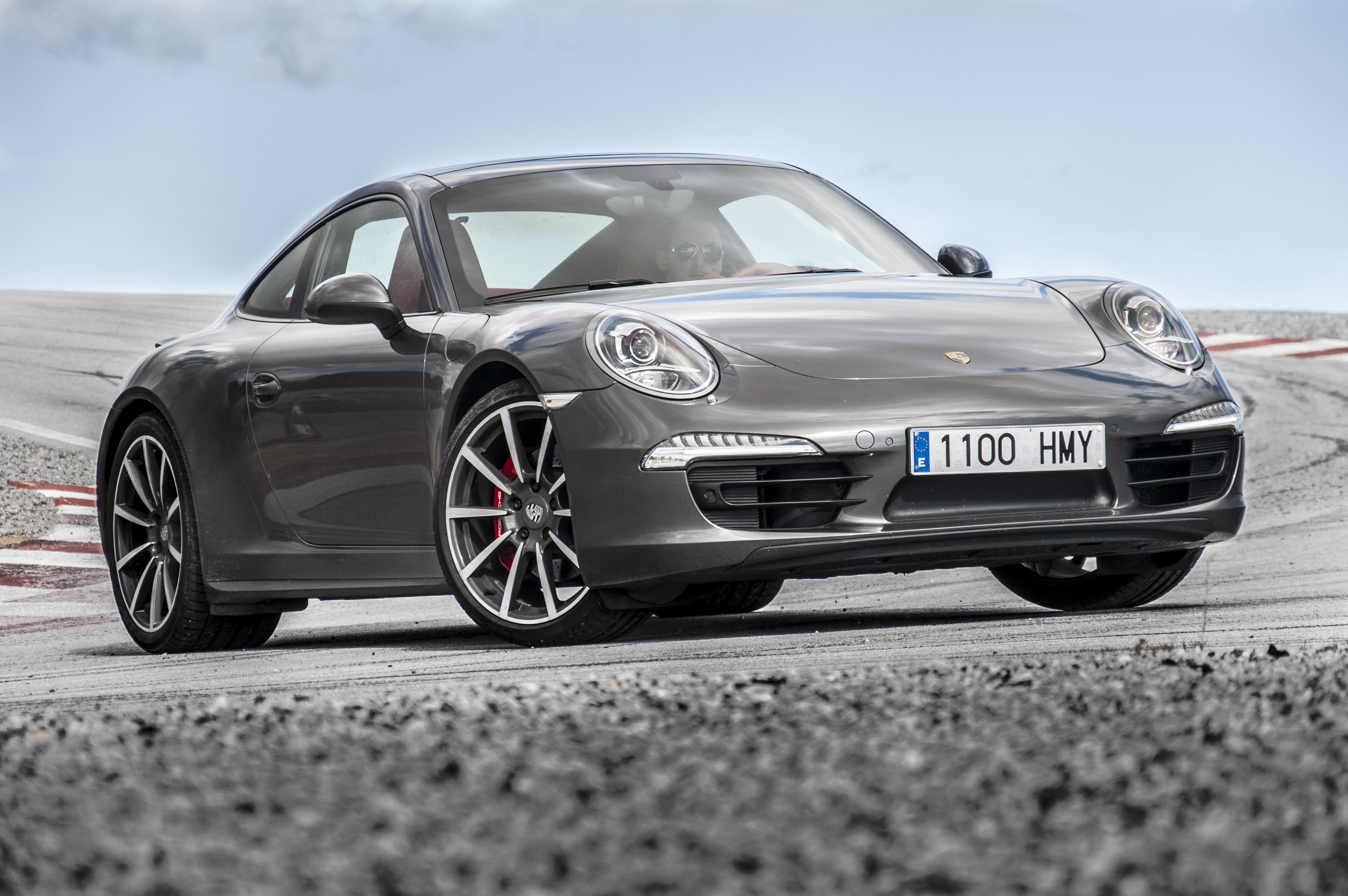
The Porsche 911 (997) is a version of the famous Porsche sports car made between 2004 and 2012. It has better handling and features compared to earlier versions.
The Porsche 911 Carrera G-Series is a version of the 911 made in the 80s. It features a classic design and a special transmission that makes it easier to drive.
The Acura NSX is a fast sports car that was really popular because it was fun to drive and easy to use every day. Some people think that newer versions changed too much and lost what made the original special.
The Honda NSX is a famous sports car that was loved for being light and fun to drive. Over time, some newer versions changed too much and didn't feel as exciting as the original.
PDCC is a technology used in some Porsche cars that helps keep the car stable when turning. It makes adjustments to the car's suspension to reduce body roll, making the ride smoother and safer.
A 48-volt system is a type of electrical system in cars that helps power things like the steering and suspension. It uses more voltage than the usual systems, which helps the car run better and save fuel.
Rollbars are bars in a car that help keep it stable and prevent it from tipping over, especially during sharp turns or sudden movements.
Car
Citroën Xantia Activa
The Citroën Xantia Activa is a car that had special technology to help it stay stable while turning. It was designed to reduce the feeling of tipping over, making it feel different to drive.
Car
Aston Martin Vanquish S
The Aston Martin Vanquish S is a really fancy sports car that looks amazing and has a super strong engine. Some people miss the older version that had a manual gear shift because they think it was more fun to drive.
The Morgan 4/4 is an old-fashioned sports car from Britain that looks unique and is very light. However, some people find it doesn't work as well as newer cars and can be a bit uncomfortable.
The Audi A6 is a stylish and comfortable car that is great for people who want a nice ride with lots of tech features. It has changed a lot over the years to include more digital gadgets and even electric options.
The Opel Karl is a small and affordable car that's great for driving around the city. It's easy to park and saves money on gas, making it a good choice for people who want a simple car.
LIVE
Get your mother-loving ears on because your big-time radio DJs got news.
PayPal lets you choose how you want to pay for all the stuff.
With PayPal I can pay in-store, pay online, or pay over time.
What's that?
You want this translated into song?
I hope you're sitting down.
You can pay your own way.
You keep those ears on, you hear?
Don't just pay, baby.
PayPal.
It's Sierra, I discovered joyous deals on great gifts for everyone on your list.
Like cozy slippers, ski gear, fishing poles, bikes, large kayaks, even larger canoes.
Phew, which might lead to another discovery.
Robin Gifts is the only sport you need to stay fit this season.
Tis the season to discover great gifts at unexpectedly low prices.
Sierra, let's get moving.
Hello everybody, Dan Prost are here with news of a new product from the Intercooler.
For those who love podcasts and just want more great stuff to listen to, it's called
The Intercooler Daily Podcast.
And yes, we do publish new audio every single day of the week.
It's around two and a half hours of audio every week.
All of it completely ad-free.
What's in the Intercooler Daily Podcast is the regular Monday show which you're about
to listen to.
You get that with no ads.
There's also our new Thursday show called Ask The Intercooler where we answer your questions.
And throughout the rest of the week, you'll be able to listen to the articles that we
publish on our award-winning digital magazine.
And those articles will be voiced by me, or Andrew Frankel, my co-founder.
And often by the author, be it Richard Porter, Steve Suckliff or another top writer.
So if you want more stuff to listen to on the commute while you're walking the dog or
just doing jobs around the home, check it out.
If you just hate podcast adverts, this is the best way to get rid of them.
The Intercooler Daily Podcast costs only £6.99 a month.
Search The Intercooler on Apple Podcasts or Spotify.
There will be instructions in the description of this episode signing up takes seconds.
By the way, existing TI subscribers get all of this stuff already plus loads more.
This is a new product for those who just want to listen.
The Intercooler Daily Podcast new audio every single day ad-free.
Just search The Intercooler on Apple Podcasts or Spotify.
OK, let's get on with this week's episode.
Welcome back to The Intercooler Podcast.
Everybody, the podcast powered by car finance specialist JBR capital with me, Dan
Prussia and him, Andrew Frankel, are this week we are talking about the analogue driving
experience.
Yeah, I vaguely remember it.
And actually, I think if you love driving, if you enjoy the process of operating a car,
really, it's the analogue experience that you enjoy.
Is it, do you think that's fair?
And what do we mean by the analogue driving experience?
It's natural aspirated engines or actually just combustion engines.
It's probably unassisted steering.
It's probably a manual transmission.
Yeah, I mean, I've been looking back at this and I took take quite literally analogue
and digital.
And I was sort of looking back to the introduction of electronics into car production.
And it started, basically, it's a process that's been going off in nearly 50 years.
If you think about, you know, the first time it came in, I guess, was with the introduction
of ABS late 70s into an S-class Mercedes, I think.
I don't think anybody would have gone that as a bad idea.
But the way that it has gone on from that to now where you have cars which are subjected
to total electronic control, everything for the way they go, stop, steer, everything
is subject to electronic control.
And I think if you love driving and the sensation of driving, I don't think there's a person
on the planet who would say that that process had not gone too far.
So the purpose of this podcast is to kind of, I think, well, to me, you may have a different
idea, is to try to understand and to analyse what it is about the analogue driving experience.
We love so much.
Maybe get some examples of analogue driving experiences, particularly things like transmissions
that we really like.
Identify the progression and the introduction of those elements that have sort of chipped
away at that.
And then at the end we're going to have a chat with someone who might have some good
news for us.
Yeah, exactly that.
So I also want to acknowledge, as you just have done with ABS, that there are some real
upsides to modern digital digitised driving.
Yeah.
We're not complete Luddites, are we?
No.
And actually, you talk about a modern, even combustion engine performance car, a Ferrari
or a McLaren.
They do not have unassisted steering or manual transmissions or naturally aspirated engines.
They have lots and lots of driver aids, you know, that is not an analogue car.
They can still be thrilling and enormously exciting and damn impressive.
Yes.
So that's true.
That is also true.
But at the same time, don't you still wonder how much more exciting and thrilling and
damn impressive they would be if they had car barrettas and manual transmissions and
I mean, there'd be a lot more scary.
There'd certainly be a lot slower, yeah, I don't care about that.
If a car is built to be thrilling to drive, it should just be everything it does should
be towards that end.
And that's why people like Gordon Murray are so revered.
Because that's all he does.
He just builds cars that are thrilling to drive.
He thinks, what components do we need in a car to make it, well, we need a naturally
aspirated engine.
He needs to have 12 cylinders arranged in a vehicle, he needs to have a manual gearbox,
we'll do that.
Yeah.
But they cost three million quid.
So there is a bit of a drawback.
So how do you want to play this?
Shall we just talk about each individual aspect and?
I think we've probably agreed on what the aspects are, aren't we?
They're quite obvious.
Yeah, so maybe let's tackle engines.
So when did combustion engines, let's forget electric powertrains for now.
When did electric, when the combustion engines switch from analog to digital if we can
characterize it that way?
Well, I think, I think, technically speaking, it was the introduction of electronic fuel injection.
Now, fuel injection has been around in cars.
Mercedes-Benz 300 SL in 1955 had fuel injection, but it was a mechanical system.
It was basically a pressurized watering car.
Fuel injection had been around in an aircraft since, I think, the dawn of the 20th century,
902, for memory.
But really, it was late 70s, early 80s, things that forward with it.
So I think they called it E3 single-point, electronically controlled fuel injection.
To me, and at the time, it was not so much the introduction of the fuel injection as the
death of the carburetor.
Yeah.
And as somebody who owns, I often wonder what my catering would be like if you took the twin
webbers off the side of it and just put some kind of fuel injection, it would probably
improve the fuel consumption of about 50% and it would destroy the driving experience because
it wouldn't make a ridiculous noise anymore.
It would sound like what it is, which is just a bit of old angle iron.
And that noise that you used to get, and you've experienced it when we go on to match
Dorado's place and you've driven all Ferrari's with, you know, six twin-choke down-drop
webbers and you just can't replace that.
So that was one of the early bits of enjoyment that got eroded.
And it was eroded for the simple emissions reasons.
There was too much smog, there was too much pollution, and fuel injection is a much
more efficient way of doing it, so that's when it kind of started.
If we're talking about, we are talking about digital aren't we?
So things like when hydraulic power assisted steering came in and purely manual, unassisted
steering system started to go out, we're not seeing that as part of this conversation
or even though there are some people, there were people, we were going to do it, but how
you know, 997 portions are better to drive than 991s or 992s because they've got H-Path
Rell than E-Paths.
But I remember very well a conversation about how the G-Series Carrera, the 1980s house
something was lost because from the 964 onwards it had power steering.
So even the introduction of hydraulic power steering was perceived at the time to be an
erosion of driving pleasure because it was an interference of the link between the road
and the driver.
And it was.
I can remember very well having, you know, this would have been in the early 90s and having
driven, I mean, mid-90s, certainly all the way through the 964 era, maybe into 993s
and got very used to power assisted 911s.
Steve Cropley had a late Carrera, 911 Carrera G-Series 1988 car, probably a G50 car, I'm
going out and driving that, I'm just thinking, oh, much the same sort of feeling you get when
you drive a 997, having had to spend a bit of time, 991s and 992s, you just suddenly
go back and you think, oh, that's what it was like, well that's quite good isn't it?
So, but I don't know whether H Pass is really part of this conversation, but there's so many
other areas of, I mean, name an area of a car's operation, which is not affected by electronics.
Let's talk brakes.
Not ABS.
Yeah.
ESP as well.
And what about things like brake servos?
I mean, was there a time where it was a purely manual?
Oh, completely.
And at which point did that change?
I suppose, I don't know the answer to that, because that's not really sort of electronic,
but servo, I mean, you could get servo assisted brakes in the 1920s, I think.
I think that there are vintage Bentley's, in fact, I know I've got a friend of mine who's
got a vintage Bentley, which is servo assisted, which to me just feels completely wrong,
because if you're not breaking your leg, try to slow the bloody thing down, then it just
doesn't feel quite right.
But ABS, we talked about.
But also, I mean, things like traction control and stability control, I mean, traction control
came in in the late 1980s on Mercedes and BMWs.
Actually, if you look at this sort of thing, so many of these systems were introduced in
America on things like Cadillacs, but because they don't re, they were never got sold over
here, I'm not really going to dwell on them, because they're not sort of systems that
we're in anywhere familiar with in terms of the big transformation to electronics with
things like the introduction of traction control, and then after that, electronic stability
control.
And there is a big difference between the two, I mean, traction control will simply stop
the driven wheels from over speeding, whereas an electronic stability control system will
look at the entire car holistically and employ a range of measures from applying individual
brakes to cutting engine power, managing this down the other to keep the car under some
resemblance of control.
And that was a process which sort of started in the late 1980s, but there was a thing called
a Mitsubishi Diamante in 1990, which I think was the first car with stability control.
Same year as Honda introduced, I think the first sort of mainstream production electronic
power assisted system into the NSX and ruined it, really?
You could only get e-past on auto NSX, I think we've had this conversation before.
So they had to detune the engine, so that ruined the engine, they soften off the suspensions
that ruined that, it had a terrible four-speed automatic, which replaced one of the nicest
five-speed manuals ever driven, so that ruined that, and the only thing left to ruin was
the steering, and that was the electronic, that was ruined too.
And automatic NSX, I've never known a single car outwardly identical, one with two
pedals, one with three, be more comprehensively trashed than the original Honda NSX.
Yeah, so that went from an analog car to something very different, didn't it?
And it doesn't sound like it was a good change either.
So should we talk about, do you want to talk about some specific engines or transmissions?
Or do you want some specific transmissions, because this is going to end up, this podcast
is heading in the direction of a transmission conversation, really is, yes, that we got
coming on.
I think just for that, another area, which we're very familiar with these days, particularly
in the sorts of lies that you and I live, which I think probably came in earlier than
people think.
We think of active rollbar control.
We think of Porsche's, what do they call it?
Porsche dynamic chassis control, PDCC, and this ability with so many cars now, quite sophisticated
cars come with these 48-volt systems, which allow suspensions, I mean, you've been knocking
about in a Land Rover Octo recently, haven't you, which can basically do anything with
this rollbars that you like?
I'm not sure how's rollbars, but it's ability to control roll from basically total free
high axiotic relation to nothing at all.
Citroën was doing that in the 1990s with the Zantia Activa, and it felt so weird, because
there was no roll.
It just stops the roll, doesn't it?
But it's not a super stiff car either.
But I can remember we went up, we took two Zantias through the same corner, at the same
speed, one on active, one on not, and you looked at the photograph, and one literally
looked like it's parked.
It's amazing.
There was actually nothing about it, you might be able to get a tiny bit of tire distortion,
but there's nothing in the photograph, which suggests the car's going around the corner
at all.
And actually, if you were in it, didn't Mercedes have a sort of Pendelina system, which
is where the car would actually bank into the corner?
Yeah, it would go into the corner, yeah.
And you could turn it off.
And you only had to experience it once, do really, really want to turn it off.
Well, it was quite good for comfort, because your body wasn't lurching about in corners,
so it would just counter it, it would lean in enough to counter that, that body roll and
that tendency for your body to lean out.
So it was quite good just for staying upright, but the moment you tried to drive with any enthusiasm,
it was just bizarre.
It turned it off.
Yeah.
And also, you know, we used to call it a silly steering, BMW had this weird power assisted
steering, where it would decide what ratio to give you, according to, so the idea was,
if you're driving around town, you'd have a really quick rack, so you wouldn't have to
do massive amounts of arm twirling.
And then, if you're driving at high speed, you get a much slower rack, so you wouldn't
get these violent reactions from the car for any given.
But what it actually meant is, every single time you turned into a corner, you never knew
what the car was going to do.
Yeah.
And it was just such a weird system.
That's a very good example of a digital system in a car, exactly.
Exactly.
And how it erodes the connection to the car.
Yeah.
That's what we're talking about with analogue driving experience.
It's about being as connected to that car as you possibly can.
And that car's response is being as predictable as they possibly can be.
And that's what you get with a purely analogue car.
So, let me fire some gearboxes at you, okay?
Okay.
These are going to come from all sorts of corners.
But I think the point I'd like to make is, is that if you live, as I think most of us
do, your life in a sort of fairly modern way, and don't necessarily get to go back very
often to remember what it was like, it can be quite shocking to realize on the one hand
and how much has been gained in terms of, you know, safety and convenience.
But on the other hand, how much has been lost in terms of your interaction with the car?
If you go and drive, do you remember, I mean, for instance, you know, a Mark 1 MX-5.
Yeah.
It's about 5-speed gearbox.
Yeah.
They must have thought so hard about that.
They must have thought so hard about how that should feel.
It was anything other than just a gearbox which didn't, they just stuck in their car.
It was, it was such a, I mean, to me, it's actually an example of a car where the gearbox
is actually more important than the engine in terms of your interaction with the car.
Yeah, it's fundamental.
It wasn't a supporting act to the main event, which is what almost all gearboxes are.
It was actually the main event, certainly in terms of the powertrain.
And the engine, even though it was a nice little twin cam 16 valve 1.6, what I remember
about driving that car for the first time, I can remember it so vividly getting into
that car, I'm 9990, I'm just thinking, wow, that a lovely little short shift in the
beautiful.
Yeah.
Beautiful.
How did you feel the first time you drove a Ferrari with an exposed H-Patton gearbox
and heard and felt that scrape and click and...
Yeah.
Fantastic.
I mean, by the time I'd done so, I'd read so much about the open gate and the click
clack.
So you sort of know what's coming, but did it live up to those expectations?
Like it was presumably by that stage, you thought this is going to be some kind of seminal
experience.
And it never made no sense.
Well, it wasn't seminal at all.
It was nice to hear the click clack and to see the lever moving around between the
fingers.
Yeah.
I don't remember it being a fantastic shift, particularly.
No.
This was in a 360, I think, and probably quite a ropey one.
Yeah.
That was nice.
But the interesting thing to me is I've got to the place now where it actually wouldn't
matter very much if it wasn't a very good shift.
You just want the manual shift.
I just want to be a click clack.
I want to hear that noise.
Yeah.
I want to feel that feel as that lever works, it's way around the gate, and you hear it hitting
all the little bits of metal, and because to me, that's what driving a Ferrari is.
Yeah, I understand.
As someone who kind of grew up, I didn't grow up in Ferrari sadly, but I did
it.
I was very lucky.
I spent a little bit of time in sun, and all the Ferrari's that I drove when I first got
into the business, the 348's and the Testa Ross's, and frankly, and the 1DL's, it weren't
very good for RIs, but they all had that.
And to me, that's what a Ferrari was.
And I guess the first one that I became familiar with was the Dino, and then they did do some
really good ones.
You've driven a 355?
No.
No.
No, I haven't.
Or 456.
Or a 555.
I've seen a gorgeous shift in that, yeah.
A gorgeous shift in that.
Going completely the other way, and this is kind of left field, but it's a transmission
that I really remember, but it's not manual, so I'm not going to spend much time on this.
When Lexus produced the original LS400, I can't remember a transmission more suited to
the application.
And that's what's about really, fundamentally, isn't it?
It has to suit the car.
I can remember driving that car along on a very light throttle, and just looking at the
rev counter, and you just see the needle move, and that would be the only sensation you
would feel.
That's brilliant.
Otherwise, they removed, they blanked off the rev counter.
You wouldn't know to change gear.
It was that smooth, and just thinking, wow, this is back in the period when we all thought
that the Japanese were going to basically take everything else over, and things like
the NSX and the MX5 and the LS400 came along, and it gave us good reason.
But I think that it never actually happened quite that way, but it was in its own way,
that was an extraordinary gearbox.
Alfa Romeo 5 speed gearbox, which they had through the 50s, 60s, 70s, 80s, I mean, that
gearbox, it probably was a number of different gearboxes.
I'm not sure whether there was one fundamental design, but there was something so quintessentially
Alfa Romeo about the way those cars changed gear.
It's very mechanical, but at the same time, it's extremely smooth.
You could blindfold me and put me in one of those, and you'd allow me to change two gears
to change it.
I'd tell you what car I was in.
Well, this is actually, it's interesting because I have driven manual cars, where the shift
was so dissatisfying, you'd rather be in the paddle shift car, the auto car.
I felt that way about 991's when they came out.
Did you?
Yeah, 2010, the 7th speed, when that first came out, it just wasn't a very good gearbox.
I mean, they've improved it hugely now.
When they put that 7th speed gearbox in the V12 vanquish S, yeah, that was a shame.
The manual F-type.
The F-type was poor.
Yeah, it was.
Because these were just gearboxes, they, not because they were the best gearbox, they were
just gearboxes that were available and fitted and could handle the torque, so they went
in.
Yeah.
But you're right, being a manual gearbox is not enough.
It is not enough.
There was a 4-speed gearbox that Ford did in the 70s and 80s, maybe even the 60s.
I became familiar with it because my stepmother had a Morgan 4-4, which was an utterly terrible
car in the 1970s.
Literally, it's only redeeming, in fact, it was its gearbox, which was absolutely exquisite,
the most beautiful gear shift.
And then one of my many careers, I was very briefly a news agent on the island of Jersey.
And the business had this, I mean, utterly naked, early 70s, Ford Cortina estate, which
I used to drive to the wholesalers, pick up the newspapers in.
And this was one of the worst things I'd ever sat in, apart from the fact it had the exactly
the same gearbox in it.
And it was utterly, and it was, I look forward to being in that car and driving that car
for one reason, one reason only, which is that it had a lovely gearbox.
And that just shows, doesn't it, how much of a difference these things can make?
Yeah, it does.
I think I have driven that gearbox in a Mark II S-Core, an RS 2000.
Yeah, absolutely.
Yeah, gorgeous, gorgeous.
Yeah.
Before we go any further, I'm just going to jump in for a moment and remind everyone,
watching everyone listening, that the intercooler is now in partnership with Supernatural
Car Care.
And Supernatural's big thing is stripping away the lurid coloured dyes and the odd smelling
fragrances that you get in lots of other car care brands.
And so they just produce very, very good, high quality, cleaning stuff that isn't complicated
to use.
And it's formulated to work on classics just as well as it works on modern cars.
And you don't need any specific knowledge to use this stuff.
It's straightforward, good quality.
As a TI podcast listener, you can get a 10% discount on anything sold by Supernatural.
So just go to supernaturalcarcare.com, fill up your basket and use coupon code TI10 at
checkout to get your 10% discount on us.
We're also, every month, we're giving away a Supernatural Car Care kit worth 125 quid
to one app and website subscriber.
So there you go.
If you're not yet subscribed, maybe there's a good reason to do so.
So we've discussed transmissions there.
We are going to discuss transmissions a bit more later on.
I've just got a couple of points that I want to raise with you now.
I just want to briefly touch on the advantages of modern digital driving because I'm driving
as my everyday car right now a very modern, very digital car to an electric Audi A6
event.
And it's a, it is a purely digital car.
And there were some real benefits to it, right?
When digital cars are cleaner, they are very, very safe, they are very, very comfortable
and the connectivity, you know, your phone just connects to it and projects all your
apps and everything onto the central screen.
And so as far as everyday driving a car as a tool is concerned, is it a car or is it
transport?
It's transport.
And when we're talking transport, there is a great deal to be said about modern digital
machines.
Very transport.
Yeah.
But if you love driving, the process, driving as a recreation, it's got to be analog.
Do you have a favorite gearbox?
Um, I don't think I have a favorite, maybe the 550 Marinerlo is, does stick out in my
mind.
911 ST.
Yeah.
Yeah.
Yeah.
Maybe a Honda Integra Type R.
Yeah.
Wonderful.
Okay.
Go on.
Are you going to declare one the best?
Yeah.
Which?
This is so me.
I'm not going to go on about this.
Um, a racing gearbox out of a vintage Bentley because it's so difficult.
Oh, I, I, I, do you know what?
I hate that stuff.
It's so difficult, which means when you get it right.
Oh my goodness.
Yeah.
Okay.
It's a massive mechanical components, um, all of which have to fit together perfectly
if horrible noises are to result.
Yeah.
And everything has to be timed to perfection.
And you're doing it in a race environment, and there are all these other idiots around
you.
And it's just, there's, there's a particular gearbox they do, which is called the D gearbox,
which is the, which was their close ratio racing box.
And it's really heavy.
And it's quite hard.
And if you get it right, it's the best feeling in the world.
Yeah.
The problem is I wouldn't get it right.
So I'd never get to appreciate it.
I don't know.
No, I don't.
Um, but do you think there is a, as we sit here now, is there a growing appreciation for
the analog driving experience?
Modern cars, the cars that lots of us are using as our everyday transport are not analog
and they are moving further and further away from that.
And so if we want to appreciate their driving experience, do we look towards those cars that
give us the analog connection?
I think, I think we do.
As we move further and further away from, you know, this thing we've discussed so often,
which we loosely call peak car, um, into an era where almost all control over the cars
has been subcontracted out to electronic brains.
There has to be, um, a balance.
And also as EVs have made performance such a, well, I've already, I've always said, um,
it's not discredited, but devalued currency, it's just, performance is just not interesting
anymore.
So what, what replaces that, what interests us about how a car drives?
And it has to be, if how fast it is, is no longer as interesting as it was, it has
to be, well, if it's not, um, how fast it is, it's how much fun it is.
Yeah.
And if there is an acceptance that cars are too heavy or too overly controlled, then inevitably
the balance will have to shift back towards what we have always loved about cars, which
is the interaction between the man or woman and the machine.
That's what's been lost.
But I think, I think it has to come back, and even if it comes back in a slightly synthetic
form, which I think is inevitable, um, particularly for mainstream products, better than not at
all.
And we will still probably, in ten years time, becoming on this podcast and going things
ain't what they used to be, and Pete Karl was still in 2004 or whenever.
But we might look back and think, oh, do you remember when cars, you know, there were
no transmissions, they made no interesting noise, they were really heavy, and we'll look
back at the sort of mid-2020s and just think that was really quite shit.
Um, and cars are now lighter, and they have found ways to bend the technology back in the
favor of the driver, so people do are still able to go around there about their business
in a way that is completely safe and connected and easy, but a bit of the love has been injected
back into the experience.
I think that's what's going to happen.
I think so.
I mean, the vast majority of people, if we're looking 20, 30 years into the future, are
probably going to be driven by a car that they don't own, um, there'll be autonomous and
electric and all the rest of it, but they were saying this 20 or 30 years ago, I know,
I know, I know, I know.
But a small niche of people us, um, we're still going to crave that analog experience,
even if it is a synthetic one.
I think more people will, I think even young people will, because they will be exposed to
it, because there will be some brave manufacturers who tried it.
You know, something's got to give, because people are just going to fall out of love with
cars.
Yeah.
People, you know, if cars are just really fast and really heavy, I mean, fast, heavy cars
are, unless you work really, really hard at it, have the capacity to be quite boring
cars.
And I think there's going to be a reaction, I think there has to be a reaction to that.
And that is something that even people who haven't grown up in the analog era will, um,
come to experience and understand and maybe hopefully desire as well.
I hope so.
Um, okay.
So to round out this episode then, let's pull in our expert and see what else we can learn
about the future of all this stuff.
Yeah.
Now, if there's anyone who can talk with real authority about analog driving, analog
cars, it's got to be the managing director of Hewland, hasn't it?
Oh, look, we're joined by the managing director of Hewland and the Mawli, uh, so thank you for
jumping on.
Um, just to get things underway, Andy, can you tell us a little bit about the history
of Hewland?
I think most people listening will be aware of that name and perhaps know that it's a British
engineering company, um, best known for its transmissions, but tell us more about the
business itself.
Yeah.
Excellent.
Thanks, guys.
And lovely to meet you both.
So Hewland, uh, so beyond my years for sure.
So the business has been around since 1957, uh, born out of a real need at the time where,
where Formula One was really, uh, small, small pre-TV rights, money, et cetera, small
mechanical engineers going out to race.
And so the business took a, originally Mike Hewland took a VW Beetle gearbox, essentially
turned it upside down and put straight cut gears in it, which really formed the basis
of the, uh, motor sport transmission.
And so at the time, these were, were also manual transmissions used in motor sport, uh,
motor use in H gate.
And during that time, the Hewland built on this standard range of transmissions and really
became the, the pre-eminent transmission manufacturer for motor sport right across Formula
Two, um, Formula One.
And then into some Cannam and over the, those, the last 65 years really pushed on into
various different, um, avenues in motor sport and over the last, say, 10, 15 years really
diversified into taking those capabilities and, and moving it into various other, uh, industries
as including performance automotive, which we'll talk about today.
Um, but I mean, so far as I can remember, um, in the sort of Cosworth DFV error Formula
One, basically, unless you were in a Ferrari or something like that, you had a Hewland
gearbox.
Yeah.
Exactly right.
So, so yeah, Ferrari was the, uh, elusive Formula One team and, and, and is still today,
uh, the, uh, but we, we do work with Ferrari and have what with Ferrari on various GT3
projects.
But you're, you're right.
There's, um, if you didn't have a, a Hewland, uh, Hewland gearbox box and a Cosworth
DFV, you, you, you weren't really on the grid and it was the most accessible, um, product
to be able to support the top level of motor sport during that time.
Extraordinary.
Yeah.
It's great, isn't it?
And as you say, uh, Hewland is building more and more transmissions for high performance
road cars nowadays.
And I think, actually, what you're seeing is a business is, uh, a sort of resurgence in
interest in, in these sorts of transmissions, which goes back to what we've been talking
about, Andrew, this, this thing about analog driving.
Absolutely.
Um, and so can you talk us through what you're seeing as a trend across the industry these
days?
And which, uh, if you can talk to us about which manufacturers you currently, uh, your,
your, your supplying transmissions to.
Yeah, absolutely.
So, with respects to the industry as a whole, I think that there's a, there's a real
change that we've gone through a huge cycle of technical innovation over the course of
the last 20, 30 years where ever increasing shift speeds were required.
So we even saw it in mode sport where we moved away from the, the, the, the, the, the,
the H pattern transmission into manual sequentials.
And then as we look in performance automotive, we're looking at just, just, just, um, clutch
transmissions, which are looking at incredibly far shift times.
And this real, uh, technology surge to be able to, to really push the upper echelons
of performance and driving a car as quick as around a track as you can.
And I suppose it's, it's come to a point where we're, we're a bit of a crossroads, uh, as
a, as a driver, let's say, where the, you can go out and buy an electric vehicle which
can achieve incredibly fast, um, north to 60 times had very little emotion attached to
that.
Yeah.
And so I feel that, you know, when we're looking at this sort of mechanical, uh, reintroduction,
let's say we're seeing customers that are really wanting that connection back to a vehicle
and, and in the, uh, let's say, upper echelons of performance vehicles, there, there is a,
a drive to make that change.
And so, uh, from, from our perspective, we've, we've, from, so they say, looking at
rest zone mods, we've, we've worked with the likes of singer, where, where we're really
trying to recreate a, um, the feel that the original G50 transmission gets, uh, or strivers
towards the 70s, 80s and reintroduced that back to the driver and so that they're connected
to the vehicle, not just, um, feeling that they're just touching some switches and there's,
uh, a lot of complicated engineering that's been undertaken within the vehicle.
Um, yeah, that's right.
I mean, the, uh, H pattern manual gear shift is a big part of the analog driving experience.
It really is, um, and it, are we seeing, apart from rest of mods?
Are we seeing more manufacturers, either putting H pattern manual gearboxes in their cars,
or behind the scenes, starting to, um, assess the feasibility of doing so?
Yeah, for, for sure, if you're looking at a lot of the new V12, uh, V12s that are coming out
to market and so obviously a V12, we're looking at a very small series range of production vehicles.
They, they, they, they're, they're the million plus pound vehicles, which has plenty of them
these days and, and many new coming into the market are all, are all looking at, uh, manuals.
And, and that's, and that's just indicative of, of where we are.
So that, not just because the driver feel there are of these, there are some other
influencing factors that are around, you know, ultimate complexity of that vehicle,
but that, that the real market driver at the moment seems to be sort of moving back from a,
um, the precipice of everything being automated for a driver and, and, and all of these assists
and quick lap times that can be achieved, but really putting back in that, uh, essence of driving.
Now, the reason you're buying these vehicles is to drive them and to drive them and feel connected
to them, um, not to, you know, take a few seconds of a lap time, which is what we try and do in,
in our motor sports. So, can, can, can you see it? I mean, obviously we know that, um, thing like,
you know, companies like, uh, Gordon Murray, like GMA 250 and that's what they have, um, manual gearboxes
and then Pagani. Um, and without sort of naming names or, or anybody else, but can you see that
becoming more mainstream? So, having said not going to name names, I'm going to name names, but
just generally speaking, companies like Porsche and Ferrari and McLaren, can you see a time when,
I mean, still certainly top end super luxury car manufacturers, but not completely unattainable,
multi million car manufacturers. Can you see a time when manual gearboxes are going to come back
to them? And how does that work with legislation? Because we've always been told a different way
that the reason that, um, manual gearboxes have become, um, unfashionable is because you can't
make them work with modern electronics and you can't get the numbers out of them and, and, and we,
under modern legislation, they're a nightmare to produce. So, is there a way in which, uh, is going
to lead a path to manual gearboxes becoming available again in more mainstream cars?
This episode is brought to you by Amazon Prime. Black Friday Game Day on Prime is an
epic day of live sports. It all starts at 9 a.m. Eastern with the Capital One Skins game.
Then Black Friday football returns when the Bears take on the Eagles at 3 p.m.
And it culminates with the final night of Emirates NBA Cup group play with Bucksnicks at 7 p.m.
and Mav's Lakers at 10 p.m. Black Friday Game Day only on Prime.
T3, it has, uh, is an optional manual. Yeah.
Even if you look at the, the, the, say, the low to some error that comes with the manual.
Uh, so that these are, say, you know, £100,000, um, supercars have become in a bit more, um, keen on
that driver experience and, and, and just say about legislation. So trying to achieve the
Euro six and the various different, um, noise, noise, um, criteria that are driven through
legislation that they are a challenge. But I think ultimately, if we continue to
legislate out that driving experience, then we'll all end up in, uh, in, in electric vehicles,
which is, which is, uh, ultimately what the drive, uh, what the, the mainstream will drive towards.
However, these, these products that are being purchased are, you know, light use limited use
vehicles that hold a, a sort of a key place in many people's hearts from a drivability perspective.
And I think as we look globally, the, the, the overall, there is a, a bit of a stalling or a, a driver to,
to ensure that there is, uh, say, a slower adoption or, or ensuring that the adoption of electric
vehicles, uh, is, is, is use cases towards the, the mainstream rather than for the sort of luxury
items that people are still purchasing. Yeah. Yeah. Yeah. I mean, you're, you're right. Supercar
manufacturers in particular spent a good couple of decades, a few decades, doing everything they
could to make their cars faster and faster and faster, faster acceleration figures faster lap times,
more power, and then EVs have come along, and they, they are just faster effortlessly. And so the
supercar, it's going to have to lean back into what differentiates them from a modern, very powerful
EV and that it add, it is the analog driving experience. That's what they can do that EVs cannot do.
Yeah. And, and so hopefully we do see a reversal of this trend of just chasing ever faster lap times
and prioritizing actually the things that drivers like us really do value more. And it also requires
a change of attitude from the customer, doesn't it? I mean, the real reason that manual gearboxes
went away is that when people were buying new cars, they just didn't want them anymore. In all
those areas when, you know, you look at all these Ferrari's which were offered with both. Almost
everybody went for the two-pedal option. Yeah. I can see, I don't know whether you would agree
with this, but I can see a time when that's going to turn around because it's going to be seen
to be more authentic and real and proper to have an H-pattern six-speed. Yeah, for sure. Yeah, and,
I use the analogy of a smartwatch and an analog or Rolex. You're buying a premium crafted
product which is, you know, you attach it a significant amount of emotion to. It's functionality
significantly less than your Apple Watch which, you know, you can record all your metrics. It can
tell you how fast you run. It can tell the time in, you know, every single country in the world
and on some messages. But people still end up with luxury watches because there's an innate
emotion to that product and when it comes to when it comes to having a manual car, it might not
be perfect. It might not be the best in class in technology, but there's a sense of refinement
and an integration with the driver which, you know, people are pursuing in this digital age
where people have have all of the electronics around them and it's, and it's open up to the
mainstream. It isn't just to the high-end purchaser. So I, sorry, I used to, you know, I wouldn't
expect you to name any names, but are you now working with more mainstream manufacturers to bring
manual transmissions back into the sorts of cars where we haven't seen them for some time?
Yeah, absolutely. And the interesting for a business like Hewlett is that because it's been such a
dyna where a lot of the mainstream tier ones have been supplying these high-end transmissions
with, you know, significant electronic aids that that mechanical integration has been lost
in some of the schools that has fallen away. And so companies like ours and, you know, UK
competitors like AXTRAC Ricardo, all of these people are working on projects which involve that
manual integration of a mechanical integration of a transmission.
And you have seen a step up in that kind of activity over anything you've seen in the
in the recent past, presumably? Absolutely. It's really well. It's great, isn't it?
I'd say in the last two, three years that's even multiplied as well, I think. We saw it
sort of the foundations of it coming from the Resto Mod scene. Yeah. And then obviously the
success in Resto Mods has really pushed OEMs to take a look and introduce manuals into
their mainstream platforms. We hoped that would happen. But to hear that actually is, it's fantastic.
So how long does it take? I mean, you've been having these conversations for a number of years.
Now, I mean, how long will it be before we actually start to see a significant uptick in the actual
market presence of these transmissions? Is there something that's just around the corner or
is it still a while off? No, I think at the root, there's sort of different timelines for
different OEMs. Of course. When you're looking at sort of these small series production vehicles,
which is a less mainstream, you'll see in the next year or two there'll be a number of
V12 manuals that will come on market, which will have, which will exclusively be manual,
maybe backward compatible to an ANT perhaps. And then I'll start of that in the
mainstream. I think you'll start to see a few more product offerings with manuals for sure.
Oh brilliant. So I just wonder then to wrap things up here. What can the likes of
Huland and Extract and Ricardo do to continue improving the H pattern manual transmission?
Or is it just where it is now and that's as good as it can get? Or are your guys and girls
constantly beavering away trying to make improvements to these things all the time?
Yeah, there's a lot more information that you can use as part of the design process when you're
making a HGate. Today, as there was compared to maybe 20 years ago, so really understanding the
what the driver is going to feel at the stick-end, let's say, been able to really through
through analysis and diagnosis, we were able to determine what that feel is going to feel like
in the CAE world. And so a huge amount of work can be done up front, which is something that
perhaps was less understood in the past. Just the general design philosophy of transmissions
has changed due to the sort of heavy reliance now on looking at oil simulation, gear simulation,
we're able to make sort of stronger, lighter, quieter gearbox. More efficient transmissions
via frictional losses? Exactly. And also electrification has also helped in many respects as well
of the pushing to higher degrees of efficiency, but equally everybody's understanding of NVH has
become more acute because of the design techniques that we've had to adopt in a quiet electric
vehicle. And so there's a lot of changes in materials. Smaller, as I said, smaller packaging
for HGate manuals will enable designers to change aero on cars, be able to adapt their platforms
to be able to have these lighter products in there because ultimately a HGate manual is a lighter
product as well. Some of the transmissions that we see in the supercars of today are anywhere
between 30 to 70 kilos heavier that easily. Well, yes, because of the... Well, you only have to look
at... You know, you have to go on a Porsche website and see the difference between a PDK and a manual
911 to know that there is a big difference. It's a big difference, yeah. This out of curiosity
is much of anything. We know that manufacturers of EVs, particularly sporting EVs, are simulating
transmissions these days, paddle shift transmissions. Are we ever going to see an electric motor
paired with an H-pattern manual gearbox? I know you don't need it because of the torque profile
of an electric motor, but purely for fun, is that going to happen or is that just not on the cars at all?
Yeah, I think there's some challenges around that. Well, if we look back at actually
formulary season one, we had a five-speed manual attached to an attached to electric motor,
you know, this is really at the early ages of what everybody understood where electric motor needed
to be or what we could get from an EV. And I think the fundamentals are different things. If we look
at the new Ferrari, where they're really the electric Ferrari, they're really focusing in on
adding a motion back into that car through acoustic sensing within the powertrain, being able to
plum that back into the vehicle to really put a tone and a noise back into the car. And I
think when we talk about shifting and sort of engine blipping, let's say, I think that's the
extent it will go. There's a lot of capability in electric powertrains, and we still work heavily
in EV, particularly within formulary as well. And yeah, I'd say that's the area of the most
innovation, but that innovation bleeds through back into, say, our core products that we developed
particularly in HGT manuals as well. Cool. Even just the time that we've been doing the
it's called podcast Andrew five in a bit years, the manual transmission has gone on a journey,
hasn't it? Absolutely. Has sort of faded away, being phased out, and now it seems it's on
its way back. It's great. It's like vinyl. Yeah, it is like vinyl and probably for the same reasons.
It is like vinyl, but it's still going to be niche, of course, the long one short of it. I think
the mass adoption of electric vehicles will will make sure of that, but we're here to make sure that
we're still. But it's going to be it's going to be less niche than it has been as far as that
there'll be more mainstream cars than manuals, and it's not just going to be GMAT 50s or even GT3s.
There will be manual versions of cars which don't have manual versions at the moment.
Yeah, absolutely. I do think we'll see it up surge in that particularly as we see the market
today, and particularly over the next five years. Wow. Cracking. That's brilliant.
It really is. Well listen everyone watching everyone listening. Hopefully that's good news.
Thank you for watching. Thank you for listening. Just make sure you follow the show on which
ever podcast app you're using or subscribe to our YouTube channel if you're watching.
That really helps us. In return, we'll be back with another podcast next weekend.
And the thanks for coming on and sharing some good news about the analog driving.
It's good news. We need it. Yeah, so thank you very much indeed. Thank you.
Thanks so much. Cheers. All the best.
About this episode
A deep dive into the resurgence of the analogue driving experience, this episode explores what makes driving enjoyable in a world increasingly dominated by digital technology. Hosts Dan and Andrew discuss the evolution from manual transmissions and naturally aspirated engines to modern electronic controls, debating the loss of driver connection. They touch on the growing appreciation for analogue features in high-performance cars and interview Hewland's managing director about the future of manual gearboxes in mainstream vehicles. The conversation highlights the balance between safety, performance, and the joy of driving.
Dan Prosser and Andrew Frankel discuss the joys of the analogue driving experience. From manual transmissions to naturally aspirated engines, analogue cars are the most rewarding and enjoyable to drive. And now there's very real evidence to suggest that car makers are finding ways to keep the analogue driving experience alive, so even cars of the future might be interactive and entertaining to drive.
Sign up to our new product, The Intercooler Daily Podcast, to get new podcast content every single day of the week. It includes our regular Monday show ad-free, our new Thursday show called Ask The Intercooler, plus audio versions of the award-winning articles we publish on our digital magazine – always ad-free.
Just search 'The Intercooler' on Apple Podcasts or Spotify. You can sign up via our main podcast feed on either of those platforms. It costs just £6.99 a month.
Apple Podcasts – look for the Daily Podcast box beneath the latest episode.
Spotify – click 'About' and tap the link.
Find out more about JBR Capital here – https://www.jbrcapital.com
Use coupon code Ti10 to get 10% off your Supernatural Car Care order – https://supernaturalcarcare.com/