The analogue driving experience is making a comeback #290
About this episode
A deep dive into the resurgence of the analogue driving experience, this episode explores what makes driving enjoyable in a world increasingly dominated by digital technology. Hosts Dan and Andrew discuss the evolution from manual transmissions and naturally aspirated engines to modern electronic controls, debating the loss of driver connection. They touch on the growing appreciation for analogue features in high-performance cars and interview Hewland's managing director about the future of manual gearboxes in mainstream vehicles. The conversation highlights the balance between safety, performance, and the joy of driving.
Dan Prosser and Andrew Frankel discuss the joys of the analogue driving experience. From manual transmissions to naturally aspirated engines, analogue cars are the most rewarding and enjoyable to drive. And now there's very real evidence to suggest that car makers are finding ways to keep the analogue driving experience alive, so even cars of the future might be interactive and entertaining to drive.
Sign up to our new product, The Intercooler Daily Podcast, to get new podcast content every single day of the week. It includes our regular Monday show ad-free, our new Thursday show called Ask The Intercooler, plus audio versions of the award-winning articles we publish on our digital magazine – always ad-free.
Just search 'The Intercooler' on Apple Podcasts or Spotify. You can sign up via our main podcast feed on either of those platforms. It costs just £6.99 a month.
Apple Podcasts – look for the Daily Podcast box beneath the latest episode.
Spotify – click 'About' and tap the link.
Find out more about JBR Capital here – https://www.jbrcapital.com
Use coupon code Ti10 to get 10% off your Supernatural Car Care order – https://supernaturalcarcare.com/
analogue driving experience
"And what do we mean by the analogue driving experience? It's natural aspirated engines or actually just combustion engines."
Analogue driving experience means driving a car that feels more connected and natural, like older cars that don't rely on computers or electronics. It usually involves things like steering without power assistance and using a stick shift to change gears.
The analogue driving experience refers to traditional driving characteristics that emphasize mechanical feedback and simplicity, often associated with older cars. This includes features like unassisted steering and manual transmissions, which provide a more direct connection between the driver and the vehicle.
naturally aspirated engines
"It's natural aspirated engines or actually just combustion engines."
Naturally aspirated engines are engines that get air naturally from the environment without any help from a turbocharger. They usually provide a smooth and predictable power delivery.
Naturally aspirated engines are internal combustion engines that rely on atmospheric pressure to draw air into the engine, as opposed to forced induction methods like turbocharging. This typically results in a more linear power delivery and a different driving feel.
unassisted steering
"It's probably unassisted steering. It's probably a manual transmission."
Unassisted steering means the steering wheel doesn't have any power help, so you have to use more strength to turn it. It can make you feel more connected to the car but can be tougher to steer.
Unassisted steering refers to a steering system that does not use power steering assistance, requiring the driver to exert more effort to turn the steering wheel. This can enhance the driver's feel for the road but may also make the car harder to maneuver at low speeds.
manual transmission
"It's probably a manual transmission. Yeah, I mean, I've been looking back at this..."
A manual transmission is a type of car gearbox where you have to change gears yourself using a stick and a pedal. It gives you more control over how the car drives.
A manual transmission is a type of gearbox that requires the driver to manually shift gears using a clutch pedal and gear stick. This allows for greater control over the vehicle's power delivery and can enhance the driving experience.

Mercedes-Benz Sclass
"If you think about, you know, the first time it came in, I guess, was with the introduction of ABS late 70s into an S-class Mercedes, I think. I don't think anybody would have gone that as a bad idea."
The Mercedes-Benz S-Class is a very fancy car that is known for being super comfortable and packed with the latest technology. It's important because it often introduces new safety features that other cars will use later.
The Mercedes-Benz S-Class is a flagship luxury sedan known for its advanced technology and comfort features. It has been a pioneer in automotive innovations, such as the introduction of anti-lock braking systems (ABS) in the late 1970s, setting standards for safety and luxury in the automotive industry.
ABS
"of ABS late 70s into an S-class Mercedes, I think. I don't think anybody would have gone that as a bad idea."
ABS is a system in cars that helps prevent the wheels from stopping completely when you brake hard. This helps you steer while slowing down, making it safer to stop quickly.
ABS stands for Anti-lock Braking System, a safety feature that prevents the wheels from locking up during braking, allowing the driver to maintain steering control. It was first introduced in the late 1970s and has become standard in modern vehicles.
Ferrari
"...you talk about a modern, even combustion engine performance car, a Ferrari or a McLaren."
Ferrari is a famous car brand from Italy that makes fast and expensive sports cars.
Ferrari is a renowned Italian sports car manufacturer known for its high-performance vehicles and racing heritage.
McLaren
"...a Ferrari or a McLaren. They do not have unassisted steering or manual transmissions..."
McLaren is a British car company that makes super-fast sports cars, often used in racing.
McLaren is a British automotive manufacturer known for producing high-performance sports cars and its involvement in Formula 1 racing.
driver aids
"...They have lots and lots of driver aids, you know, that is not an analogue car. They can still be thrilling..."
Driver aids are features in cars that help drivers control the vehicle better and stay safe, like automatic braking or lane-keeping assistance.
Driver aids are technologies designed to assist the driver in operating the vehicle, enhancing safety and performance, such as traction control, stability control, and adaptive cruise control.
combustion engines
"So when did combustion engines, let's forget electric powertrains for now. When did electric, when the combustion engines switch from analog to digital if we can characterize it that way?"
Combustion engines are the engines that run on gasoline or diesel. They create power by burning fuel inside the engine.
Combustion engines are internal combustion engines that burn fuel to create power. They are the traditional type of engine found in most vehicles before the rise of electric powertrains.
electronic fuel injection
"Well, I think, I think, technically speaking, it was the introduction of electronic fuel injection. Now, fuel injection has been around in cars."
Electronic fuel injection is a modern way of getting fuel into an engine. It uses electronics to make sure the right amount of fuel goes in for better performance.
Electronic fuel injection (EFI) is a system that uses electronic controls to deliver fuel to the engine, improving efficiency and performance compared to older mechanical systems.

Mercedes-Benz 300 SL
"Mercedes-Benz 300 SL in 1955 had fuel injection, but it was a mechanical system. It was basically a pressurized watering car."
The Mercedes-Benz 300 SL is a classic car from 1955 known for its unique design and advanced features, including an early type of fuel injection.
The Mercedes-Benz 300 SL, introduced in 1955, was one of the first production cars to feature fuel injection, specifically a mechanical system, which was innovative for its time.

Mercedes-Benz SL
"...ection has been around in cars. Mercedes-Benz 300 SL in 1955 had fuel injection, but it was a mechanic..."
electronically controlled fuel injection
"So I think they called it E3 single-point, electronically controlled fuel injection. To me, and at the time, it was not so much the introduction of the fuel injection as the death of the carburetor."
This is a modern way to deliver fuel to an engine using electronics, making cars run better and use less fuel than older methods like carburetors.
Electronically controlled fuel injection is a system that uses electronic controls to manage the amount of fuel injected into the engine, improving efficiency and performance compared to traditional carburetors.
carburetor
"...as the death of the carburetor. Yeah."
This is an old part that mixes air and fuel to help the engine run. Most new cars use a different system that is more efficient.
A carburetor is a device in older engines that mixes air and fuel for combustion. It has largely been replaced by fuel injection systems in modern vehicles due to better efficiency and performance.
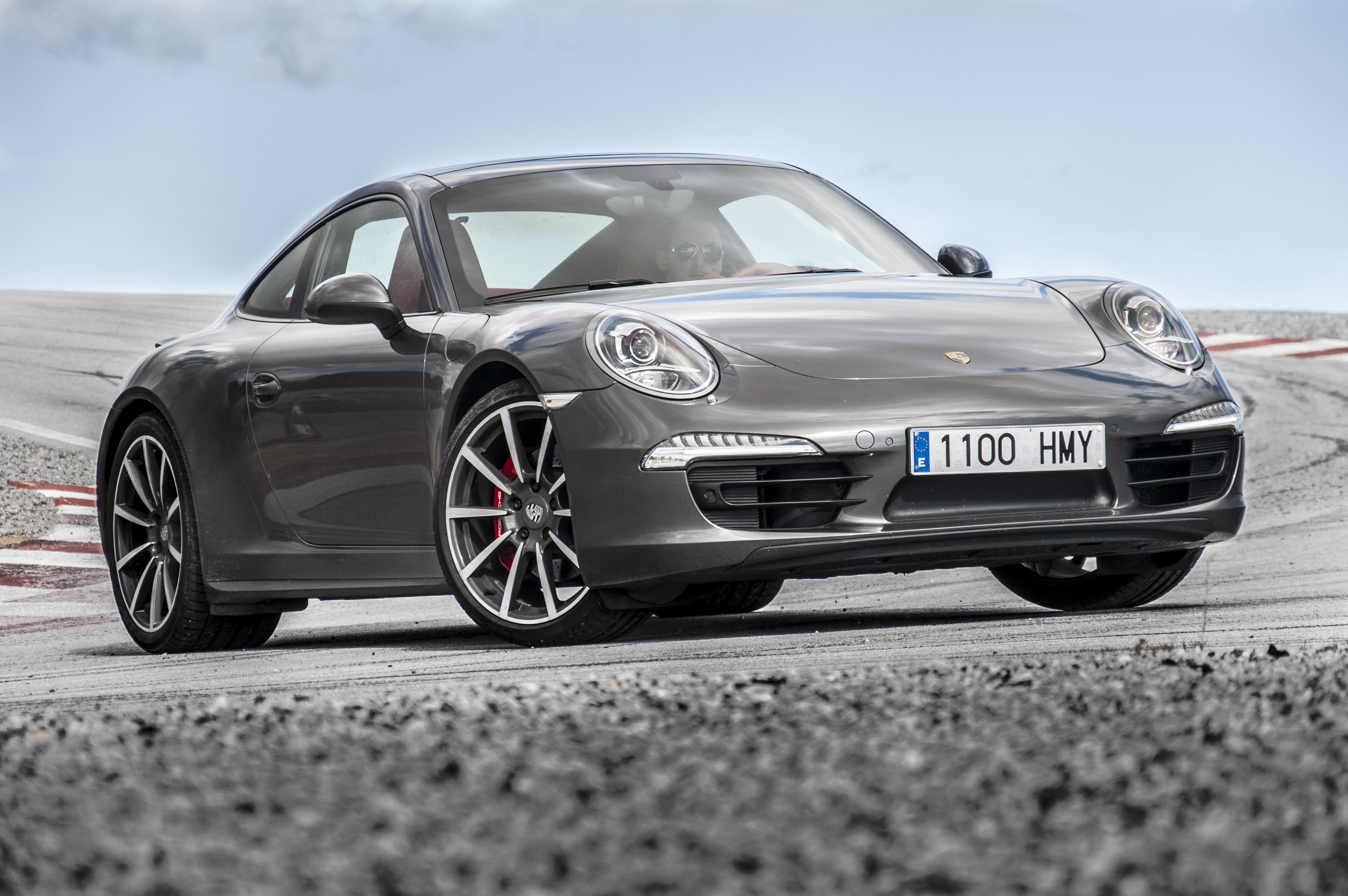
Porsche 992S
"you know, 997 portions are better to drive than 991s or 992s because they've got H-Path"
The Porsche 911 (997) is a version of the famous Porsche sports car made between 2004 and 2012. It has better handling and features compared to earlier versions.
The Porsche 911 (997) is the generation of the iconic sports car produced from 2004 to 2012. It is known for its refined driving dynamics and improved technology over previous models.

Porsche 911 Carrera G-Series
"Steve Cropley had a late Carrera, 911 Carrera G-Series 1988 car, probably a G50 car"
The Porsche 911 Carrera G-Series is a version of the 911 made in the 80s. It features a classic design and a special transmission that makes it easier to drive.
The Porsche 911 Carrera G-Series refers to the models produced between 1974 and 1989, known for their classic styling and air-cooled engines. The G50 transmission, introduced in 1987, provided smoother shifting and improved performance.
brakes
"Let's talk brakes."
Brakes are the parts of a car that help it slow down or stop. They are very important for safety while driving.
Brakes are a crucial component of any vehicle, responsible for slowing down or stopping the car. Modern braking systems can include various technologies, such as anti-lock braking systems (ABS) and electronic brake-force distribution (EBD).
ESP
"Yeah. ESP as well."
ESP is a system in cars that helps keep the vehicle stable and prevents it from sliding out of control, especially in slippery conditions.
ESP stands for Electronic Stability Program, a technology that helps prevent skidding and loss of control by automatically applying brakes to individual wheels when needed.
vintage cars
"I think that there are vintage Bentley's, in fact, I know I've got a friend of mine who's"
Vintage cars are older cars that are usually at least 20 years old and are often collected because they are unique or have special history.
Vintage cars are automobiles that are typically at least 20 to 30 years old, often valued for their historical significance, design, and craftsmanship.
stability control
"But also, I mean, things like traction control and stability control..."
Stability control is a safety feature that helps keep your car from sliding or tipping over when you're turning or driving on slippery roads.
Stability control, often referred to as Electronic Stability Control (ESC), helps prevent skidding and loss of control by automatically applying brakes to individual wheels.
traction control
"But also, I mean, things like traction control and stability control..."
Traction control is a feature in cars that helps keep the wheels from spinning too much when you're trying to go fast, especially on slippery roads.
Traction control is a system that helps prevent wheel spin during acceleration by reducing engine power or applying brakes to specific wheels.

Mitsubishi Diamante
"there was a thing called a Mitsubishi Diamante in 1990, which I think was the first car with stability control."
The Mitsubishi Diamante is a car that was made in 1990. It was one of the first cars to have a system that helps keep it stable while driving.
The Mitsubishi Diamante was a mid-size luxury sedan produced by Mitsubishi. It was notable for being one of the first cars to feature electronic stability control, enhancing safety and handling.

Acura NSX
"...duction electronic power assisted system into the NSX and ruined it, really? You could only get e-past ..."
The Acura NSX is a fast sports car that was really popular because it was fun to drive and easy to use every day. Some people think that newer versions changed too much and lost what made the original special.
The Acura NSX is a high-performance sports car that gained fame for its combination of speed and everyday usability. It was one of the first cars to feature an all-aluminum body and a mid-engine layout, but some enthusiasts feel that later versions lost their original charm due to the introduction of electronic power steering.
Honda Nsx
"...be more comprehensively trashed than the original Honda NSX. Yeah, so that went from an analog car to somethi..."
The Honda NSX is a famous sports car that was loved for being light and fun to drive. Over time, some newer versions changed too much and didn't feel as exciting as the original.
The Honda NSX, also known as the Acura NSX in some markets, is a legendary sports car that was first introduced in the early 1990s. It is renowned for its lightweight design, mid-engine layout, and exceptional handling, but later models faced criticism for becoming less engaging to drive.
Porsche Dynamic Chassis Control (PDCC)
"We think of active rollbar control. We think of Porsche's, what do they call it? Porsche dynamic chassis control, PDCC, and this ability with so many cars now, quite sophisticated"
PDCC is a technology used in some Porsche cars that helps keep the car stable when turning. It makes adjustments to the car's suspension to reduce body roll, making the ride smoother and safer.
Porsche Dynamic Chassis Control (PDCC) is an advanced system that enhances vehicle handling by actively managing the roll of the car during cornering. It uses hydraulic actuators to adjust the stiffness of the anti-roll bars, improving stability and comfort.
48-volt systems
"cars come with these 48-volt systems, which allow suspensions, I mean, you've been knocking..."
A 48-volt system is a type of electrical system in cars that helps power things like the steering and suspension. It uses more voltage than the usual systems, which helps the car run better and save fuel.
48-volt systems are electrical systems in vehicles that use 48 volts instead of the traditional 12 volts. They enable advanced features like electric power steering, active suspension systems, and improved fuel efficiency by allowing for more efficient energy management.
rollbars
"which can basically do anything with this rollbars that you like?"
Rollbars are bars in a car that help keep it stable and prevent it from tipping over, especially during sharp turns or sudden movements.
Rollbars are structural components in vehicles designed to prevent rollover accidents by providing additional support to the vehicle's frame. They help maintain stability during sharp turns or sudden maneuvers.
Citroën Xantia Activa
"Citroën was doing that in the 1990s with the Zantia Activa, and it felt so weird, because..."
The Citroën Xantia Activa is a car that had special technology to help it stay stable while turning. It was designed to reduce the feeling of tipping over, making it feel different to drive.
The Citroën Xantia Activa was a unique model known for its innovative active suspension system that minimized body roll during cornering. It was one of the first production cars to feature such technology, enhancing handling and ride comfort.

Aston Martin Vanquish S
".... When they put that 7th speed gearbox in the V12 vanquish S, yeah, that was a shame. The manual F-type."
The Aston Martin Vanquish S is a really fancy sports car that looks amazing and has a super strong engine. Some people miss the older version that had a manual gear shift because they think it was more fun to drive.
The Aston Martin Vanquish S is a luxury sports car known for its powerful V12 engine and elegant design. It represents the pinnacle of Aston Martin's engineering and craftsmanship, but some enthusiasts lament the shift from a manual to a 7-speed automatic gearbox, which they feel detracted from the driving experience.

Morgan 44
"There was a 4-speed gearbox that Ford did in the 70s and 80s, maybe even the 60s. I became familiar with it because my stepmother had a Morgan 4-4, which was an utterly terrible car in the 1970s."
The Morgan 4/4 is an old-fashioned sports car from Britain that looks unique and is very light. However, some people find it doesn't work as well as newer cars and can be a bit uncomfortable.
The Morgan 4/4 is a classic British sports car that has been in production since the 1930s, known for its traditional design and lightweight construction. While it has a loyal following, some owners have reported issues with reliability and comfort compared to modern cars.

Audi A6
"...ow a very modern, very digital car to an electric Audi A6 event."
The Audi A6 is a stylish and comfortable car that is great for people who want a nice ride with lots of tech features. It has changed a lot over the years to include more digital gadgets and even electric options.
The Audi A6 is a mid-size luxury sedan that combines performance, comfort, and advanced technology. Known for its sleek design and innovative features, the A6 has evolved over the years to include digital interfaces and hybrid options, appealing to modern drivers.

Opel Karl
"...going things ain't what they used to be, and Pete Karl was still in 2004 or whenever. But we might look ..."
The Opel Karl is a small and affordable car that's great for driving around the city. It's easy to park and saves money on gas, making it a good choice for people who want a simple car.
The Opel Karl is a compact city car designed for efficiency and practicality, aimed at urban drivers. It is known for its small size and affordability, making it a popular choice for those seeking a budget-friendly vehicle.
Request an Explanation
Heard something you'd like explained? We'll add it to this episode.
Sign in to request explanations for terms you heard.
Want to learn more?
Browse our glossary for plain-English explanations of automotive terms, jargon, and concepts.
Help improve this episode
See something that's not quite right? Our annotations are AI-generated and can sometimes miss the mark. Click the flag icon on any annotation to suggest a correction.