The new Bentley Torcal, and why F1's rules will get tweaked #321
About this episode
Racing over the weekend kicks things off with a Bonnington blast in a 1960 Elba Courier, plus a look ahead to Andrew’s deeper dive later. The main focus is Formula 1’s British GP drama and why the rules were (mostly) followed this time—contrasted with Abu Dhabi 2021—sparking debate about race control timing, safety-car procedures, and whether lapped-car handling should be changed. They also discuss the “overtake button” style of passing: fine when it enables brave moves, but frustrating when it’s easily undone. The conversation hints at how driver confidence and setup philosophy are shifting this season.
Dan Prosser and Gez Medinger discuss the British Grand Prix, the Porsche 911 S/C media launch and the new manual Ferrari 12Cylindri, whilst Andrew Frankel jets in to discuss a return to racing, and the new Bentley Torcal.
Use coupon code pod20 at checkout to get 20% off an annual subscription to The Intercooler's online car magazine for the first year! Listen to this podcast ad-free, and enjoy a subscriber-only midweek podcast too. With a 30-day free trial, you can try it risk-free – https://www.the-intercooler.com/subscribe/
Find out more about JBR Capital here – https://www.jbrcapital.com
Use coupon code Ti10 to get 10% off your Supernatural Car Care order – https://supernaturalcarcare.com/
Hosted on Acast. See acast.com/privacy for more information.
rules as written
"So the difference is that in this instance the rules were followed. The regulations were applied properly as written and that is correct and proper."
It means the officials follow the rulebook exactly as it’s written. In racing, that can be huge because the outcome can swing on tiny decisions.
“Rules as written” means officials apply the regulations exactly according to the literal wording, rather than interpreting them for a preferred outcome. In F1, that matters because small timing/decision differences can change race results and championship standings.
Abu Dhabi 2021
"Had the rules been applied as they were yesterday back in Abu Dhabi 2021 Lewis Hamilton would be an eight-time world champion and Max Verstappen would have three."
This refers to the final F1 race of the 2021 season in Abu Dhabi. The host is pointing to that race as an example of how late-race decisions can change who wins the championship.
“Abu Dhabi 2021” refers to the 2021 Formula 1 season finale in Abu Dhabi, where late-race safety car procedures and race-control decisions became the center of controversy. The speaker uses it as the reference point for how rule application and timing affected the championship outcome.
Lewis Hamilton
"Had the rules been applied as they were yesterday back in Abu Dhabi 2021 Lewis Hamilton would be an eight-time world champion and Max Verstappen would have three."
Lewis Hamilton is one of the most successful Formula 1 drivers. The host is saying that a rules decision could have changed how many championships he ended up with.
Lewis Hamilton is a British Formula 1 driver who won multiple World Championships with Mercedes. The speaker uses him as an example of how a single rules/decision outcome in Abu Dhabi 2021 could have changed the championship count.
Max Verstappen
"Had the rules been applied as they were yesterday back in Abu Dhabi 2021 Lewis Hamilton would be an eight-time world champion and Max Verstappen would have three."
Max Verstappen is a top Formula 1 driver from the Netherlands. The host is arguing that a rules decision in Abu Dhabi 2021 could have changed his championship total.
Max Verstappen is a Dutch Formula 1 driver known for aggressive, high-pace racing and multiple World Championships. Here, the speaker contrasts his championship total with Hamilton’s to illustrate how race-control decisions can swing titles.
start finish line
"So the difference between us getting a racing lap at the end and not getting a racing lap at the end was I believe, tell me if I'm wrong here, it was when the McLaren went over the start finish line or when the message was broadcast to him..."
The start/finish line is the track line used to determine when a lap is completed and when race timing events occur. In F1, crossing it at the wrong moment relative to race-control messages can change whether a driver is credited with the final “racing lap” or forced into an additional lap.
extra lap
"that automatically forced him to have to do an extra lap. Had that message been broadcast a second earlier and he hadn't quite crossed the line then there would have been a racing lap..."
An extra lap means the driver has to race one more time than expected. The host is saying that a tiny timing/message difference can make that happen.
An “extra lap” here refers to being forced to complete one additional lap because of how race-control timing and the start/finish line crossing align. The speaker frames it as a small timing difference that can cascade into different race outcomes.
race control
"could race control have got that message out a few seconds earlier possibly although they need to do their job thoroughly and rigorously they can't hurry these things..."
Race control is the F1 officials’ team that runs the race from the background. They send timing and safety instructions to drivers, and a delay can change the race outcome.
Race control is the F1 operations group that monitors the race and issues official instructions (like safety car procedures and timing messages) to drivers and teams. The speaker questions whether race control could have broadcast a message a few seconds earlier to avoid an extra lap.
safety car
"one of the talking points is you lose this need to clear the lapped cars and then the need for another lap behind the safety car after that that can burn two laps can't it..."
A safety car is used to slow everyone down when the track isn’t safe. The host is saying the restart process after it can take away valuable racing time near the finish.
The safety car is a pace vehicle deployed to neutralize the race when there’s danger on track (debris, crashes, etc.). The speaker argues that after clearing lapped cars, restarting behind the safety car can cost “two laps,” reducing the amount of real racing at the end.
lapped cars
"one of the talking points is you lose this need to clear the lapped cars and then the need for another lap behind the safety car after that..."
Lapped cars are cars that are behind the leaders by at least one full lap. The host is saying that dealing with those cars during late-race restarts can cost time.
Lapped cars are cars that have been overtaken and are one or more laps behind the race leader. The speaker says clearing lapped cars during late-race safety car procedures can force additional laps, which may reduce the final racing segment.
pit lane
"what they should do is just peel into the pit lane sit at the end of the pit lane and then [294.9s] rejoin the train later on the back of the train right and that takes a fraction of the time so I"
The pit lane is the side area next to the race track where teams work on the cars. Cars can enter it for service, and race officials can use it to control how cars get back onto the track.
The pit lane is the restricted lane alongside the track where teams service cars. In F1, it’s where cars enter for pit stops and where officials can manage race procedures like rejoining after certain stoppages.
red flag
"alternatively when there is a an incident [310.6s] in the final few laps and you can discuss what how many laps that should be is it just an instant [317.2s] red flag throw the red flag clear up whatever needs to be cleared up and then have a a grid start for"
A red flag means the race is stopped for safety. Drivers slow down and wait for officials to clear the track before racing can restart.
A red flag is the race stoppage signal in motorsport, meaning drivers must slow down and follow instructions. In F1, it’s used for serious incidents so marshals can clear the track safely before racing resumes.
grid start
"red flag throw the red flag clear up whatever needs to be cleared up and then have a a grid start for [325.3s] 123 laps whatever a race restart and so we get the fireworks at the end as we"
A grid start means the cars line up in their proper starting spots, like at the beginning of a race. Then they start racing again, instead of just following the safety car.
A grid start is a restart where cars line up on their starting positions (the grid) and then begin racing again. In F1 discussions, it’s often contrasted with restarts behind the safety car, which can reduce overtaking opportunities.
over boost
"the current ownership of F1 doesn't seem to care about compromising racing integrity [411.7s] for entertainment and as we have seen with over boost and super mario car style overtakes [423.7s] and I want to just very quickly mention there's something on that point as well very a question"
Overboost is when the engine briefly makes extra power by increasing boost pressure. It’s controlled by the car’s system and can be used to change how strong the car feels for passing.
Overboost refers to a temporary increase in engine boost pressure beyond the normal limit, typically controlled by the car’s electronics. In F1 rule discussions, it’s often mentioned as a way to change performance characteristics and overtaking behavior.
super mario car style overtakes
"the current ownership of F1 doesn't seem to care about compromising racing integrity [411.7s] for entertainment and as we have seen with over boost and super mario car style overtakes [423.7s] and I want to just very quickly mention there's something on that point as well very a question"
This is a playful nickname for overtakes that look flashy and sudden, like something from a video game. The point is that the speaker thinks rule changes may be making passing feel less natural.
“Super Mario car style overtakes” is a nickname for a type of overtaking that looks dramatic and game-like, often involving sudden bursts of speed or unusual on-track moves. The speaker uses it to criticize how certain rule changes can make racing feel less “pure.”
race restart
"it would be artificial to throw the red flag and have a race restart full race restart for a few laps guess what half of f1 is artificial these days"
A race restart is when officials stop the race and then start it again after the track is safe. It can change how drivers race because everyone is reset and regrouped.
A race restart is the controlled resumption of racing after a stoppage (often triggered by a red flag). In F1, restarts can change strategy and pacing because cars may be regrouped and the field’s order can be affected.
outbreak someone into a corner
"good old you know racing overtake where you outbreak someone into a corner you you grab the apex before they do and you've overtaken"
To “outbreak” someone means you brake later than they do, so you can turn in while they’re already slowing. It’s a common way to pass in corners.
“Outbreak” (as used in racing) means braking later than the car ahead to force it to slow down first. It’s a classic overtaking tactic because it lets the attacker get into the corner with a better line and speed.
apex
"where you outbreak someone into a corner you you grab the apex before they do and you've overtaken"
The apex is the inside point of a corner that drivers aim for. Getting to it correctly helps you carry more speed out of the turn.
The apex is the point on a corner where the driver aims to be closest to the inside of the track. Hitting the apex well helps maximize exit speed and can make an overtake stick by improving the attacker’s line through the turn.
pressing the button
"the super mario kart press the button fly past them on the straight overtake now i think what we saw at silveston uh was a third type which is where pressing the button puts you in a position that you wouldn't have otherwise been able"
In modern F1, “pressing the button” refers to driver-activated performance modes that temporarily change the car’s behavior to help with overtaking. The key idea is that it can create a passing opportunity that wouldn’t exist with normal power delivery alone.
Cops
"which is where pressing the button puts you in a position that you wouldn't have otherwise been able to do to do an exciting racing overtake around the outside of cops or throwing yourself into maggots beckets"
“Cops” is a corner name from the track layout—drivers use it as a landmark for where they can set up a pass. It’s typically a fast part of the lap where positioning matters a lot.
“Cops” refers to a specific corner/section at a circuit used in F1 discussions (commonly referenced as “Copse” at Silverstone). It’s a fast, late-apex corner where drivers can set up overtakes by carrying speed into the next straight.
Maggots Beckets
"to do an exciting racing overtake around the outside of cops or throwing yourself into maggots beckets and suddenly having two cars alongside each other through there"
Maggots and Becketts are well-known fast corners at Silverstone. Because they’re tricky and fast, they’re also where drivers often try to pass each other.
Maggots and Becketts are two famous high-speed corners at the Silverstone Circuit in the UK. They’re known for heavy braking and fast direction changes, making them a common spot for overtakes and close racing.
George Russell
"so unsatisfactory yeah i mean that that's the and actually um lewis hamilton did that a few times yesterday he was super racy with some ballsy moves enabled by that um this overtake function but then of course he does this do or die daring manoeuvre and then the next straight it was george russells and it just roars past with god knows how much more power it's so unsatisfactory"
George Russell is a current Formula 1 driver. The hosts bring him up as another example of an overtake enabled by the new system, but one that didn’t feel as dramatic.
George Russell is a Formula 1 driver known for strong qualifying and clean, effective race driving. The segment contrasts his overtaking outcome with Hamilton’s, arguing that the “button” advantage can feel less satisfying when the pass is too one-sided.
sprint quali
"he was mega quick in sprint quali um and quick in the sprint as well much quicker than his teammate"
On some F1 weekends there’s a shorter “sprint” session. “Sprint quali” refers to the qualifying/sprint setup around that weekend, and it affects where cars start for the main race.
“Sprint quali” is shorthand for the qualifying format tied to an F1 sprint weekend, where teams race over a shorter distance and the results influence the grid for the main race. The speaker uses it to compare pace and how quickly performance can shift between sessions.
sim
"it seems that we came into the weekends with luis having basically ditched the sim he'd gone like luke skywalker he turned off his targeting computer"
A “sim” is a computer racing setup tool. It can help you find a fast setup, but sometimes the car feels different in real life, so you may not be able to drive as confidently.
In F1, a “sim” is the simulator environment teams and drivers use to model car behavior and practice setups. The key point here is that simulator results don’t always translate perfectly to real track feel, especially when driver confidence is involved.
setup
"had a good setup smashed sprint quali leclerc was slightly off the pace looked at what hamilton was doing"
A “setup” is how the race car is adjusted for a specific track. It affects how the car feels and how easy it is for the driver to go fast.
A “setup” in F1 refers to the configuration of the car—things like suspension settings, aerodynamic balance, and how the car responds to throttle and steering. In this segment, they argue that changes don’t just make the car faster on paper; they can also increase driver confidence to push harder.
traces
"if you look at the traces and how they changed from sprint sprint quali to quali he picked up some of what hamilton was doing"
“Traces” are basically data recordings from the car. They show what the driver did—like where they were on the track and how they used the throttle—so you can compare laps.
In racing telemetry, “traces” are recorded lines of data that show what the driver did—such as where they were on the track, how the car behaved, and how inputs changed over a lap. Here, the speaker compares traces between sprint qualifying and qualifying to infer differences in gear choice and throttle usage.
gears
"he picked up some of what hamilton was doing in terms of which gears he was using where he was on the throttle"
“Gears” are the transmission ratios that change how the engine’s power is delivered. Choosing the right gear helps the car accelerate and stay in the best power band.
“Gears” are the selected transmission ratios that determine engine speed and torque delivery. In F1, gear choice is tightly managed and can strongly affect acceleration, traction, and how the car responds when you’re on and off the throttle.
throttle
"where he was on the throttle where he wasn't on the rest of it and moved a bit towards hamilton's setup"
“Throttle” is how much power you’re asking the engine for. In racing, small changes in throttle timing and how hard you press it can make the car feel easier or harder to drive fast.
“Throttle” is the driver’s control of engine power by regulating how much fuel/air the engine receives. The speaker links throttle position and timing to lap traces and setup differences, emphasizing how throttle management affects confidence and pace.
powered deployment
"my frustration with f1 at the moment is that the cars are so complicated not just in terms of you know powered deployment but"
“Powered deployment” means the car has a system that can release extra power at certain times. It’s controlled by the team and driver, and it can make the car harder to manage than a simpler setup.
“Powered deployment” refers to the controlled use of an energy/power system in F1—how and when extra power is deployed during a race. The speaker’s frustration is that modern F1 cars are so complex that these systems add layers beyond just driving skill.
embargoed
"you can't actually tell us much about the car or the driving your driving impressions because it's embargoed until tomorrow afternoon Tuesday afternoon"
“Embargoed” means the information can’t be shared publicly yet. Car companies do this so multiple outlets can publish at the same time.
An “embargoed” review or press drive means journalists are not allowed to publish details until a specified time. This is common in automotive media launches to coordinate coverage.
GT3 SC
"but you can tell us a bit about your experience and maybe some of the sort of background on the it's the GT3 SC [...] so i think the first most obvious thing that's had the internet up in arms is how can you cut the roof off a GT3"
“GT3 SC” is the name of the specific version of the Porsche 911 GT3 they’re talking about. The point is that this version is meant to feel more like an open-air road car than a pure track-only setup.
“GT3 SC” is the specific Porsche GT3 variant name being discussed here, where “SC” is used to indicate a more open/road-oriented interpretation of the GT3 concept. The segment contrasts it with other GT3-related trims by arguing it fits more into the “road” side of the GT3 idea.
homologation special
"still be a GT3 when the whole purpose of a GT3 is this race derived homologation special track focus"
A “homologation special” is a special version of a car that’s made so it can be used in racing. Racing rules often require the company to sell a limited number of similar cars to the public first.
A “homologation special” is a car built to meet racing rules that require a certain number of road-legal examples. The idea is that the production car must be close enough to the race car to qualify for competition.
naturally aspirated
"the argument being if you have a manual naturally aspirated car like this cutting the roof off connects you more to the environment"
“Naturally aspirated” means the engine pulls air in on its own, without a turbo or supercharger. The hosts are saying that with this kind of engine, an open-top setup can feel even more connected to the driving experience.
“Naturally aspirated” describes an engine that draws air in without a turbocharger or supercharger. The segment uses it to frame how the car’s character and driver engagement are affected by the open-top experience.
manual
"the argument being if you have a manual naturally aspirated car like this cutting the roof off connects you more to the environment"
A “manual” is a transmission where you choose gears yourself using a clutch and gear stick. In this discussion, it’s part of why the car is described as more engaging when the roof is cut off.
A “manual” refers to a gearbox controlled by the driver using a clutch and gear lever, rather than an automatic transmission. Here it’s mentioned alongside “naturally aspirated” to support the argument that removing the roof increases the driver’s connection to the car and surroundings.
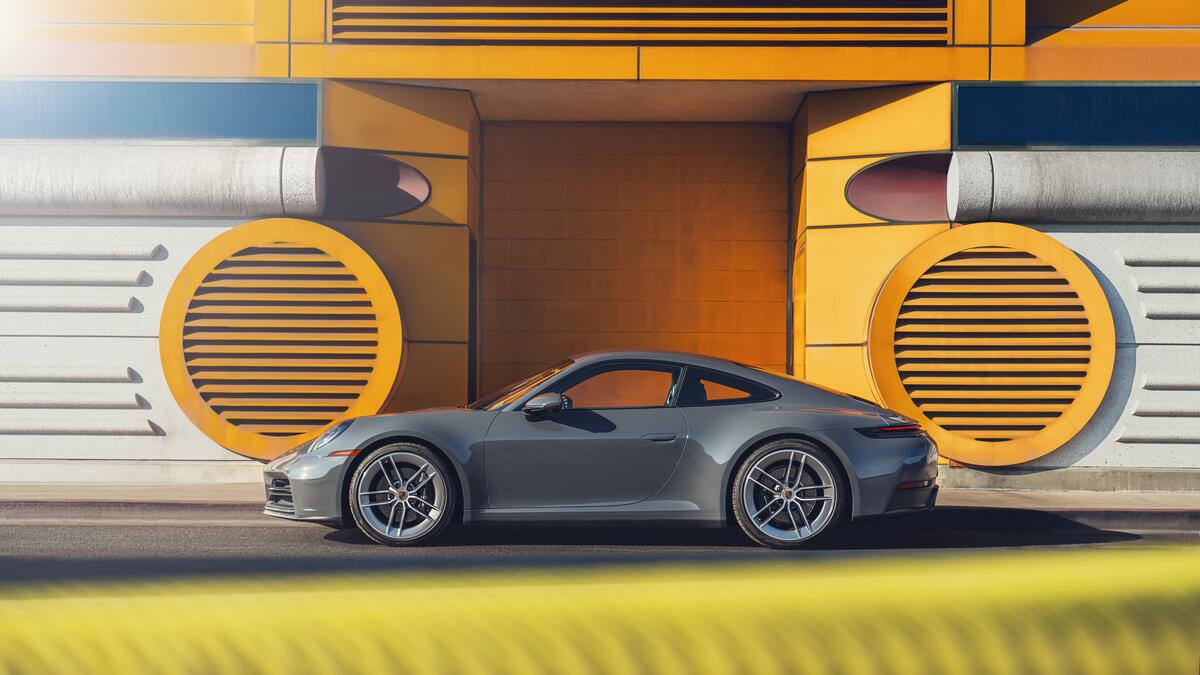
Porsche 911 Carrera 4 Cabriolet
"are anybody listening so they use the the c4 carara four cabriolet shell why did they use the carara four shell not the carara two shell"
This is a Porsche 911 that’s built as a convertible, and it also has all-wheel drive. The discussion here is about why Porsche chose this specific 911 convertible version as the starting point for their engineering and packaging.
The Porsche 911 Carrera 4 Cabriolet is a 911 variant with all-wheel drive (Carrera 4) and a convertible (cabriolet) body. In this segment, the hosts focus on why Porsche used the Carrera 4 cabriolet shell as the base for a project, tying it to packaging and weight tradeoffs.
front differential
"he wanted to take the space where the front differential would normally go to use as extra fuel tank space"
The front differential is a gearbox that helps the front wheels turn at different speeds, especially in corners. It takes up space in the car, which matters when engineers want to fit other parts.
A front differential is the gear unit that allows the front wheels to rotate at different speeds when turning. In an all-wheel-drive Porsche, it also occupies space that can affect where other components—like an extra fuel tank—can be packaged.
extra fuel tank space
"he wanted to take the space where the front differential would normally go to use as extra fuel tank space"
Extra fuel tank space means there’s more room for fuel in the car. In this case, Porsche re-used an area that would normally be taken by the front differential so they could store more fuel.
Extra fuel tank space refers to additional volume allocated for storing fuel, which can increase range but also affects packaging and weight distribution. The segment explains that Porsche used the space normally taken by the front differential to fit more fuel.
turbocharged carara engine
"because it's a bit thirstier than a turbocharged carara engine"
A turbocharged engine uses a device that packs more air into the engine, which can make more power. The host is comparing how fuel-hungry different engine setups can be.
A turbocharged engine uses a turbocharger to force more air into the cylinders, improving power output for a given engine size. Here, it’s used as a comparison point for fuel thirst versus the project’s setup.
light weighting measures
"had they not gone to the extreme light weighting measures they have done so the that cabriolet body shell weighs 40 kilograms more"
Lightweighting measures are ways engineers reduce the car’s weight. In this story, Porsche had to offset the extra weight from the convertible roof by using lighter materials elsewhere.
Lightweighting measures are engineering steps taken to reduce vehicle mass, often by switching to lighter materials or redesigning components. Here, the host quantifies how much extra weight the cabriolet body and electric roof add, and how Porsche offsets it with other lightweight parts.
electric roof
"the cabriolet body shell weighs 40 kilograms more the electric roof has 36 kilos more"
An electric roof is the powered mechanism that raises and lowers a convertible top. It adds weight, and the engineers are counting every kilogram to keep the car under a target limit.
An electric roof is a power-operated convertible top mechanism that adds weight and complexity compared with a simpler manual or lighter design. In this segment, the electric roof’s mass is part of the overall weight budget that Porsche had to hit.
1500 kilos
"they were only going to go ahead with this project if they could get the whole weight of the car in so full of fuel ... had to be under 1500 kilos"
They had a hard weight limit of 1500 kilograms. Since the car started around 1540 kg, they needed to save about 40 kg by changing materials and components.
The 1500 kg figure is a weight target/threshold the project needed to meet, which drives the entire engineering tradeoff. When the starting point is about 1540 kg, they must remove roughly 40 kg to comply with the brief.
carbon fiber wings
"so carbon fiber wings bonnet doors suspension components magnesium construction"
Carbon fiber wings are body panels made from a lightweight composite material. They help reduce weight, which is crucial when engineers are trying to keep the car under a specific limit.
Carbon fiber wings are aerodynamic body panels made from carbon-fiber composite material. Carbon fiber is used because it can be much lighter than traditional metal while still being strong, helping meet strict weight targets.
magnesium wheels
"they had the magnesium wheels as well lithium battery"
Magnesium wheels are wheels made from a lightweight metal. Lighter wheels can make the car feel more responsive, and here they’re also used to cut overall weight.
Magnesium wheels are wheels made from magnesium alloy, chosen for low mass. Lower unsprung weight can improve ride/handling response, and in this segment they’re also part of the broader weight-reduction strategy.
lithium battery
"magnesium wheels as well lithium battery and all of this stuff is what's brought the weight down"
A lithium battery is the rechargeable battery technology used in many electrified cars. The host is listing it among the heavy components they had to account for to keep the car’s total weight under the limit.
A lithium battery is an energy-storage pack using lithium-based cells, commonly used in hybrid and electric vehicles. In this segment, it’s mentioned as part of the component list that enables the project while still meeting the overall weight target.
double front wishbones
"the first cabriolet ever made by Porsche to have double front wishbones opposed to the struts"
Double front wishbones are a suspension design that uses two arms to guide the front wheel. The host is saying this cabriolet uses a more complex suspension than usual, so Porsche had to redesign the mounting points.
Double front wishbones are a suspension layout where two control arms (upper and lower) locate the wheel, improving geometry control compared with simpler strut setups. The segment highlights that this is the first Porsche cabriolet to use double wishbones, requiring changes to front mounting hardware.
struts
"double front wishbones opposed to the struts so they had to change all of the hardware to mount that into at the front ends"
Struts are a suspension part that helps control the wheel and absorb bumps. The host is comparing struts to wishbones, because the car’s suspension design changes what parts need to be mounted where.
Struts are a common suspension component that combines the shock absorber and a structural link. The segment contrasts struts with double wishbones, implying different packaging and handling characteristics and—here—different mounting hardware requirements.
single mass flywheel
"single mass flywheel so there was a conversation about taking the single mass flywheel from the st but they said no"
A single mass flywheel is a part connected to the engine that helps smooth power delivery. The host is saying they considered using one from another model, but didn’t because this car’s goal was more everyday usability.
A single mass flywheel is a clutch/engine component that stores rotational energy as one solid mass, unlike a dual-mass flywheel that uses springs to reduce driveline vibration. The segment notes a discussion about using the single-mass flywheel from the ST, but they rejected it due to the project’s usability brief.
downforce
"downforce how much downforce or lift do you think the sc has without a top on it [1203.3s] is it neutral it's 16 kilograms of downforce yeah so obviously it's"
Downforce is the “suction” effect from the air that presses the car down onto the road. It helps the tires grip better when you’re going fast. The hosts are talking about how much of that effect you get when the car is open-top.
Downforce is the aerodynamic force that pushes a car’s tires harder onto the road. More downforce generally improves grip for cornering and stability at speed, but it can also increase drag. In the segment, they’re discussing how much downforce the car generates with the top removed.
lift
"downforce how much downforce or lift do you think the sc has without a top on it [1203.3s] is it neutral it's 16 kilograms of downforce yeah so obviously it's"
Lift is the air pressure effect that can make a car feel like it’s getting lighter. That can reduce traction. They’re comparing lift versus downforce for the open-top setup.
Lift is the aerodynamic force that tends to pull a car upward, reducing tire grip. Designers try to minimize lift (or make it negative, i.e., downforce) so the car stays planted. The discussion frames lift as the opposite of downforce when the car is open-top.
gurney flap
"there's a little gurney flap [1231.5s] at the back as well that just helps create that stability they've still got all the underbody"
A gurney flap is a tiny “fin” on the back edge of a wing or spoiler. It helps the car generate more grip from the air. The hosts say it improves stability when you’re driving fast.
A gurney flap is a small tab mounted at the trailing edge of an aerodynamic surface (like a wing). It increases downforce by altering airflow and pressure distribution, often with a relatively small drag penalty. Here, it’s described as helping stability at speed.
underbody streaks
"they've still got all the underbody [1235.9s] streaks that run down the the underside as well to basically help that downforce"
The underside of a car can be shaped to help the air flow in a way that keeps the car planted. “Underbody streaks” here means those aerodynamic shapes/features under the car. They help create downforce even without a big wing.
Underbody streaks refers to aerodynamic features along the underside of the car that guide airflow to improve efficiency and downforce. These can include channels, diffusers, and surface shaping that help manage pressure under the chassis. The segment says the car still has these underbody elements contributing to downforce.
weight balance
"another factoid for you the weight balance has changed one percent towards the rear and [1255.0s] Proninger says it's the most drift happy gt3 of all"
Weight balance is how much of the car’s weight sits over the front wheels versus the rear wheels. Moving more weight toward the back can make the car rotate more in turns and feel more willing to slide. They mention a small rearward shift and connect it to drift-friendly behavior.
Weight balance is how the car’s mass is distributed between the front and rear axles. Shifting balance toward the rear can change handling characteristics, such as rotation in corners and how easily the car can be made to slide. The segment notes a one-percent shift toward the rear and links it to drift behavior.
drift happy
"Proninger says it's the most drift happy gt3 of all so uh so but yeah there's lots of factoids there"
“Drift happy” is an enthusiast phrase describing a car that’s easy to rotate and slide with controllable traction breakaway. It usually implies predictable balance and steering feel that helps the driver initiate and hold a drift. The host attributes this to the GT3’s rearward weight bias and aero setup.
Porsche 911
"you don't have to buy it and there's all sorts of other 911 variants that you can go and choose from and that's the that's the great thing about Porsche"
Porsche 911 is a famous sports car model from Porsche. The point here is that Porsche offers lots of different versions, so buyers can pick what they want instead of losing options.
The Porsche 911 is the iconic rear-engine sports car line from Porsche, known for its distinctive silhouette and many factory variants. In this segment, the host mentions that there are multiple 911 variants you can choose from, highlighting how Porsche offers different trims/derivatives rather than removing options.

Kia Picanto
"i wasn't going on the the press launch for the new kia picanto and spending 10 years doing hey that's a great privilege"
The Kia Picanto is a small city car from Kia, mentioned here as a contrast to the host’s current press-launch experience. The speaker is emphasizing that they weren’t there for the Picanto, and that their background differs from typical long-term coverage of one model.
back-to-back blast
"what i did make the chance to do was to drive i managed to snaffle a touring at lunchtime so i could do a back-to-back blast for comparison"
A “back-to-back” drive is when you drive one car, then drive another right after it. It makes it easier to compare how they feel because you’re not waiting days between tests.
A “back-to-back” drive means testing two cars back-to-back in a short window so you can compare them while your impressions are fresh. The host uses it for a comparison run, which helps isolate differences in how each car drives.
range
"i can tell you that its range is going to be over 300 miles"
Range is the distance an EV can travel on a full charge under a specified test cycle. The host says the Bentley Torcal’s range will be over 300 miles, which is a key practical metric for EV buyers.
thousand horsepower club
"i can't be specific but i can tell you it's not going to be a member of the thousand horsepower club"
The “thousand horsepower club” is a bragging benchmark for cars with about 1,000 horsepower or more. The speaker is basically saying this Bentley won’t chase that number, even though it should still be very fast.
The thousand horsepower club is an enthusiast nickname for cars rated at roughly 1,000 hp or more. The host is saying the Bentley Torcal won’t be in that category, implying it will avoid extreme power figures even if it’s still very quick.
enough
"Bentley have come to the conclusion ... there is such a thing as enough if the additional power you are providing and the additional weight that that is incurring"
The speaker is making a point that more power isn’t always better. At some point, extra acceleration can feel unpleasant and also makes the car heavier and more expensive, so the goal should be the right amount—not the maximum.
This segment argues for “enough” performance: the idea that beyond a certain point, adding more power can bring downsides (weight, cost, and unpleasant acceleration) without improving the real-world experience. It’s a philosophy about balancing performance with usability and passenger comfort.
electrification
"conceptually how does electrification fit Bentley and what and where i want to place this is in the sense that i drove a resto mod electric Rolls-Royce"
In this context, electrification means using an electric motor instead of (or alongside) a gas engine. The discussion is about whether that change can still feel like a Bentley.
Electrification here means replacing or supplementing a car’s traditional combustion powertrain with electric propulsion (typically an EV or plug-in hybrid). The speaker ties it to how Bentley should deliver its signature feel—quiet cruising, smooth power delivery, and refinement.

Rolls-Royce
"i drove a resto mod electric Rolls-Royce Cunish not so long ago electrification really suited that"
They’re comparing Bentley to Rolls-Royce. Rolls-Royce is famous for a super quiet, effortless ride, and EVs can help with that because they’re smooth and very quiet.
The speaker contrasts Bentley with Rolls-Royce, using Rolls-Royce as the reference point for “effortless silent wafting.” That matters for electrification because EVs can deliver quiet operation and smooth torque, but the brand’s character depends on how the powertrain is tuned.
electric power
"how do you think conceptually electric power suits a Bentley in general and what will they need to do to make electric power suit a Bentley more?"
They mean the way the electric motor delivers power. The question is whether it can be tuned to feel right for a Bentley—smooth, quiet, and effortless.
“Electric power” refers to the output delivered by an electric motor and its control system, not just the fact that the car is electric. The speaker is asking how that power delivery should be tuned so a Bentley still feels like a Bentley.
torque
"Bentley's are all about torque it's got to know how much it's got and even though i did wouldn't be able to tell you but it's going to have a stack of it"
Torque is the force that helps the car move and accelerate. EVs usually have lots of torque right away, so the car has to be tuned so that power feels smooth and effortless.
Torque is the twisting force that makes a car accelerate, and EVs typically produce it instantly. The speaker says Bentleys are “all about torque,” meaning the electric powertrain needs to deliver strong, usable low-end pull while still feeling refined.
refinement
"it's going to be really really quiet so it's got to waft longer like you want it to until we drive it"
Refinement is how comfortable and smooth the car feels—especially how quiet it is. The host is saying an EV Bentley should be very quiet, which helps it feel more luxurious.
Refinement is how smooth, quiet, and vibration-free a car feels in everyday driving. The speaker links electrification to refinement by emphasizing that an EV Bentley should be “really really quiet,” supporting the brand’s luxury character.

Bentley Bentayga
"it's a Bentley SUV powered by an EV you know you go and look at whatever it is a Bentayga way"
Bentayga is Bentley’s SUV. The host is using it as a reference point to explain that an EV version would likely be very heavy, which affects how it drives and rides.
Bentayga is Bentley’s SUV model, and the speaker uses it as a benchmark for how heavy an EV Bentley SUV is likely to be. That’s important because EV packaging and battery mass strongly affect weight, ride feel, and efficiency.

continental GT
"the fact it's an SUV kind of means i mean this was a new electric continental GT i'd be a lot more concerned"
The Continental GT is Bentley’s grand touring coupe/GT line, and the speaker calls out a “new electric continental GT” as a case where they’d be more concerned. That matters because GT cars rely heavily on smooth power delivery and long-distance comfort—areas electrification must get right.
EV
"EV because that's the way the world is going but we just don't want you forgetting that we can do that too"
EV means electric vehicle. Instead of running on gasoline, it’s powered by electricity from a battery.
EV stands for electric vehicle, meaning the car is powered primarily by electric motors rather than a gasoline engine. The host uses “EV” to frame Bentley’s Torcal as a major shift for the brand’s customers and design direction.

Porsche Cayenne
"from you know the Porsche playbook you know we'll do a Cayenne but we'll also do your GT3 RS"
The Porsche Cayenne is Porsche’s SUV. The host is using it as an example of how Porsche can sell SUVs while still keeping a strong performance image.
The Porsche Cayenne is Porsche’s high-volume SUV, and the host uses it as an example of how Porsche learned to expand into SUVs without abandoning its performance identity. In the segment, it’s contrasted with Porsche’s GT3 RS to illustrate a “sporting brand” strategy across different body styles.
Porsche 911 GT3 RS
"you know we'll do a Cayenne but we'll also do your GT3 RS"
The Porsche 911 GT3 RS is a very serious, track-oriented version of the 911. The host brings it up to show how Porsche keeps its performance credibility even when it also sells SUVs.
The Porsche 911 GT3 RS is a track-focused 911 variant known for extreme aerodynamics and high-performance tuning. The host references it alongside the Cayenne to argue that Bentley can be both “sporting” and diverse in its lineup.
Bentley Torcal
"i suspect that next year so 27 is going to be all about the Torcal and then 28 will probably get a new Bentayga"
The Bentley Torcal is a new Bentley model the host says will be the main event for 2027. They’re talking about it as an EV, but with styling and identity that still feel unmistakably like a Bentley.
Bentley Torcal is Bentley’s next model being positioned as the brand’s big focus for 2027. In this segment, the host frames it as an EV that’s meant to still feel like a “Bentley,” balancing novelty with brand familiarity.
luce
"Ferrari went with the luce so the luce is completely out there you know very modern avant-garde"
“Luce” here refers to a specific design style the host associates with Ferrari. They’re saying Ferrari’s look is very bold and futuristic, while Bentley’s approach is more straightforward.
“Luce” is used here as a named design direction associated with Ferrari’s styling approach, described as modern and avant-garde. The host contrasts Ferrari’s “luce” look with Bentley’s Torcal design, implying Bentley is taking a more conservative visual path.
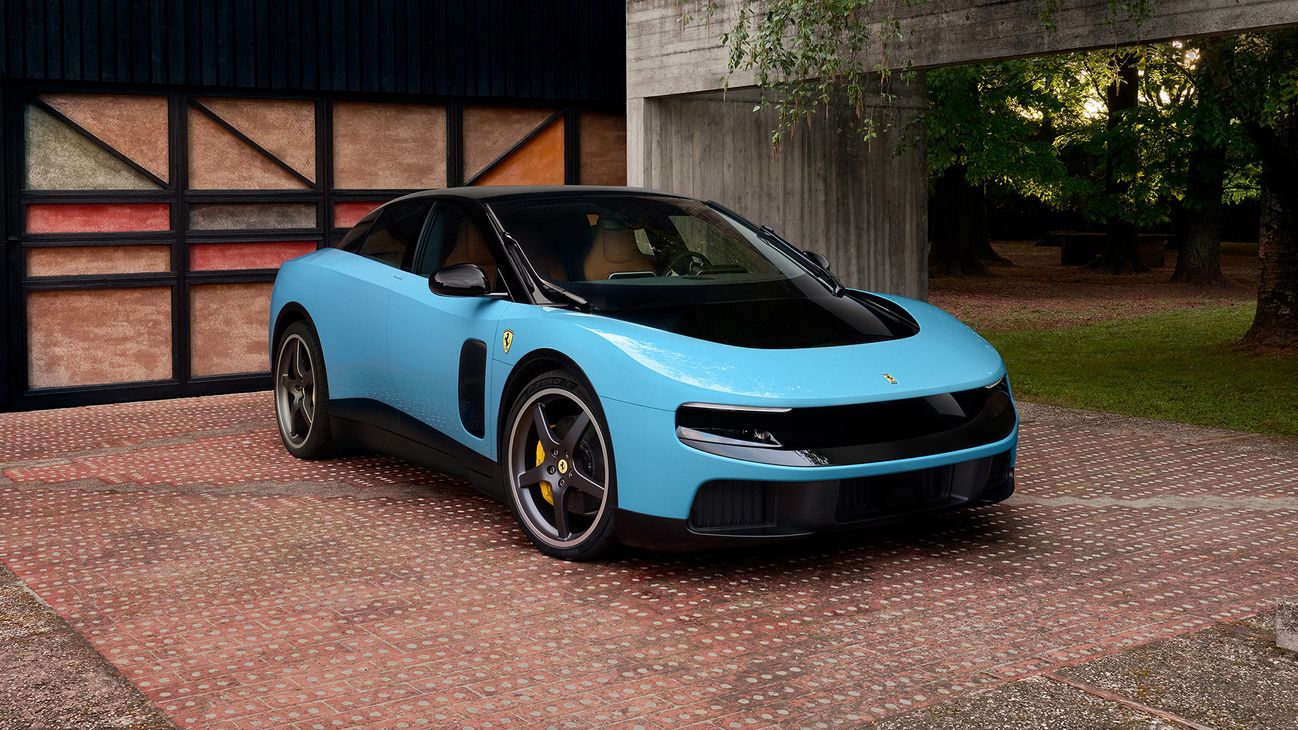
Ferrari Luce
"...the opposite way to the way Ferrari went with the luce so the luce is completely out there you know very..."
The Ferrari Luce is a Ferrari concept or special project that’s meant to show a very different design idea. It’s discussed because it doesn’t follow the usual Ferrari approach and is meant to stand out visually and creatively.
The Ferrari Luce is a concept-style name associated with an unusual, design-forward direction from Ferrari—described in the podcast as being “the opposite way” from how Ferrari typically approaches certain design ideas. It’s the kind of vehicle that gets discussed because it highlights how a brand can experiment with a radically different look or philosophy rather than sticking to its usual formula.
Frank Steffen Walliser
"Frank Steffen Walliser the boss of Bentley said something very interesting to me at this sort of partial reveal"
Frank Steffen Walliser is a top executive at Bentley. The host quotes him to explain how Bentley’s design choices for this new car reflect the brand’s current direction compared with what it might have done years ago.
Frank Steffen Walliser is Bentley’s boss referenced in the segment, and he’s quoted about how the Torcal’s design would have looked if it were created a decade earlier. His comments tie the styling direction to brand strategy and how “wacky” it might have been in the past.
rear three-quarter shot
"there's a sort of rear three-quarter shot they've done but even that will will suggest that the car is not you know some mad vision of the future"
A rear three-quarter shot is a picture taken from behind and slightly to the side. It’s a common way car companies show off the shape without revealing everything.
A rear three-quarter shot is a car photo angle taken from behind and to one side, showing both the rear and part of the side profile. The host notes that even this limited preview suggests the Torcal won’t look like a “mad vision of the future.”
why racing is interesting
"and why why is racing interesting oh my goodness I mean there's a first of all racing is fun there will be lots of people who there'll be lots of people listen to this"
They’re talking about what makes racing more interesting than just driving fast. It’s not only speed—it’s the extra challenge that shows up once you race.
This segment explains what makes racing different from casual fast driving—there’s a “different dimension” beyond just driving quickly. The host frames it as fun like track days, but with added challenge and skill.
track days
"but there will be probably be rather more people who listen to this um who have done track days and know what it's like to drive a car as fast as they feel they comfortably can around a track"
Track days are organized events where people drive on a race track. It’s a way to go fast safely, and the host is saying racing is like that—but with more intensity.
Track days are events where regular drivers get time on a race circuit to drive their own cars at higher speeds than public roads allow. The speaker uses them as a baseline for understanding racing—track days are fun, but racing adds extra pressure and complexity.

1960 elva courier
"jezz very kindly invited me to drive his isn't 60 on or 61 it's a 60 yeah 1960 elva courier um if you know what an elva courier is um elva was a race car manufacturer"
This is a 1960 Elva Courier, a British car brand known for race cars. It started as a road car idea, but in practice it’s being used and driven like a race car—so it behaves differently than a normal street car.
The Elva Courier is a lightweight, race-bred road car from Elva, a British race-car manufacturer. The speaker explains it was originally conceived as a road car, but it’s now being driven more like a racing car again, which changes how you approach control and speed.
oversteer
"I drove it like our like a fifth like I'd drive a 50s after a meal which is basically chuck it in and sort it out uh I slide around all over the place buckets of oversteer having a having a great and actually although the elva will completely tolerate that"
Oversteer is when the back of the car starts to slide out more than the front. They’re saying they were getting a lot of that, and while the car can handle it, it doesn’t help you go quickest.
Oversteer is when the rear of a car loses grip before the front, causing the car to rotate more than you expect. The speaker says they slid around with “buckets of oversteer,” and notes the Elva can tolerate it, but that’s not the fastest way to drive.
slip
"what the elva likes is to be driven with a small amount of slip so neutral to mild oversteer"
“Slip” is when the tires aren’t perfectly matching the car’s movement. A little bit can actually help the car turn smoothly, instead of feeling like it’s either gripping too much or suddenly losing control.
In racing driving, “slip” usually means the tires are rotating slightly differently than the car’s actual speed over the ground. A small amount of slip is often used to keep the tires in their grip “sweet spot,” helping the car rotate predictably rather than suddenly losing traction.
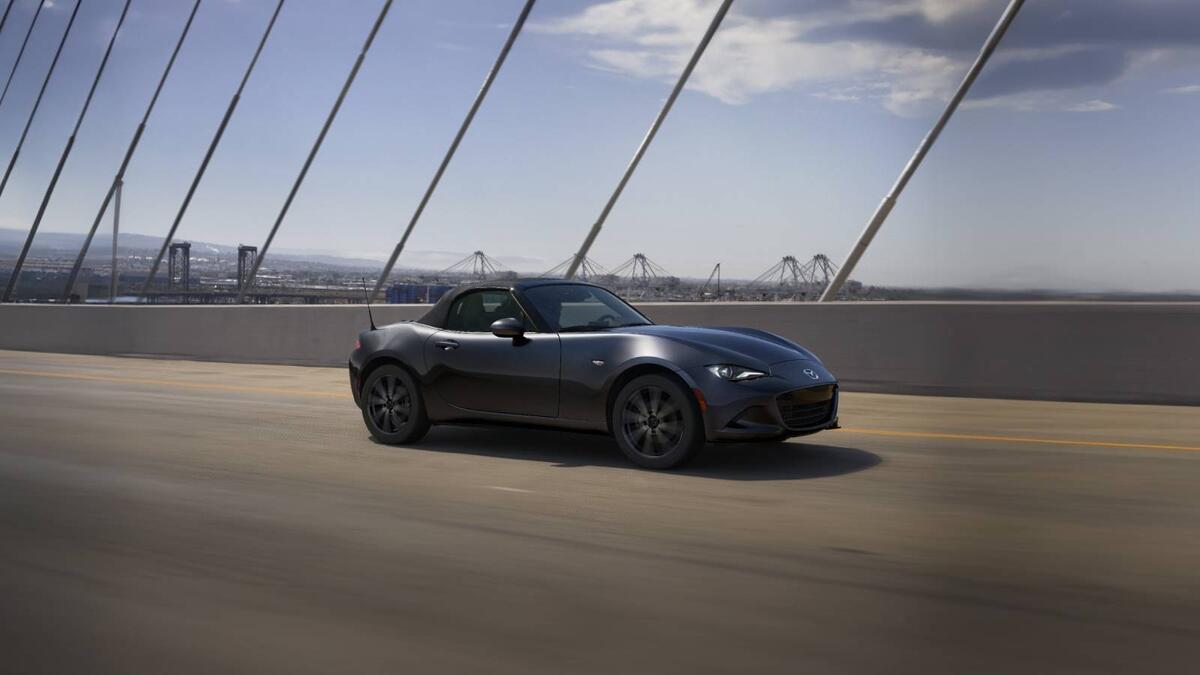
MX-5s
"why racing historians is different to racing clio carp or mx5s or modern minis"
The Mazda MX-5 is a small, light sports car that’s common in club racing. The host mentions it as an example of a modern, easy-to-get-into racing option compared with historic events.
The Mazda MX-5 (Miata) is a popular lightweight roadster that’s widely used in grassroots and club racing. Here, the speaker groups it with other modern, accessible series to explain why historic racing feels different.

Ford GT40
"we are racing with a company called is it out there from yeah of course there's the big boy stuff there was gt40s there and there were cobras"
The Ford GT40 is a famous old race car. The host mentions it to show the top end of historic racing, even though most people can’t (and don’t need to) race cars at that level.
The Ford GT40 is a legendary endurance race car associated with the 1960s Le Mans era. The speaker uses “GT40s” to illustrate that historic racing can include extremely valuable, high-profile cars—but that it’s not limited to those.

MGB
"but you could get yourself a an mgb there's another series which you know run"
The MG MGB is a classic British sports car often used in affordable historic racing. The speaker mentions it as an example of a historic car you can race without “big boy” budgets, while still needing maintenance and logistics to get it to the track.

A35 Austin A35S
"austin a35s these are not expensive cars um you have to be mindful of the fact they do require maintenance"
The Austin A35 is a classic small car. The host brings it up to show that historic racing isn’t only for super-expensive cars—some series use relatively modest, older vehicles.
The Austin A35 is a small classic British car that can appear in historic racing series. In this segment, it’s cited as another example of an inexpensive historic car choice compared with racing in modern or high-value machinery.
donnington
"car was actually out finally for donnington driving a 1950s 1.6 litre alpha julietta in the wet"
Donnington is a famous race track in the UK called Donington Park. The host is using it as the location where he drove the car in the wet.
Donnington refers to Donington Park in the UK, a well-known motorsport venue used for racing events and track days. The host mentions driving there to set the scene for how the car and tires behaved in wet conditions.
cross-ply tires
"a lot of it's down to the task we run on these terrible Dunlop [2401.4s] L section cross-ply tires um which are I mean they're they're the same tires that they were [2407.4s] using in the 50s and the 60s"
Cross-ply tires are an older tire design where the internal fabric layers crisscross inside the tire. They flex differently than modern tires, so the car can feel less “grippy” but also more predictable and easier to manage when you’re driving smoothly.
Cross-ply tires use layers of fabric cords laid diagonally across the tire, rather than belts running mostly straight across like modern radial tires. That construction tends to flex more, which changes how the tire builds grip and how quickly it responds—especially noticeable when you’re pushing at the limit in wet or slippery conditions.
L section
"a lot of it's down to the task we run on these terrible Dunlop [2401.4s] L section cross-ply tires um which are I mean they're they're the same tires that they were"
“L section” refers to a narrow tire profile/section width used on period race tires, which typically means a slimmer contact patch compared with modern wide tires. A narrower tire generally provides less total grip, so the car reaches its traction limits sooner and requires more careful throttle and steering inputs.
driving a slick
"if you drive them like you drive a slick and slicks don't really like slip you know the way to [2423.9s] drive a slick is to be absolutely on the limit but never over it"
A “slick” is a race tire with no tread grooves, made for maximum grip on dry roads. The host is saying slick tires usually work best when you’re right on the edge of grip but not going past it too much.
“Driving a slick” refers to the technique used with slick race tires, which have no tread pattern and are designed to maximize contact and grip on dry pavement. The host contrasts this with cross-ply tires, saying slicks generally want you to stay right at the limit without exceeding it, while the older tires behave differently.
technical limit of adhesion
"with an L section Dunlop that [2429.6s] doesn't work if you're just going around at the technical limit of adhesion you'll go slowly [2433.5s] um you'll go faster if you're just slightly over the limit all the time everywhere"
This means the point where the tires can’t “hold” the road anymore and start to slip. The host says you can actually be quicker by driving just a bit beyond that slip point, rather than trying to avoid it completely.
The “adhesion” limit is the maximum grip available between the tires and the road surface before the tires start to slide. The host’s point is that with these tires, you can go faster by staying just slightly beyond that grip limit rather than trying to remain perfectly under it.
Goodwood
"and that's why you know if you look at old cine film of you know Goodwood in the 1960s [2446.5s] and there's John Surty's and Jim Clark drifting their Aston's and Ferrari's through Magic at Goodwood"
Goodwood is a well-known UK venue for classic-car racing and events. The host brings up old videos from there to explain that drifting/sliding can be part of how historic cars go fast.
Goodwood is a British motorsport and car culture venue known for events like the Goodwood Revival, where historic cars are driven hard. The host references old footage of famous drivers sliding through corners to argue that “going sideways” was often a speed technique, not just showmanship.
drifting
"and there's John Surty's and Jim Clark drifting their Aston's and Ferrari's through Magic at Goodwood [2452.5s] they're not doing it to have a laugh they're not doing it because they're like going sideways"
Drifting is when the car’s tires slide sideways instead of gripping straight. The host is saying that on old race cars, sliding can sometimes be the quickest way through a corner if you control it well.
In motorsport, “drifting” is a driving technique where the car is intentionally rotated so the tires slide laterally while the driver manages throttle and steering to control the angle. The host argues that in historic racing, sliding can be the fastest way to keep momentum through certain corners, not merely a stunt.
limit of grip
"of controlling a car past that limit of grip and for the first you know three or four days that I"
It’s the point where the tires stop being able to “hold on” to the road. Once you go past it, the car starts to slide, and driving becomes about controlling that slide.
The limit of grip is the point where a tire can no longer generate enough friction to keep the car following the intended path. Past that threshold, the car will start to slide, and the driver has to manage traction rather than just “steer harder.”
sliding
"was in the elbow I was having to get used to the fact that going into a corner and sliding isn't"
Sliding means the tires aren’t gripping as much as you want, so the car starts to move sideways or rotate. In racing, skilled drivers sometimes use this on purpose to stay fast.
In performance driving, “sliding” usually means the car is no longer fully gripping—often the rear steps out and the car rotates while still moving forward. Drivers intentionally use controlled slip to maintain speed and balance through corners.
tail outs
"the three thousands are just in a constant state of big tail outs all the way down"
“Tail outs” means the rear of the car swings outward a bit in a turn. Good drivers keep it controlled so they don’t spin and still keep speed.
“Tail outs” refers to the rear of the car stepping out during cornering—essentially oversteer leading to a drift-like attitude. The driver’s job is to keep that rear slip controlled so the car stays fast instead of spinning.
speed maintenance
"it's all about speed maintenance isn't it it's not it's about"
Speed maintenance means you try not to lose momentum in the corner. Instead of slowing down a lot, you keep the car moving quickly through the turn.
Speed maintenance is the idea of staying fast through a corner by minimizing slow-down events like heavy braking or scrubbing off too much speed. In sliding/traction-limited driving, it often means using throttle and balance to keep momentum rather than “braking to safety.”
scrubbing your speed off
"not scrubbing your speed off it doesn't matter in the heli because you can just power on and power"
It means slowing down more than you need while you’re turning. If you lose too much speed, you’ll have to make it up later, which is harder.
“Scrubbing your speed off” means intentionally reducing speed through the corner—typically by braking, lifting, or forcing tires to lose grip. In traction-limited driving, excessive scrubbing wastes momentum and makes it harder to carry speed to the next section.
road car
"[2764.1s] road cars you know old alphas in the main and the elver is technically a road car but essentially [2771.8s] it's a racing car with a road car body on it and that's what kind of fooled me slightly because it"
A road car is a car designed to be driven on normal public roads. It’s usually set up for comfort and everyday use, not just track racing.
A road car is a vehicle built primarily for public-road use, with systems and behavior tuned for everyday driving rather than race-only operation. In the segment, the speaker contrasts road-car origins with a racing-style setup and driving feel.
historic racing
"[2799.0s] that nobody's ever heard of um yeah the the the big question is um should people have a serious [2807.3s] look at going historic racing is it a fun thing to do is it a safe thing to do is it an expensive [2813.0s] thing to do"
Historic racing is when people race older cars from past decades. The goal is usually to keep them close to how they were back then, and to race in a way that’s safer and more community-focused than top-level racing.
Historic racing is motorsport where older cars are raced—often with rules aimed at preserving period-correct hardware and driving character. It’s typically organized in events or series that focus on authenticity and safe, controlled competition rather than modern-spec performance.
paddock
"[2813.0s] thing to do what are the people like the people are brilliant aren't they they really are and it's [2818.2s] it's a really down surprisingly down to earth friendly paddock it's not posh posh rah rah"
A paddock is the space at a race where teams work on the cars and get ready between sessions. It’s usually closer to the action than the spectator areas.
A paddock is the area at a race event where teams park, service cars, and prepare for sessions. It’s also where you’ll find team members and equipment between runs, and it often has a more informal, hands-on vibe than the grandstands.
grassroots
"[2846.3s] I guess the cliche is grassroots I mean what we were doing was you know I guess as grassroots as [2853.7s] historic racing gets and you'll get people there"
Grassroots means racing that’s built from the community and enthusiasts, not big-money teams. It’s often more approachable and less formal.
In motorsport, grassroots refers to community-driven racing—often smaller events and local participation—rather than elite, corporate-backed series. The speaker uses it to describe how historic racing can be accessible and driven by enthusiasts.
ageless sport
"[2882.3s] it's an ageless sport um you know you get people you get teenagers doing it you [2890.4s] get in the 80s people doing it"
An ageless sport means people of many ages take part. Here, the point is that historic racing isn’t only for one age group—it can include teenagers and older enthusiasts too.
An ageless sport describes participation across a wide range of ages, from teenagers to older drivers. In this context, it highlights that historic racing attracts people at different life stages who share interest in old cars and driving.
historics
"done you know I've done a fair bit of modern car racing I've never enjoyed it as much as [2915.3s] historics you know I've raced all sorts of things"
“Historics” means races for older cars, usually from past decades. The cars aren’t modern race cars, so the driving experience feels different and more old-school.
“Historics” refers to historic or vintage racing, where older cars are raced in events focused on period-correct machinery and eras. It’s often less about cutting-edge tech and more about driving feel, mechanical sympathy, and adapting to older performance characteristics.
Request an Explanation
Heard something you'd like explained? We'll add it to this episode.
Sign in to request explanations for terms you heard.
Want to learn more?
Browse our glossary for plain-English explanations of automotive terms, jargon, and concepts.
Help improve this episode
See something that's not quite right? Our annotations are AI-generated and can sometimes miss the mark. Click the flag icon on any annotation to suggest a correction.
1 community members have helped improve this episode.