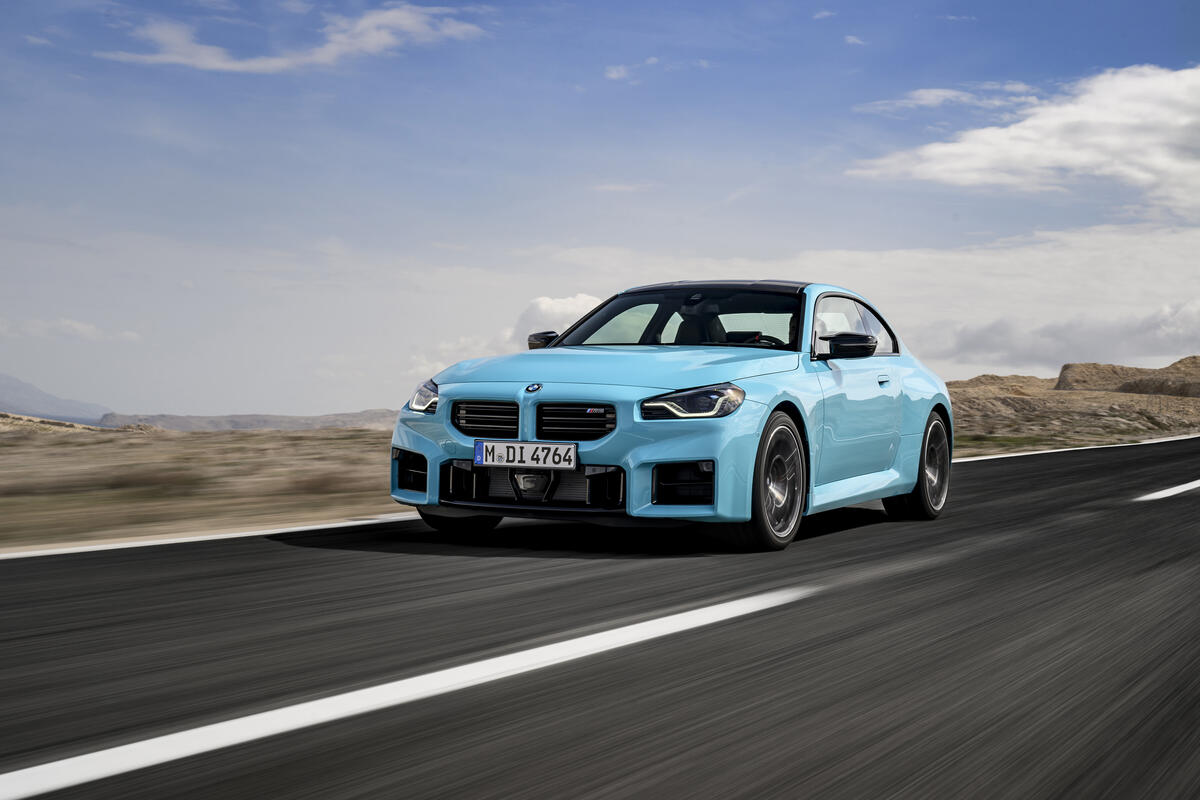
The BMW M2 is a small two-door sports car made by BMW’s performance team. It’s built to be fun to drive, with stronger power and sportier handling than a regular BMW. People mention it when talking about BMW’s performance cars and what makes them different.
Correlation is basically “does the team’s prediction match reality?” If their tests and computer models line up with what the car does on track, the upgrades are more likely to work the way they expect.
Feedback is what the driver feels from the car—especially through the steering—so they know how much grip they have and how the car is behaving. If the feedback is off, it’s harder for the driver to push confidently.
The chassis is the car’s main structure that connects suspension, steering, and the body. In this context, the speaker suggests the mounting and flexing of the chassis affected the steering feel—meaning the structure wasn’t behaving the way the driver expected.
Red Bull is the F1 team Max Verstappen drives for. The point being made is that when Red Bull fixes the car’s feel for him, it can swing the championship fight.
A “gap” is how far one car is behind another in time. “Eight tenths” means the driver behind is about 0.8 seconds back, which is a big difference in racing.
Engineers talk about the car’s “signal” as how clearly it tells the driver what it’s doing—like whether it has grip and how it reacts. If that signal suddenly improves, the driver can control the car more confidently and go faster.
Concept
teammate like Max
In F1, fighting a teammate is often more difficult than it sounds because both drivers usually have access to the same car platform, but they can still differ in driving style, confidence, and how they extract performance. That’s why the conversation frames Isaac’s challenge as “up against a teammate like Max”—the teammate can be a benchmark for pace and consistency.
Racing tires are what actually grip the road. If a team says they have “magic tires,” it usually means those tires help the car feel easier to drive and faster.
Race engineers and drivers have to work like a team. If they don’t trust each other or communicate well, the driver won’t follow the advice, and the car won’t perform as well.
Driver–engineer communication is the ongoing exchange of information between the driver and the race engineer, often via radio. The tone and clarity of feedback can affect driver confidence and decision-making under pressure.
In F1, “radios” are the in-car communication system that lets the team talk to the driver during the race. If the signal is crackly or hard to hear, it’s harder for the driver to get instructions in time.
McLaren is one of the famous Formula 1 teams. Here it’s mentioned because the example driver was racing for them and had a different attitude toward engineering feedback.
Term
poor unit
They’re talking about an important part of the car that isn’t performing well. Because of that, it affects how fast the car can be, more than it did in earlier years.
It’s about how engineers choose what to tell the driver. They try to give only the most useful info at the right moment so the driver doesn’t get overwhelmed.
They mean the driver can only handle so much information while racing. If the team gives too much at once, it can make it harder for the driver to act on it quickly.
It means whether the driver is getting faster or slower compared to someone else or a planned target. Engineers look at which parts of the track are helping or hurting.
A “line” is the route the car takes through a corner. Choosing a better line can help the car carry more speed and grip.
Term
RVD
“RVD” is a team shorthand for a specific thing the engineer is tracking about how the driver is driving. The idea is that the driver gets a clear picture of it so they can focus on what helps them go faster.
Engineers don’t just dump information on the driver—they pick the most important things that will make the car faster. It’s about focusing on the few changes that matter most during the race.
Topic
free practice vs race information flow
They’re talking about when the team gives the driver useful guidance: during practice sessions or while the race is happening. In this case, the engineer says it’s still done during the race.
Track evolution means the race track gets better as more cars drive on it. More rubber gets onto the racing line, so the track usually becomes grippier and faster over time.
Tire degradation means the tires don’t stay perfect for long. As you drive, they wear and heat up, and grip drops—so your lap times can fall if you push too long.
Qualifying is the session where F1 cars set their starting positions for the race. It’s often where tire grip and timing matter a lot because you’re trying to get your best lap.
Driver evolution means the driver gets better during the session. As conditions change and the driver learns the track, they can squeeze out more speed lap after lap.
They’re talking about Monaco because it’s a circuit where conditions and grip change in a way that makes timing really important. The best strategy depends on both the track improving and the driver getting more confident.
A “moving target” means the situation keeps changing while you’re trying to make decisions. In Monaco, grip and tire behavior shift, so what’s fast right now might not be fast a few minutes later.
F1 has practice sessions before the race weekend’s main events. Teams use them to try different settings and learn how the track affects the car, so they’re better prepared for qualifying and the race.
Concept
adjust
They start with an initial plan, then keep changing it as they learn more during the session. If the car isn’t behaving as expected, the team updates what they’re trying next.
In F1 timing, “purple” is a color that usually means a driver has the fastest time in a sector so far. It’s a quick visual cue that they’re doing something better than earlier laps.
In F1 engineering, GPS is used to measure where the car is on track and how it moves through key sections. That lets engineers compare laps and identify differences in braking points, corner entry speed, and line choices between drivers or teams.
“Onboard” means the car’s own recorded data from the session. The team uses it to see what happened while the driver was driving, and compare it to other laps.
Concept
plan Z
“Plan Z” basically means the backup plan. If things change and the original plan stops working, the team has to switch to something else quickly.
A sprint weekend is an F1 race format where there’s a shorter race (the sprint) earlier than usual. That changes how teams practice and qualify, because the sprint is important and you can’t just experiment as much.
A Grand Prix weekend is the whole event across multiple days—practice, qualifying, and then the main race. The schedule can change in sprint weekends, which makes things feel more pressured.
Simulator work is practicing and testing in a computer-based racing setup. It helps teams prepare, but it’s not the same as driving the real car on track, where you learn things you can’t fully replicate in software.
FP1 means the first practice session on an F1 weekend. In sprint weekends, teams may not get as many practice sessions, so there’s less time to learn what the car needs.
The risk-reward approach is basically deciding how much you’re willing to gamble for a possible gain. In sprint weekends, teams have to be more cautious because there’s less time to correct mistakes.
A setup is how the race car is adjusted for the track and the driver. The transcript explains that on sprint weekends teams have to be more careful with changes because there’s less time to recover if something doesn’t work.
Renault engines means the Renault-powered cars. The story is about how the engine team communicated, and why they wanted the driver to use English so everyone could follow.
Alpine is an F1 constructor/team competing directly in qualifying battles. The engineer mentions Alpine as one of the teams Isaac is fighting against in Q3/top-10 contention, indicating how tight the field is.
An electric motor is the part that helps the engine by adding power using electricity. In racing, it can deliver power very quickly, which can make the car harder—or easier—to control depending on grip.
Pirelli is the company that makes the F1 tires. Their tests help teams learn how the tires will behave on different tracks so they can set up the car better.
Turbo lag is a short delay where you ask for more power but the engine doesn’t respond instantly. In a race car, that delay can make acceleration less predictable, especially when the tires don’t have much grip.
They’re talking about how the Canadian race track can be difficult. Weather and track conditions can change grip, so drivers and engineers have to be extra careful.
LIVE
Well, we had some sad news, very sad news, and I think we'd like to dedicate this episode
of Stay On Track to former colleague and a former teammate of mine, Alex Zanardi, who
sadly we lost.
Great man, big, big heart and big talent.
Incredible what he did after his accident, obviously he was a lovely guy as well, so
Alex, you will be missed and but never forgotten.
Welcome back to another episode of Stay On Track.
Looking forward to this one because we have an exciting show today because we have a
special guest who's going to be coming on, who we're going to be chatting to.
This will be our first ever guest.
Yes, it will be.
I'm so excited.
I'm very excited.
Yeah, Pierre Hamlin, who is Arvid Limblad's engineer, but of course, he's been through
quite a good list of drivers.
So we'll be speaking to him during this episode.
So looking forward to that.
Nothing's happened since we've been away.
Excuse me, something has happened since we've been away.
The Miami Grand Prix.
Miami Grand Prix, yes.
I saw you doing that with your hat cap a moment ago.
Yes, winner's cap.
Winner's cap.
Now, you want me to ask about the cap, don't you?
Yes, please.
Can I leave it to later?
No, no, no.
I'm supposed to ask Johnny why he's wearing a cap.
Why wearing cap?
Well, I'm wearing a cap because I was down in Miami over the Grand Prix weekend.
I was there for three weeks.
No, it was too much of a fact.
It was too much.
It's too much traffic.
No, the traffic is low and there's a lot of traffic.
So I didn't I didn't do that.
My boss, Till from Lola, he invited me to his house.
We went down there and actually watched the Grand Prix on the television, which was much, much better.
But we were tested with a beer.
T-70S, I think there was.
I think there was in my hand.
How nice.
Yeah, the only T-70S.
But while I was there, it was the Concourse Club,
especially a little club just outside downtown Miami.
And they had a little M2 BMW series that they do and they invited myself.
Helio Castroneves joined in as well.
So anyway, so I was there and there was this race.
And they gave you a cap.
I have my cap because I'm a race winner.
It's a long way to go.
I'm a race winner.
I'm happy.
You won a race.
I'm happy. I've won a race.
Yes.
And how long was it since you won a race?
Many, many, many years.
Well, I'm glad you.
All I would say about this victory.
I think it was the best race that I've ever done.
Was it close?
No, it was.
What was it?
Did you leave?
Controlled.
It was controlled.
Anyone?
Are you said?
Helio Castroneves?
Castroneves.
He finished fourth.
So I just throw that one in.
Anyone else in the race that we know?
Yeah, no, a lot of no.
Just a lot of other club members that were there.
We're there as well.
So Helio, if you're watching this,
we'd love to have you on the show.
Yes.
And you can talk us through the exciting experience
of being beaten by Johnny Herb.
But I'm sure you probably don't want to mention it.
Probably not, probably not.
So anyway, he has a naughty habit of winning races like that.
Yes.
Very competitive.
Well done.
Thank you very much.
I'm going to keep it because I feel quite proud about it.
It does look good on you.
I think actually I should have entered Formula One at 61 years old
because I don't think I've peaked.
If you can still do it, you can still do it.
Do you know what I mean? Absolutely.
Yeah, I'm impressed.
I can at the moment.
Yeah, I'm going to do a bit of casting.
I'm sure sort of sooner as well.
So anyway, right, you were done in Miami as well.
I was there.
What's the thing?
The whole thing unfolding.
Right, before we go on, was it better?
Yeah, it was better.
It looked better.
It was better because he didn't get the...
No, the deployment was much better.
...where they all slow down and then go again.
I mean, that didn't look good anywhere.
But Miami is not a place that they need to harvest quite as much.
They can harvest enough there.
So scavenge your harvest where it's called.
So basically, it's not...
It's a harvesting ritual and re-energizing rich circuit, apparently.
So I actually did go round.
So I'm quite excited because I got to do some hot laps.
So I was asked to do some hot laps.
I was working with William there
and I took some guests around the circuit.
And so I've actually been around the track
because I've never been around it before.
And what was it like?
And it was scary, quite honestly.
I mean, in a road car, there's a lot of blind very fast.
They call it a straight, but in a car without any downforce,
you lift quite a lot for those big corners.
And there's walls right by the edge of the tracks.
I've noticed the walls.
And blind corners.
And so...
But I had some fun doing that, which is you get me back in the...
So you never know, do you?
I might make a comeback as well.
Oh, hello.
This I did not expect you to say.
You're not going to do...
You are not going to get a crash on me again.
You get away with it.
You are not going to put a crash helmet on.
Oh, yeah.
You're really not going to get behind the wheel again.
No, I didn't think you were.
You're just going to be on a golf course or surfing.
Something like that, yes?
Yeah, it's the...
I don't know.
The thing is, if I go racing,
then I'm just giving everyone an opportunity to beat me.
And I just...
Go on, do it.
I'd rather deprive them of that opportunity.
I've missed the opportunity.
You just want to have a go.
I just want to have a go.
No, you're not having any skin off my nose.
You're not going to give it away.
OK, typical, typical.
Right, let's talk about what we saw on track now.
We saw Antonelli do a really, really good job.
And George suffered a little bit, didn't he?
Well, yeah, again, you have to say that he was second fiddle
in the Mercedes camp there.
And Kimmy is, well, he's bubbling, overflowing with confidence now.
And I have to say, I watched the last few laps of the race
and he was under pressure with a very small gap to the Lando.
And I thought, you know, he's going to crack.
Eventually, he's going to make him stay.
He did do a slight lock up, but it was very manageable.
And he did brilliantly to hold on to the end
and looked every bit as someone who's capable of taking the pressure.
Yeah, I think pressure is going to be definitely one thing.
It's a tricky track.
You said about he had that little tiny lock up.
But of course, we're going to a totally different track, Canada next time out.
And that is going to be something that's going to be very useful
to having a real feel of what's happening on the pedals
to what's happening on the track, low downforce.
So the cars generally move around probably not as much as they used to back in our day.
But it's still going to be a test.
Now, it's going to be interesting to see, is this going to be where George is going to fight back?
Because it's a track that he won last year,
and it's a track that he seems to do well out.
But it's damn important that he does do the job.
I heard this about, you know, he seems he's looking forward.
I think he might have said it himself.
He's looking forward to Canada.
But I mean, why flag it up?
You know, you've got to be able to beat your everywhere,
every other competitor on all the circuits that come up in every condition.
But is this him trying to say to end an early,
hey, you watch, you watch what's going to happen this time this time out?
Well, I didn't I did an interview on another podcast,
but with an ex-former one driver called Juan Pablo Montoya.
And he he was making great play of this because he he identified the point that
if it was him and he was Kimmy Antonelli and George,
everyone was saying it's going to be George's race, this one coming up,
he would make an extra special effort, of course,
to deprive him of that.
Now, that's the thing is you're setting yourself up.
I don't know, so George has to start whatever.
Whatever he's got to start turning it around and putting it back into the position
that looked like it was going to be in in Australia and in the early part of the season.
Because he's he's either been tripped up, been a bit unlucky,
but he's not managed to overcome Kimmy's advantage.
No, but let's go back to last year.
We had the same situation there where Oscar was basically dominating proceedings
and how that swapped around. Yeah.
So this thing is not so I just going to walk away with it.
It doesn't work like that.
Probably going back over the years.
It's never really been a situation where you can dominate very rare anyway.
You can dominate through the through the whole season.
So he's had his little bit day in the sun as he came in, you think,
and it's all going to be a little bit different when it when things settle down
and George gets back to where he should be.
And, you know, maybe knocking a few spots off him in a few races on the trot.
And then the dream of becoming world champion.
I thought it was all going to be so easy.
Can you answer? There you go.
I'm leading the world champion, the youngest ever driver to lead the world championship.
Yeah. This F1 Lark is easy.
You know, he's that dream is going to go pop.
Yeah. Well, is it?
Well, again, he's got all the ingredients he needs to be able to make it happen.
He's got Toto because we know how much he's been he's backed him
even before he got into Formula One.
He's got Bono and with the experience that Bono's got, that's could be something that's very important.
Yeah. We're going to talk about racing years later.
Yes, we are.
You know, as well, with an engineer, there's a mental side to it as well,
that an engineer can be very, very powerful.
We can get in the very best out of you.
As long as you have that relationship that you can discuss things
and you can learn off of each other and it's all about having the right positivity.
And that's where Kimmy has got it at the moment.
George has it.
It just hasn't quite come together for him for whatever reason,
but it has to happen soon.
It's really got to the whole synergy within his side of the pits has got to really start to work.
And Canada is the place he won last year.
He's happy that he's going to that type of track, but it's not just about Canada.
It's all the other races that he's got to be able to achieve what Kim is achieving at the moment.
But anyway, the games afoot now, isn't it?
It's where we're often running and we've got a championship title fight,
but we don't know who's going to be the contender,
because actually McLaren suddenly appeared on the scene back to where we expect to see.
And they didn't win the race.
And some may say they did a little bit of a mistake by the pit stopping
being sort of less than positive, which maybe gave the advantage to Kimmy that they shouldn't have done.
But anyway, they're back.
They put on upgrades.
They seem to work every time they put upgrades on the car, it seems to work,
which is a sign that they've got all their correlation going.
So they're making progress.
But when we go to Canada, there's more upgrades going on everyone's cars, I think.
But this is going to be the nature of the season, isn't it?
They're going to be evolving in the early part of the season as much as possible
to gain those points that are on the table.
Ferrari were good, but not strong enough to get the top three.
So we got an open and, of course, Max, you have to say they've done their upgrades to his liking.
And they have something to do with steering, apparently.
They found something that they'd missed with his steering, the feel he was getting back.
And it sounds like it sounds to me like that maybe some sort of flexing was going on in the chassis
and the way they mounted it, because he was steering itself.
Yeah, and I'm just I'm just reading between the lines a little bit,
but they Max wasn't getting the feedback from the car that he wanted.
Now he's got it back and he was competitive.
Not so good for Isaac Hadjar this weekend and the gap to him.
I mean, now if Max has got the feel back,
his they were competitive, much more competitive.
So you'd have to say our Red Bull in long term, the title hunt,
because we've seen him come from a long way back before.
Yes. And Max, I'm talking about.
But Isaac, the gap was eight tenths, I would say, nearly all the time.
Yeah. And it's a typical situation, a frightening gap as a racing driver.
Yes. But it's a typical situation of where the the signal of the car
suddenly sprung up to the next level or two.
And that's where Max is just able to follow wherever that car goes.
And then where Hadjar just seemed to struggle, as you say, that that little bit more.
I hope it's not the case. I hope it's just a one off because so far
it's been a good start for him.
But it can quite easily shift when, you know, Max is in a car
that he's comfortable with. And then those gaps, those eight tenths
start happening too often.
I hope his fists have recovered from the bashing
gave them when he had they off. Yeah.
But, you know, so it's tough times now for Isaac up against a teammate
like Max, but we'll we'll see how that's always going to be tough.
But I think it's a great championship.
The great the racing was
it's a championship set up, if you like, because we all said George
would would have him in the start of the year.
And he's just maybe this is a blip.
Yeah, maybe this throw this this one question in you in 1996
with a with a faster driver, Jack Villeneuve.
So we've got two great drivers with Kimmy and George.
What's what's it like in a fight for the championship?
Like you had 96. Well, you have to keep your cool.
There, as you said, it's not a straight line.
It's not straight line from beginning to end.
Has Kimmy at age 19 got the maturity to be able to see this through
an entire campaign? We're going to find that out.
George, you'd have to say I would I would put I still put my money
on George having the ability to maintain
an attack on the championship for an entire season.
He's shown us he can do it last year.
He was very consistent.
And he's had a little bit of a time to think about
what went down in in Miami, but he couldn't find the pace.
He might that's the worry is he just couldn't find what he needed there.
But, you know, so when you look across the garage,
you're very much aware as someone as George will be that the new arrival.
What where is the top of this ascendance?
You know, what this ramp, this curve that that is going on?
First year, a few quite a lot of mistakes.
Occasionally OK. Yeah. Second year winning races.
Consistently. Yeah, that's quite a steep curve.
Big. George has been at it now.
I mean, he's still a young driver, but he's been doing formal one for quite a while.
Yeah. And so, you know that the new thing comes along.
You you have to stamp your authority on this.
Otherwise, you the people very quickly just switch their allegiance to whatever's coming.
It also is very important for the driver to give confidence to the people around it.
You know, you don't you don't want to be walking into a garage and everyone's going,
well, how is he? That's not a good place to be because he needs his teams,
his support network within there.
But of course, Toto is very pleased that he has taken a big gamble
and signed a 19 year old or 18 year old and put him in a car when everyone said,
you're mad and it's now coming good.
And he made comments to that effect.
Now, that will be, you know, he's never said anything quite so fulsome about George.
You know, George has always been that I always feel like George has always been the apprentice,
but has to prove himself and continually.
Yeah. And it seems like he responds.
So the mood of his attitude, his mindset is going to be key to this
when he goes into the garage and he needs to be able to have the backing of his engineer.
Yes. And you don't want the engineer to be going now, George.
You know, this problem you had and you couldn't catch me last time.
How do we fix it?
You don't want to be in that place.
No, because that's everyone's feeling sorry for you.
It's just just the worst.
So it's going to have to come from George.
So engineers, now you had the best Adrian Dewey.
Well, he was a designer.
Yes. But you had him on your side.
He was there to aid you.
There you go. Yeah.
And this is this is my point because he did a quote in his book.
It was the most enjoyable year of my career.
I think it's a misprint. I think it was.
But that's what he said.
Well, all the other year, 1996.
I mean, well, it's a nice thing to remember.
If he's, you know, saying that that was an enjoyable work experience.
And then I don't know whether I can take some credit for that
or whether he's just mentioning that it just happened to be a good year.
But what was the relationship like without you?
Well, he was the designer.
He wasn't actually race engineer.
My Tim Preston was my race engineer,
but Adrian decided to take a special interest in in helping out.
And of course, very glad he did.
But in actual one race, he actually was giving me strategy as well.
So he gave me lap time.
That was the Canadian Grand Prix, oddly enough.
So the story of that was there was it was an equal diff.
There was no difference between one stop and two stops.
So I said, well, I'll do whatever Jack decides.
I'll do the opposite.
Right.
And so pit stops come.
You can't see the guy you're racing against.
You have to be given the lap time.
Yeah.
And so it's quite a physical Canada.
It's odd, isn't it?
Because it's long straight.
And you think you think you're sitting there not doing it.
But actually, it's quite physical when you get to the Chicanes and stuff.
And it's always quite hard.
So physically, it's quite difficult.
And he was giving me these lap times to my gap.
I had to get so that I'd be ahead when it pit stops came.
Anyway, I won it by about 20 seconds.
So he'd been giving me all these flipping lap times.
I said, I was actually drained at the end of this race.
I said, did you need to do that?
You know, I plenty of margin and he said, no, I just want to be sure.
Yeah.
So, yeah, he he was he knew what he knows drivers.
So as a race engineer, he spent a lot of time in Indianapolis.
And engineering people and Bobby Rahul and stuff like that.
And so he understands what it's like to be in the cockpit.
Yeah.
So he understands the psychology.
And so he knows that you have to kind of play tricks with drivers a little bit.
It's a bit like the have you seen the Willie T.
Ribs film? Yes.
I don't want to spoil it, but there's a great bit where he's he's
trying to qualify for Indy.
And he's not getting there.
He's got to go a bit faster.
And then his the guy around the team comes out and says, we've got these tires.
We've been saving them back because they're the magic tires.
Effectively.
Anyway, so just put them on you and be fine.
Anyway, so they gave them this year.
And of course, it's a psychology or such that Willie qualified for the Indy 500 on them.
Yeah.
There was nothing different about these tires.
No, sure.
They were they're not, but so the engineer does play this game from time to time.
You're vulnerable, aren't you, as a driver?
I mean, I don't care who you are.
There's even if someone like Nigel Mansell appears very comfortable
at and said they are all very sensitive.
Very.
And if a relationship is not right, then it's the driver's not going to go.
The engineer is going to go.
The relationship has to change and they have to be with someone that they trust.
Yeah.
And trust is really everything.
I trust it.
I completely trusted Adrian.
So that helped enormously.
The positivity that you have from all those people around you can be so, so powerful,
but it can be so destructive at the same time if things aren't just quite where they need to be for you.
And everybody's different.
Not everybody's the same.
You don't do the same thing for everybody.
So that's something that maybe we'll talk about a little bit later with Pierre.
But I think that relationship is very important.
I had a good relationship in Formula One.
And again, that was with Tim Preston.
Tim Preston, yeah.
Because when everything I'd done before, the radios were really bad back then.
They got crackled and you could never, you could only speak more or less when you went past the pits.
But they were just improving a little bit, sort of in the 97, 98, something like that.
And it was the first time I really had it where he was telling me you're doing a good job,
just coming over the radio very softly and calmly.
And that was a positive thing again, just having someone there supporting you and saying you're doing a good job.
And I think I do remember Tim being a very powerful, powerful one on that.
And Jock Clear, I remember when I was at Lotus when Jock stood off.
Yeah, Jock was interesting.
Yes.
Because when he engineered Jack when I was in the championship, so I had Adrian Neary and Jack had Jock.
And Jock's very competitive.
Very competitive.
But he was a dealt, if you like, this guy, Jack Villeneuve, who's new to F1
and had a lot of imaginative ideas about how he wanted the car to be.
And Jack, Jock's idea, well, basically response to that was give him what he wants.
Give him whatever he wants.
And if he likes it, then that's fine.
And he had to fend off Patrick Head, who was sort of obviously inquiring as to what the hell they were getting up to a lot of the time.
But Jock's answer to that was, you know, happy driver is a quick driver.
Yeah, yeah, yeah, I think if someone with the paddles, didn't he have to, he sort of, we all sort of did left and right.
But he picked it up and, yeah, probably changed everything.
He changed everything around, you know, if it was a mug, he'd say, I want it upside down.
Yes, you know, he did.
Honestly, very, very much sure about what he wanted, not necessarily whether it was the right thing or not.
But no, no, no, he got what he wanted and it made him happy.
Yeah.
So brace engineers job is a tricky one.
And the bottom line is if someone's quick, that's fine.
That's what about the engineers career goes up and down with the driver.
Yeah.
So they're very closely, you know, it can get awkward if you're not your career is not going up, things aren't going well.
Then the engineer, you know, sometimes can feel a little bit like they're on a losing wicket.
Yeah.
I suppose that the one more recently where you hear that relationship where there are literally fights over the radio is obviously with Max and Nambiasi where they basically fought each other.
But it was it's how that synergy worked with them.
They would be able to get the best out of each other.
Yes, they didn't always agree with each other, but that's how it worked.
And it was so, so powerful.
I thought with how they were able to get the very, very best one out of the car, but secondly out of each other.
That was quite outstanding.
So this is it's like a marriage, isn't it?
Yeah.
In effect, you need someone to be able to stand up to if someone like Max is very demanding clearly.
Yeah.
And you need someone strong enough to be able to stand not stand against him, but to say, so Jim, Jim Perry is able to understand what Max is really saying.
Yeah.
And and and get to the answer quickly for him so that he's either calm down or given the information he really needs.
I wonder what it's like being an engineer for Fernando Alonso.
I mean, there's hardly any need for an engineer, is there?
I mean, Fernando Alonso tells you what to do and you probably do it to a degree.
Yeah, to a degree.
But again, it's just one of those things.
It's you've got to put the right engineer with the right driver.
It's not just everyone fits.
It's it's having the right mentalities that will work.
Yeah, for for for the engineer, for the driver, but probably most importantly for the team to get the best out of out of everybody.
Well, that was fascinating about race engineers.
And we're going to be back in part three with a real current race engineer.
So welcome back.
We are absolutely delighted to have in our studio race engineer to Arvid Limbad from Racing Bulls, Pierre Hamlin.
So welcome to the Stay On Track podcast that you can go anywhere you like.
You don't have to stay on the track.
And I don't mean you're not you are our first guest.
Yes, thank you.
We're nervous because it's our first guest.
I think we couldn't have got a better guess.
It's it's going to be brilliant because we want to talk to you want to pick your brains.
We want to help people understand this business of the guy who has the closest relationship during a race, at least an over a race weekend with the driver.
And you've worked with some incredible names already.
You have a list here.
I have a bit of a list of drivers.
I've worked with since I joined Toro also at the time, then it's become Alfa Tauri Racing Bulls.
We're obviously a place which kind of create talent to try to bring them up on the hopefully one day to go to Red Bull Racing.
So we have a good list on the buses.
There's still a lot of them in the pit lane with us.
Yeah, they're right.
I'm going to go through that list as well, because there's quite a few of them as well.
We've got Daniel Kivillat at the beginning.
Alex Albon, Pierre Gasly, Daniel Ricciardo, Liam Lawson, Isaac Hajar, Carlos Sainz,
Brendan Hartley, Nick DeFries and now, Arvid Limblad.
So it's amazing that you've been part of bringing on the new talent.
That must be so exciting to be a part of that.
Yes, and it's even better for me personally when I see these drivers going to Red Bull Racing and staying around and having these podiums and being so full of talent around those teams as well.
Yeah, and also you've got a massive advantage over someone like Pete Bonnington, who's only had Lewis Hamilton, I think, and now Kimmy Antonelli.
You've had so many drivers.
But of course, the interesting thing is you've had to build new relationships every time and also learn about these guys and what makes them tick.
And we're sort of interested in that bonding, that psychological thing, so that you can communicate and second guess what it is they need when they're out on the track.
In the heat of battle.
Sure. So before I start with that, maybe one thing I'd like to say is racing Bulls as a team.
Obviously, we are we are designed for this type of young drivers.
So in everything we do in terms of the reporting, the way we structure our debrief, the way we structure our meetings with them, we try to make sure we always bring content which is relevant to them.
We don't we try not to make it overly complex because engineers can very quickly go into big, big topics which are difficult to understand, even for me.
So I'm not suggesting they're nerdy.
So, somehow, in their specific areas, so we we as a team, I think we are really well organized to work with this type of drivers, which obviously come under asking for experience.
In terms of creating the bonding with a new driver or a young driver, so we we have a bit of a checklist to start with.
And we try to go through all the basics that goes from what the car looks like, sporting regulations, you know, we have to cover as many topics as we can, how to do a pit stop or do a start.
This is the very basics we go through to begin with.
We we start from a technical side, if you want, before we go into the personality side of things.
How flexible are you with each driver that you have because the characters are completely different.
How do you work out what they need?
Is that just the bonding you have when you when they go to the simulator to start with or how does that work?
So what's important to start is to understand what the driver knows.
I think you want to try to figure out how much you're going to have to help him in which area.
Is it going to be for the sporting regulations that you have to be on it constantly to remind them what to do?
Is it going to be on the technical side?
So how does the car is set up?
What is where are the springs?
How do we change heaviness?
What does an aeromap look like, which is very important in our cars?
So firstly, we try to understand.
I wouldn't call it the weaknesses, but try to know what are the sticking points where you have to put more focus.
I'm not going to ask you to mention any names, but are there any of the drivers you've worked with who are really into
the science of it, into the physics of it and the area?
Do they strike you as people who want to be the engineer as well as the driver?
Yeah, it does happen.
Actually, even more so this year, it's hard not to happen because of the poor unit.
As you know, the poor unit this year is making a very big impact on the overall car performance,
much more than the last three or four years.
So it's important to not let the driver get too carried away in terms of the details of this
and to rely on us to help him.
But it does happen and it's important for us to filter out what we think is important,
to try to bring them the right information at the right time and not to overload them effectively.
Because there are other drivers who are not interested.
No, there are some.
Yeah, there are some who don't work at it.
They don't work at it.
Yes, they just want to sort of race.
I was thinking Mick Hackenon in McLaren when he was racing.
He'd drive around every problem and they'd be saying, can we do anything?
And how can we go faster?
And he says, I just go faster.
That was his answer.
I'll just drive harder.
And they were trying to get it through to him that, you know,
where we can make the car different and help you.
But he wasn't.
Yeah, and then Mike Assume would be the other way.
He'd be going to try and find what he needed from all the sort of the team members.
Is that something you try to teach them to question what's happening?
Yes. So what we try to teach them to begin with is to not try to make too much of the conclusions.
So like you say, sometimes a driver can tell you, I think we need to do this with the car.
But it's never one thing.
It's, you know, it could be the wind direction has changed, the track temperature has changed.
It's never just one single element which goes wrong when we are not happy with something.
So what we want to teach them is to just tell us their stories, just tell us what they feel,
try to be honest and just explain to us what you feel.
Don't try to work out the reasons behind it if you want.
Yeah. So give us a bit of a feeling through a race where we were talking about it earlier on
in the 90s, the radio sort of only worked when we went past the pits.
There was nothing going on at the rest of the track.
How often are you on the radio with a driver in a race?
Actually, for a young driver, it's even more draining for a race engineer, I would say,
because we can't take anything for granted.
So we have to make sure everything is always very within the rules.
And we have to make sure everything is always clean.
No, there is, because I worked with you mentioned Brandon Hartley or Daniel Ricciardo,
you know, drivers with more years of driving and experience,
you don't have to remind them too much about hold the brake for the pit stops,
make sure you don't cross the white line, make sure you respect the safety car rules.
So these are the things you have to stay on top of.
But during your race, you try to close your eyes a little bit during the first two laps,
making sure you go through everything.
You don't close them too hard now because you have to make sure you have enough energy to finish
the first lap.
And aside from that, during the race, we talk to them personally.
I think I talk too much to the driver.
I always debrief afterwards with them.
I try to say.
And they say you talk too much.
Yeah, I was just saying.
No, it's never happened.
It's never happened, but it's not too much though.
You're OK.
I don't know if they're honest or if it's going to be nice.
I try to help them as much as I can.
Yeah.
Yeah.
Obviously, you talk in a circumstance where it's possible to talk.
You know, you're not going to do that when they are fighting another car.
Yeah.
You're doing this on the long straights.
And as you said, the radio quality now is so good that you can do that pretty much any time at any moment.
And you try to help them.
You try to help them.
You know, I had a meeting yesterday with Harvey about this for Melbourne.
We talked about, if I told you about the line in this corner during the race,
do you think that would have helped you to find a different way around it?
A different balance from the big more pace.
So you go through that process during the race.
And you're the medium.
So does anyone else in the pit will talk to the driver?
No.
No.
Is that a rule?
It is a rule, yes.
Yeah.
And when the driver talk, no one can talk as well.
We have another rule, which is driver has priority on everyone else.
Okay.
So everyone will see who's involved in the race strategy and everything.
Here's what the driver has to say.
That's correct.
But you're hearing from the strategist.
Yes.
You're hearing from, who else are you hearing stuff from?
So we have strategists.
We have a tire engineer, aerodynamics engineer.
Our engineer feeding the most information will be our performance engineer,
who is the biggest support for the race engineer.
And then we...
Do you want to just expand on what the performance was?
I haven't seen it.
Most people will listen to everything's performance.
Tire and aerodynamics is quite obvious topics.
Performance engineer is covering all the basics of...
It's a bit of driver coaching if you want.
So he will help me during the race,
looking at whether the driver is gaining or losing time,
is he breaking harder or less hard on his teammates?
Are we, like I just mentioned about the lines in Miami,
are we using different lines compared to competitors?
So he's really giving me a picture of what RVD is doing on track.
And then it's for me to have that picture in mind.
And then to filter, or rather than filter,
it's more prioritize what I feel is beneficial for him to go faster.
Yeah.
With the performance engineer,
is that more in the free practice that may be unqualified,
or is it still in the race that you're going to be getting that information,
then feeding it to the driver to say you're breaking too early
line wrong here or there in the race?
It's still in the race.
It's still in the race as well.
It's still in the race.
So there's a lot of information there.
And we maybe do it more with young drivers
than you would do with an experienced driver.
So maybe an experienced driver,
or I imagine you would just tell him,
you're losing one tenths in turn one,
and then you let him figure out a little bit how to find it.
We have to be a little bit more precise if you want.
I try to make sure that the information I bring to him,
he knows what to do with it.
I'm going to play a little bit of a game with you here.
If you were engineering Johnny Herbert,
how do you think that he'd take driver coaching from during a race?
Johnny, how would you deal with that?
Shut up!
Leave me alone!
I don't know.
It's one of those that we didn't have that back in our day.
No.
And if anybody said, do you mind doing this as a driver?
I think that was seen as the driver's domain,
not anything to do with the engineer.
No, but I think that's where it's shifted,
because I think the data that you have abundance of nowadays,
the data was us.
We were the ones who were feeding you
with the information that was going on in the car.
We had a couple of squiggly lines in the early 90s,
and it sort of ramped up as time went by.
So it was us who were feeding you that information.
Is that something that still happens though with the drivers?
Do they still give you that extra feedback
that sort of switches a sort of a light on a go?
Very much.
Yeah, that's still important.
Yeah, and it's, again, a discussion I recently had with Arvid as well.
What's important for us, and where it becomes critical
in terms of driver feedback, is when we talk about car balance,
and I'm sure you will know much better than me,
but the driver will drive around the problem.
So if you have instability, too much understeer somewhere,
you're going to do something with your driving
to try to hide that problem.
And sometimes it's not always obvious for the engineer.
So what we see in our data doesn't tell the complete story.
So that's where it becomes critical to have a driver
who is able to explain to you the reason you see this
or the reason this is happening
is because the real problem on the car is what I feel here.
Yeah, so go back to what you were saying.
That was a little daylight.
That's a subjective thing, isn't it?
I used to have a, I've developed doing this with my engineer
because they'd asked me what the car was doing.
And then I'd have to quantify.
I'd say, well, to be honest, it wasn't a very good lap.
But if I, so I'd give myself a one out of five
as to how hard I was pushing
or whether it was a representative lap or not.
So you could quantify those little bits.
Because I think it's an assumption that the driver is,
do you assume that the driver's going to push
as hard as they can every time?
Or do you accept that the driver sometimes
is going to be holding back a little bit
or keeping a bit in reserve?
Because you're not always on the limit as a racing driver.
No, it sounds like you should be,
but it's not necessary sometimes.
So the truth is we think they're always at the limit
that's what we probably perceive as an engineer
when we are watching live.
Having said that, we also set some boundaries.
So if we have a weekend with P1, P2, P3,
it has to be clear between you and your driver
how much risk you want to take
and how much effort we are going to make to get there.
On this topic, something very interesting,
we discussed many times in terms of,
we talk about track evolution
and we talk about tire degradation,
especially in qualifying.
But in reality, you have the track getting faster,
but also the driver is getting faster.
So we have a driver evolution, effectively.
And we always, every year, have that discussion in Monaco
where we say, but a new tire is much better
than just keeping the same tire and keep running around.
But what we try to explain to the tire people is,
okay, but there is maybe four-tenths of time in the driver
by just keep running and keep pushing.
And if you put in a new tire, it's only one or two-tenths.
So that's where this comes in.
That's, I was going to mention Monaco
because it's definitely one of those places where you do,
and obviously sometimes you wonder whether,
if you kept the same tires on and just went out a bit later,
the tracks evolved and the drivers had a chance to think about it,
then they'd be quicker anyway.
And it's this moving target you're working with,
this subjective thing out on the track.
That was always the moving target in Monaco.
Is that still the most difficult one,
or is there others that trump it?
I think Monaco, if the topic is specifically about qualifying,
that's probably one of the most difficult tracks to manage.
Why?
So the first difficulty is the traffic.
Yeah, of course.
And now we have two cars extra this year.
So if you have any tips, I will take it.
I think some drivers have discussed about splitting in groups and so on.
I know the discussion has happened.
I don't think that's really happened.
It's very difficult in terms of managing traffic.
And otherwise, it's about trying to be in a rhythm.
You want to set a rhythm.
You want to send the car.
You want to be in a flow of being able to keep pushing.
And you want the driver to find a rhythm,
to build up the confidence, effectively.
Yeah, there's always I hear about the window,
the performance of the tyre, trying to get that right,
especially for qualifying.
How difficult is that for you to inform the driver that they're ready to go?
So first thing I would say is what we think is ready,
what the driver thinks is ready, doesn't always align.
And it's a good process because sometimes it's like,
actually, you were right.
Data are not always telling us a full story.
And we've seen this many times.
So to answer from my perspective, we use obviously the free practice sessions to find out.
Effectively, we have a plan based on previous tracks, years.
We come up with a plan.
We try to follow that plan, and we adjust.
And then the next layer is to try to see what the competitors are doing.
So if everyone is, if you hear the drivers talking about
poor warm-up, poor warm-up, and then you have a couple of teams,
first time lap, they managed to do a purple on good laps.
First thing you're going to do is take the GPS, take the onboard.
What did they do differently?
And what can I look at to make it better for me?
Is this going to be leading towards AI kind of going through myriad permutations?
And it will be active during a session and going,
well, we had a plan, but that now has to be plan Z or whatever it is,
because so much has changed.
Well, I wish we had that to help us.
It's not there yet.
So we do the out of job as well.
I would hope I still can pick which option is...
You can turn it on and off.
Well, you still need someone to talk to the driver, so...
You're still there.
I'm hoping I'm still here.
Yeah, but that's been really illuminating.
Thank you very much, Pierre, for that.
It's not all about engineering.
It's about competition and you've been involved in some
exciting moments when your driver has been up there on the podium
and even won races.
So tell us what that was like.
So my first podium obviously was with Pierre Gasline in Brazil
when we dragged Grace Lewis up the hill to the line.
So this for me personally in my career was a big step
because we remain a midfield team and we are also bringing up young drivers.
So being able to achieve that with Pierre,
also Pierre was coming back from Red Bull Racing.
There was Antoine in Spa that year as well, which really affected Pierre.
So it was a big milestone for me personally and for that relationship
between me and Pierre Gasline.
And then obviously we had the win in Monza, which was the next very big thing.
Winning a race remained.
Some people win many races.
For how was it to...
Who wins loads of races, Johnny?
The best ones.
Okay, very nice.
So we've had a few between us.
I've had a few between us.
I know, well I can add my few to your more.
It's not something I was used to.
So that's also in Italy.
Obviously we are an Italian base in Italy.
So that was quite extraordinary for all our mechanics and their families
to be able to do that there.
Excellent, yeah, of course.
How stressful was that for everybody, that race?
Because it was an interesting race, wasn't it?
It wasn't a straightforward race at all.
Actually I have a funny story about this because
from... I always try to stay professional and we stick to the basics and try to
keep helping the driver and get to the line and do the best as we can.
The funniest thing in that moment, once we cross the line,
obviously you have everyone going very happy.
But in my position, it was very difficult to follow that because
the first thing you think is, okay, after the race, I'm going to go to the FIA.
They're going to check the car, check the plunkware,
check the bodywork is at the right place, check the car weight is correct.
And you go through all of this and it's like, until I've got that paper,
which is telling me that's official, I won't be able to quite be there yet.
So that was the first thing which came to my mind in that occasion.
And then obviously we had the podium with Isaac in Dunbart, which was, again,
an amazing thing, amazing for him, amazing for the team,
on a big milestone in our racing ball generation, if you want.
You've got Arvid now. What's Arvid's strength? I mean, he's been incredibly impressive
as arriving into it. What's his strength? What's the things you see now in him that are
showing signs of his ability to progress in this sport?
I think what I appreciated to start with is that when on track, he showed us those very good laps.
You know, sometimes it takes a little while to get a driver to show you,
he's able to get most of the car and get it in Q3 or get that one lap.
He comes on the radio and he's like, okay, this was everything.
And I think he reached that point quite early in his career and he showed the team and he showed
me personally that he's able to have those very good moments on those strong laps.
Obviously for us now, working together is to try to achieve this more often, consistently,
on how to reach that target. As a driver, I think it's very switched on technically.
And I come back to your previous question about sometimes the driver, you know,
go deep into the data and try to understand what's happening. It's where I have to step in
and make sure where the boundaries are. So he understands everything very, very well,
but we need to reach a point where, okay, now it's for us to tell you how to do it
and leave it to us because you also need the energy to drive tomorrow.
And he's very active with the team, you know, in terms of giving us feedback to help us with
all the little things which we may miss. So, you know, there's little bugs with the dash, LEDs,
or the mirror is doing this. It's very accurate, I would say.
How easy is that to overload the driver nowadays? Is it if you just keep feeding and feeding and
feeding it so that they're almost going to explode? Is there a point sometimes you feel
they're getting close to that? I have a bit of a rule with them. So when we talk technical,
I give them two or three, and then we have to just stop. And then they can move out to watch on
boards or go to do something else and come back. So he literally says to them, right, goodbye.
We'll see you later. It does happen. Yeah, go and have a cup of tea or something. It has happened.
Oh, you had no trouble with me. I would have been off, I've been in a biscuit, cup of tea,
I've been asking. Yeah, proud of Adam Miles, but Miles Bowles. Sometimes it's good to have
a bit of a reset. Yes, great. And I've got good proof for that, a sprint weekend.
We had a sprint weekend in Miami, we have a sprint weekend again in Canada.
It's very easy to imagine a driver, you go from P1 to Kuali, to sprint race,
to Kuali, to race, who will spend all these hours just keep digging into data and digging into
what can I do better in the next session. But you know, you need to have that energy for the
next session. Yeah, yeah, yeah, yeah. I've got a question then for you have a normal
Grand Prix weekend, the free practice is qualifying race. Then when you have the sprint
race, of course, it's a very different thing. You have a free practice qualifying, race,
qualifying, race. Is it more stressful when it's a sprint weekend or a normal Grand Prix weekend?
It is, it is more stressful, that's for sure. Because as much as I'd love to say our
prevent simulation work on simulator work and preparation is
absolutely amazing, the amount of things we can do. It's never quite as good as being on track on
trying it out. So there's key key things which you find out in practice sessions,
which you can't completely find out in your simulator. And having only a single FP1
without the rest of the practice, it makes it very difficult, very challenging.
And I think also it's changing a little bit your mindset in terms of what you do with the car
on the risk, risk reward approach. So you would, a standard weekend, you probably will go with a
setup where you may be say, okay, in FP1, I can take a bit of a risk. I'm going to do this on
this with a setup and see if that's okay, if that's not okay, I can come back from it.
I would say in the sprint weekend, you can't really take this too far. You have to be a little
bit more careful. Arvid, has he got future world champion potential, do you think?
What do you think of Arvid? You don't have to answer that, because we've got Arvid here who can
tell us what he thinks of you. It's been fun watching here, you know. For me, it's been really
cool to see how competitive he is, how much he wants to do well. When things haven't gone well,
when there's not a good session, I'm obviously annoyed. But also see that he's just frustrated
as well, has been really cool. Also, for sure, when you're in the fight, we're all trying to
figure things out. To have someone in your corner that wants it as badly as you, really is really
good. It's a nice feeling to be in it together and to know that you have that guy that backs you
and believes in you. I think that, for me, has been a big thing that's made the relationship and made
working with Pierre that bit more special, because I know that he wants to do well just as much as I do.
Well, that's a good report. How do you feel now? I feel good.
I hope it backs up what we've been discussing so far, that how you build that relationship and how
you try to make it work and make the driver trust you. I think he's got all the ingredients to be
world champion, that's for sure. He's still very young in the process. Like I said before,
he showed us many very good moments already on track. I know it's maybe difficult to see for
people who just watch your race and you don't finish very well or you don't finish at all.
We have issues along the way, but as a team, we have recognized that there's been these very good
moments, these very good laps. We had a few issues on our side of the garage in terms of missing
mileage and a few problems. We didn't help him personally, but we keep pushing together and
for sure, we have a big potential in our hands. That's for sure. It must be nice for you in many
respects. We talked about Barlow, he was with Lewis for many, many, many years, but you're only
there together for a couple of years in many respects, aren't you? Where you're seeing the
very beginnings, you move them to a certain point in their careers and then they're gone.
For you, it's refreshing every couple of years, which must be nice. You prefer that side of it,
or do you rather be stuck with a driver for a little bit longer?
It's a good question. The longest I've stayed with the driver was with Pierre Gathley.
We obviously had a great number of years, not only because we're both French, which helps.
Were you told not to speak in French? I suppose in a French team you'd be speaking French and
it was okay, but some of the engineering, they'd get you to speak in English.
It's funny because I see these questions. Many people ask online, why are they not
talking French on the radio? We talked French when we were just together and it was the same
with Isaac last year, but as long as there is someone else with us, or as long as we are in
the office, in a more professional environment, let's put it that way, we very much talk English.
We don't want others to miss any important information, so it's very super important.
I've got an example of something like that when I was racing with Alan Prost, who came to race with
Williams, but of course we had Renault engines, so he would speak to the Renault engineers in
French and I had to tell him off. Did he listen? Sorry Alan, English only.
He would have played the game. Can you imagine how difficult that would be to speak to another
French person? You know it's going to be easier if I speak French, but we had to find the English
words poor chap. Anyway, but a bit of fun. So now you've sent these little ducklings off into the
world. You've still got Arvid, but Isaac, a bit very emotional driver, and he's had his first
kind of difficult race, I'd say Miami. What's your view of what he has to do to make it in the big
team at the Red Bull Main Team? Isaac is very passionate about the sport and I think if he
just keeps doing what he's been doing so far with us, there is no reason he cannot continue
as he started. He's got actually very pretty good qualifying with Red Bull Racing.
It's been a bit of a tough fight in the top 10 in Q3 with Alpine, which is competitive this year,
with Ferrari, which is a bit of an in-between as well, with obviously Mercedes on the McLaren,
maybe a little bit ahead. To me, just carry on doing what you're doing so far.
Okay, well listen, we've got Canada coming up now. Any predictions? How is things going to go?
I hope it stays dry, because we still haven't had a wet race with these new regulations.
Yeah, what do you think about that? I mean, we were looking at maybe one in Miami,
and I had the impression that with this talk they have with the electric motor, it's going to be
really tricky, isn't it? It will be difficult, so we have a lot of power and we have less grip.
We still haven't really driven the weight on the intertires a lot. Obviously, there's been
some pyrilli tests in a Fiorano with Ferrari. We have done one in Suzuka, so there is a few
things which Pyrilli has looked at to help the teams as well. But when you go on a new track
with intern weights, already last year is still always something slightly different.
This year is going to be a big thing. So we're talking drivability. We're talking,
no, we've got all these discussions about turbo lag. As you know, in the weights,
with very low grip, if you don't have the power you're asking for at the right time,
that makes it very difficult on all the upshifts, downshifts, all these visual topics.
I think especially in Canada as well, it's quite a tricky old track.
So it's dated earlier, so I was just speaking to someone from Montreal and saying that
the good chance it could be wet, but it could be wet in June as well.
But anyway, listen, good luck for the upcoming races and thank you very, very much
for coming and talking to us and filling in a lot of blanks so that our listeners have
a better understanding of the sport. Thank you. Well, I hope it helps to inform the little
yeah, we're actually just we just want to learn for our benefit more than anything else.
Yes, yes, yes. It's been a pleasure. Thank you. Thank you.
Right, well, that's it for this episode of Stay On Track. Was it a good one, wasn't it?
It was a good one. And I think we're going to have many more more come our way.
Well, I hope so. Yeah, we'll see you again soon.
Yes, exactly. For sure. When is it coming? In a while. Yeah, in a while.
The Athletic
About this episode
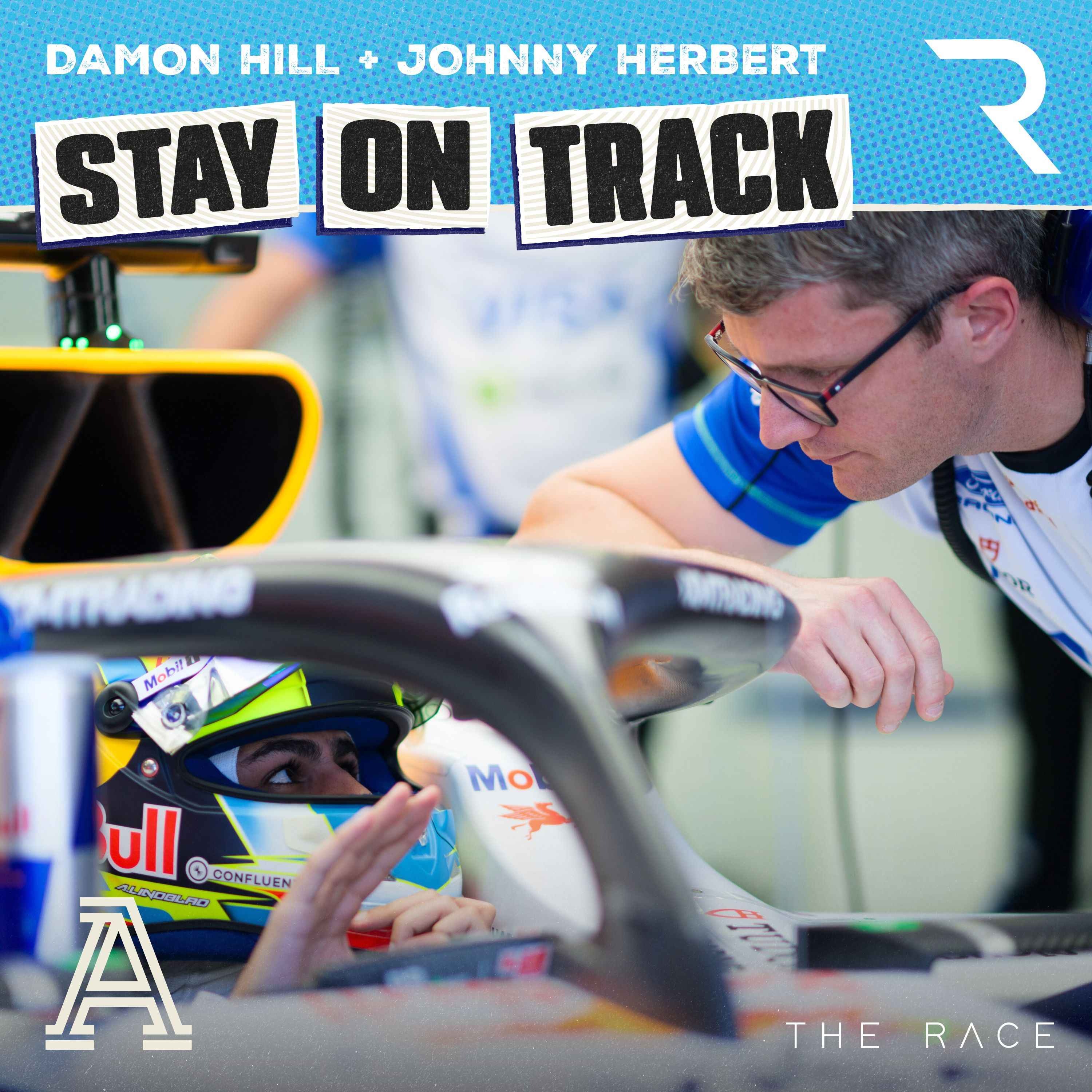
Grief, history, and race-weekend stories set the tone as the hosts welcome Pierre Hamlin and talk through Miami and beyond. The race engineer then gets to the heart of communicating with F1 drivers: when to speak, what to say, and how to build trust. From lap-time and gap updates to filtering technical detail, the discussion links calm radio tone, driver feedback, and structured debriefs to better performance—especially on tricky tracks like Monaco.
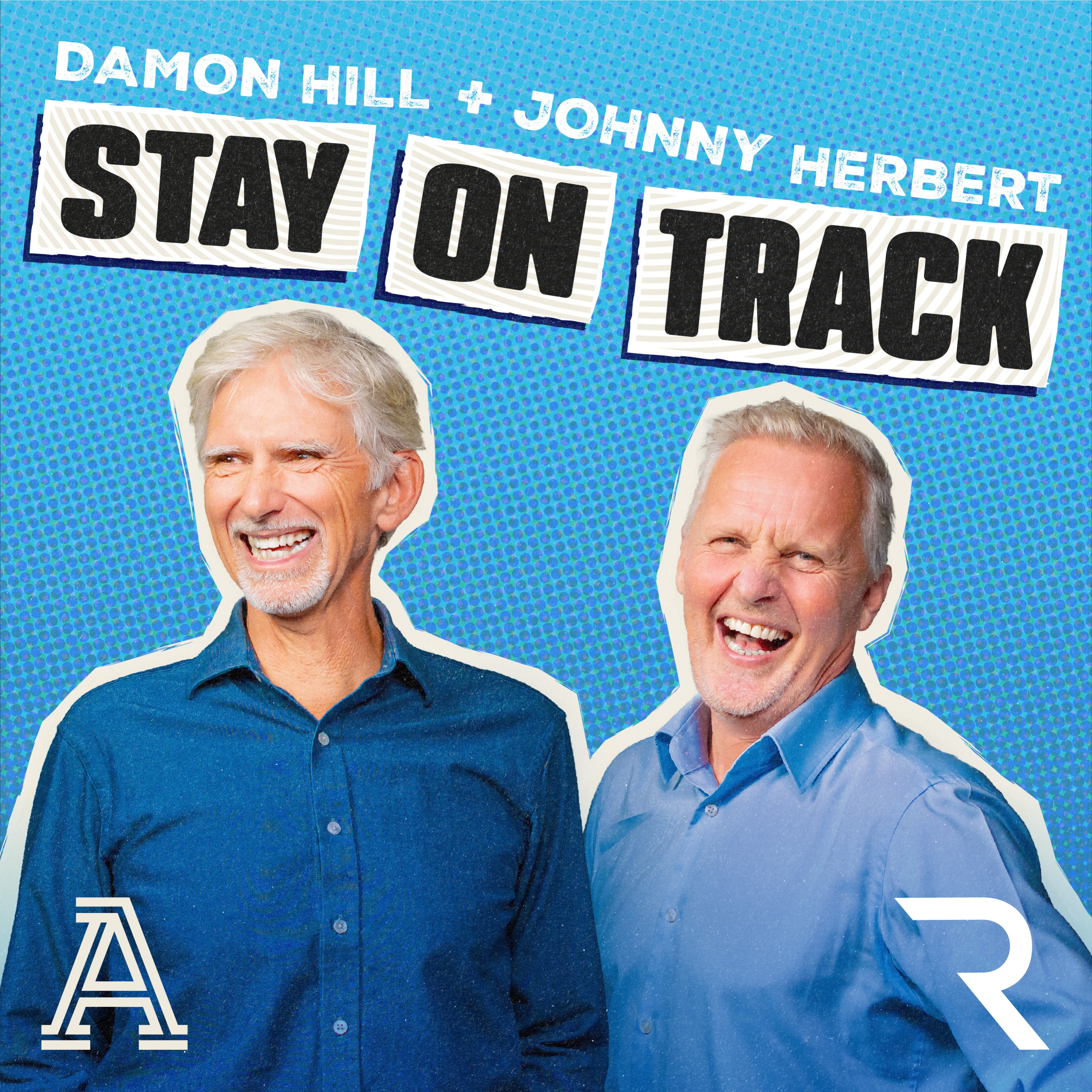
On the latest episode of Stay On Track, Damon Hill and Johnny Herbert go deep on the most important relationship in F1 - the one between a driver and his race engineer.
They're joined by special guest Pierre Hamelin, who listeners might recognise as Arvid Lindblad's race engineer at Racing Bulls. Pierre has developed a reputation as a man who nurtures rookie drivers, having previously engineered Alex Albon, Pierre Gasly, Carlos Sainz, Daniel Riccardo, Liam Lawson, Isack Hadjar and others. But how does he go about helping a young driver get the best out of himself and the car?
Pierre shares his secret tips and tricks, plus Johnny and Damon discuss the evolving F1 title race and why Canada is such an important grand prix for George Russell...
Get bonus F1 podcasts, extra content and ad-free listening, sign-up to The Race Members' Club on Patreon today.