The Echo Car Challenge was a contest where teams from universities were asked to create new ideas for car engines and power systems that use energy more efficiently. It was about thinking outside the box and coming up with new solutions.
In series hybrids, the gas engine only makes electricity for the electric motor. In parallel hybrids, both the gas engine and electric motor can work together to move the car.
A continuously variable transmission is a type of automatic transmission that can adjust to any gear ratio, making it smoother and often more fuel-efficient than regular automatic transmissions that have set gears.
Discrete gear ratios are fixed settings in a car's transmission that determine how fast the car can go at a given engine speed. They can help the car run more efficiently in some situations.
A BSFC map shows how efficiently an engine uses fuel to produce power. It helps engineers find the best way to make an engine run smoothly and use less fuel.
Capacitors are devices that can store electricity and release it very quickly. In race cars, they help give a quick boost of power when needed without relying on a big battery.
This term describes how much power a battery can give compared to how much energy it holds. A higher number means the battery can give a lot of power quickly, which is useful for things like racing.
Term
E85
E85 is a type of fuel made mostly from ethanol, which is a plant-based alcohol. It can help cars run better because it has a higher octane level than regular gas.
This type of engine squeezes the fuel and air mixture a lot, which helps it produce more power and be more efficient. It needs special fuel to work well without making noise that can damage the engine.
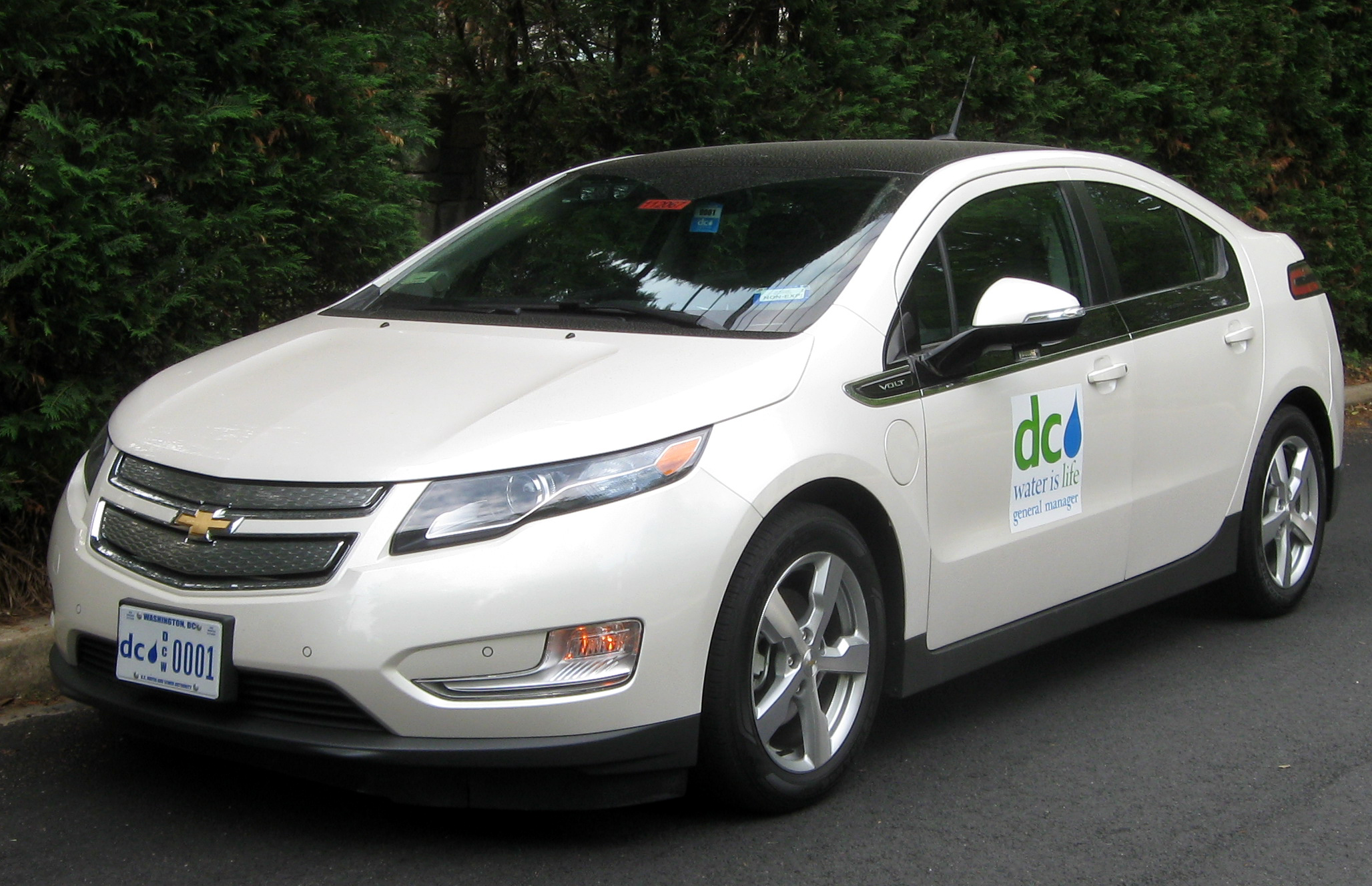
The Chevrolet Volt is a car that can run on electricity and gasoline. This means you can drive it using just electric power for short trips, and if you need to go further, the gasoline engine kicks in to help.
The Tesla Model S is a high-end electric car that can go long distances on a single charge. It's known for being fast and having a lot of technology features.
The Tesla Model 3 is a type of electric car that runs on batteries instead of gasoline. It's popular because it's cheaper than many other electric cars and can go a long distance on a single charge.
The Cadillac Escalade is a big, fancy SUV that has a lot of space inside and comes with lots of luxury features. People often buy it because it's seen as a status symbol and is very comfortable to drive.
A second life battery is a battery that has been used before, like in an electric car, and is now being used again for something else, such as storing energy from solar panels.
The Nissan Leaf is a popular electric car that runs on batteries instead of gasoline. It's known for being environmentally friendly and is often used for daily commuting.
Solar panels are special panels that catch sunlight and turn it into electricity. They help provide power for homes and buildings, especially when combined with batteries for storage.
The Ford Cortina is a small car that was made a long time ago and was very popular in Europe. It was known for being affordable and practical for everyday use.
The Tesla Model Y is an electric SUV, which means it's a bigger car than the Model 3 and can hold more people and stuff. It's becoming popular because many people like the idea of driving an electric car that also has more room.
LIVE
Welcome to The Inevitable, a podcast by Motortrend.
Hi there! Welcome to The Inevitable.
This is Motortrend's podcast, our podcast about the future of the car, the future of transportation.
You can see the E and the V in the name of The Inevitable.
And I think this episode, more than maybe any other in a long time, we really focus on that,
because we have a very smart guest today, Ed, don't we?
Yes. Yeah. We'll get to him in a second. Hello there. My name is Ed Lowe.
Hey, I'm Johnny.
This is Johnny. The Inevitable podcast is currently brought to you by Nobody.
We'd love a sponsor. Give me a shout if you think you want to come aboard.
Maybe we should hit Ryan up.
You might after this episode, because this dude we talked to is genius level.
Just let me know at Edward.loh.herst.com or slide into our DMs on Instagram.
Today's guest is the CEO of the American Battery Technology Company,
a gentleman by the name of Ryan Melsert.
I think we've had a lot of really smart people on this podcast.
This is episode, I think, 122.
It's top three.
He's top three. He's really top two.
Yeah, if not the smartest guy, as you will see, he makes me pretty certain
I'm going to make my kid take mechanical engineering school,
given the breadth of knowledge this guy has and the different companies he's worked at
and the different disciplines. It's crazy.
He's everything from building factories to...
Refineries?
Refineries, different energy systems.
With no experiences.
Yes, fantastic conversation.
Just super interesting guy here to tell you and make you a lot smarter
about the state of battery technology, critical minerals, rare earth minerals,
everything going on in this side of not just the automotive industry,
but the energy industry at large, inclusive of...
Geopolitics.
Yeah, we talk about politics. We talk about grid scale, electricity.
We talk about just other sources of energy.
Too much to talk about. We went way over time.
So without further ado, let's bring them on.
The CEO of American Battery Technology Company, Ryan Melsert.
Ryan Melsert, CEO of American Battery Technology Company.
Welcome.
Thank you for flying in day tripping during the first day of this insane...
4% of flights, especially from smaller markets like Reno are being curtailed.
Budget cuts causing air traffic to be an nightmare,
but apparently no issue sitting in it.
I would say budget cuts. I'd say there's nothing else.
I hope it's just 4% of them. I've seen bigger numbers.
Okay.
Yeah. Well, I was going to get worse, but my wife had to fly out this morning
and she was like, I don't know. It seems okay, but...
Well, we're glad you're here.
I was doing some research on you and you are far and away in 120-something episodes.
You are certainly the most qualified person we've ever had on to talk about batteries,
EV batteries, batteries in general.
I think energy, energy solutions given all of your fantastic work history.
So we're just going to dive right in and probably start at the beginning or as far as far back as we can go
and then sort of figure out where you're at now, what ABTC is doing.
Those are my favorite topics.
Great.
So let's do it.
Okay. So you've been at a ton of different companies.
You've interned at General Electric.
You've worked at Lockheed Martin.
Got a place called the Knowles Atomic Power Laboratory.
You've worked for the Department of Energy, Georgia Tech.
You helped a founding member of something, a little thing called the Tesla Gigafactory.
Which is in Reno.
Yes.
And now you're doing batteries.
But for you, where does your career start?
Where does this path you're on begin?
Yeah, I mean, even very, very early on, young kid, I always knew I would work within energy systems,
kind of a broader field.
Definitely within engineering, there's always deep interest in how energy moves.
So it was a thermodynamics is probably my favorite subject to study.
So early on, I just always heard of these very big corporations, these big names you hear of growing up.
GE and Rocket Island.
Yeah, and the town I grew up in, in upstate New York, near Schenectady,
is one of General Electric's headquarters.
So I've been working in General Electric more on very large commercial scale power generation systems,
doing big steam turbine design.
And like you mentioned, I worked with Lockheed Martin for a bit, was doing design of nuclear propulsion systems,
mostly for nuclear submarines.
And I worked for Bechtel for a bit, so huge EPC construction company helping a big, really large facilities.
And just these huge corporations are great, they're very visible.
But after working there a couple years, you just realize you are just kind of a cog in the machine.
So it's important work, but it's really hard to move the needle.
You're kind of following somebody else's vision.
So I went back to graduate school at Georgia Tech, did a lot of work with startups while I was in graduate school
with an incubator right on campus, and just saw how few people were really working within real core renewable energy systems,
especially from a fundamental thermodynamics base, and working your way up.
And after being there working with the startups, I ended up getting an MBA at Georgia Tech as well,
just because if you want to bring an idea to market, you have to understand the business case as well.
So doing kind of my graduate engineering degrees and the MBA at the same time and working at the incubator was just looking back.
That sounds like an impossible amount of work.
Didn't feel like work though, like that's what I wanted to be doing.
And looking back now, it's just hard to picture how somebody could try to start a tactical business without having a really strong foundation in engineering,
plus the business case, plus knowing how to build teams.
You can have blind spots like that.
What was your undergrad degree in?
Mechanical engineering.
Mechanical engineer.
A lot of mechanical engineers end up doing all this.
Yeah, cool stuff.
Move the world.
Give them a lever arm, they're going to move the world.
It's good for our base.
Mechanicals, you cover a little bit of a lot of the disciplines there.
Back to the atomic sub for a second, because I've always heard that when people say,
why do we have batteries?
I always heard that the Navy really loves batteries, like submarines love batteries.
Electric subs.
Is this something that you were working on?
They do, and actually there's diesel submarines and nuclear submarines.
The diesel ones need very large batteries, because the engines really only run when you're near the surface.
Right.
And then when they're submerged, it's entirely on battery power.
Nuclear subs are a little different.
You can still make electricity from the nuclear field when you're submerged,
but there's still batteries to buffer the energy.
Right.
But yes, they're huge, massive ones.
And obviously for submarines, the acoustics are extremely important.
Right.
So you can run it in full electric mode.
It's much quieter.
Yeah, yeah, than a diesel.
And diesel, even when a nuclear sub is submerged, it's in many ways louder than a diesel sub submerged,
because it's only on electric power.
You don't really turn a reactor off ever.
Real quick, just getting on the weeds for a second.
On an atomic sub, a nuclear sub, is the reactor boiling water to make steam?
So it's just like a power plant?
Exactly.
Steam ranking cycle is the type of heat engine.
So same thing.
Nuclear fission makes the heat.
Steam ranking converts it to shaft power.
You can directly power the propeller, or you can power a generator to connect electricity.
Sure.
Yep.
So you, sorry, where'd you do undergrad?
Georgia Tech.
Oh, undergrad.
Undergrad.
Penn State undergrad is Georgia Tech grad school.
Okay.
And the graduate, you had an MBA and a Master's Mechanical?
Master's Mechanical did part of a PhD Mechanical and then got out into the working world.
Okay.
Okay.
So then that was all after the general electric internship, Bechtel, or at the same time?
After those ones.
So I did kind of GE, Bechtel, Lockheed, Marin were undergrad and in between went to grad school.
Then started working much more again with the incubators, specifically renewable energy.
Those first three were more, you know, conventional energy and just, you know, really wanted to
bring new ideas to market more than work as part of just a huge corporation.
So that's how you got to, was it C2 biofuels?
That was during grad school.
And then right after is when I went to work for the Southern Research Institute.
So they were kind of a smaller renewable energy laboratory doing work.
And graduate school is interesting.
I was just going for the MS program really just about two years, but, you know, really
liked fundamental energy work, did a lot of work in undergrad and vehicle powertrain designs
at that time.
There weren't many electric vehicles on the road.
So that was in kind of four and five.
So just before it took off?
Yeah.
Some hybrids out, but not many.
So I was about to graduate and the U.S. Department of Energy put out this big notice that they
were going to host the competition.
Was this the DARPA challenge?
Similarly, that was for the self-driving.
This is more about efficient powertrains.
It was called the Echo Car Challenge.
Right, right, right, right.
So they said, you know, we want to sponsor a handful of universities in the country, a
multi-year program to fundamentally blank piece of paper.
Like, from idea in your head, how would you want a powertrain to look with no limitations
to it?
Spend a whole year working with sponsors, designing it, doing rigorous ground up modeling
and software in the loop, part of the loop systems, build small scale prototypes.
Then the end of the first year, they actually come and drop a vehicle off the lot at your
school and say, great, you said you would do this, now do it.
You pull the whole powertrain out of the existing vehicle, combine everything you want to build
it up and then do like a shakedown test in year two.
And then the third, you really refine it.
And year three, they bring you to an actual OEM proven ground.
So up to Milford and Detroit, a whole week testing the vehicle on the exact same test
for OEM vehicles, going through the skid pad and the water trust and the zero to 60 and
the braking.
So they announced this and I was about a half year away from graduating on my MS program.
I was like, oh, this would be really cool.
Like it's not theoretical.
You actually build something that's meaningful.
And they were trying at universities to apply for it.
So I went to some of my professors at Georgia Tech.
I'm like, you know, the school should apply for this.
It's really interesting.
They're like, yeah, it sounds good, but we got other stuff going on.
So I went to the Kemi department and same thing.
Like you guys should apply and they're like, ah, and went to the doubly department.
It's like, it's nice.
And then just nobody was applying.
So you had to get so many sign offs to be part of this because there's not really
dollars, but there's facilities.
The school has to say they'll provide and time and travel.
And they give course credit to some of the students.
They were getting close to the deadline and no one was going to apply to it.
So I went to our, our provosts of Georgia Tech and said, would you mind if I applied
for it?
I need to go for it.
So I wrote the application, a lot of the modeling.
It was, you had to put a design of your proposed power train in there, run simulations about
how it would perform, have a business case.
What was your proposed power train?
At the time it was for hybrid vehicles, there are different types of series and parallel
hybrids.
There are ways to actually combine them and more of a power split hybrid.
Some of the early Prius's did that, but they use more of a continuously variable
transmission.
There are ways to combine that, but also having discrete gear ratios in it.
So discrete gear ratios can have a much higher transmission efficiency, but the CVT mode,
you can essentially keep the engine right in the sweet spot of that BSFC map.
So combining the two had a lot of synergies to it.
And then people always focused a lot on the energy in a battery.
I wanted a very high power, low energy battery pack, really pushing and pulling quick and
it now turns off the line, but you don't need a huge amount of energy.
And like race cars nowadays where it's big capacitors and fast in, fast out.
Yeah, and even with the batteries, a lot of different chemistries, you can vary the power
to energy ratio.
So relatively small battery, high power, and then the combustion engine, I wanted a really
high biofuel waiting.
So again, very high octane fuel, high ethanol, E85, kind of it was one on the market at the
time.
Lower volume metric energy efficiency, but actually quite a bit higher thermal efficiency,
much higher percentage of Carnot with that high compression ratio engine.
So kind of combine all that into a design, applied, didn't hear for three months, and
then I was like two months away from graduating.
And I got the letter that we had won.
So they picked the 16 universities in the US and Canada.
We got this big formal letter and they go, okay, great, you committed to all this stuff
or three year competition.
So then the provost came back.
He's like, you said you would do this.
So I'm like, I guess I'm not graduating.
And that's when I decided to go into the PhD and into the MBA just because I kind of committed
to starting off a three year project.
And then the funniest part was they were having this big acceptance ceremony.
It was at DAE headquarters right in DC.
A lot of politicians were there and dignitaries.
And all of a sudden, every one of those ME, Kemi, W professors, they went to beforehand.
They all came back like, hey, can I be a part of this now?
Now that you already did the work in one and now I want to be a part of it.
That's awesome.
And this is, so this is the part, again, I checked out your LinkedIn.
This is the Georgia Tech DOE General Motors program.
Yeah.
So General Motors was the sponsor for all three years.
Okay.
And Department of Energy was one of the main sponsors and there were two dozen other smaller
ones.
All the tier one, two, three suppliers, the OEM industry.
So we got hundreds of thousands of dollars of components delivered to us.
We got to mix and match and actually build power trains up.
And you were how old?
Mid-twenties.
What were you doing mid-twenties?
Drugs.
No, that kind of podcast.
So, and then so how'd the project end up?
It was great.
I mean, for those you have, we had probably two dozen students that were kind of regular
in it and then a hundred kind of came in and out.
Got to give let them course credit, got to go to all these different events.
We went to the GM Desert Proving Grounds in Yuma at the end of the second year.
That one's your middle of nowhere, except you're on a U.S. military like artillery base.
And then the middle of it is the proving grounds.
Right.
So you're going around and there's military vehicles everywhere, but we had our cars all
shipped out, went through, again, a whole week of testing there.
And remember the first day, they're like, here's what to do with, you know, your car
breaks down, here's how to test it.
And then they're like, and here's your rattlesnake guide.
Yeah, yeah, yeah.
You're like, you're going to see snakes if you get bit, call this number.
Right, right, right.
We've had those briefings.
Yeah, I've been there.
Yeah, yeah.
Did you meet any cool auto execs during this program?
Anybody, like, eventually became the, I don't know, CEO, president or something like that?
I did.
Back then they were kind of mid-level.
Right.
And then that was, I guess that was 20 years ago now.
Right.
Yeah, right.
It's getting old.
Yeah, but they, yeah, they went up.
So one of the main contacts for GM at the time was Ken Hellfrich.
Okay.
And he became the CTO General Motors.
He just retired a year or two ago.
Okay.
And then many other ones who stayed at GM, some went to the other OEMs.
So it's been a great network to talk to with DOE.
And then obviously since that, at other companies, you know,
been able to win many other DOE awards and kind of other projects.
And then there's the same people at DOE HQ that I get to stay in contact with.
And that student cycle is three years, but it runs continuously,
kind of resets every three years with new cars, new sponsors, new teams.
It's been running since, I think the early nineties.
Oh, wow.
Cool.
And it changes names once more, but it still cycles through pretty much the same mission.
The main mission is training students, not with theoretical systems,
but the actual tools that OEM engineers use.
Remember at the end of it, they walked us through.
That was when the Chevy, the Volt was on the road,
but kind of going through a lot of redesigns.
They walked us into the design studio where the Chevy Volt was being designed.
And they just said, you know, everyone in the room who was part of
Echo car or other iterations beforehand, raise your hand.
And it was like two thirds of the GM engineers in the room had come up
through that type of competition.
So amazing recruiting tool, it seems.
Definitely.
It's good for weeding people out to like it's not easy,
especially if you're a student, you're not getting paid for it.
People are there because they really care.
You put your blood and sweat in and then it kind of weeds out other people.
It's genius move from the car company, too,
because they're getting all this research done with sort of low investment, right?
It was.
And then 2007 and eight was the middle of the financial crisis.
And GM was the main sponsor.
The other one was the DOE.
So automakers going through bankruptcy.
The federal government is dealing with a lot of those issues as well.
And there was a line at them on the budget and they had to say, you know,
Congress had to say, are we cutting this?
Are we keeping it?
So we did a fair amount of work talking to our members of Congress from
Georgia at the time, talking with the rest of the country saying,
here's why it's important.
Yeah.
You know, if you really want to start making the next generation of cars in
the U.S., there's all different types of investments to make,
but an investment in the next generation of engineers currently in school
is one of the best ones to make.
And then continuing to fund it both from the government side and the OEM side
all through that financial crisis.
So did you, are you aware of any of these research projects ever making it
into production?
Is any part of what you did in a car on the road right now?
I think some of it kind of maybe at a macro level,
but the main point of those, again, is training the students.
So I think it's people on our team went on to work for the OEMs and then
they implemented their designs.
Okay.
And like I said, this cycles on three years at a time.
Right.
So now at American Battery Technology about two years ago, got a call from
the organizers of the current version of the EcoCar competition.
And they said, hey, do you want to be a sponsor now?
Oh, nice.
So we at ABTC actually are now a sponsor of these competitions.
And they said, if you want to be a sponsor, some people donate hardware
or software or kind of what their company does.
And the student teams are all judged on, you know, acceleration, braking,
performance of the vehicles.
So I said, I want to start a new metric that all the teams are judged by.
More applicable for us is again, our first factory built is a battery recycling
plant.
And just the reason we decided that company is myself, most of the people
in ABTC, we spent years designing processes to make batteries.
The refined powders, the slurries, electrode cells, modules, packs.
And then when we see how other companies are thinking of recycling them,
there's just not a lot of critical thought in it.
Let's take a battery and just throw it in an oven and just burn it.
Let's throw it in a shredder and just mix everything together and then try
to separate it later.
Really non-strategic.
So at ABTC, we said, you know, we've all just spent years designing this
first battery gigafactor in the world, going through every single unit
operation of how we build these components together.
And along the time, we found a lot of techniques that don't work.
A lot of failure modes at every single stage.
So we said, why don't we intentionally exploit the failure modes we know of
in the packs and modules and cells, make the components fall apart from each
other, make them separate in an intentional fashion.
And then you're just mixing things together.
You actually separate them more strategically, much lower costs.
You make higher purity products.
So when I got asked to sponsor this new version of the competition, I said,
I wanted to be a design for recyclability event.
So students are designing their battery packs and their vehicles.
Even most OEM engineers I talked to, they're like, yeah, it would be great if
this could be recycled end of life.
Like, I hope someone can.
They're like, there are real specific designs that could be put in that make
something easier to recycle at the end of its life.
You know, don't just take a whole battery and fill it with epoxy at the end.
You know, don't use this unique element and mix it with other non-unique elements.
So they agreed.
So we developed this event.
We're now with students are designing their battery packs and actually building them.
We say, write me your recommended SOP for how you think it could best be
recycled end of life.
Standard operating procedure.
Yes.
What would you separate?
What would you do?
How would you handle it?
And now they're judged on that.
So in theory now as this next generation goes in the field to be OEM engineers,
there's a little thought in their head about when I designed this battery,
someone's after recycle end of life.
And eventually as it comes back to us,
hopefully it's a little more strategic at that point.
That's amazing.
Think about the end at the beginning, basically.
Yeah.
Like plan for that at the outset.
DFR.
What's that?
Design for recyclability.
Design for recyclability.
Got it.
Okay.
All right.
You said a lot.
That was incredible.
And it's great because we're going to get to ABTC.
But in there, I mean, you've done solar driven chemical heat engine.
You did something grid scale energy storage,
all of this leading up to this big thing I want to talk about before we get to ABTC,
which is you're one of the founding engineers,
founders of the Tesla Gigafactory setup.
You want to talk about, can you talk about that a little bit?
How did that happen?
Yeah.
So after grad school was working at that renewable engine,
it was some of those projects you just mentioned.
And it was, that was kind of real small lab scale build pilots,
pretty big systems.
And it was almost like, you know, eat what you kill type of program.
Or like, if you want to build this design,
go find your own business plan, go find your own funding.
So there at SRI ended up designing a lot of techniques for new ways to make biofuels
to displace gasoline and diesel fuel,
new ways to make electricity from low temp geothermal energy,
a lot of work in hydrogen combustion combination for large scale power plants.
But one of them was a way to design sorbents to recover lithium from non-conventional resources.
So it wasn't a lot of work on how to recover base lithium,
how to purify and to convert into final product.
And somehow it got the attention of the Tesla team.
And back in 2014, you know, the time Tesla was trying to scale up the Model S
at the time, trying to buy very large amounts of batteries.
And every time they would go to a battery company,
they would try to put this order in,
and they would kind of get laughed out of the room.
They'd say, there's not that many batteries in the world made total.
Like there's, there aren't enough factories.
So the whole idea of building the Tesla Gigafactory in Reno was,
they said, let's just take every battery factor in the world and add up the capacity.
And it ended up being about 35 gigawatt hours per year of batteries,
is what the whole world can make.
So they said, let's double it.
Let's design one building that can make 35.
So the Reno Gigafactory in its first implementation
was as big as every battery factor in the world combined.
That was all the thought that went into it.
And you got involved.
Because they said, let's build it.
And then they said, we don't know how to build a factory.
That team, within Tesla time, they were vehicle engineers.
Like we don't know how to build a factory.
We don't know how to do.
But you knew how to build a factory?
Well, I'd worked at Bechtel for a while.
Again, apart the larger companies and the EPC side.
And it worked.
And also on the energy systems design.
So some of the nice parts is they intentionally handicap
themselves.
So one of the biggest factories in the world designed to be
about 15 million square feet.
And they said, we're intentionally not going
to run a natural gas pipeline to the building.
Because they didn't want it to be reliant on fossil fuel.
OK.
So as an engineer, it would always be a crutch to say, oh,
let's just use natural gas for heat, for power.
So it wasn't an option there.
So the only energy input was the grid tie electricity.
And then the idea was of all onsite generation as well.
Different types of rooftop PV, different types of battery
backup.
But the best way to be energy efficient.
It's photovoltaic.
I'm just trying to translate for the audience.
So this guy's moving 1,000 miles away, which I love.
This is great.
Yeah.
So wait, so who called you?
Like who called you to, who recruited you to join this project?
It was a generic recruiter.
Really?
But I think the point was the company had never built a factory.
So when the recruiter called, they're like, like, I got told to
find someone who can build the biggest factory in the world
and to do it without using energy.
We don't really know what we're looking for.
But does this sound interesting to you?
And you're like, hell, yeah.
I asked a few dozen follow-ups and they're like, we just don't know.
Right.
So then it flying me out, I interviewed down
at the headquarters in Palo Alto and then went up
to the site in Reno.
And it was a patch of dirt with one trailer.
And they said, this is the site.
And there were a handful of people there.
So they were a group of maybe 15 of us that came out at the beginning.
And all of our initial discussions were like, you know,
what do you actually want us to do?
Like we all just joined this company.
We all just moved to Reno know what had been there before.
And there's a little bit of recency bias.
People think Tesla's always been a successful company.
At that time, like if you Google Tesla, the first thing to come up
would be a countdown clock.
All these people said this many days until Tesla goes bankrupt.
Oh, I remember very well.
I don't know if you know, but we gave the Model S car the year.
And I remember in the room, when we did that,
we had some very seasoned automotive veterans that we bring in
as like third-party judges to kind of like bolster our credibility.
And they're just sitting around like this.
I mean, it's a great car, but like...
Who's going to buy it?
No, no, no.
Like there's no way these numbers make sense.
The business plan, like I remember we kept saying,
hey, it's car of the year, not business plan of the year.
And so, you know, we, you know...
I thought they were going to make it because it was such a good product.
But there's a lot of...
Everyone thought they were going to...
We were against Tesla before it was popular.
Yes.
In fact, I've told this story before.
But like we vote, you know, it was the first anyone can remember
unanimous vote for car of the year.
And then I, you know, so we'd made the vote
and we're like, wow, we picked an EV, this is crazy.
And I said, by the way, in the room that they just voted,
who has said either personally or professionally
that Tesla's vaporware, there's 11 judges,
10 hands went up, his didn't.
And then he says, eh, my mom said,
you've got nothing nice to say, don't say anything at all.
So we were really doubting, you know,
Peters or whatever, doubting Thomas'
which is a very, very expression.
So yeah, I remember that.
But that's why you guys have instruments and you collect data
and you actually measure things.
It's not about feelings.
No, it's not about feelings.
So you get, so you end up saying, yeah, I'm on board.
Let's do it.
I mean, as an engineer, you must love like that.
Ooh, you want to build a factory without,
like that's kind of the challenge, right?
Like give me some constraints.
Right, the factoring then you enable, you know,
one of the most advanced vehicles to scale up.
Okay.
Right.
And so what were the challenges of building
the largest battery factory in the history of the world?
Lack of definition can be a pro and a con.
I think it was mostly a positive.
And at that time they were just extremely risk tolerant.
So it was, if you wanted to build a part of the factory,
everything was, if it's been done that way in the past,
the answer is going to be no,
unless you can give me a really good reason.
Yeah.
And right before they actually did this,
when they decided to build the first Gigafactory,
Tesla went out and hired a big name EPC firm.
EPC, EPCs.
Engineering procurement construction,
big construction firm.
So they essentially outsourced it.
And they said, you come in,
build the biggest factory in the world,
double global capacity.
We're hiring you.
And they hired them.
They came up with designs and they came back
and Tesla leadership absolutely hated it.
They said it's generic, it's boring, it's not advanced.
And because of that they fired the EPC company
and that's when they brought this team on internal.
That's wild.
So EPC, you actually get licensed as a construction company.
We had Tesla actually applied,
we were in Nevada licensed construction company,
our internal team, as we went to build this up.
So when we started, like here's the drawing set
this external firm gave.
And it was functional, it would have worked,
but it was non-creative, kind of non-innovative,
just a standard building.
So whenever you're going to review meetings,
they just don't say, this is industry standard
because you immediately get rejected.
You have to say, this is a ground up approach,
this is why I do it.
This is first principle thinking.
But was this just Elon doing the rejecting
or you had a whole team of Tesla people
that also were trained in rejecting optimal normal?
No, the leadership, I mean,
a lot going on those days,
Elon wasn't super involved in that factory early on.
JB was there a couple of days a week
for the first two years.
He was kind of the main person we rolled up to.
And then after we got into commissioning,
Elon was there a lot,
but during the construction phase, not too much.
But it was the same mindset of,
we're not going to do this
because it's always been done that way.
So we'd have these review meetings
and it was literally a trailer in the desert.
I just remember like we would be presenting,
JB's in there, we're kind of giving these talks
and like it's one trailer.
So there's like a bathroom in the room
and like someone's in the bathroom.
Well, there's noise while you're trying to present.
So is this your first brush
with first principles thinking
or is this something you had like utilized before?
No, definitely not first brush,
but it was the first time a large corporation,
I think I was that actually embraced it.
Because it is risky because
if you want something safe,
just do what someone else has already done.
It's kind of low risk, low reward.
Can you explain first,
for those who don't know what first principles is,
it's a big thing for the Tesla fans,
the Tesla bros who follow like Elon,
like their Lord and Savior.
They're called stands.
But what is from in your,
with your engineering mind,
how do you define first principles?
It's having a strong foundation.
It's starting off with a law of physics,
a law of thermodynamics,
something that can't be argued against.
That is true because you can prove it to be true.
So you're working with axioms.
And then you build layers on top of it.
So if you want to build an engineering model,
you can say, well, I know first law of thermodynamics
says this, second law says this,
and you only take one step at a time
and always refer back to something that concrete.
You don't do, well,
I feel like it could be this
or it's been done that way before,
so I'm going to do it.
That's how you kind of get trapped in complacency.
So some of the early things we were designing
were every part of the factory.
It's all different types of material processing,
all the utilities.
It was a 300 megawatt system.
We're designing to how to cool the plant,
how to heat different operations,
all different types of water treatment as well.
One of my first projects was designing
different types of solvents that are used
to essentially disperse powders
before they're coated onto electrodes.
So you get this homogenous mixture.
And then the solvents evaporated out.
It has a lot of contaminants.
It degrades.
In terms of ever the battery factor in the world,
you would just take that solvent you evaporate out,
you condense it,
and you truck it off to some refinery somewhere.
It was some initial discussions
and everyone was like,
this is the biggest factor in the world.
You're going to have dozens of trucks a day.
It doesn't make sense.
They would say,
we'll come build a refinery at your plant instead.
And Tesla leadership hated that.
They're like,
we're not having someone else come build a refinery at our factory.
We're going to build our own refinery.
So my first project was designing and building a refinery on site
to treat and regenerate a lot of the solvent that we used
and then turn it back in a closed loop
and reuse it right back again on site.
So again, that was building a lot of chemical processing models,
a lot of thermodynamics about how we actually,
it was a vacuum distillation system
had recovered different fractions of it
and then actually designing the full system,
you know, bidding out who's going to build it for us
and it being a company in South Korea
that kind of came up with the construction design.
So my third month in presenting this design
to the whole Nevada team, which is 15 people
and JB Zane, we go through the whole thing.
And at the end, he says,
he says, you can't talk about this to anybody yet.
He says, we have to patent this.
So we came to this whole in-house design.
So I talked to the Tesla IP lawyers,
we read a patent protection, we filed for it.
And then half a year later, we got approved for it.
And I remember the lawyers came back and they told me,
they said, this is the first patent Tesla's ever gotten
for battery manufacturing.
You know, Ed, this guy's a lot smarter than we are.
Yes, I told him that before we started.
Yeah, yeah.
I'm just like, what?
Yes, this is insane.
Plus, I mean, it's not theoretical.
Hang on, though.
You're a good engineer, but refinery?
That seems like a crazy thing.
Go invent a new refining process at scale.
Look, my takeaway is every kid needs to be a mechanical engineer.
You can do stuff, you can do anything.
And work for big companies and work for small ones,
maybe get your business degree.
But right after they were saying the South Korean companies
who won the bid to actually build it, it was, you know,
three 70 foot tall systems that we decided.
So they said, OK, these guys are going to build it.
And they said, go check it out and make sure it meets your spec.
So I'm like, OK, so I bought a flight to South Korea
and was going down and inspecting this massive system
on the other side of the world.
I'd never been to Korea before.
And signing off, they go, OK, it meets all the specs,
now ship it to Rena.
Oh, wow.
And there were all these different aesthetic designs
for the factory, too.
The way it's laid out, if you look at the actual act as the building,
it's exactly points to magnetic north of the earth.
There's a lot of different requirements we had in there.
And one of them was when you drive up to the building,
the utility systems are mostly behind it,
the other side of the road.
And they said, you know, leadership doesn't want to see
the utility systems from the front of the building.
So nothing can be taller than the building.
And the building was, you know, 71 feet tall.
So the tower, the system was supposed to be 130 feet tall
to actually hit the separation efficiency we needed.
So I had to order two of them and put them in series.
Kind of two 70 foot tall systems,
they would be below the height of the building
just so you wouldn't be able to see it from the front.
I've been to the factory.
I went there for when Model 3 came out.
And from the front, you couldn't see anything.
Yeah, I remember just the scale of it.
I remember we were supposed to walk,
we were able to walk through the building,
but we couldn't talk about anything we saw
because it wasn't done yet.
This is totally wild.
I mean, we could talk about Gigafactory all day long,
but I want to talk about what you're doing now.
Yeah, we're shooting a battery.
So what was your, now, just on Gigafactory,
Tesla built the battery production system
though with a partner, is it Panasonic?
Right.
Yeah, so it wasn't fully done by Tesla,
the production of the batteries inside this building.
Right, and a lot of people think it was a joint venture
between them, but it wasn't.
Actually, Tesla built and owned the whole site
and then leased a portion of the building to Panasonic.
So as we were more the landlord,
so again, we built all the utility systems,
all the building, all the facilities,
they rented space, they had the southern portion
of the building.
So essentially they installed their cell manufacturing
equipment there, and then as it went through a door
to the north, Tesla purchased it.
And then the north part of the building Tesla had,
then they built into modules and packs
and our drive motors and enclosures,
the whole system there.
So the cylindrical cells were produced
on a Panasonic line in the southern end of this building
from raw material coming in to cylindrical cells
that would then go this other direction
and become modules and packs that ended up in the cars.
Exactly, and that type of battery was the first time
Panasonic had ever built it either.
So they were used to building smaller ones.
So those that were 18mm, diameter 65 tall,
we decided to build a 21x70 in that factory.
Little lower cost, little higher economy of scale,
but they'd never done it before.
They had some prototype lines.
And again, the first year or two there, they said,
you know, Panasonic were building us off of their baselines,
but we're looking for ways to improve it.
Different ways to use first principles thinking
to improve upon these legacy lines.
So they would say go, well, they said go to Osaka
and go, you know, spend a week or two
in these Panasonic factories.
So it's been a lot of time in Japan the first year or two
touring their different lines,
not just seeing how they were doing it,
but, you know, why do you do it that way?
What could be done differently?
And then trying to implement them in the Reno factory.
Just wow.
And at the time, these were still lithium ion batteries.
It didn't go to LFP at that point.
Yeah, lithium ion is a pretty broad category.
They're all in lithium ion family.
The form factor changed.
And the chemistry within a battery,
I think changes a lot more than people understand.
There's many, many incremental changes.
Yeah, I should understand what I'm saying.
What does it say? There's broad families.
Yeah, yeah.
And then the chemistry is dynamic over time.
Okay.
And what were you doing?
So when you left Tazui, what, three years?
Three years or four years?
About four.
About four years.
What were you doing from the beginning to the end?
Like how did that change?
What did it describe so far?
That was really the first two years.
That was early part of factory design.
Everything ramped in the first line running.
Remember, it was April of 2017.
It was the first time we made a battery cell
that actually passed quality tests.
So just over two years.
And that's when it got more into the high volume manufacturing side.
And the story I told about how earlier when you,
if you could build an EV,
the limiting factor is how many batteries you could buy.
That kind of held back your EV production.
Right.
After that factory got ramped up,
the amount of batteries that could make was extremely fast.
Remember, the number we always said was each line
can make about four batteries per second.
And there were, you know, 17 lines towards the end.
So huge amounts of batteries being spit out.
But then right after that,
globally there wasn't the supply chain.
Like there were enough companies who could make
the raw metals, the refined metals, the active materials
that go into a battery.
So that became the limiting factor.
Interesting.
So my third year, I went to leadership
and kind of talk through that problem and said,
same thing, we can get our suppliers to ramp up
or we can start designing some of these raw materials in-house.
So they let me build my own team.
I called the battery material processing group.
So build my own chemistry laboratory,
hired a lot of PhD material scientists and chemies,
and we designed new ways to recover elements
from all different types of material to then purify
to make into new types of active cathode material,
different types of anode material,
and the best ways to assemble those up into batteries.
So my third and fourth year there was really in the R&D side
doing that material processing type work.
So this, and this is what, 2015, 2016?
2017 at this point.
Yeah, 2017 is kind of when the factory got up
and then 2018 and 2019 was the R&D side.
When did JV start Redwood?
Is it around that time?
Yeah, he started well before that.
Okay.
Redwood is another, is a battery recycling company.
Yeah, more than interesting industrial story.
Well, that's the thing.
He started in parallel while working at Tesla.
And I think so that there wasn't a conflict,
they didn't recycle batteries on purpose.
I see.
They started off only recycling consumed electronics.
Right.
You know, kind of e-scraps, circuit boards.
And then it wasn't until after he eventually left Tesla,
then they kind of added batteries into it.
Okay.
So what was the exit from Tesla like, or for what reason?
I think it just got really mature.
Like that environment I mentioned of 15 of you in a trailer,
really risk tolerant, really exciting times.
We always joke the factory was like a casino,
like Casino's and Reno.
But the factory, again, per the rules,
there were no windows anywhere.
And there were no skylights.
And they really weren't clocks anywhere.
So just like a casino, we'd all be there all of a sudden,
it's 1am and we're still working.
Like you can't tell what time of day it is.
We don't know what time it is.
Why no windows?
Just a design aesthetic?
Yeah.
He's planning for optimists as ultimate arrival in the factory.
Right.
So just that environment really changed.
So you were saying a little bit personal,
a workaholic kind of like you were getting a little...
It's really fun work, I mean, but that's what it was like early on.
And then later on, I mean, I think I saw there were 13,000 people
in that factory.
And all, early on, the decisions were all made by the engineers.
And later on, they were kind of all made by accountants.
What's the kind of incremental improvement?
So it was a really different type of environment then.
So we enjoyed so much that S-curve of growth for a startup.
A lot of the people I had hired there and I said,
let's do this again.
So let's start from the beginning at the bottom of that S-curve
with what we think is a void in the market,
which is that factory made huge amounts of waste
and not just batteries at the end of line
that failed some type of quality test,
but there were dozens of steps
and everyone has at least some yield loss to it.
So it's some are powder, some are slurry,
some are metal cutting, some are partially built modules,
all these different types of
intermediately made material
and other recyclers, a lot of time processing.
No one had ever seen a 2170 cell.
No one had ever seen the Tesla-style module before.
We said, we just spent years designing these.
We're in the best position to do the reverse of that.
And that's when you started ABTC?
Yeah, that was end of 2019.
And right away we won a couple of pretty big awards
and I just brought more and more of my former team over
and now we're almost 200 people
and well over half are people I brought over from the Gigafactory.
Is Tesla happy about that
or are they annoyed that you're taking folks?
Do you have a good relationship with Tesla?
We do.
I mean, again, we're right next door to them.
It's still a good relationship.
I think the way people work there
just kind of leads towards burnout.
So it's a very high turnover
just because either people go in
and can't really cut it and leave early
or people go in and just work extremely hard
and a few years later move on.
So they're just used to turnover.
All right, enough with Tesla.
Teach us about battery recycling.
Right, so you founded...
Well, yeah, you did ABTC.
You're the founder?
It was already there, but kind of we pivoted when I joined.
Okay.
And you guys...
Just for us laypeople,
just in the simplest way possible,
what problem are you solving?
Yeah, it's kind of what I explained about
all different types of waste made in making batteries
and end-of-life vehicles that come back from the field.
There just wasn't anyone in North America
that could receive those.
So when I was at Gigafactory,
they had me go to a couple perspective recycling plants
and said, we got off of this material.
Can these guys take it?
And you go and look at the plant,
and most of them were just general metal recyclers.
They used recycling scrap.
And to them, a battery is just a black box.
They didn't really know what's inside it or how it works.
So they were just doing really unsafe things.
Unsafe and inefficient like it.
The modules Tesla uses there,
they're 1.88 meters long, they're 90 kilograms.
Kind of hard to handle.
Sometimes it was like, hey, we can process these, watch this.
And they just took two forklifts with the forks out
and pinched it from either side
and then twisted the forks opposite directions.
And the thousands of cells are shot out in the air everywhere.
And they said, look how quickly we disassembled that module.
Yeah, you disassembled it.
And that's bad because...
Well, very unsafe, very hard to then recover the cells
and not scalable.
So there was a much more strategic way to do it.
So again, that was end of 2019.
We started, had this really systematic method about how
while batteries are still fully electrically charged,
while they're still in pack and module form,
ways to handle them then selectively break them down.
Not just burn or shred everything,
but separate out pack material from module material
from cell casing from sub cell material.
Get all different types of byproducts
and then your main battery grade metals
you can sell back into the field.
So right when we were starting,
huge global chemical company BSF
was hosting a global competition.
They actually make some of the cathode material
that goes into batteries and they said,
we see there's this gap.
We want to find out who can design a battery recycling system.
Kind of more crowdsourcing.
So if anyone knows an idea applied to this competition,
if you win, we'll partner with you and help you scale up.
This is like your eco car competition all over again.
Kind of.
Private company, but I ended up applying for that.
They said they received about 100 applications
that they received, all different types of designs
of how to recycle batteries.
And they end up choosing us as the only winner
of that competition.
So we want it within weeks, you know, starting the company.
And that was, they gave us laboratory space.
They flew and went out to Germany to their headquarters
pretty quickly, talked to their leadership
about how they wanted to scale up.
And the biggest thing is their factories
are the biggest customers of recycling plants.
Recycling plants make the metals at high purity
to then go into plants like theirs.
So they said, we want to enable you to scale up
so you can start making low cost, high efficiency metals for us.
So we've now worked with them for many years.
And they had initially said they were going to build
their own big commercial scale battery recycling plant.
They went and bought land, they put out press releases,
they had this whole story they were doing.
We started working with them for a couple years
and all of a sudden they said, you know,
we don't want to do this ourselves anymore.
So they actually publicly canceled plans
to build a battery recycling facility in North America
and instead they signed a strategic partnership agreement with us.
So they essentially designated us
as their battery recycler for North America.
So we receive a lot of waste from the field.
We make these refined metals.
We've sent huge amounts to them
to actually make in a new cathode material.
Made a lot of new cells from them
and have had those evaluated by Department of Energy,
by big OEMs about how we can close the loop domestically.
This is BAS?
Yes.
Okay.
This is incredible.
Because you mentioned DOE
and I do want to talk about this portion
because I think you have a lot to say
on a lot of the misconceptions around batteries.
But tell me about this DOE Critical Materials Institute.
Is this also something, is you working on this,
you work with these guys in conjunction with ABTC
or at the same time?
I do, yes.
So the CMI is out of Ames, Iowa at Ames Lab
but there's initiative, the Critical Mineral Initiative
where essentially they're trying to tie different
critical mineral development techniques
from across the country together.
So private companies, research groups at universities,
other DOE laboratories.
This is the central location where people come to share ideas
and help to scale up new designs,
how to recover critical minerals and rare earths
and how to go through lab-scale design
and piloting and commercialization.
So we worked with them for a long time.
A couple years ago they asked me to join their board
and kind of help to coordinate how we scale up.
And now the past year, year and a half is even more public
about the need we have to do this domestically.
And we're saying it's critical materials
because this is what we're talking about,
fundamental US supply chain for these materials
that go into everything.
Our electronics, our batteries, et cetera.
This is like, China's got it all.
We're behind the eight ball here.
Is this accurate?
Yes.
And again, sometimes people confuse they think,
it means we don't have the minerals.
What China actually has is the processing facilities.
If I could, there's enough lithium in America
for every EV that could ever be made
if you had a way to get it out of the ground.
And for many critical minerals.
So a lot of the rarest that go in for magnets
and semiconductors, same thing.
There's all different types of deposits throughout the world.
But it's the processing techniques
and how to scale them.
That is really concentrated within China right now.
And we walked away from it.
We trained all those guys apparently.
It was A123.
We had the know-how and then we kind of,
whatever reason went to China.
It's not like a 30, 40 year problem, right?
Critical minerals, even battery techniques
back in the 1960s.
Like the mine battery was invented.
The cathode material.
Well, ExxonMobile Research Lab
actually invented a lot of the cathode technology.
That was where Dr. Stan Whittingham was.
He just won the Nobel Prize a couple years ago
for inventing that.
So it was in the US and then the battery itself
really started getting scaled up in the early 90s.
Okay.
So we haven't even talked about,
we've talked a lot about the recycling,
but the other part of ABTC is this lithium,
the tonnip of flats, right?
Can you talk about that?
Yeah, definitely.
So recycling is really important.
So essentially, if the amount of batteries
in the market was fixed,
they would go live their life, they would come back,
they'd be recycled,
recover the elements, close loop, it would all be fine.
But the amount of batteries in the market
is growing extremely quickly.
So recycling alone isn't enough
to really solve that problem.
So we always say you have to close the loop,
but you've got to fill that loop the first time too.
So because the industry needs both,
many years ago we scouted,
throughout a lot of the US,
all these different types of resources
that contain the minerals needed to make a battery.
And there's conventional resources.
So for lithium, about half in the world
is mined from West Australia
and these big hard rocks, these aluminum silicates,
and then they're refined in China.
Another half is really dissolved
in these aquifers in South America
and then refined in China into final product.
In the US, we don't have a lot
of those hard rock materials or those brines.
We salt and sea is the brine though, right?
So geothermal is a bit different.
The ones in South America are mostly low temperature,
very high temperature brine and salt and sea.
But just in general,
you can't really just take existing techniques
and apply them because you don't really have the same resources.
Got it.
So you've got to look elsewhere.
So yes, geothermal brines is one place to look.
What we found is there's a sedimentary material,
like a sand in a lot of Nevada
that holds a lot of lithium in it.
It tends to be lower starting lithium concentration,
but it's held in a very different type of lattice structure
than a hard rock material.
So a lot of people discounted it
because if you just look superficially,
you're like, hey, starting concentration is lower.
We're not going to use it.
But for the hard rocks, you have to use a huge amount of energy
and acid to really liberate the lithium from it.
When we looked at these clay stones,
we found a way to essentially liberate the lithium from the sand
through more of a solid state mechanism
that can be done at very low cost.
And again, most of the hard rock, you mine it somewhere
and then you ship that rock to another continent,
to China, to be refined.
We said, we're going to access the lithium in this clay stone,
and we're going to build a refiner right on top of it, too.
So you don't have to ship it anywhere.
This is time up for flats.
Yeah, this is central Nevada right in between Reno and Vegas.
So we spent a couple of years doing a lot of exploration,
a lot of drill programs about what's really there.
We're DOE, Department of Energy.
We work really closely.
We said, hey, look, we have this idea of much lower cost
application to recover it from this unconventional resource.
They had a program looking for that funding.
We applied for, ended up winning back in early 2021
to build a demonstration facility.
So we said, we did laboratory skill work.
Now we want to do multiple tons per day.
We want to extract from this mine,
put through this real big pilot plant
and go through every single step
and make this lithium hydroxide product at the end.
And we ended up winning that grant,
about $2.5 million to go and build that.
And we finished that two years ago.
So we've now had this big pilot plant running,
taking our actual material, going through the steps,
making the product.
We've had over 30 automakers and battery companies
come to this pilot plant.
We're sending this battery grade product to all of them
for evaluation.
So really showing how this can scale up within the U.S.
And right now we make close to zero lithium products in the U.S.
So it goes from zero to, you know, substantial amount
just for this one facility.
And in terms of like, I don't know how you want to say,
in kilowatt hours or vehicles,
how much lithium in this flat is there?
More than the country needs.
Right.
So there's a huge amount we published.
It's over 21 million tons of lithium
on our hydroxide basis that's in there.
Last year, the world used about one and a half.
Right.
Are there environmental concerns to the method
of pulling this out of the...
Dramatically lower.
Because again, we're not using huge amounts of acid,
like usually do.
We don't make all the types of mining waste other projects do.
Is there big water usage?
No.
Much lower.
And you're not putting them on like tankers there.
Cargo ships burning bunker oil to get to China to burn coal.
Exactly.
Because the refiner is right on top of it.
Right.
So that clay stone, the sedimentary material right on site
is refined to a better grade product.
We sell it to domestic companies.
Right.
And you don't have to move that material very far.
So we've gone through the scale up
through different types of permitting efforts,
different types of technical studies
over the past couple years.
We've hired now a big EPC, big construction firm
to come in and help to build that facility.
You're not going to build it yourself?
It's the first principles and do something with windows this time?
We actually kind of...
The EPC we hired is called Black and Veatch.
We interviewed a lot of EPCs early on.
And they said, we don't follow any rules.
And we kind of warned them.
We're like, this is not going to be a...
We throw this over the fence kind of thing.
We're not building a warehouse.
We're still going to own the design.
So we're still intimately involved.
But this is a $2 billion project to build out this scale refinery.
Wow.
And if you're playing along at home,
so if you're listening and you're like,
what is this guy talking about?
The extraction of this lithium, as he mentioned,
will then go to battery makers
that a lot of car companies are helping set up in the U.S.
so that they can build these batteries
and then put them in the cars.
Yeah, Georgia anymore for you.
Yeah.
But because there are now all of these rules
regarding percentage of U.S. manufacturing
all the way into the battery
that helps these cars be sold in this country
without a massive tariff on them, right?
So would it be like for GM,
you would be selling the lithium to SK
or I think that's one of their partners
to build at their factory in Detroit
and it would eventually end up in an Escalade or a Hummer?
Is that accurate?
Yeah, most lithium goes into the cathode material
they're manufacturing.
So the immediate cost would be someone like a BSF.
Okay.
Or LG Cam or Posco or Echo Pro.
Okay.
They make the active cathode
and then that's sold to a battery manufacturer
like a Panasonic or an SK
and then the batteries are sold to a GM or Tesla.
Okay, and then that ends up on the window sticker
in the parts of your domestic part production per vehicle.
And right now, if an OEM wants to buy lithium
from a domestic source, they just don't have any options.
Right.
It's not that they don't want to, they just can't.
Right, right, right.
So that's lithium, which is not a rare earth.
It's a critical mineral, but not a rare earth.
And could you define rare earth
because I think a lot of people don't understand
it's a column on the periodic table,
not that it's rare.
It's just like, it's just the name of these elements.
Yeah, it's, there are two rows on the periodic table.
So, I mean, they are a bit rare.
That's why they're called rare earths,
but the headline is critical minerals.
There's a couple of different definitions,
but there's kind of mid 30s,
number of elements that the U.S. calls critical,
just that there is a shortage of supply
that we have a big need for,
and that we don't make a lot of domestically.
And then the subcategory, some of them are rare earths,
which are mostly used for magnets and semiconductors.
And then there's battery minerals in there as well.
So lithium, nickel, cobalt, manganese, copper,
those are all critical minerals.
So rare earth isn't used in battery,
rare earth would be used in motors.
Yeah, drive motors, power electronics,
because they are used in EVs,
just not the battery portion.
No, I meant not in the batteries.
Right.
Yeah.
The rest of the powertrain though.
Yeah.
And then one of the biggest misconceptions you hear,
because we hear all the time,
oh, it's like these are bad,
EVs are bad for the environment.
Are EVs bad for the environment?
It's a pretty blanket statement,
but I would say no.
And there's the operation side,
and there's the manufacturing side.
Obviously for fossil fuels,
gasoline, diesel tends to be more of a once through system.
Once you burn it,
you really aren't recovering the products to remake fuel again.
But for batteries, you really can.
Right.
In a recycling plant,
we break them down to the elemental level.
So when you have an element, it never degrades over time.
It's exactly the same.
So you break down elementally,
and we can build it back up into new compounds again.
So they can be used indefinitely.
Right.
There's the recycling side,
and there's the mining side.
And again, there are ways to mine elements
with very high impact,
and there are ways with a very low impact.
It runs the whole spectrum.
Okay.
Can be made greener,
whereas when you're burning oil,
you're kind of just burning oil.
So one-way process.
One-way process.
I had this question a while back,
and it finally came back to me.
When do you recycle like a car battery?
Because we keep hearing,
Nissan just put in their Nashville headquarters.
They put the second life leaf battery solar system
in their parking lot,
meaning they're taking batteries
and no longer need automotive spec,
putting them in the ground,
and storage batteries for the solar panels
above the parking structure.
Where will you get your car batteries?
At what stage of life do you receive them
and take them apart?
You can definitely use end-of-life batteries
for a second life, like for stationary storage.
I think especially older ones,
because even back giga factor days,
we made one battery type,
and even all the internals were exactly the same.
Some went for vehicles,
and some went for stationary storage.
Powerwall.
Powerwall's power packs.
But that was many years ago.
Now, if you want to make a battery for an EV
or a battery for stationary storage,
they're extremely different.
And not just form factor, the actual chemistry.
There are different types of powered energy ratios,
different one needs.
There's different types of thermal management.
You can have essentially much thicker electrode coatings
per current collector for stationary systems.
So it's really just that as they get more and more specialized,
it's just less attractive to take a battery
that was designed for a vehicle
and at the end of life try to make it work for stationary.
A battery actually designed for stationary application
is usually cheaper than even end-of-life vehicle battery.
So it's not that you can't do it.
I think just the business case is becoming less attractive.
And especially the more efficient recycling system gets.
When end-of-life vehicle battery goes for recycling,
it's not that it's lost.
You get those elements right back again.
So you can do it.
I don't think it's the way the market's going to go in the long run.
And then we as a better recycling company right now,
we actually get a lot of our incoming material for recycling
from the stationary market.
So we get home battery systems,
while there's dramatic amounts of grid-scale batteries
being built right now, huge plants everywhere.
And as those come back from the market,
there's incremental replacements,
there's big ones coming back at the end.
And this is for like wind and solar and geothermal,
whatever, to store energy.
And just the grid itself, even without renewables,
batteries provide a lot of value.
They don't have to cycle conventional plants off and on all the time.
So load-dancing with the guy we had on.
There's peak-shaving, there's trough-filling, but even grid-maintenance.
So when you have long distances, there's a transmit electricity.
You can have voltage drops, you can have frequency regulation,
and the batteries can really help to regulate the grid.
And they make the existing infrastructure much higher capacity.
We actually just announced, so there's these very big grid-scale systems.
One of them had a big failure back in January,
just in Northern California, the Big Moss Landing Project.
So huge amount of batteries.
They say about 100,000 battery modules, these rack-level systems,
all need to be replaced and recycled.
But because they were damaged,
there's not really a set way of how they're processed.
All these different types of regulators are saying,
here's how you have to remove them from the system,
here's how you package them, here's how you transport them.
That site itself actually got classified through the EPA.
It's more of a super-fun type site because of all the heavy metals
that could get into the air, could get into the ground.
So EPA did a lot of work trying to vet
how those batteries could be recycled and where they should be sent.
And they announced just a few weeks ago that we were selected for that project.
So to receive, it's thousands of tons of batteries
that are now coming up to our recycling plant near Reno
to recycle all those batteries from that project
and to, again, recover those elements and sell them back into the market.
So we get a lot of feed from vehicles, but also from the stationary market.
Let me ask a really, possibly really dumb question.
In that situation with the Moss Landing and you getting the contract to take these batteries,
who pays, who?
Like, do you normally, let's say they were going to recycle with you,
would you pay to get those batteries recycled?
Or they pay you to take them off their hands?
It all depends on metal prices.
So the metals within the batteries, they're traded on these big global exchanges.
So the value of the lithium-nickel cobalt,
there are times we pay to get material and there's sometimes we get paid to take it.
So not a dumb question. That's great.
No, and especially a site like that, there's all different types.
There's some that are kind of mostly intact still,
we're in good shape and there are some that are just mush.
So with cars, like you said, you're getting some of your batteries to recycle from vehicles.
Which vehicles and how old are they?
It's really across the board.
Are you getting like crashed?
That's some of them.
So some are in accidents, some have recalls, some are kind of early failures
and some are out there that last for decades.
So the end of life vehicles we mostly get from OEM service centers.
So those are distributed throughout the whole country.
You bring your car in, they drop the pack, they put a new one up, they need someone to take that pack.
Okay, so you're getting the pack, you're getting, yeah.
Yeah, and then the material we get as waste, that's more centralized with these big giga factories
where all their scrap material is also generated.
And a lot of times those are handled separately, you know, different groups within a big OEM.
Gotcha, gotcha.
I know, I know.
So we can talk to you for like three more hours.
So Ryan, hang on.
Ryan, we first profiled him.
Our man Miguel Cortina did some hunting around and you appeared near the end of our documentary
about EVs and why they're not gaining traction.
In America it was a great segment and it was funny because at the end of the documentary
it ends with Lindsey Graham, your favorite.
I mean, one of many favorites, yeah.
Saying EVs are inevitable, which I just mentioned to you.
You said you just talked, you just were in Lindsey Graham's office.
I hope that wasn't confidential.
But what are the politics involved?
You seem like, A, not to be overly flattering, like a national treasure.
Like you protect this man at all costs for what this guy knows about critical materials
and helping move America, get us more on par with whatever China's doing.
Like what are the politics behind what you're doing?
Why was, why were you in Lindsey Graham's office basically?
It's one of the few areas where pretty much everyone supports it in the US.
All different types of political backgrounds.
They want more critical minerals made in the US.
No one likes being reliant on foreign countries,
especially when you're with intense negotiations with them.
Think different political parties have different methods of doing it though.
I always think about it more as the carrot and the stick.
The last administration had a lot of funding to help build new facilities.
A lot of subsidies encouraged people to buy them.
The current administration is more punishing imports with tariffs.
More stick.
They both have a similar effect though of trying to have market forces push
to have more of these minerals made domestically.
So it's one of the rare things where both parties really do support.
They want more manufacturing.
They want jobs.
They want to be less dependent on their companies.
So we have our first recycling plant.
We've had it run in Irina for a couple of years.
We are receiving much more material than we can process there.
So we are looking at other locations to build additional recycling plants.
Would you do one like in making this up at North Carolina since it's like
pretty far away from Reno?
No.
It will be geographically distributed.
So the Southeast makes sense.
And then again you want to be co-located with some of your partners.
Just minimize transportation distances.
Well Southeast but also like Michigan be a spot.
Yeah.
And then again there's a couple of cathode plants announced.
So more of the customers of a recycling facility.
There's some of those locations announced as well.
And then these politicians they love the story.
They want to get involved.
Well, pleasure your building something.
It's a factory.
It's supply chain.
Good jobs.
Whenever it's election season I mean it's like this.
It's a popular topic to say we're less dependent on foreign countries.
We have more jobs.
You know, higher technology in the country.
Sure.
And it's something both parties can get behind.
So how many American flag ties do you have?
More lapel pins.
Pins.
Pins.
Do you have any?
Look I give.
I can go.
I would love to just go through dumb things people say to me on a daily basis and have
him like, you know, scientifically refute them.
But yeah.
Maybe he'll come back.
We're going to go visit.
Yeah.
Yeah.
I mean I just spent so much of my time like no like, you know, you know, lithium is not
worse for the planet than oil.
You know, like just.
Well, I have to ask.
Here's my last question.
Yeah.
The podcast is called the inevitable.
The E and the V are, you know, bolded.
Are given where we are with this, this administration, you know, this sort of pivot away from EVs
border hybrids.
Unless it's Tesla is being sold in the White House alone.
Do you think EVs are inevitable?
Do you think it's going to be this is the way of the future?
Only cars will be in 50 years or whatever.
It's just the dominant is going to be electric vehicles.
Dominant.
Yes.
And then there always be a variety.
And even what we're now, I wouldn't even call it a slowdown.
I think maybe it's a deceleration.
This year, we're going to sell more EVs globally than ever before.
More EVs in the US than ever before.
Yeah.
So I think there was maybe a little bit of a no boom bus cycle beforehand.
The growth curve went down, but it's still a growth curve.
Exactly.
So it's maybe a little bit of over height beforehand about how quickly things would happen, but
I think it's still the same trajectory.
We didn't talk that much about kind of next generation batteries or chemistry.
I was literally at my last question and say like, you know, 25 years, what's a battery
in a car going to look like?
How about two years?
In two years, what's a solid state you're talking about?
Let's do that.
Just the they were over.
Yes.
Tell us next generation batteries.
Why do you think there's there's a dramatic amount of resources being applied to battery
R&D just because of how much an incremental gain can be spread over all this volume?
And again, people think, you know, it's like the mind battery.
That's a thing.
You know, from working from a battery manufacturer, it was every three months, we would change
almost every component inside a battery changes to the cathode, the way the end out of manufactured,
especially the electrolyte, all different types of additives and different compositions to
essentially increase the cycle life during different niche cases, but also improve it
as well.
So it's the kind of thing where again, it's like an S curve where you have this rapid
growth and then it's more incremental improvement.
And that's where a lot of current lithium ion tech is.
But then you jump to the next S curve, which starts lower and goes up higher again.
So, yeah, like Bill mentioned, solid state, that's, that's a category for your electrolyte
itself.
And the big thing there is what it enables.
So they were already cathode chemistry and cathode, anti-chemistry techniques that are
far beyond what we have in batteries today.
But they can't be employed because the current electrolyte liquid solvent holds them back.
So once we do replace that with a solid electrolyte, those other materials are already ready to go.
So it's the thing where it's been at lab scale for decades.
And it's hard to manufacture is our current understanding of solid state battery is just,
you can do it in a lab, it's hard to do it at scale.
Is that the problem?
The joke people make in the battery industry is that if you want to design a battery to do one
thing, I can do it tomorrow.
You know, that's easy.
If you just want high energy, or you just want high power, or you just want long life,
or you do want high temp operability, low temp operability or low cost or safety.
So a car battery is the worst case scenario.
If you want any one of those, it's done immediately.
Gotcha.
The challenge is getting something to do all of those.
Because customers are not tolerant of, oh, it does most things, but it doesn't work well
in cold weather.
They just won't buy it.
It does well, but maybe isn't low cost enough.
That's the real challenge is if you round so many different attributes for it.
And in the laboratory, you can make it work for 99% of those conditions.
But if you don't get the last 1%, it's not going to work at scale.
That's crazy.
So what are we going to see in two years?
But the magnitude is, it's tenfold.
Tenfold meaning.
Same size battery can have 10 times the energy.
With technologies that are at the lab scale now.
So it's not like a couple percentage points.
That's what the S-curve is.
It's a huge jump that works in the lab right now.
And you think this is coming in two years?
Maybe not two.
How many years?
It's like most tech.
It'll start off in kind of beach head markets.
So there's some now that are in smart watches, some that are in drones, it starts there.
And then it kind of ramps up.
I think a big application will be, I think grid scale batteries will probably happen before EVs.
What would that be?
Grid scale just has a much more controlled environment.
Got it.
A grid scale battery never turns off.
So a lot of the ones now have trouble working at low temperatures.
They want to be hot, very hot, over 100 C.
So if you're in a vehicle.
A grid scale?
Solid state.
Solid, okay.
So if you're in a vehicle, your vehicle's off at least some time.
Most of the time.
You don't want to have it cool off and heat back up again.
But a stationary battery, you can just keep at that temperature all the time.
And car batteries run a lot cooler than a 100 C.
Well, they do because of the liquid electrolyte.
Once it isn't liquid, you would want to run it hot.
How do you keep it hot?
That's what I'm saying.
So a stationary battery can just stay hot.
Some of the inefficiency makes, you know, just dual heat stays hot on its own.
Okay.
Because it never turns off.
Vehicles kind of on and off.
So there will be materials developed that can run at low temperature as well.
But until then, there are other applications.
So Texas is like really revolutionary because then we could take like tons out of vehicles.
Tons of weight, right?
Like, what did a Model 3 Model Y battery pack weigh?
1,500 pounds?
1,200 pounds?
A little less, but yes.
Okay.
So it was 1,000 pounds and you make it 100 pounds.
That's massive.
Yeah.
It works on paper now.
And it works in laboratories now.
Okay.
And now it's just now about round out of the whole spider char.
You gotta do it all at once.
So that's the big step.
I was at a GM thing a couple of weeks ago and they're announcing that their big push
is the LMR, the lithium-manganese rich battery they're baking with SK.
It's going to, they claim to have the big improvement.
That is what you're talking about.
Like this is just sort of a minor change in chemistry on the lithium side.
Like everybody's, LMR has been kind of known.
It's the next step after LFP.
Is that kind of the right way to say it?
So it's still, it's more in the NMC family.
It's still an oxide.
Okay.
So different ratios of nickel, cobalt manganese and an oxide form is what most of high-energy
density battery cathodes are today.
This essentially changes the ratio of those three.
So higher manganese, much lower nickel and cobalt, but it's still the same.
It brings the cost down, right?
Cause the nickel, it's like a 90%, like a 30%.
I think that's what they said.
Something like that.
Right.
And then the cobalt is not zero, but a small amount.
Okay.
So it's changing the ratio of those three.
And essentially most cathodes since the sixties, you know, it's been cobalt oxides,
nickel oxides, a lot of different families of how you make that unit structure with
those different transition metals.
So it's important.
It can bring costs down.
It can have a bit of an increase in performance, but it's still the same general family.
Got it.
Okay.
Well, this is, look, Ryan, I told you we'd ask you some really dumb questions.
I apologize for that.
We were true to our word.
But thank you so much for coming on and blowing our minds about, first of all, what you do,
the current state of battery recycling, the future of where this is going.
Like I said, like this is, I'm happy you exist.
And you're on our side because it sounds incredible what you're doing with American
battery technology company.
So good luck.
Definitely.
Thank you for having me here.
I've been a big fan of Motor Trend forever.
Oh, thank you.
It was the first magazine ever subscribed to as a kid.
And I remember I being really an elementary school age, I would get it delivered every
month and it was just like to get something in the mail.
My parents like, there's something for you in the mail.
I would read it every month, still read all the digital versions.
So it's trippy being here, but it's awesome to talk to you guys.
Thanks.
Thank you very much for coming on.
Yeah.
About this episode
A deep dive into the future of battery technology with Ryan Melsert, CEO of American Battery Technology Company. The discussion covers critical minerals, battery recycling, and the geopolitical landscape surrounding lithium sourcing. Melsert shares insights from his extensive background in energy systems and his pivotal role in the Tesla Gigafactory. The episode explores the challenges and innovations in battery recycling, the potential of solid-state batteries, and the importance of domestic supply chains for critical materials. A fascinating look at the intersection of technology, sustainability, and policy in the automotive industry.
In Episode 122 of The InEVitable, MotorTrend welcomes one of the smartest guests we’ve ever had on the show: Ryan Melsert, CEO of American Battery Technology Company — former Tesla Gigafactory founding engineer, award-winning innovator, and a leading voice in U.S. battery materials, recycling, and critical minerals.
Ryan dives deep into the real future of EVs, battery production, battery recycling, domestic lithium sourcing, and what America must do to compete globally.
He also shares unbelievable behind-the-scenes stories from the early days of Tesla’s Gigafactory, how his team patented Tesla’s first battery-manufacturing tech, and why next-generation batteries could be 10× more energy-dense. Whether you're into EVs, engineering, geopolitics, or the future of clean energy — this is one of the most important conversations we’ve ever recorded.