Hey, everyone, and welcome back to the straight shift.
I've got a big bucket list trip coming up.
I'm going to be flying over to the UK, spending a couple of days tooling around the English
countryside in a rental car where I'm going to hit the bucket list item of driving on the
wrong side of the road and also seeing Stonehenge and then taking a transatlantic crossing back
to New York on the Queen Mary too.
So finally getting to do this big bucket list thing that has been sitting out there
on my list for probably 20 years.
So actually going to happen.
I've been thinking about bucket lists a lot lately.
So when the founder and CEO of the world's largest supercar driving experience reached
out to me and said, hey, let's do a podcast together, I was like, yes, please, hell yes.
That's absolutely perfect.
So in this episode, we're going to talk about driving supercars on a racetrack and why
Adam and I both believe that even if you're not a motorhead, why this type of experience
needs to be on your bucket list.
So let's just get into it.
My guest today is Adam Olalde, the founder and CEO of Extreme Experience.
Welcome, Adam.
Thanks so much for being here.
Yeah.
I'm stoked.
I'm excited.
Thanks for having me.
You know, Adam, you and I have some things in common other than our addiction to racetracks
and neither of us really set out in life to be entrepreneurs, but rather we tripped
over an opportunity because we saw a gap in the market between what consumers wanted and
what was actually available to them.
So please tell our listeners a little bit more about how you got this idea when you were
just 25 years old to let complete strangers take insanely expensive supercars that you
didn't even own then out on a racetrack because, you know, hey, what could possibly
go wrong with that?
You know, that is probably the most accurate synopsis of how most entrepreneurs get into
business.
And then in our industry, you know, the car industry is a very small one, as you know,
and the gaps in what the market offers and what people want to do are so prevalent,
in my opinion, that we are often winging it, making it up on the fly and just trying
to hope and pray that it doesn't go too wrong.
But like you said, I tripped over it and I actually got into the luxury concierge industry,
so I thought what people wanted was to be able to drive these cars and act like the owners
of these cars, but then give them back at the end.
And I wasn't wrong wrong, but there are far fewer people that economically could pull
that off because even to rent a Ferrari, it costs a couple thousand dollars a day
and then we have to maintain it and it comes back with three wheels and people
are like, I don't know what happened and I'm like, what is going this industry
is a mess.
And I found though that if I could fine tune that and get people the experience
that they wanted at the price point that they could afford to pay that we could
really grow this thing.
And then I said, that's experiential.
We're going to create experiences.
And so I tripped over it, I got back up and then I saw in front of me
and I actually hosted our first racetrack experience as a marketing
event to get more eyeballs on the rental car business brand.
And when zero people who came to the racetrack came back to rent a car,
I said, well, if 2000 people showed up for my marketing event and zero people
came to rent a car, maybe that's the business that I should go after.
And and that's what we did.
And like you said, I've been writing the book ever since because there isn't
a book there. I don't think there's going to be another one.
So it's up to me to author it and we're doing the best we can.
I think that really is what entrepreneurship is all about is that
pivoting because you try something and you think, oh, this will be great.
And then the market tells you something completely different.
And you go, OK, and you just pivot because you're listening to your
customers and what they want.
And just because everybody else out there is like, oh, that can't be done.
That's crazy. You shouldn't do that.
There's no way to do that.
If you just have the mentality of anything can be done,
if you're crazy enough to try it and figure it out and be OK
with accepting that failure is part of it.
So I do a keynote speech called Lessons from the Race Track.
That's about overcoming failure because I learned that
being an entrepreneur and running a business is a lot like racing cars.
You're going to fail about 80 percent of the time.
And that's OK because it's what you learn and then what you do
with that other 20 percent that matters.
So I really commend you for taking this very risky idea
and making it work and making it into something that is just
so damn fun and reasonably affordable for the average person.
Because, yeah, I mean, none of us are going to be able to afford
one of these cars in our lifetime.
But we're kidding.
But to be able to drive one and to be able to drive it on the racetrack.
We knew we knew why these cars were built.
We knew how people wanted to experience them.
We just needed to figure out we as a society needed to figure out
a place to do that.
And the extreme experience decided that we could raise our hand
and we could be that place.
We'll bring the show to you.
We'll keep it affordable.
We'll keep it safe.
We'll let you put the pedal to the metal.
And guess what?
You have to come back a few laps later so I know where you are.
And then we can we can keep the program running.
And that's really what it was all about.
Yeah. And we've had a blast because, you know, to your point,
failure is really only accepting that it's over falling down and getting back up.
That's just learning. That's just learning.
Yeah, absolutely.
And, you know, I'm a big believer in if you're going to have one of these cars.
So I've I had an old friend from back in my consulting days who started a business.
It was kind of like a time share on these cars.
We thought, OK, you know, people don't want to necessarily buy one,
but they can own a time share on it and use the different cars in the fleet
kind of, you know, whenever they wanted a certain amount per month.
But he found that didn't work either
because the people that wanted to own them wanted the ownership.
They wanted to have it in their garage
so that they could bring all their friends over and show it off and brag
that they could own it.
They didn't necessarily drive it.
And most of them don't even know how to drive it.
I can't even tell you how many accidents I see happen in the news
with celebrities and, you know, your athletes that are doing stupid things
because all of a sudden they have all this money and they go out and buy
this supercar, but they never learn to drive it.
In my opinion, there is no point in even owning one of these cars.
If you are not going to take it on the racetrack, where it belongs
and learn how to drive it properly and learn how to drive it safely.
You know, why have six hundred horsepower if you can't use it
and you can't use it safely and you can't use it legally?
That's just silly.
And that's why we pivoted so quickly from the rental car concierge business
because it just wasn't what those cars were designed for.
Driving them down the street and and looking rich.
I mean, it wasn't even feeling wealthy like you just alluded to,
because you weren't you rented it.
And that's kind of like a faux pas in the industry.
So it wasn't if people didn't want they didn't want to to just look rich.
They wanted to feel rich.
And that was not what I was in the business to provide.
And I couldn't do that for them.
But if you wanted to just feel speed and adrenaline and check that box,
that, you know, could you do what you watch on TV when you see F1
and Indy card everything?
Well, that we could provide and and we have a lot of fun every doing that.
And that's great.
And it's so different from like the NASCAR experience,
because, you know, they don't actually let you drive.
Trust me, I asked and they said no, even to me.
But, you know, I also don't like, you know, this whole drive fast turn left thing.
You know, people who are NASCAR fans, they want to experience that.
And that's a phenomenal thing to do.
But those of us that grew up watching F1 and, you know,
I've been road course racing most of my life, turning left and turning right
is just phenomenal.
But being able to do it in one of these cars that the whole reason they exist
is they were born from this tradition of European racing.
And that's just a whole different ball game.
But I found most people that have a bucket list,
or at least they say they have a bucket list,
almost none of them ever actually check anything off that list.
Why do you think that is?
I mean, I know you have kind of called it the someday effect.
So you heard about it. You heard about my someday.
I did. I did.
And I love that idea.
That's that's so accurate.
You know, because I ultimately am successful at what I do,
not because I'm passionate about it.
And when I say it, I mean driving a Ferrari on a racetrack or whatever it might be.
I did not grow up a race car driver.
I did not grow up wrenching on cars and maintaining my own cars.
I grew up wanting to get the most out of life.
I wanted to enjoy everything that life could give me.
And I saw when I looked around me how many people were putting it off for
someday and that drove me crazy.
I didn't know why it drove me crazy as a kid.
But I was like, OK, so you're going to work your whole life.
You're going to make all the sacrifices.
You're going to retire.
And right when you can retire and may have enough money to buy that Ferrari,
now you're too old to get out there and enjoy driving it.
You know, and and I said, this is crazy.
This whole concept is crazy.
I want to enjoy life when I got the most life to joy.
Now, that's a little contradictory because we don't have the means
necessarily when we're younger or if we, you know, or if we do,
we're giving it to children and whatever else sucks the life.
The other reason I don't have children and I love mine, but there are a lot.
And so I said, hey, there's got to be a way to get the most out of some day
today. And I didn't start this business with that in mind.
I learned that through this business.
I watch 100,000 people a year come open their eyes and experience
some day with extreme experience. And I go, that's the gift I'm giving them.
I'm not giving them the Ferrari and the Lamborghini like they think, you know,
that's why they came, but I'm unlocking their idea that, hey,
you can get out there and experience some day today and hope that inspires you.
And that changes you the way you look at things and say, hey,
I'm going to take some more chances. I'm not going to accept failure.
I'm just going to enjoy every day because it's a gift and not worry
about buying a Ferrari when I retire one day.
And so I really got on board with it with that. And I challenged.
I said, hey, my job isn't to inspire people to think about what they would want to do
one day or put on their bucket list. My job is to challenge why you're not doing it today.
Definitely. Well, let's talk about then how this experience works and what kind
of cool cars are in it. So if someone has this on their bucket list, you know,
what do they need to look for? Tell us how the extreme experience works.
We try to make it as easy as possible. And I did this, you know,
going back to your lesson on entrepreneurship, totally by accident.
The good part about most entrepreneurs and CEOs is that we make a lot of decisions
and then we see what happens. We don't do a lot of research.
No, you know, I live by the 4070 rule.
If I did less than 40% of the amount of research, right?
Then like maybe I should do a little bit more, but if anything more than 70
and I've overthought it, the idea is old move on.
And so I kind of maybe I operate right around 50.
If I thought about it for 50% of the time, then that's good enough.
Let's put this in plan into action. And that's what we did.
So I started a racing company in Chicago, not realizing that car payments
were due 12 months out of the year, but in Chicago, you can only race
about four or five months out of the year. Yeah, this thing called winter.
Yeah. So the first winter came and I said, uh-oh, we have a problem.
So I said, well, the only way to keep making car payments
is to keep letting people drive these cars.
So I loaded up a truck and I took it to Texas and I said, OK,
we can drive here now. It does snow in Texas as well,
but I dodged it the first season. Thank goodness.
Hey, I've been at Road Atlanta in the snow. It's fine. It's fine.
It can be done. We don't do that extreme experience yet.
But after this many years, we probably could figure it out.
So we loaded up our show and we took it on the road
and that was 13 years ago and I didn't look back.
We just became a traveling car experience,
super car experience specifically, because then we could keep it accessible.
We could bring it to every city in the nation
that had a race track within about an hour or so.
We could bring it to people affordably
because by planning structured events, now I could amortize expenses
and I could sell you a ticket that you could afford.
And then, of course, safely because in the beginning,
I sat in the right seat with the first customer who drove.
And I realized, going back to what I said before,
not being a pro race car driver, let alone instructor,
which is two very different roles.
I survived three or four laps around the race track.
I got out and I said, there's got to be pros who do this.
I need to hire them.
And so we brought that element into our program
and they don't keep you from max performance.
They encourage safe performance
and you always get more out of your driving experience
because of the crew of instructors that we have.
And then I said, we need to take this everywhere.
And I think we're going to make 55 stops and 55 markets next year.
We've got probably about 80 cars in our fleet.
The Ferraris and Lamborghinis, of course,
are the most popular.
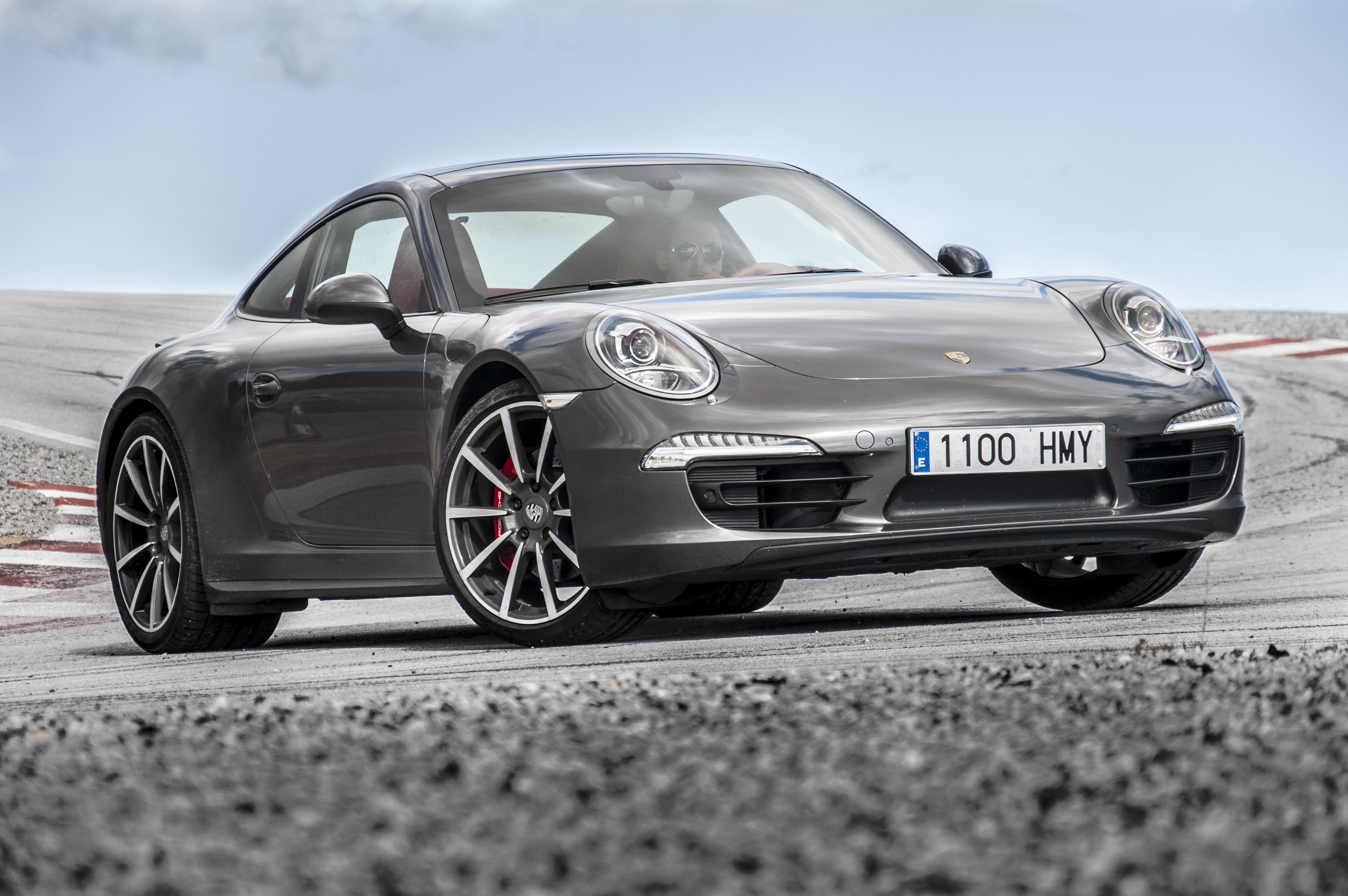
Porsche has come in number three.
We have a couple of models of Porsche.
And then we kind of have a rotating rest of our fleet.
We try to switch it up every year
from the Nissan GTRs, Audi R8s.
We have had McLaren's at times.
We've got Corvette Z06s now.
So we are limited to a certain extent
because we have to pack everything up in a semi truck
and bring it out to you,
but we still bring 20, 25 cars per city.
So there's plenty to choose from
and plenty of cool cities to visit
if that's on your bucket list.
Or if you're just at home
and only have an afternoon to make of it,
we will come when it's convenient
and you can come out and see us.
And so throughout the years,
we've added little elements to our program.
We've hosted rallies, open road driving experiences,
all day driving events
if you wanted to actually come out
and drive every single car in the fleet
with a dedicated instructor, for instance.
We have done autocrosses,
but ultimately the core of what we do
is our supercar driving tour
and we just grow it every year.
I can't imagine putting one of these supercars
on an autocross course that's so small and so tight.
I mean, like you can't even use any of that horsepower.
No, it was definitely not the most popular of the idea
because people get in a Ferrari
and they say, Spenometer goes to 220.
So I think I should be getting pretty close to that.
And in an autocross, of course, you never would.
The cars did themselves,
mechanically didn't like it either.
No.
But the road courses are the perfect medium, right?
We don't just turn left, we make lefts and rights
and we go straight and we don't do backwards ideally.
Ideally.
Yeah, but that's really what we found the sweet spot
and people can always manage 10, 12 minutes
on the racetrack before they get a little fatigued
because they're not pro drivers.
And so they have no idea what it takes to be a pro driver.
So we do everything for them.
When they show up at the racetrack,
they get a safety briefing by one of our pros.
Then they go down to pit lane
and they go for a ride along first
so that they can see the racetrack.
We've got the track all set up with visual cues,
apex cones and braking zones.
It's just things to help them really maximize
their driving experience and the racing line,
which is a term that they learned
about 15 minutes prior to that.
So they go from pulling in the parking lot
and I mean, we have everything.
We've got people who pull in the parking lot
in their own Ferrari that they were never gonna drive
like they're about to drive my Ferrari.
We have people who pull in in a minivan
because they've never seen a Ferrari.
And we've got people who pull in in their M3s
in their sports cars of their own,
their 911s and things like that.
So racetrack instruction in the classroom
down to pit lane for some safety gear
and for a ride along,
then you meet your drive instructor
who jumps in the right seat
and then you go out and give it a whirl.
And then everybody does great.
That cadence really helps familiarize you
with the racetrack and the concept of driving.
And then I give you a video of yourself
in the car afterwards
and a T-shirt that says I did it.
And then you get back in your minivan
and the next on ramp you see
just suddenly became a sweeper
and you get to show your family what you've learned
and then tell your friends about it
and come see us again.
I love, yeah.
So I refer to the corner down at the end
of my street is turn one.
So yeah, I totally get that.
But that's the same methodology that we teach.
I've been a high performance driving instructor
for many, many years now.
And so I always like to teach
what I call the track virgins.
I want the newbies that have never been on the track before
because I tell them, we are not gonna go fast today.
We are gonna learn how to put the car
in the right place every time.
And sometimes that's just like,
you can just see the weight lift off their shoulders
and they're just like, oh, phew.
And they don't realize that their lap time
has gone down by 12 seconds
from the beginning of the day to the end of the day
because they have learned that technique.
They've learned what the racing line is.
They've learned what an apex is and where it is
and how to hit it every time.
And those are skills that you can apply
on the street every day
because nothing drives me more nuts
than getting onto the freeway
and watching people early apex the on ramp every time.
Gives me absolutely crazy.
I'm like, this is just a very basic concept
that would make you a much safer driver
if you knew how to do it.
I think it's great that you do the same things.
It's just the differences you're doing it in,
this really amazing, ridiculously high horsepower,
highly capable and properly maintained car
because that is key.
Big shout out to my 20 mechanics.
They don't need big cars.
Everyone asks, what do you do with these cars
when you're done with them?
Do you sell them?
Are they even assembled properly anymore?
They just fall up and you shut the door
and it falls apart like the Blues Brothers.
And I said, I have pro mechanics in pit lane
looking at these cars every three to five laps.
So this car is in better shape than the car at the dealership
and I promise you of that.
It's got a little life on it
but I promise you it's in better shape
because we can't have a loose screw, a drip of fluid.
We can't have anything.
So these cars are great.
The tires are at the proper pressures.
The brake pads are good.
You have the right type of brake fluid in there.
Yeah, I mean, people don't necessarily realize
how much prep goes into even these types of cars.
We've got a company here based here in Charlotte
called GMP Performance and they're a shop
but they also do track support
and help the rich people that do own the Porsches
and other German cars prep them for the track
and they end up being their track support
at the track days and stuff.
These are for the people to have the money to do it
and it's great but so much goes into that
even just when I take my little mini Cooper to the track
because I instruct in exchange for free track time.
But just having to do everything that I have to do
in my daily driver, which is not stock
but still making sure I've got the right brake pads
putting in the fancy brake fluid
that's not gonna boil and realizing the difference
between cars that are equipped to do that
versus just your daily driver.
Because I can tell you from experience
that my stock brakes have lasted me
almost four years on the street,
17 minutes on the track and I melted them down
through the backing plate.
So you've got these cars that one,
they were designed for this.
So the chassis are built to do it.
The suspension is built to do it
whereas your Honda Accord or your Toyota Camry
was definitely not designed to do it.
And so it gives you such an even better experience.
It's about not just going fast
but about cars that were designed
to handle these kind of curves.
And these are not just straight line drag race cars.
These are cars that can handle an obscene number
of G-forces in these turns.
And for me, that's where all the fun is.
It felt almost sacrilegious at first
because I was inexperienced and growing up,
like you said earlier in our conversation,
you buy the Ferrari and then you don't let dust get on it
and you don't let dirt get on it
and you don't let miles get on it.
And so the first time that I took this Ferrari out
and just thrashed it, I was like,
one, am I gonna break this darn thing?
And two, oh my gosh.
And then I said, hold on a second,
I don't think that Enzo Ferrari
wanted these things parked in garages.
And then you realize that he's out trying to win F1 races.
And so all of the technology
and the price that I paid for this car
is because it's capable of these things.
And suddenly you realize that,
I think we're doing these cars at this service
if we don't take them on the racetrack
and let people drive them.
And so it changes your whole perspective on cars
and how they're built and what they're built for.
And that's been a lot of fun to then just get out
there and say, all right, you were built for this,
show me, show me what you got, let's do it.
My philosophy is also,
because I get really irritated with the people
that do stupid stuff in these cars on the streets.
Just a couple of months ago here in Charlotte,
they busted a huge street racing ring
and they impounded $1.5 million in cars,
including two Lamborghini Huracans.
People, if you can afford a car
that costs more than a lot of houses,
you can afford a track day.
You can afford a membership at the racetrack.
They're actually not that expensive
unless you're talking about a place like Monticello.
If you own one of these,
put it where it belongs and that's on the racetrack
and do it legally, do it safely.
Even Paul Walker died riding in a Porsche Carrera GT
that was being driven by his best friend
and racing team partner,
regular roads are not designed for this type of driving
and it's not legal, it's not safe.
So if you own one of these, put it on the damn track
or why do you own it in the first place?
That goes back to the exact first answer
I think I gave you today,
which was we founded this company
because we know how these cars were built
and we know what you wanna do with it.
And there was not a place
to put those two things together.
People were trying it on the streets
and they were flipping cars,
they were not driving them at all.
Both are bad options.
Come to the racetrack, get in a Ferrari
and say, let's see what zero to 104 seconds feels like.
And you know what, we can safely do that.
You can have an awesome time.
You can video record the look on your face
when you first experienced that
and we'll keep doing it.
And so that's always been our mission
for all those exact same reasons.
I learned car control growing up
on the snowy backgrounds of Wisconsin
because I'm from up North Midwest as well.
But you can learn the extremes of the cars handling
at like 10 miles an hour
when you do it in a big snowy parking lot.
To really learn how to control one of these cars
with this much power,
you have to have the right environment
and an instructor to teach you the physics of it
because it's just,
you just don't experience that anywhere on the road.
Yeah, and the cars are getting crazier.
I mean, I've been in business now for,
like I said, just shy of 15 years
and we were driving Ferrari 360s and 996s
and stuff back then.
Fantastic cars, but the most recent Ferrari
that we have in our fleet
is your standard 296 GTB with the hybrid 880 horsepower.
I mean, like, and that's-
That's the slow one.
That's the slow one, exactly.
You don't want to see that on the air,
but like I want to-
Relatively speaking, that's the slow one.
That's your entry-level, you know,
mid-engine Ferrari, rear-engine Ferrari.
And so it's the whole industry is pushing towards
more powerful things, more turbocharged things,
more supercharged and hybrid things.
And so you've got to learn how to drive them otherwise.
And not only does it have that much power,
but in a lot of these cars,
the engine is not where most people
are used to the engine being.
For the vast majority of people out there,
the engine is up front.
It's under the hood or the bonnet,
as they say in the UK.
Very few people understand what the physics are.
The dynamics of the car are when the engine's in the back.
If you're lucky it's in the middle, it's right behind you
and you have this just unbelievably perfect weight balance.
That's what I started racing and I had a mid-engine Porsche
and man, that's just, the handling is amazing.
But then when you get into like a 911
or another one of the cars where the engine
is truly in the back,
you want to talk about something
that is very, very finicky.
And the difference between getting the back end to rotate
and ending up backwards is like literally a hiccup.
All of a sudden you're like, oh, I'm going to go,
oh, hey, I'm backwards.
How'd that happen?
I'll have to clarify for anyone listening to this,
we do not let you get to that close of the edge.
10 tenths is a true number.
It is not a number in our vocabulary.
We're more like a seven tenths.
But a seven tenths to someone who has been
on the racetrack before will feel like a thousand tenths.
And so it's pretty cool to keep it well within
the guidelines and the safety limitations
but also give you an experience
that you've never dreamt of before.
The only other downside is that it's addictive.
I'm a drug dealer.
Does that not, that's not what you think I'm talking about.
You were a drug dealer
and your drug of choice is horsepower.
So I, I, I get it.
I deal dopamine.
I deal it.
That's right.
I deal it straight to the vein.
Come get it.
Come get it.
Okay. So all of all the vehicles in your fleet,
which is your personal favorite and why?
I love that question.
And I think you actually kind of teed me up for it
because right now,
if I was going to go down the racetrack,
I would pick our GT4, our Cayman.
It's a well balanced light car with plenty of horsepower.
And it's, it allows you to drive it, you know?
I've always compared Lamborghinis to,
I've never flown a fighter jet,
but I've got to imagine if I were,
when I fly one, one day on my bucket list,
I will feel a lot like driving a Lamborghini on a racetrack.
So that's a complicated one to drive.
The Ferraris are always great
and they come from the F1 lineage,
but just being able to,
someone be able to drive a car with one or two fingers
and have it snows go where you need it
and just be able to hustle around the racetrack
but be a pure driver's car.
I'll, I'll pick Porsche nine times out of 10.
That is one of the main reasons that I am a Porsche girl.
I refer to it as just driving with the right pedal
because you can just use the accelerator
to change the weight balance of the car.
And literally, especially if you get into like a carousel
turn, you literally just do this with the gas pedal
and it just shifts the weight back and forth
and you get a little understeer,
you get a little oversteer, a little understeer,
a little oversteer and you can literally just drive
the car around the track with your right foot.
Most of our new drivers, our virgin track drivers, right?
Like you're going to be fighting
with an 800 horsepower car the entire way.
You either gave it too much or you took away too much
or you're understeering or you're oversteering
and you're fighting the whole time
and it's exhilarating and you get out
and you're like, I don't even know what happened
but I'm exhausted.
Where, you know, you call it, you know,
right foot driving, I call it Mario Kart driving.
Same thing.
Like I know in Mario Kart there was a brake button.
I don't know which button it was.
I did never use it.
Didn't need it.
You know, when you have the right horsepower
and these cars are way more horsepower
than any new track person deserves.
But either way, when you have a more reasonable amount
of horsepower in a car like a Cayman,
then you can do a whole lot more of that.
You can focus on putting the car where it needs to be
and driving it without just confusing it.
So you're not riding a bull.
You're just trying to navigate your way
around a race track.
So, yep, I love those cars.
Then our customers do too, right?
They all come out and they got to drive
the Italian supermodel.
So we knock that out of the way.
And then I say, okay, now go day to German girl
and see how your experience is different.
And they see it and they feel it and they know why.
German over-engineering when you're on a race track
is a really good thing.
When you're just a daily driver,
it can be a little, you know, paying the butt.
But I do love it on the race track.
Speaking of tracks, of all the tracks
that you run these experiences at,
which track is your favorite?
I really enjoyed driving Atlanta Motorsports Park
in Dawsonville, Georgia.
I mean, there are so many little obscured tracks.
We just came home from High Plains Raceway outside Denver.
Wow.
Middle of nowhere.
Yep.
On purpose, but in the middle of the Plains,
outside of Denver, we had,
oh, did we have 70 plus feet of elevation change?
You had a couple of 2,000 foot straight away.
Just kind of had everything
that a race track, a road course needed.
And I really enjoyed the heck out of it.
But then in November,
we're gonna go to Circuit of the Americas
and drive where the F1 drives.
So I mean, you know, we have such a wide variety,
but it's really any track where I can take a small car out
and still have a great drive
because you don't need to be fighting down
3,000 foot straightaways with, you know, the attack pegs.
No, but I completely agree with you
because I like some of these smaller hole in the wall.
It's like finding that little hole in the wall
local restaurant that, you know,
it's not the one that people talk about all the time,
but it's like the one the locals know.
So I actually like my home track
at Carolina Motorsports Park,
which is in, you know, Kershaw, South Carolina,
literally the middle of nowhere.
One of the first tracks we ever went to.
Yeah, I mean, it's,
doesn't have any elevation changes really,
which I like it as a track as an instructor
because I can just teach the technical turns.
You don't have to worry about
not being able to see the track.
One of my first track events,
when I first started was at Road Atlanta.
And, you know, when you're,
you're coming down that back straight
and you're hauling ass
and, you know, you get to the heavy braking zone
and you make the hairpin left, right.
And then you start going up the hill under the bridge
and you can't see the track.
And you're sitting there holding on for dear life going,
okay, the track was here last lap.
I know what's going to be here this lap.
I just have to hold on and aim for that tree
and know that the car's going to come over that
and it's going to settle
and the weight's going to settle
and then I'm just going to shoot around the right hander
onto the front straight,
but you're kind of shitting bricks at the same time.
So it's kind of nice teaching newbies on a flat track
where they can see everything.
It's a little bit safer,
but as an experienced driver,
it's like, yeah, you, you love those,
that roller coaster feel of, you know,
all of those.
I'll always take a little bit of that,
but I hear you.
Yes.
At Kershaw, I can look out over the domain
and see everything and know where the cars were
at all times for the most part.
But yeah, a little elevation change,
a little something off camber
that's going to put the track in the top 10.
I love, I love, um,
Barbara down in, um, Alabama and Birmingham.
And that is a phenomenal track
because that's the type of track where
there's not a lot of long straights.
So the high horsepower cars
don't have as much of an advantage.
You can take, you know,
a much lower horsepower car
that's set up to handle the curves
and just absolutely drive the snot out of it.
And that's the track where we started the joke of,
you know, ah, brakes are for sissies.
You don't need those.
Yeah, that's also the problem with my program though
is a lot of the tracks that you're not talking about.
We don't visit because of all those reasons, you know,
so the brakes are for sissies tracks.
I need my customers to break.
I'd like to put that in a disclosure.
Yeah.
I like my students to break as well.
So.
A lot of the tracks on our circuit, you know,
they have to be, we can't scare people away either.
You know, and that's a really important part of it.
Cause I think too many people
think that race car driving is not for them
for so many reasons.
It's too expensive.
It's something that you have to be foreign to do
or it's just so freaking dangerous
that like I'm not going to get anywhere near it.
And those things don't have to be true.
And so we're trying to prove that simultaneously,
even though we're letting you have your cake and eat it too,
which means I've never been to a track.
I don't own a Ferrari, but Adam says
I can have both these things at the same time.
So if he says so, how does Adam pull it off?
Well, we've got to do it at some manageable race tracks
and we've got to do it the right processes in place.
With all that being said,
we still go to plenty of cool places.
And even if you drive one of these supercars
at 50% of the car's capability,
you are still going faster
than you've probably ever gone in your life.
Yes, Gary.
The car is just so, so incredibly capable.
So yeah, cause I was looking, you know,
at your current fleet list on your website too,
and I was like, ooh, which one do I want?
Which one do I want?
I'd probably have to try the Ferrari GTB
just to try it.
Yeah.
But I would end up probably back in the Porsche.
I just, that's my happy place.
All right, so I'm going to put all these links
in the description below, but tell people
if they want to learn more about Extreme Experience
and sign up for one of these ridiculously amazing days,
or if they want to get one for their loved one
who has this on the bucket list.
I mean, what a phenomenal birthday, anniversary,
you know, Christmas, Hanukkah, Yule,
you know, whatever kind of presents.
This is just amazing.
Where do they go?
What do they do?
Go straight to our website, www.xxspeed.com,
and you will find everything you need right there.
That makes it easy.
I absolutely love it.
You should mention something.
There might be a discount code
for Street Shift Podcast listeners.
You know, yes, let me send it to you
and you can post it in the link.
Awesome, we'll get a Karchik code.
Well, thanks so much, Adam.
This has been so much fun.
Audience, tell me what's on your bucket list.
Put it in the comments and is it car related?
Is it something totally different?
I just want to know what your hopes and dreams are.
And then Adam, I will both challenge you
to then make it a reality.
So until next time, folks, drive safely.
We're out of here.
The Street Shift Podcast is copyrighted
Lee Ann Shattuck, the Karchik.
All views expressed by guest and or co-hosts
are those of the guest and or co-hosts.
And not necessarily those of Lee Ann Shattuck
or the Karchik.
About this episode
Exploring the thrill of driving supercars on racetracks, this episode features Adam Olalde, founder of Extreme Experience. He shares insights on why this exhilarating activity should be on everyone's bucket list, regardless of their automotive knowledge. The conversation dives into the entrepreneurial journey behind creating accessible supercar experiences, the importance of safe driving, and how these experiences can unlock a new appreciation for life. Adam also discusses the evolution of supercars and the unique joy of driving them in a controlled environment.
In this episode, The Car Chick® speaks with Adam Olalde, founder and CEO of Xtreme Xperience, about the exhilarating world of supercar driving experiences. They discuss the importance of bucket lists, the entrepreneurial journey of identifying market gaps, and the thrill of driving high-performance cars on racetracks. Adam shares insights on how Xtreme Xperience operates, the significance of car control, and the philosophy behind living life to the fullest. The conversation emphasizes the joy of experiencing supercars safely and the transformative power of adventure.
About the Guest
Adam Olalde is the CEO and Founder of Xtreme Xperience, the nation’s premier supercar driving experience. After noticing demand for high-end test drives, he started renting luxury cars in Chicago, eventually expanding to racetracks. Today, he leads growth and development, continually enhancing the Xtreme Xperience program and making the world’s most exotic cars accessible to anyone who dreams of driving them.
Takeaways
Experiencing supercars can be accessible and affordable.
Living life now is more important than waiting for 'someday'.
Xtreme Xperience offers a unique driving experience.
Car control is essential for safe driving.
Supercars are designed for the racetrack, not the streets.
Driving experiences can change your perspective on life.