The alternator helps keep your car's battery charged while you drive. If it has problems, your battery might not stay charged, especially in cold weather.
The Ford Bronco is a tough SUV designed for off-road driving. It has a classic look and is popular among people who like adventure and outdoor activities.
An aftermarket warranty is a type of insurance you can buy to help pay for car repairs after the original warranty from the manufacturer runs out. It's important to be careful with these because they can be expensive and not always worth it.
An extended factory warranty is like extra insurance for your car that covers repairs after the original warranty expires. It helps protect you from expensive repair bills if something goes wrong with your vehicle.
Electronics in cars are the systems that help with things like navigation, music, and safety features. They make driving easier and safer but can be expensive to fix if they break.
Hyundai and Kia are car brands that are known for giving longer warranties than many other car makers, which means they cover repairs for a longer time.
The Honda Pilot is a type of SUV that is big enough for families and has lots of space inside. It's known for being reliable and good for everyday use.
The camshaft is a part of the engine that helps open and close the valves. It controls when air and fuel enter the engine and when exhaust leaves, which is important for how well the engine runs.
The timing chain is a part of the engine that keeps everything moving in sync. It makes sure the valves open and close at the right times so the engine runs smoothly.
A tensioner is a part that keeps the timing chain tight so it can work properly. If it doesn't work well, it can cause the engine to have timing problems.
An oil pump helps move oil around the engine to keep all the parts lubricated. If it stops working, the engine can get damaged because the parts won't be properly lubricated.
The Ford Crown Victoria is a big car that many people liked because it lasts a long time and is very reliable. It was often used by police and as a taxi because of how sturdy it is.
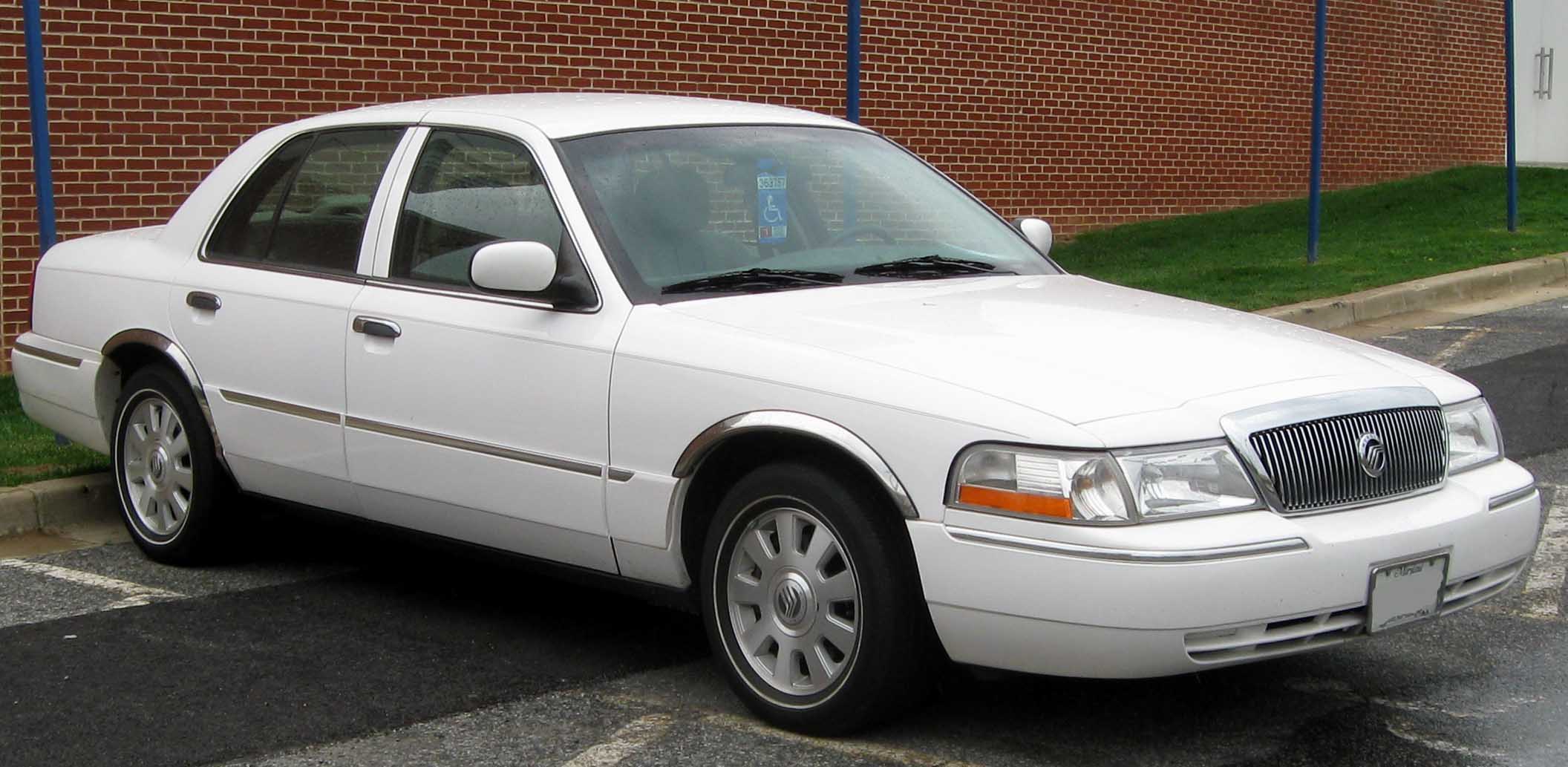
The Ford Grand Marquis is another big car similar to the Crown Victoria, known for being comfortable and reliable. Many people liked it for long drives and as a family car.
The Mercury Grand Marquis is a big, comfortable car that used to be popular for its smooth driving experience. It's known for having a lot of space inside, making it great for long trips.
A used car inspection is when a mechanic checks a car to see if it's in good shape before you buy it. They look for problems that might not be obvious at first glance.
The Jensen Interceptor is a rare and stylish sports car from the past that many car enthusiasts admire. It's known for being fast and having a cool design, but it's not very common to see on the road today.
Idle hours are the time a car's engine runs while it's not being driven. If a car has a lot of idle hours, it might have more wear and tear, which can be a concern for buyers.
The Kia K5 is a newer car that looks really sleek and has lots of cool tech features. It's designed to be comfortable and safe, making it a good choice for everyday driving.
An oil filter is a part of the car that cleans the oil as it circulates through the engine. This helps keep the engine running smoothly and prevents damage from dirt and debris.
An O-ring is a small rubber ring that helps seal parts together to stop oil or other fluids from leaking out. It's important for keeping everything tight and working properly.
The Toyota Camry is a popular car that is known for being dependable and easy to drive. Many people like it because it gets good gas mileage and has a comfortable interior.
The GMC Terrain is a small SUV that has plenty of room inside for passengers and cargo. It's a good option for people who want a vehicle that can handle different types of driving and has a lot of features.
LIVE
Good afternoon and welcome to The Car Show. I am Dane Donovan, taking all of your car
questions with the number to call 513-749-5500. That number again, 513-749-5500. Last week
was a short show due to basketball, but I am here for a full hour and would love to hear your car
questions. So again, that's what I'm here for. Love to hear from you again, the number to call
513-749-5500. I hope everybody is enjoying this wonderful weather we're having, right? It's like
almost 40 degrees. Never thought I'd say it, but 40 degrees, you know, my kids are walking out of
the house without a jacket on because they're so warm. And so, like I said, last week we were in
Florida right after Christmas and it was 70 and sunny and then we came back to the snowmageddon and
man, has it been bitterly cold? And I mean, down to the point where it's just like, man,
it hurts to walk outside, but you know what? We have to keep trucking on and we have to keep our
cars rocking and rolling and ready to go and make sure that it's ready for this weather. And you know,
I led up to this back in November and December, right? It is something that we have to make sure
that our cars are ready and prepared for whatever mother nature brings us, right? Now, I know that
in years in the past, right, we've had some pretty mild winters and it's not been too bad,
but I tell you what, man, we are busy, busy because there's a lot of things that break when it gets
this cold. A lot of door lock actuators, batteries, starters, alternators, wiper blades, door handles.
I mean, you name it, when it gets this cold, you know, a lot of things break and we have
been very blessed, but very busy at Donovan Tire. And again, you can go to DonovanTire.com,
find your nearest location. We have three. We've got one, we have one in Blue Ash, one in Pleasant
Ridge, and our newest location in just outside of Norwood. It's technically Evanston, but I mean,
when I say outside of Norwood, I'm talking a set of train tracks. A set of train tracks sets us
apart from Norwood to Evanston. So, but it's at the corner of Dana and Montgomery, right there by
Xavier University. So, if you know where Xavier is, we are close by. So, again, I'm taking your phone
calls and I'm gonna call 513-749-5500. Again, I hope everybody's having a great 2025. It's been a
very cold and bitter 2025, but for the most part, for the Donovans and the Donovan family, you know,
we're all doing well. So, but I do want to talk about, and again, it looks like the phones are
lighting up. I really do appreciate it. I'm gonna get to all of our callers today. So, if you're
listening, you want me to get to you, please call now simply because a lot of times at the kind of
towards the end of the show, I'm short somebody. I have to cut somebody off and have them come back,
call back the next day, or I'm sorry, the next week. But if you've got a question, please call.
Love to talk to you. Love to try to help you with your car problems, car questions or whatever. But
what I want to talk about, and I've talked about this before on the show, and a great customer
came in yesterday. She bought a brand new Ford Bronco, right? And she came in and she goes,
Dan, I just bought this car. I said, man, looks great. And she goes, hands me this pamphlet and
says, hey, they want me to buy this warranty for the car. And what are your thoughts? So, I looked
at it and I'm like, okay, this is an aftermarket warranty. Okay. Most of you who listen regularly,
I am completely against these things. And I felt that I needed to talk about it again and
reiterate to people. Okay, I recently had the opportunity to buy a new vehicle myself. First
one, and I'm 40 years old, first one I've ever purchased, 40 years of my life, first new car
I ever purchased. It's a Ford. And again, very blessed and grateful that I got that opportunity.
And when I was purchasing it, I asked if there was any type of extended factory warranty. Now,
this is important. Extended factory warranty. Listen to me here. It's very important. If you're
purchasing a new vehicle and you do want to have added protection because these cars, again,
I mean, most of your cars are, you know, if you buy an SUV or a truck or whatnot, I mean,
these things are starting 50, 60, 70, 80,000, you know, I mean, some of them are 100,000, right?
You want to make sure that you protect, when I say investment, I understand it's a depreciating
asset, but you want to protect it, right? You want to make sure that if all these vehicles
nowadays have all these electronics, they've got all this technology and that's great. And a lot
of it saves lives, but it comes at a cost that if it fails or breaks, it's going to cost you a
lot of money, right? So if you're in the market to buy a new vehicle, okay, a new vehicle,
ask your salesperson if there is an extended factory warranty, okay? I asked my salesman,
I said, hey, do you have an extended factory warranty? And guess what? They do. So when I
purchased my Ford, it was a, you know, the standard across the board for all makes and models is,
except for Hyundai and Kia, three years, 36,000 miles, okay? Three years, 36,000 miles. Now,
that's great. But, you know, we tend to keep our cars longer and this stuff gets more and more
expensive as, you know, as it goes on. So I purchased my extended factory warranty to a
7-year, 100,000 mile warranty. Now, yes, did it cost me an additional amount of money? Yes,
okay? But it is an extended factory warranty, okay? Again, let me, I want to beat this in your head,
factory warranty, okay? This young lady came in, she goes, Dane, they want me to buy this warranty
and it's $3,500. And what are your thoughts? And I looked at it, I said, you don't want that,
okay? That's an aftermarket warranty. And she's like, well, you know, it's going to cover this,
this, it's, it's cover, I'm covered at, I think it was 10 years, 150,000 miles and, and, you know,
it, you know, it's $3,500. And I said, listen. And she agreed with me and she was, she was like,
hey, I'm here to listen to what you have to say. And, you know, these aftermarket warranties
are garbage, okay? They are a waste of your money, please. I, you know, they want to sell it to you.
And yes, you know, it seems like it's, it's just this great thing and you're going to be covered,
okay? I can tell you firsthandedly that what I see that they, what these warranty companies do to
people is, in my opinion, a crime. Okay. First of all, they do not cover any type of diagnostic.
They do not cover shop supply fees. They do not cover any type of, you know,
well, I said diagnostic, but they do not cover diagnostic. They don't cover
you know, they'll only cover certain amounts. So depending upon the warranty company, right? So
if you go to a shop that their, their labor rates $125 an hour, well, your, your aftermarket
warrant company goes, oh, we'll only pay 75, right? And so you end up really, you end up paying
for these repairs anyways, you might get a little bit off of it, but you don't,
they don't, you know, they want to present this as like, this is just this great thing and you're
going to be covered, you're not. And I've seen it time and time again that, you know, these people
buy these, these aftermarket warranties and they really don't cover anything. And I used to say
that it was kind of like catastrophic, right? It was like, oh, you know, if your engine fails,
right? But I have a great customer, great customer Honda pilot purchases it pays, I think $5,000
for this aftermarket warranty and purchases it. And lo and behold, it's a Honda great product,
engine fails. Okay. Now, if you open up his little pamphlet, that's covered engine is covered,
it says that, right? So I call the warranty company and they say, well, yeah, the engine's covered,
but we're going to send our technician out to look at the vehicle. All right. So now we're
waiting three or four days before they send their technician out, basically to verify that what I've,
you know, said it needed, that's what their technician said. So now they don't give you any
type of loan or car or anything like that. So now you're waiting three or four days.
Now, what they tell me is, okay, yep, engine's locked up. But we need you to tear that engine
apart and find out exactly what caused the failure inside the engine. Okay. Oh, and by the way,
we're not going to cover you to tear that engine down and find out exactly what's going to cause
the engine, you know, we're not going to cover that. The customer needs to pay for that. So now
the customer's on the hook for about, you know, $2,000, $3,000 for me to take that engine out,
tear it apart and find exactly what part in that engine failed. Okay. Now, I explained to the
warranty company, well, what if I tear it all apart? I can't find exactly what part
failed. I'm like, well, then we won't cover anything. And to me, that was completely dishonest. And I'm
like, you, so I'm like, you want the customer to pay $3,000 for me to tear that engine out,
tear it apart, find what failed. And if I can't find anything that failed and the customer not
only has to pay $3,000, but then he has to pay another $10,000 for an engine. Yes. And that,
that was the last straw for me that led me to was like, just never again, am I going to
ever recommend an aftermarket warranty company? Because this gentleman in the literature says
that the engine was covered. And what they did to this gentleman, again, to me was, was criminal.
So I wanted to again reiterate, if you're buying a new car, please ask if they have an extended
factory warranty. If not, do not buy any type of aftermarket warranty. Okay. It's a waste of your
money. Take that if it's 35, this young lady that was at the shop yesterday, it's $3,500. Take that
money put in the stock market, right? You're going to earn hopefully 5% to 8% on it. And if something
does happen in 100,000 miles, that money's grown and you're going to, you know, so please don't buy
an aftermarket warranty. If anybody out there, listen, has, have I seen in the past that somebody
does have one and it's covered some of their cost? Yes. Okay. You see them on the, on the, on the
TV all the time. I'm bombarded with them. I see them all the time, you know, on social media,
on TV or whatnot. And, you know, my blood pressure starts to raise because from my perspective, what
I've seen, what they do to people is criminal and I just, I just don't recommend them. So if you've
got, again, if you're buying one, please don't buy an aftermarket warranty. Just take the money and
put it in the stock market and are invested in something and, you know, you're better off. Okay.
So, all right. The number to call 513-749-5500. That number again, 513-749-5500. Coming up, we have,
we have, we have Paul Rich, Greg and Joel. You're listening to the Car Show on 55KRC,
the talk station. This is 55KRC, an iHeart radio station. At Donovan's Auto and Tire Center, we've
been Cincinnati's honest choice for auto repair since 1958. From all seasons to high performance,
browse our huge selection of tires and you can easily find the right tires for your exact vehicle
by entering your license plate number on our website. With three local locations, we'll ride
around the corner. Trust Donovan's to keep your family safe and your car running smoothly.
Schedule your appointment today at DonovanTire.com. Donovan's Auto and Tire Center,
your honest choice for auto repair. The one place for Sean Hannity, weekdays at 306, 55KRC, the talk
station. Welcome back. Taking your car question, the number to call 513-749-5500. The phones are
lightened up, so I really do appreciate it. I want to get to everybody's phone calls. Again,
I am Dane Donovan from Donovan's Auto and Tire Center. So let's go to the phones. We have Paul.
Hey Paul, welcome to the Car Show. How can I help? Hey Dane. Well, I talked to you a month or so ago.
I was trying to disassemble an engine and the pistons were stuck. I remember that, yeah.
I managed to get the other two out, so the other three, whatever. So I'm just following up. I got
on up having to go 40 over on the cylinders to clean them up. It may be more involved in it.
It is practical with this engine. It's only in for a pound. So I went 40 over on those. I had to
take 10 off the journals to clean them up. I got a set of pistons and bearings and everything to
put it back together. Without it, the junkyard this morning picking up game shafts to the couple
of the lobes were kind of spoiled on the ones that were in the engine. Where did you get the
pistons at? Did you buy new pistons? Yeah, new pistons. Okay. All right. So you got new pistons,
but you said you put some bearings. Okay. And you got all that new? Yeah. Okay. But the cams,
you said you got used cams? Yeah. The ones that were, like I said, the ones that were in it had
one load that was starting to spoil, which they had a problem in the early years of the
element engines like that. So they use the same cams and some of the Accord engines. So I found
an Accord with a nice looking set. Okay. What about the timing chain and guides?
I'm going to put new ones. Okay. All right. I was going to say, if you're going in there doing
what I call like, it's kind of like open heart surgery on a, on an engine like that,
you want to make sure you put new guides, new tensioner, new chain, you want to make sure that
you don't have to go back in there again. Yeah. Yeah. And debating whether I'll try and check the
clearances on the oil pump and I don't know whether I want to go to the extent of putting a new pump in it.
Yeah. I mean, I've never seen a, I've never seen a Honda pump oil pump fail. So I think you'd be
all right there. But I would definitely make sure you do the, if you're going to go to the length
of what you're doing, make sure you do, I would do, and also to save yourself some money to make
sure you get like a timing chain kit, right? So it has everything in it. Cause if you buy everything
individually, it's going to be pretty costly. And since you're doing, since you're, you know,
doing it yourself, just buy a kit and, and just replace it all. That way you're, you're good and
golden. All right. All right, Paul. Well, thank you for the call. You have a great weekend.
Call me up with a follow up. I want, I want to hear this thing running. All right. Okay.
All right. Well, you take care. Have a great day. All right. Let's go back to the phones.
We've got rich. Hey, rich, welcome to the car show. How can I help? Hey, thanks.
I'm looking for a used car that I want to get something that's both reliable and durable.
I'm not afraid of older cars. In fact, I prefer them. Yeah. I would agree with you on that.
What's your opinion on the Panther platform for cars?
You said with the pan Vicks and yeah, Crown Vicks and grand marquis and
Oh man. If you can get one and find one, I'd buy it all day long. I think, in my opinion, that was
probably, I don't know, in my opinion, that was probably the best car Ford ever made. Yeah.
By, I mean, those things, I've never, I have never, ever seen anybody kill one of those things.
Never. Yeah. I mean, you can't, they're like, they're like, they are, they're tanks. I mean,
they are almost indestructible. I've seen a lot of good, good things on them. What about the,
you know, one thing I'm looking at, of course, they're going to be older because they stopped
making them, but 14 years ago. And, and I know, I sometimes have a problem with cars that are
older, not necessarily high mileage, but because I know
time is an enemy of parts as much, not as much, but, you know, in addition to where,
how old is too old? You know what, that's a great question. And, you know, I,
here, I'm not worried about age. What I'm worried about is where it's been most of its life. So,
if you're buying a, I mean, if you could find a 2008 Crown Vic that was spending its entire
life up in New York, I'd be like, run. I don't care if it has 5,000 miles on it. If it's been
sitting outside in New York, been driving, get away from it, run. You got a Crown Vic that's a,
it's an 08 Crown Vic that has 150,000 miles and it's been down south, you know, Texas, Florida,
Georgia, Louisiana, something like that. I'd be more inclined to buy a car that's down there.
So really it's, it's conditions that I'm not worried about age. I'm not worried about mileage.
It's the conditions of the vehicle where it spent most of its life, right? So, you know,
if you've got a car that's been sitting outside its entire life, I wouldn't recommend probably
buying it. And if, and if you do, you make sure that you get it inspected before you buy it.
Uh, because I've just seen so many, a lot of cars and I, this happens all the time. I can get a car
and look at it, do a used car inspection on it, get it, and it's just covered in rust. And it's
like, man, on the outside, it looked great, right? You get it up in the air. It's a whole
another story. And I'm like, I guarantee this car came from, come up from up north. So what they do
is like, all those cars up in New York, Pennsylvania, you know, all those cars up north, they ship
them down here and they're just a rusted bucket, just a mess. So again, I'm not necessarily worried
about age. I mean, I would probably say anything 2000 and up, you'll be all right. Okay.
Um, in one of the things that I see a lot on, especially the crown, well with the crown VIX,
as opposed to the Grand Marquis is that the police interceptor versions,
that kind of scares me a little bit because they sit in idle so much. Yeah. Is that a concern or
or not? No, no. I mean, it's a little bit of a concern. I mean, if you buy, you know, if you buy
an old, you know, police cruiser, that yes, it does have a lot of idle hours. And what you see,
because I mean, even like up in, you know, a lot of cab drivers years ago had those things. Right.
And you'd see them like smoke and burn a little bit of oil because of the rings. But man, I tell
you what, I've never, ever seen one fail. If you can get one that doesn't have a lot of idle hours,
and you can look at that on the most of the time, if it's newer, if it's like an 08 to that, you
know, I can't remember exactly what year they quit making the crown Vic. I wish they never would
have stopped 2011. I wish they would have never stopped. Man, that car was, that was phenomenal
vehicle. And I love, I love the rear drive. I mean, there's a lot to love about those old cars.
Yeah. But again, idle hours don't necessarily scare me too much as well. You know, I mean, you know,
a lot of those cruisers have, you know, 100,000 miles on them. And yeah, they have a lot of idle
hours, but it still doesn't. Yeah. Well, you know, they've been maintained.
That's correct. Yeah. Absolutely. Yeah. Just do what I would tell you is the best advice I can
give you is just whatever, when you find one, make sure again, you find out where, where it came
from, right? If it came from Northern states or what we call the Rust Belt, right? Even Ohio is
not as bad as like Pennsylvania, Michigan, you know, New York or whatnot. Find out where it came
from, where it originated and find out about it. I mean, if you buy one from, I would probably say
from Ohio, Kentucky, Tennessee, Georgia and farther down south, probably the better, but just make
sure that when you find one, you just get it inspected by a mechanic. And it, you know, sometimes
you might find, hey, Dane, I found one in, you know, Southern California. We'll find a regular shop
down there and have it inspected before you buy the thing. That's all I ask and just make sure that
Yeah. I've got one that I found in, in Northern Georgia that looks like a pretty nice car.
There you go. I fairly love mileage. The price is a little higher than I want to pay, but I might,
it might not scare me off. But it might be, it might be worth it because if it's been spending,
if it's been in Georgia most of its life, there's probably not a rust in it.
Yeah. What about, what about cars here locally around? I'm in Northern Kentucky.
Cars locally here are fine. Northern Kentucky, Cincinnati, you know, Dayton,
Indiana, you know, you'll be fine. But if, again, just because there might be a dealership in
Cincinnati that has a Crown Vic, right, at a dealership, but that car may have came from New
York. So you just want to make sure you check, spend the money. Some dealerships don't, yeah,
get the car fax, find out where it came from, what it originated at and, and, and look at the
vehicle history on it and make sure that, I mean, if it's spent most of its time in
Cincinnati, Northern Kentucky, Indiana, you're fine. But if it's been shipped from Michigan
or Pennsylvania or something like that, I would steer clear. Okay. All right. Thanks a lot.
All right. Thank you. All right. Take care. Have a great weekend. Bye-bye.
All right. Again, taking your phone call. So number to call 513-749-5500. Coming up, we have,
we have Greg, Joel, George and Robin. You're listening to the Car Show on 55KRC, the Talk Station.
Do you have a truck, camper, RV or a trailer that needs body repair? If so, call my buddy Dave
Brinkman at Frank's Heavy Truck Collision Repair, located just off I-75 at Route 63. It's convenient
to both Cincinnati and Dayton. With over 30 years of experience, including insurance work and fleet
work, Frank's knows the most important things are quality work and customer satisfaction. Frank's
Heavy Truck Collision Repair prides themselves in doing the job right and getting your vehicle back
on the road. Call 513-829-9030, 829-9030. It's Glenn Beck. Weekday mornings at 9 0 6 on 55KRC,
the Talk Station. Welcome back. You're listening to the Car Show on 55KRC, the Talk Station.
I got to get back to the phones immediately because the phones are lighting up and I really want to
get to everybody's questions. So let's go to the phones. We have Greg. Hey, Greg, welcome to the Car
Show. How can I help? Oh, I've got a 2021 Kia K5. And I don't know if you're familiar with the
oil filter and the plastic cup that holds it on the bottom and the drain plug that it also has.
Well, I mean, should be pretty similar to most of what they have, but you said the K5?
Yes. Okay. What's going on with it? Are you having problems with it?
I've got 55,000 miles on it. I changed the oil every 5,000 miles and I changed it about 2400 miles
ago. And this morning, there was oil in my driveway. So I changed the filter out again,
I guess, an O-ring. There's an O-ring on the cup and an O-ring in that drain
plug, but the whole apparatus seems ridiculously chintzy. Welcome to the new, welcome to the car
market. Well, I don't know if it makes a difference. Who do I buy the oil filters from?
I mean, did you see the oil, was it coming out of that plastic cap or coming out from that O-ring?
It looked like it was coming out of the cap more at the top rather than the drain plug
because it was wet up high. Okay. Are you talking about that little plug at the top?
The drain plug at the bottom. You're talking on the oil pan.
Yeah. The plastic cups down below, there's like a 22 millimeter wrench.
Right. To get that cap off for the oil filter. Yep.
Yeah. And there's like a pin that goes in with a key shape and you put it up in and then twist it
and lock it. And I guess it keeps the filter from turning inside there. I don't know,
but it seems a lot more like it's just a drain to drain the cup. So when you take it off, you
don't get drenched with oil, which you do anyway. So it doesn't matter. It doesn't matter. Yeah.
Is your oil filter housing, is it above like underneath the hood or is it underneath the vehicle?
It's on the bottom underneath the vehicle. Okay.
I mean, and you said you replaced the filter and the O-ring and it seemed to be coming from that
that O-ring from the cap. Right. But it was bone dry for 2,400 miles. And I don't know,
maybe the cold had something to do with it. Yeah. I mean, you could, I mean, it could because,
you know, that, you know, that little O-rings rubber, right? And, you know, with heat and what
not, things expand and contract. Where did you get the filter from?
Um, I think it was O'Reilly's. Okay.
Um, you know, I do see, is it, was it like their house brand or whatnot?
Probably. I didn't ask. They're hard to find. It's like a special order and sometimes they
don't come in and just, um, yeah. And you're doing the oil change yourself, correct?
Right. I mean, yeah. A lot of times what we see is two things. One, I mean, the cap itself and
the housing, I'm sure is perfectly fine. Two things, what we see is a lot of times when you
go to tighten it up, that little O-ring will get a cut in it, a small cut or you can tear it. I mean,
it's happened to us. I mean, my guys do these things all day long and they'll put one in and
they just go to tighten it up like they're supposed to. And when tightening it, it rips and will cause
a leak. I would type of, I mean, I would recommend if you're going, if you're doing it yourself,
I would just probably get the, the filter from Kia. Uh, the, the rubber comes with new O-rings.
Correct. Yeah. I mean, I, you know, I don't, I don't necessarily, I'm not opposed to buying
aftermarket, but typically it depends on what you're buying. But aftermarket, typically the
quality is not as good as the dealer. That rubber gasket that you put in there, probably just,
it's probably just the qualities is probably not there. I mean, it happens to us, but
did you end up getting the same oil filter or did you buy a different brand this time?
Yeah, I got the same one. I put it in and drove from Anderson Township to Montgomery and it
doesn't leak a drop yet. Did you inspect the O-ring, the old O-ring just to see if there's any
type of tear? I mean, I mean, we're talking about, not even like it doesn't have to be completely
cutting, like completely torn. I mean, you can have a hairline crack in those things and
or just throw it away. Yeah. I mean, I saved it, but I'll look, I'll look more closely at it.
I thought I saw like a sliver of some sort. So what you're saying is probably exactly right.
I mean, it doesn't take much. And again, a lot of times there might not be anything wrong with
that gasket. And then just when you go to tighten it up, what I would recommend when you do, so
when you put that new O-ring on, do you take some of the old oil and just kind of run your
finger over that O-ring? Yeah, I use the new oil, but I do do that, yeah.
Because, I mean, that would prevent too from anything tearing possibly because
basically you're lubricating that gasket just to make sure that when you're tightening it down,
it doesn't get a tear. So, but I have seen, listen, we put on, you know, hundreds of filters a week and
yeah, I mean, every once in a while, you get maybe a manufacturer defect or they go to put it on.
The technician didn't do anything wrong and it just, it tears when they tighten it up.
And, you know, people are calling like, Hey, I got an oil leak now after you guys change my oil
and come back and sure enough, there's, there's a little hairline cut or tear in that O-ring. So,
it happens. I mean, I was just surprised it took 2400 miles for it to begin leaking.
Well, and again, I mean, it could be a little bit of the, the, the rubber O-ring, the quality of
the product, right? Just from getting hot, cold, hot, cold as cold as it's been, right? That thing
swells and then it gets, so it could be a little bit of the weather factor too, because, you know,
is it really made out of rubber or some type of synthetic, you know, so.
Yeah, there's, there's a lot of expansion and contraction going on. So.
And again, I mean, you know, again, I mean, I've had people like, you know, we put a,
we change your oil and they don't have a single problem. And then 5000 miles later,
the oil filters leaking, right? Wasn't leaking before it went 5000 miles and then it started
leaking. So it happens. I don't think there's any, I don't think there's any concern.
Just make sure you keep your eye on it and yeah, just keep your eye on it. And if you can,
and buy the one from Kia, I know it's going to be a little bit more, but, you know, if you're
doing it yourself, you're already, and I've always been a big proponent of this. If you're
doing it yourself, spend the money on the, on the, on the, the good filter and, and bye-bye.
All right, again, I'm taking your phone calls and I'm going to call 513-749-5500,
although I don't know that I'm going to be able to get to everybody. I'm so sorry.
I've also, I've said this a ton of times on the show. If you're doing
your own car repair, which I absolutely, you know, man, there's a lot of people out there that can do
this stuff, right? And if you're working on your own car, you're already saving your amount,
your, yourself a tremendous amount of money, right? So I've always said that if you're going
to do it yourself, please buy a quality part. I'm not knocking aftermarket parts or whatnot,
but if you're already doing it, you're already saving yourself a ton of money,
buy a good quality part. It's really does make a difference. Makes a difference and you're going
to get better quality and it's the most likely the part's going to last longer. Okay?
You know, I could use a good analogy if you're like, hey, you know, your doc's like, hey,
we're going to have to go ahead and replace a, you know, a valve in your heart. Do you want the
cheapest one you can buy? Yeah, probably last you about another 10 years or do you want to buy
the more expensive one and, you know, probably live to 100 years old. Most of us would say, hey,
give me the good one, right? Well, that's a little extreme, but what I'm saying is, you know,
you're already doing the work, you're already saving yourself the money on labor and whatnot,
buy the good quality part. Okay? And there's an easy way to do it. I'm not saying you have to buy it
from the dealer, but you can do a little bit of research and find a good quality part, right?
If you've got a Ford, you want to buy a motorcraft. If you've got a GM, you want to buy AC Delco.
If you have a Toyota, you want to buy Denso. If you have a HANA, Denso. If you have a Hyundai,
you can do Denso as well. You know, so you just want to make sure that you're buying a good quality
part if you're doing the work yourself. And again, I applaud you. Great job for doing it. And a lot
of people do like doing it. You know, it's a Saturday for today. It's 40 degrees out. It feels like a,
you know, nice spring day. But, you know, you want to make sure that you, you know,
not having to go back in there and do it again, right? So, all right, again,
take your phone calls and call 513-749-5500. Coming up, we have Joel, George, Robin, Jerry.
You're listening to Car Show on 55KRC, the Talk Station.
I have been a customer of Donovan's for 10 years. It's not always easy to find a mechanic that you
can trust that isn't going to take advantage of you. They treated me respectfully, not talk down
to me. There are mechanics right down the road, but I chose to keep coming back here because
they treated me as family. So much so that four years ago, I started working here.
Hi, Dale Donovan from Donovan's Auto and Tire Center. The honest choice for car repair in
Cincinnati since 1958. Find the one nearest you at DonovanTire.com. This is 55KRC, an iHeart radio
station. Welcome back, taking your car questions. And here every Saturday to answer all of them,
I am Dale Donovan from Donovan's Auto and Tire Center. Let's get back to the phones.
We have Joel. Hey, Joel, welcome to Car Show. How can I help?
Hello. I have a 2013 Camry with 156,000 miles on it. And when I bought it, I'm sure it rode
better. I wouldn't have bought it. And it's an SE. So I think it has a stiffer suspension,
is that correct? I don't think the SE has a stiffer suspension. I haven't got an answer
from the Toyota dealer yet. No, I don't think the SE or the LE are going to have a different
suspension. It should be the same. Well, maybe stiffer roll bars. The sway bars? Yeah. Well,
that doesn't help the ride anyway. It seems like the ride is getting stiffer and stiffer
all the time. Maybe it's because I'm getting older. But Don, that's not that funny.
I'm just wondering, do shocks? I see them go bad and there's just going crazy. There's no
shock available. And then, but mine are stiff. What's the deal? I mean, typically when a shock or
a strut is going bad, you typically will have a bouncy ride, right? Not a stiff ride, but like
a really, really bouncy. Yeah, I've seen them. Yeah. Okay. I understand how it works and everything.
They should have not called them shock absorbers in the first place.
They should have called them spring dampeners. Yeah. That's what they are. That's what they are.
You're right. There's a lot of confusion. There's a lot of confusion too because there's shocks and
then there's struts and it's like, what's the difference? And shocks don't have a spring around
them, struts do. If you have 150,000 miles, I think it would be a good idea to replace them.
Now, when I say that though, it's very expensive. Is this something that you would do yourself or
would you take it to a mechanic? No, no, I probably won't even do either one right now.
Okay. Yeah, because I mean, it's probably, God, it's probably $20, that's probably about
two grand, $2,200 to put all new struts on that Camry. Well, I appreciate that information.
I'll tell my wife and she'll say, no, I won't get it done. I won't get it done.
All right. Yeah, I mean, if it's a stiff ride, it could just be, like you said, maybe just you
personally, maybe you just feel like it's riding stiffer. But typically when a shocker or strut
is worn out, you're going to get a bouncy ride, right? You're going to go over bump and the whole
thing's just kind of bouncing. But man, at 150,000 miles, it would be a good idea to do it. But if
they're not blown out, I'd have it inspected by a mechanic. If the strut itself is not physically
leaking any fluid, then I wouldn't worry about it. Yeah. Well, I know it's not. Okay. I can't get
under it to look, but okay, well, I've taken enough time. All right, Joel, thank you. You have a
great day. All right, let's go back to the phones. We have George. Hey, George, welcome to the car
show. How can I help? Thank you for taking my car, Dale. Sir, I have a 2015 GMC terrain four
cylinder with 102,000 miles. Well satisfied with the vehicle. I noticed during this cold weather,
I'm getting more moisture out the tailpipe than usual. A little more. And with this moisture,
I get the tailpipe is black inside. And I get black stains with this moisture on the
driveway. And this is a concern about the dirt on the garage floor. I checked the oil level
to see maybe I got a head gasket or I checked the oil and I checked the antifreeze. The antifreeze
right up the par and the oil that don't show no signs of coffee stain or being higher than the
dipstick level. Yeah. So, I mean, yeah, I mean, you're going to get a little bit more moisture
in the exhaust because of the cold and because of the temperatures and, you know, and it's cold
outside and you've got the, you know, the engine's kind of hot. The black soot that you're seeing is
that's carbon. That's just, you know, a byproduct of the exhaust itself. Now, what I will tell you
is yes, the GMC terrains, most vehicles nowadays and terrain is a pretty big one. They will,
over time, start using a little bit of oil. Now, when I say a little bit, I'm not talking like
you're having to add it or whatnot, but it could be a byproduct of the vehicle using oil.
And that's why you're getting that little bit of that carbon or that soot, that build up.
Now, I don't, it has nothing to do with, well, you may be seeing it because of the cold and the
moisture that's coming out of the exhaust, but, you know, in the summer months, you don't see it
because it's hot out, right? But it's just that carbon and it's the oil, it's the byproduct of
the vehicle probably most likely using a little bit of oil and again, some carbon build up and
with the moisture in the cold, you're going to see it dripping on the ground. I don't think that
there's, you don't have anything going on wrong with the vehicle. I would do what you're continuing
to do is make sure that you're checking the oil, but I don't think that there's any cause for alarm.
It's very common and we see it quite a bit, so I think you're perfectly fine. I don't think there's
anything to be concerned about. What can you get those stains off the garage floor with? Do you
have anything using the garage that you clean these things with? You know, I would try,
there's a lot of products out there, but I would just try a little bit of dawn and
a little bit of dawn and hot water. Okay, sir. One more quick question, sir. I
wanted the dealer and I had the antifreeze changed in October. The Dex school had it changed and
he said I needed a water pump back in October. Okay, sir. The water pump is not leaking. There's
up against the clock here, but George, if you're not seeing anything that's not using it,
then I wouldn't worry about it. I really wouldn't. So Robin, I apologize that I could not get to you.
Please call back next Saturday. You call first. First thing, I'll take care of your car questions.
So thank you everybody. Have a great weekend. I'll be back next Saturday to answer all of your car
questions. You're listening to the car show on 55 K or C the talk station.
About this episode
Dane Donovan takes calls from listeners, addressing various car-related questions and concerns. He emphasizes the importance of preparing vehicles for cold weather, discussing common winter issues like battery failures and door lock problems. A significant portion of the episode focuses on the pitfalls of aftermarket warranties, with Dane sharing personal experiences and advising against them in favor of factory warranties. Listeners also share their automotive projects and inquiries, including discussions about used cars, oil changes, and vehicle maintenance tips.
In this episode of the Car Show, Dane Donovan takes your calls and tackles a range of car-related topics. He shares a personal story about purchasing an extended factory warranty for his new vehicle and warns listeners about the pitfalls of aftermarket warranties. Dane also discusses the importance of buying quality parts when doing car repairs yourself, using the example of a caller's issue with an oil filter leak. Additionally, he offers advice on how to inspect and maintain a used car, specifically the Crown Vic, and answers questions from listeners about car maintenance and repair.