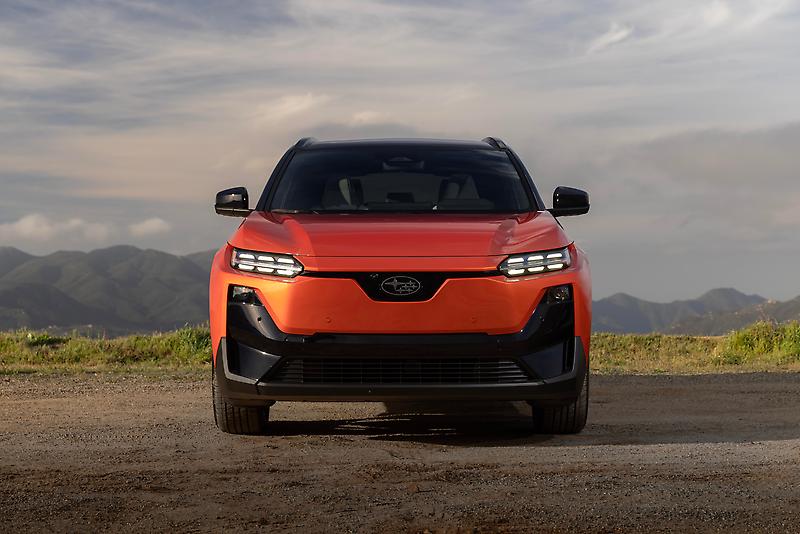
The host is talking about the Subaru Uncharted EV and how expensive it can be to lease. Even if the car’s price sounds reasonable, the monthly payment can still be high once you factor in how leases are calculated and any incentives.
On a lease, the “residual” is what the car is expected to be worth at the end of the lease. If that expected value is higher, your monthly payment often comes down because you’re paying for less of the car’s loss in value.
Leases include a financing cost, similar to how a loan has interest. If the lease’s interest rate is higher, the monthly payment tends to be higher too.
A tax credit is money the government gives you that lowers your taxes. For EVs, it can make the overall cost of leasing or buying the car less painful.
The host’s 2014 Subaru Forester Turbo XT is a turbo SUV they’ve kept for a very long time. They’re using it to show that with the right repairs, an older car can still be cheaper than constantly upgrading to newer ones.
The head gasket is a critical seal inside the engine. If it fails, the engine can overheat or mix fluids, and fixing it usually takes a lot of work and money.
The Chevrolet Corvette is a famous American sports car. In this segment, they’re saying newer Corvettes hold their value much better than older ones, partly because the car’s layout changed to a mid-engine design.
The “Enzo Ferrari rule” is basically about making fewer cars than demand so the cars stay desirable. In this segment, it’s used to explain why limited-production models can hold their value better.
A mid-engine layout places the engine near the center of the car, typically behind the front axle and ahead of the rear axle. The segment highlights the Chevrolet Corvette C8’s mid-engine change as a major engineering shift that helped modern Corvettes become more desirable and better at holding value.
The Porsche 718 Cayman is a Porsche sports car with the engine in the middle. Here it’s mentioned because the study says it holds its value extremely well compared to many other cars.
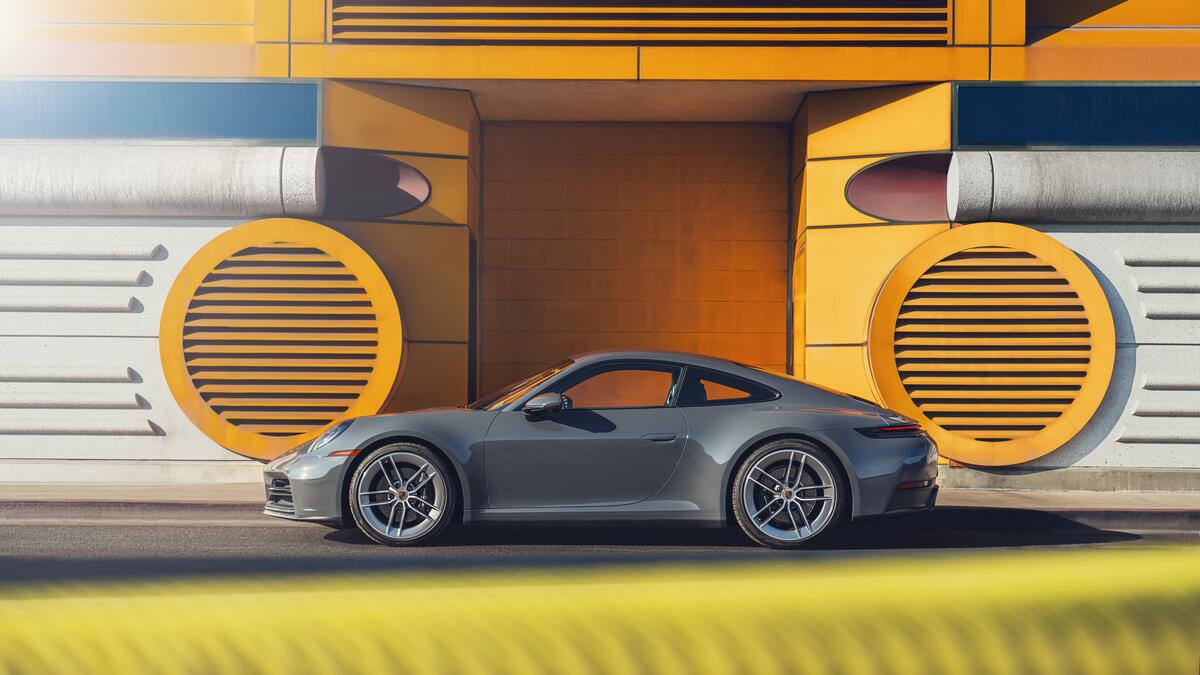
The Porsche 911 is Porsche’s famous sports car. The host mentions it because, according to the study, it keeps its value better than most other vehicles.
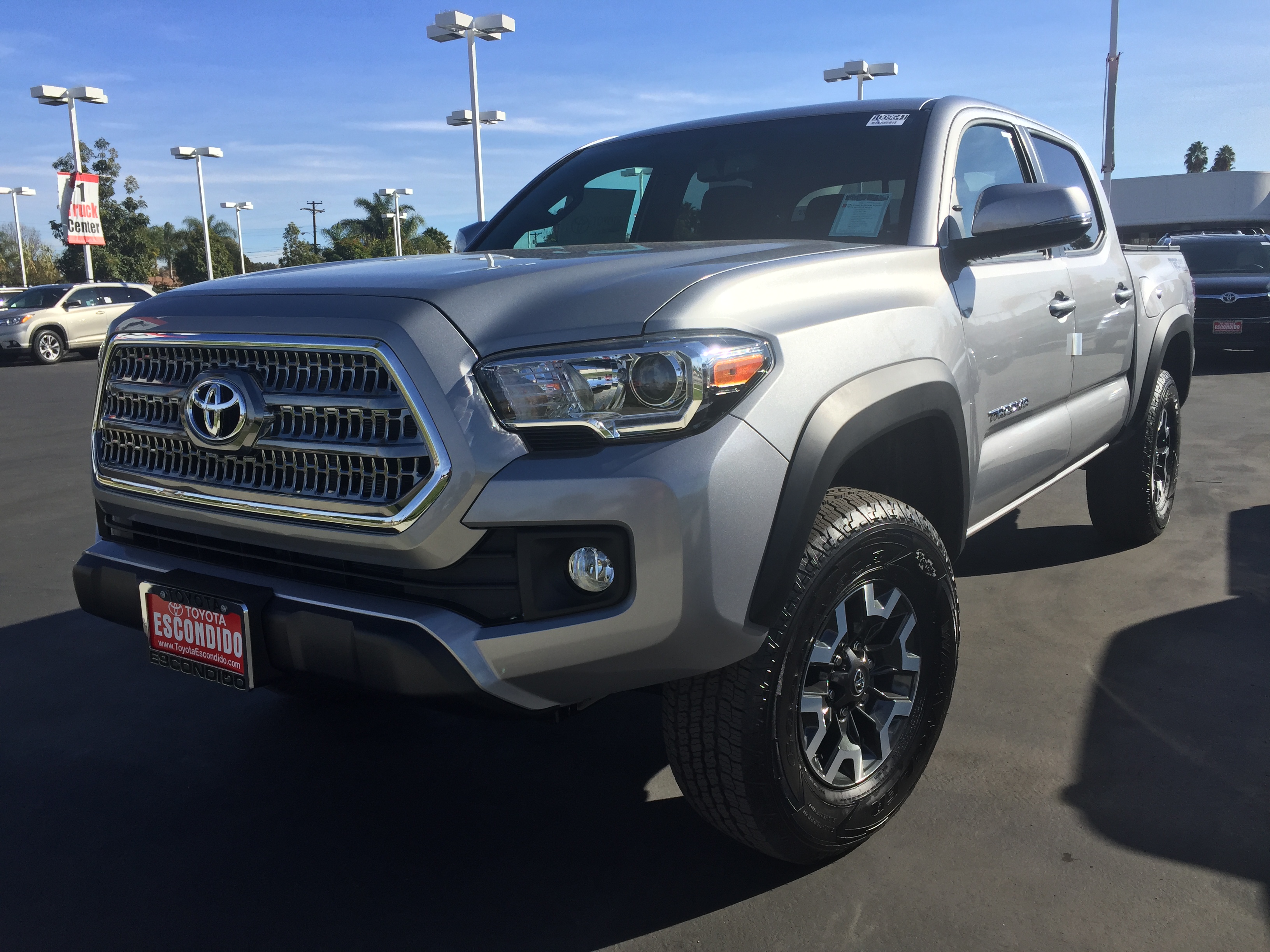
The Toyota Tacoma is a truck that’s smaller than a full-size pickup. People like it because it can handle rough roads and still work for normal driving and hauling. It’s often talked about when people discuss good all-around vehicles.
The Ford Mustang is a sporty car made by Ford, usually as a coupe or convertible. It’s known for having a fun driving feel and different engine options. It comes up a lot in car discussions because it’s a very recognizable model.
The Jeep Wrangler is an SUV designed for off-road driving. It’s known for being able to customize the open-air experience with removable roof and doors. It’s often mentioned because it stays popular with people who want a capable off-road vehicle.
Car
Genesis Coupe
The Genesis Coupe is a sporty Genesis model. The host is using it as a real-life example to test whether a car will keep its resale value as it moves from first owners to later owners.
The Hyundai Genesis is a Hyundai model line that’s meant to feel more upscale than a basic economy car. The podcast specifically references the Genesis Coupe, which is the sporty version. It’s mentioned because the speaker is considering how well it keeps its value.
Concept
used-market appreciation vs new-car demand
This segment describes a situation where new-car demand is weak, but used-car prices rise because supply is limited or demand shifts later. That “opposite” pattern can happen when a model becomes desirable after the initial buying wave.
Residual value is basically what the car is still worth after you’ve owned it for a while. This episode is about which cars keep that value better than others.
The idea is that people shopping for a new car might pay more for the brand or a specific package. People shopping used cars usually care more about getting the best deal, so expensive “badge” cars can lose value faster.
A “premium badge” is the fancy logo or name on the car that signals it’s a higher-end brand. The point is that used-car shoppers may care less about the logo and more about whether the car is a good deal.
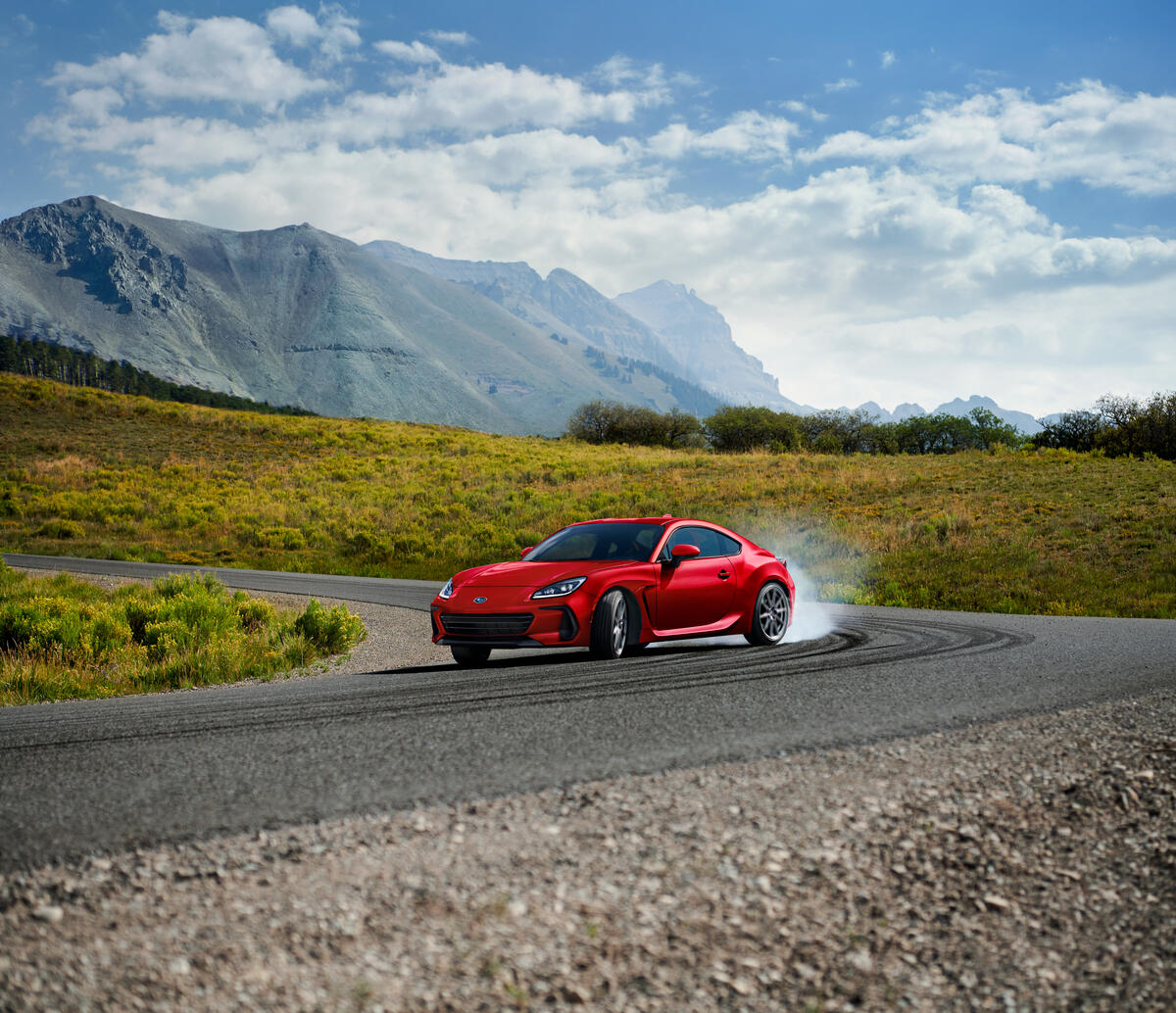
The Subaru BRZ is a small sports car meant to be fun to drive. The point here is that if fewer of them are available used, the price can stay higher because people want the driving experience.
“Trim” means the version of a car with a certain set of features. The hosts are saying that when the car is used, the price difference between trims often shrinks.
A depreciation curve describes how a vehicle’s value typically drops over time. The hosts argue that an M3 (treated as its own model) follows a different depreciation curve than more minor trim differences, and that within “minimal trim differences,” the value variation collapses compared to new-car pricing.
The Infiniti QX80 is a big luxury SUV. The point here is that even though it costs a lot when new, you can often find one used for much less than you’d expect.
A “badge” is the logo on the car that tells you the brand. They’re saying there’s a similar option sold under Nissan too, which can make the Infiniti version hold value differently.
Five-year depreciation is a common way to measure how well a car holds its value by tracking what it’s worth after five years. In this segment, the hosts argue that when a model stays “the same basic car” for a long time and then gets replaced, the older one can suffer a bigger resale hit because buyers anticipate the newer, better version.
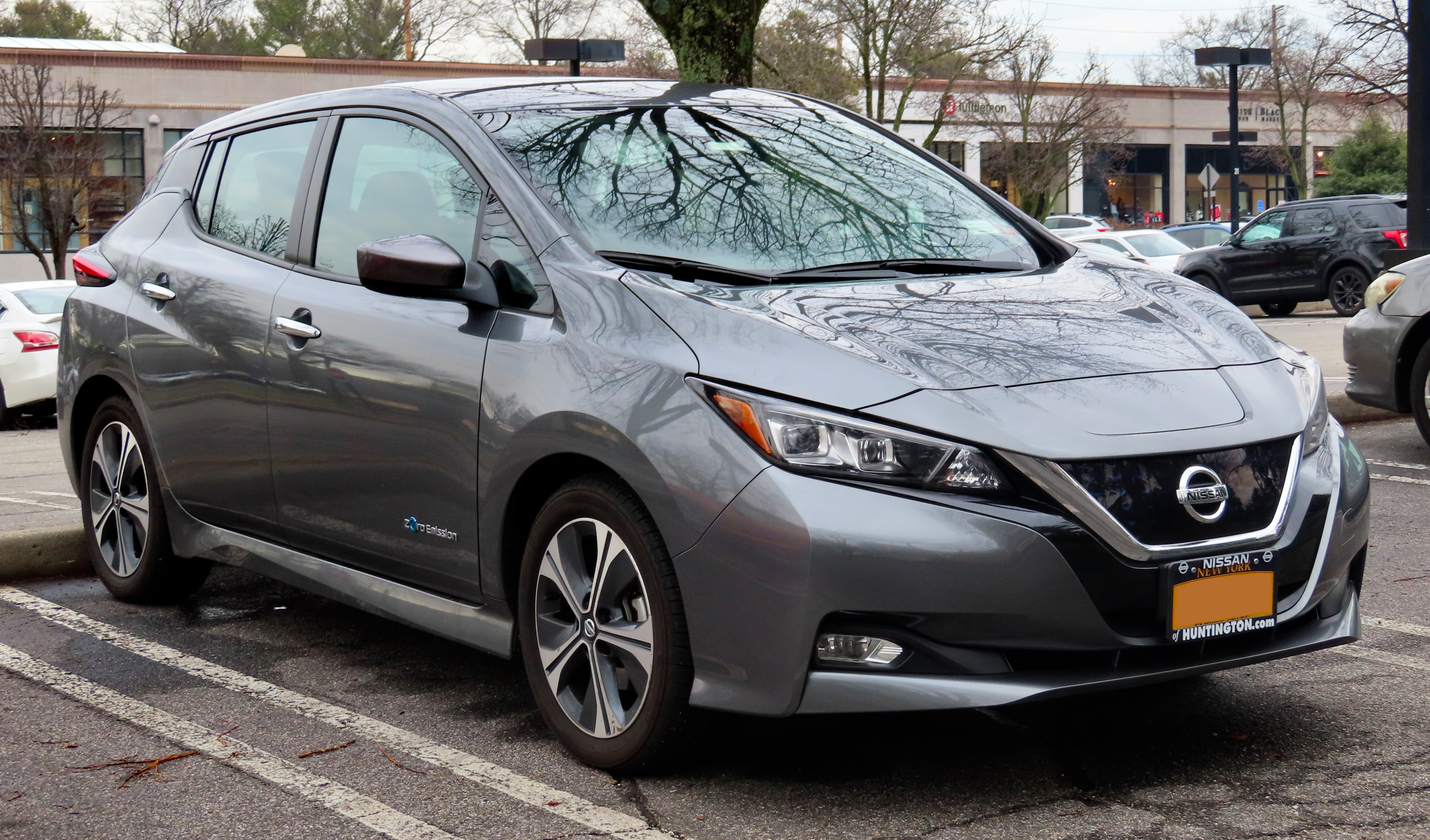
The Nissan Leaf is Nissan’s electric car. The hosts are saying that when a newer Leaf comes out, people often want the newer one, so the older Leaf can drop more in resale value.
The Nissan Armada is another big three-row SUV. The hosts are saying it can cost a lot less than the Infiniti version of a similar vehicle, and used buyers may not pay extra for the luxury branding.
A “used car market flood” means lots of people are selling the same kind of car at the same time. When that happens, there are more cars for sale than buyers, so prices can drop.
With early electric cars, people can get worried that the battery won’t last. Even if newer cars are better, that fear can stick around and hurt resale value.
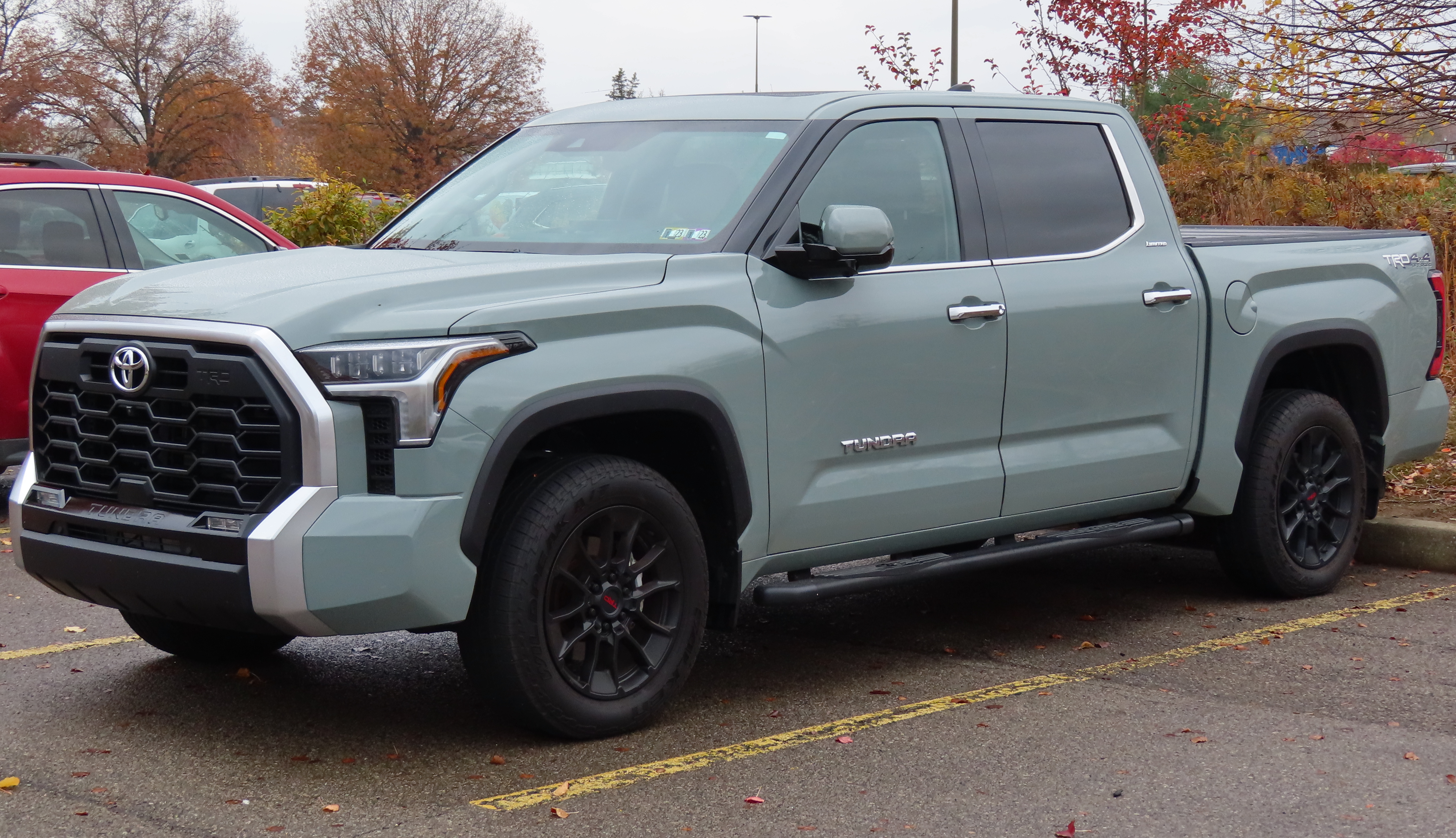
The Toyota Tundra is a large pickup truck made for towing and carrying things. It’s built to be comfortable for everyday driving while still being useful for work. It shows up in rankings because it’s a well-known option in the truck world.
The Honda Civic is a small car that’s designed to be practical for daily driving. It’s usually chosen because it’s efficient and easy to own. It’s mentioned in lists because it’s a popular, well-known option.
The Toyota Corolla is a small, everyday car that’s made to be affordable and efficient. It’s popular because it’s practical for commuting and errands. In the podcast, it’s included in a list of notable cars, showing it’s still a strong choice.
The Toyota RAV4 is a compact SUV that’s made for daily driving. It’s popular because it’s practical and usually efficient for its size. The podcast mentions it because it’s one of the notable cars in their list.
Concept
premium vehicles vs volume brands depreciation
They’re saying expensive “premium” cars usually lose value more than cheaper, mass-market cars. The reason is that more people shop for the common models, so they’re easier to resell.
The idea here is simple: if fewer cars exist, used buyers compete for what’s available. That competition can help the car keep its value better over time.
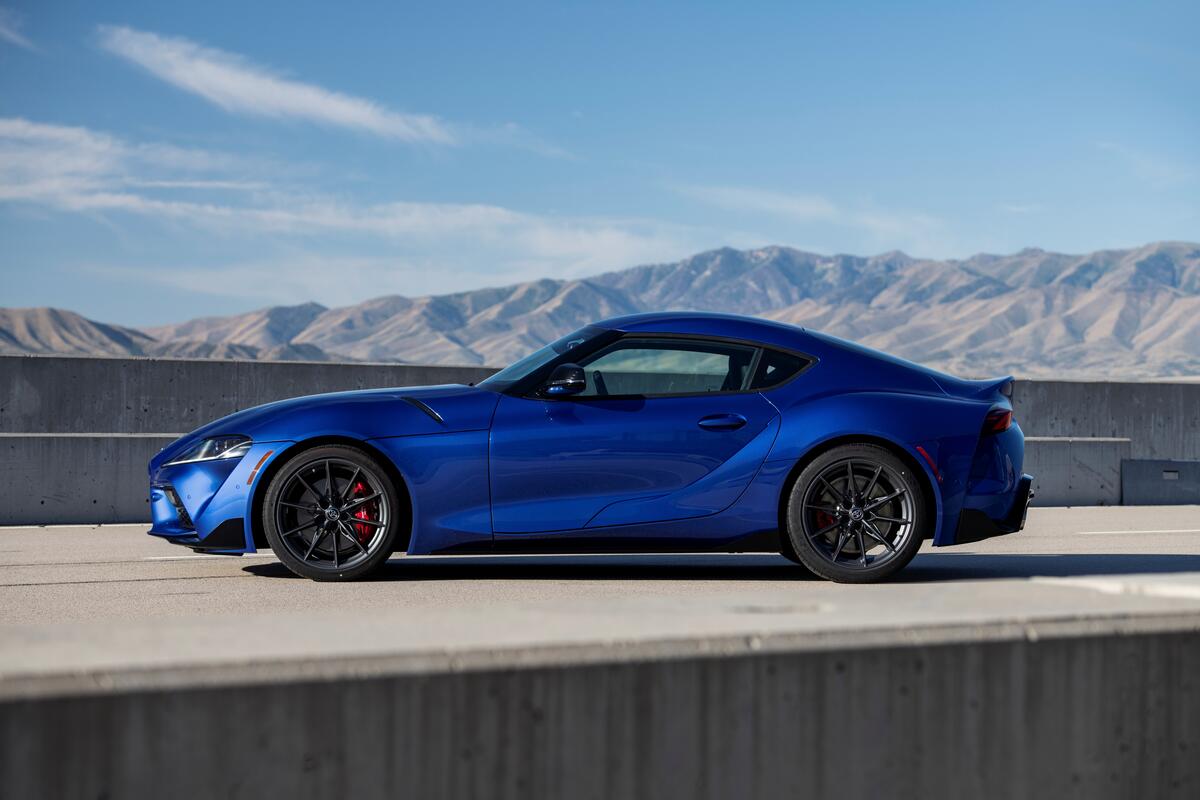
The Toyota Supra is a sports car people want, and this episode is talking about why it keeps its value. When fewer are sold new (or new ones are harder to get), used prices can stay higher.
BMW is mentioned because some people associate the Toyota Supra with BMW engineering. The point is that it doesn’t feel like a “pure” Toyota to everyone.
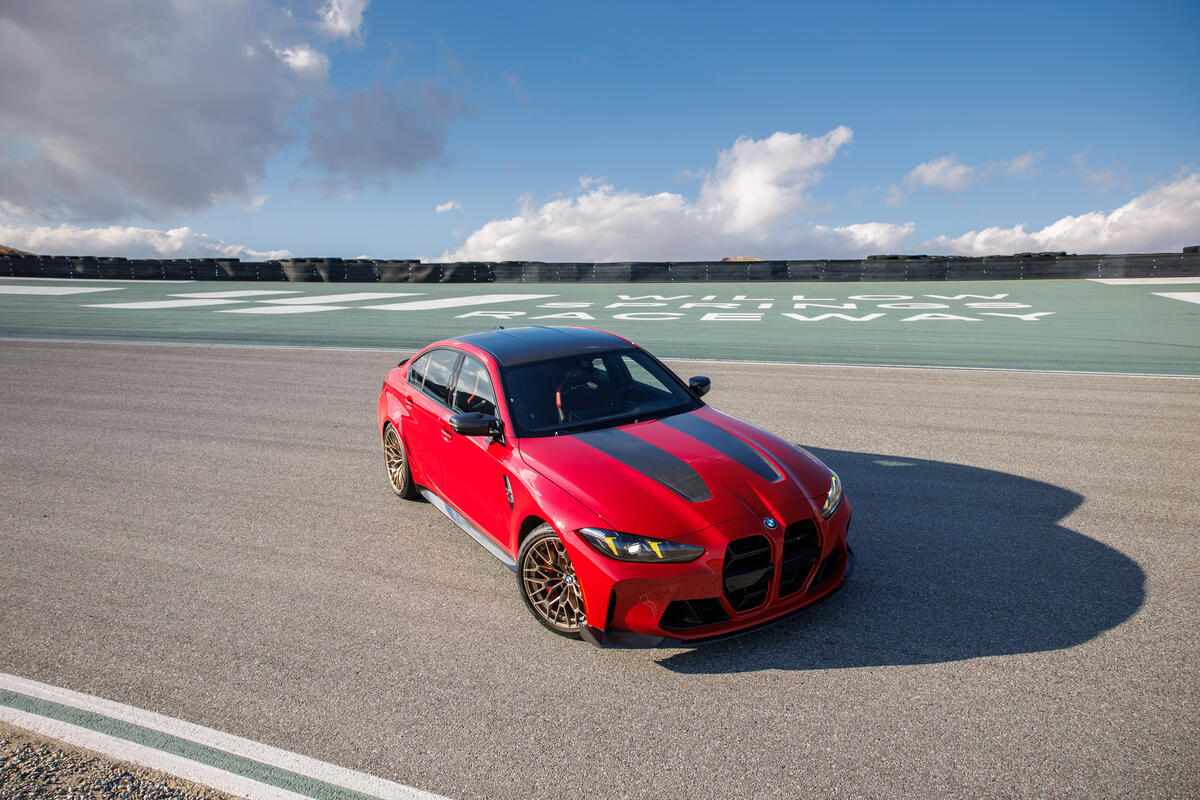
The BMW M3 is one of BMW’s most famous performance cars. The hosts are basically saying its engine is great, and that a smaller car with that feel would be a blast.
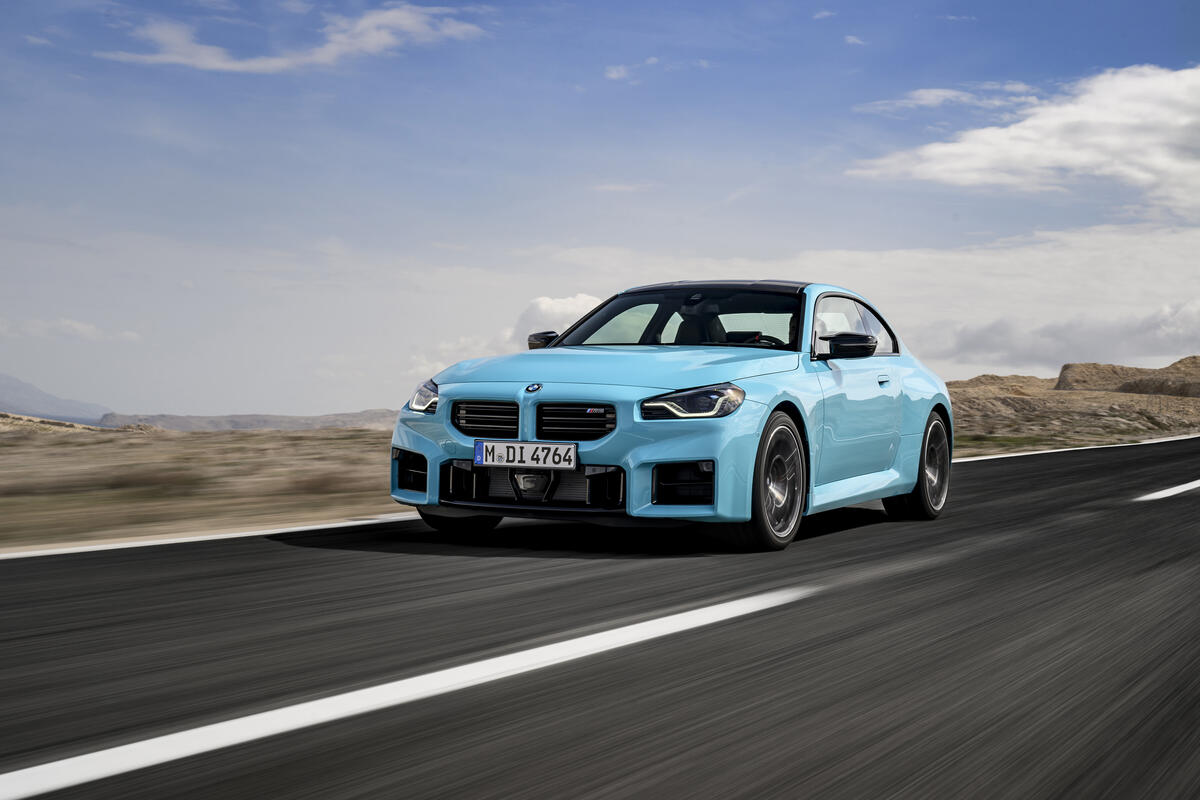
The BMW M2 is a small BMW performance car. The hosts are saying its engine is so good that putting it into a smaller package would make it even more fun.
The Toyota Corolla hatchback is a less-hyped version of the Corolla. The hosts think that because it’s affordable and still has the Corolla name, it doesn’t lose as much value as you might expect.
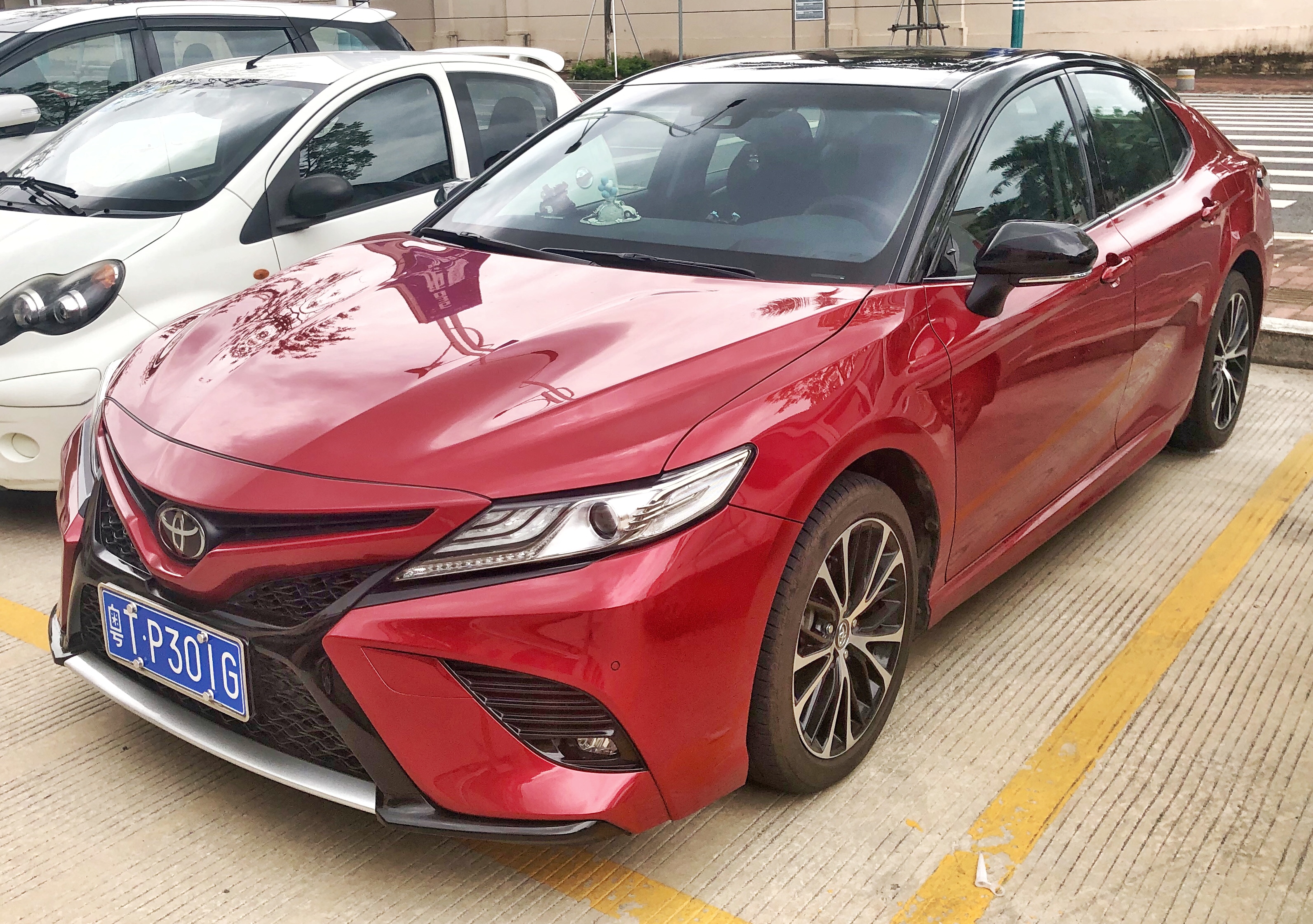
The Toyota Camry is a comfortable family sedan that’s meant for normal daily driving. People like it because it’s smooth and practical. The podcast brings it up to compare how it feels compared with smaller models.
“Man machine interface” is basically how the car’s controls and screens work together for the driver. The host is saying the newer Civic experience feels easier and more connected than before.
The Toyota Prius is a car that uses both a gas engine and an electric motor. This helps it use less fuel than many regular gas cars. In the podcast, it’s brought up because it’s a well-known example of hybrid technology.
Concept
resell
“Resell” means what you can sell the car for later. The host is wondering if the newer Prius makes the older Prius harder to sell for as much money.
A three channel dash cam records from three different angles at the same time. That way you can see what happened in front, inside, and behind your car.
A multi-channel dash cam is a dash camera system with more than one camera. Instead of only filming the road in front, it can cover multiple angles at once.
Some dash cams have Wi‑Fi built in, so you can send the video to your phone wirelessly. The host says it’s much quicker than other dash cams he’s used.
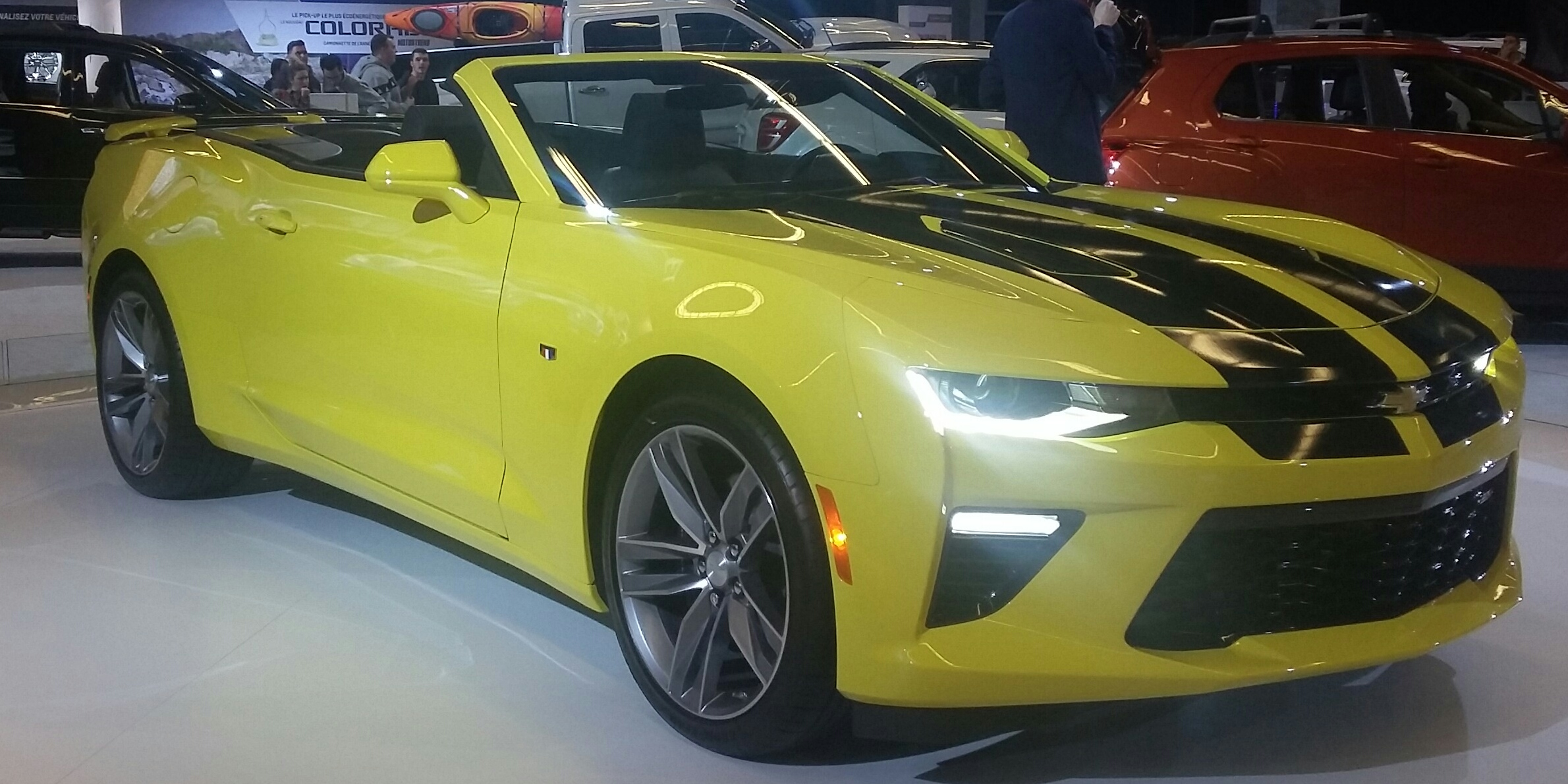
The Chevrolet Camaro is a sporty car made for performance and fun driving. Even though it looks like a sports car, the podcast mentions using it for a weekend trip with people and luggage. That’s an example of how it can still be practical in real life.
The Subaru Crosstrek is a compact crossover that’s meant to handle rougher roads better than a typical car. The host mentions it as a camping-friendly choice because it has enough space and can handle getting off the main roads.
The Subaru Outback Wilderness is a tougher Outback meant for rougher trails. Here it’s recommended for camping because it has good space for people and can handle getting off the paved roads.
The Wrangler is an off-road SUV designed for rough roads and outdoor trips. The podcast mentions using it for deep off-road travel and carrying a lot of stuff. It’s known for being able to handle challenging terrain and still bring gear along.
Car
Jeep Rubicon four-door
The Jeep Rubicon is one of Jeep’s most off-road-capable models. The host specifically calls out the four-door version for camping because it has surprising cargo space and can handle getting deep into rough areas.
The Chevrolet Suburban is a big SUV that can haul a lot of people and tow trailers. The host recommends it for camping if you want to bring a travel trailer and still have room for everyone.
The Ford Maverick is a smaller pickup truck that can still pull a trailer. Here, the host points out it can tow up to 4,000 pounds and still has room for four people plus storage in the bed.
The Volvo V90 Cross Country is a wagon built with SUV-like capability cues, aimed at people who want cargo space and comfort without giving up off-road-ish practicality. The host specifically calls out its over-eight-inches ground clearance and describes how it drives like a big wagon with lots of space—useful for camping gear.
Ground clearance is how much space there is between the ground and the bottom of the car. More of it helps the car handle bumps and rough roads without getting stuck or scraping underneath.
Tow rating is the maximum towing weight the vehicle is designed and approved to pull. The host’s point is to not run right at that limit—make sure your vehicle can handle more than what you’re actually hauling so it tows more safely and comfortably.
LIVE
The road to the NBA finals ends here, with star guards setting the tone.
The Cavs eye another upset, while the Knicks carry the dreams of all of New York.
The Eastern Conference Finals, Cavaliers Knicks, Game 1, Tonight ESPN.
Welcome to the AutoGuide Show, this week we talk to IC cars about vehicles that hold their
value the best on the used market and there's actually quite a few surprises. I review the
Viofo dash cam that's one of the most technologically banned systems I've ever used and in the mailbag
it is all about camping. Take a short break and be right back.
All right, welcome back. We have a returning guest, Carl. Welcome back to the show. If you
could just introduce or reintroduce yourselves to our listeners. Absolutely, Mike. Thanks for
having me on. I am Carl Brower, the executive analyst at iccars.com. I've been there for, wow,
it's going on six years soon, which is just crazy to me. But before that, I was the executive
publisher of AutoTrader and Kelly Blue Book, executive editor at Edmunds.com, spent some time in
the super street world for pre, pre fast and furious doing JDM stuff and import tuner stuff
and all. So yeah, I've been around this industry far longer than I probably want to think about
too much. But yeah, it's been fun. Yeah, it's funny because you don't feel like you're getting that
old, but someone asked me the same thing. And I was like, I'm thinking about 25 years because I
started working when I was 19. So yeah, it adds up. Yeah, no, when I hit 30 years in the industry,
I was like, wait a second, that means I'm not counting years. So the reason for you to visit
this time is a study that just came out about what cars are holding their value the best.
Is it the usual players that we always hear how crazy the industry has been these last couple
years or are there some big changes? You know, it's pretty standard procedure. I think what's
more interesting to me is how cars are retaining more of their five year value in 2026 than they
did in 25 in every category, every type of vehicle, which just shows that this ongoing kind of supply
demand imbalance that started as we all know with COVID and caused crazy value changes for
vehicles in the new and used car market is still with us. And I think we've had a tiny teensy bit
of inflation in the last six years too. So between those two things, you know, what I used to consider
about a $20,000, $20,500 was the price that I would, I would think would be about a one to
five year old used car's average price and our data confirmed that. And all of a sudden it's
about a 30. So it's 50% increase in a one to five year old used vehicles price just as a general
rule of thumb compared to 56 years ago. And that's painful. But yeah, if you look at like
specifics, you know, I thought it was interesting because the overall market was only depreciating
41.8%. And the previous year was 45.6%. So we're about 4% less depreciation on the average one to
five year old car. But then you go into individual categories like hybrids are only losing 35.4%.
Trucks are only losing 34.2%. And then SUVs are 44.9. So they're a little bit more than the average
because probably there's just so many of them. And then electric vehicles are 57.2. So that average
41.8 swings around a bit once you go into specific vehicle types. Yeah, these are having a rough
go right now. We'll get into that in a second. Do you think part of this could be just with how
ridiculously expensive cars are getting? I mean, we talked about the inflation and I was updating
an article not too long ago, and it was written in 2022. And without calling out the specific
model, there's a small pickup that I love. And it was 22,000 in 2022. And now it's 30,000. And yes,
a trim changed, but a lot of that's just where the price is gone. Well, if it's the vehicle,
I think you're talking about I think that one was one that clearly the manufacturer realized,
holy crap, we could sell a lot more of these for a lot higher price because they were being
emptied out at dealership lots because you were getting, it was 2022 and you were getting,
wait for it, value for your new car money. And I don't think there's a lot of
value in a lot of the new car money right now, but you did get it from that small truck. And
unfortunately, like everything in a capitalist society, once they saw the streaming demand
going on to the lots and pulling those cars off of them as fast as they could produce them,
they said, Hey, I bet we could charge more. And you know, if we get a 20%, 30% bump in cost,
and we only lose 15% in demand, that's a net win for us. Do it. So there we are.
Yeah. And I think people, people know things are getting more expensive because everything is,
it's not just cars, it's food, it's gas, it's, you know, home supplies. But I think until you
look deep down at it, you see the real sticker shock. So I was just looking because I love the
new Subaru Uncharted that they just brought out as an EV, even as it's just small, it's
pretty affordable. So it's like, I'm going to price one out. And I couldn't believe what the monthly
payments were, even though it's residuals decent, it's interest rate on the lease payments aren't
that bad. And there's a tax credit still here in Ontario, Canada. I just, oh, that's how expensive
cars are. And I was like, I remember when I used to laugh at people who pay this much a month on
a lease like 20 years ago, I mean, that's a while, but still it's crazy. We've gotten there.
No, I, I, you know, again, been in the industry too long, obviously, because I still have
memories of the average new car being in the 20,000s and used cars would be like half that,
you know, and now it's again, 30,000 for an average used car and close to twice that 50 to,
you know, 50 plus give or take for a new car. So we've just entered a different world. And what's
fascinating is to see how older cars are being kept on the road longer. You've probably noticed
that too, Mike, but there's just become a real kind of cottage industry. I mean, the industry
that already existed, but it just keeps growing for maintaining your car. So service stations and,
and, you know, maintenance centers and stuff like that, dealers, but also independence.
They've got more business than ever because people are looking at the prices that you just
mentioned when they look at a new vehicle by or lease and they're like, maybe I'll just keep
my car for a while. You're preaching to me because I have a 2014 Forrester Turbo XT that has 250,000
plus kilometers. So we're talking about 150 something thousand miles and it has thousands
put into it because basically the engine had to be semi rebuilt with head gasket and all the
stuff before I got it. But it was still so much more affordable than getting something five years
newer with half the miles that knowing the vehicle and knowing the shop and mechanics
went out are basically the same mechanically. So I think we're seeing more of those these high
mile cars that, you know, five, especially 10 years ago, something in that condition,
it's off to the junkyard to be pulled apart by people wanting bits. But I think these cars are
getting the overhauls because the parts are still expensive, but it's still better.
Back to the study. Were there any models? Let's start with surprises. Were there any models
that you couldn't believe? Wow, this is really holding its value that maybe historically didn't
or just surprises you for whatever reason. Is there like any specific car or SUV or EV?
Yeah, I'll tell you one, which is and it doesn't really surprise me. It just
it illustrates how far the cars come in the modern world. And that's the Chevrolet Corvette.
You know, the Corvette wasn't necessarily a good retainer of value because General Motors,
like a lot of the car companies out there that produce that are supposed to be producing special
unique cars, they don't follow the Enzo Ferrari rule. Remember, Enzo's rule was how many are
you going to make? And he said one less than we can sell. You know, he was a big believer in
limited production and making sure that the cars that did get produced may retain their value.
And a lot of car companies and GM and Chevrolet would definitely be guilty of this in past
Corvettes. It's like, how many can we sell? How many can we sell? So you just, you know,
and then there'd be like the more specialized version and then they'd make a bunch of those
and there'd be, you know, whatever trim level name you want to attach, there's a million of them.
And none of them would ever really retain their value that well. Well, the new Corvette C8
for multiple reasons. It's an all new platform with the mid-engine for the first time in the
Corvette's history. It hit right when COVID was hitting. Well, actually, there were some strikes
going on and all that. That reduced production. And then right when that was getting fixed,
COVID hit. It's like the Corvette couldn't get a nice clean run on production for a while after
it was introduced with this new mid-engine platform. And now, of course, they've come out with some
crazy high-end versions too. But, you know, it's the third best vehicle for retaining its value,
five-year value right now, right behind the Porsche 718 Cayman and the Porsche 911
and ahead of the Toyota Tacoma. Now, if someone would have told me 234 years ago,
yeah, when you do your 2026 top cars for retaining value, the Corvette will be number three.
Below the 911 and above the Tacoma, I would probably wouldn't have believed them.
I think a lot of that too is just the, I guess the right words, respect the Corvette has,
because as someone who's always really liked the Corvettes, and I looked at trying to get a used
one for a long time now. I remember when C4 Corvettes were so cheap, even the 90s when they
kind of turned things around, but with how the strides they made from C5 to then C6 and 7 and
now the new one, every generation kept getting better and was sort of at the top of its class.
I think people, there's like a whole new generation who's only grown up on those,
because their used car values are ridiculous too. Whereas, like you said, Corvettes,
you could buy them pretty cheap many years later, probably with single owner and someone who didn't
drive it much, you can get a great performance deal. But yeah, like even the old C4s now,
they've become like classics, sadly, and they're going up in price. There's no more
sub $10,000 clean examples, really. So I'm not surprised the C8's doing that. Well,
I just can't believe it's that high. And the two Porsches up there, I mean, yeah, yeah.
That's no surprise there. They're like Chevy, I don't think they can build enough 911s and
make enough different special editions to satisfy demand. But it's also interesting,
I mean, two of those top three models are name plates that have 60 plus years of existence.
So you kind of, where's the, just I have no idea, where's like the Mustang, let's say in there,
because it's another one that's been around. Does it still have that sort of name or the Wrangler,
or they don't hold as well? It's number 13 in the top 25. So it's certainly in the top 25
world, but it's not, it's about halfway down, but that's still relative to all the vehicles
that could have been on this list. That's pretty good. Another interesting one that
as a Subaru guy that you were just talking about, number seven is the BRZ. So that's really cool.
Yeah, yeah, it makes the top 10. It's interesting because it's not a massive sell. I mean,
it sells well for what it is. Subaru and Toyota with their twin have done a good job, but
they're not limiting them and they make special editions, but they're usually paint. Some of
the newer ones have actually some mechanical bits, but it's interesting that it's so high
because I keep predicting it was going to be the next car that, you know, all the second,
third owner kids will be driving. Like right now it's my old car, the Genesis Coupe, it seems,
but if it's holding its value, maybe not, maybe it'll be something else unexpected.
Well, sometimes I think Mike too, there are those kind of cars that like,
especially if they're not super big sellers, that end up having this kind of weird thing where like
there's not a lot of new car demand for whatever reason, but there's so much appreciation from
the used market, you know, it's kind of like the opposite. And like, if you go look at the
list of the 25 cars that are losing the most value, which of course we have in this study too,
you know, it's, there's a lot of electric vehicles, of course, but then there's,
there's almost all luxury vehicles. And that's been true since, you know, the beginning of time,
right? And the reason is that a new car buyer typically is not as price sensitive and they
will go buy something because of a badge or because of a trim level or a feature that they just want.
That oftentimes the used market will not put at that same value. That's why you use electric vehicles
won't sell, you know, lose so much value. And that's why a lot of electric, sorry, a lot of
premium badges, because a lot of used car buyers are more, much more bottom line functionality
like I need the car to get from point A to point B. I don't care what the hood emblem says.
And that's why premium vehicles tend to drop more on the used market. Well,
the flip side is that used buyers tend to look for good value. And so if the BRZ
on the used market is seen as a relatively low production, you know, low availability vehicle
that gives a pretty high degree of fun and all back for what you're paying. That's exactly what
will push up a vehicle. So there's not like you're saying there's not a lot of new car buyers that
are cranking those out, but that just means the used market isn't full of them. And there's enough
people out there that recognize the value of fun you get. And so they hold value.
Yeah, like you said, they're not that expensive to begin with. They're one of the most affordable
things out there. Yes. Yeah. So it's even if it's holding its value, you're still getting a bit of
a deal. So you brought up a point there and I'm wondering if it's still true because I remember
I found this back in the day, but when it comes to used cars, it seems as you said,
trims aren't as important. And I remember looking into that once where the gap from like a base
to a fully loaded trim of a certain vehicle when it's new is could be big. But then on the used
market, you can almost get the same trim for the same price and it sort of condition becomes a
bigger factor. So you could always get a little more value. Is that still the case? Or are you
seeing like higher end trims are holding their value a little better now? No, I think that's
generally the case. There's obviously the kind of models that'll have something very unique or
special on the trim. And it depends on how you just define trim. Is an M3 a trim of a three
series or is it a whole nother model? I think generally people think of them as a whole nother
model. And so they'll be on a different depreciation curve than your average three series. But once
you're within what is seen as pretty much just minimal trim differences on most vehicles,
as you said, they kind of collapse. The variation collapses in value compared to new.
So we talked very briefly about the bottom 25. We've talked a lot about how expensive cars are
and used cars. Is there anything that stood out in that 25 or even maybe just outside of the list
that is seems like such a great value, like a great used car by where you're getting a solid
dependable car yet the value for whatever reason isn't being retained from original price?
You know, I mean, it depends on what your needs are, obviously, but I look at something like
one of the top ones that dropped was the Infinity QX80. And among the reasons that thing is both
a it's an expensive car when it's new and it's a premium car. And you can get almost the same car
with the Nissan badge. And there's an all new one, but it's finally right, like how long was that
car gone for not having to redesign. And now there's an all new one. So that's number two,
the number one car that lost the most value is losing the most value in five year depreciation
is the Nissan Leaf electric car. And again, pretty much the same car from launch, right? I mean,
it went from 100 to 150 mile range, and it had, you know, an outside exterior refresh, but it was
the same basic car all that time. And then a new one hit, well, EVs in general and EVs that were
the same for 10 plus years and finally get a replacement, that's going to kill their resale
value because people know there's a newer, much newer, much better version. So that's number one.
And then infinity QX80 number two, similar again, same car for such a long time, plus a luxury car
and a fairly expensive new car. Now there's a brand new one finally replacing it. But was there
anything really wrong with that QX80? You know, I mean, I think, and the armada is on here too,
but again, because it's so funny, the armada is number 19 and the QX80 is number two. So there's
your premium versus non premium trim thing, essentially the same car, one of them you had to
pay much more for than the other because of the premium name and the used car buyer won't,
won't give you that benefit, won't pay more for the premium name. So they drop more in value.
But either of those vehicles, if you were looking for a large three row SUV,
I don't see those as like bad cars. And I think, you know, well, and I got the average price here
now it's 52 for the QX80 and the armada is 33. So 33,000. So you get a $20,000 savings basically
on the arm on the Nissan version of the same basic car. And to me, a $33,000 Nissan armada
is in a bad deal on a big three row SUV that's going to probably have some good durability in
long term life. Yeah, that'd be a, I don't know if you've ever done a full study on that or if
anyone has, but that'd be an interesting study. When a vehicle comes out that's all new, that's
so good. Does it really hurt the resell of the old one? Because the QX80 and the armada, the new
ones, the old ones, you're right, they weren't bad cars, but they were probably both of the back
of the pack because they were so old and they're just dated. We did some comparisons and that's
where they landed. And then these new ones are phenomenal. Like they're right up there with the
top, especially the QX80. So I wonder how many QX80 owners like their SUV. And I'm like, oh,
I want that new one. And they're trying to get rid of it and, and floods the market. Yeah. That's
exactly what happens, Mike, is that finally when a new one comes out, people who were hanging on to
the previous one rush out for the new one, especially if it's much better, like you're
saying, which is the case for both the Leaf and the QX80 and armada. And the used car market tends
to flood because now people are finally turning over to the next one. Yeah. I mean, that new Leaf,
I had it over the holidays for three weeks and it's fully livable. The only real drawback is that
new shape kills the trunk space, which the old one had ample. But as far as the new VEgos and
even snowboard everything, it's good. So I could see Leaf owners were pretty dedicated to their
vehicle. So I could see them wanting to, to switch up and, and EVs. Yeah, there's such a,
the first generation of them, their batteries depleted so much on the used market. And that's
not really the case anymore, but I still think it's that stigma and worry. So it's really hard to,
to get rid of one. Do, so is there is like Lexus still the brand that's sort of leading this pack
or something else up there? You know, it's funny you say that Lexus is usually right there. Now,
you know, when you go to the top 10, you got those three sports cars, the two Porsches,
the Corvette, then two Tacomas, Tundra, Tundra, sorry, two Toyotas, Tacoma and Tundra, Civic,
BRZ, GR Supra, another interesting car in the top 10, RAV4 and Corolla Hatchback. So just to be
clear on the top 10, 123456 of them are Toyota products, six of the top
10 are Toyotas. So that tells you a lot. And then number 11 is the forerunner. So, so, you know,
seven of the top 11. But there's actually no, God, there's no Lexus on our list here, which is
interesting. So it must, yeah, they must have just not been able to hold up quite as well as
their lower cost brethren. But again, premium vehicles, they always suffer compared to them,
to the volume brand. I'm actually, I'm looking at the list. And besides, I think we'd all agree,
Porsche is a premium. Oh, there's a Lexus RC 300 and 350, sorry. So the coupe, the Lexus coupe.
Really, of all the vehicles. Which again, like the BRZ, like the GR Supra that's on here and all,
like the Corvette and all to some extent, these are not high volume new cars. And so if you don't
have a lot of these cars being sold as new, and then they enter the used market, which we know is
huge, right? Remember, Mike, like we get excited if we hit 17 million new vehicle sales in a year,
that same year, we'll see 45 50 million used vehicles change hand. So the use car market is
much bigger. So when you have a limited production of a new car that's entering the use car market,
right there, it's got an advantage on resale value because you're tripling the size of the
potential buyer base as a car goes from new to used. The Supra is interesting because we all
kind of get on it about how expensive is to buy. And it's interesting it's holding its value in
use. But I guess because again, it's not selling that much and it's been discontinued. So there's
always that factor where people are can't get a new one. So if they want one, they're probably
trying to race out and get the closest thing to knew they can buy. Yeah. Well, I think a lot of
people on that on that car real quick on the Supra, a lot of people on that car, they gave it,
you know, undeserved, you know, not untrue criticism of being a BMW in a Toyota body and stuff.
And it's like, yeah, that is totally true. By the way, have you driven it? It's one of the
nicest driving. Do BMWs suck to drive? Okay. So yeah, believe it or not, the Toyota Supra version
of a BMW isn't a bad driver at all. In fact, it's quite an incredibly good driver and stuff. So again,
I think you get to the used market and there's people who are less worried about that. They're
just like, how much car can I get for the money and how fun is it? I'll take it. Yeah. It's like,
you know, how good that engine in the M2 and M3 is imagine it in a far smaller body and then
right go rip around in it. The Corolla hatchbacks I just think because it's sort of the forgotten
Corolla, but I guess that's part of it is they probably don't sell us money and it's so
affordable to begin with. It's not going to lose much value and it's got the Corolla name attached
to it. So it's sort of a win. Maybe that's something, someone who's looking to buy a car
for just a couple of years, I should recommend and say, Hey, buy the Corolla hatch. It'll be
economical, cheap to buy, and then you'll be able to flip it for a lot of money at the end.
100%. And that's another one of those cars like Toyota has a brand, you know,
Akio really was like no more boring cars years ago. And I feel like that brand has largely
lived up to that. I mean, I get in like even a modern Camry and certainly the Corolla. The Corolla
is probably one of the vehicles that has most transformed personality wise to me in the last
like five to 10 years in that the Civic and the Corolla were direct competitors. Both of them had
the same high value, long life, you know, good fuel efficiency characteristics wasn't even close
to which one I'd rather drive on a daily basis. Okay, the Civic was just a far more entertaining
and, you know, like user interface, man machine interface connected vehicle with steering feel
and all that. And all of a sudden, I'm driving Corollas over the last five plus years, I'm like,
What the heck happened? This thing's fun, you know, and so the Corolla is now a very in the
hatchback seems to have a little extra tuning. And of course, then you can get into the GR
things and all that. But the Corolla is now a fun to drive car like that, like the Civic. And I
but yet it's still got all the Toyota refinement last forever too.
Did you see a similar thing that we're talking about the
Armada and Leaf and whatnot with the Prius a couple years ago? I know it wouldn't have been
in the bottom 25. But with how good that new Prius is, did it kind of hurt the old Prius
resell or do people not care just because it's the Prius? It's funny you say that number 25
barely making the list Toyota Prius. And we could and we know a good chunk of that's going to be
the previous gen because this is one to five year old cars and the new Prius has been out since
23. So so I think what that says to me is that for all the improvements on the new Prius and I'm
a huge fan of it. And it still feels weird when I hear that come out of my I'm a huge fan of the
Toyota Prius. But I am because the new one is so good on so many levels. But I think that car's
long term appeal from 23 years now is 25 four years five is fuel efficiency. And especially
right now people can probably relate to it. But the new one's cool looking and it drives even
better. It's kind of engaging to drive, which is a little weird when you're in it and stuff.
But most people are buying that car for fuel efficiency. And they've been good at that for 20
plus years. Yeah. Oh, yeah. And people love them for various commercial rules too. Like there's
so many cabs and deliveries. So I think there's always going to be movers and stuff. Yeah. Yeah,
they're always showing up as an Uber for me. Well, we could go on forever talking about cars,
I think, but I should probably let you go and we'll save some more topics for the next time
you're on because you definitely welcome back. And I'm sure, you know, the turbulent market we
live in right now and things will be very different probably in six months. As I like to say, Mike,
the automotive industry is never boring. I keep telling myself and others that I can't imagine
getting more interesting and I keep being proven wrong. So yeah, who knows where we'll be in another
six months on any of these topics. All right. Well, thank you again for joining us, Carl. And
we'll talk to you soon. Take care, Mike. Now on to our product review, which is let me get this
right. The VOFO A329S three channel dash cam. Now what this is, is it's actually three dash
cams in one kit. There's the main center unit that goes on your windshield that shoots forward.
And is what a traditional dash cam has always been. There's also a big lcd screen on the back
so you can see what you're recording. And there's various buttons and lots of menu functions and
whatnot. You can control with it. There's a secondary camera that is posted on the front
windshield as well. And that is actually a fisheye camera that records everything in the interior.
And now the third camera, it goes on your rear window to capture everything behind. So this
gives you sort of a full coverage of what's going on while you're on the road as it's looking forward
backwards and what's happening inside. And that's important in case of any incidents or collisions
or situations on the road that you need some video proof that you were not on the wrong,
it isn't just capturing what happened in front behind you but also what you are doing at the time.
The system is so clear. It's a 4k camera at the front and the other two are 2k and the front
camera also does 60 frames per second. On the app, there are so many customizable options and like
most modern dash cams, there's a whole bunch of security features that you can use the camera for
if you're hardwired into the car, especially when it's parked so you can make sure nothing happens
to your vehicle when you're not with it and it's unattended. It's not the most affordable system,
but as I said in my review, it's sort of like the Cadillac of dash cams. You're paying a
good amount of money to buy it, but you're also getting a lot of camera or actually cameras in
the situation and the cables to connect them are very thin so it's really easy to tuck into the
trim. So I put it in my 2014 Forester XT and you don't see any of the wires except for the three
from the dash leading up into the headliner. So yeah, if you're looking for a high-end multi-channel
or three-channel camera system, so far I really like this. It's quite easy to download onto the
phone. The Wi-Fi system built into the camera is so much faster than a lot of other dash cams I've
used. So getting large files from the camera onto my phone over a minute, three minutes, five minutes,
whatever, it was really quick. It was just several seconds as opposed to minutes to actually download.
So yeah, that's the VOFO A329S three-channel dash cam and yeah, I recommend it.
Moving on to our mail bag. So this week we had a reader ask, what is the best car for camping?
Well, funny you should ask because many years ago I wrote an article called the best cars for
camping, 10 great choices. So you prompted me to revisit this article and update it. Now pretty
much any vehicle could go camping. I mean, I took four people in an F-body Camaro camping for a
weekend once and put all our stuff in there. So it just depends on how practical and comfortable
you want to be with the camping. What I've listed here are vehicles that can either venture deep
off-road to get you to those remote camping spots, can tow heavy trailers, or just offer a lot of
space inside. So I have things like the Subaru Crosstrek and the Wilderness, sorry Wilderness,
and the Outback Wilderness both offer quite a bit of space and comfort for four. They can both
venture pretty far off-road. If you really need to go deep into the bush, there's the Jeep Rubicon
four-door. It's surprising the amount of cargo space behind the rear seats and you can't put
four people in and any of these vehicles you can always put a roof topper on. If you're more of a
travel trailer type person, can't go wrong with a Chevrolet Suburban. It can tow a lot and carry a
lot of people. Any pickup truck capable of having a fifth wheel, obviously you can tow a sizeable
trailer as well. If big SUVs and big pickups are too much but you still want to tow a decent amount,
the Ford Maverick, it can tow up to 4,000 pounds and it still seats four people and with a cover
over the bed, it has a lot of storage space and then you can also have that trailer off the back.
Luxury-wise, any of the Land Rovers are going to do the trick really well. Volvo as well.
The V90 Cross Country, that's another excellent choice. It's sort of like a fancier outback.
It's got over eight inches of ground clearance. It drives like a big wagon and lots of space.
It's one of my favorite choices. When you're looking for something to go camping,
first question you should ask yourself is what kind of camping do you want to do? Are you going
solo and just to a state, provincial or national park with a set site in some facilities then?
Anything will really work. If you're going with more people, you might need a wagon or SUV just
to carry the stuff. If you're going off-grid camping where you're driving somewhere remote and there
are no facilities, well that's when you might want to get into a more rugged SUV to make sure you
get to your destination and more importantly get back from it. And then if you're going to a place
that has trailer hookups just to make sure whatever SUV or truck you're going to use far exceeds the
tow rating of the trailer you're taking because remember all the people in gear you take in your
vehicle counts against that tow rating and you always want to have something that's capable
of towing more than your actual load because it'll just perform better on the road. Anyway,
that wraps it up for the AutoGuide show this week. We'll be back next week with some more news and
reviews and the mailbag and until then we will see you later.
About this episode
A new value-retention study frames today’s used-car swings as a lingering supply-and-demand imbalance that started around COVID. The hosts break down how 1–5-year depreciation varies by category (hybrids, trucks, SUVs, and EVs) and why some models hold up better—limited production, strong demand, and “fun per dollar” can outweigh weak new-car sales. They also explain lease math, premium vs volume depreciation, and why new model releases can flood the used market. The episode ends with a three-channel dash cam and camping/towing picks.
This week Mike sits down with Karl from iSeeCars.com to discuss which makes and models are holding their value the best in terms of resale. There are some surprising entries at the top, and bottom, of this list.
Later, Mike reviews the VIOFO A329S 3CH Dash Cam which includes three separate cameras and a ton of features. Finally, in the mailbag, we discuss some of the best vehicles to take on your next camping trip, regardless of how you head out into the woods.
Learn more about your ad choices. Visit megaphone.fm/adchoices