00:00
Okay, so I want to ask you a question, and I want an honest answer.
00:09
Why do you think that the powers it be, when I'm talking powers, I mean federal primarily,
00:17
but also the media machine, why do you think they push EVs so hard, electric vehicles?
00:25
Now, in the real automotive world, not some of the media stuff, but the real world, where
00:32
the rubber meets the road at the new car dealership and the things are being sold, or attempting
00:37
to sell them, EV sales are pretty much dead in the water.
00:41
Now, if you listen to the media, you hear that EV sales have exploded in the last,
00:49
I don't know, 60, 90 days.
00:51
There's a reason for that.
00:54
The dealers couldn't sell them, so they were stacking up on their lots, then the Trump
00:58
administration comes in and says, no more EV tax credits, they're going away September
01:05
So everybody that had delayed to buy an EV went in to get them one before the tax
01:11
credit expires, $7,500, that's a lot of money.
01:16
It's a rebate paid by taxpayers.
01:18
So those of us who could care less about driving an EV are paying for those who want to drive
01:26
an EV, and that just didn't sit well with me.
01:33
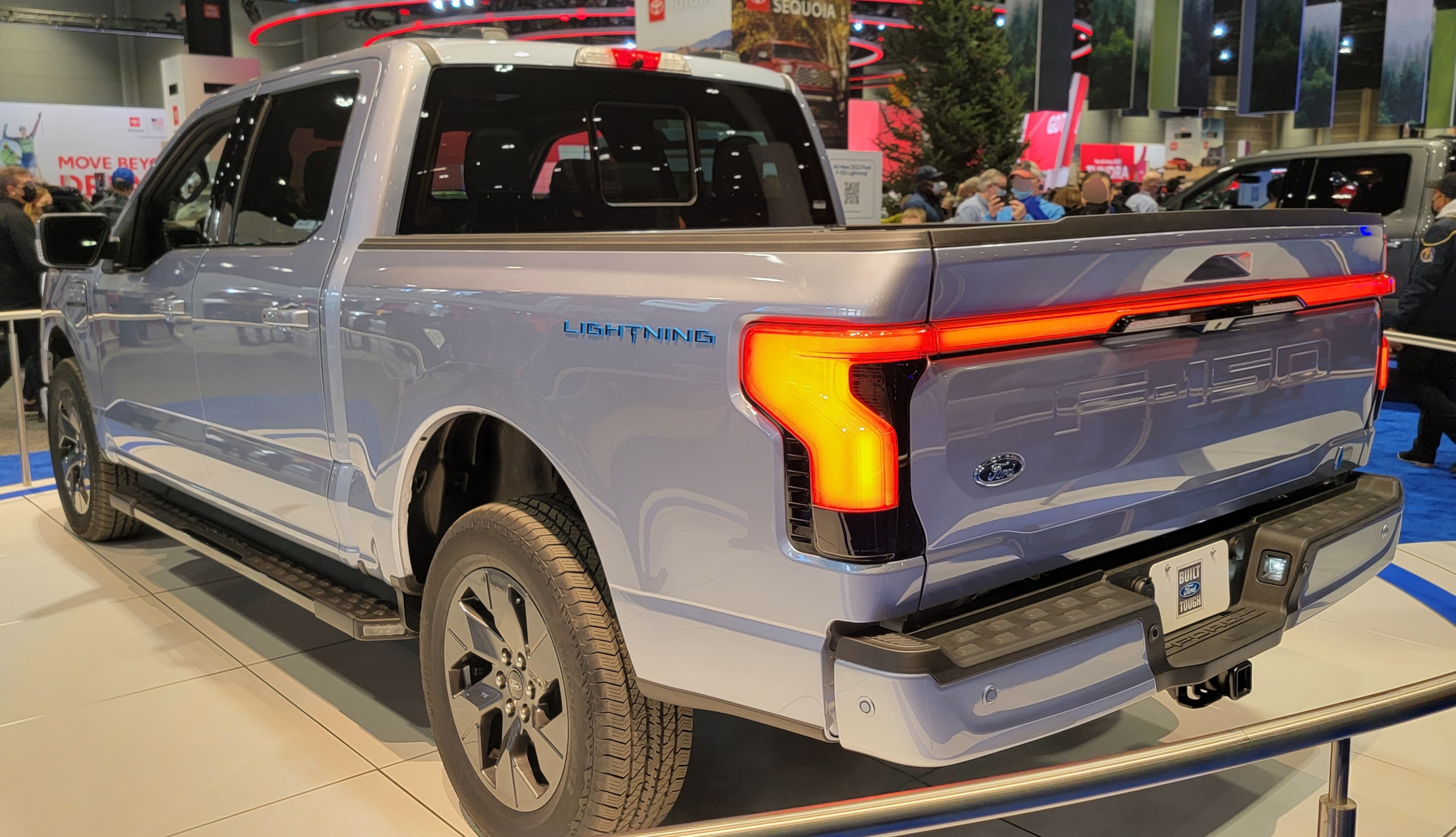
We have the Ford Lightning, which is an F-150, an all-electric F-150, it's amazing.
01:39
They are amazing, but there are downsides, and that's what we're going to talk about
01:44
Here are you the real reasons why EV adoption went down the tubes, why it failed, why they
01:53
had to come up with a $7,500 incentive paid by the taxpayers to get people to buy the
01:58
things, and, you know, is it really getting any better?
02:03
Because I don't think it's going to get better.
02:06
I think that the reasons to not buy one are way more persuasive than the argument to buy
02:16
As I said on this show many times, you're nuts if you buy an EV.
02:22
If you're going to get one, you better lease it because you don't want to be stuck with
02:27
that thing at the end of 36, 48 months, whatever the lease is.
02:33
You know, if you buy one, you finance it for 84 months.
02:38
Who knows what the status of the battery will be?
02:43
You know, as far as the value of it is concerned, even a year after you buy it, I mean, you're
02:48
going to be so far upside down if you finance it for a long term and don't pay much down
02:52
that, you know, you're stuck.
02:55
The only way out is bankruptcy.
02:57
Okay, off the tirade, we'll talk about those reasons for the failure of the
03:01
EV push here in just a minute, but on a brighter note.
03:05
So I have a 1965, sorry, I have a 1966 Mustang Fastback in my showroom here at Gateway Ford.
03:14
It's beautiful, completely restored to a very high level.
03:18
And just something moved me this morning when I came to work, I said, you know, I'm
03:22
going to pull out all that paperwork on that thing again and just kind of go through
03:26
I like to do that occasionally on some of these old cars and just grab a history
03:30
book or something from my past, it just, it's a good way for me to start my day.
03:37
So I came into the dealership, I went to the closet where I keep all this stuff, pulled
03:41
the box out, pulled a notebook out that had all the information about that car.
03:45
It was sold new in 1966, it was ordered from a dealership called Bishop Hansel Ford.
03:53
Now that dealership still exists in Santa Rosa, California.
03:57
It's called Hansel, H-A-N-S-E-L Ford now, but the same family owns the dealership.
04:06
And so I went to my computer, I Googled it and there they are.
04:11
And I saw a phone number and I said, okay, it's like 730 or 7 o'clock in California, I
04:16
want to wait until it's 8 o'clock in California and then I'm going to call them.
04:22
And I was looking through the paperwork and I've got the original window sticker, $3,601.
04:29
And let's see what else, the bill of sale.
04:32
The guy was 24 years old, he went to that dealership, ordered the vehicle, it was built on the,
04:39
on the southern end of the Golden Gate Bridge, south of San Francisco in a place called
04:43
San Jose, California.
04:47
Ford Mustangs were built in one of three places in Dearborn, Michigan, San Jose, California
04:55
So this car was built in San Jose, so it didn't have very far to go.
04:59
It traveled up the peninsula there, went through San Francisco, traveled across the
05:03
Golden Gate Bridge, went up another 20 miles or so to Santa Rosa, California where
05:10
an excited 24-year-old young man picked up his K-Code Mustang, four-speed manual.
05:16
He kept that car, folks, until he was in his 70s.
05:22
He used it every day, that was his daily driver, I talked to his best friend who ended
05:27
up with the car and he said, Lenny, that car used to have a trailer hitch on it.
05:33
Imagine that, a 66 Mustang fastback with a trailer hitch pulling a utility trailer.
05:38
This young man was a general contractor throughout his whole life and his friend said, Lenny,
05:46
I remember seeing the car without the trailer on it, the trunk up and the whole back end
05:51
full of tubal force just going down the road and this would be in the 80s or the 90s when
05:58
And folks, this car is not easy to drive, manual transmission, heavy clutch, no power
06:05
steering and no air conditioning, but it's pretty and it was his and he loved it and it
06:14
became a valued friend to him, obviously.
06:19
He lived on a boat, folks, yeah, in Sausalito, California, just right on the other side
06:26
of the Golden Gate Bridge, he had a little sailboat and that's what he lived on and
06:31
the car sat in a parking lot there at the marina and then he would go out and remodel
06:38
people's bathrooms.
06:40
I mean, that's just what he did.
06:42
So he got sick, sold the car to his friend, his friend was going to restore it.
06:48
This guy was a Pebble Beach judge and a Pebble Beach restorer, so I mean, this guy was
06:55
highly qualified, he used to restore Packards and really expensive cars from the 30s and
07:00
he was going to restore this car, but he just, he just ran out of time and he was getting
07:05
older and he just decided not to.
07:06
So he sold it to somebody in the middle part of this country, I can't remember exactly
07:11
where it went next, but whoever he sold it to, they restored it to a very high level.
07:16
You know, obviously they were trying to win some type of competition because it even
07:21
has the markings that they would put on it from the factory when it was shipped
07:27
It was like the thing just was unloaded off the truck and that's the level that it was
07:35
Somehow it ends up in the inventory of a used car dealer and basically an online used car
07:41
dealer, he operates out of a warehouse and it was listed on this website that I use
07:46
all the time called bringitrailer.com.
07:49
That's where I saw it and I was tracking it, it's a seven day auction and I was
07:55
tracking it just to see what was going to happen to it and somebody made some kind of
08:00
a negative comment about a dent that it had on one of the, when it's a unibody vehicle
08:06
but it has these frame supports, these body supports.
08:09
And there was a little dent in one of those supports and somebody made a comment, well
08:16
you know if they restore the whole car, why didn't they fix that dent?
08:20
Well the bidding just stopped.
08:23
It was like they just slammed on the brakes and it was way too cheap so I started bidding
08:29
and it was just me and this other guy and then he jumped off and I ended up with a great
08:33
buy in that car and now it's on my showroom floor and it's probably worth $30,000 maybe
08:39
even more than that, more than I paid for it and I feel good about that.
08:45
But I wanted to share it with somebody from that dealership in California so I called
08:52
and some young fellow answered the phone and I told him who I was and that I was a Ford
08:56
dealer and he said, oh so you're a Ford dealer?
08:58
You own a dealership?
08:59
I said yes I do and I said I'd love for you to get in touch with Mr. Hansel and give
09:03
him the information about this car.
09:05
I'm not trying to sell it to him because I really don't want to sell it but I think
09:09
he needs to know that it exists and I'll send him all the paperwork and you know
09:14
it has signatures from people that were working at the dealership back in the 60s.
09:20
I just thought it would be cool and he said, I agree with you, please email all
09:24
that information as much as you can to me and I will make sure that he sees it.
09:28
So I'm just kind of waiting, I'm excited to see if they do respond.
09:31
Okay I'm going to take my first break, I'll be back in just one minute.
09:39
Okay so what's going on with EVs?
09:42
Why are, well basically what are the downsides of electric vehicles because
09:47
that is what's driving down sales and I mean so we have this surge,
09:52
it's an artificial surge and they're going to fall off the face of a cliff after that.
09:59
This dealership that I was talking about, Hansel Ford,
10:01
I was just looking at his inventory in California right now.
10:04
He's got 37 Mach-E's in stock, I mean that's a you know for
10:10
a pretty good sized dealer in the eastern part of the, well it's the
10:15
heartland of America, that's probably a five year supply of Mach-E's.
10:22
You know I'm glad I don't have one in stock because I don't know who I'd sell it to.
10:26
I better sell it before, well if I had one, it'd have to go before September 30th
10:31
because after that it would probably become a permanent member of my family
10:36
or my car collection, an unwelcome one at that.
10:41
So the downsides of EVs, this is why selling EVs is a problem.
10:46
Number one, limited driving range.
10:49
You know when I fill up my F-150 it says that I can go about 670 miles
10:55
before I need to fill up again.
10:58
Most EVs, you know if they reach 300 miles it's a miracle.
11:06
So people have range anxiety even though EV ranges are improving
11:10
and they have improved a lot.
11:12
When the Nissan Leaf first came out, the first commercially viable EV on the market
11:18
was called the Nissan Leaf, LEAF.
11:22
The range was 75 miles.
11:25
The new Leaf that's coming out this year will have a range of about 300 to 315 miles
11:32
which you know, good for them, that's a great improvement.
11:36
But they can still travel fewer miles than an internal combustion engine can.
11:43
And plus, charging.
11:47
Fast chargers can replenish 80% of a battery in somewhere around 30 to 60 minutes.
11:54
But home level 2 charging, which you have to get set up at your house,
11:58
takes about 8 to 12 hours to charge one, which isn't a problem.
12:02
If you drove it all week, you come home, you park it in your garage,
12:05
you plug it in, you know, by that evening it'll probably have a full charger the next day
12:11
and then maybe you can drive the next full week if you don't drive more than 300 miles.
12:18
So is that the way you want to live where you can't make it to the beach
12:25
and you're driving along and you get off of an exit and you've got 15 miles of range left
12:30
and you can't find a charger anywhere or the one that you pull up to doesn't work.
12:34
This has been a problem.
12:37
Another reason or another downside is battery degradation, replacement cost.
12:44
So over time lithium ion batteries lose capacity over time, reducing range and performance especially
12:51
when it's hot or when it's very cold.
12:55
And then it is expensive, folks.
12:59
We had to replace a battery in a Ford Transit EV.
13:04
That's the big van, big commercial van.
13:06
The retail price on that battery was $29,000.
13:10
Now granted, if you buy a gasoline engine vehicle and the engine goes bad after 150,000, 200,000 miles,
13:19
I mean what's that going to cost?
13:21
It's not going to be cheap.
13:23
It's a diesel engine that could approach $20,000 total.
13:26
But you know, most gas engines you can replace for anywhere from $7,500 to $10,000.
13:31
Still a lot of money.
13:32
But most people don't do that because they just, they don't wear out.
13:36
You know, you don't have to replace them.
13:38
Most people trade before them.
13:40
But we don't know what EVs are going to do and that secondary market is just not good
13:45
because the people in the use car market, they don't want to buy a car
13:49
and they don't have to risk putting a $20,000 battery in something.
13:54
It just doesn't make sense.
13:57
Okay, another reason, charging infrastructure limitations.
14:00
You know, you have limited driving range.
14:04
It takes a while to charge.
14:06
And then if you live in a rural America, you can't find chargers.
14:13
Now they just put some men over here at a restaurant next to us on the front of the chargers.
14:17
They are level three chargers and they're the fast chargers,
14:21
which you're not supposed to use except occasionally if you own an EV
14:25
because it can damage the battery over time.
14:29
But you know, we've got those chargers here,
14:31
but they're the only level three chargers in a town of 16,000 people.
14:35
A county of 65, 70,000 people.
14:38
There's probably more in Johnson City or Knoxville and different places like that.
14:42
But again, you don't know where they are and you don't know if they're going to work.
14:46
Now Tesla has a pretty substantial network,
14:49
which most manufacturers are allowed to use now.
14:52
Tesla has opened the door for Ford and Chevrolet and Honda
14:59
and all the different manufacturers to be able to charge using their network.
15:02
But what does that cost?
15:04
Well, it costs almost as much, about 75% as much on a fast charger
15:08
to get a full charge as it does to fill up your tank with gas.
15:13
Unless you have a really big gas tank.
15:16
I mean, what's the point?
15:19
And if you do happen to run into a situation where your EV won't hook up to that particular charger,
15:26
those kind of compatibility issues are, well, they can be frightening,
15:30
especially if you're about to run out of juice.
15:33
And there's no way to rescue you.
15:35
I mean, most record companies won't come and pick you up.
15:38
Your car won't budge.
15:40
You can drag it up onto the rollback and once they do get it to a service department somewhere,
15:47
it could be after hours, they're closed, their chargers are turned off.
15:51
You just don't know what you're going to run into in those types of situations.
15:56
Now the big argument on the left was, well, we don't want to damage our environment any more than it already is.
16:03
We've got to reduce global warming.
16:05
When you consider that EV batteries require lithium, cobalt, nickel,
16:10
and they all involve environmentally damaging mining, and there's a lot of geopolitical concerns.
16:18
I mean, right now, we have a pretty good supply of rare earth minerals in our country.
16:24
We just don't have the companies to process them. China does.
16:29
And China is restricting the flow of those materials to the United States now because of the trade wars,
16:37
probably for other reasons other than that.
16:41
But there's a tremendous amount of damage done to the environment through mining.
16:47
And these EVs require those rare earths to be able to manufacture them.
16:56
And then most of the electricity is powered by coal or natural gas,
17:01
so the carbon footprint of an EV may not be as clean as advertised.
17:06
So those arguments fall flat for most people.
17:11
And as I mentioned earlier, higher upfront costs because of the loss of the $7,500 tax credit and depreciation.
17:20
You know, sticker price EVs cost more than comparable gas vehicles despite some of the tax credits and incentives.
17:29
And you know, I'm just curious how banks and credit unions look at financing EVs,
17:36
especially if somebody's going into it with no money down,
17:39
because if they fail to make the payments and the vehicle ends up getting repossessed,
17:44
where the bank is going to lose a bunch of money when they take it to the auction,
17:48
of course they can turn around and sue the people for defaulting on the loan,
17:52
but there's no guarantee that they'll be able to pay it.
17:54
They may just file bankruptcy and it's all over with.
17:57
But I think the biggest single risk to you as a consumer if you buy an EV is going to be depreciation risk.
18:05
So that could be caused by a number of different things.
18:08
Rapid improvements in the technology of batteries could make your battery and your vehicle obsolete.
18:15
If they figure out ways to make the range better on the newer models coming out,
18:19
then again, you're obsolete and there's no market for your vehicle.
18:24
And if the new EVs offer a whole combination of things, including faster charging,
18:31
then that makes matters even worse for your resale value.
18:35
So to me, that's the biggest risk that EV owners face.
18:40
That's why you need to lease it if you're going to get one at all.
18:42
Okay, I'm going to take my last break. I'll be back in just one minute.
18:50
What about hybrids, Lenny?
18:52
Well, hybrids are fine.
18:54
I mean, still, there's a lot of tech.
18:56
There's a lot of extra weight on that vehicle.
18:58
Do they get better gas mileage?
19:01
But how much extra do you have to pay to get a hybrid?
19:04
Just go to a Toyota dealership.
19:06
Tell them you want a hybrid.
19:08
Watch what you have to pay for it.
19:10
SRP plus whatever add-ons that they have onto the window sticker.
19:14
Well, you've got to buy this package.
19:16
Well, what's that package?
19:17
Well, if you want the car, you've got to buy the package.
19:20
Well, that's not fair.
19:21
Well, no, it's not fair, but that's the way it is.
19:23
Well, what if I buy one of those without a hybrid?
19:26
We'll discount the whiz out of them and you get a rebate as well.
19:30
What's the price difference, folks?
19:33
Are you really buying it to save money?
19:37
Because you can save money on the front end.
19:39
You can save money now instead of saving money over the next few years with gasoline savings.
19:47
It makes no sense to go hybrid.
19:51
Plus you have a whole lot more complexity in your vehicle.
19:56
And that vehicle runs out of warranty and you've got to replace the hybrid motor.
20:01
You've got to replace the battery.
20:03
There's a whole lot more expense there that you're going to have to worry about.
20:08
If you have a problem, now, if you're under warranty for an extended period of time
20:12
or you buy a service contract that will protect you for an extended period of time,
20:17
then that's part of the equation, but the rest is how much extra you have in the bank.
20:23
Now you're having to buy a much more expensive extended service protection.
20:28
You're paying more for the car.
20:30
You're $5,000 to $8,000 more for this hybrid experience.
20:35
Then you would have been if you bought just a gasoline engine.
20:39
And you could use that extra money to buy a timeshare.
20:44
Do people still buy those?
20:47
I hear all these commercials of all these companies that will help you get out of your timeshare.
20:52
It makes me not want to get into one.
20:55
Maybe you should think about not getting into an EV or a hybrid.
21:00
Just something to think about.
21:02
Thanks for listening to this edition of My Car Guru.
21:05
Don't forget the My Car Guru guidebook is available to you that will save you literally thousands of dollars
21:14
if you take the advice to heart and you use the strategies that I offer
21:22
when you go in to buy a car or you go in to get automotive service
21:26
or you go to a body shop to deal with an accident and get that repaired.
21:30
I mean, there's just so many ways to get taken advantage of
21:33
and if you follow just my negotiation strategy, it's so easy.
21:37
Just read it and do it.
21:39
And you will save thousands of dollars on the purchase of a new vehicle.
21:43
Just send me your email address to 552, sorry, my cell phone, 423-552-2020.
21:52
I'll send you the guidebook for free.
21:55
If you don't have a cell phone, then just have somebody send me your address
22:00
or you can send me your address and I'll print it out and I'll mail it to you.
22:06
How's that for a deal?
22:07
Well, thanks for listening to this edition of My Car Guru and I'll see you next time.