Donnie Gold is described here as a “car specialist” associated with Broad Arrow. The host credits him with helping advance his career in the collector-car world.
To “submit cars to auction” means sending a car to an auction company so it can be sold to the highest bidder. The host is describing a job where he helps choose and place cars for sale.
In collector-car circles, a “car specialist” is basically a pro who knows the market and can match buyers and sellers. It’s less about cold sales and more about trust and relationships.
Here, “personal network” means the contacts the specialist has built over time. For rare collector cars, those connections can be what gets you access to the best opportunities.
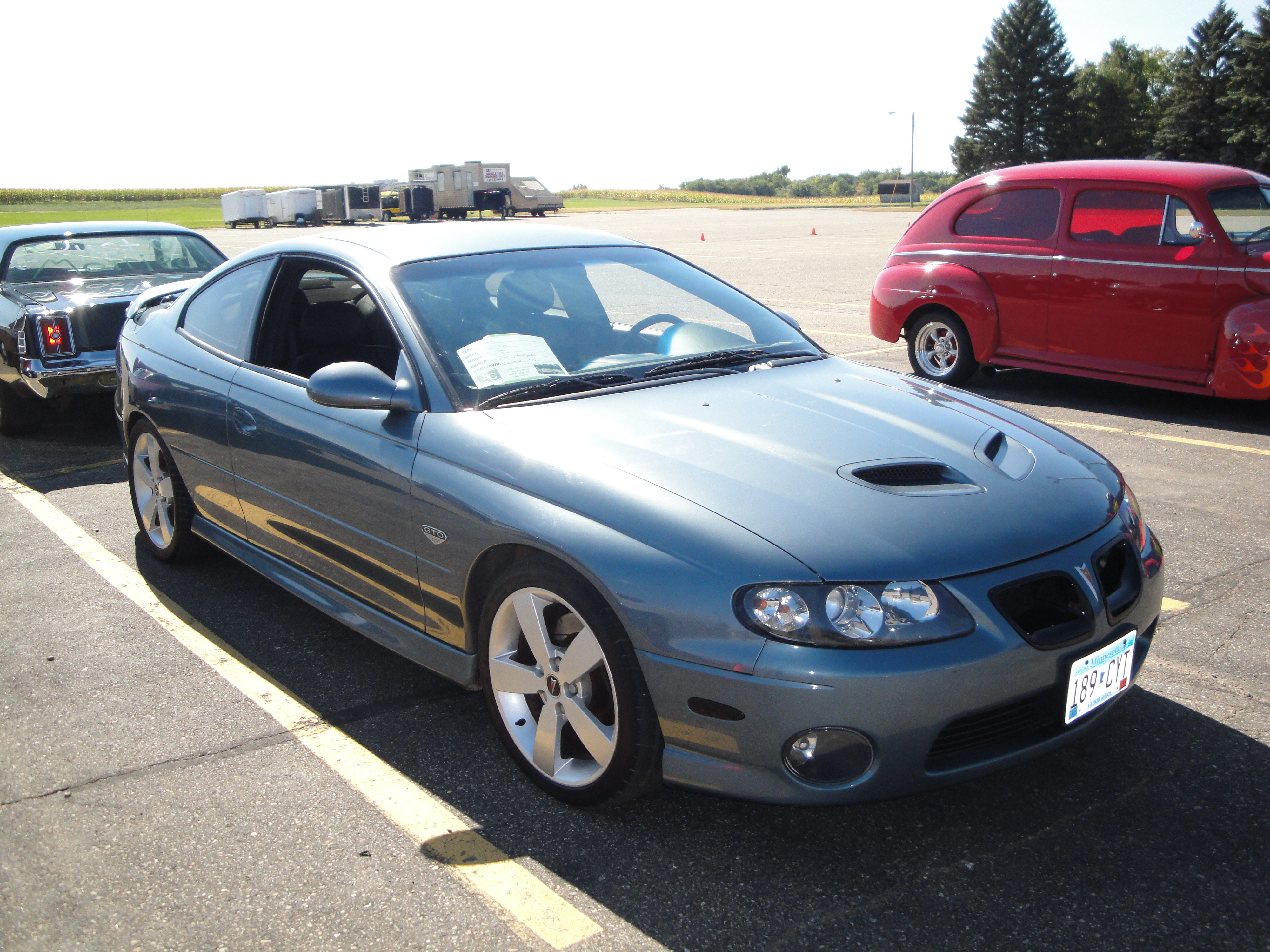
The Pontiac GTO is a famous old American performance car. People love it because it’s a classic “muscle car” and it has a big, powerful engine feel that collectors chase.
The 2011 Ford Mustang is a popular American sports car that a lot of people buy and sell. Because it’s common, it’s the kind of car you’ll see often when someone needs help selling a vehicle.
Carvana is a company that sells used cars online. People mention it because it can be an easy way to sell or buy a car without going through a dealership.
An “unrestored” car hasn’t been rebuilt or repainted to look brand new. Collectors like them because they may still have more of the original parts and original look.
“Special ordered” means the buyer picked specific options from the factory. Collectors often care because it can make the car a one-off or very uncommon configuration.
Term
AC
“AC” means air conditioning. The speaker is pointing out that this performance car also came with factory AC, which is a desirable option for many collectors.
A “four-speed car” means the gearbox has four forward gears. Collectors care because the transmission setup is part of what makes a particular car configuration rare.
A pinstripe is a thin decorative stripe on the car. The red pinstripe is one of the details collectors look for because it can indicate how the car was originally ordered.
The Pontiac Historical Society is mentioned as a source for paperwork about Pontiac cars. The idea is that you can request records to help confirm what your car originally was, like options and paint details.
A build sheet is paperwork from the factory that shows how that exact car was ordered and assembled. For old cars, it’s especially useful because it can confirm the original paint and options.
A Chevrolet Corvette is a sports car made in the United States. People bring them to car shows because they’re fast and well-known. In your podcast clip, it’s mentioned because it was a special car they brought to an event.
Place
Cincinnati Concord
This sounds like a car event or location near Cincinnati where the car was recognized. The important part is that it won an award there.
A “preservation award” is given to cars that are kept in original or very well-maintained condition. It’s about protecting the car’s history, not customizing it.
“Numbers matching” means the important parts in the car are the original ones from when it was built. Collectors like it because it helps confirm the car is authentic, not a mix of replacement parts.
“Factory original” means the car still has the parts and setup it left the factory with. Collectors care because it’s harder to find and usually worth more.
Ferraris are cars made by Ferrari, a famous Italian supercar company. The host is saying those are the obvious cars people would expect Jay Leno to own.
Term
V16
A V16 is a very large engine with 16 cylinders. It’s uncommon, so bringing it up is a way of saying the collection is missing something truly rare.
The Cadillac V16 is a very rare Cadillac with a 16-cylinder engine. It’s the kind of car collectors talk about because it’s unusual and represents a specific time in automotive history. The podcast mentions it when discussing what cars someone owns.
The Ferrari 275 GTB is a famous older Ferrari from the 1960s that collectors really value. The host brings it up to show the difference between naming a model and identifying the exact individual car.
A VIN is like a car’s unique ID number. Collectors use it to make sure they’re talking about the exact same car and to check its history and build information.
“K-Code” is Ford’s label for a particular Mustang engine option. It matters to collectors because it usually means the car left the factory with a more performance-focused setup than the base versions.
Topic
Milly Island car week
This sounds like a car show or car-weekend event where collectors bring special cars. It’s the kind of place where you can see rare vehicles and talk about their history.
The Pontiac Firebird is a muscle car from Pontiac. Some versions are harder to find and can be collectible. In the podcast, it’s mentioned with a story about an older Firebird that was bought new and then disappeared for a long time.
The Ferrari Daytona SP3 is a modern supercar made by Ferrari. It uses a front-engine setup and a V12 engine. In the podcast, it’s mentioned as an example of how Ferrari is building new cars while keeping that classic style.
A “V12” is a big engine with 12 cylinders, and it usually sounds and feels special. “Manual” means you shift the gears yourself instead of relying on an automatic transmission.
“Analog” here means the car feels more old-school—more mechanical and less computer-controlled. Enthusiasts often like it because it can feel more direct and simple to drive.
The “collector car market” is the world where rare cars are bought and sold by collectors. When the economy is shaky, prices can drop and auctions may fail to sell cars at expected prices.
The Ferrari 456 is a Ferrari with a big V12 engine mounted in the front. It can be had with either a manual or an automatic, and collectors sometimes like it because it can feel like a “better deal” than the more famous Ferraris.
The Ferrari 550 Maranello is another famous Ferrari V12 GT from the late 1990s era. In this discussion, it’s used as the “more popular” car that made the 456 seem less flashy to buyers.
“GTP” is a label that usually points to a race-style prototype category. The host is basically saying you might spend less on a classic road car instead of paying for the more expensive, race-associated option.
“Provenance” means the car’s background—its ownership and history, backed by records. Collectors like it because it helps them feel more confident about what they’re buying.
The Ferrari Daytona is one of Ferrari’s most famous classic models. It’s a “dream car” for a lot of enthusiasts because it’s rare and has a big reputation.
That phrase means making replacement parts using a 3D printer. The speaker is basically saying it’s a hassle to rely on that just to keep the car looking right and working properly.
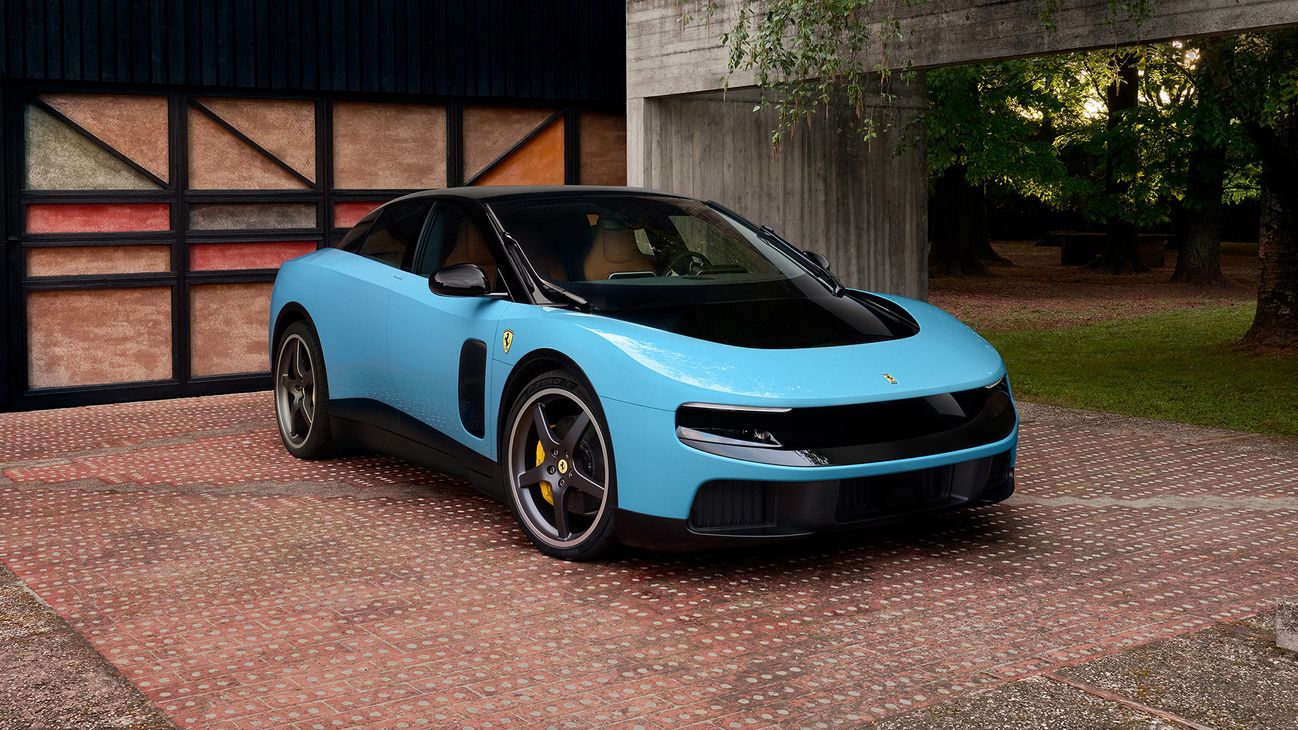
The Ferrari Luce is a Ferrari model that was recently revealed. The podcast mentions it because people are surprised and unsure about it. The focus is on the reaction to the new car announcement.
Vlasi Invitational is a specific car event happening at Sonoma Raceway. The host describes it as something that’s fun for families, not just hardcore racers.
The Ferrari 250 GTO is an extremely famous and valuable classic race car from the 1960s. Seeing multiple “250 GTOs” in one place is a big deal for collectors.
Jeff O’Neill is the person the host interviewed. He’s described as the founder of the event, and he shared a story about driving a race car.
Term
factory Bernadalee Jones race cars
“Factory” here means the car was set up by the top team, not just a regular private car. The host is saying the reporter got to experience a very serious race car.
A car show is an event where vehicles are displayed for public viewing and often judged on criteria like originality, condition, and presentation. In collector-car culture, car shows are a major place to meet owners, learn histories, and build interest in specific models.
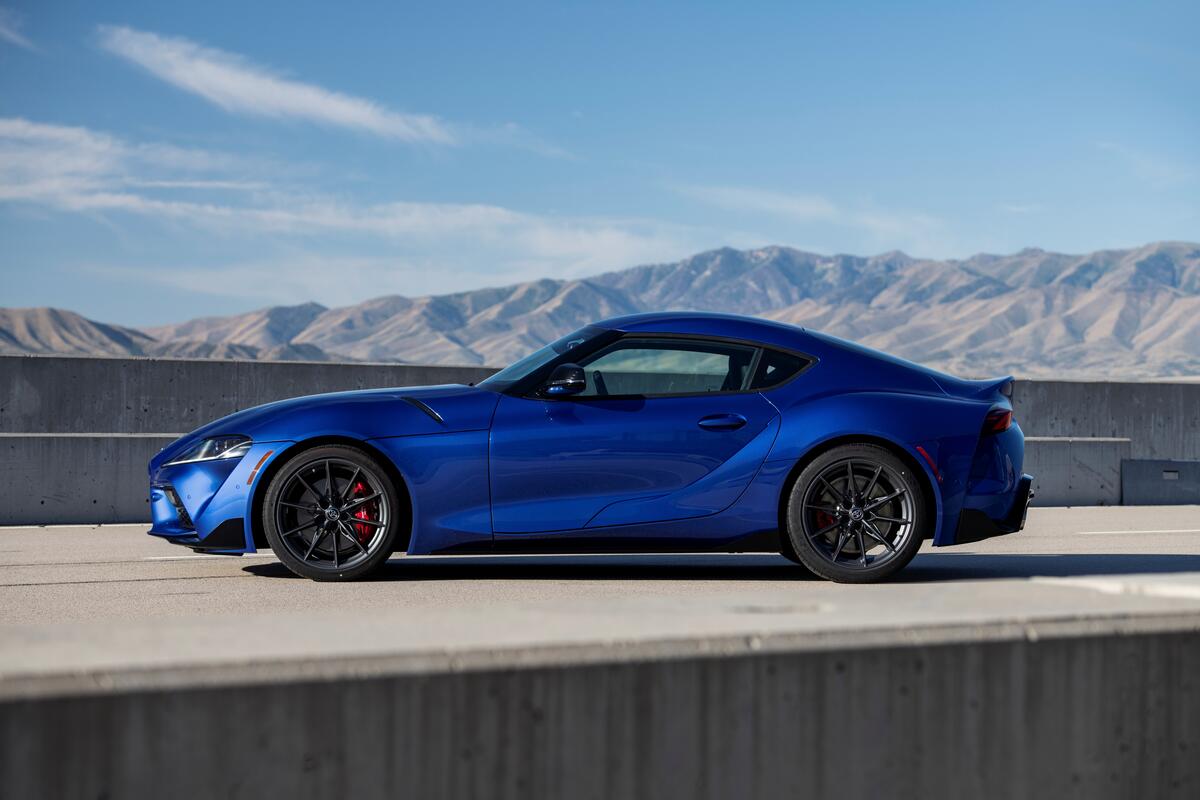
The Toyota Supra is a sports car built for performance. It’s popular with car enthusiasts and often appears at car shows. The podcast mentions it in a conversation about people who judge and support the hobby.
The Ferrari F 40 is a famous old-school Ferrari supercar. People love it for its loud, exciting V8 feel and for details like the pop-up headlights that make it look and sound dramatic.
The Porsche 959 is a special Porsche from the late 1980s that’s known for cutting-edge tech for its time. People talk about it because it feels like an engineering experiment that became a legendary collector car.
Term
SC version
“SC version” sounds like a special upgraded version of the car made by a company or tuner. It’s not just a normal factory model name—it usually means a particular modification package.
Pop-up headlights are headlights that hide in the car’s front until you turn them on. When activated, they pop up, which gives the car a distinctive look—especially on cars like the Ferrari F 40.
The Ferrari F 50 is another Ferrari supercar, but the host is describing it as easier and more enjoyable to live with than the F 40. They’re comparing how each one feels as an ownership experience, not just how it looks.
The Ferrari F50 is a very rare, race-inspired supercar with a V12 engine. People compare it to the Ferrari F40 because both are famous, but the F50 is usually considered the rarer, more exclusive one.
“Open air V12” means the car has a V12 engine and the engine area is more exposed to airflow. It’s often done to help cooling and to give the car a more dramatic, race-like presence.
The Ferrari F40 is a supercar built to feel more like a race car than a comfortable street car. In this discussion, it’s described as the one that makes more sense for track use compared with the Ferrari F50.
“Market data” in collector-car context means real-world pricing and trading information—what similar cars sell for, how demand shifts, and how scarcity affects value. The host contrasts that with personal taste, which can drive what enthusiasts actually want to own or drive.
Concept
personal subjective side of automotive enthusiasm
This is the “gut feeling” part of car enthusiasm—what you personally connect with. Even if the market data says one car is better, your taste can still lead you to a different choice.
Concept
valuation trends
“Valuation trends” means whether collector car prices are going up or down over time. It’s basically the market’s direction for different cars.
The Mercedes-Benz 300 SL is a famous old Mercedes that collectors love. It’s especially known for the gullwing doors, and it’s one of the most expensive and sought-after cars from that period.
Term
rudge wheels
“Rudge wheels” means wheels from the Rudge brand. Collectors sometimes pay attention to wheel brand because it can affect whether the car looks and spec’s like the original version.
A “collector’s ladder” is the idea that you start with more affordable collector cars and work your way up to the most expensive, famous ones. It’s like leveling up in the hobby.
The host plans to include a wrap-up section with notable auction moments and record-setting sale prices. This is meant to give listeners concrete, recent examples of what’s driving collector interest.
Pagani is a luxury supercar brand from Italy. People talk about the newest Pagani models at car shows because they’re rare and expensive, so they draw attention.
“Brass era” is a nickname collectors use for the very early days of cars, usually around the early 1900s. Many of those cars had lots of brass trim, and collectors group them together when talking about value and auctions.
This is basically a joke about how car talk can sound super technical and confusing. The “Chrysler Turbo Rotambulator transmission” is presented as an example of made-up-sounding jargon, not something you’d find in a real car spec sheet.
A manual transmission is a car gearbox where you choose the gears yourself. You use a clutch pedal and a shifter to change gears.
Concept
restore one of these cars
Restoring a car means fixing it up to look and work like it used to. The host is saying newer technology can make that harder because parts and know-how may be more difficult to find.
Term
fine tooth comb
This phrase means checking something very carefully. For a collector car, it’s like looking over every detail so you don’t miss hidden problems.
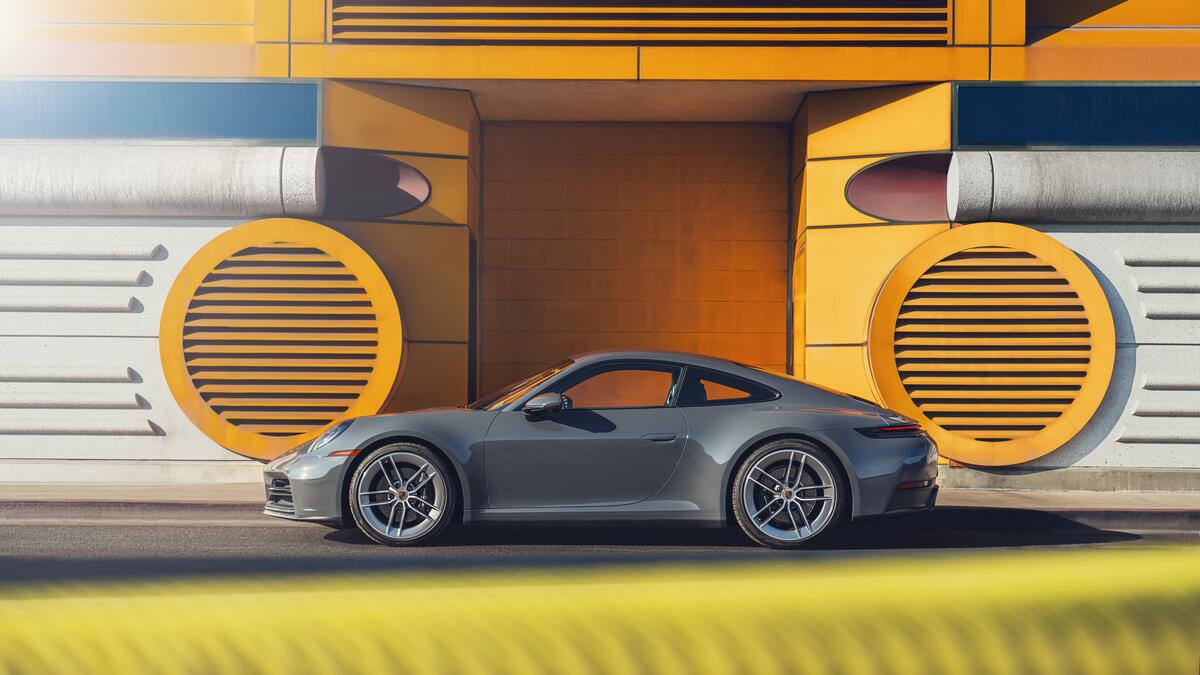
“996” is an older Porsche 911 generation from the late 1990s/early 2000s. A guide would explain what makes that version different and what problems you should look for when shopping for one.
Concept
transactional cars
“Transactional cars” is a collector-car framing for models that were often bought and sold as practical, everyday “transactions” rather than treated as long-term, enthusiast icons. In a buyer’s guide context, it usually signals that the car may have more variable ownership history, so due diligence matters.
Term
ignition on the left
This is a “fun fact” about where the ignition switch is located in the car. Instead of being in the usual spot, it’s on the left, and that kind of detail can be part of what makes a particular Porsche generation feel unique.
“930” refers to a Porsche 911 Turbo. People called it a “widow maker” because it could be really hard to drive fast—its power could feel abrupt, and if you got it wrong it was easy to lose control.
The Porsche 356 is an early Porsche sports car that helped define what people love about classic Porsches. Here it’s being highlighted as a collector car—someone bought a 1960 example in 1961 and still drives it.
The Porsche 935 “long tail” is a special race version of the 935 with a longer rear shape. The long tail was made for better high-speed stability, and it’s one of the reasons the car is so recognizable.
Car
914 6 GT's
The Porsche 914/6 GT is a special 914 variant built with a six-cylinder setup for racing. The point in the conversation is that collectors also chase these race versions, not just regular street cars.
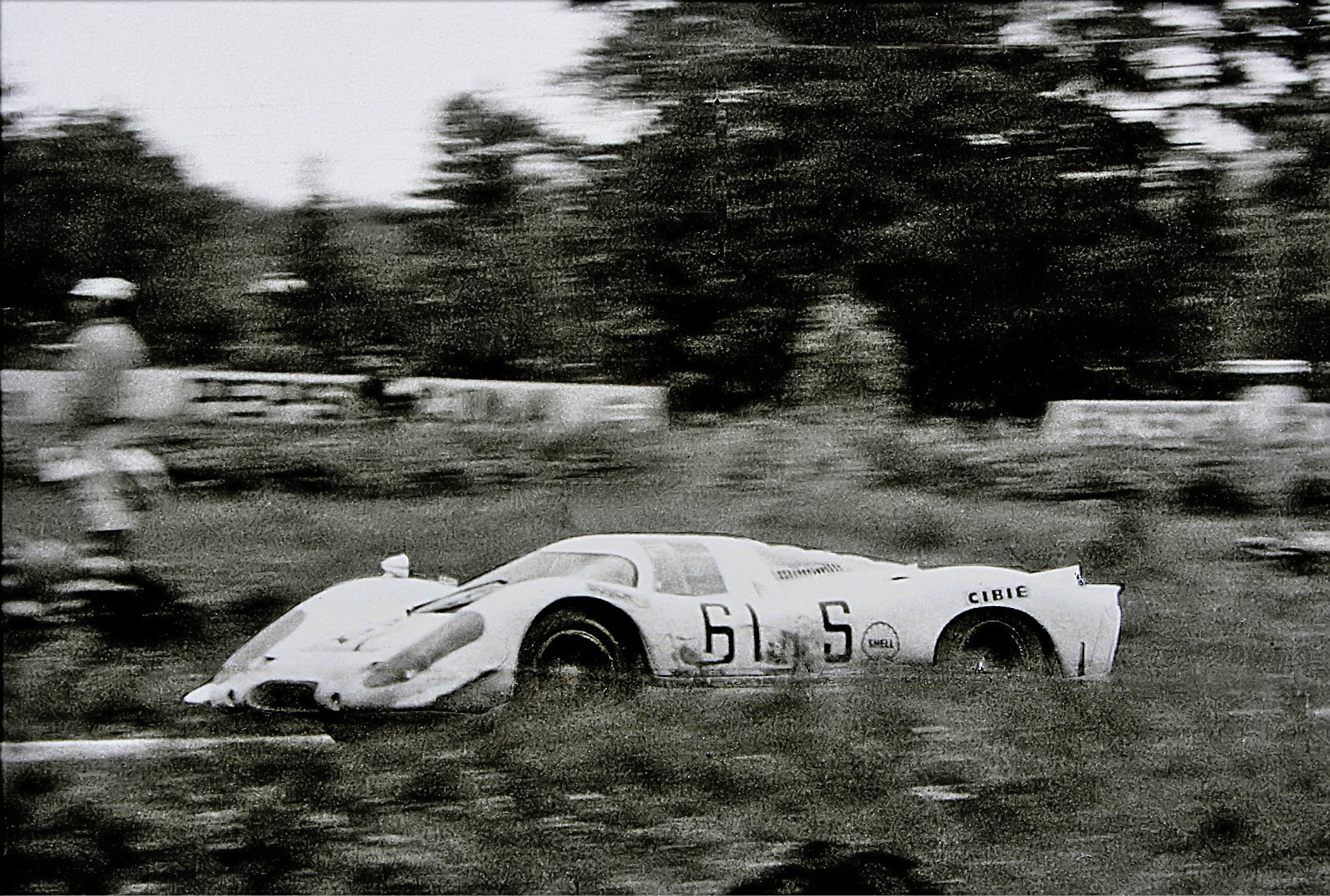
The Porsche 917 is a famous old race car Porsche built for long-distance endurance racing. People love it because it has a huge racing legacy, and there are different versions that were used in competition.
The 2014 Cayenne GTS is a sportier version of the Porsche Cayenne SUV. The discussion is about whether cars like this could become desirable collector vehicles in the future.
“Future collectible” refers to a car that may not be highly collectible today, but is expected to gain collector interest as it ages—often because of limited production, enthusiast appeal, or a strong brand/motorsport connection. In collector-car discussions, it’s a way to set a cutoff for what’s worth including in a book or guide.
It means the community and market for cars people collect—usually because they’re rare, interesting, or have history. It’s more than just owning a car; it’s about preserving and valuing it over time.
“Electric motors” refers to propulsion systems that use electric traction motors instead of (or alongside) internal combustion engines. In collector-car discussions, the concern is often that electrified components and control electronics may be harder to service or replace decades later.
“Computer nannies” means car computers that step in to control what the driver is doing—often to prevent skids or mistakes. The speaker is saying that can make the car less simple and more dependent on electronics.
Term
Mechanical stuff breaks
The idea is that mechanical parts wear out or get damaged in ways mechanics are used to fixing. So, even when they fail, they’re often easier to diagnose and repair than electronics.
LIVE
Brake Fix Podcast is all about capturing the living history of people from all over the
auto sphere, from wrench turners and racers to artists, authors, designers, and everything
in between.
Our goal is to inspire a new generation of petrolheads that wonder, how did they get that
job or become that person?
The road to success is paved by all of us because everyone has a story.
For years, Greg Stanley has been the voice-guiding enthusiast through the fast-moving, often unpredictable
world of collector cars.
As the host of the Collector Car podcast, he's interviewed industry leaders, decoded
market trends, and helped listeners understand not just what cars are worth, but why they
matter.
But he's also the author of The Enthusiast Guide to Collector Cars, a book that distills
decades of passion, research, and real-world experience into a roadmap for anyone who
loves automotive history and wants to navigate the collector landscape.
From blue-chip classics to emerging icons, Greg brings clarity, curiosity, and a genuine
love for the hobby.
And today he joins us to talk about the stories behind the cars, the people who collect them,
and the evolving culture that keeps this world so endlessly fascinating.
And with that, let's welcome Greg to Brake Fix.
Thanks for having me, man.
I appreciate it so much.
Greg, like all good Brake Fix stories, there's always a superhero origin, so let's talk about
yours.
What first pulled you into the world of collector cars, and when did you realize this passion
was going to then shape your career?
Like everybody else started when I was a young kid, Hot Wheels.
My mom used to draw, you know, little stick figure versions of cars when I was a little
kid that probably ingrained in me somehow.
But honestly, it wasn't until I started my own podcast.
You know, I always tell people, if you're interested in something or if you have your
own business, you should always have your own podcasts.
And never worry about downloads.
Don't worry about views.
It's about the people you meet, what you learn, and the subjects, you know, that you discuss.
And so years ago, I started a podcast that wasn't about cars, strangely enough.
It was called Learn From Others, and it was a career podcast sharing career journeys with
high school kids.
And it was really, really cool.
I interviewed everybody from, like, the director of Hamilton, who was the speech writer for
Ronald Reagan.
But it never really got legs of its own.
And at the end of each episode, I wanted a car aspect.
And so I would always say, well, if you're a surgeon, here's the kind of car I think
you should own.
So it was always a fun way to work in classic collectible cars at the end.
And finally, one of the guys, when we weren't recording, it was the speech writer for Ronald
Reagan.
He's like, if people could describe you in two or three words, what would it be?
And I said, well, that's easy.
I'm the car guy.
You know, he's like, we should probably have a car podcast.
And so I started that up, the Collector Car Podcast.
That was just a passion project, you know, as I know, you know what that's like.
It's a grind.
I realize what a grind it is to do a weekly podcast.
But I found I had an unlimited curiosity for cars.
And so it was either learning about cars from an expert or it was me exploring a subject
about cars I was always curious about, or it was talking about valuation trends, you
know, so I just kept on plugging along.
And I just happened to be scrolling on LinkedIn one day.
And I saw R.M.
Sotheby's had a car specialist position posted open, available.
What I learned out later is they always had that posting on there just to see who would
apply.
And I applied and as you would expect, I didn't hear anything back.
And I don't know, fast forward six months or so.
I had never been to an auction before in my life.
I'd never been to an R.M.
Sotheby's auction.
I'm in Cincinnati.
They had an auction up in Dayton, Ohio.
It was the John Dixon Collection.
He had passed away and he had some really cool Porsches.
So they were doing a one off, on-site auction.
And I said, you know what, I'm going to ride up there just to see what this auction thing
is all about, right?
And so I get up there.
Just from like TV, I recognized Donnie Gold, car specialist.
He's with Broad Arrow now.
Been into business for 40 years.
Great guy.
I don't know why.
I was like, Donnie, I submit a resume.
I never heard from anyone.
And he pointed to the president at the time, Kenneth Thine.
He said, go talk to that guy.
I'm like, okay.
Because of that, Donnie now takes full credit for my career in the car.
So I open a drink every time I see him.
Talk to Kenneth.
And he's like, ah, probably some HR filters kicked out your resume, you know.
He gave me his business card.
He said, send me your resume directly.
You know, I'll take a look at it.
And I didn't hear anything for like three months.
And I got a call.
And the call was basically, we're not going to offer you a job.
But we like the connections you're making in the podcast.
So we're going to pick up your podcast as our official podcast.
And you can be a car specialist consultant where you can submit cars to auction as you're
able to.
And so I started bringing some cars to auction and stuff like that.
In the meantime, I ended up bringing the Ferrari 330 LM 250 GTO, that's
Oh, for World Record price of $51.7 million.
That had a lot to do with our reputation.
It was relationships, obviously, but it was our own stuff that we sell into
Ulinn, how Coupe that really caught their attention.
Anyway, it's long story short.
I thought, well, you know what, that's through a part time deal.
Not that I could get another GTO, but why don't I explore this in a little bit more
of a full time fashion.
And so while I still consult with our own stuff, it means I'm pretty much doing it
freelance at this point.
So it's been an incredible journey.
So what you're saying is that job opening still exists on LinkedIn right now?
Probably.
Probably.
They're always looking, always looking.
And some people ask me, what does it take to be a car specialist?
I'm like, it is probably the hardest job I know of, mostly because it's built on
relationships and network, your personal network.
Right.
And even if you're the most connected person in the world, that doesn't mean
you're going to be successful because, you know, you might know Joe blow with
this great collection he wants to sell with our own stuff.
But if he's had a relationship with our South Abyss for 20 years, he can't be your
client, you know, and so it is really, really a tough job.
So the guys that do it, they do it every day, they're ingrained.
It's really, really hard to start out as your dream job because it's a really,
really tough job.
Well, we're going to come back to that in a second, but I want to dive a little bit
more into your past because there's a major thread that you can pull throughout
your writing, your newsletters, your photos, your videos, et cetera.
You have a certain fondness for a Pontiac GTO.
Do you want to explain what that's all about?
That was really weird.
That was really cool and really special.
And this is a scenario where I had a buddy of mine and he just had some friends
that needed help selling a car.
You get those all the time.
I just got one today and it's like a 2011 Ford Mustang, you know, with 16,000
miles and I'm like, all right, well, Carvana or whatever, you know, like it's a
very common car.
And this was a scenario where he's like, yeah, they want help selling their
dad's Pontiac.
And I'm like, all right, you know, that could be cool.
Probably not, but that could be cool.
And this is through text message.
So everything kind of came dripping in.
He's like, oh, apparently it's a GTO.
I'm like, well, that's cool.
Apparently his dad bought it new.
Well, that's really cool.
Apparently it's unrestored.
He got all the performance stuff on it.
So, you know, it kept getting better.
Anyways, as these pictures came in and it's unrestored, it's special paint,
it's special ordered, it's AC on a 389 Tri-Car, four-speed car, which extremely
rare, it kept getting better and better and better.
And so ironically, it was only an hour and a half from my house and any place
in the entire country, my friend was in Atlanta that called me.
It was an hour and a half from my house.
And so at a time that I went to go look at it, I was like, I got to buy this car.
There's just no way.
You don't come across original, family owned, unrestored, special spec, crazy
documentation ever.
So when I went out there, I had in my mind, I was like, all right, if I can,
I need to buy this car.
And I did.
I also saw that as my ticket to being on Shail in this garage, which is a whole
another story.
So that worked out well too.
What would you describe that color as?
So like a medium metallic gold, it's called Tiger Gold.
So they offered five special paint colors for that year.
And this was one of the five.
And what's interesting about it is it only came with a white or a black pinstripe.
But this owner had custom ordered or red pinstripe.
And what's really weird is in Pontiac World, they have the Pontiac Historical Society
or whatever it's the documentation you can order up that tells you about your car.
And even with that documentation, it says it's a special color, but it doesn't tell
you what the color is.
Even on the Vintag, it says it's a special color, but it doesn't say what the color is.
Now this is fortunate because it's an unrestored car.
So we knew it had Tiger Gold.
We knew it had the red pinstripe.
But when they pulled the car out of 40 years of slumber, they pulled the gas tank
and they found the build sheet, which is really crazy that it was still there.
And it said Tiger Gold red stripe.
You just can't ask for a better documentation than the original build sheet.
So yeah, it's a beautiful car.
I've never been a gold, you know, it's like anything else.
If there's a color of a car you don't like after you own one for a little while,
you'll then love that color.
So I really love gold cars right now.
With Pontiac celebrating its centennial, any special feels for you?
Being a Pontiac owner?
You know, not really, only because this car has been such a roller coaster ride
ever since the day we bought it.
Took it to Muscle Car and Corvette Nationals.
It was on the red carpet.
Invitational had on the Jay Leno show, took it to Cincinnati Concord, won the
preservation award.
And so it's like anything else.
When you buy a car, it's a whole journey with that car.
So I almost feel like, you know, it's great that it's the hundred years and I'm
not sure what's going to happen with the car right now.
As far as it relates to the celebration, but I've had so much fun with it.
It almost seems like, oh, that's cool.
But man, we've had such a ride so far.
So let's address the 900 pound gorilla in the room because other people are
probably thinking I've got a numbers matching factory original GTO.
How come I can't go on Jay Leno's garage?
How did you make that happen?
Yeah, this is a crazy story because I'm very tenacious, I guess.
You know, I just don't give up.
I guess it's the biggest thing.
Through the car world, I figured out who a person was in Jay Leno's garage that
I could email because I wanted him on my podcast.
I thought that'd be great.
Jay Leno on my podcast, that'd be fantastic.
And so I emailed and it was always a polite response, but it was more of a, well,
let's see what happens.
And nothing ever happened.
I even did some episodes where I dug into his collection, you know, like here's
all his pre-war cars, here's his whatever cars.
And I like four or five episodes where I dug into his collection, which was a lot
of fun to do.
And I thought, well, maybe that would get me to have Jay Leno on.
My pitch was, is there's like 10 cars that are not in Jay Leno's garage.
Like, why are these cars not in his garage?
Now, obviously the famous one is Ferraris, but he doesn't have a BMW.
He doesn't have a V16.
He doesn't have X and Y cars.
And I thought, well, that'd be a very interesting podcast episode.
Like, why don't you have these cars?
And it never happened.
At one point, my contact actually responded the same.
I'm booking him for standup events.
He'd probably rather do your podcast.
So let's see who wins.
And I never heard anything back.
And then a couple of years later, I was asked to podcast from the win at the
Las Vegas Concours in the lobby.
They have a podcast studio and Jay Leno was the grand marshal.
And so I said, oh, this is my big chance.
I can finally meet Jay Leno in person.
And so he was the grand marshal outside.
He swamped all the time.
Right.
I saw him outside and I ran up to him and I had like two seconds.
And I said, I love for you to be on my podcast so I can tell you the cars that
should be in your collection, which is like the worst way to do it.
Right.
And he just looked at me like, what?
And that was it.
And I got a poor selfie done with him.
And that was it.
And then like a year later, between that time and a year later, when I was at the
podcast studio again, the win, I bought the GTO.
And I thought, all right, well, this is my chance to get my car on his show.
And maybe I'll get them on my show.
And so I did this huge email with pictures and explanations, how special this
car was and all sorts of stuff.
And I sent it to my same contact and I never heard back.
And I was like, well, that's kind of disappointing, you know, I thought
there might be a chance I would see him again in Vegas.
And so what I did was is like, print it off that email.
And it had my back pocket.
I couldn't meet catch up with them.
And then we got kicked out of our hotel room at 11 a.m.
because we had the midnight or whatever the red eye flight back.
So we had this time to burn.
And I remember the podcast studio, the guy said, he knew we were getting kicked
out. He said, Hey, if you want to hang out in the studio, you can just come by.
There's a good little lobby area.
So no sooner than my wife arrived there with our luggage, that Jay and his wife
and his small crew of like two other people walk in because he had to do a
podcast episode right then.
And so we just sat waited patiently and he did his interview.
And we have our five minutes with them afterwards.
And I pull out my printed off email and I said, I think this car will be great
for your show.
And he looked at the email.
He's like, Oh, I know this car.
I know this story.
This is a great story.
Yeah, let's have it on the show.
And so he gave me his producer's phone number and we wrote it down wrong.
Because it was like, you know, here's his name, here's his number.
And we wrote it down wrong.
Anyways, after that, I reached out to my contact.
I said, Hey, Jay wants the car to be on the show, but I wrote the number down.
She put it as in contact.
It took off from there.
And it was just a great experience.
But it was four or five years of me trying to get on his show.
And then when I got there, this is another fun story.
I don't know why, but in my head, I thought, well, I'll do an interview with Jay.
What do you choose his equipment?
California Union shops, you know, that kind of stuff I should have known better.
And so we get there.
If you watch the Jay Leno video, I said, Hey, Jay, thanks for being on my podcast.
We hadn't recorded it yet.
They had agreed to do it.
And so after our ride for his video, he's like, Hey, you want to do that interview?
I'm like, Yeah, sure.
I just happened to have my camcorder with me, but I didn't have a stand or anything.
And the producer was even say, why can't it with my cell phone if you want?
I'm like, no, let's not do with your cell phone.
And so we go into this, his motorcycle room full of Vincent Black shadows, that kind of stuff.
And there's a coffee table sitting there with a bunch of books on it and stuff.
And I said, well, let's just put it right here in the camcorder was a little crooked.
And for some reason, there's two black combs on this coffee table.
And so we've grabbed the black combs and we even out the camera so they can record.
So if you go to my YouTube channel to collect a car podcast, the first video
that shows up automatically is that interview with Jay.
The lighting is horrible.
It's only like a 10 minute interview.
But I was able to ask the questions about this or that.
Which car would you have if it's a V 16?
Would you have a Marmin or a Cadillac for Ferrari?
Would it be an F 40 or a think I said a Lusso, maybe something like that.
But anyway, so it was a heck of an experience.
I'm hoping to get back there with the book.
But so far I haven't had a chance to get back out there.
Well, congratulations.
That's like reaching the top of Mount Everest.
So good job on that.
Yeah, it's a lot of effort.
So don't ask me, can you get me on Jay last garage?
Because it's very, very difficult.
And he's always at the top of every automotive podcasters whiteboard.
We got to get an interview with Jay Leno and then it's Jerry Seinfeld.
And then there's a couple other people in the collector space that, you know,
those are the unicorns that you're trying to interviews.
So good job.
Excellent.
Excellent. Thanks.
Appreciate that.
That does segue us into talking more about the interviews that you've done over the years.
You've gotten to hear from the voices all over the automotive world.
Of those conversations, what kinds of insights or surprises have emerged when you've been
interviewing somebody all along the way that you've been doing the collector car podcast?
You know, it's interesting because I think what comes across is everybody's passionate,
but then they're very specific about what they're passionate about.
And so I'll give a couple of examples here.
I used to do a version of my podcast called the ultimate garage.
I'd ask Wayne Carini, what's his top 10 cars?
Or I asked Ken Gross, who's, you know, automotive historian, great guy.
What I found interesting is the responses were very surprising.
For example, for Ken Gross, he is such a student and judge, you know, he does all over the world.
But it's not just collector cars.
He knows the very specific, very special, very rare cars, you know?
And so what was interesting about that podcast, I asked him his 10 cars, it wasn't like a Ferrari
275 GTB.
It was like, here's the one, here's the VIN.
Here's why it's special.
And here's who owns it today.
You know, it was really one off, delay or whatever it was.
It was very cool, very special in the fact that his knowledge base was so deep that it wasn't like,
well, here's the make and model inversion I want.
It's like, this is the exact car.
And then it was also surprising with Donald Osborne, he used to run all drain.
He surprised me quite a bit because the first nine cars, I don't want to say I could have guessed,
but it could have guessed the genre of French, Alfa Romeo, Italian, you know, very art deco or very classic,
you know, he's a classically trained opera performer, you know, like just a classy guy.
But his 10th car caught me off guard.
It was a 1965 Mustang FastFac with the K-Code engine.
I'm like, really?
That's great.
Like, that's cool.
Like, I've got my, I'm a big K-Code fan.
I've got my hypo book right here.
And anyway, so I had a dark blue K-Code I found during a Milly Island car week under a tarp
that was not for sale and not running.
And I bought it, drove it around a Milly Island a year later.
And then when I sold it, I put it on my news blast.
Donald never responds to any of my emails, but this one he did.
He said, all right, I'll bite how much.
And I told him and I never heard back from him and it sold in 17 hours.
So apparently I had a good price on it.
So, you know, it's that kind of stuff I find very interesting.
I also love interviewing original owners whenever possible.
Sometimes it's a guy that has a not that rare of a car, like an 87 Pontiac Firebird.
But he bought a new and then he lost it for 26 years.
And then he found it in a barn and basically barn fine condition.
And then he restored it and now he's at car shows.
You know, those are just really cool.
Obviously, the original owner stories where they've had it since 1963 are really, really cool.
But it just depends on what the story is.
It could be a car worth 10 grand if the story is cool enough, you know.
So when you look back over the long history of the collector car podcast,
what are some of the things that you've seen trend or evolve from your very
first episode to where you are now?
Is there anything that really stands out about the community as you've been
diving deeper and deeper into it?
You know, I probably put a little too much emphasis on values at some point.
Now that I've been doing it for long enough, you know, not all values continue to go up.
Right. I don't like the aspect of investing.
Like it's fun to spitball and ballpark and forecast and that kind of stuff.
And yes, I would prefer to buy a car that I think is going to appreciate,
where at least I get my money out of it or I don't lose too much money.
But I don't think that's as much fun as I used to think it was because as
you're in it for a number of years, you realize, yeah, there are different trends
that happen. Some of them you can see coming, others you cannot.
And right now we're in a really weird time frame where it doesn't make a lot of
sense with some of the stuff that's happening.
One example I'll give is the Ferrari Daytonas.
You know, they're classic front engine, V12 manual, analog, all the stuff you want.
Beautiful. Not the most fun car to drive at slow speed.
But you know, once you get it up and running, those were approaching
80900000 dollars at one point.
We'll never forget, I never did a podcast about it, but I wanted to.
There was a yellow, I won't say the right Italian phrase for that,
and Kiala or whatever, but it went to 14 different auctions.
The first auction was a no sale at 700 grand.
The second auction was a no sale at 800 grand.
The third auction, 850
And then after that, it just kept on declining until a hammered soul for like
55014 auctions.
And what was interesting is it kind of mirrored at that time.
The collector car market as a whole was going through a little bit of a recession,
right? And then we have the time in which the Dino's doesn't say Ferrari
anywhere on it, you know, rear engine, six cylinder handles really well.
A beautiful little car.
But those were trading for more than Daytonas.
And they sometimes still are today.
I think it's so much has equalized, but you still have examples.
The toners are back up.
I mean, one sold recently for a million dollars.
It's just interesting, you know, so it's hard to predict where some cars are going to go.
It's fun to, but I think I much rather focus on the passion and the love for
whatever the car is in the history, not worrying about the value so much.
And it's funny you bring that up because my mind immediately goes to what's
the next closest underdog of the modern era.
And you say the Daytona and I go, it's OK.
The whole Miami Vice thing.
And you know, all that stuff that goes along with the Daytona.
But I go 456 front engine V12 manual or automatic, very handsome car.
But it's understated because it was overshadowed by the 550 Maranello and the
575 that came after that and things like that.
So there to me, that's like the bargain front engine V12.
Why spend half a million bucks on a GTP when you could buy a 456
and it's way more modern, you know what I mean?
Like I have these debates and these struggles and I wonder if other collectors
out there are doing the same thing when they're hearing about these classic cars
going, I can get a much newer car for less money.
Maybe it doesn't have the same provenance, but what about the driving experience?
So how do you handle those sort of maybe misconceptions about the market or, you
know, how people are trending and where they're putting their money?
I think cars from the 50s and 60s, I don't think they're going to continue
to appreciate the way they ever have in the past.
Mostly because it's a generational shift.
You see someone that's under 50 pursuing a new Ferrari.
They're not pursuing, let me just say a Ferrari.
It's typically not an old Ferrari.
That's part of the challenges is getting them engaged.
Part of the reason we can talk about it in a minute, but about my book is like,
don't always look at the new stuff.
Have appreciation for the errors that came before it because there's a lot
of really cool stuff there.
I would probably be right with you.
I mean, I'd love to have a Daytona.
Now I'm not saying I want a 456
They are handsome, but they're not.
Everybody's cup of tea, right?
They are handsome, but, you know, like a 550 Maranello, I'd love to have one of
those manual front engine V12.
I've always loved those.
They're really sweet.
So there are a lot of cars under the Daytona price point I would buy.
First.
Yeah.
First, that would be much newer cars, you know, a 458 you know,
last of the natural aspirated V8.
You know, there's a lot of stuff on that list I would buy.
But I think we're in the same ballpark.
And I think a lot of folks are like that as well because it's comfort, convenience.
You got to buy right though, because, you know, after a shirt and while 45
six is probably a good example, probably quite a few parts on that car are very
hard to source.
And that's where you got to buy the best possible car you can when you get it.
I mean, servicing is one thing.
But when you start losing like some trim pieces or some interior knobs or whatever,
who wants to go down the 3D printing route right to get the car functioning?
Yeah, that becomes interesting.
That becomes a challenge.
I bought my wife a 05 Porsche Boxer S that's 1900 miles on it in a collection
since new.
Thinks perfect.
It's like bulletproof.
I absolutely love the car.
Now, would I love to find a Ferrari version of that?
Yeah, sure.
I wish, you know, but there's different expectations and different cost implications
as well.
For sure.
Even the cheapest Ferrari is going to be expensive.
You mentioned your book earlier.
So let's segue into that.
The enthusiast guide to collector cars.
You break down the hobby for newcomers.
And I felt that as I read it and I wanted to dive a little bit more into your
inspiration after all this time.
Writing a book is sometimes a mammoth undertaking, especially for a lot of people.
You know, some people say, hey, how hard could it be?
Famous last words on top gear.
But to write a book is something of a journey.
So what brought you to that?
Yeah, there's quite a few things.
First off, my wife has become quite a car girl.
She's always asking me like, well, what's that generation of Porsche?
What's that generation of Corvette?
She picks up stuff really quick.
I tell people the other day, she was like, was that a 62 Buick?
And I'm like, wait a minute.
What?
Yeah, that wasn't, you know, like it wasn't like, was that a 63 Corvette?
You know, something real mainstream.
It was like totally random and she totally nailed it.
I'm like, wait a minute.
But I realized there's not really that one access point in which to dip your
toe in the collector car pool, so to speak.
There's a lot of books out there and they're usually like, here's the top 100
cars or they're talking about the collector car hobby as a whole.
It's not necessarily by someone that is so top level.
It's almost useless.
And then you have the flip side of that, which is the deep dyes are amazing,
but it's just too much of an obstacle for someone new.
I mean, I've got the history of brumos over here.
I've got Japan's most astonishing automobiles by Myron Vernes and Mark
Brinkard, incredible anthologies, but it's not what you buy where, you know,
it's a new enthusiast.
And I also have some nieces and nephews that are in their teens that are really
loving cars.
And I'm like, well, what would be a good access point?
So that was probably the trigger point.
Before that, I'd have to say it was my 400 episodes of research.
And so, yes, it is very hard to write a book.
I tell people this one's a little different because it's a guide.
So it's not like war and peace.
There's not a lot of creative writing involved.
It's more of me as a narrator walking you down the different eras,
the timelines of the automotive world.
So I plan to have more.
I've almost done with the Porsche book, which hopefully will come out in October.
Yes, it is a big elephant to eat.
I guess it's the best way to put it, but meant to be entry level.
It's meant to be snippets.
It's meant to be somewhat formulaic.
You know, you have the same outline for each chapter.
You just kind of diving into it differently.
So I'm trying to make it where it's easy to enjoy.
Even though it's 400 pages, there's a lot of pictures.
And I mean, you can read a 400 page book in probably three hours or so.
So it's not overwhelming, which was the biggest goal.
And it's meant to be to inspire people to get excited about cars, which I did.
When I researched the classic era, 1928 to 1948, I believe, I was just like,
wow, I never appreciated these cars like this once I researched it.
So I have a much better appreciation for that era of cars than I ever thought I would.
So somewhere in between the forward and where the guide really hits its stride,
you talk a bit about the emotional side of collecting cars.
You make some connections there.
You tell some of your own stories.
Talk about what you think drives people to stay so deeply connected with cars.
Even in the modern era where things are changing, Ferrari just revealed the luce.
And we're all kind of scratching our head going, is this the future of mobility?
You know, it's no longer cars.
We call it mobility.
So how do collectors, especially young collectors like you were talking about,
get connected with old cars?
Yeah, you know, I think that really has it's all about experience, really, and knowledge.
I was out of show the other day.
Local car show and all the different clubs showed up.
And I was impressed how many people asked the little kids to sit in their cars,
whether it was a Ferrari or it was a Hummer or whatever.
And so it was really getting them involved by having them sit in the cars.
I can't remember me growing up.
That would never have happened, which might have worked in the opposite way.
It was all forbidden fruit.
You're not allowed to touch this.
So it made me want it more.
So I guess you can't really lose on that front.
But I think it's just a matter of getting them involved in the experience.
As this post, I will have gone to Vlasi Invitational out at Sonoma Raceway.
And that is really incredible because you have the cars screaming on the track.
You know, you got 250 GTOs, you got McLaren F1s, you got many
Coopers running with their class.
And that is meant to be much more as a cultural event where there's stuff for
spouses and children to do as well.
You can camp, you know, you can do all sorts of stuff.
And I think that's really the key to get them involved and engaged, because at
some point they're going to connect with something over that weekend, you know,
and it might be something totally unexpected.
It was funny because when I interviewed the founder, Jeff O'Neill, he mentioned
he gave, I think it was a media reporter, a spin in his boss Mustang, but it was
one of the factory Bernadalee Jones race cars around the track.
The media reporter only wanted to do one lap because he said, that's the most
violent thing I've ever had experience in my life.
And I told him, I said, you know what, he might not have liked it, but
I'll never forget it.
You know, and so if you put a little kid in a scenario like that, that's
like you don't traumatize them.
They'll probably 10 years down the road, they might want to relive something
like that because it really sticks in your mind so much.
And it doesn't have to be something like that, but it could be.
My first thing that connected with me is my dad's friend came over when I was
like 15, his somewhat shady friend.
I didn't know if I could trust him or not, but he showed up with a 66 Mustang
convertible and it was so gorgeous in our driveway.
I offered to wash it so I could touch it.
And never sat in it, never washed it.
Like an hour later, it was gone and I never saw it again.
And that was my forbidden fruit.
I just could not stop thinking about that Mustang.
They even took pictures of it, but I never sat in it or anything.
You know, it's just trying to get those kids involved.
I think we're in a good spot though, because I remember there was someone at
one of the car shows, elderly gentleman has been around forever.
I think it was a 80 year old Ferrari judge and he says something to the effect of,
I have no concern about the future of our hobby.
I've never seen so many kids at a car show, you know, with their phones
sharing it on social media than I have today.
And I thought I was really good point.
You know, you think about probably 40 years ago at these Ferrari shows,
there probably wasn't one kid, you know, and now there's 40 or whatever it is.
So I think we're probably engaging them more than we think.
I think the motivation might be a little different though.
Some of it is to get likes, to get views, to flex, so to speak, which I don't
think is necessary healthy, but if that gets them involved in the hobby,
let's go with it.
Throughout your journey, whether it be putting together the book, your show,
interviewing folks, judging it, concours, going to different car shows,
you know, reporting on things and whatnot, is there sort of an underdog story
or a, you know, your own personal barn find where you were introduced to a car
where not just the way it looked, but its story changed your perception of maybe
the car or the brand or everything that went with it.
Is there something that really resonates with you?
There is.
I need to keep it somewhat vague because I don't want to give up any
confidentiality here, but I wasn't a collection and it's a really hard
collection to get into.
And the reason being is person's private, but has some really cool old European
cars. And I just remember one of the cars he had bought new, call it 1958 or so,
something like that.
And it was European sports car and his wife would take his son to school in it
and really cool, really unique.
But I don't know, a year or two later, he sold the car to get another European
sports car that was very extreme, like basically a factory race car that he
had on the streets.
It was because it was a street car, right?
And it was just too much for his wife to take the kid to school in because it
was like a factory race car.
And they figured out a way they couldn't really afford both cars, but they went
back and they bought the first car, which they affectionately called the school
bus. So, you know, this is in the late fifties, early sixties.
And so when I go to this collection, they still own those cars.
I was so impressed by the school bus story that I'd like to do some fun
pinning ink drawings.
So I thanked them for the visit by doing a pinning ink drawing.
So I drew the European sports car behind it.
I put of era school bus and I just, you know, say, hey, the school bus or whatever.
And they sent me a picture back.
They framed it and they put it in front of the car and they sent me a picture of
the two back to me as, Hey, this is really cool.
We appreciate it.
Here it is.
Well, fast forward like two years later, I ran into the grandson who I never met.
I said, Oh, I visited and I did this pinning drawing.
Well, he had had that picture of the drawing in front of the car as his
screensaver for like two or three years.
Wow.
So it was really cool to see it all kind of connect.
And as far as I know, those cars are still in that family's garage.
All right, Greg, let's take a quick pit stop and let's settle a debate.
An ongoing debate on this show and you being a collector car enthusiast with the
new enthusiast guide to collector cars, you're at the head of the boardroom
table and you cast the deciding vote to build either the space age, highly
sophisticated Porsche 9 59 or the Ferrari F 40.
Which do you choose?
F 40.
Yeah.
No, no, no.
Why?
Well, it's funny he said that because between the two, I've never fallen
in love with the 959
I mean, it's cool.
Technologically, it's amazing as such an incredible story.
I had the chance to drive one today's standard.
It feels underpowered, which is why Canapa is doing his SC version with like
seven horsepower or whatever, which probably feels just about right.
I just never gravitated towards those cars, mostly because if you look at the
profile view, you can kind of see the nine 11 in there.
You know, you could see, well, here's the hood, here's the windows and they added,
you know, they're cool, but I just never gravitated towards those.
I've always loved the F 40 pop up headlights are a thing now back in the day.
They, they weren't everybody hated them, but you know, that V8 so raw, so incredible,
such a cool, angular car.
You know, if they were to make one of those two again, I mean, there was rumors
last year of, you know, like the SP four was going to be the modern
interpretation of the F 40, but with a manual, I'm like, that's the ticket.
That's what they need to do.
Do it now.
I mean, I even had people that said they were in the factory and they said
they saw the car and I'm like, well, that hasn't happened yet.
So I don't think they really saw the car.
But yeah, there's no doubt which one I would choose.
All right.
Since you chose the red card and not the gray card, if you take the F 40 versus
the F 50, which one goes in your garage?
Oh, that's a tough one.
So here's why it's tough.
The F 50 came out.
I lived in Atlanta at the time.
And so the new Ferrari store up in Roswell, I was sticking my face against
the glass windows when the F 50 was launched.
I did not think it was an attractive car at all.
I remember seeing one go down Georgia 400 south to the toll plaza.
And I thought, man, that thing is not that good looking.
So I was in love with the F 40.
Now, however, it has aged very well.
I have not driven either of those cars.
And it's my understanding based on people who either own both or have on both.
The F 50 is a much more enjoyable car to live with versus the F 40.
And you look at the back of the F 50, you know, you got that great between the
brake lights, basically open air V 12, you know, F 1 inspired.
I would probably lean towards the F 50, believe it or not.
Despite all that, even though I love the F 40, I don't know.
That's a really tough question.
But if I have to go between a V 12 and a V 8, both incredible, iconic cars,
obviously F 50 much rarer, I would probably go the F 50.
Non red.
Non red.
See, and that's where the motorsports enthusiasts come to the table and say,
you chose wrong, Greg, because the F 40 is a better track car than the F 50.
And that's why, to your point, the F 50 is livable in the street because the F
40 was never really supposed to be a street car.
And I would never take it on the track, honestly.
I'm just driving at cars and coffee and local concord events.
Well, let's go back and let's connect the dots between your show and the book.
When you're putting it all together, how do you balance the analytical side
of the market data that you are constantly bombarded with with the more
personal subjective side of automotive enthusiasm?
And I mean, that comes through in the book.
So that was part of your writing experience.
How did you find a way to strike a balance there?
I purposely did not want to lead people in any direction as far as what
they should pursue, whether it was type of car, error of car or price point of car.
And so in order to do that, I felt like I needed to cover as much of everything
as I could. So that's why there's the obvious stuff, the pre-war stuff,
the brass era stuff, the muscle cars, the 1950s American, the British cars.
But then I also felt like I had to cover movie cars because those are culturally
so big. I had to cover the rest of my movement.
I had to cover trucks and SUVs, you know, and that's not my bread and butter.
You know, that's not what I pursue, but I wanted to present it because
that's where collectors are. That's where the enthusiasts are,
especially like in the truck and SUV. Those have just exploded recently.
And then I also wanted to touch on modern stuff like the modern collectibles.
Like my wife's boxer ass. I mean, that is the definition of a future
collectible if there ever was one. You know, a last of the analog.
That made it a little bit easier because I wasn't focusing on the values.
I wasn't focusing on valuation trends. Now, I still wanted a piece of that in there.
And so when you look at the book as an entry point, you know,
people might aspire to have a Mercedes Benz 300 SL going, you know,
one to $10 million car depended of his alloy or not, or rudge wheels or not.
That's out of reach of basically all new enthusiasts.
Well, I put in a collector's ladder.
So what's the entry level for that era make mark? Possibly?
What's a mid level and then what's blue chip?
So maybe you can't afford that today, but maybe you can get a
early fifties Mercedes Fintail or something, you know, to get into that world
somewhat because I've been in the auction world for a little while.
I also thought it'd be fun to show at the end of each chapter, like,
what are some auction highlights and record sales? Because, you know,
I mentioned before, flexing or showing off or whatever.
I think when people go to these car shows and they videotape these cars,
that, you know, maybe they're out there to show like the new Pagani or the new
choir, whatever. But there's some older stuff that is really worth a lot of money.
That is really cool.
And it ties it to usually to provenance and rarity and performance.
So at the end of each chapter, you know, I highlight what are the top sales for
like brass era, which, you know, is interesting or, you know, what's a
Lamborghini Murrow worth, you know, or whatever. So I have it in there.
It's not the driving focus, obviously.
It's more of a sharing the broad strokes of this hobby of ours and letting
the reader decide, you know, what they do or do not like and why.
And I think you're faced with the challenge that all of us are faced with
as enthusiasts, when we try to espouse what makes this so exciting is falling
victim to all the technical jargon.
And if you remember the parody video that was circulating the Internet a while
ago, remember the old guy giving the demonstration of the Chrysler Turbo
Rotambulator transmission, and it's all this jargon and science and math, and
you're like half of it's made up.
Feel like that's how new collectors feel when we're talking to them.
We're not trying to be that way.
The book brings it down to a level that I think everybody can understand,
which is really good.
But how do we, as enthusiasts, you know, even talking about, you should read
Greg's book and here's why.
And then we go off into this tangent about, you know, the specific
Marmin or whatever it is.
How do you rein yourself in?
How do you find a way to focus and say, this is how I can communicate to
someone new to bring them into the fold and make them feel like they're not
getting overwhelmed with engineering jargon?
You know, I think I just try to keep it as simple as possible.
I like to write and I do a newsletter every Monday.
I guess it comes down to I don't want to waste anyone's time.
So I think part of that is also making it too technical.
There's probably a couple of points in the book.
I should have put a little bit more of an exclamation like, what is a V8?
Part of it, you have to make the assumption that there's a certain level
of knowledge base to even pick the book up.
And so you start with like, well, I'm going to assume they know these things.
Like what's a manual transmission?
But then beyond that, I really didn't want to get into it.
Honestly, you know, I didn't go into, you know, any sorts of crazy technology
we have in the cars today.
I may be touched on it from a factor of if you're looking to restore one of
these cars because of these technological advancements, it might be really hard to.
But I don't go into what are those, right?
You know, it's just more of a, if you wanted to buy one of these, here's
some considerations you might want to factor in.
And that could even go back to the older cars.
You know, maybe it's a rarity of parts for a pre-work car or whatever.
You know, there's not as much of an aftermarket supply built in.
So yeah, it's just, it's kind of a fine line, you know, trying to figure out what
can I communicate so they keep their interest without losing their interest by
going a little bit too deep.
And I also have to say, I was also talking to, maybe it's the spouse or partner
that's in this car relationship, because typically in a household, there's a car
person, if you're a lucky, there's someone who enjoys it.
Typically, it's someone who tolerates it, right?
I'm fortunate my wife enjoys it.
But I also thought, you know, this would be a great book for that other person in
the household as a way maybe they could read it and kind of get a little bit of
an understanding of what their significant other finds so appealing about the
collector car world.
It'd be great if they said, oh, I understand why you like the Mustang.
That's why I also put in like cultural significance.
Like why did this happen at this point in time?
Like the post-war 1950s American cars, you know, celebrating after World War
two, you know, trying to make it where it's accessible, not a little bit too much,
but a way to engage someone new for whatever that reason is.
One of the things that you mentioned earlier was that you're still working on
finishing the Porsche book, and that should be out in the fall.
I'm assuming that that's going to be in a similar vein and style to this book.
As you described it, you basically drew a line in the sand saying there's a
difference between a collector car guide and a buyer's guide.
So in your Porsche book, do you recommend a buyer's guide that would go into
deeper detail about, hey, I want to buy a G-Series 911.
This is the complimentary book that goes with it to tell you all the knitnoid
things about buying one of those, restoring you know,
really looking at it with a fine tooth comb when you go to make that investment.
You know, Greg said you should get one, but what happens next?
Are you doing that in tandem?
No, I'm trying to keep it strictly to an enthusiast guide.
My goal is to have like, you know, you see these youth judging programs, you know,
I love to see every judge to have a book in their backpack that is beat up,
dog-eared, they're enjoying it as a read.
They're not, I need to buy this book so I can figure out what the next Porsche is
going to be.
No, I want it to be for that kid who likes Porsches, but no, nothing about Porsches.
So yeah, there's going to be a chapter on 996 or transactional cars, but it's
going to say why were they built?
What's special about them?
What's the performance like?
What are some watch outs?
You know, that kind of stuff.
So the same vein as this book, you know, so this first book is 400 pages.
I do not expect the Porsche book to be 400 pages.
I would assume it's going to be half that or 250 or something like that.
Maybe there's more pictures or whatever, but you know, yeah, it will go into some
fun facts, you know, go into Gamooned or maybe why is the ignition on the left?
By era, why does it, you know, 930 called a widow maker?
You know, the stuff that we all know, but maybe to a slightly deeper level.
But I also think it would be fun to have a focus on a collector who is noted for
356s or whatever.
I have a local guy here, Dick Weiss.
He bought his 356 career speedster.
It's a 1960 model and he bought it in 61 and he still drives it.
And so I thought, do a little collector focus of these people that have been so
passionate about these cars for so long and why?
And maybe they'll share some fun insight about that.
So I feel like the Porsche book could be bigger than the collector car book in
some ways. Where do you draw the line and say, we're only going to cover maybe the
street cars, we're not going to deal with the motorsports derivatives, you know,
the special cars, because those exist in the collector world too.
I mean, have 917 K's and 935 long tails and 914 6 GT's.
You know, you name the list.
There's a lot of motorsports winning Porsches out there.
So where did you say enough's enough?
I'm only going to deal with 356 911 944, you know, that kind of stuff.
Where did you strike a balance with the Porsche book?
I'm still struggling with that because even McCons and Kians, you know,
and Ticons and that kind of stuff.
So I think that's where it becomes almost like in the enthusiast guy.
I have a chapter on motorsport derived cars that talks about the Alpha 8C,
talks about the 250 GTO, but it's not comprehensive.
It's an overview, right?
And so you're right.
I mean, I've got two things here on the Porsche 917, you know, like two volumes.
And it's super crazy.
You're right.
So I haven't quite figured that part out.
You know, I don't know if it's a chapter where it just kind of brief overview
of the top five cars that everybody knows about and connects it back to the motorsport history.
I haven't quite figured that out, but that's a great question.
And I am struggling even with, I think I probably need to cut it off at what would
be considered a future collectible, you know, like a 2014 Cayenne GTS.
Could be considered a future collectible.
Maybe really have to handpick some of those, you know.
See, I'd argue the diesel Cayenne is a rare and they'd be more.
No, you're right. Yeah.
Now, let's not go down a whole diesel.
That's that is true.
So I have to look at it like, all right, what would a 15 year old or just a new
enthusiast, what would they find valuable at some point?
You're going down the rabbit trail a little too far.
Exactly. And I think you'll probably find that with Ferrari and any other brands.
You sort of hone in on as you have to say, OK, enough's enough.
Or maybe there's a volume to do the Porsche book, which is motorsport related
or something like that, you know, that's the thing is it the series can go forever.
It's just as long as I feel like doing it.
You know, and so far, I mean, I have 420 podcast episodes in and I have no lack
of desire and curiosity to keep going.
So I think it will be the same with the books, honestly.
Well, since we're talking about the future,
let's talk a little bit about the future of the collector car world,
whether it's technology, culture or the next generation of enthusiasts,
which we've been talking about quite a bit.
What excites you about the future of the collector car world?
I think it's in a really weird spot, which I find very interesting.
The whole market is kind of weird right now.
You know, you've seen the Ferrari prices go crazy.
The era I'm most excited about right now is the last of the analog cars.
Now you say that, well, all cars are analog for 100 years, right?
So it's the last without the electric motors, without all the computer
nannies, all that kind of stuff.
So you might call it 2000 or 2015.
I'm not quite sure it really hasn't been defined yet.
But I truly think that that is like the best of the best.
And it's going to be that way for a very long time.
You look at some of these new Ferraris.
Let's just pick on Ferrari.
Jay Leno said it best.
Mechanical stuff breaks.
Electronic stuff degrades.
Like we might be coming to a point here where these cars are not future
collectibles because you cannot rebuild them or it's cost prohibitive
or there's not an aftermarket industry that wants to take on this challenge.
And so when you look at the last of the last, I'm thinking maybe
it's like the analog era there.
My only counterpoint to that, Greg, is that there's an LS swap there for everything.
So don't worry about the future of the Ferraris.
So that being said, you're famous for asking folks about their top cars
of whatever genre or whatever the episode is that you're talking about.
So top five future collectibles looking 2026 cars that are coming out right now
that you think are going to be collectible in the future.
What are they? Oh, that's tough.
You know, Porsche has done a really good job of making a lot of desirable variants.
I mean, you could pick five right there, but I won't.
Obviously, I would say the ST.
I think it's a really good one.
Is that the Ford Focus ST?
What are we talking about?
9-11 ST. Thank you very much.
You know, this new SC they came out with, Porsche has said themselves,
this is out now because we can't do it in the future because of the rules and
regulations and everything that's coming down the pike.
They couldn't redo the ST into a cabriolet version.
They had to come out with something different.
And this is the answer.
So I think that's going to be really interesting.
The Cayman GT4, that's incredible.
Whatever variant or whatever you want.
You know, those are really cool, amazing cars.
Ferrari is interesting.
I do think the F80 is cool.
Look, and I know a lot of people hate that.
They hate the powertrain.
The Cylindre, I don't know what they call it, the Spider version.
I think that's very interesting car because I don't like the rear end on the coupe.
But, you know, Front Engine V12 Ferrari, are they going to continue making that?
You know, I don't know.
I think the Mustang GTD is absolutely stunning.
Amazing. That's immediate collectible.
I think that's a slam dunk.
And if we went back a few years, I think the last year of the Dodge Viper ACR,
even though they're brutal cars to drive, does have already shown their worth.
I mean, they're rare.
They didn't make many of them.
They're high performance.
They have some racing pedigree if you go back far enough.
Yeah, new cars.
That's a really, really tough one, for sure.
So you're saying there's not a collectible EV in the bunch,
not even of the Chinese manufacturers.
Tesla Roadster first year, maybe.
That's going back a ways.
I'm thinking like even the new one that just set the speed record,
the BYDs, you know, all those kinds that are like electric hypercars now.
Like, do you think those are going to be collectible?
I mean, they are, you know, but they're more collectible as a museum piece
for the historical importance of that.
I think Zinger, that car is unbelievable.
Now, will you ever get your three and a half million dollars back?
I don't know.
I think that's an incredible car.
I mean, if I had three and a half million dollars to spend,
let's just say I couldn't get a Pagani because I probably get a Pagani first.
It would be that Zinger.
That thing is unbelievable.
You can't go wrong with the new 01 X, 0106
I mean, they're all incredible, great cars.
I think that Zinger is really something special.
If you're looking to invest in the market, do you see a dip?
Do you see a cavity, a place where people should be spending their money right now?
It's really tough right now.
I think people are going to kill me, but I think the Ferrari's,
because of the Bachman sale, they're overblown right now.
Now, with a couple of exceptions, like I said, it's a really weird time.
The Bachman cars for people say once in a lifetime, these truly were as far as I
can tell once in a lifetime because Phil Bachman, he custom ordered luggage
before they had a program.
Like he had the relationships to make that happen.
He custom ordered paint and different little things, maybe not everyone's taste,
but he did it before they had a program.
And so, yes, you can do both of those scenes today, but that's not special.
It was special back then and he didn't drive the cars and he kept them in
immaculate shape, kept them up.
So can that be repeated?
I suppose so.
I just don't know how.
One example I would give is I met someone who's a Porsche fan and, you know,
they would custom do like the trim and like that bronzy look, but they would not do it
in a brushed nickel look.
And so he asked him if they would do it and their response was, well,
we don't do that, but if you'll pay to see if we can do it and we can do it,
we'll do it.
So he paid for them to do the study to see if they could do it.
And now he has the only one that has that.
So there could be a version of the Bachman sale that is happening now,
but you won't know for 40 years.
But I feel like, you know what?
Because they're 308 sold for 300 grand doesn't mean all 308s are 300 grand.
And yet the price markup has happened not to that level,
but it's gone up on all priorities after that sale.
So I don't want to say there's a bubble.
I think there will be one, but it won't happen for three to five years.
Honestly, I think we're on a tear right now.
There are some exceptions like the Enzo, I take the F50, you know, rare colors,
one off colors that was seen at broad era with that prayer GT and that really cool
blue color. I forgot what it was called. Also blue or something.
And so I think paint the sample, which has typically been reserved for Porsches,
has truly expanded to other makes and models.
Any Dodge Hellcat or 170 is probably not going to make what you pay for it.
Even with lightest people paid these premiums,
but there's 3300 of those cars out there, the 170s.
Those are not going to bring a premium unless it's a rare color.
And we already saw that with the Panther pink one.
The one of one Panther pink sold for like $400,000 six months ago.
So I think there's an outlier color impacting with rarity like the orange Enzo
that sold at Meakin for crazy money.
I think that's happening right now as well.
So as far as deals, that's a little difficult.
I think going back to the analog era, you find a low mileage 2000 to 2015,
something that's cool and is a high performance spec and a cool color manual.
I think that's a great investment right now.
And there's too many of those out there to really call out.
I want a 2012 911 Carrera S, the 997.2 and manual.
Last of the small body style, not turbo.
I think that's a really special car that is not on a lot of people's
radars right now. So any 997.2 would be a one I would jump all over if I had
all the money in the world.
Well, Greg, we talked about the future of the book series.
What's next for you?
Traveling to a lot of places to share the book.
So I think as this post can find me at the Keeneland Concor
in Lexington, Kentucky, I'll be at the Hanger Party and then I'll be at the
Concor event. But then I'm also going to be all over the place.
I'll be at Monterey.
I'm actually doing a speech at Muscle Car and Corvette Nationals in November.
What were the muscle cars before muscle cars?
You know, kind of like lower some of the big horsepower cars before we actually
had a term for it. If you go to the collectorcarpodcast.com,
I have a calendar there where you can see all the fun places.
I'll be hopping around enjoying cars and sharing the enthusiast guide and
hopefully meeting everybody and having fun.
So with that, Greg, we've reached that part of the episode where I like to
invite our guests to share any shout outs, thank yous, promotions,
or anything else that we haven't covered thus far.
I think it would be really great if people would share their stories with me.
You know, if there's some cool thing that you have out there, I always love barn
finds. I heard about a Maserati, like 1960s Maserati in this garage,
not far from me. That's been here for 40 years.
I'm hoping to uncover that on the YouTube channel.
If you have just a cool original owner stories, barn finds are always great.
Feel free to reach out any way you can.
Any details of where to pick up the book?
Yes, you can pick it up on Amazon as you can.
Everything that's like four to six days shipping.
But if you would like an autographed copy,
just go to collectorcarpodcast.com, click on the book,
and you can buy it there at a reduced price and I will get it out to you as
quickly as I can. And it will be in some bookstores. I'm working on that now.
But right now, Amazon and on the website.
Every collector has a journey, but few people help map that journey the way
Greg Stanley has. Whether it's through the collector card podcast or through the
pages of the enthusiast guide to collector cars,
Greg reminds us that this hobby isn't just about machines.
It's about memories, meaning, and the stories we choose to preserve.
And conversations like this show how much richer the automotive world becomes
when someone takes the time to decode it with curiosity and heart.
So as we wrap up today's episode,
let's let Greg's perspective linger a little bit longer.
He says the cars we chase say something about who we are,
where we've been and what we hope to pass on.
So with that, Greg, I can't thank you enough for coming on Break Fix.
I really feel like I could pass your book onto my eldest daughter and say,
here, read this.
And they would suddenly have an idea of where I'm coming from,
where you're coming from, where we are coming from as collectors,
why we love cars, why they get us excited.
And so I say all that to say that this book is an excellent gateway
for the newcomer coming into the hobby.
And I'm really excited and looking forward to the expansion of the collector
car series books. Well, thanks so much for having me on, Eric.
I really do appreciate it.
It was great to catch up a year or two years ago.
We'll have to make sure it happens sooner than that.
We hope you enjoyed another awesome episode of Break Fix Podcasts
brought to you by Grand Tory Motorsports.
If you'd like to be a guest on the show or get involved,
be sure to follow us on all social media platforms at Grand Touring Motorsports.
And if you'd like to learn more about the content of this episode,
be sure to check out the follow on article at GTMotorsports.org.
We remain a commercial free and no annual fees organization through our sponsors,
but also through the generous support of our fans, families and friends through Patreon.
For as little as $2.50 a month,
you can get access to more behind the scenes action,
additional pit stop minisodes and other VIP goodies,
as well as keeping our team of creators fed on their strict diet of fig mutants,
gummy bears and monster.
So consider signing up for Patreon today at www.patreon.com forward slash GT Motorsports.
And remember, without you, none of this would be possible.
About this episode
Greg Stanley, host of the Collector Car podcast and author of The Enthusiast Guide to Collector Cars, shares how curiosity and networking turned a passion into a career in the high-stakes collector market. He explains the “car specialist” world—where relationships matter as much as knowledge—and recounts landing work with R.M. Sotheby’s after a podcast connection led to consulting and auction submissions. Greg also tells the story of his rare, unrestored Pontiac GTO (Tiger Gold with red pinstripe), including its build-sheet documentation and the wild journey from shows to TV appearances.
Break/Fix Podcast welcomes Greg Stanley, host of The Collector Car Podcast and author of The Enthusiast’s Guide to Collector Cars, to discuss his path into the collector-car world and how a passion project podcast led to consulting as a car specialist with RM/Sotheby’s, including sourcing cars such as the Ferrari 330 LM/250 GTO that sold for $51.7 million. Greg shares the story behind his rare, unrestored, family-owned Pontiac GTO in Tiger Gold and his multi-year effort to get it featured on Jay Leno’s Garage, including an on-site interview with Leno. He reflects on interview insights, shifting focus away from pure valuations toward stories and experience, and explains why he wrote an entry-level guide to help newcomers and even non-enthusiast partners understand the hobby. We also discuss generational trends, engaging kids at events, the “last analog” era, future collectibles, and Greg’s upcoming Porsche enthusiast guide and book tour schedule.
===== (Oo---x---oO) =====
00:00 Meet Greg Stanley!
01:17 Origin Story: Starting a Car Podcast and Breaking Into RM/Sothebys
05:21 Life as Car Specialist
05:55 The Tiger Gold GTO & Getting on Jay Leno
14:53 Interview Surprises
17:45 Market Trends and Values
21:00 Generational Shift in Collecting
22:47 Why Write the Guide?
25:41 Getting Kids Into Classics
29:15 The School Bus Story
31:35 Pitstop: Porsche 959 vs F40?
34:50 Writing the Enthusiast Guide and avoiding Jargon for Newbies
40:37 Inside the new Porsche Book
45:06 Future of Collecting, Top Future Collectibles?
52:06 What's Next for Greg?
52:45 Where to Buy the Book and Farewell
====================
The Motoring Podcast Network : Years of racing, wrenching and Motorsports experience brings together a top notch collection of knowledge, stories and information. #everyonehasastory #gtmbreakfix - motoringpodcast.net